


Kerala: Ponmudi – Airy heights and dense forest
15. December 2025
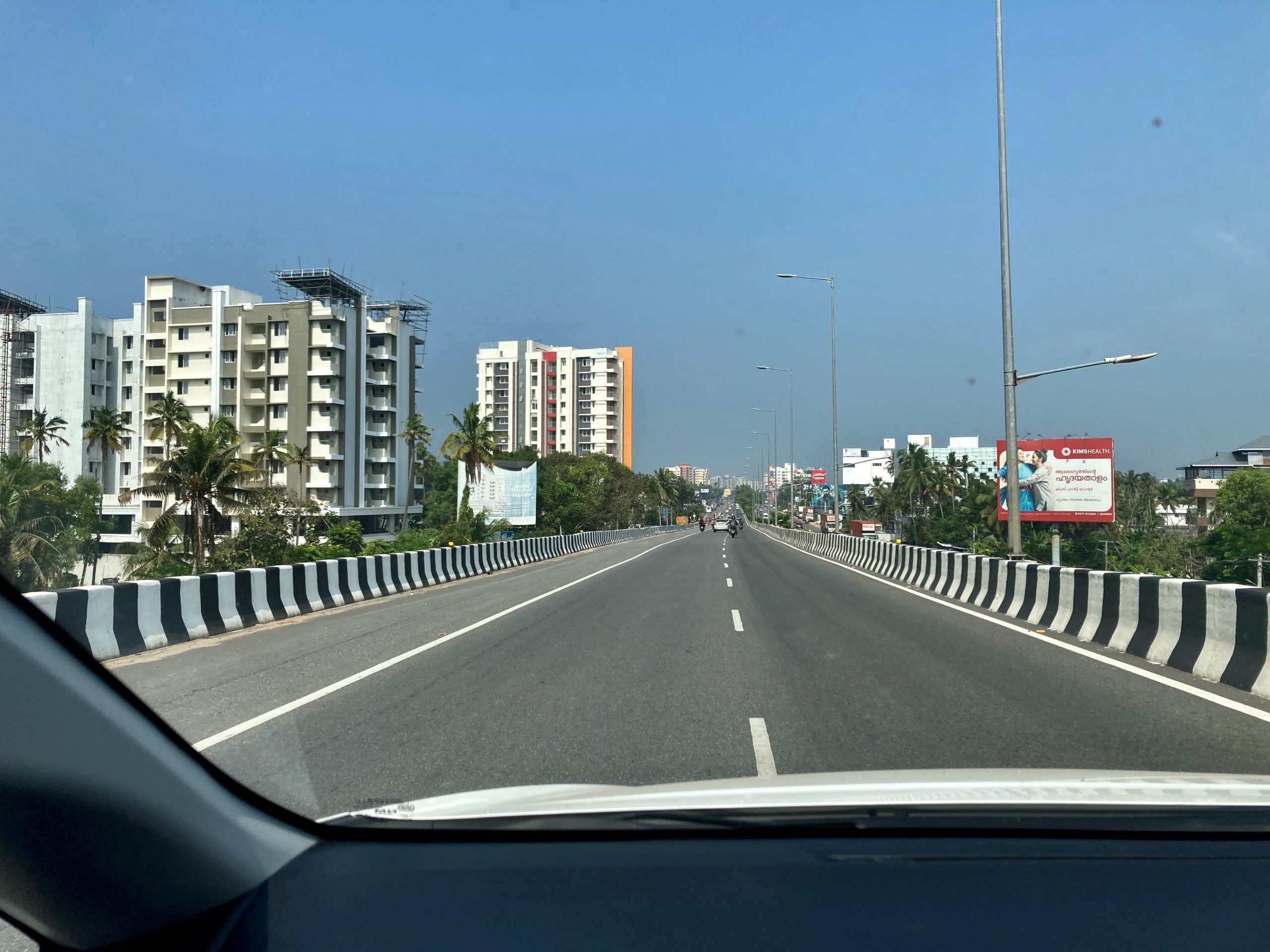
After one last intensive treatment, I left Somatheeram and was taken by taxi to my accommodation in Trivandrum. There I transferred to another taxi, which took me to Sreejith, and together we traveled on to Ponmudi.
Sreejith is a colleague from Kerala who arranges journeys with special encounters and activities in villages. This is done very carefully in cooperation with the villagers, creating win-win-win situations: the villagers earn an income and can pass on their traditions and knowledge; the travelers experience interesting things first-hand and share meaningful experiences; and Sreejith’s company also provides jobs and income. It’s a form of tourism that I like very much (and actually much closer to how I had imagined the Northeast India trip with Diamir would be).
Sreejith himself is an absolutely pleasant and wonderful person, someone in whose presence you naturally feel at ease. We have known each other since I worked on the Kamerakidz project in Wayanad, Kerala, seven years ago. Seven years is far too long not to see each other in person. So we both took the opportunity to make up for that now. Sreejith got on a night train (he lives in northern Kerala, I was here in the south) and planned to head back again the following night. That confused me, because I didn’t really have a full day available, so the next one would have been better. But never mind — the main thing was to spend time together, and to see and experience something as well!
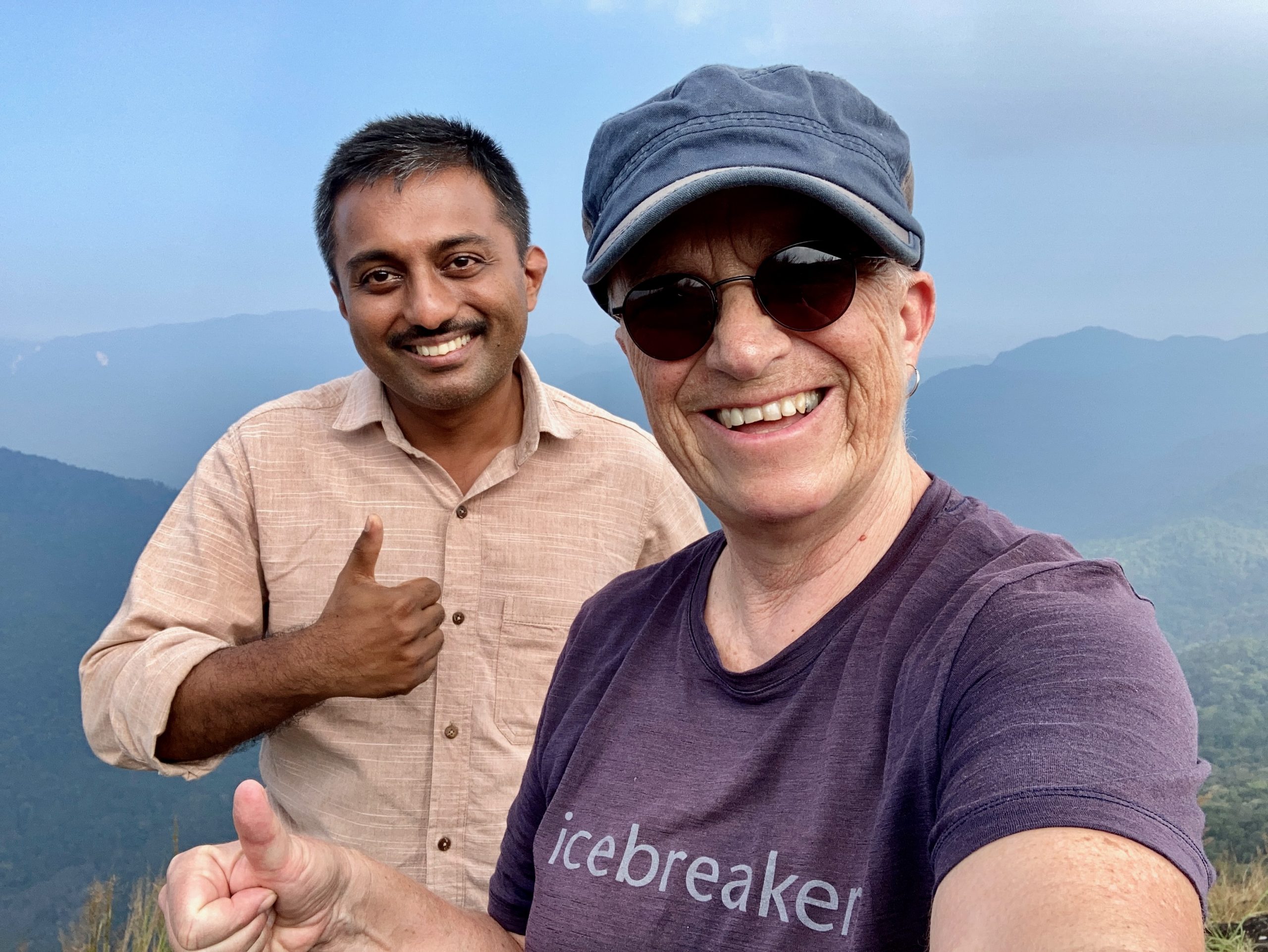 Sreejith + me
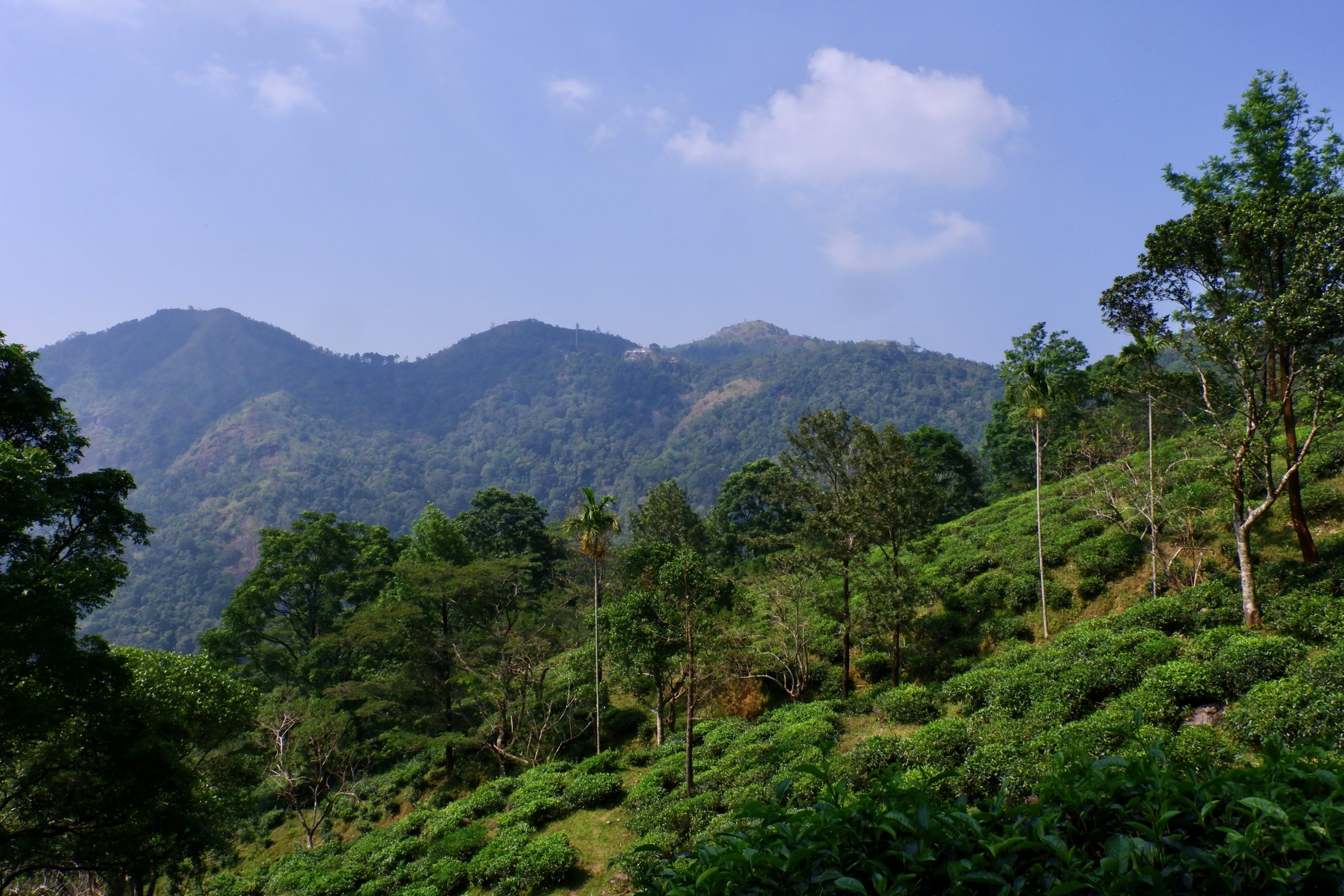
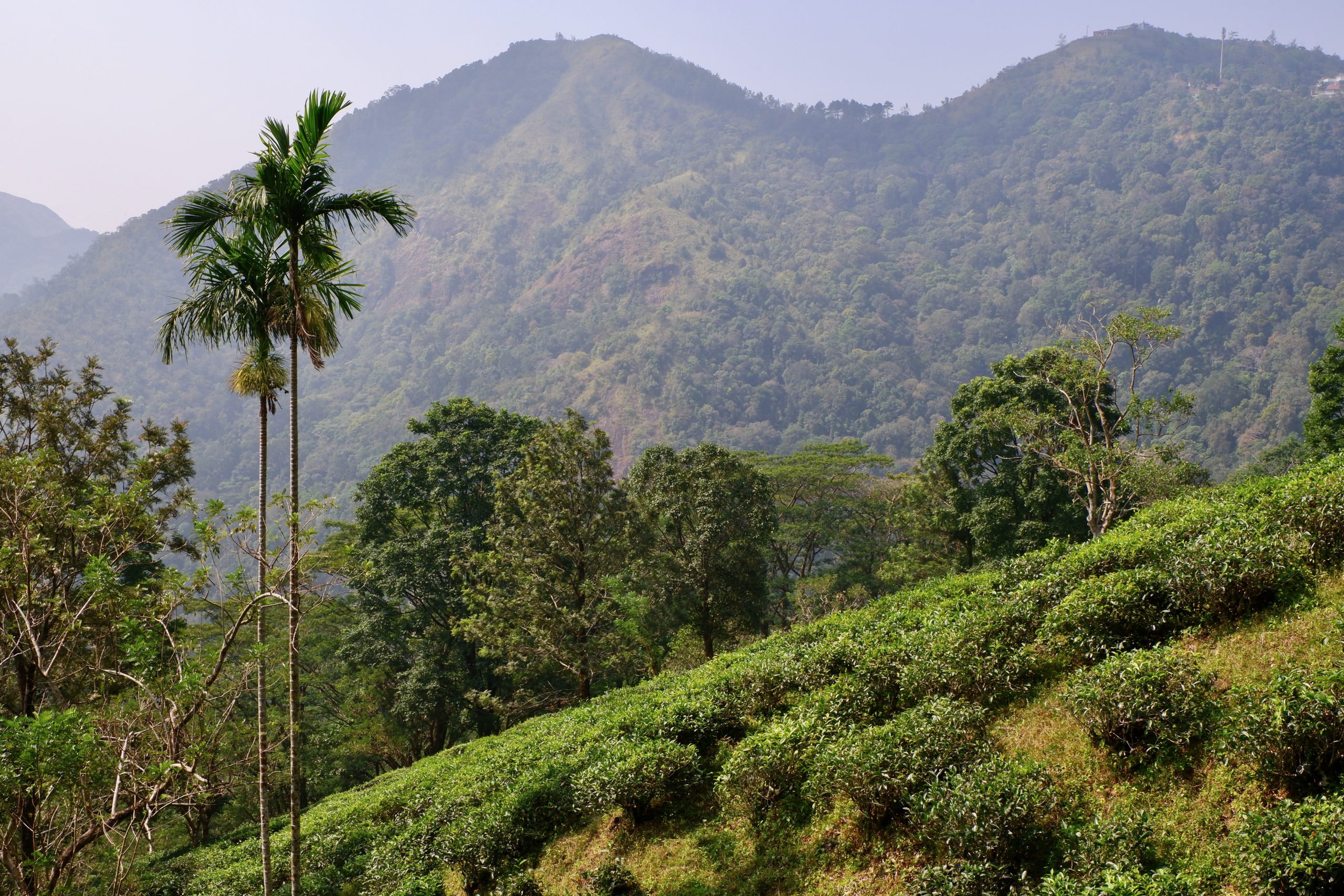
But in the end, everything worked out just fine. We drove up to Ponmudi, a little over 50 km from Trivandrum into the hills — the road winds its way upward through 22 hairpin bends, the car climbing past neglected tea plantations and through beautiful scenery.
 1
1
 2
2
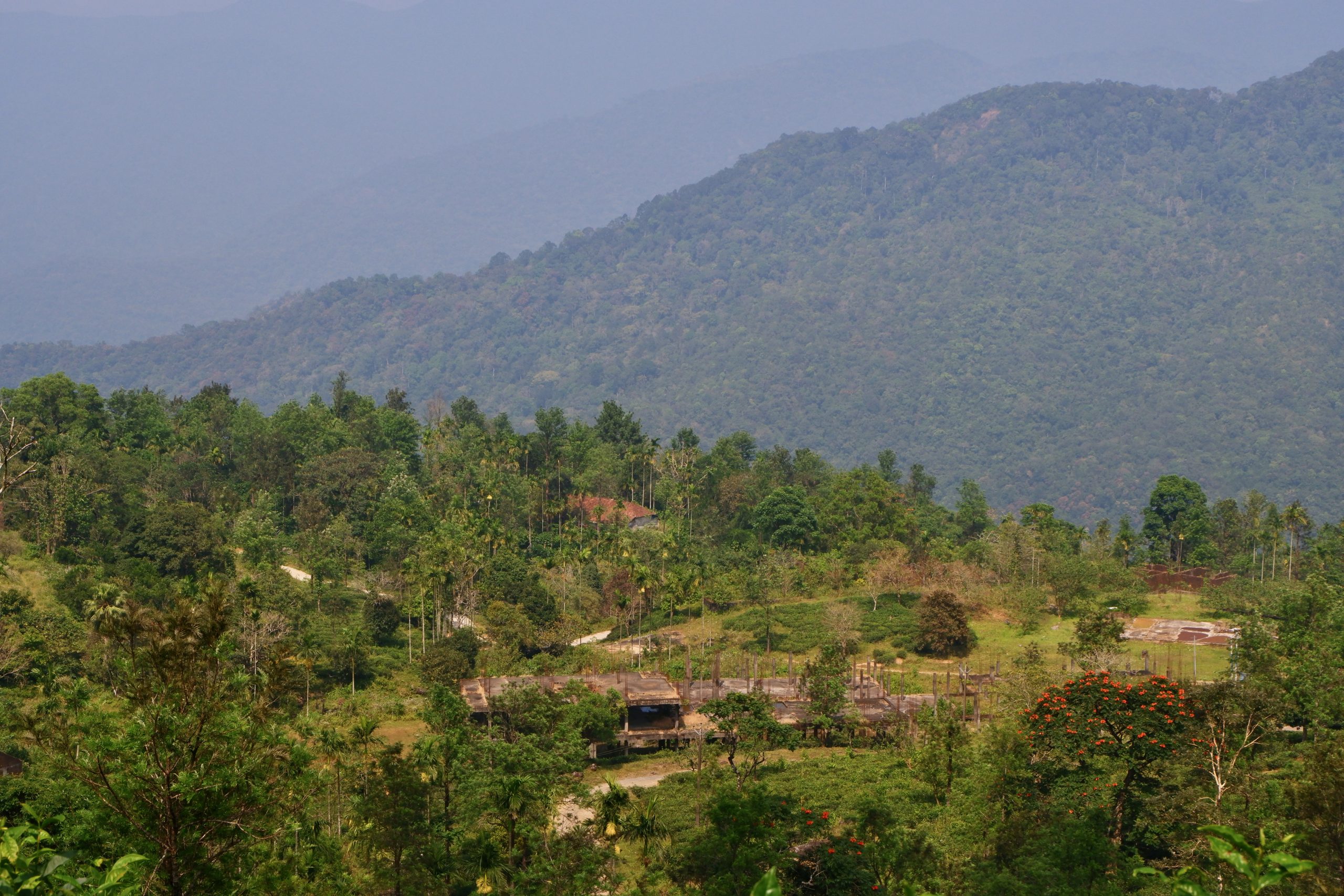 abandoned tea plantation
At the top we had some lunch and a coffee. After the extremely bland diet during Ayurveda, the strict advice to avoid anything spicy or oily, and with another tour leading job already looming, I didn’t want to take any risks. So I asked them to prepare a meal for me that was basically “without anything at all.” The cook found this so unbelievable that she thought she had misunderstood me — and enthusiastically sprinkled chili into the egg. So we tried again. And unfortunately even a third time. But at least: everything turned out fine with my stomach.!
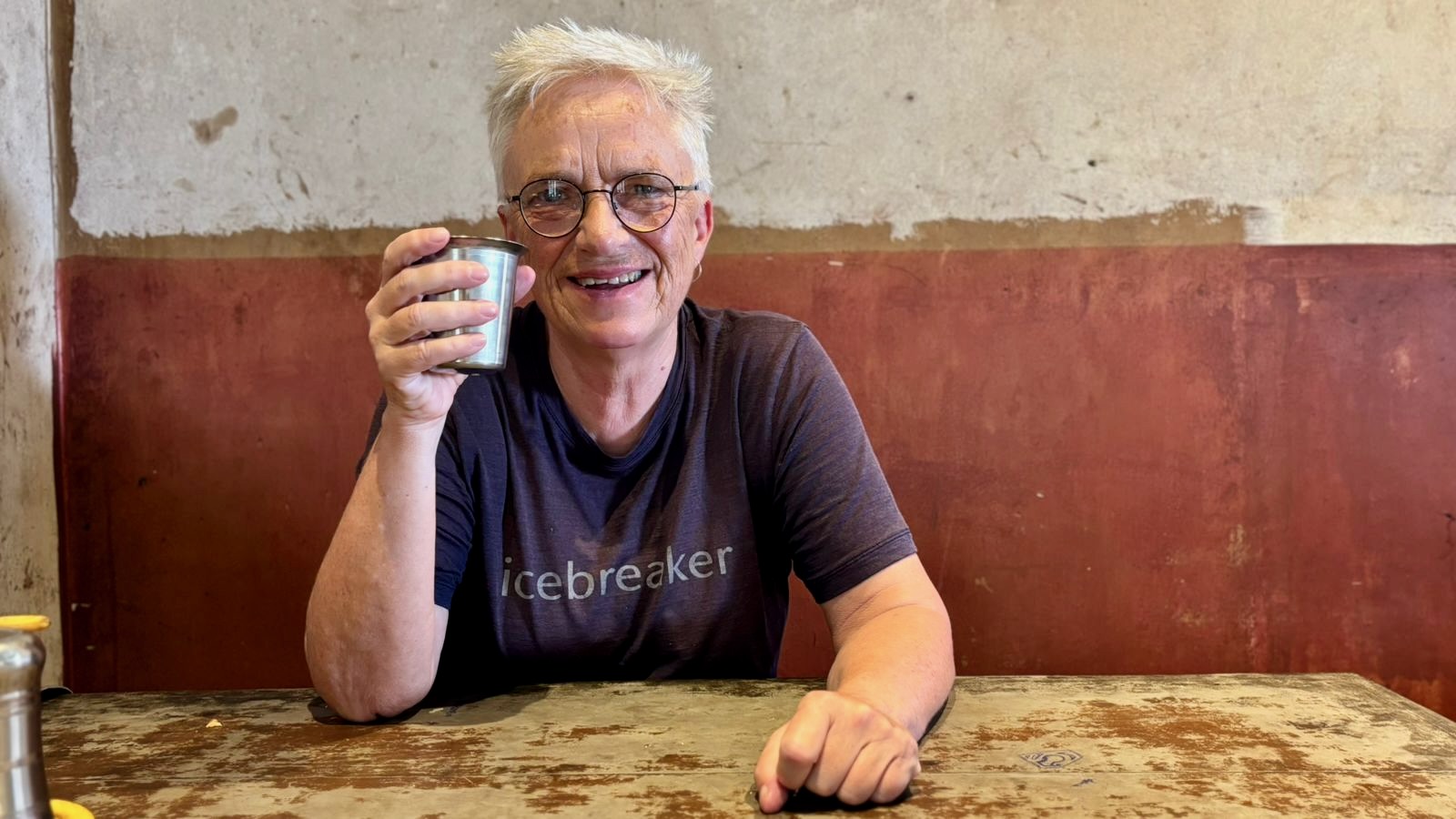 Coffee
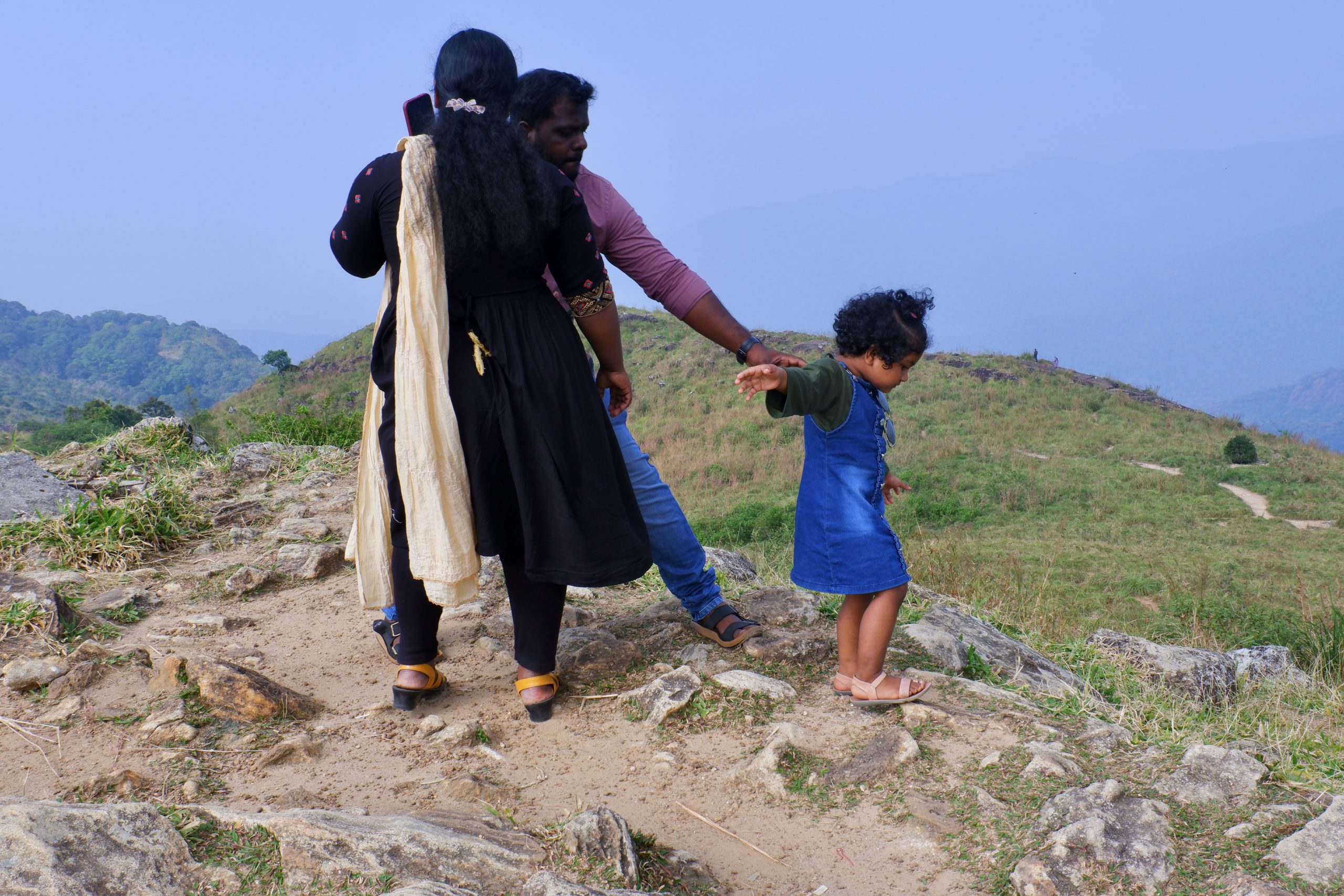
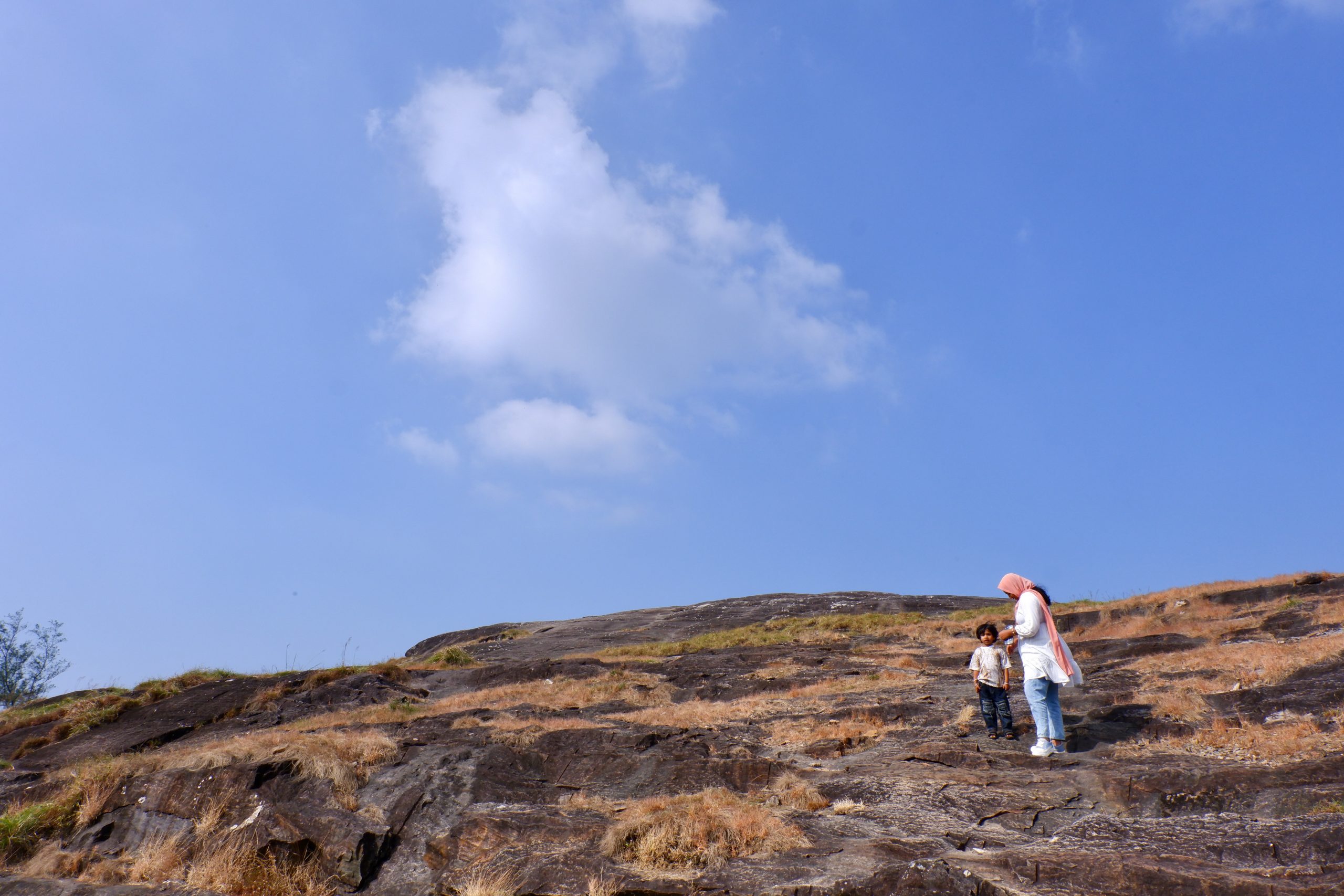
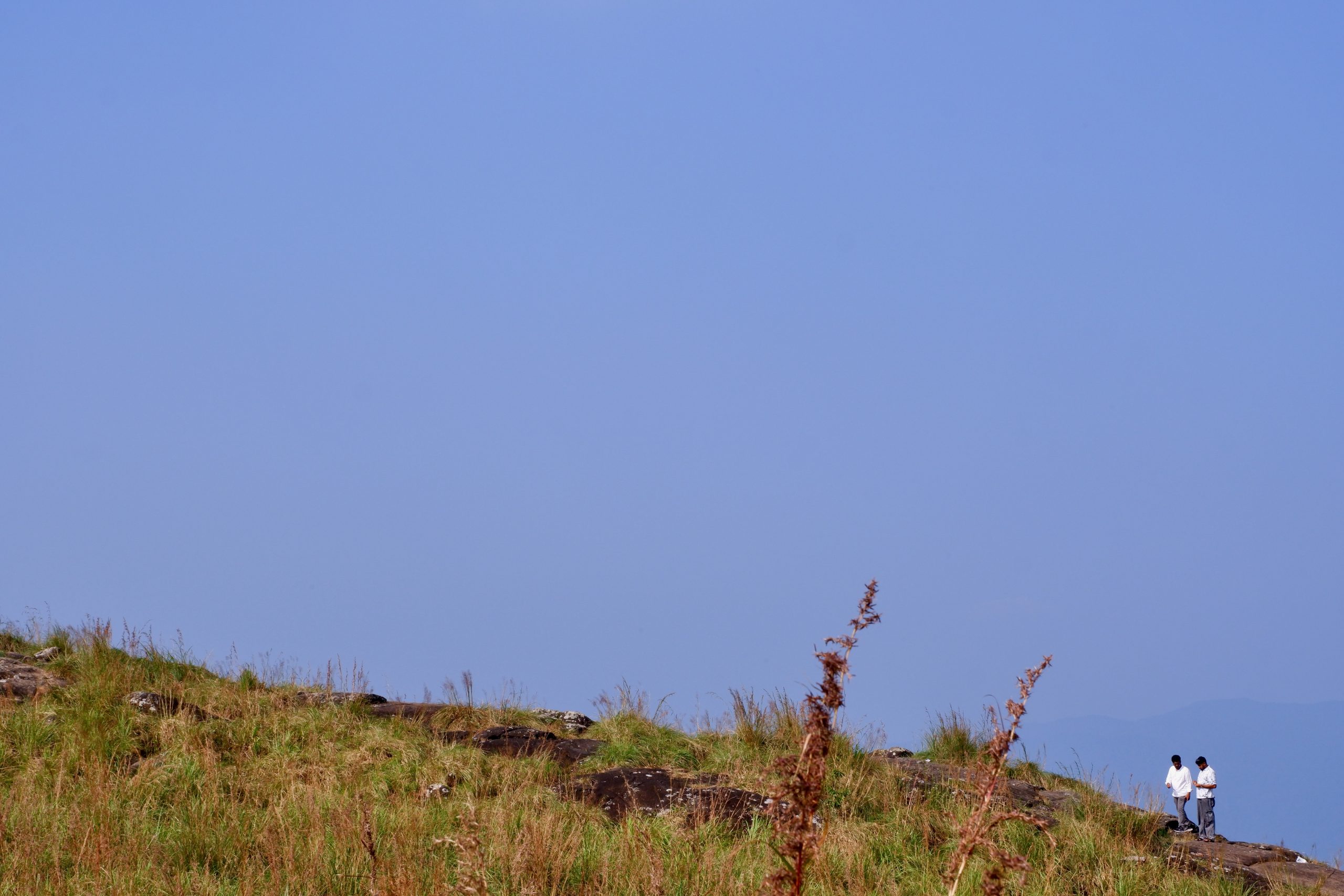
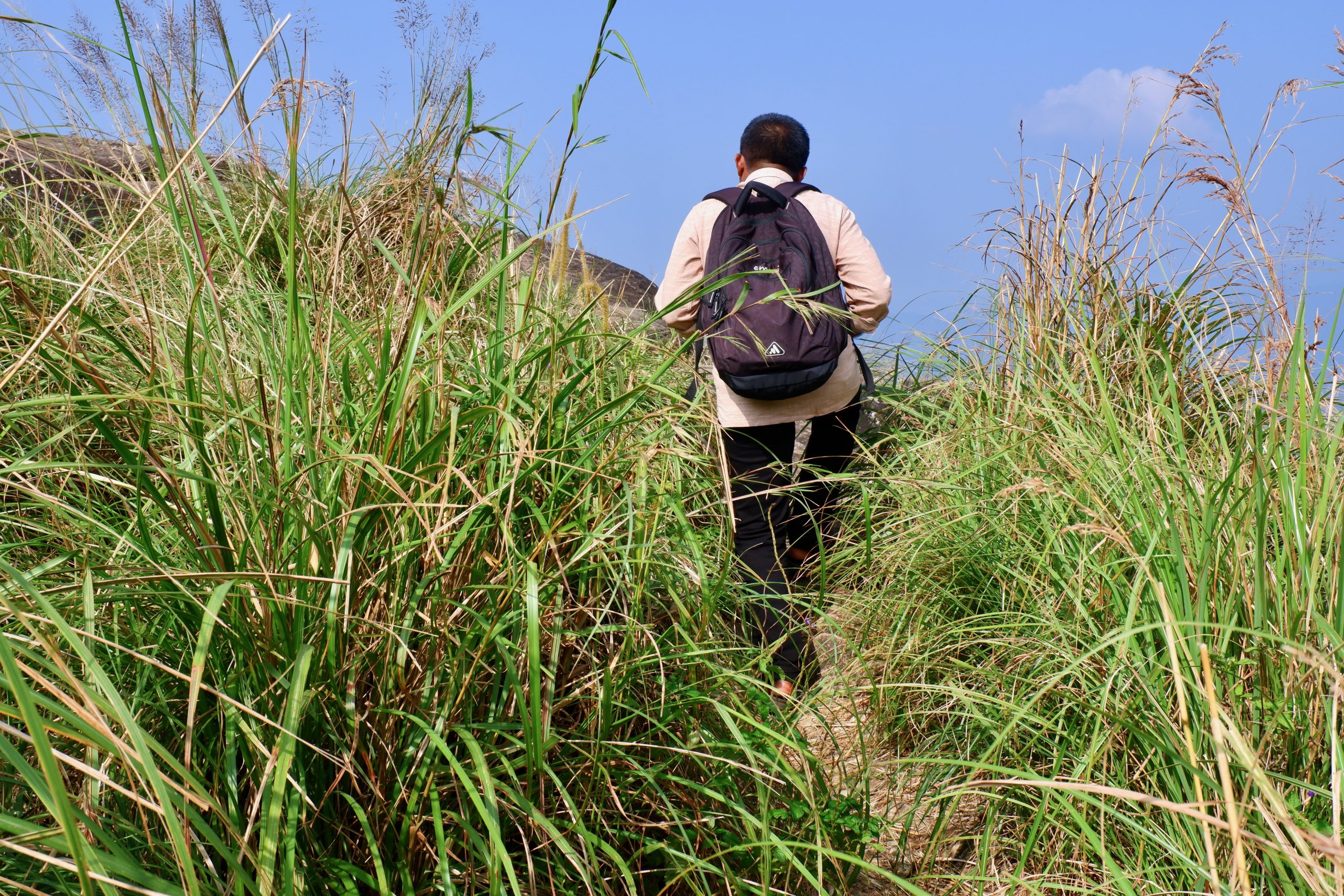
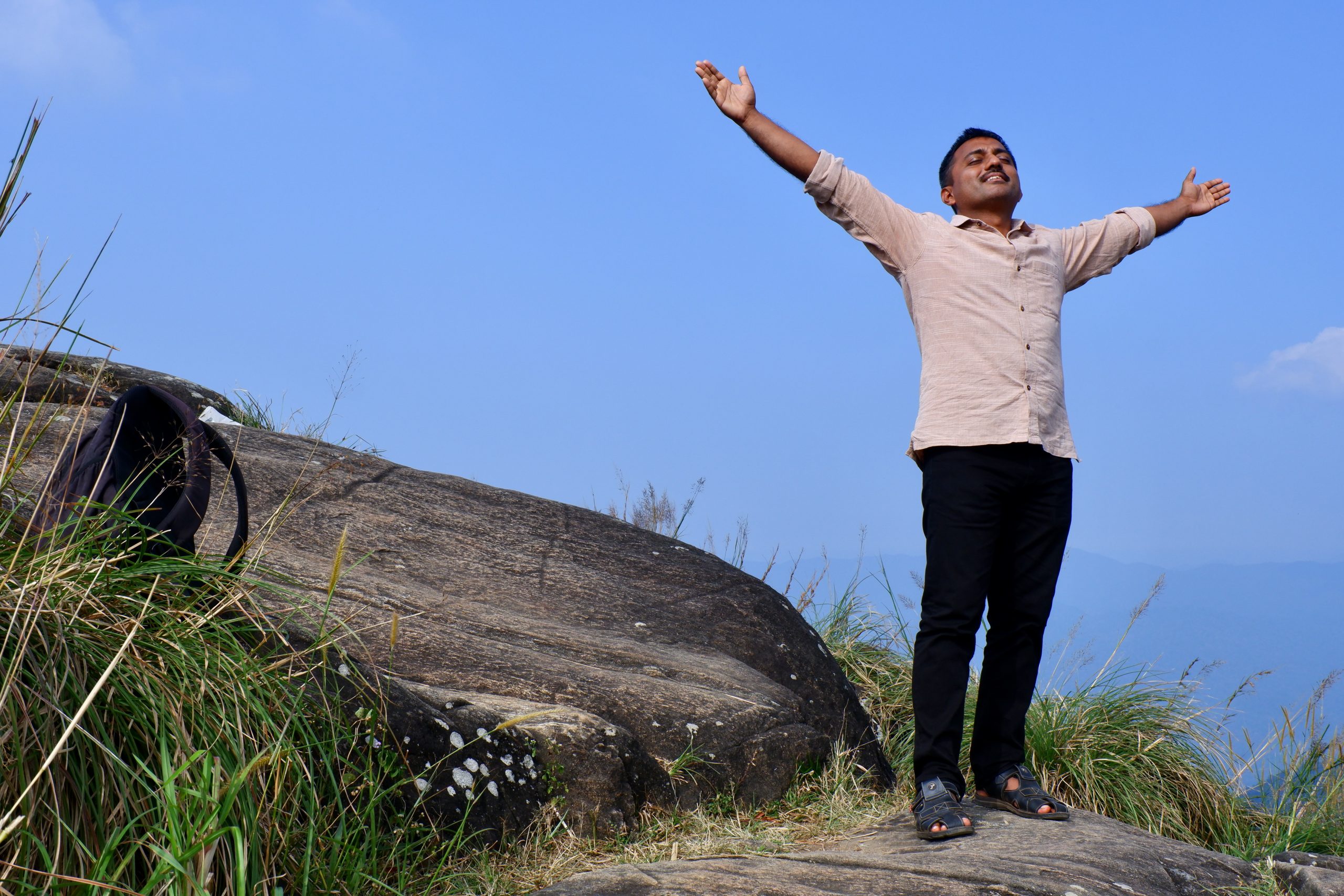
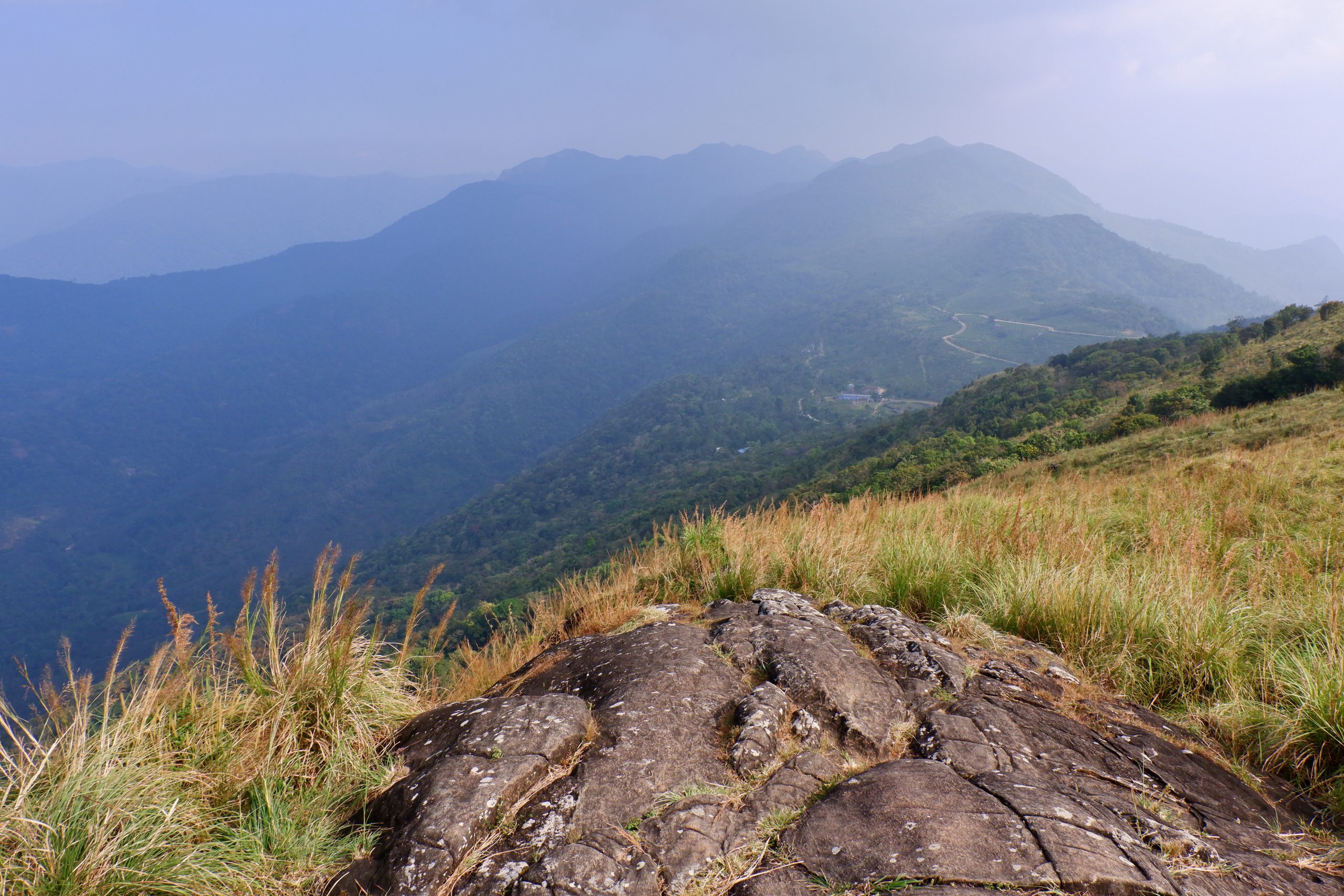
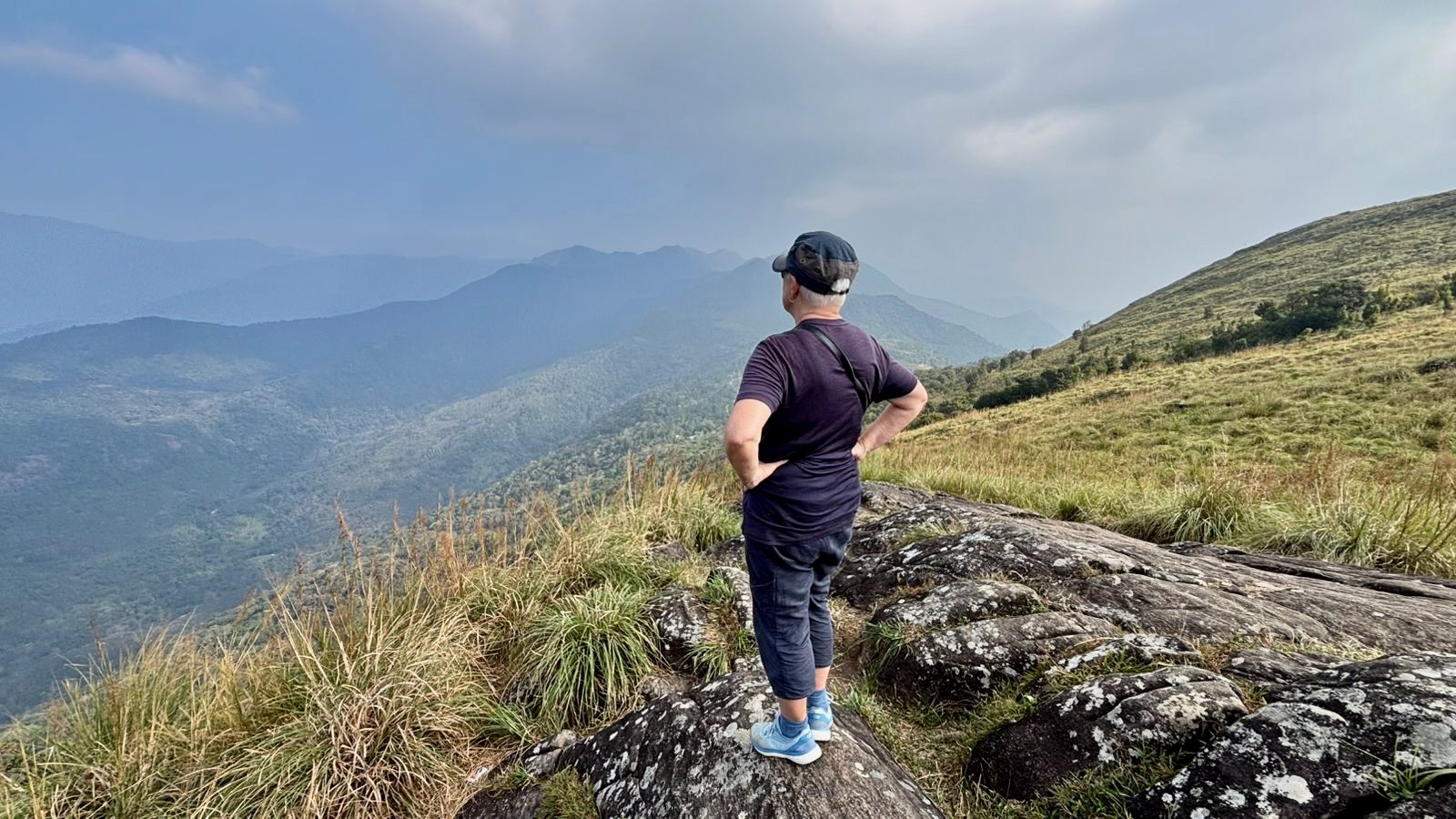
And then, just around the corner, there was a stunningly beautiful spot with a wonderful view, where you could wander around a bit. Somehow I hadn’t expected that at all — which made the joy of discovering it even greater!
 1
1
 2
2
 3
3
 4
4
 5
5
 6
6
 7
7
 8
8
And I also learned something. The trees up there are very sensitive to wind. Because it can get extremely windy at the top, they don’t grow there — only in places where the wind doesn’t hit as hard, as you can see here:
 trees
trees
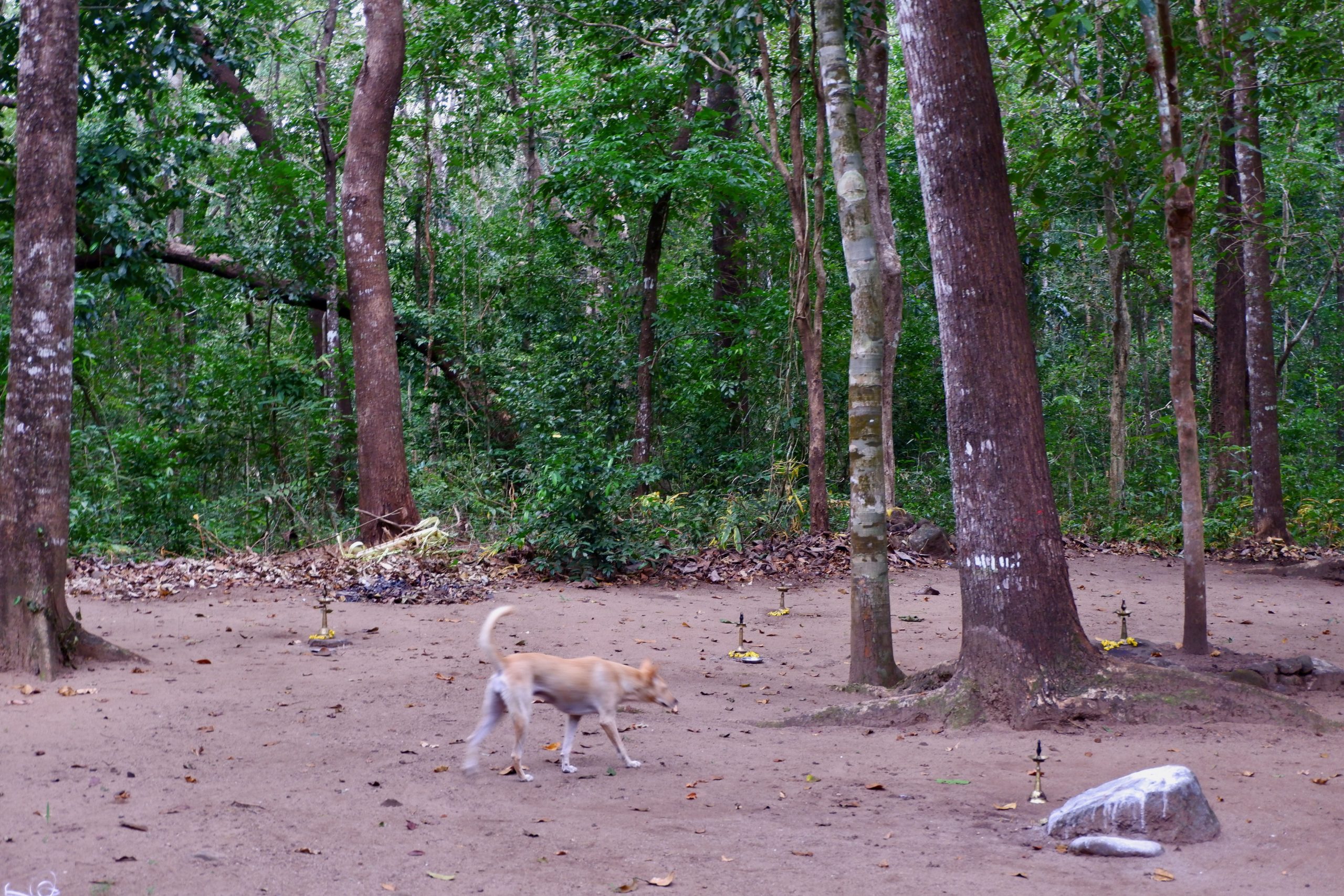
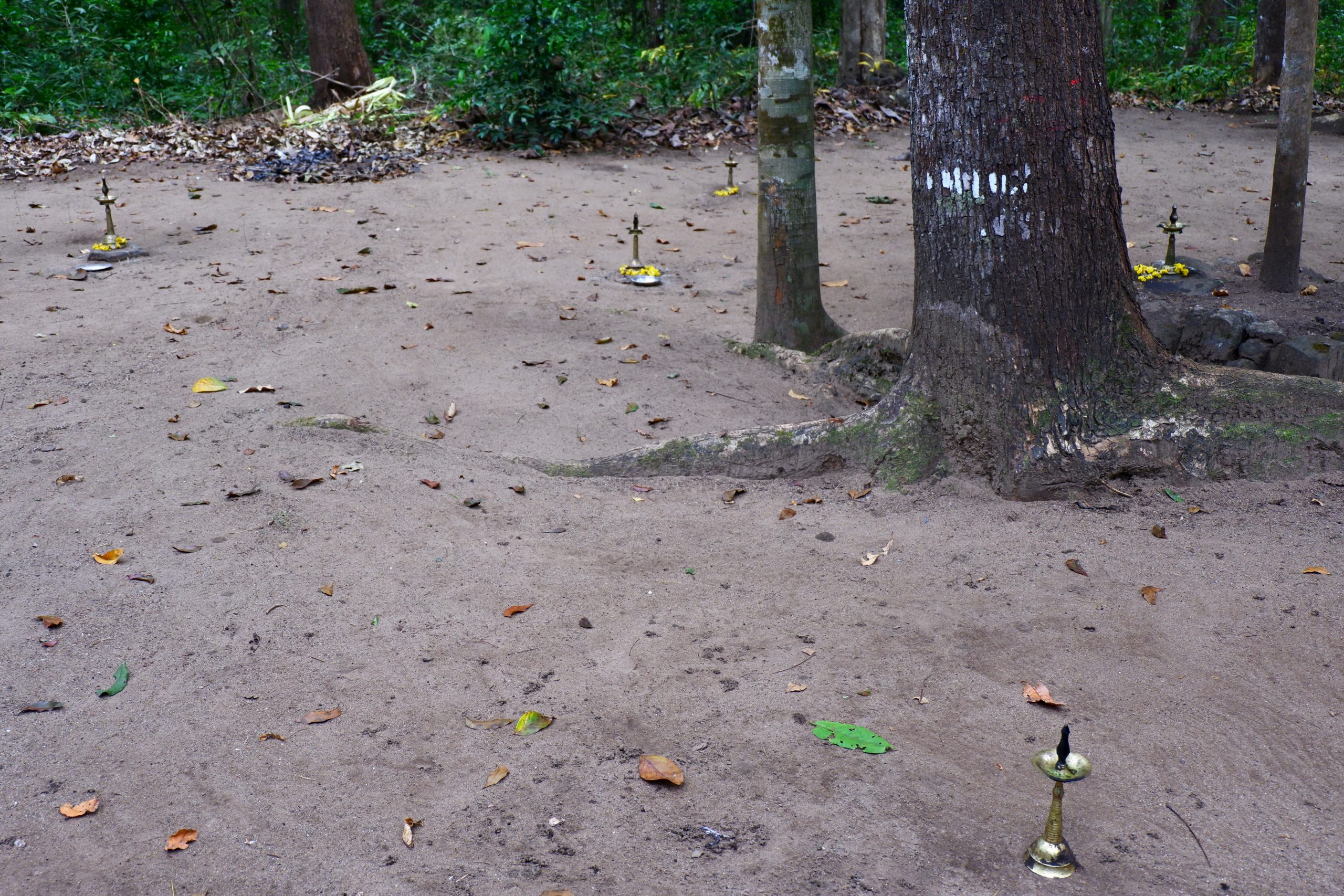
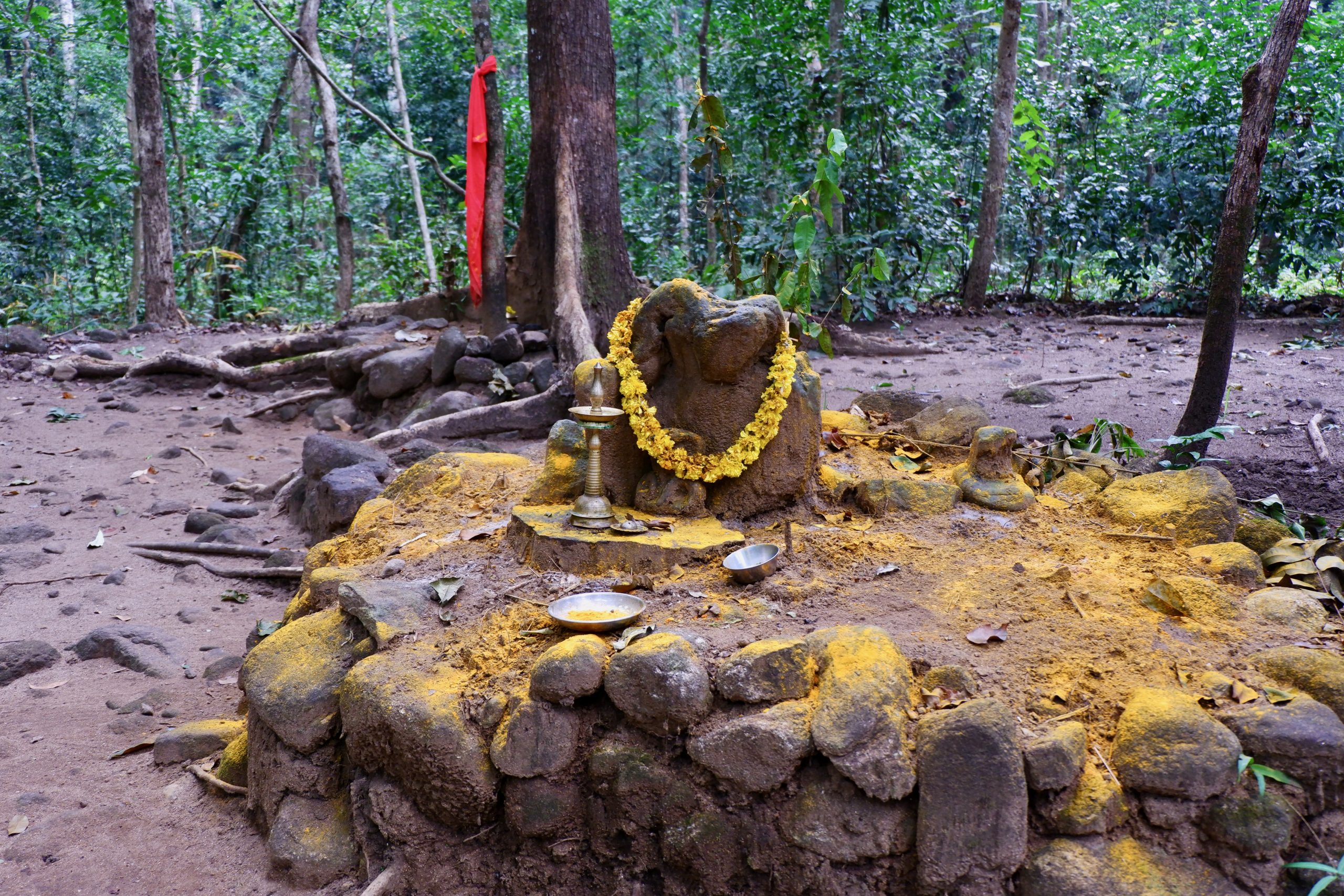
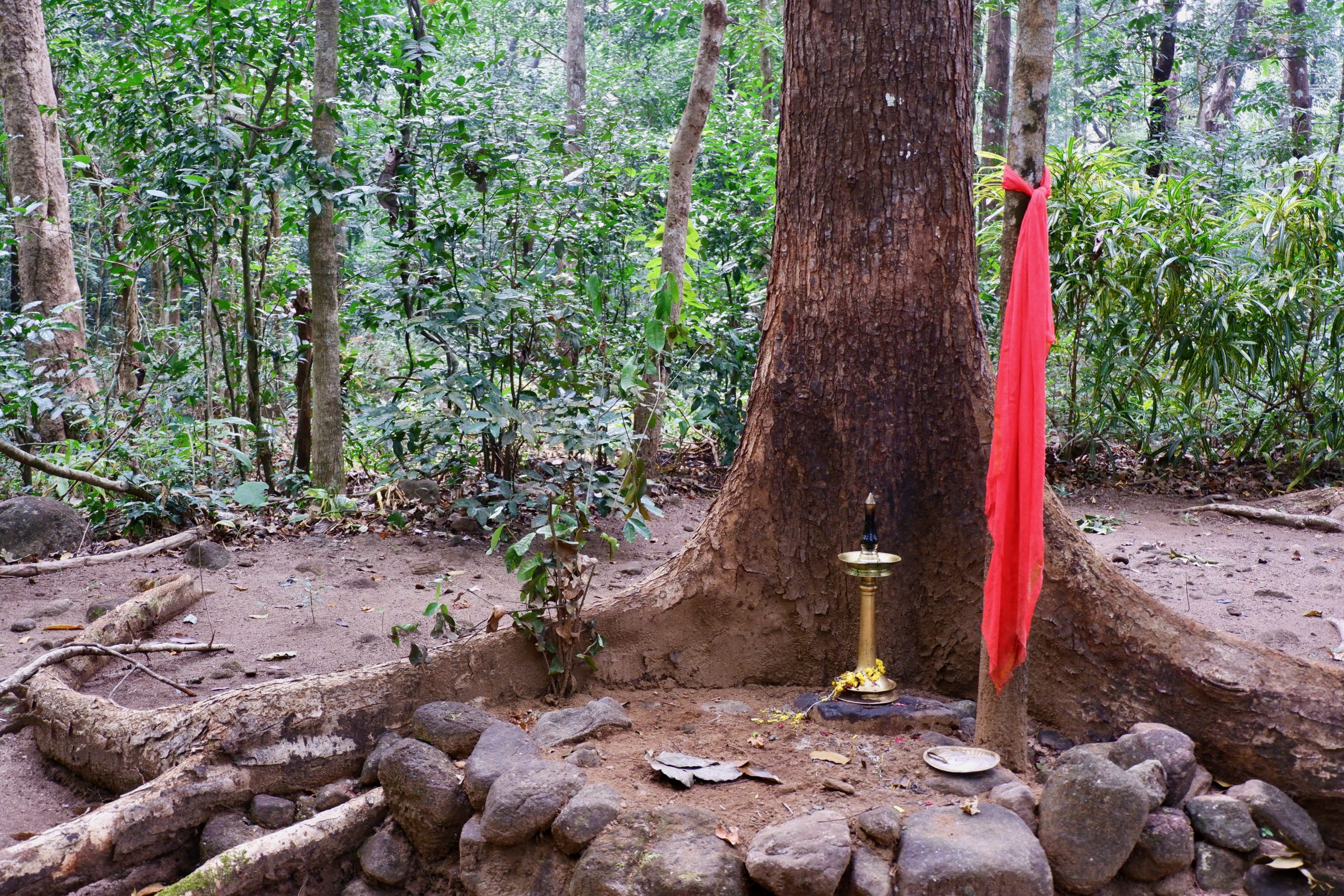
After that, we drove into the forest. Indigenous people live there, and you are only allowed to visit them with permission or an invitation. Sreejith has developed a tourism concept together with them, meaning that travelers can book a visit. Unfortunately, we didn’t have time for activities, but we did have time for a brief introduction. The group is called the Kannikars, often shortened to Kani. They have developed a blend of animistic beliefs and Hinduism. We were shown a sacred place where trees — or spirits living in trees — are venerated. Snakes are also revered there, but fortunately they had withdrawn. It looks like this:
 1
1
 2
2
 3
3
 4
4
 5
5
Bears are not revered in the same way — there was a trap for them on the site.
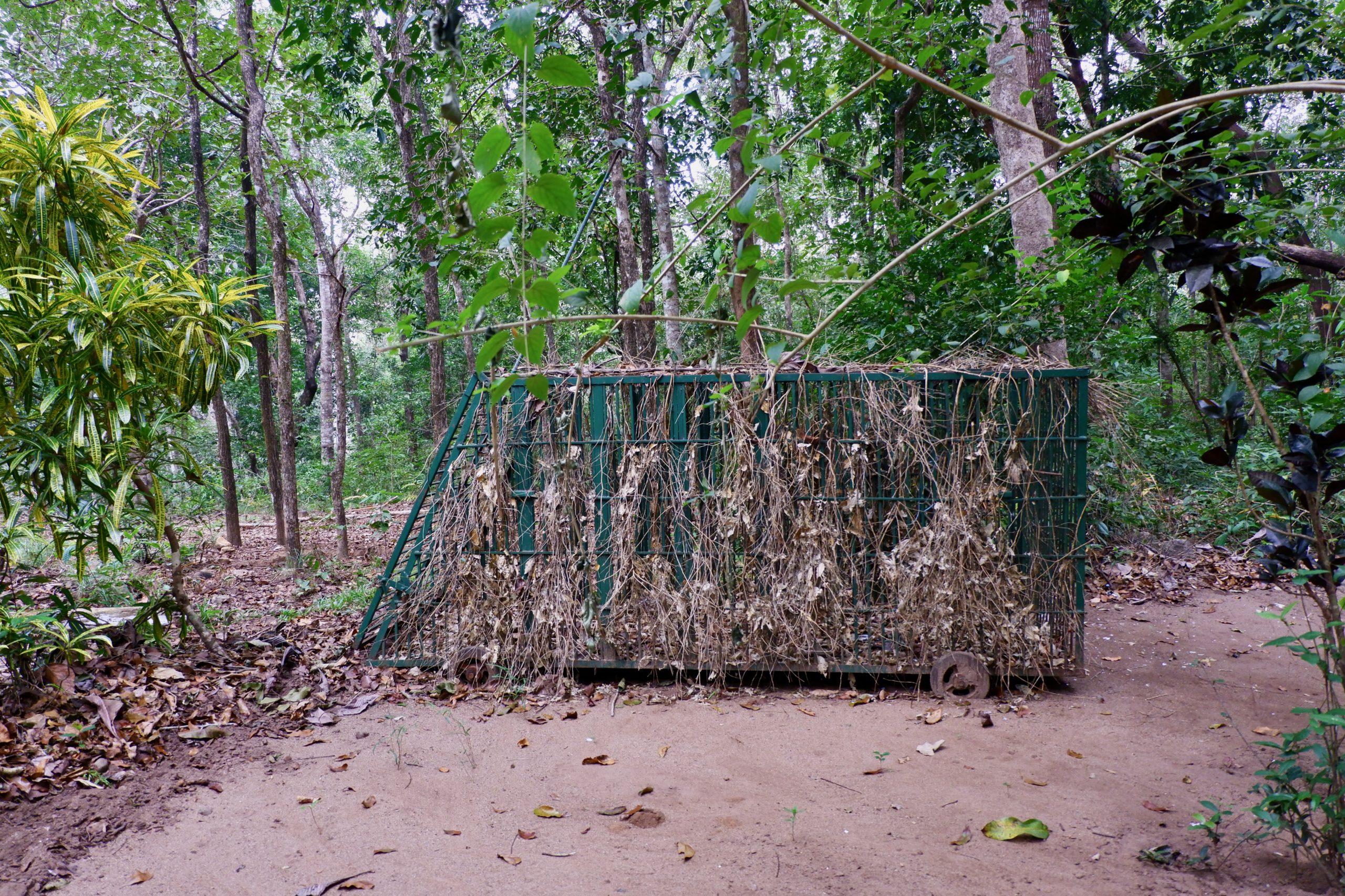 Beartrap
The Kanis are known for their extraordinary knowledge of medicinal plants. We had a guide who arrived by motorbike and showed us, for example, a special bird’s-nest fern that grows on trees but does not take nutrients from them, so it is not a parasite. It develops a kind of roots that can be cooked into a soup, which is said to help well against colds and respiratory illnesses.
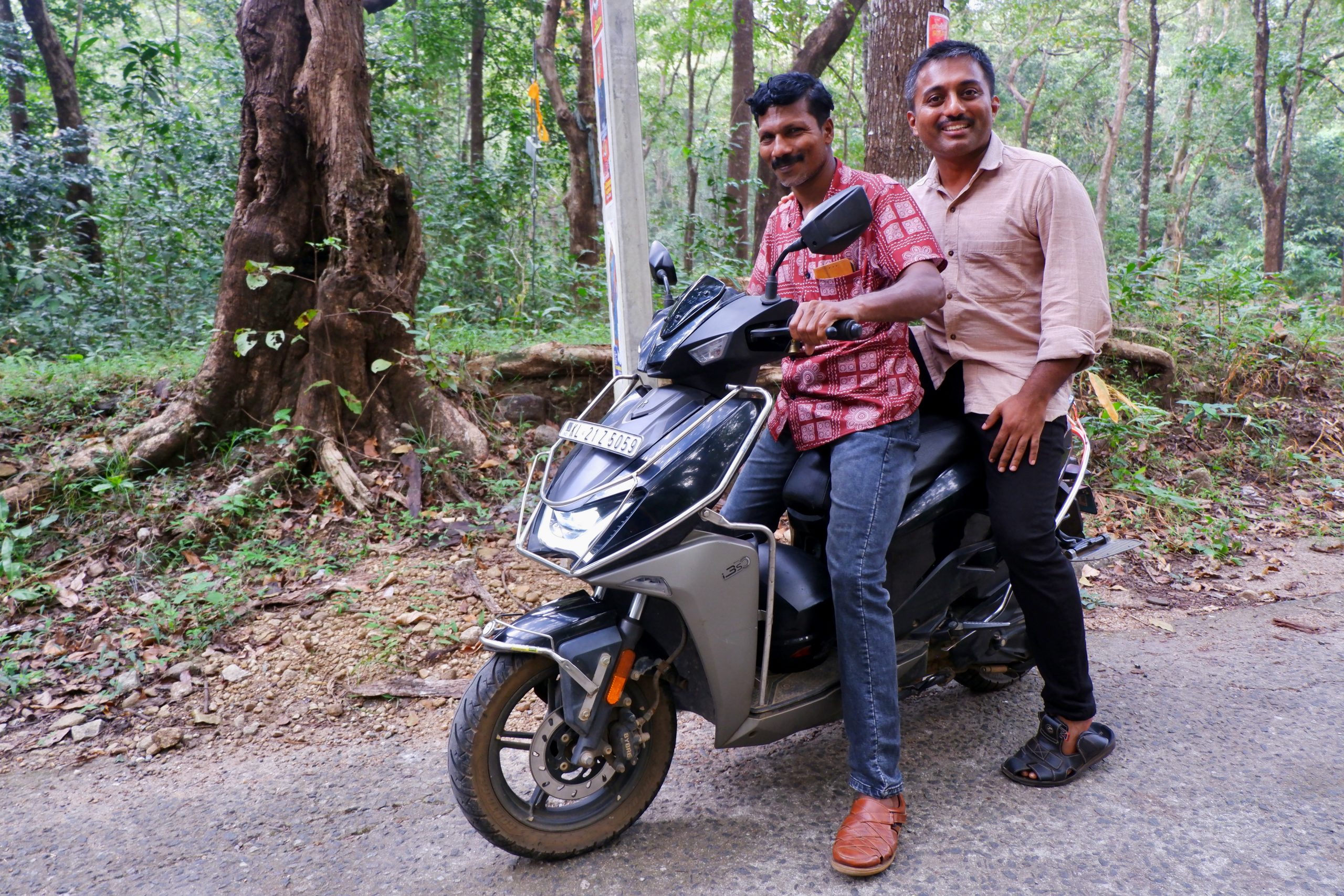 Guide and Sreejith
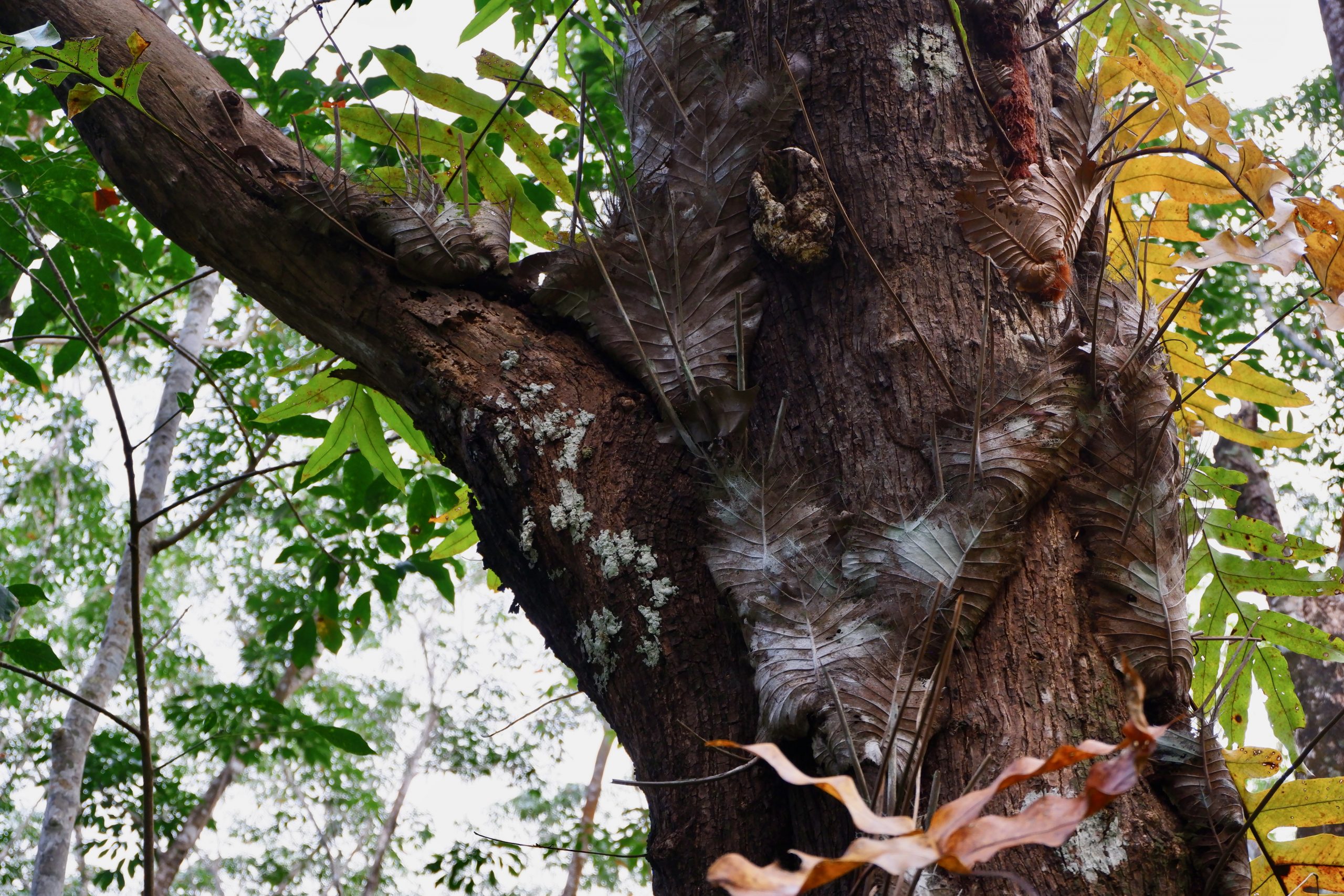 Fern
Fern
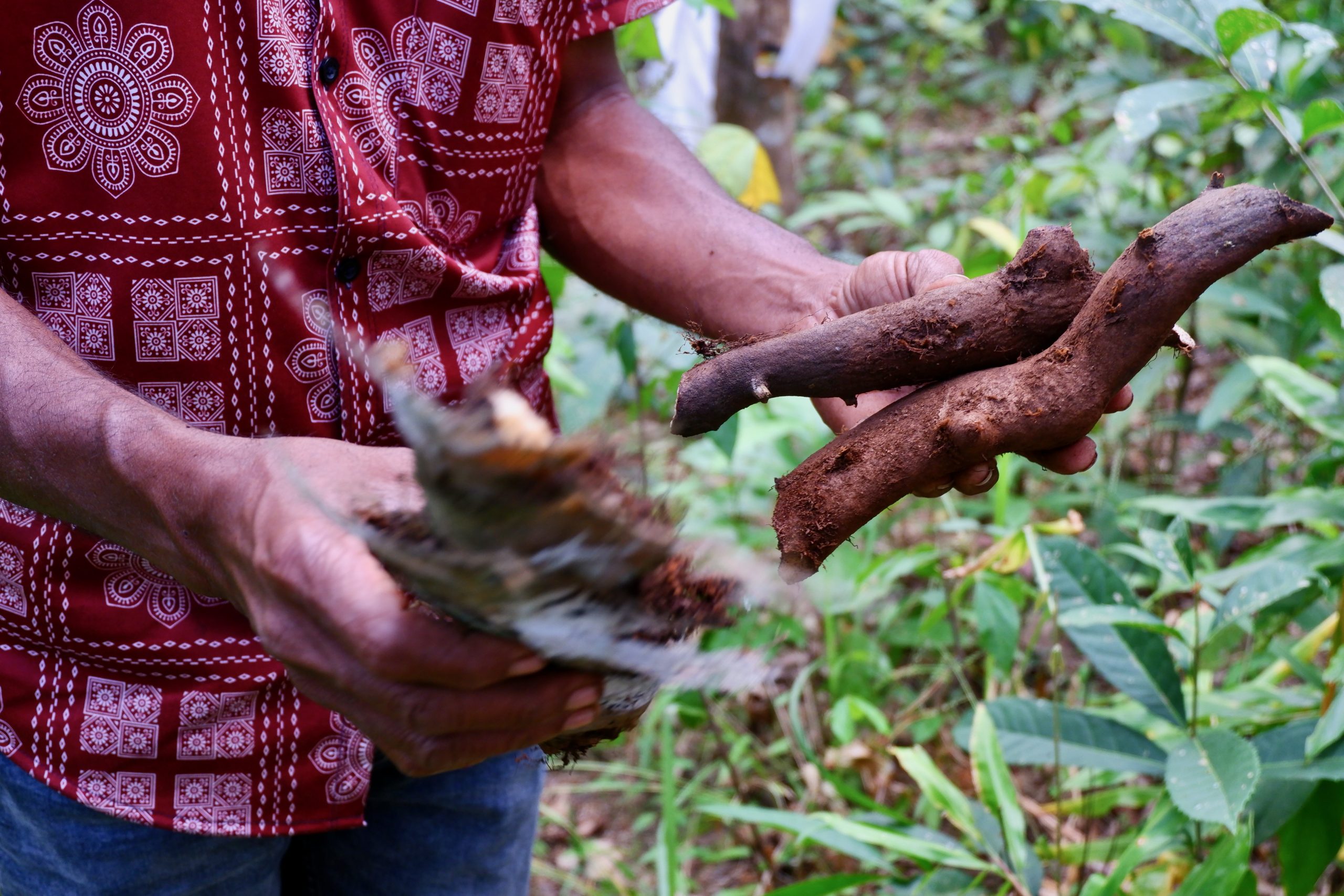 “roots”
And now comes a fascinating story that ChatGPT told me – about something called “biopiracy.” I hadn’t known this term before. At the Kani grows a plant called Arogyapacha. It is quite inconspicuous, but extremely effective against exhaustion and as a general tonic. In the past, it was commonly used while hunting and gathering. The knowledge about it was passed down orally: where to find the plant, when and how to harvest and process it, the correct dosage, and what interactions it might have.
Scientists observed this in the 1980s and 1990s and went on to commercialize that knowledge. They developed an Ayurvedic product called Jeevani (considered an anti-stress and immune-boosting preparation), patented it, and made money from it—without the knowledge holders receiving a single cent. This is what is known as biopiracy. And it also raises fundamental questions about the ethics surrounding knowledge itself.
The Kani became aware of this and protested, which created political and ethical pressure. As a result, the Kani Trust was founded in 1997 and now receives 50% of the revenues from the sale of Jeevani. These funds are used for collective governance, infrastructure, education, and healthcare. It was a real revolution in India in this field!
There are further aspects to this, meaning that the “revolution” is not only positive; the issue also raises additional questions and points for discussion.
Up above we already saw the bear trap; here is an elephant barrier. Otherwise, elephants like to visit villages and cause damage. With this in place, they can’t get through, jump over it, or balance their way across.
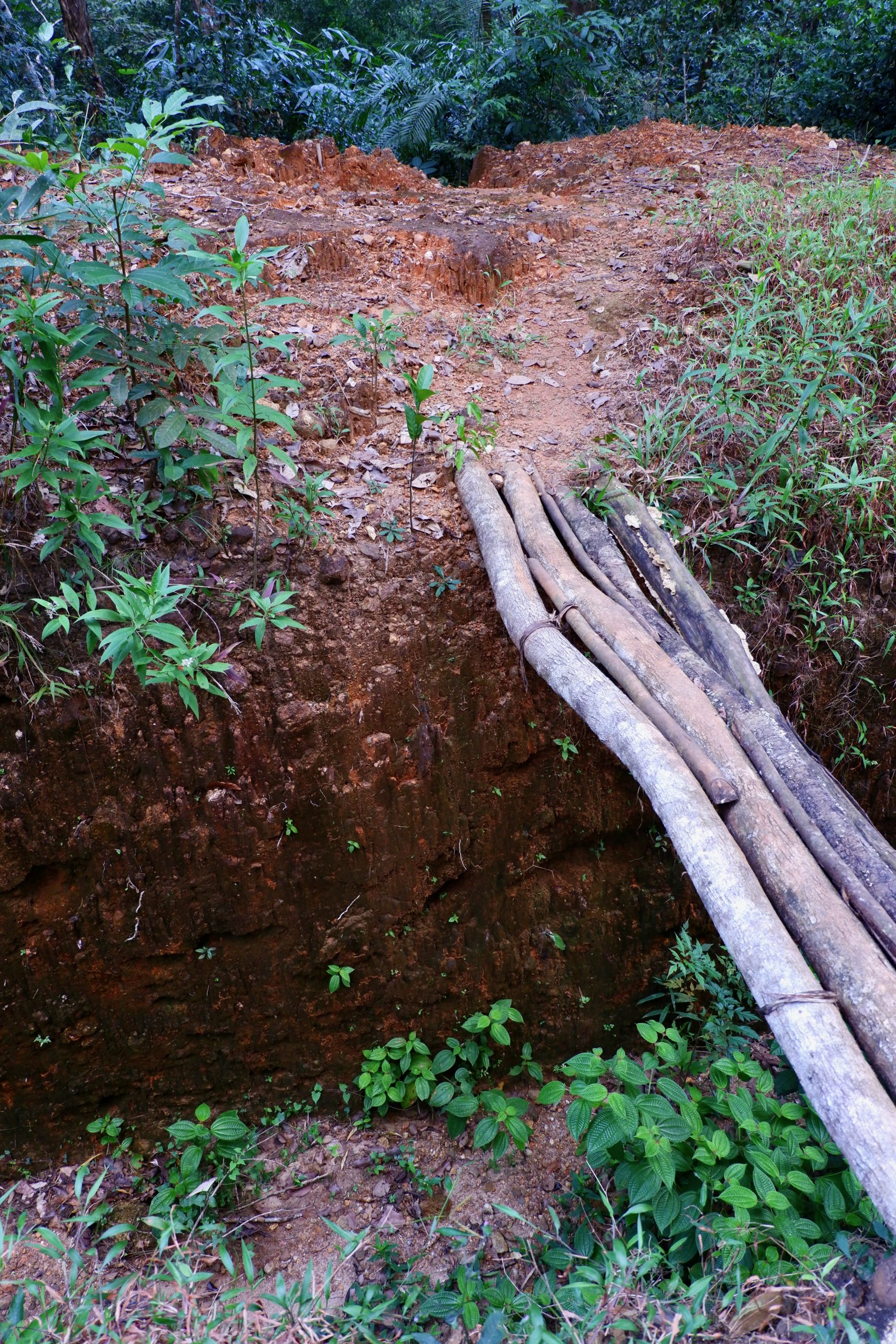 Elephant barrier
Unfortunately, the day was already quite advanced, so we only paid a brief visit to one family. They have a traditional house and a newer one made of cement. Cement is better protection against animals (for example snakes), but it is bad when it comes to damp and mould, and in general. So they tend to sleep in the cement house, while cooking, eating, and everyday living happen more in the old house.
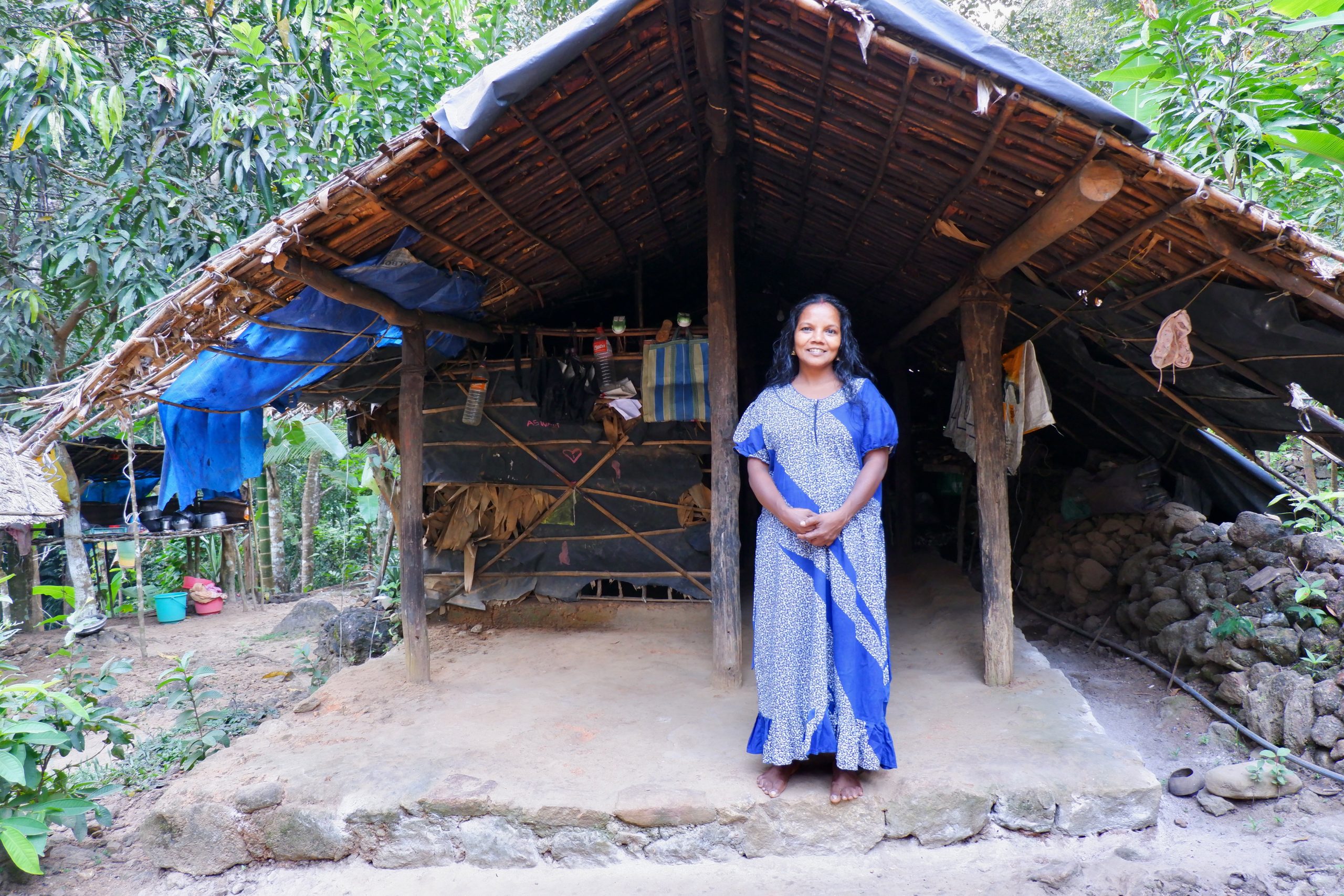 Woman in front of old house
They also showed us how they scare animals away using a bow and stones (instead of a slingshot). In principle, you can really spend quite a long time with the people there; for me it was more like a small teaser. I met a few more of them as well — all very friendly and smiling.
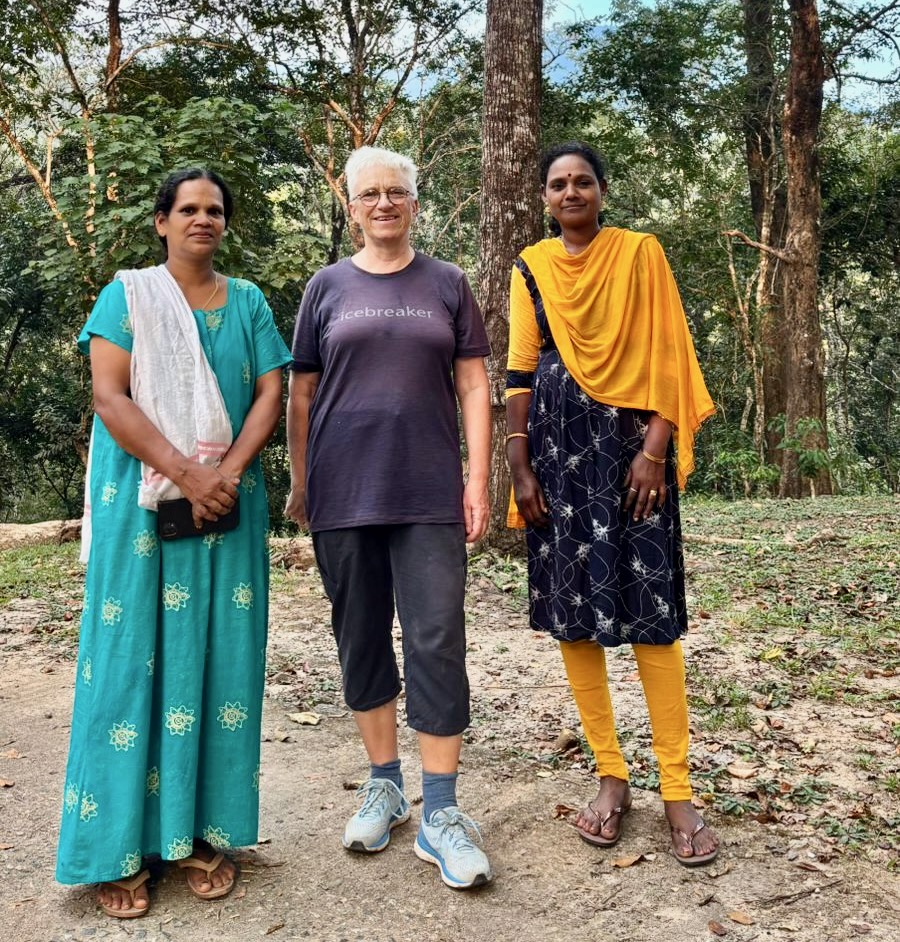 3 women
And finally, one more thing I found amusing: huge numbers of election posters right in the middle of the forest.
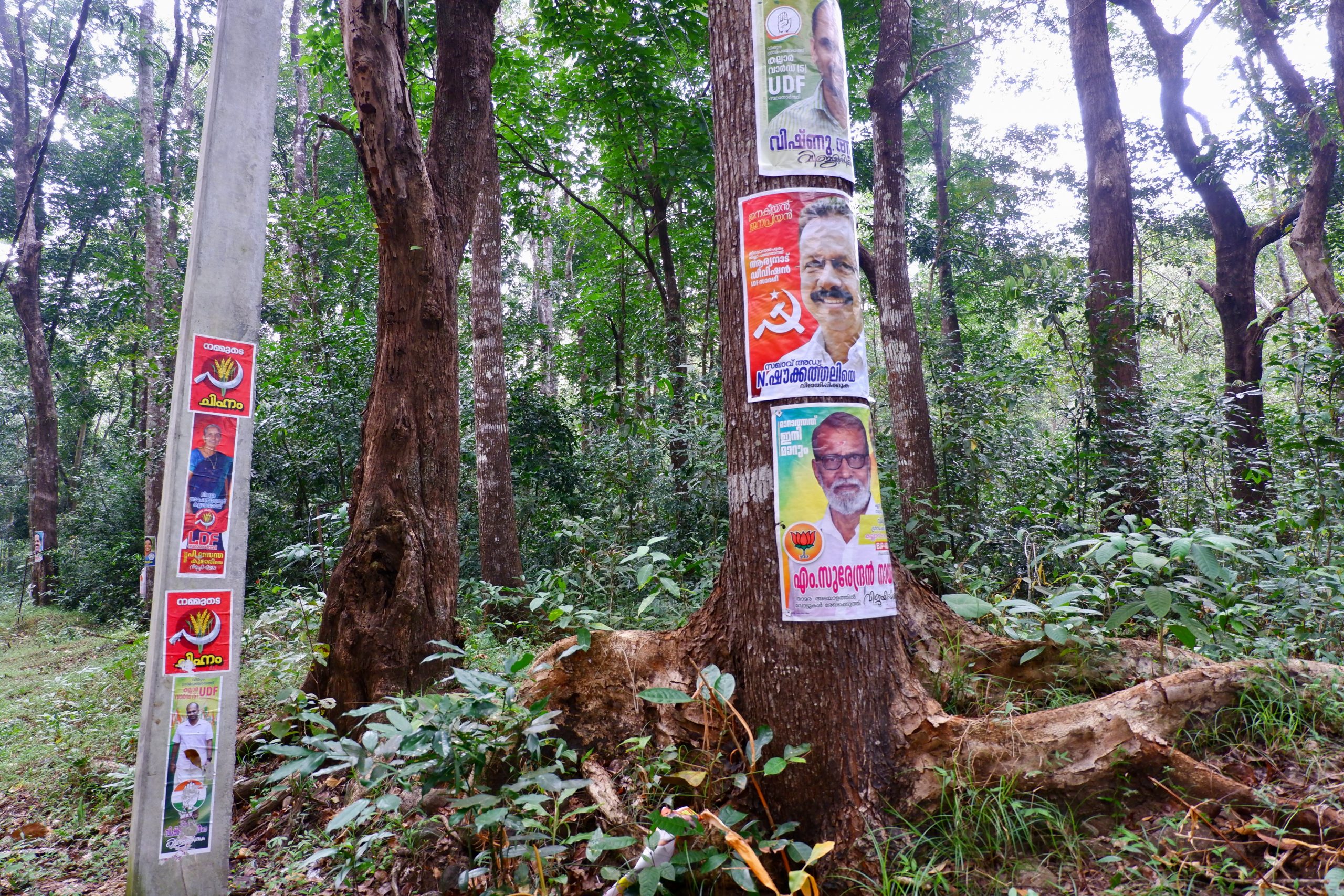 election posters
A bit less amusing is the result: the BJP, Modi’s party, has won here for the first time. Previously, the Communists and the Congress Party had always alternated in power. There are suspicions of manipulation…
In any case, I was very happy to see Sreejith and to do something together that was also new for me. And then I still had a whole day in Kerala…..