


Arunachal Pradesh: Ziro Valley – less people, less houses, less photos
28. + 29. November 2025
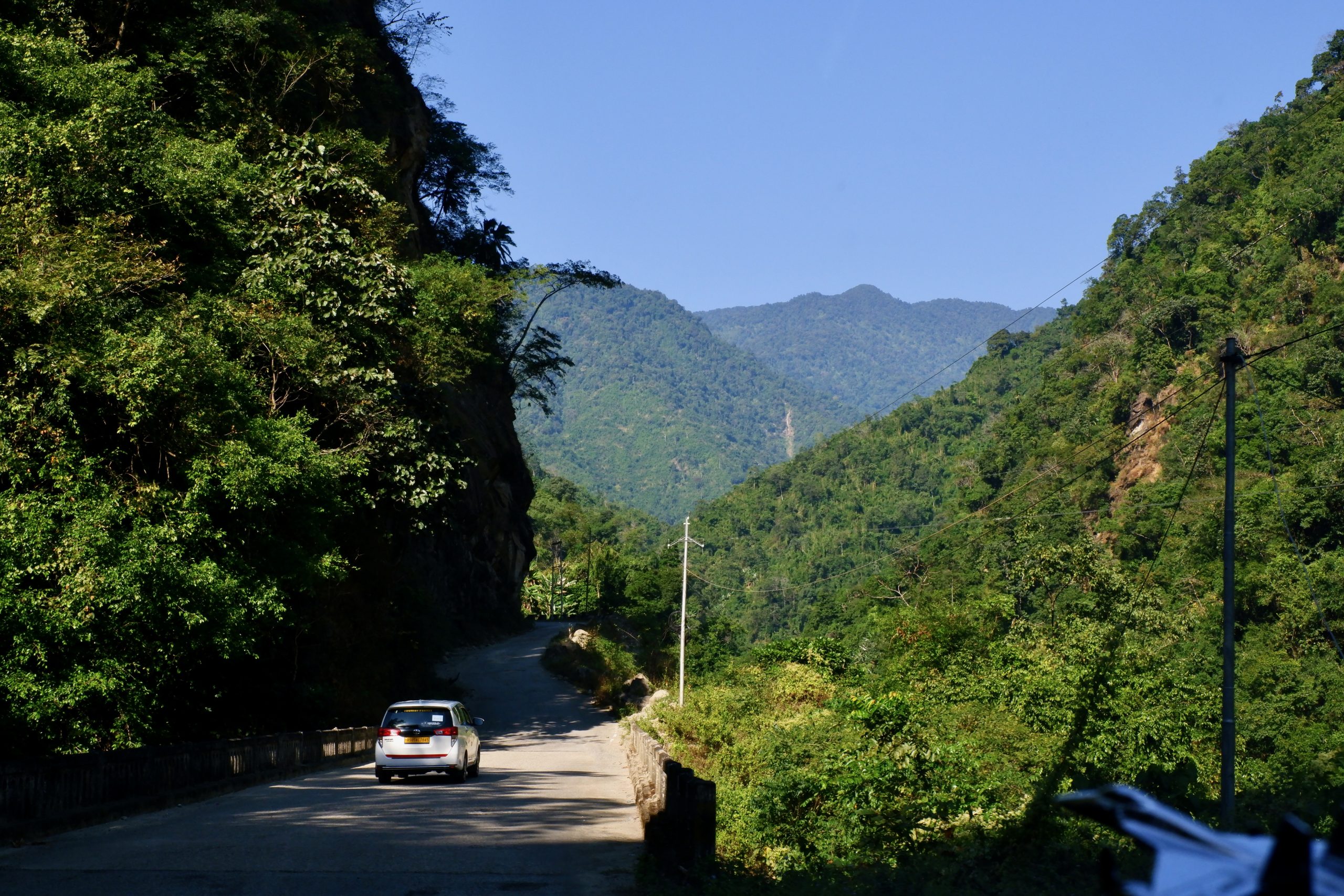
The first impression of Arunachal Pradesh: more hilly, greener, less traffic, pretty. There was also a nice viewpoint:
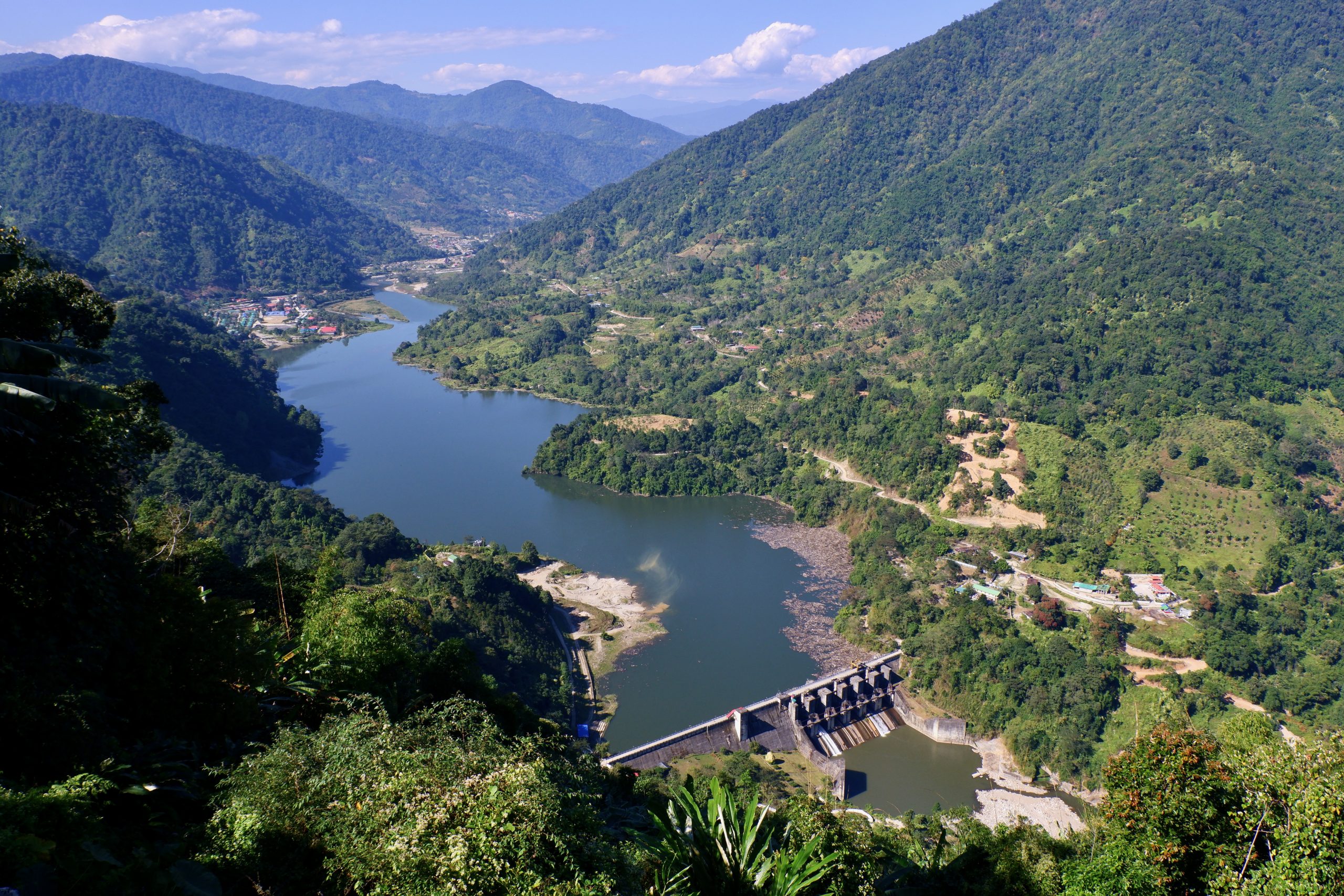 Arunachal
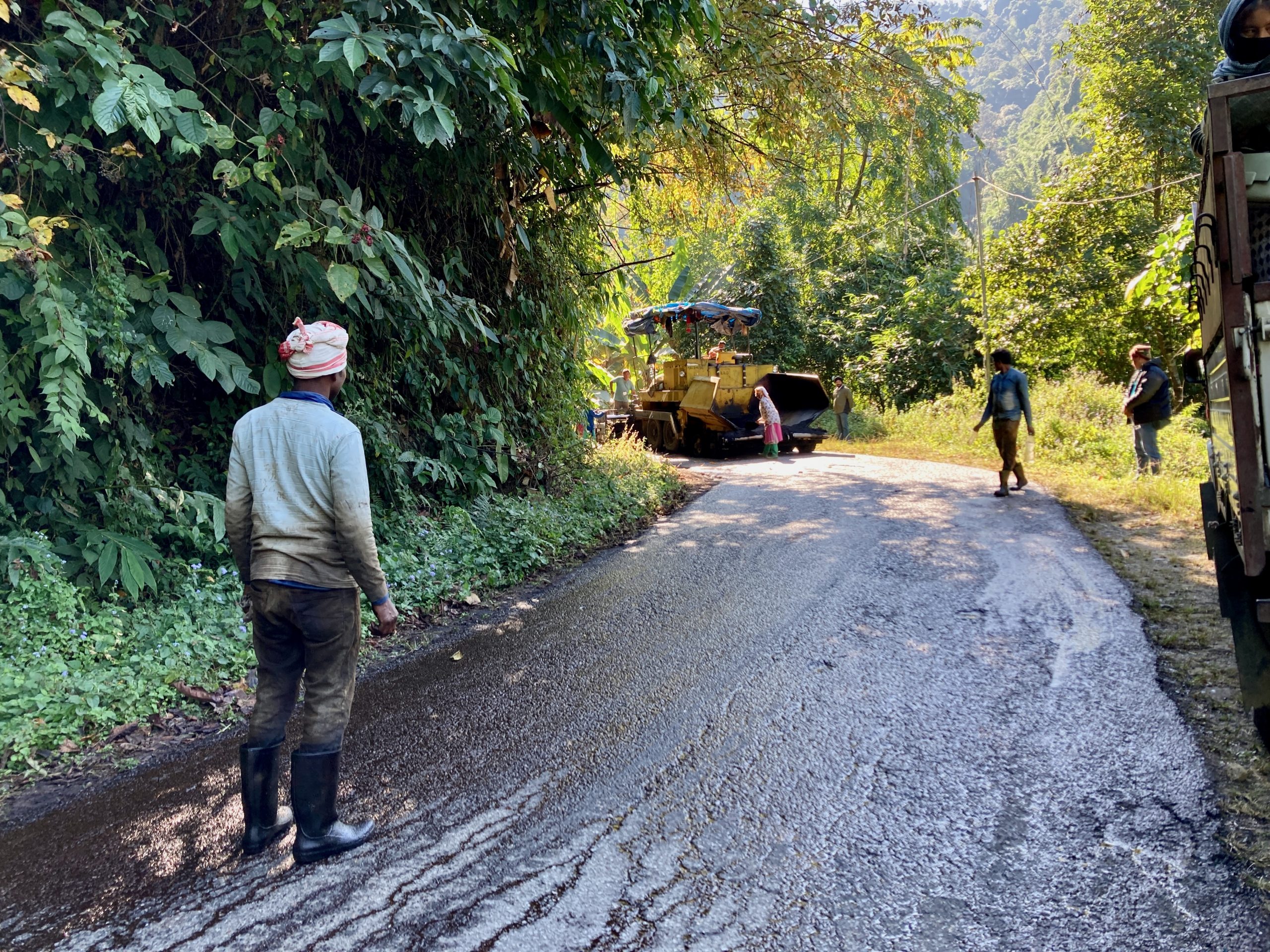
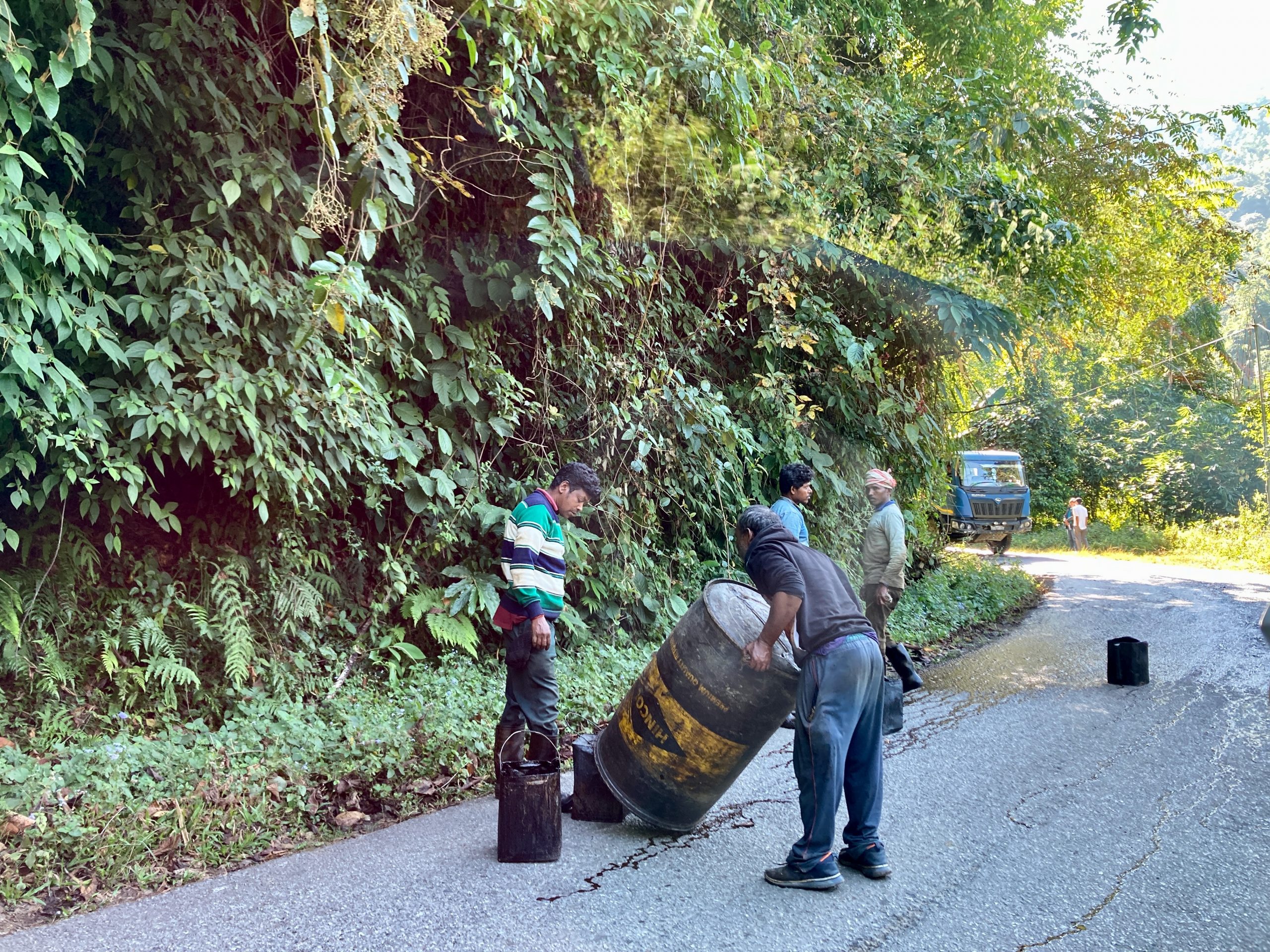
We didn’t drive all that far, and then we were already in Ziro, with only a road repair stopping us along the way.
 1
1
 2
2
Ziro is a pleasant-looking small town, but we didn’t actually visit it — we only used it for sleeping. Our real destination was the Apatani villages. The Ziro Valley is wide and fertile, at an altitude of 1,300–1,500 meters, and well suited for agriculture. Several villages of the Apatani people are located here, altogether about 30,000 people, making them a rather small group. However, they are also one of the most interesting groups — probably best known for the nose plugs that some women still wear, those who are at least 60 years old. After that generation, this painful procedure was discontinued.
My travel group was keen on getting such women in front of their camera lenses – and I realized that this pack-style photography really put me off – so after the first visit, I left my camera in my backpack for all the following village visits.
An Apatani village is laid out in such a way that you usually pass the storage houses first. They mainly practice wet rice cultivation combined with fish farming. When the fields are flooded, they add small tadpoles, and by harvest time you have the rice — and after draining the water you also have a field full of fish that just need to be collected. Unfortunately, the harvest was already over.
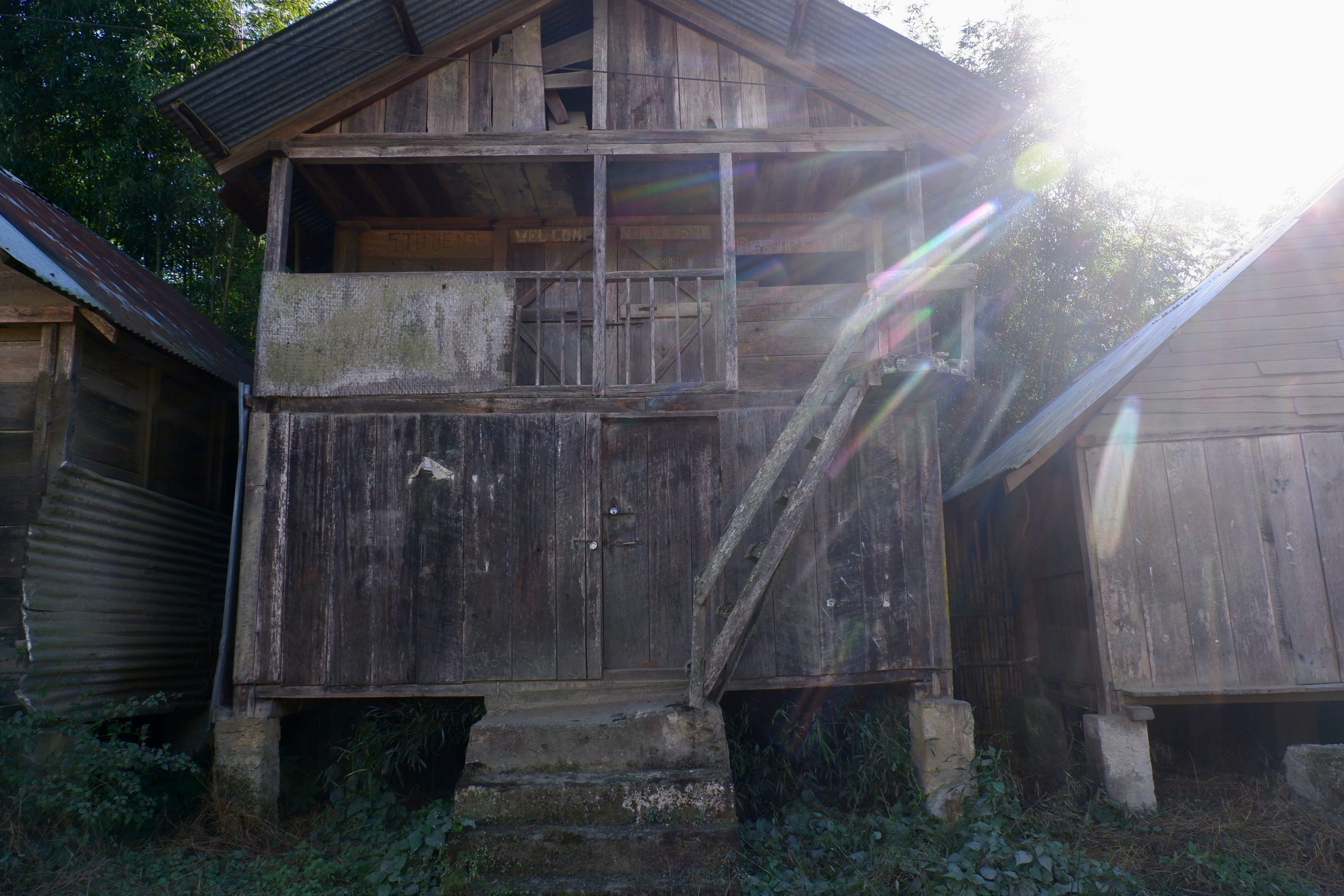 storage houses
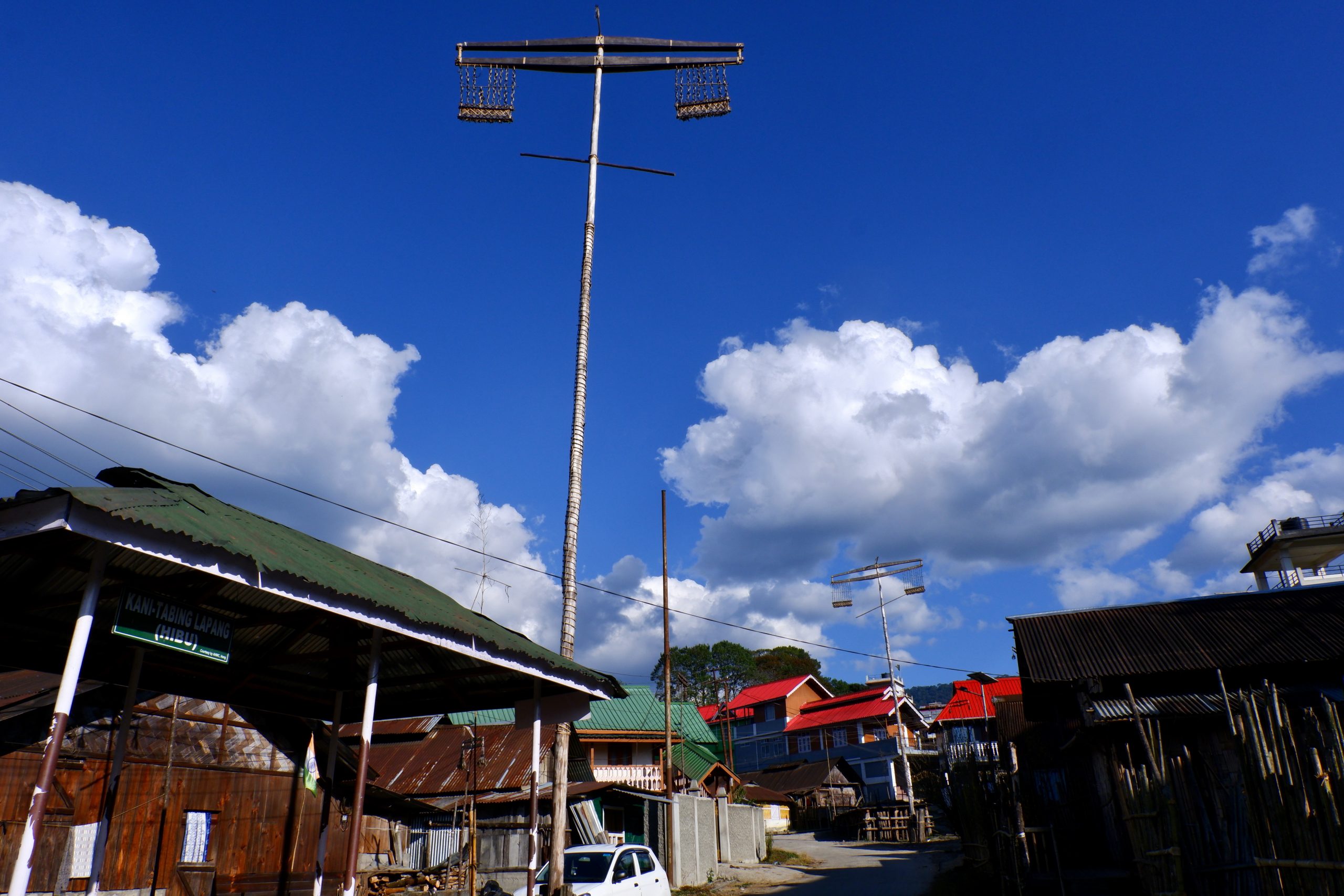
The villages are then divided into clans, each of which has its own place, the Lapang, where the council of elders meets and ritual actions are carried out. Both of these are reserved for men.
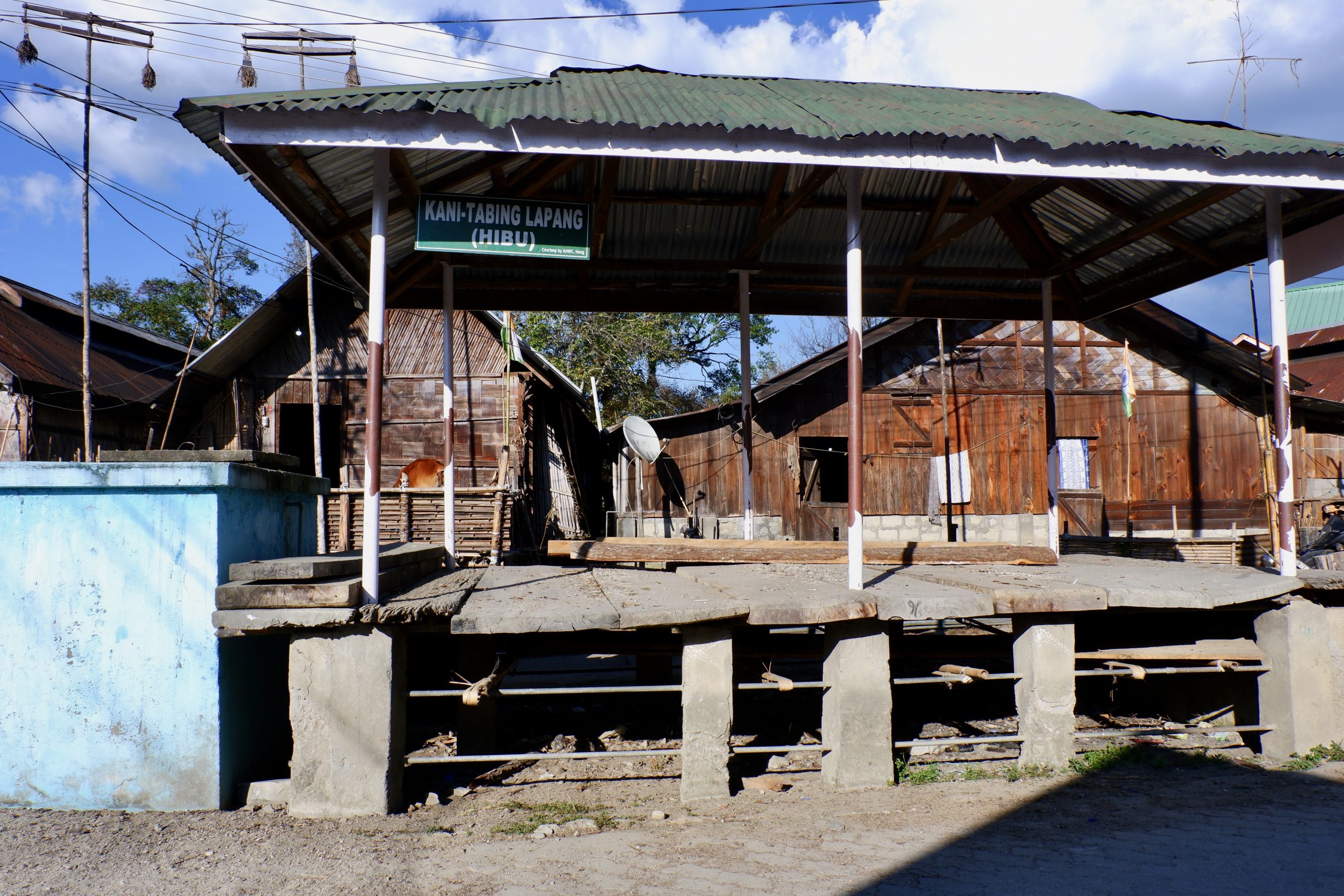 Lapang
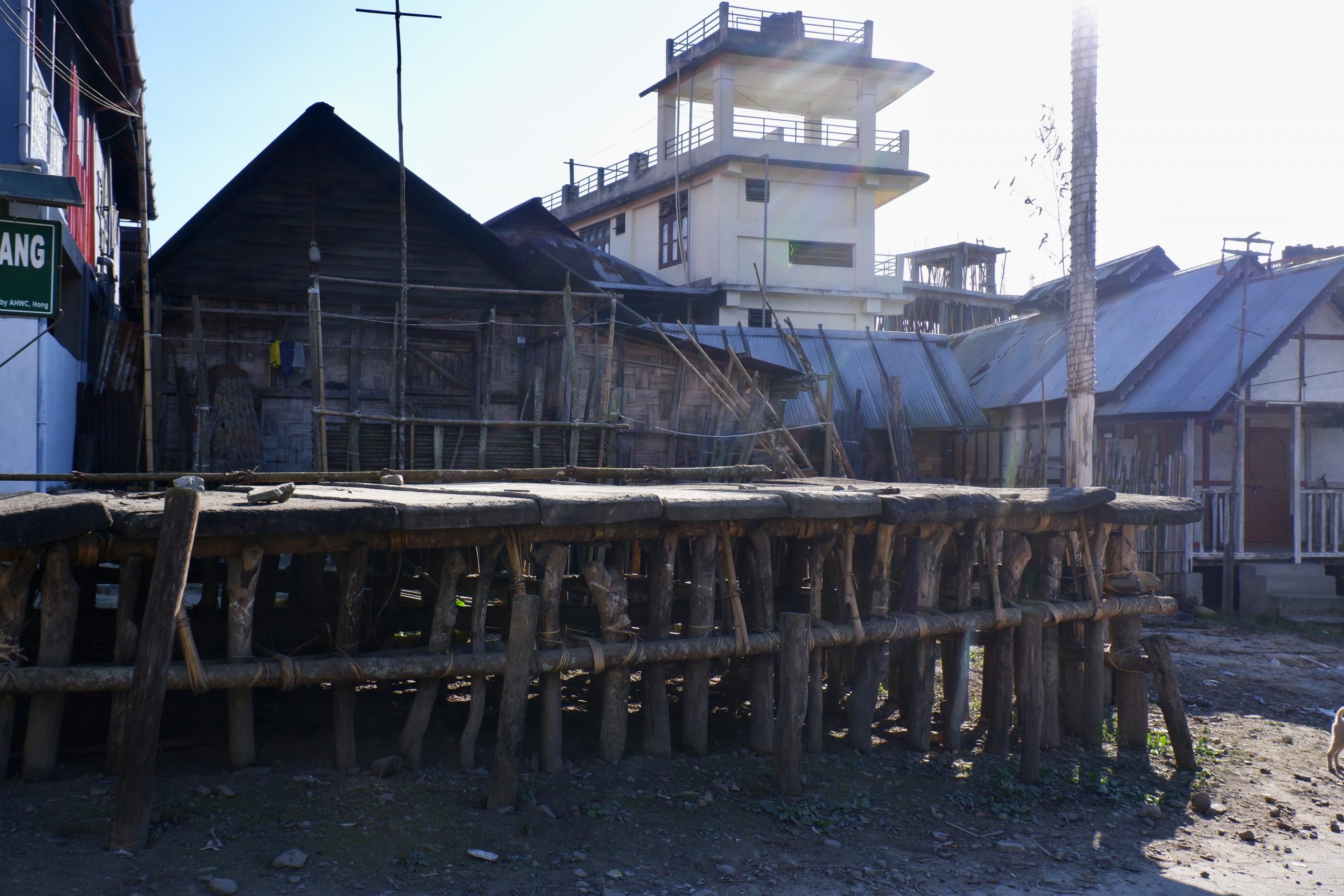 other Lapang
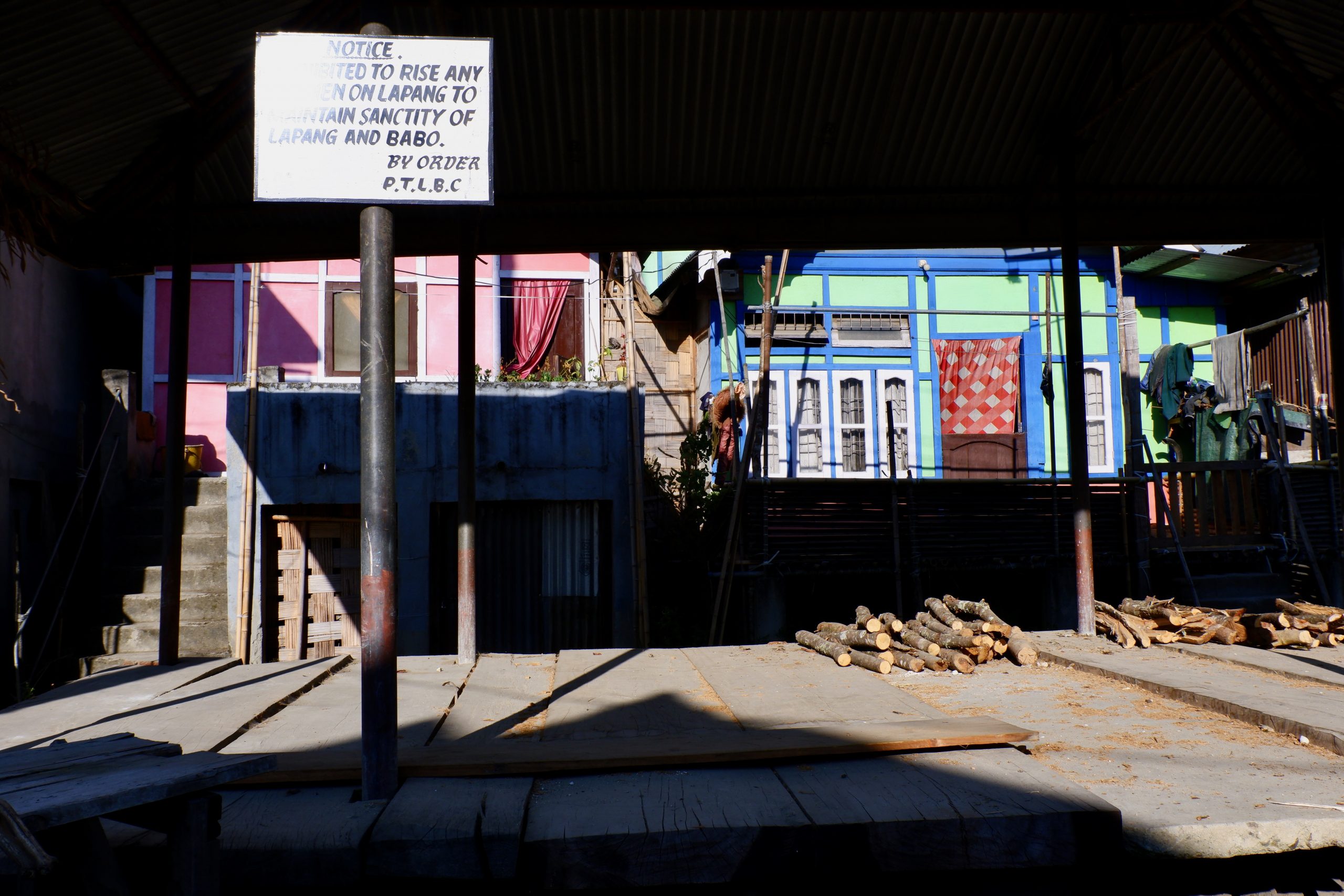 3. Lapang
The Apatani follow a belief system that is classified under the Donyi-Polo faith. At its core, it is a nature-based, animistic worldview in which Donyi (the sun) and Polo (the moon) are regarded as the highest principles. Most peoples in Arunachal Pradesh adhere to this belief system. There are no deities, no temples, no scriptures. To give this belief system more weight, things are currently changing — community centers are being built and teachings are being written down. Only gods are still not needed. There will be more about the religions in Arunachal Pradesh in the next blog post.
Among the Apatani, many aspects of rituals and spirit worlds are quite visible. They believe that when someone is ill or suffers some kind of misfortune, it is due to spirits that must then be appeased. This is done, for example, by shamans (of whom there are fewer and fewer); animals are sacrificed and instructions are read from their entrails, and protective structures and similar objects are placed around.
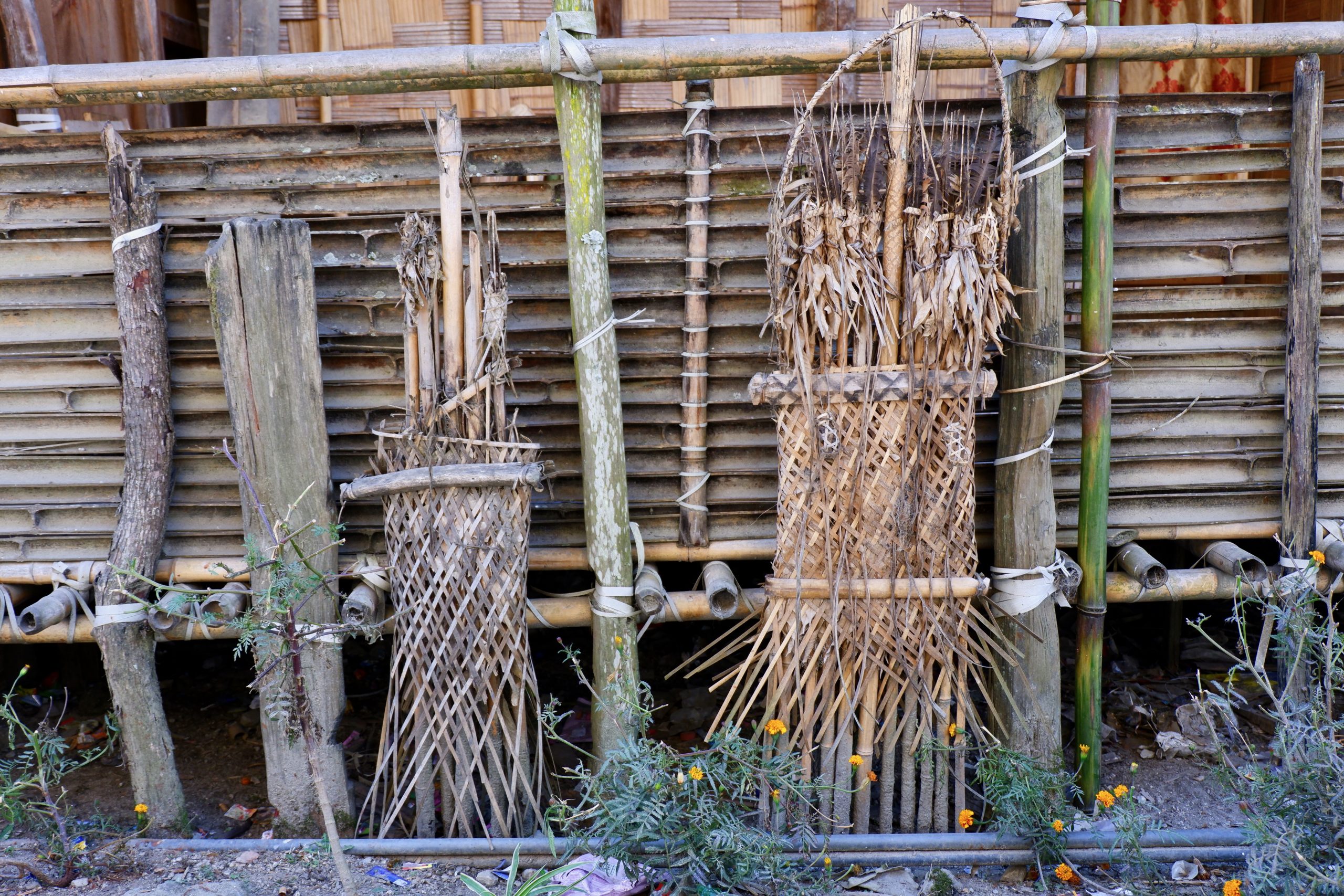 protectors in front of many houses
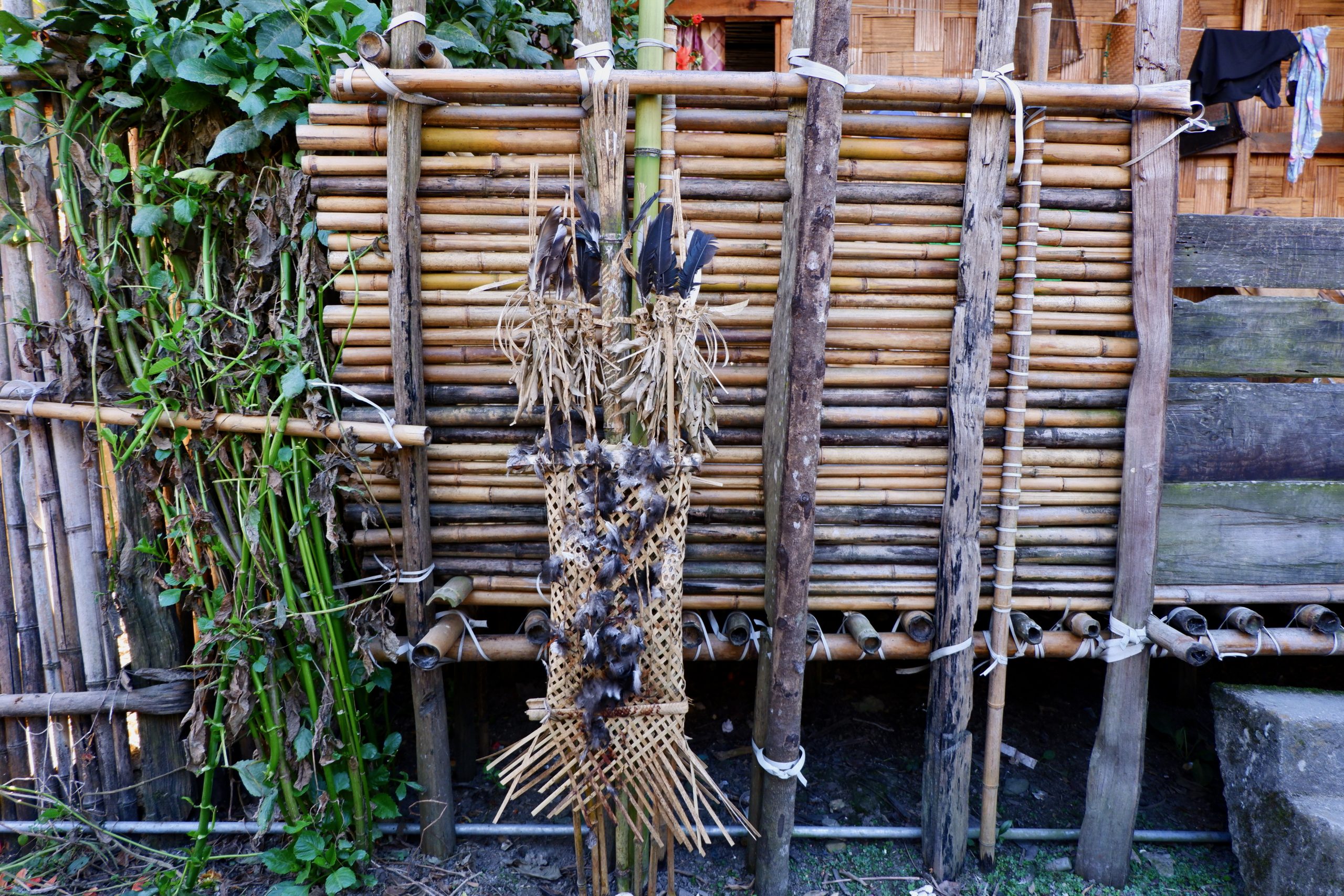 fresh protector
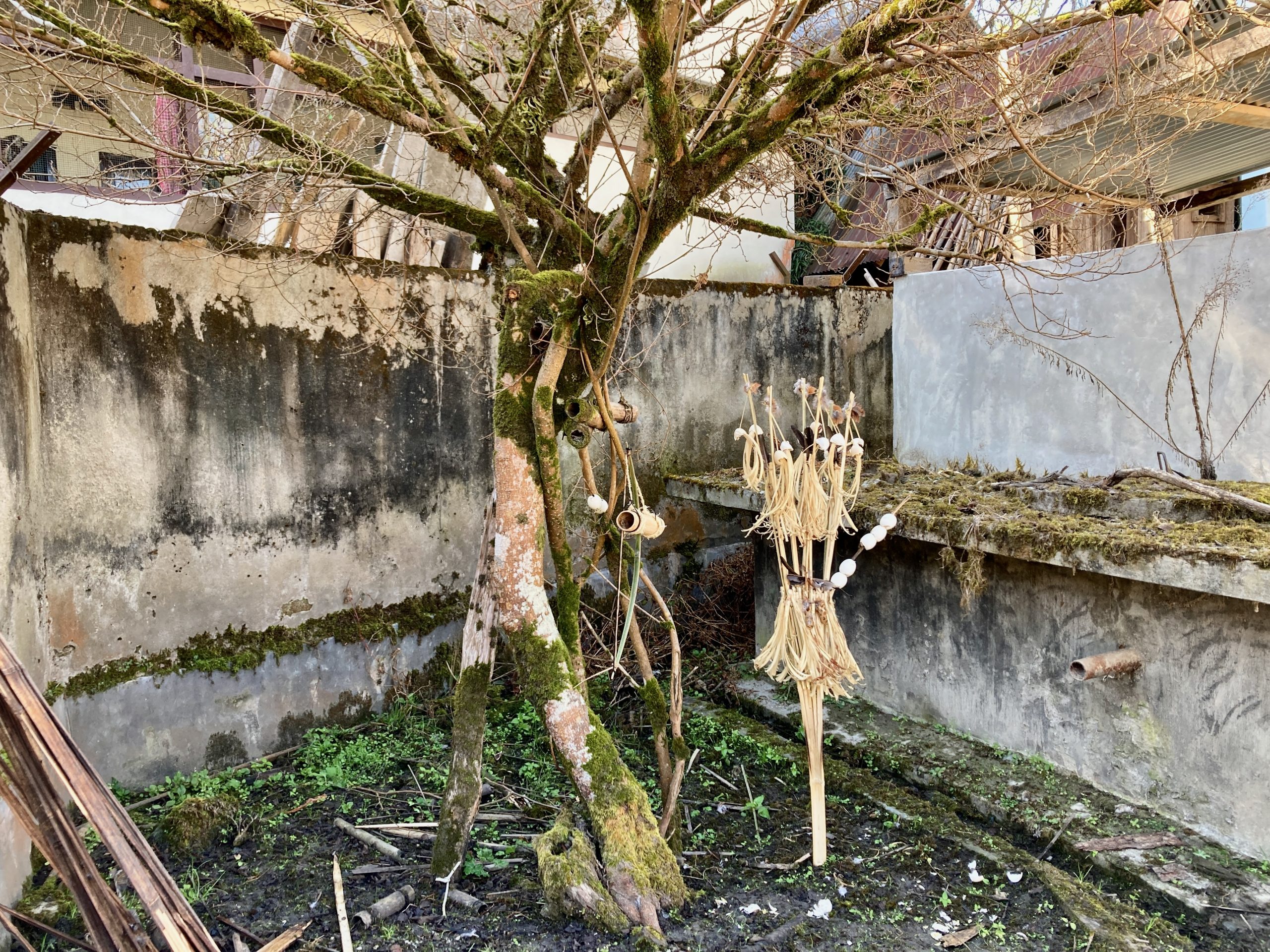 spirit-living-place
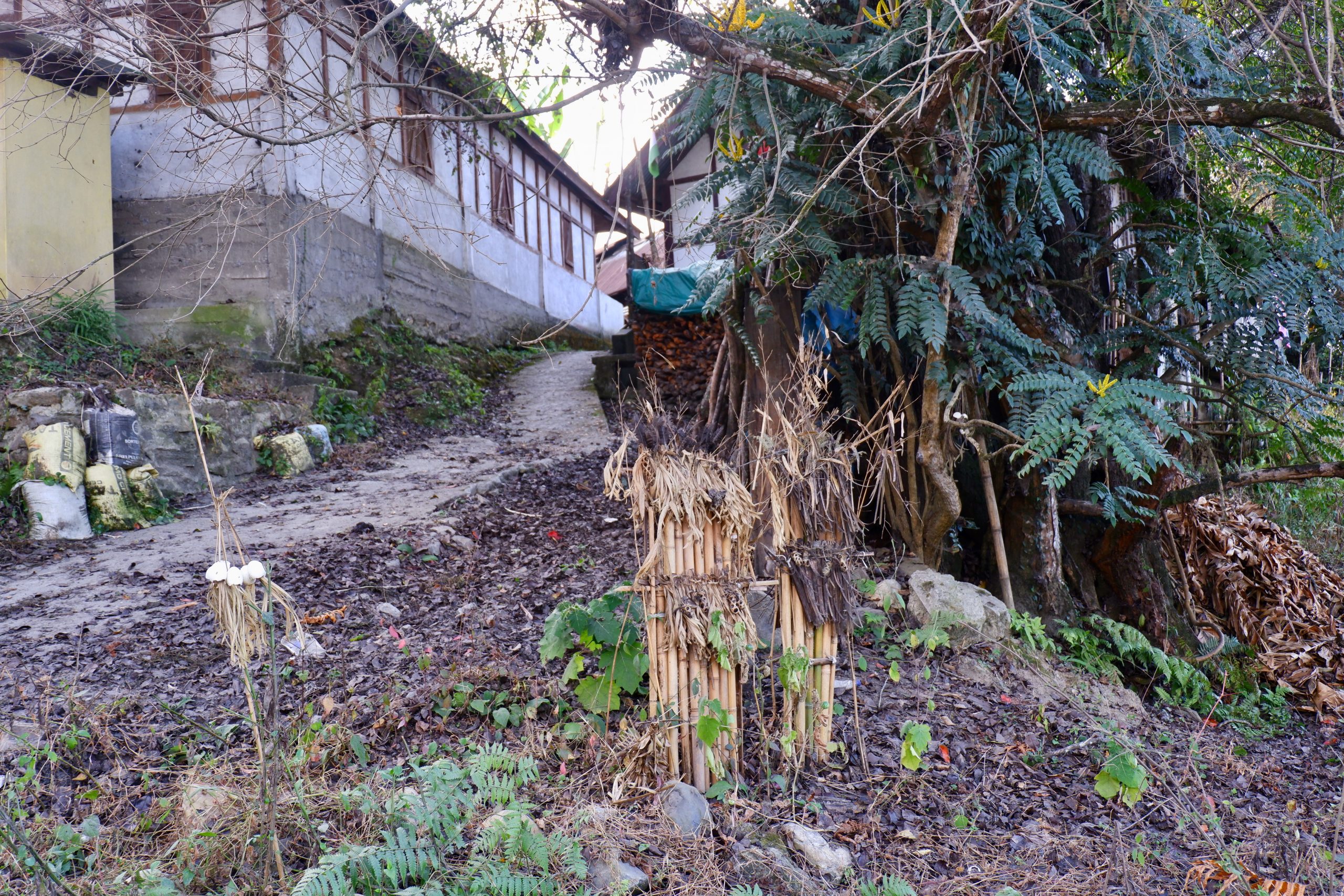 same
same
We didn’t meet any shamans except for one. He said he was “100% Jesus and 100% human.” That was a fake shaman. He was delighted whenever we acted impressed by his ramblings and kept asking for money. In hindsight, I’m annoyed that I didn’t ask how people deal with such phenomena — whether it was rooted in alcohol, mental illness, or something else
Then there is a major annual festival, the Myoko Festival. Three villages always belong together, and they take turns hosting the festival. It is a spring ritual for peace and friendship between the clans. During the festival, a shaman also sits in a kind of hut where there is a monkey skull into which a straw is placed. If the straw trembles, you know that the spirits are present. New monkey skulls must be used every year — no “recycling”.
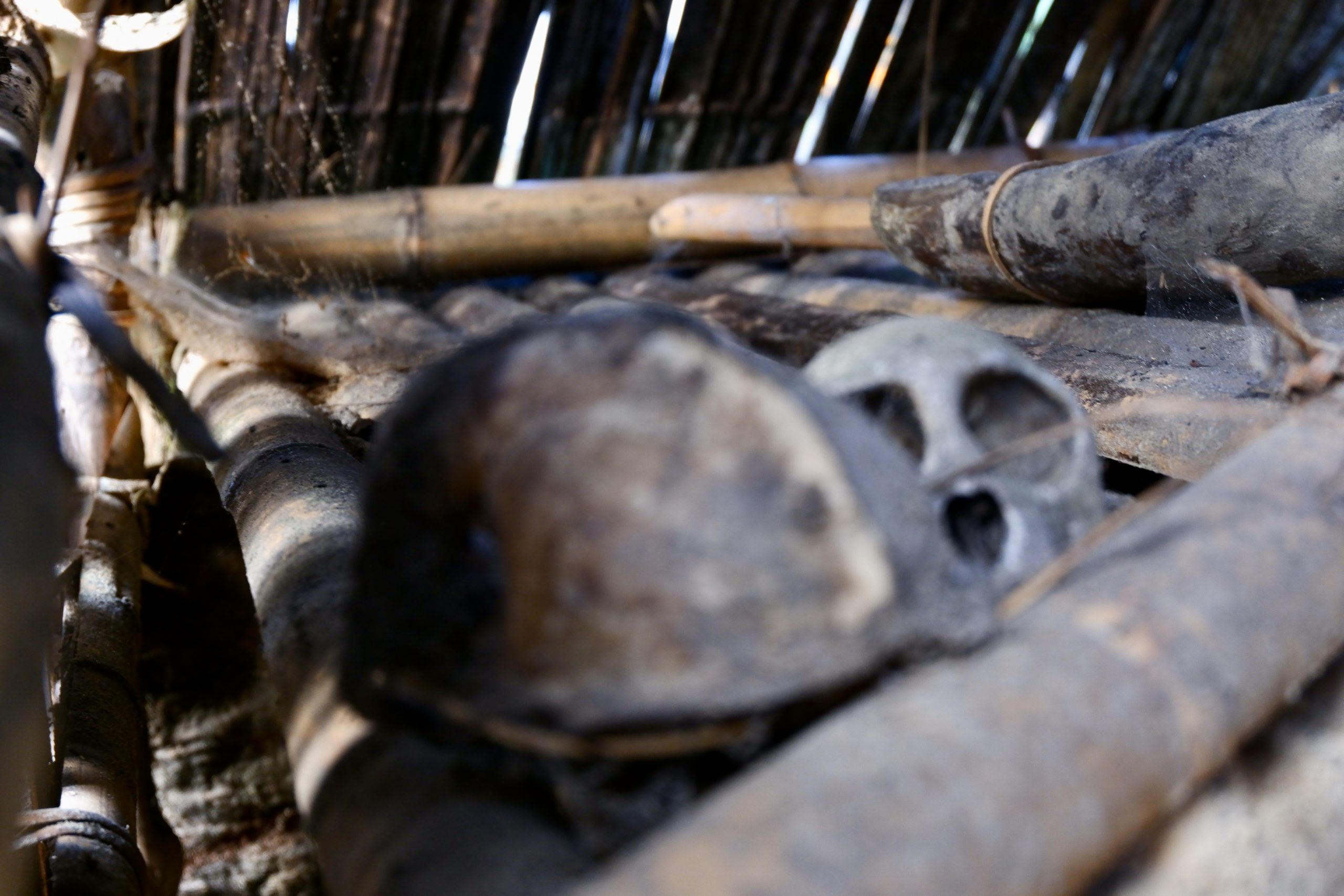 monkey skull
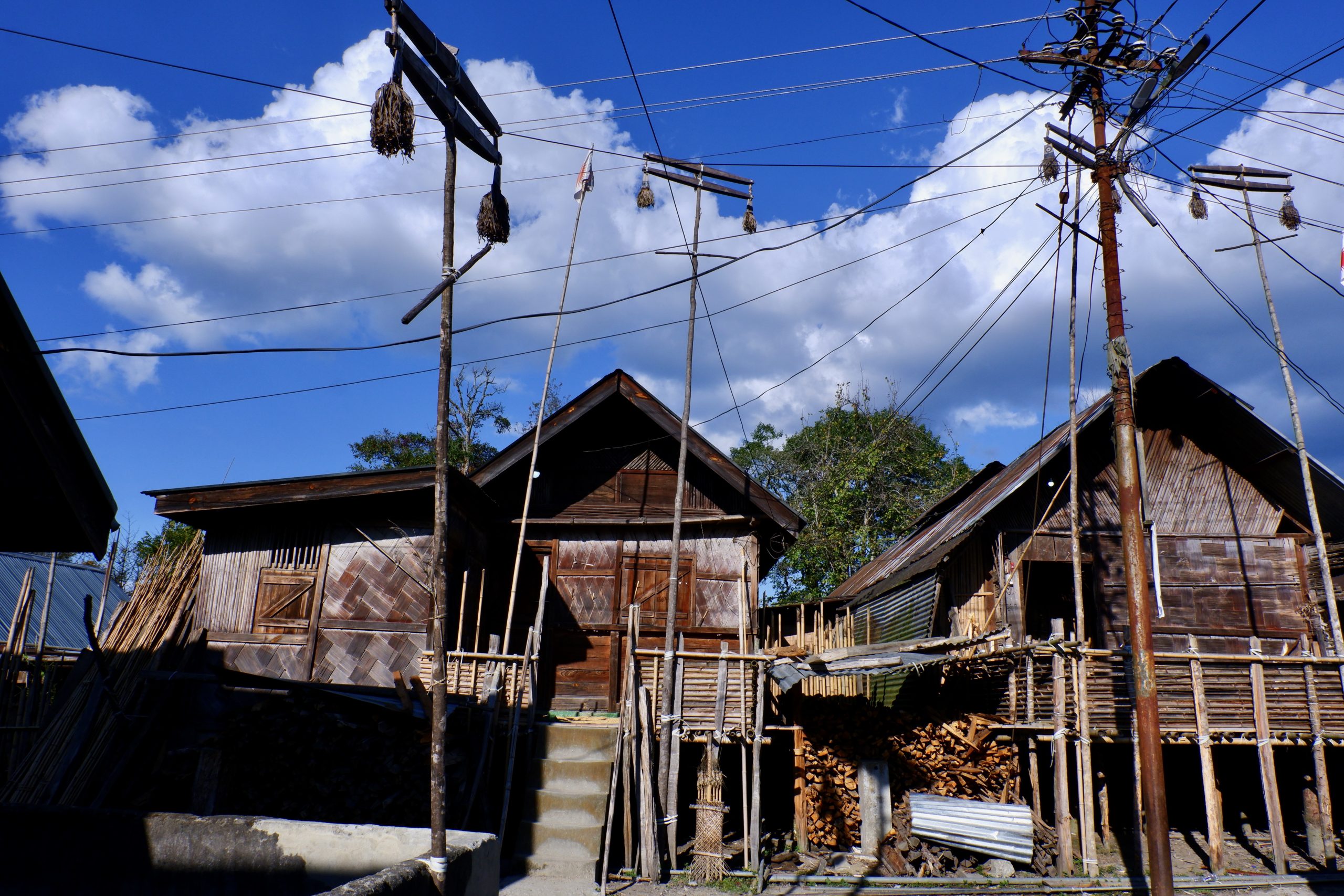
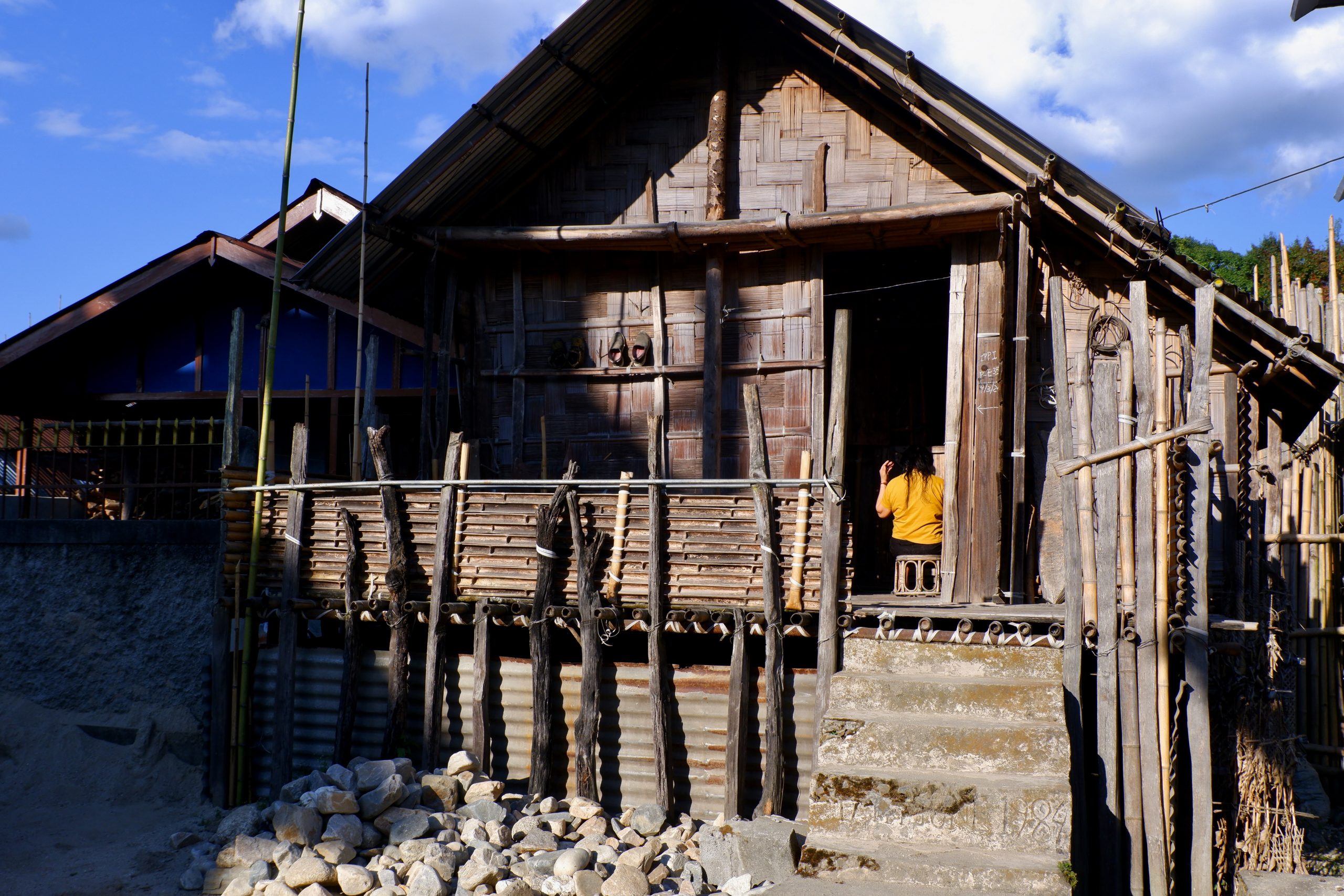
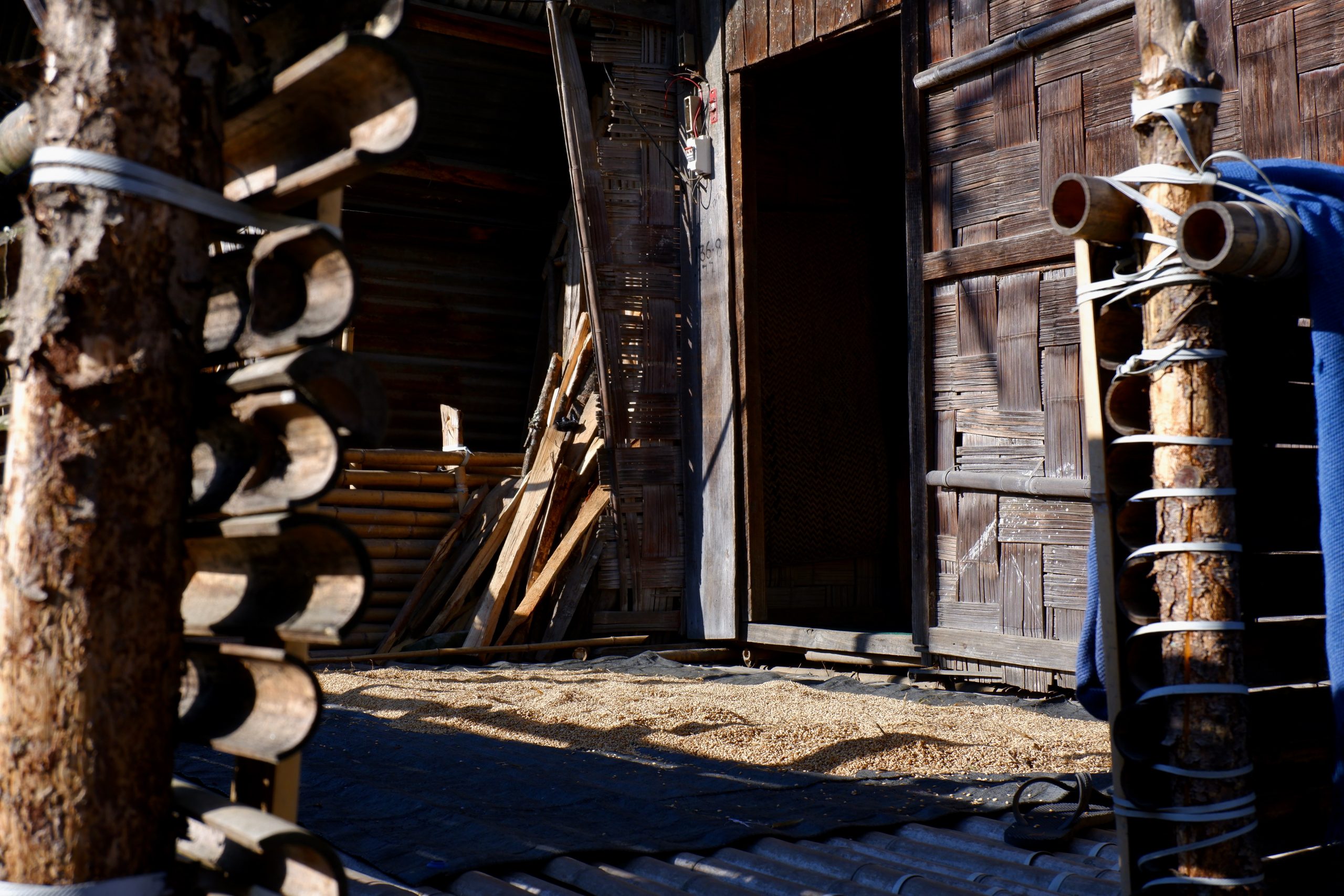
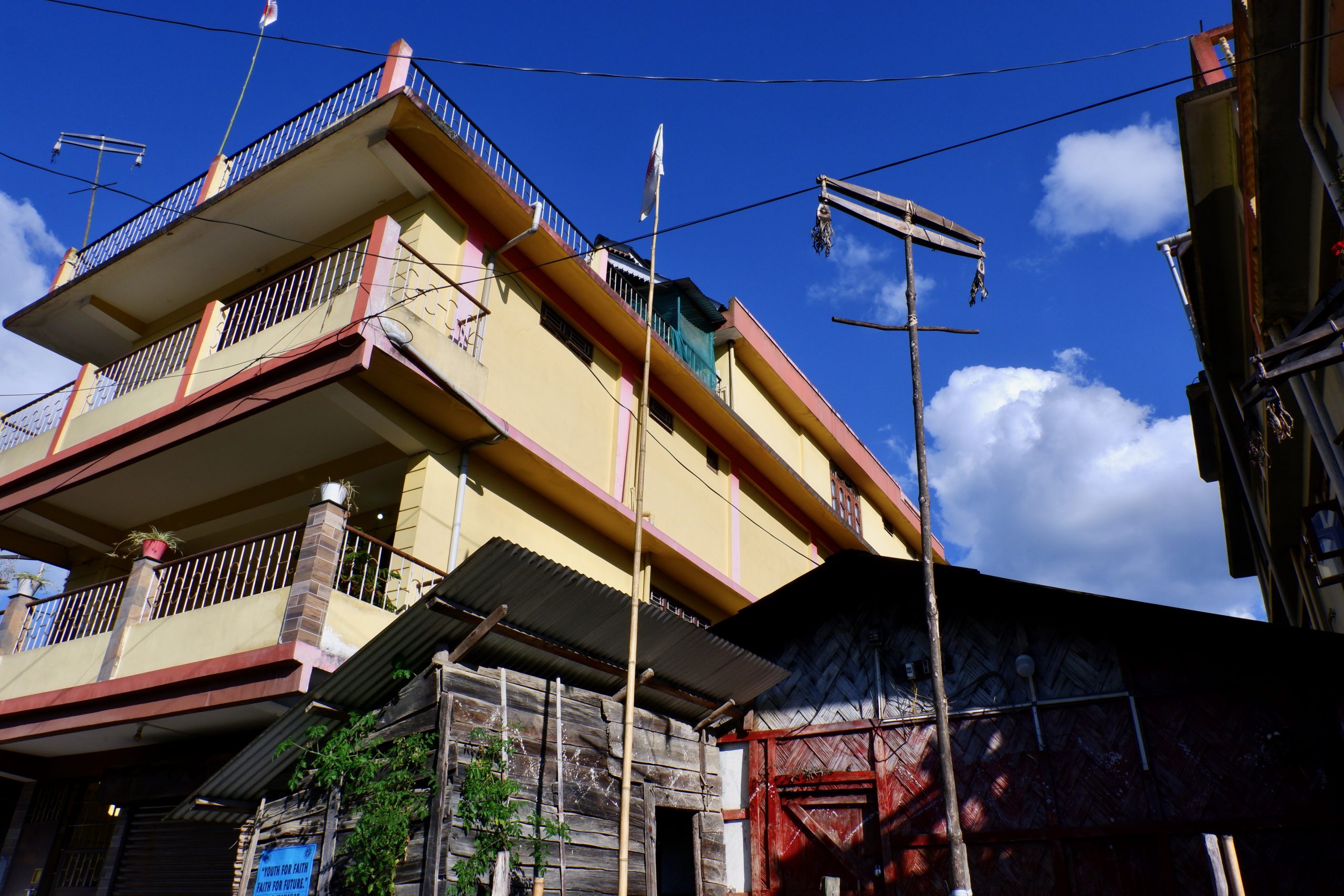
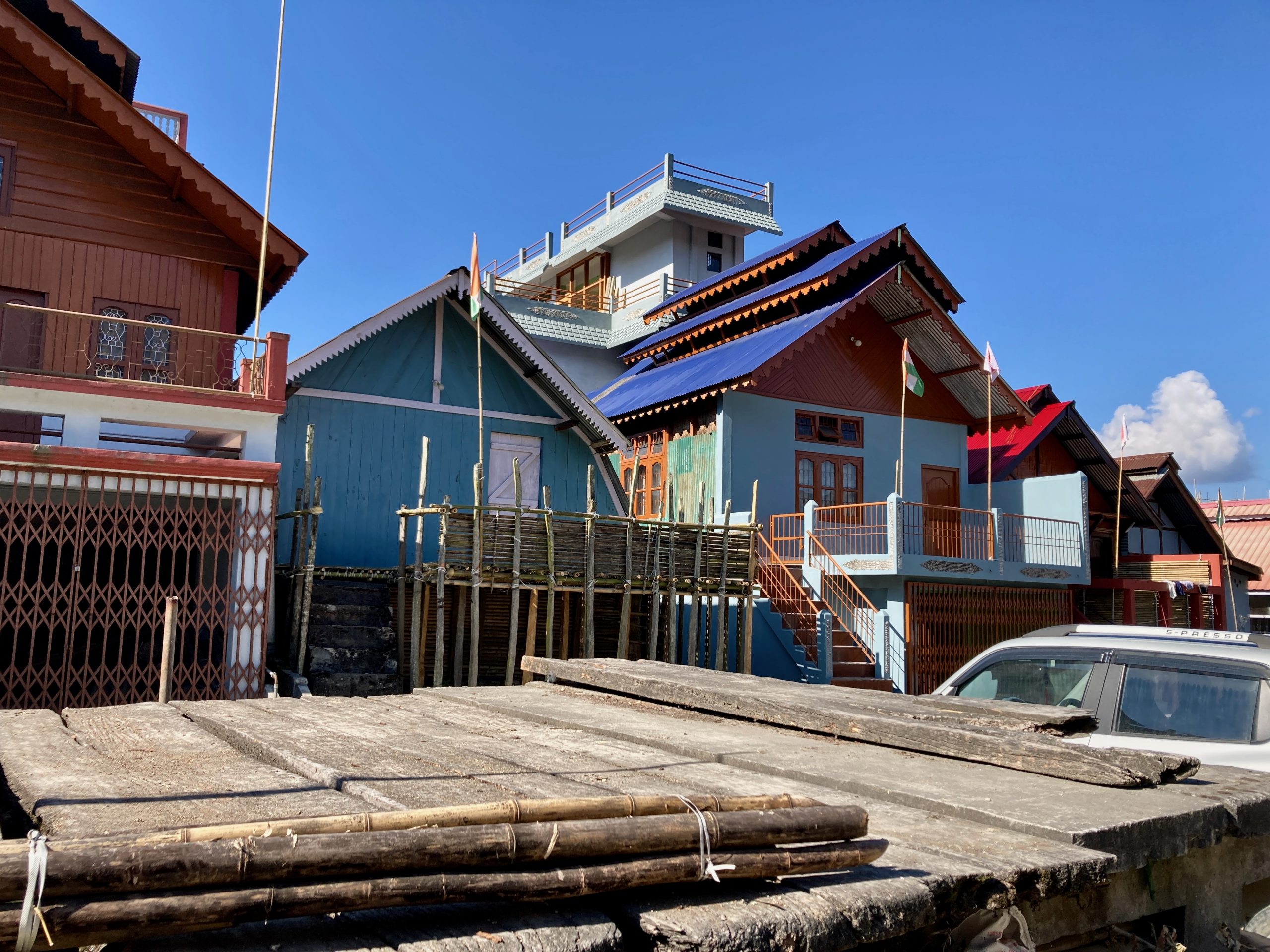
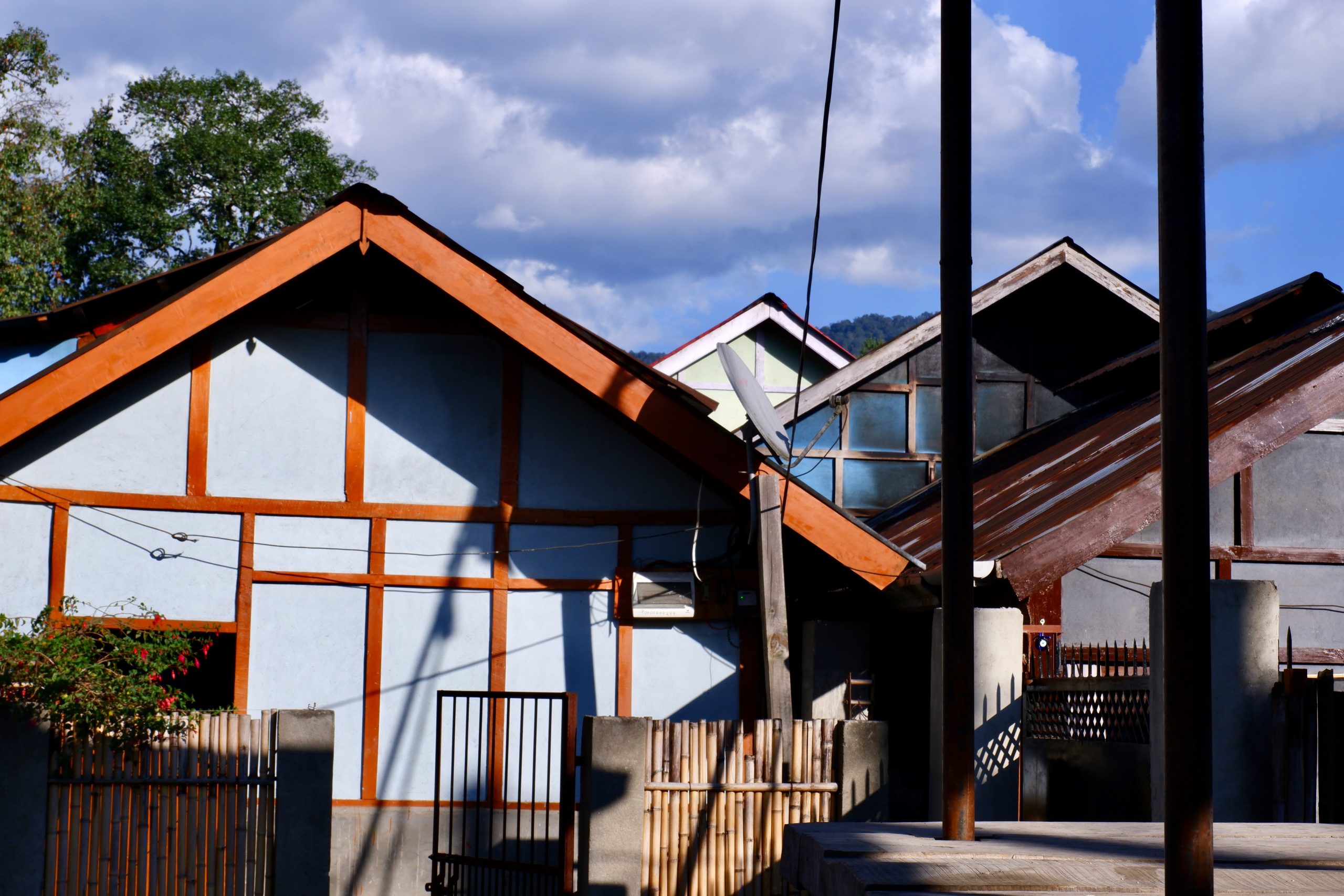
Traditionally, the Apatani live in bamboo and wooden houses, but these are increasingly being replaced by stone buildings. A traditional house does not last very long — the roof has to be replaced every few years and the rest roughly every 15 years. In addition, the houses stand quite close together, which causes problems when a fire breaks out. Winters are fairly cold, so people make a lot of fire for warmth. Unfortunately, these fires sometimes lead to accidental house fires.
Some people who have become quite wealthy build themselves very large new houses. This makes the difference in wealth within the village very visible — and it doesn’t exactly contribute to harmony in village life.
 1
1
 2
2
 3
3
 4
4
 5
5
 6
6
 7
7
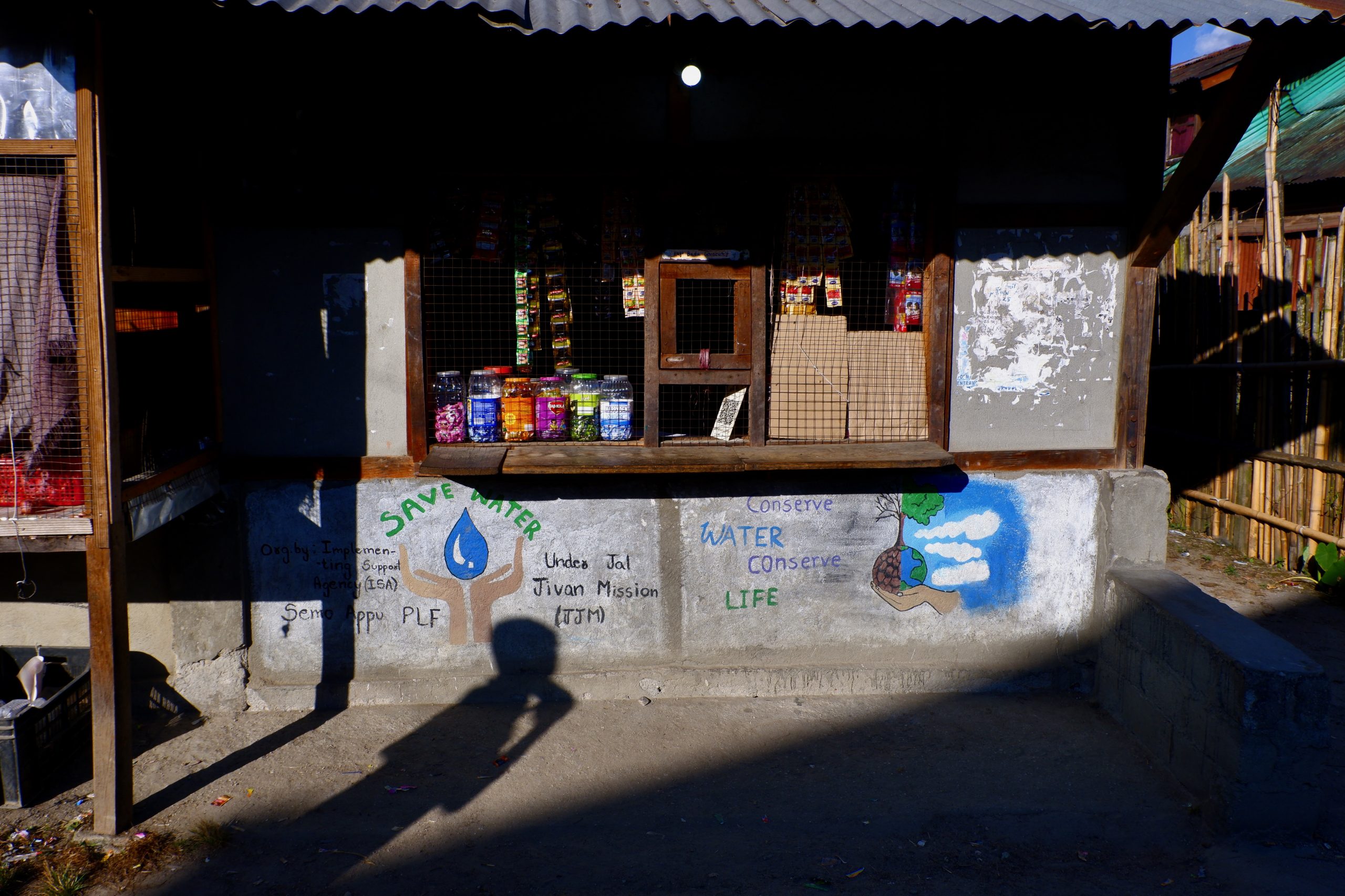 shop
shop
In principle, there is much more that could be said about the Apatani, but despite having a good additional guide on day 1 and two more village visits on day 2, we didn’t actually learn all that much directly.
But on the first day we received a spontaneous invitation to a baby celebration — first the immediate family is hosted when a new baby is born, and later, at a second celebration, the whole neighborhood.
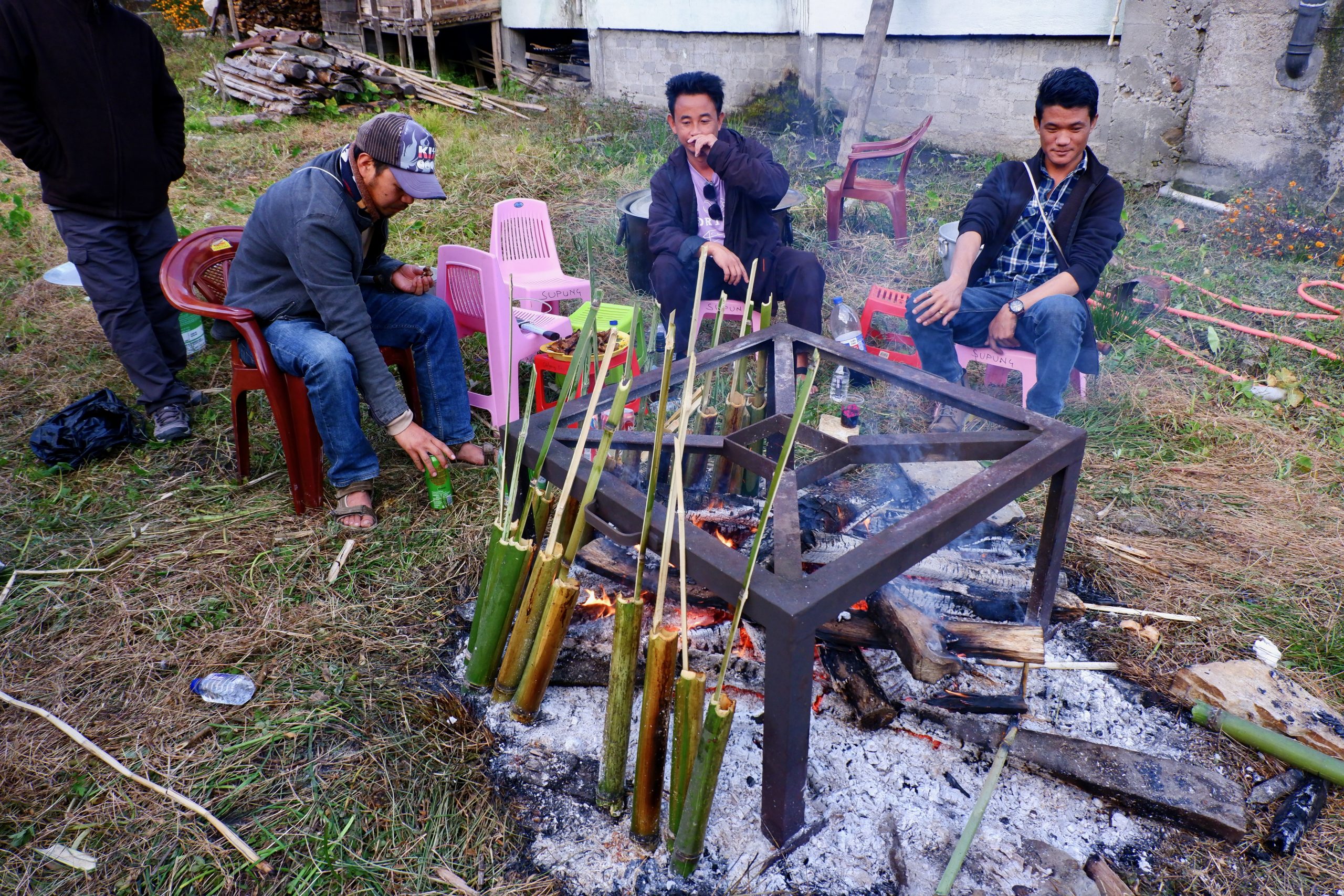 happy round
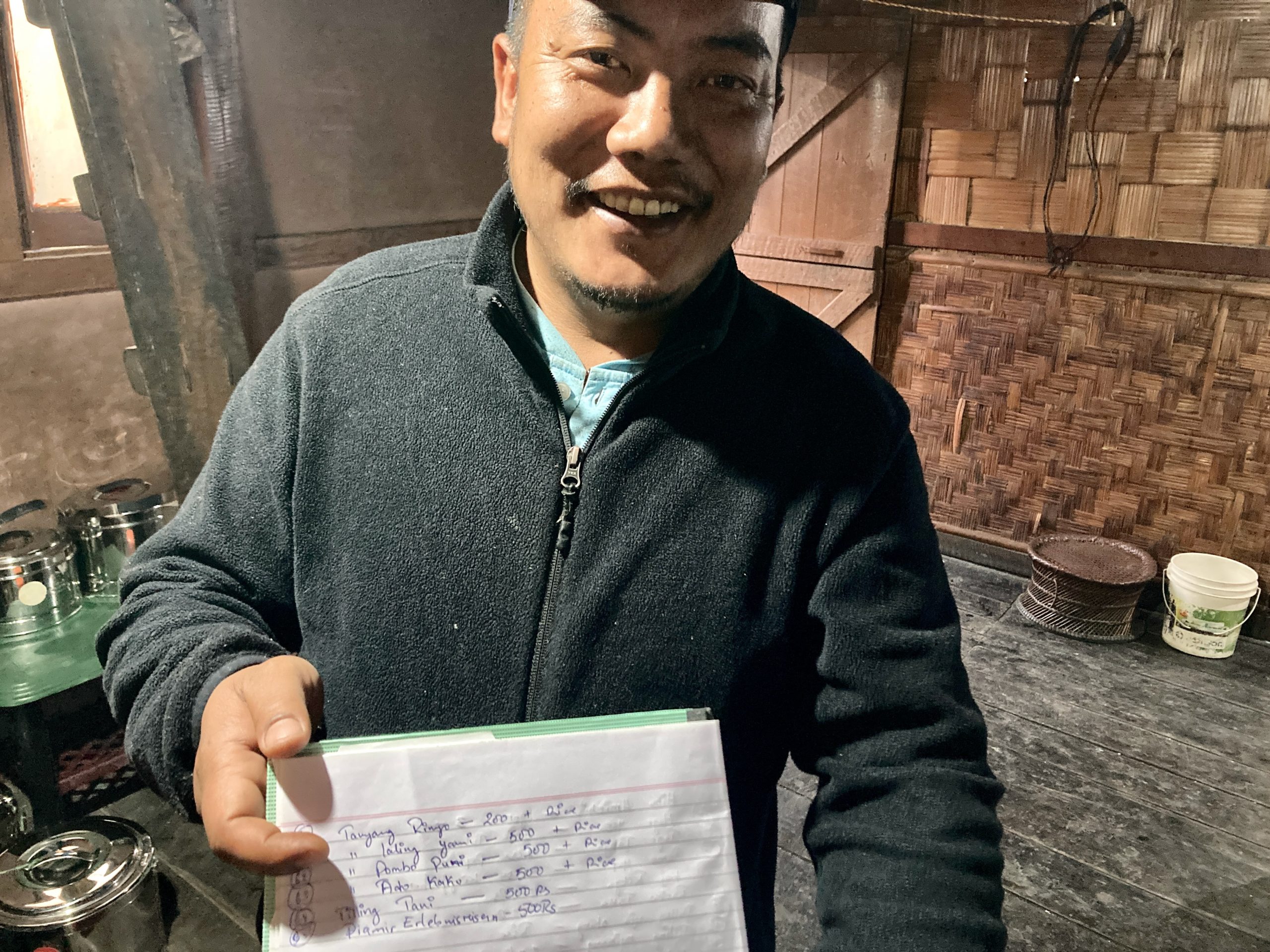 Babydad
You give money and other gifts, which are carefully recorded.
We also visited a cheerful woman who showed us her very large vegetable garden. Overall, however, the villages were rather empty — meaning there were only a few people in the public areas — but surprisingly many vehicles winding their way through the narrow lanes.
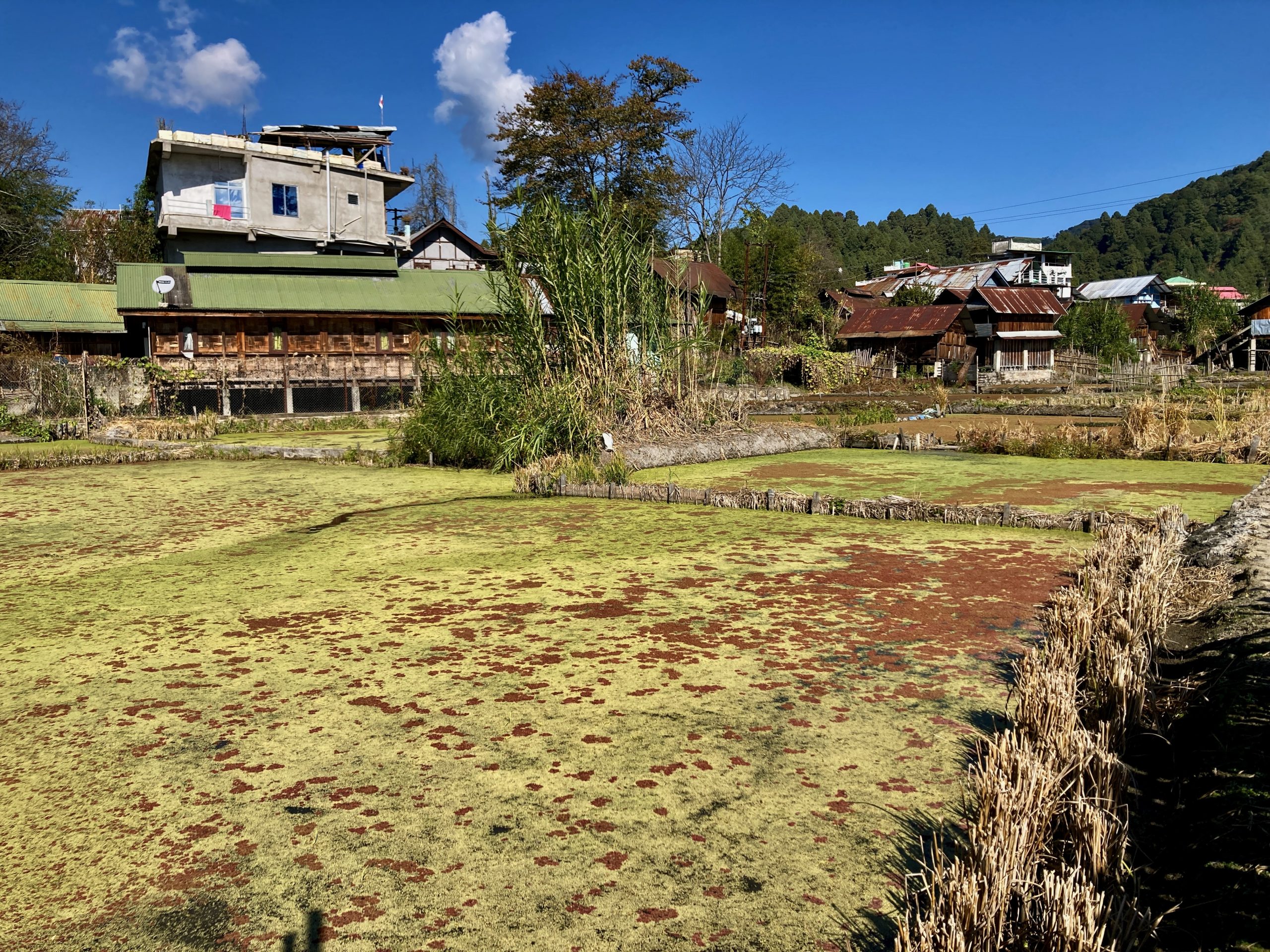 before a village
I’ll leave it at that for the blog — and to dive deeper, I really do recommend traveling there yourself. There are still so many aspects that are truly fascinating. And I think I need to go again myself — but without a group.