


Ladakh: Basgo – They kept their underwear on
28. December 2025
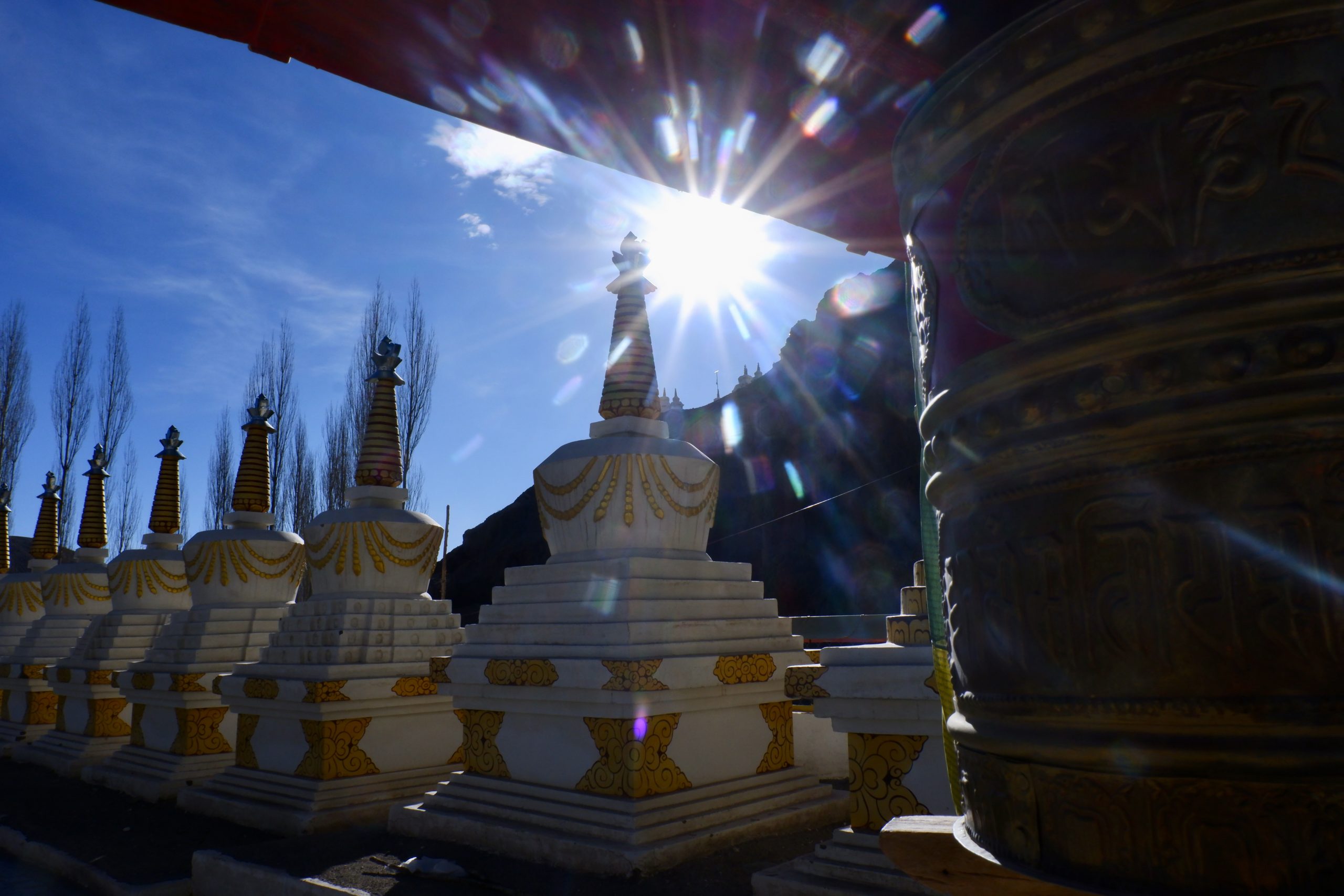
In Basgo, the only Losar celebration that was meant to take place almost in full did indeed go ahead. Only one dance by the women was omitted. I was anxious to see whether it would all really happen. Even though we had already had many wonderful experiences, I felt so sorry for the group, who had traveled specifically for all these festivities. And when we arrived in Basgo, we heard that someone had died the evening before… That, however (luckily for us), resulted only in a delay and not in a cancellation.
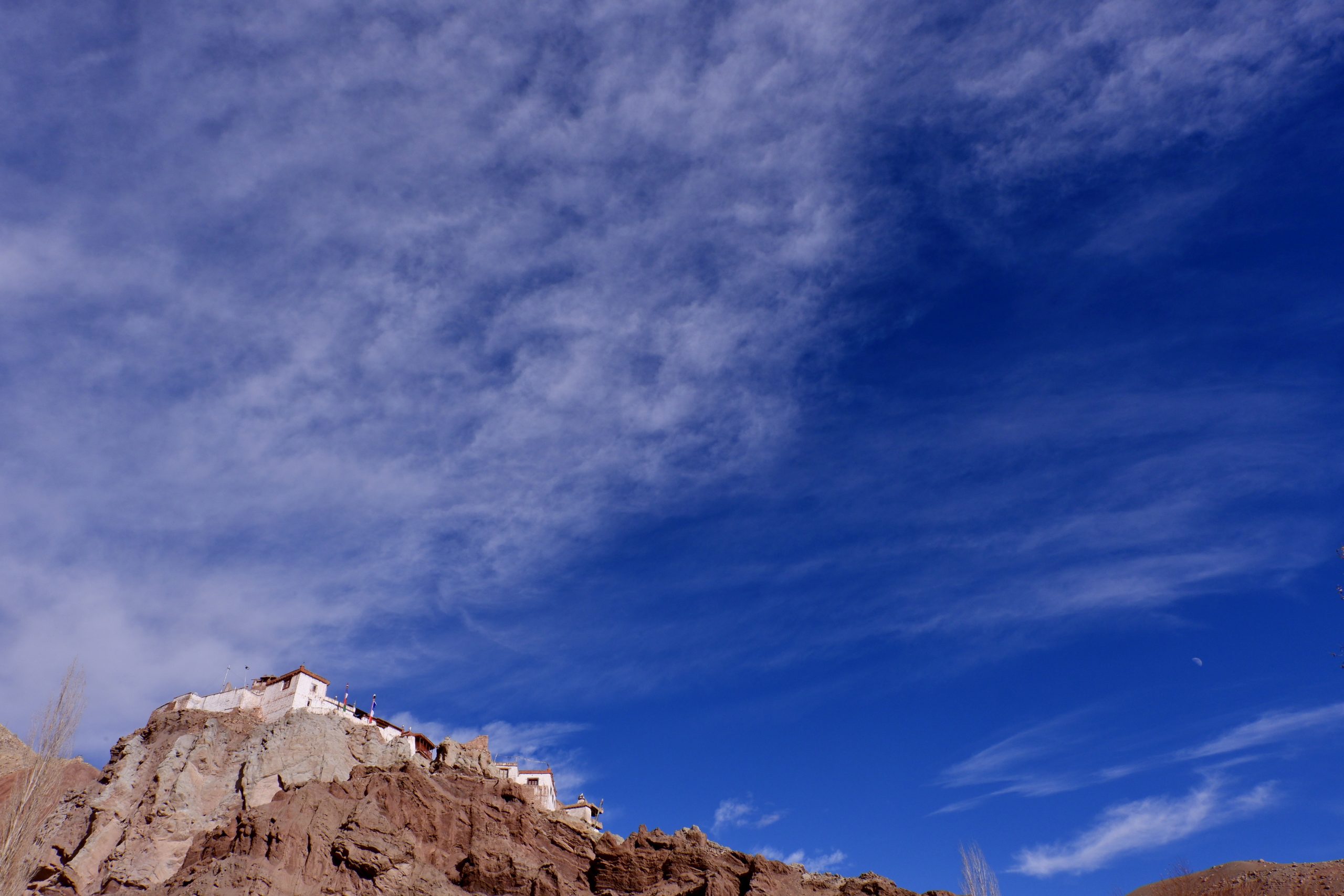
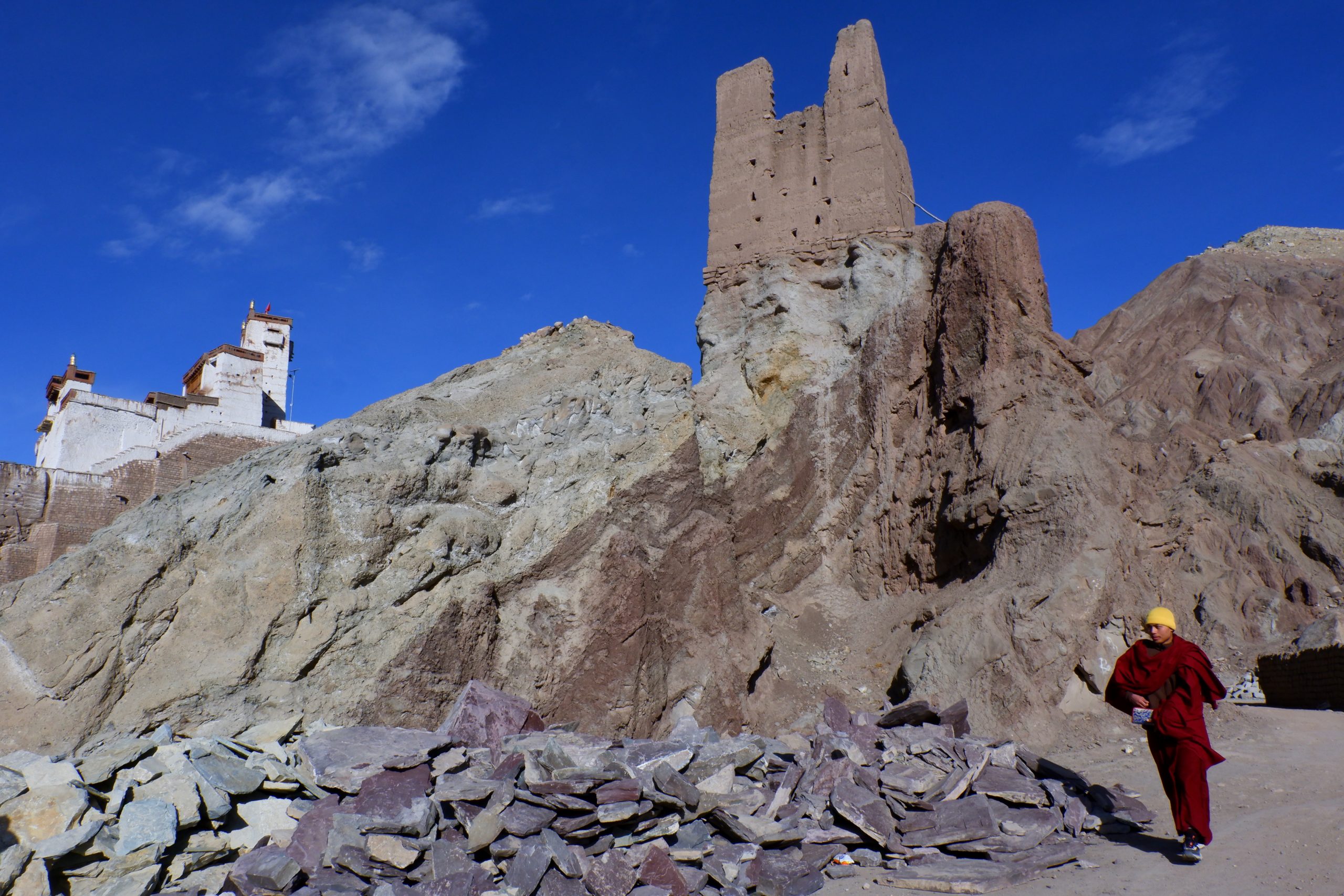
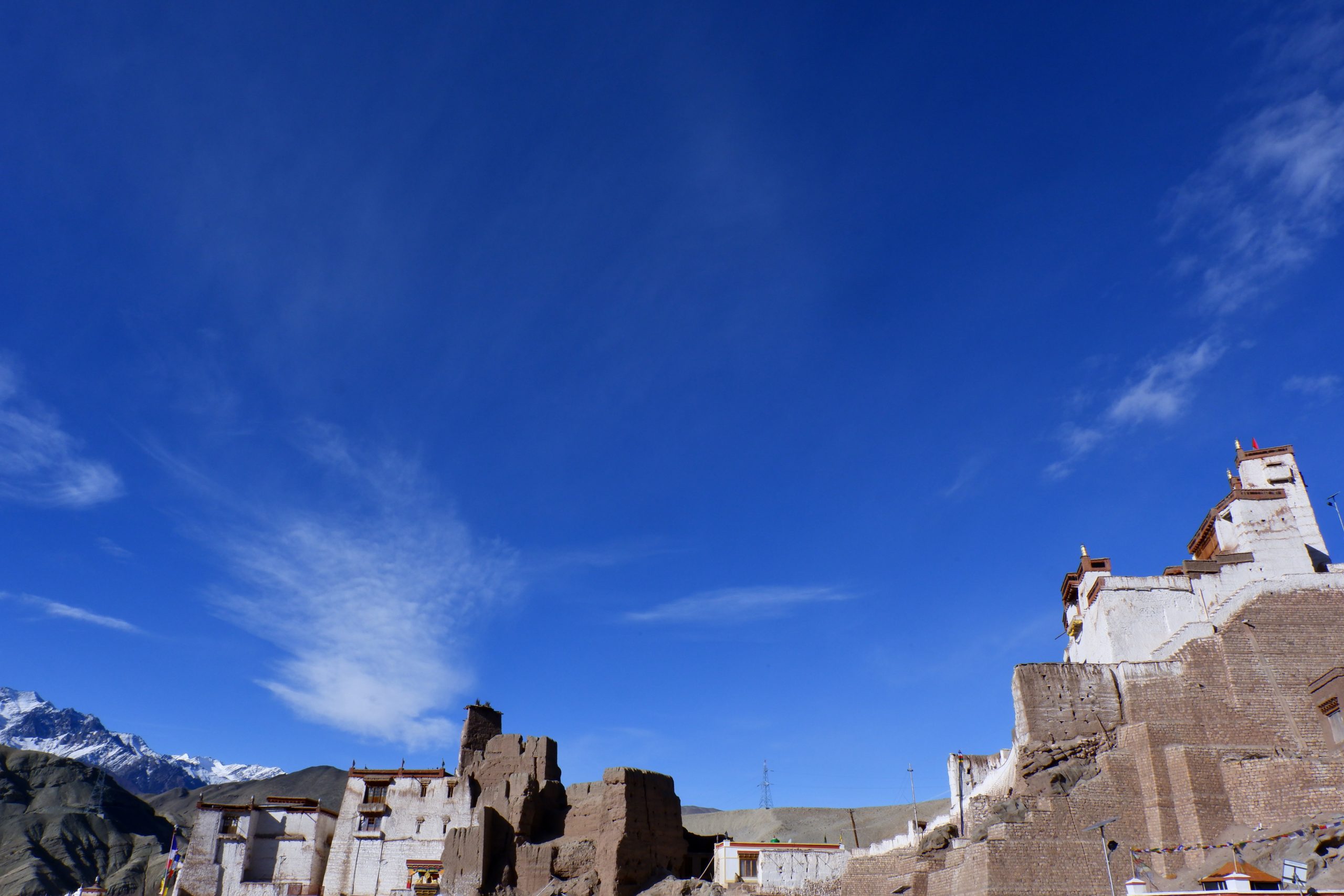
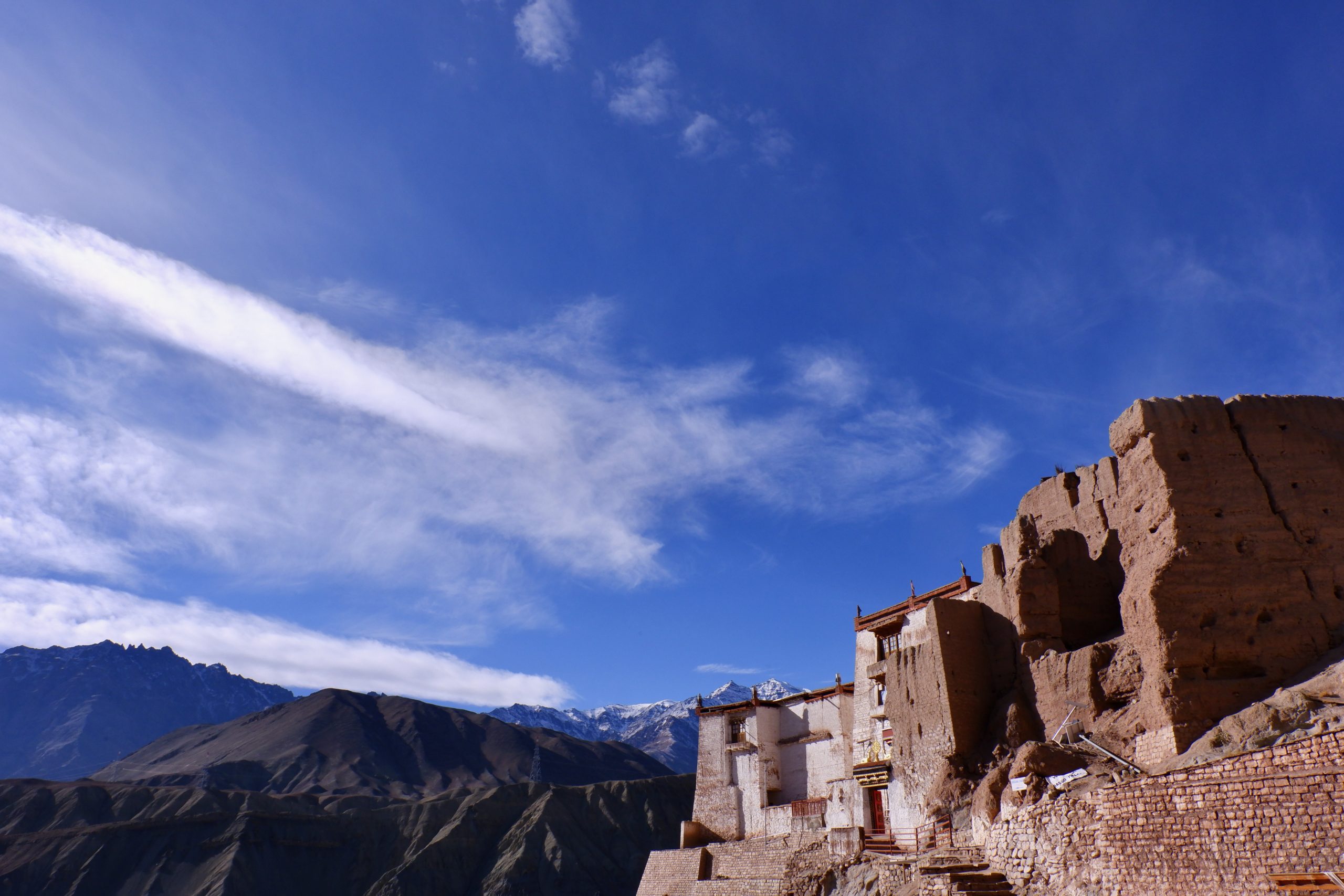
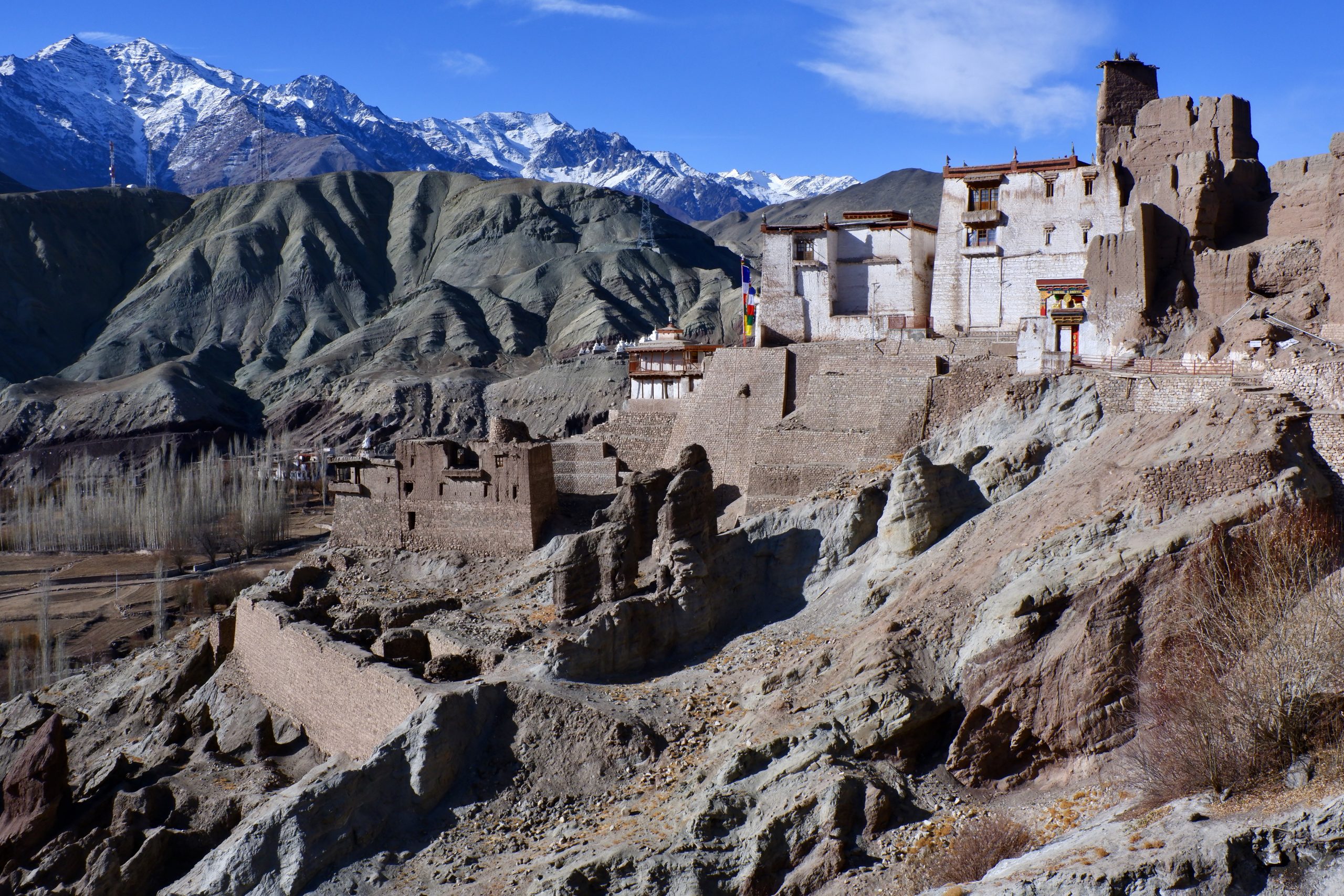
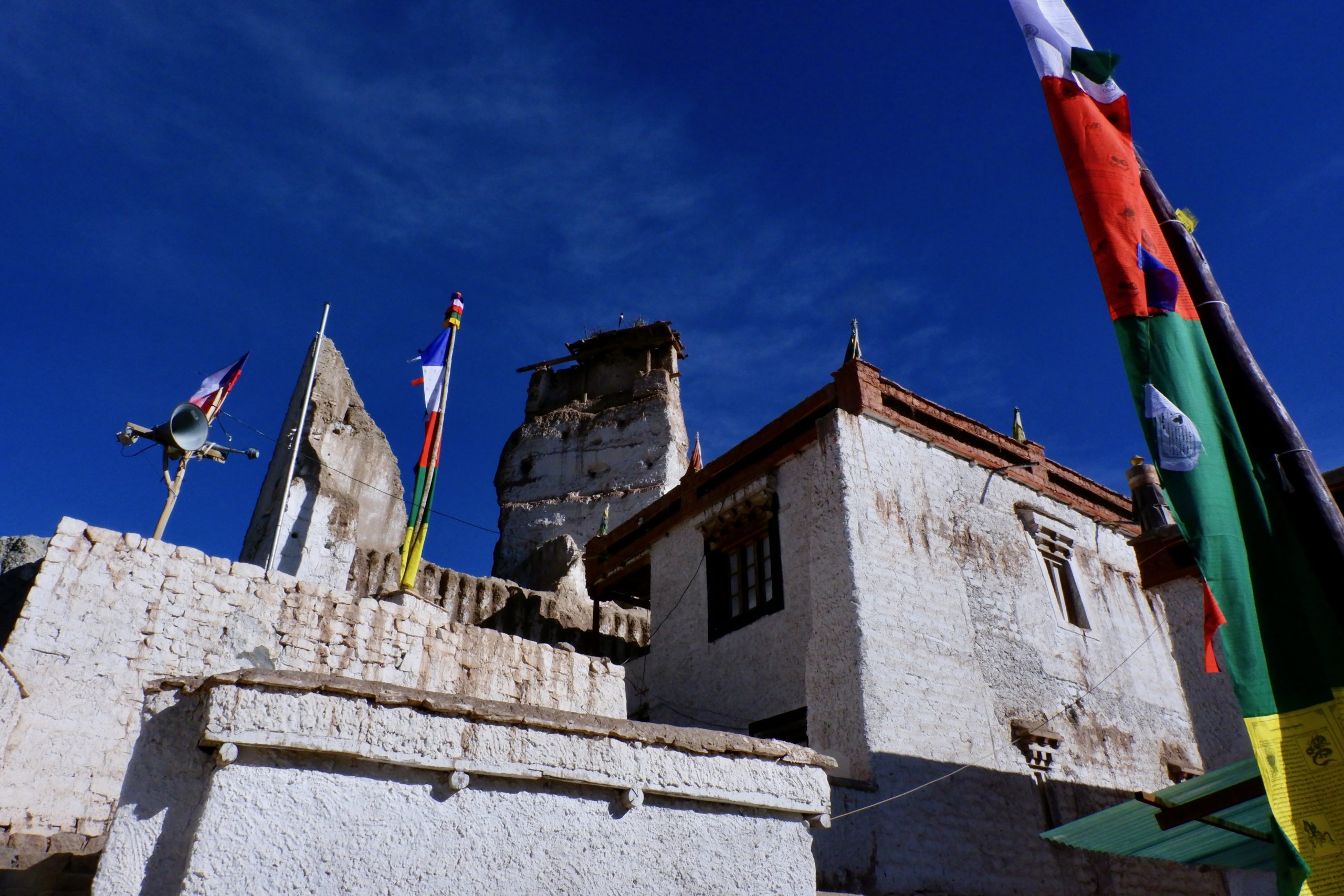
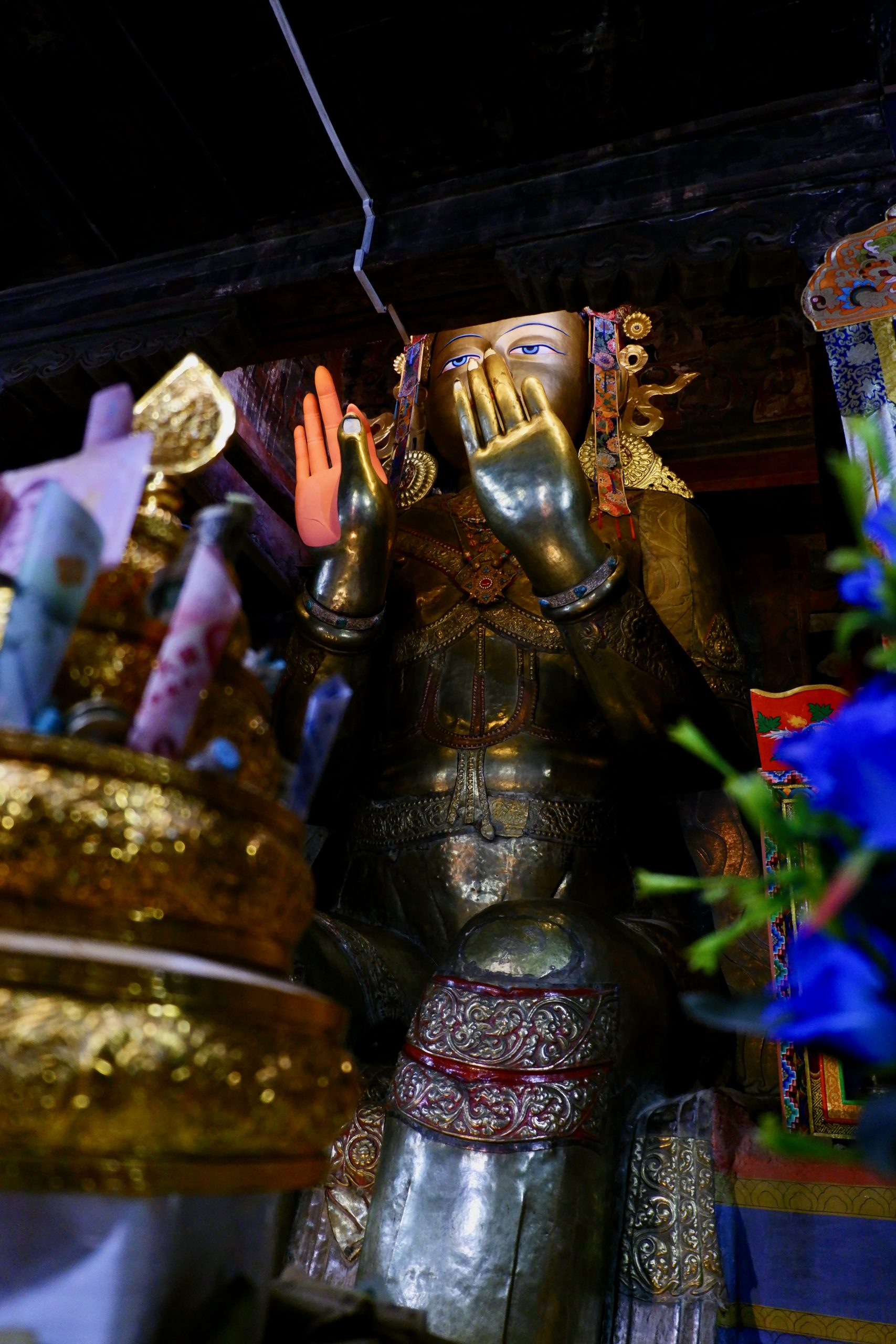
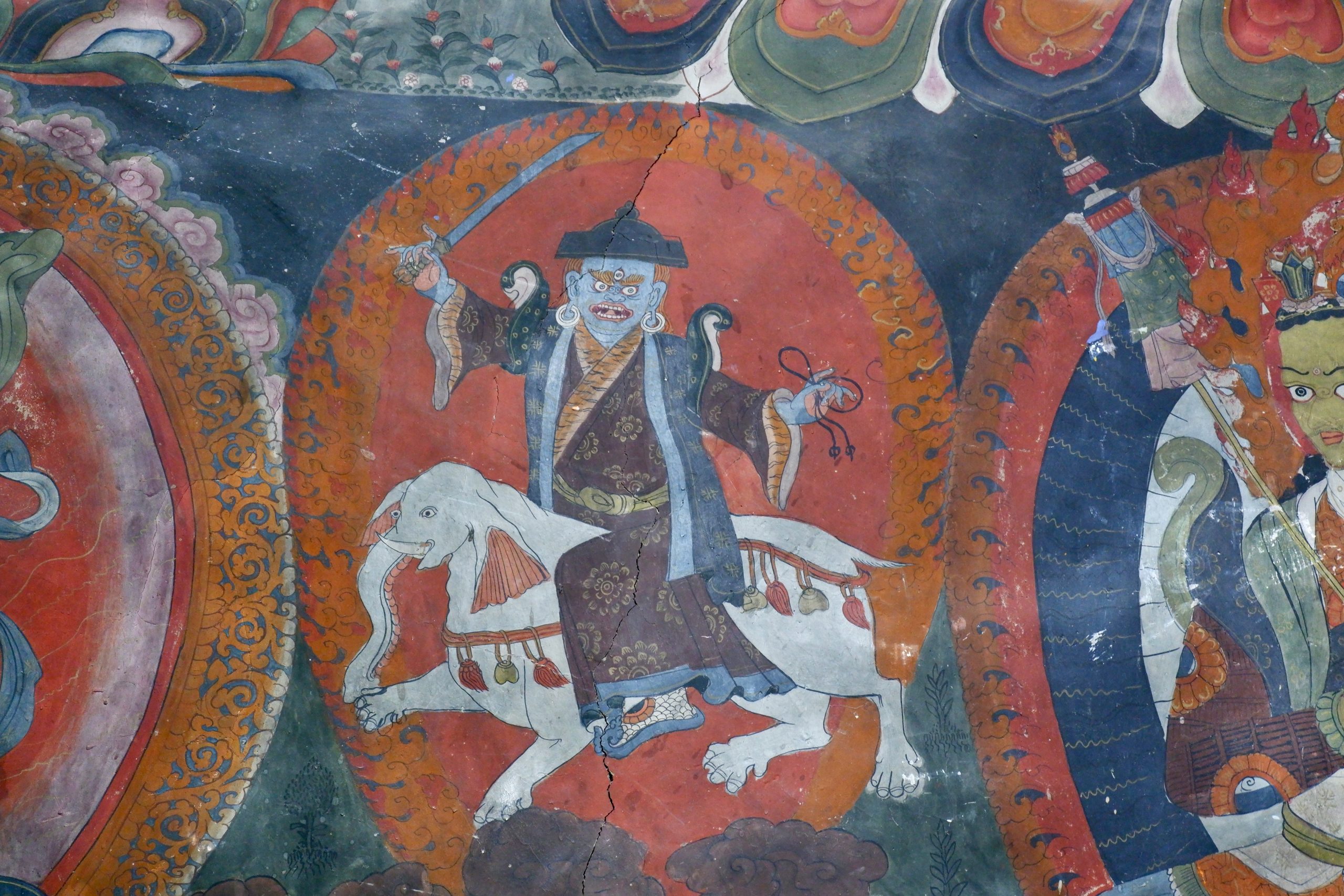
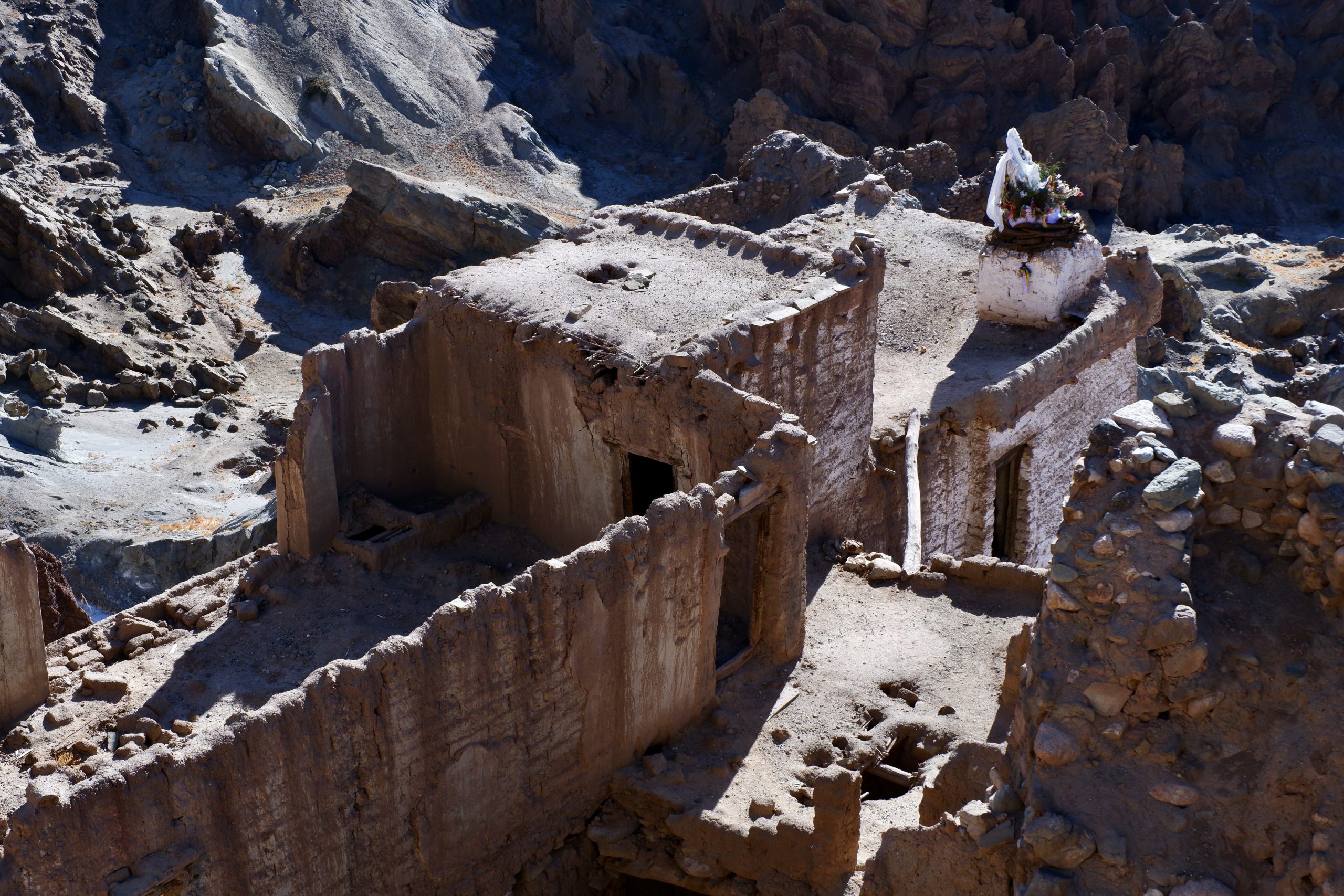
We used the time to visit the Basgo monastery–cum–palace complex. What I hadn’t known (or had forgotten) was that two monasteries are involved here. The upper complex belongs to Likir Monastery (Gelugpa order) and there was no key available, while the lower complex belongs to Hemis Monastery (Drukpa order) – and that one we were able to visit. Somehow, I had never really had Basgo on my radar as a place with noteworthy buildings. From the inside it isn’t particularly exciting, but the setting and the history are truly impressive.
 1
1
 2
2
 3
3
 4
4
 5
5
 6
6
 7
7
 8
8
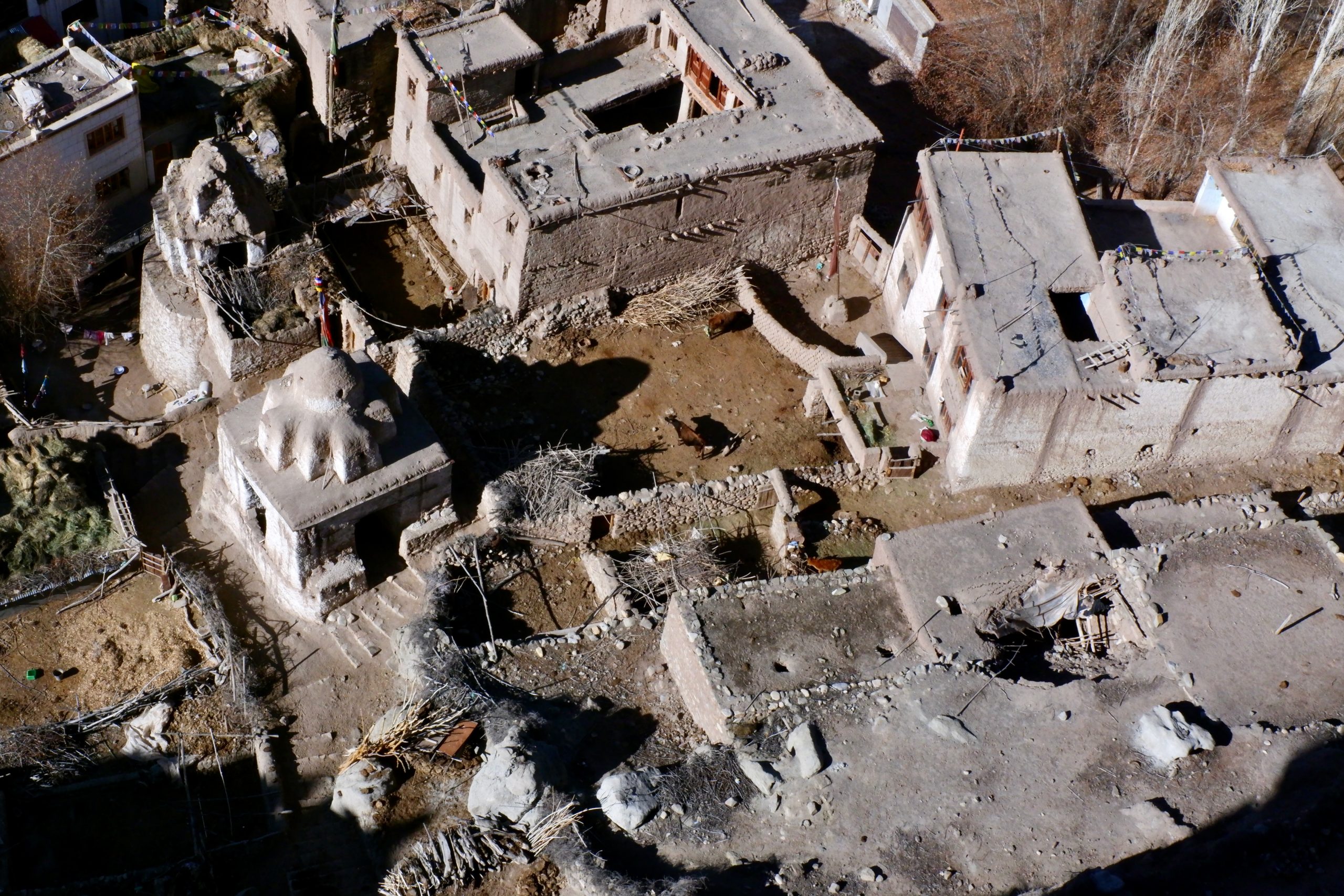
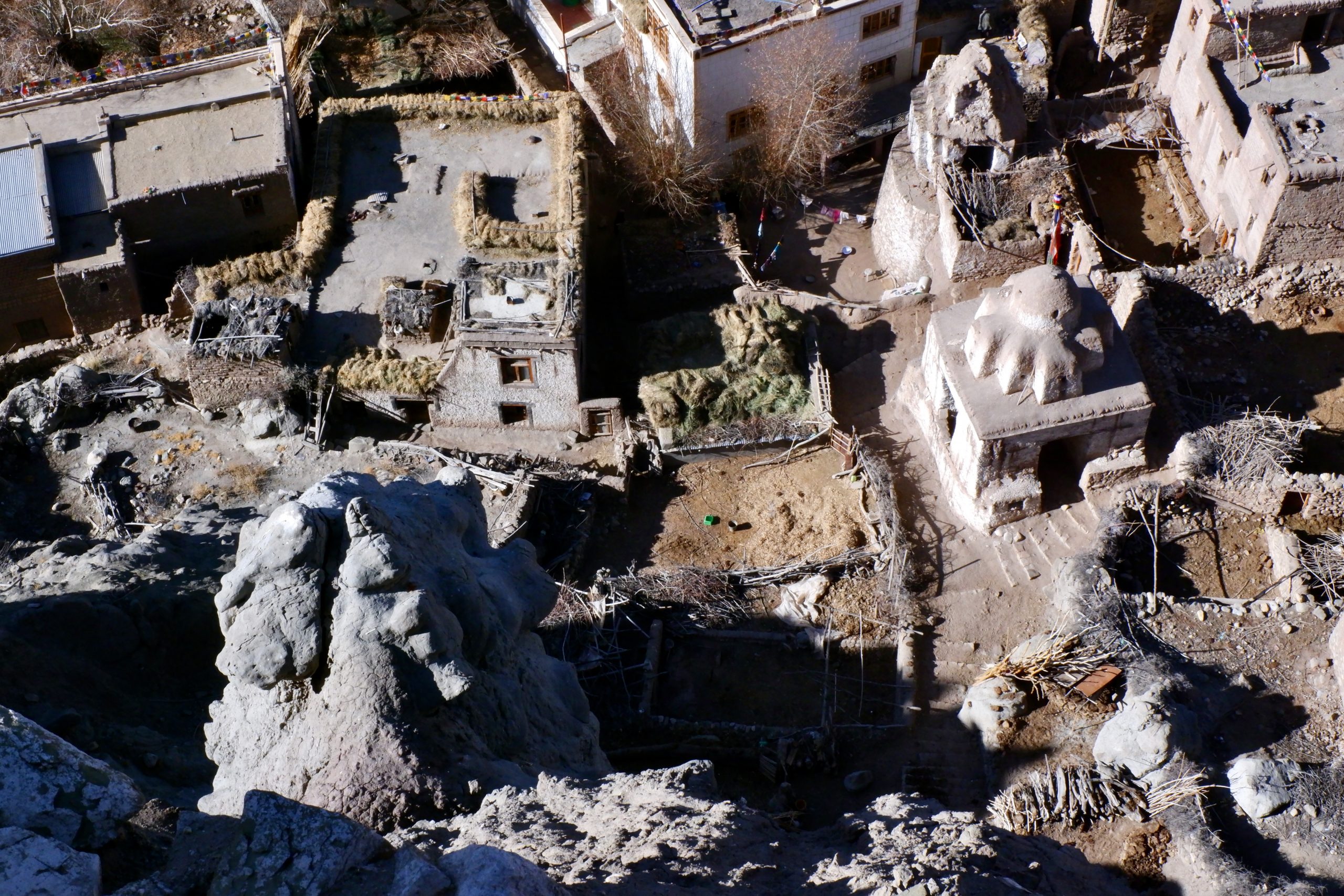
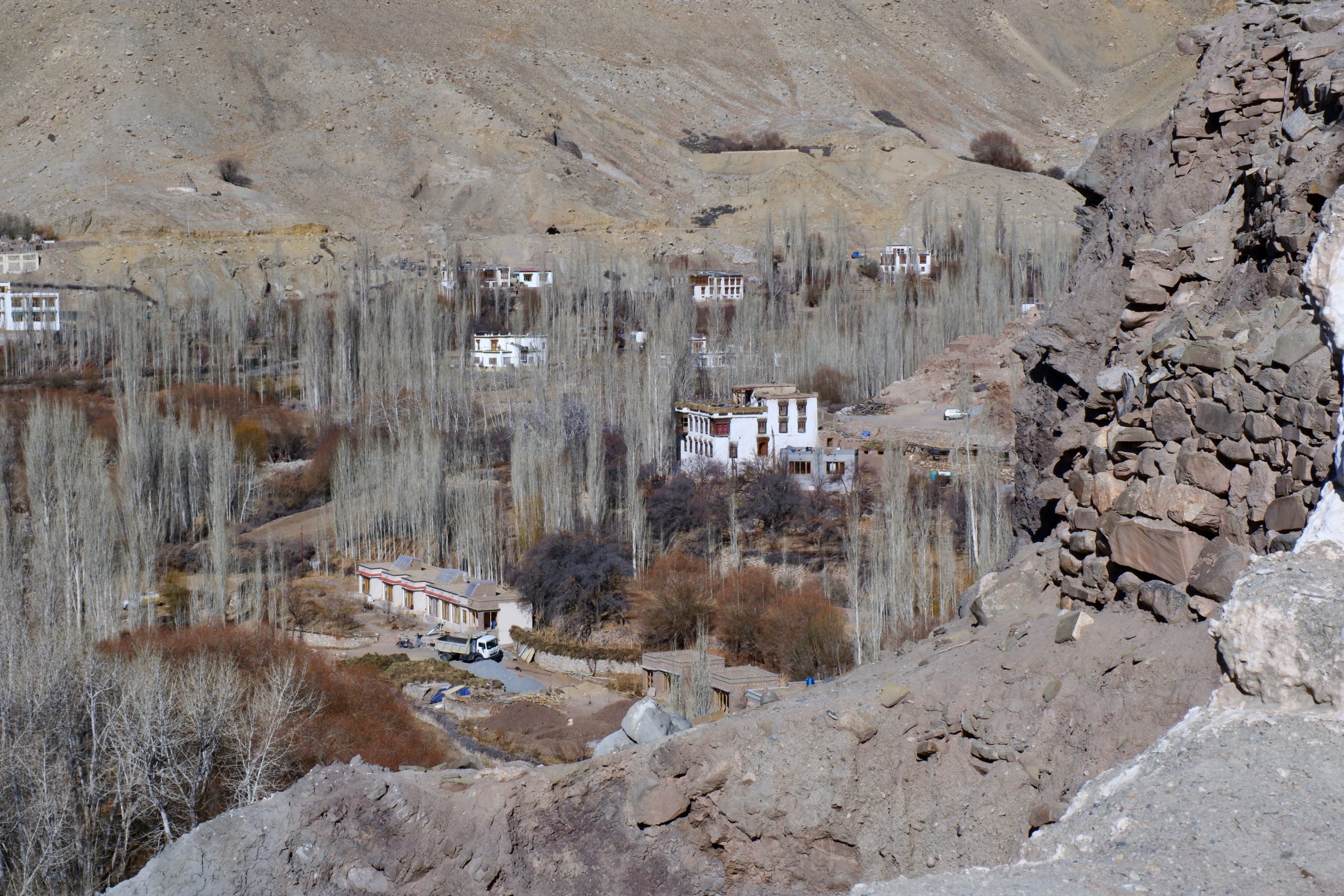
I also really like looking down from up there. We could see the spot where the Losar celebrations were supposed to take place, and we watched people arriving very, very slowly. There was no need to worry about missing anything.
 9
9
 10
10
 11
11
 12
12
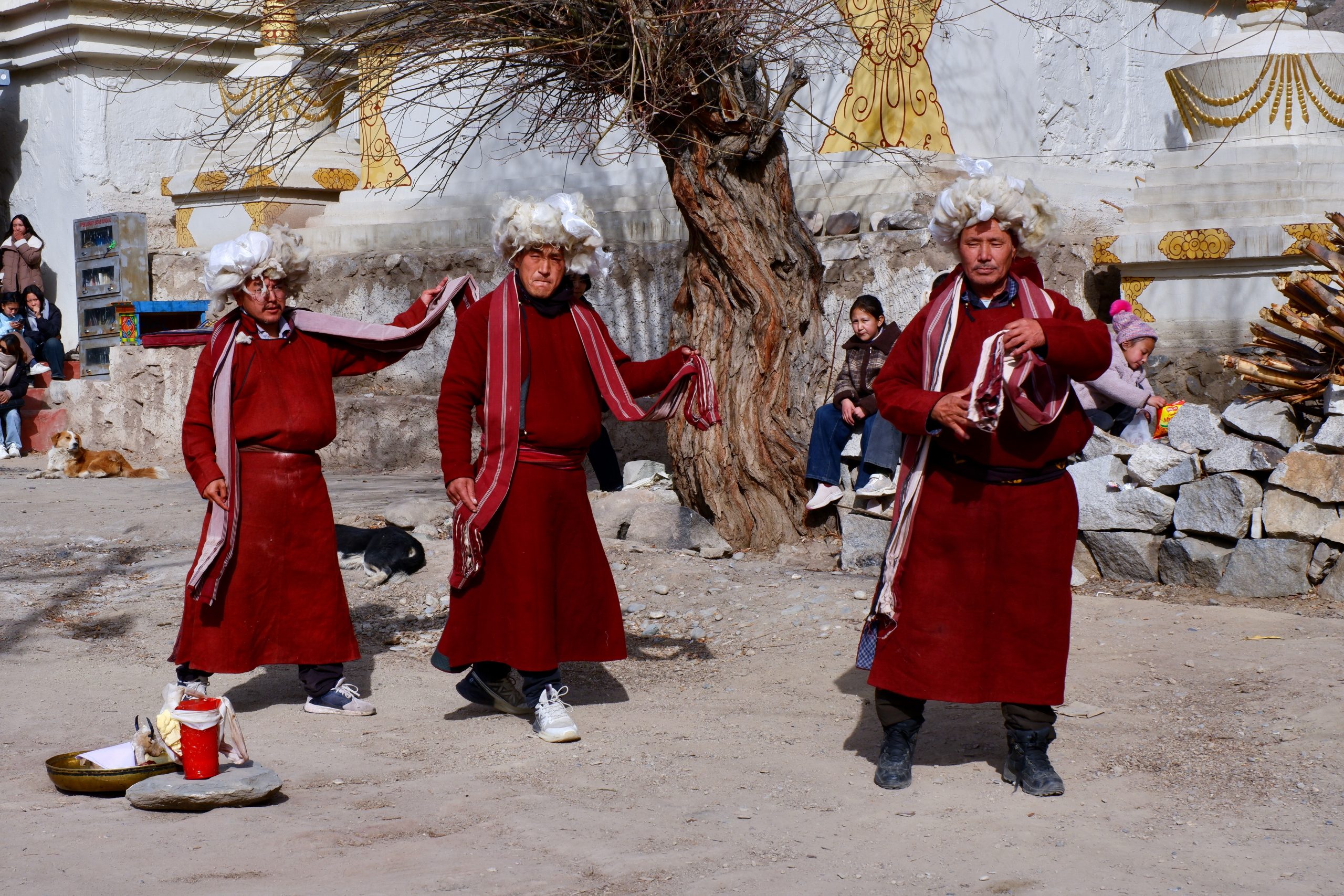
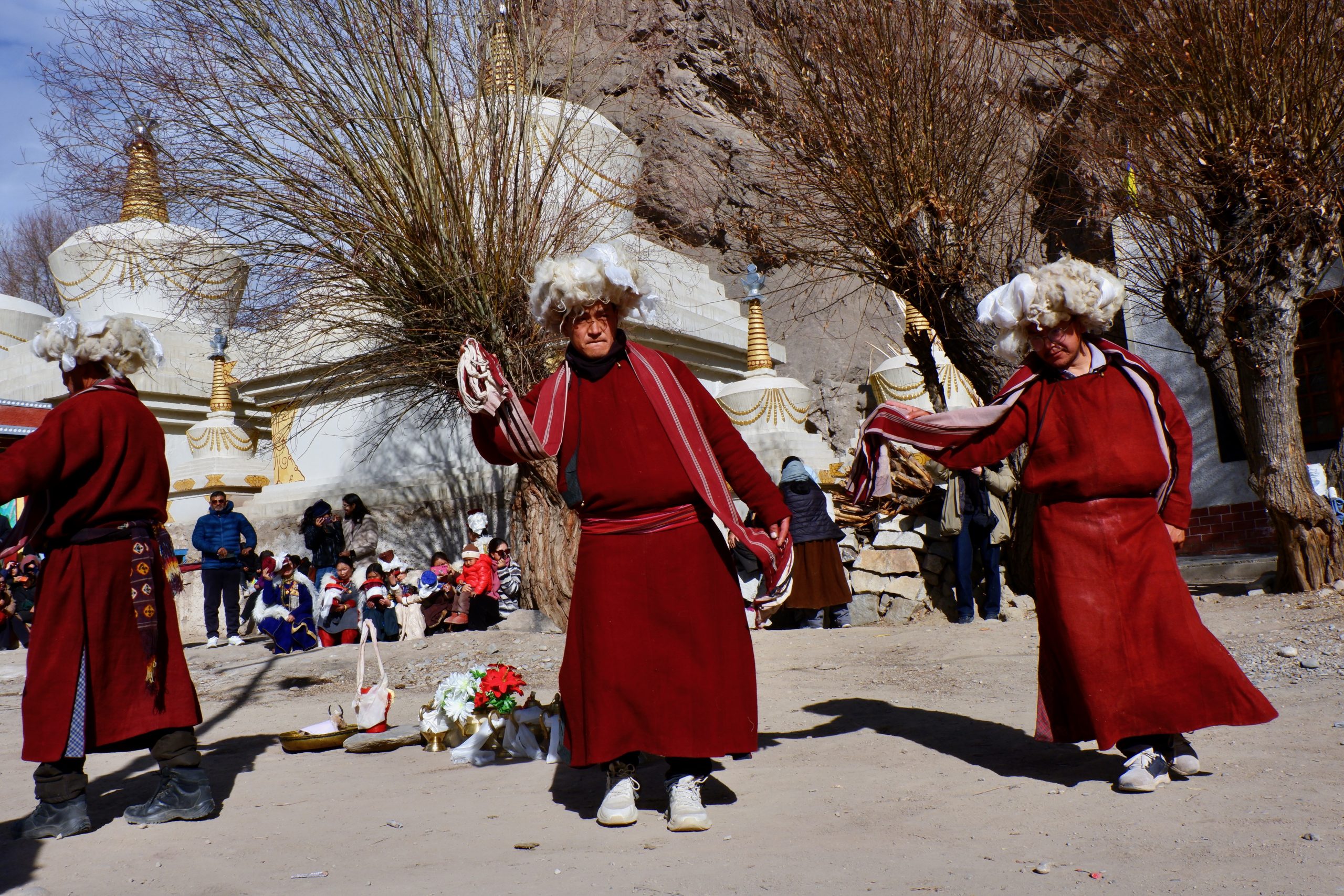
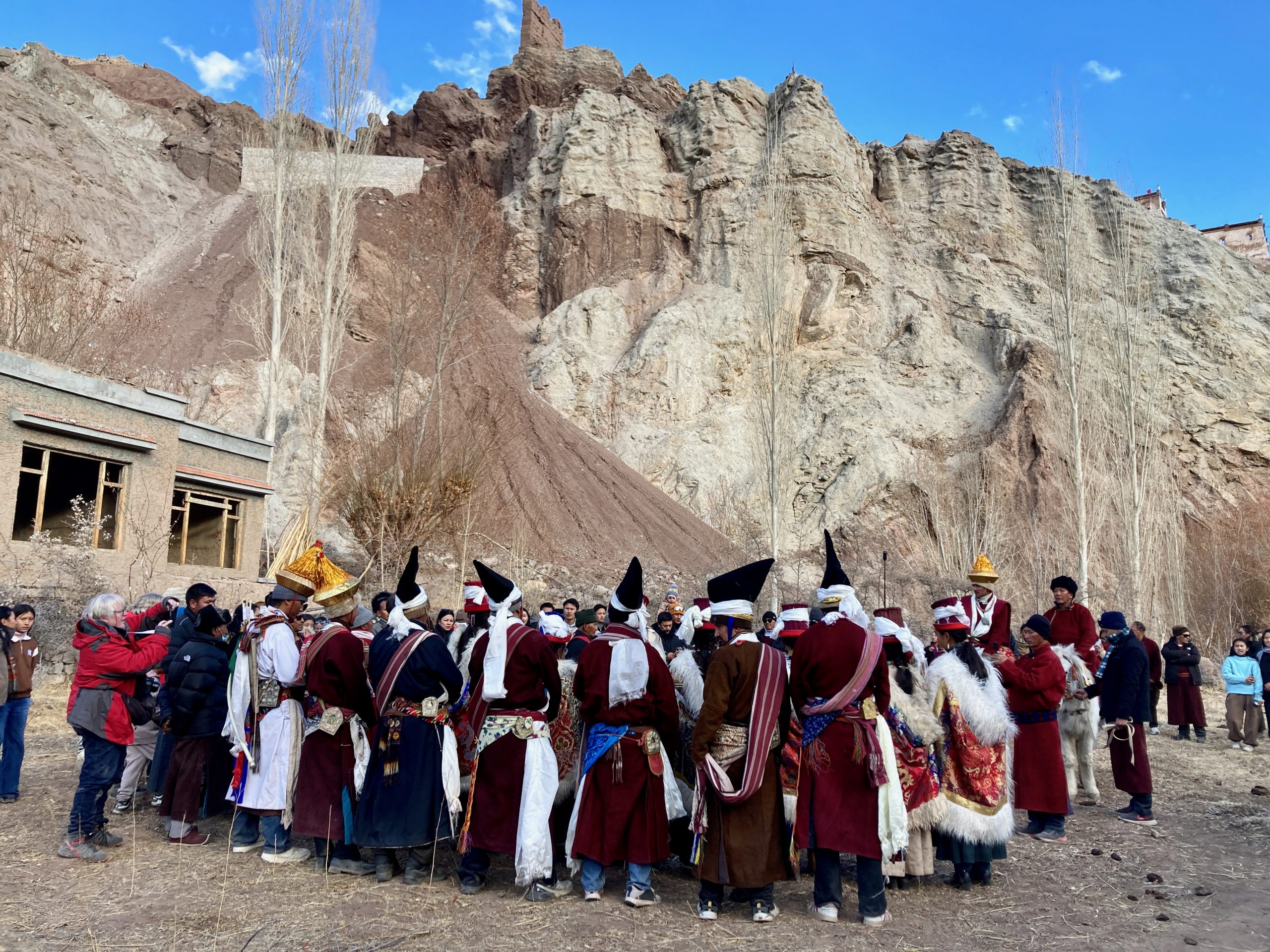
We then went down as well and waited and waited. But together with the local people, it wasn’t boring. You could see that something was going to happen. And then it finally did! The three dancers wearing woolen caps appeared. They are regarded as dignitaries and act as ritual representatives of the village. There must be three of them, and they are dressed identically so that no one is singled out and it is shown that one must act together, not alone. Their dance is simple and always the same. Their gonchas are red as a sign of festivity and dignity, while the headgear is rather simple and modest.
 13
13
 14
14
 15
15
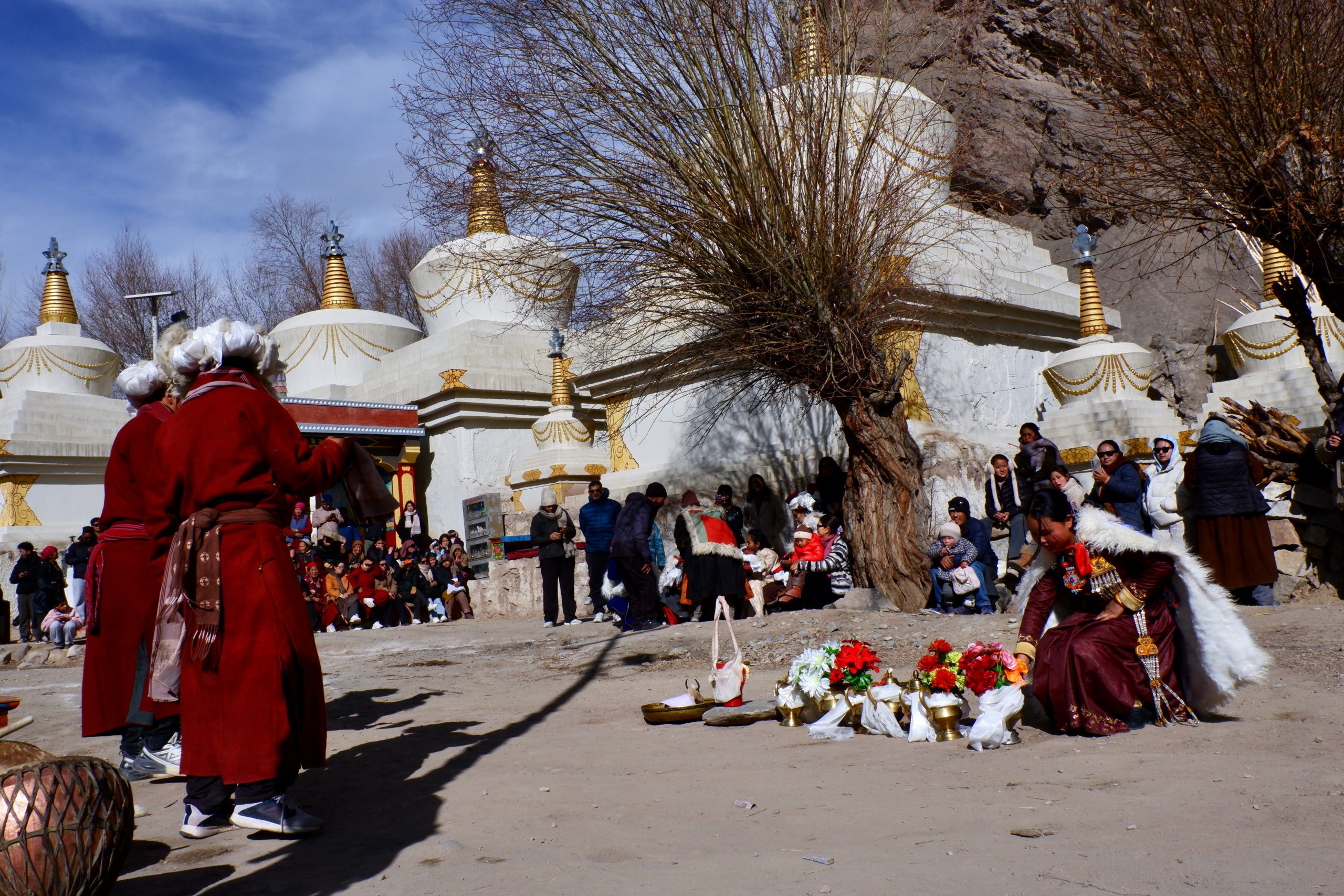
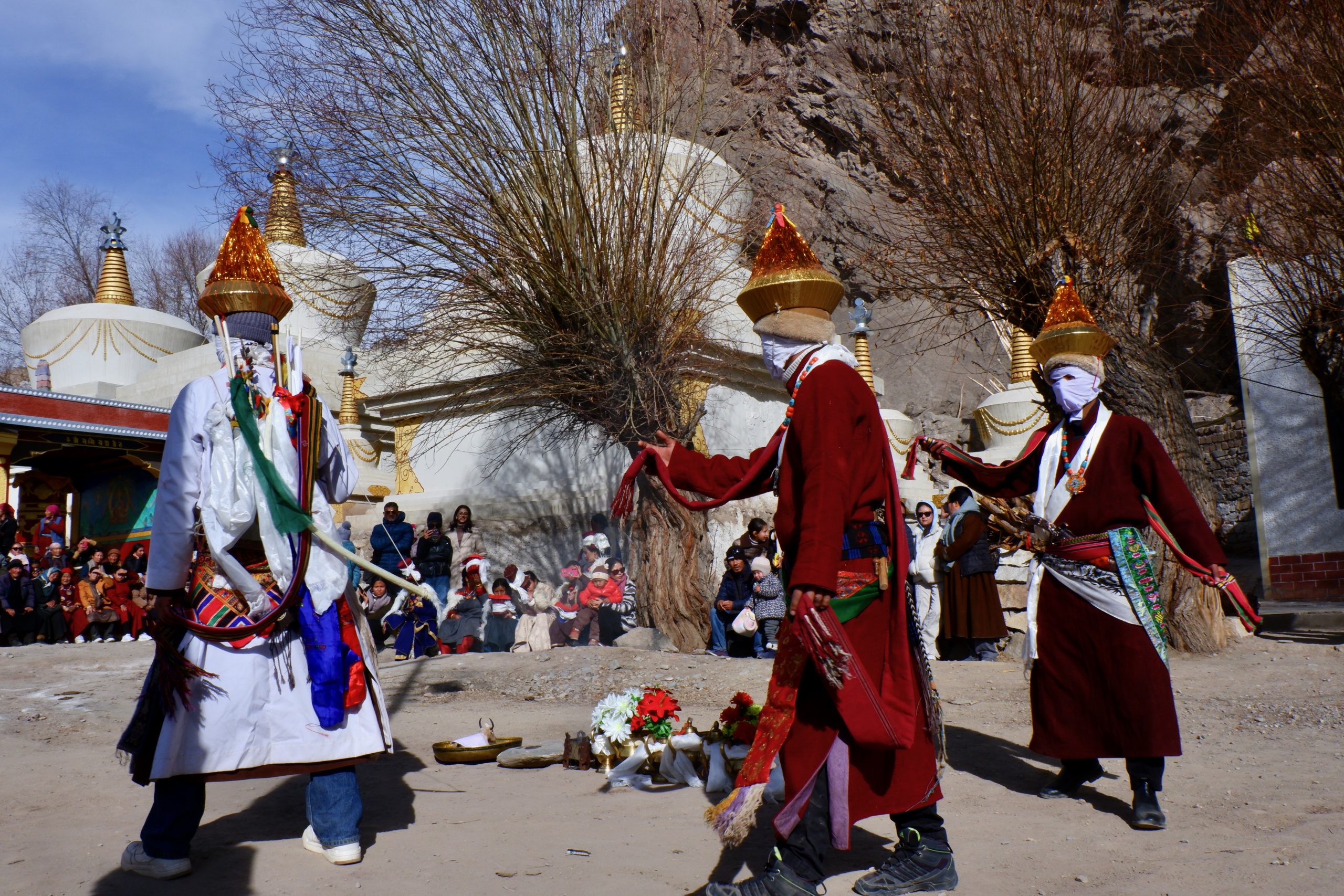
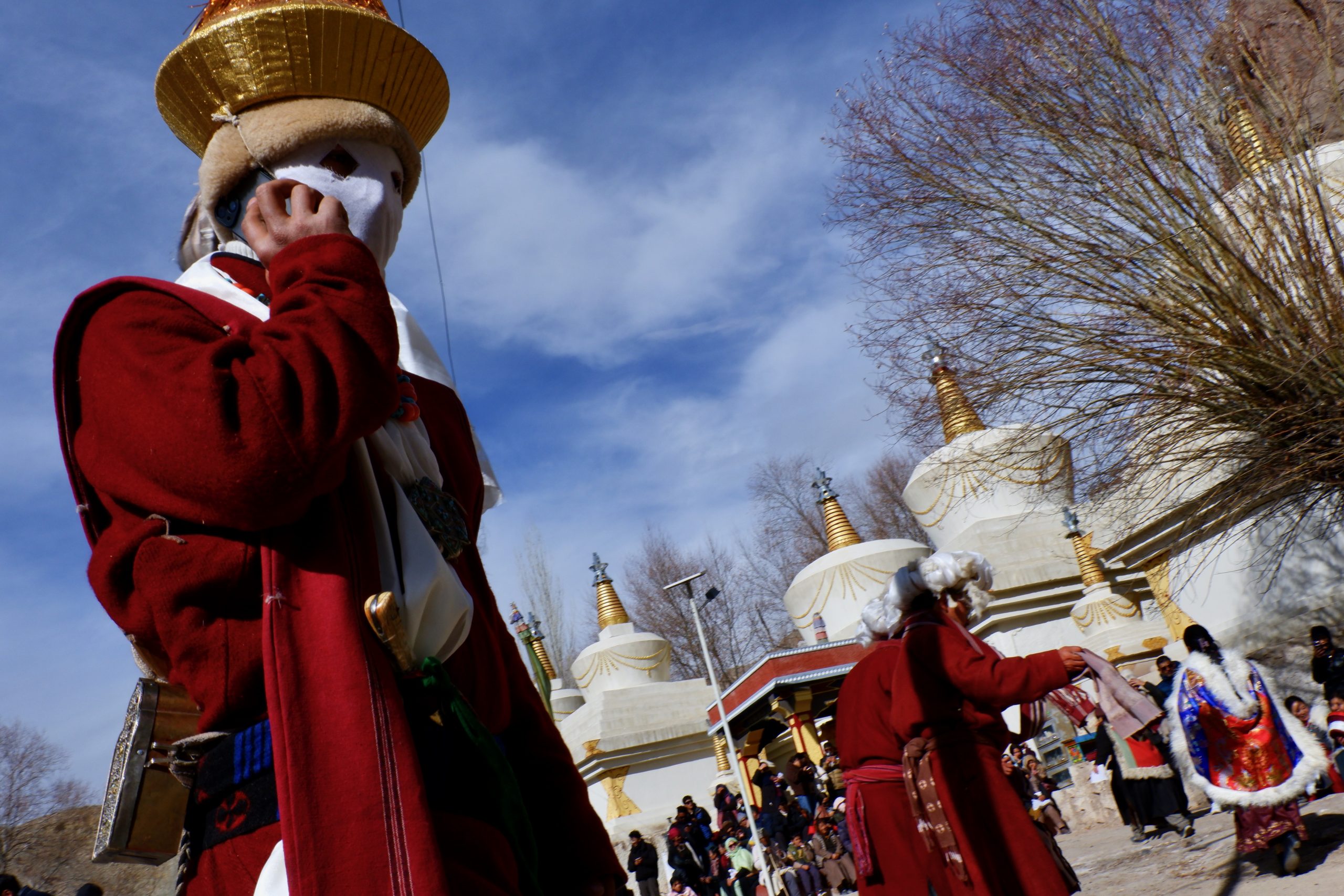
During the dances, more and more women arrived, each placing a flower pot in the center. Then three more male dancers appeared. They wore special golden hats and also red gonchas, except for the first one, who wore a white one – marking him as the leader and initiator. The golden headgear symbolizes “royalty,” that is, secular authority. The face masks remove individual identity, turning the three men into representatives rather than distinct personalities. They, too, made several rounds around the dance ground.
 16
16
 17
17
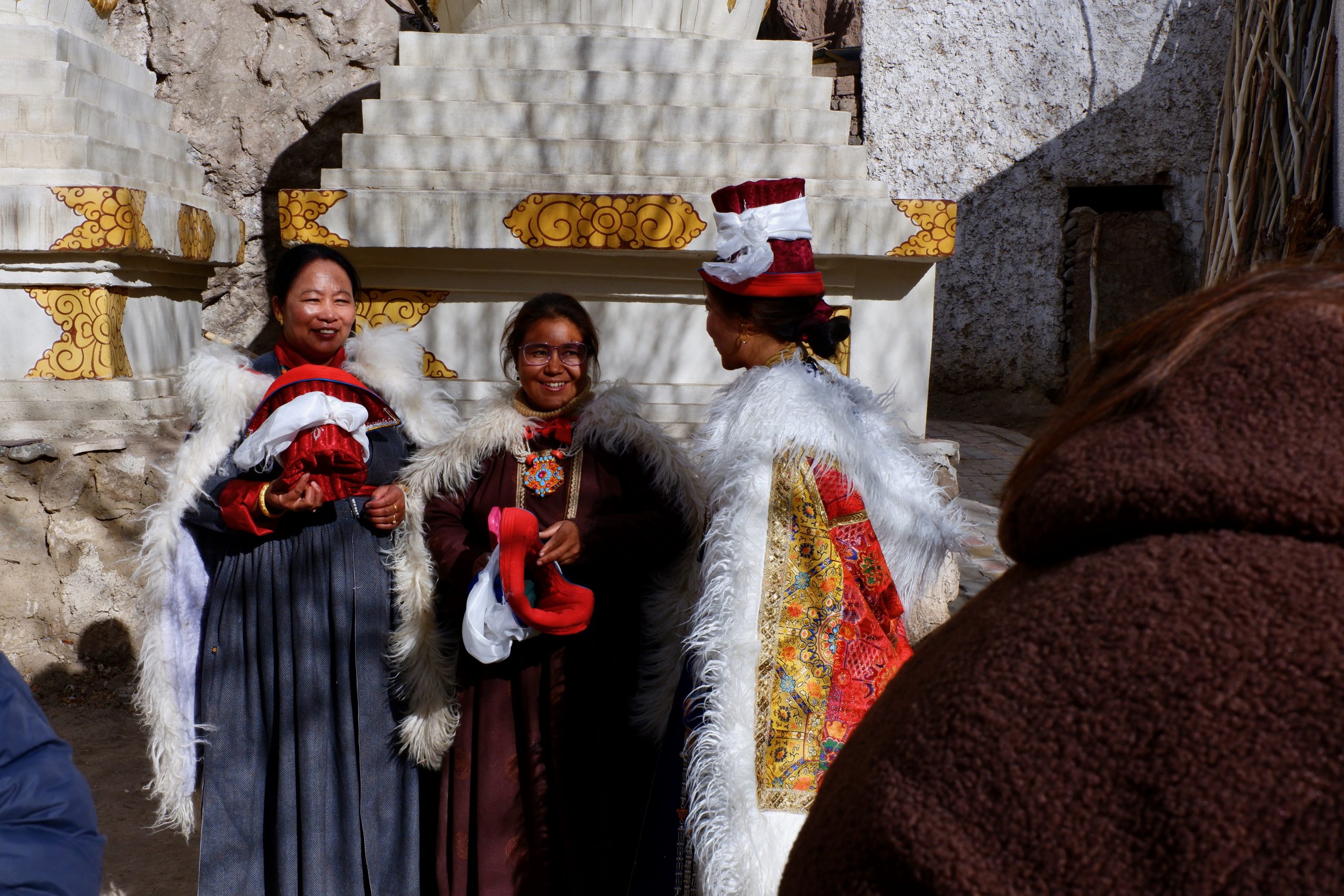
The women looked pretty and didn’t do very much.
 18
18
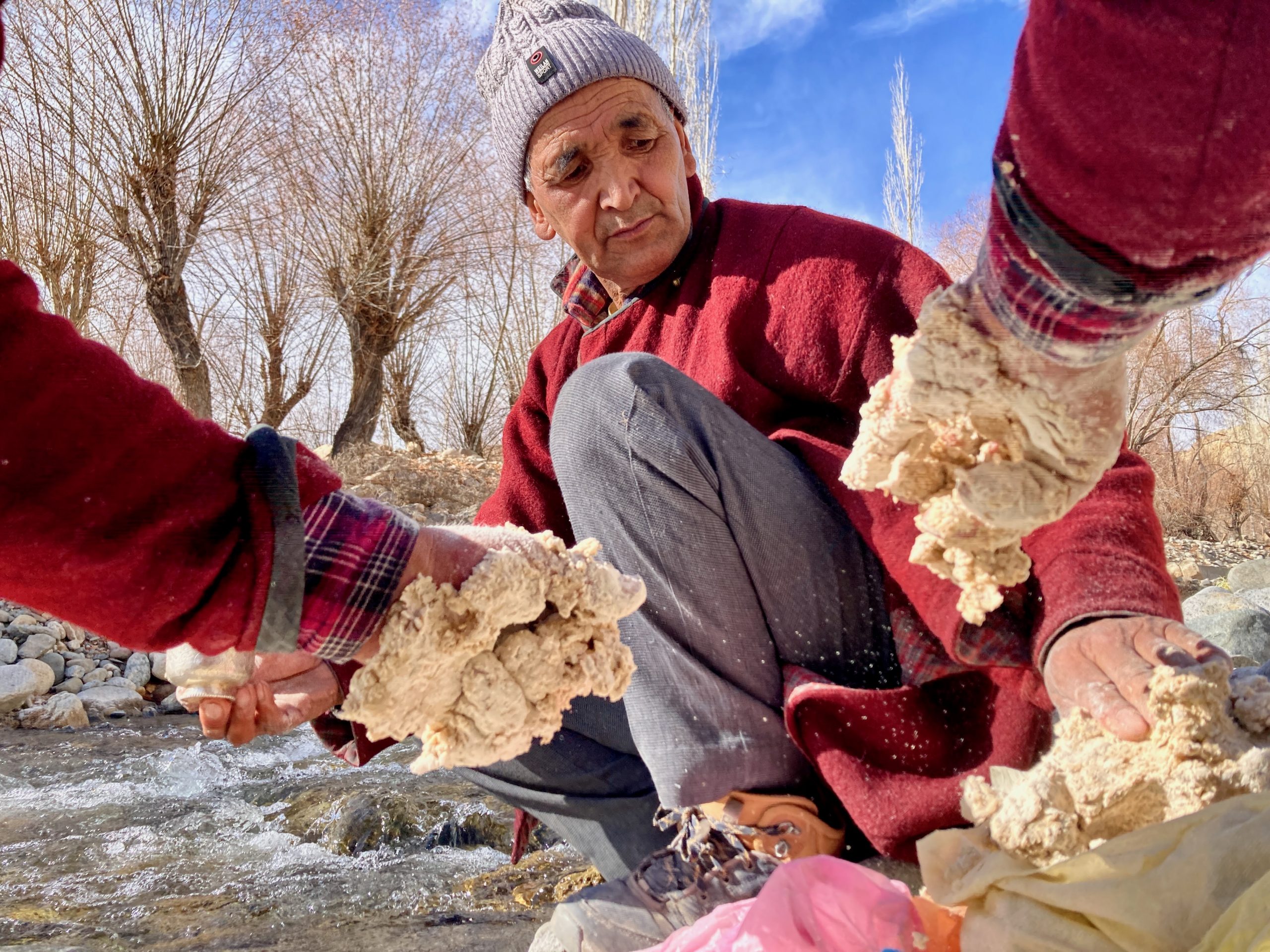
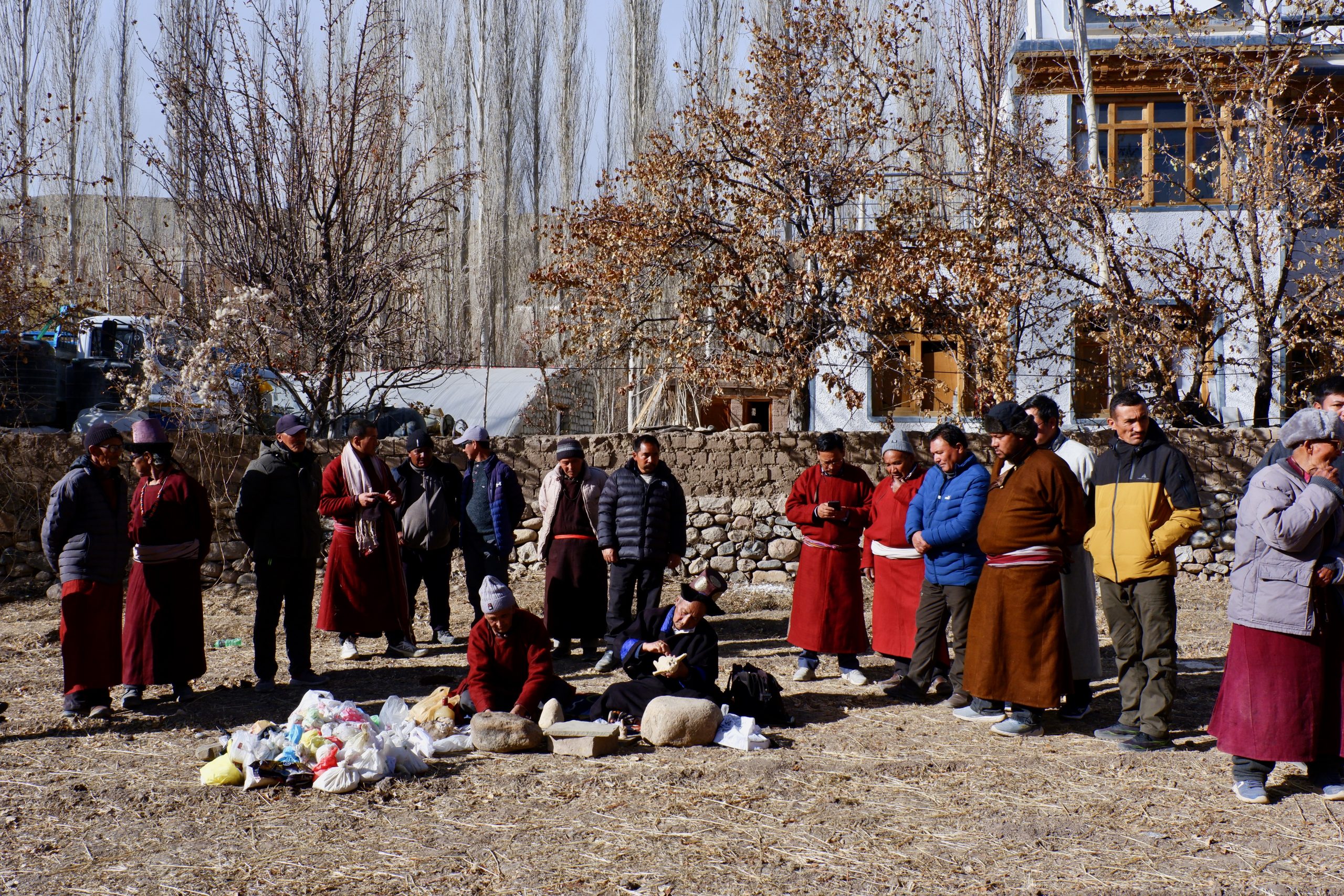
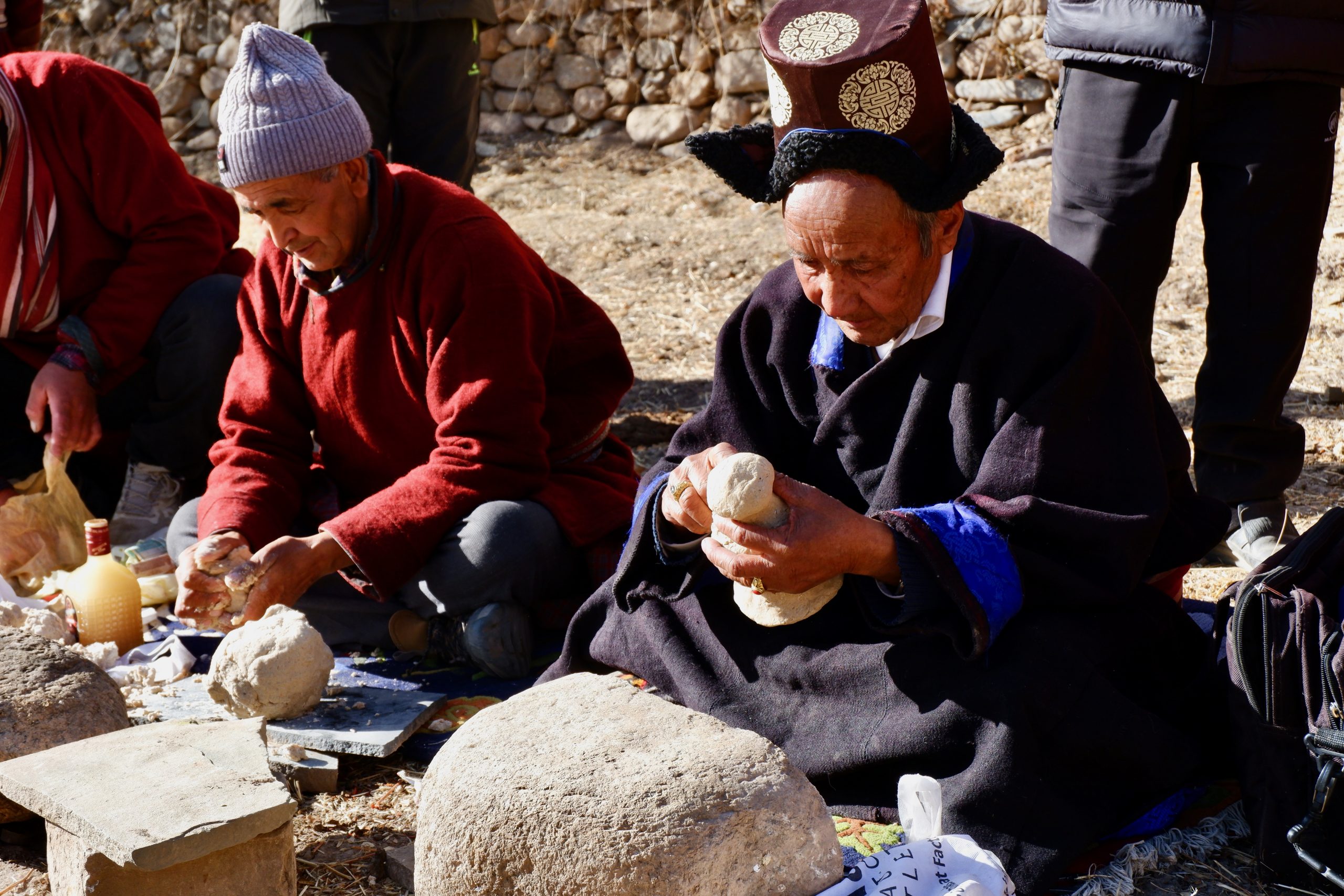
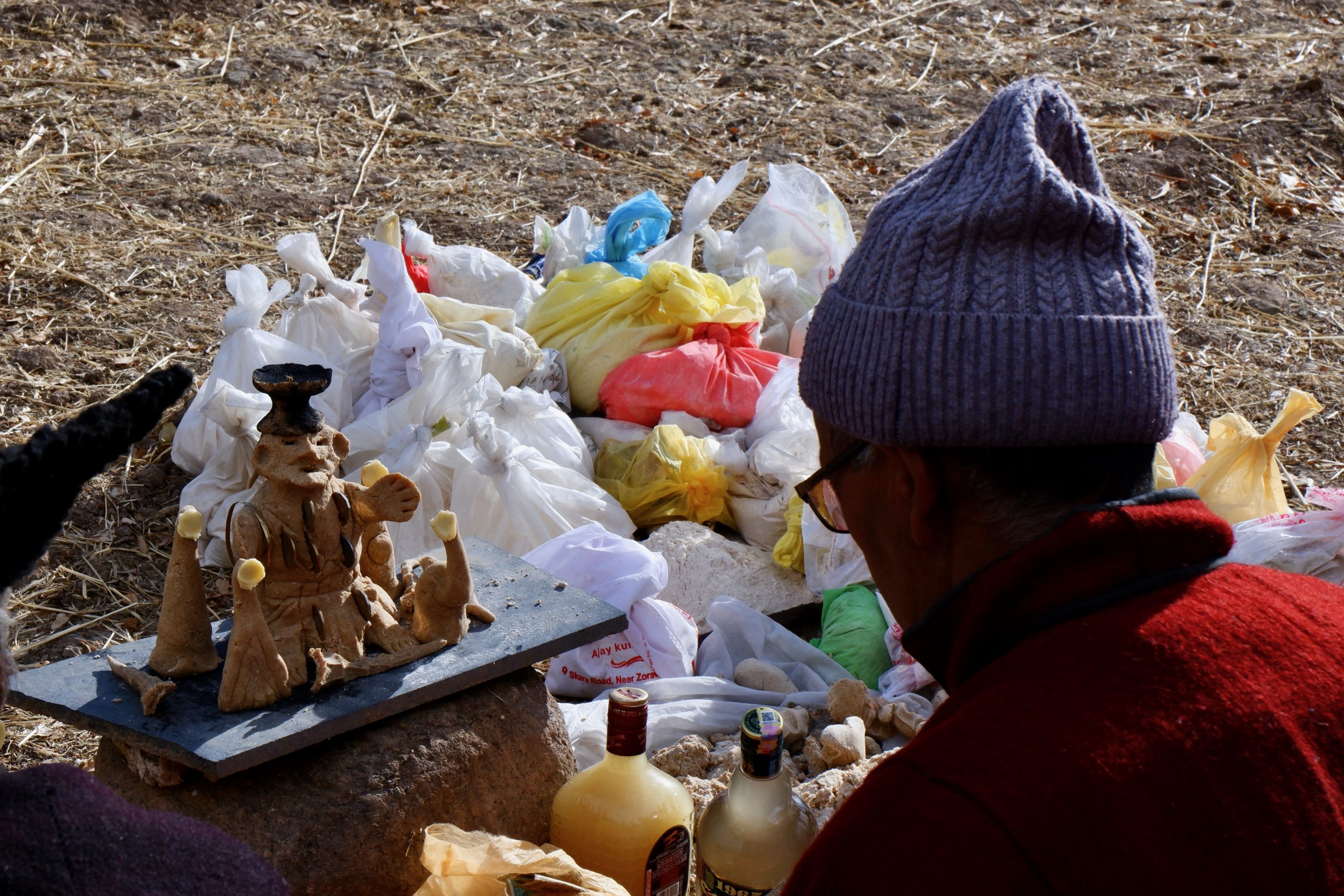
Everyone in the village brought bags of tsampa flour and laid them out in a field. Two men then took a good amount of it, went down to the river, and kneaded it into a dough using the river water.
 19
19
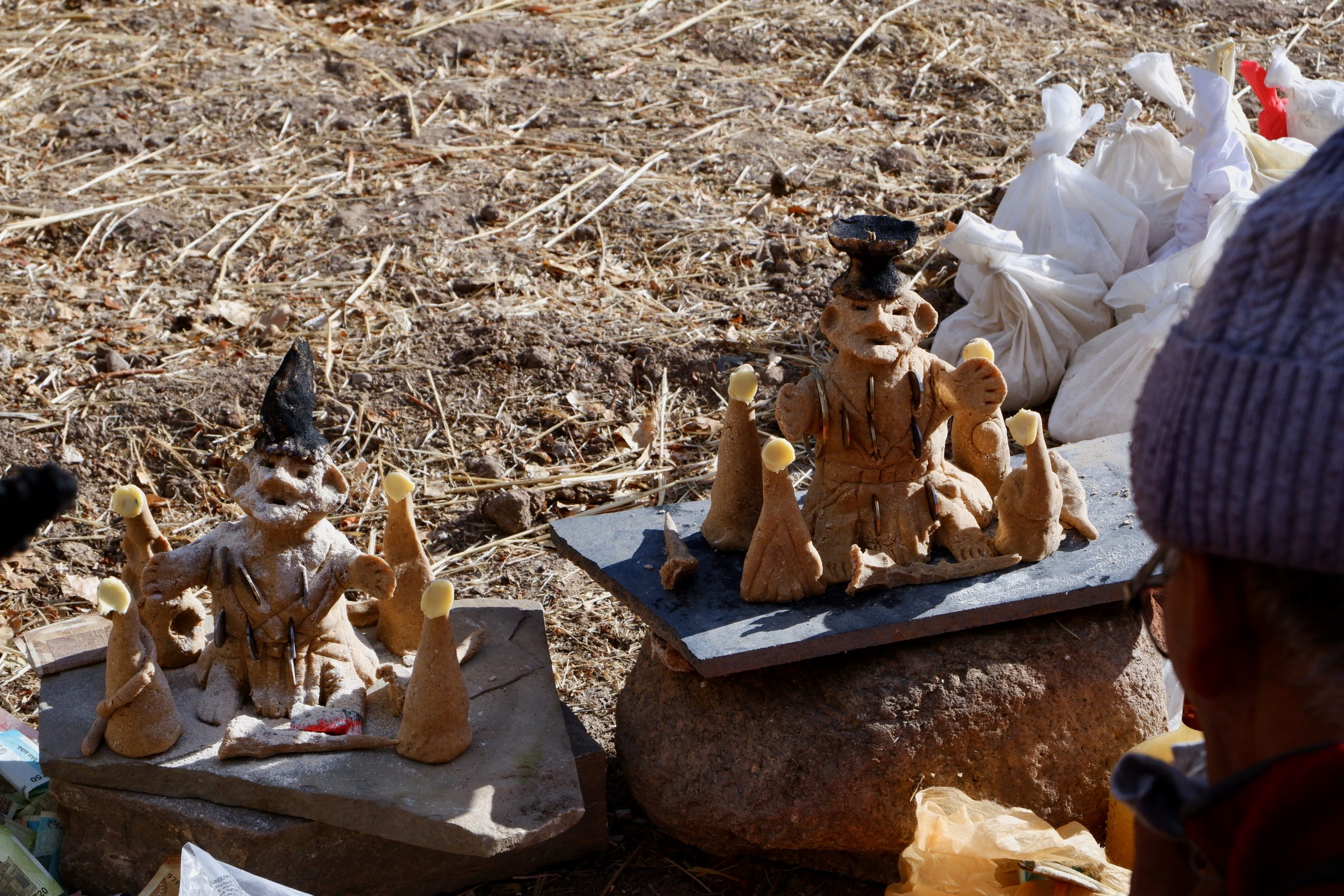
This dough was brought to two elderly men, who shaped figures from it. All the negative elements were kneaded into these figures. In addition, Buddhist texts were recited, and there were a kind of blessings performed with alcohol.
 20
20
 21
21
 22
22
 23
23
What happened to the remaining tsampa, I don’t know. And once everything was ready, things suddenly sped up in a rather chaotic way. I didn’t manage to fully follow everything, nor did I capture it all in photos. Basgo also has Appu and Appi as part of the ritual, but they are not as prominent as in Chuchot. Even so, they also try to collect money, though mainly from passing cars. The men wearing the woolen caps are involved in this as well.
They are the first to run to the river (the river meaning “out of the village” – it does flow through the village, but away from it), carrying incense instead of a trail of flour. The “negative” is meant to be carried out, and by different paths: with the smoke, it goes into the air. After that, the men with the woolen caps follow and carry the tsampa figures to the river, where they are thrown in and thus also carried away. Finally, a few men follow who strip off their clothes (in the past – at least 15 years ago – they were completely naked; now they keep their underwear on) and jump into the river. This is the final act of bidding farewell to the old year. I didn’t photograph any of this but recorded it on video.
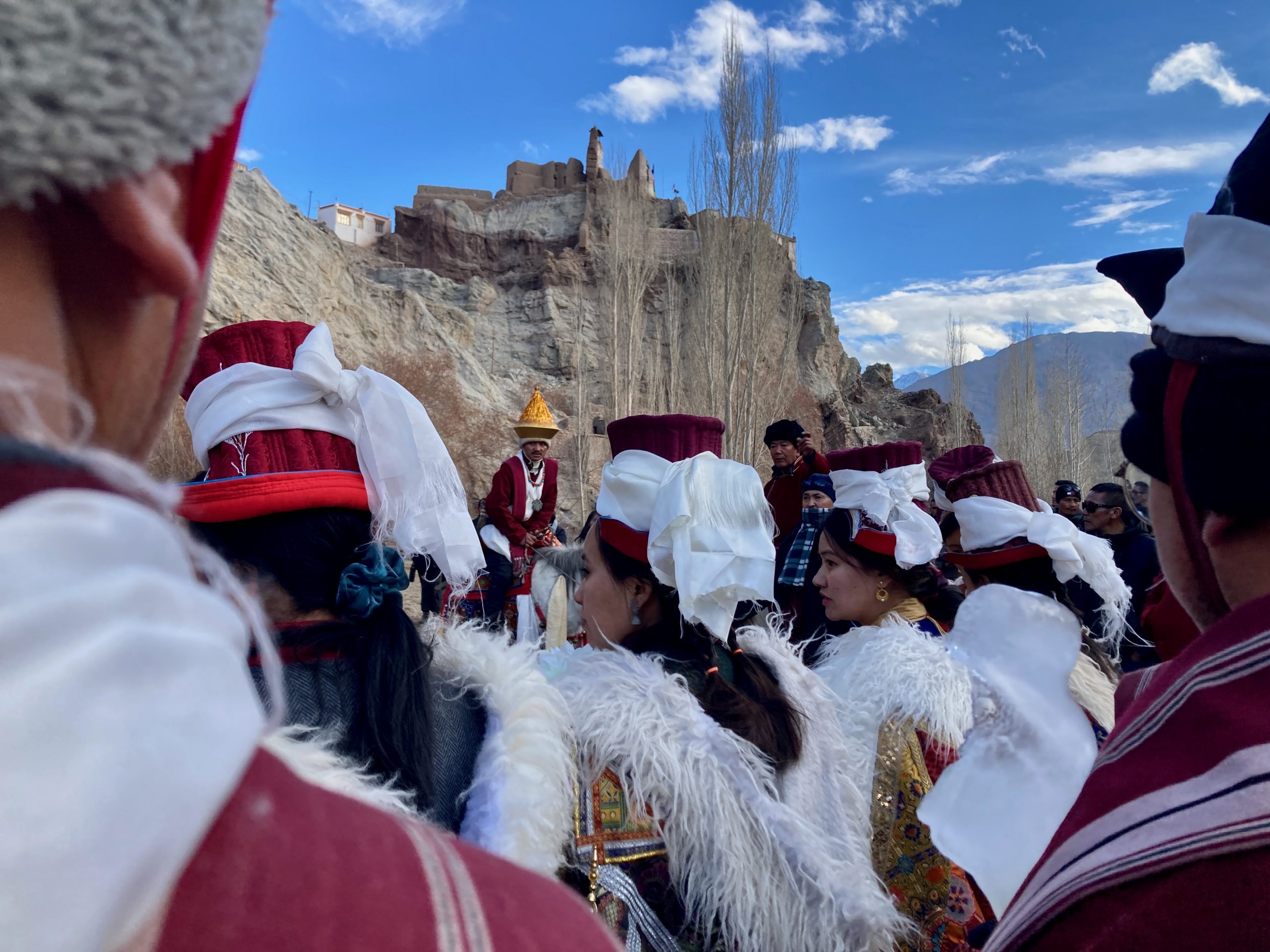
Afterwards, the men who jumped into the water are dressed warmly and festively (wearing special black hats), are given something to drink by the festively dressed women, and then dance a round.
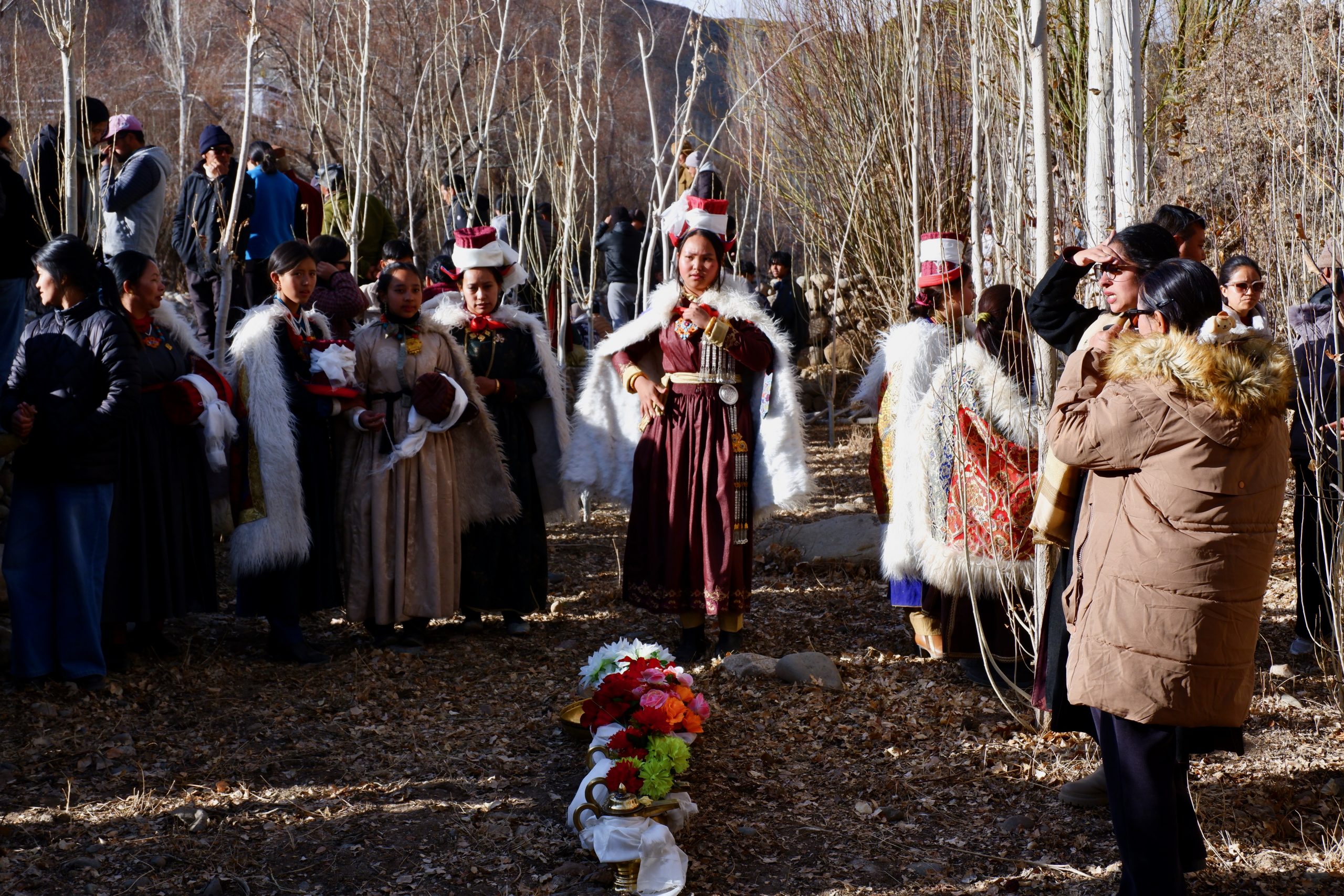 waiting women
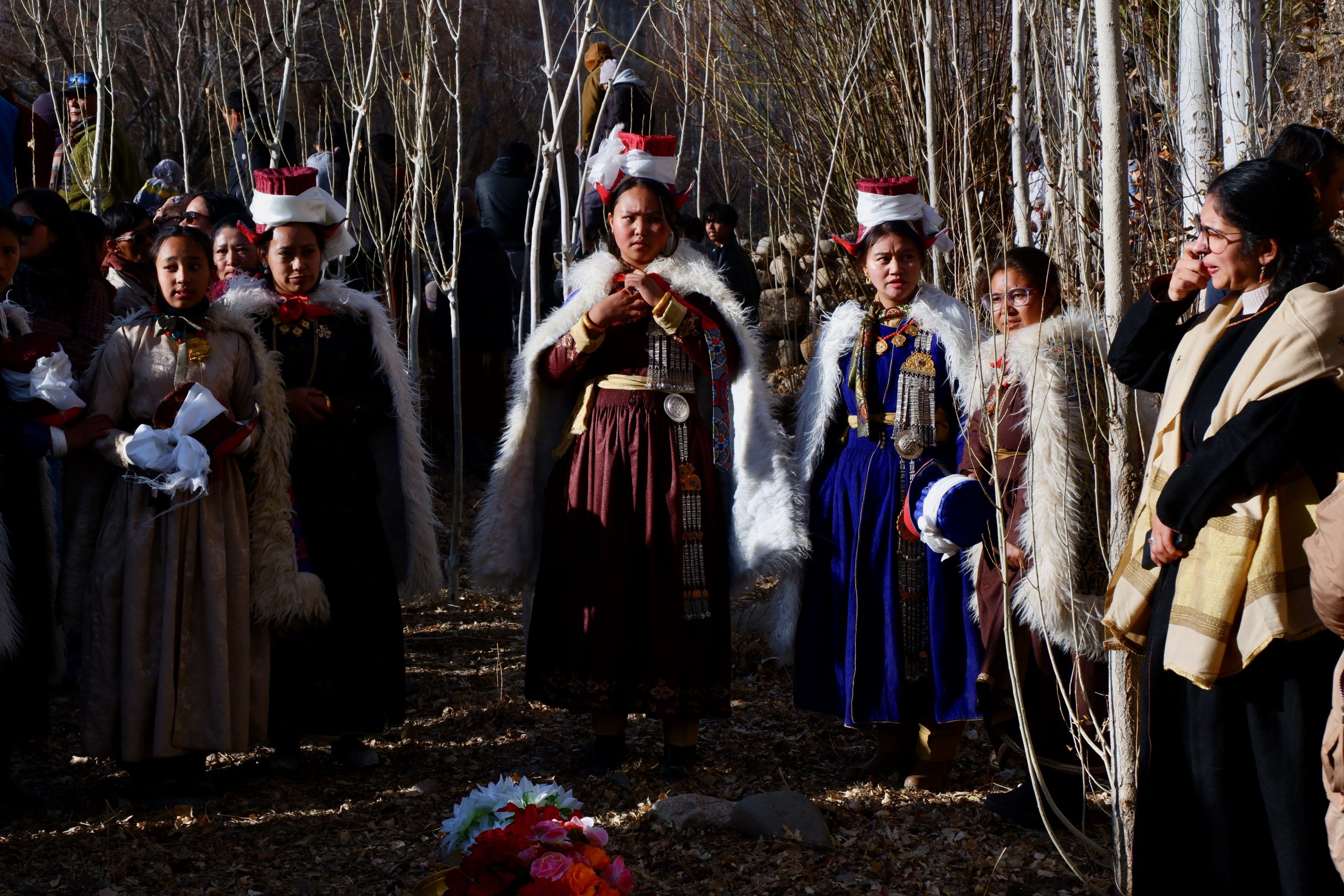 from closer
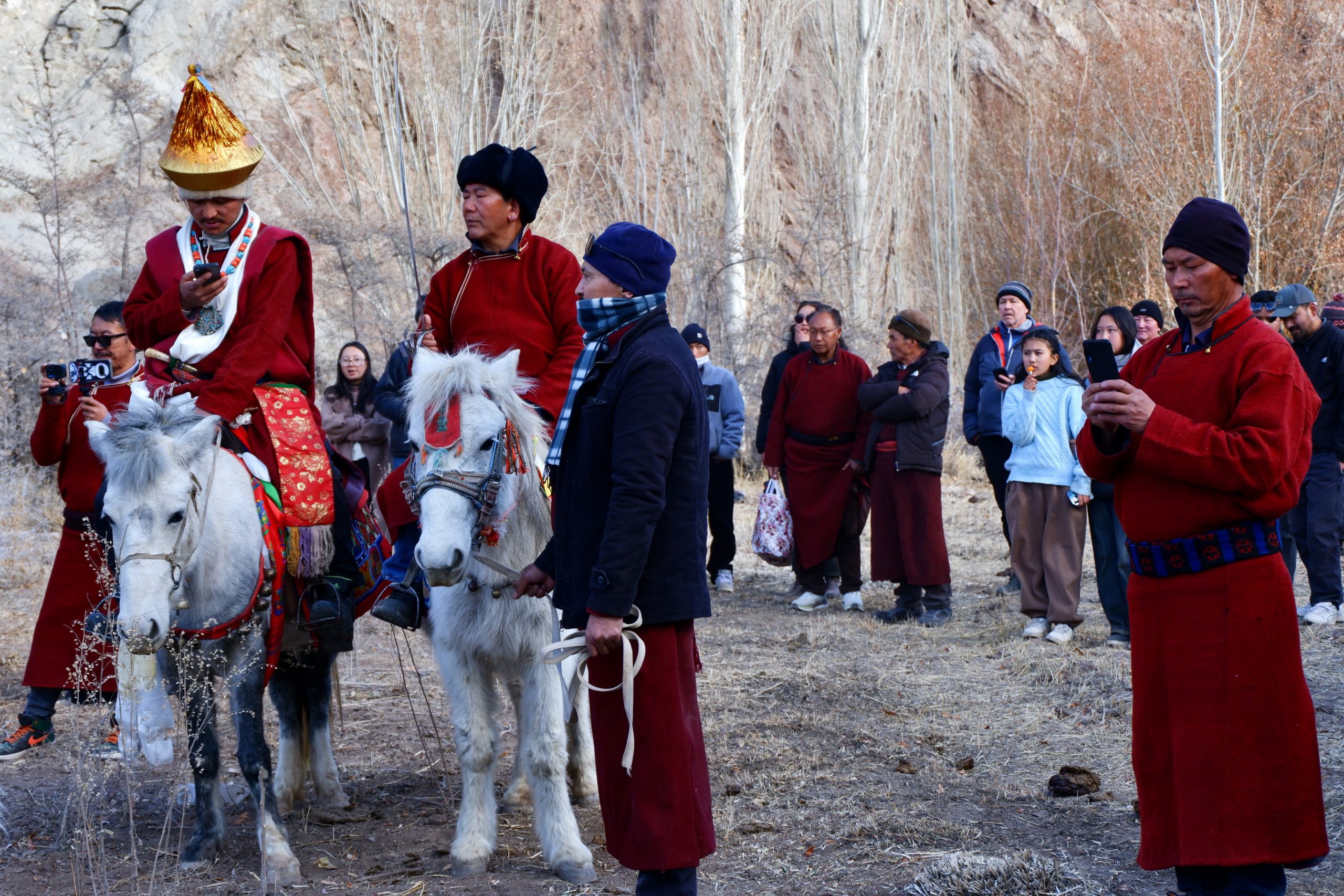
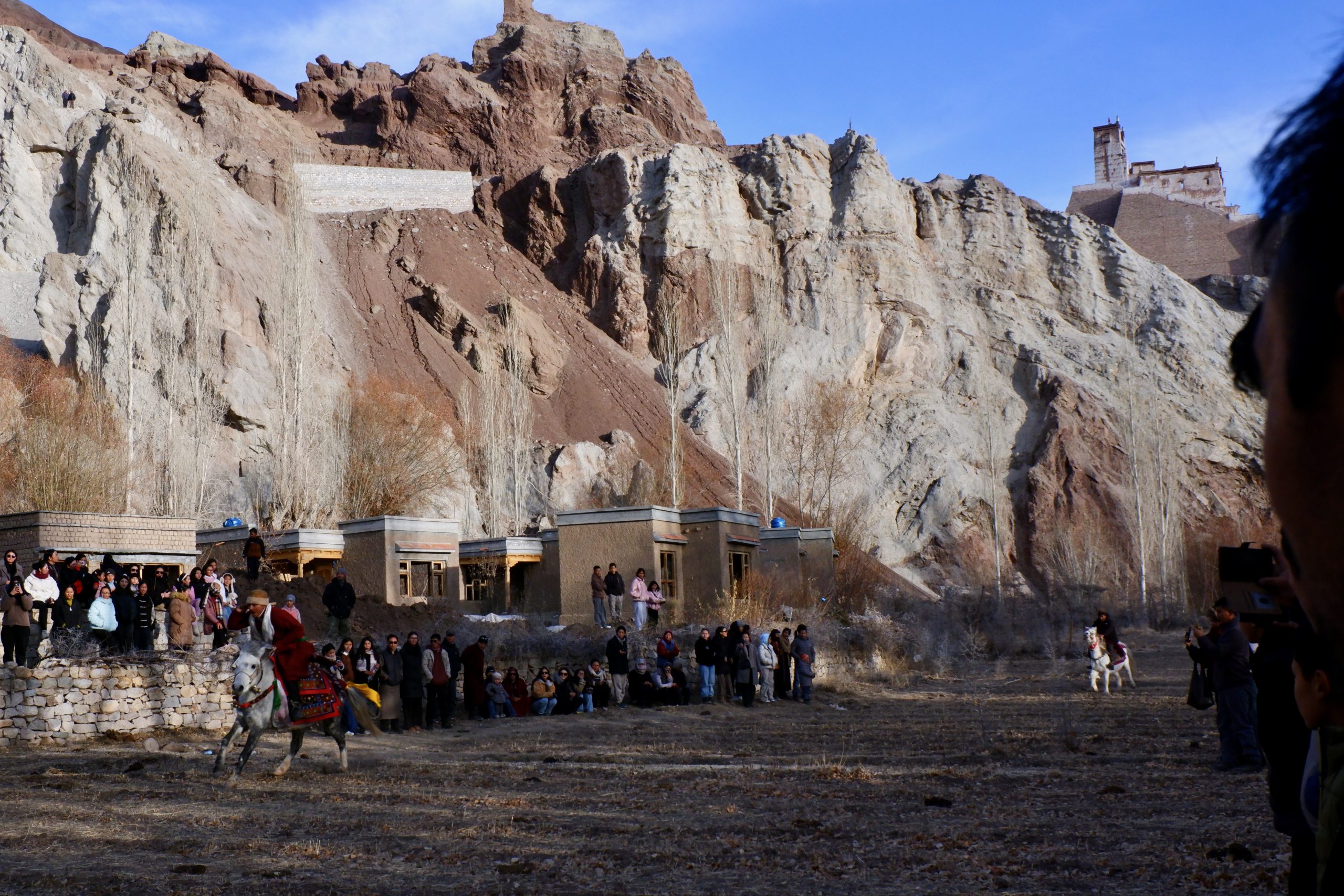
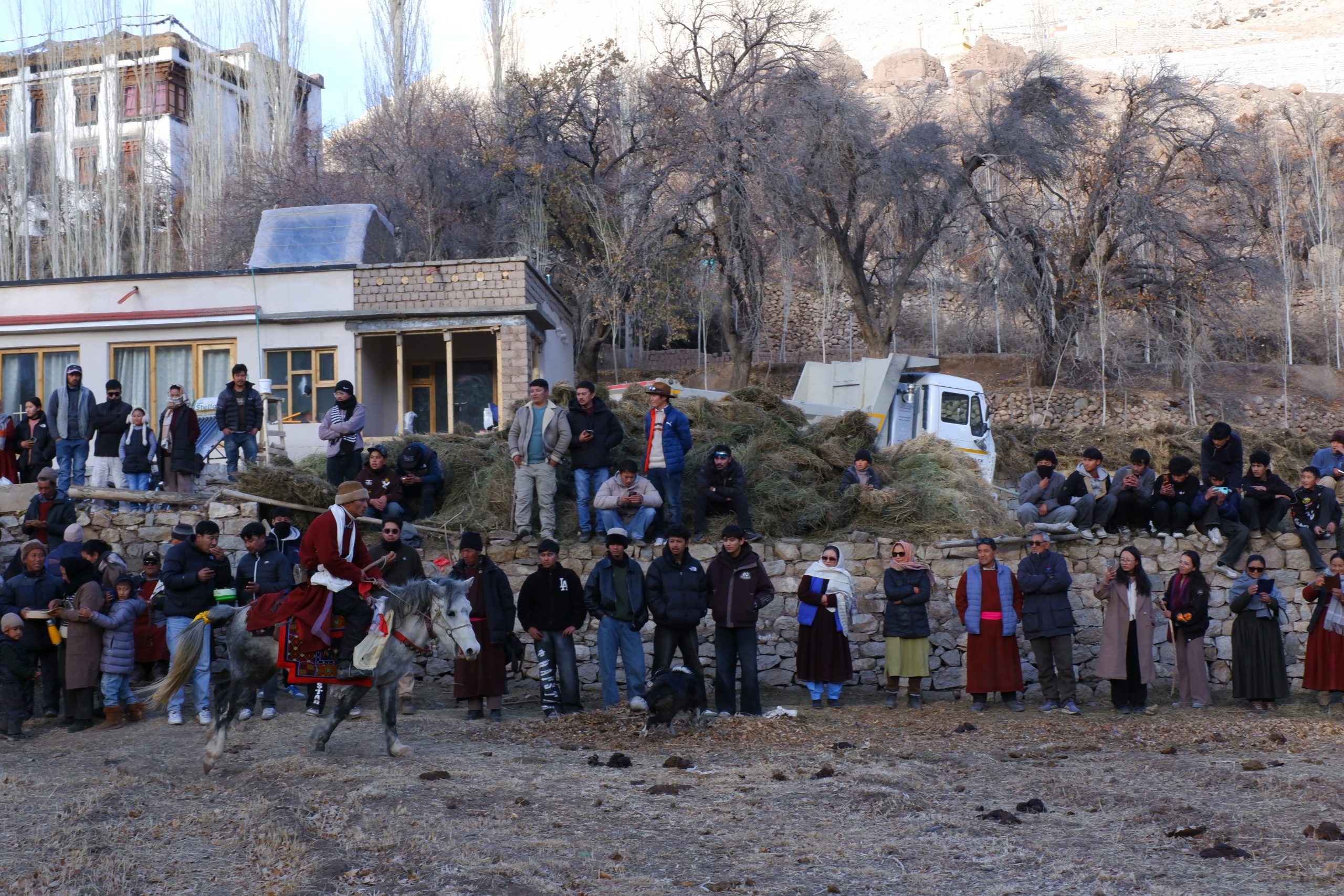
After that, everyone moves to a field below the palace, where a “horse race” takes place and people celebrate cheerfully.
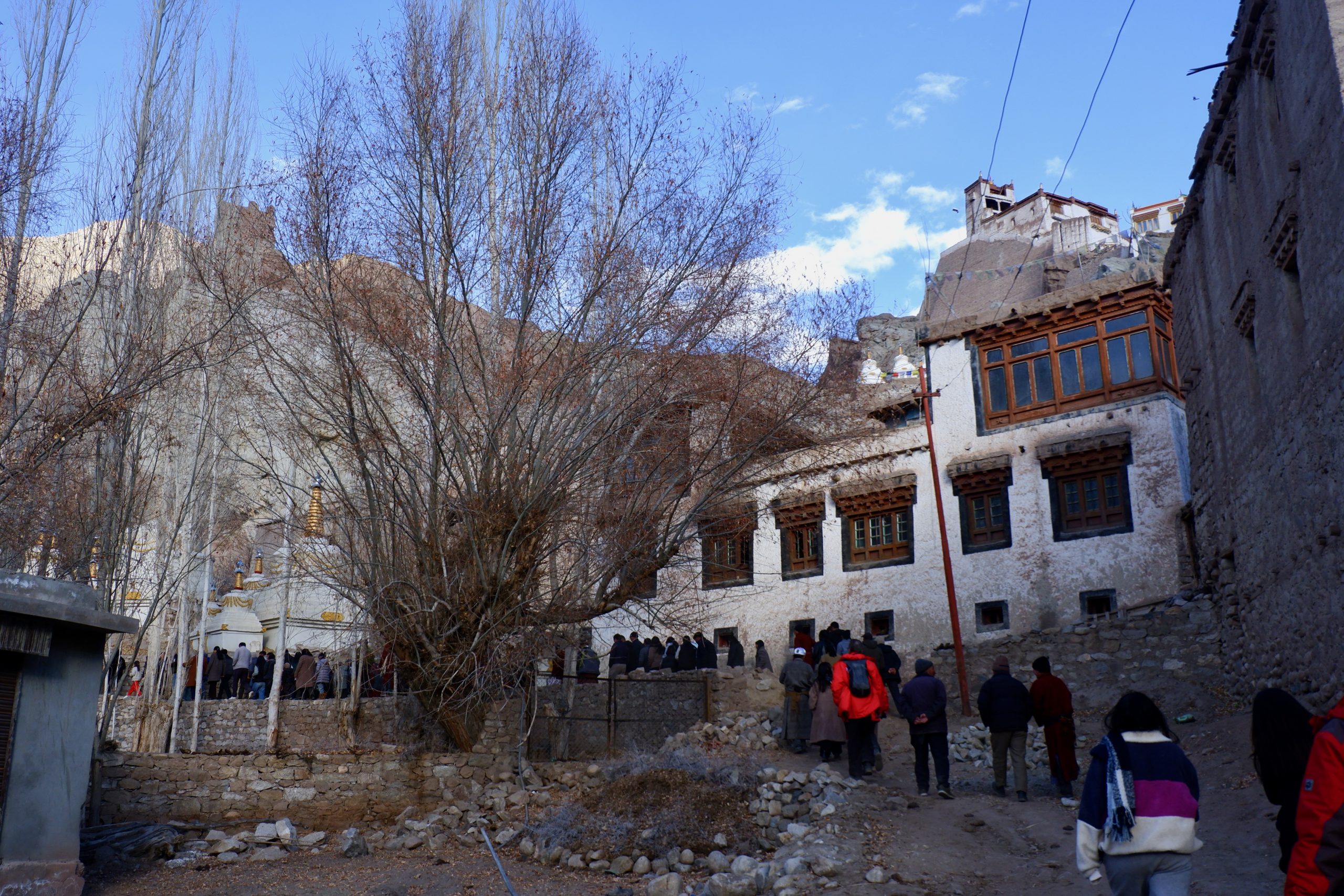 walk to field
 24
24
 25
25
 26
26
The “horse race” (so called by the locals) really needs quotation marks, because they didn’t actually race. There were two horses, and only one of them had a good rider and galloped across the field. The other had different riders and clearly no desire to run at all. Sometimes a rider even fell off. They went back and forth a few times, and then objects were arranged on the field, such as the ice disc that had been carried into the village earlier (as in Chuchot). People said that because it was so warm, it had been very difficult to find a proper ice disc.
 27
27
 28
28
Here as well, I have far more video footage than photos. The two don’t work very well together.
Because it had been so warm, I wasn’t wearing very many layers. By then it was shady, and I started to feel cold. One participant wasn’t feeling very well either and waited in the car, so I went there too and didn’t see how the rest unfolded. The others joined us soon after, and we all agreed that this had been the highlight day of the trip.
In the end, we flew to Delhi, where we had some buffer time (and New Year’s Eve), since flights do sometimes get canceled and everyone was meant to definitely catch their onward flight home. There will be another blog post about that – and then one more with some “afterthoughts”.