


Nagaland: Khonoma – War, Conservation and Koka
12. November 2025
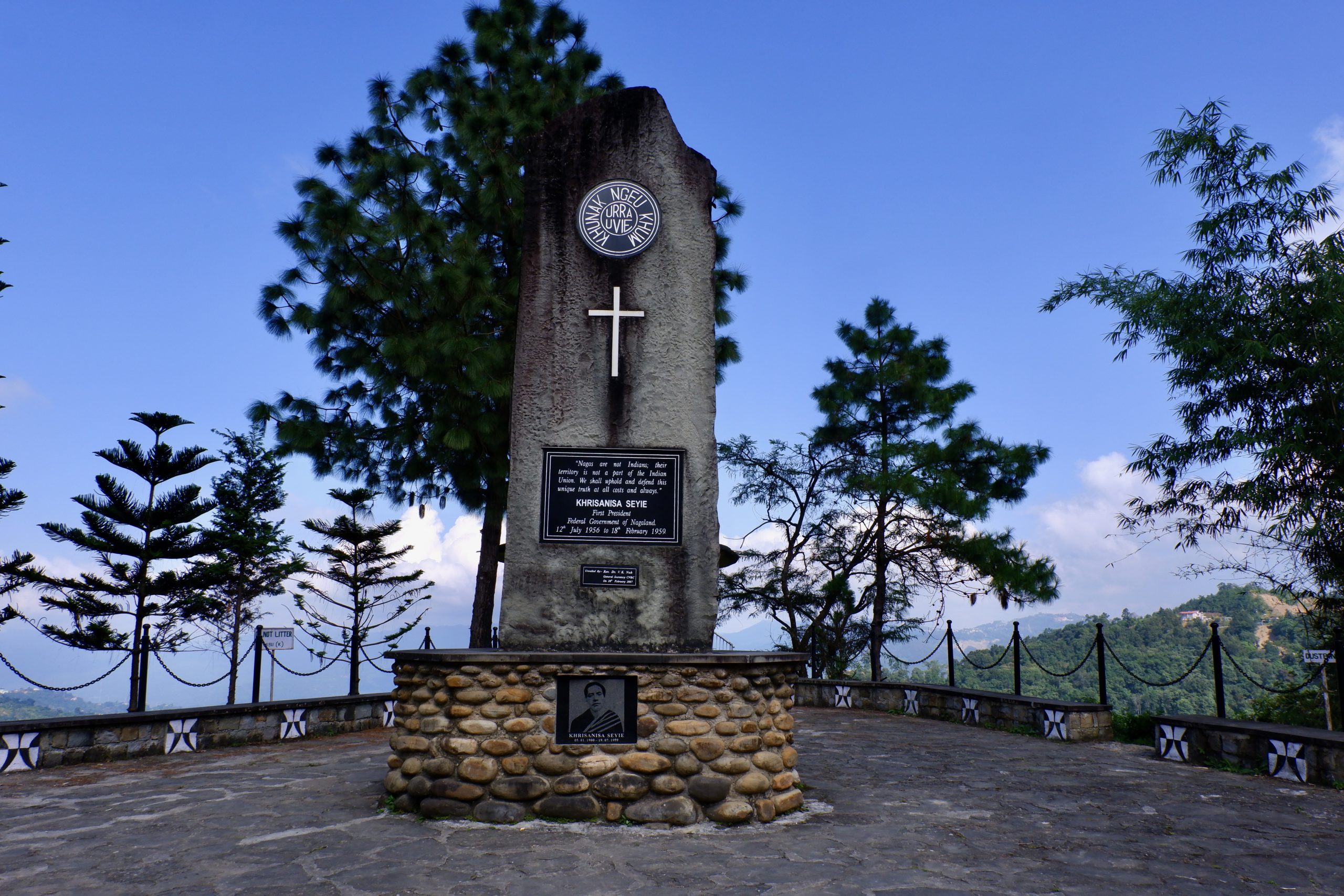
Nagas are not Indians. Their land is not part of India. That’s what is written on this memorial stone on the way to Khonoma. It was said by the first president of the Federal Government of Nagaland in the 1950s — by which time Nagaland already belonged to India.
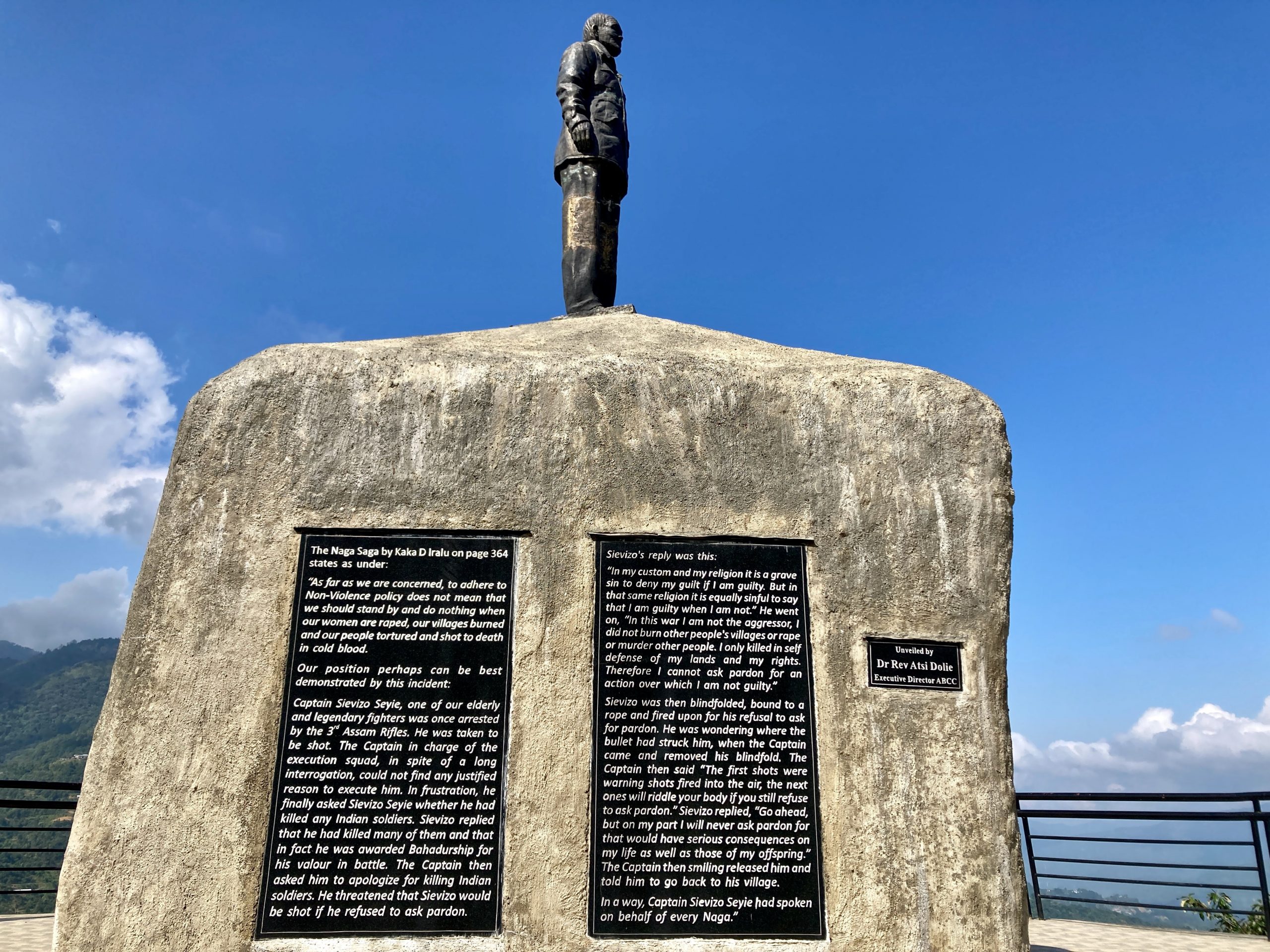
Next to it is another memorial with a story:
Captain Sievizo Seyie was once arrested by the 3rd Assam Rifles. He was supposed to be executed. However, the captain in charge wasn’t quite sure why, so he asked him: Have you killed Indian soldiers? Yes, I have, he replied. He had even been decorated for his fighting. Would he regret it and ask for forgiveness? He answered at some length: In my tradition and in my faith, it is a sin not to admit guilt when one is guilty. But it is also a sin to confess guilt when one is not guilty. In this war, I am not the aggressor. I have not burned houses, I have not raped women, and I have not murdered anyone. I have only killed in self-defence, for my land. I cannot apologize for something for which I am not guilty.
Then they blindfolded him and he heard gunshots — but he was obviously not hit. They removed the blindfold and told him those had been warning shots. If he didn’t ask for forgiveness, the next ones would hit him. He said, I cannot do that. If I were to ask for forgiveness falsely, it would not be good for my family. At that, the captain smiled and sent him back to his village.
Sievizo Seyie was speaking on behalf of all Nagas.
 history
I drove to Khonoma. The village is an attraction for two reasons:
- it is the “green village” in India
- here the Battle of Khonoma 1879-1880 has taken place
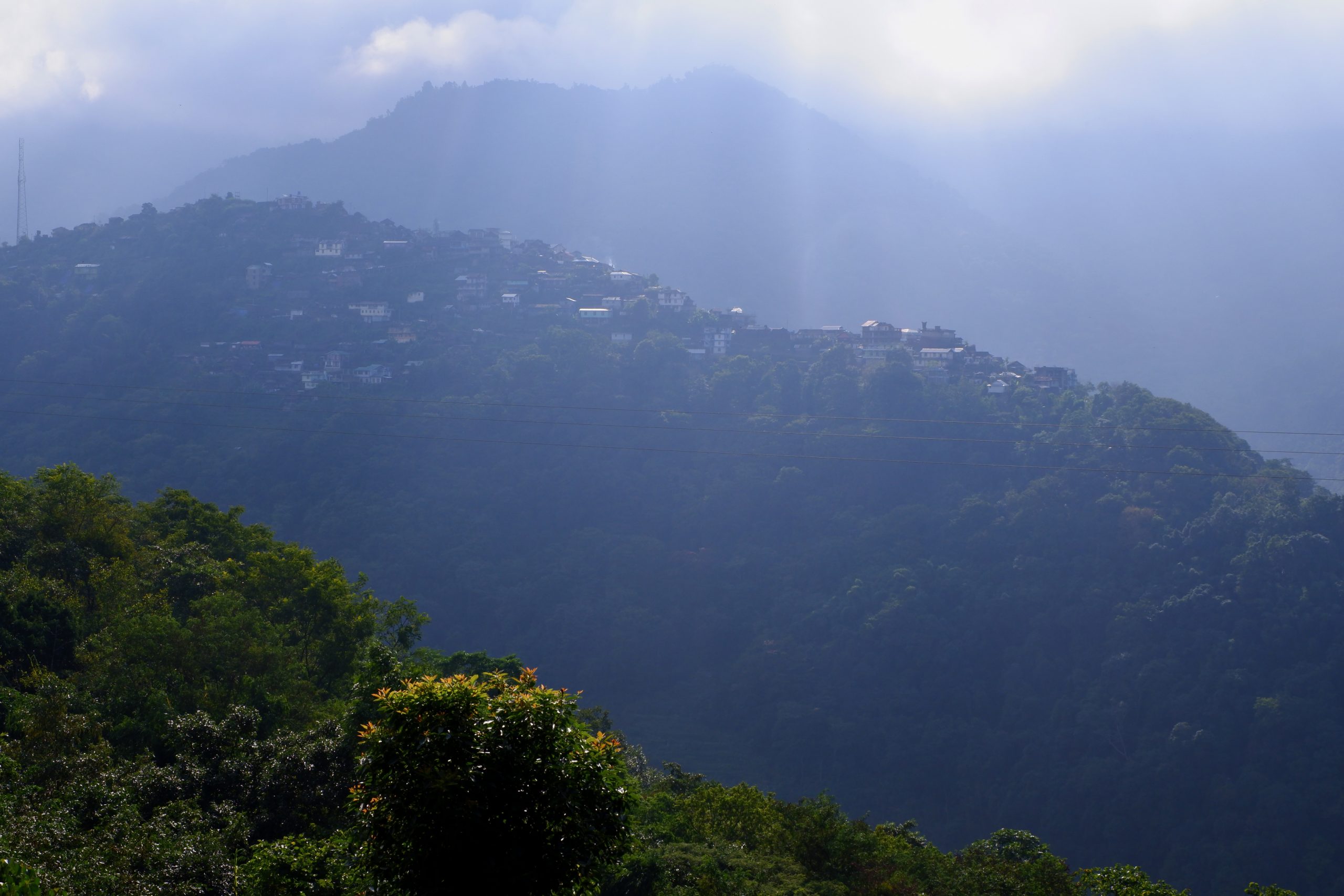
Khonoma, like almost all villages here, is situated on a hill so that incoming enemies could be easily spotted.
 Khonoma
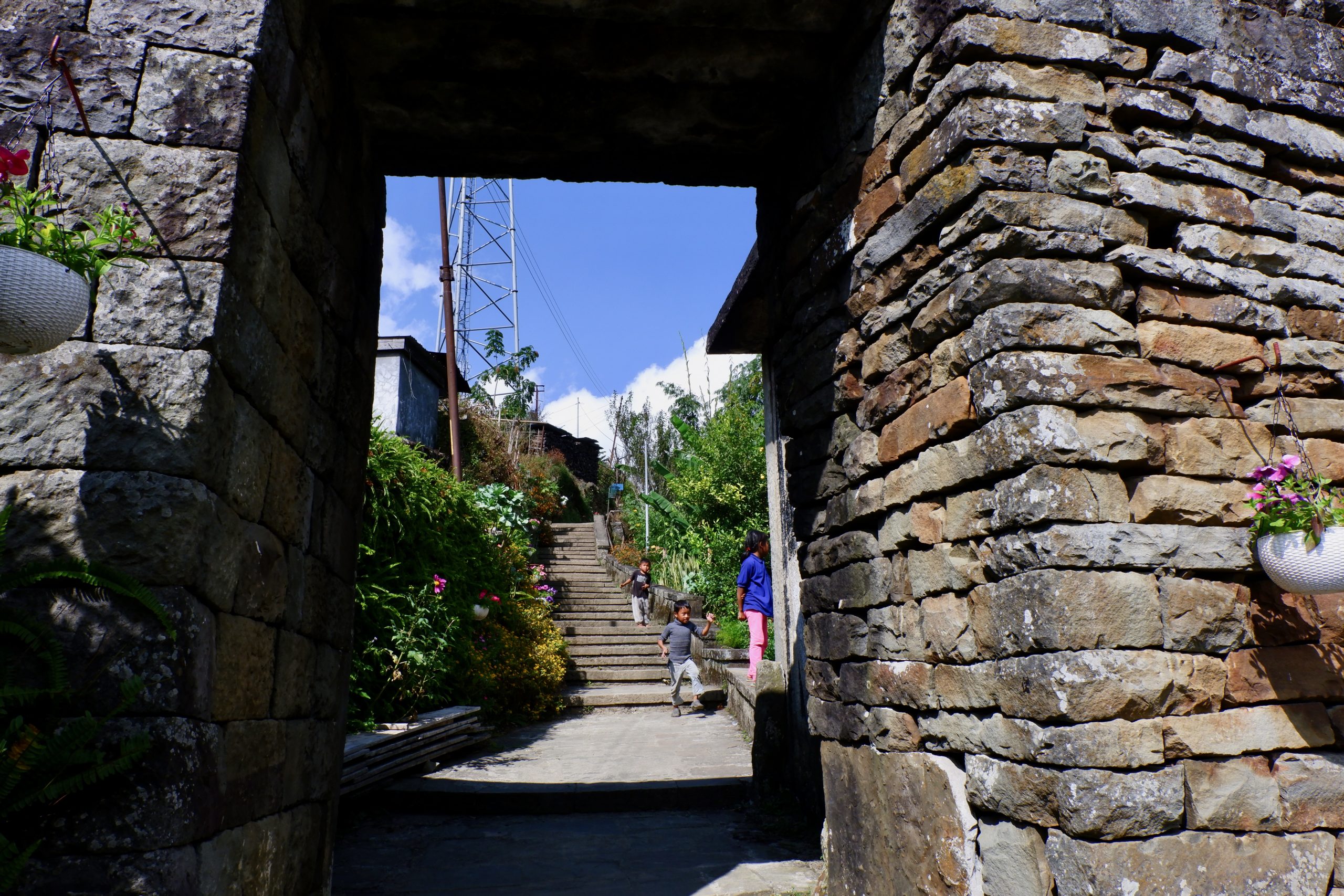
In Khonoma there is still the old Citygate, which can be closed.
 citygate
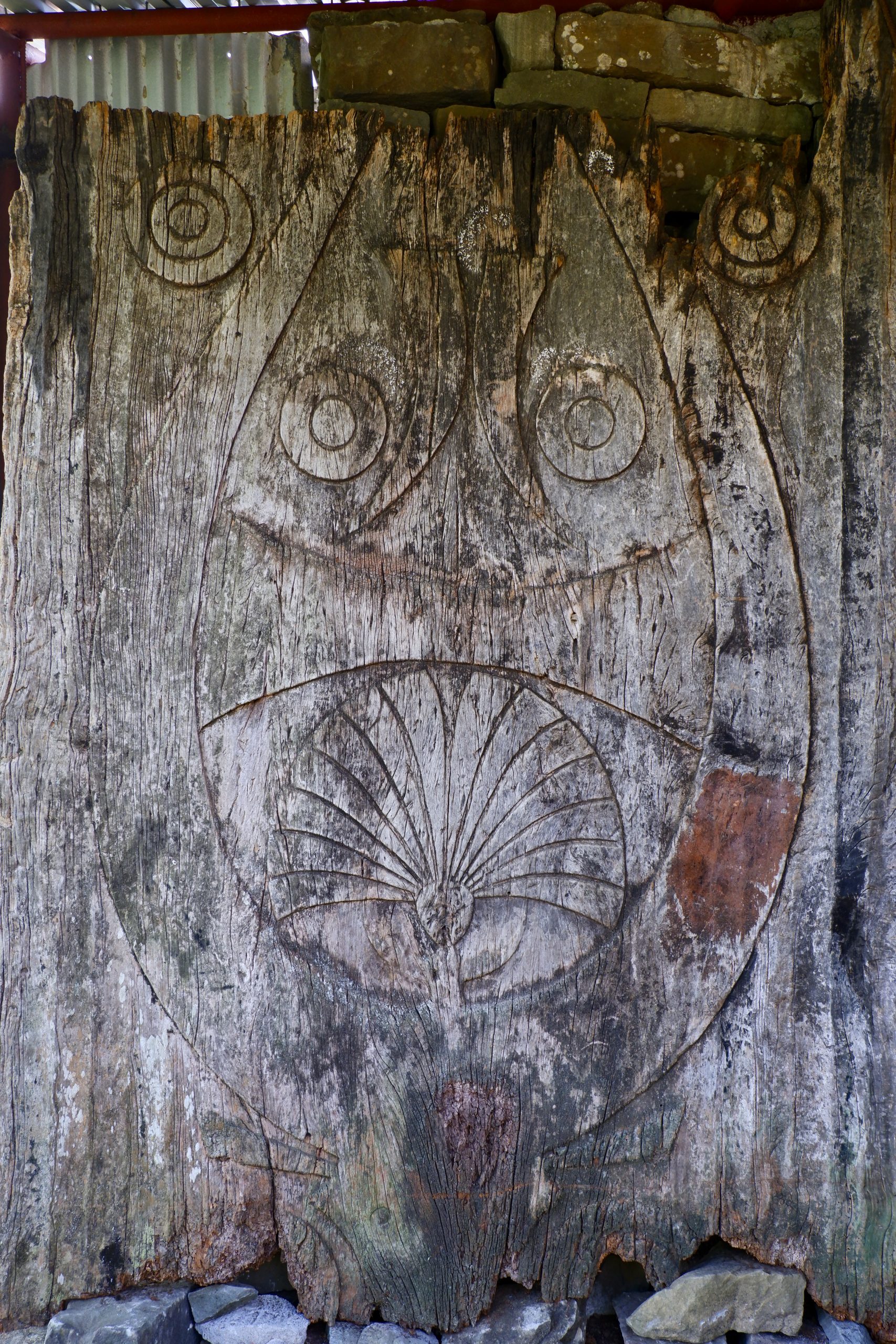 gatedoor
The inhabitants of Khonoma (the Angami) held out for several months. This happened because the Angami saw themselves as particularly proud and unwilling to submit to British demands. They did not want to pay taxes, be missionized, or give up headhunting. Their resistance resulted in the killing of the British officer Damant, who may have come to Khonoma “only” for diplomatic reasons. Naturally, the British could not let that stand — it was considered rebellion, and rebellion had to be crushe. The Angami barricaded themselves in Khonoma, and they did so quite successfully for eight months. After that, they were too exhausted, starving, and internally divided. The British won, but the glory of the resisting Angami remained.
You can still see various lookout points and forts from that time.
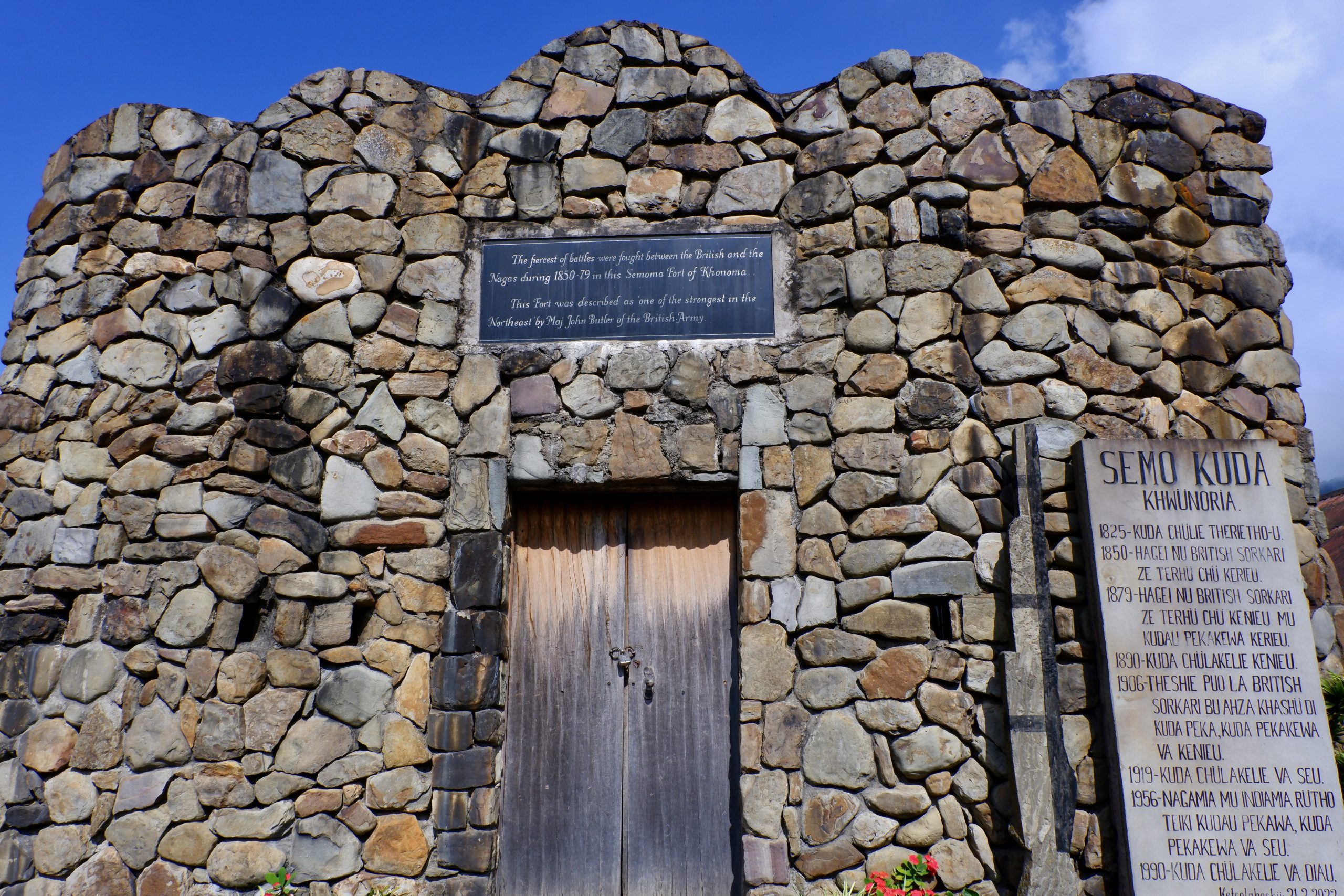 Fort
Fort
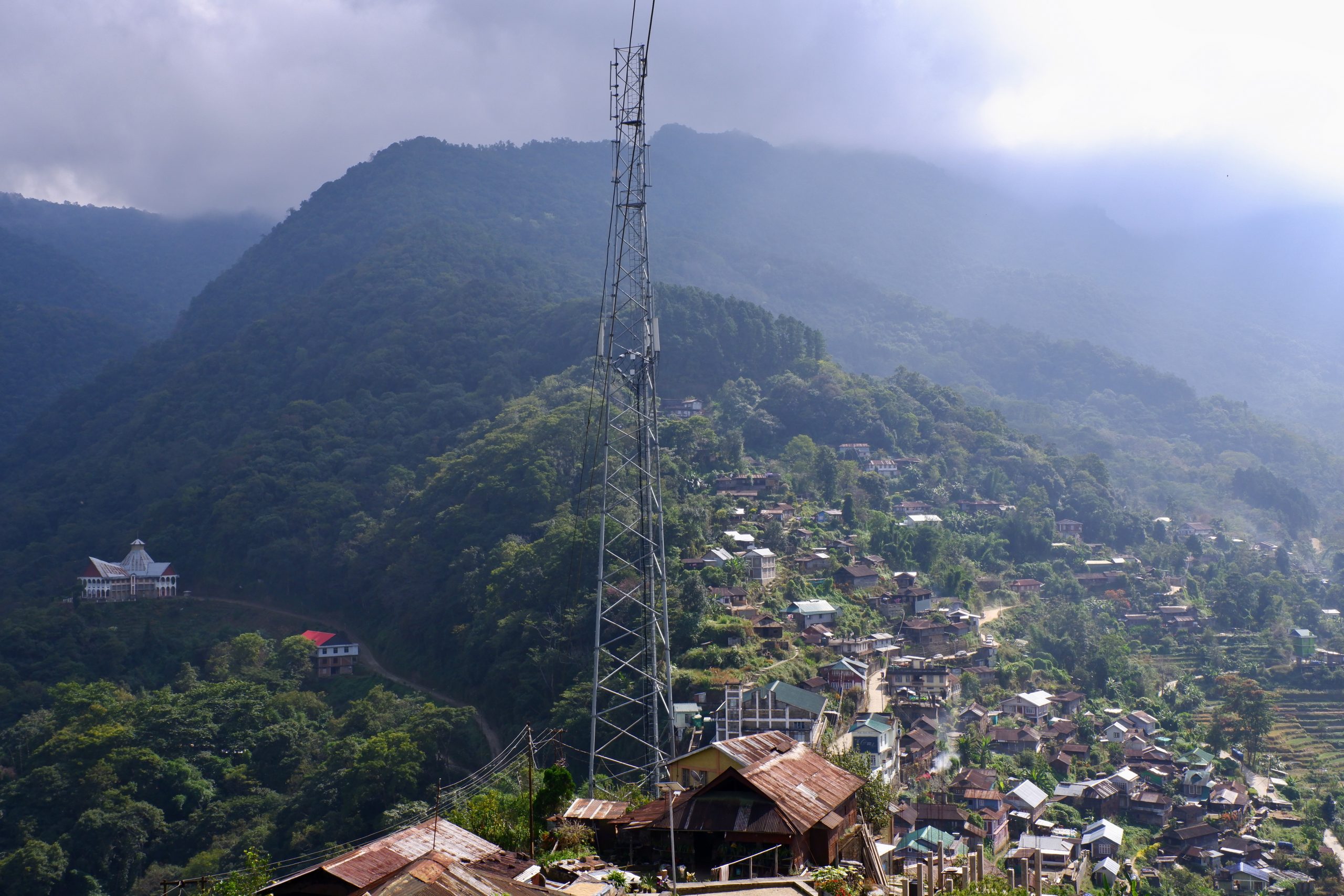 lookout 1
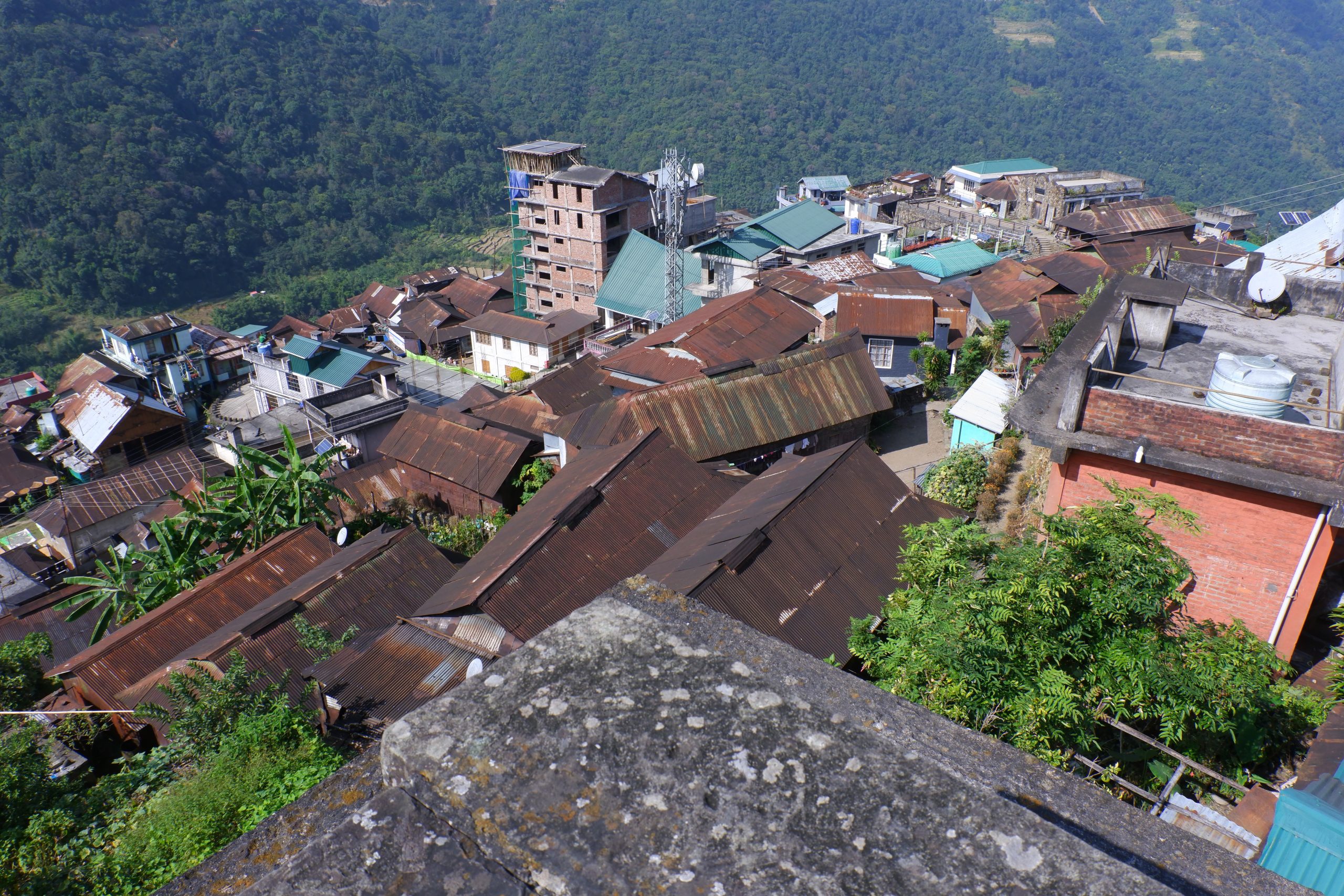 lookout 2
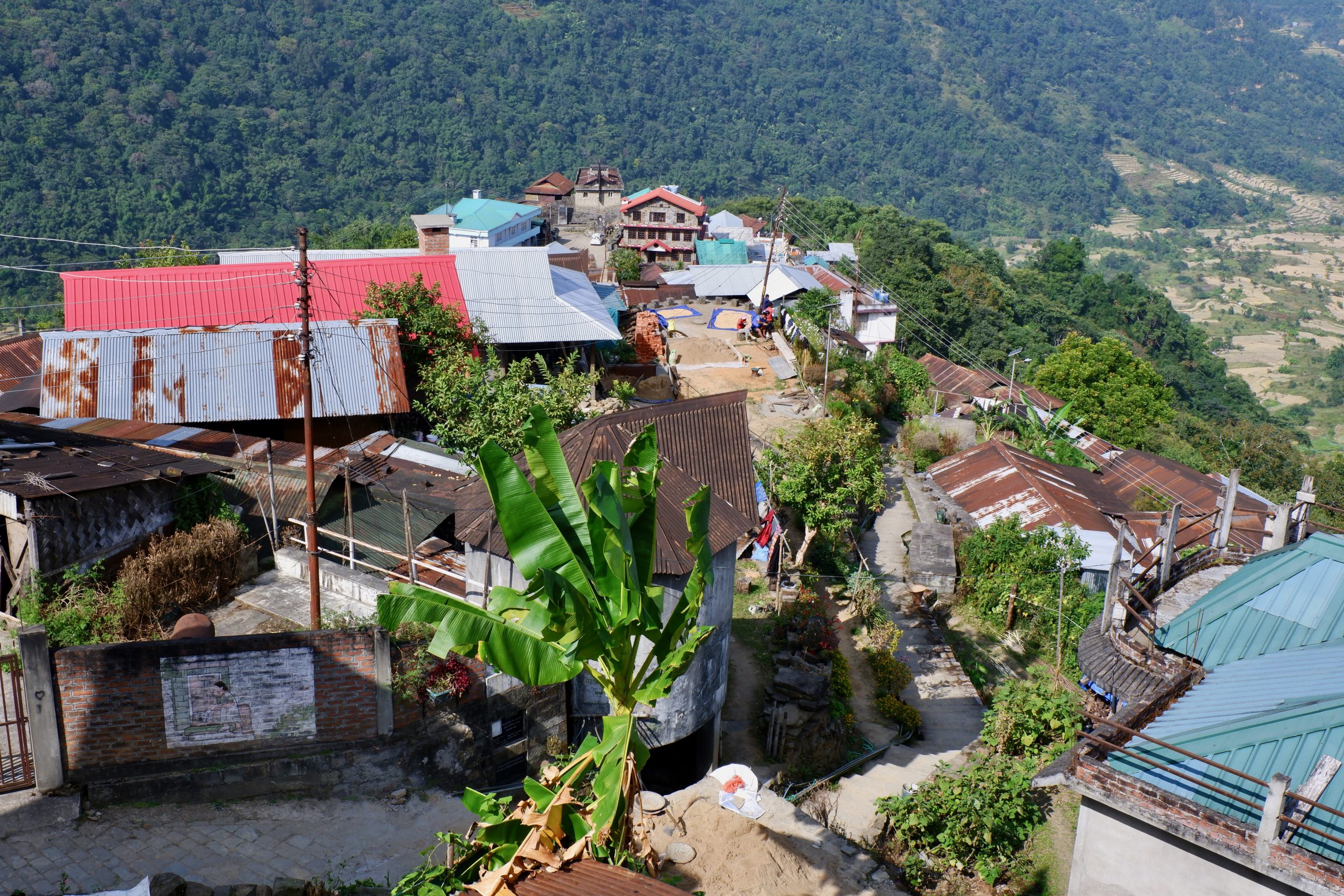 lookout 3
Khonoma, however, has not only its famous past but also a flourishing future. In 2005 it was honored as the first “green village” in India. To achieve this, certain guidelines must be followed: protection of nature, no hunting, ecological farming, waste management, strong community structures, gentle/sustainable tourism, and so on.
They were quite organized: when you arrive in the village, you pay a kind of entrance fee and are assigned a guide, whom you pay separately. He walks around with you for about an hour, explaining and showing things. In contrast to Asi in Kigwema, this guide was a bit more “professional,” meaning that no truly good conversations developed, and he was simply done after one hour. Not bad, but not inspiring either. He also said little about what life looks like today, which rituals still exist, and so on.
The village was also more “commercealised”, means there was a weaving showroom, selling stalls and so on.
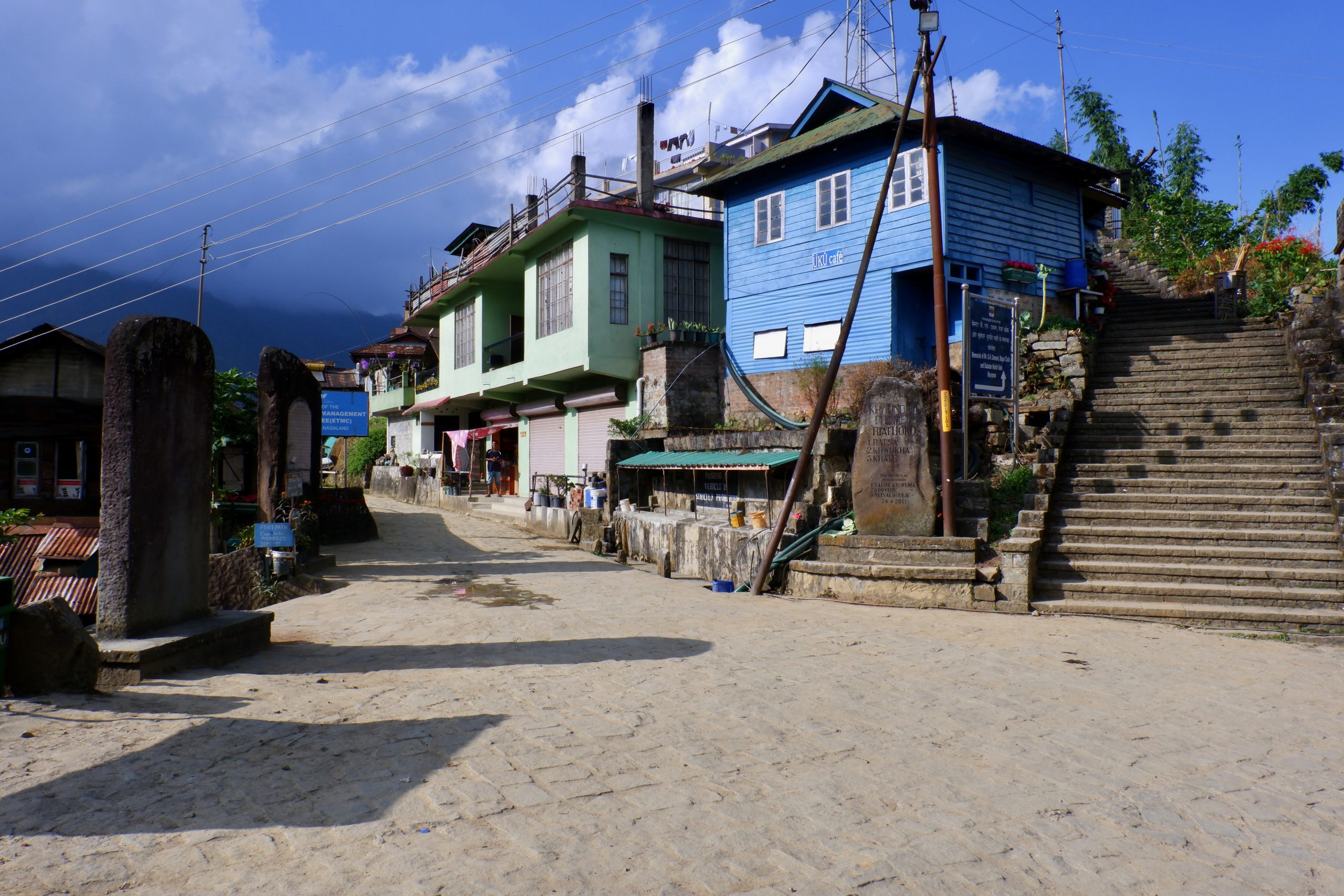 village entry
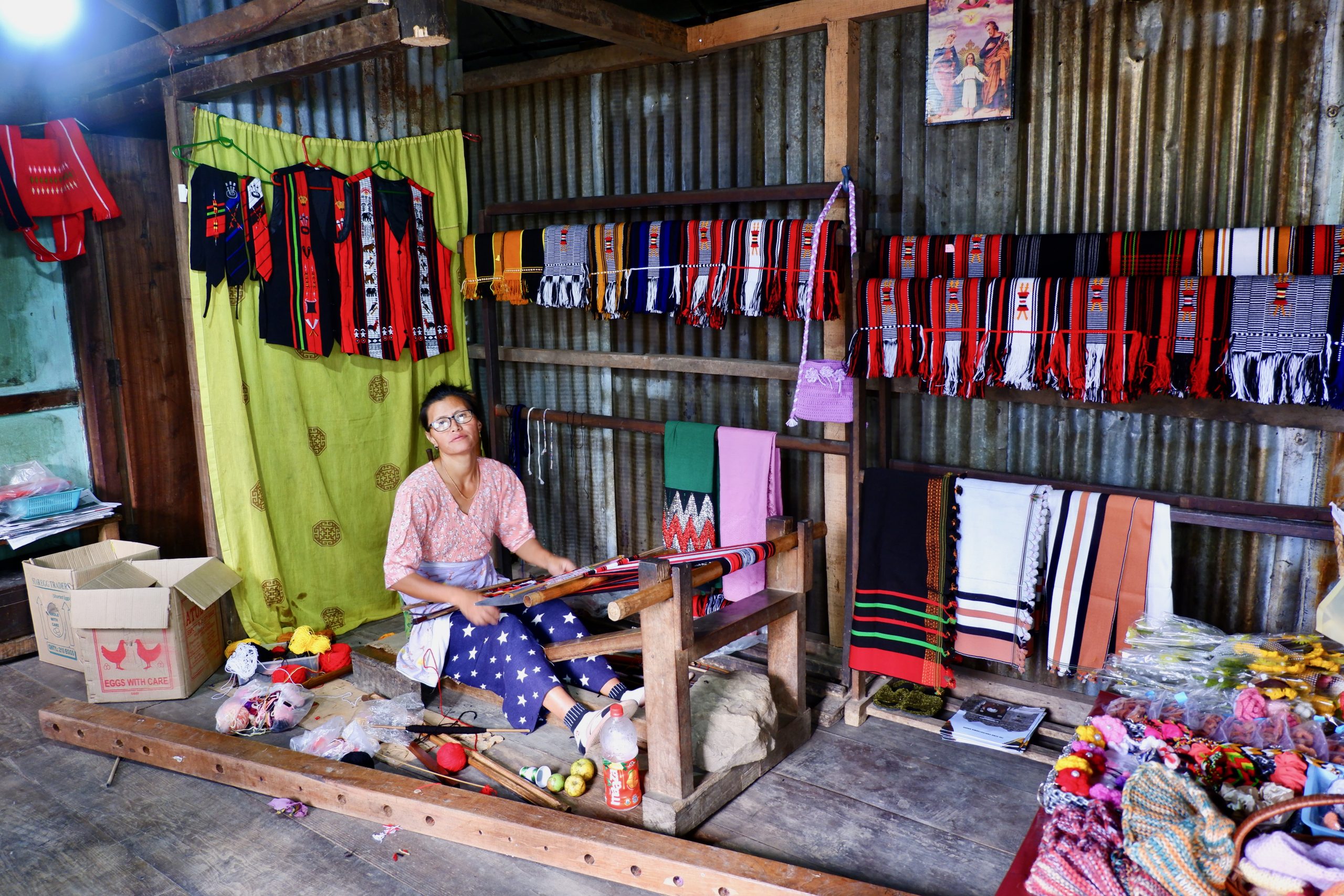 Weaver
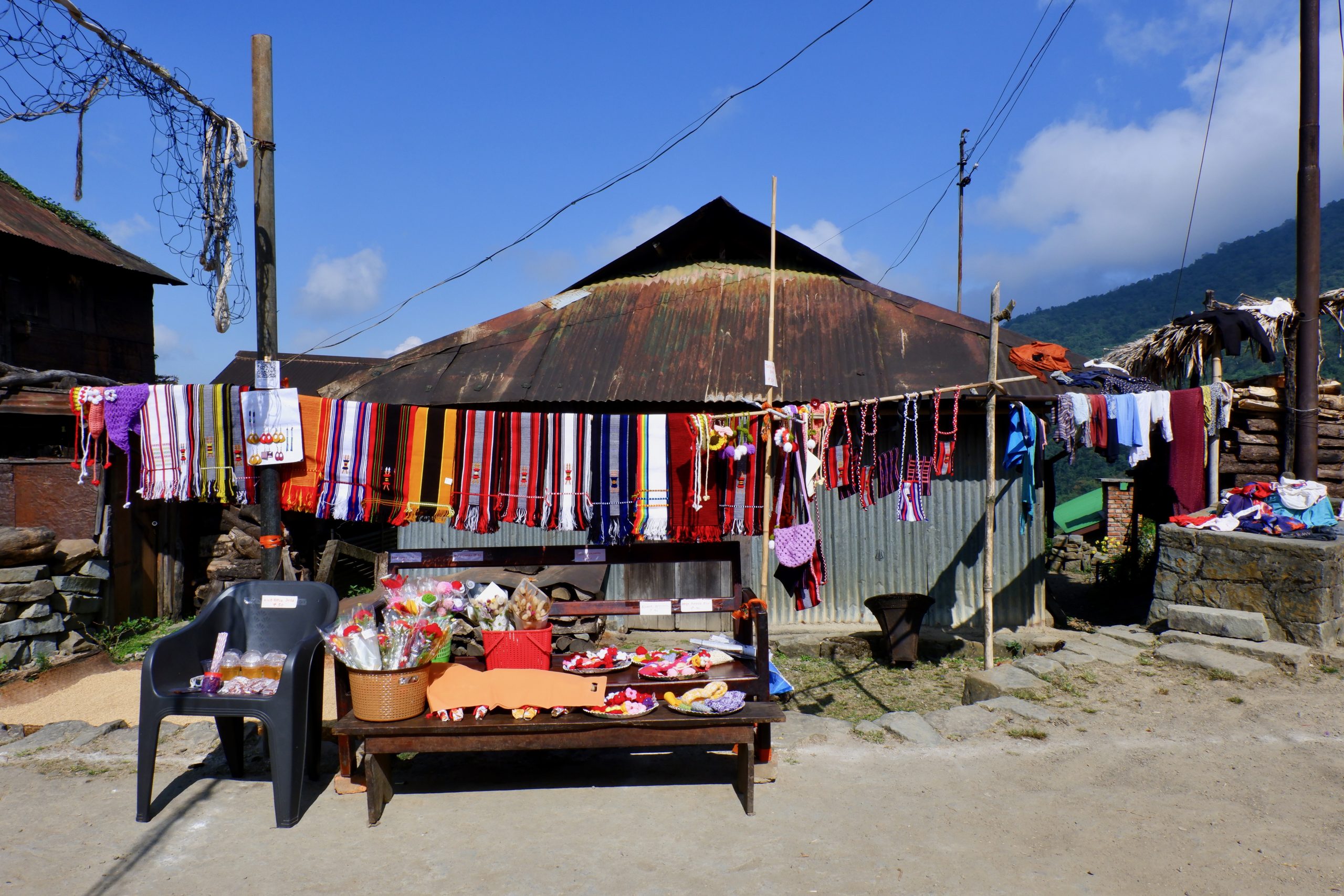 selling stall
Interestingly, although the village is supposed to be quite eco-friendly, many of the items for sale — especially dried fruits and similar things — were packed in plastic. Here are a few pictures from the village walk:
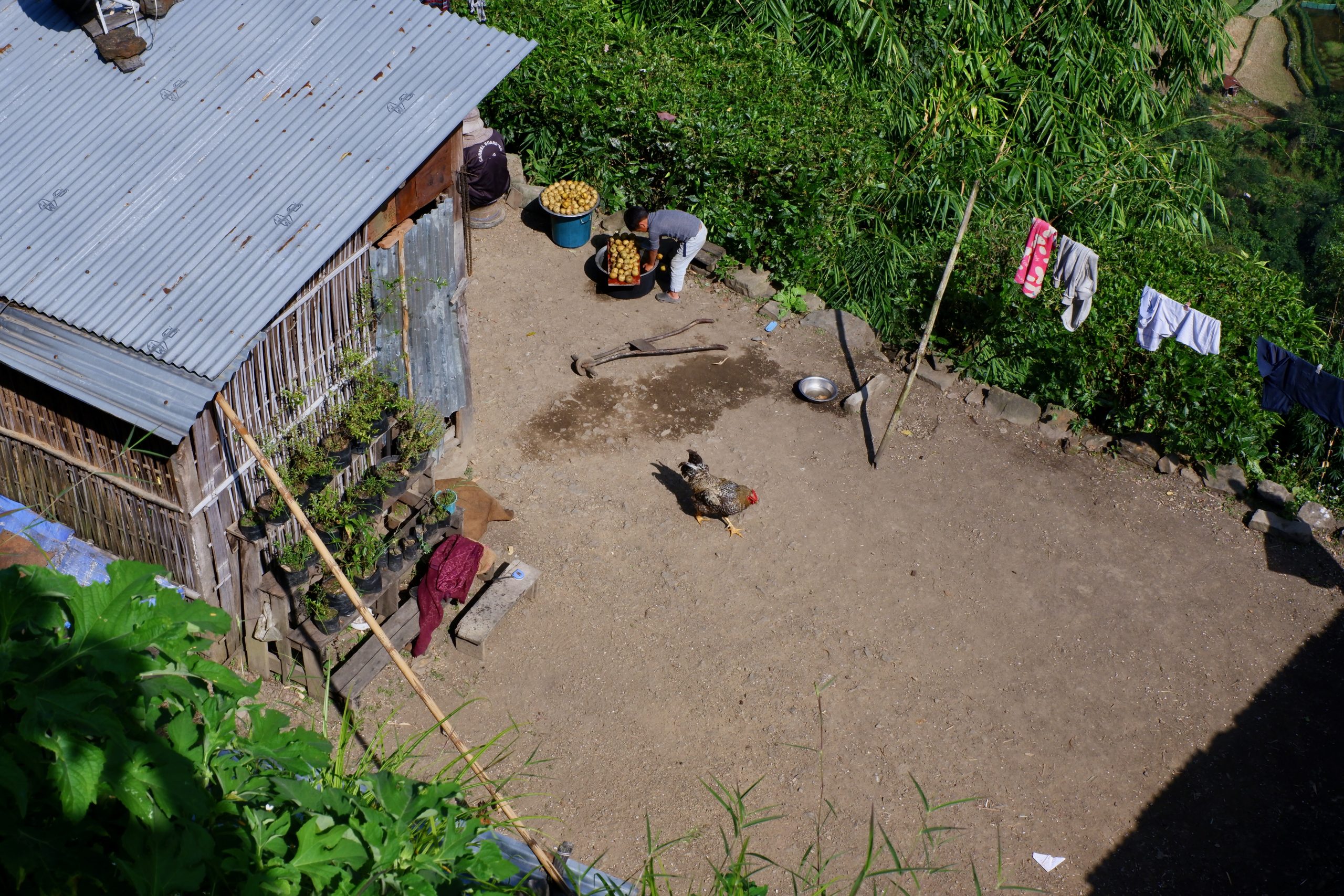 1
1
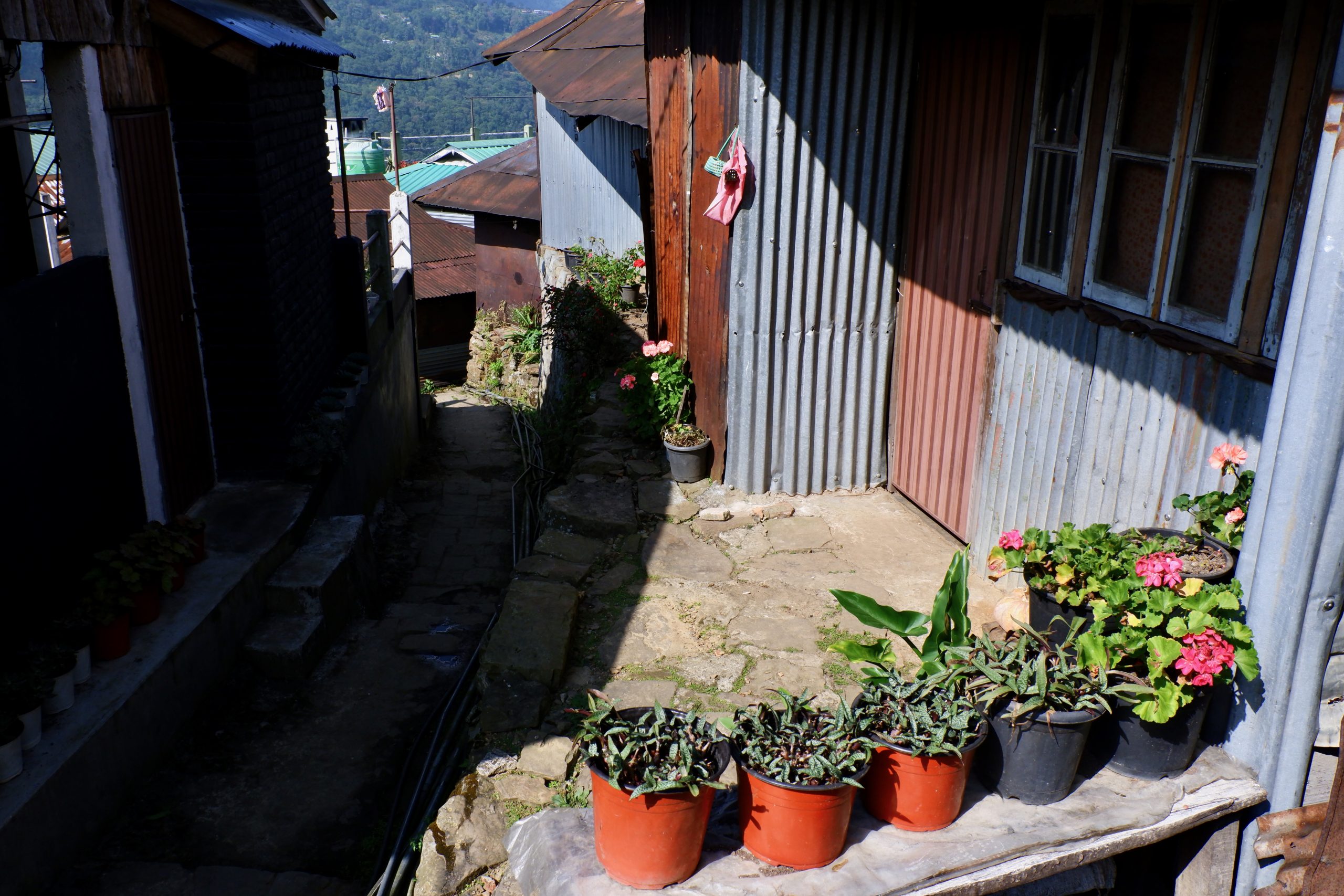 2
2
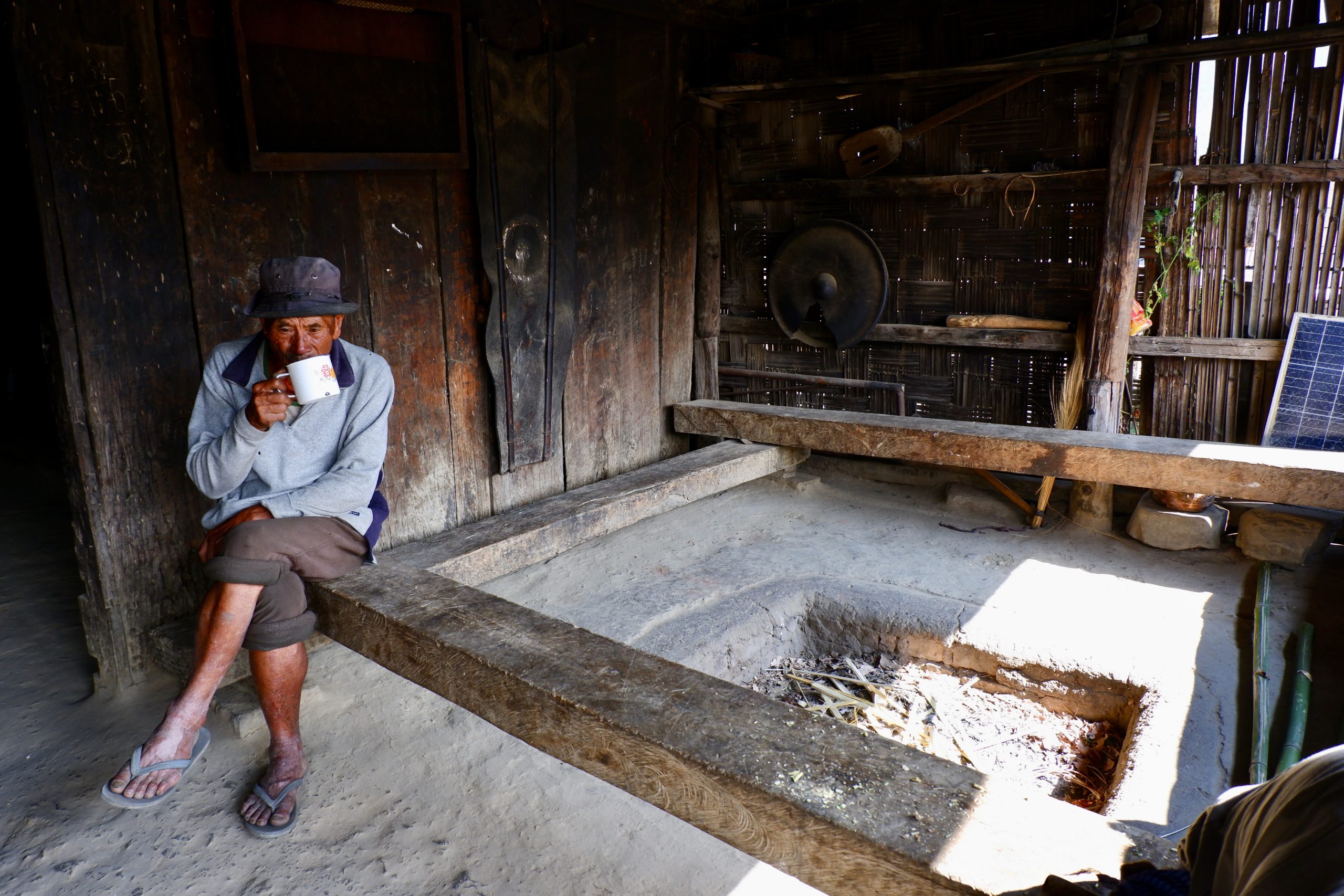 3
3
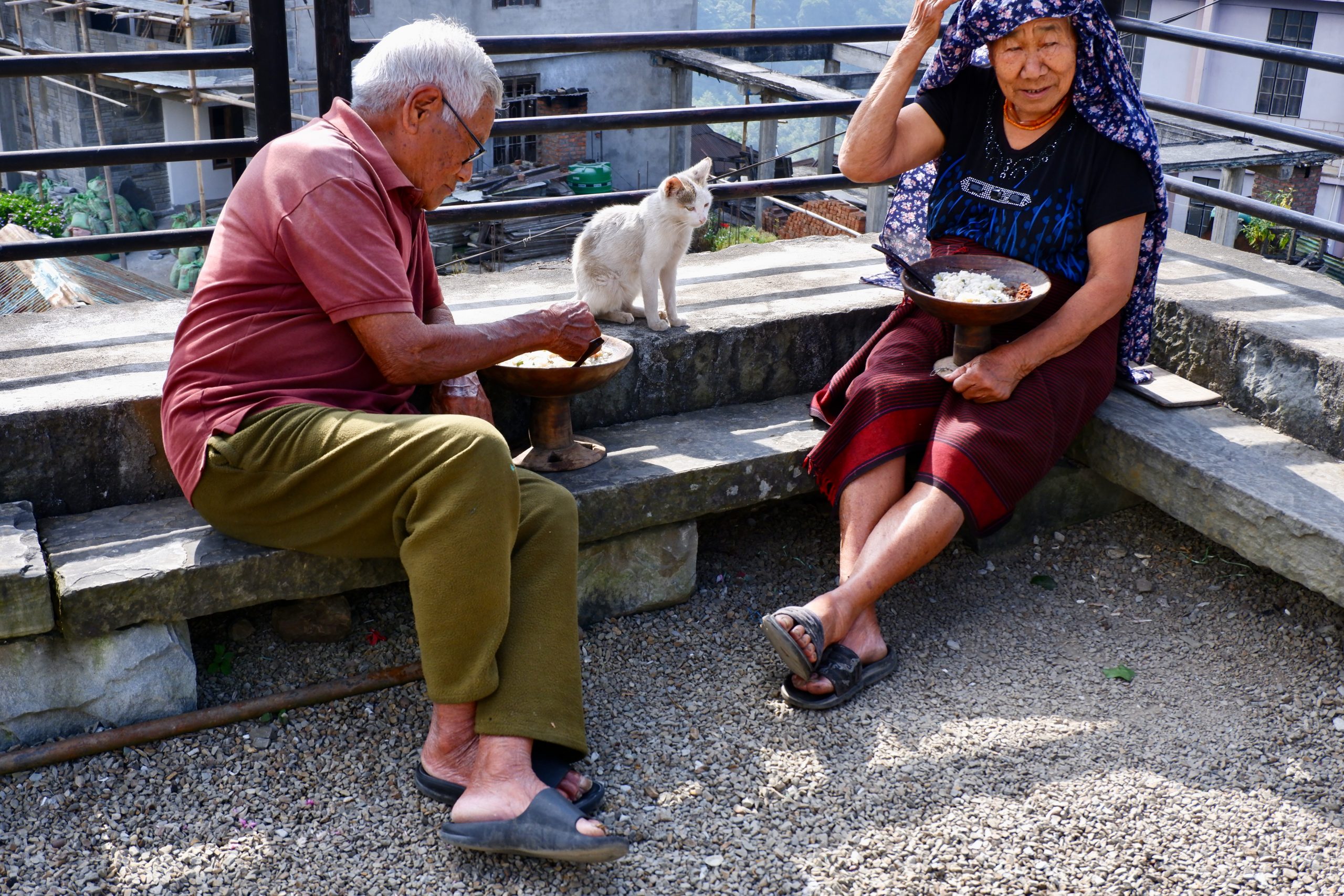 4
4
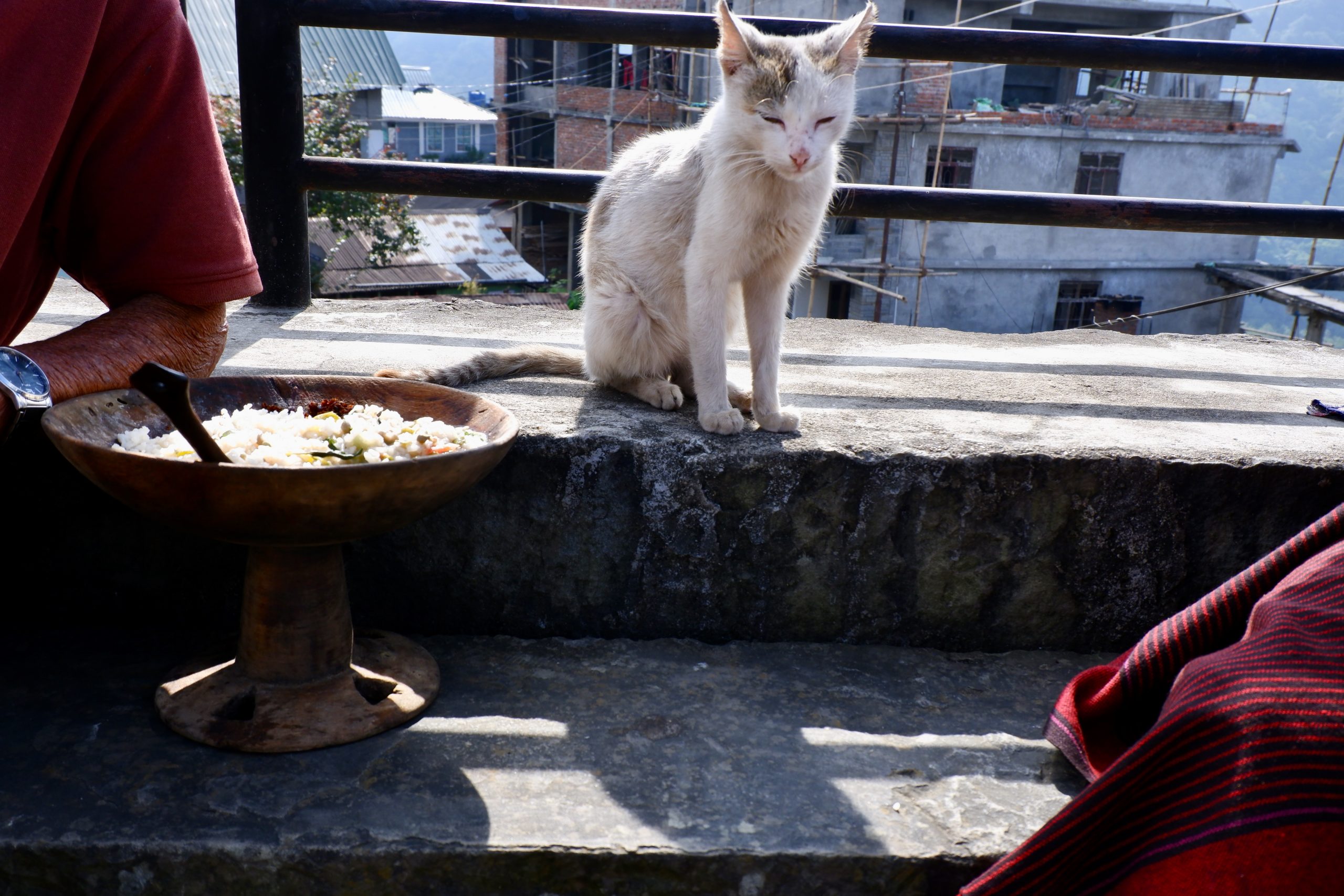 5
5
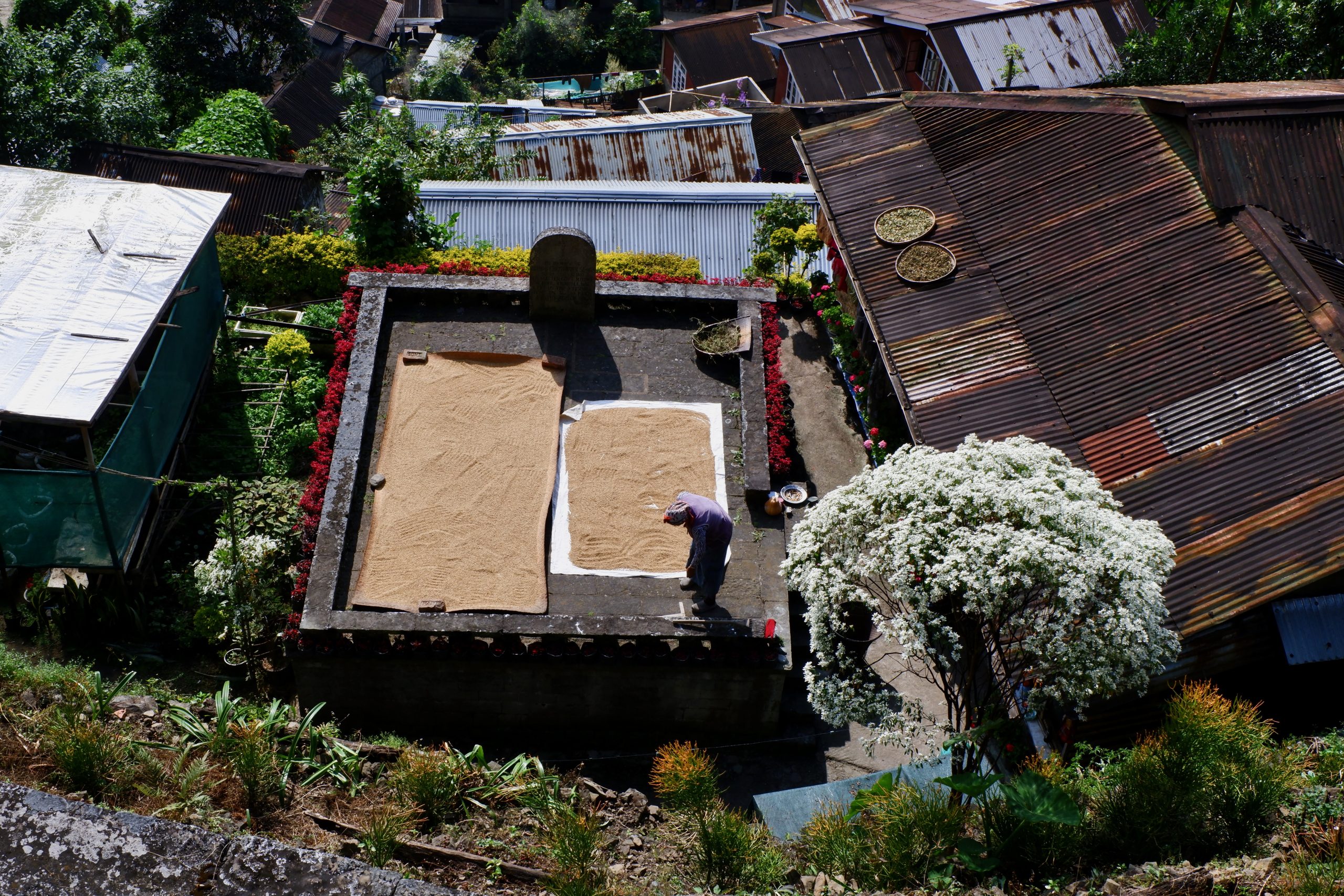 6
6
A few more things stood out to me — especially regarding the dead. They are placed in coffins, but not buried in a cemetery. Ideally, they are laid to rest right at home, because people want to keep their loved ones close. Only when there is no more space does the deceased have to be taken somewhere else.
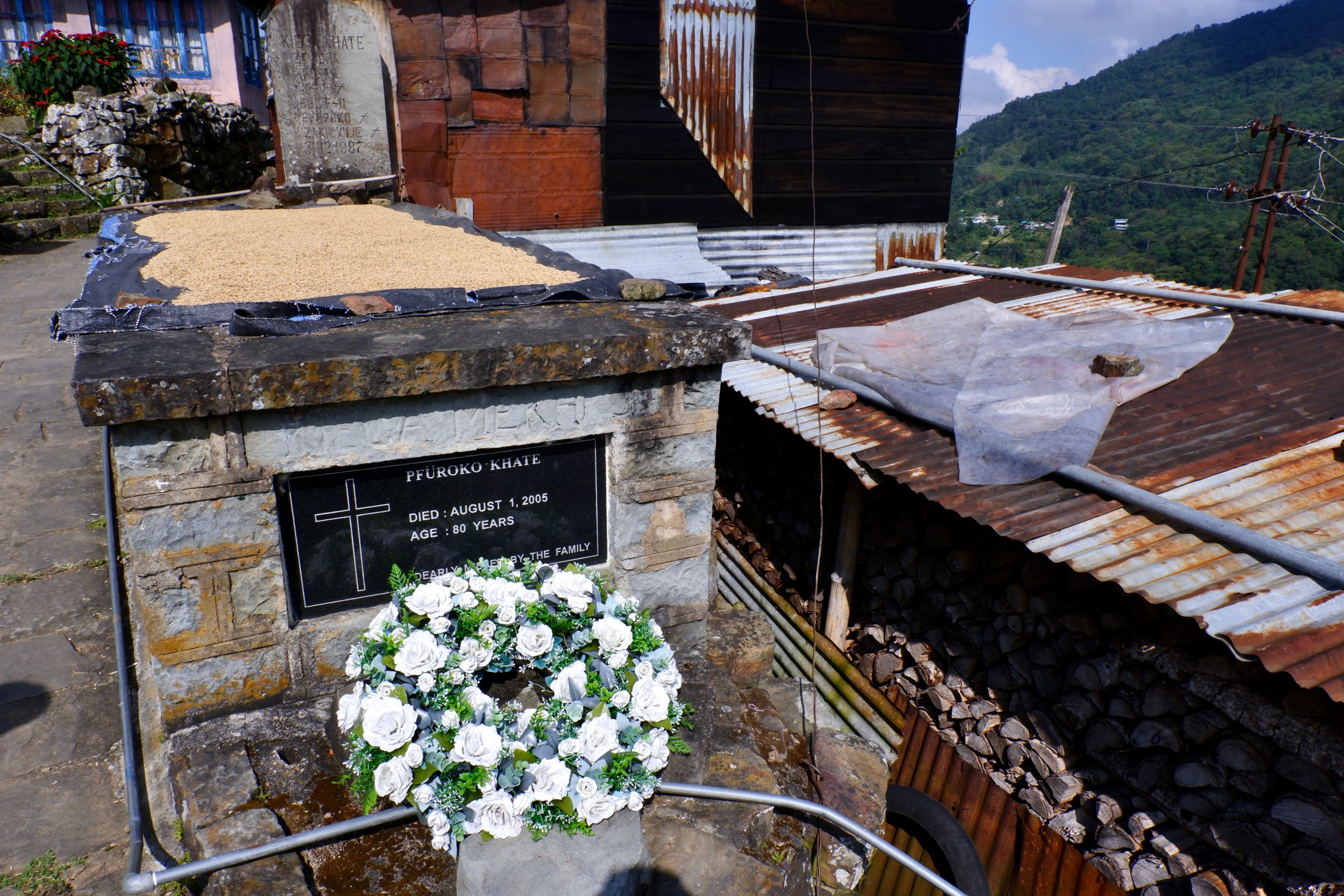 tomb nearby house
You can see rice being dried. The fields for it are beautifully terraced next to the village:
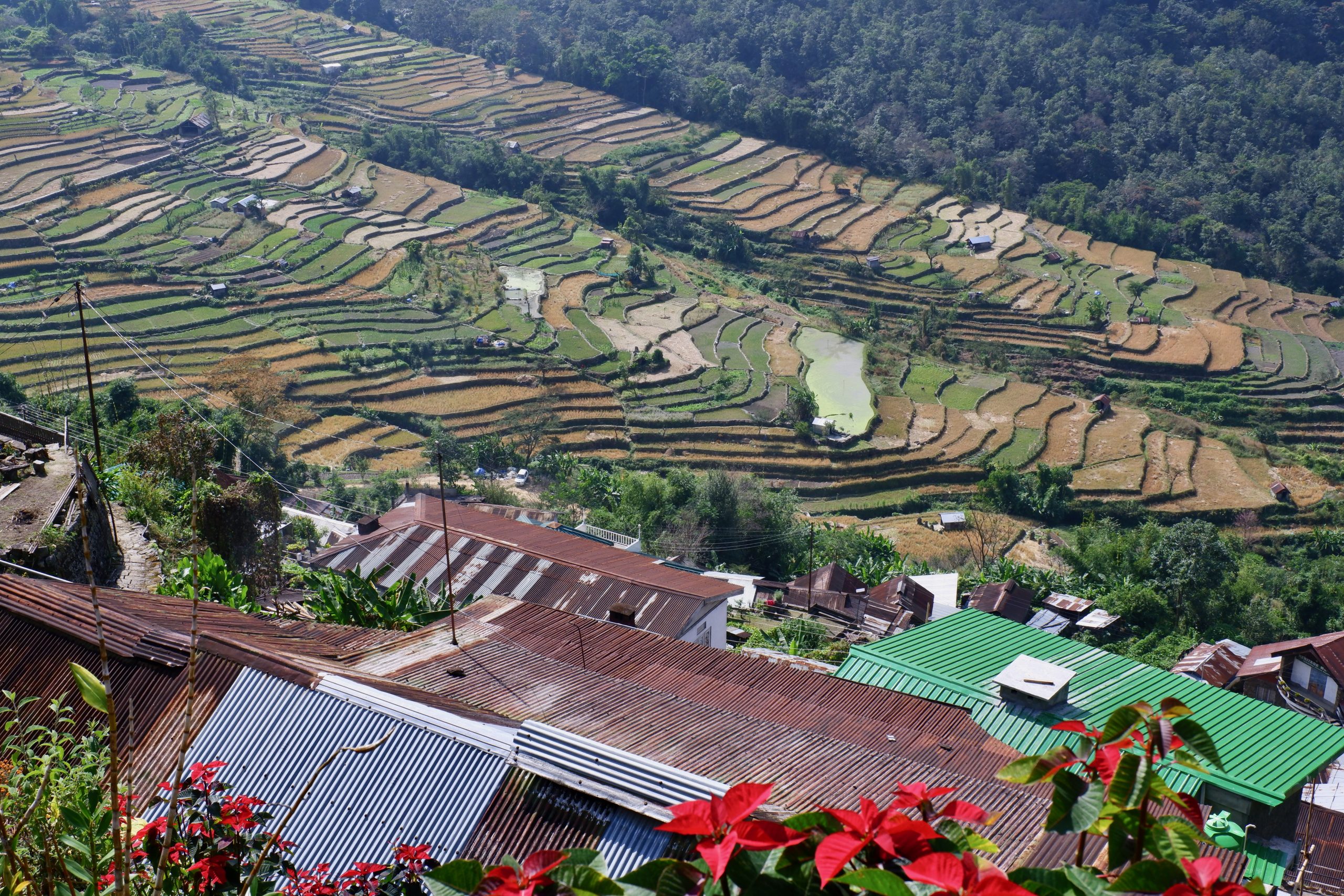 paddy fields
Here too, the water is of very good quality and plentiful. But people make a clear distinction between the water sources used for drinking and those used for washing.
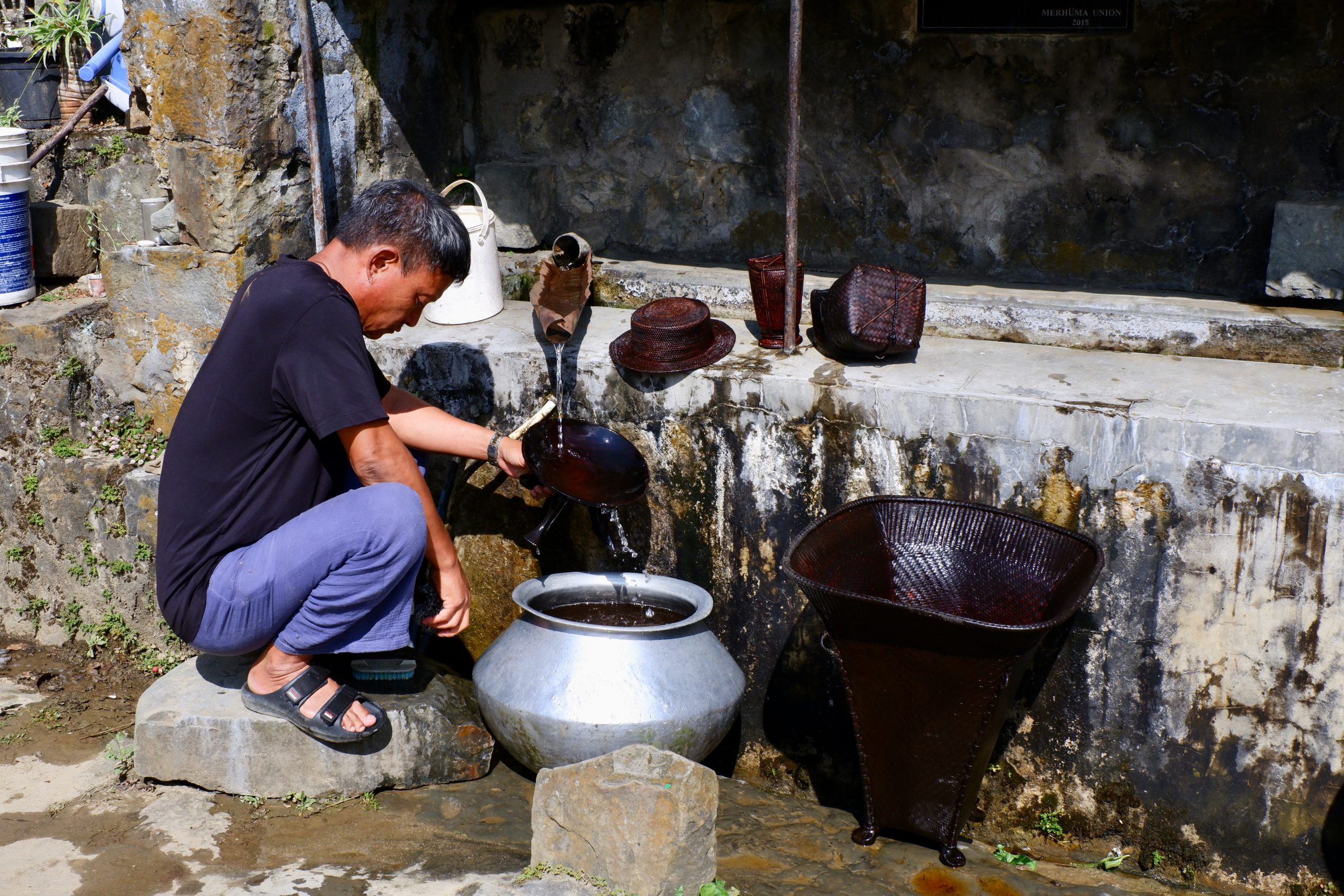 Washing water
It was around lunchtime, so I went to the only eatery, which had very little choice. They had 2-minute noodles from various brands. I don’t like any of them. I still tried Koka, but it was just as unappetizing. But they did have something called wild apple juice — apparently the apples are wild. In any case, the juice was tasty.
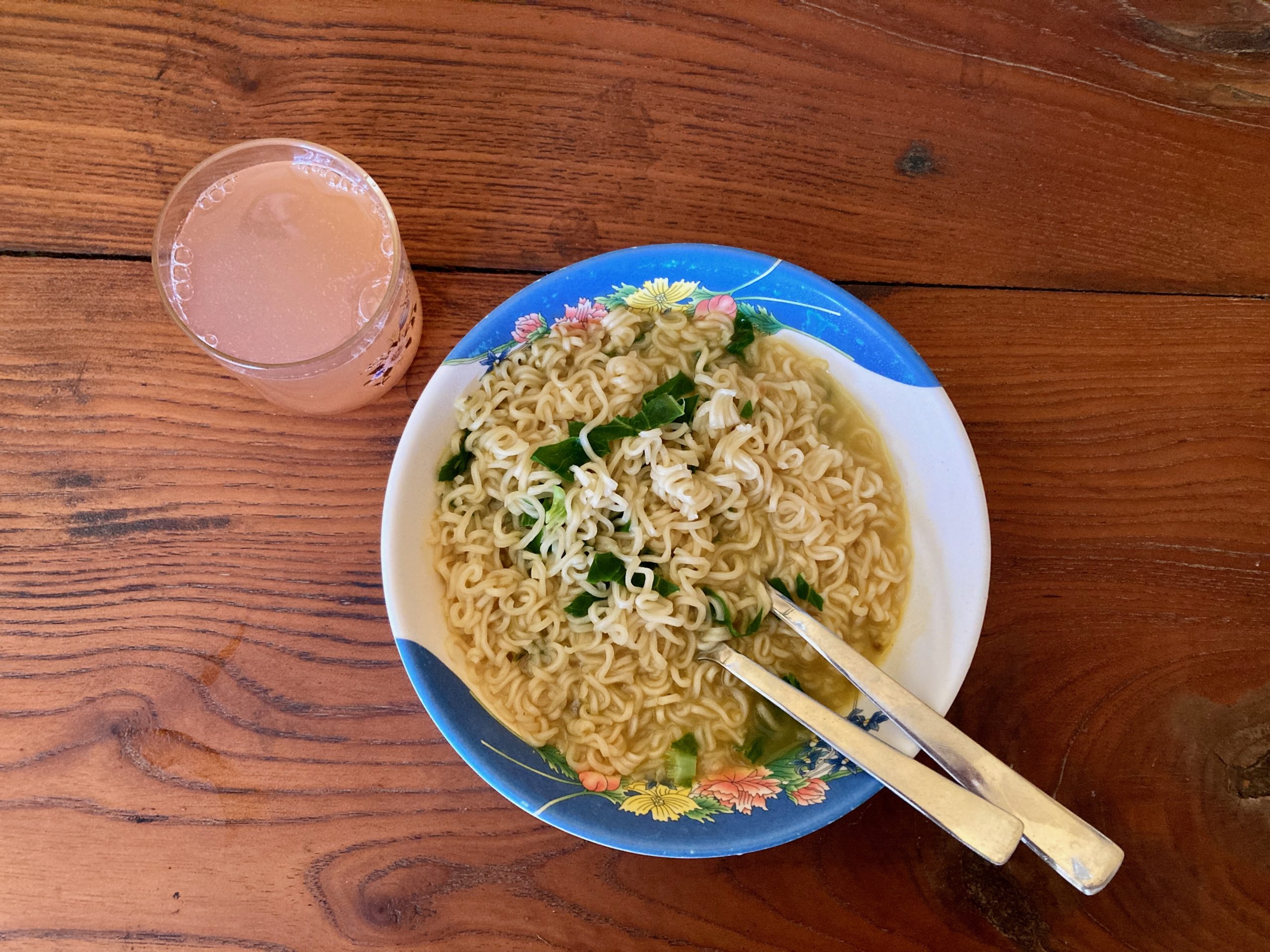 Koka
Koka
In the restaurant there were three other people: a couple from Delhi and a man from Mumbai. They had met each other in a local homestay. We started talking and ended up having a long conversation about philosophical questions of faith. That was really enjoyable. There was also a local man sitting there with his tablet; he joined in on some of the topics when we asked him, but somehow he seemed grumpy and almost a bit arrogant.
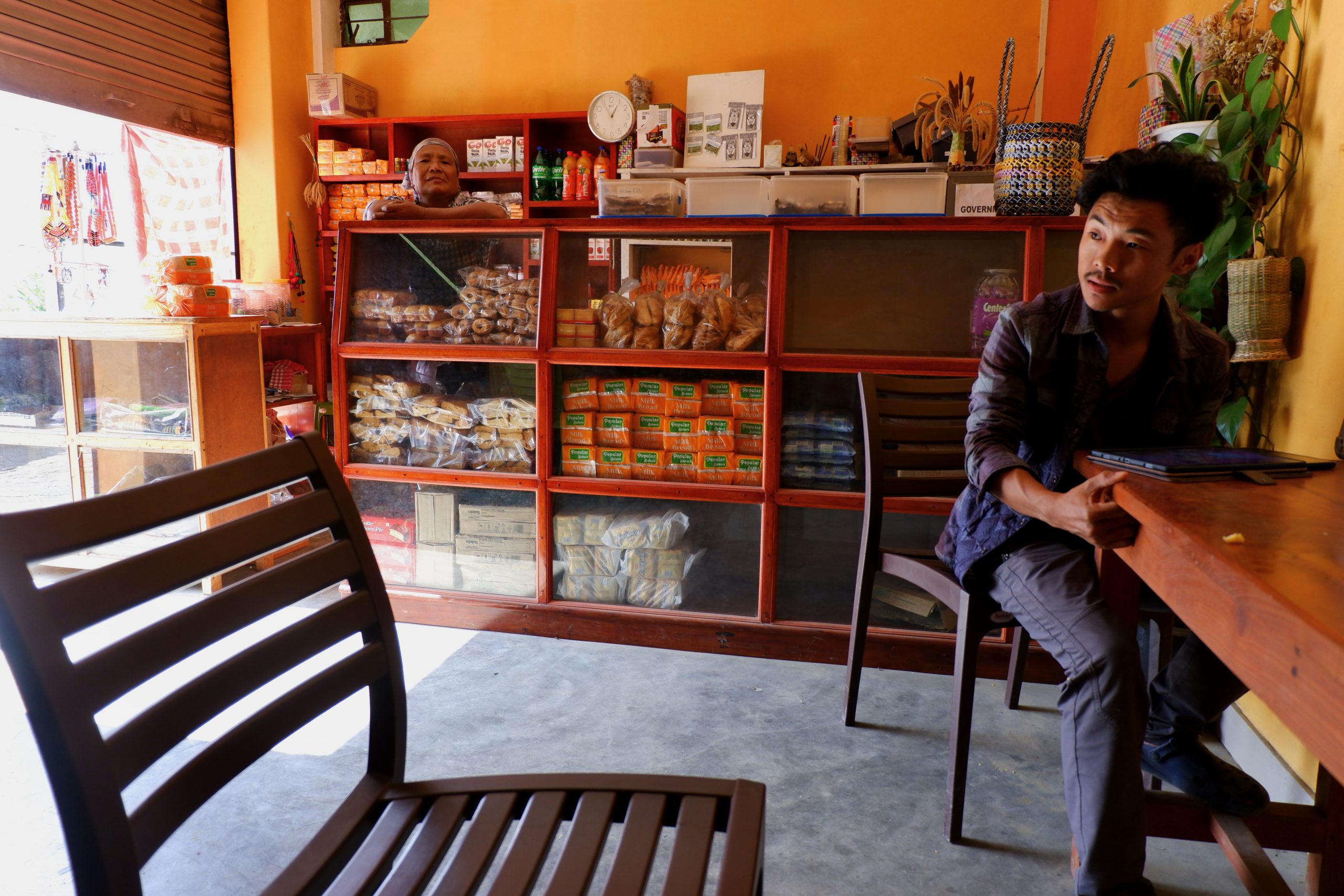 eatery
And (among other things) about the relationship of the Nagas to India, etc., will be the topic of the next blog post. In any case, I’ve learned even more!
Oh yes, that day I had a different taxi driver. He was from Nepal, or rather, his parents had migrated to Assam. I didn’t quite figure out why he was working in Nagaland now. But he belongs to the small Hindu minority. There is also a Hindu temple in Kohima — partly because of all the soldiers stationed there.