


Ramgarh, Mahansar, Dundlodh and …. Confusing many old painted masonry
8. January 2025
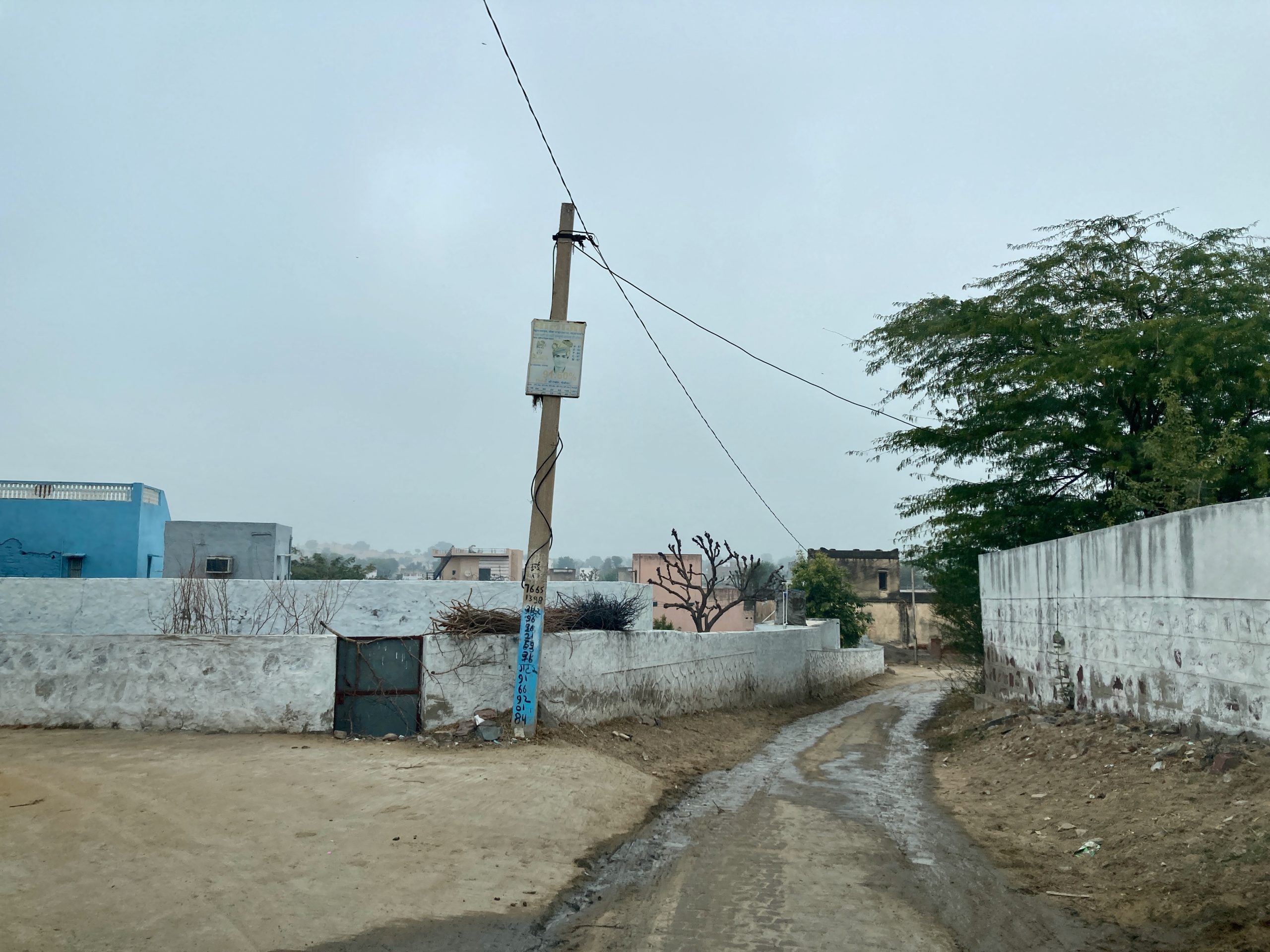
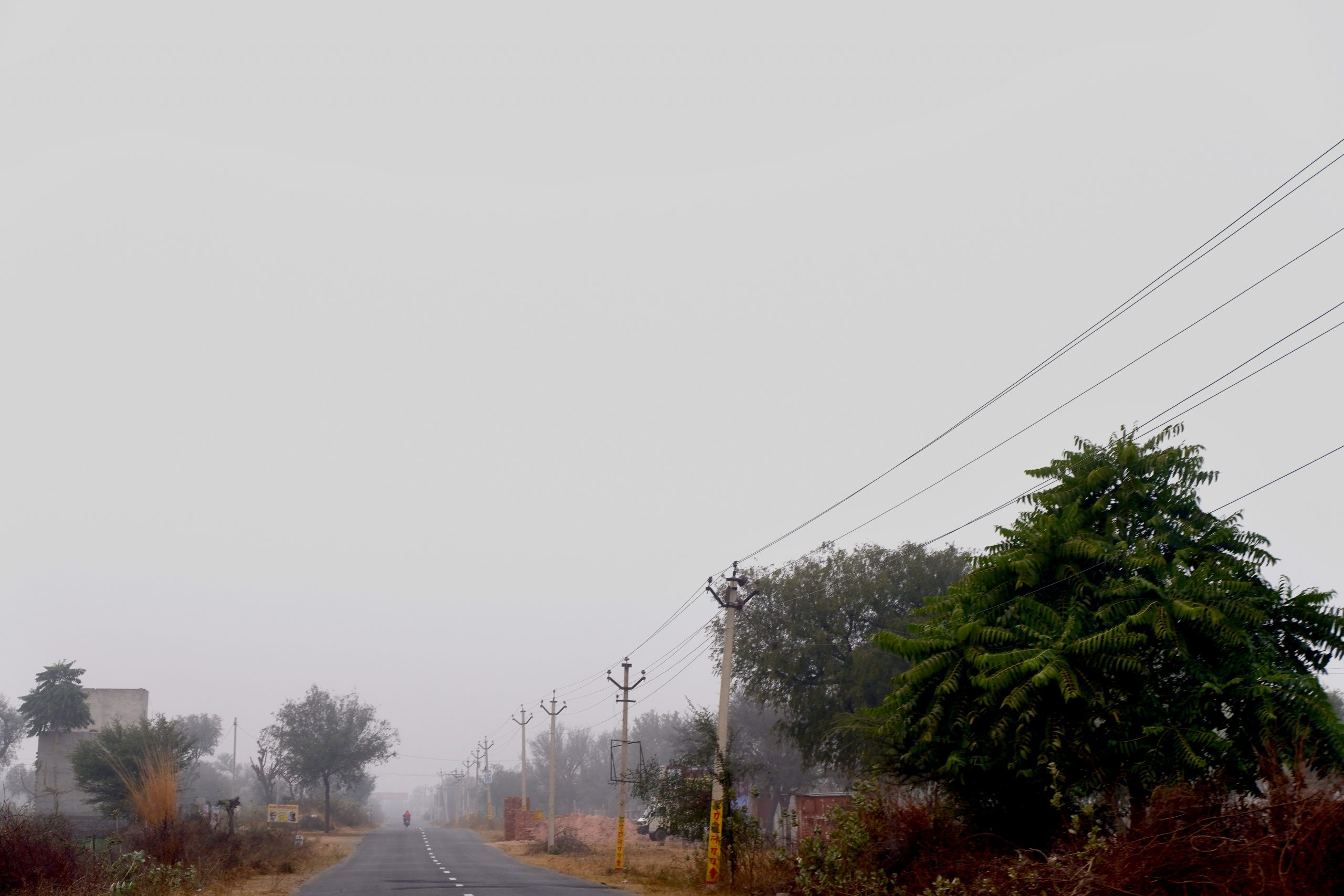
Now it’s actually happened: I can no longer keep track of which places I saw what in. In Shekawati there are two towns with a higher density of painted havelis and accommodation options — Mandawa (which already suffers from a kind of overtourism) and Nawalgarh. But in between and all around them there are many more places with smaller and larger clusters of havelis, as well as other impressive old masonry. I decided to spend the money on a taxi to visit some of these places and took my host along, who naturally assumed he would accompany me. Thanks to him, I partly saw things I wouldn’t have discovered on my own, and we also took back roads, which were far more interesting than the main roads.
Because the car was warm, we were able to set off earlier, while it was still hazy.
 1
1
 2
2
 3
3
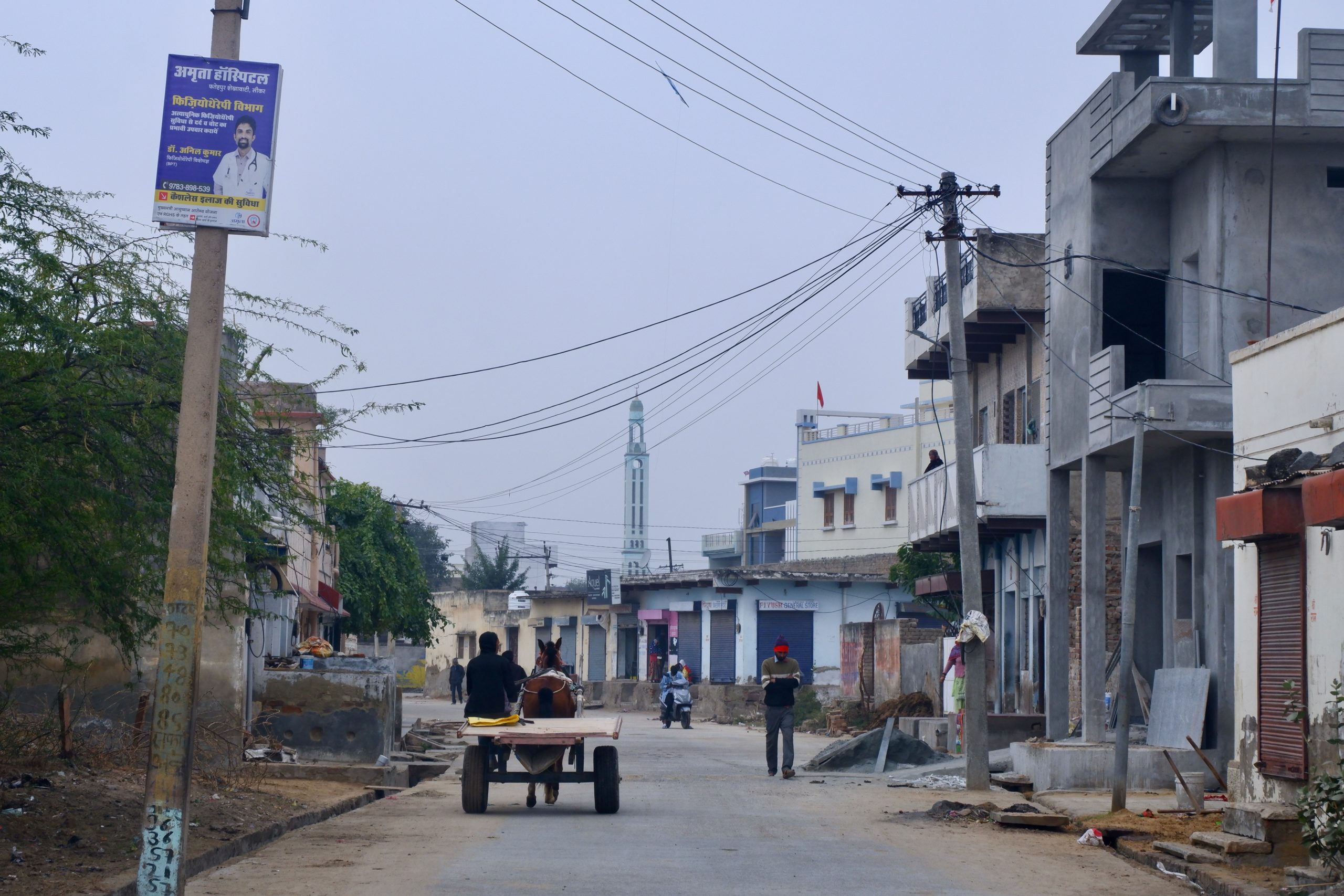
In the fields, mustard and wheat were growing (mainly), there was little industry (cement plants and mostly small-scale enterprises), and a few livestock animals roaming around. It wasn’t really obvious what people earn their living from. Agriculture plays a major role but is generally only enough for subsistence. Livestock farming is similar. Tourism doesn’t play a major role either (people tend to stay only briefly), and handicrafts are mostly limited to the local level. According to what you find online, there is also income from trade, the military, administration — and money sent home through labor migration.
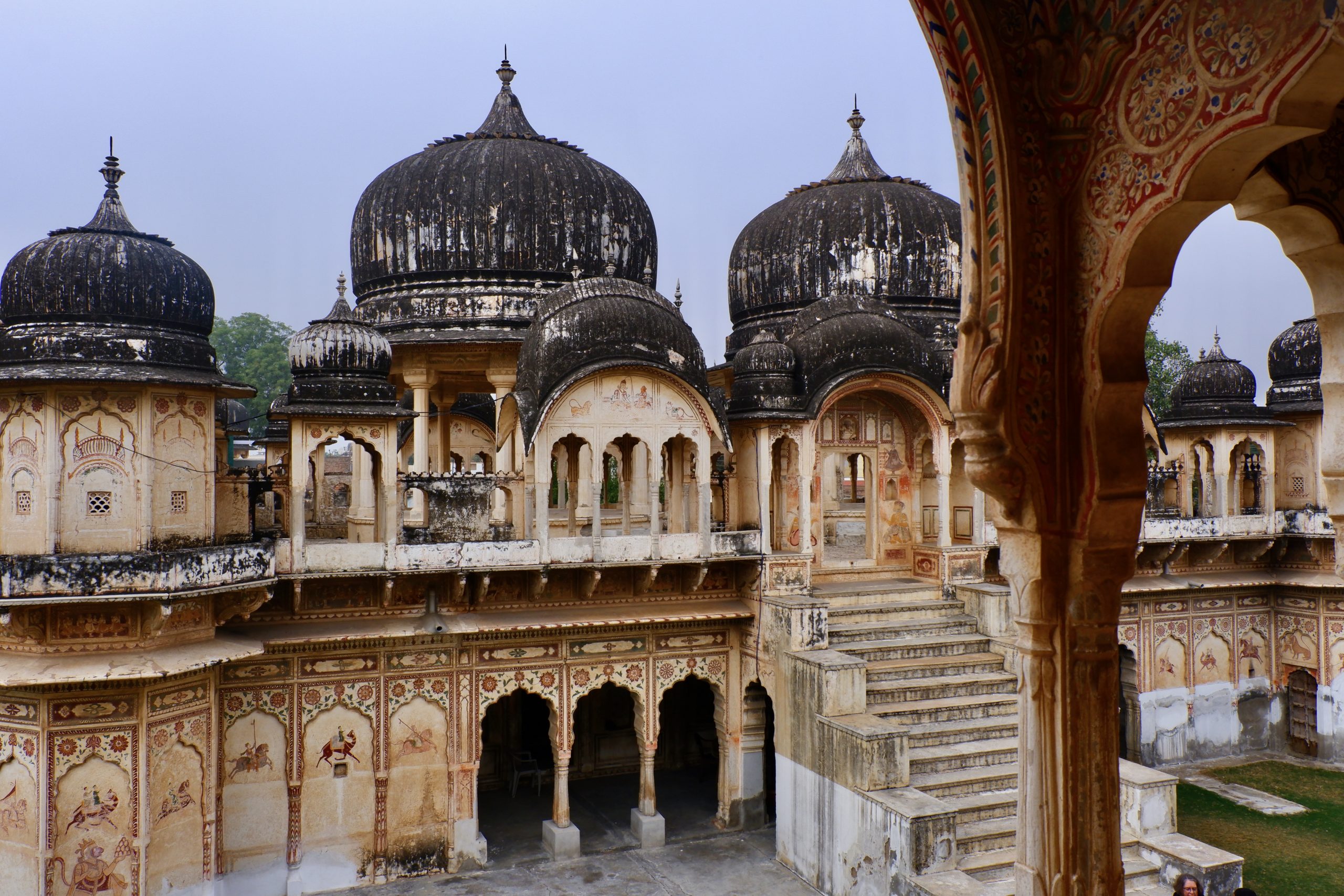
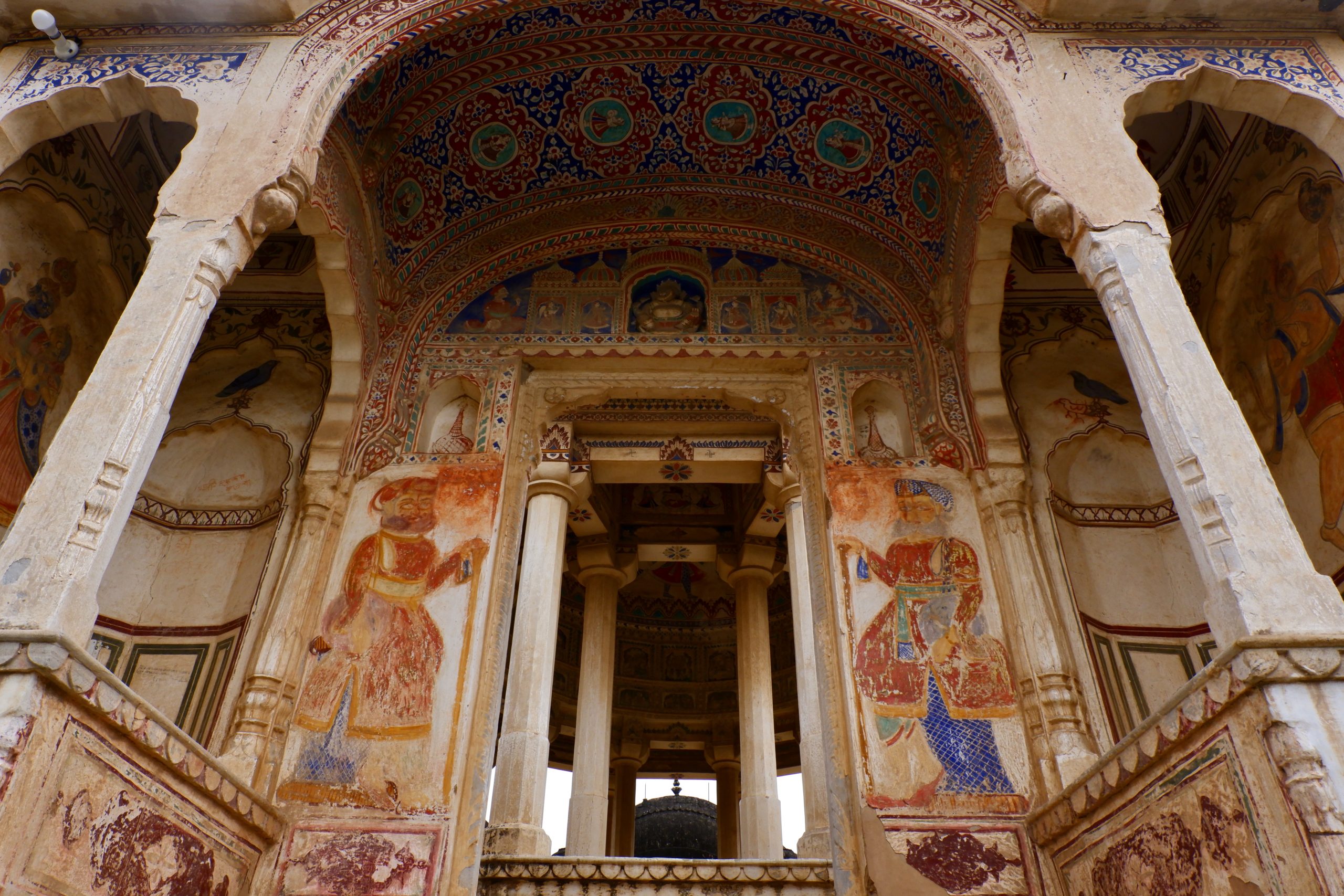
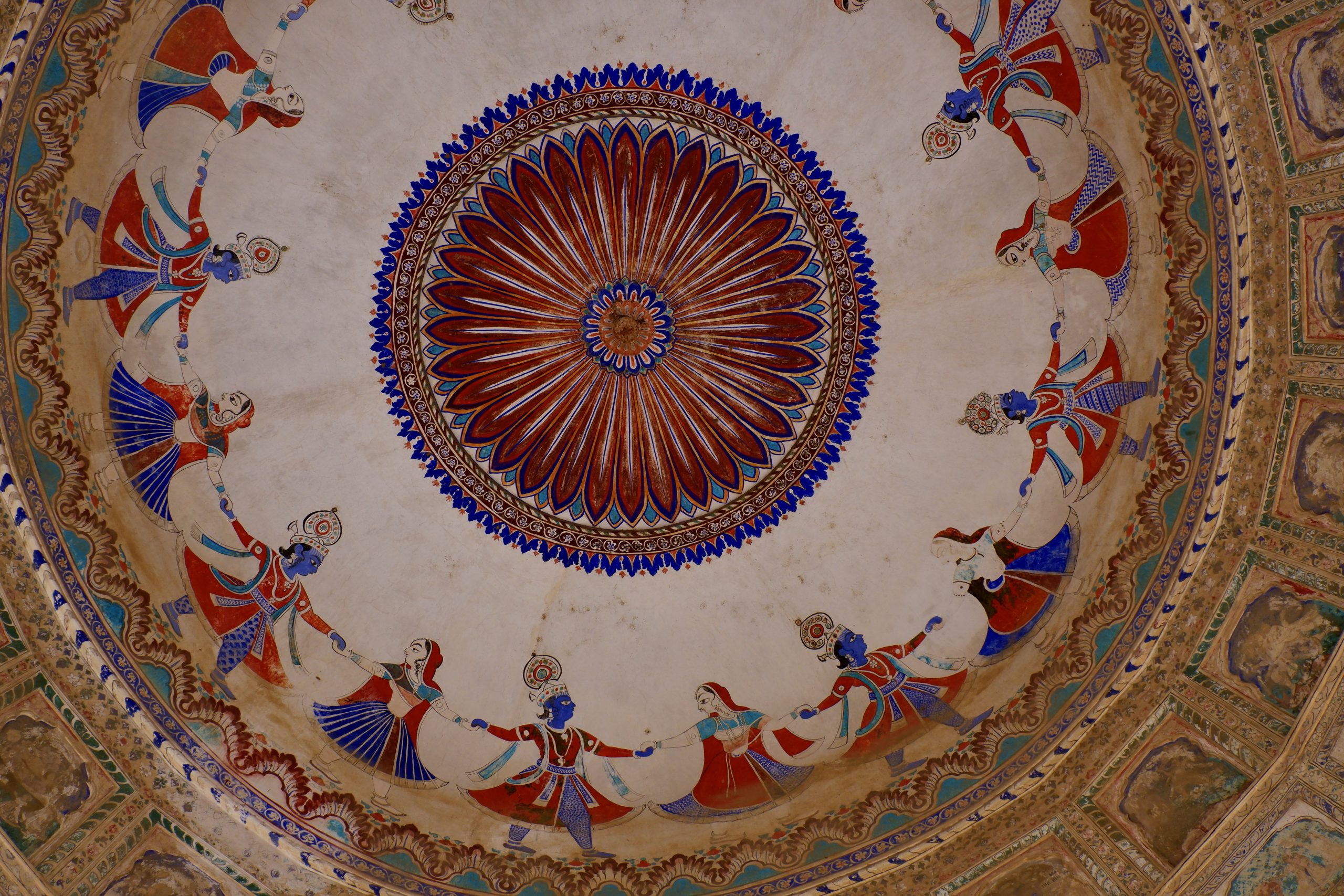
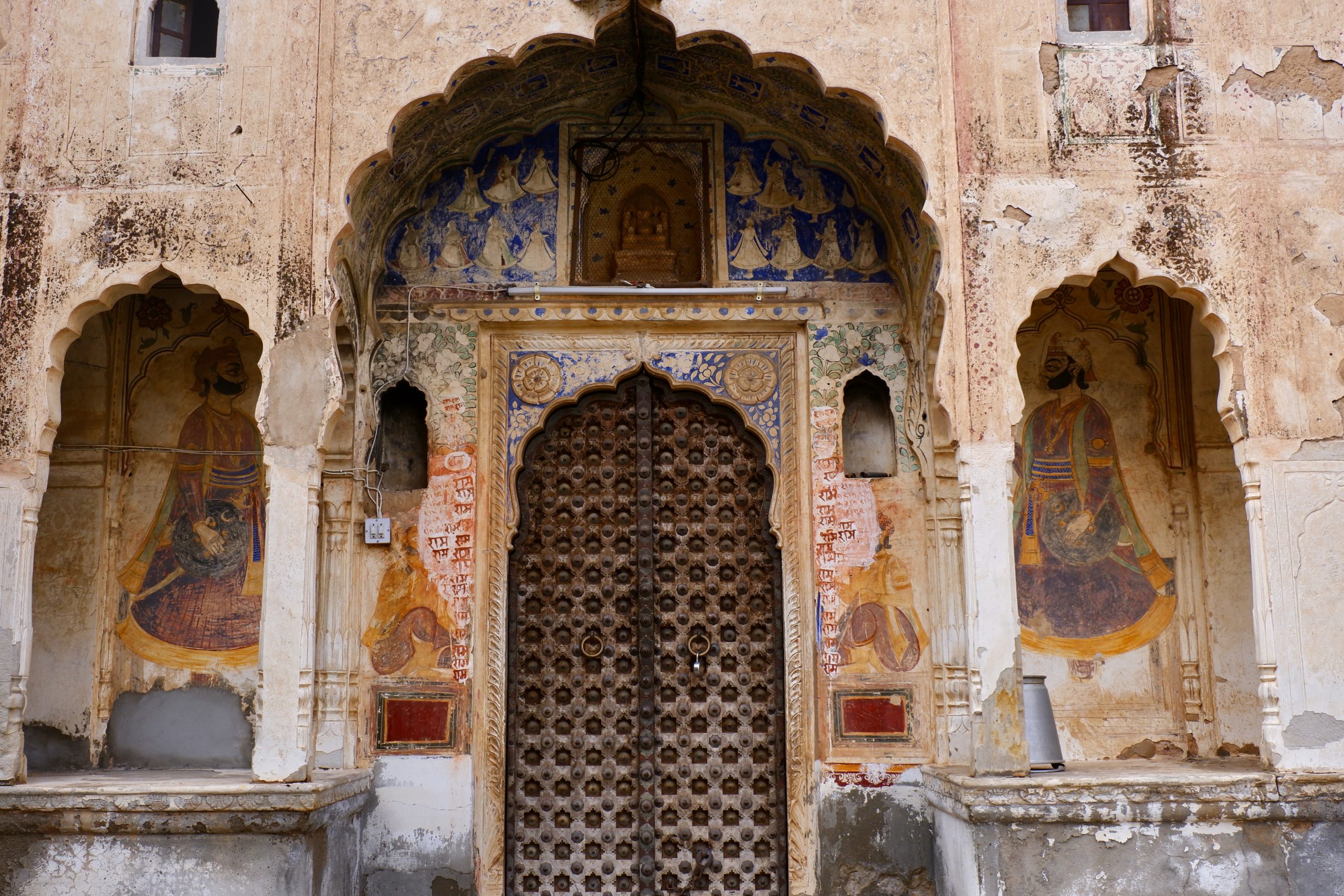
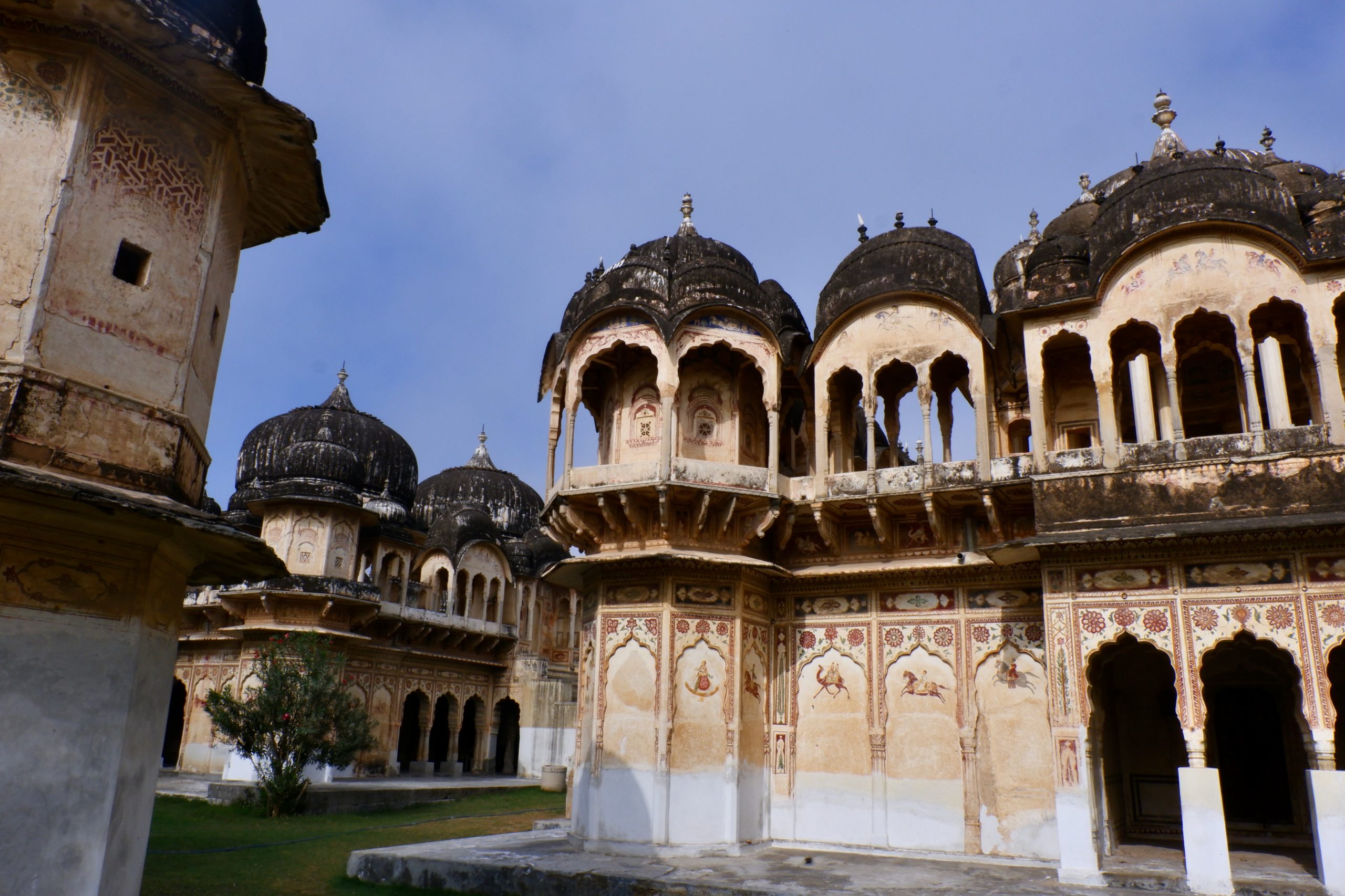
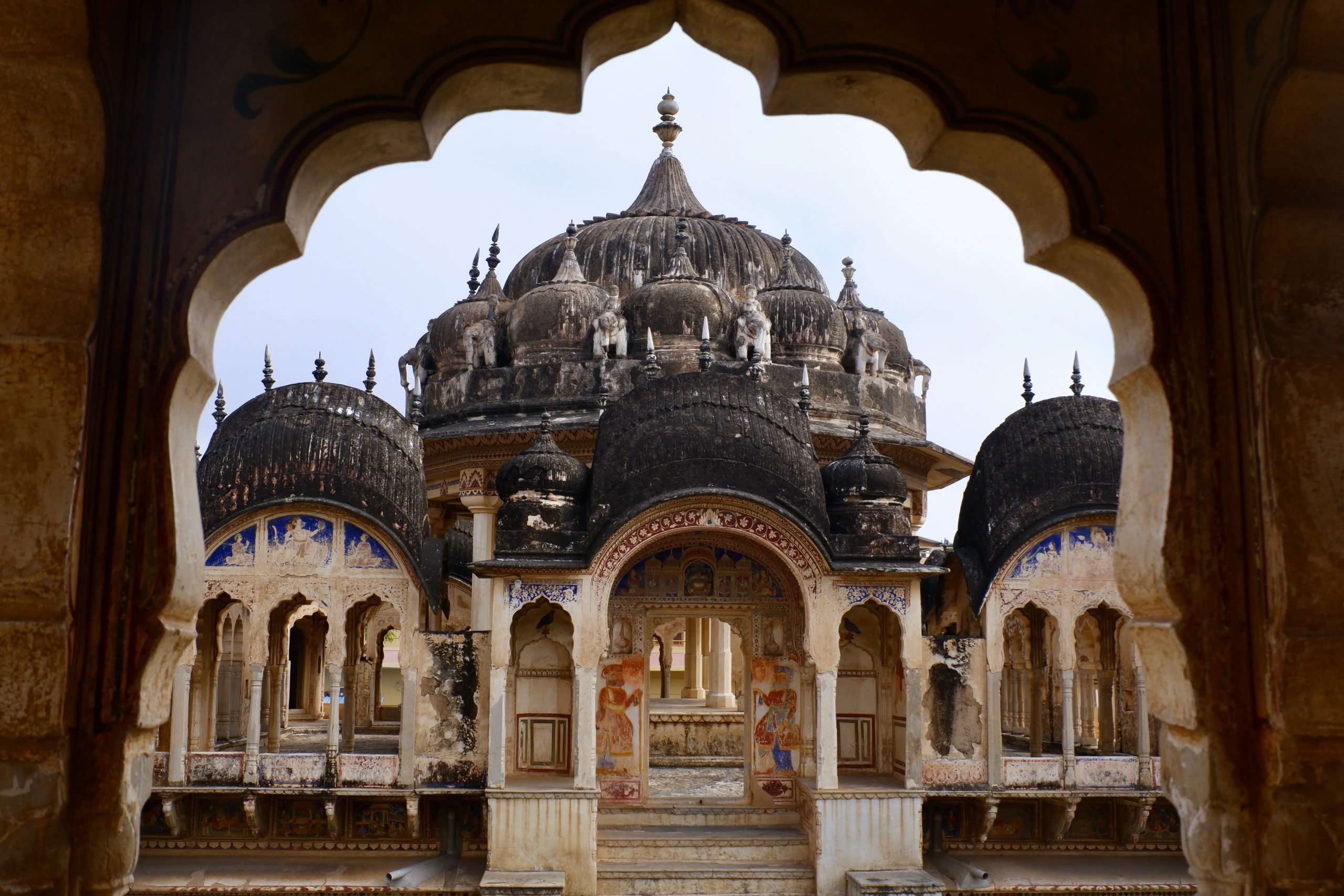
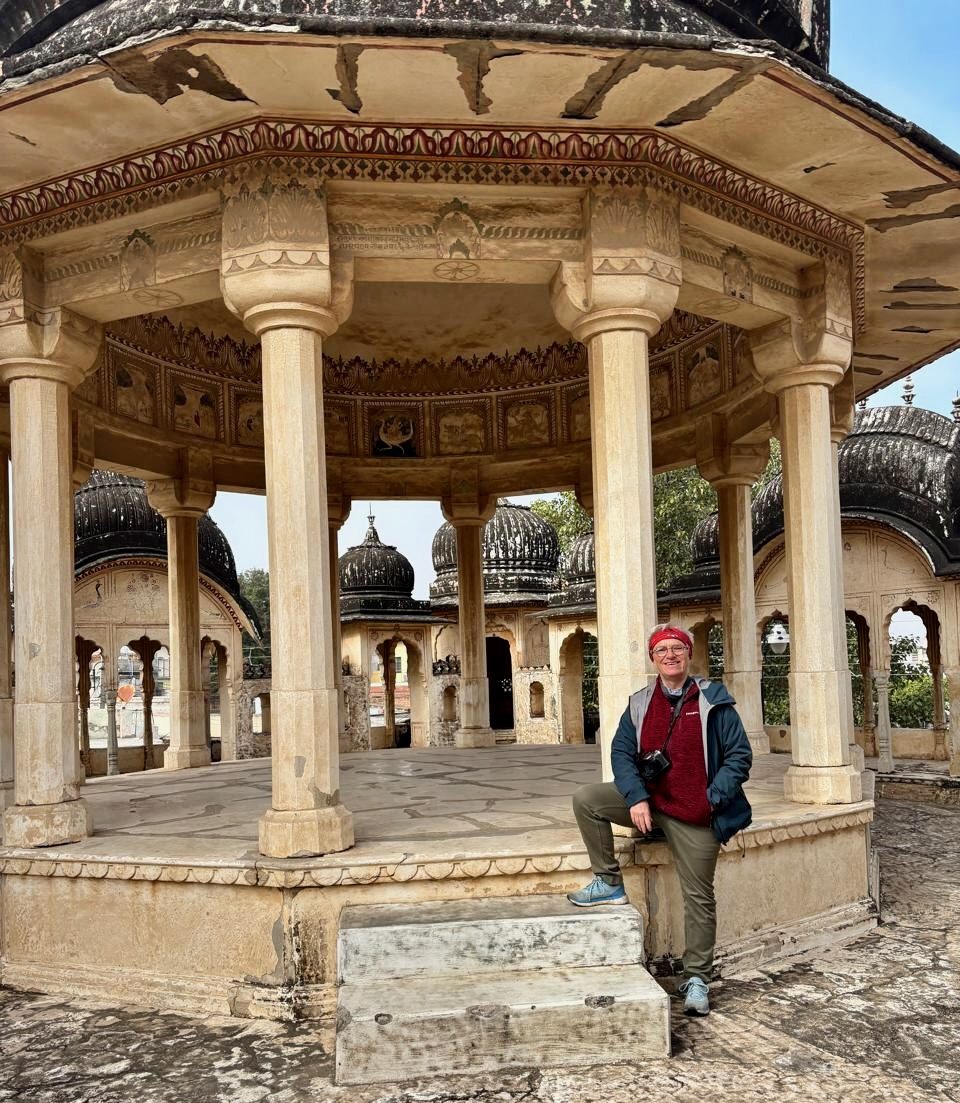
Unsere erste Station war Ramgarh, wo wir recht viel Zeit verbrachten. Hauptsehenswürdigkeit sind nicht die Havelis sondern die Chattris – Monumente für die Verstorbenen – der reichen Handelsfamilie der Poddars. Sie waren nicht nur hübsch gebaut sondern hatten auch sehr viele Wandmalereien. Hier meine Bilder davon:
 1
1
 2
2
 3
3
 4
4
 5
5
 6
6
 7
7
 8
8
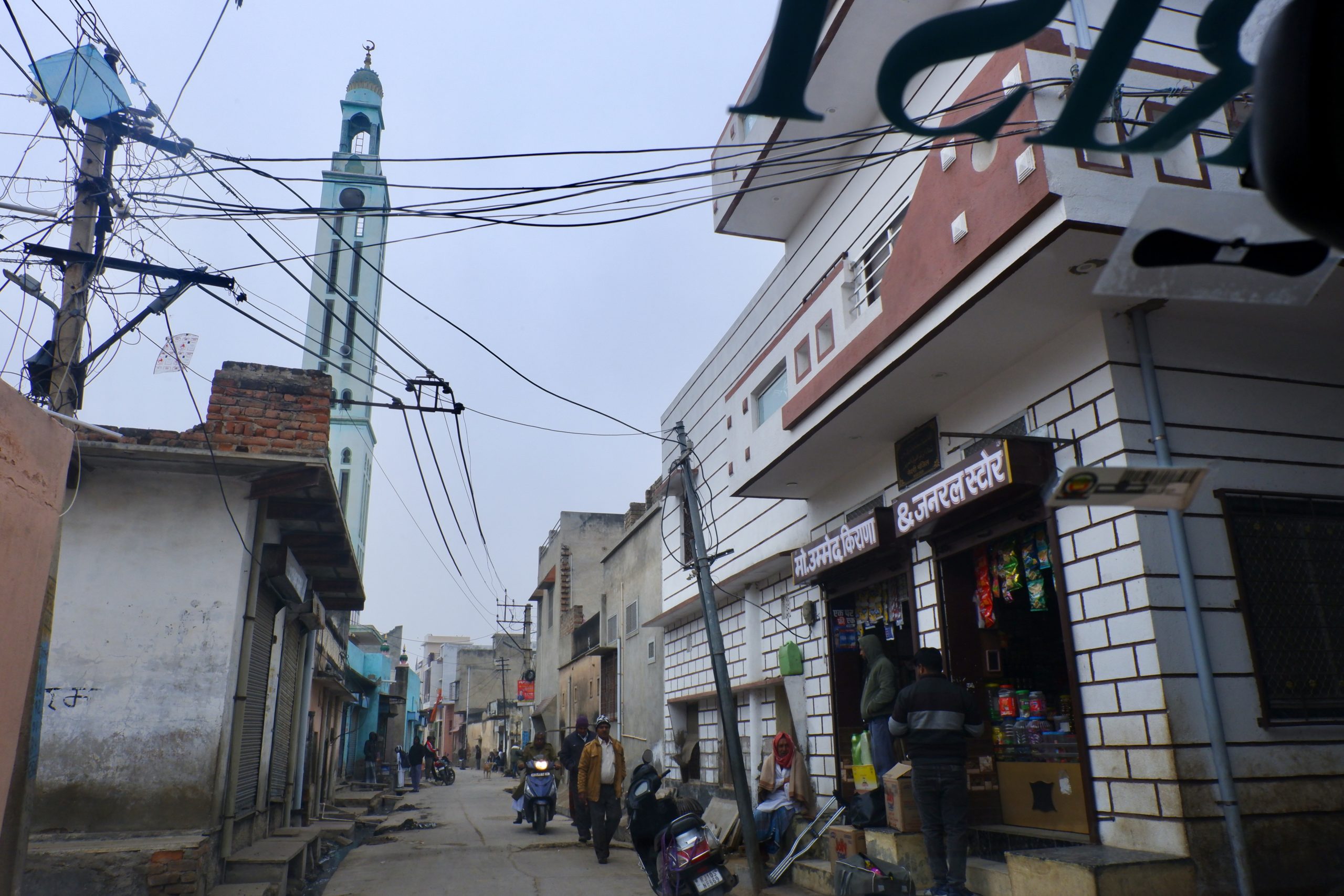
One topic I discussed with my host was Muslims. There are visible mosques and minarets, and also quite a few fully veiled women on the streets. This makes my host very unhappy, and he immediately launched into the kind of Muslim-bashing that is common here: he claimed they have lots of children in order to increase their numbers, and that “love jihad” (Muslim boys pretending to be in love with Hindu girls, marrying them, and the women then converting) is very widespread. For now, he said, relations are still manageable and people live together fairly peacefully — but the near future, oh dear, oh dear, oh dear… When I asked what could be done about it, or what measures might help keep relations good, I couldn’t really get anything concrete out of him. The facts are: Muslims make up about 14% of the population in the Shekawati region, with concentrations in certain towns (there up to around 40%), and hardly any in villages. The birth rate is slightly higher than among Hindus, but not by enough to be truly noticeable. Both rates are actually converging and are around two children per woman. “Love jihad” exists in isolated cases that are amplified by the media. We are very far removed from any feared “Islam explosion”.
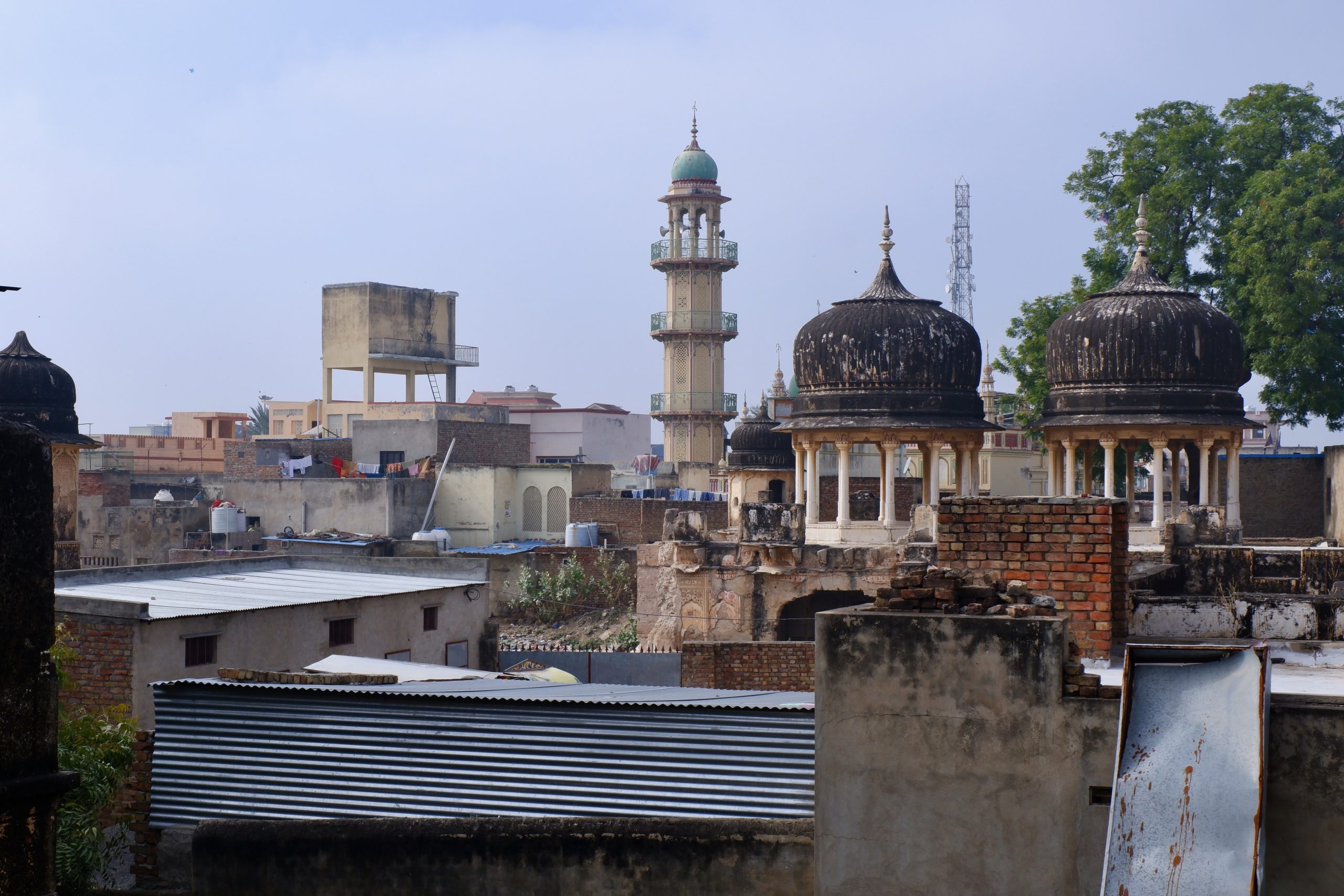 picture with Minarett
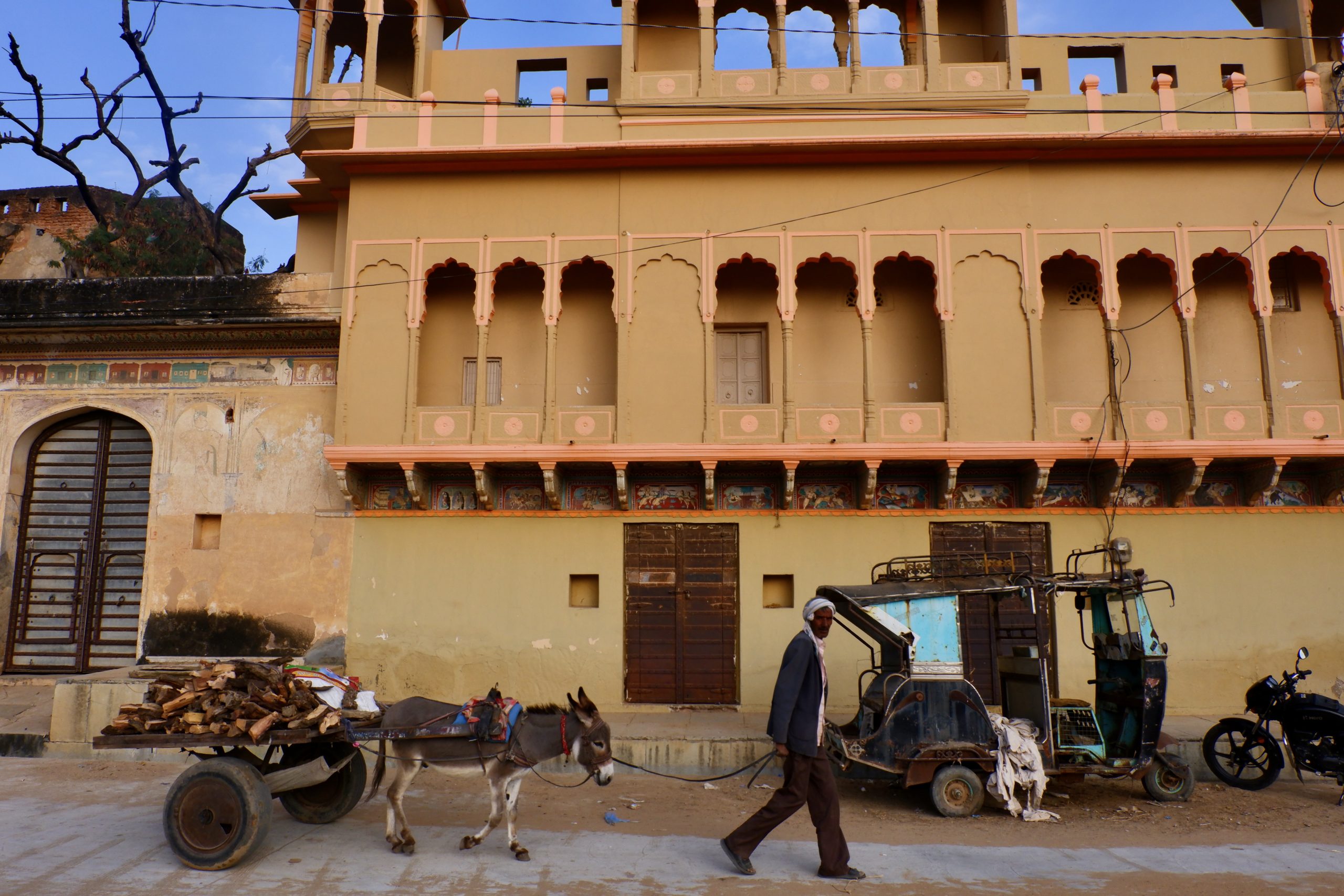
Ramgarh still has many wonderful old buildings, but they are falling into disrepair. Along the streets, new shops are being built in front of them, instead of simply using the small, integrated spaces that were originally there.
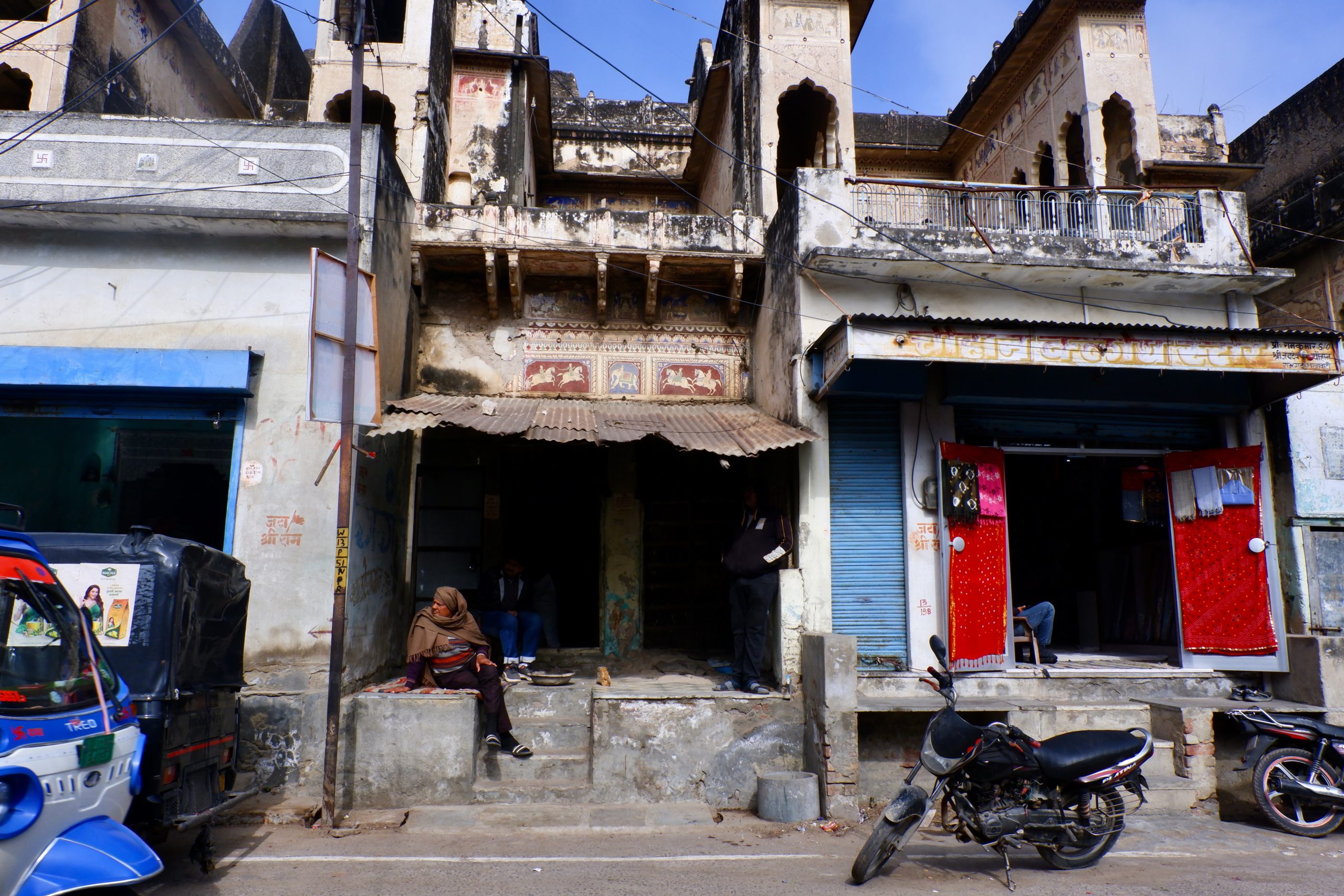 old shop and front constructions
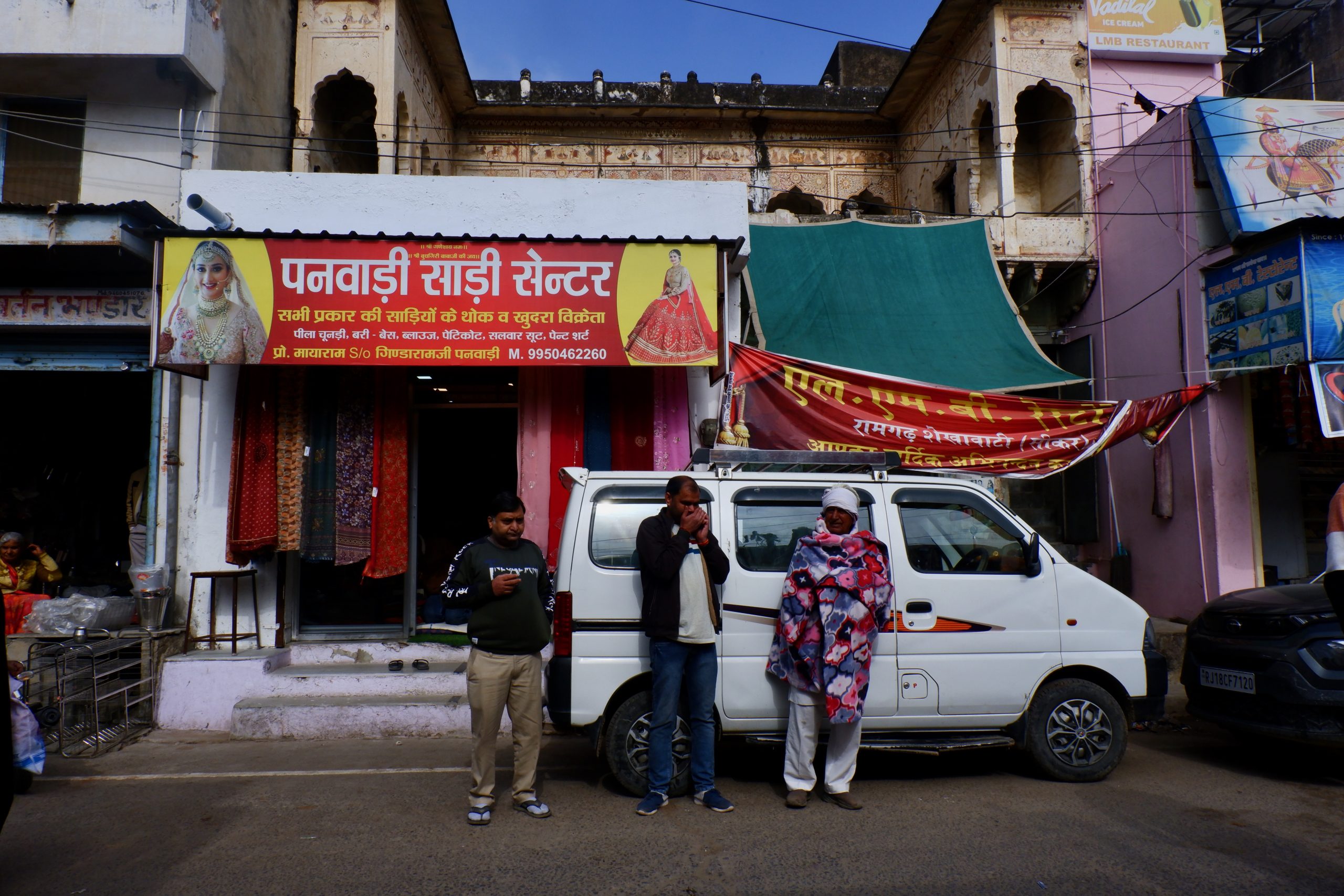 bigger front construction
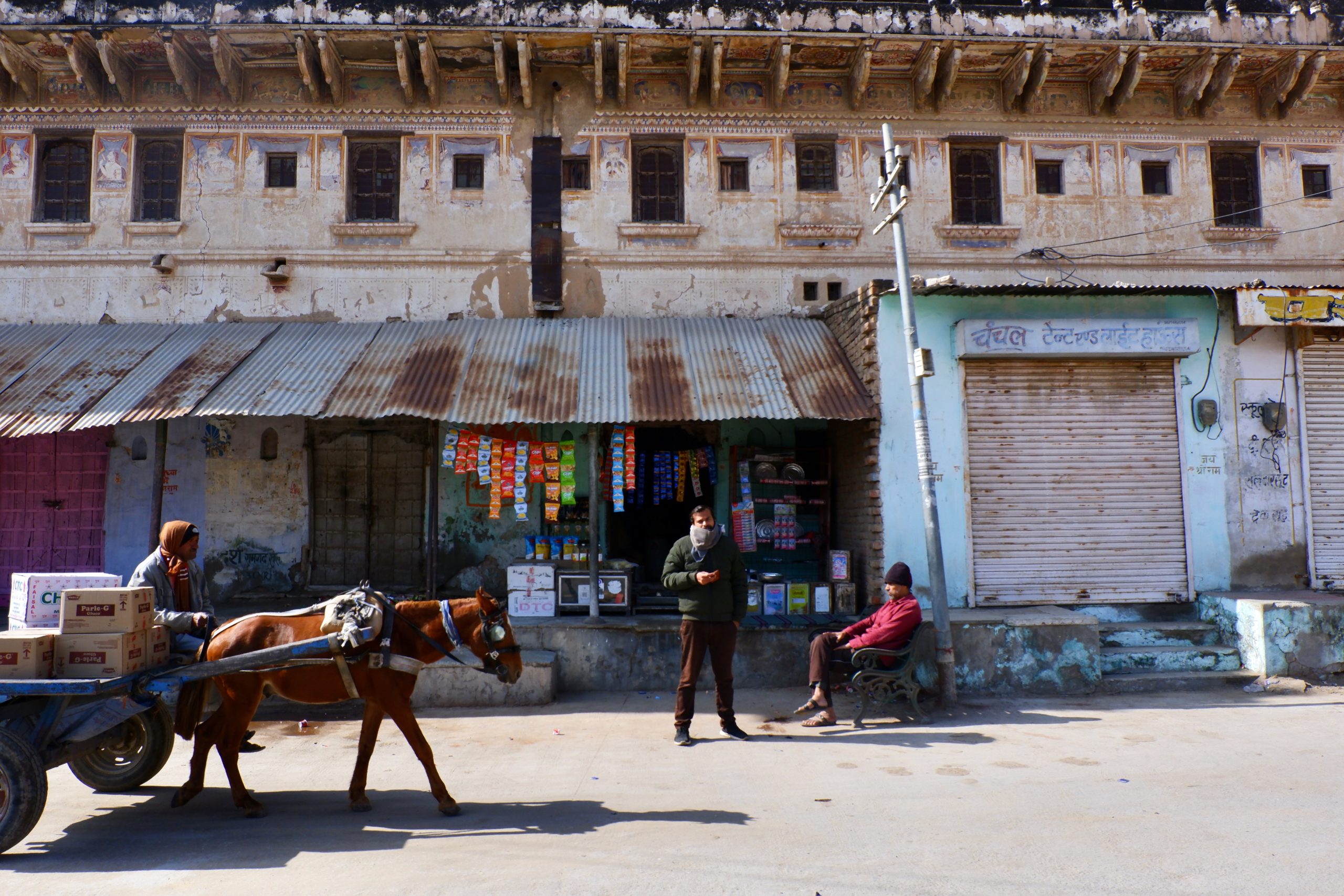 with horsecart
There was also a larger quarter with impressive old houses, but hardly anyone was out on the streets. A lot of the buildings were standing empty. The first photo shows the haveli that the Viviaana hotel group has purchased in order to convert it into a hotel. At this stage, there wasn’t much to see yet — except that it clearly looked like a building worth preserving.
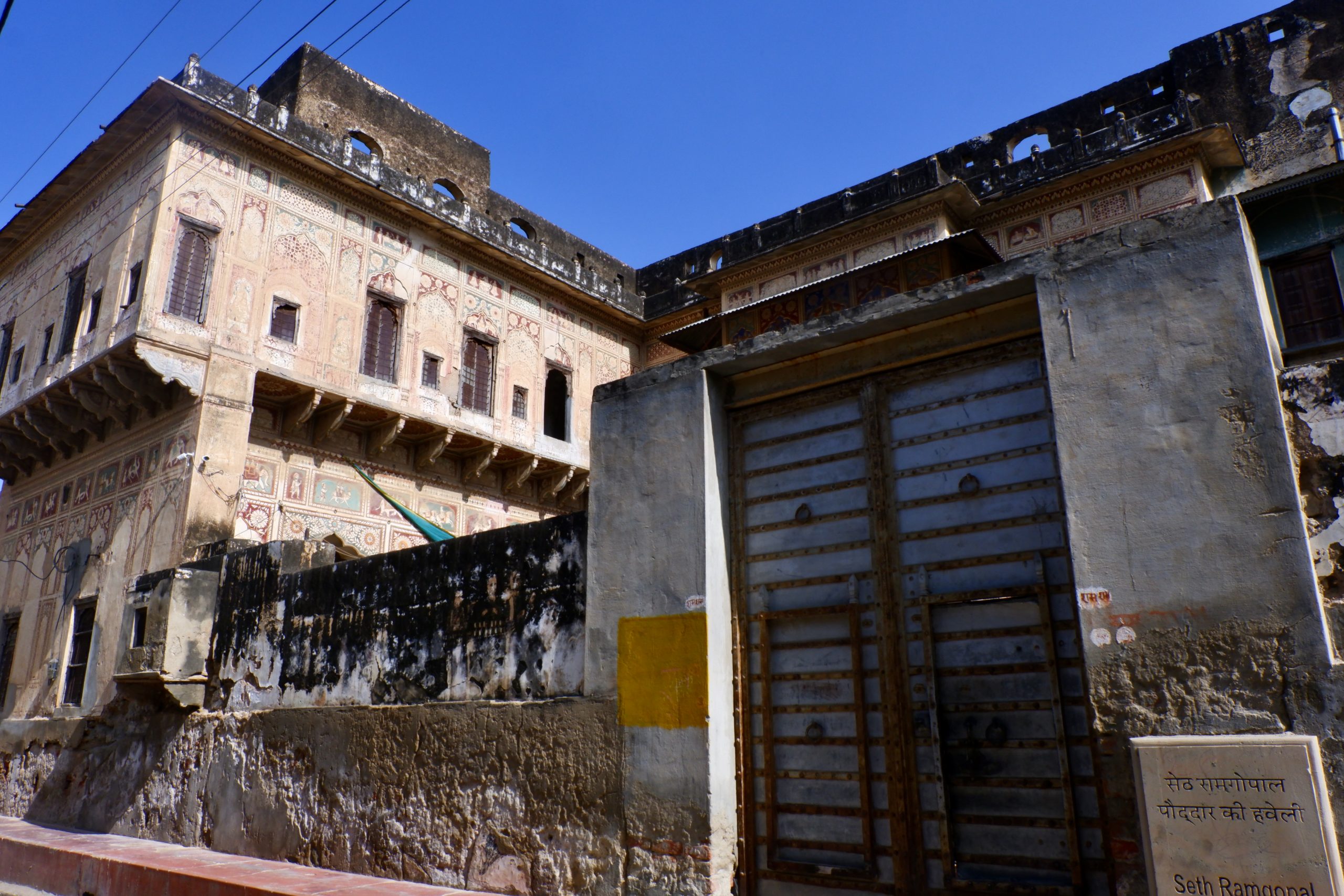 1
1
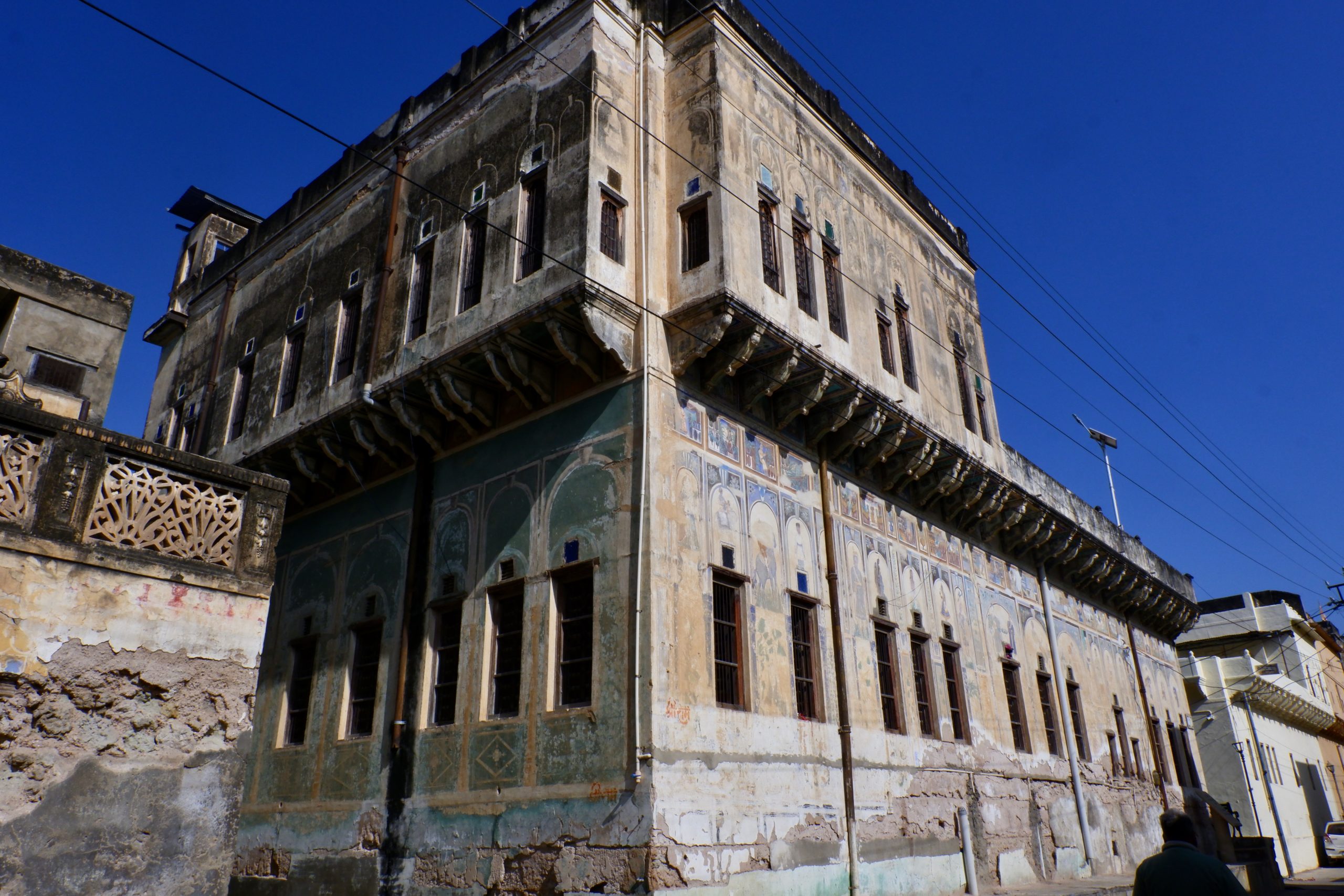 2
2
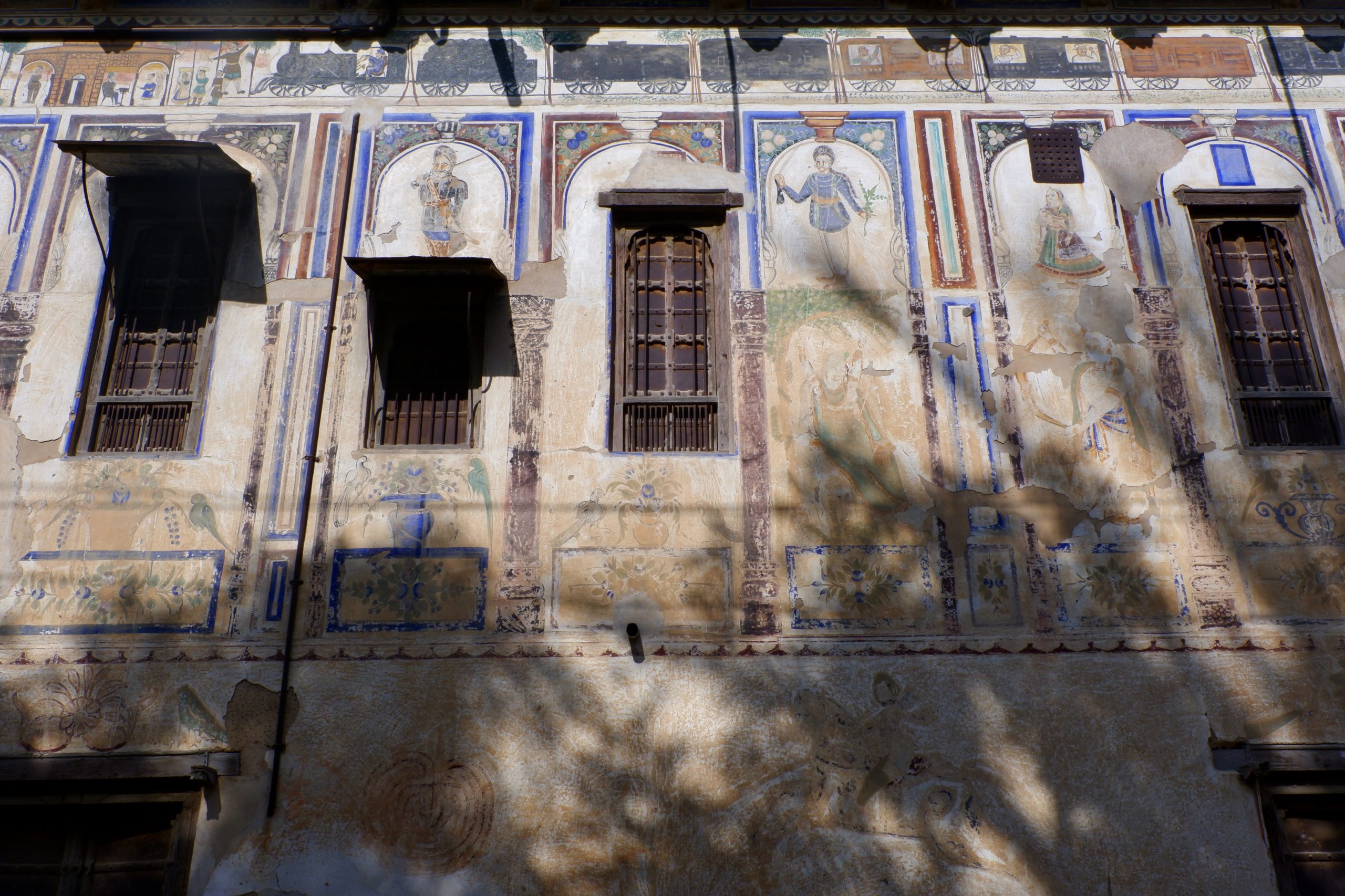 3
3
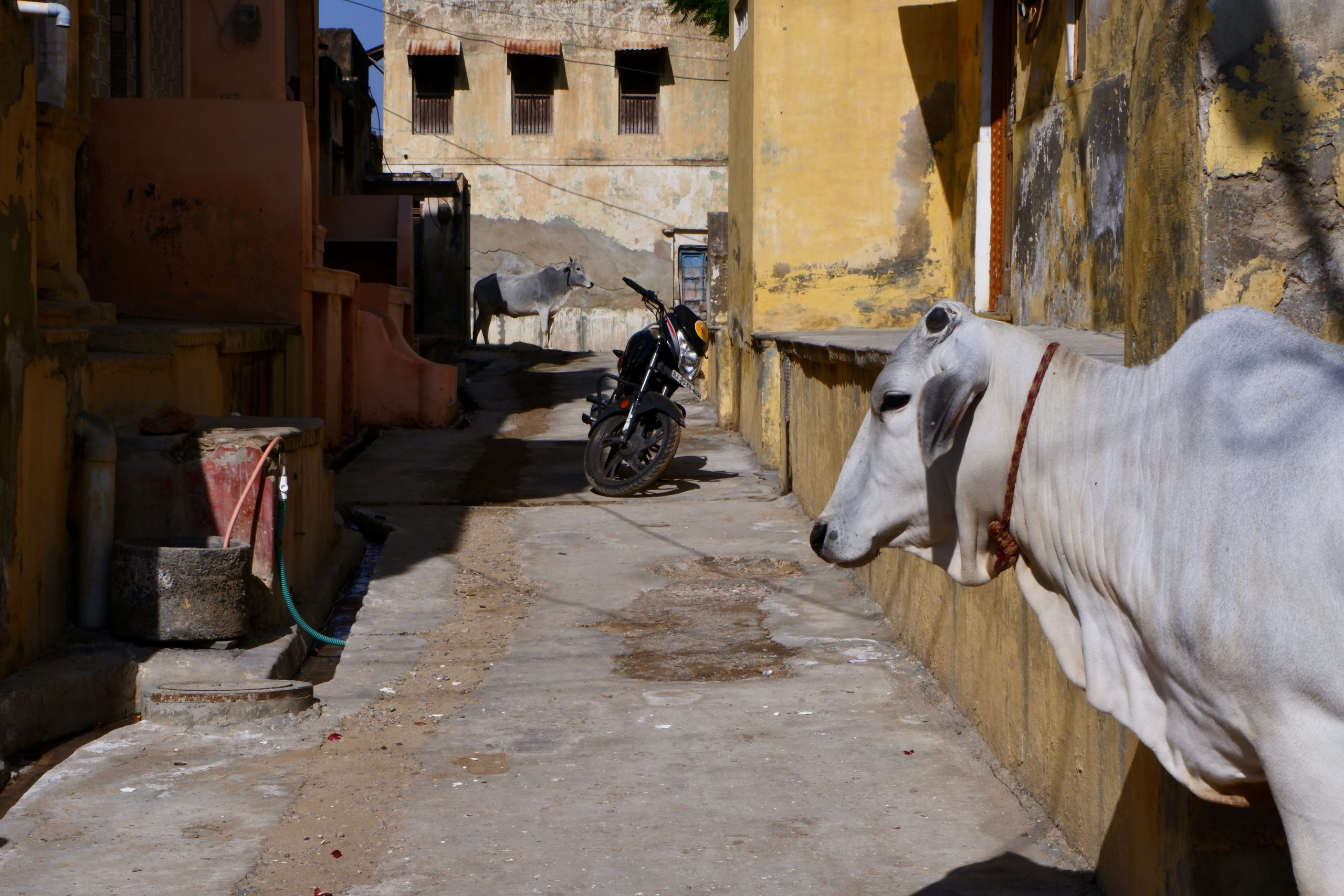 4
4
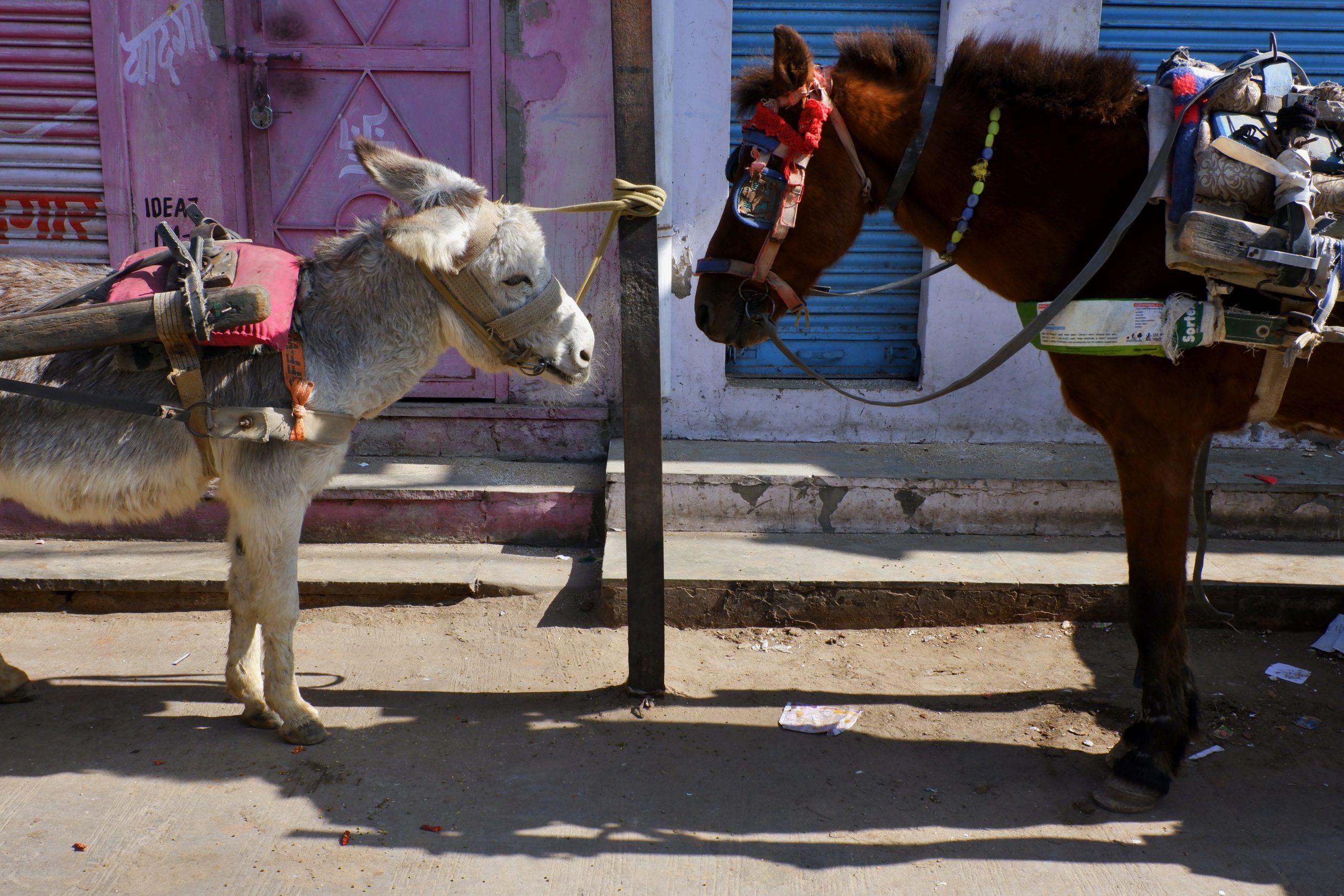 5
5
 older well
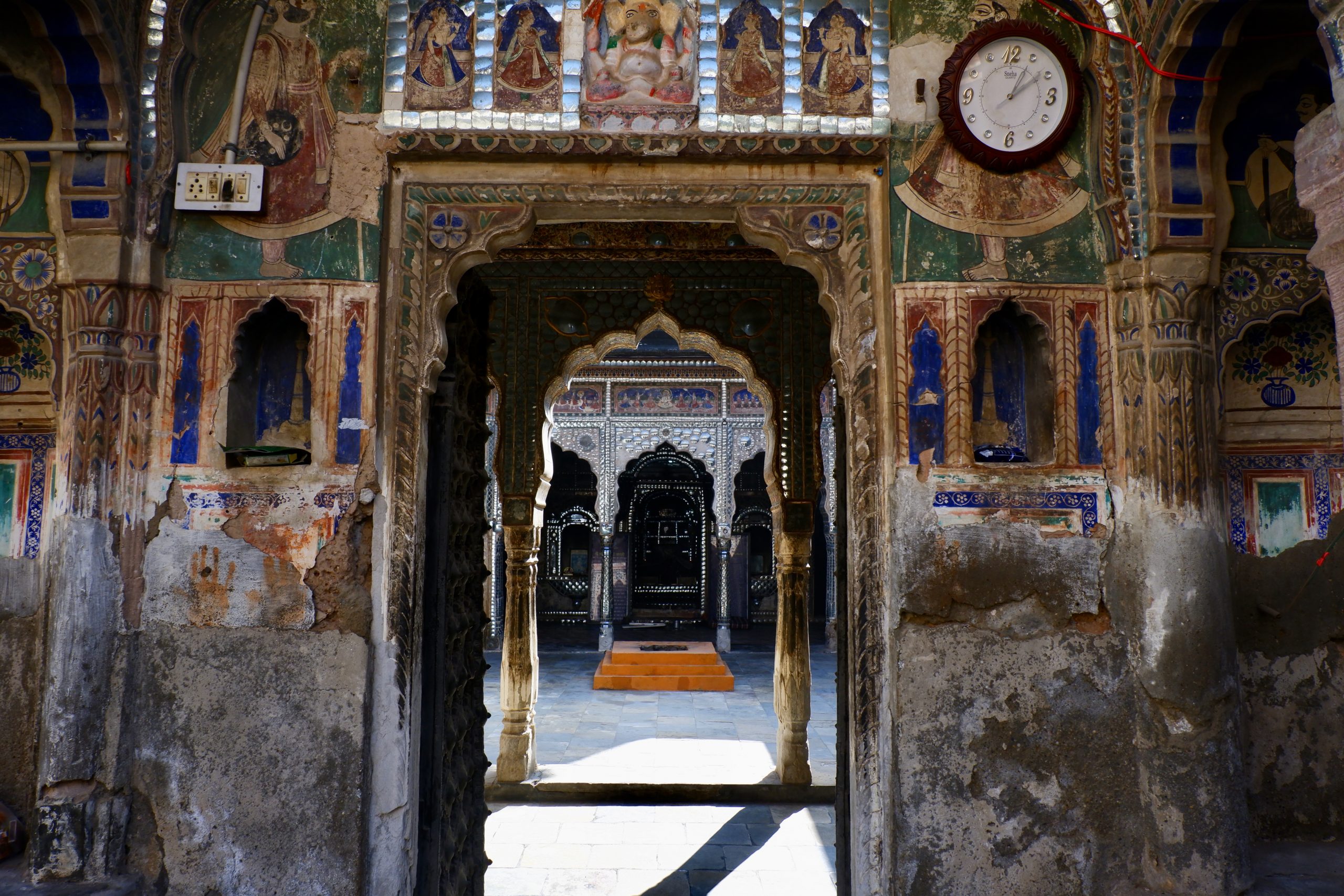
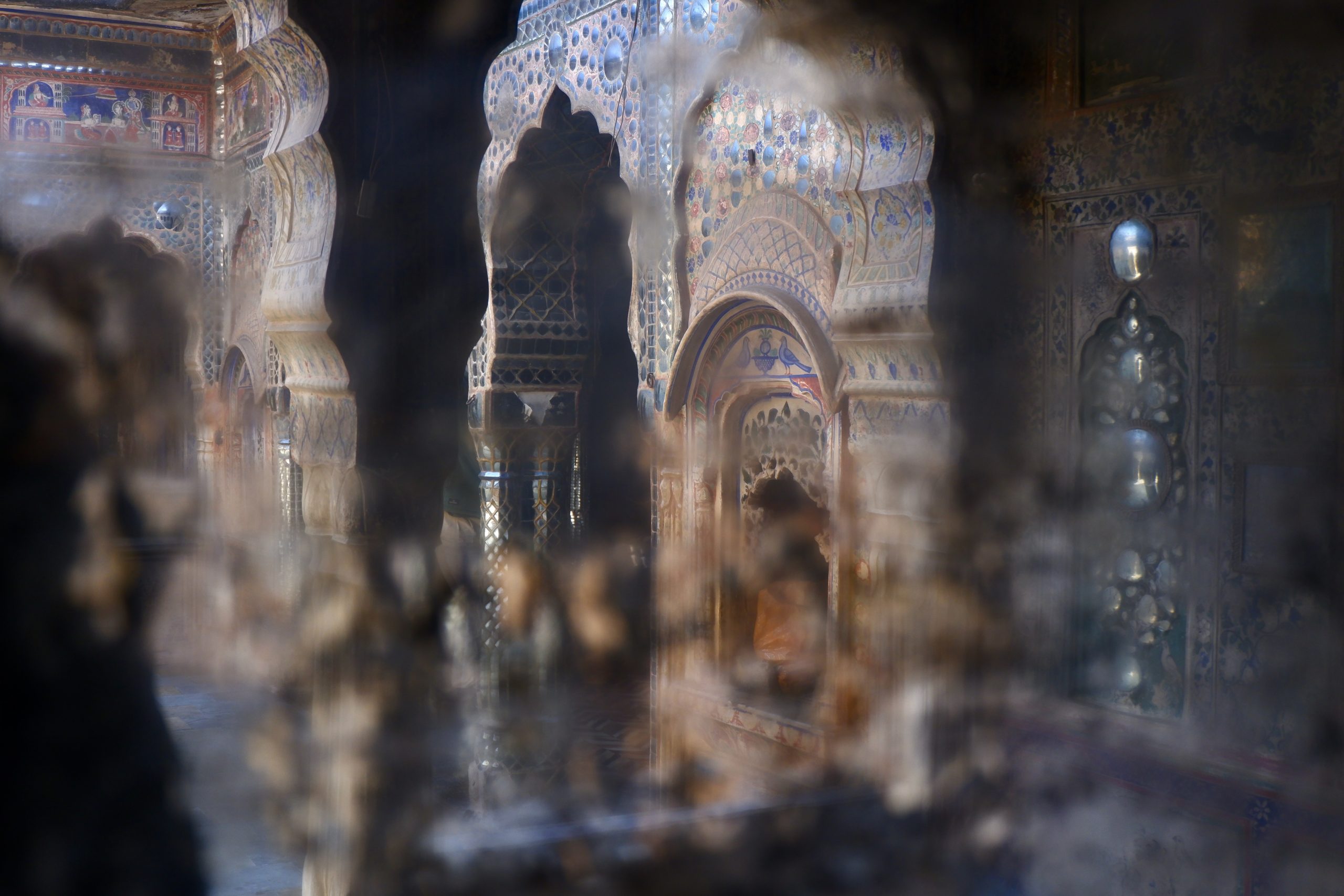
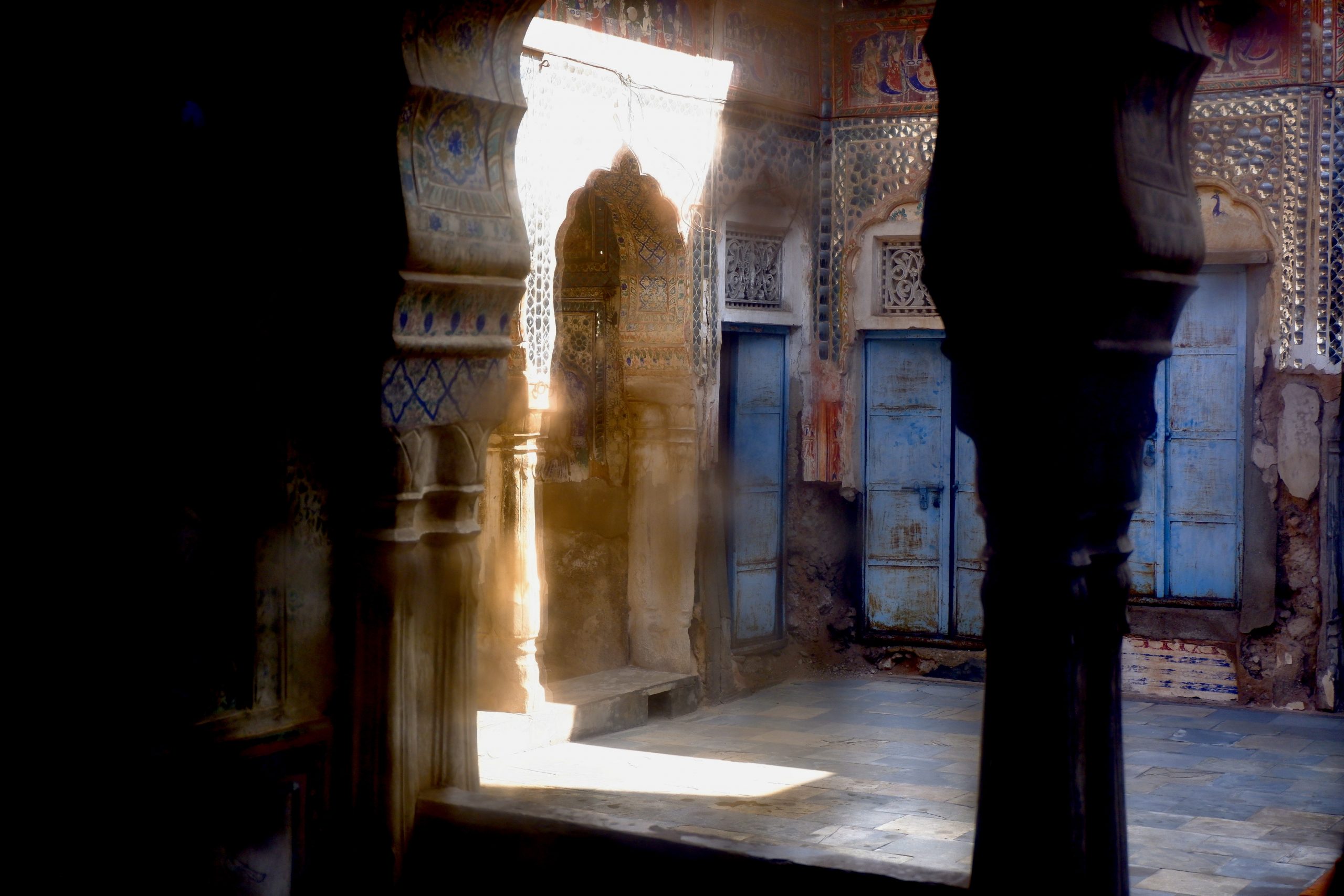
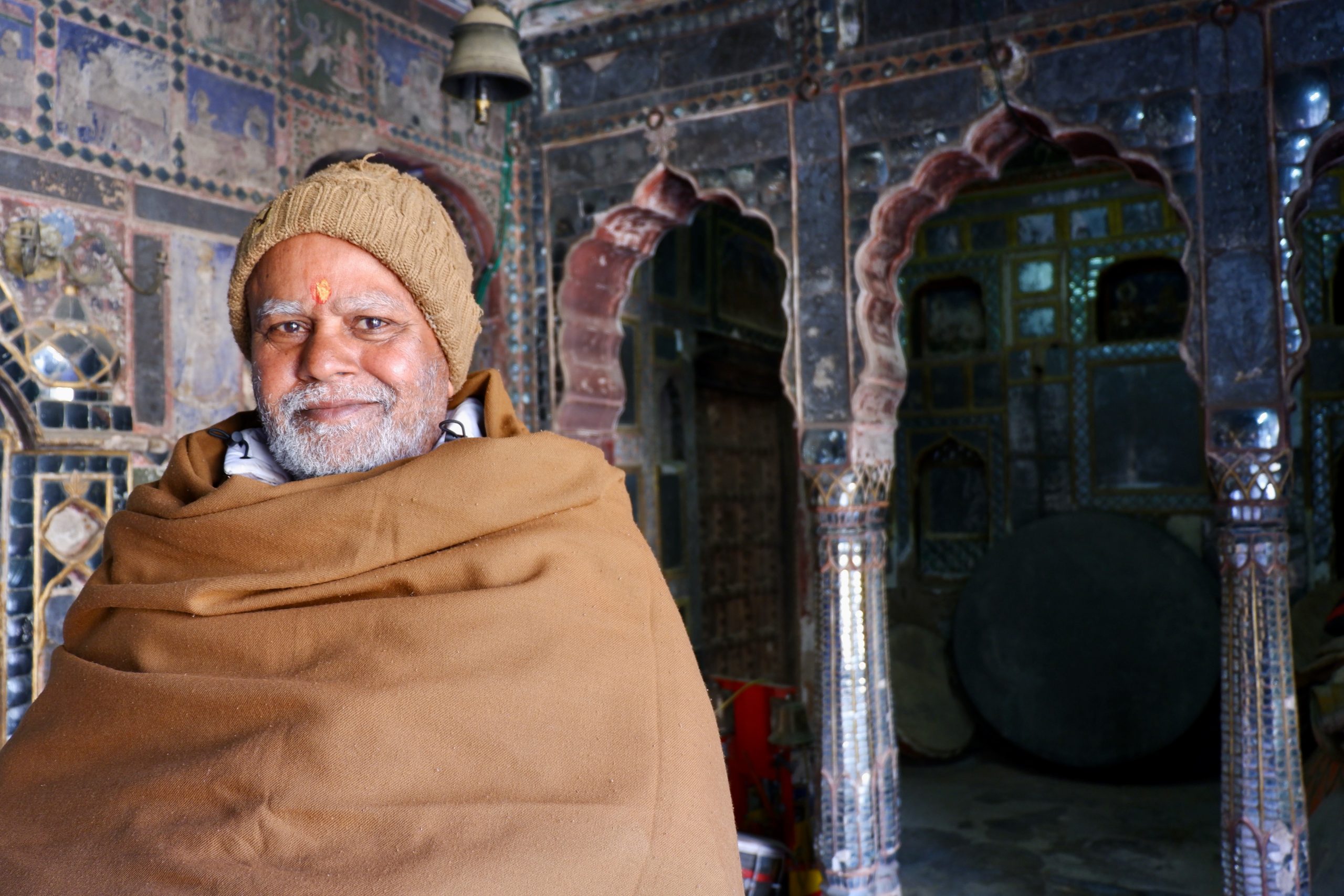
A real jewel is the Khemka Shani Temple from the mid-19th century. Completely unassuming from the outside, you are left in awe the moment you step through the entrance:
 1
1
 2
2
 3
3
 4
4
 5
5
Slowly, I began to feel a certain fatigue when it came to photographing all that splendor. I was still very much in awe, but I kept wondering: what am I actually going to do with all these pictures?
So on to the next place: Mahansar. There, once again, I encountered unique splendor in a house known as the “Gold Shop”.
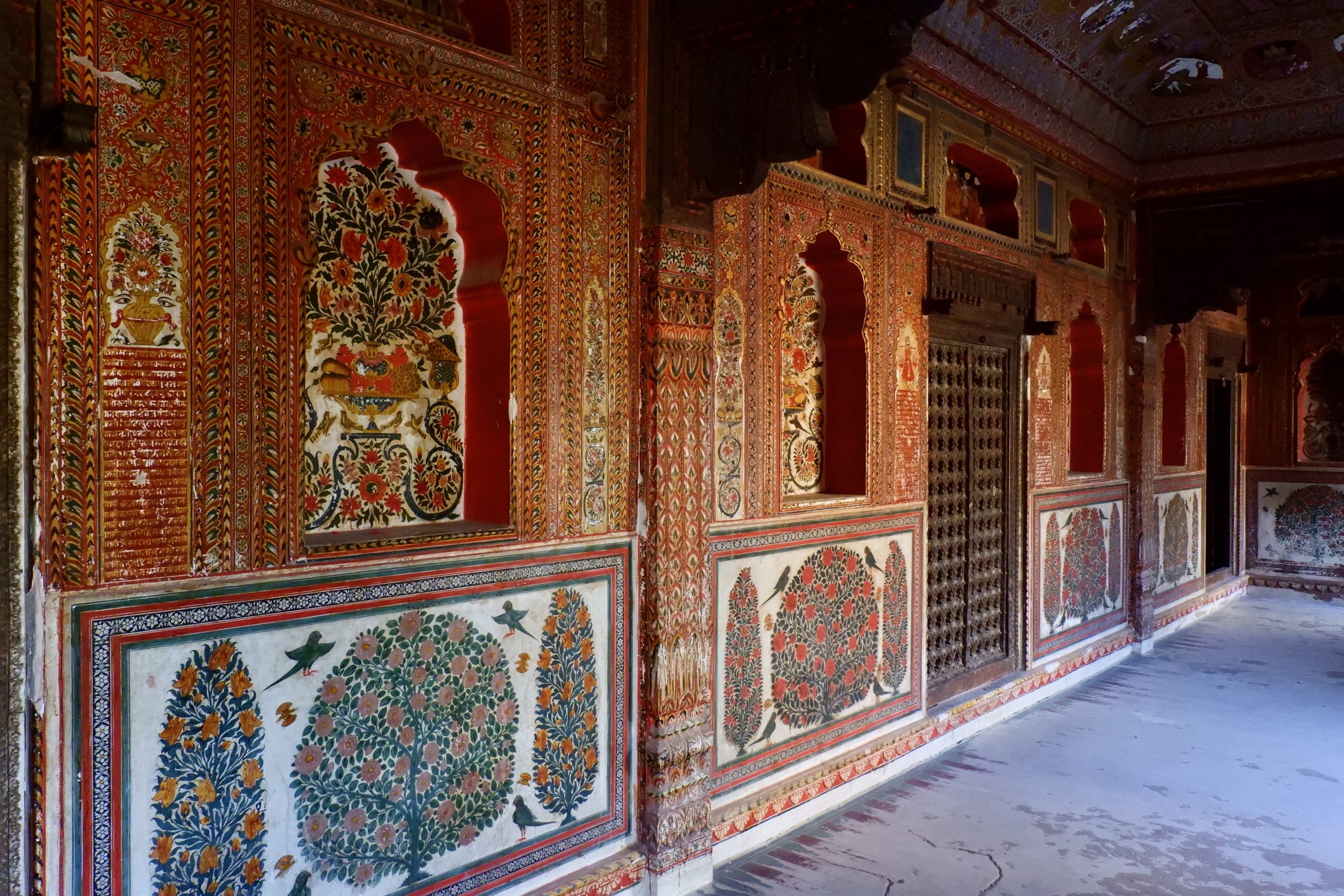 1
1
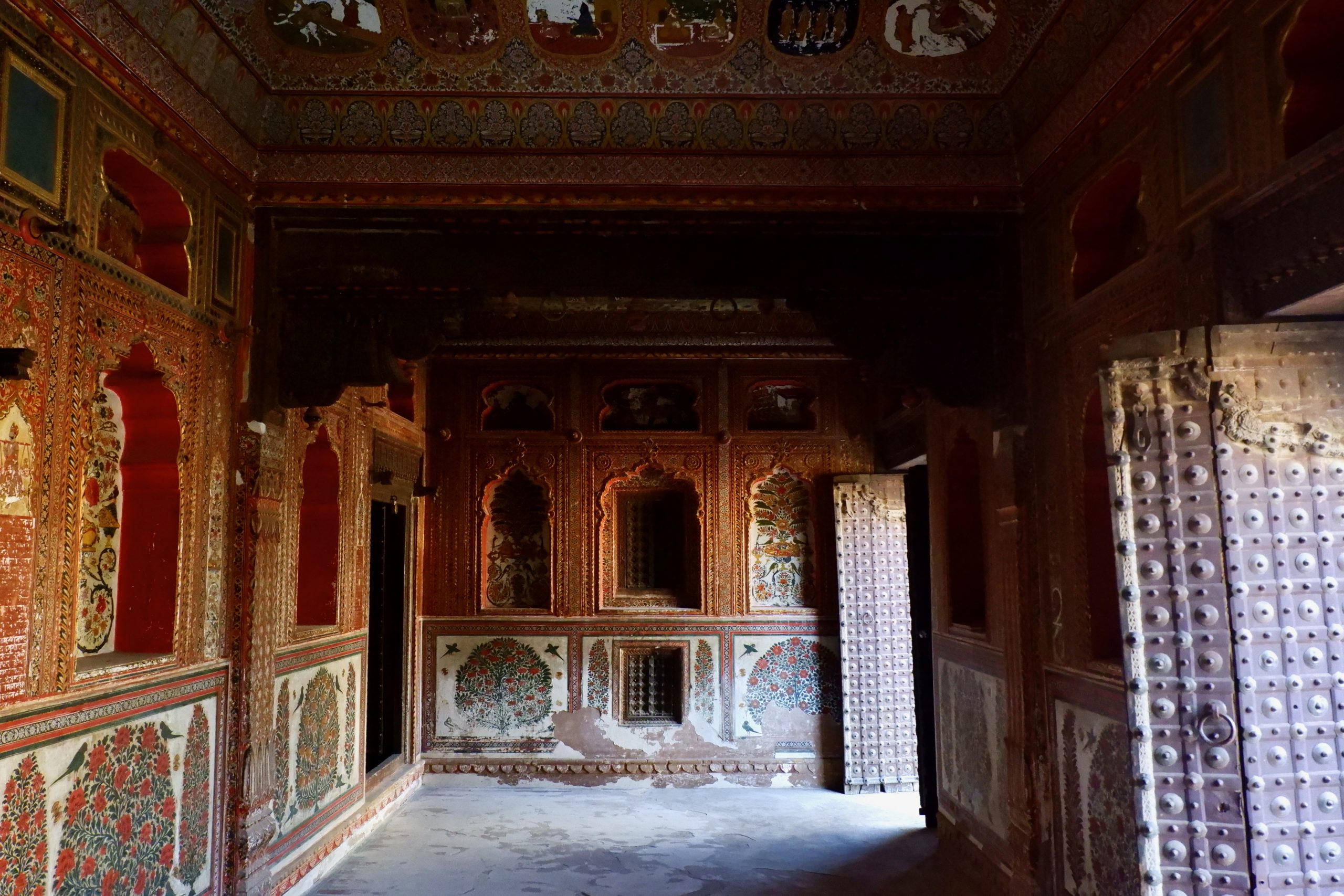 2
2
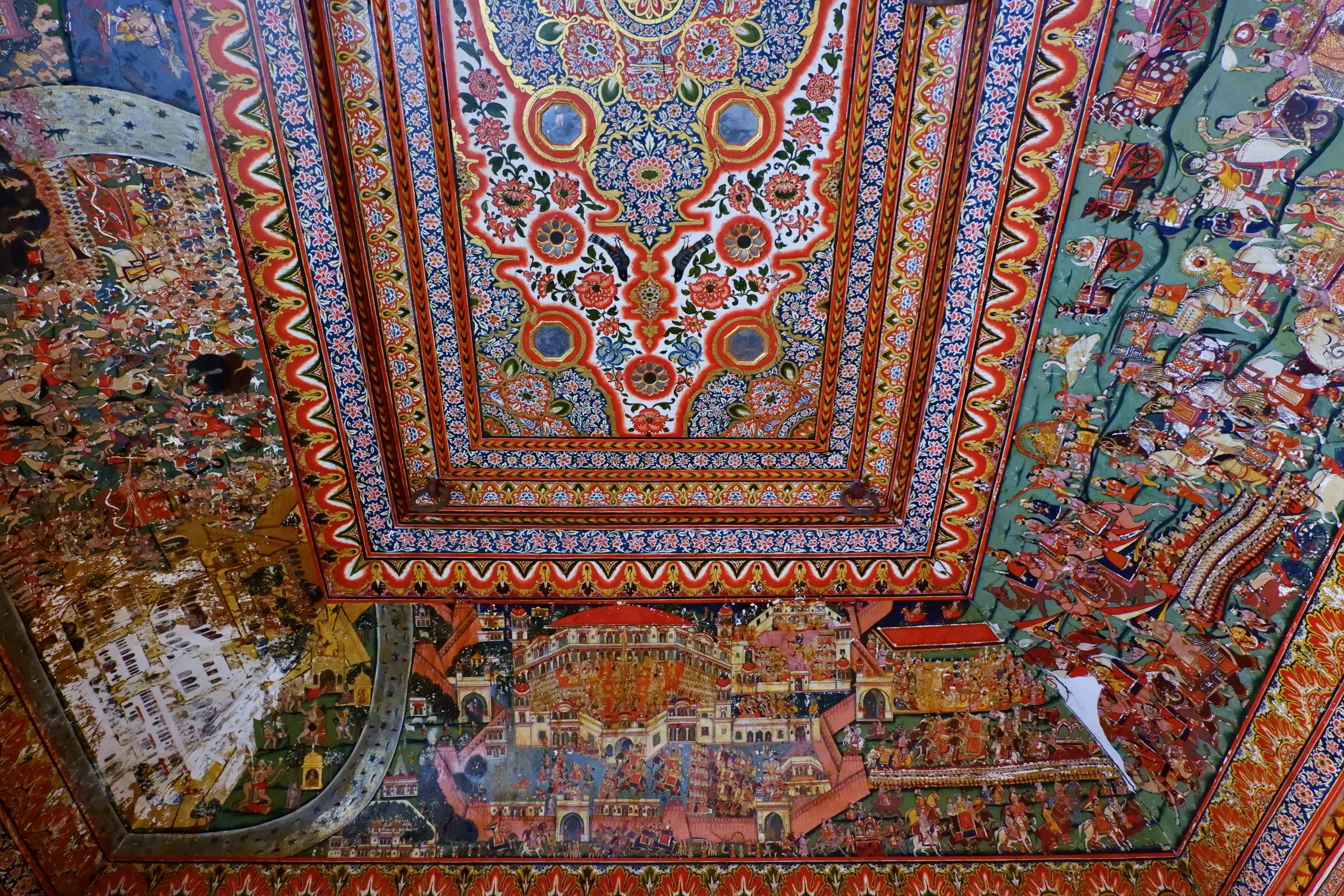 3
3
 4
4
Crazy what people used to produce back then!
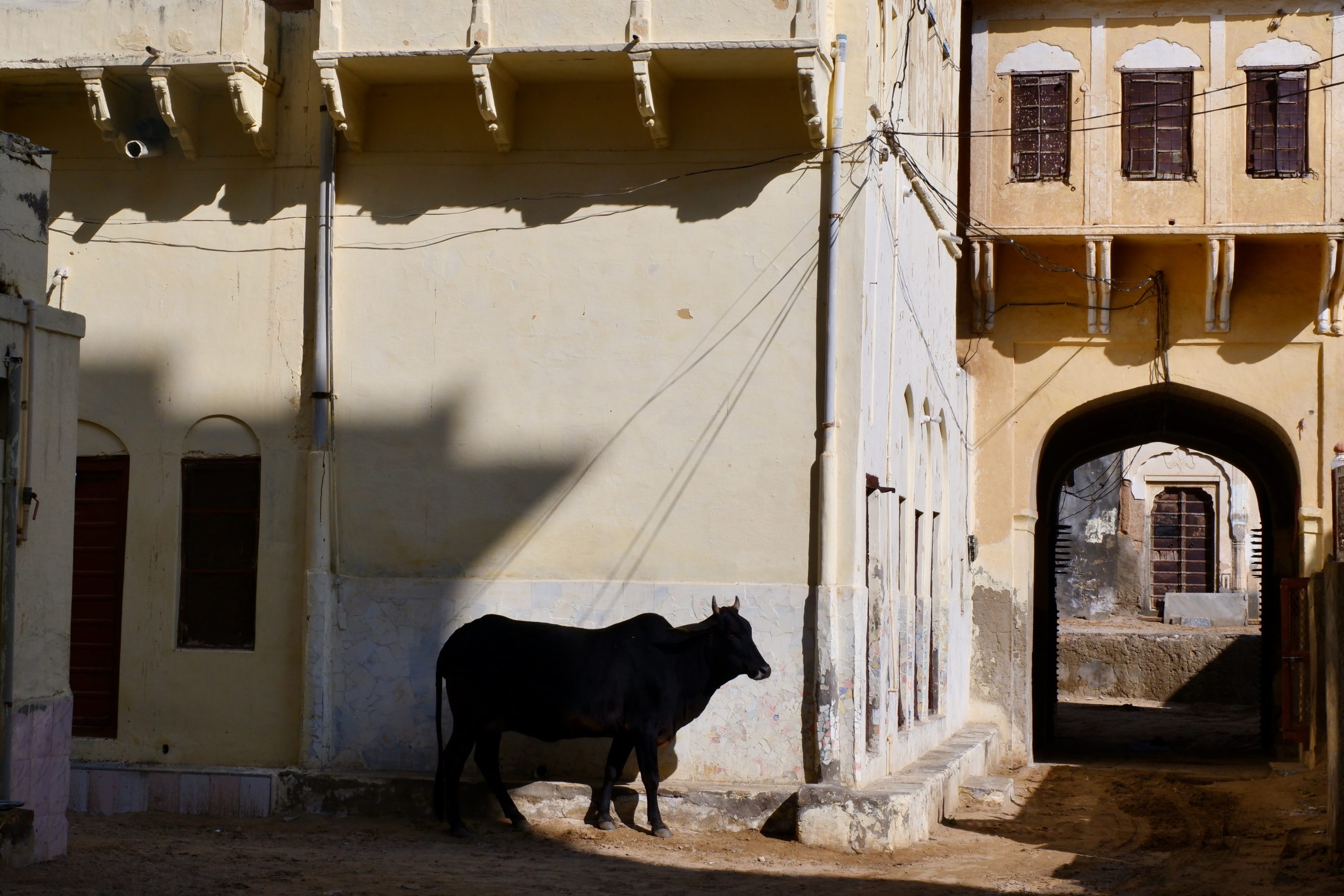
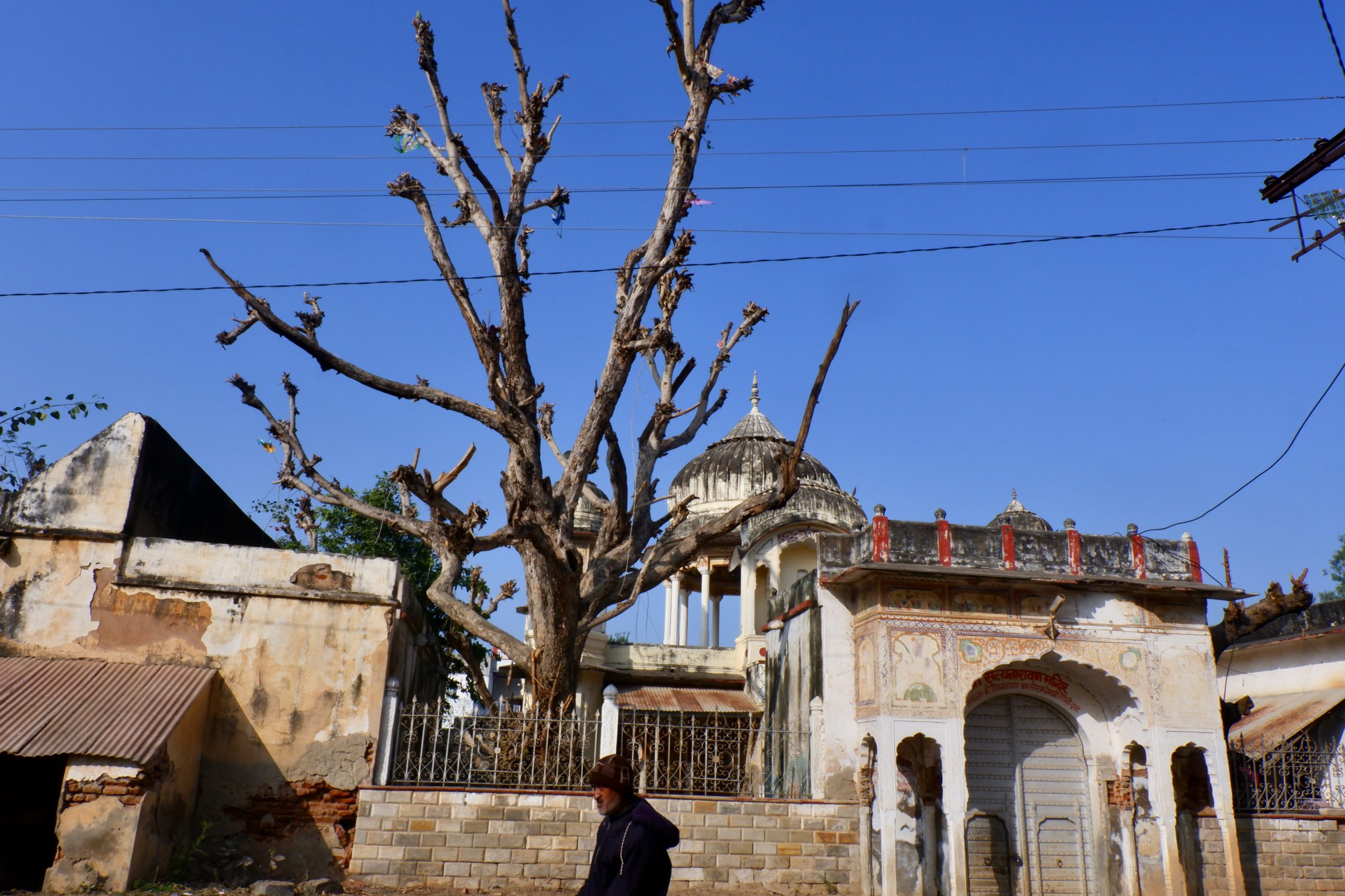
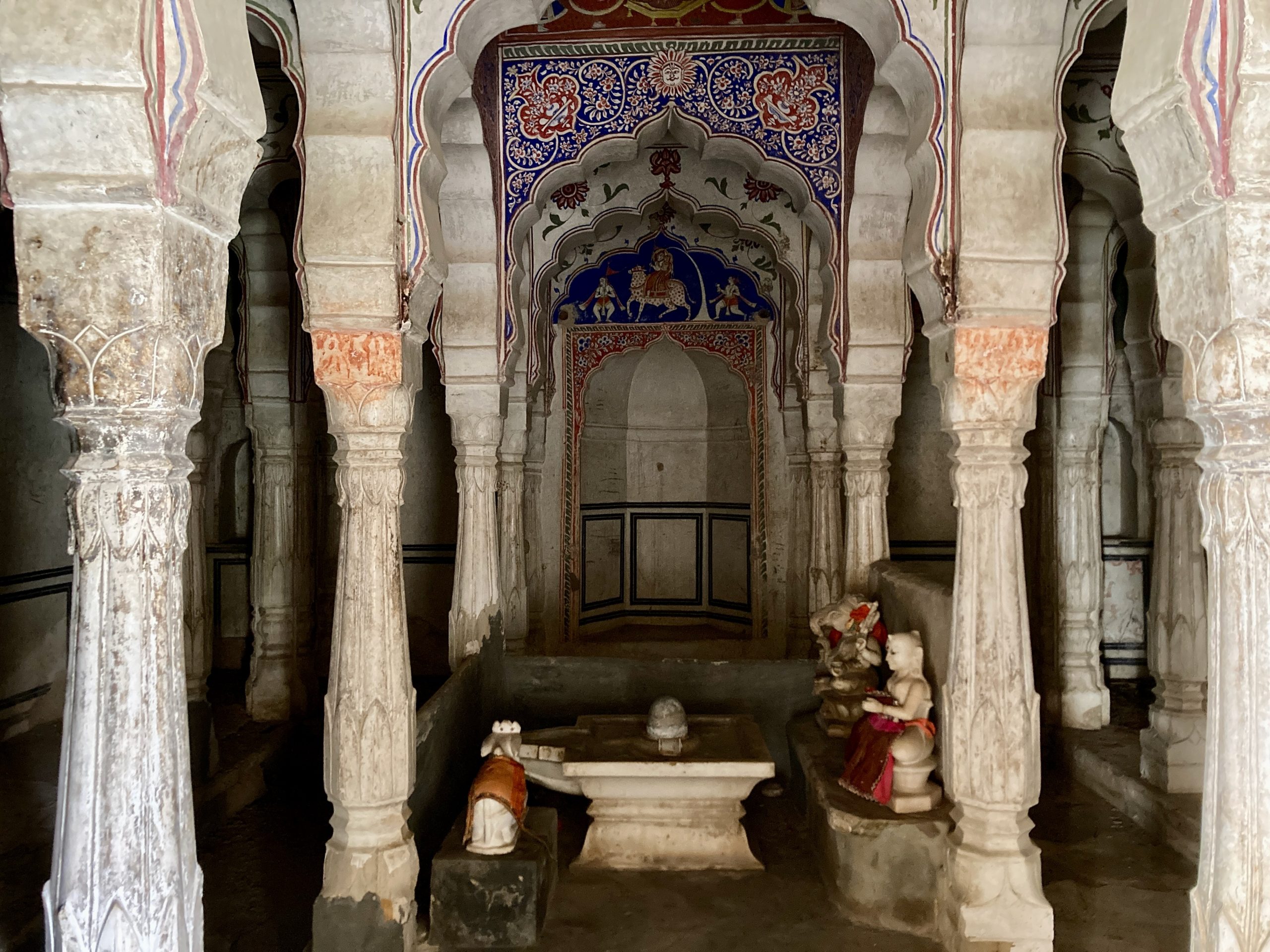
And now I’m getting confused — I can’t remember anymore where these next photos were taken. I tried to look for a few different kinds of motifs. And along the way we sometimes just stopped somewhere spontaneously. I can’t piece it all together anymore — but I still really like the photos and want to show them anyway:
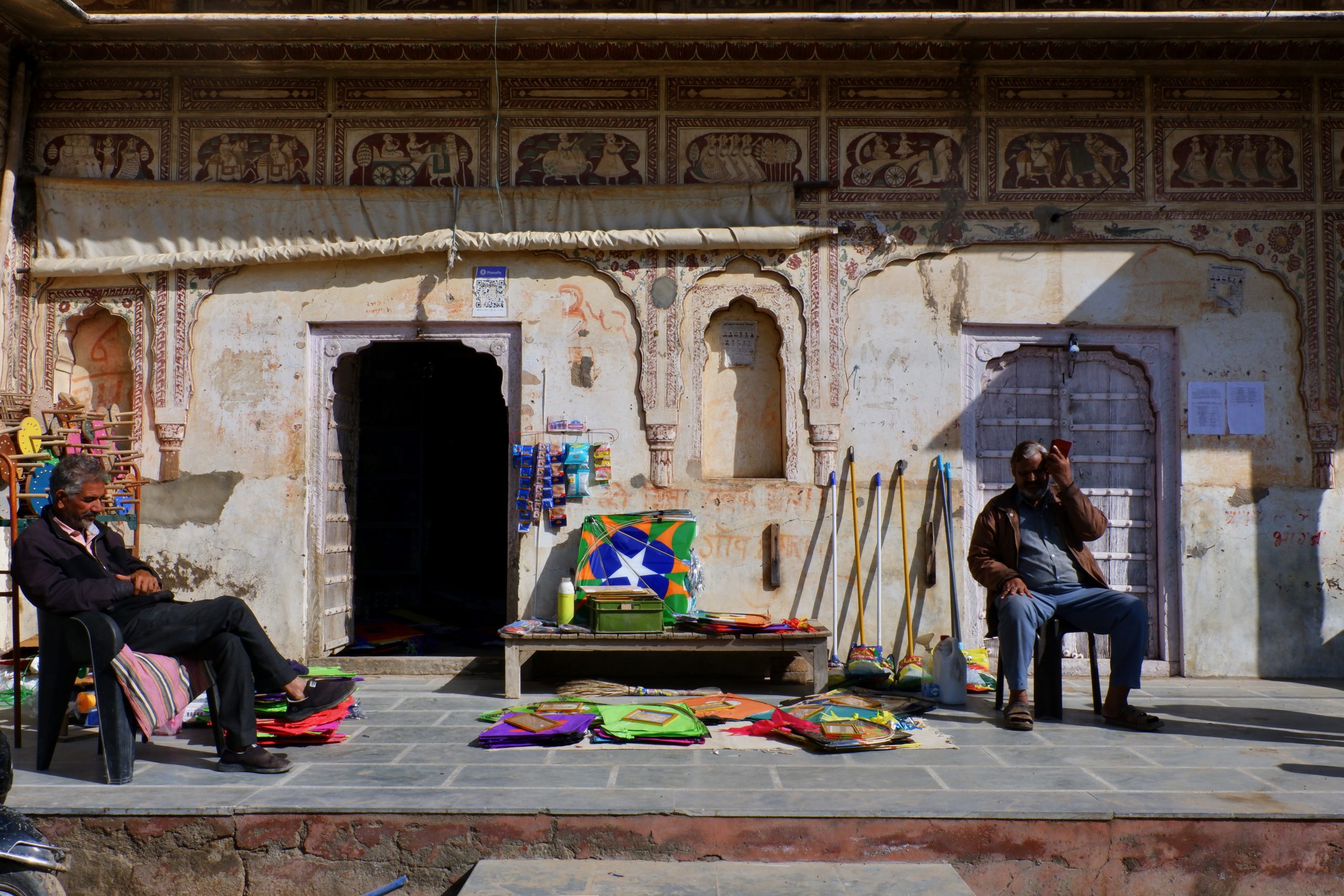 1
1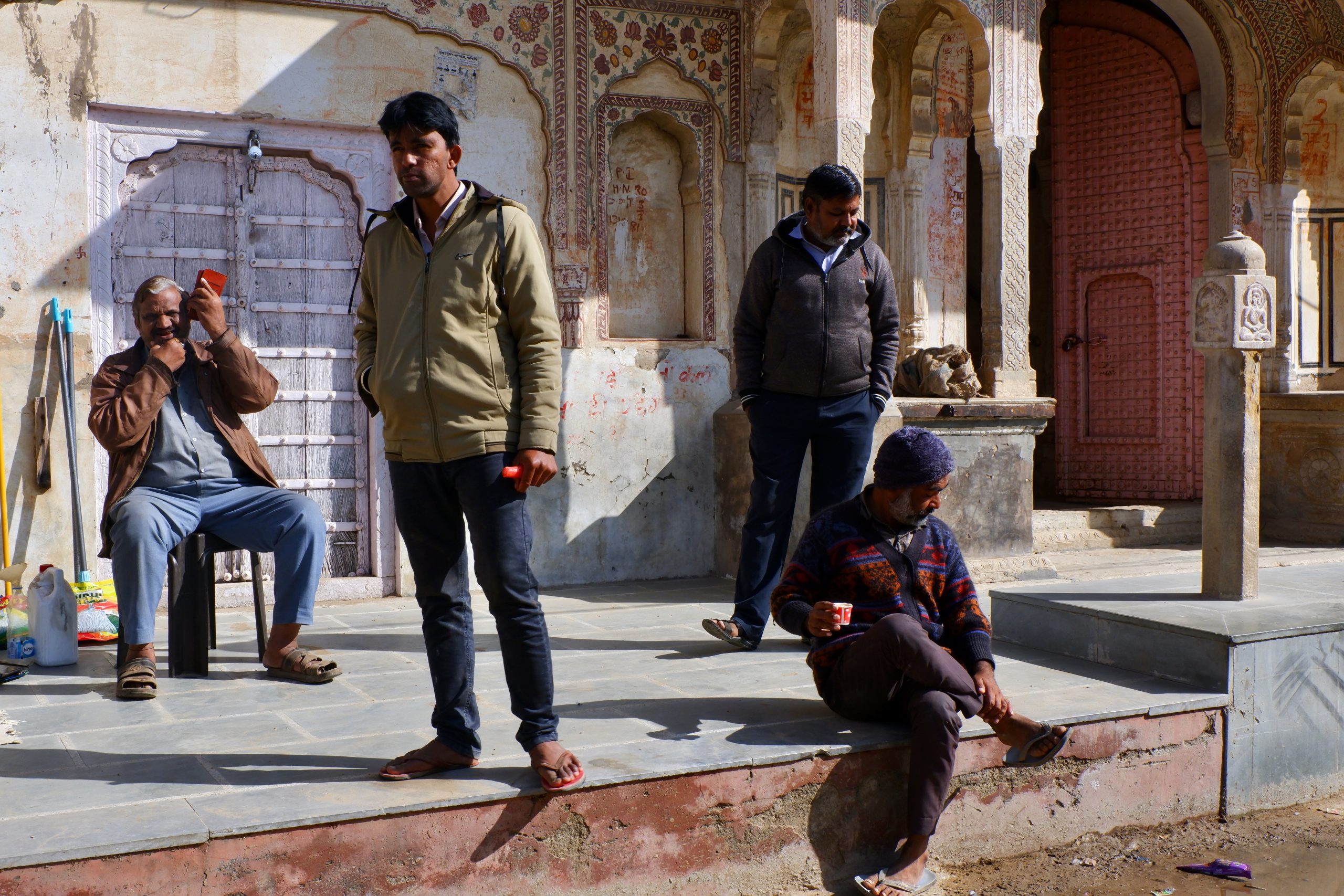 2
2
 3
3
 4
4
 5
5
 6
6
 7
7
 8
8
At some of the paintings, I still found myself lingering:
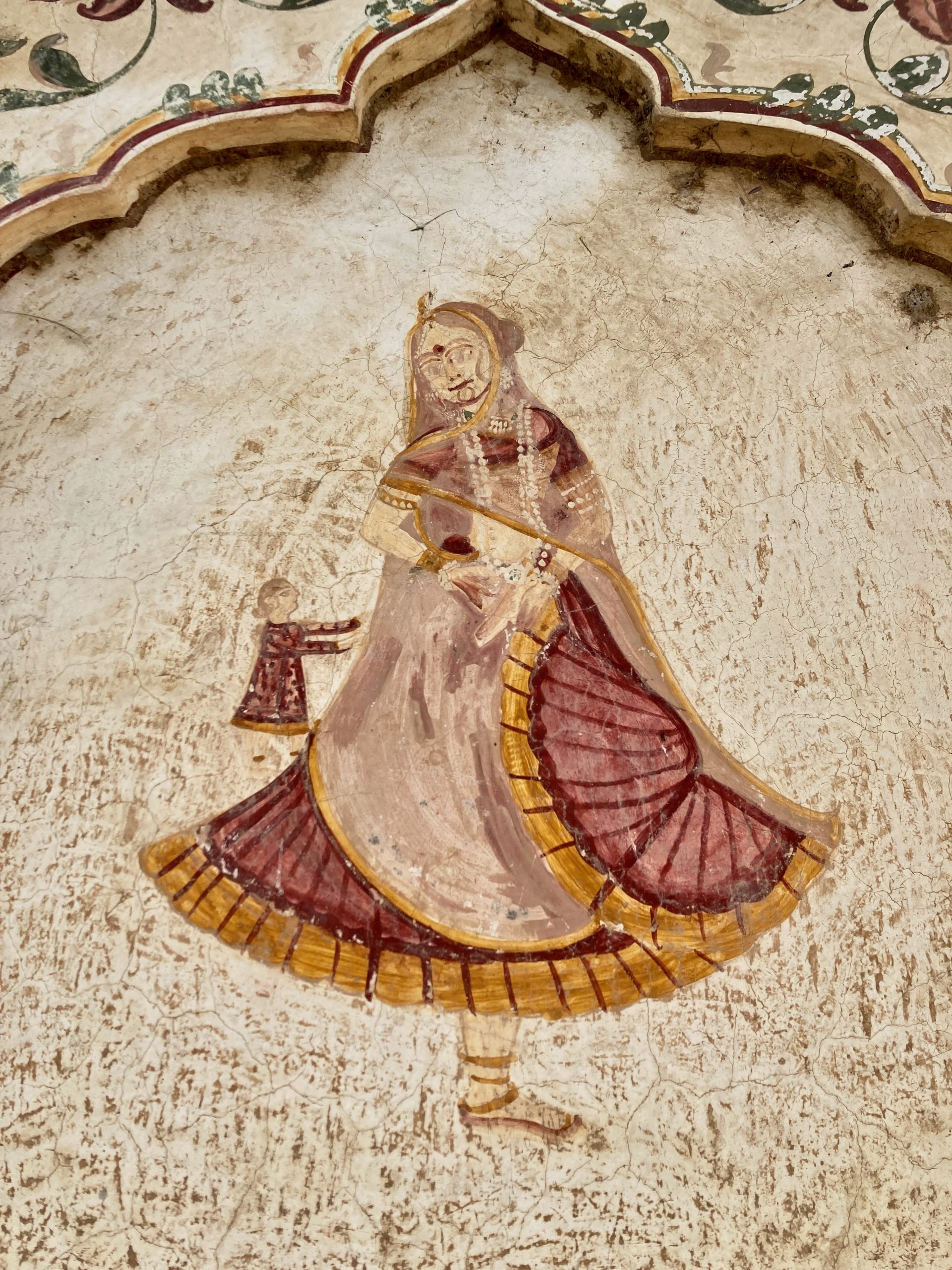 Child lingers at woman
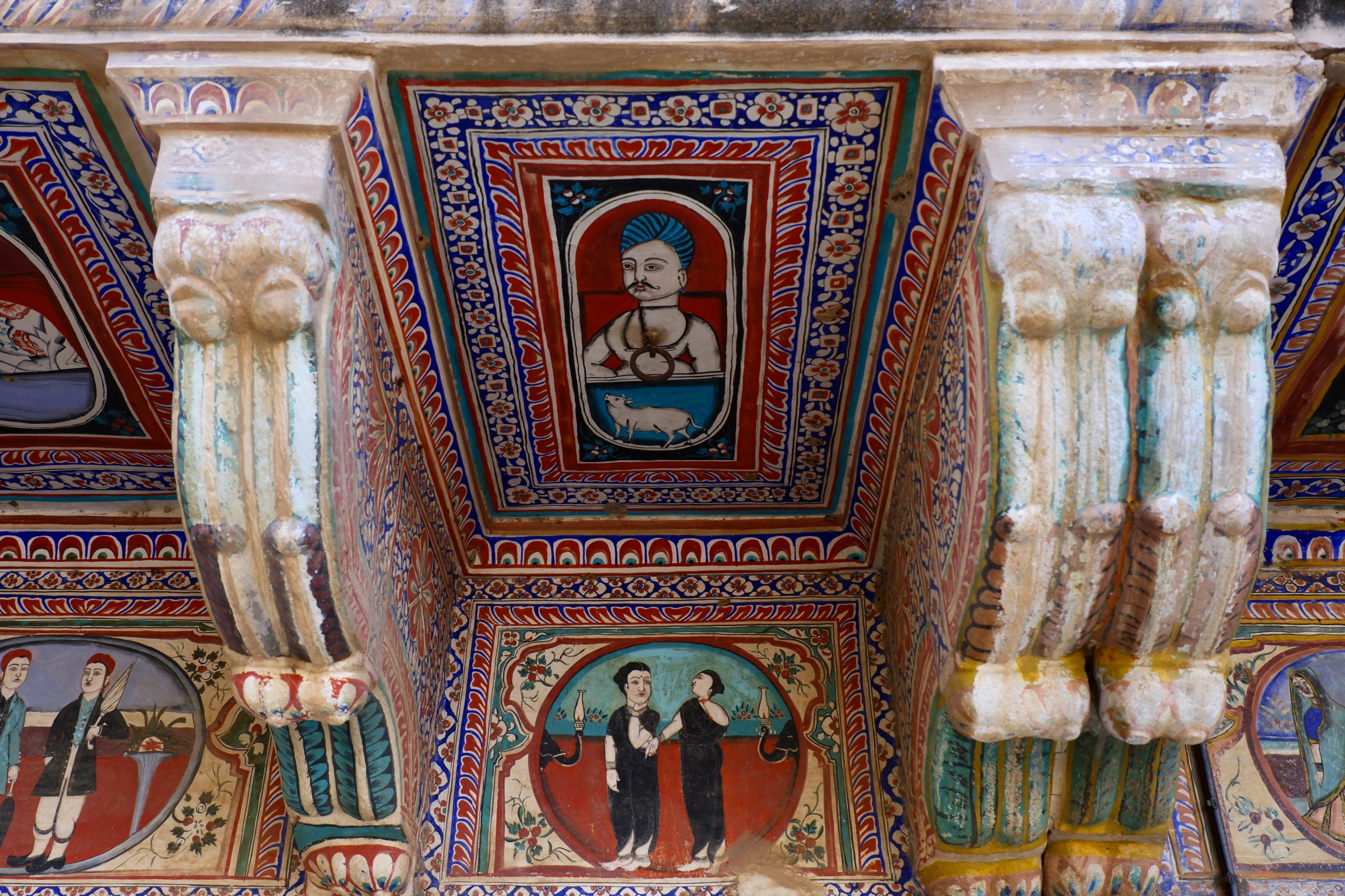 other fashion
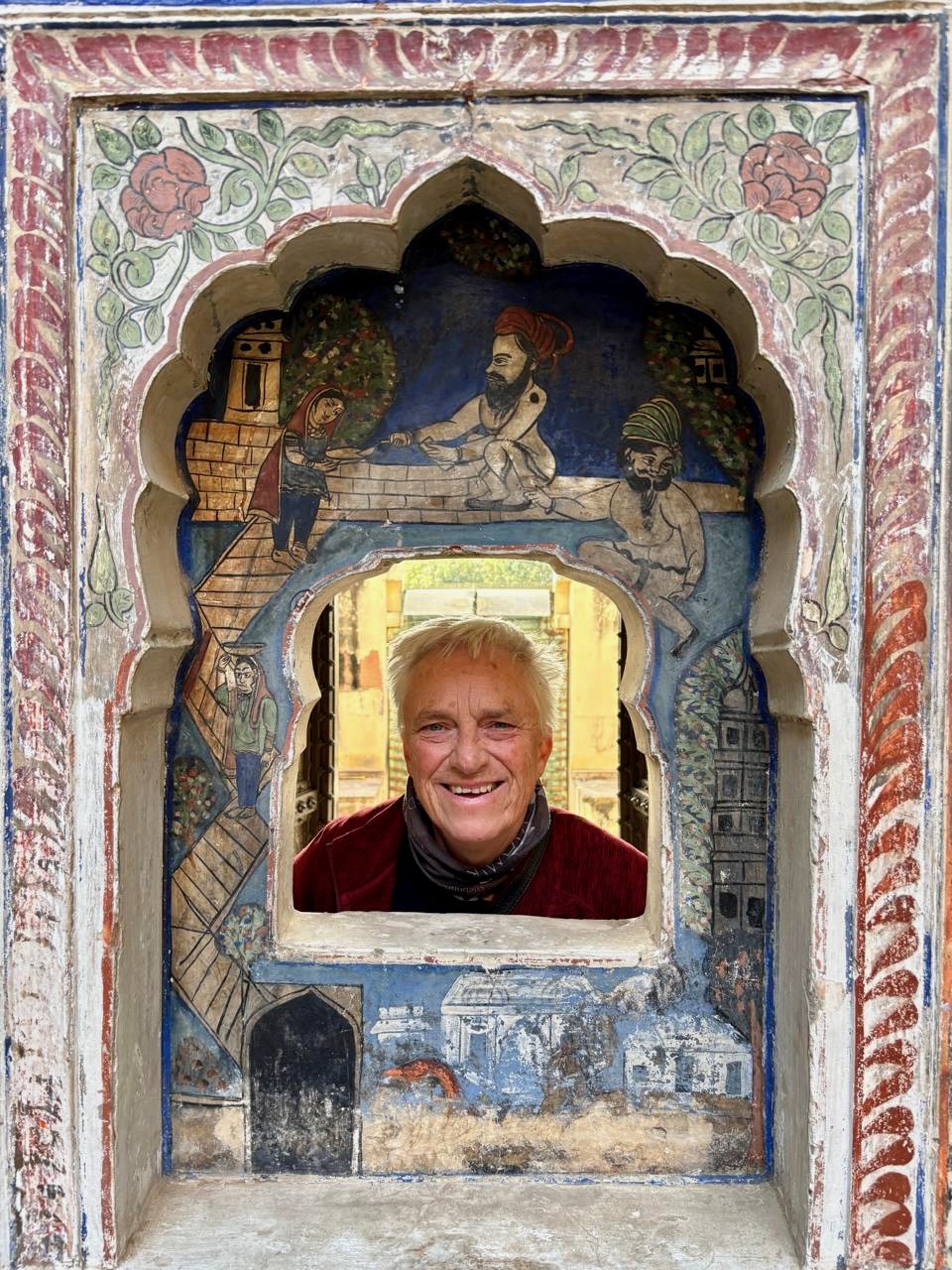 framed in drawing
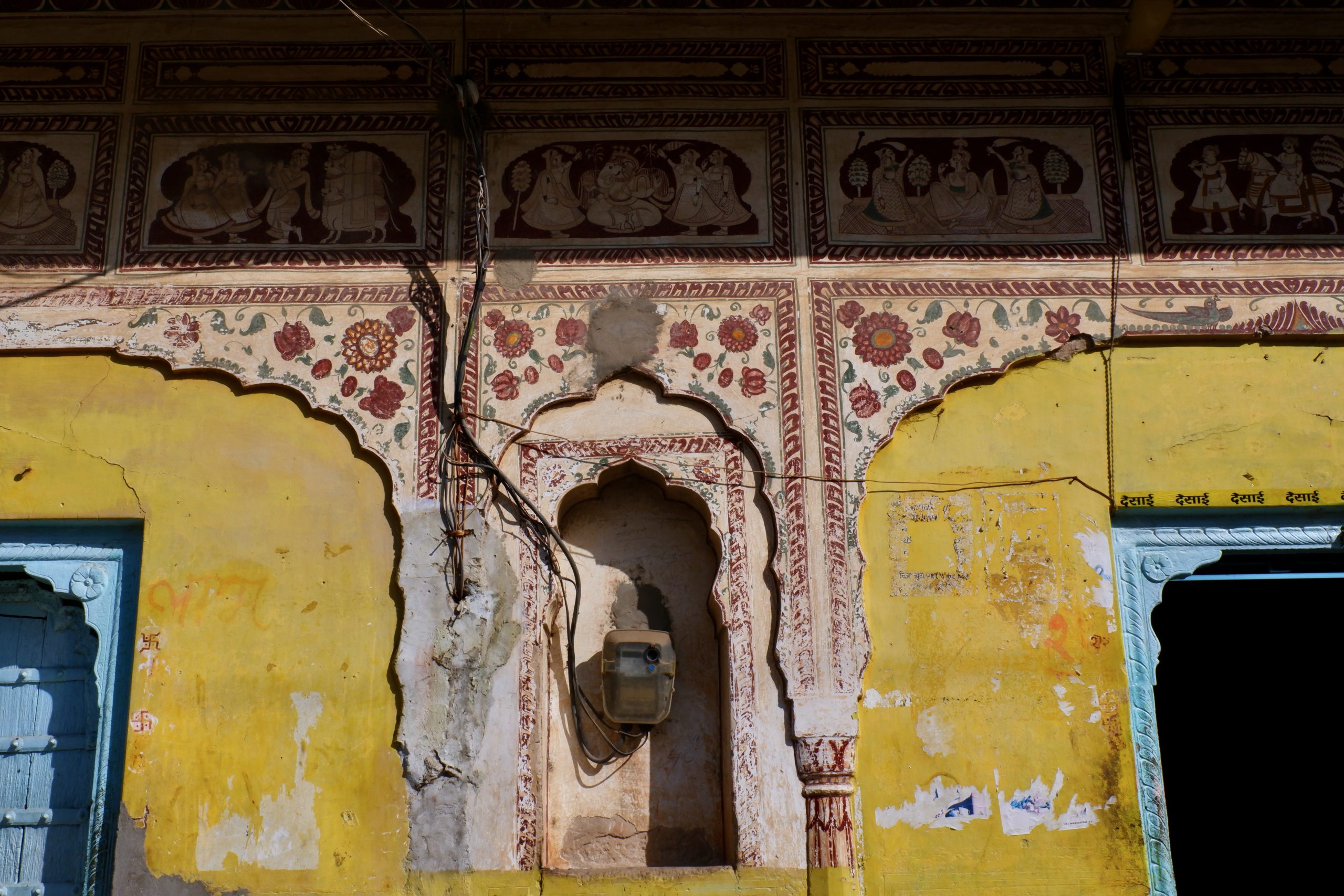 Electricity meter
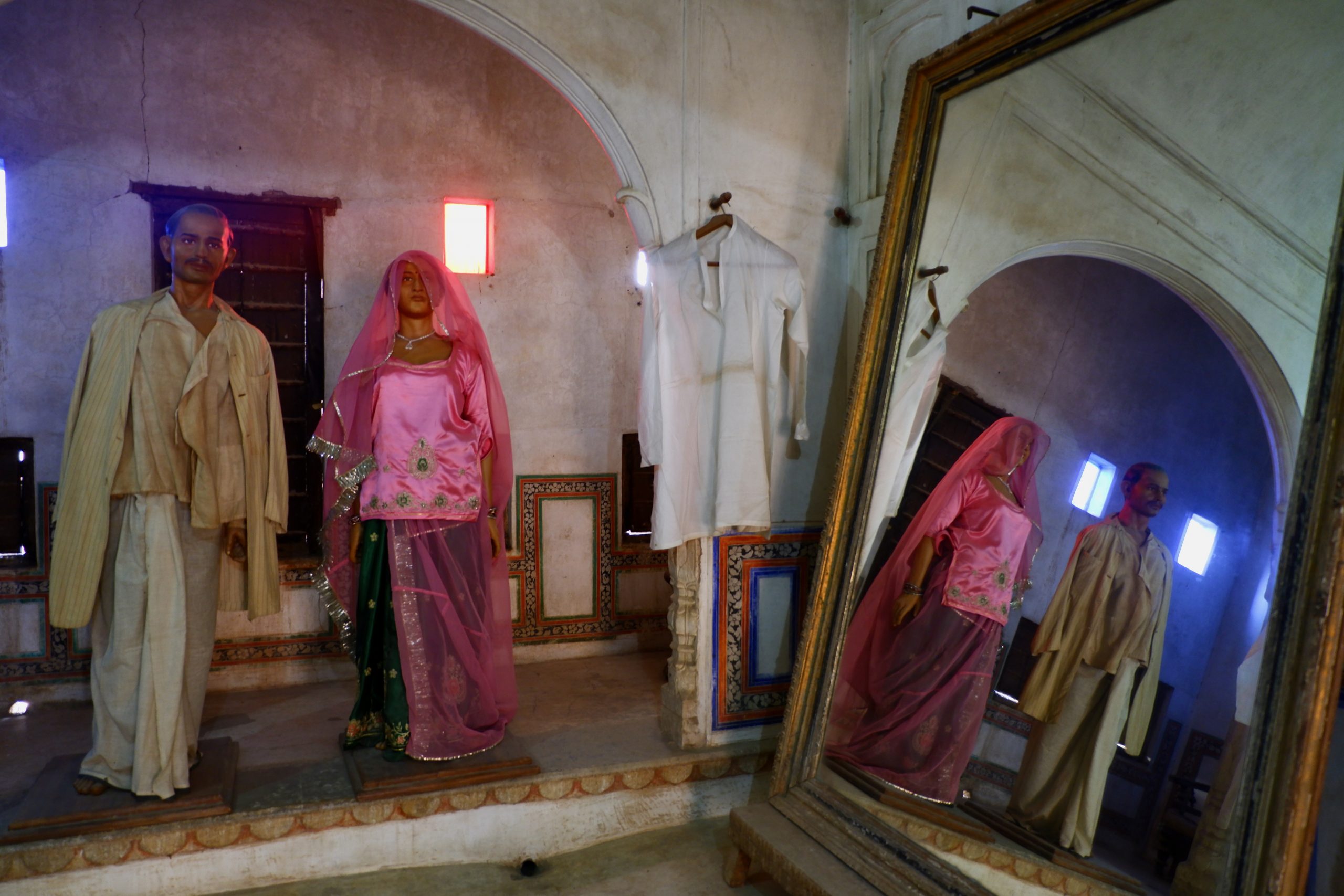
In the end we were in Dundlodh, where a haveli of the Goenka family had been nicely restored and set up as a museum.
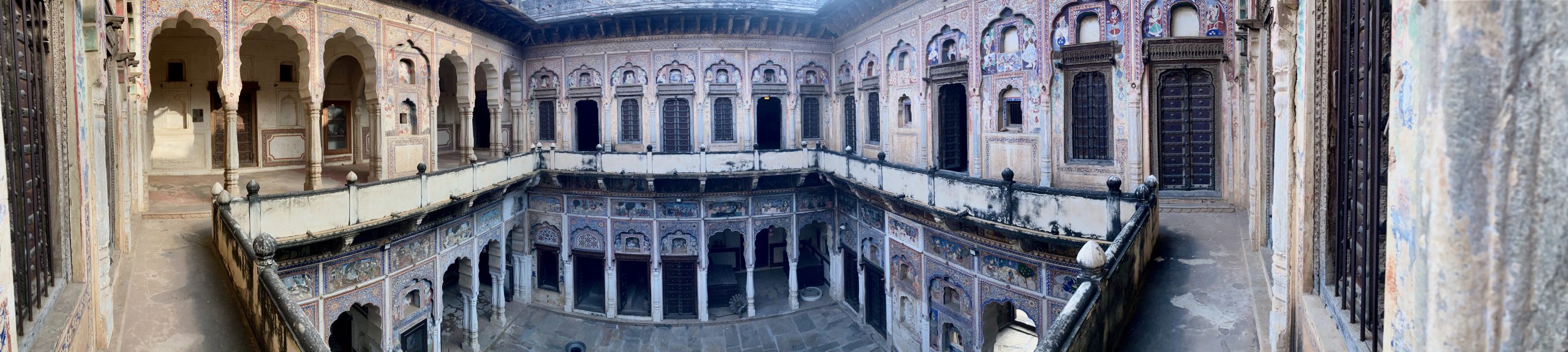 1
1
 2
2
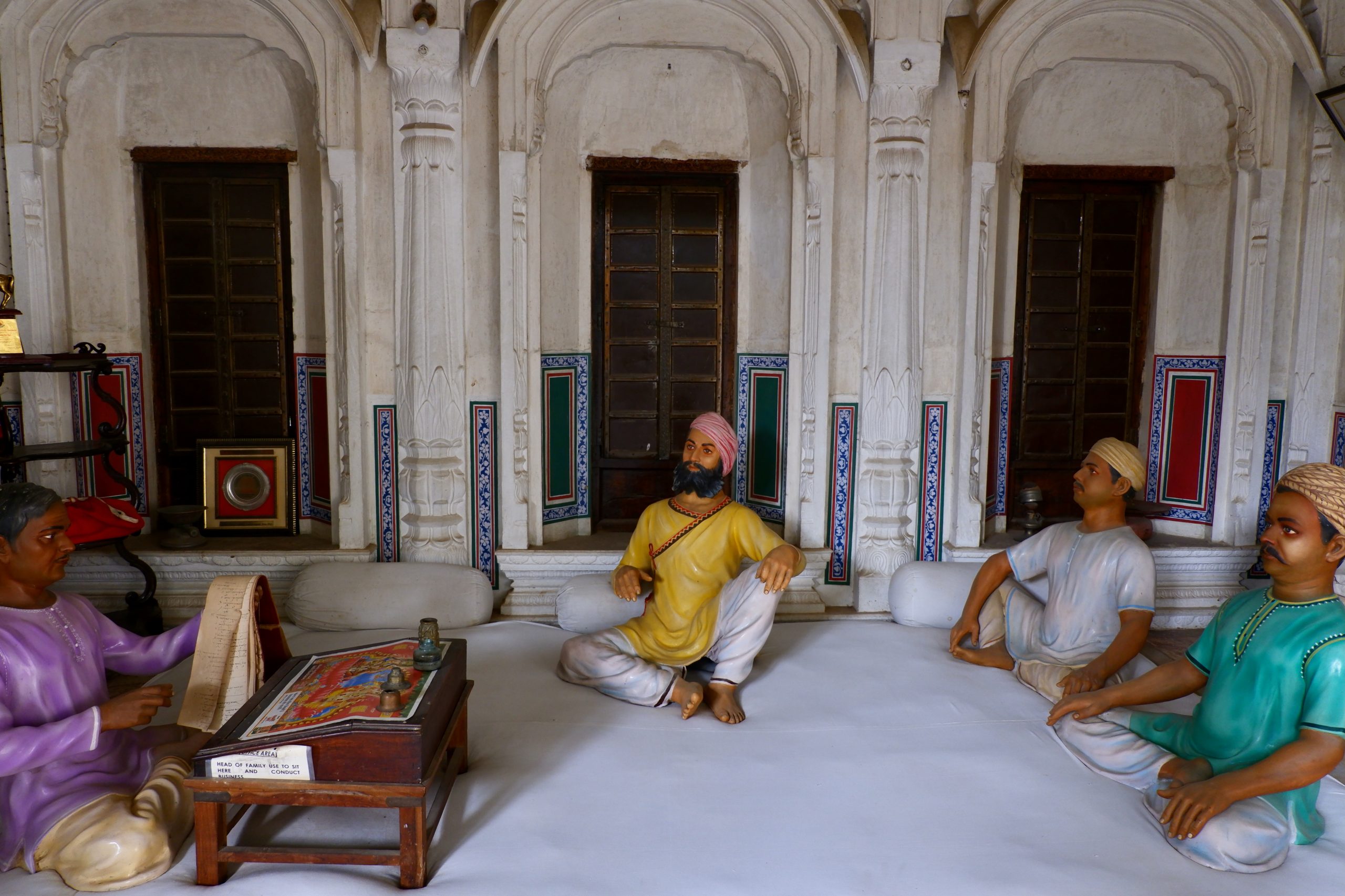 3
3
 4
4
They tried to make everything a bit more lively using puppets. A caretaker couple lived in the haveli and also collected the entrance fee. Apart from that, though, they didn’t take much care of the place – it was quite dusty, and it could have been maintained and presented a bit better. It’s funny that the male puppet looks rather shabby here, even though it’s actually meant to represent fine, elegant clothing.
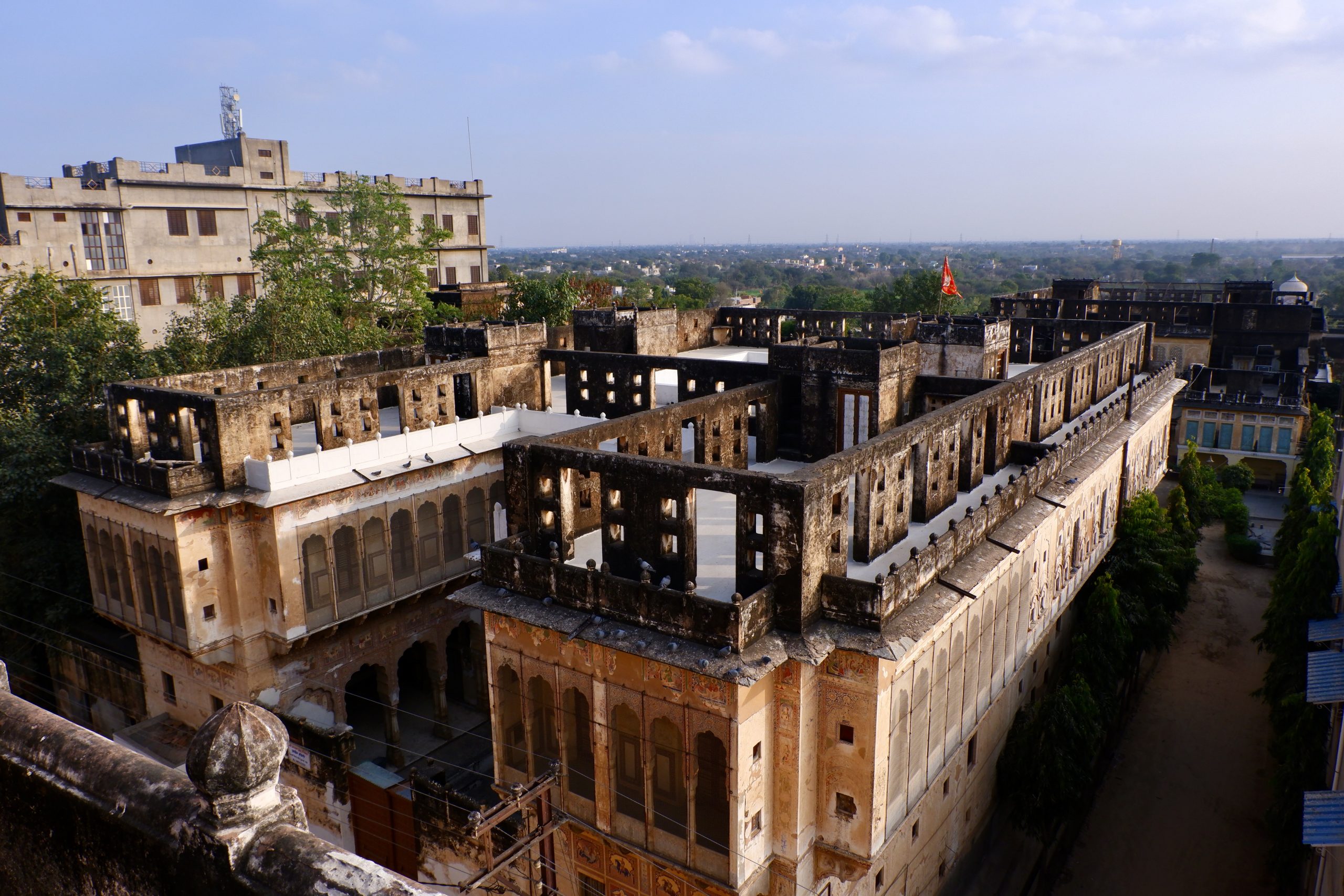
What’s interesting is that with old palaces and forts, you often see extensions, annexes, etc., added by the heirs—so multiple building periods coexist within one complex. With the havelis, it was different: instead of extending or remodeling, they simply built an entirely new house next door.
 5
5
In the end, I was completely overwhelmed by all the splendor and the sheer number of paintings. But it’s definitely worth it! At the Chettris at the beginning, I saw a handful of other Western tourists—otherwise, nothing. It’s amazing what treasures are scattered around here. You could certainly spend another day visiting more places. I would definitely recommend spending a bit more time in Shekawati and exploring a little more. Even if you’re not really discovering on your own but being guided, it still feels like discovering. And sometimes it’s “just” certain details in the paintings.
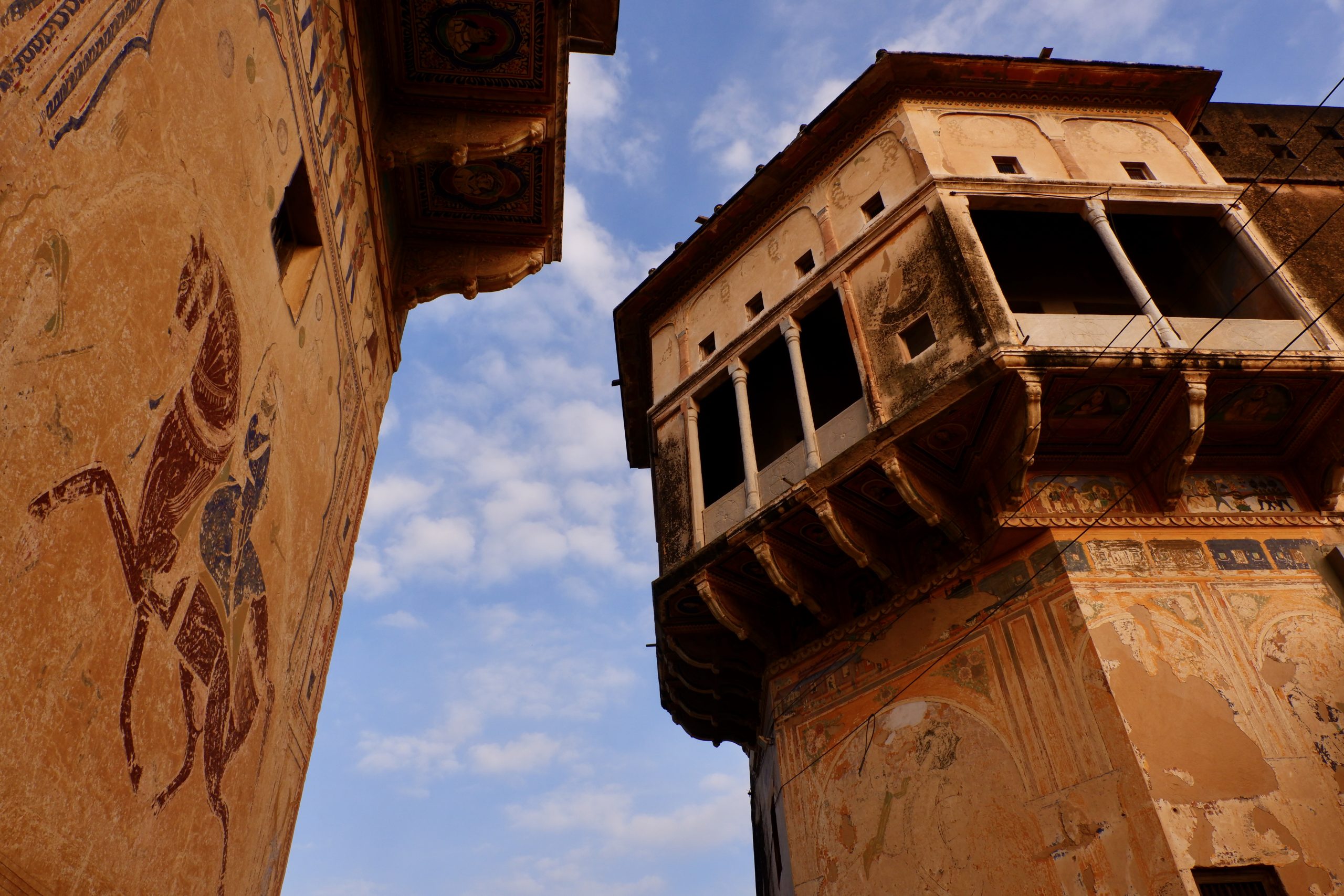 The last Haveli-Photo of that day
I had booked an overnight bus to Bundi for the next day, which meant I still had a whole day to spare. What do you do when your head is already so full from all the art?