


Manali -> Gondhla – a Tunnel, a Fort, a Nunnery
19. + 20. May 2026
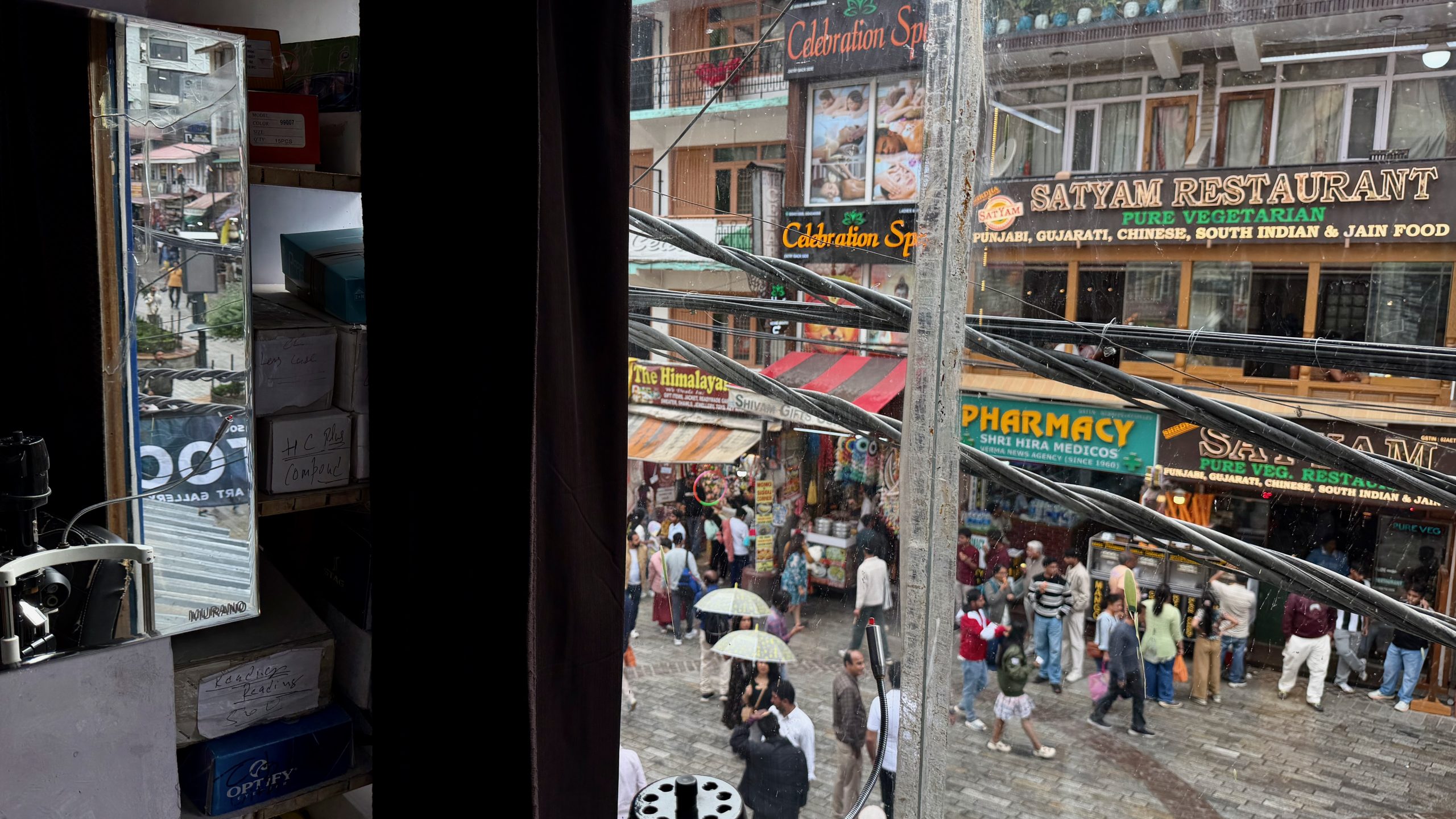
By the way, on my very first day in Manali, the arm of my sunglasses broke. And one thing that is absolutely wonderful in India: you can always find someone to fix things quickly! There’s an optician here on the first floor who had the tiny missing screw, fitted everything back together properly, cleaned the glasses — and only wanted 50 cents for it. Meanwhile, I took a photo overlooking the pedestrian zone.
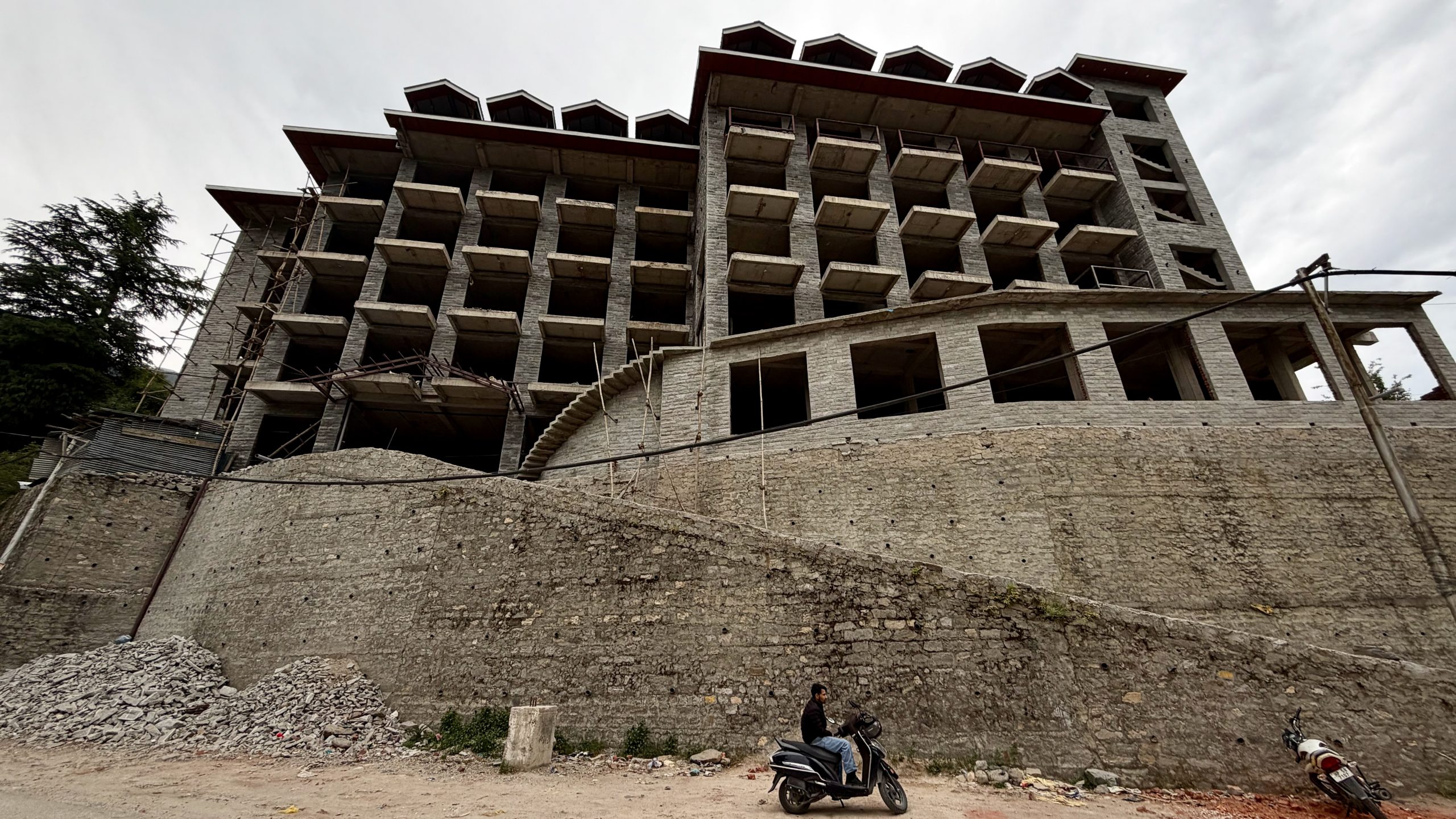
Manali is completely overflowing with tourism. But the people who profit from it are very rarely actually from here. Taxi and tuk-tuk drivers, guides, cooks, hotel managers — almost all of them come from elsewhere. The local people either earn money by leasing out property, or from what they traditionally did before: farming and livestock keeping. Agriculture here mainly means fruit orchards — the apples from this region are famous throughout India (along with those from Kashmir). Though nowadays it hardly works anymore without pesticides and similar chemicals. And Raju also taught me how unstable and fluctuating the local economy is. Owners change, businesses close, people reinvest, migrate away, migrate in, and so on. And construction just keeps going and going! Even far too close to the big Beas River, where annual floods regularly cause buildings to collapse.
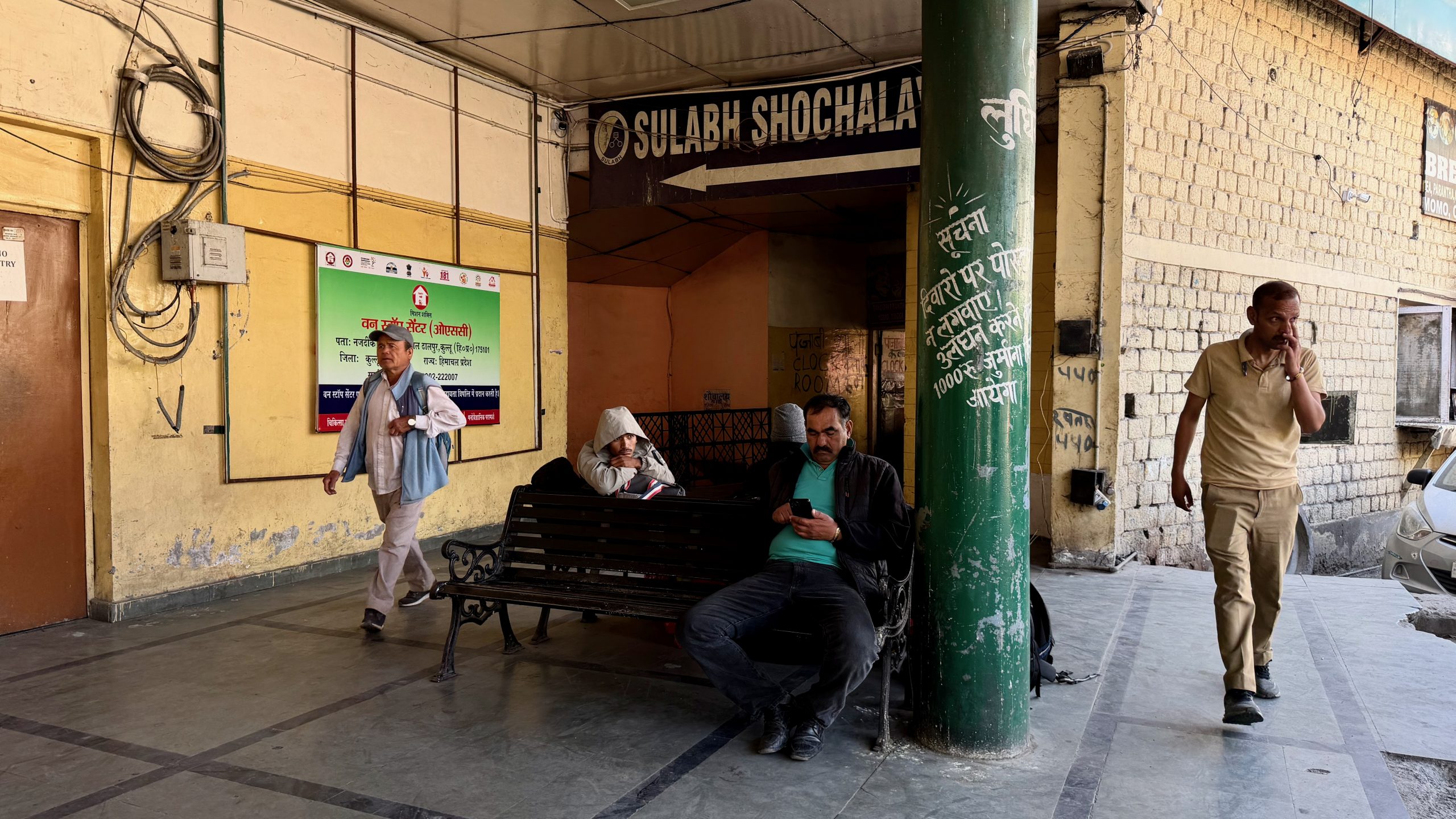
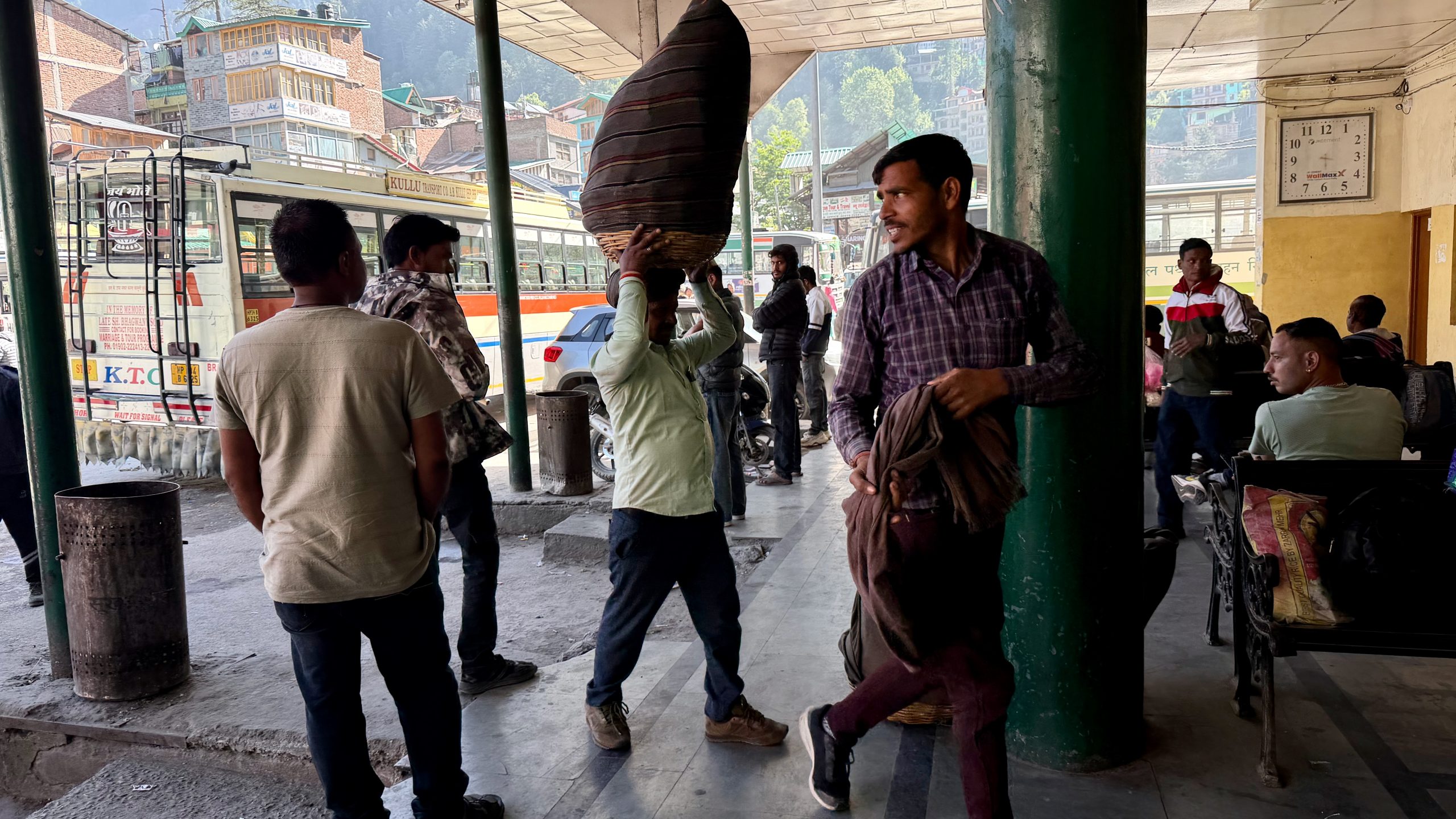
What has really become rarer, on the other hand, are the public buses. I find that quite unfortunate, because they are actually a very good and inexpensive way to get around. I also like the atmosphere at the bus station.
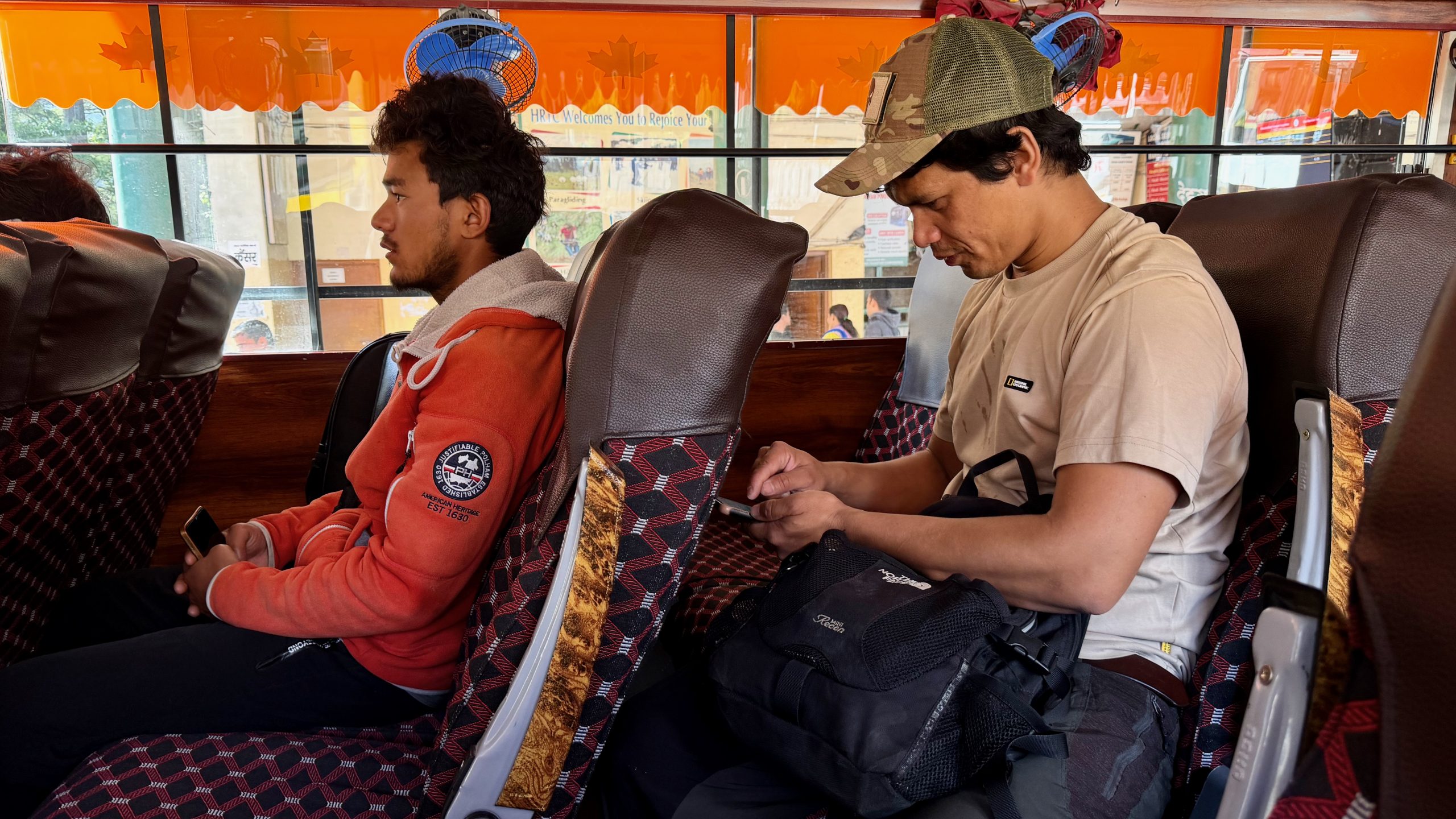
At least I was able to take a public bus to my next destination — and it worked out perfectly. I arrived early and managed to get a good seat near the front among lots of cheerful women who shared apricots, chips, and laughter with me. At first, the bus was absolutely packed and struggled its way through the overcrowded streets, but further out of the valley it gradually became emptier and emptier.
In earlier times, travelling north always meant crossing the Rohtang Pass, which used to be buried under so much snow in winter that it could only be cleared quite late in the season. Then they spent ten years building a tunnel, which was inaugurated in 2020. The Atal Tunnel is 9.2 km long, and you can read more about it here: Wikipedia. Before that, Lahaul used to be cut off from the rest of India for many months each year, whereas now it can be reached all year round. That — together with the growing number of Indians travelling to the Himalayas since the pandemic — is changing people’s lives there enormously. The road, by the way, is in fairly good condition and heavily used — by motorcycles, comfortable taxis, Indian travellers in private cars, and a few trucks.
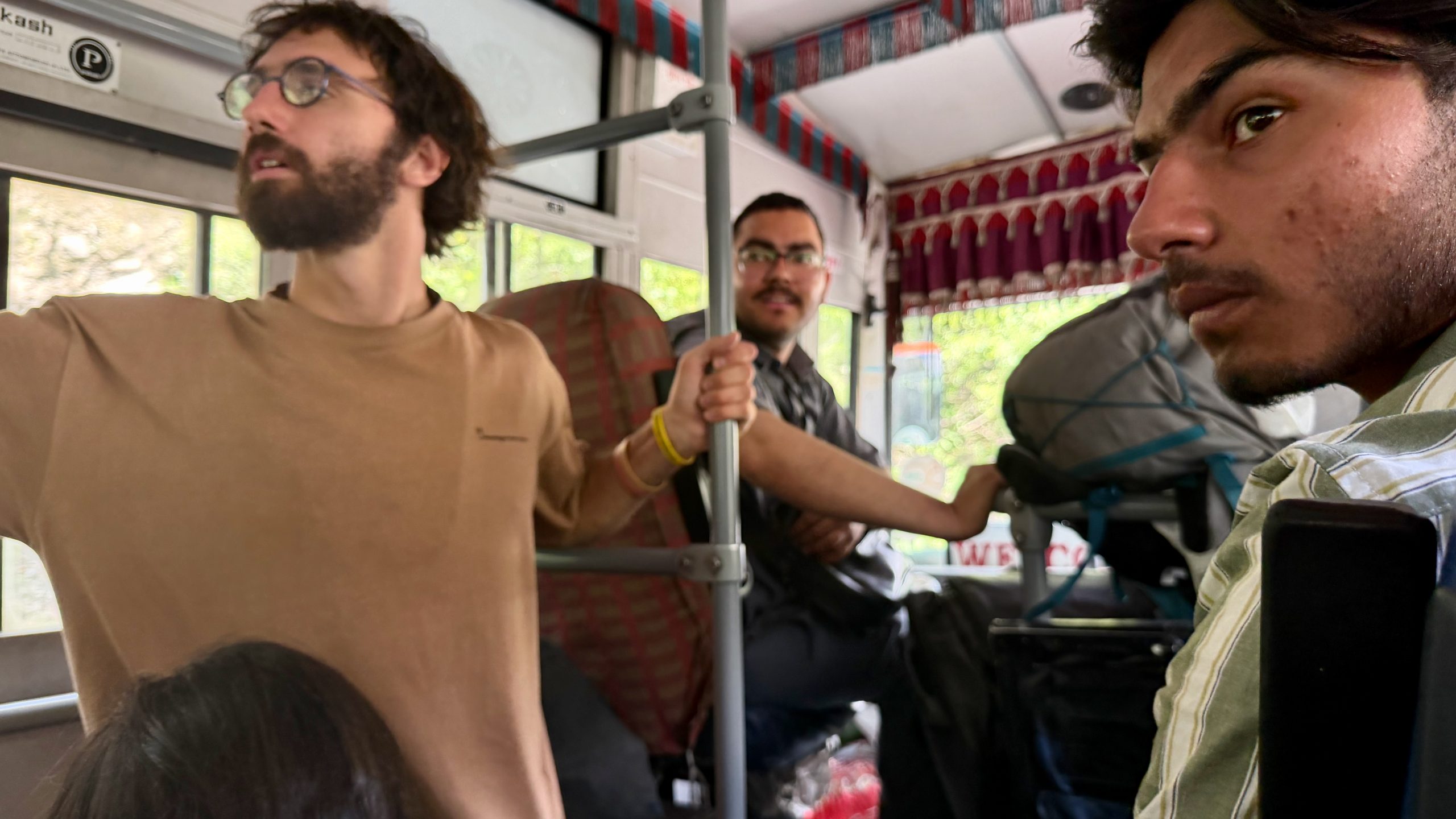
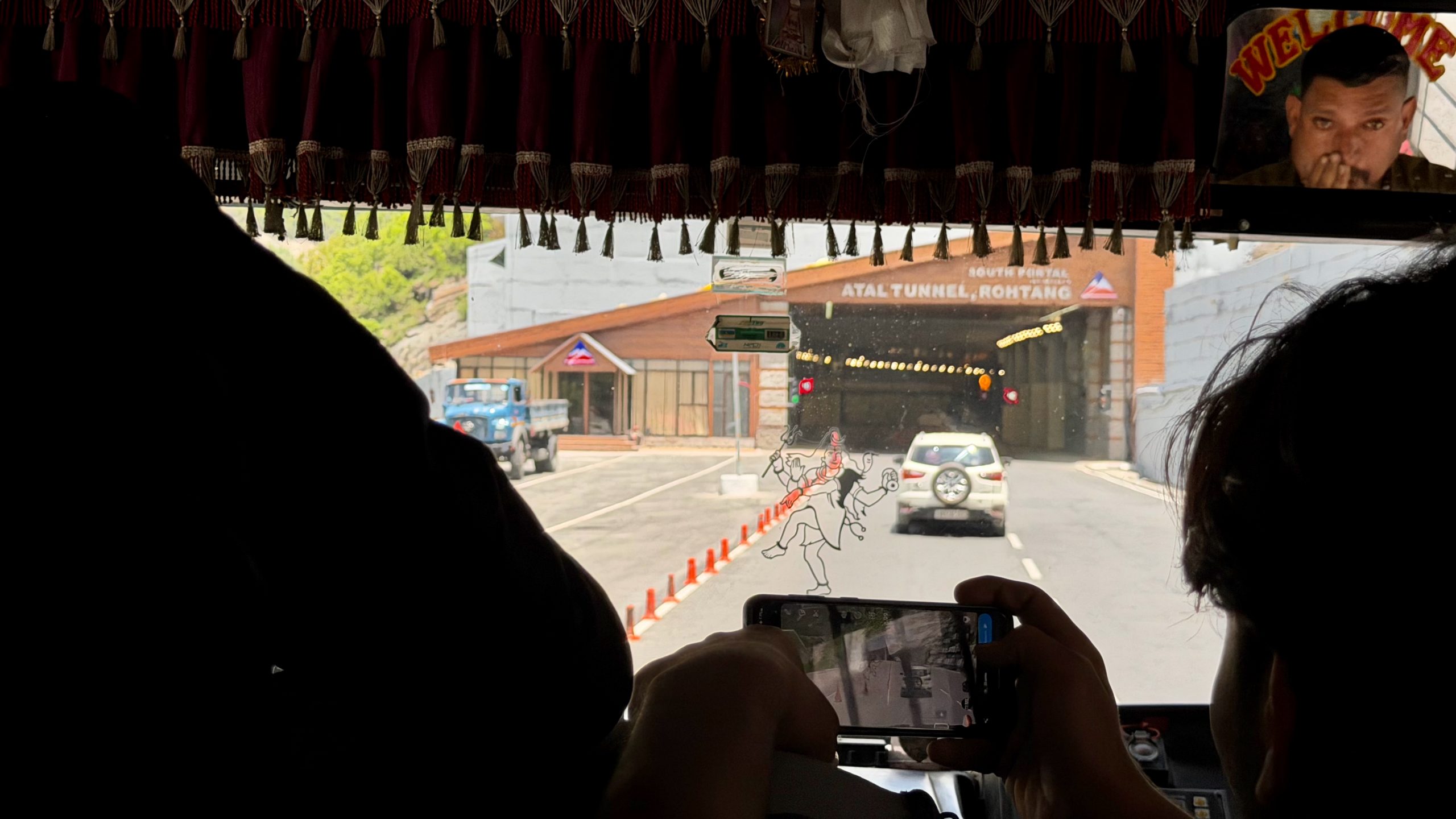
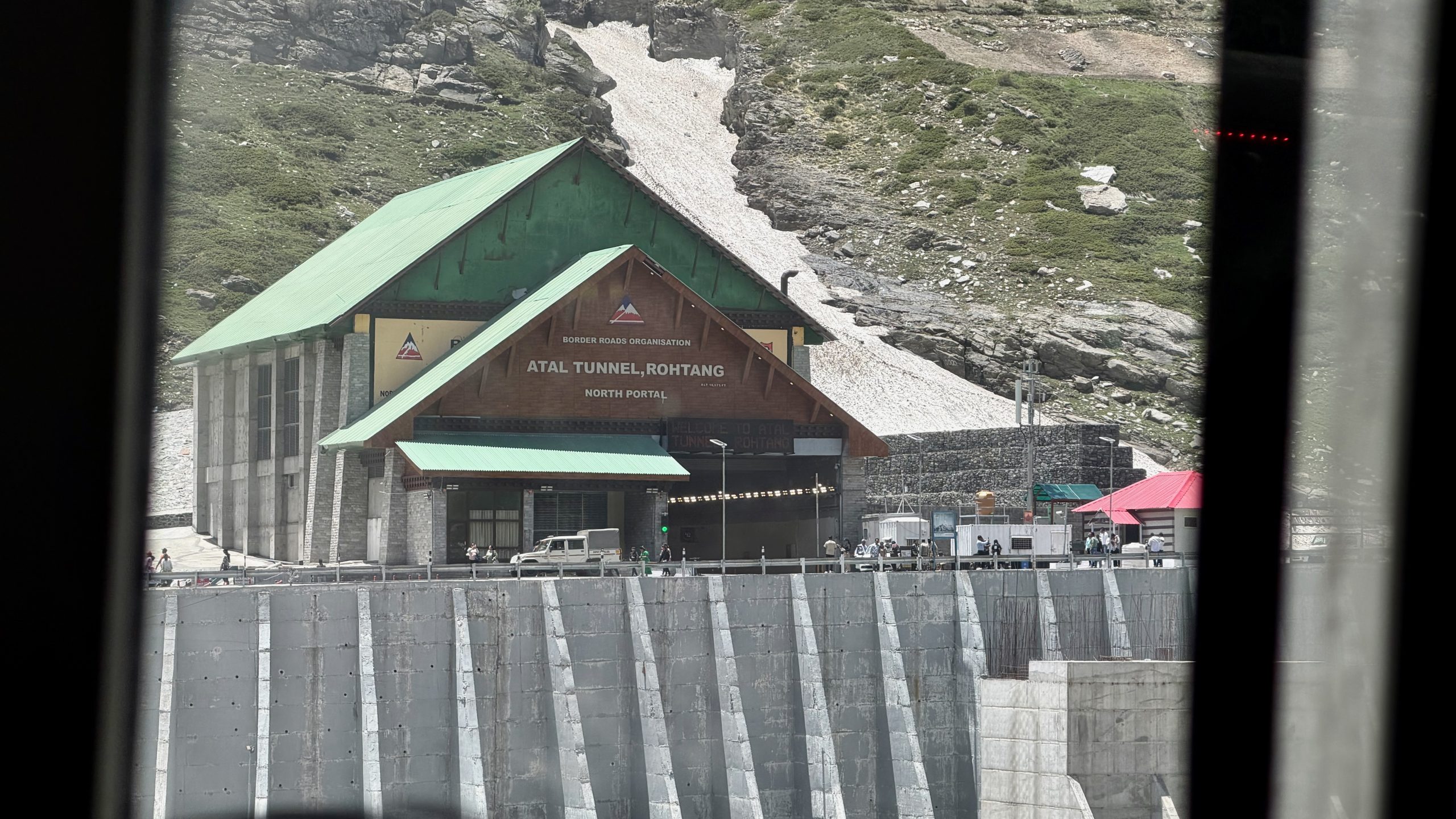
Keylong is the district headquarters of Lahaul. On the way there, you pass a number of villages. When I drove through here in 2024 after returning from the Zanskar trek, I was already quite astonished — see here my Blogpost. Even back then, I had promised myself that one day I would come back and explore the area more slowly and in greater detail. Online, I found a place to stay in Gondhla that was described as warm and welcoming. Unfortunately, I had to relearn once again that expectations often lead to disappointment — it was nowhere near as heartfelt as I had hoped. But this time, at least, I didn’t cry. It all felt a bit strange: I went for lunch at the dhaba next door right away, and even there people seemed more grumpy than cheerful.
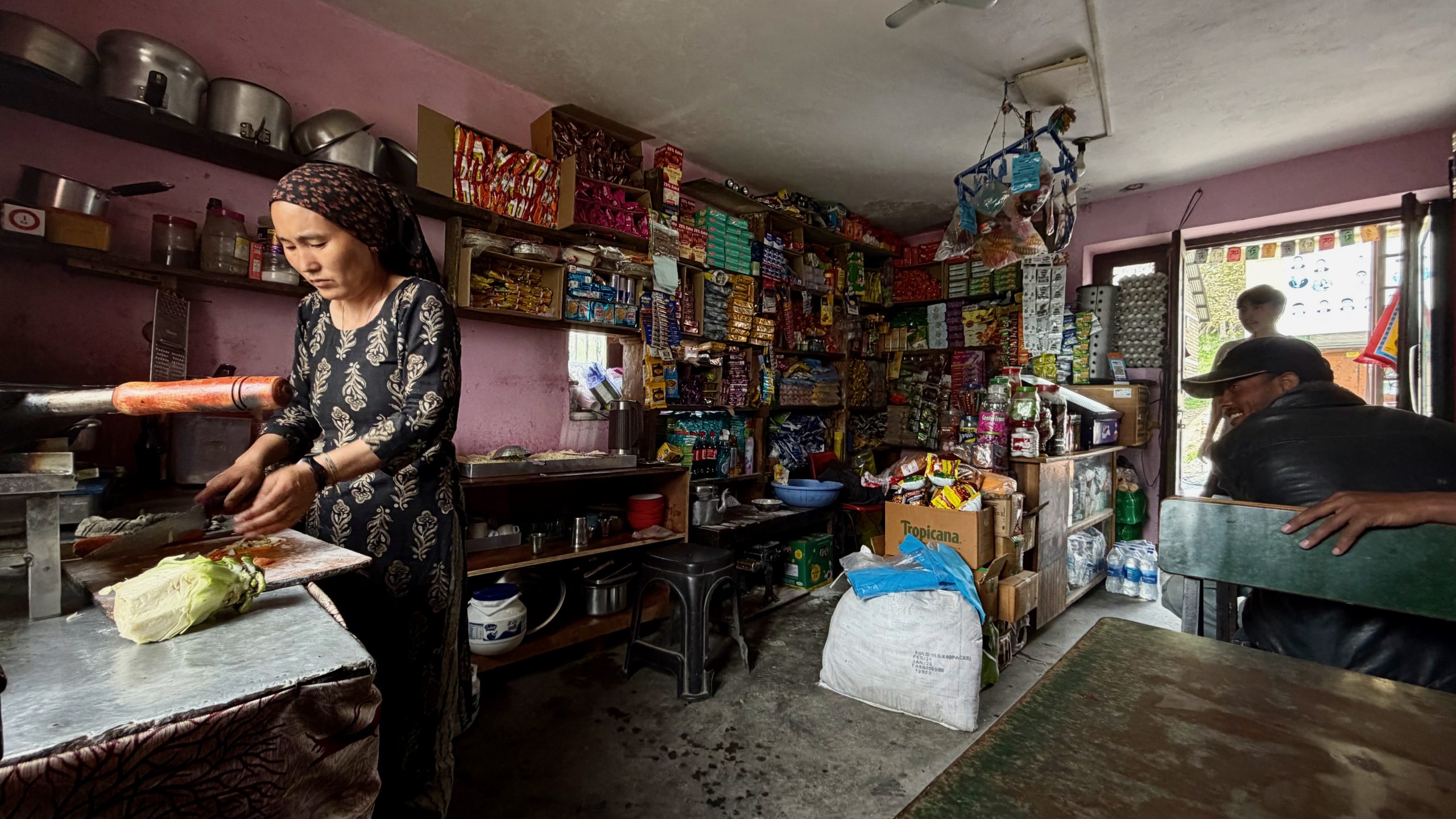
I was now at an altitude of 3,200 metres — perfect for acclimatising! But first, a little bit of context: Lahaul and Spiti used to be two separate regions, which the British later combined administratively. It is the largest district in Himachal Pradesh by area, but very sparsely populated. After coming through the tunnel, you either turn east towards Spiti — or west, where you are already in Lahaul. The two regions are very different, though, and here I’m only writing about Lahaul. The mountain range surrounding this region blocks much of the monsoon, making it far drier than the Manali side. At the same time, it also marks something of a religious divide, with Buddhism being the dominant religion here. Still, there is also a noticeable Hindu presence — for example, the people at the place where I stayed had Hindu names, but in the living room there were posters of both Shiva and Buddha.
I wandered through Gondhla. Around 300 people live here, mostly making a living from farming and livestock — and nowadays increasingly from accommodation for travellers. There is also one major sight: Gondhla Fort, strikingly and impressively located above the village. You can go inside, but on the ground floor there was not all that much to see apart from beautifully carved wooden doorframes. You could also climb further up, but that felt a bit too adventurous for me. A little bit of a pity, really.
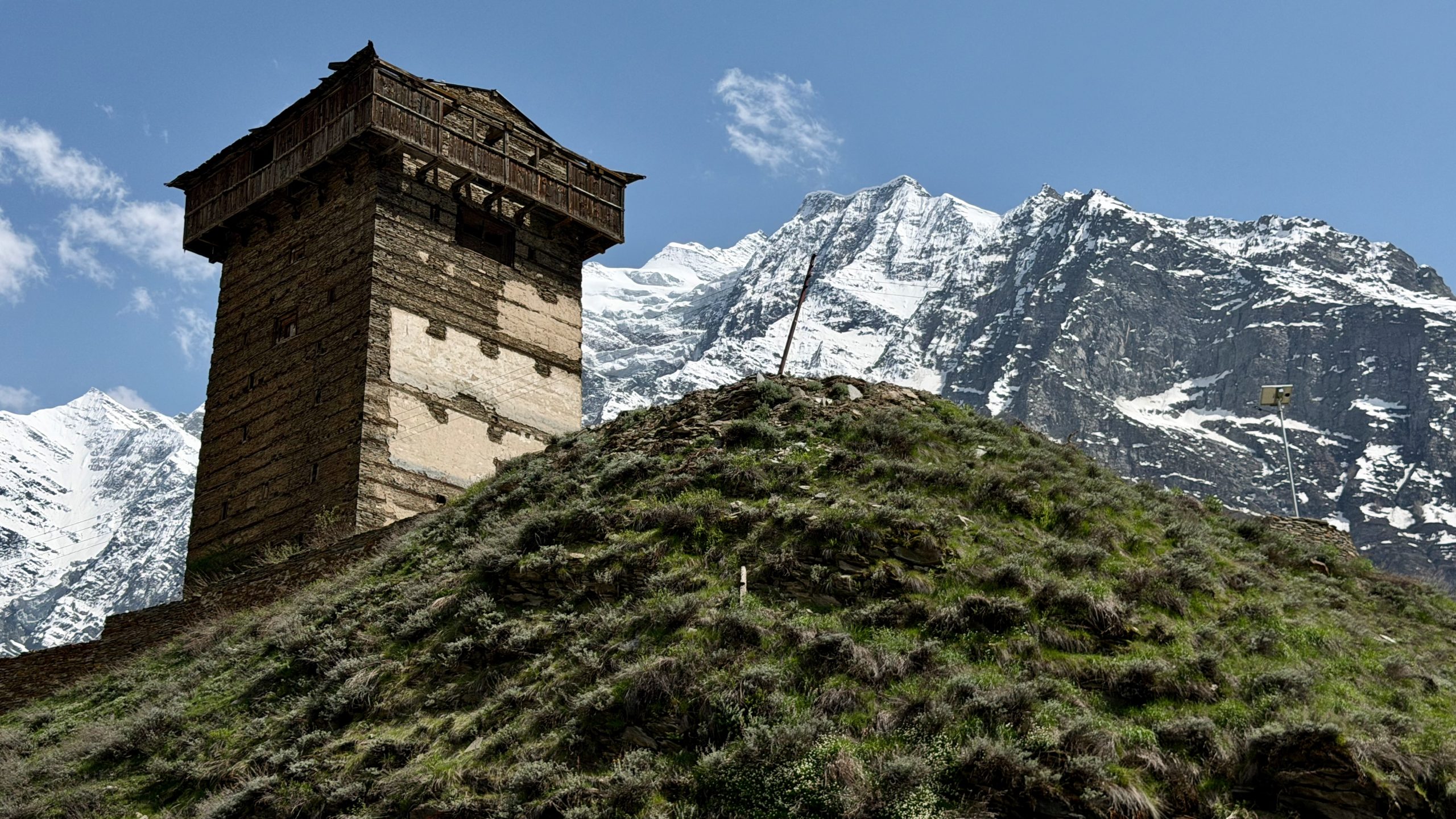
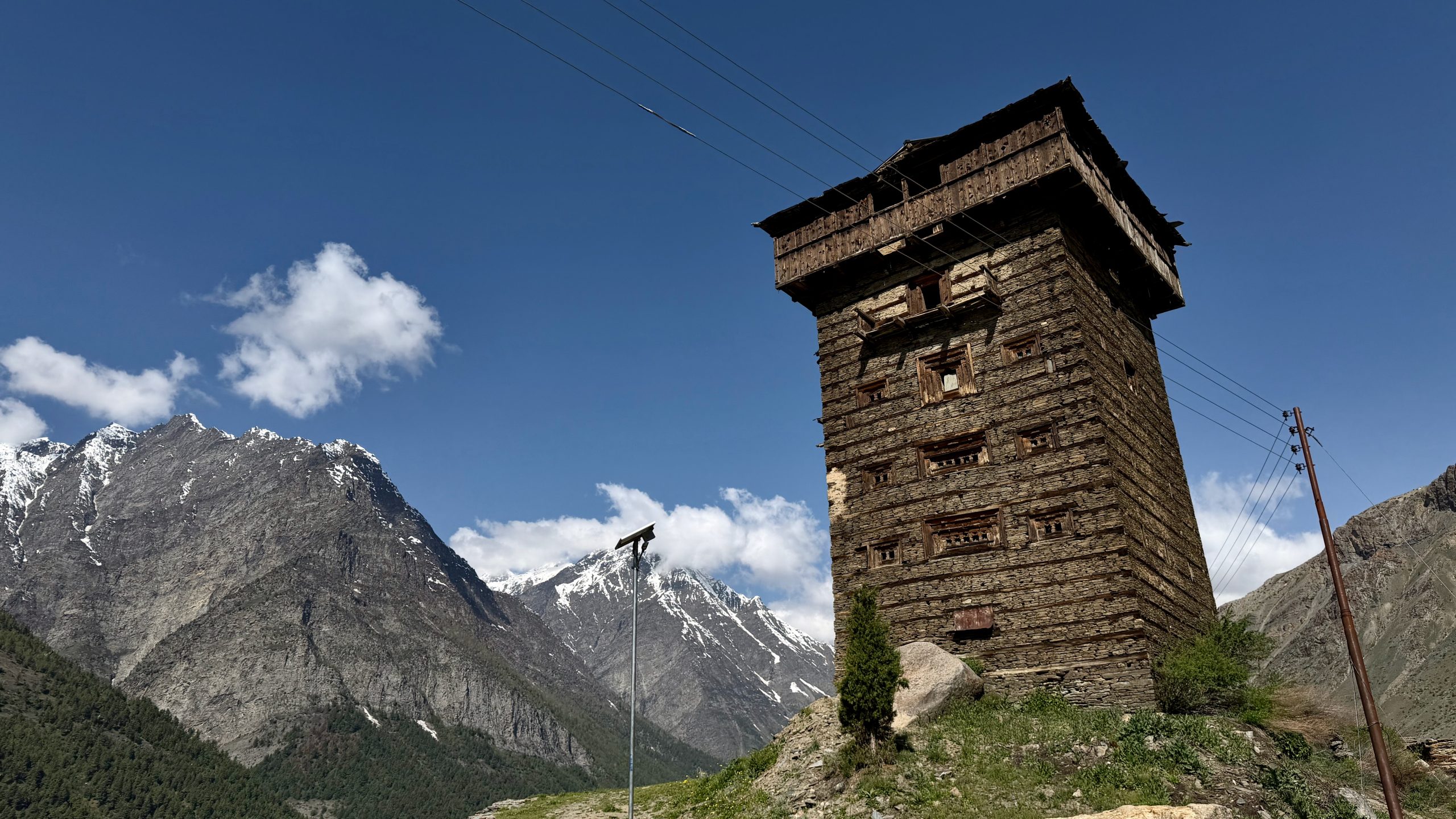
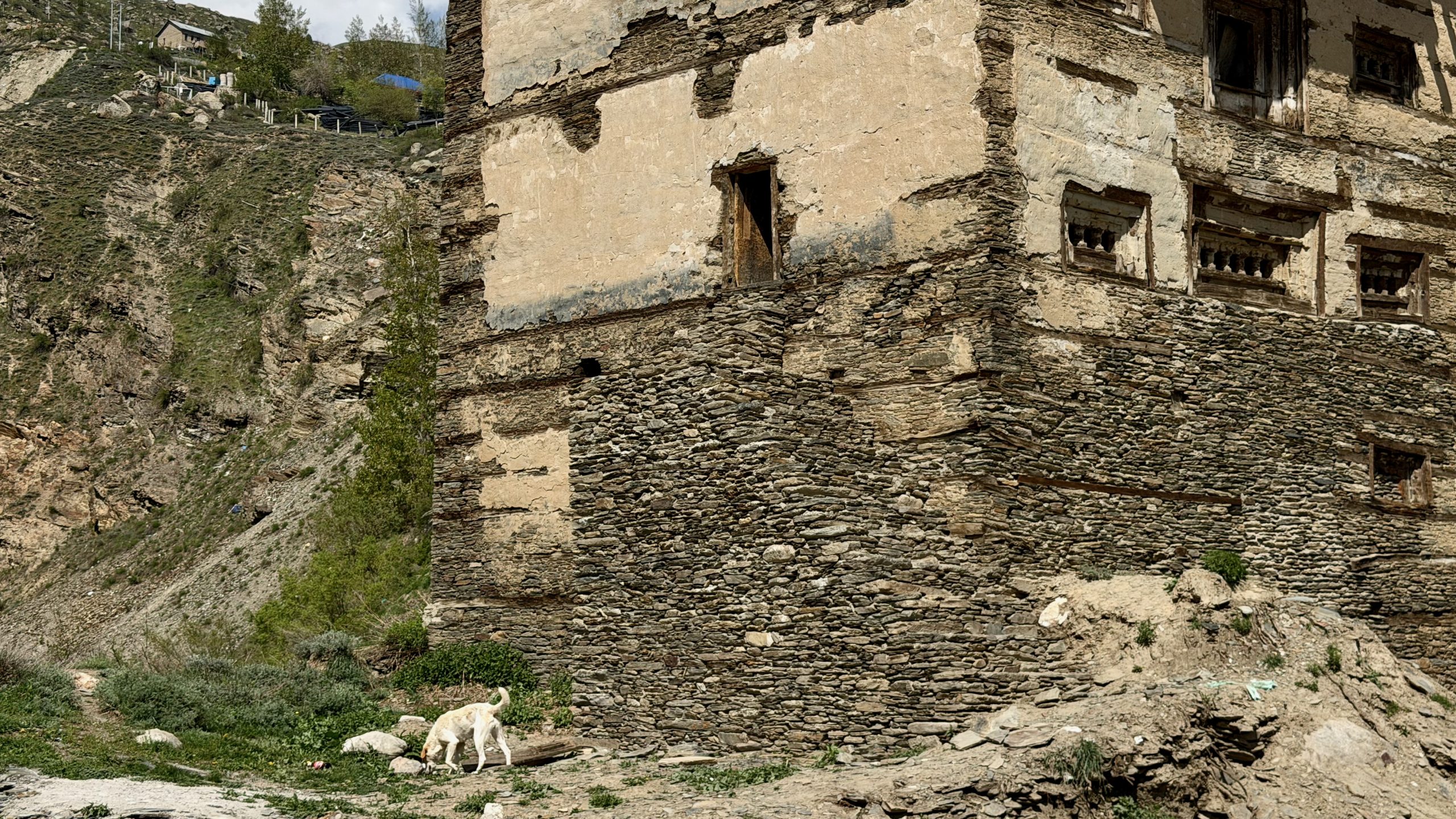
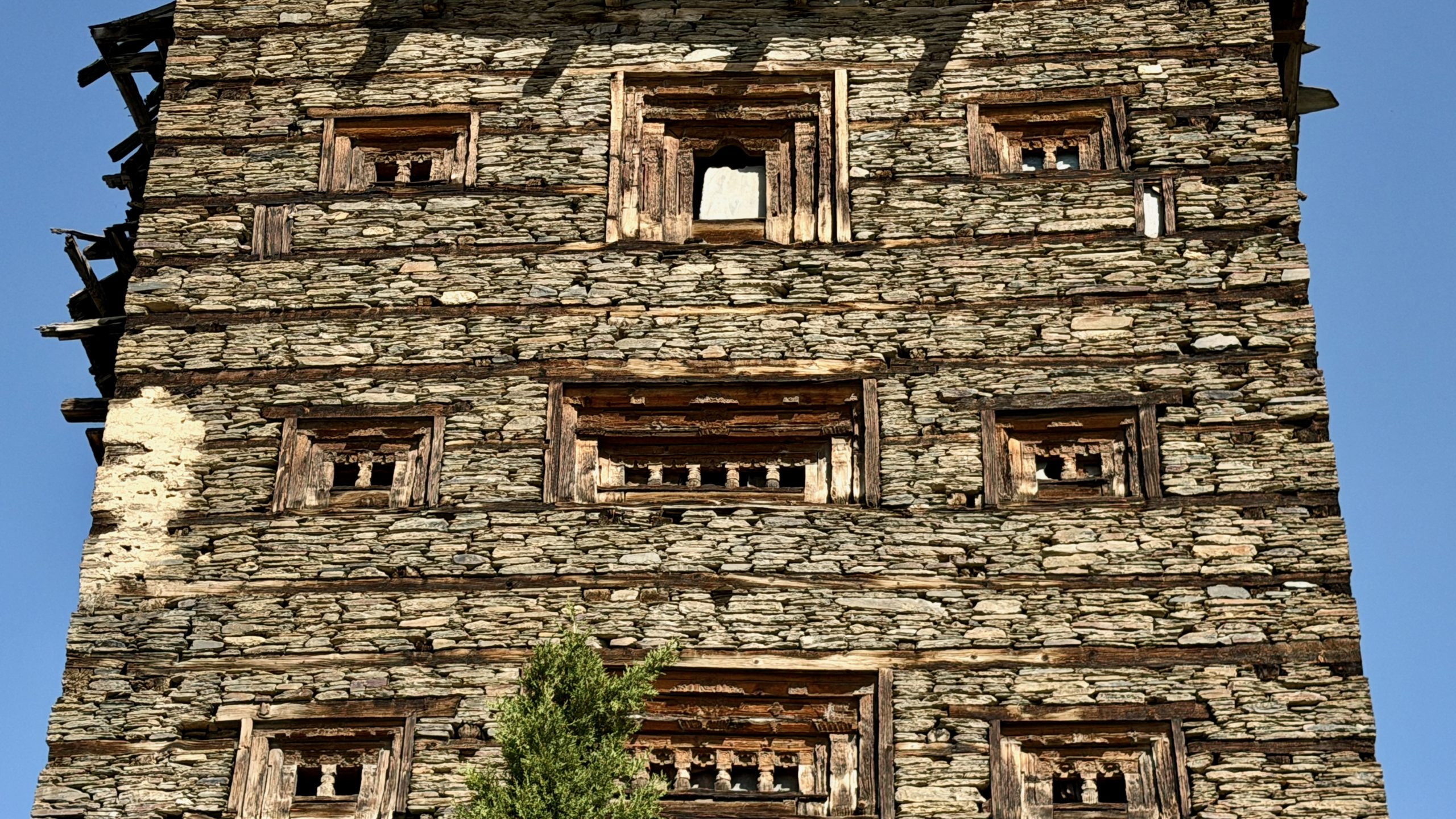
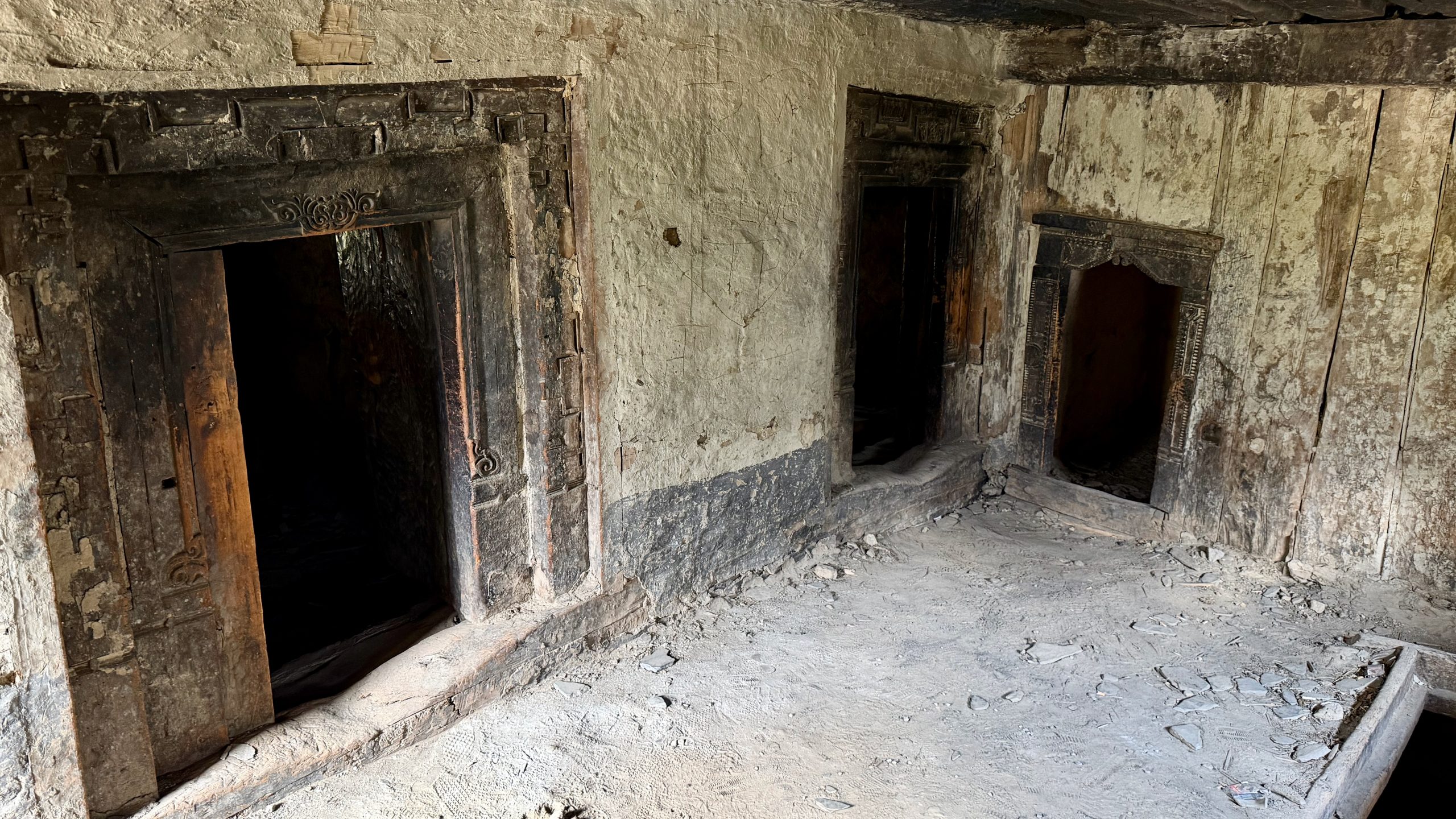
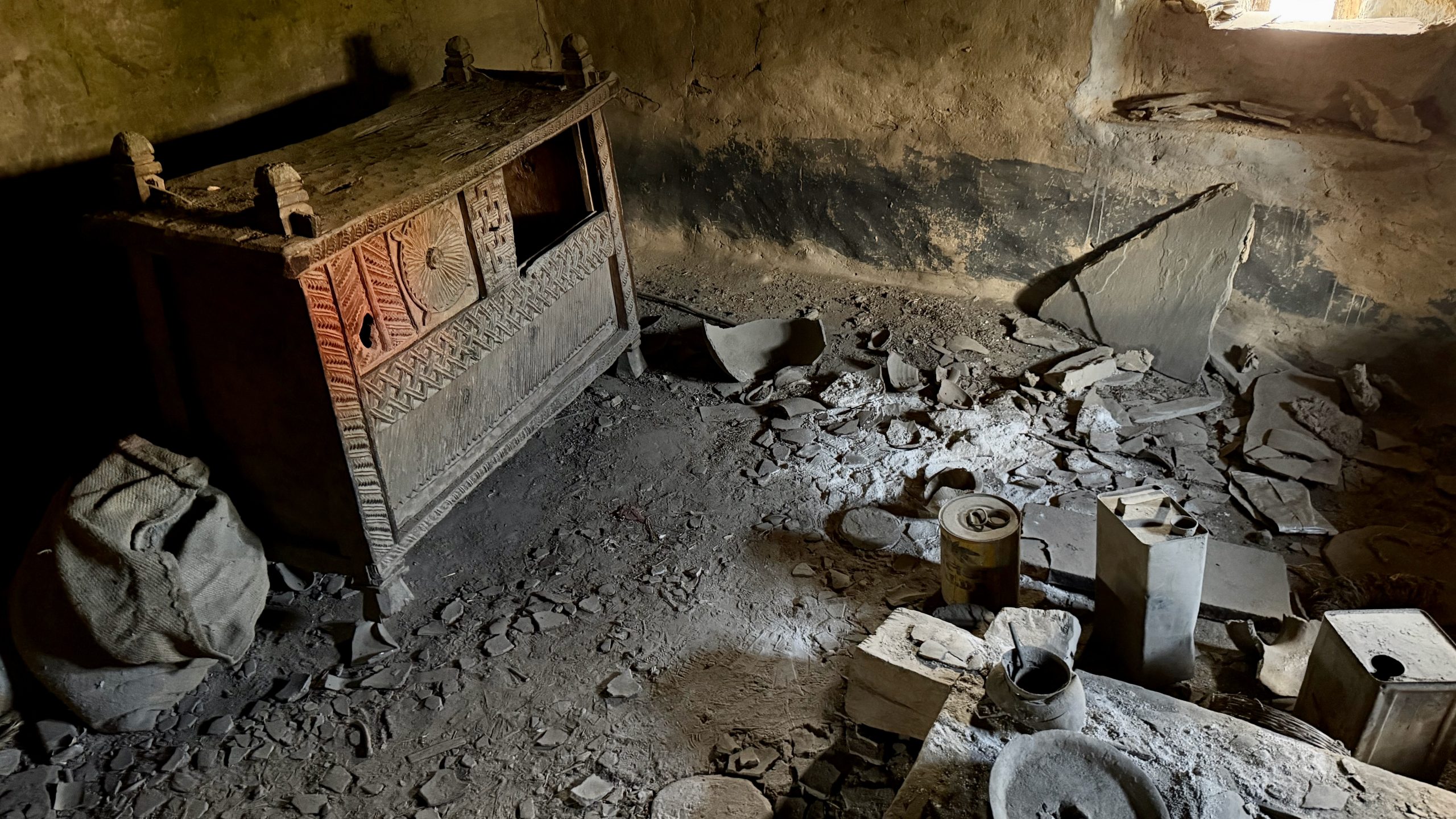
There are two versions about the building of the fort. According to one version of the story, the ruler of Kullu had the fort built around 1700 after marrying the daughter of the local Thakur. Another local tradition, however, claims that the fort is much older and was built by Thakur Rattan Pal, who is said to have come to Lahaul from the Kangra region and taken power there. In any case, the fort was abandoned as a residence during the 20th century.
Apart from that, what struck me most about the place was its plainness. While many Himalayan villages have beautiful houses, little gardens, or other touches that make them feel charming and cared for, there was very little of that here. There were also hardly any people around — and the few I did see did not smile at me either. I was surprised.
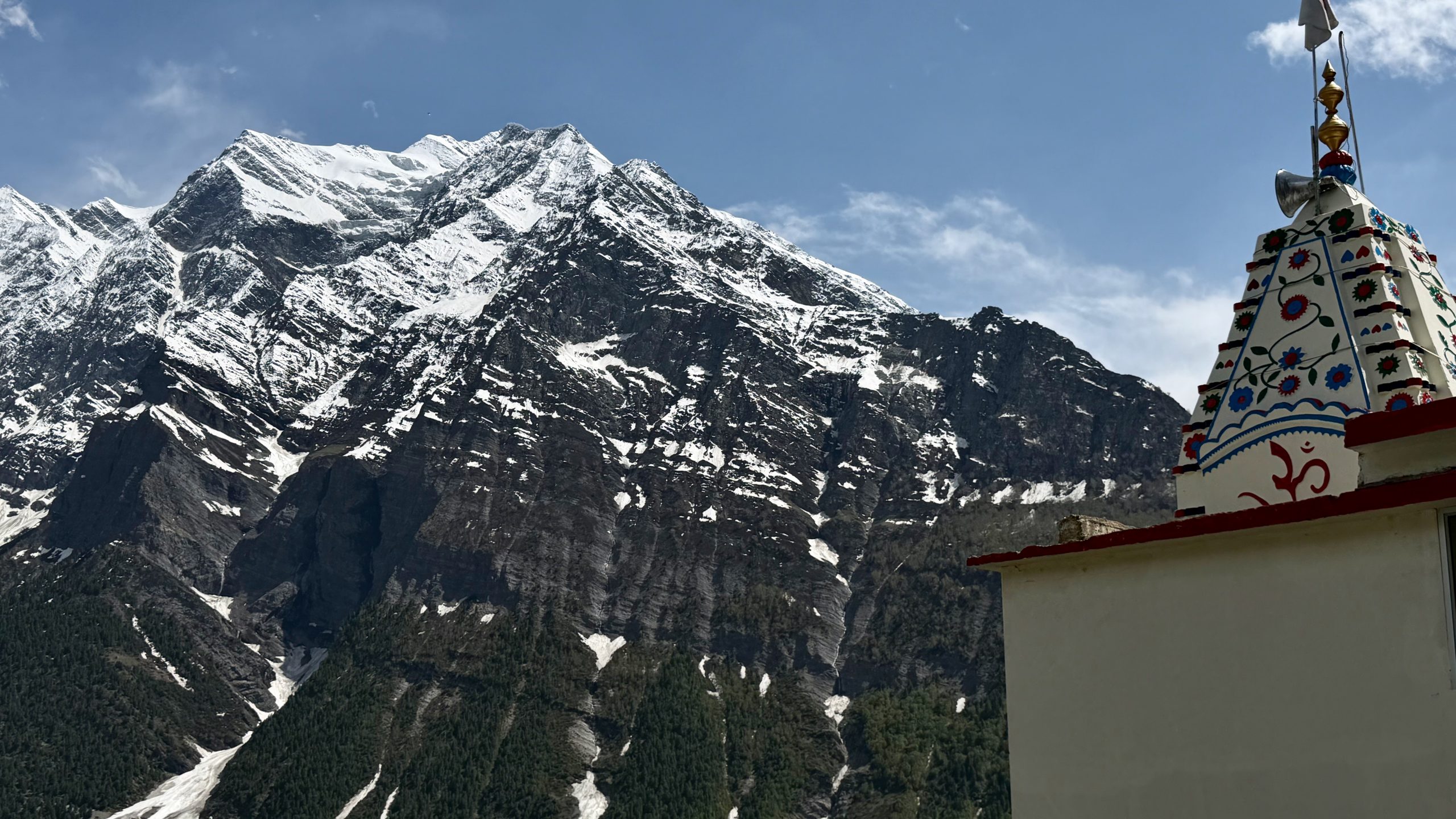
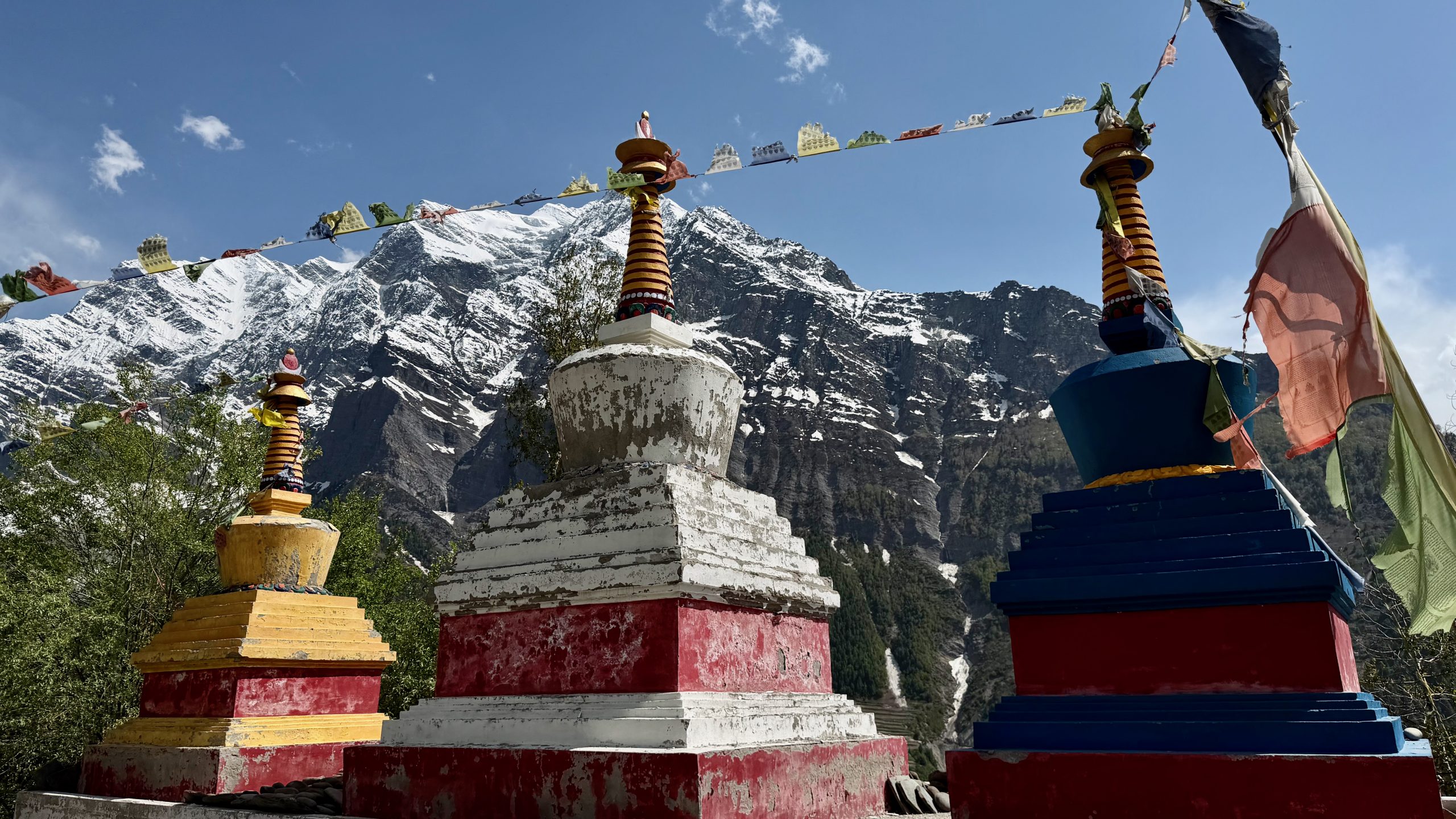
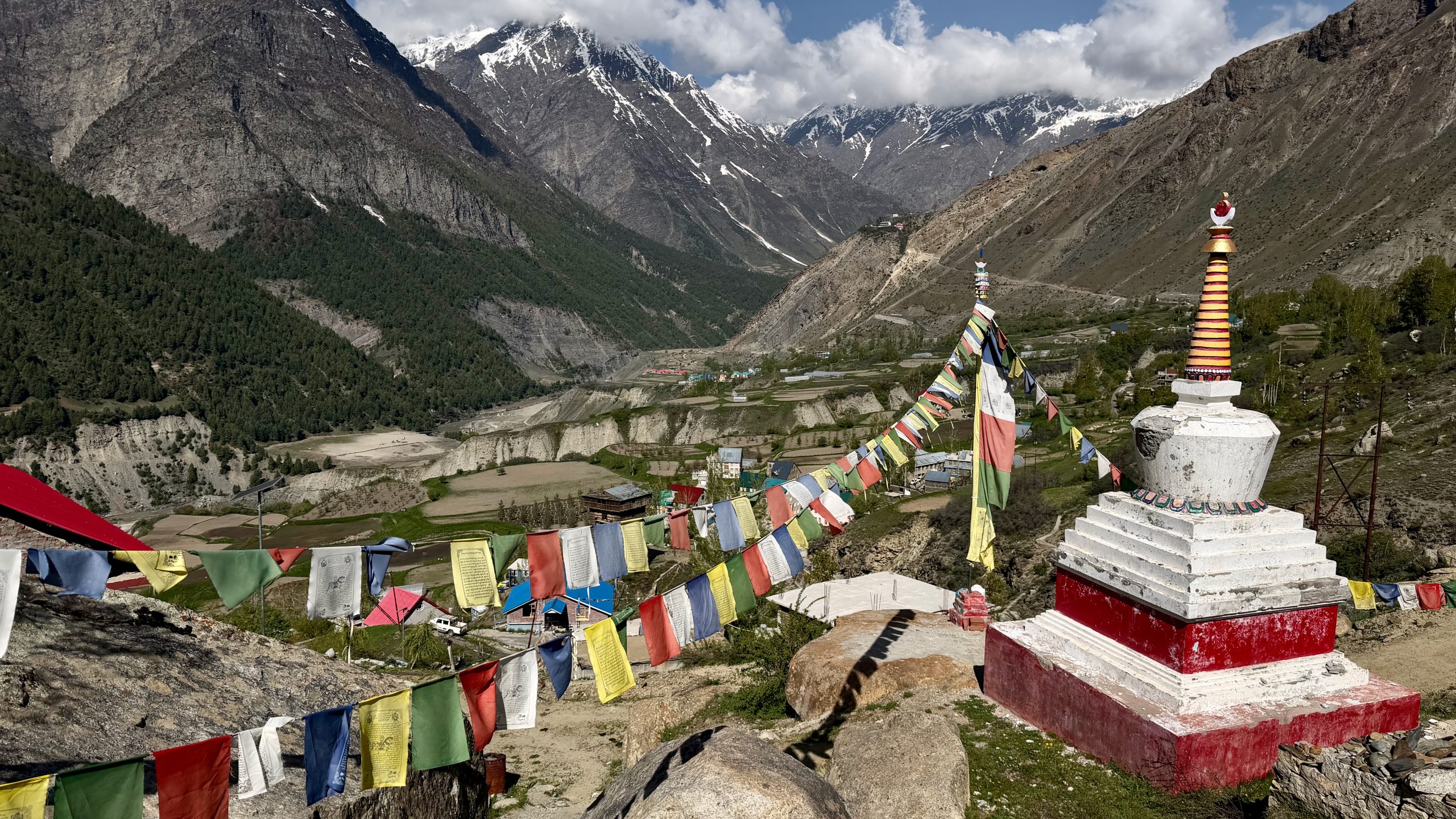
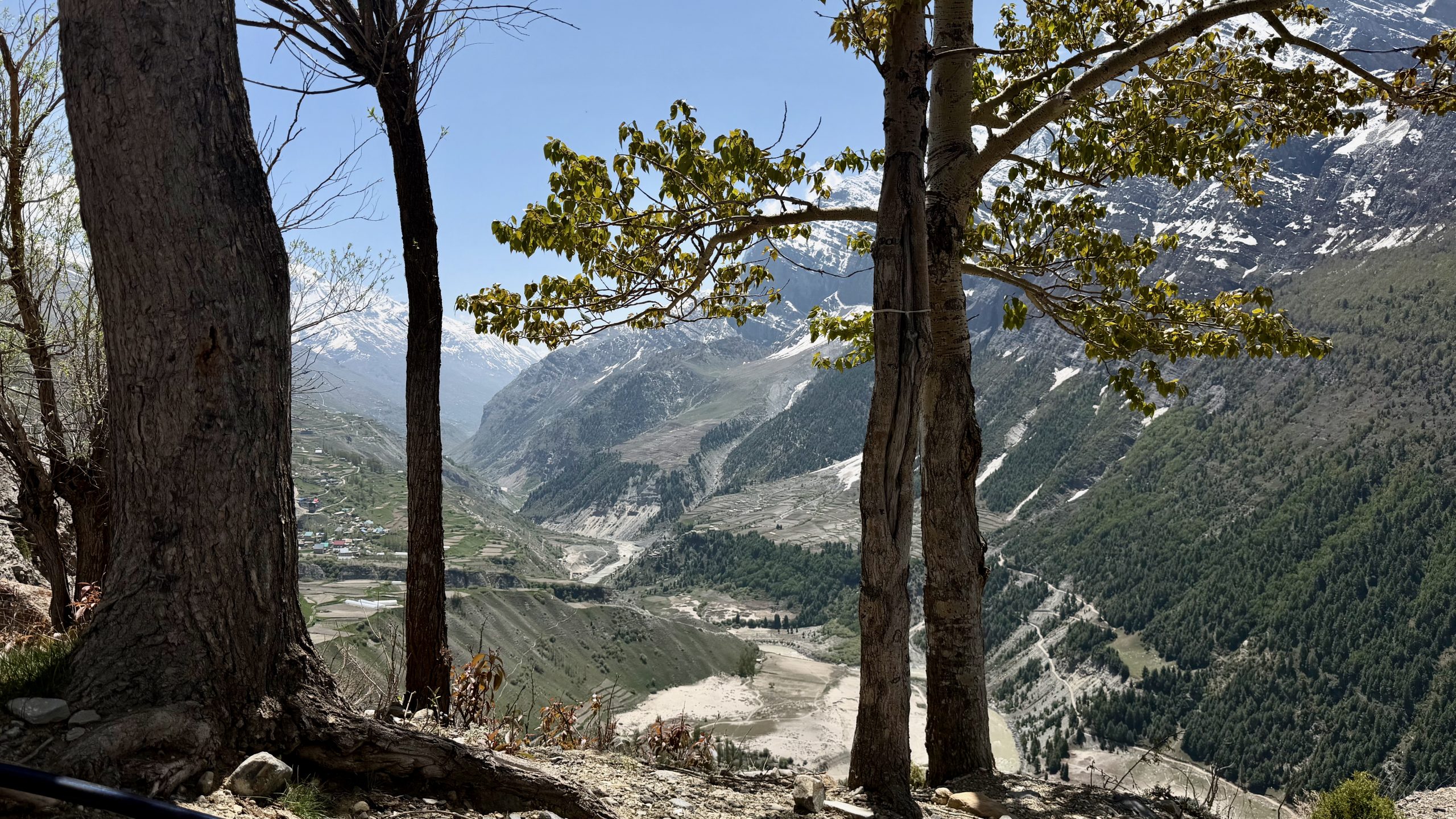
But the landscape was magnificent, and the next day definitely turned out better. From my window, I had this view:
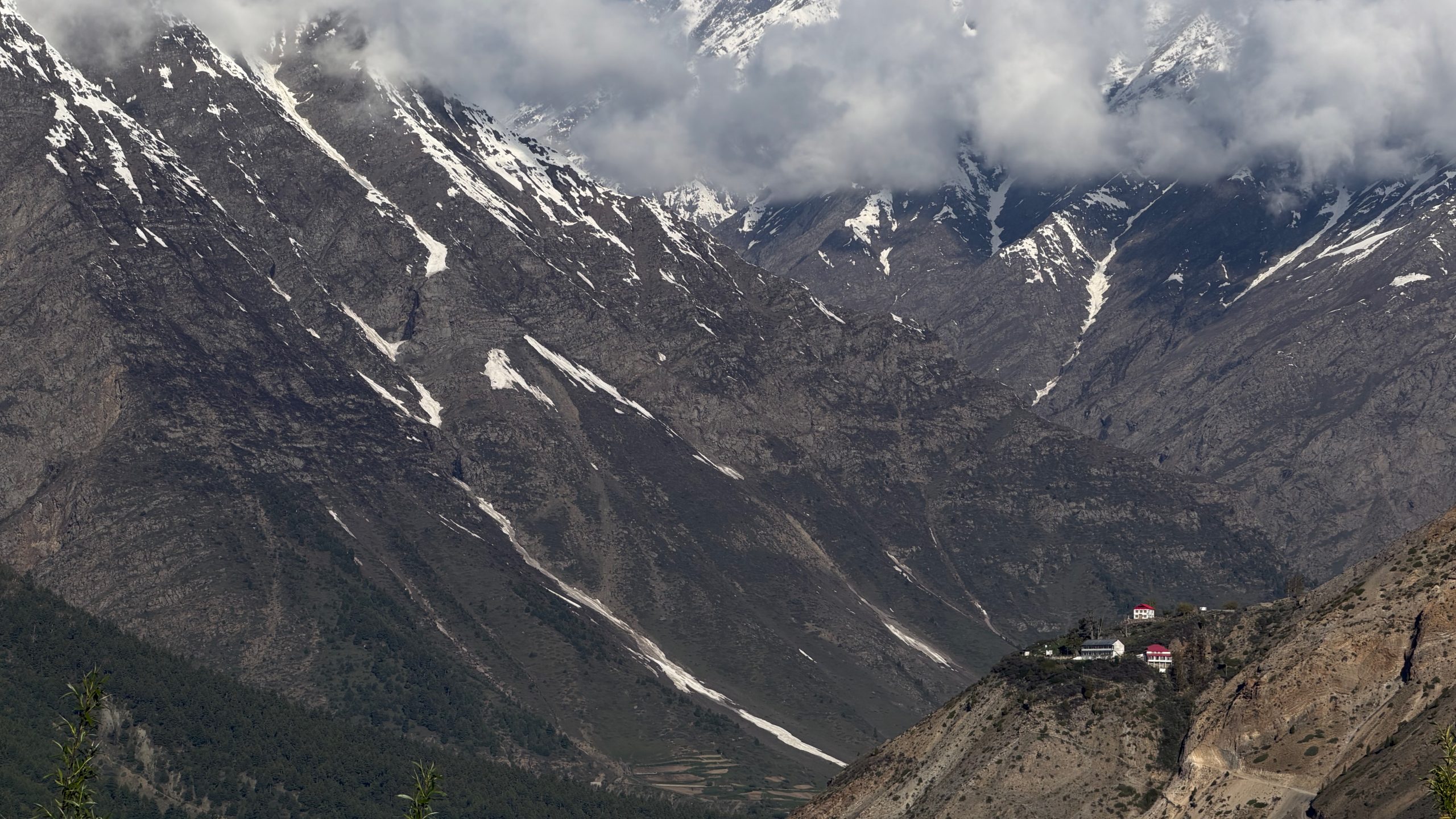
This is Sila Nunnery, and I walked there. It was quite an exciting little excursion. A small gravel road leads part of the way — and then you have to climb the rest along a steep and narrow path.
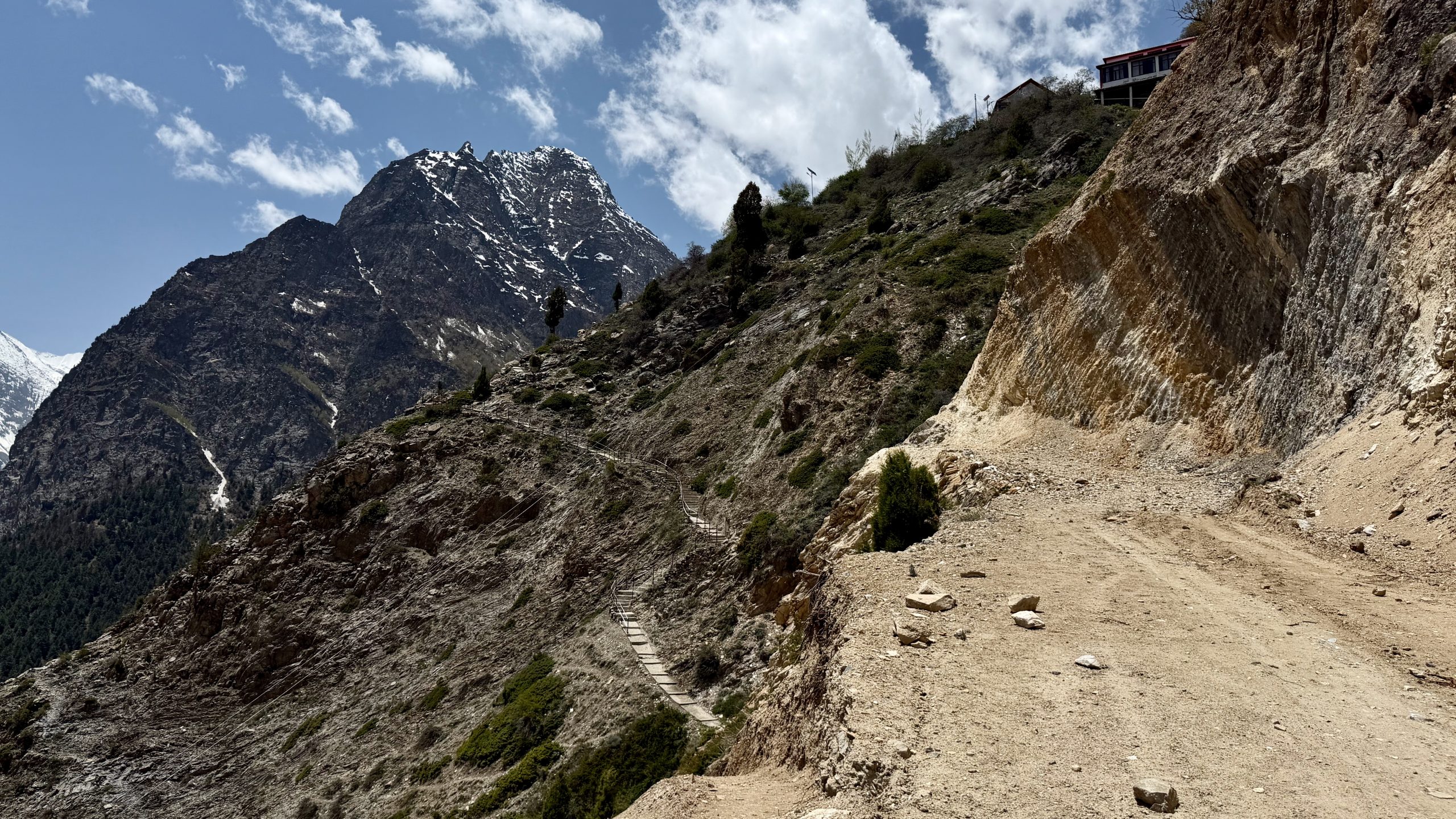
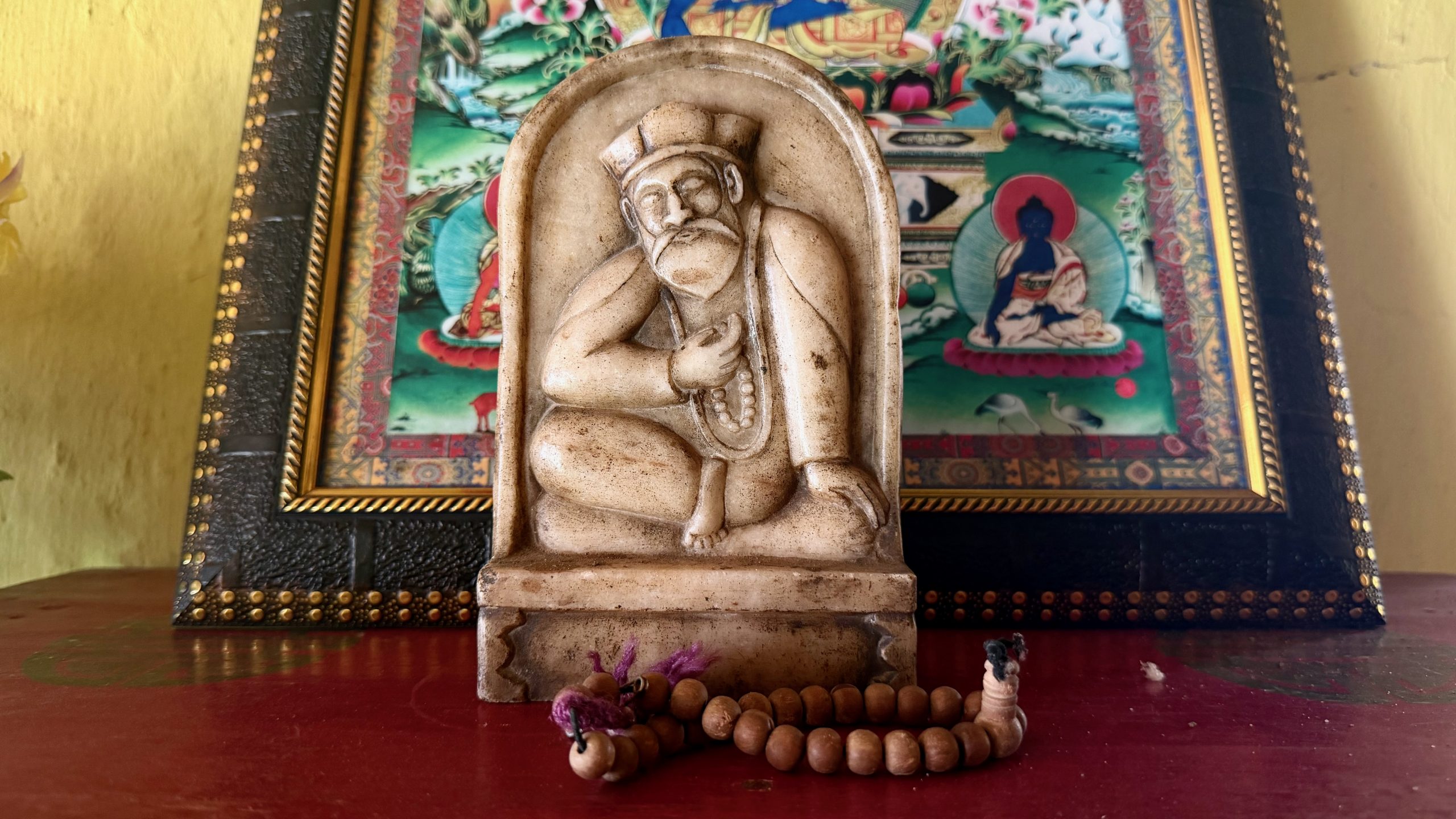
And at the top, I was surprised to find a handful of nuns. They belong to the Gyalwang Drukpa order and spend every summer here. In winter, they either stay down in the village or go to Nepal for further studies. They immediately brought me a glass of water, later even some juice, and I was also invited to stay for lunch — though it was still a bit too early for me, and somehow I declined. Instead, I looked around and enjoyed the landscape, the silence, and the view.
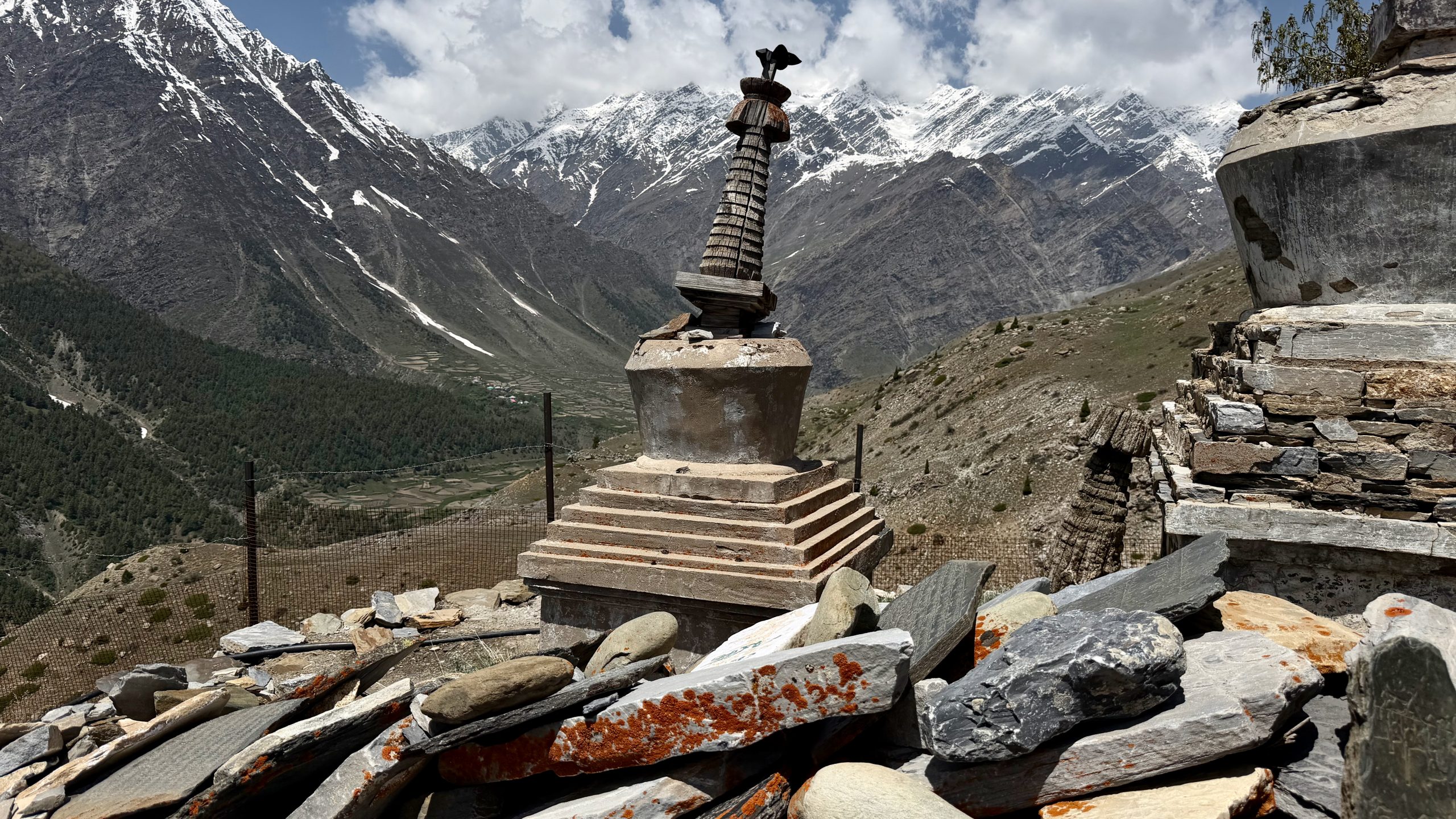
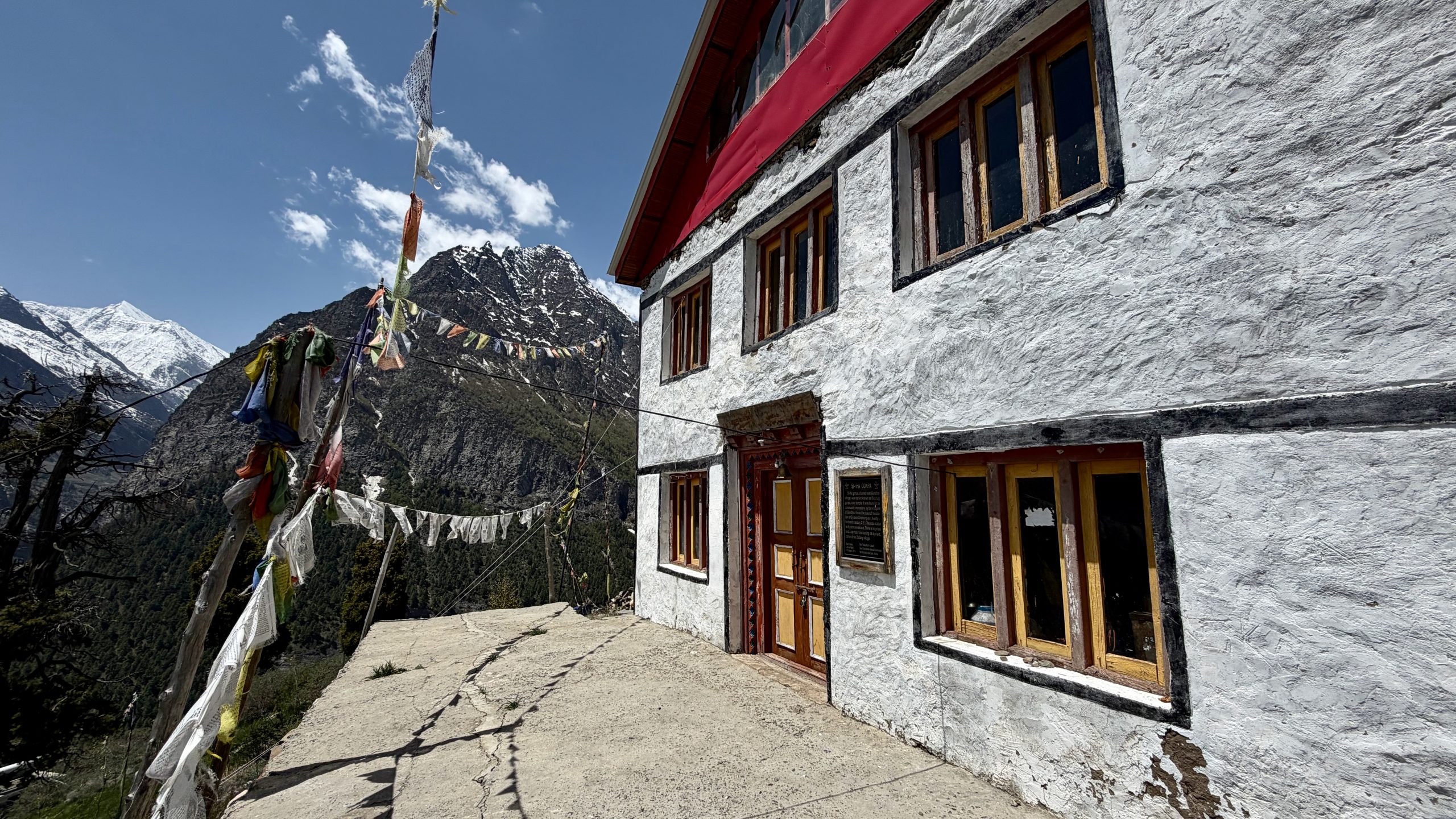
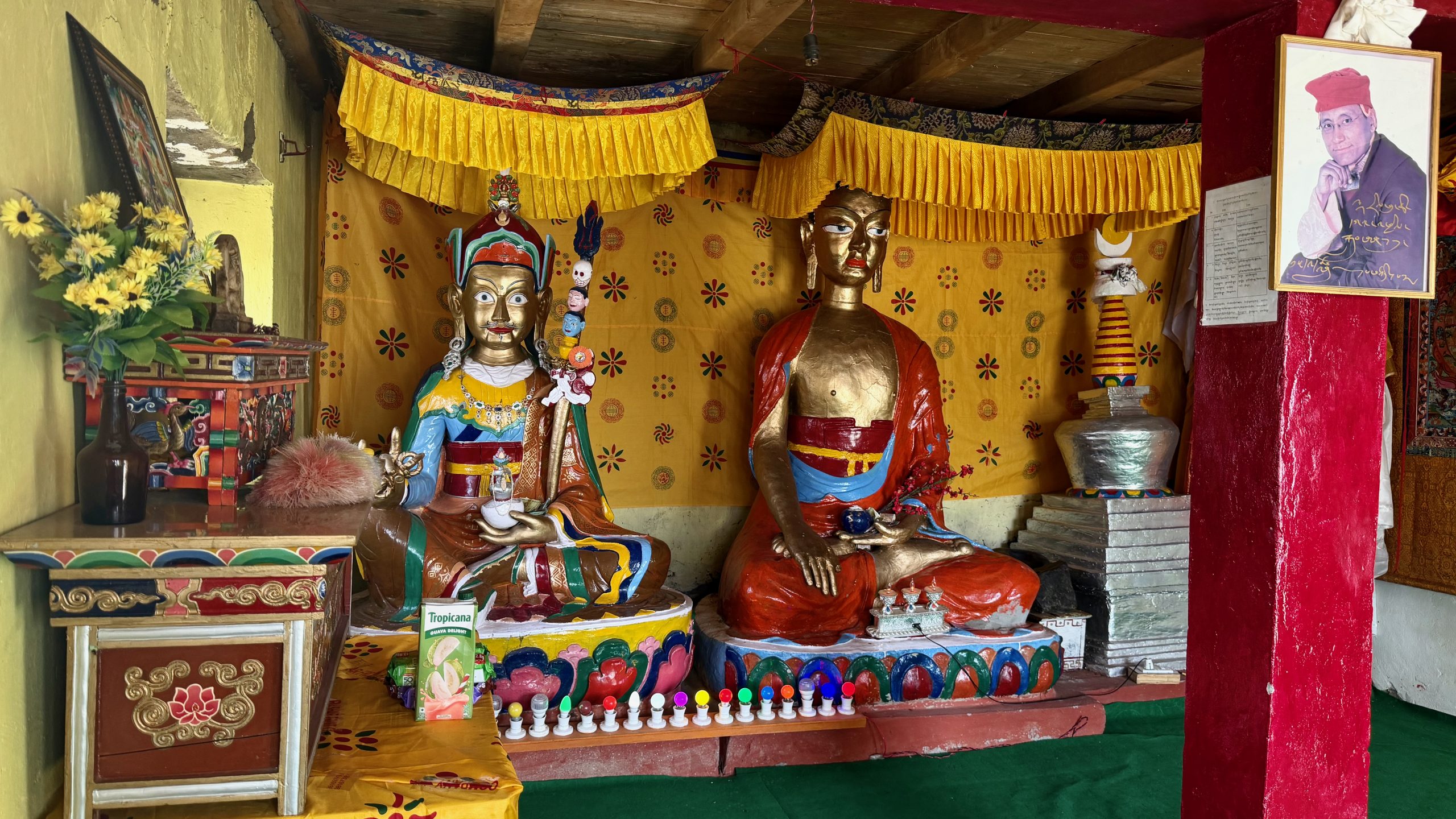
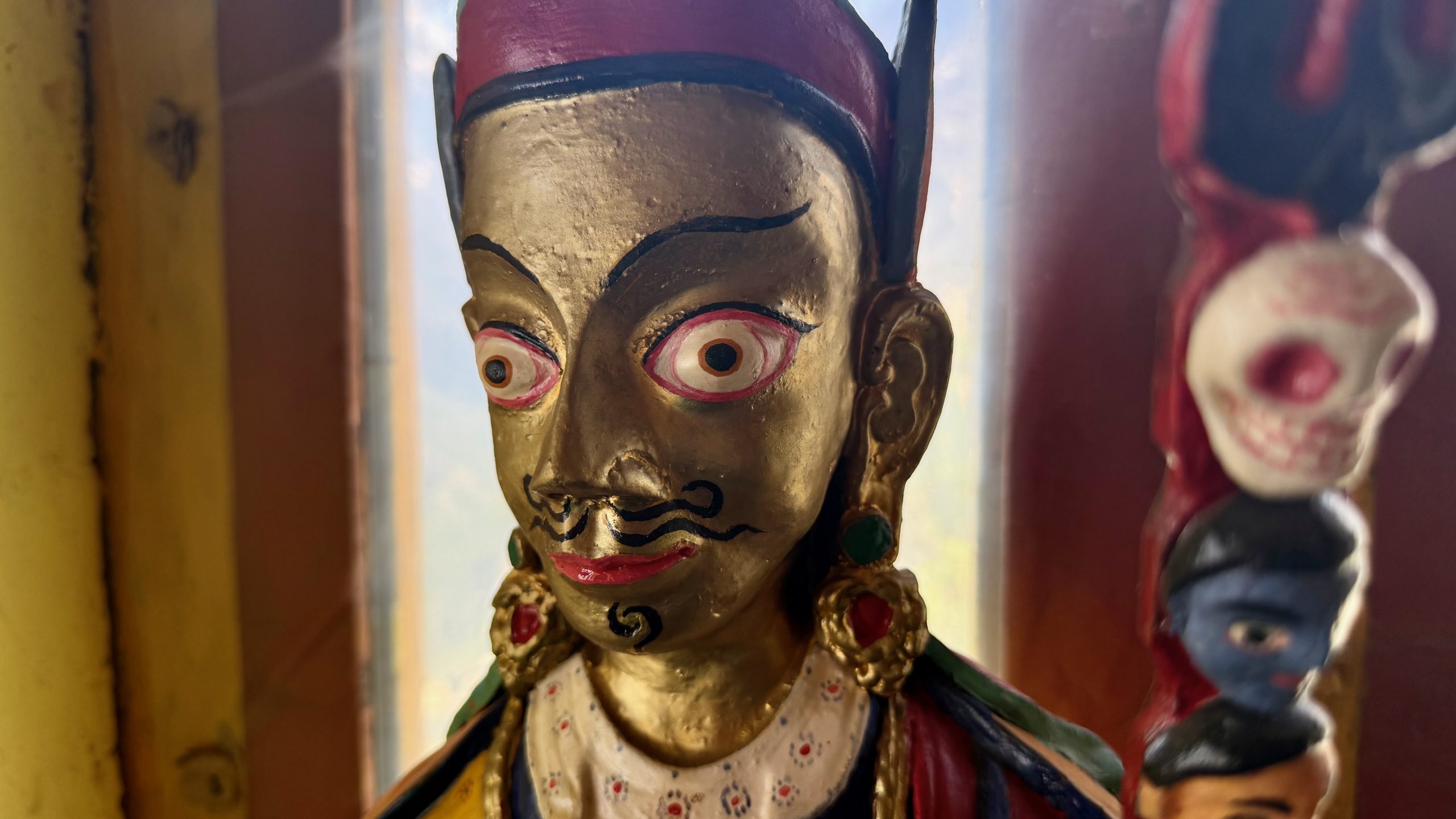
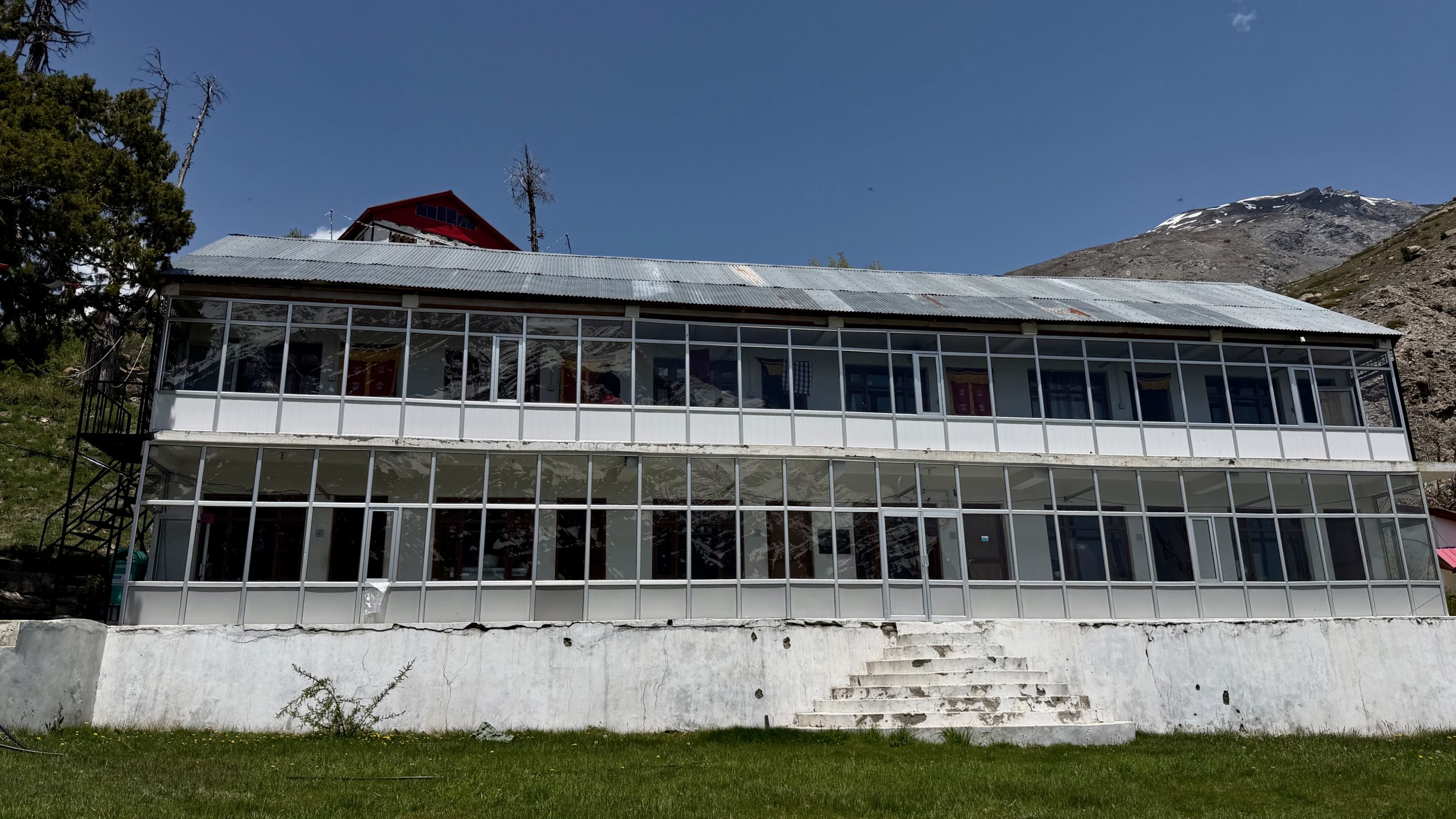
This is where the nuns live — there is solar power, water, mobile reception — and at least in good weather, it is a very idyllic place. One of the nuns spoke English and chatted with me. Tashi Dolkar is 37 years old (I would have guessed she was in her early twenties) and comes from the Miyar Valley. It was there, during her youth, that she decided she wanted to become a nun.
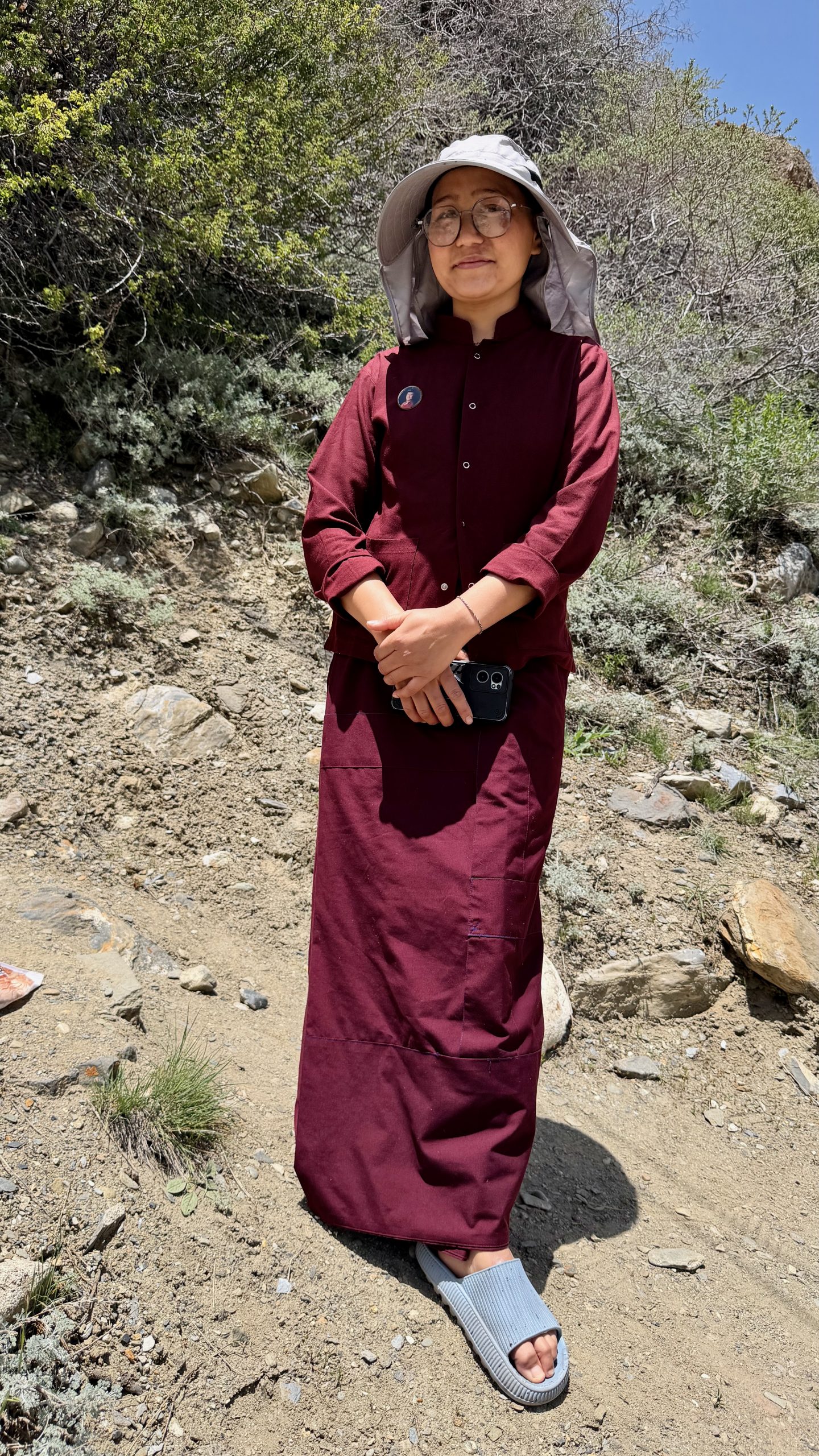
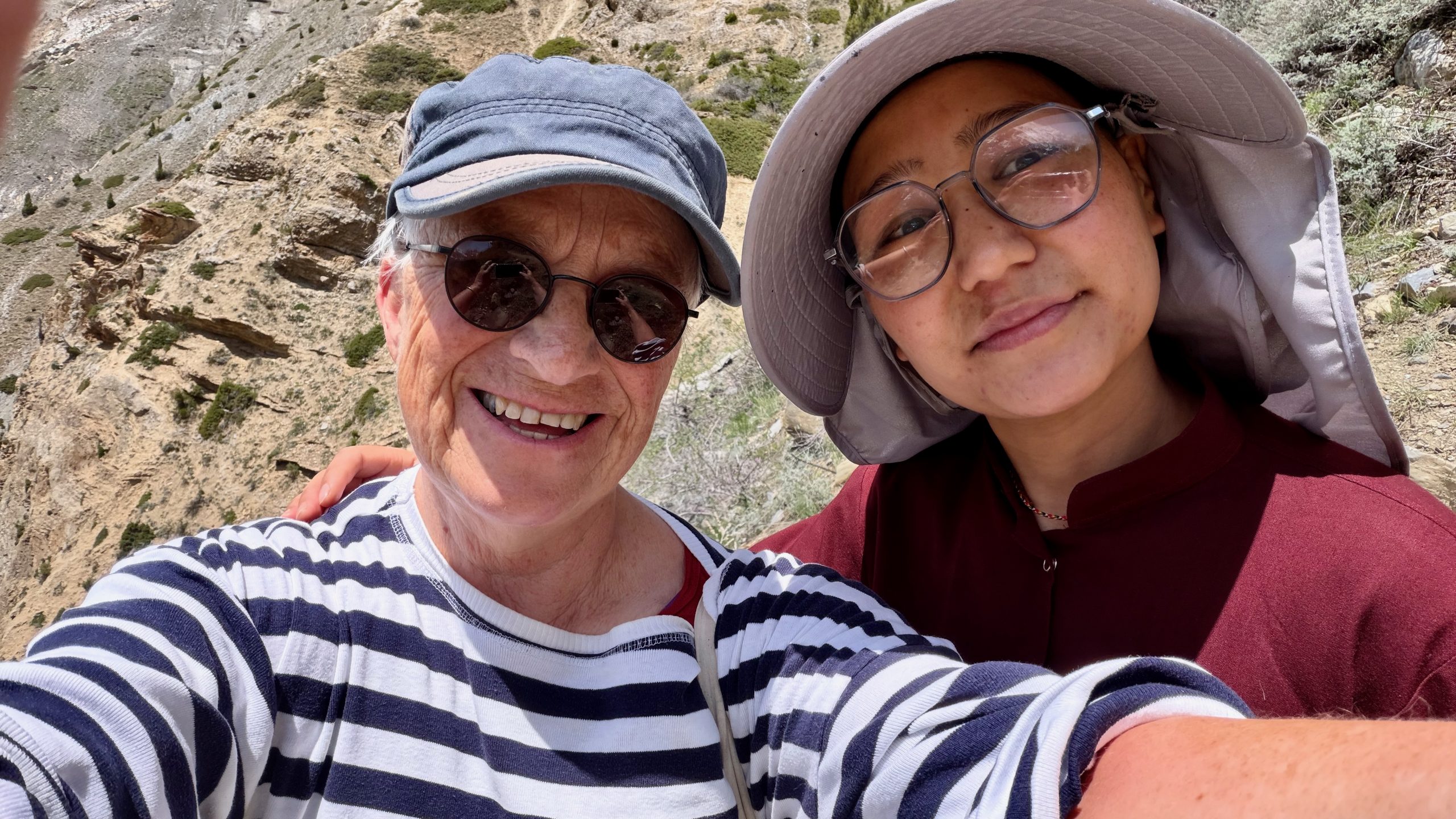
At some point she suddenly had to rush off because someone had arrived on a motorcycle to deliver supplies that she needed to collect. They had coordinated everything by mobile phone. Quite fascinating, really. On the one hand, the place feels completely remote — and yet at the same time still connected to the world. Visitors come very, very rarely. I honestly think it is worth taking the time for both places — the fort as well as the nunnery.
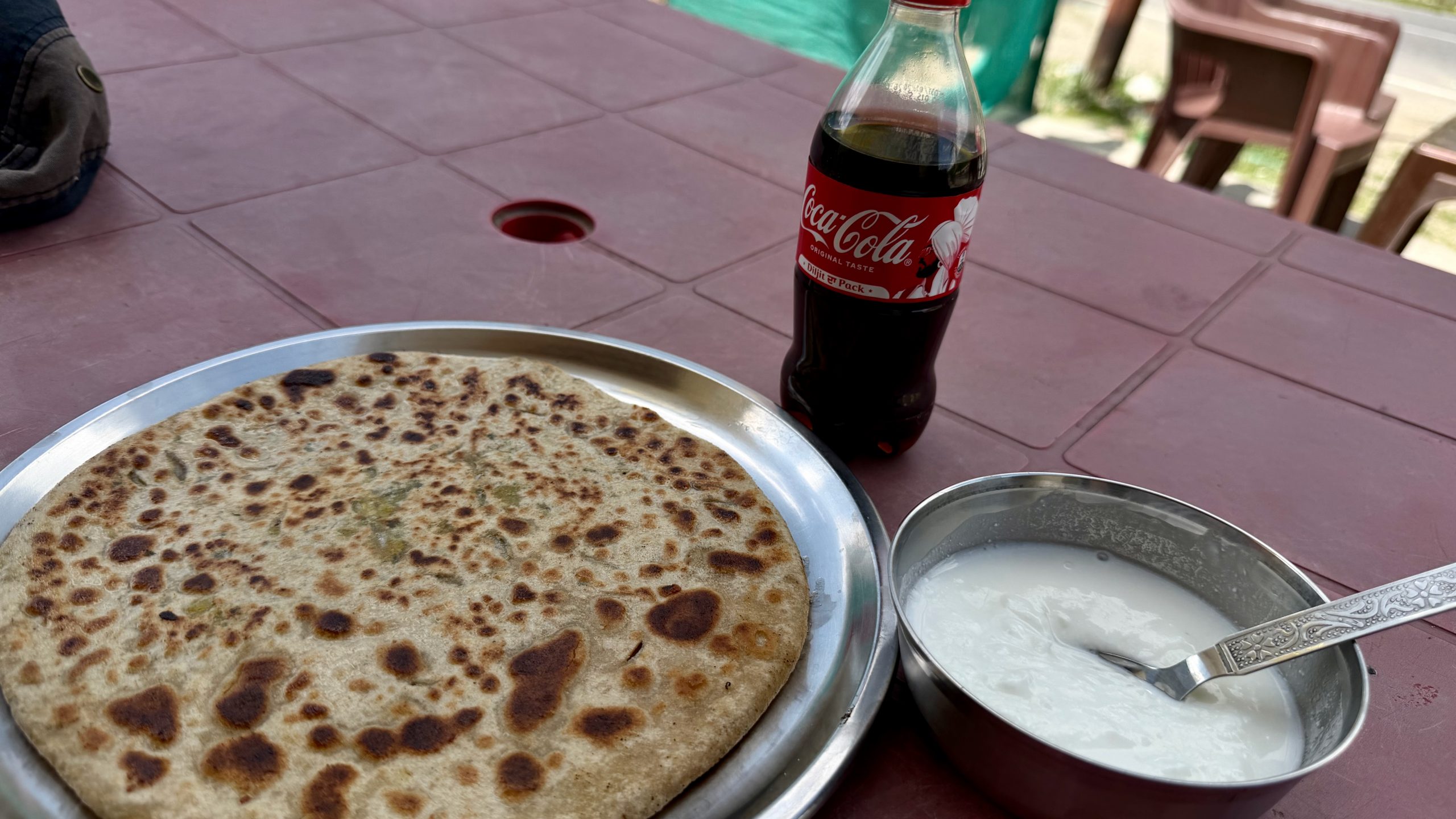
Then I walked back down, crossed through the village, and came out again at the main road on the other side, where I had lunch with a friendly woman whom I unfortunately did not photograph — only my food. One of the most delicious aloo parathas I’ve had! She has been running this small restaurant for two years now, and she also has a homestay.
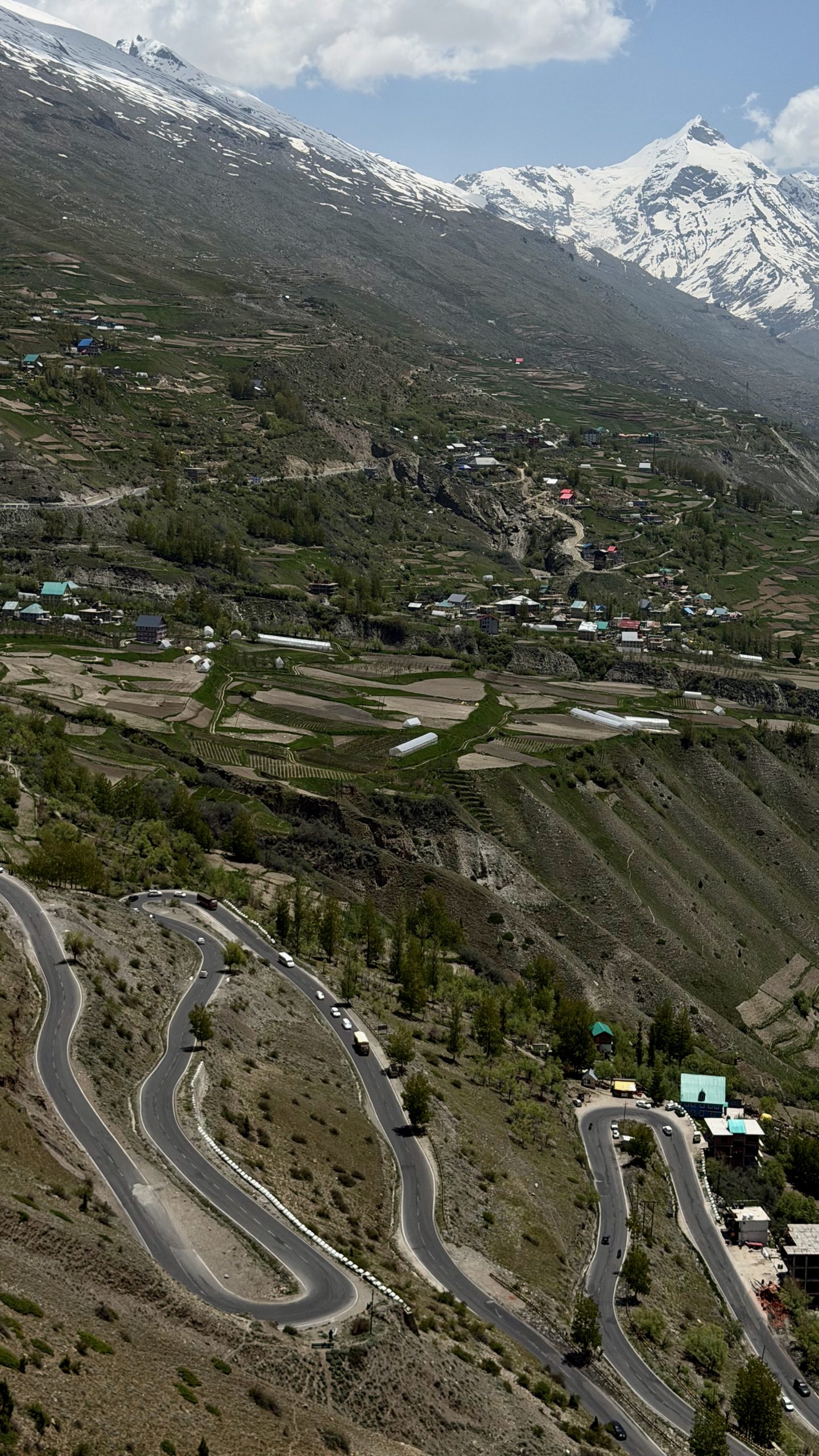
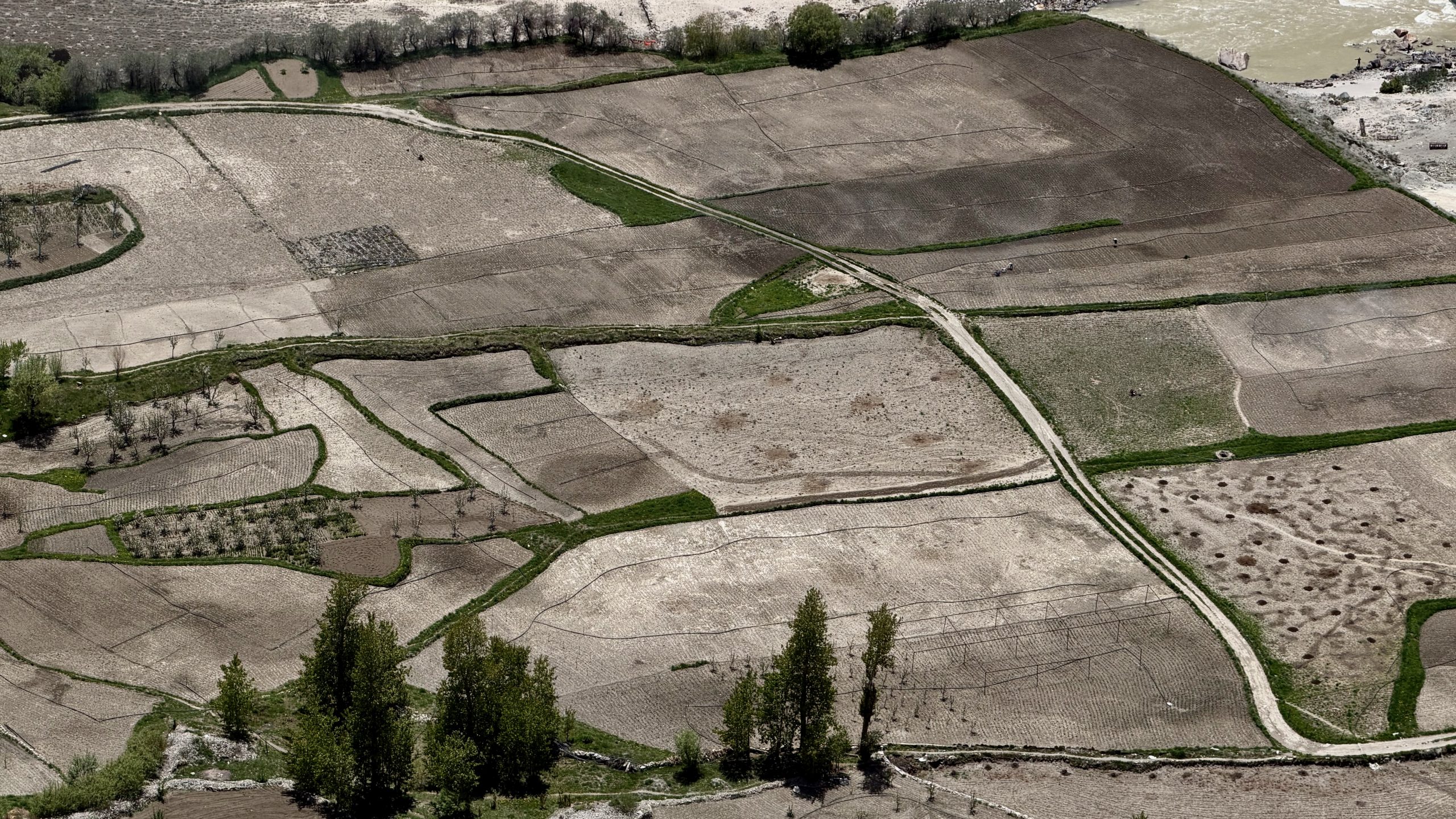
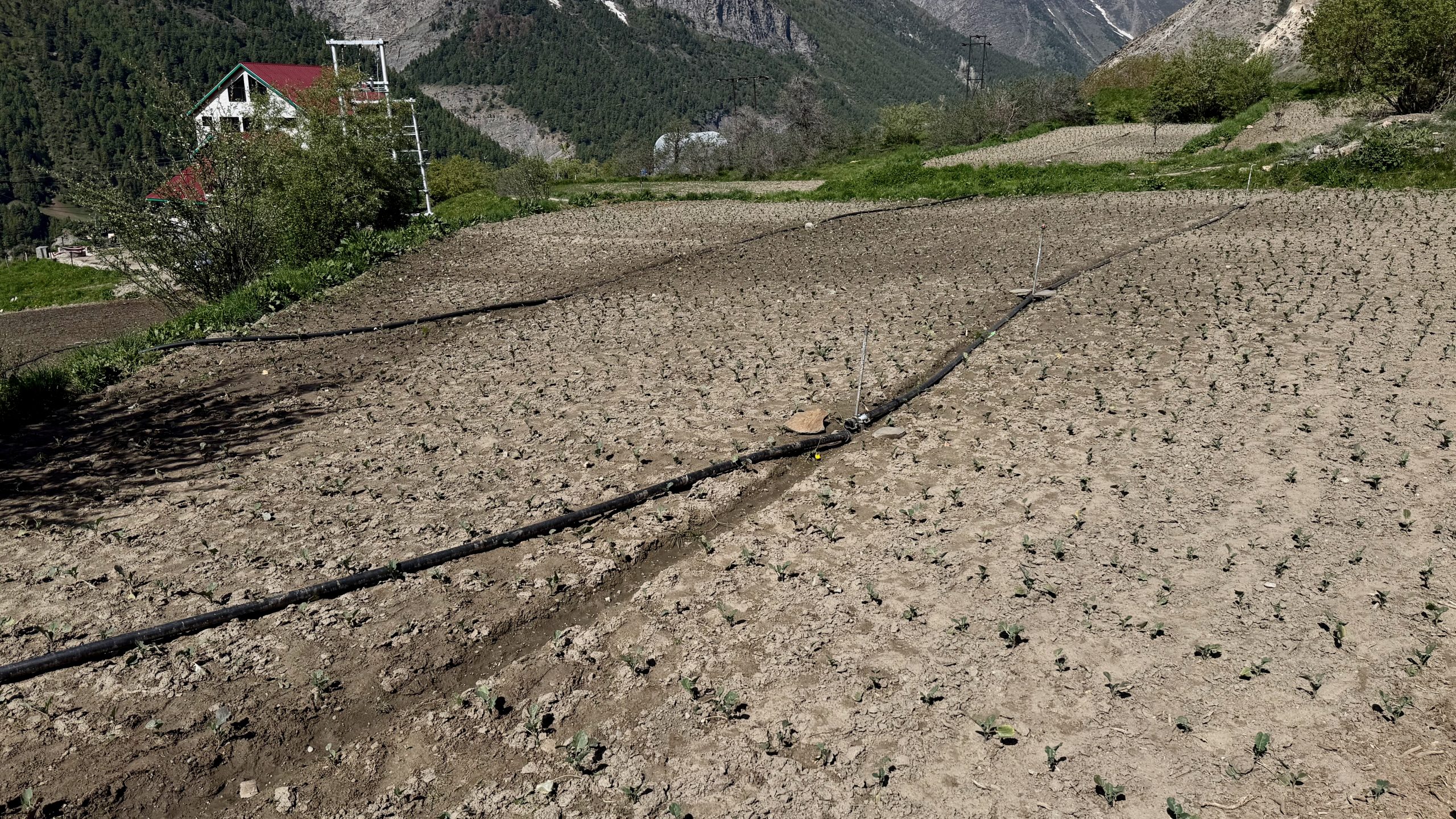
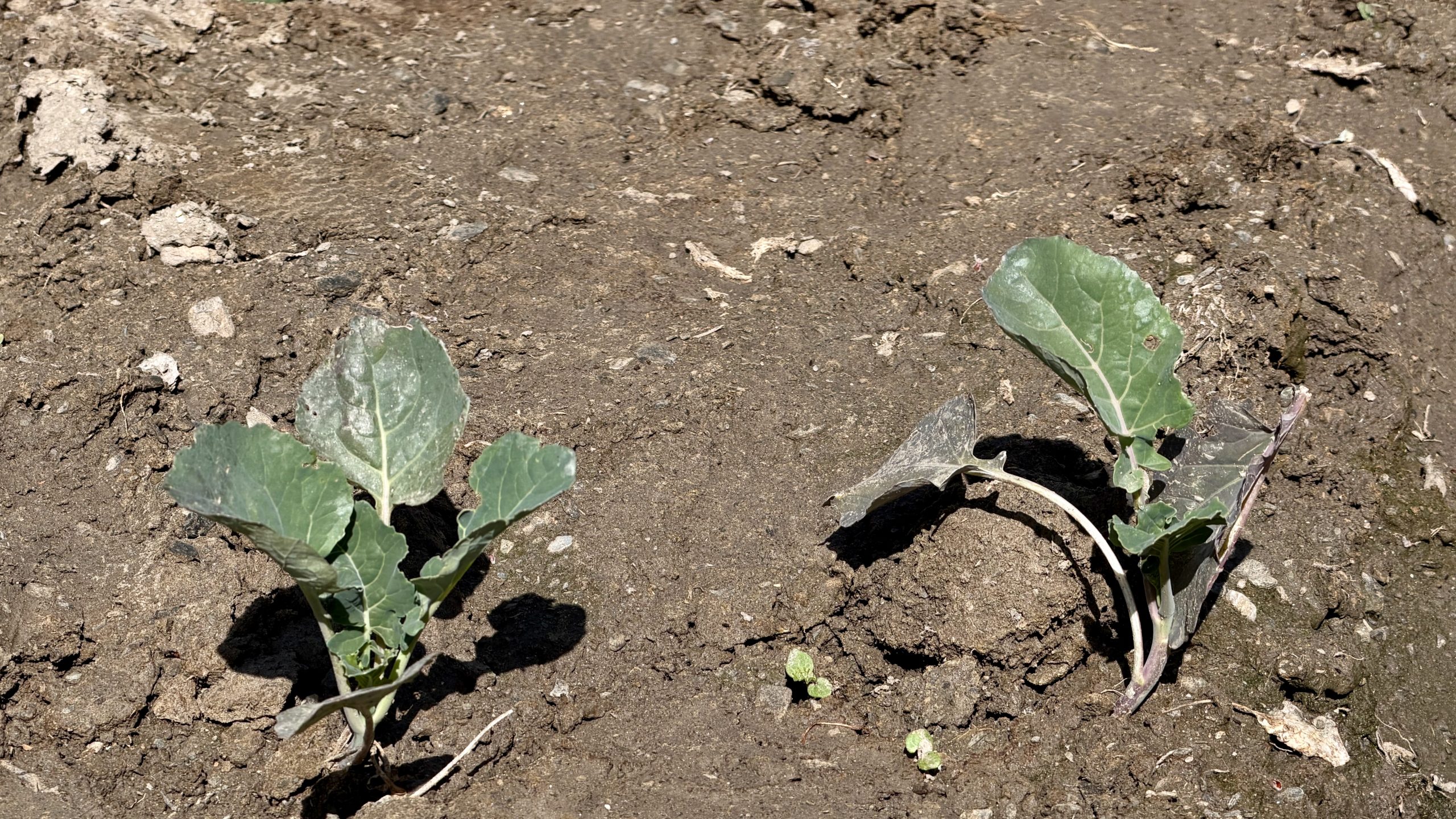
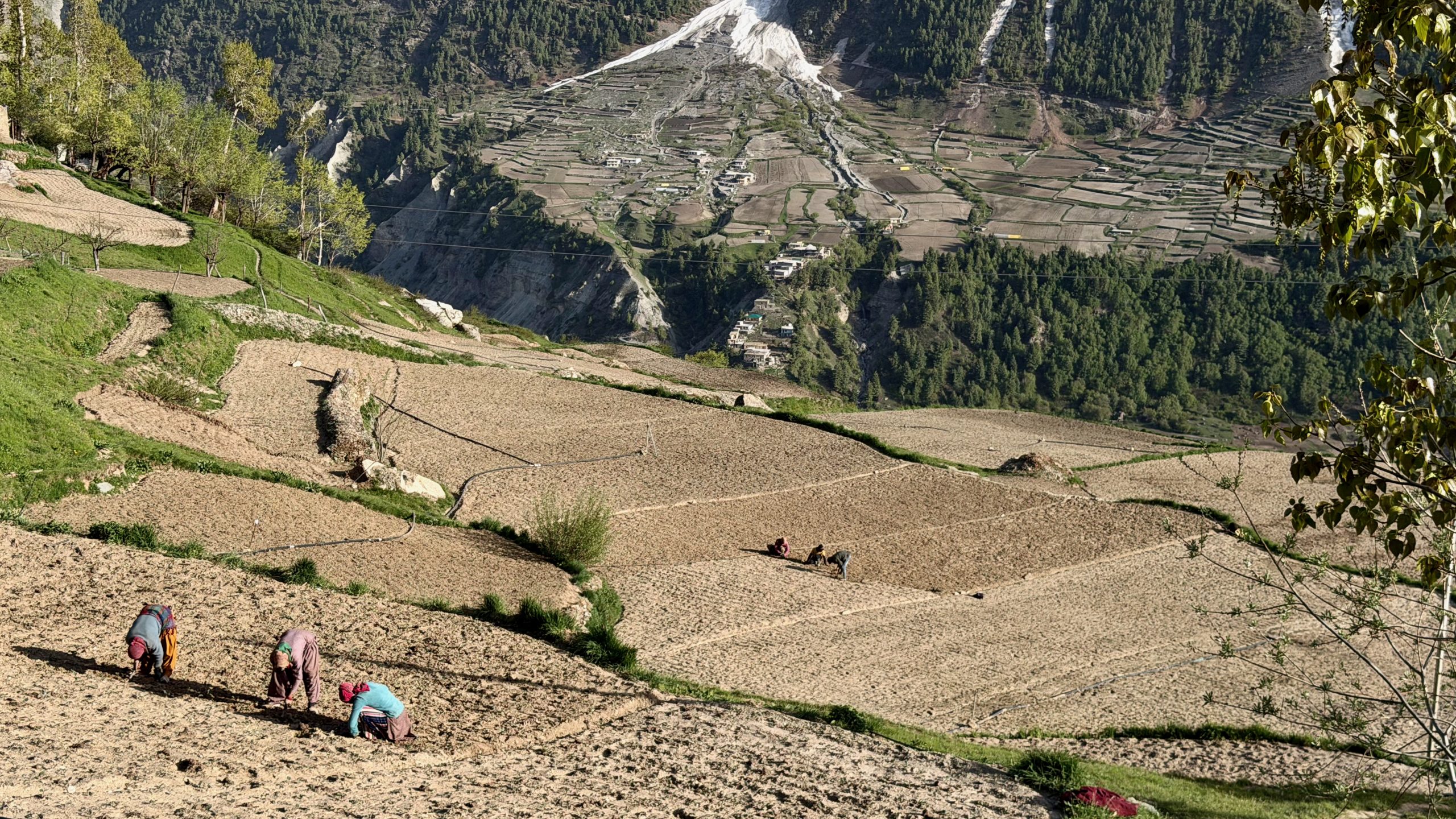
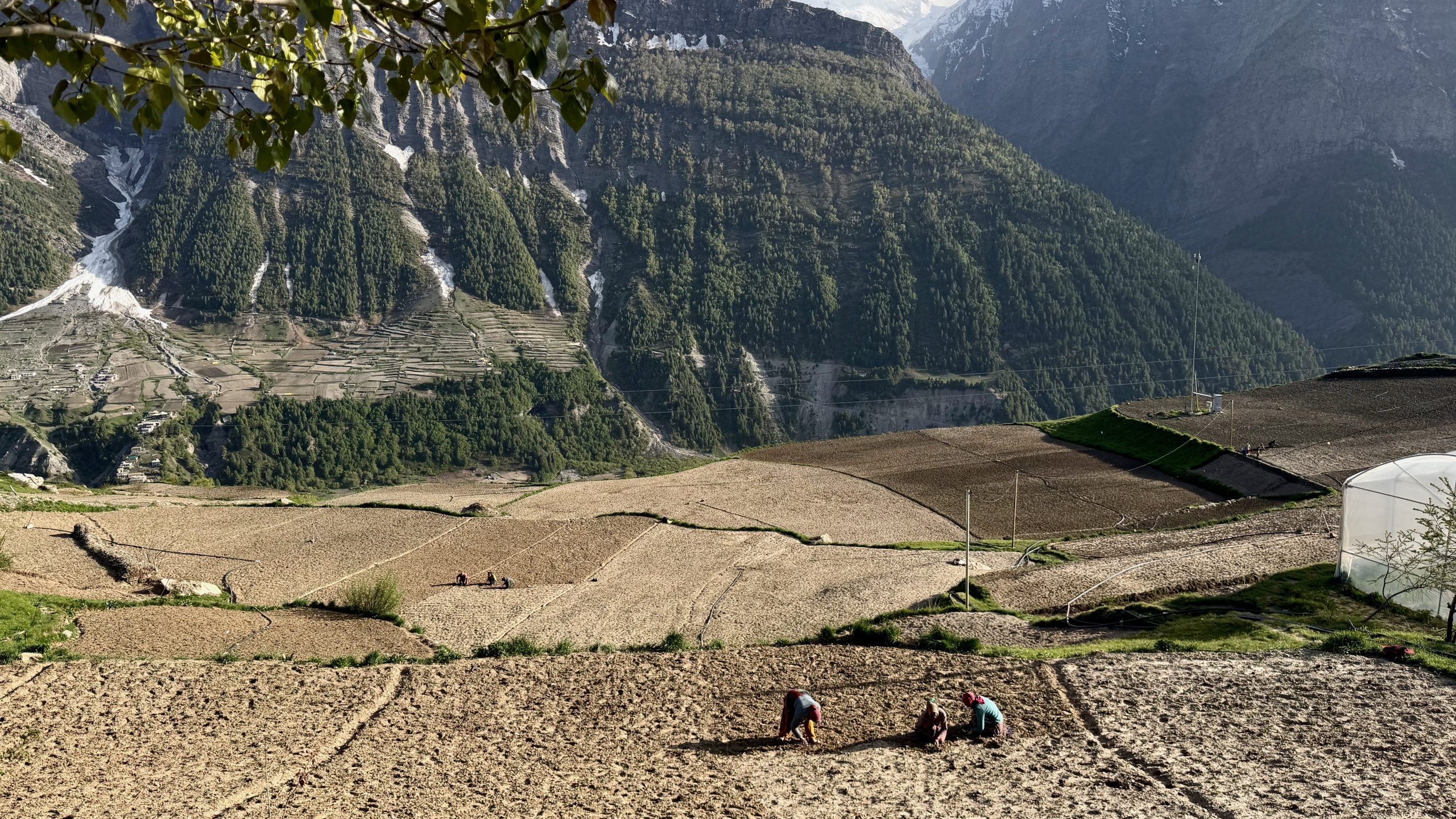
After resting a bit in my room, I went for another walk to a part of the village located higher up the slope. Some people were working in the fields — planting potatoes and preparing the land for sowing. I also found the greenhouses very interesting; they were remarkably well built.
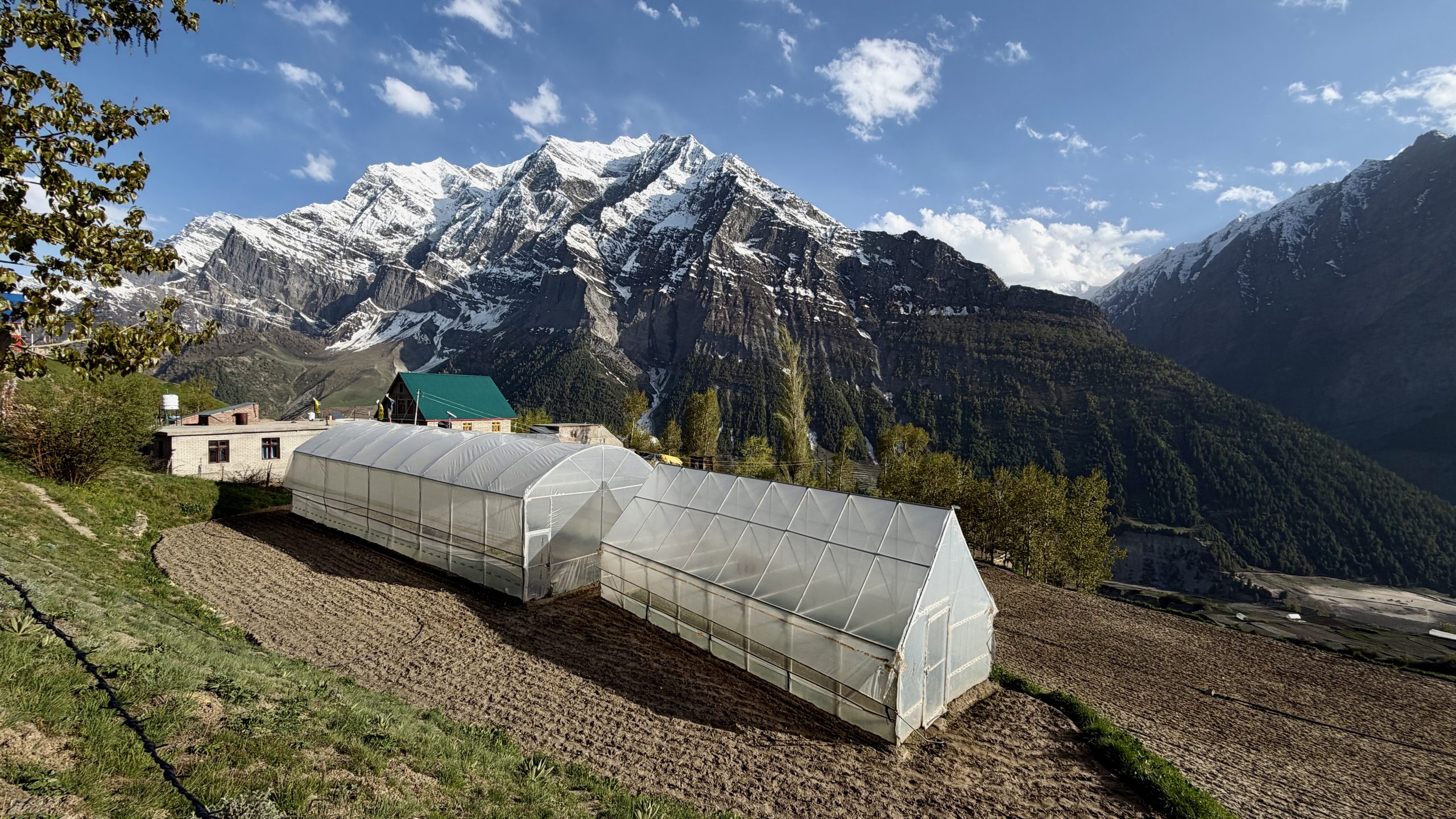
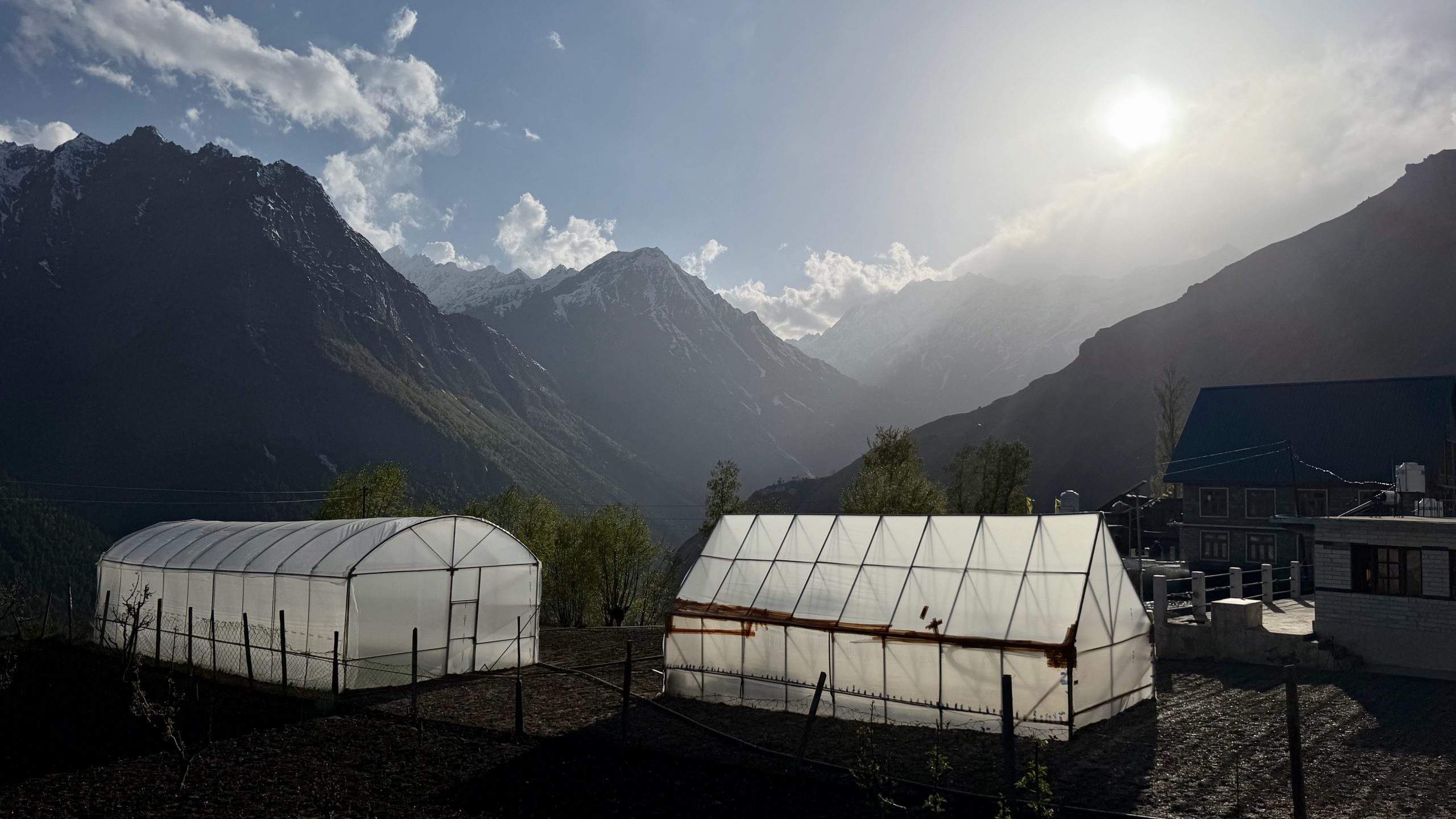
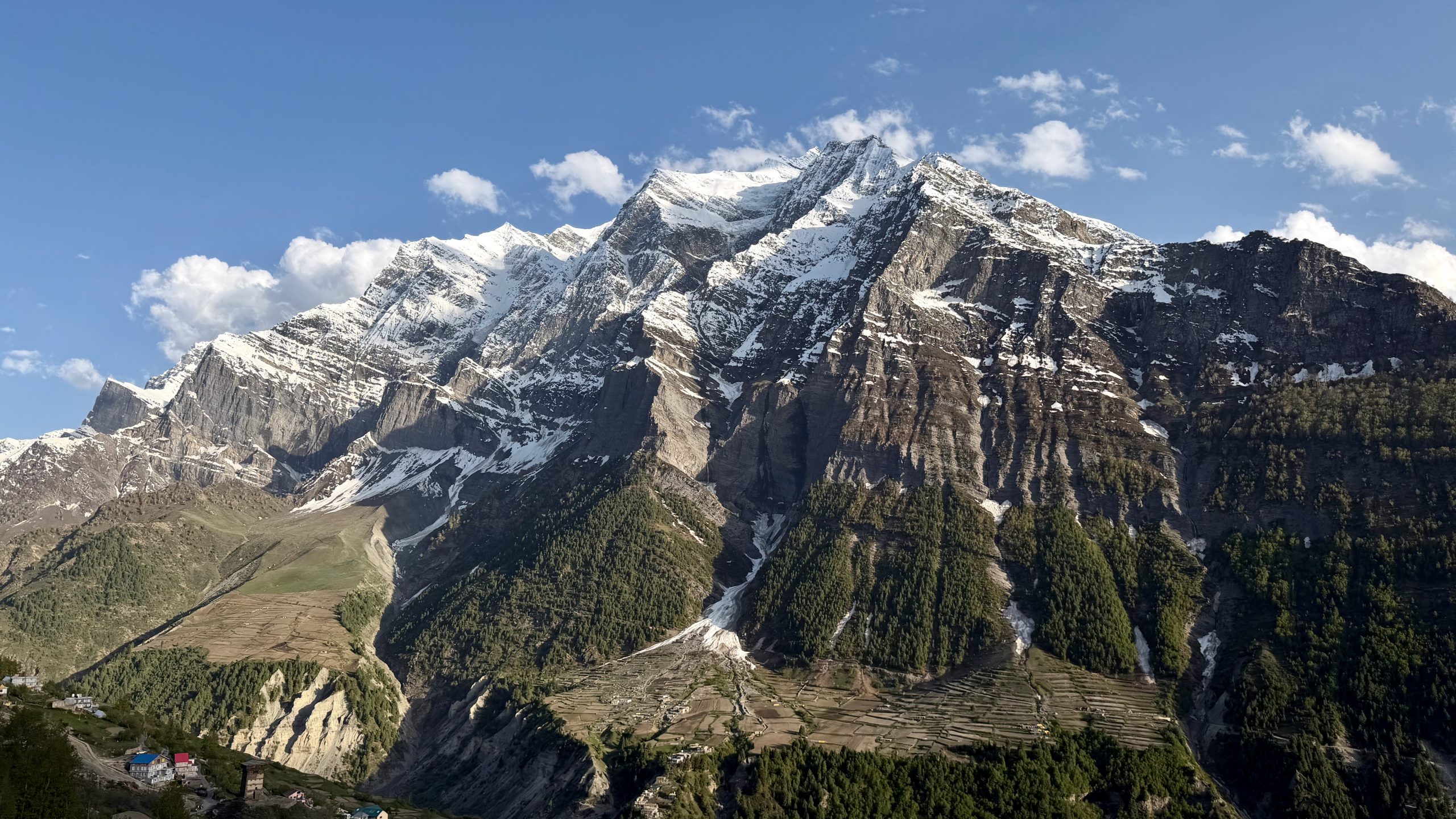
Conclusion: it is definitely worth spending some time here, even if it was not quite as warm and welcoming as I had hoped.
In the morning, we took a few more photos at the accommodation:
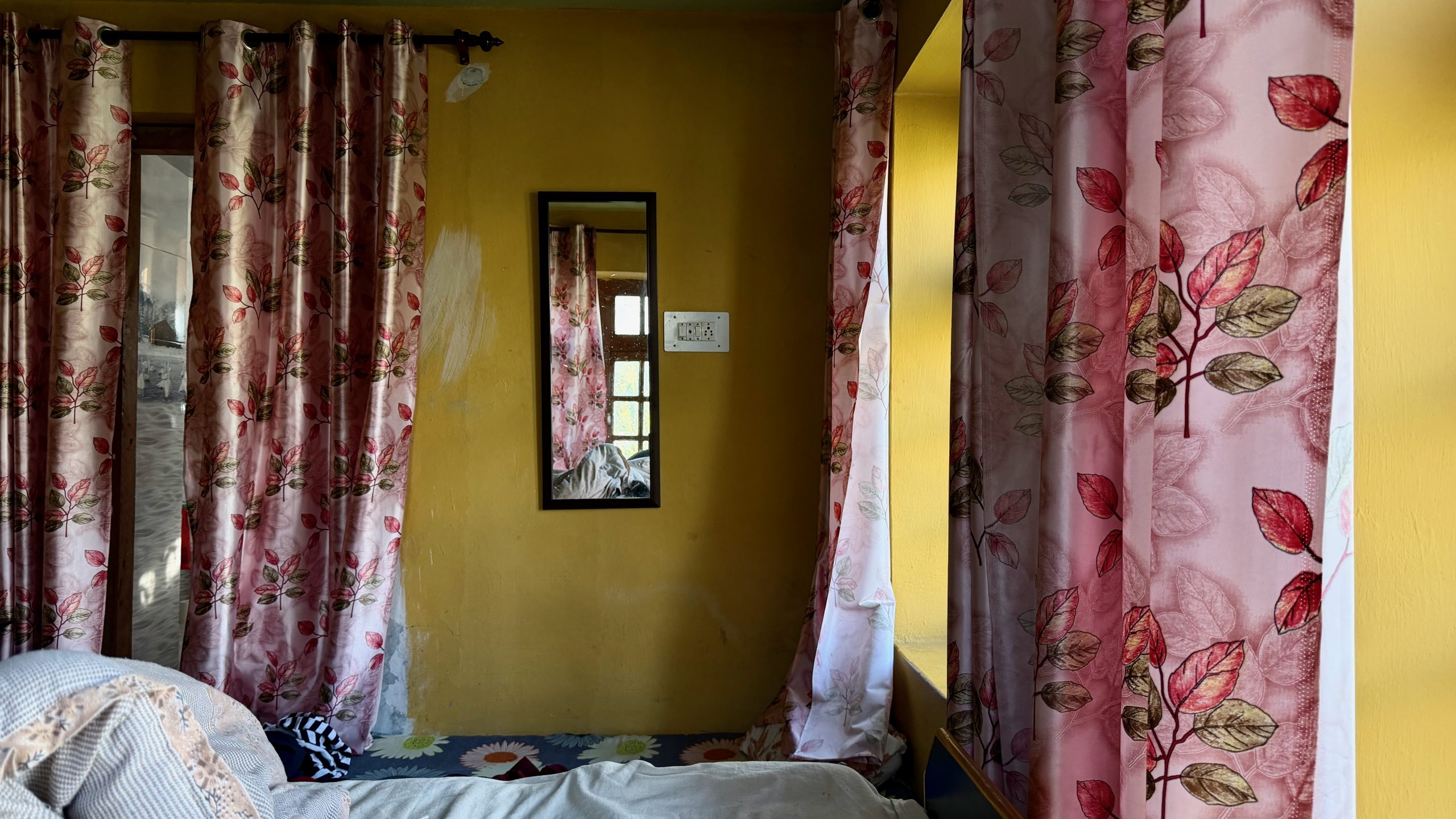
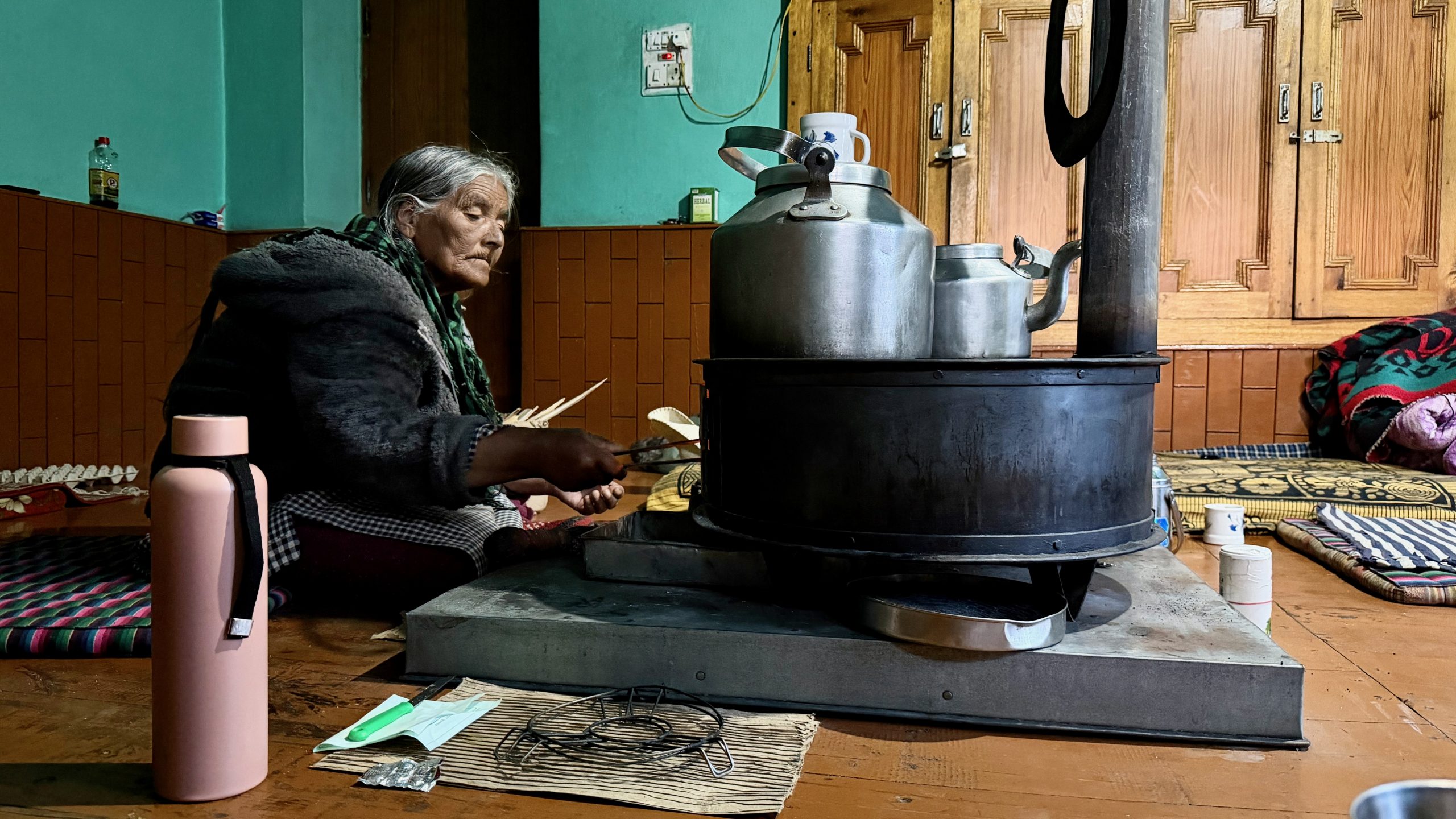
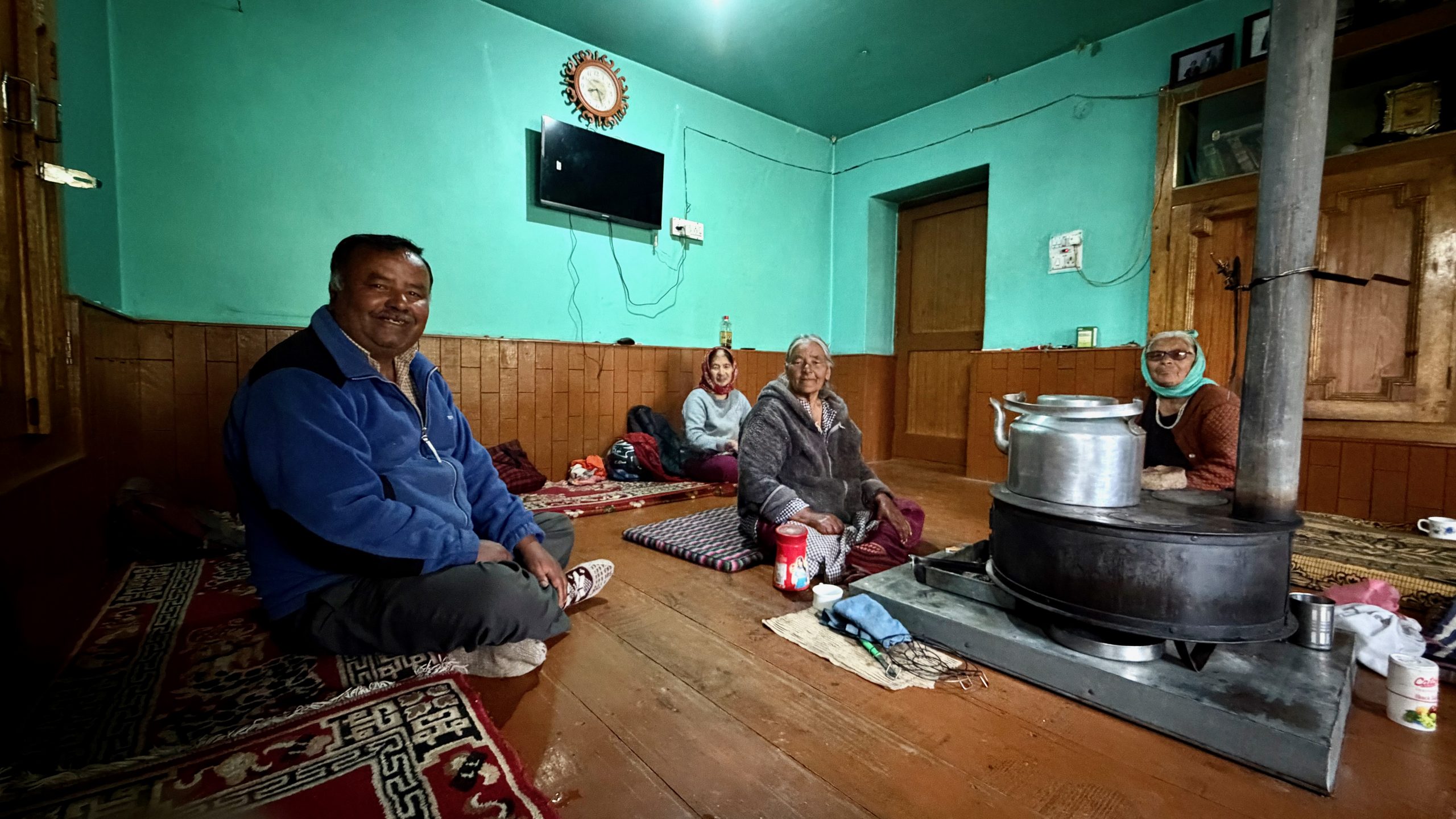
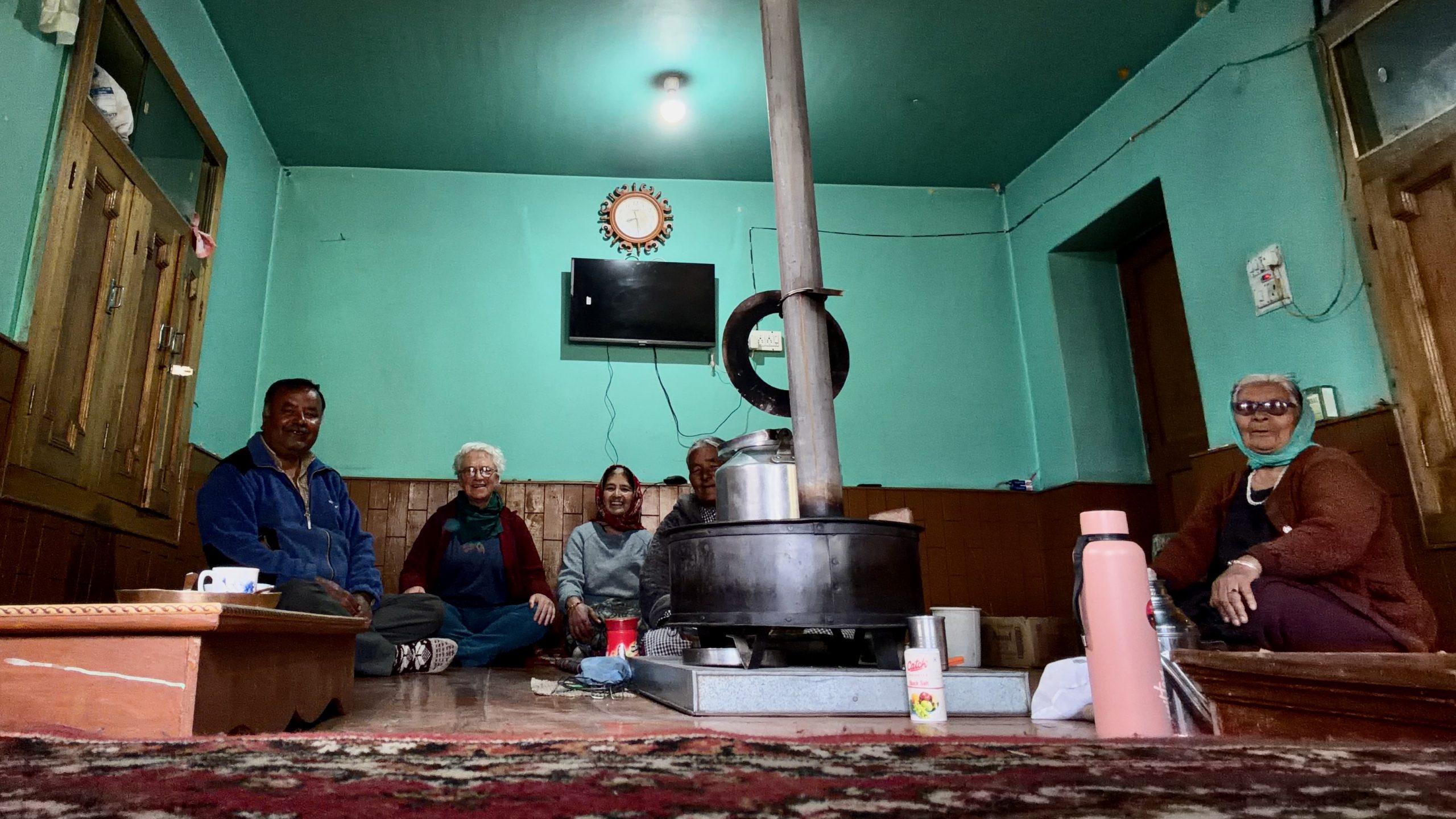
As for my physical condition: despite using sunscreen, I had already managed to get my second sunburn here (I’m afraid I probably didn’t apply it properly), and my blood oxygen saturation was 88 when I arrived and 94 when I left — so overall, quite good.
And after that, I moved on — and got a bit of a surprise in Keylong. More about that in the next blog post 🙂