


Keylong -> Zanskar – new changes, new connections
24. May 2026
Being picked up the car worked out great! Except that I got up way too early and the driver made much slower progress than expected. He had started in Manali at 6:00 am. My new guide Lameth had booked me a seat in a shared taxi, passed on the contact details, and then Mohan coordinated with the driver, Dawa, about when, where, and how. In the end, the hotel owner drove me to the main road, the car arrived five minutes later — and I jumped in. It’s nice how these things sometimes just work out.
Keylong had been pretty quiet in terms of (Indian) tourists, and I kept wondering where they were all staying. Shortly after Keylong, I saw the answer. There’s the small place of Jispa — for years it had only had one somewhat nicer hotel. And now? Tons of camps and hotels lined up one after another. It looked like the awful mass tourism of Manali, just a bit smaller overall.
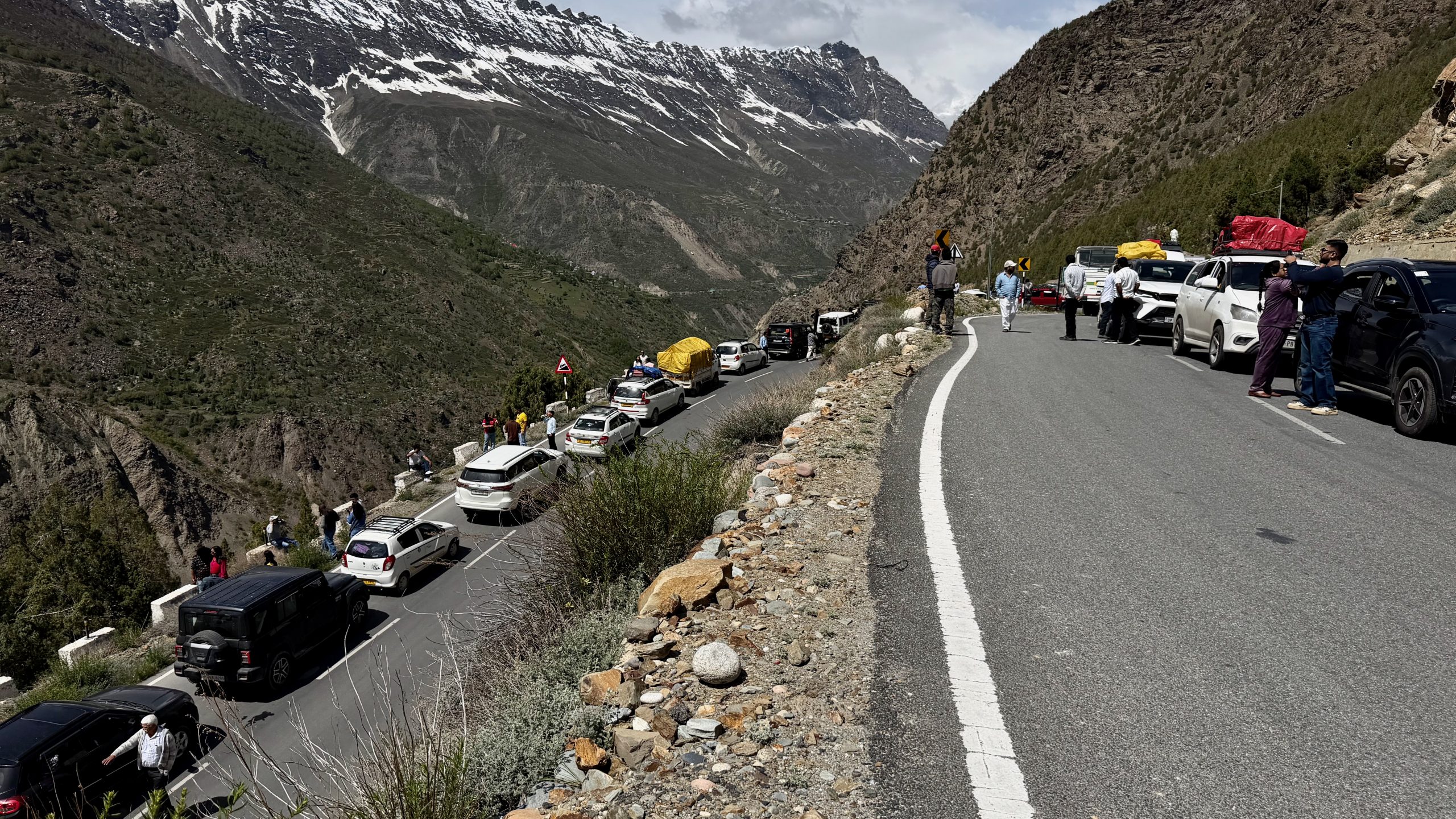
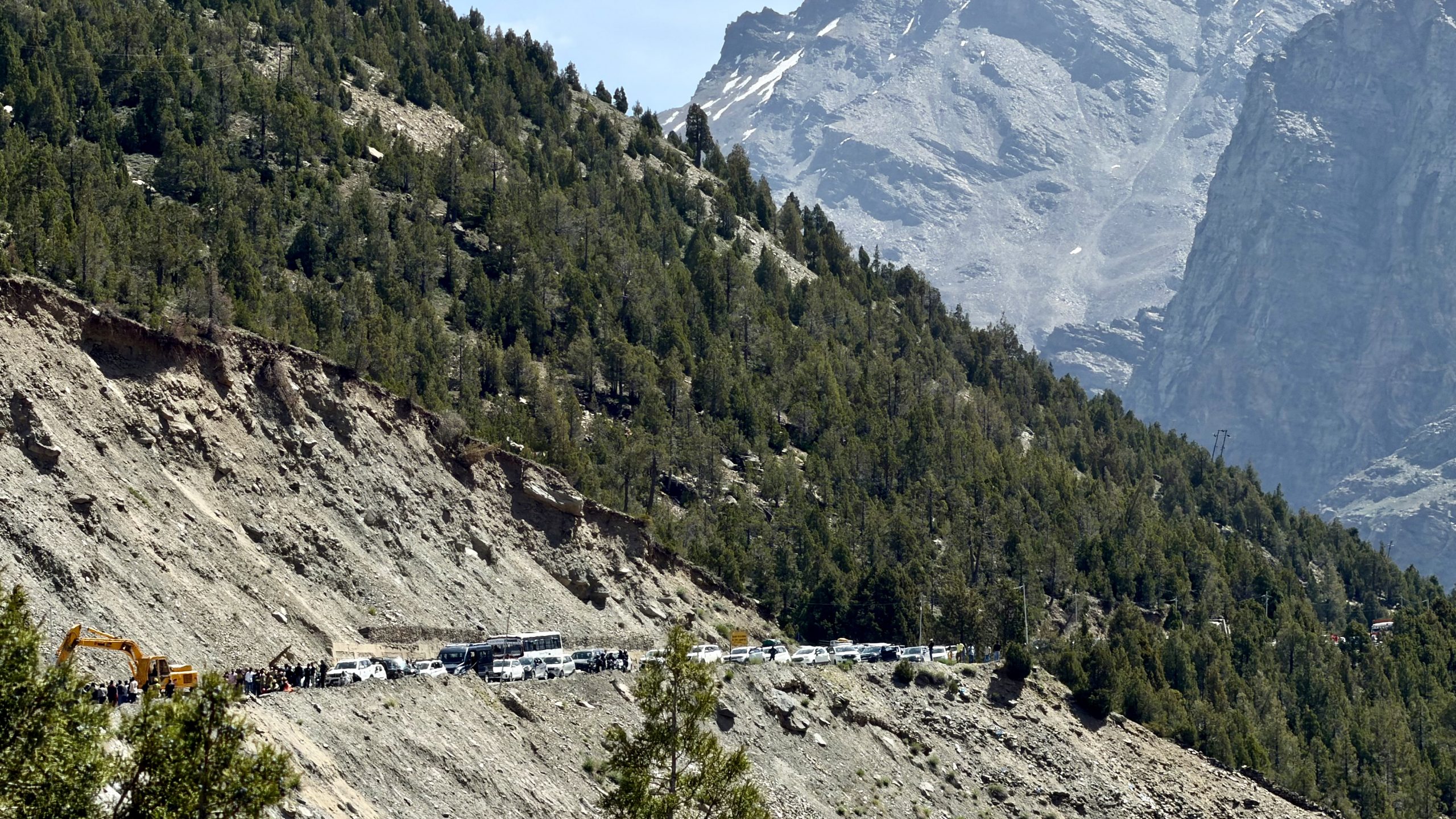
And soon after that, we came to a standstill — construction work. What an incredible amount of cars!
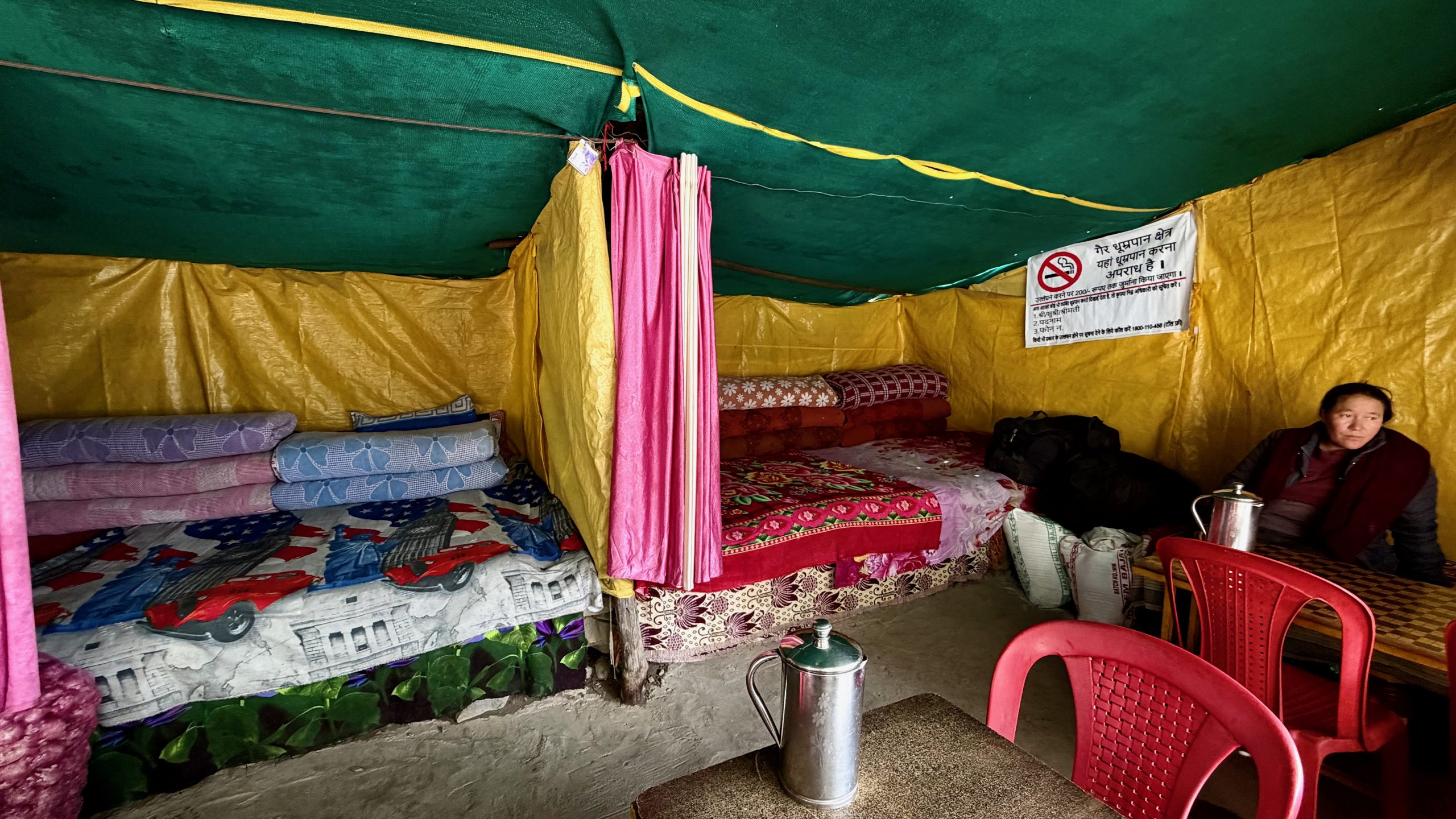
Whereas in the past it had been enough for Indian tourists to play around in the snow at Rohtang Pass, they were now aiming for more distant destinations: Baralacha La on the way to Leh or Shinkun La towards Zanskar. I was already really curious! But first, there was another stop in Darcha, the last settlement before Ladakh, where for many years the small dhabas — with their basic accommodation options, which I also used once in 2017 — have lined up one after another. That hadn’t changed at all.
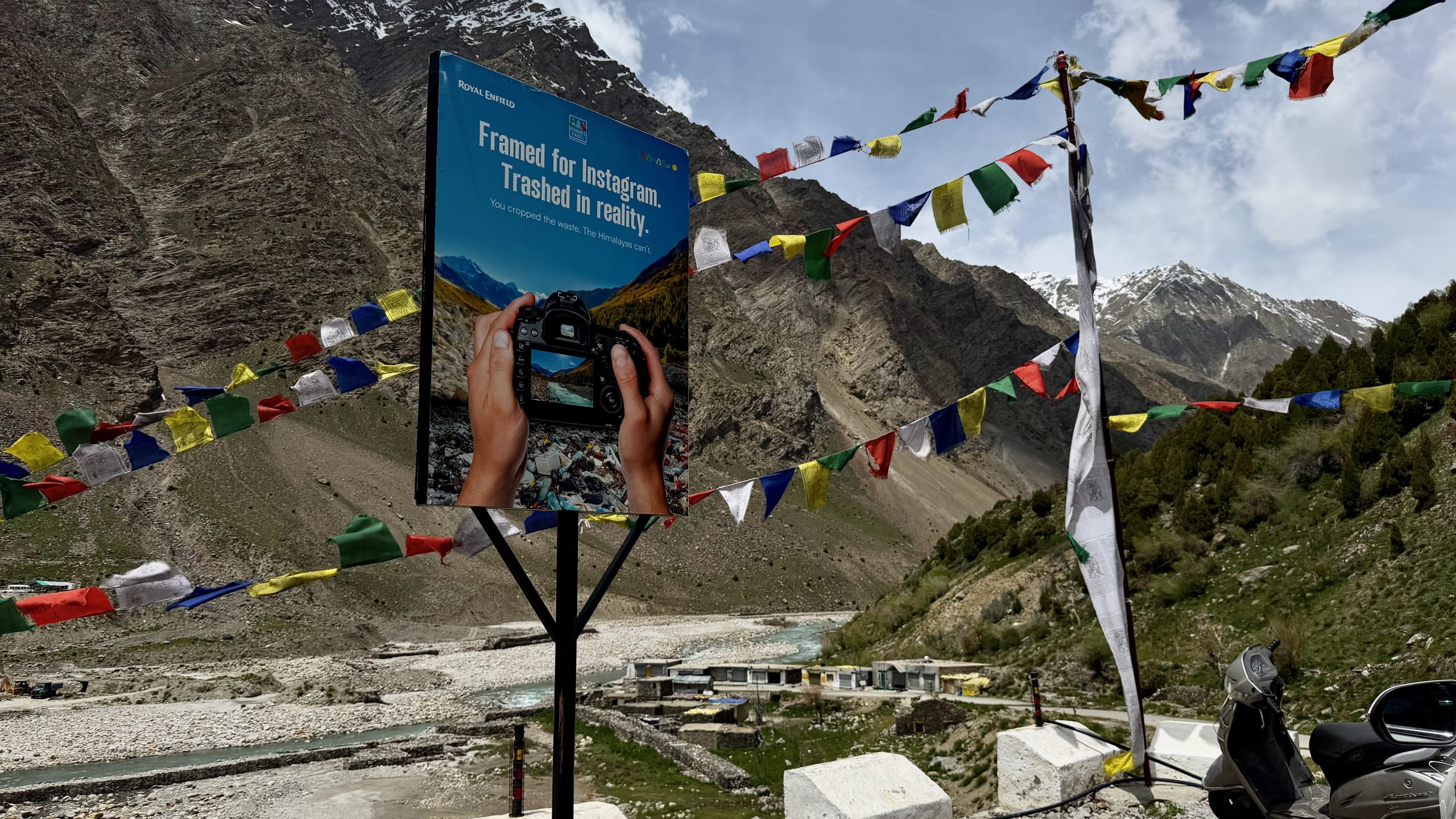
Even more earlier, this had been the starting point of the famous Darcha–Lamayuru trek, which took more than 20 days (or the endpoint, depending on the direction — this trek will come up again later). In 2017, I had hiked up all the way to the pass — back then it used to be called and written as Shingo La, whereas nowadays Shinkun La seems to have become the accepted name — and then had a taxi pick me up. Simply because the road from Darcha ended right there at the pass.
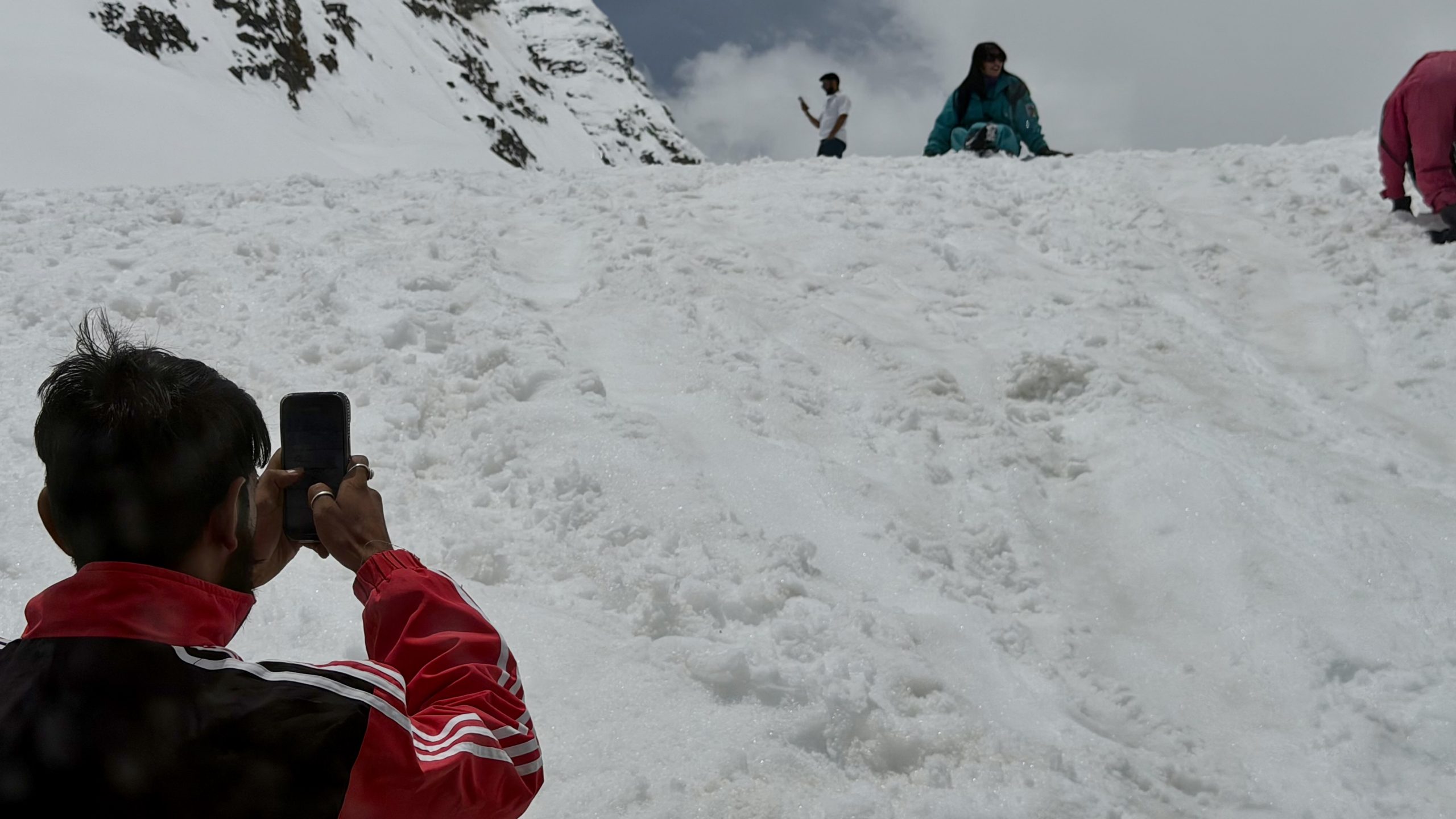
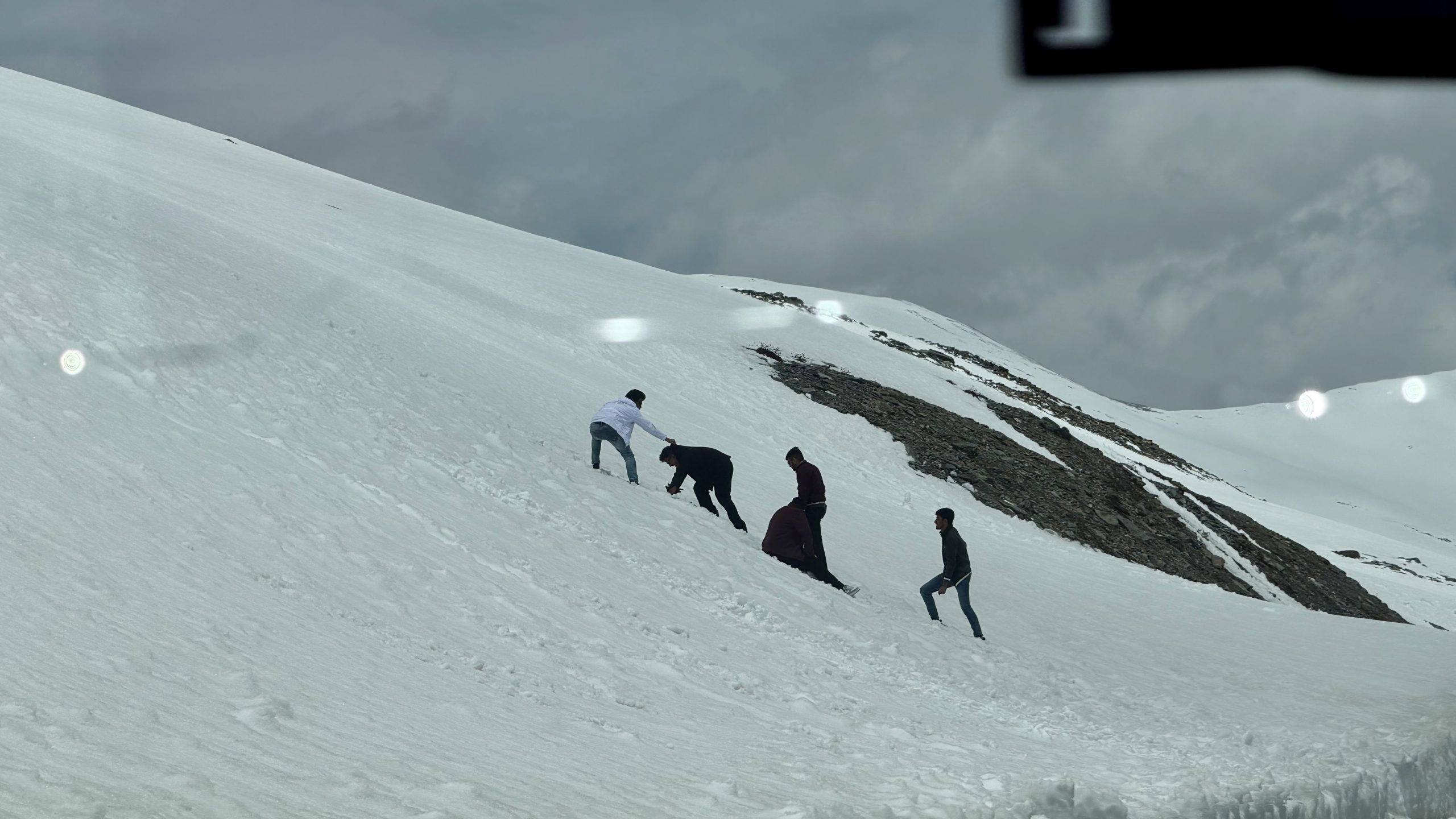
Back then, it had felt incredibly remote, with a rugged and spectacular mountain landscape. But a road changes the feeling of a landscape completely. Not all cars took that turn-off uphill, but quite a lot did. It was still fairly early in the season, so there was plenty of snow around — and accordingly, plenty of Indian tourists playing around in it.
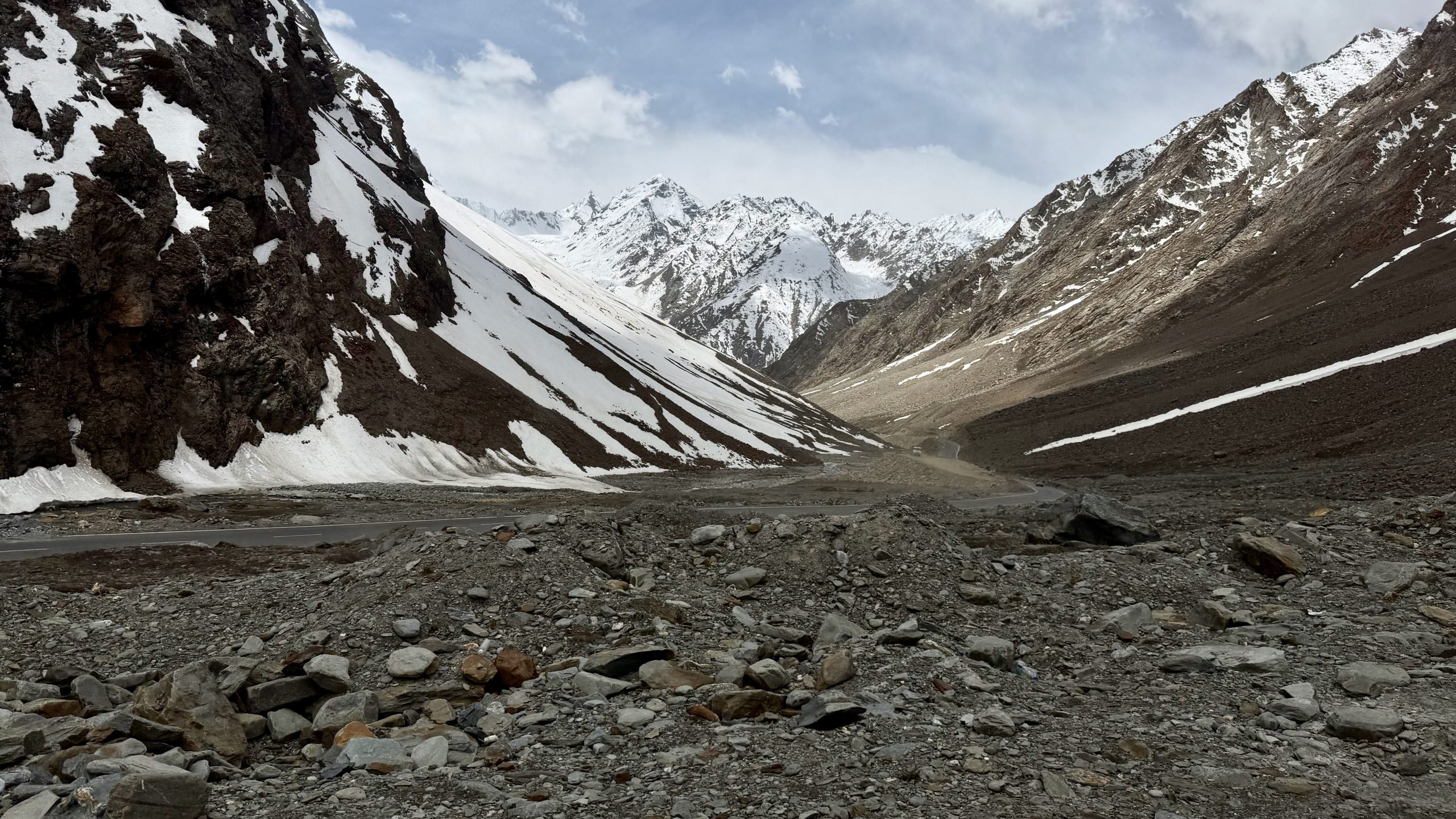
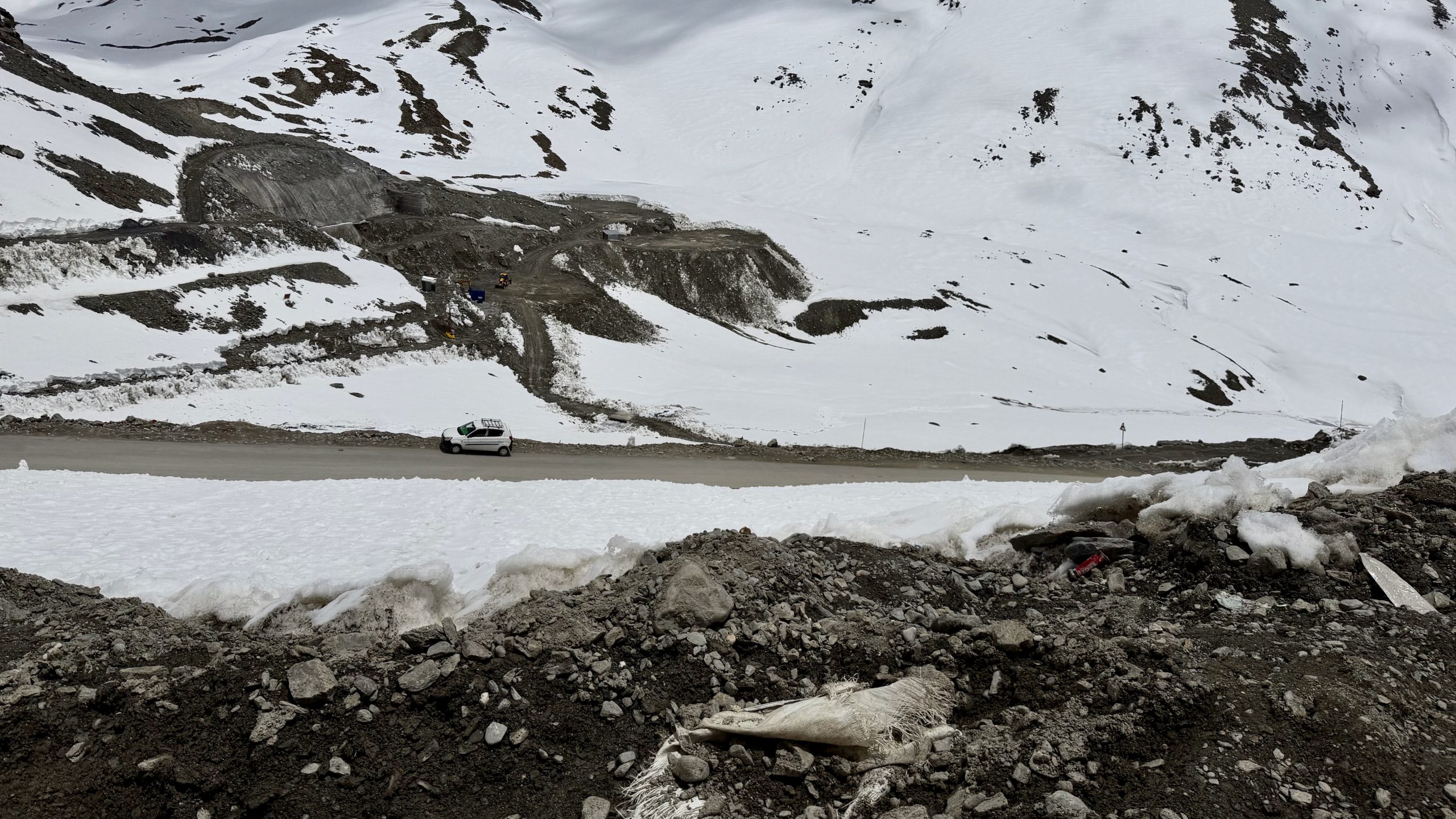
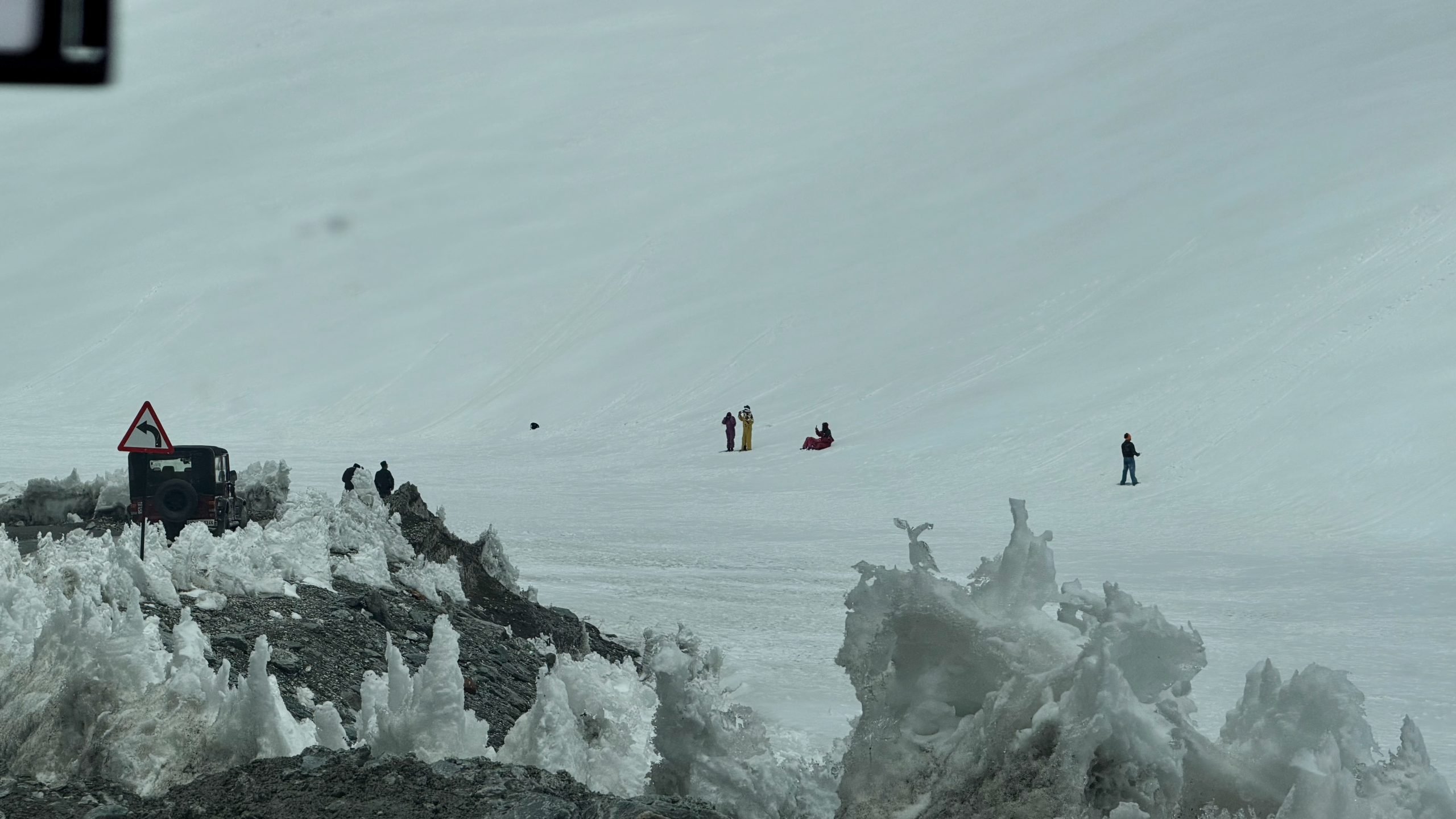
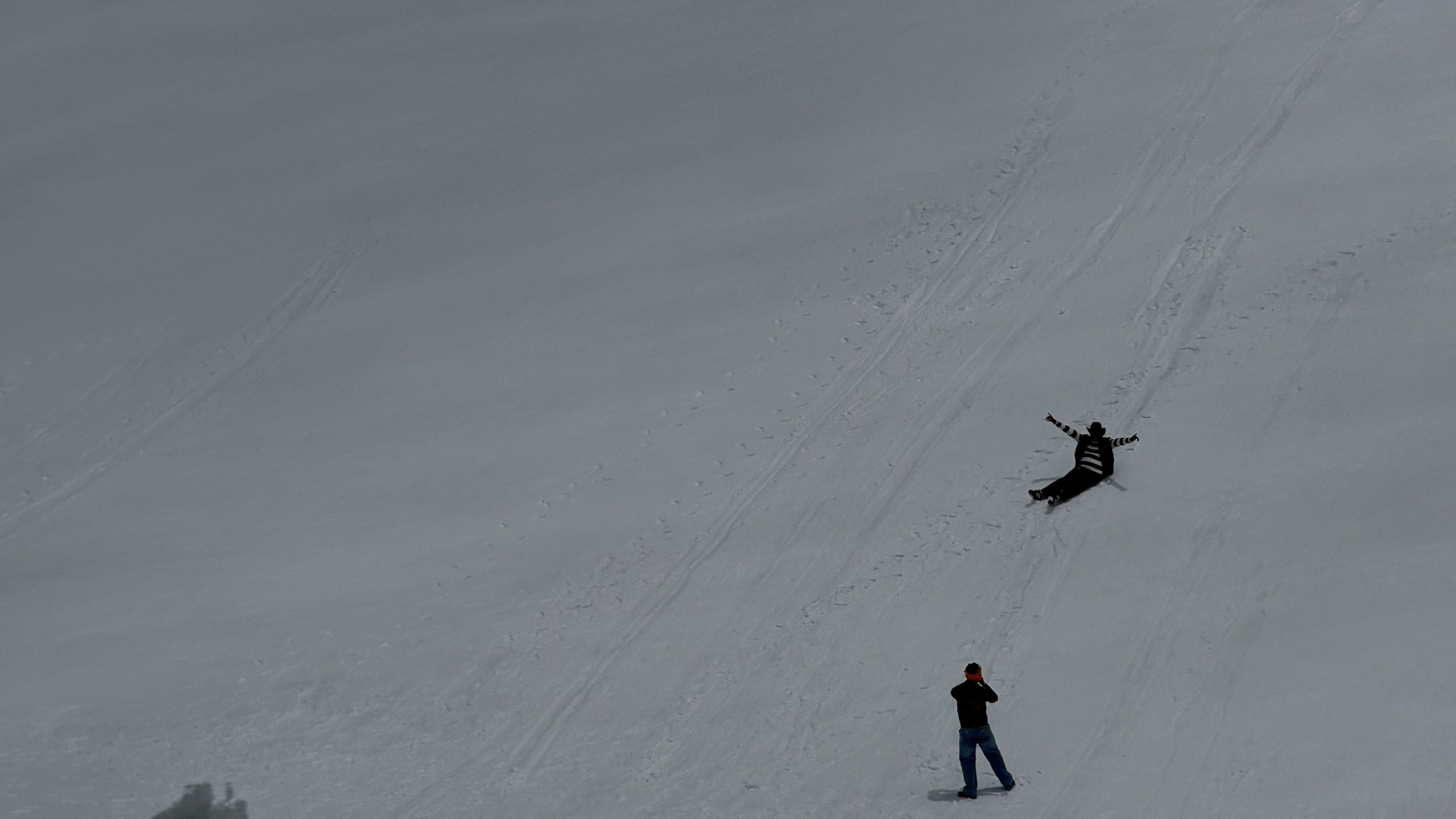
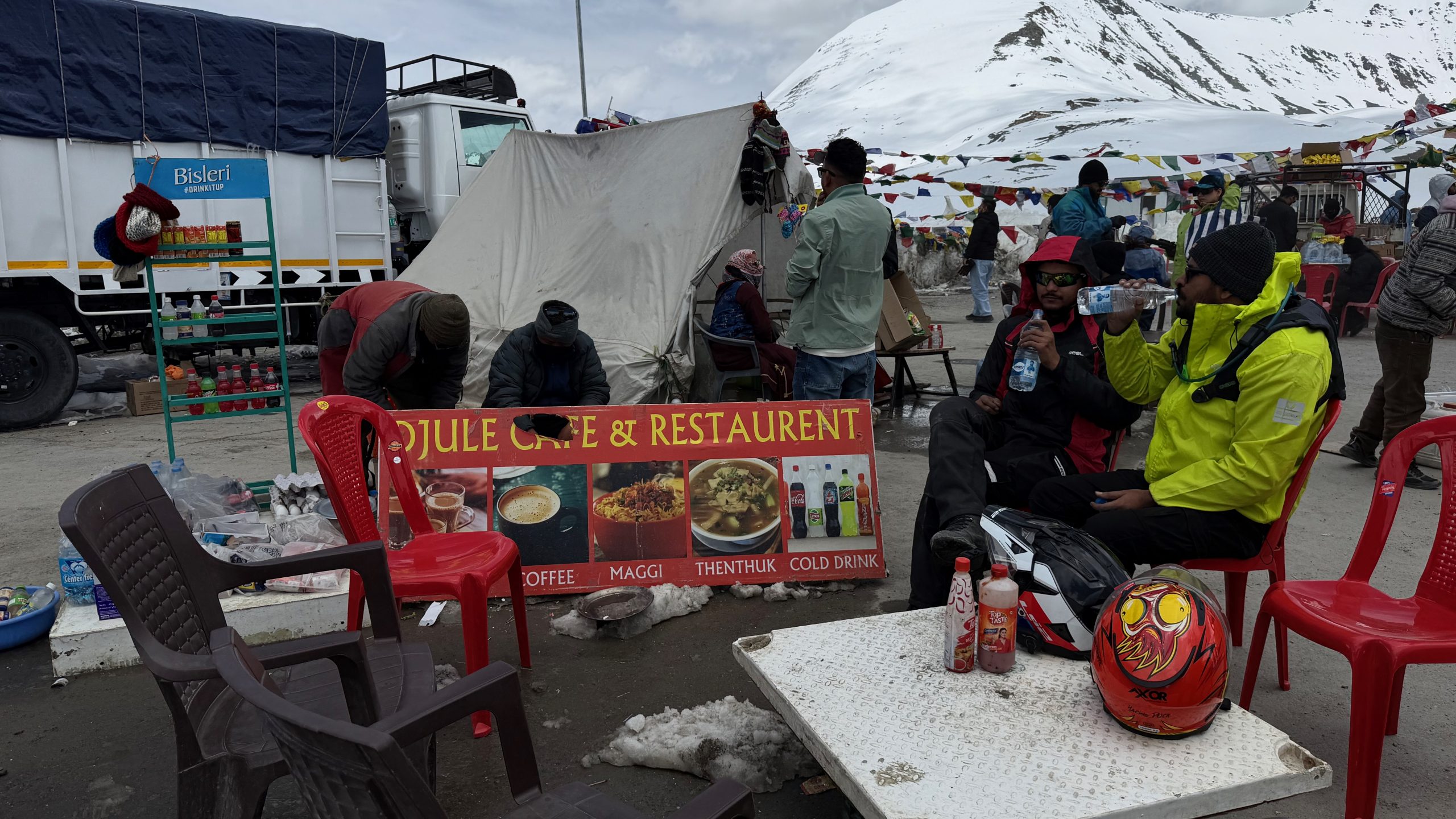
And then we reached the 5.091 m pass. He also had changed with small tent-dhabas and other buildings.
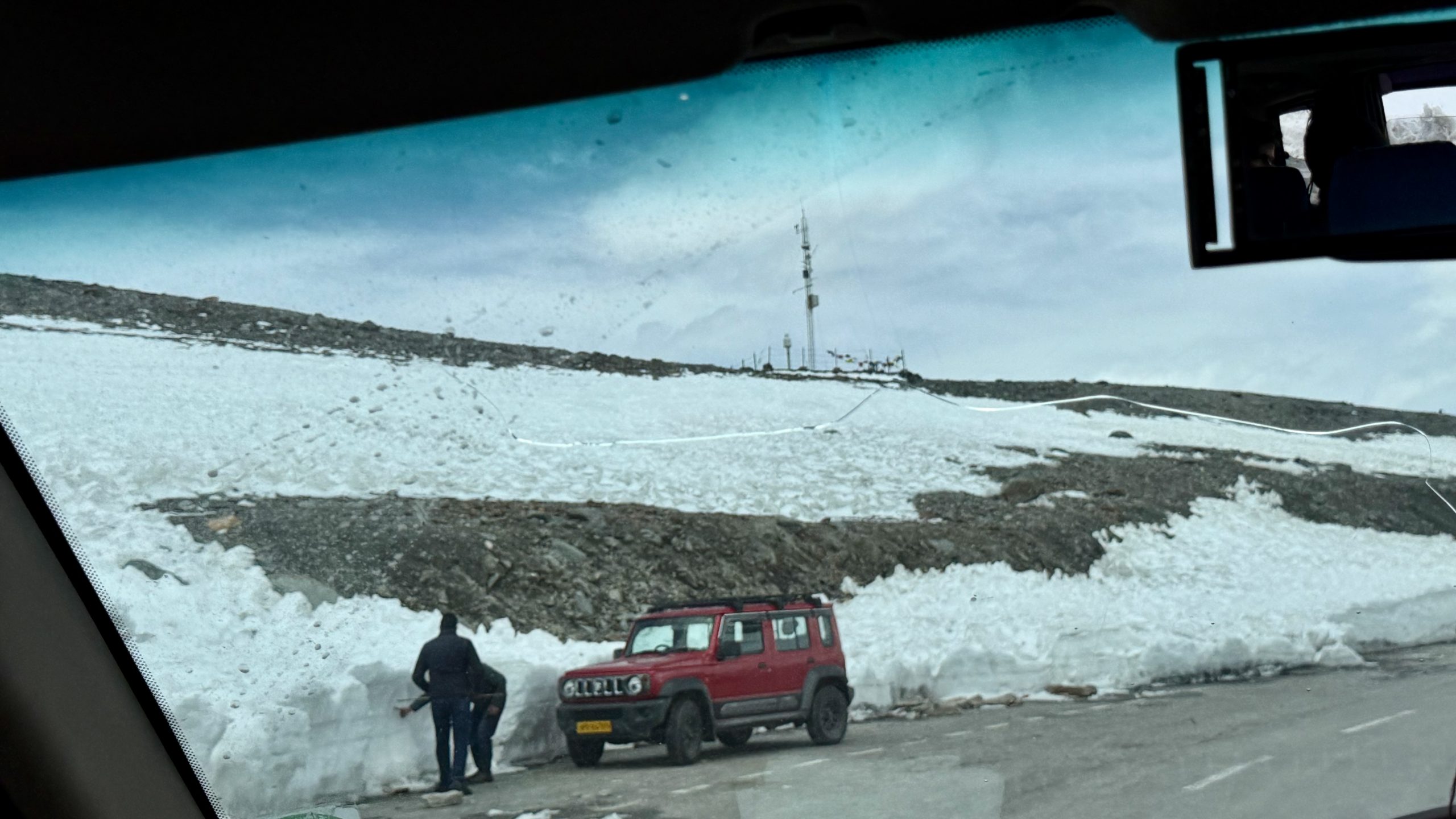
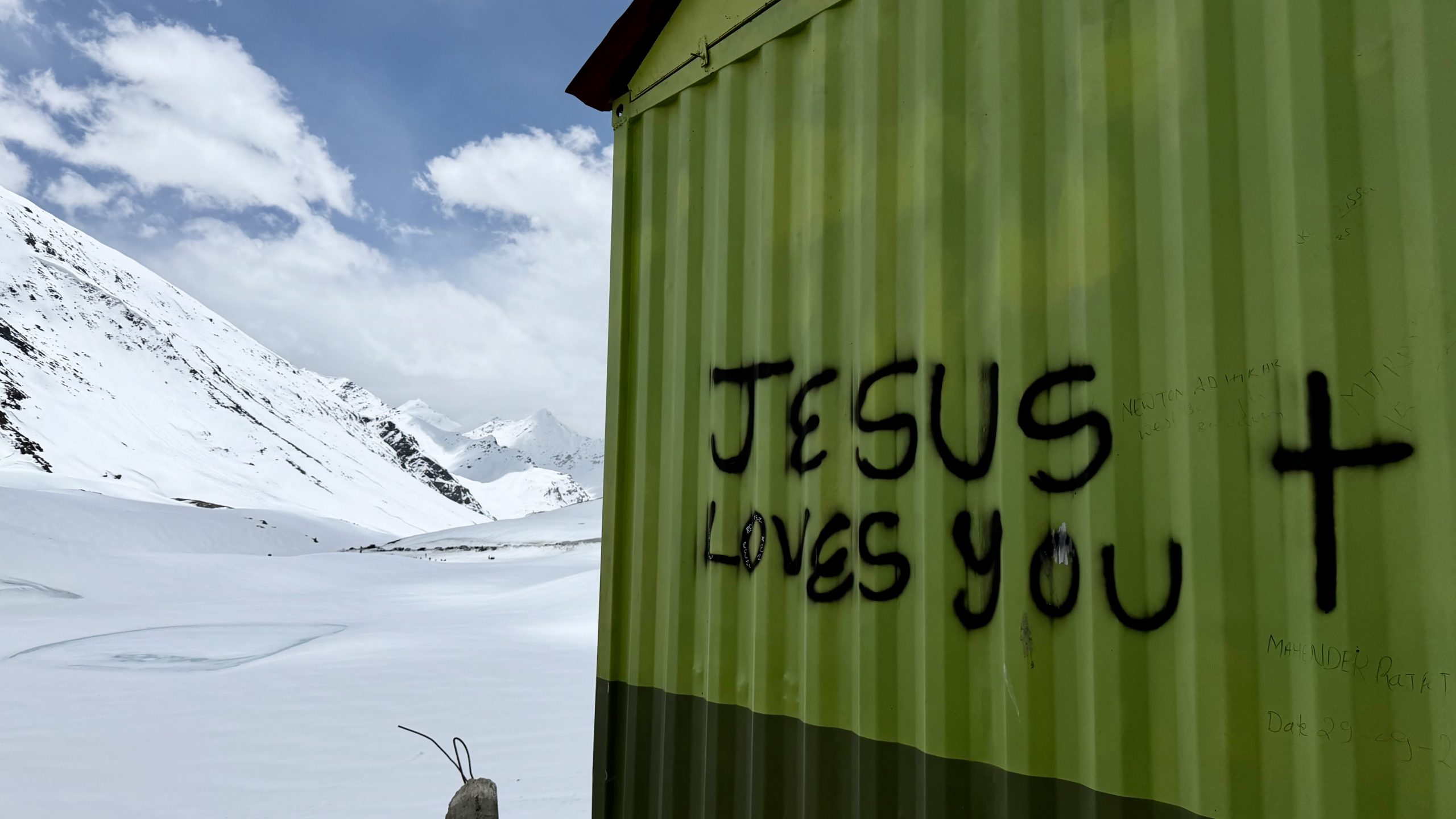
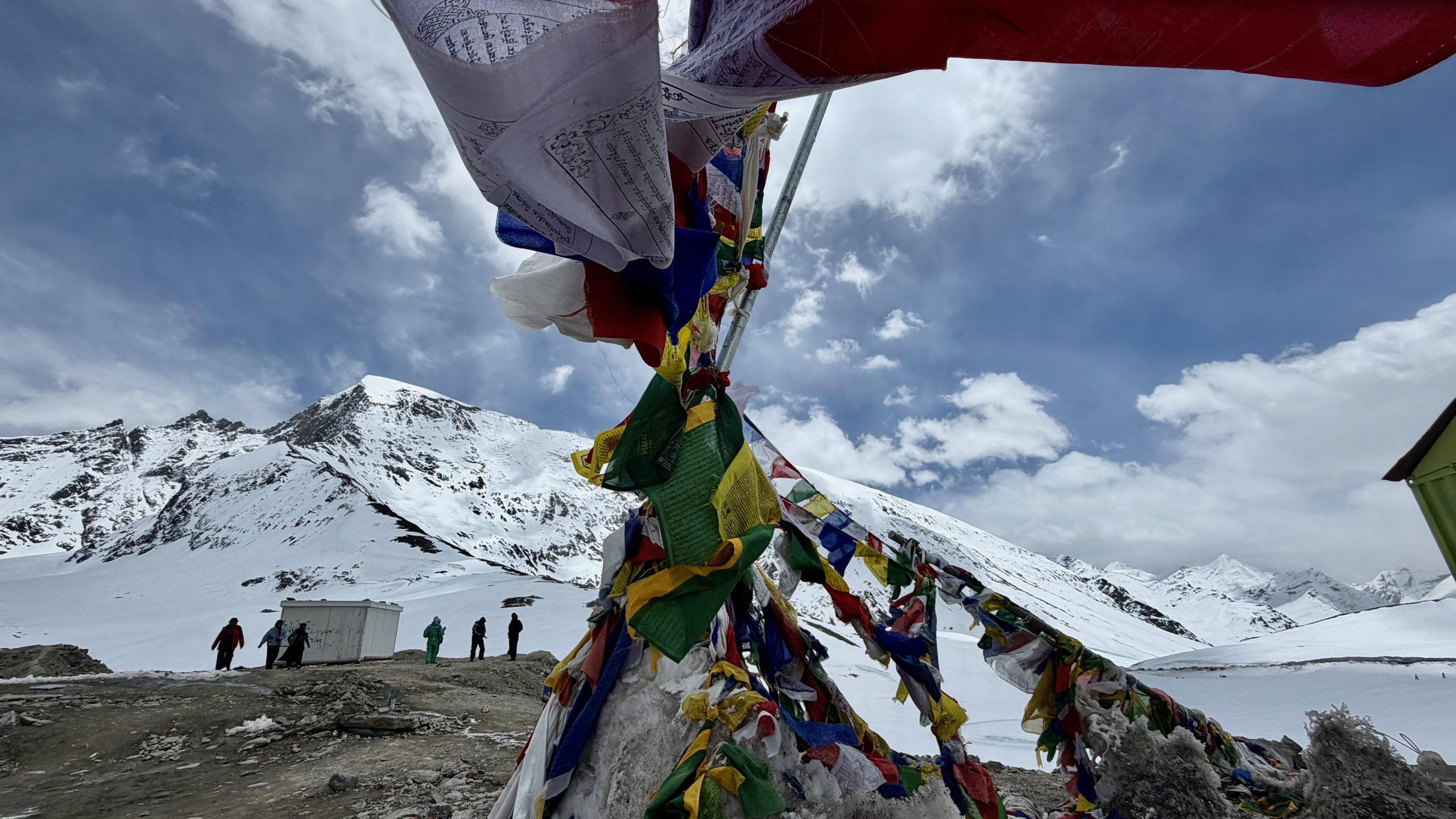
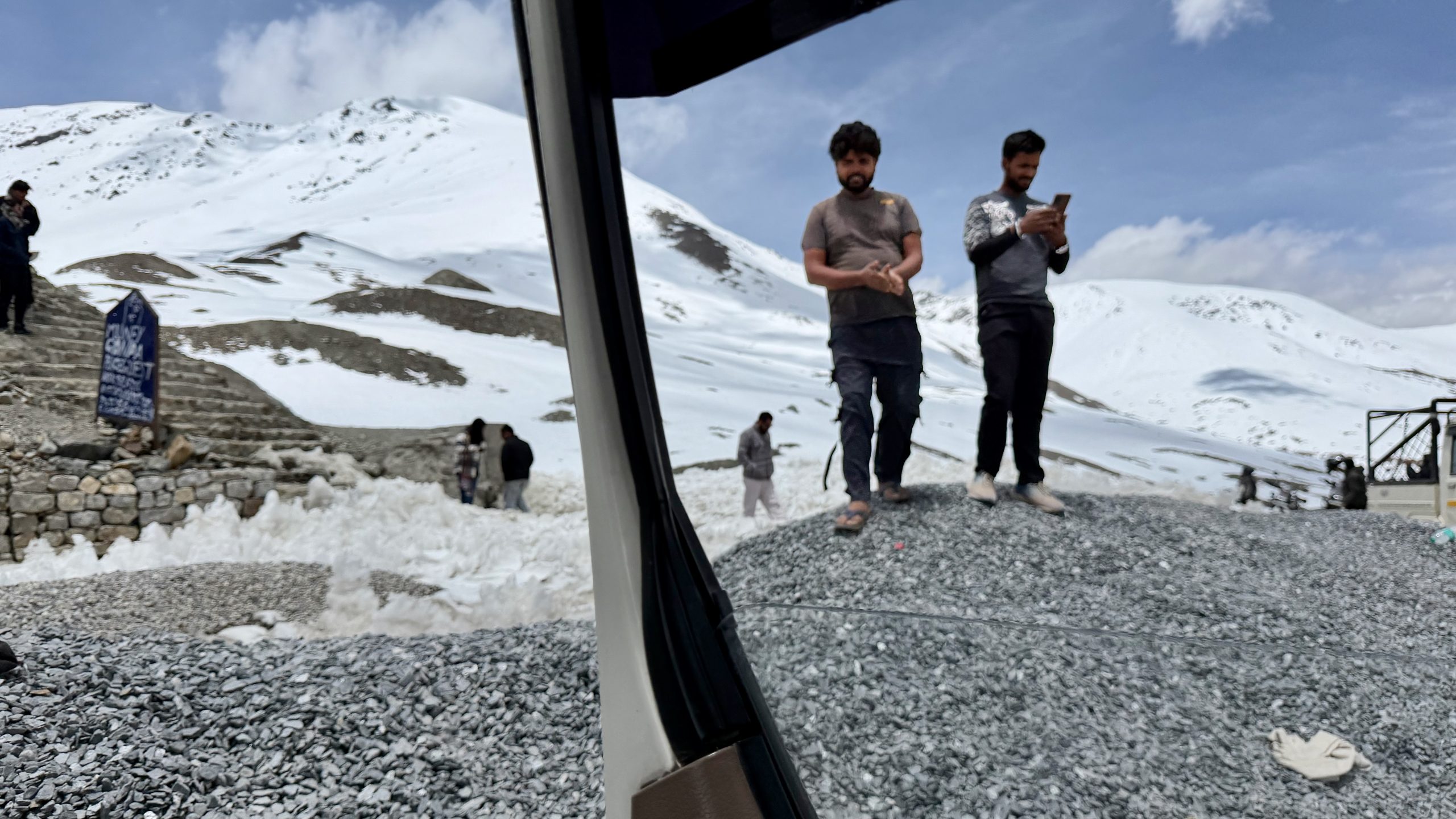
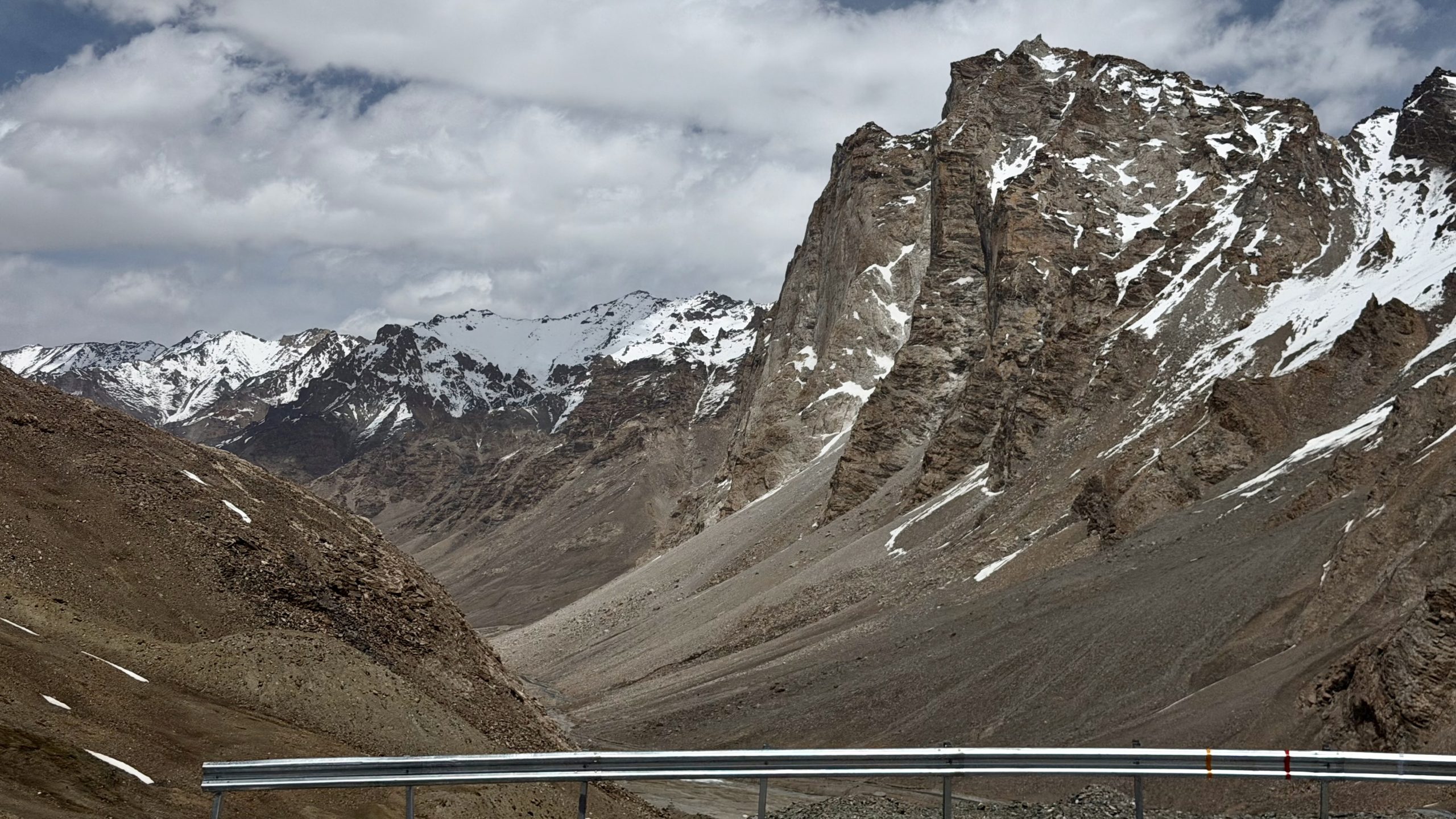
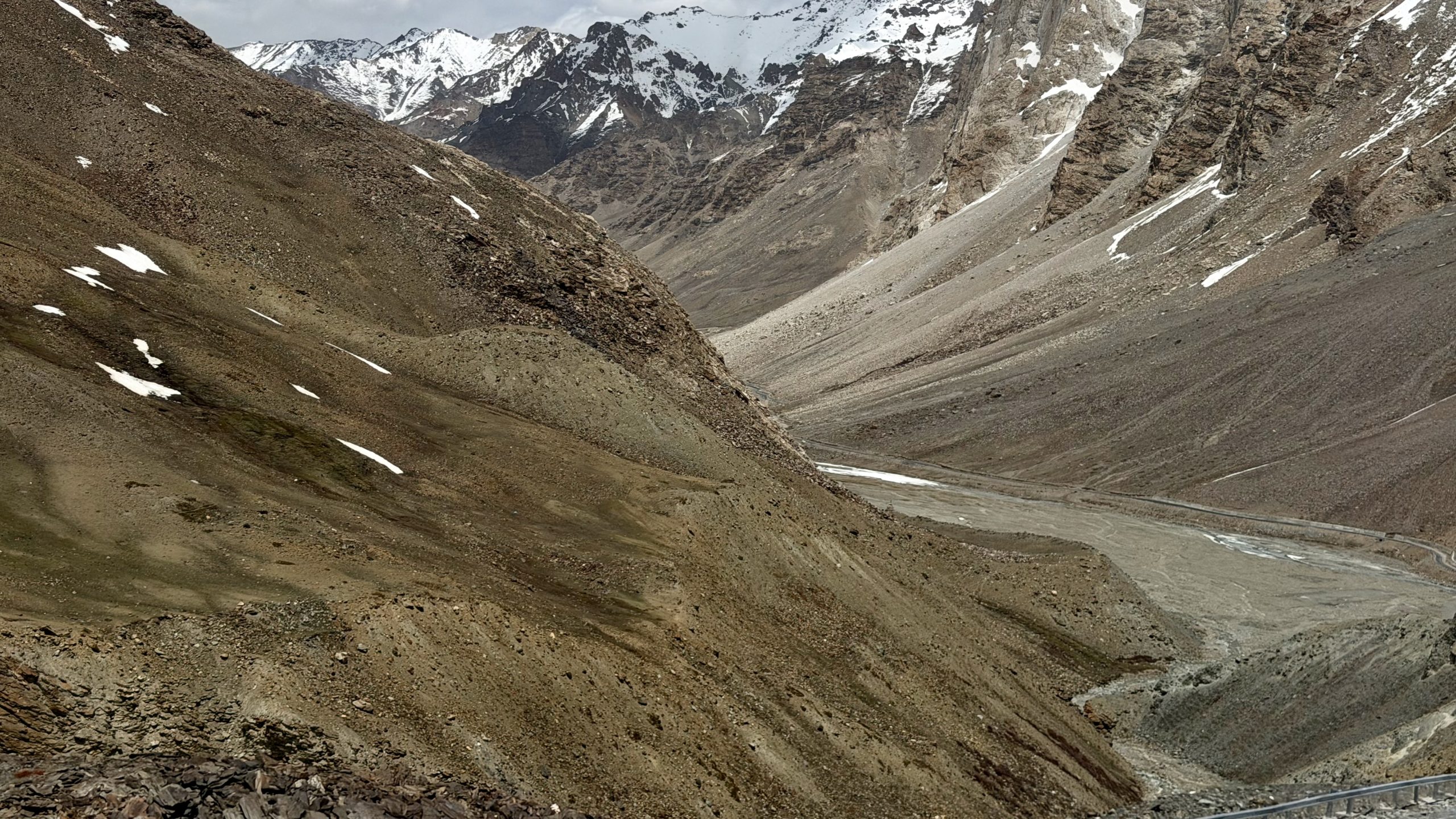
Some turned back from there, while others continued deeper into Zanskar. The green alpine landscape was definitely behind us now.
At the very back of the car sat a few Indian passengers, in the front seat a woman from Zanskar — whom I later ran into again at the market, where she greeted me warmly, hugged me, and invited me to her home. During the drive, however, she had barely looked at me. On the middle bench sat a young woman from Stongde and two young men from Padum, who turned out to be uncle and nephew. The uncle’s name was Ringchen. He was funny — a guide with huge Rastafarian dreadlocks who had obviously done a fair bit of trekking with Russians. We talked quite a bit, and eventually it turned out that I had met his older brother some years earlier. He had stayed in my memory. He had attended a Christian boarding school in Shimla and had later been called back home because he was supposed to inherit his late father’s job (at least some jobs in Zanskar are hereditary). I met him back then in this restaurant-cum-hotel, where I had also met Raju during the curfew. He liked spending time there because most of the staff were from Himachal Pradesh — where Shimla is — and culturally and linguistically he connected with them much better, because after years away he neither spoke Zanskari particularly well nor felt at home in the local culture anymore. Religiously, he was completely confused too. Born Buddhist, he found Christianity quite appealing — especially the Christmas rituals. He told me he no longer really knew who or what he was. That can happen when children are sent away for years to boarding schools with little contact to home because of how remote the region is. And Ringchen? He had attended the same boarding school but didn’t seem confused at all — instead, he embraced all religions. “Look, I even have Shiva tattooed on my neck!” His older brother had apparently come to terms with his situation by now, although they didn’t seem to be in close contact.
At least Ringchen knew Lameth, my future guide, who was supposed to pick me up in Padum. My SIM card had stopped working. In this Himalayan region, prepaid SIM cards don’t work — you need a postpaid SIM, and as a foreigner there is only one place to get one: the Airtel shop in Leh. Until then, I was without a SIM. And I can already say this: I hated it.
Anyway, Ringchen called Lameth for me, and he came to pick me up in Padum.
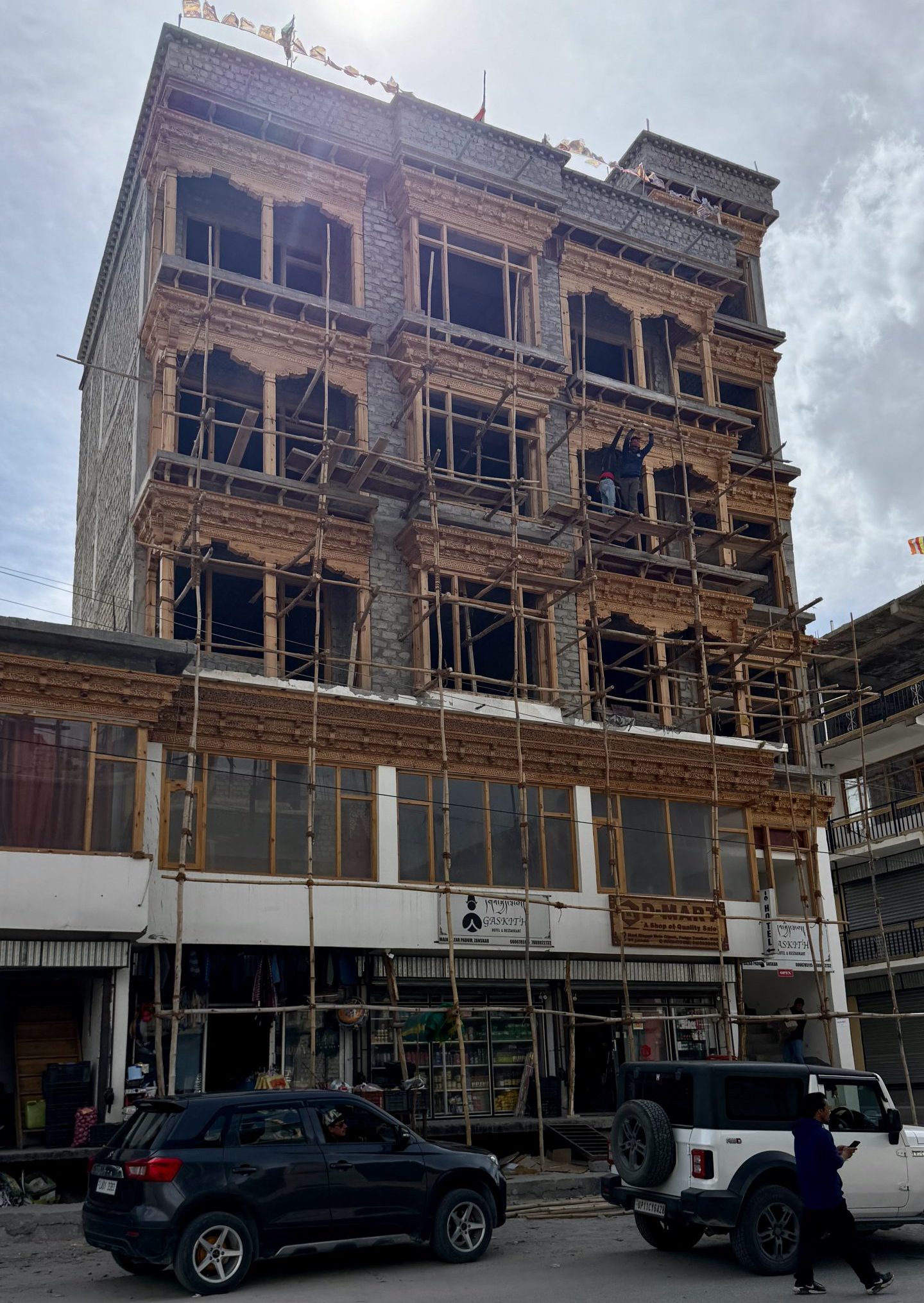
By the way, this building housed that restaurant-cum-hotel I mentioned before — back then it was written as Ga Kyi, today it’s called Gaskith. And as you can see, the owner seems to have big plans.
Including breaks, the journey had taken around five hours. That was pretty crazy. The last time I had been to Zanskar was in 2024. (check this: Blog). There I already wrote about some changes in Zanskar, especially here:
This time, I focused on different aspects and visited different places. Basically, Zanskar consists of three valleys that converge in Padum. There is the Lungnak side (between Shinkun La and Padum), the Stod side (between Aksho and Padum towards Kargil), and Lower Zanskar (between Zangla and Padum towards Ladakh). Traditionally, the Stod side was the route through which almost everything from outside entered the region, because this was where the only road connection to the outside world existed. Lower Zanskar had the only winter access route via the frozen Zanskar River — the famous Chadar Trek. And now all three valleys are connected to the outside world within about five hours by road! In the past, bureaucratic paperwork was extremely exhausting for Zanskaris because they often had to undertake multi-day journeys to Kargil or Leh. Today, they could get there much faster — but often don’t even have to anymore, because so much has moved online. Very convenient!
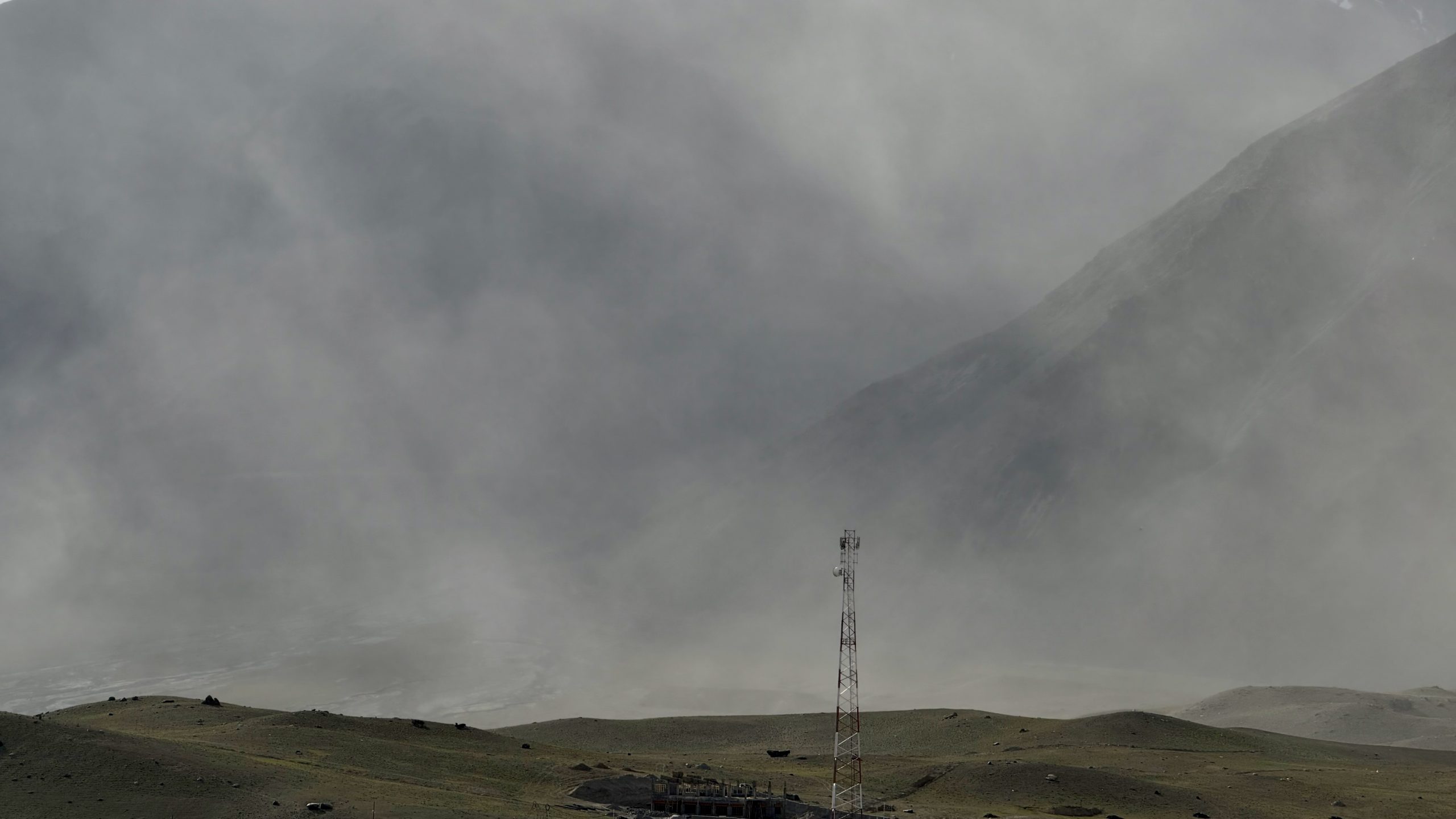
Everywhere, red-and-white mobile towers rise into the sky, and you have connection almost everywhere.
So here are the big changes from the outside:
- nearly full year connection by road (this winter they were only cut off about a month)
- nearly everywhere possibilities of communication
- good power via small and big hydel projects and solar panels
- Water access at the house (Jal Jeevan)
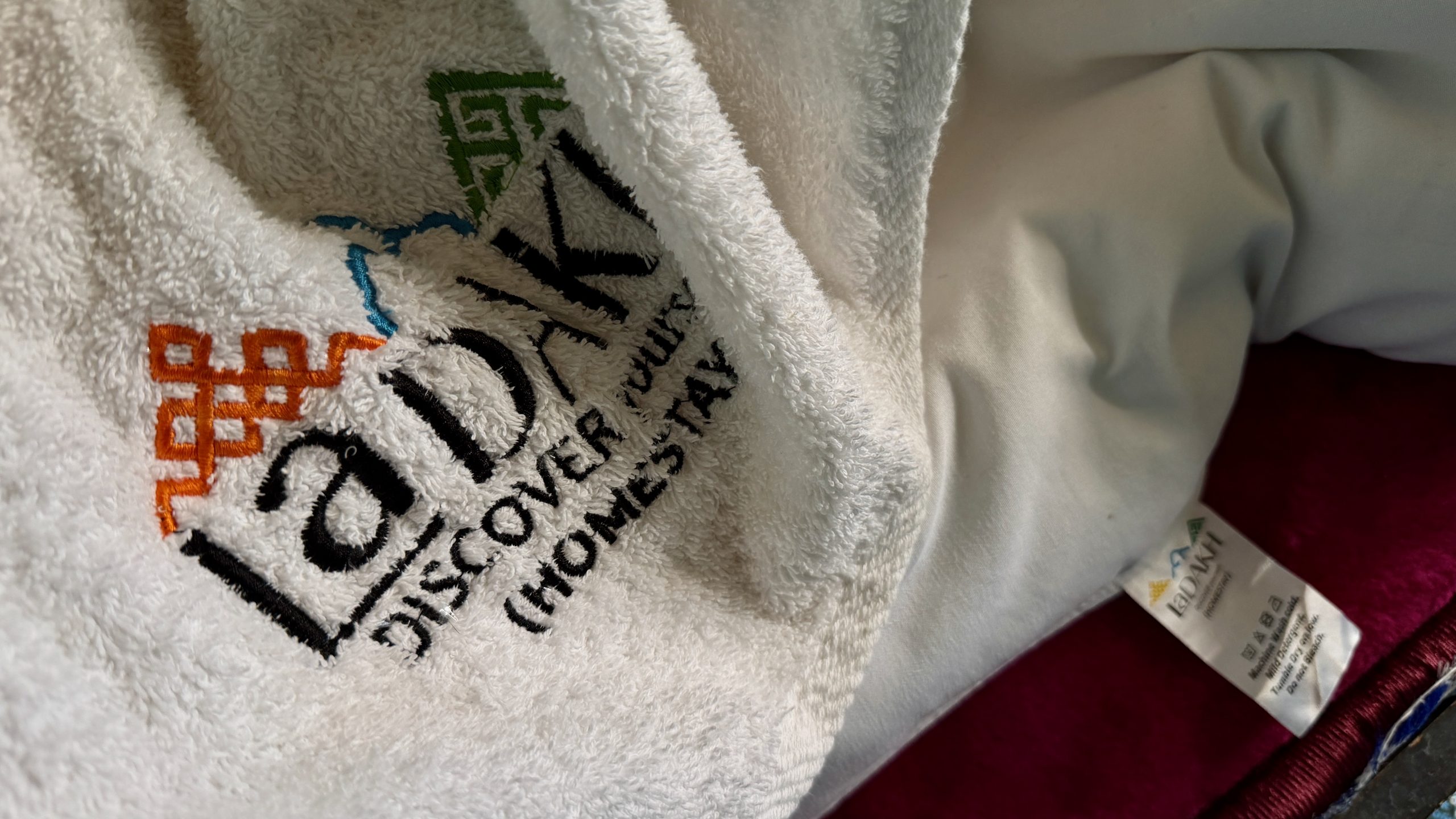
This changes life enormously. Tourism, for example, plays a bigger and different role now. In the past, Zanskar was considered a trekking paradise; today, it has become more of a road trip destination. The vast majority of travellers are Indian — travelling by motorcycle, private car, or on package tours in taxis. Their stays tend to be quite short. Motorcycle travellers, in particular, often stay only one night and hardly visit anything, while others spend a few nights, usually including visits to the larger monasteries. As a result, more accommodation is needed, and construction is happening everywhere. On top of that, the government actively promotes homestays. People can buy equipment for them at reduced prices — water filters, blankets, bedsheets, towels — and there is a standardised pricing system: 1,500 INR (around 15 euros) per night including all meals.
Lameth lives in Tsazar, where his aunt Dawa runs a homestay. That’s where I stayed, and I spent the following day walking around the village. There I learned even more about further changes — and I’ll write about them in the next blog post.
So we drove there, and the weather was so impressive that I took loads of photos during the roughly 30-kilometre journey:
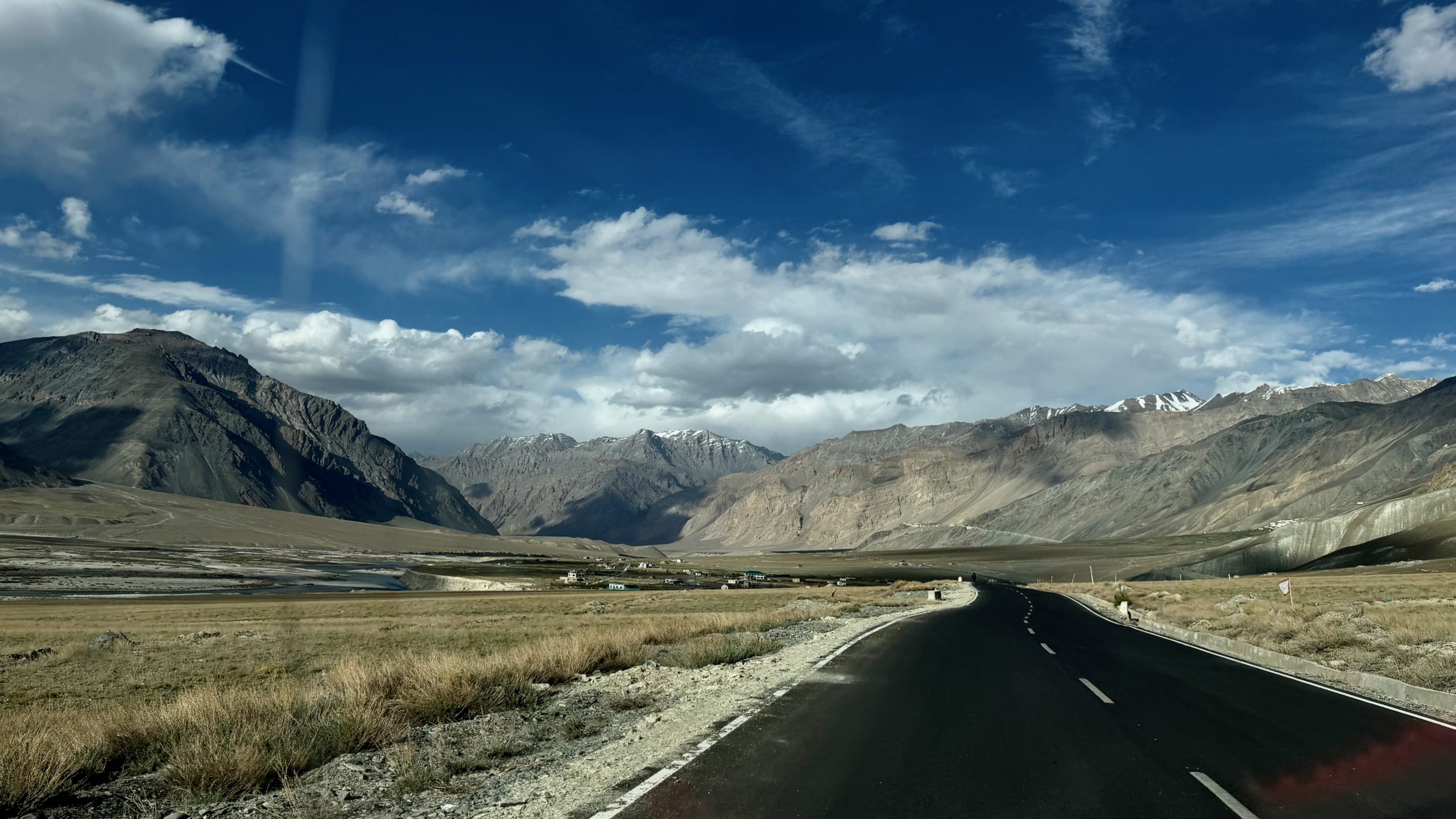
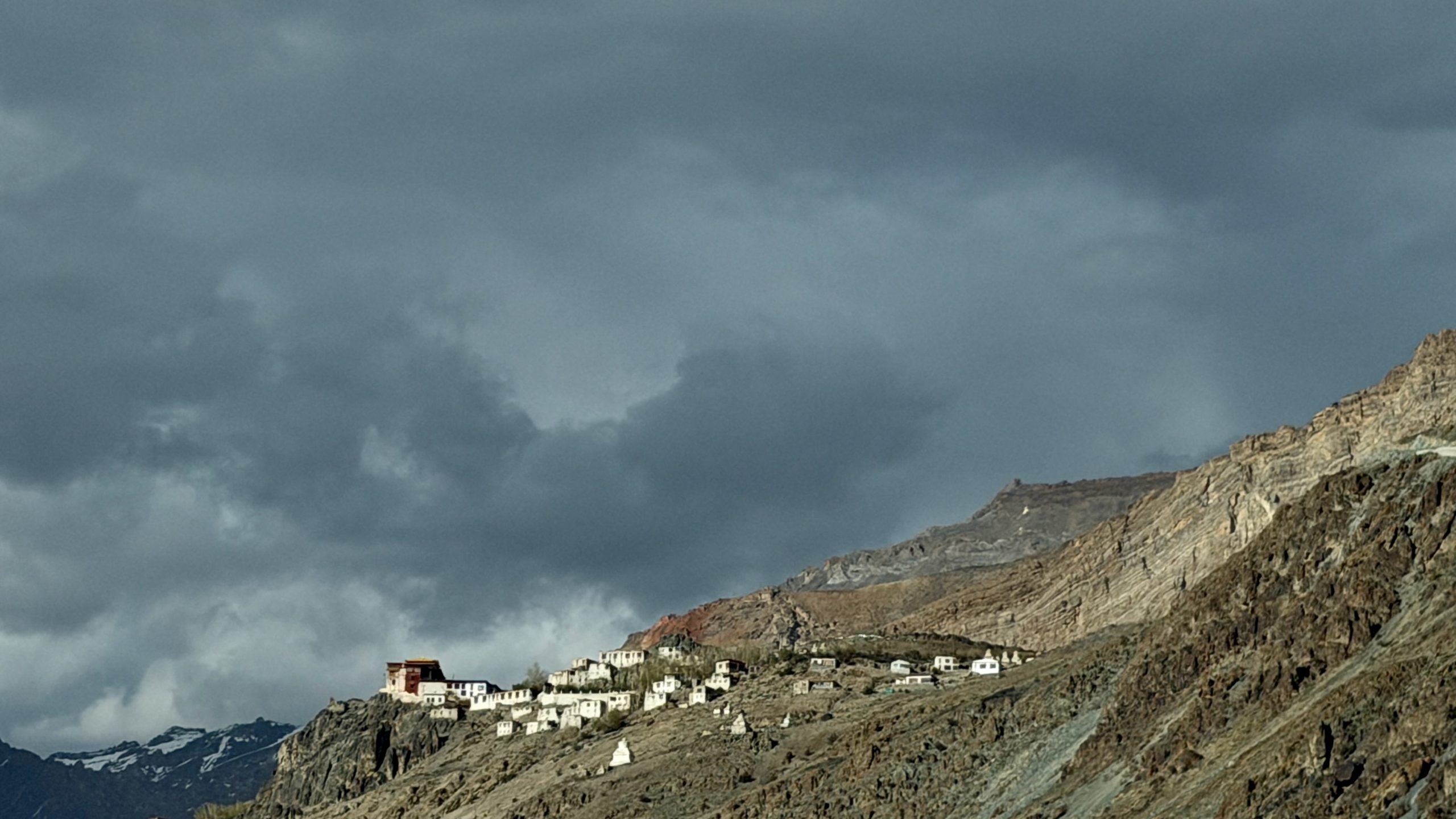
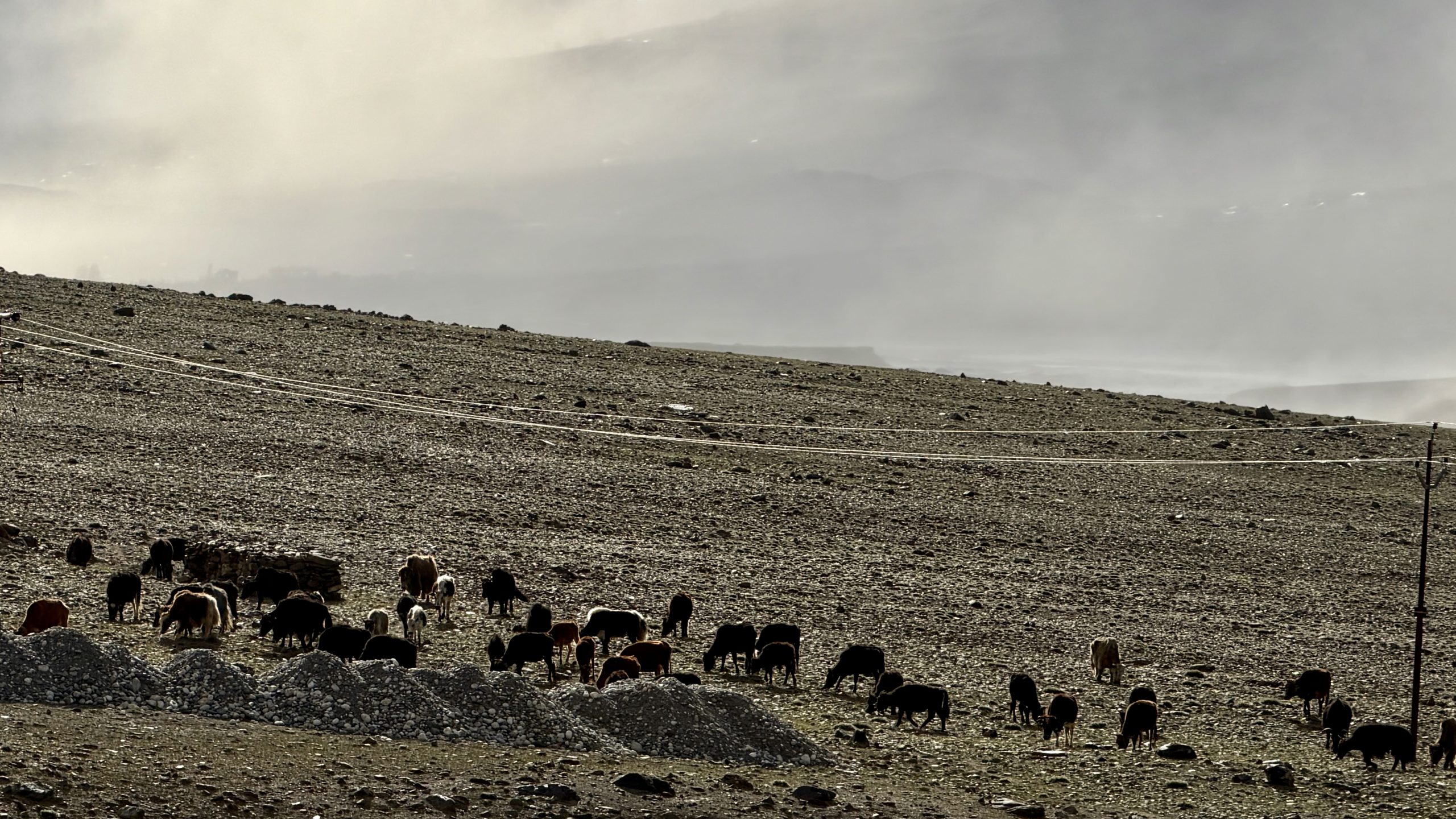
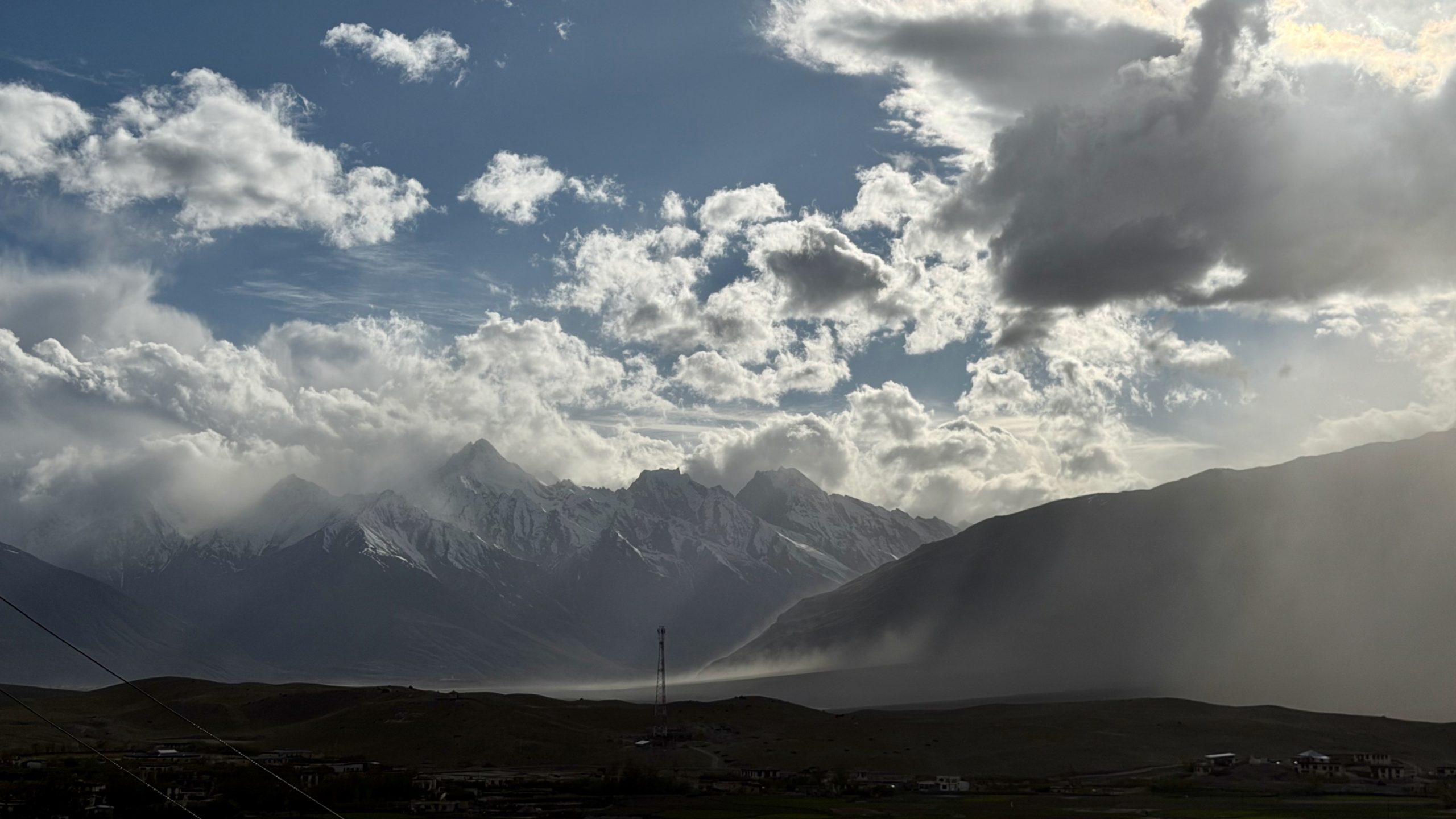
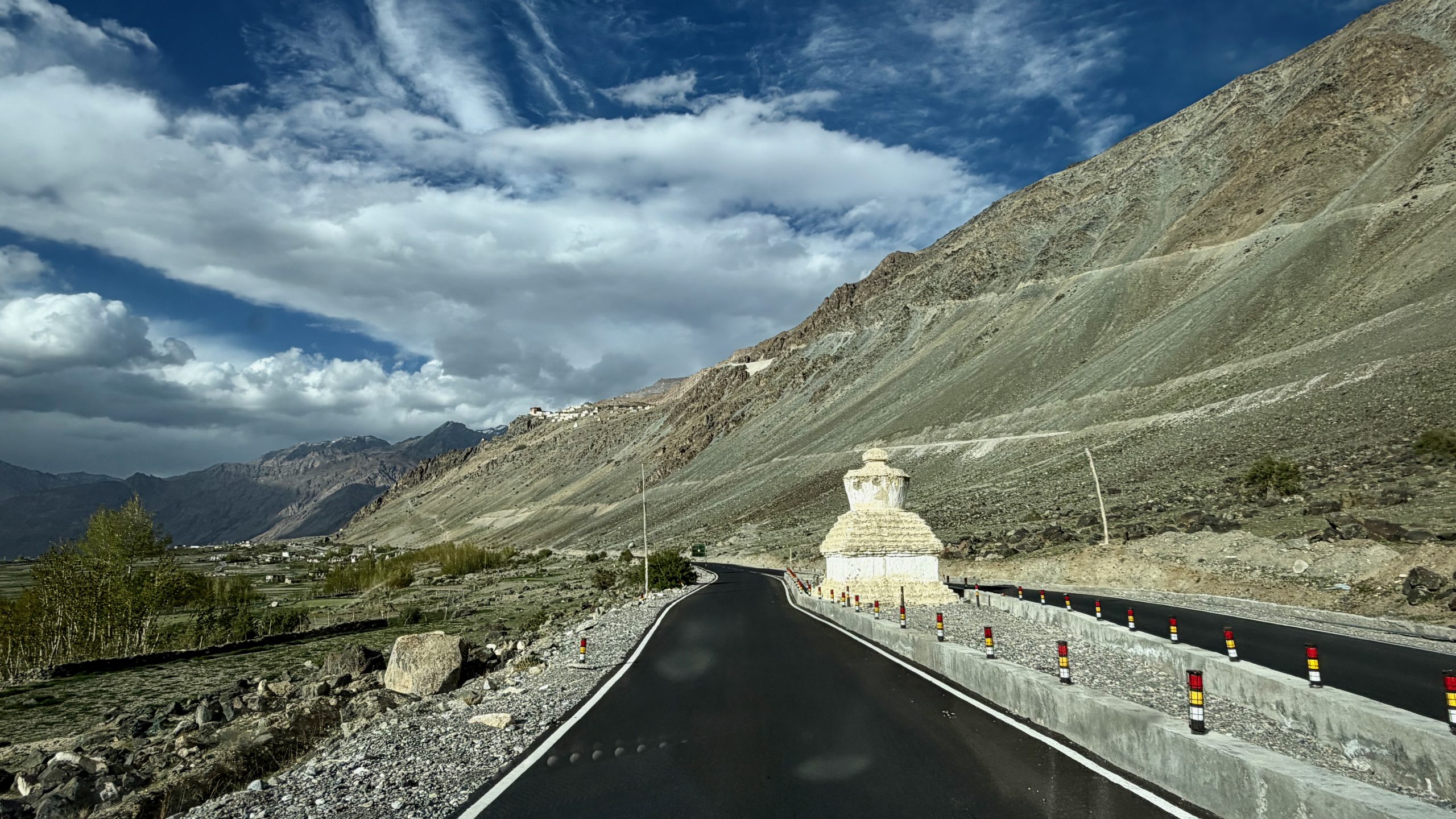
In any case, crossing the pass felt like entering a completely different world — one that is currently going through an incredibly fascinating period of change. And I was excited to witness at least some of it firsthand.