


Tsazar – Frisky Fidos dance the Tango
25. May 2026
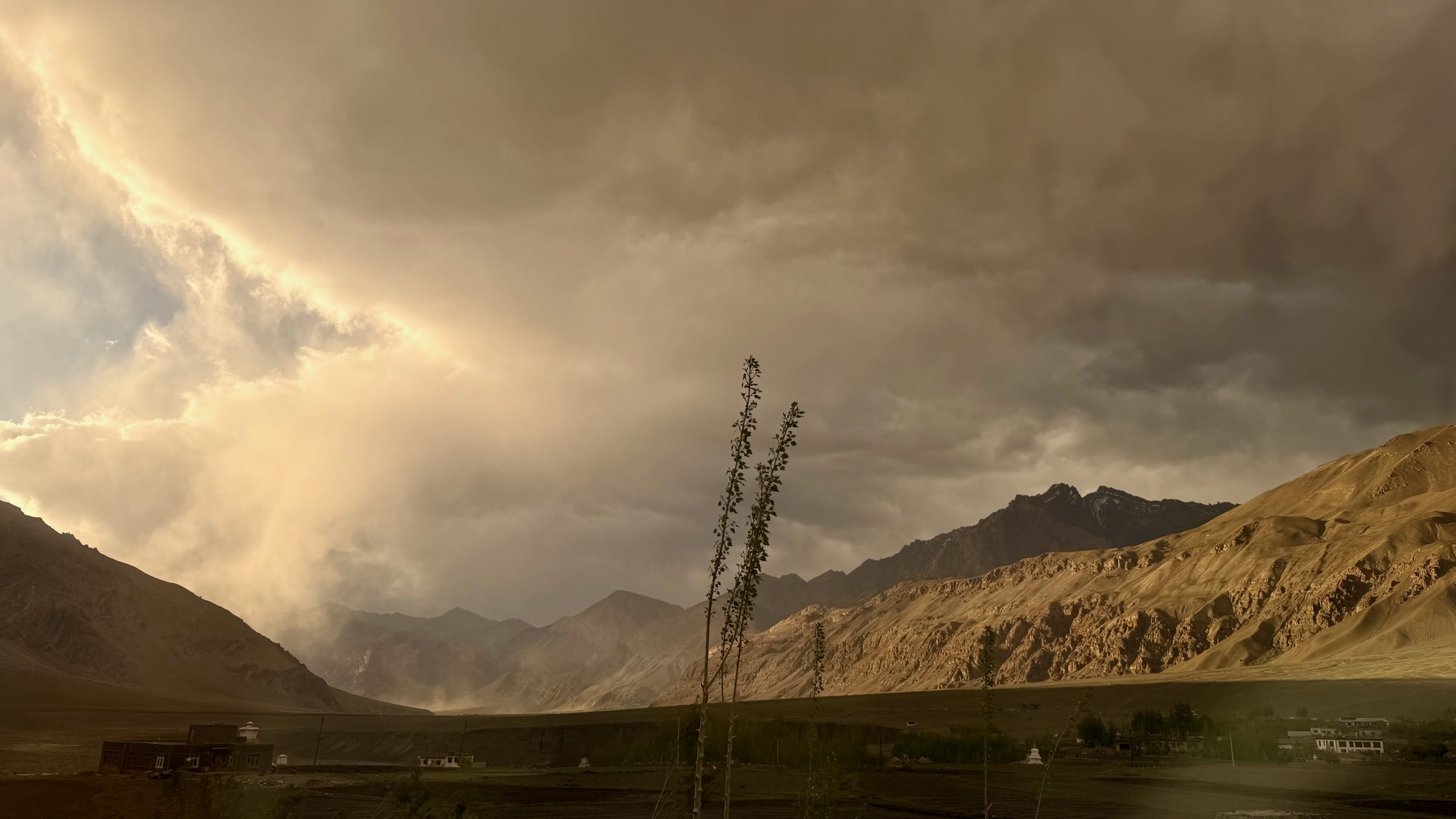
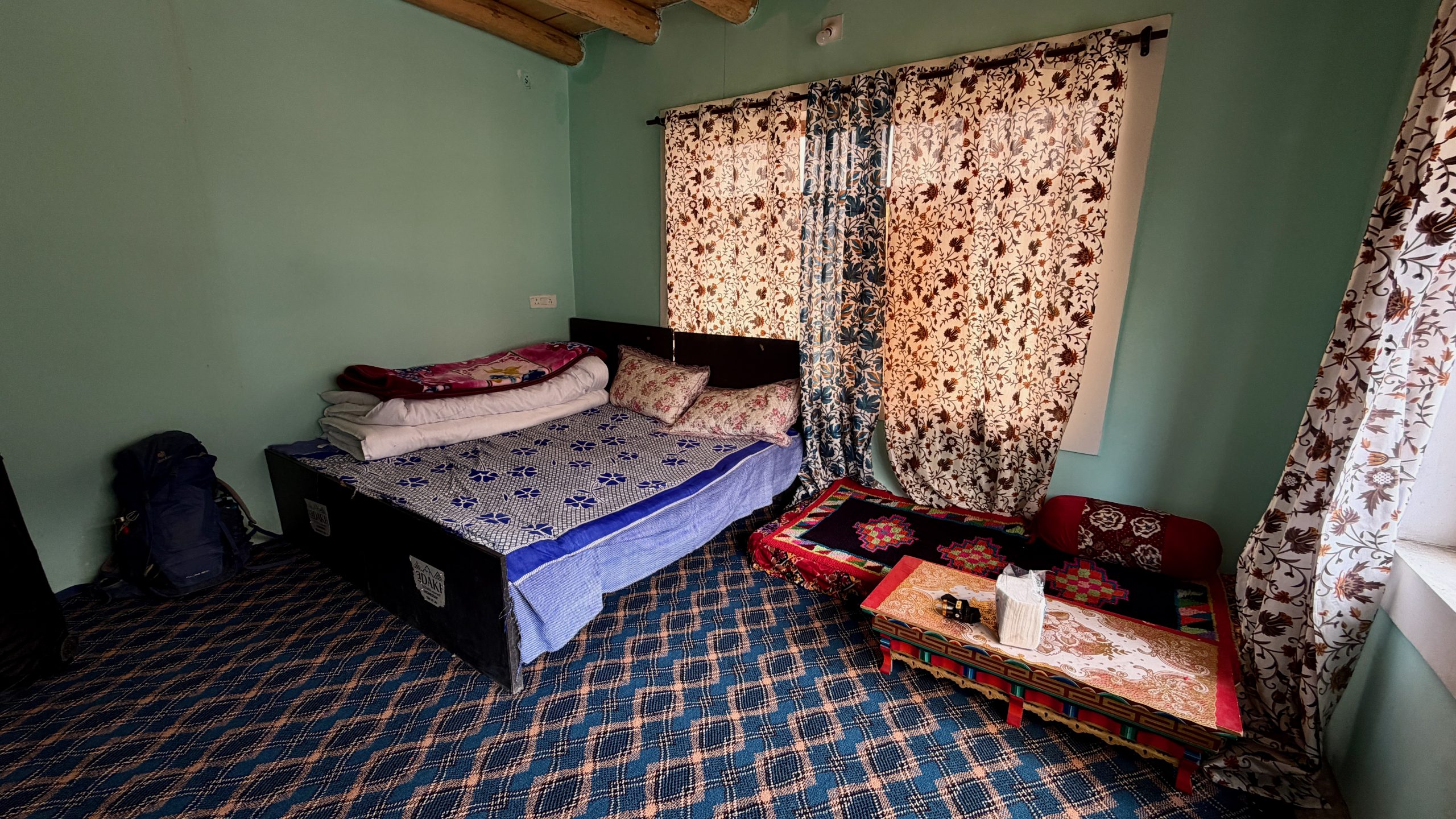
This is the view from my window — when in the evening it turns stormy and wild. And this is the room. It’s the cleanest homestay I’ve ever stayed in.
The house stands on a compound together with two other houses. One is home to Lameth’s extended family, while the other is a newly built house where one of his brothers and his family will soon move in. In this homestay house, Dawa lives with her husband Norbu — their child is away studying elsewhere. Norbu works as a driver and is therefore often away from home. The whole family is very dog-friendly — Dawa alone has three dogs, all incredibly energetic and constantly jumping and running around.
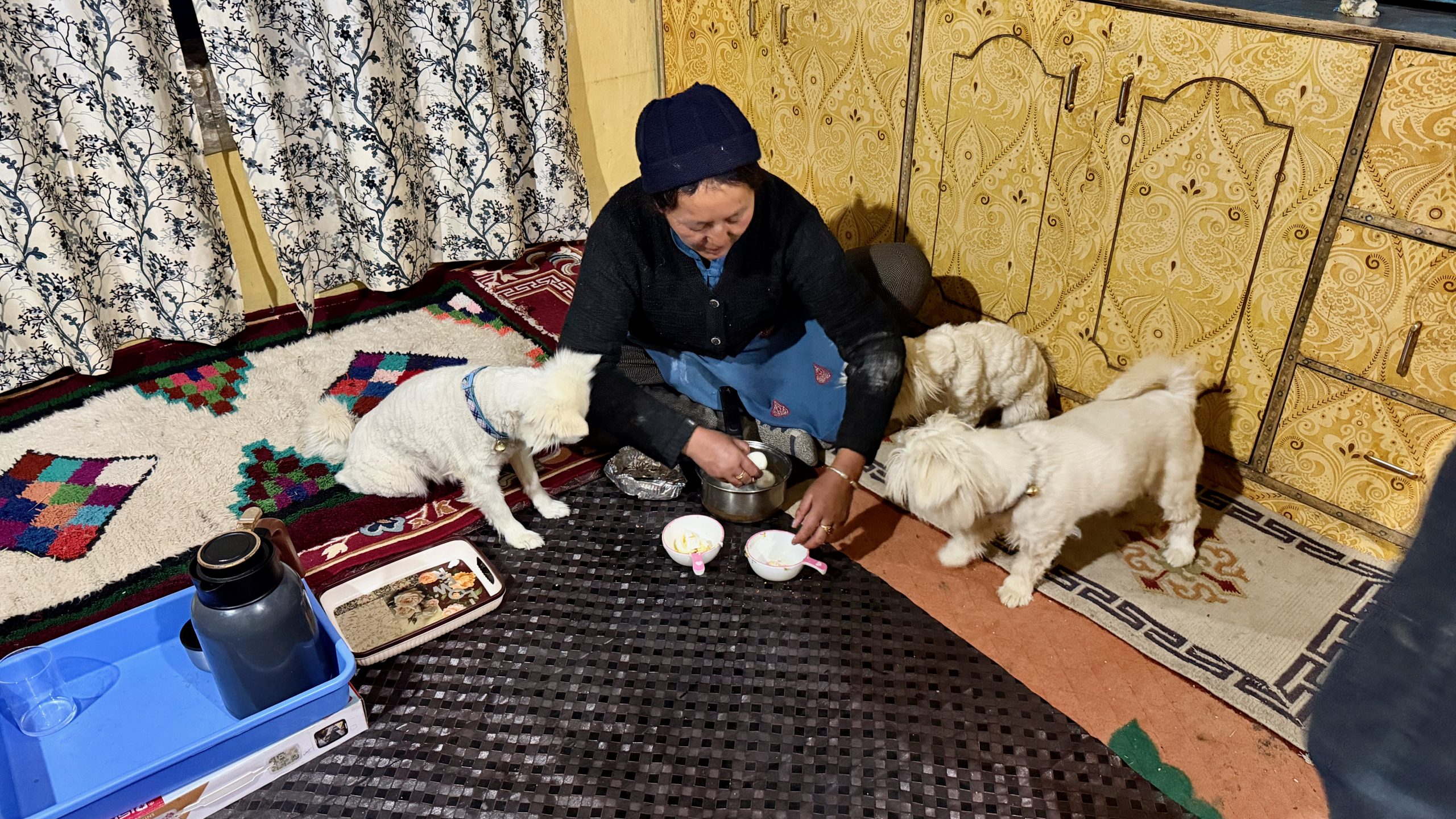
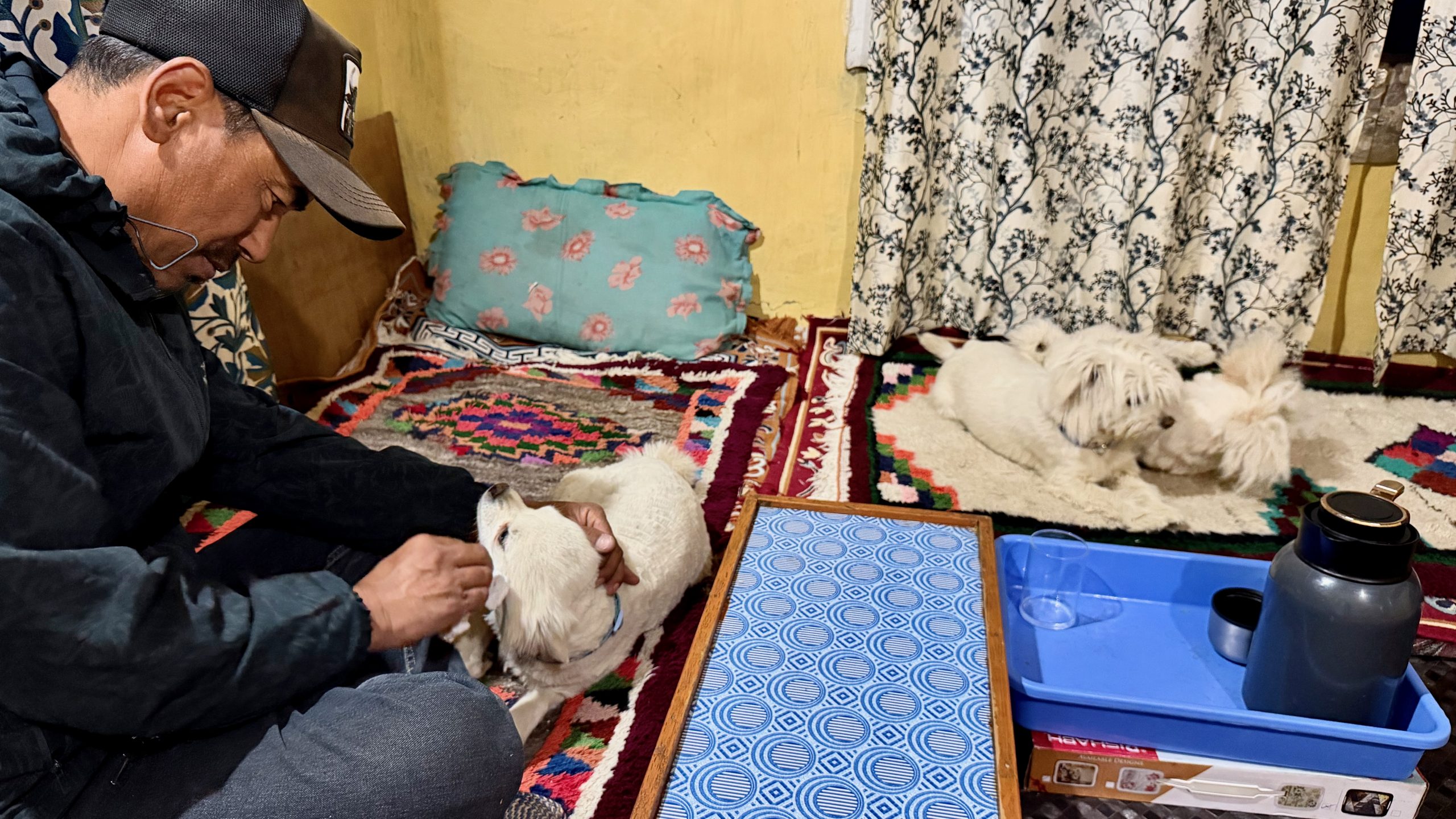
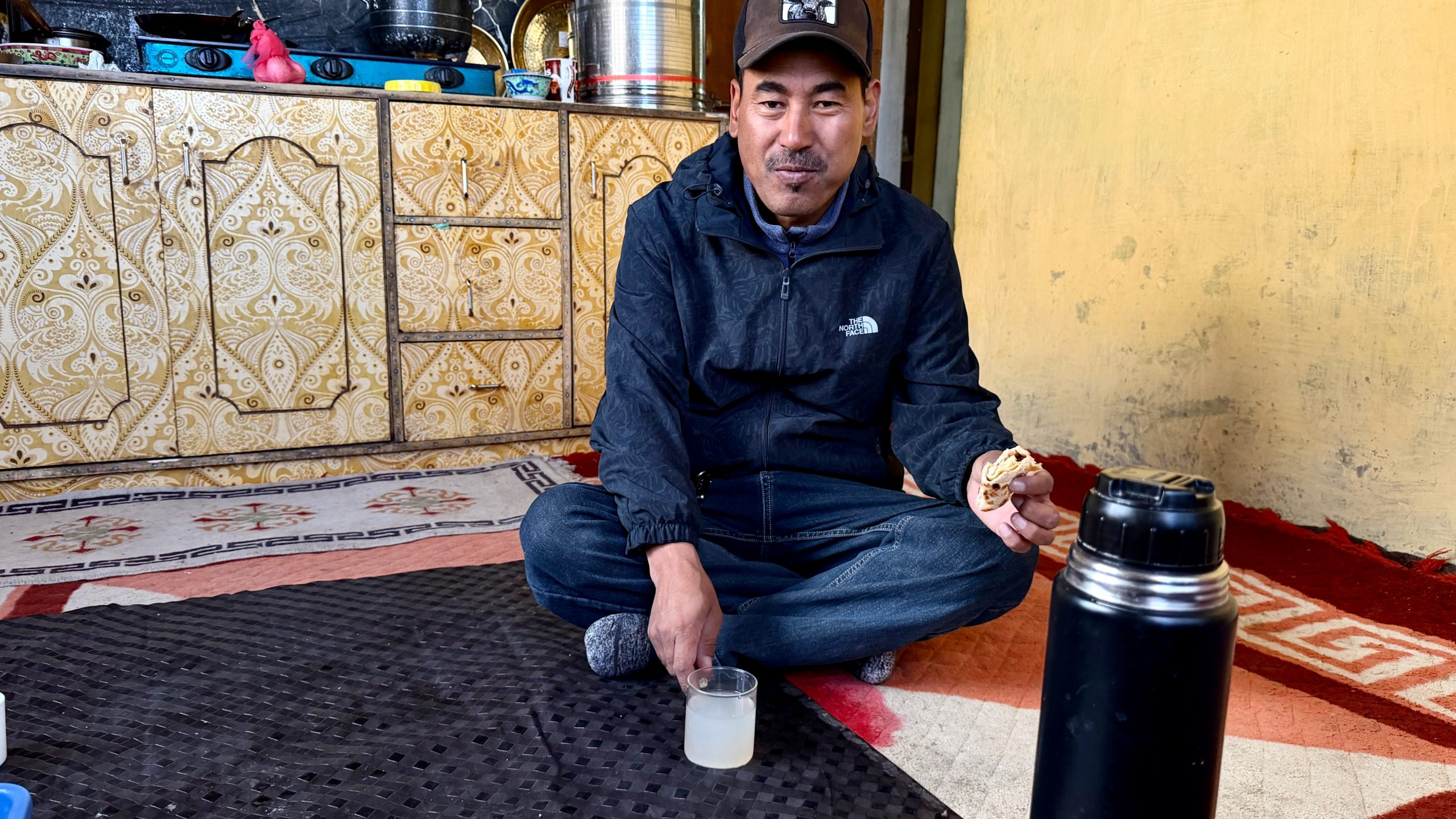
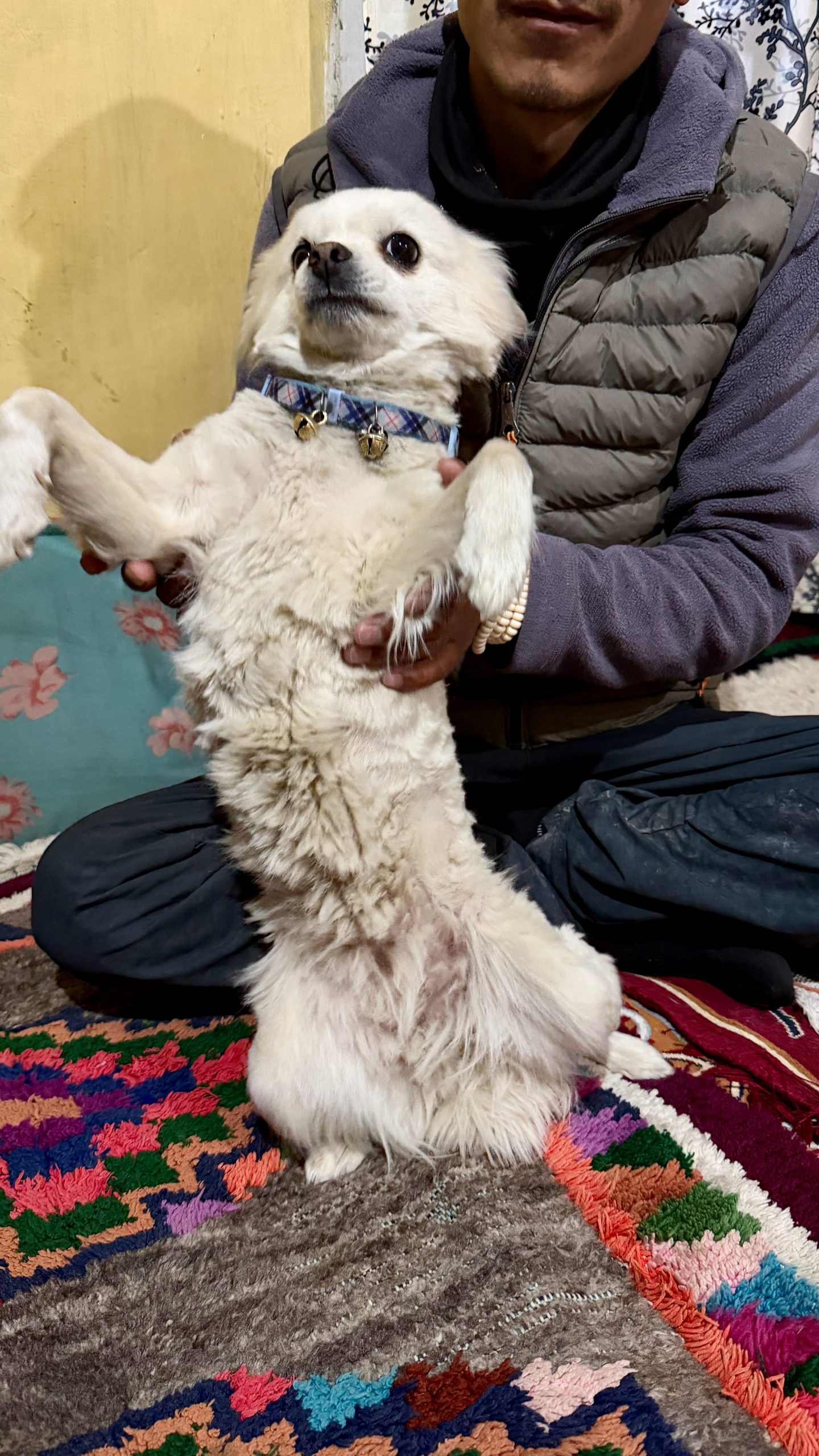
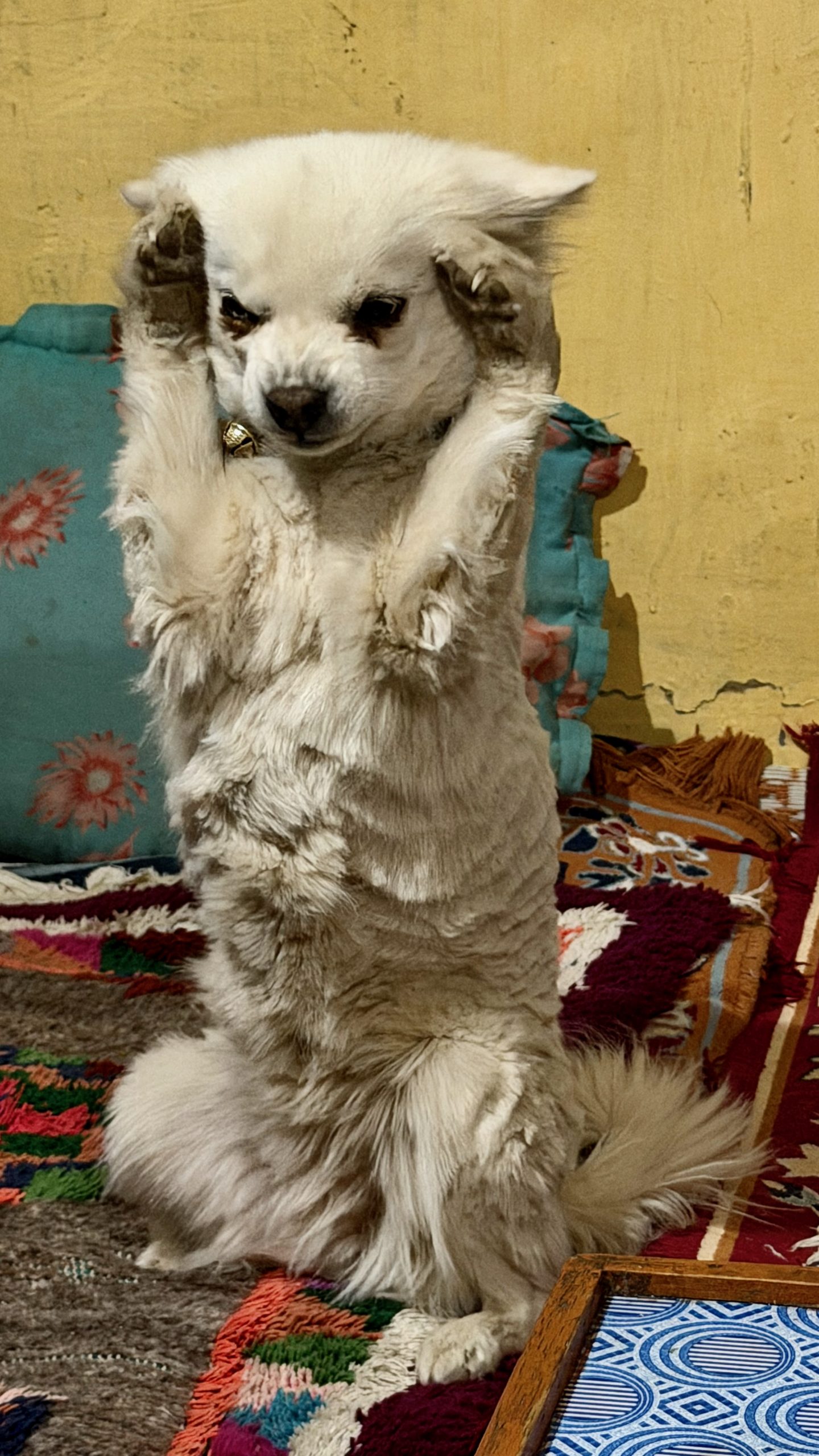
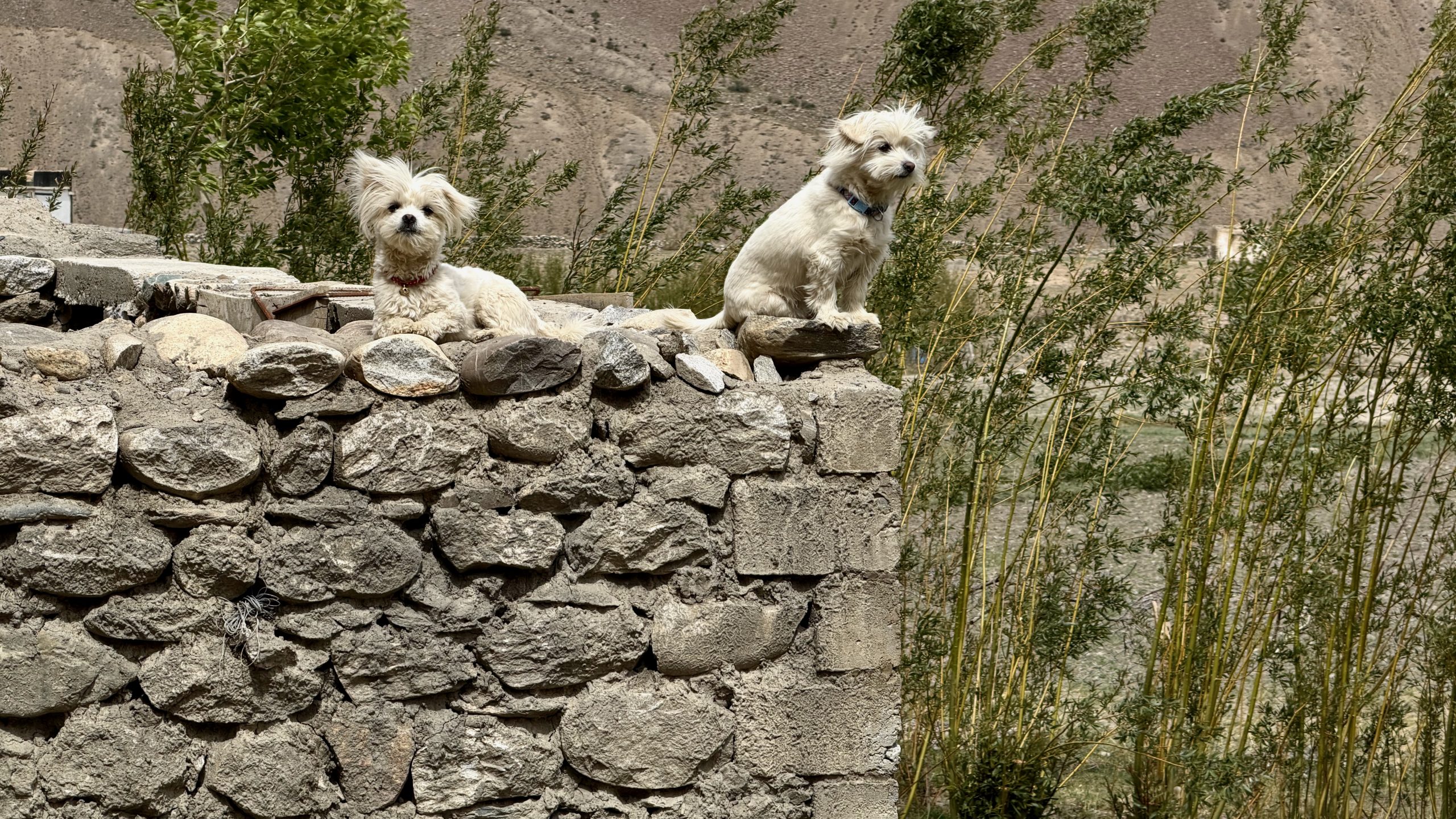
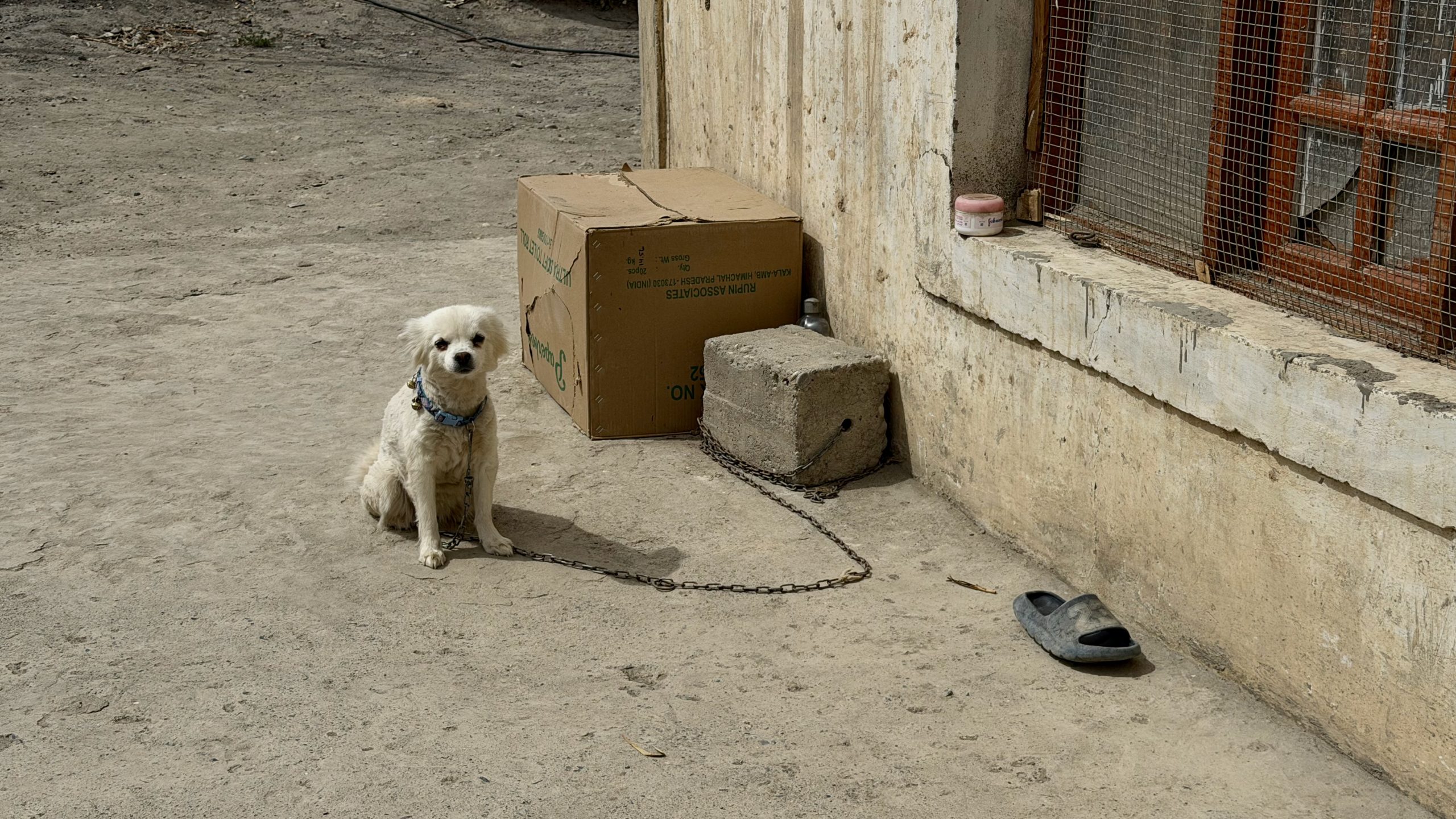
Dawa is a fantastic cook, although I never photographed the food. Unfortunately, she doesn’t speak English, but she always greets you with a smile and takes great care of her guests. And either Norbu is around to translate or Lameth comes over to help out. An absolute feel-good home!
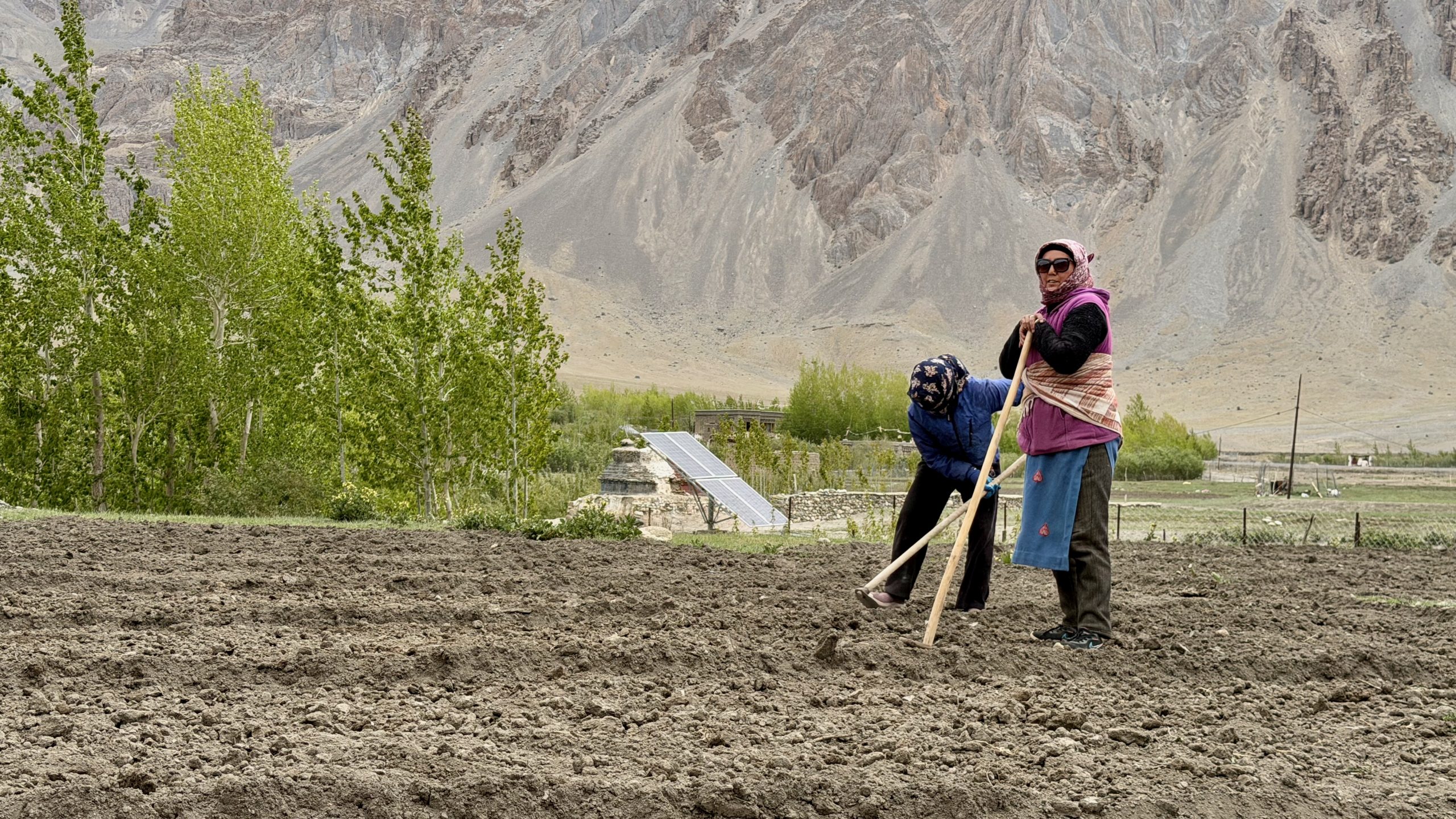
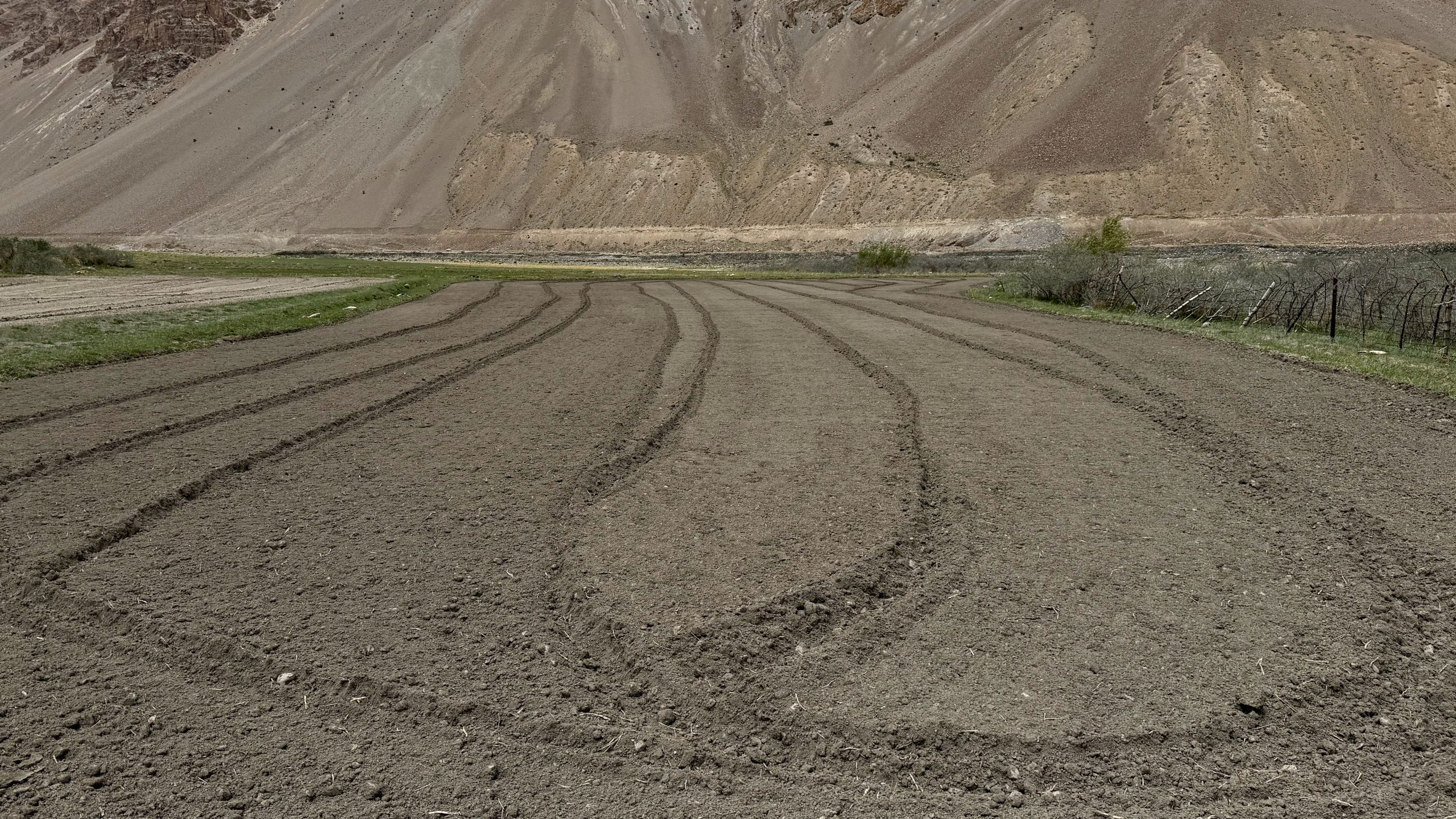
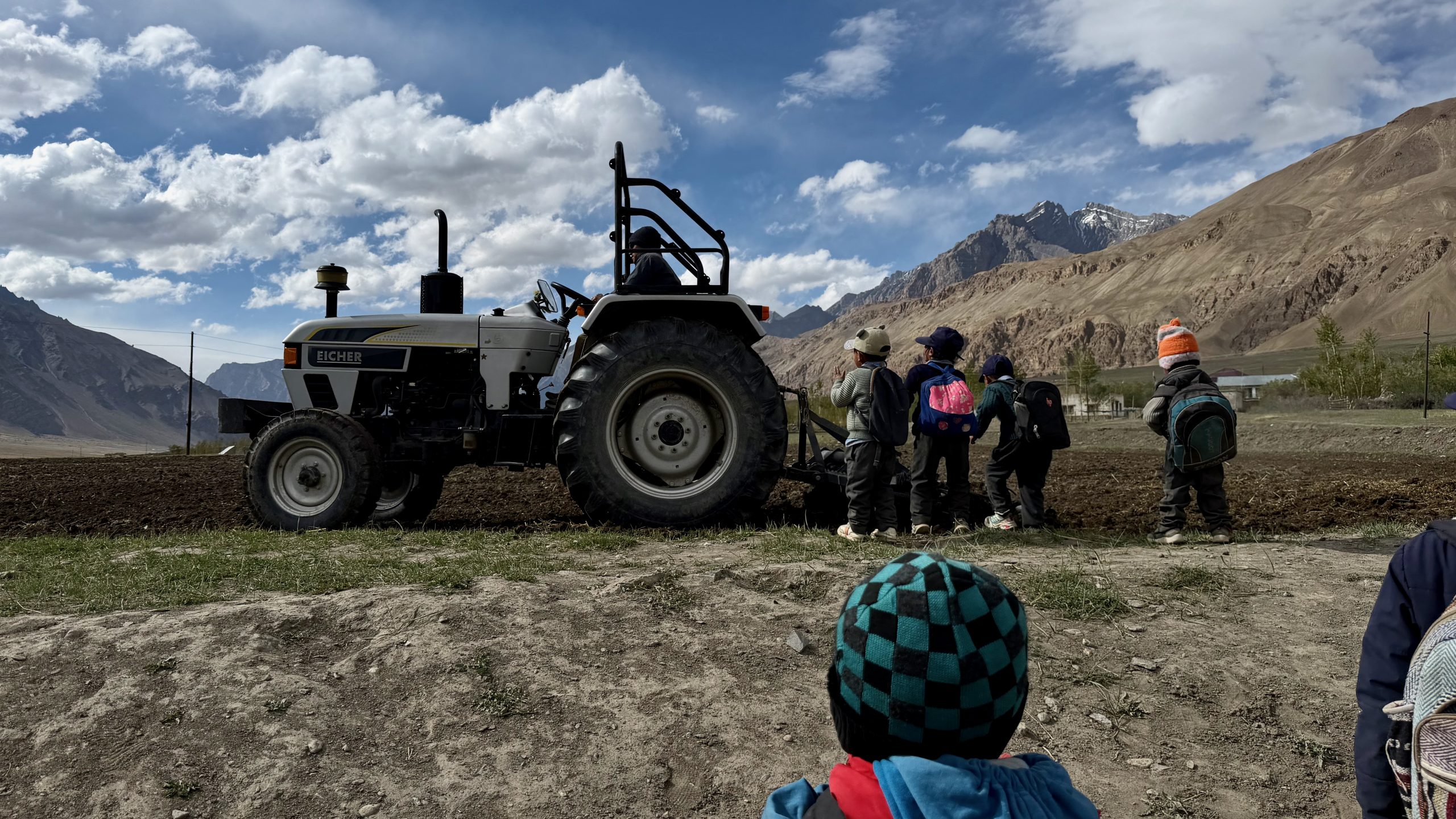
At that time, people were preparing the fields for sowing. Small channels and ridges are made so that the water can reach every part of the fields properly. Throughout this whole area, irrigation relies almost entirely on water coming down from the mountains, which is distributed through small canals running through the villages. The snowier the winter, the better the irrigation prospects. This winter was not particularly generous, and people are hoping that there will still be enough water. We visited several villages, and I learned that sowing happens at slightly different times depending on the place — elsewhere people were already further ahead and many fields showed a soft green colour. Tsazar is a bit later, but the plants grow faster once they start. People mainly grow barley, peas, and some potatoes. A lot of the work is still done by hand, although machines can be used for some tasks — like the neighbour here ploughing with his tractor.
The weather was cloudy at first (though later the sun broke through), and I set off for a walk around the village. Before that, however, I spent some time admiring the greenhouse. Back in Keylong, I had met a Ladakhi with whom I talked a bit about politics. I’m not exactly a fan of the government, and neither was he. But he argued that people in Zanskar are, in a way, being won over by the ruling party, because a lot of development projects and subsidies are currently flowing into the region. And to be fair, many of these changes really are making life easier. I already mentioned the homestays, as well as the groundwater access directly at people’s homes. Another thing worth mentioning are the solar water heaters, which stand next to almost every house. They provide properly hot water even in winter — perfect for washing clothes, hair, and basically everything else. And around two years ago, polycarbonate greenhouses, similar to the ones I had already seen in the higher parts of Himachal Pradesh, were introduced here. All these improvements are available to local people at very affordable prices.
People had experimented with greenhouses before, but had never found anything that could withstand the constant strong winds over the long term. And when I saw these greenhouses, I immediately thought: yes, exactly — this is what they needed. Why didn’t anyone come up with this earlier? And they are changing life dramatically. People can now grow vegetables that were difficult or impossible before: tomatoes, cucumbers, beetroot, and even strawberries and watermelons. Fresh vitamins are available almost year-round — a luxury that simply did not exist before. On top of that, the plants grow so well that families often have some surplus produce to sell. This is one of those changes in Zanskar that seems to make almost everyone genuinely happy.
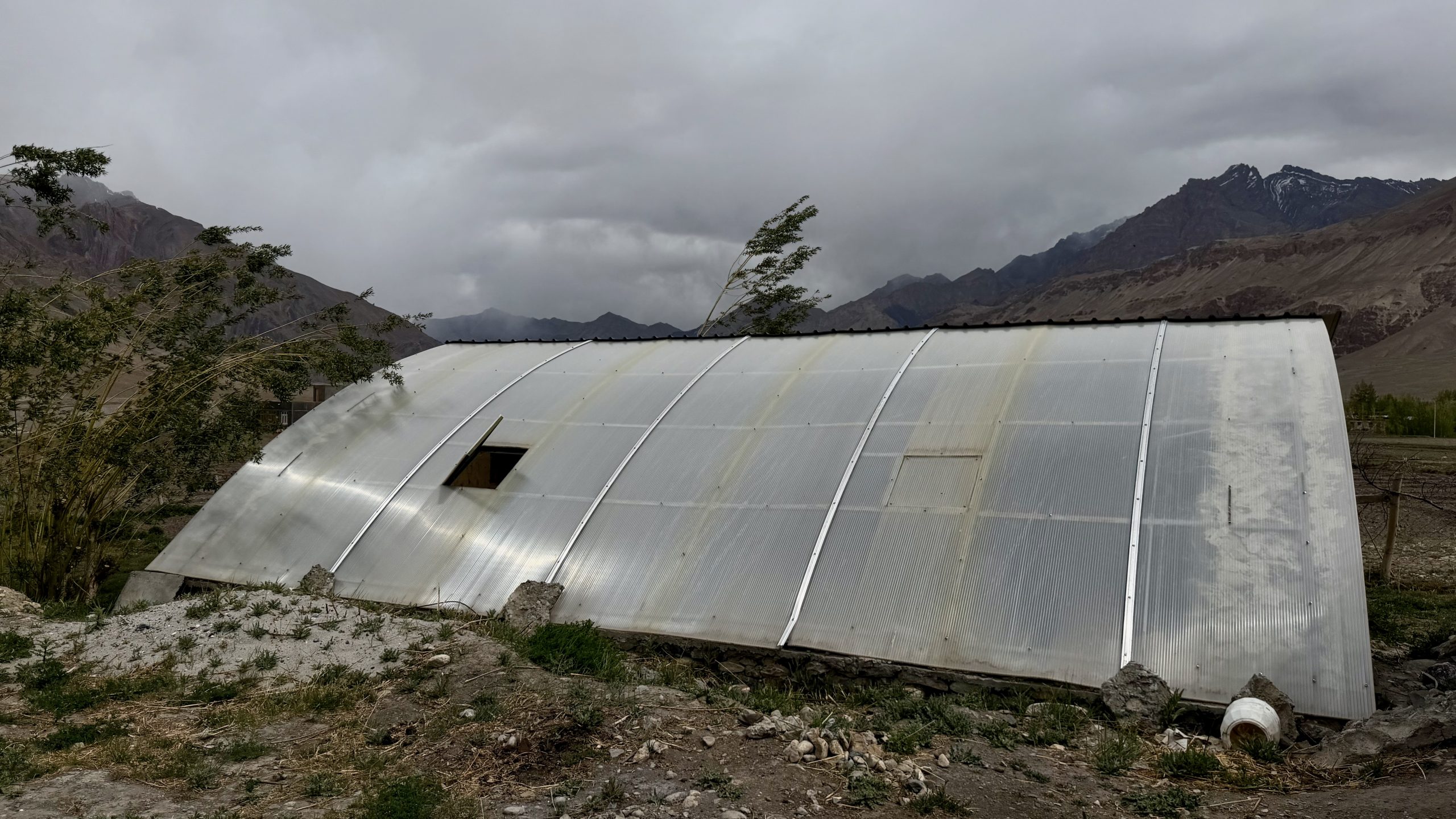
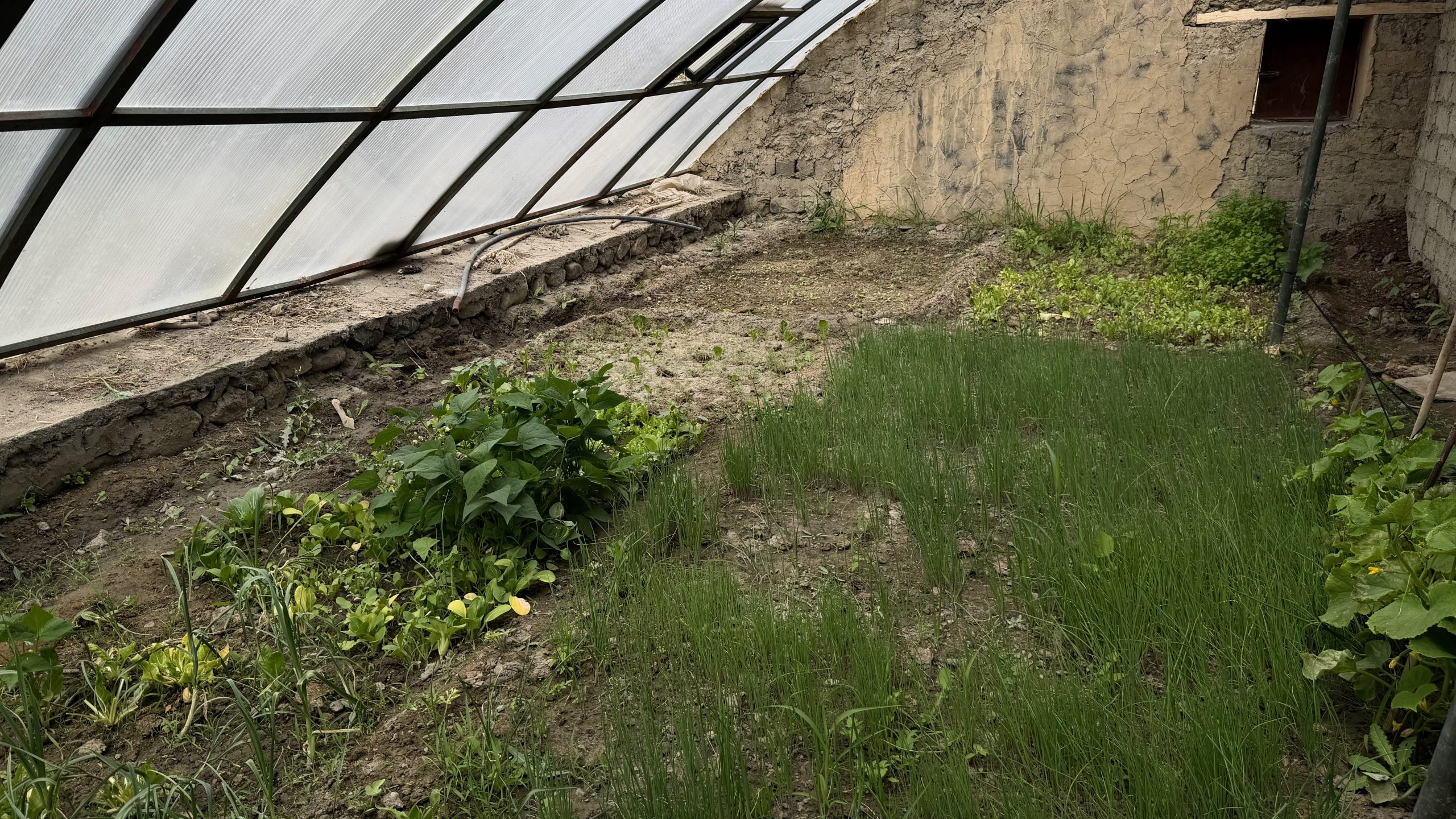
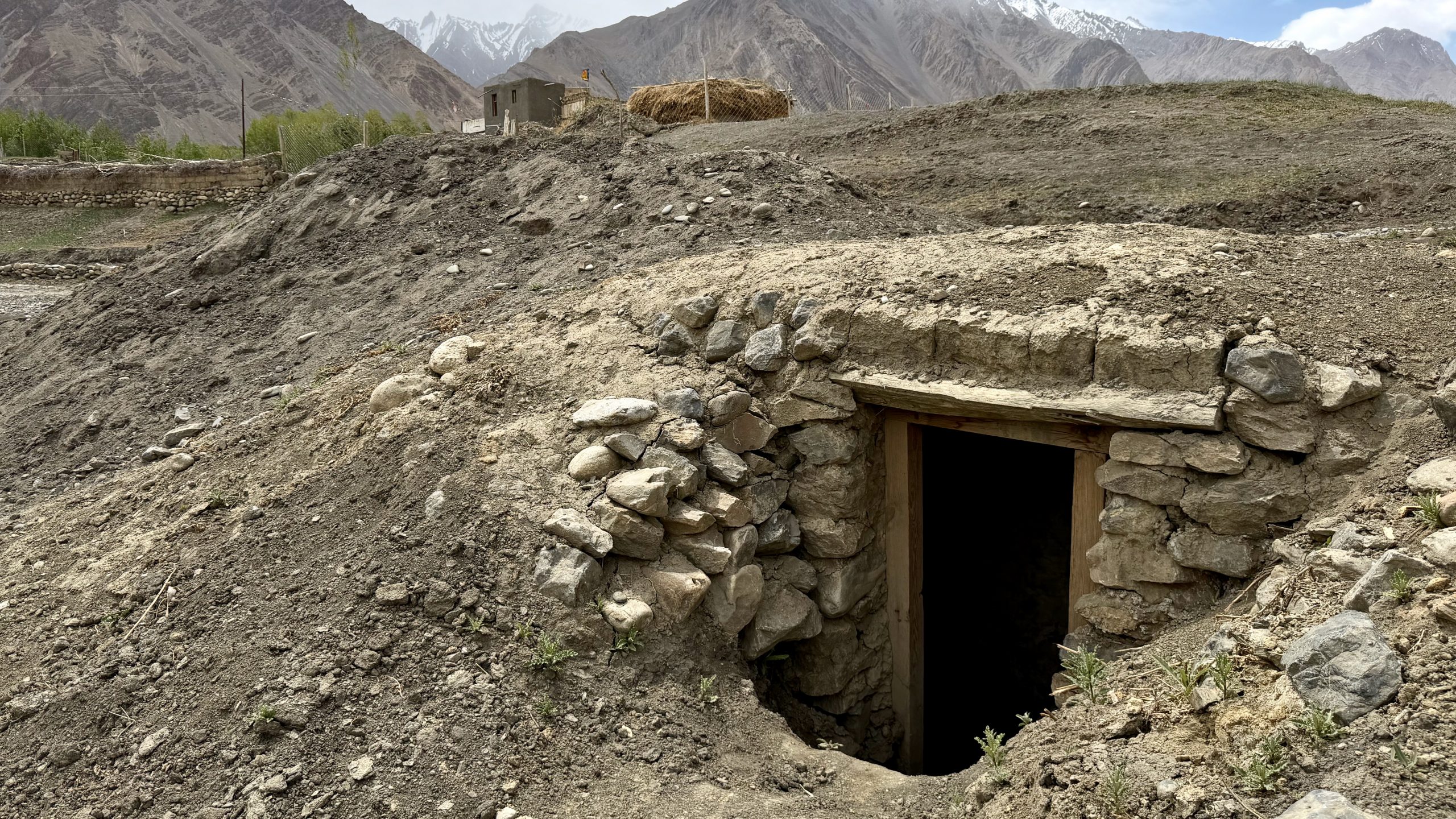
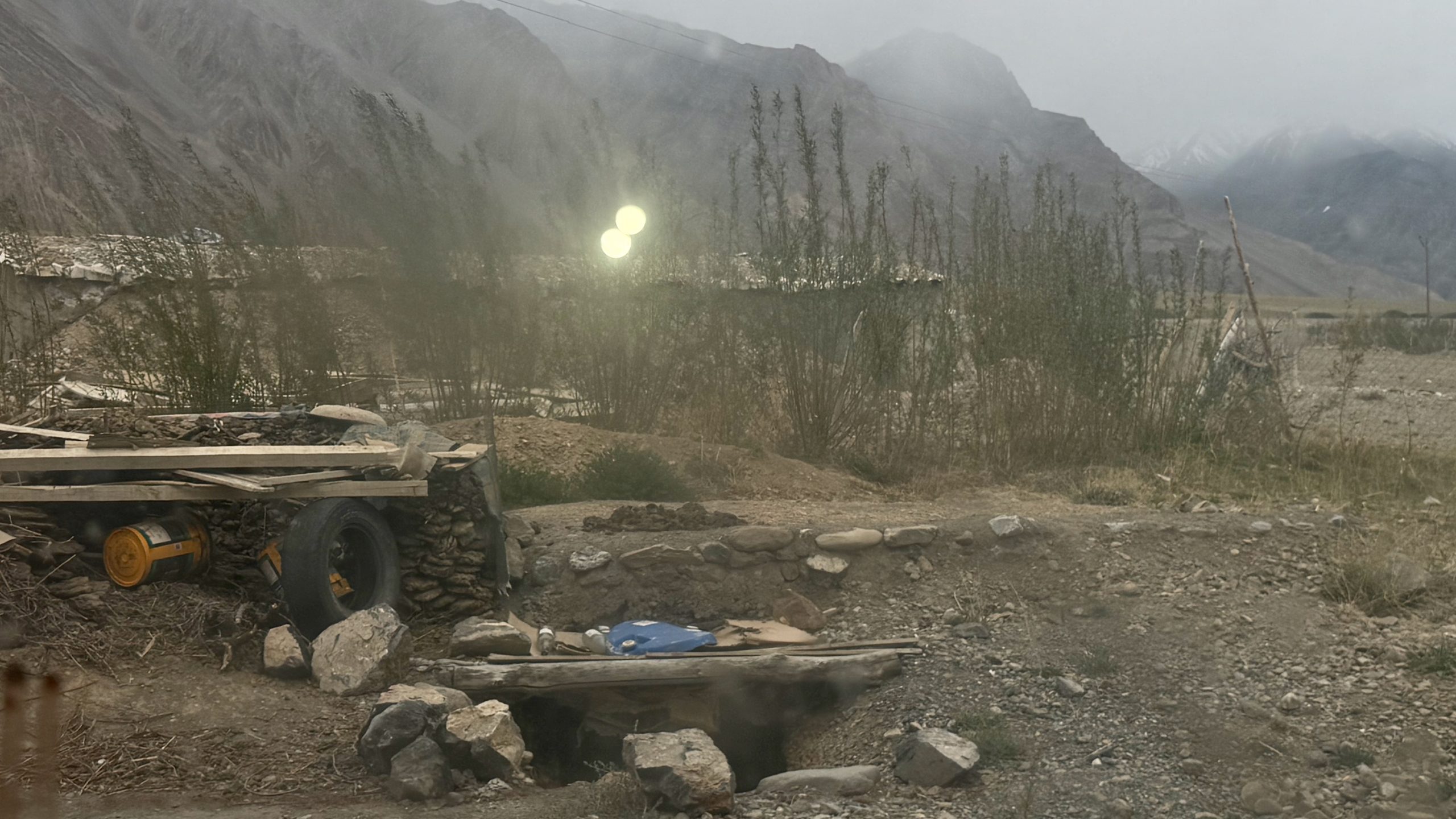
Later on, I was able to visit several more greenhouses and found it fascinating how differently people organise them inside — what they grow, how they arrange things, and which crops they prioritise. Food storage during winter, however, still often happens underground. Here you can see the entrance to one of those storage rooms:
Tsazar has around three or four homestays (interestingly, none of them seem to have signs) and also one upscale resort. A Ladakhi investor has put money into a whole chain of luxury resorts — they all have “Sarai” in their name. This one is called Zangser Sarai, and I had a chance to look around. There are seven beautifully designed cottages with wonderful views over the river. A night here costs around INR 25,000 — roughly €250 — including all meals. A price point that not many people seem willing to pay. There were no guests at the time, so the staff from Himachal Pradesh (plus one Zanskari) had plenty of time and seemed happy to show me around. And I was served an excellent coffee from the machine, presented in a stylish thermos flask.
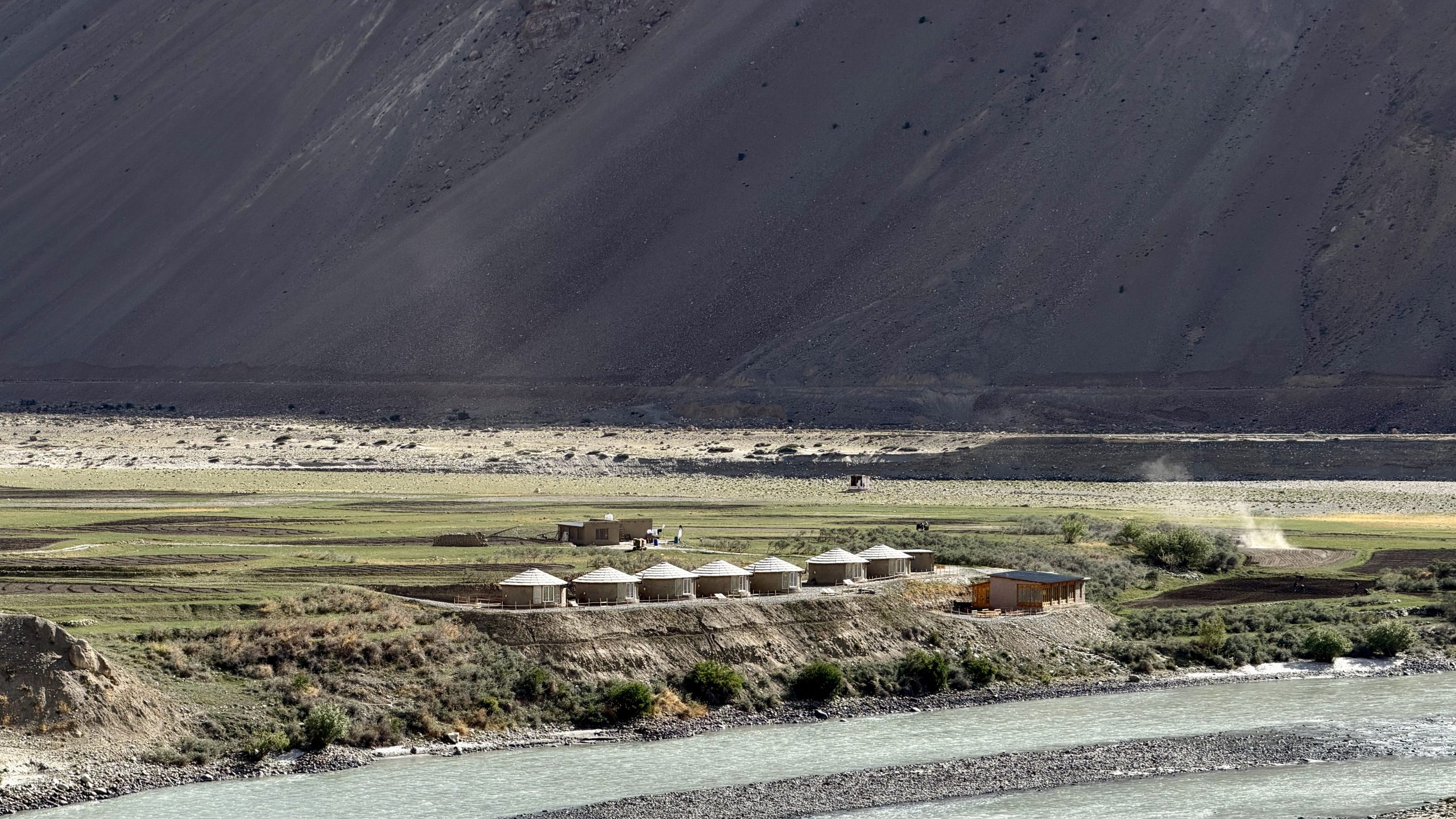
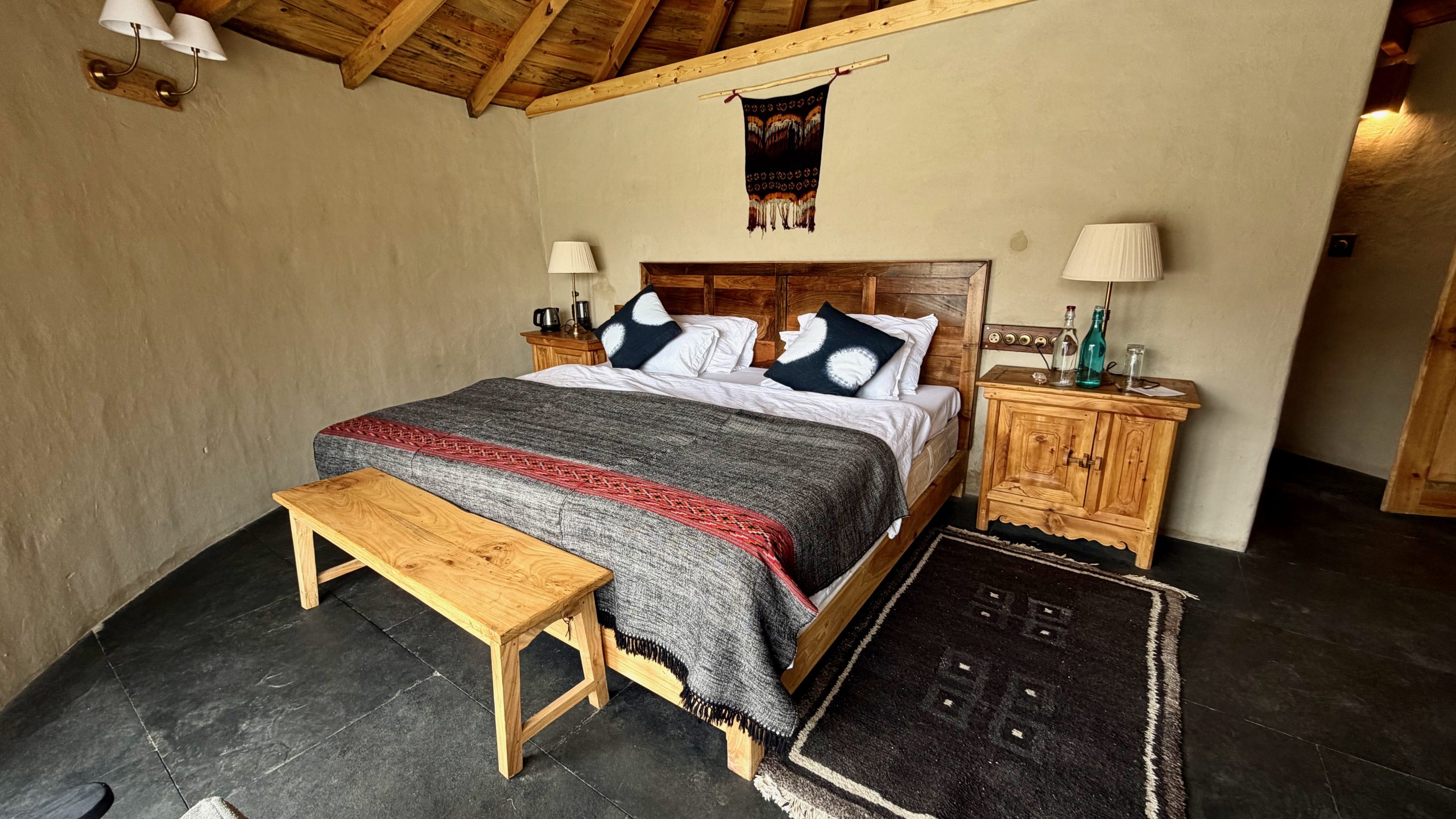
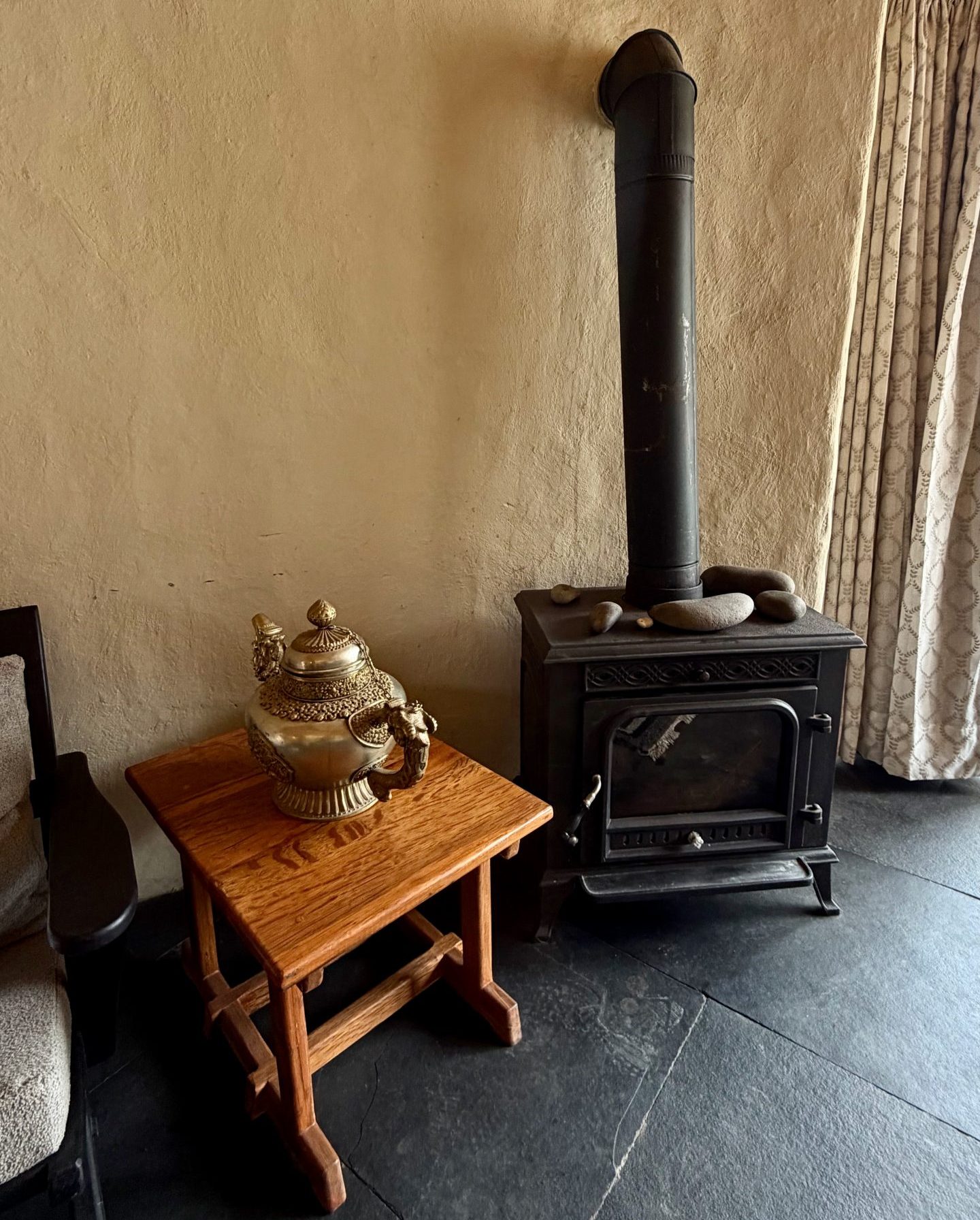
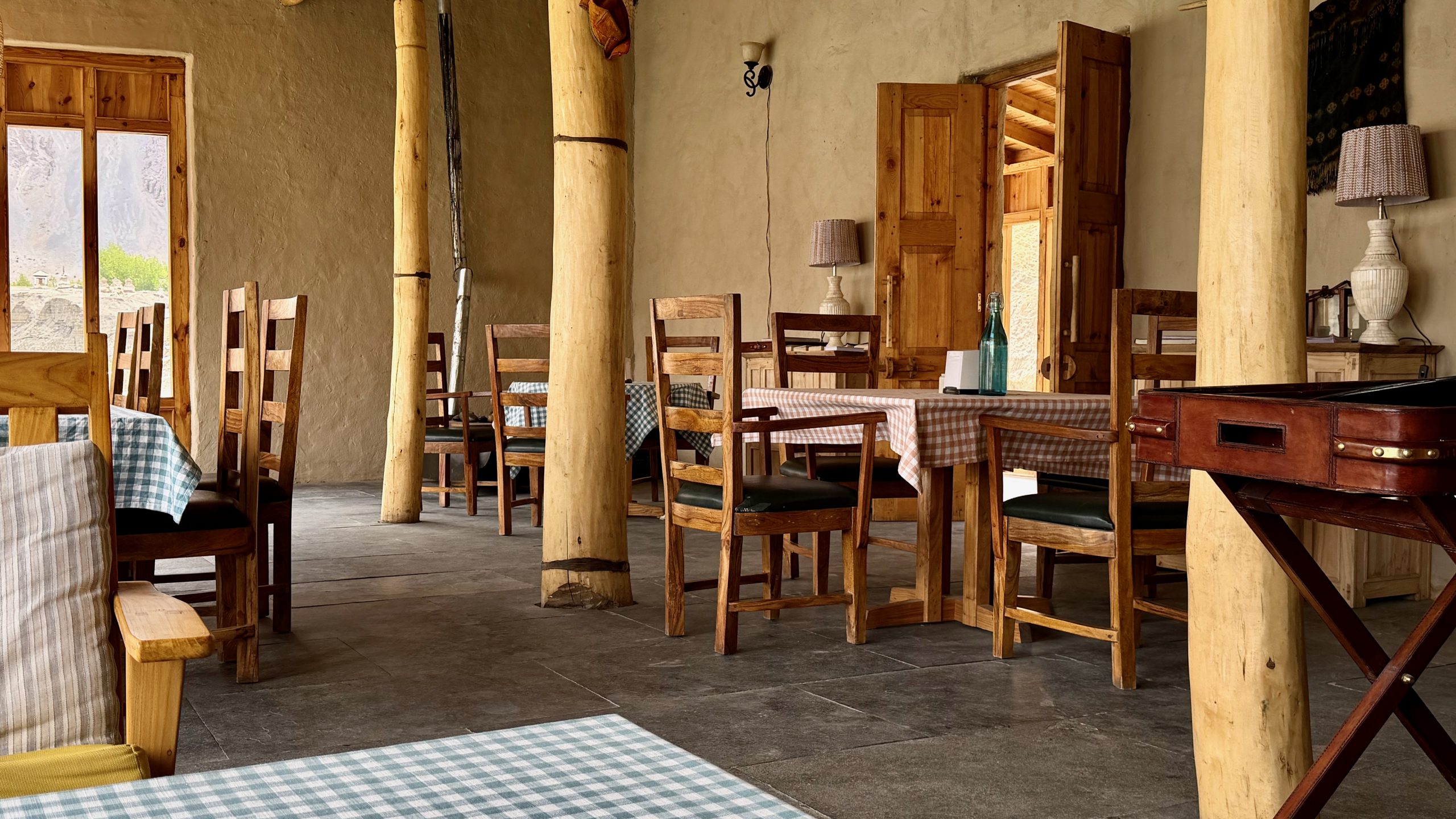
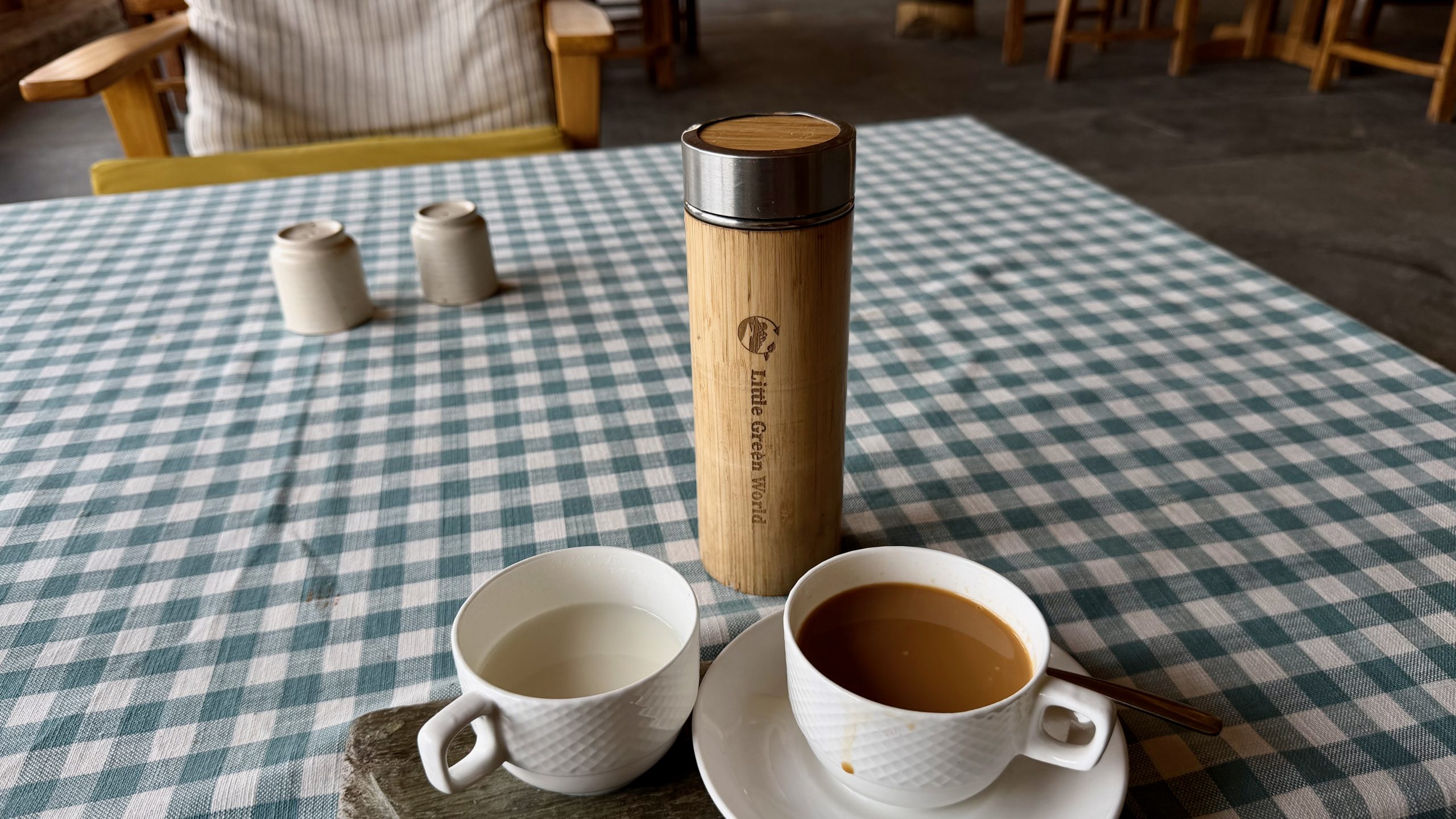
I was genuinely impressed by the simple traditional design — less so by the price. There is another Sarai resort in Zanskar, in Purne near Phuktal Monastery. There, I was told, they have already lowered the price to around INR 18,000 per night.
Back to the village walk. Tsazar consists of many houses spread quite far apart, with fields in between them (in some other villages, the houses are clustered together and the fields surround the settlement instead). Down below flows the large river, forming a particularly scenic bend here. There is a monastery building, though no monks live there, as well as a large new assembly hall. Each year, responsibility for coordinating agricultural matters in the village rotates to a different household. This year it was technically Lameth’s eldest brother’s turn — he is also a guide, though with more clients than Lameth. The second brother serves in the army. In the end, the responsibility was passed on to Lameth, as he was the one most able to arrange his schedule and be available when needed.
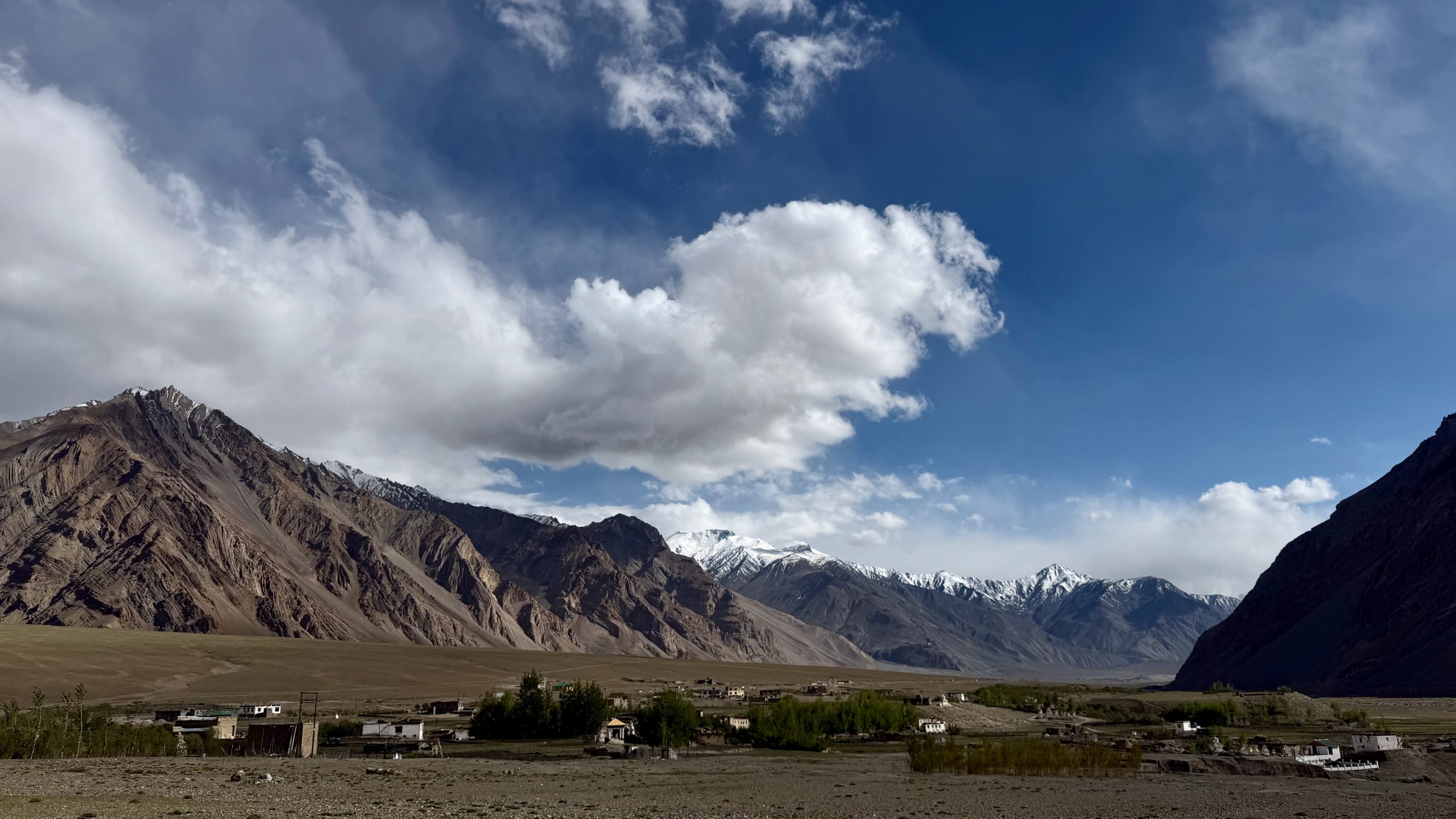
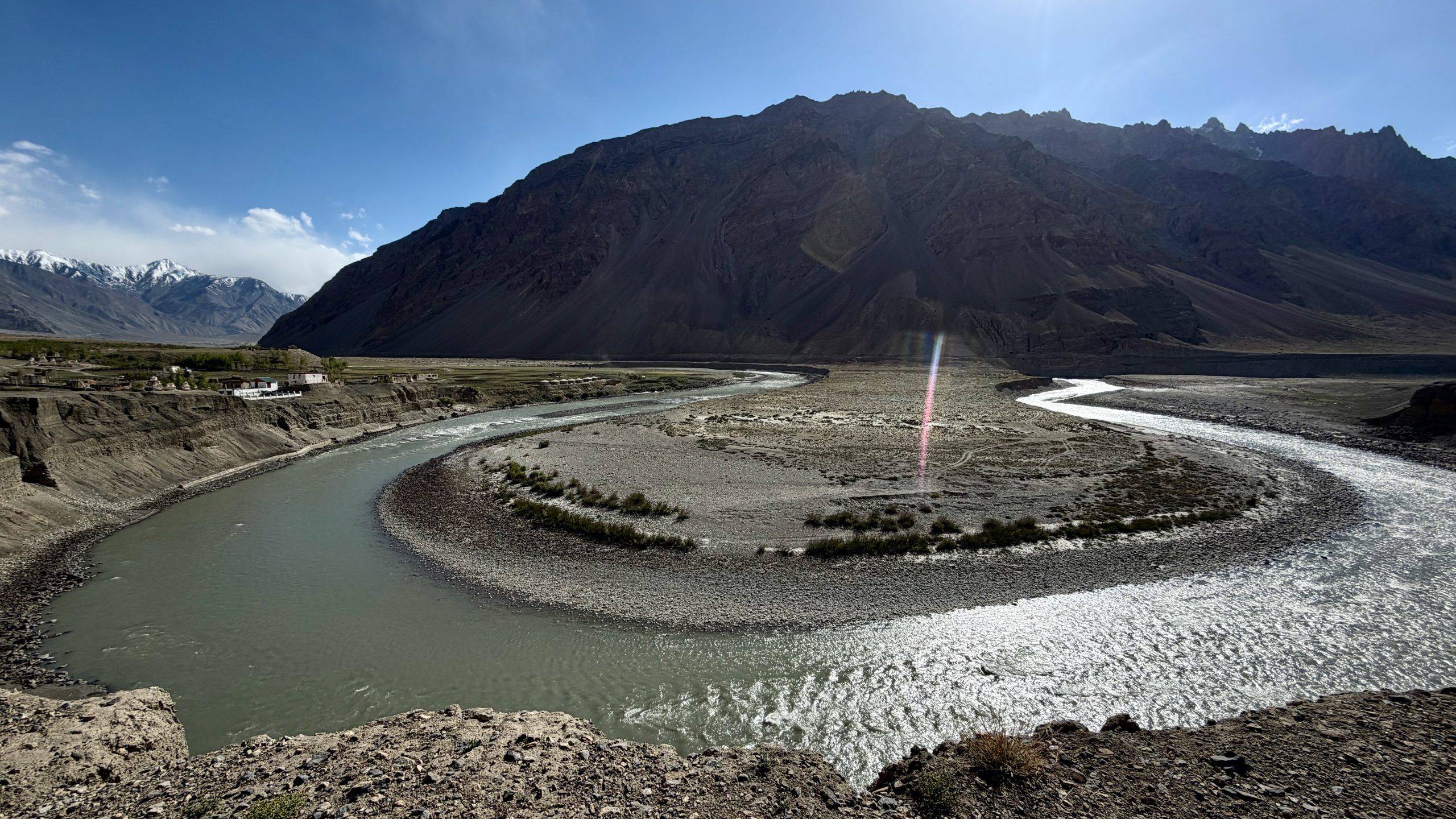
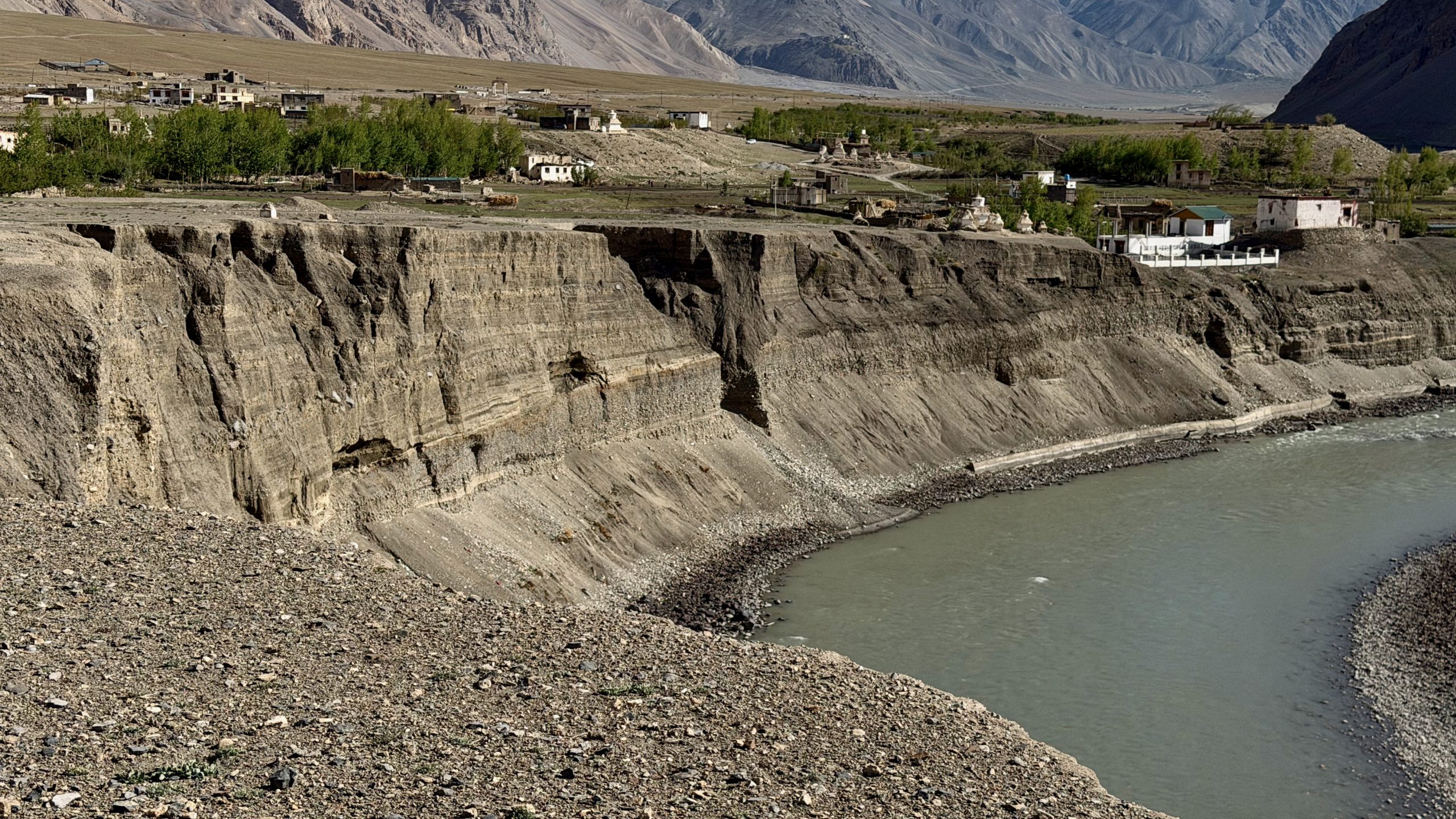
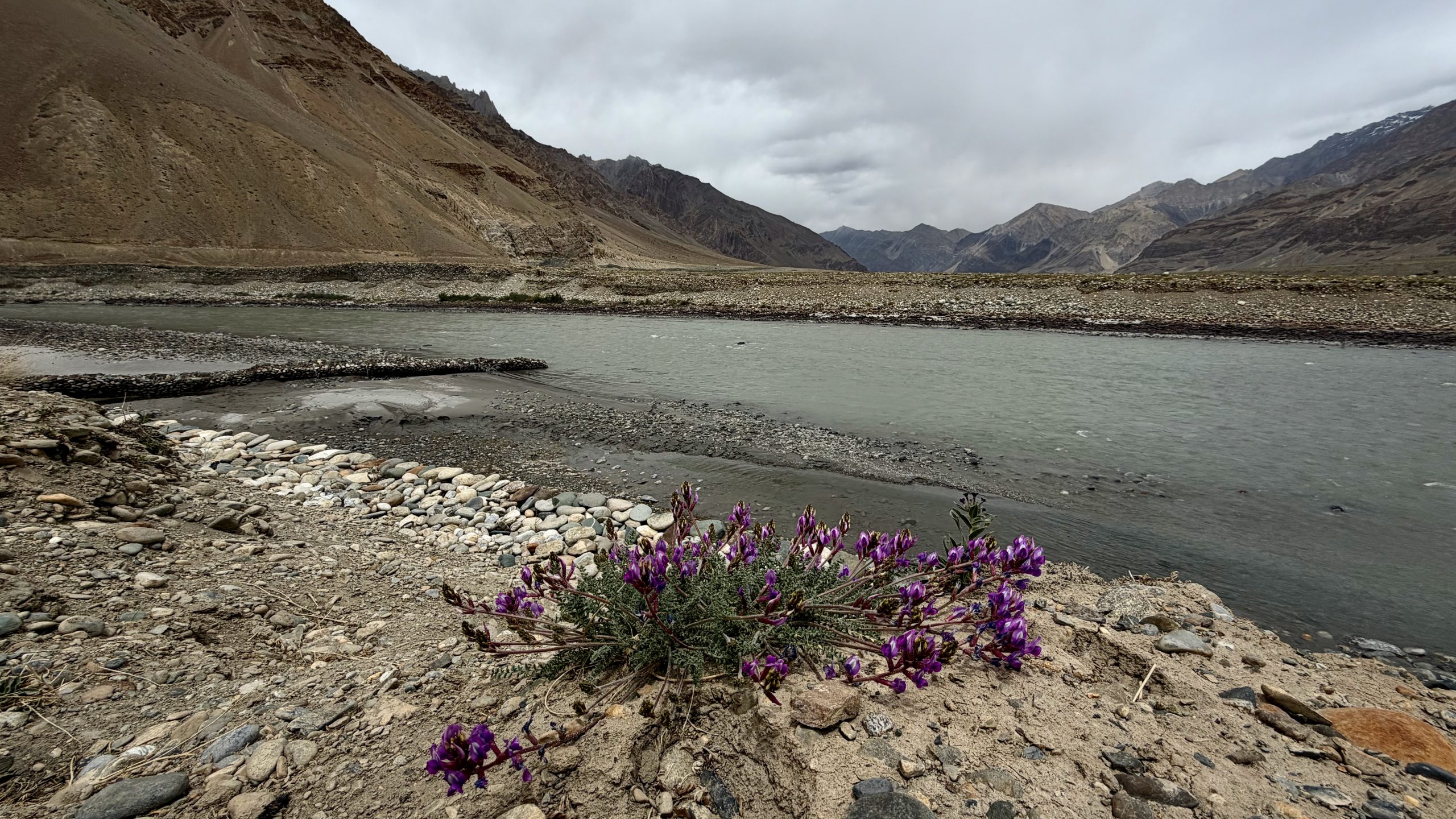
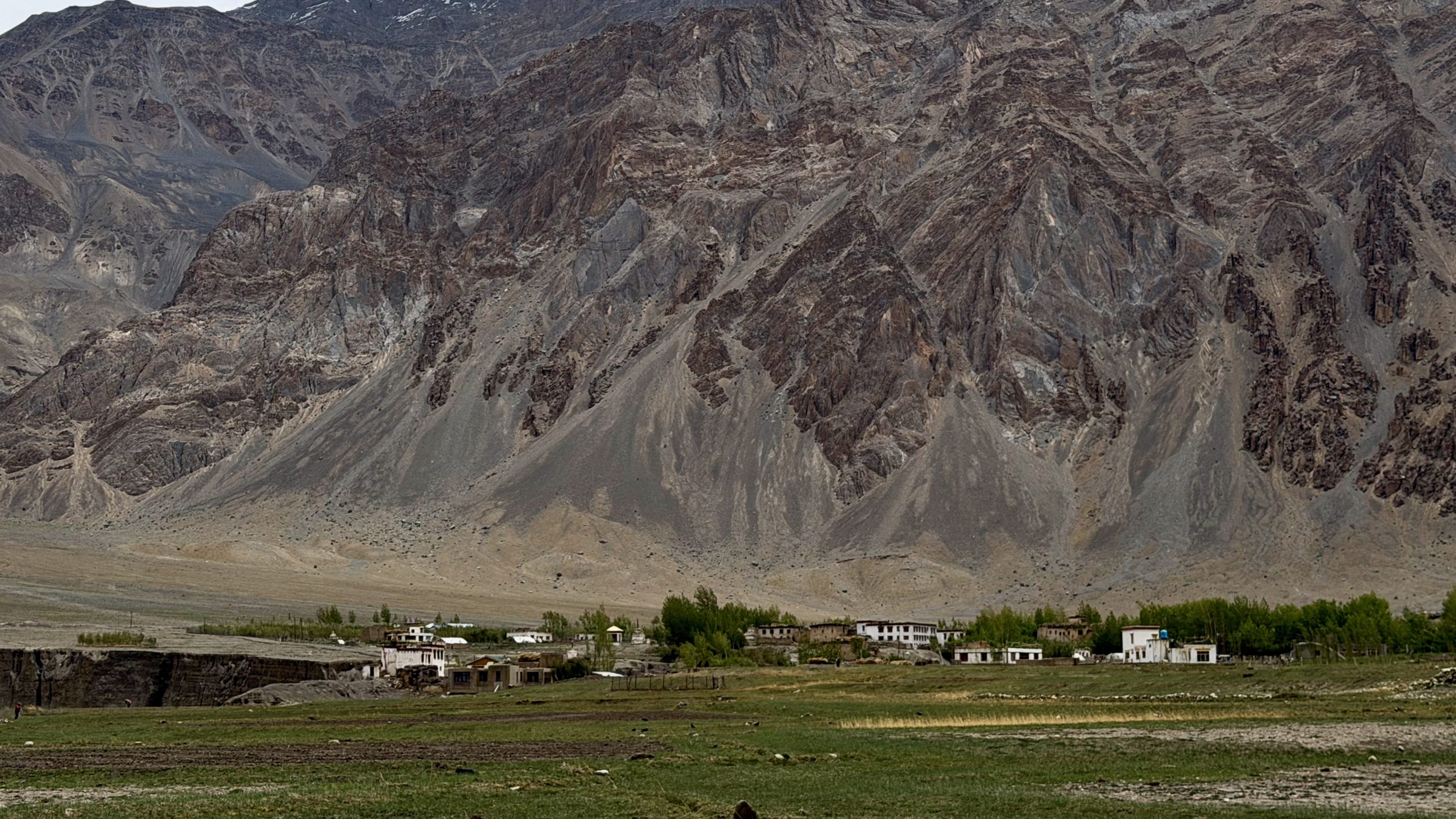
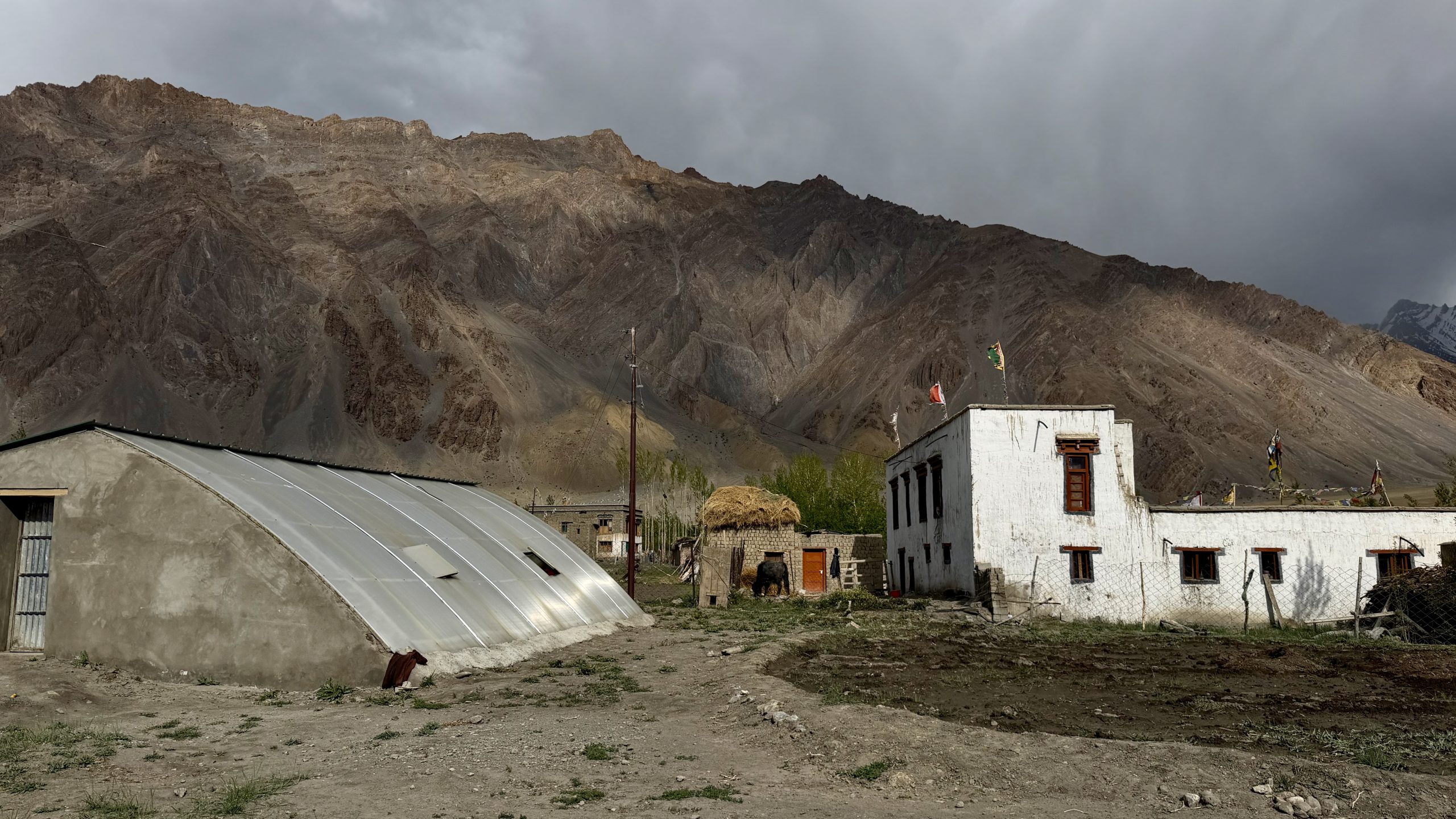
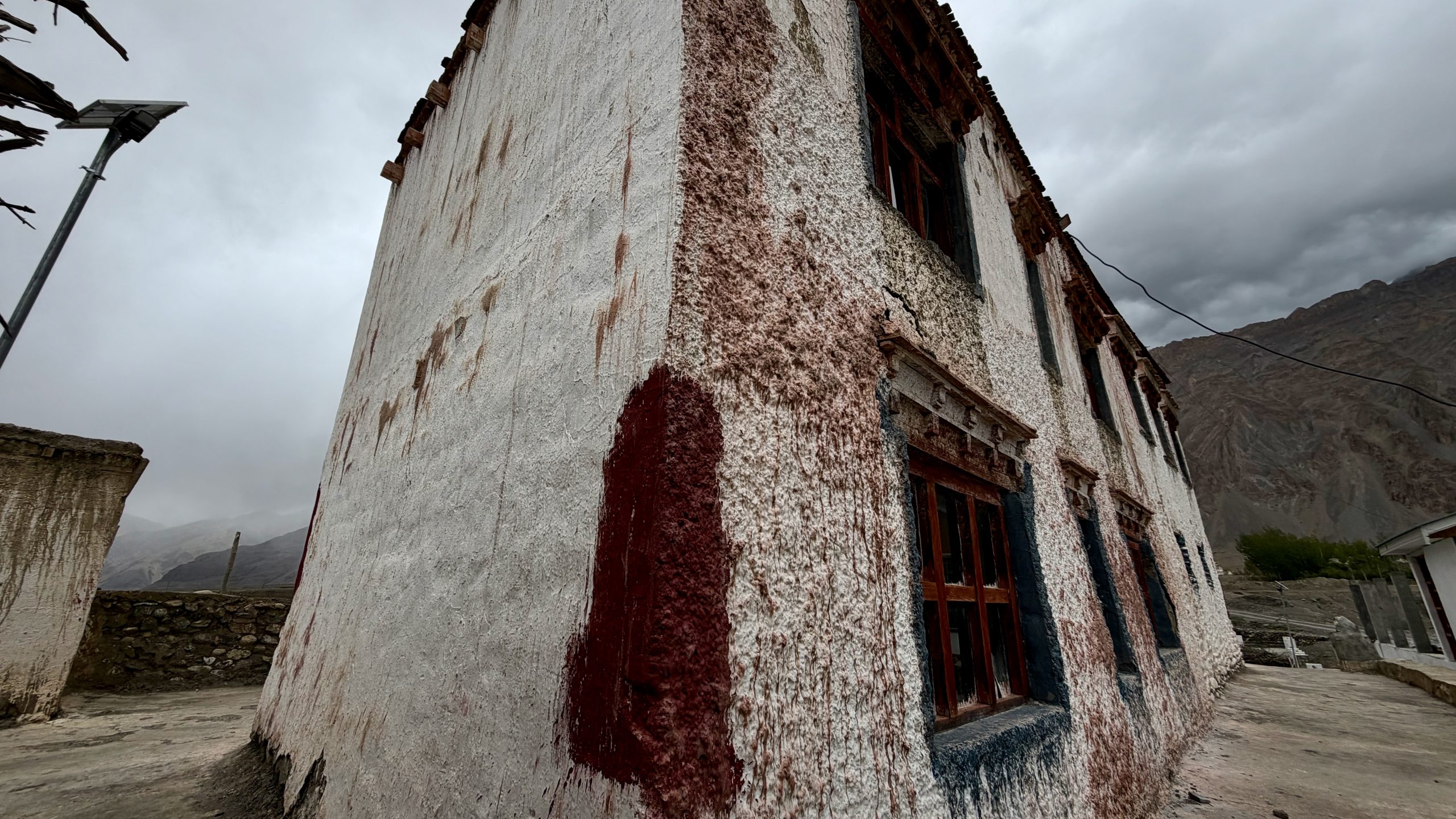
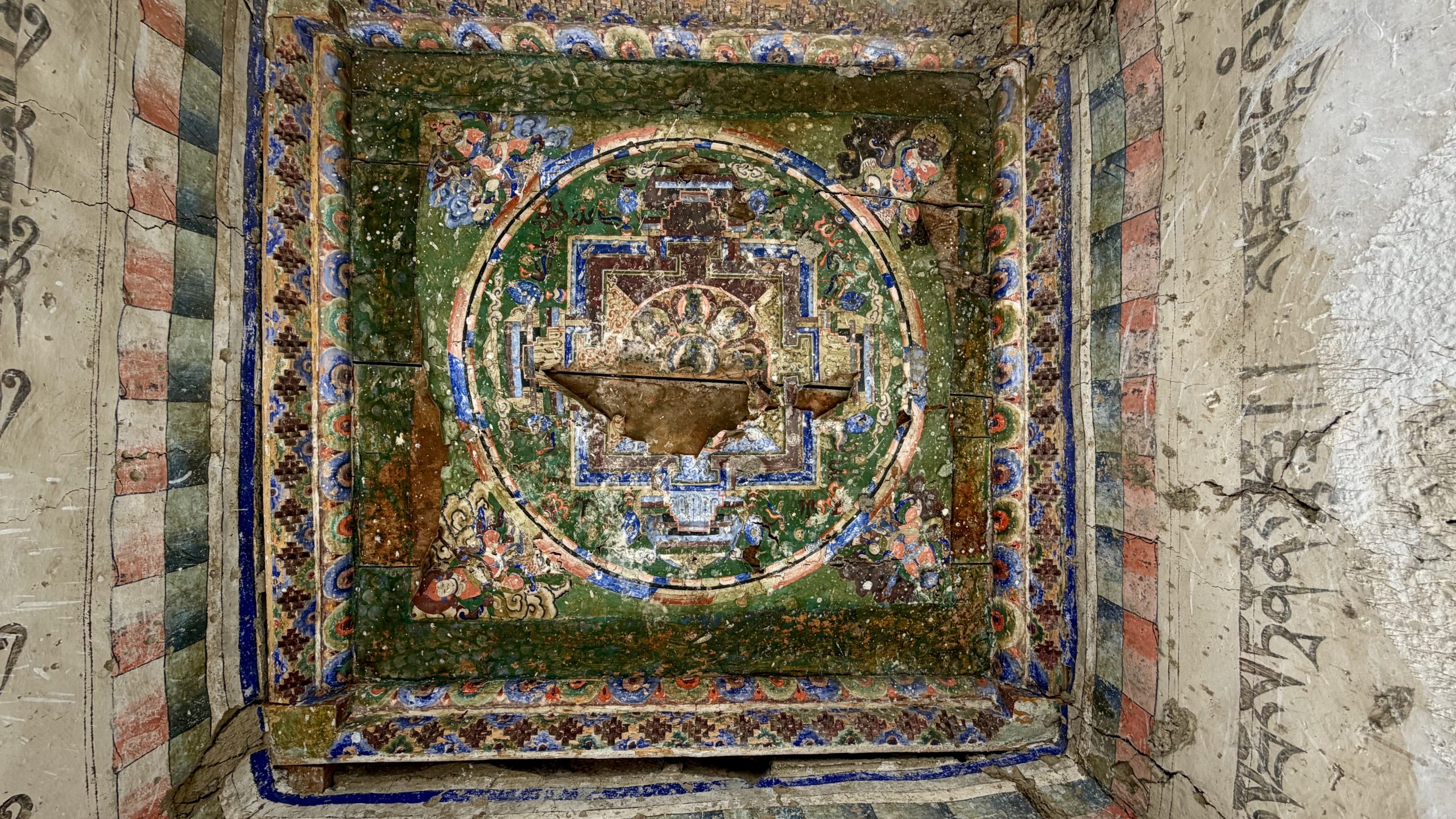
There is a small kind of village centre where some very old houses are still clustered together.
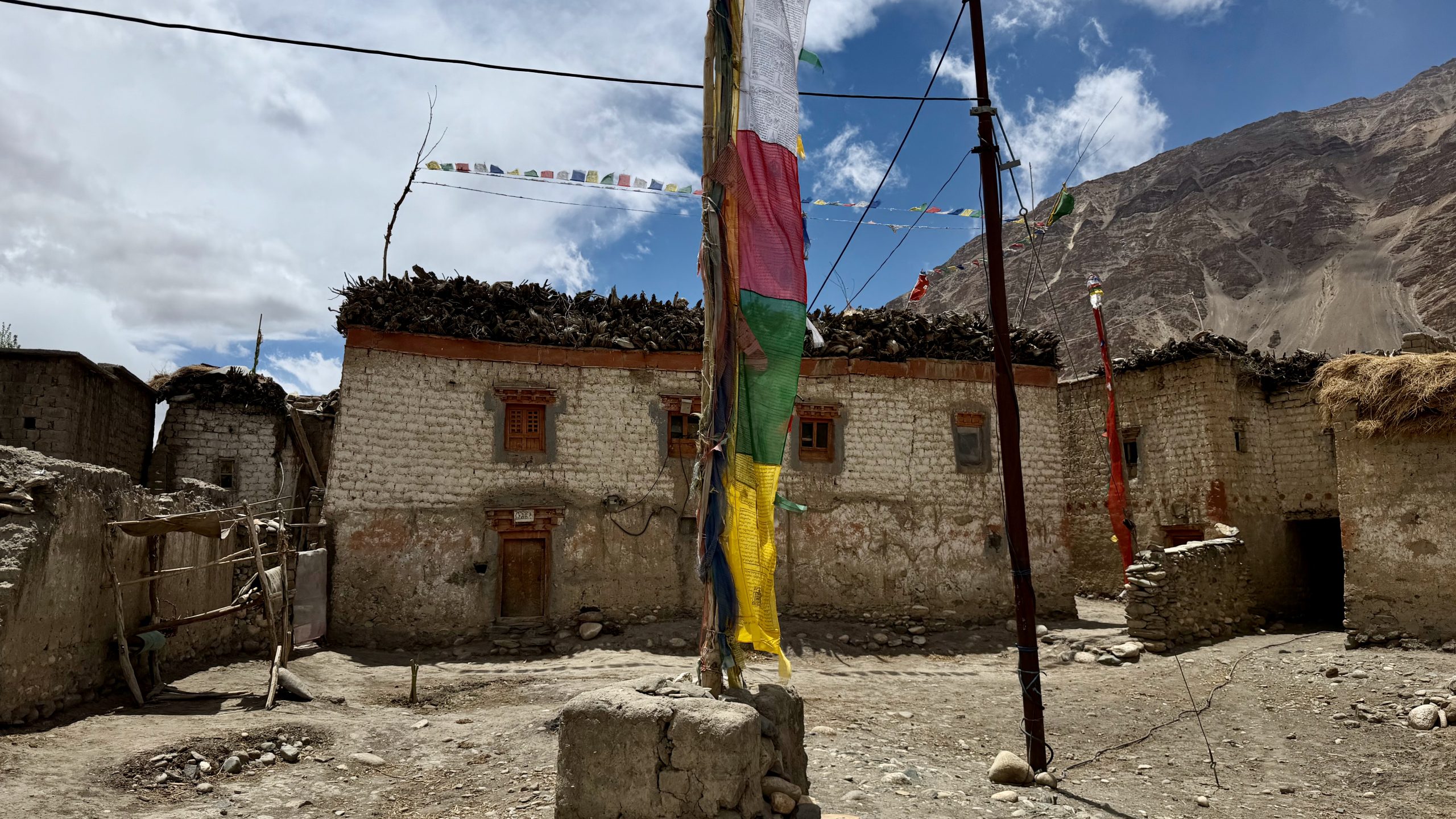
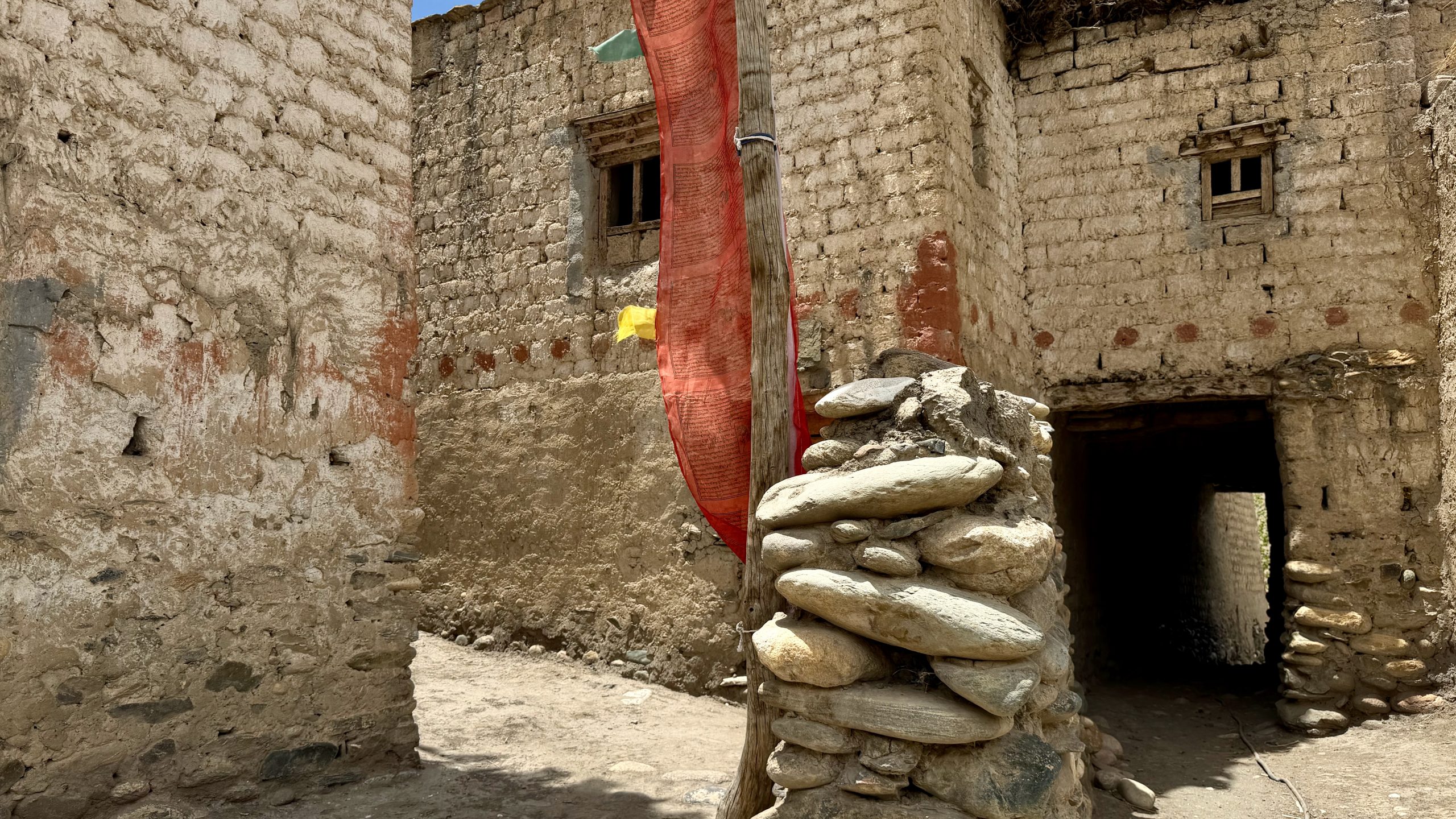
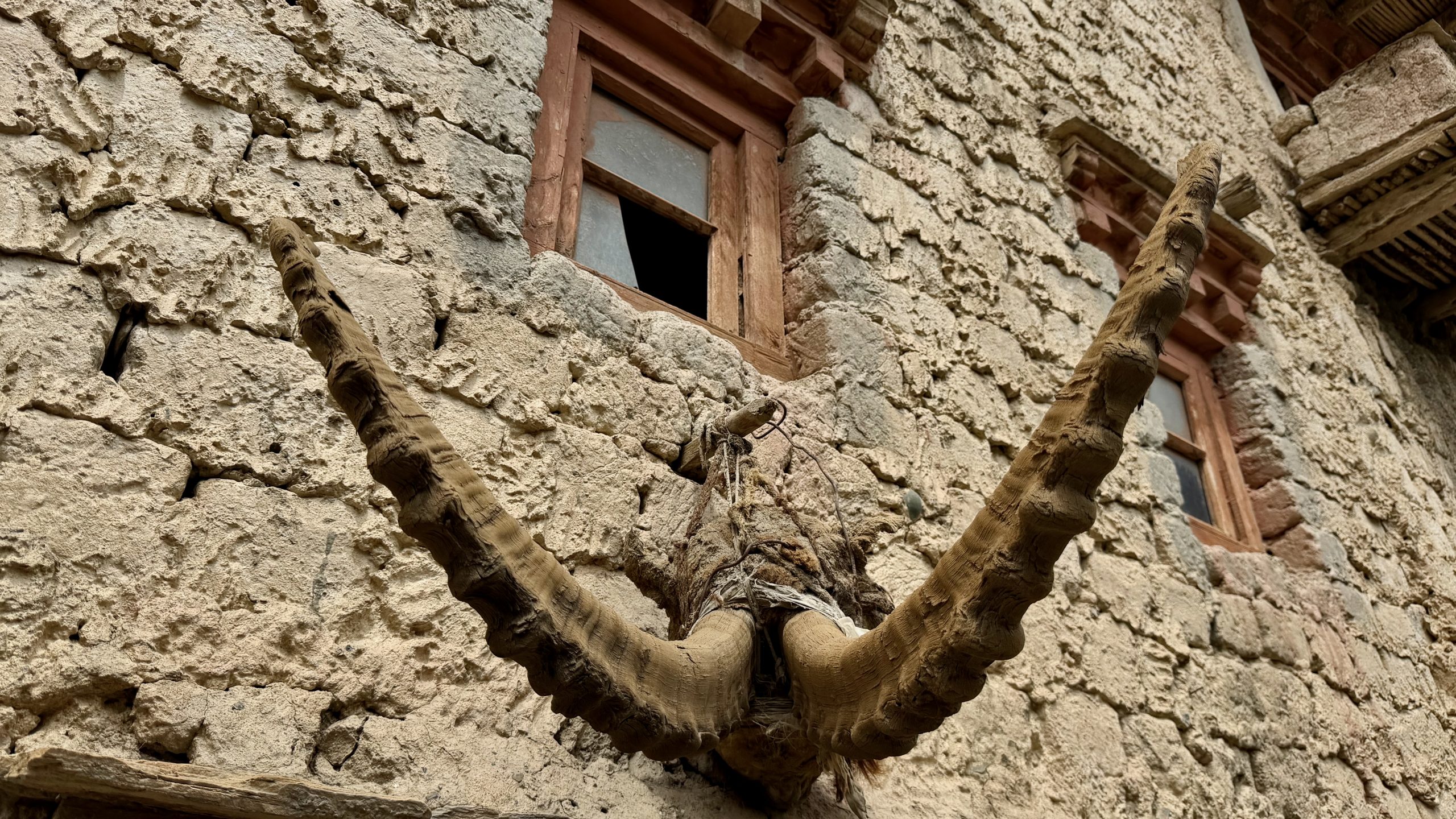
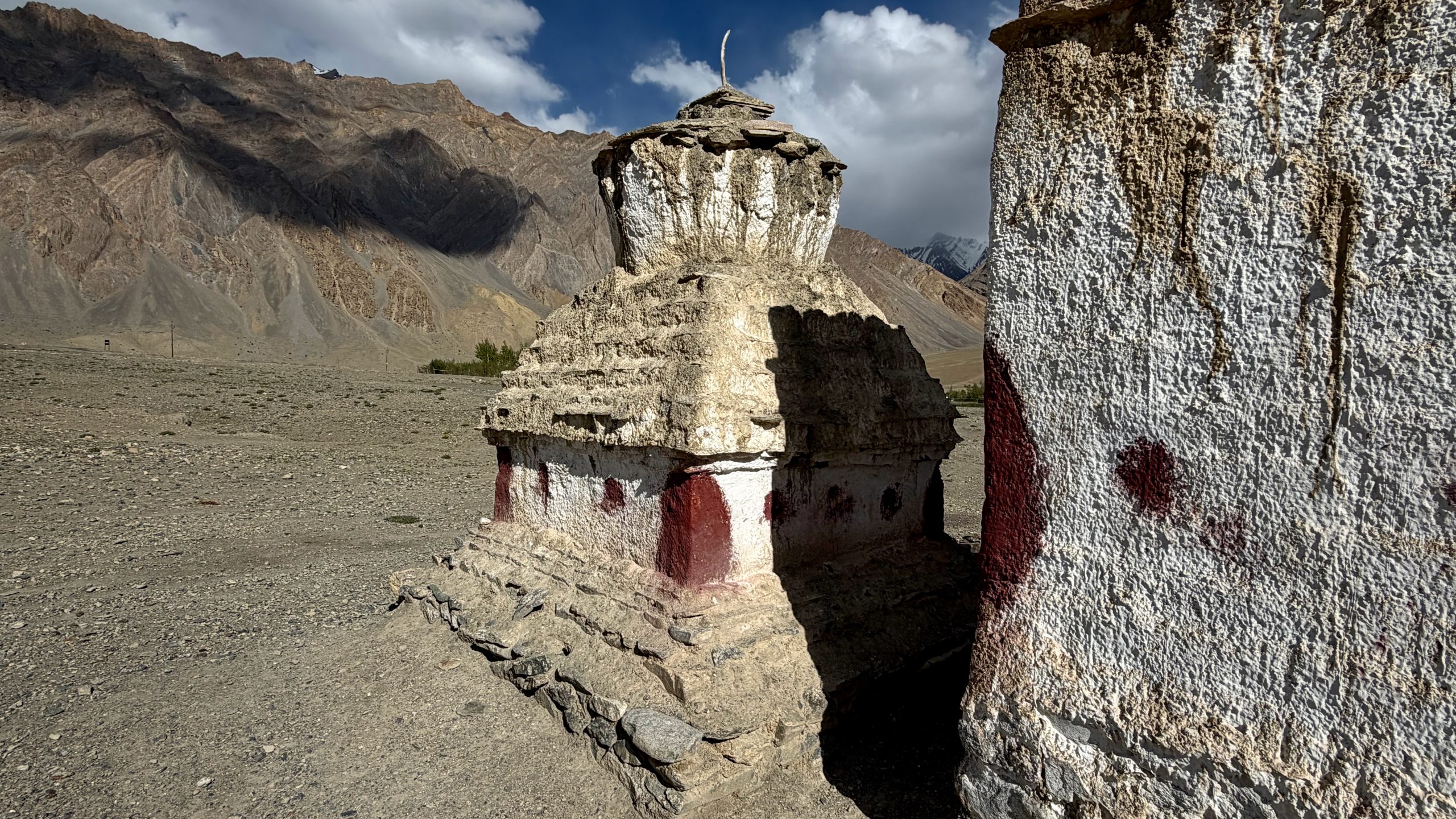
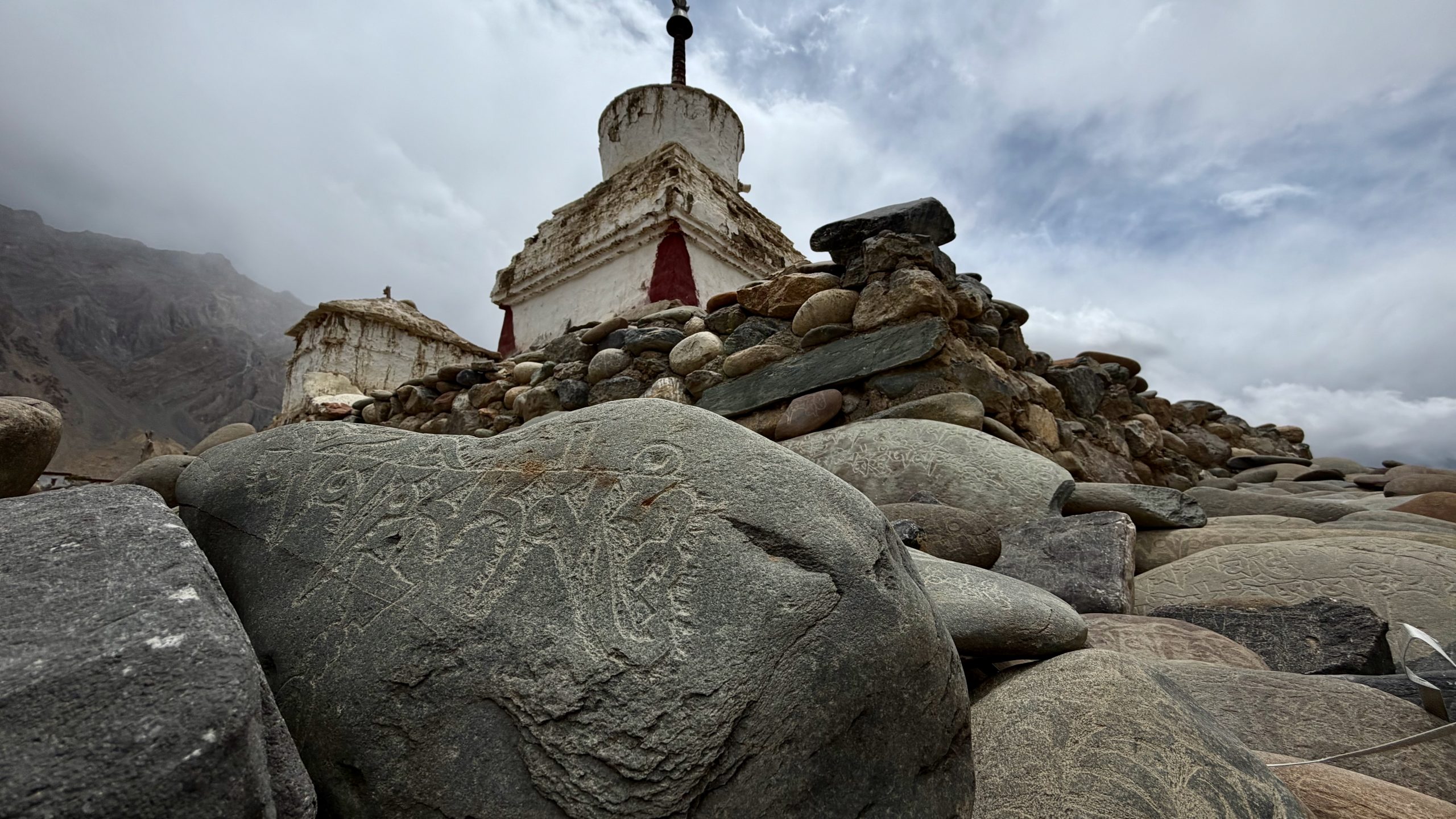
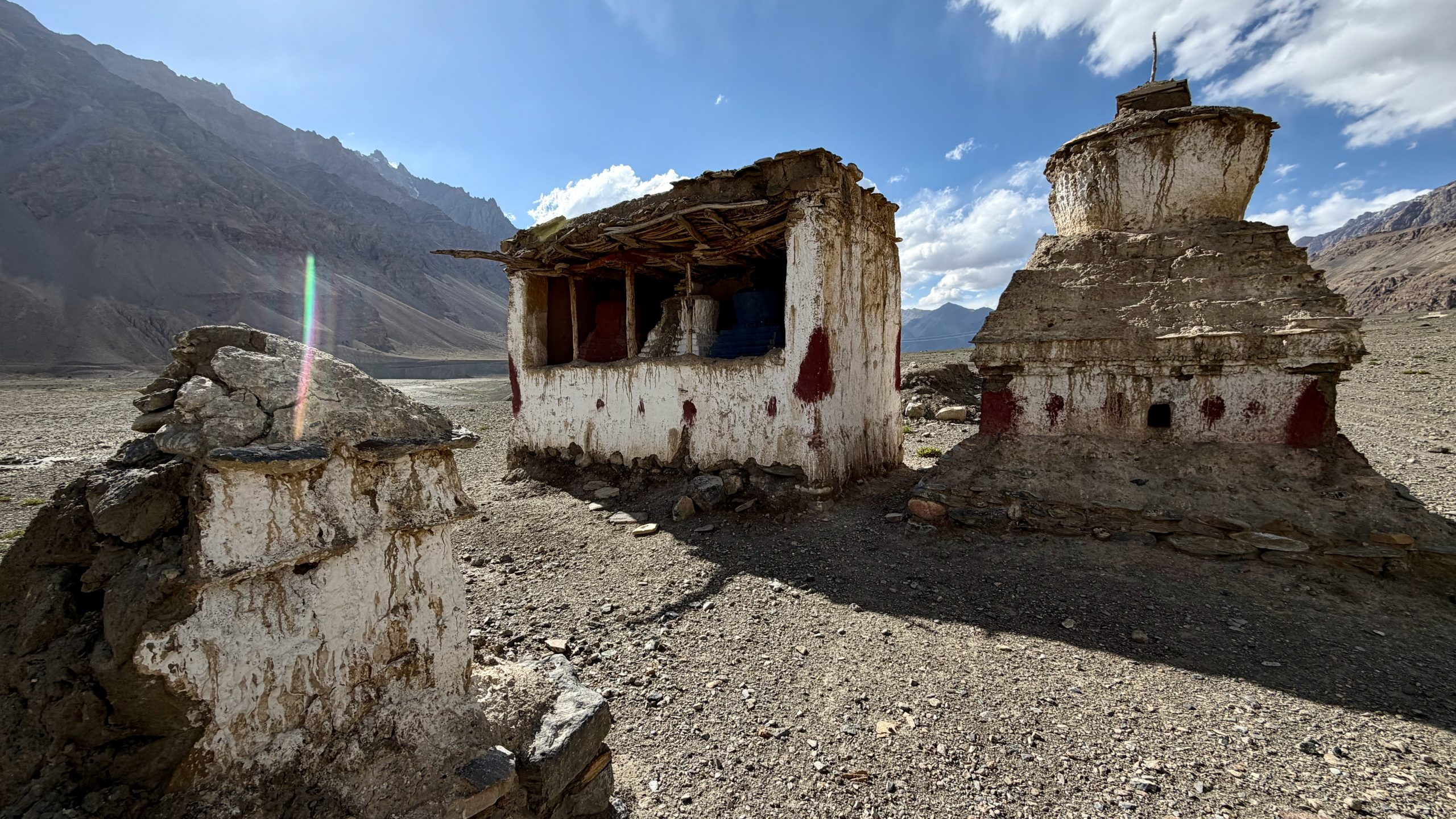
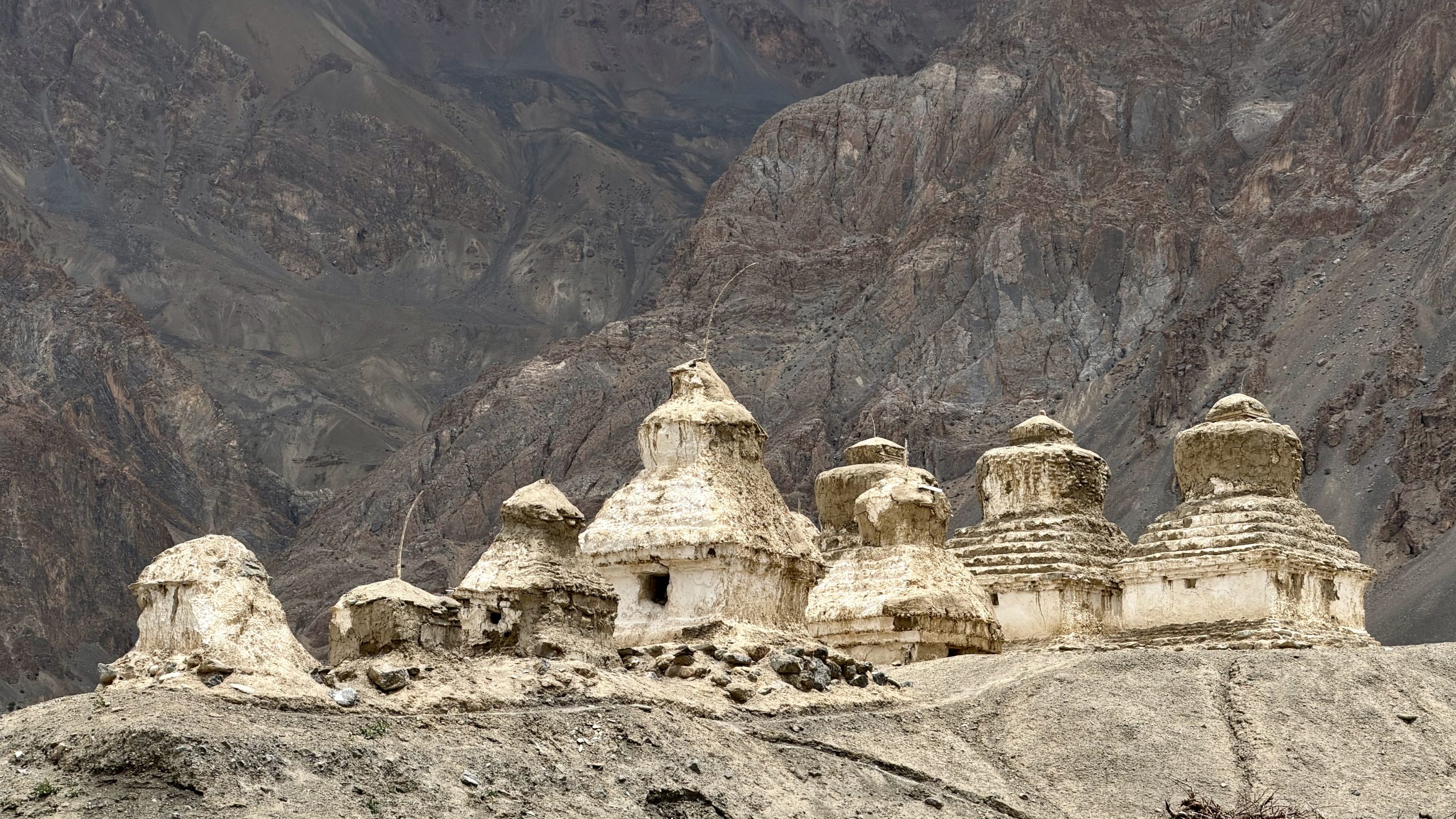
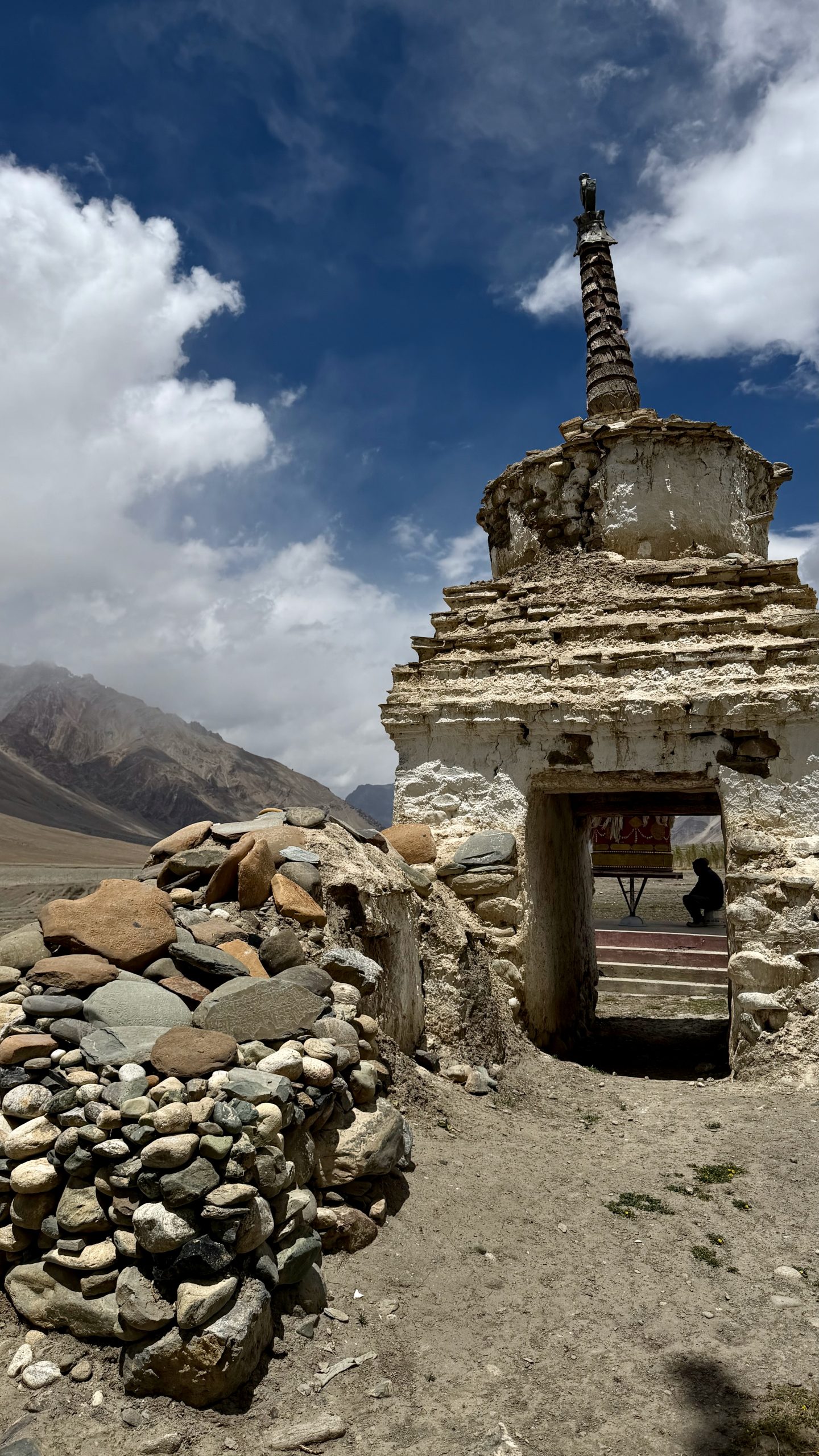
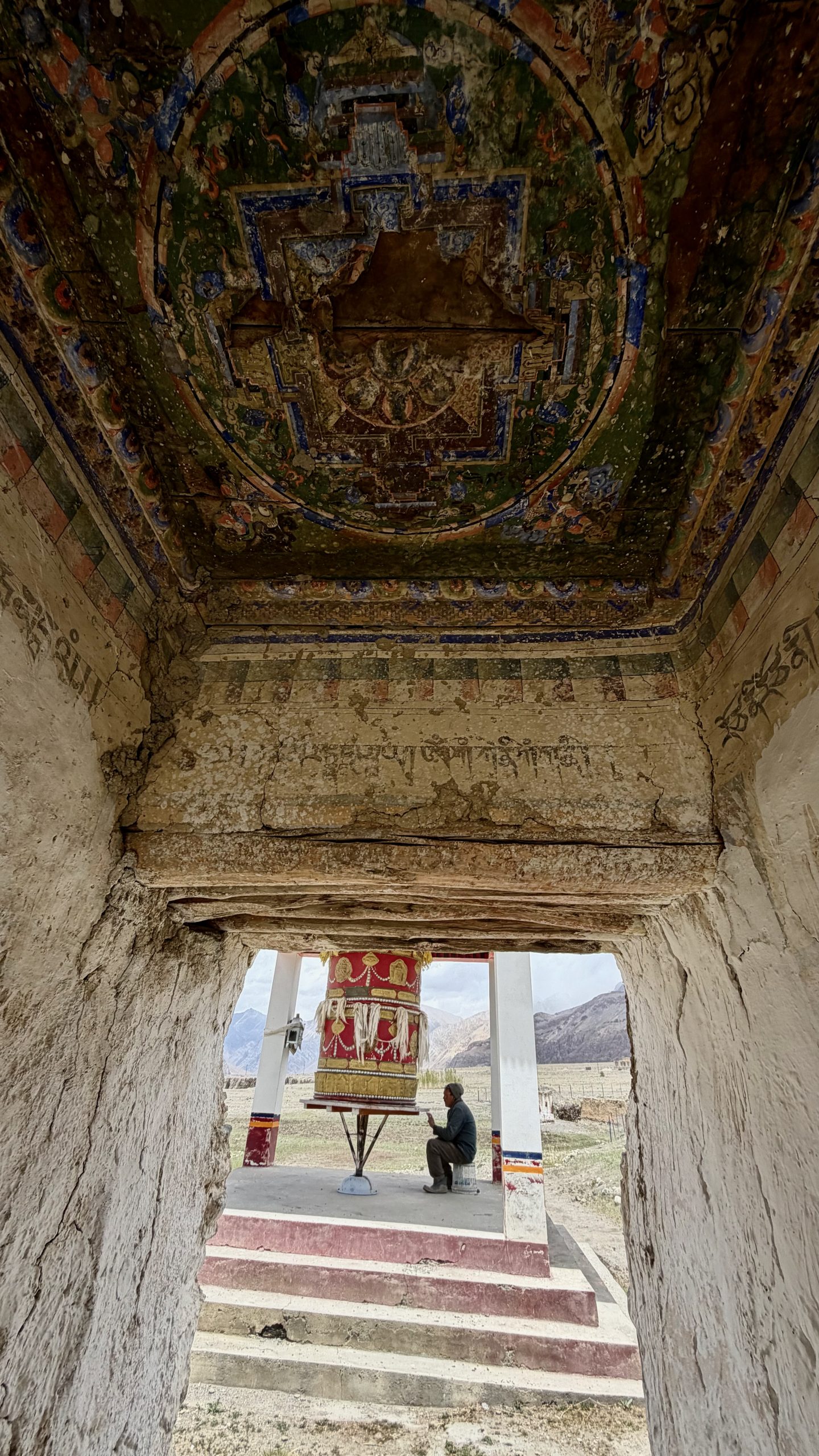
Chortens can be seen everywhere, one of them even with a passage running through it. There is also a large prayer wheel.
One “special feature” of Tsazar: it does not have its own mobile tower, and reception is poor. Some people say this is because the village does not vote clearly enough for the BJP. Or maybe the reasons are different? In any case, there seems to have been a lot of back and forth over the issue, with the result that there is still no tower here.
At some point almost every day, strong winds start blowing, and then it is a good idea to wrap up warmly.
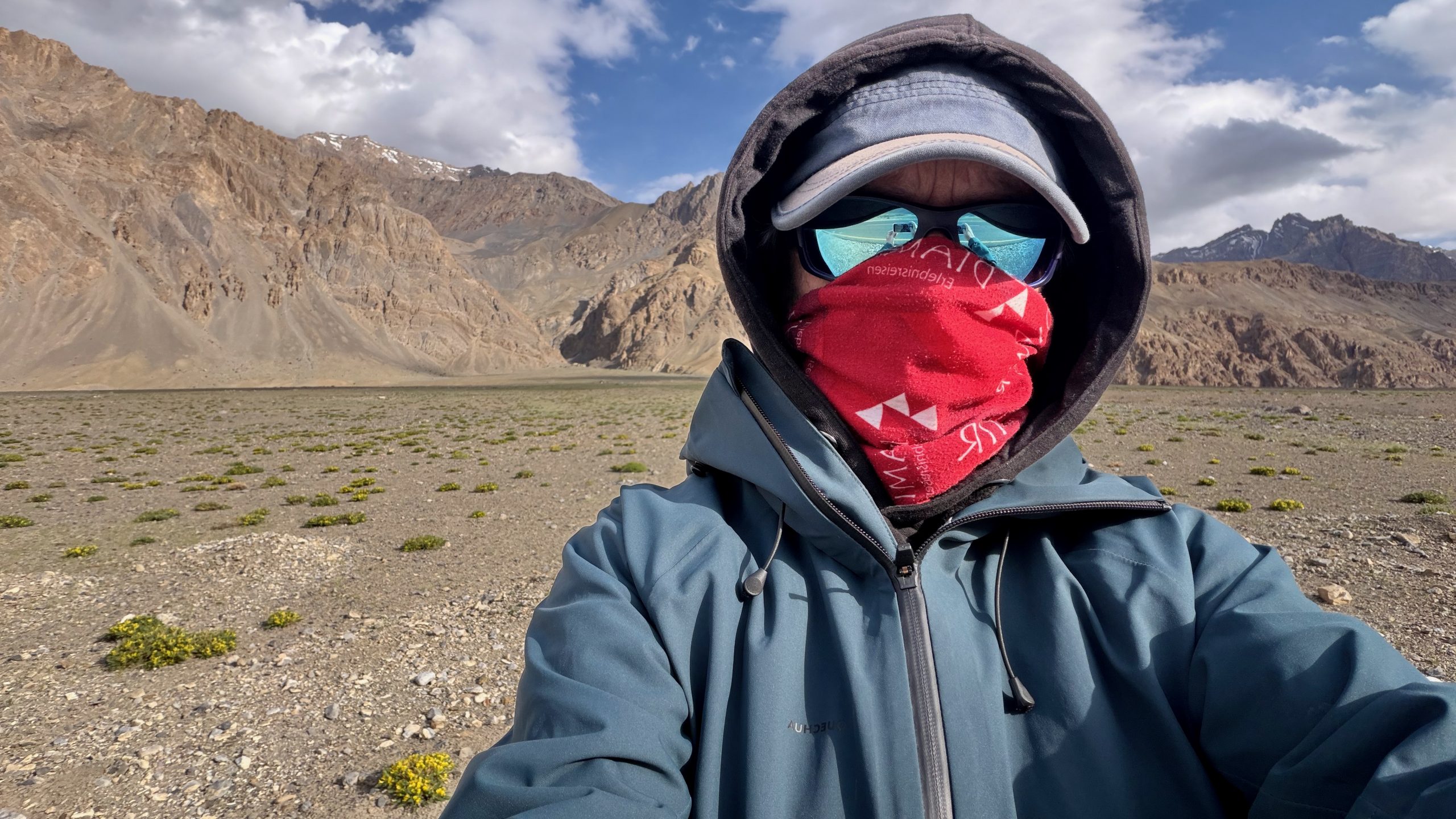
I had asked Lameth to guide me because he seemed to know several interesting hiking routes that most people do not know about. One of them started right here in the mountains above the village, and that was the hike we planned for the next day. I was really looking forward to it and already found myself admiring the details of the surrounding mountain landscape.
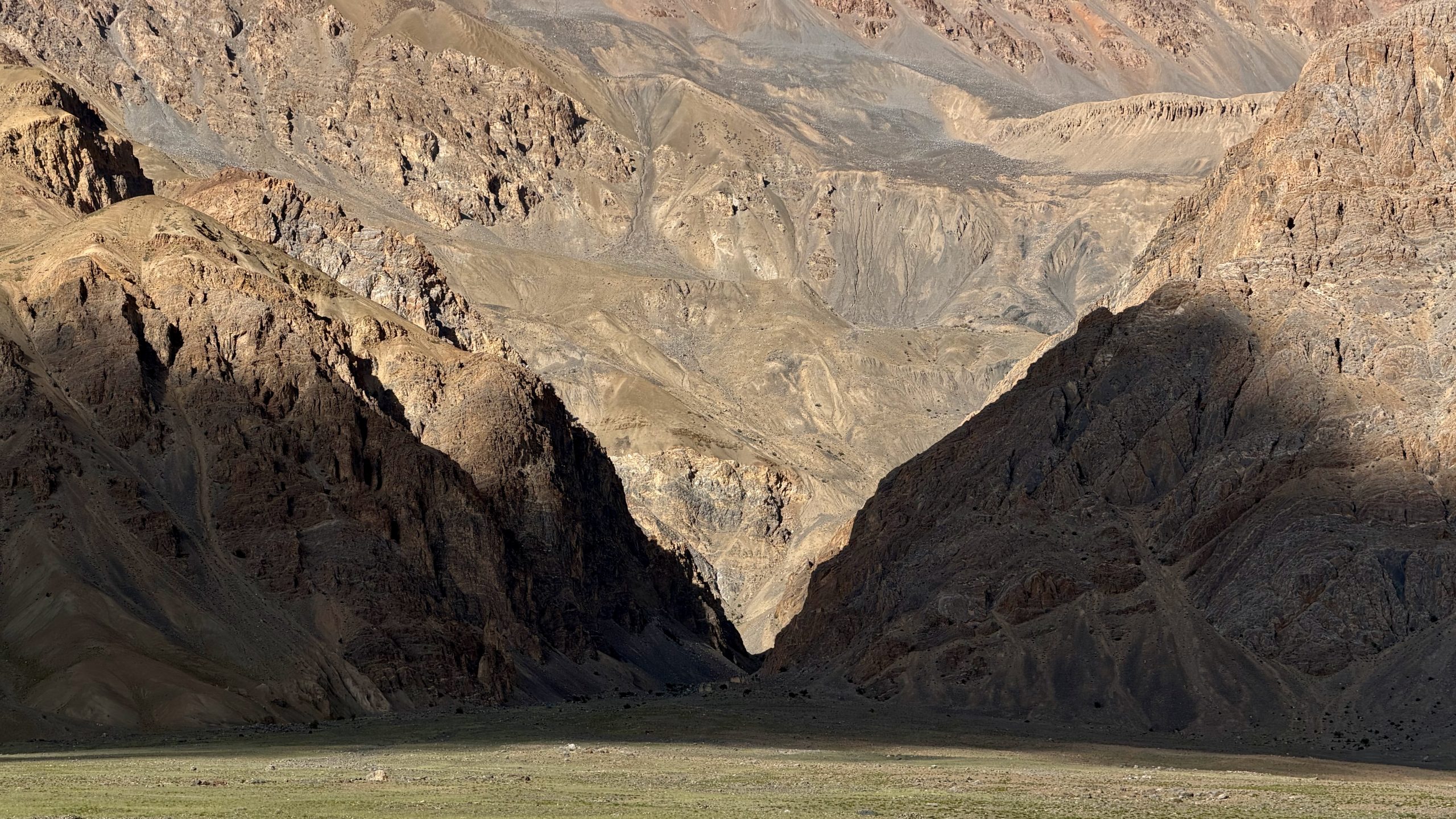
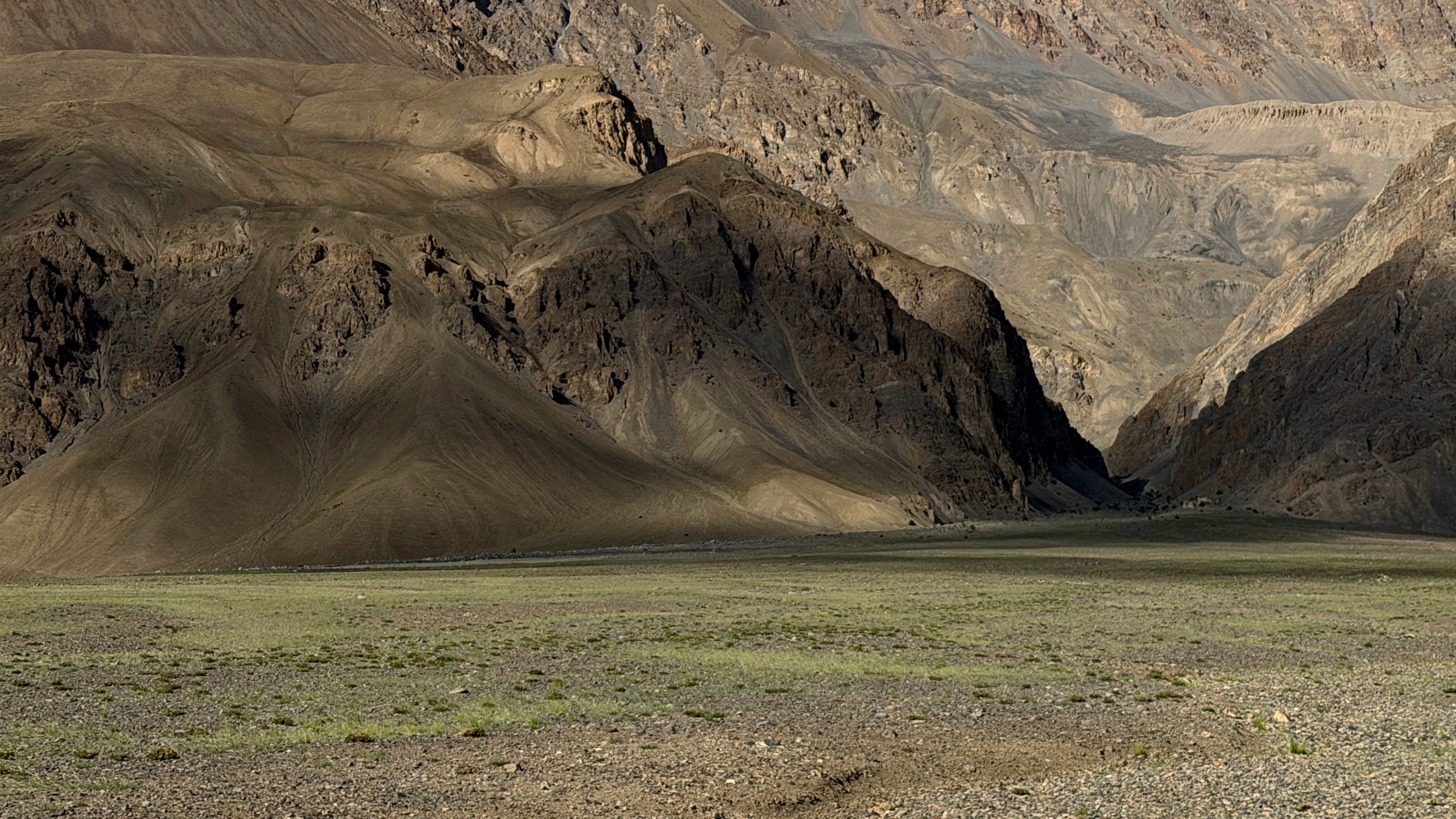
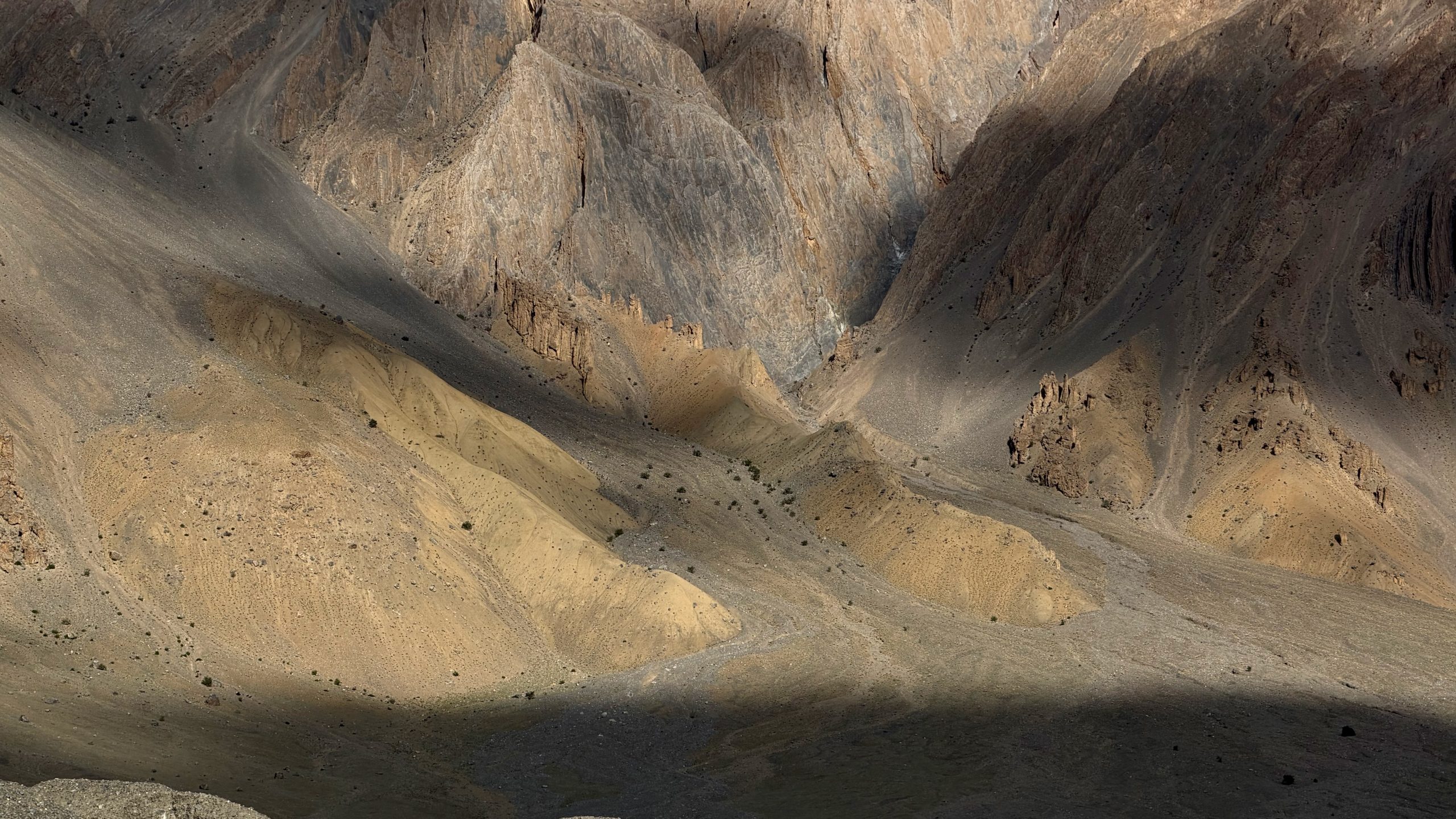
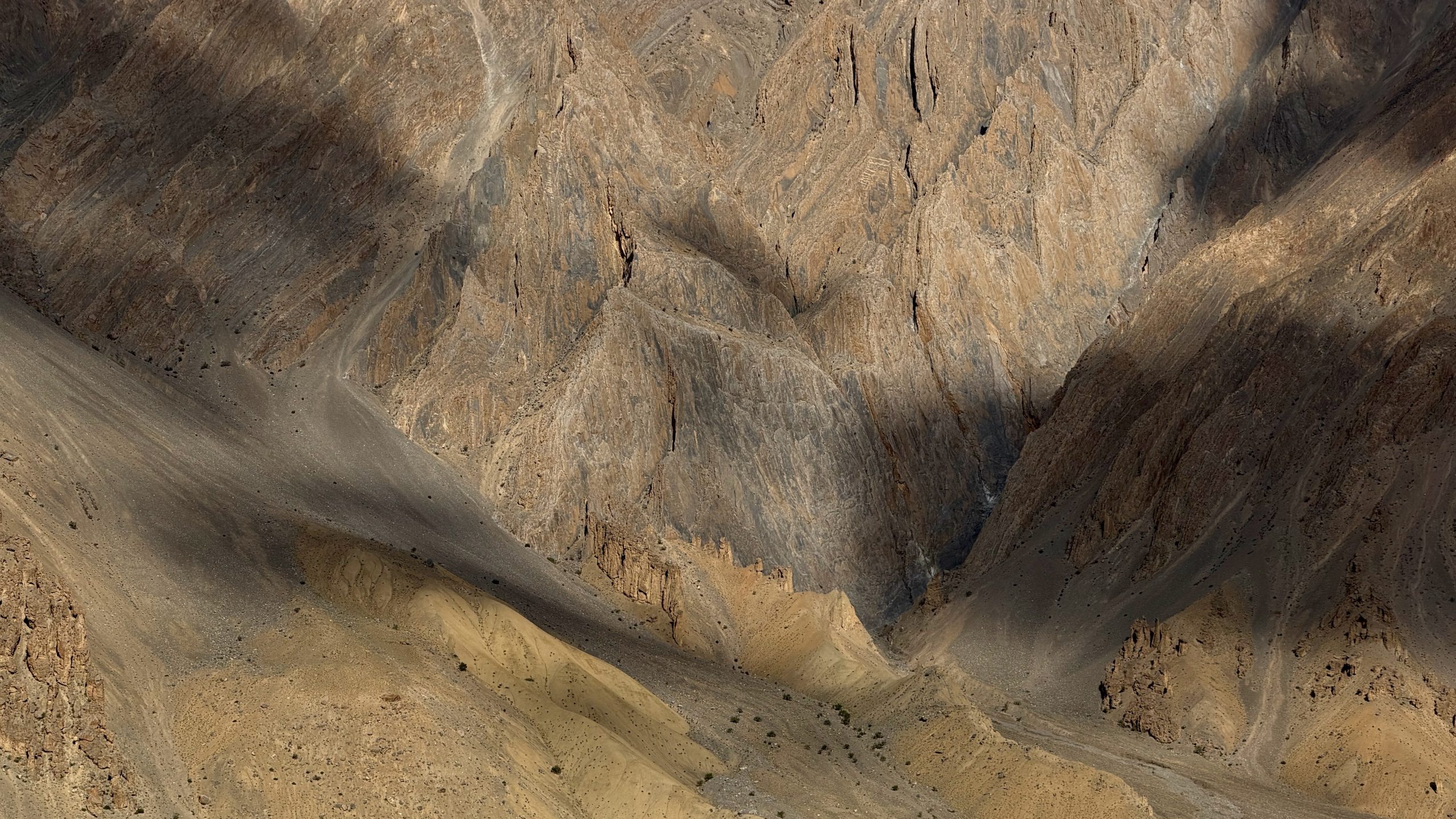
Ich mag zu gerne Bergbilder ohne Himmel knipsen.
By the way, if you are wondering why there are so few people in the photos: I genuinely did not meet many people. Most were only visible from a distance, busy working in the fields. Overall, there just did not seem to be many people around.
By the evening, the weather had turned cloudy again, but the next day was supposed to be sunnier. I was curious to see what awaited us.