


Stongde -> Kumik -> Shila Phu – Pancakevillage, Newvillage and Altitudevillage
27. + 28. May 2026
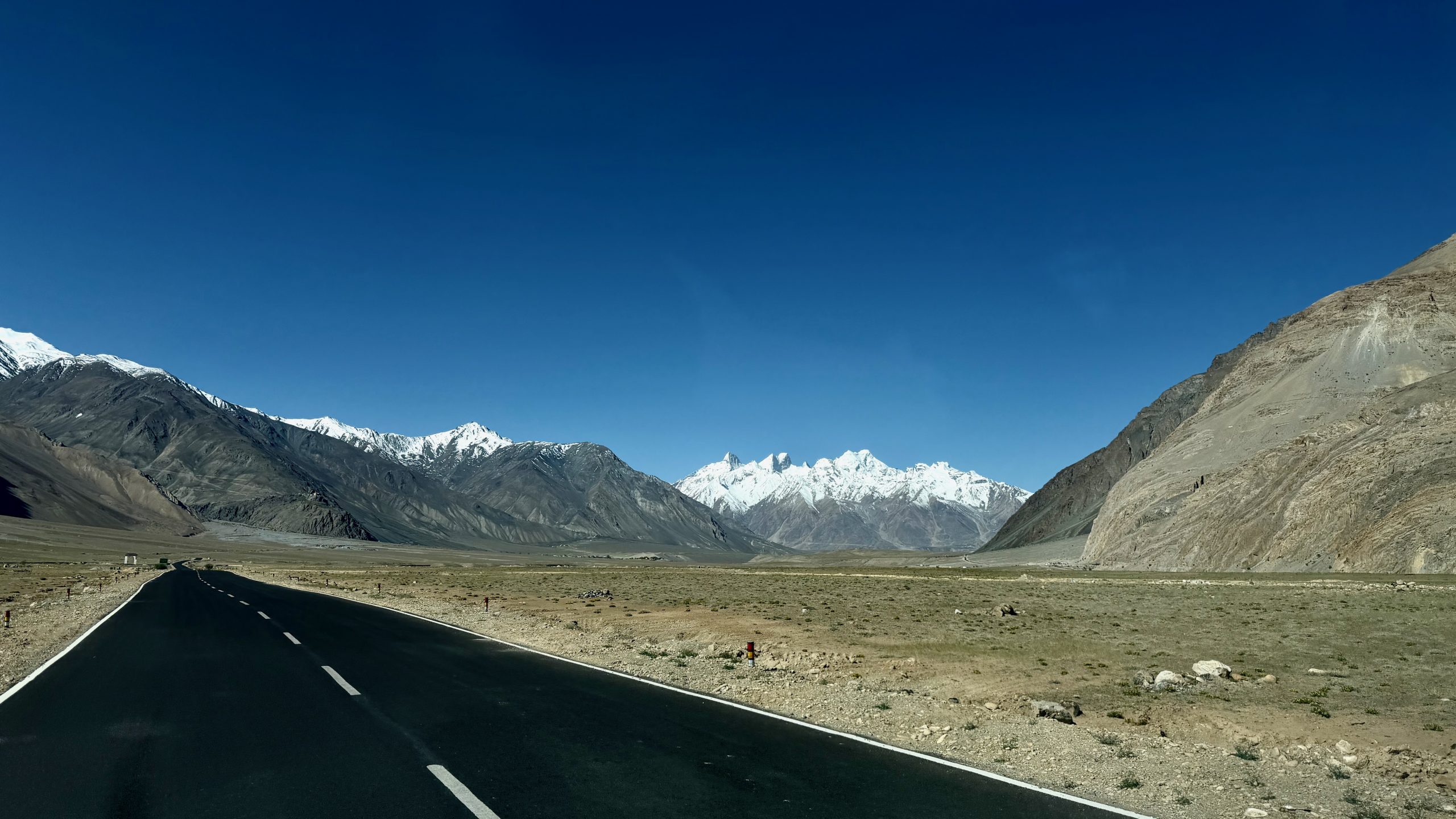
There are days when there’s a lot to experience. And those tend to make for rather long blog posts… Here we go!
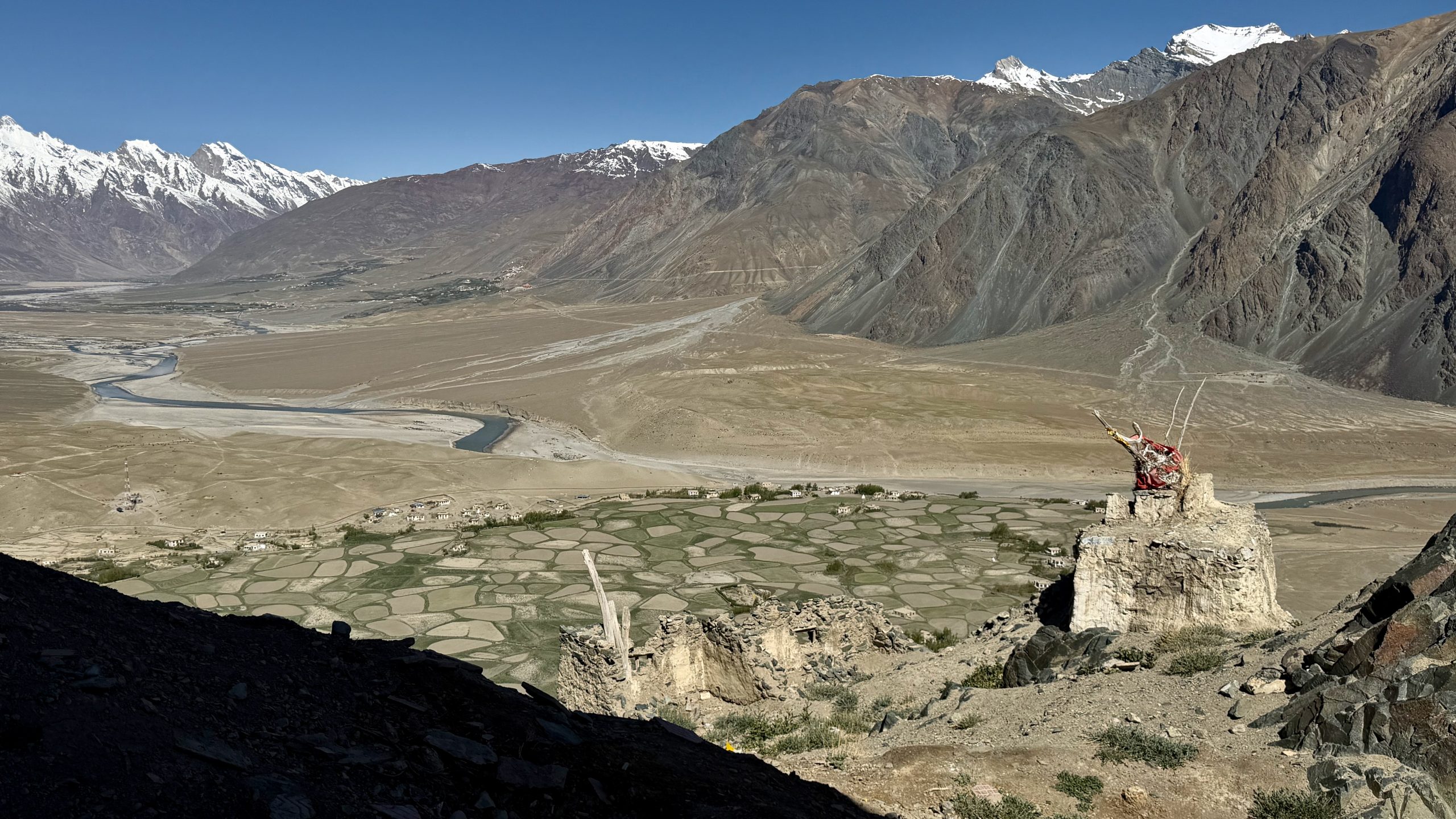
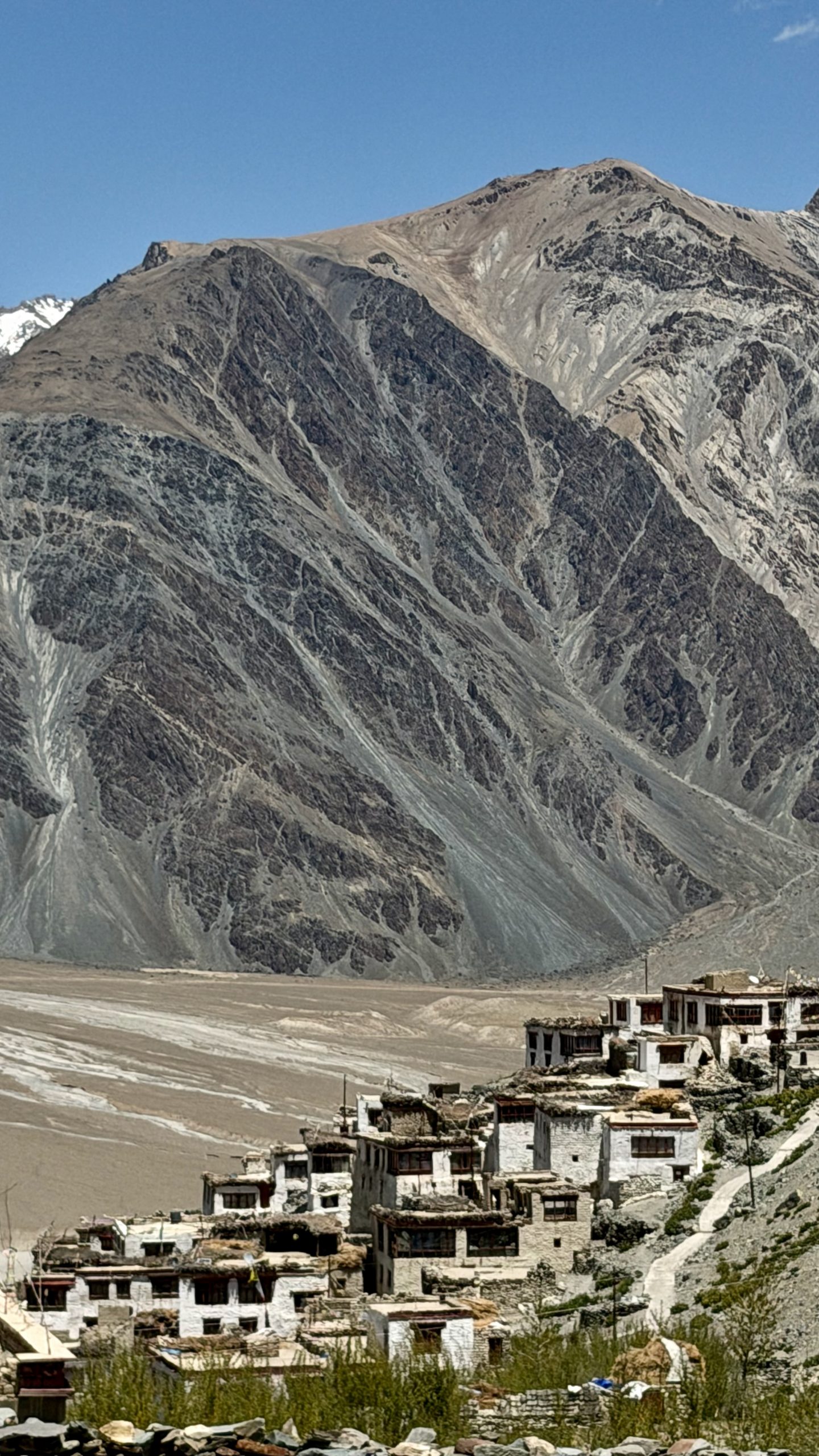
Off along the wonderful road to Stongde. I’ve been there before, but taking another look is never a bad idea. Alongside Karsha Monastery, this is the other most photogenic monastery around – you already saw it in the first Zanskar post. Perched high on the rocks, it looks down over the village spread out around it like a pancake. It’s hard to say which view is the most beautiful – so here they all are:
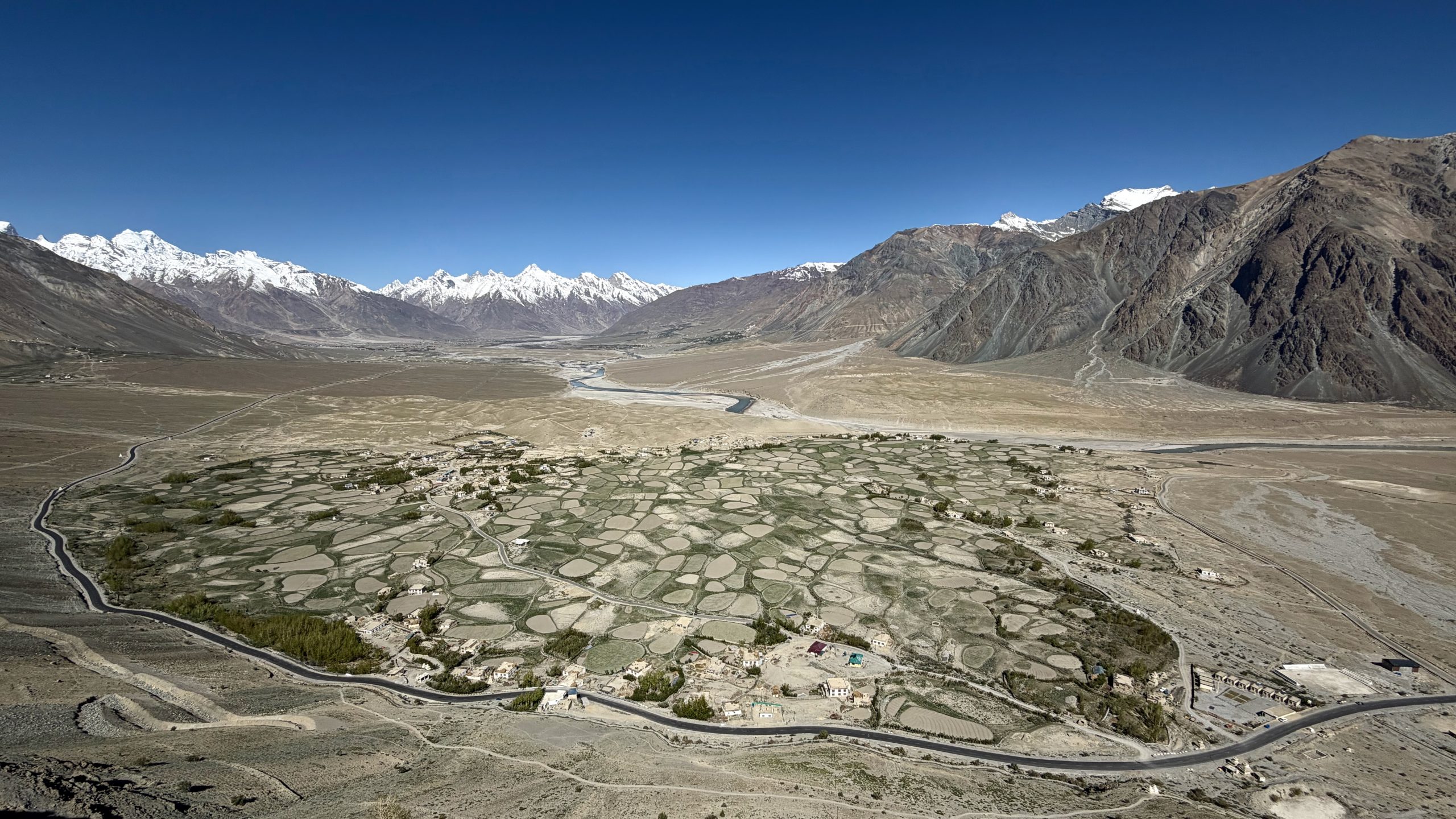
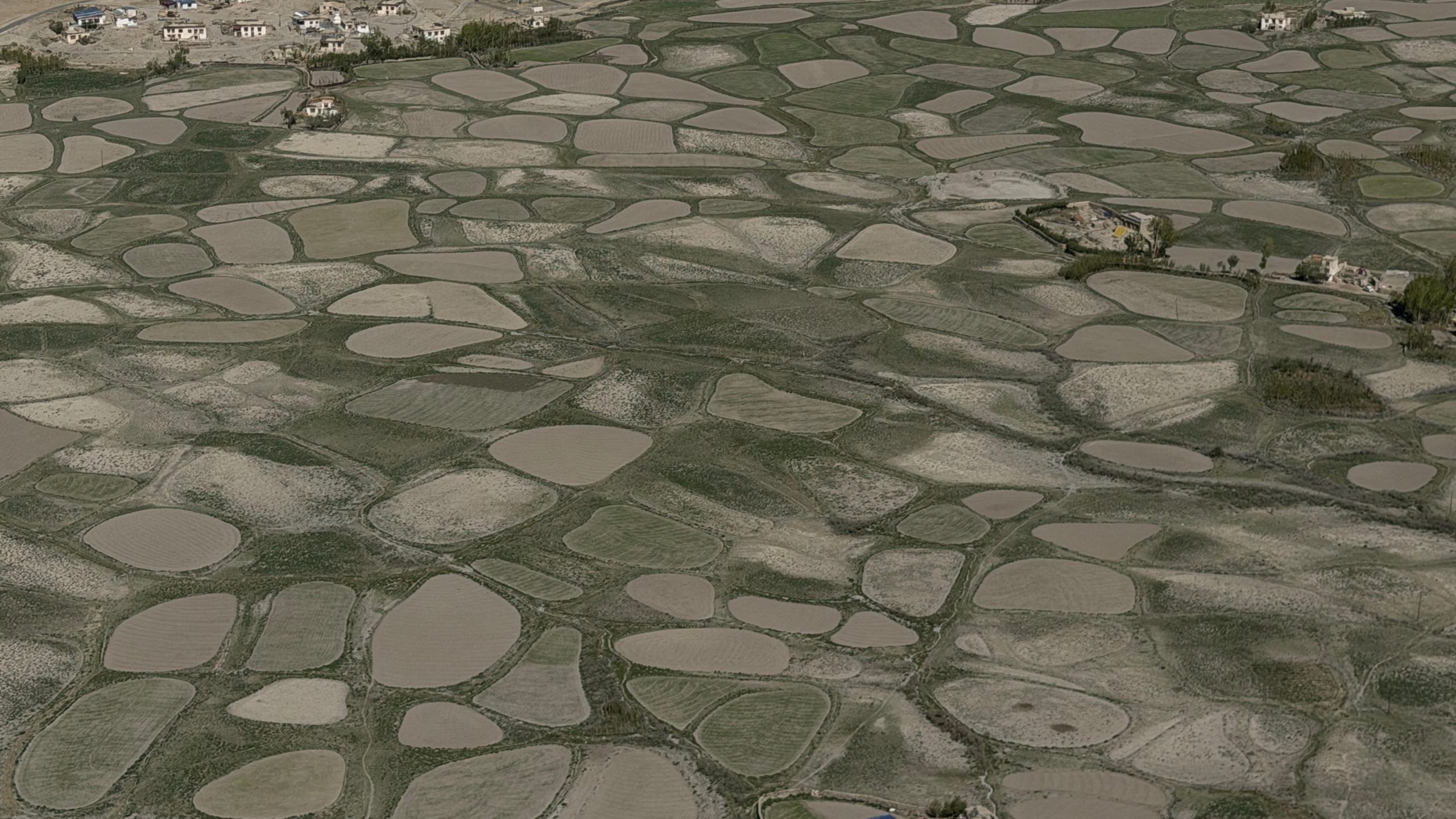
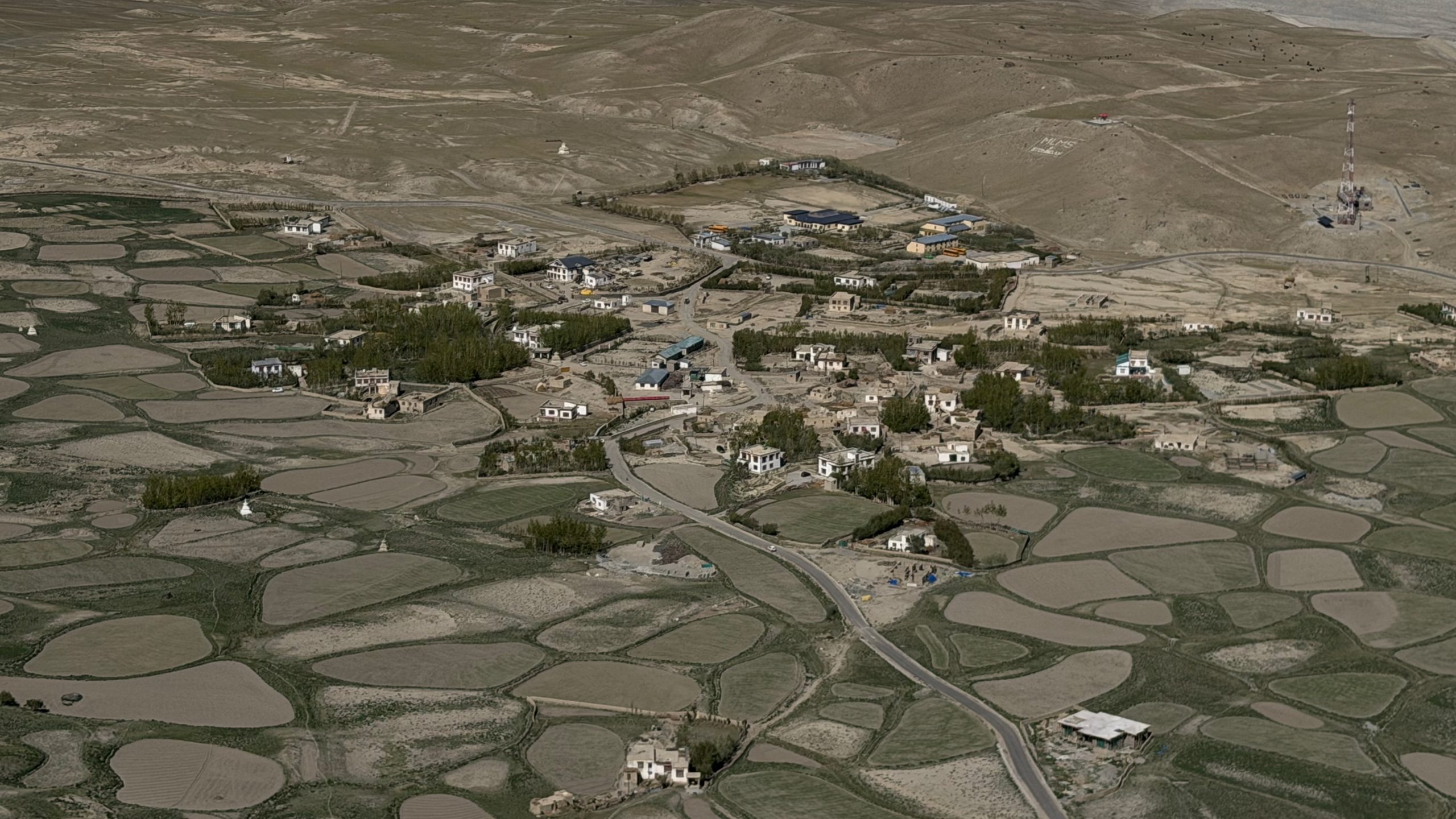
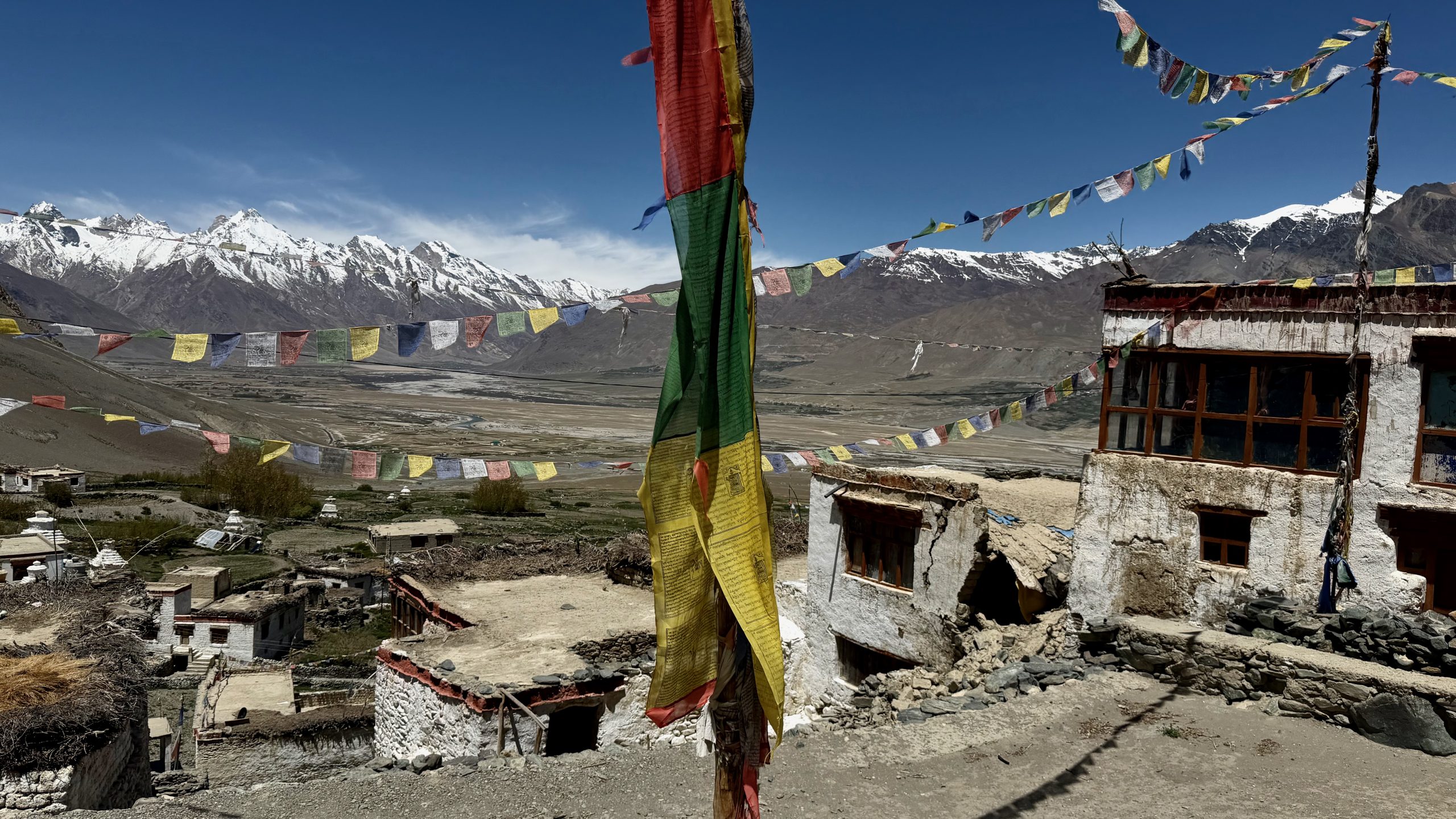
The monastery itself has expanded. A larger building provides more comfort inside, and among other things, they hope it will attract more young monks. The monastery courtyard, however, is still old.
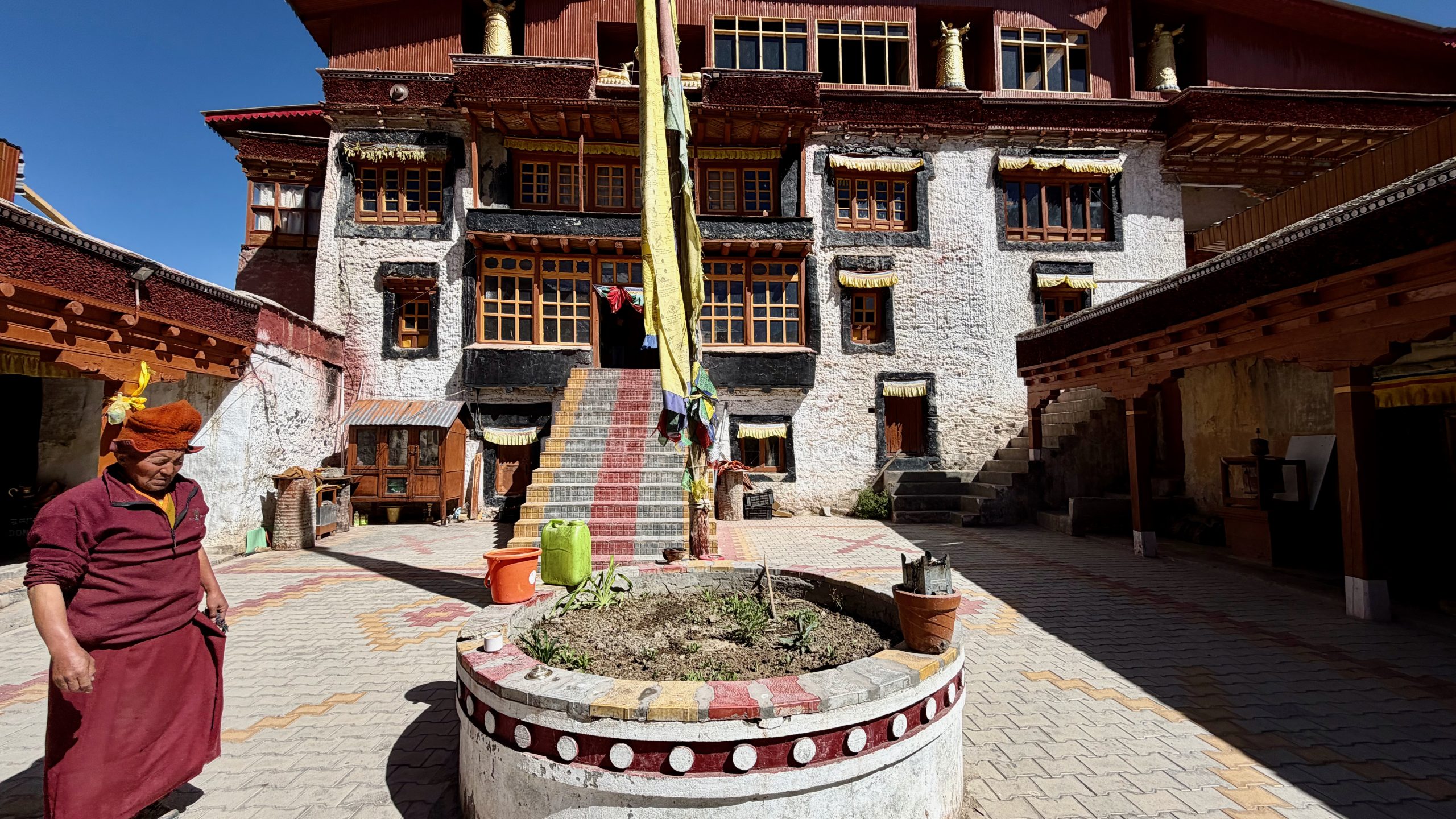
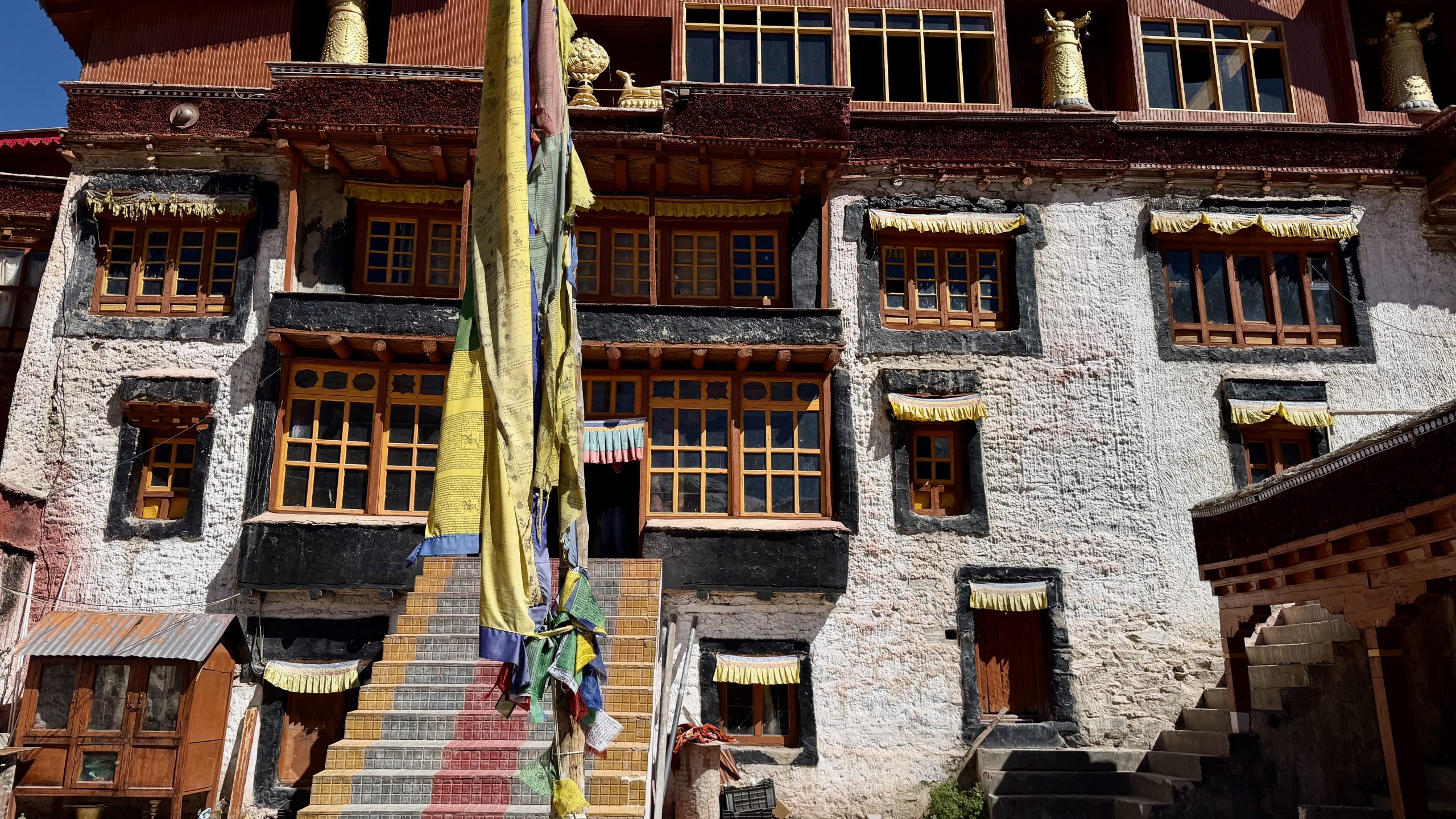
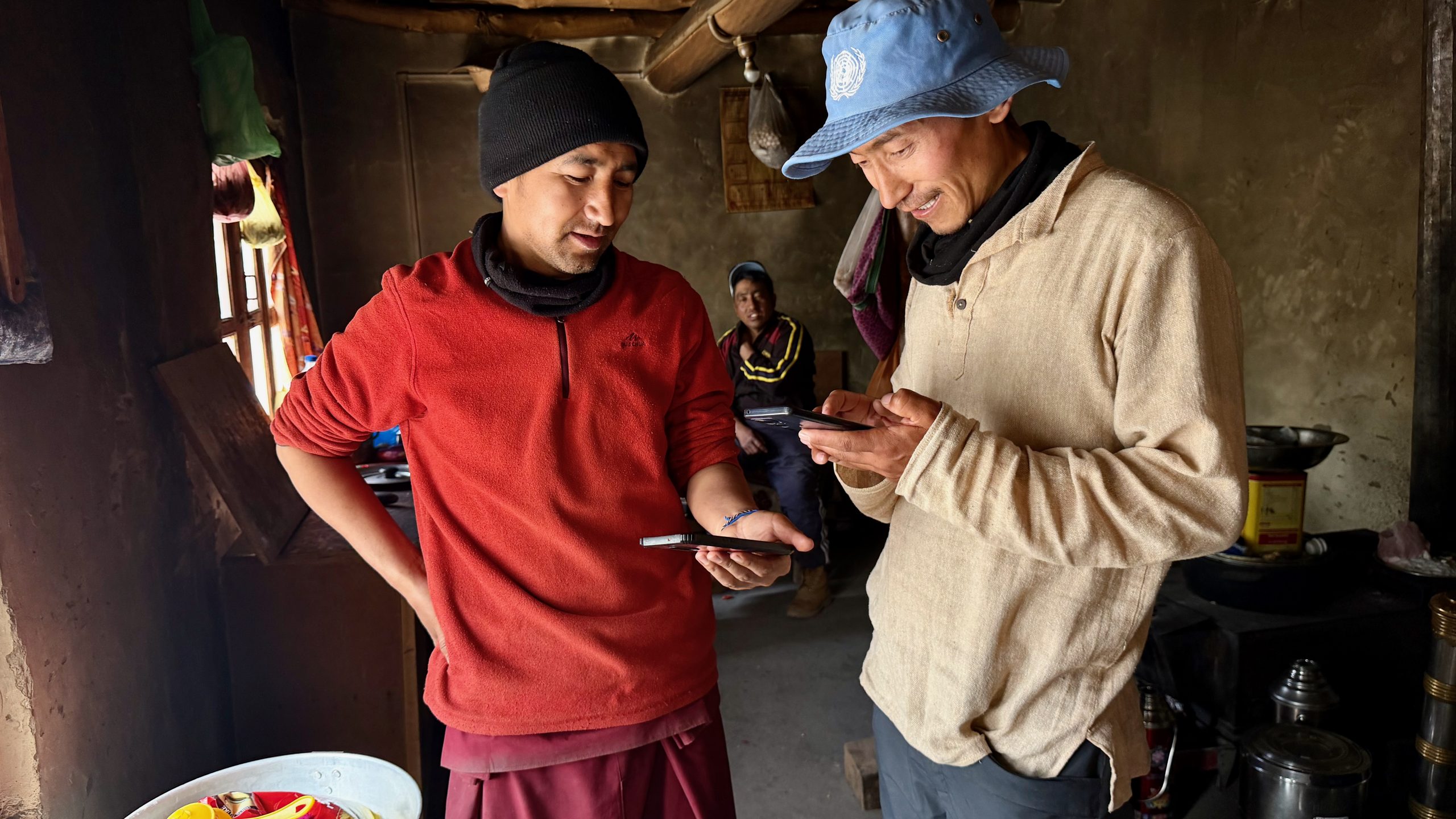
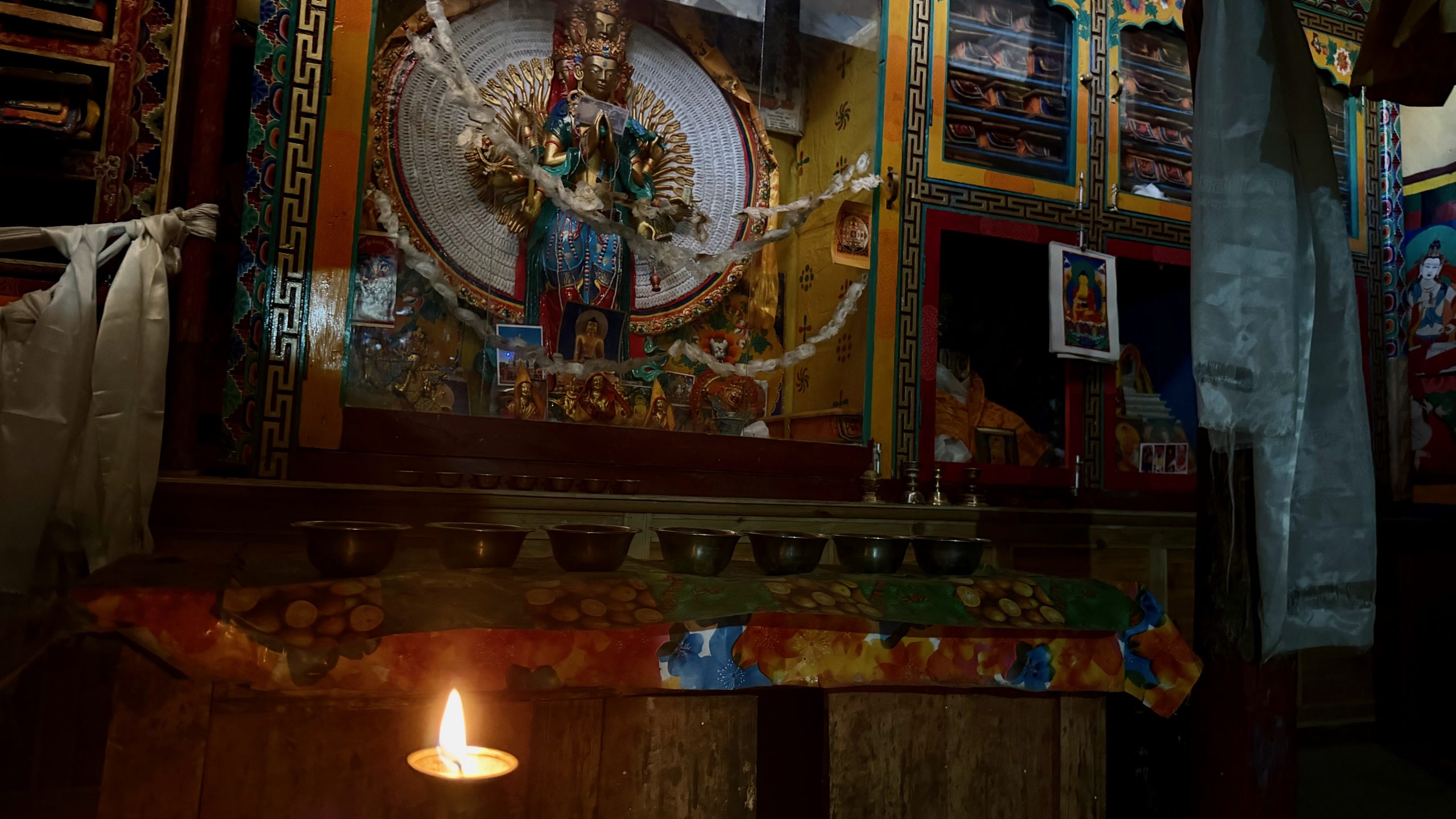
Photography isn’t allowed inside. I’m beginning to suspect that this is now the case in almost every monastery in Ladakh and Zanskar — I’ll check that. In July, there’s a monastery festival here, and I’m considering coming back to see it. We’ll see… I had forgotten my money in the car, so Lameth paid for me first or tried to pay by phone. It turned into a somewhat longer procedure somehow, but in the end it worked. Then we were offered a cup of tea.
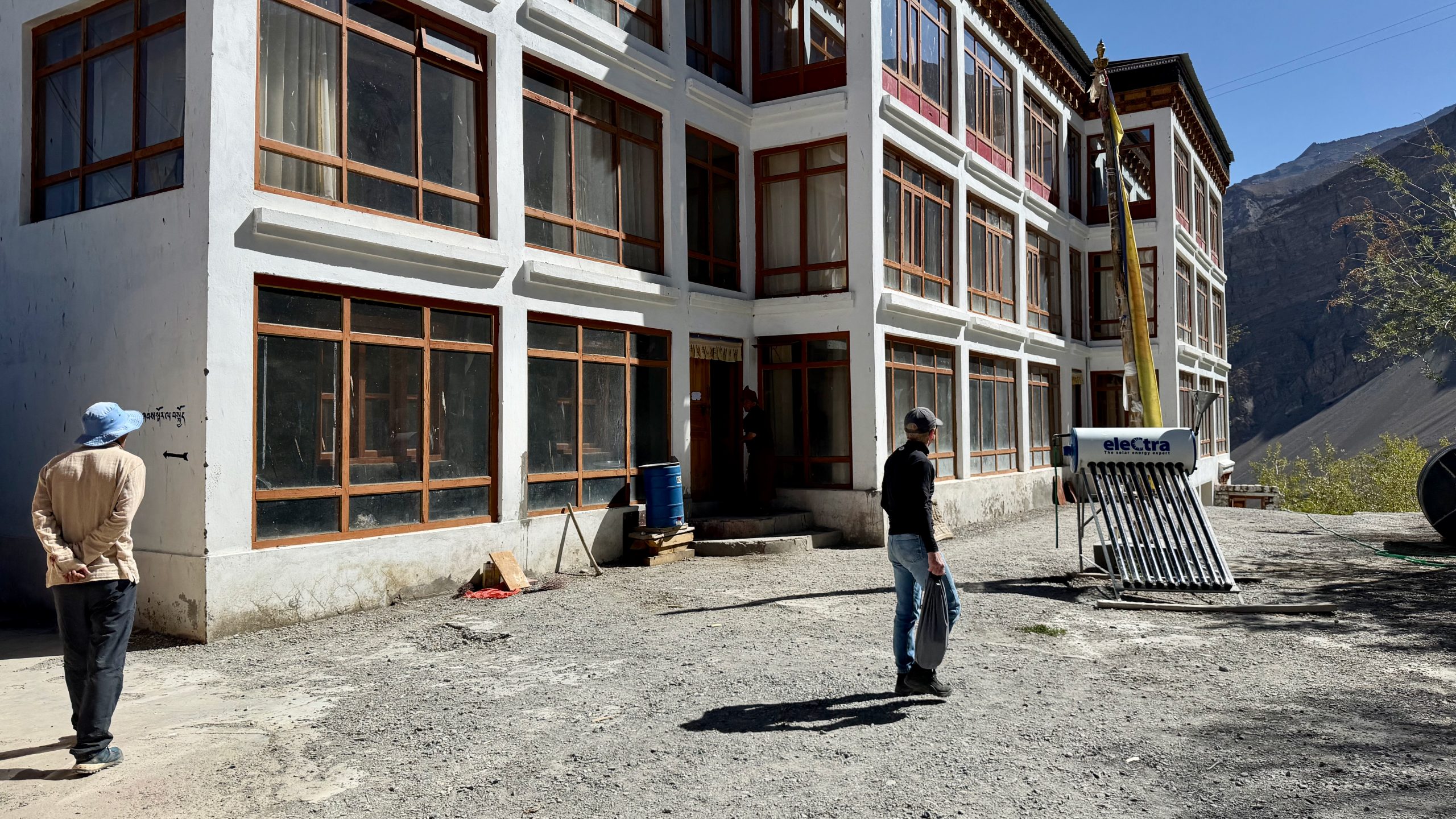
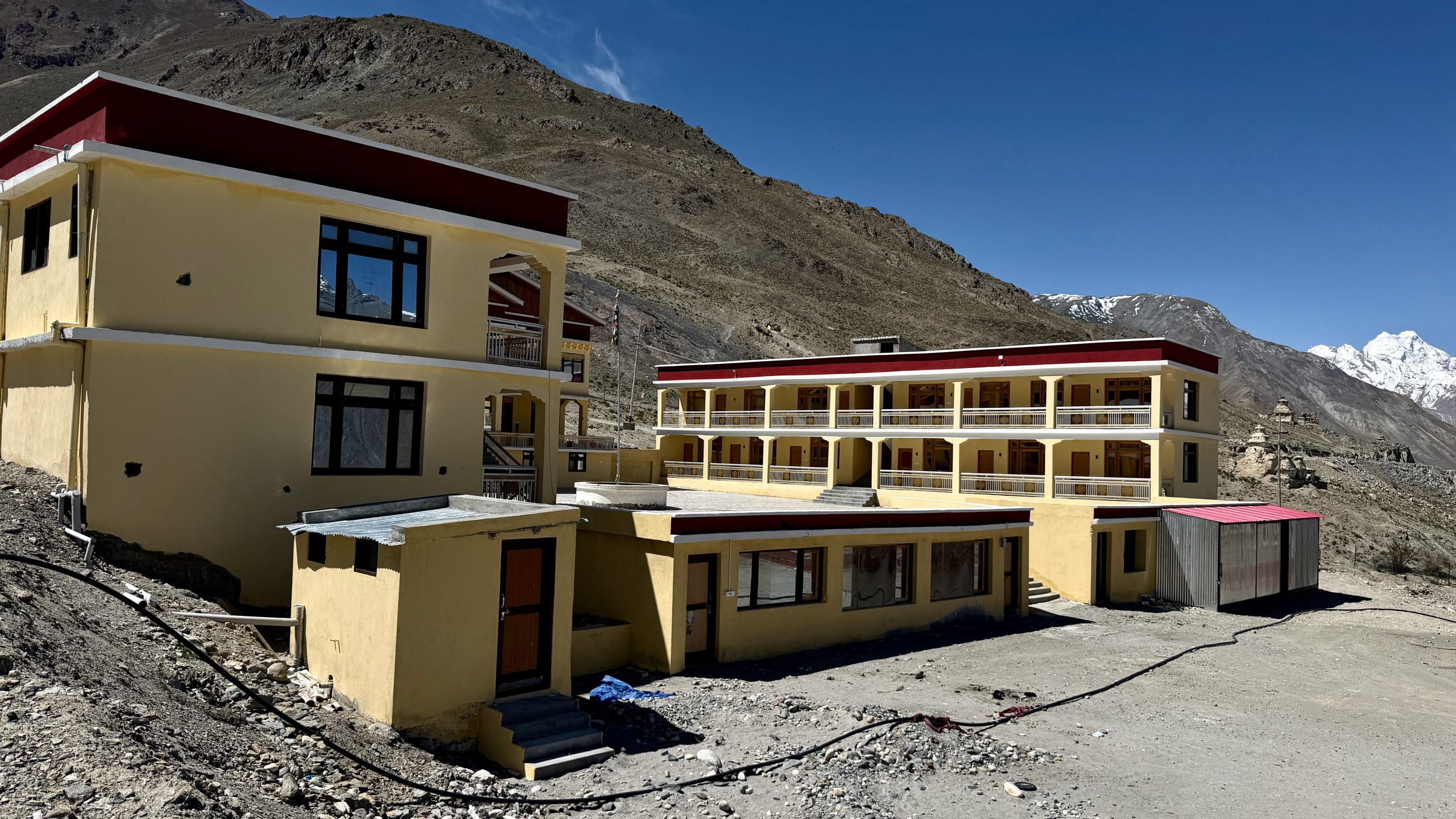
I’m amazed by how many new accommodations have sprung up, and of course I checked out a few of them. Stongde Monastery had joined in as well and built a huge building to serve as a guesthouse. Unfortunately, the monk with the key was down in the village, so I couldn’t see any of the rooms. They’re supposed to be very comfortable, though.
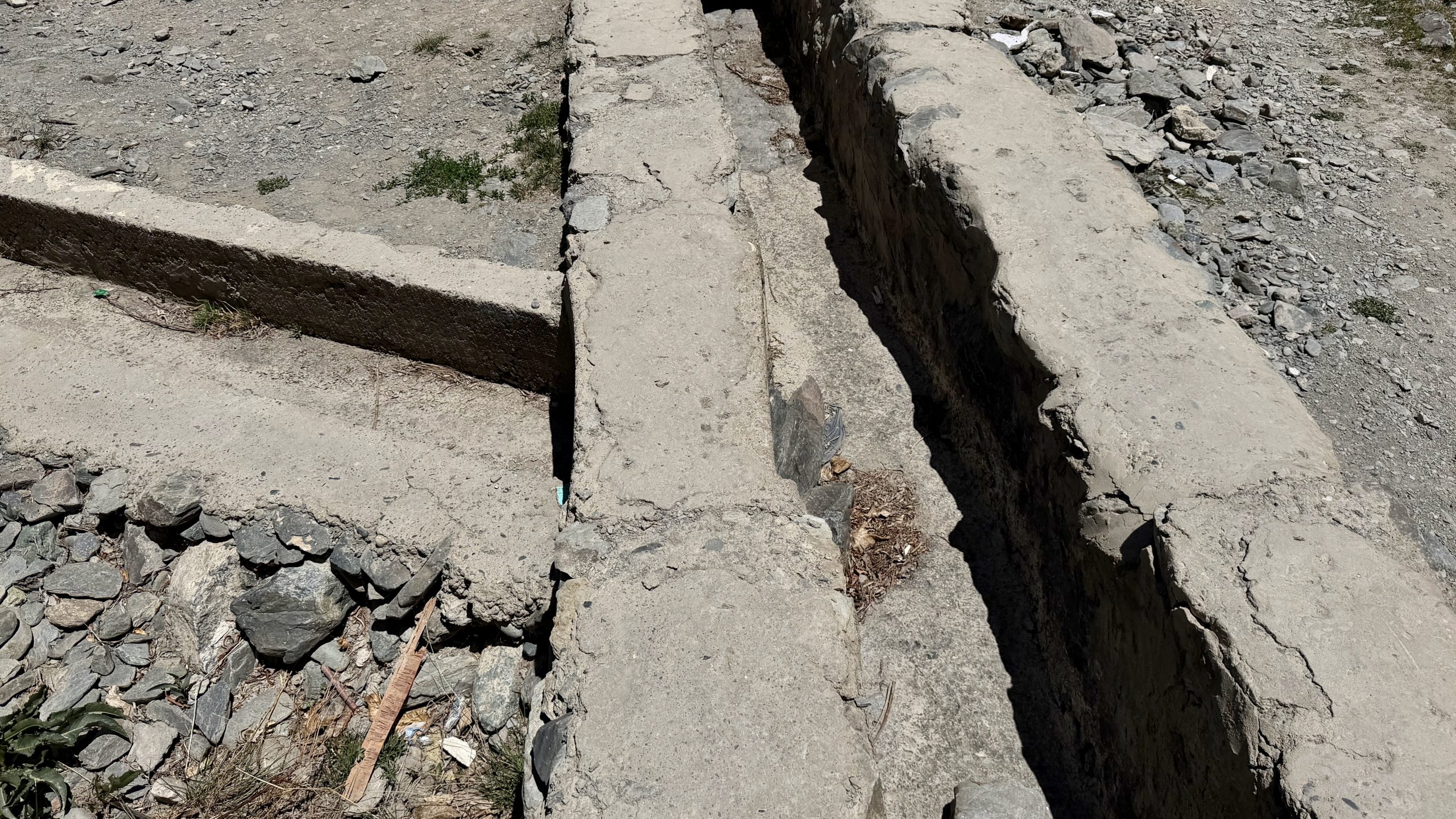
The villages of Zanskar are supplied with water from the snow and glaciers in the mountains. However, that supply is gradually decreasing, among other reasons because of climate change. Stongde is already facing some difficulties because of this. The village of Kumik, in the neighboring valley, is facing much bigger problems. It lies — or rather used to lie — higher up on the mountainside. The water sources dried up, and the entire village had to relocate. Now only three houses are still inhabited up there; everyone else has settled down in the plain below. Until now, I only knew of an entire village relocation from Mustang in Nepal (where I’ll be traveling later) — and now here as well. First, we drove up and looked at the abandoned houses. There are plans to turn the place into some kind of heritage village.
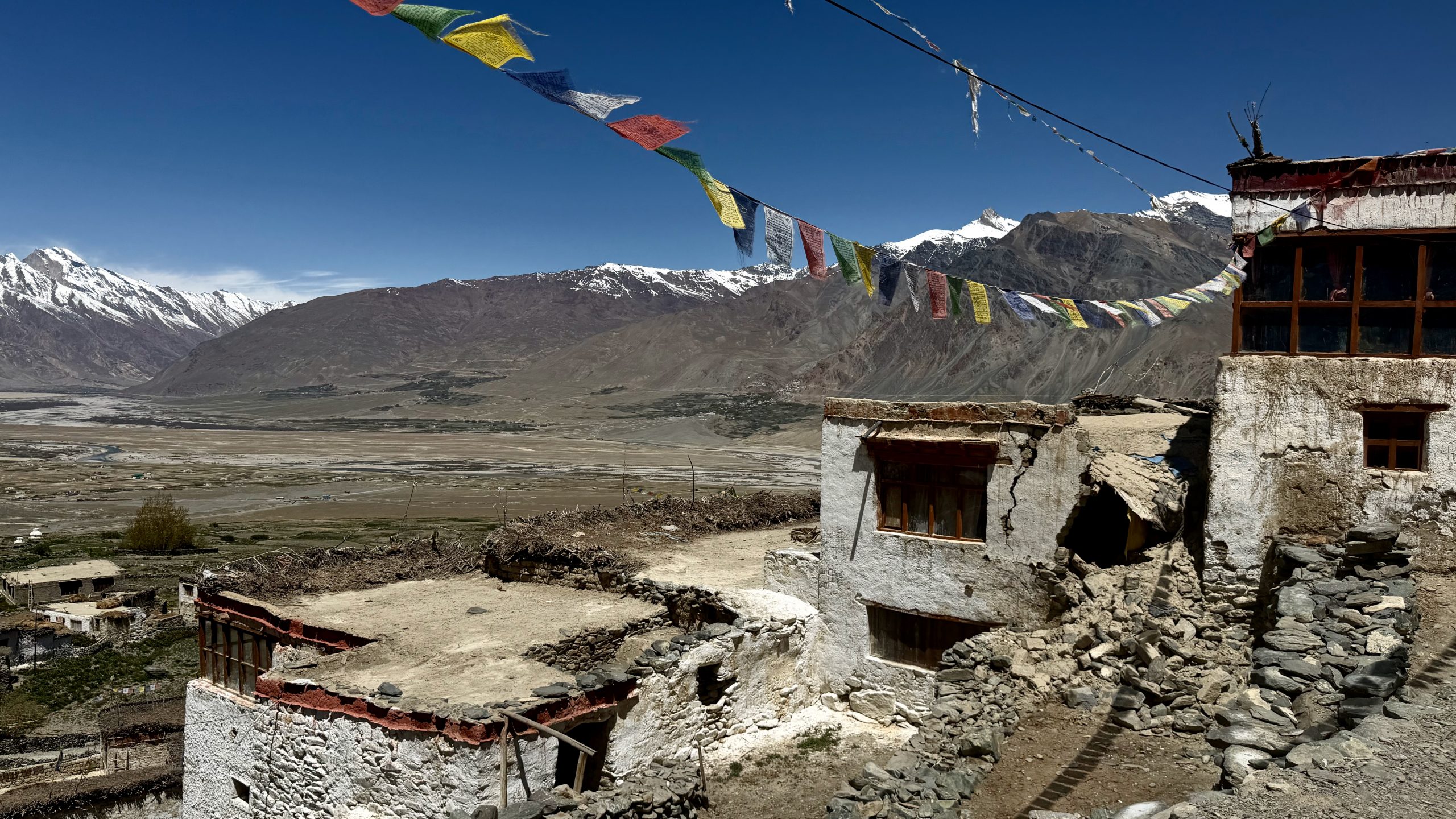
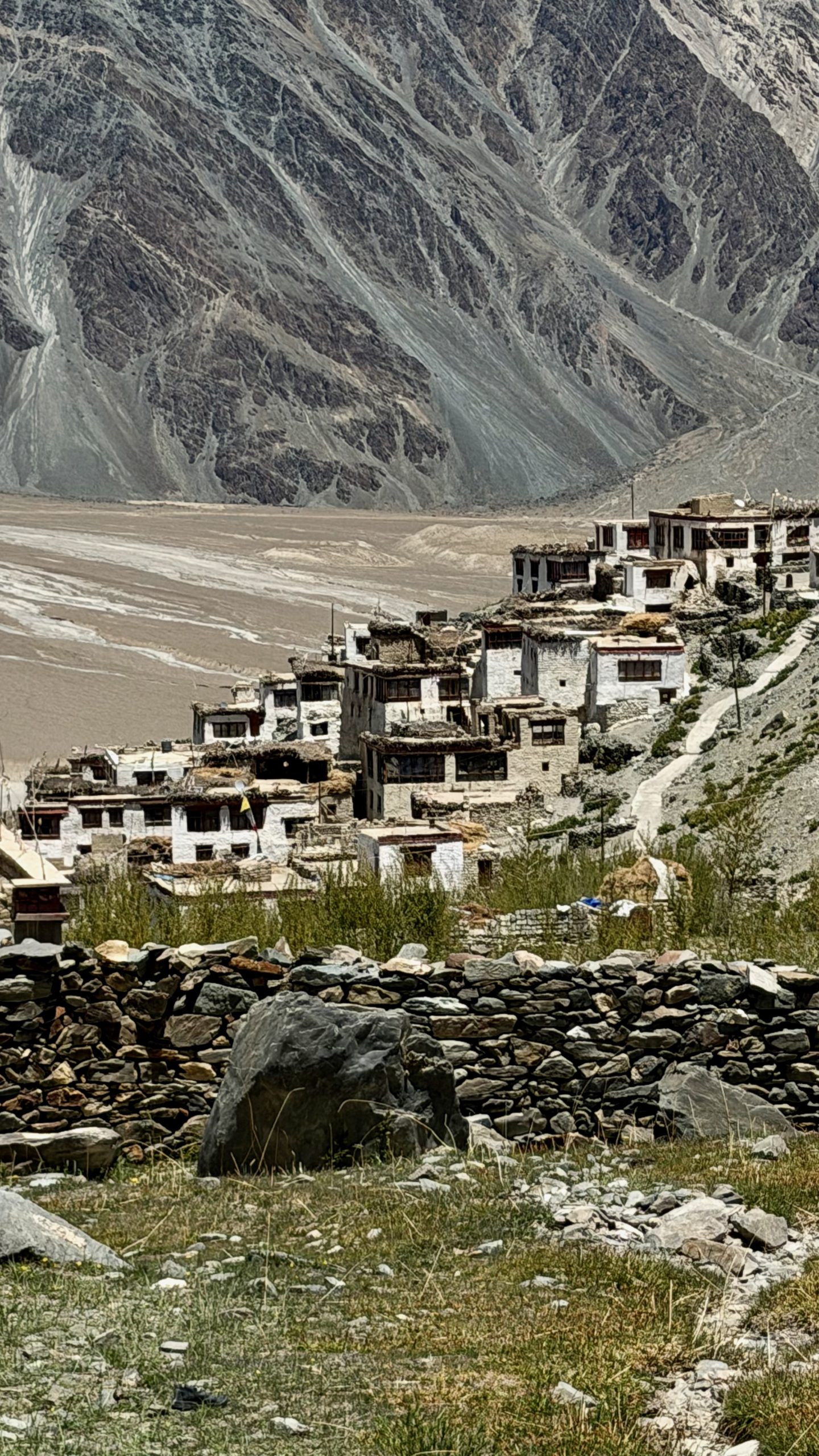
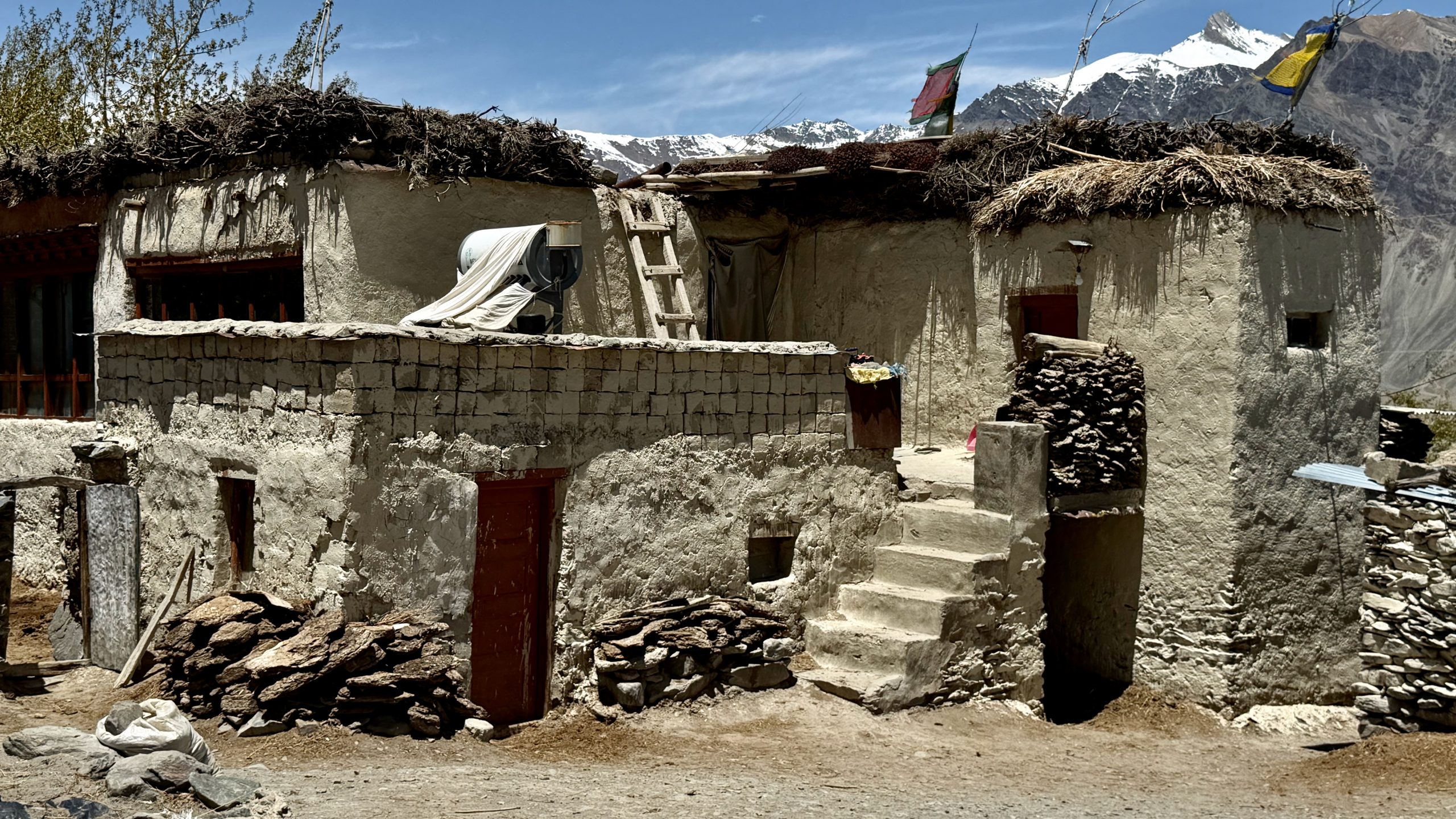
Es gibt noch das alte Klostergebäude und die Räume werden weiterhin für die religiösen Zeremonien genutzt.
Kein Wasser in den Kanälen:
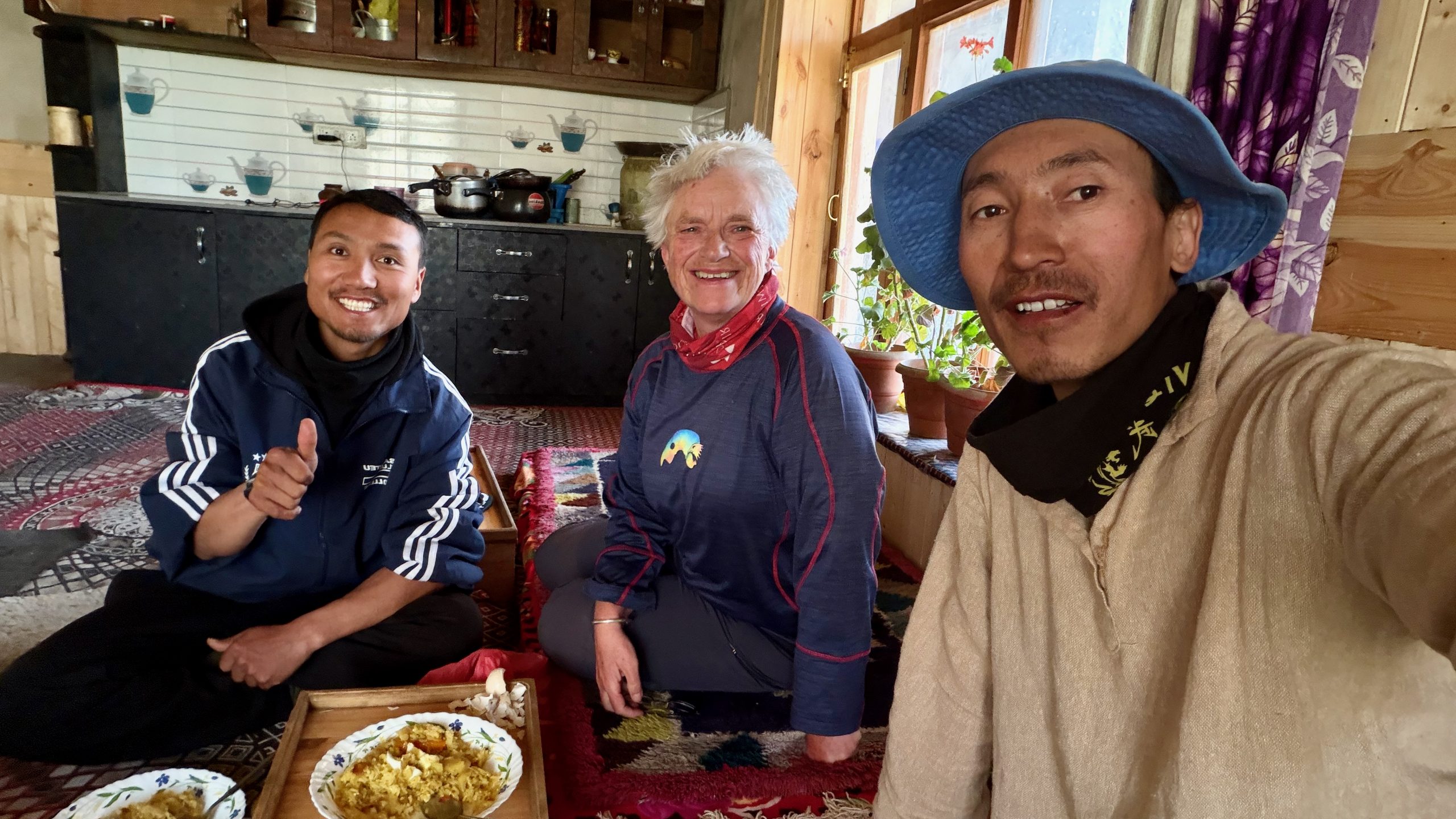
Lameth’s mother is from Kumik, so there’s quite a bit of family connection here. We visited one family, although both parents happened to be away from home. Only their son was there — he serves in the military and was home on leave. We were invited in for lunch.
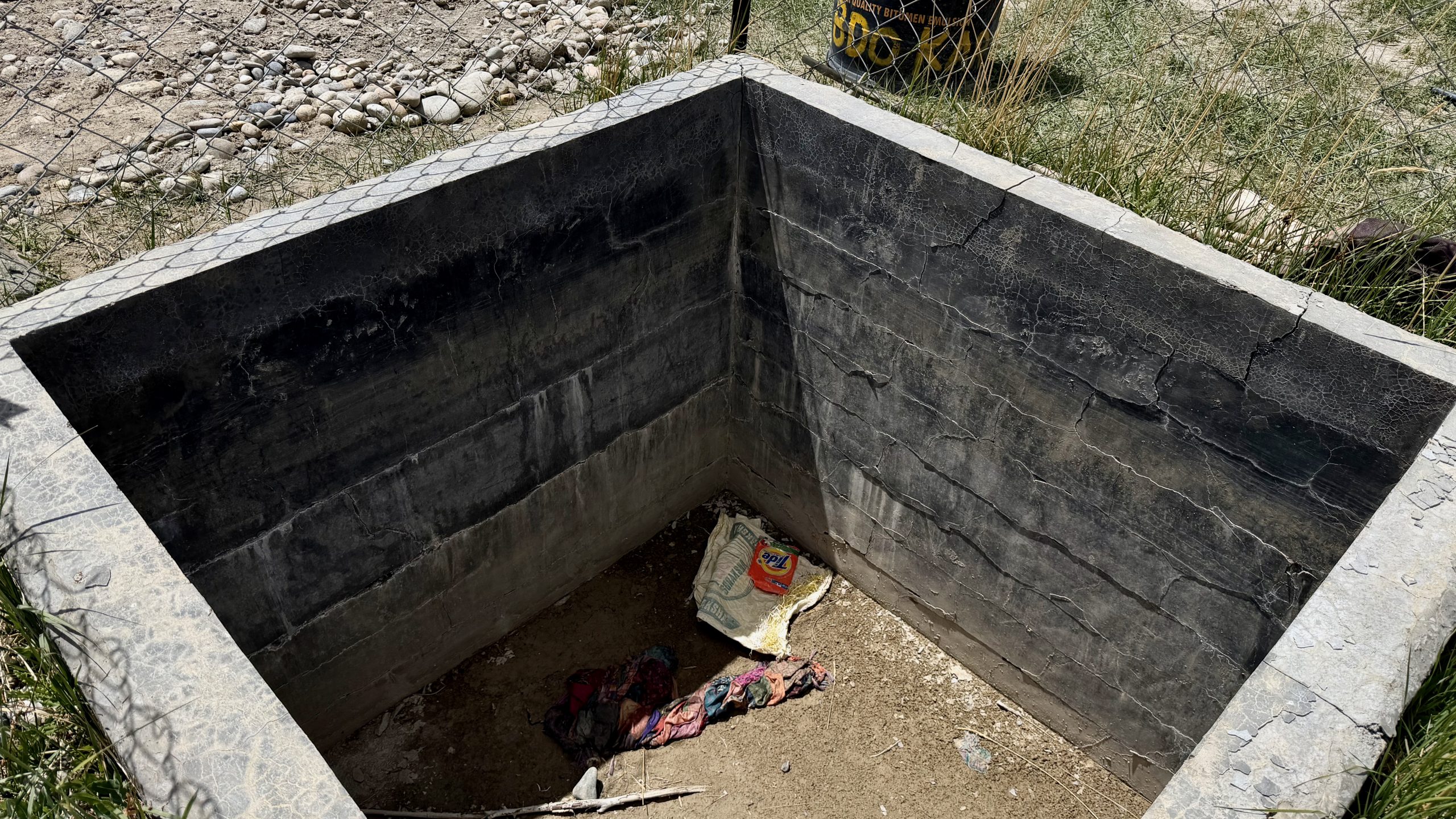
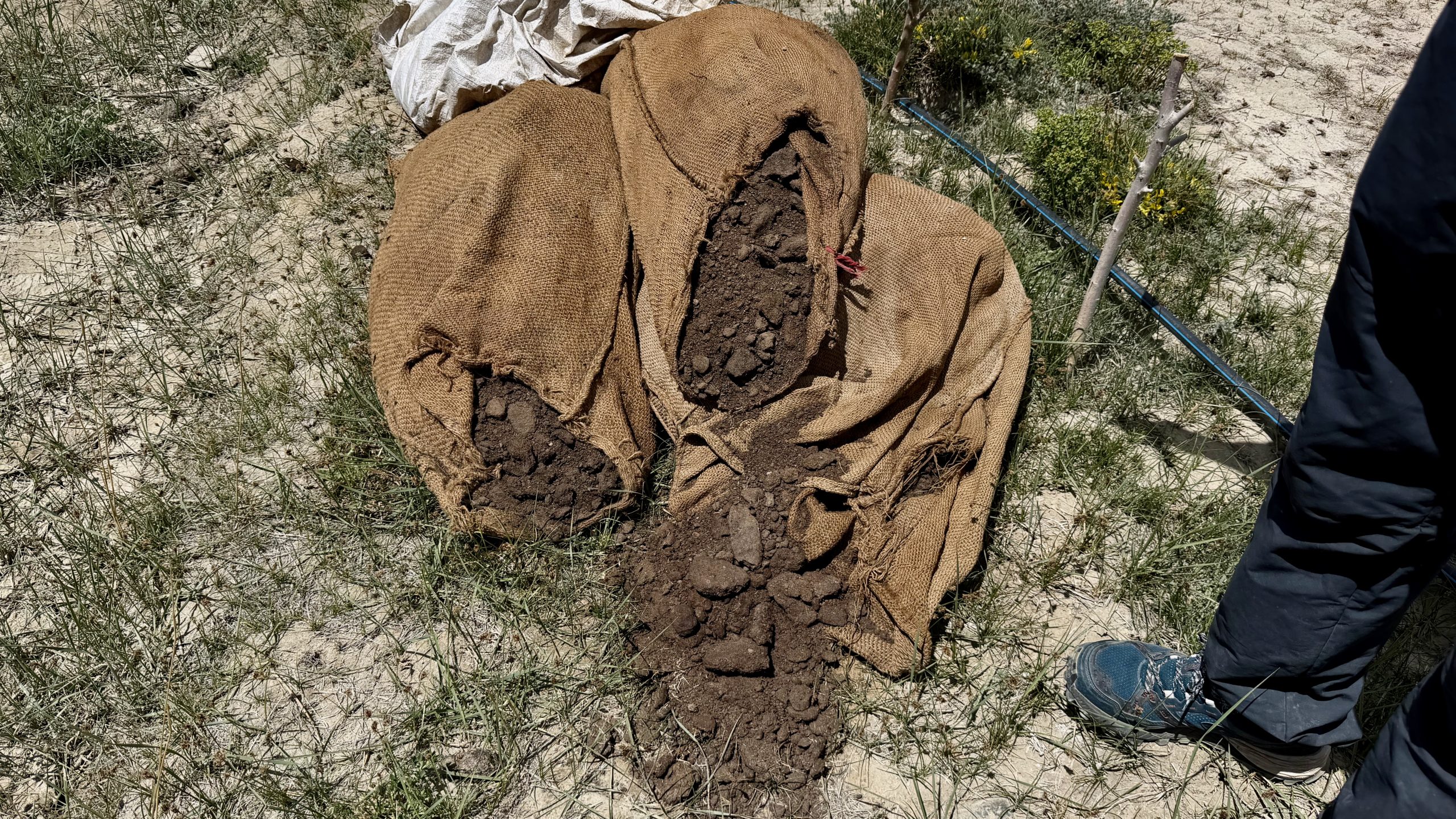
We also took a walk around the property, looking at the water reservoir (empty), natural fertilizer, fields, and greenhouse (including the “bathroom”). During that — and later as well — I kept thinking and asking questions. What does something like this mean for a village community? Who gets how much land and where at the new location? Are existing structures preserved, or does relocation deepen inequalities — or perhaps even create an opportunity for greater fairness? Was the redistribution planned from above, or how much say did people actually have? Were there long discussions and negotiations? Some houses looked noticeably more impressive than others. What do you do differently when you essentially get the chance to start over from scratch? And what an enormous amount of work it must have been to clear all those stones from the new fields! Or do inequalities grow more through other channels anyway — through jobs in the army, government, or tourism?
Unfortunately, I didn’t take an overview photo. Afterwards, we drove up a rough track higher and higher until we reached Shila Phu at 4,150 meters. Phew — that was definitely high, and the thin air was noticeable. Here, I found myself reflecting on another aspect of village life. About seven houses stood close together, the fields stretched along the valley, and each family kept some livestock. There was a road connection, but people didn’t seem to use it very often, so the village felt quite isolated. Such a tiny community! What is it like to live together in a place like this? I sat there looking around in amazement. It feels so far removed from my own restless world. And yet the people seem so cheerful that it makes me a little envious.
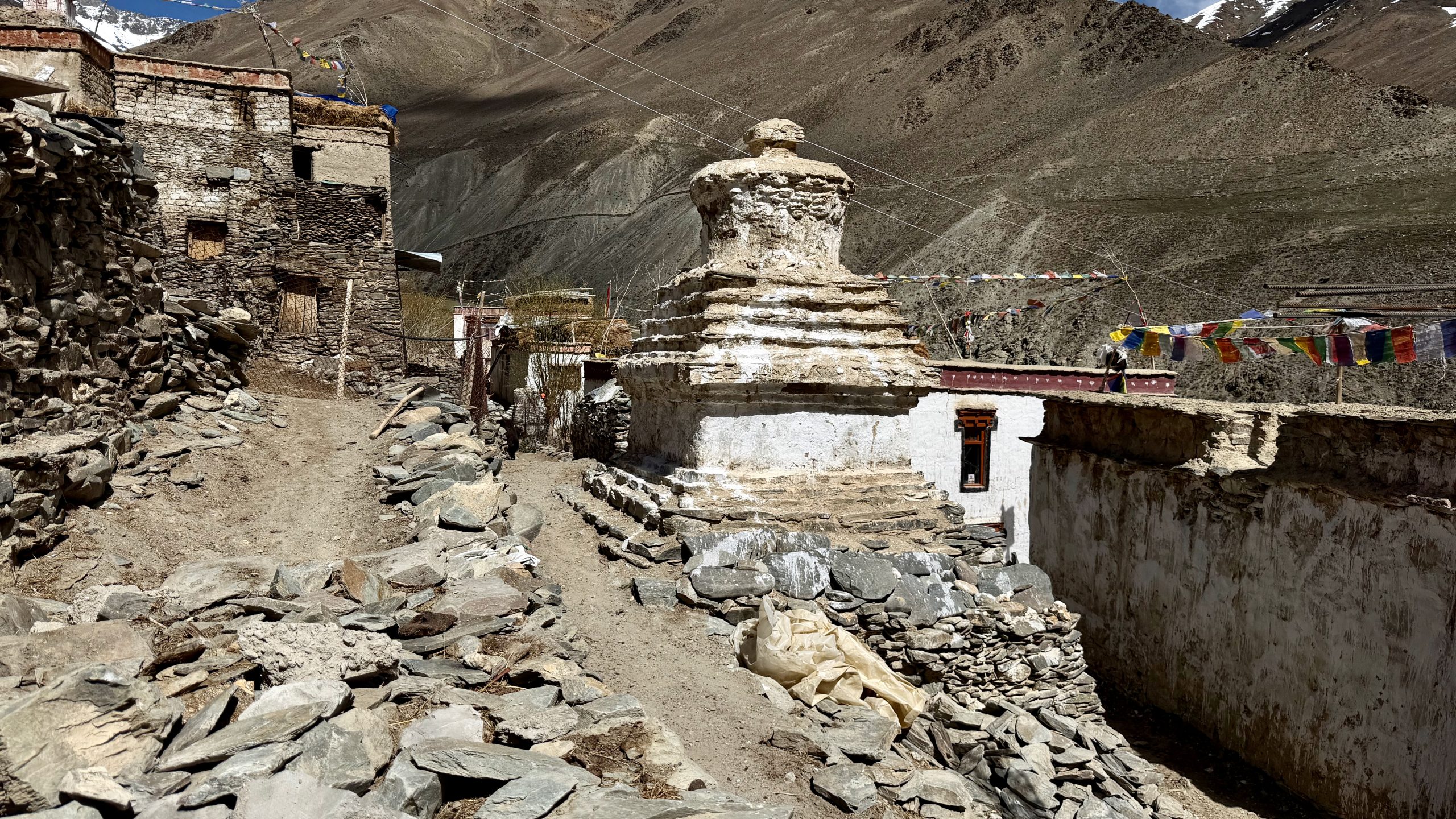
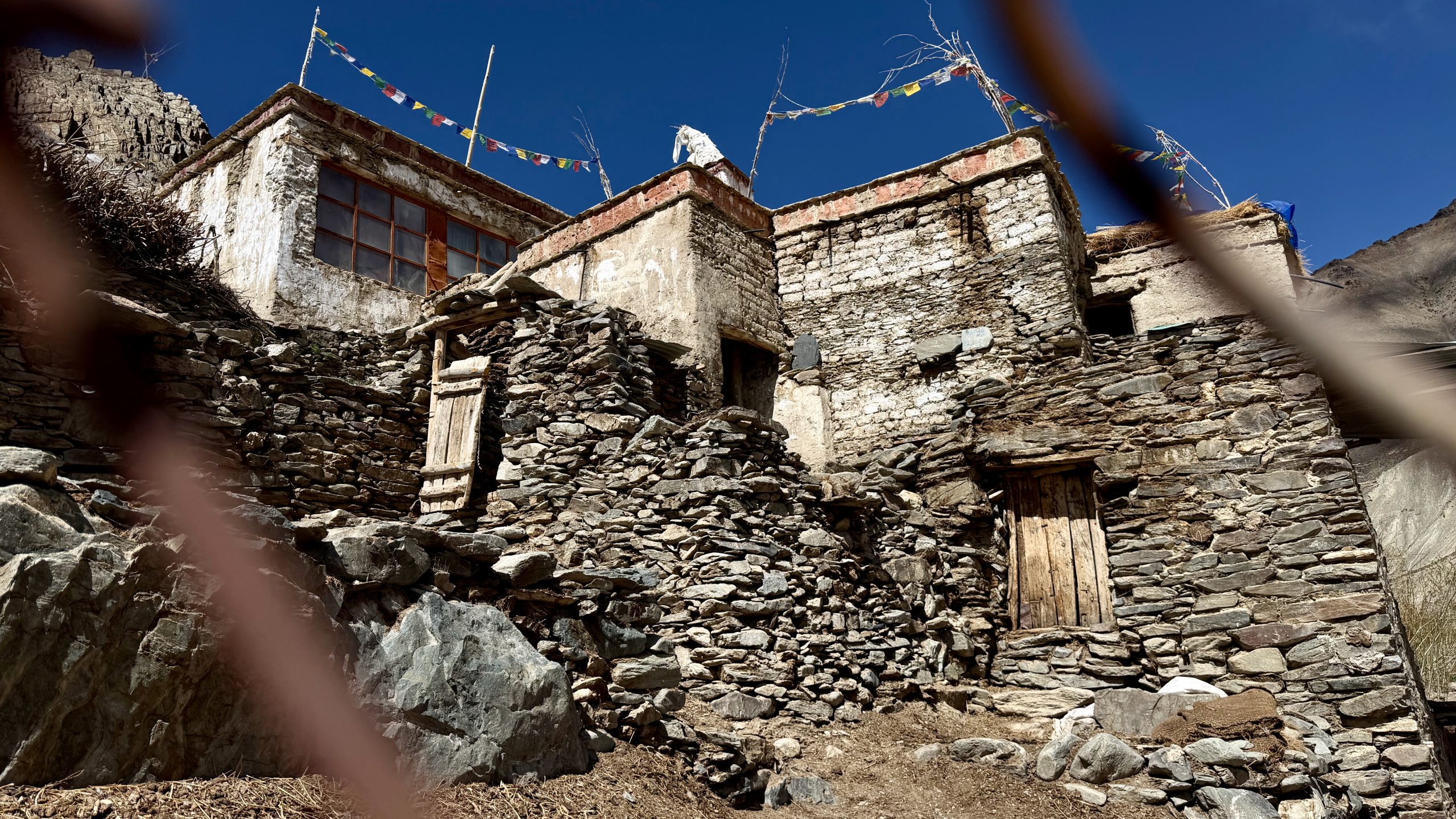
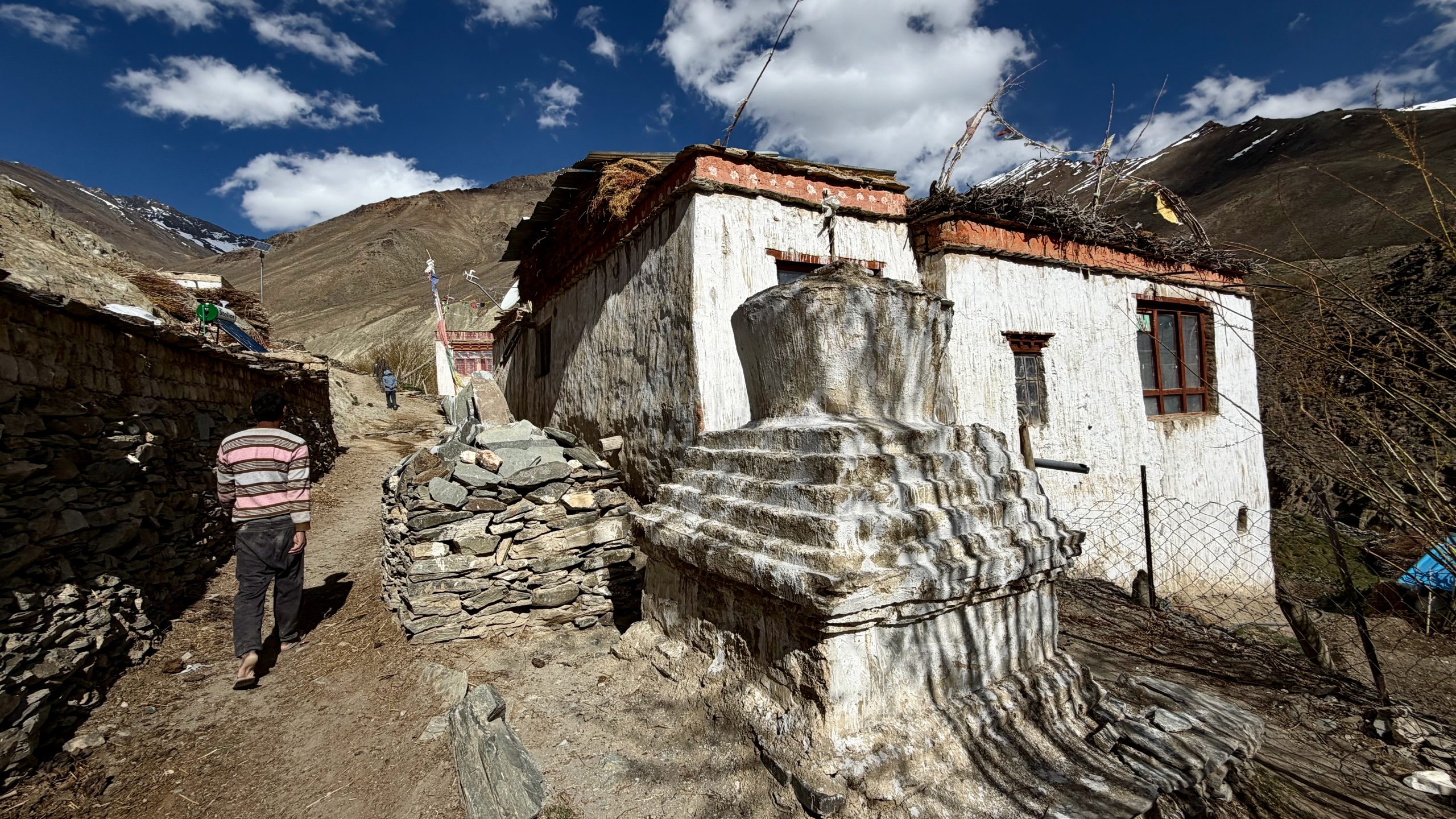
Besides the villagers themselves, there were also migrant workers. One was a Nepali shepherd who spent his days moving around with the animals (he joined us for dinner at my accommodation later on). Others were working on improving the uppermost section of the road and were living in tents while doing so.
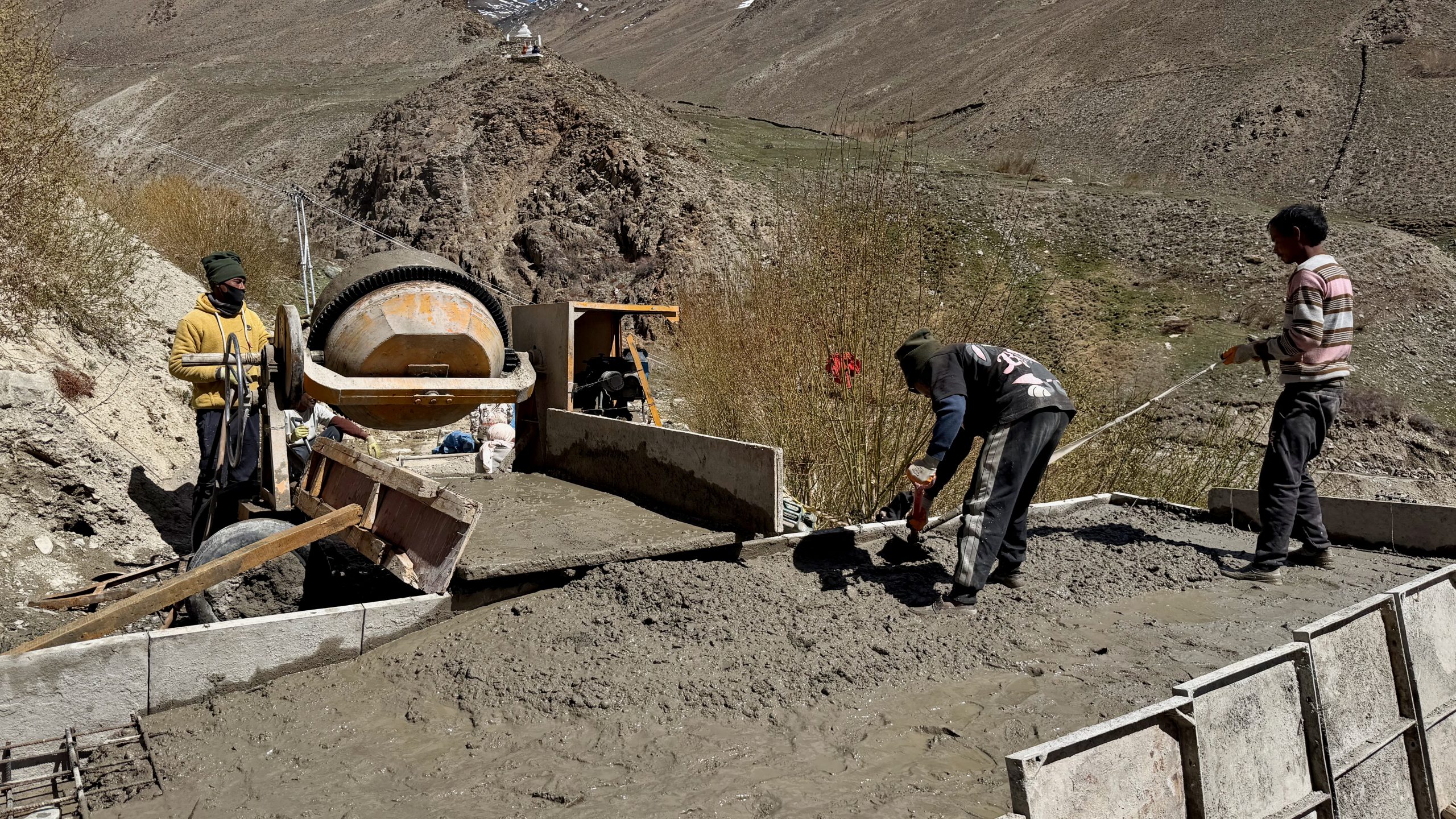
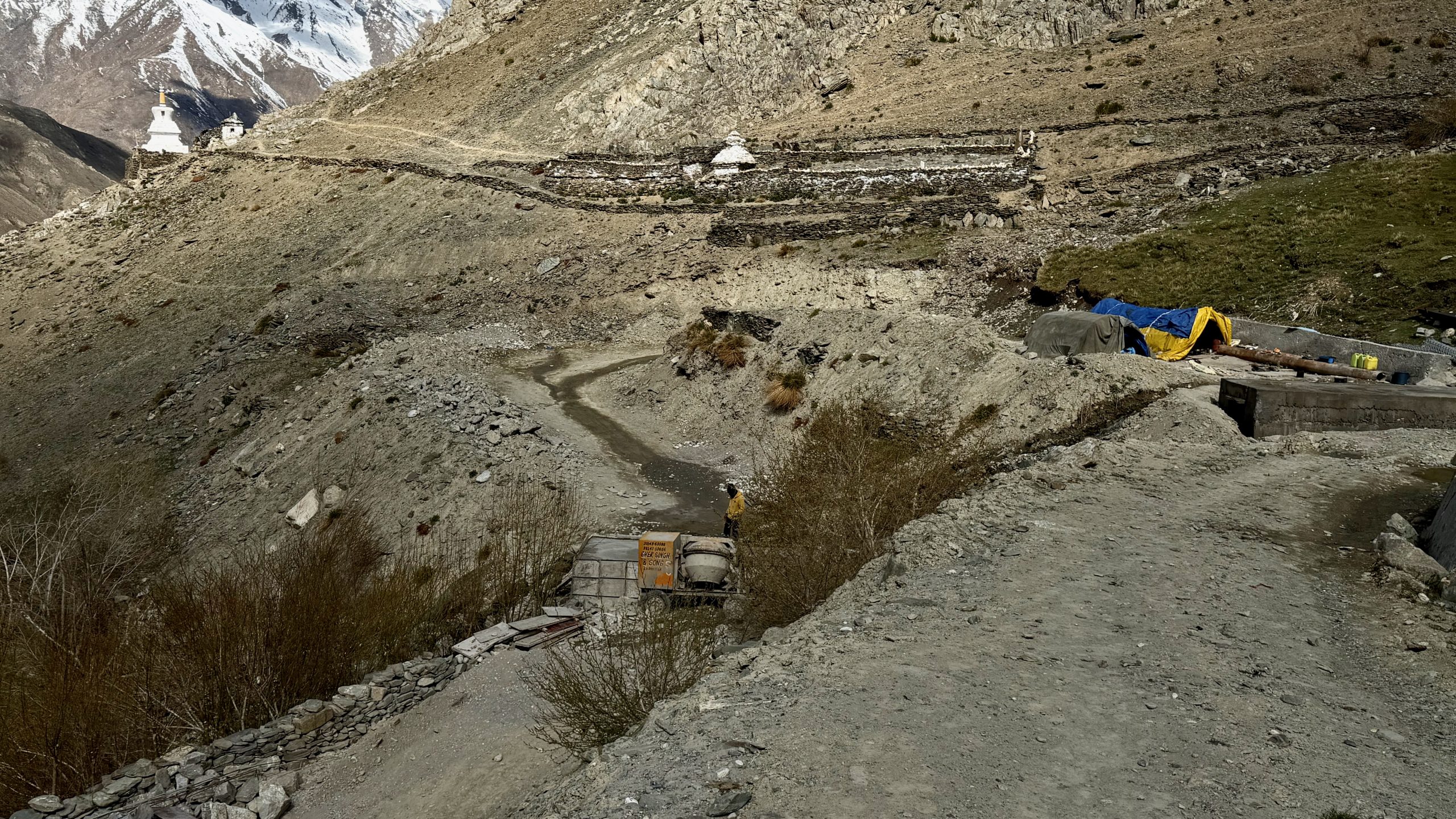
To help with acclimatization — and simply because it was worth it — we walked further up the valley. It was incredibly beautiful! At first, we passed fields that were already much greener than those in Tsazar. But plants grow much more slowly up here, so in the end it apparently balances out. After that came a stretch of “nothingness,” and where the valley split in two, there was a large, still uninhabited summer pasture and an abandoned hermitage. I love this landscape! What luck that I came here!
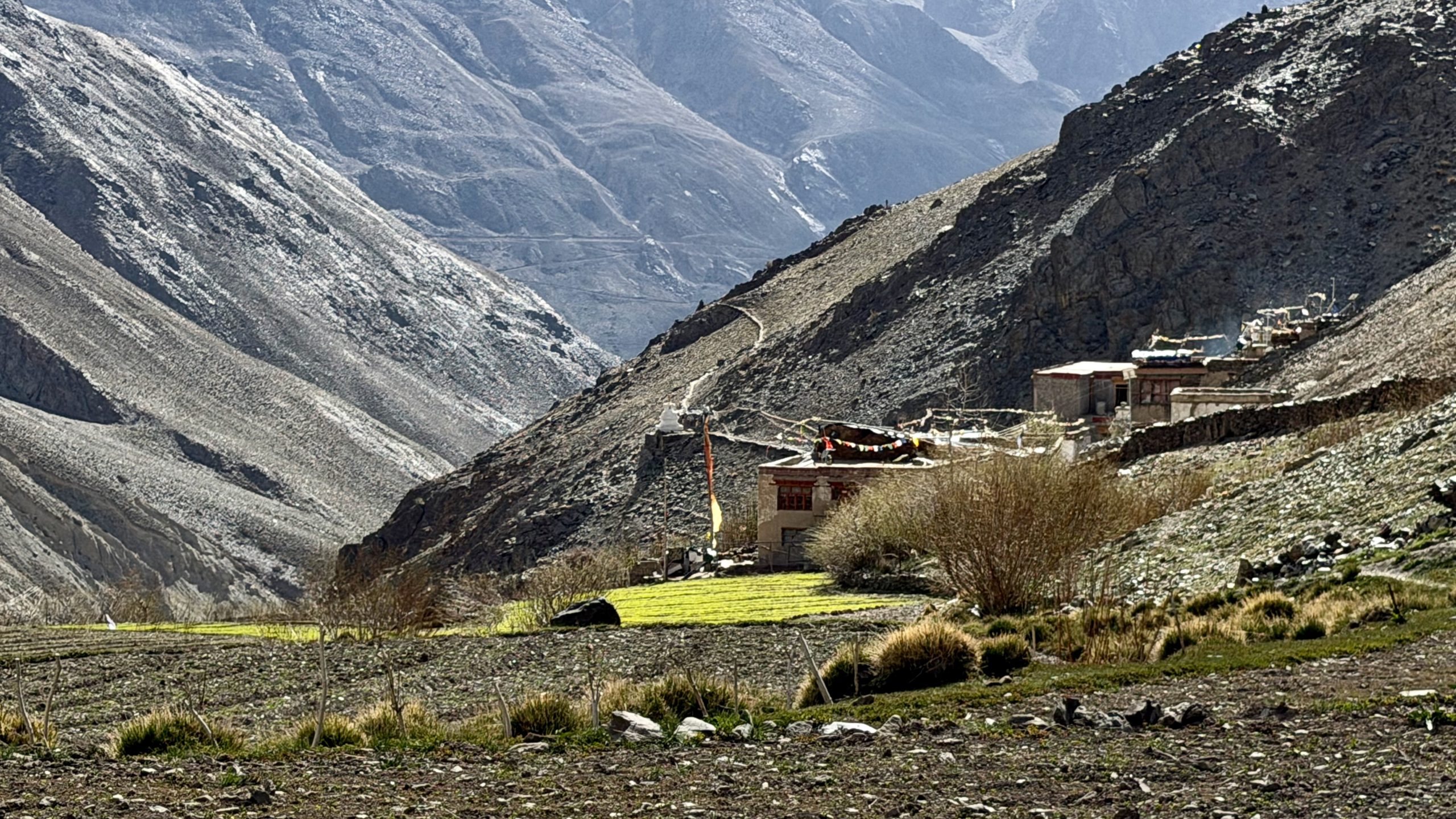
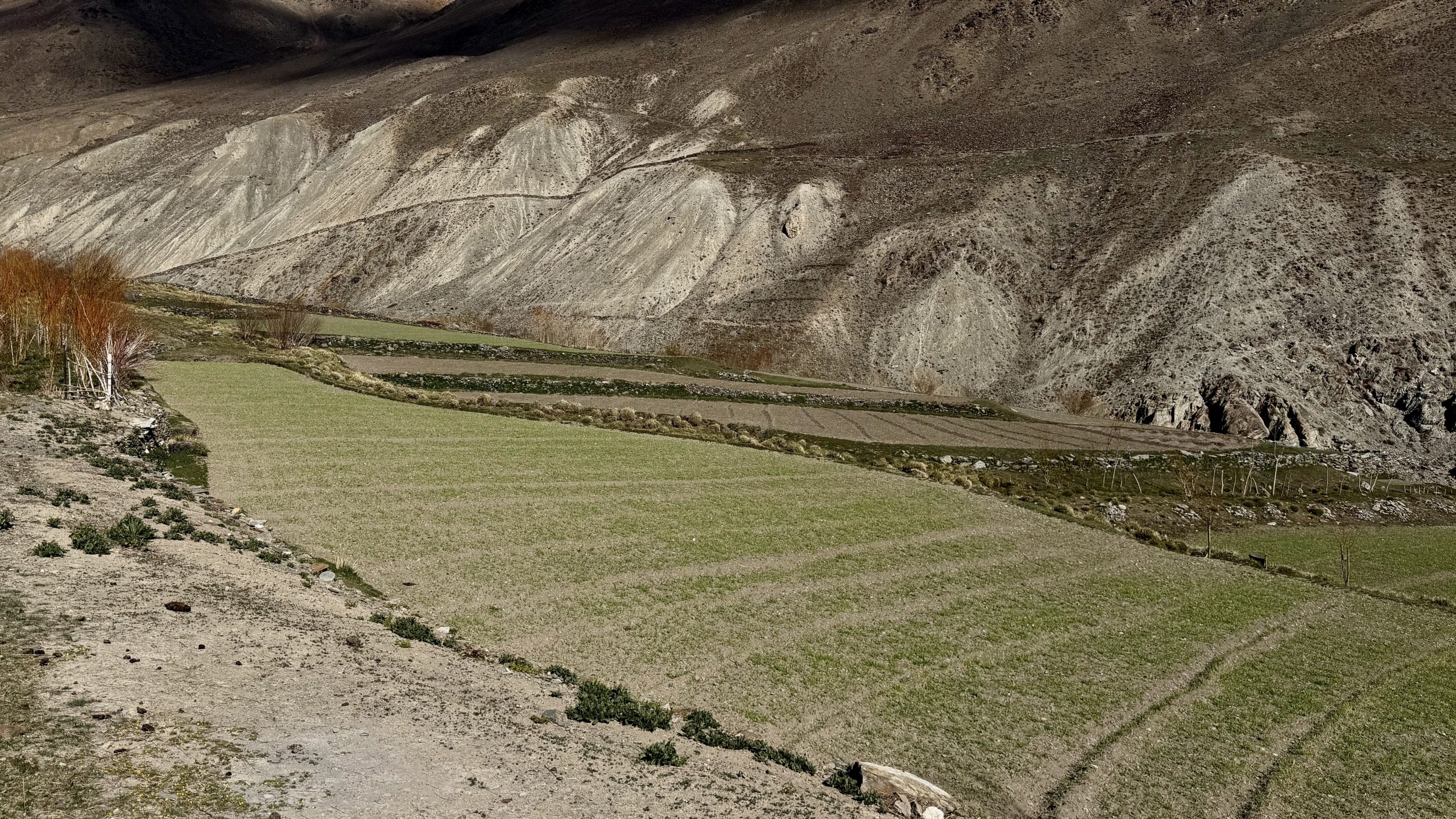
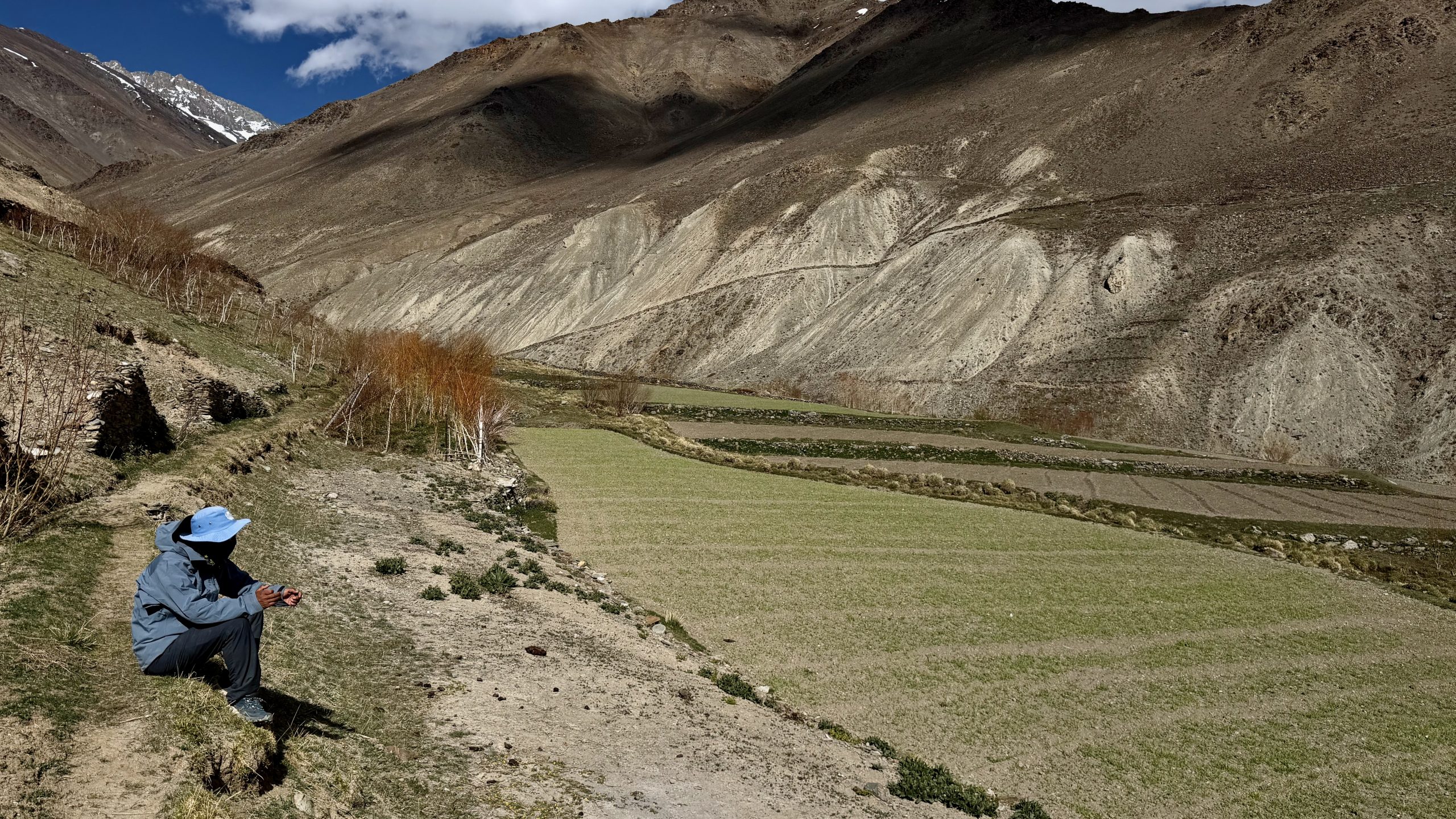
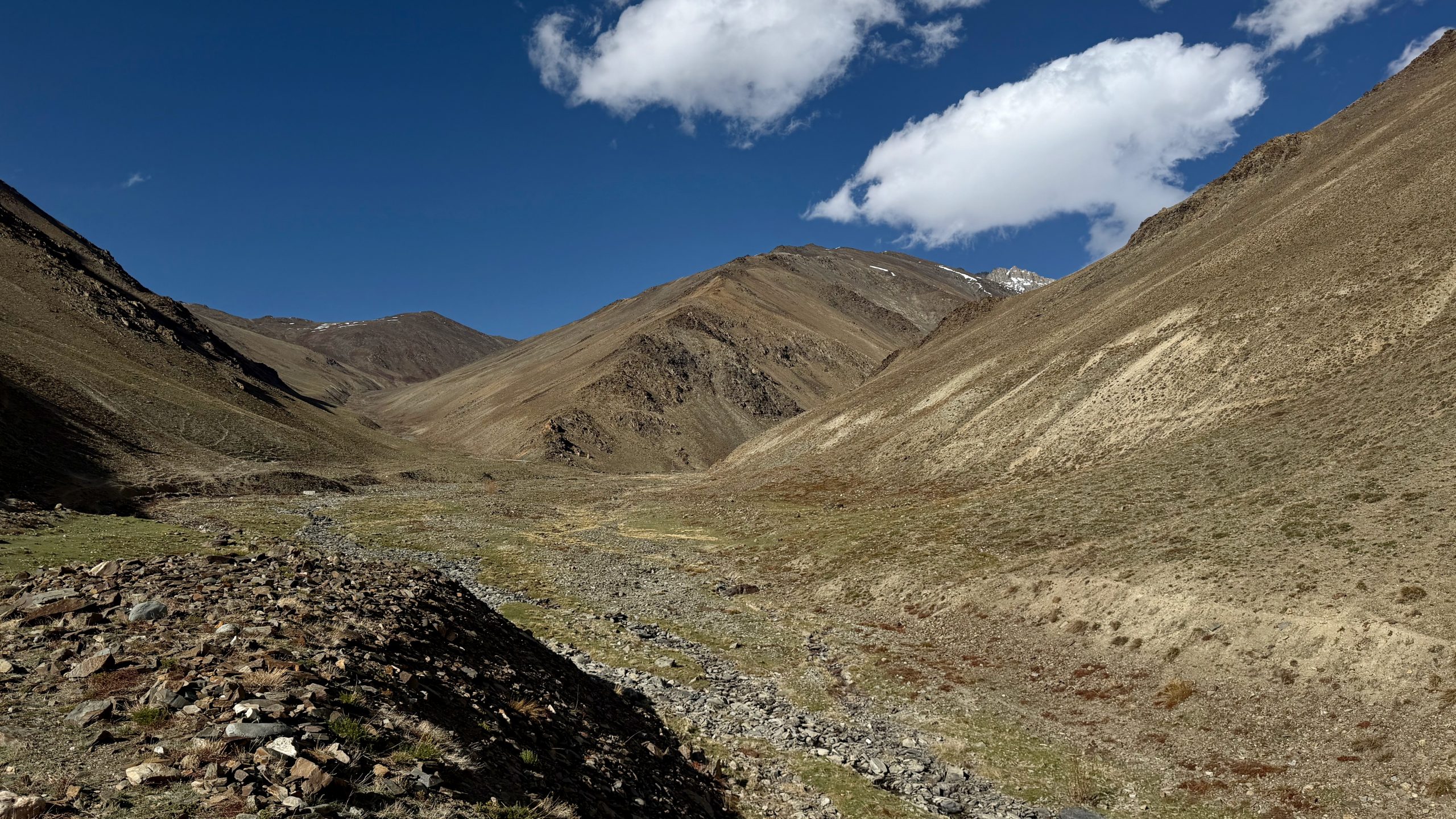
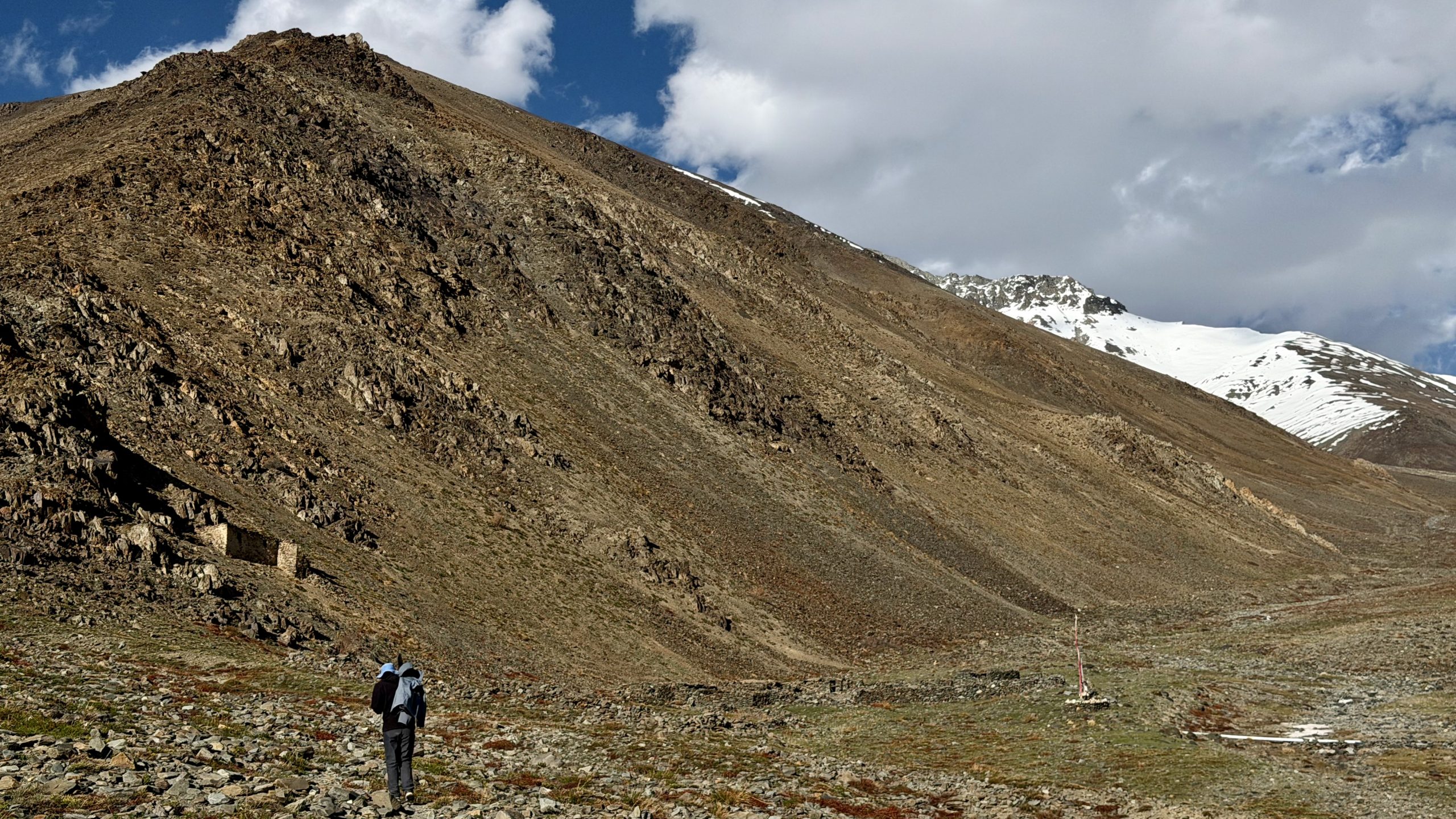
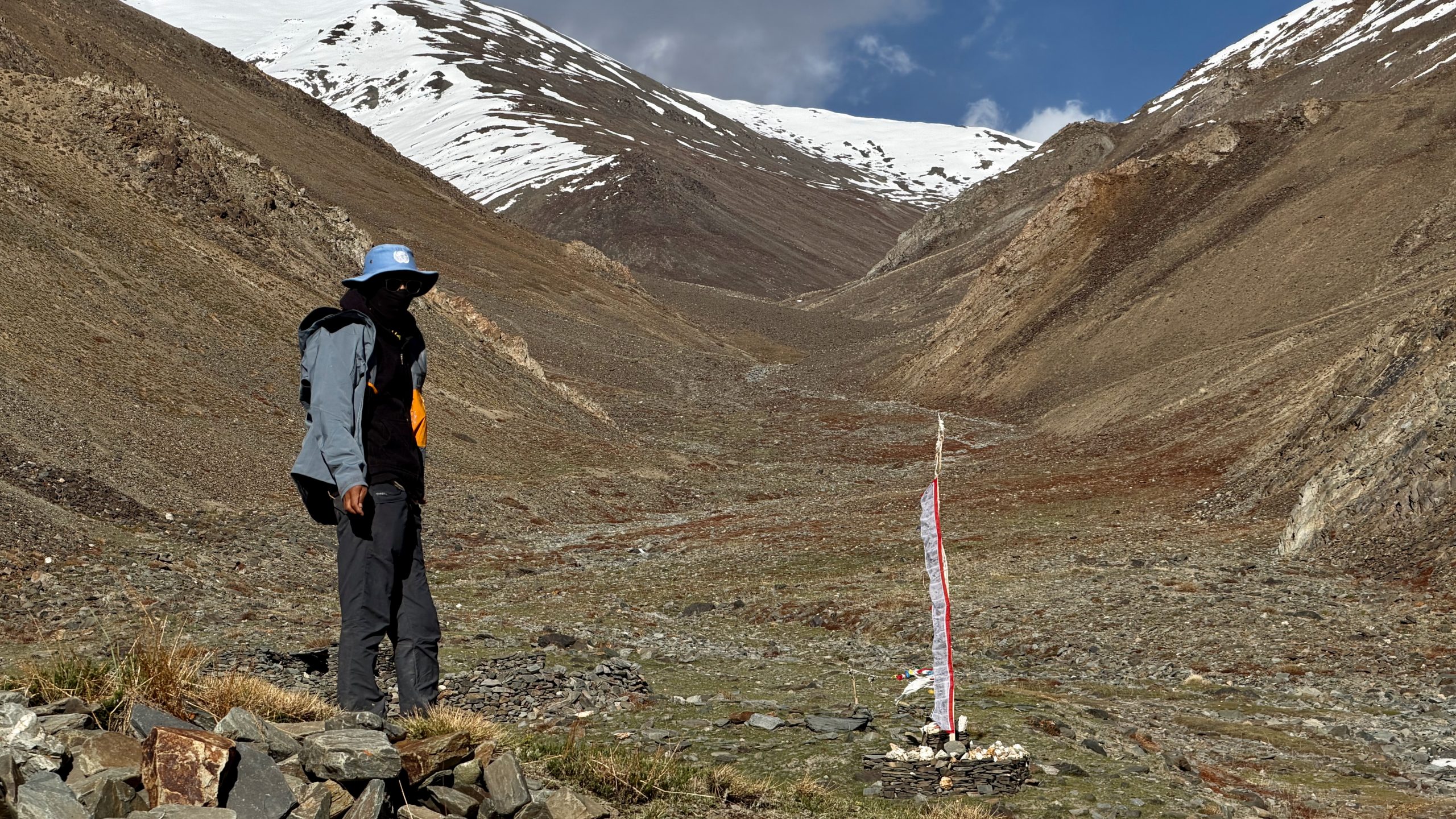
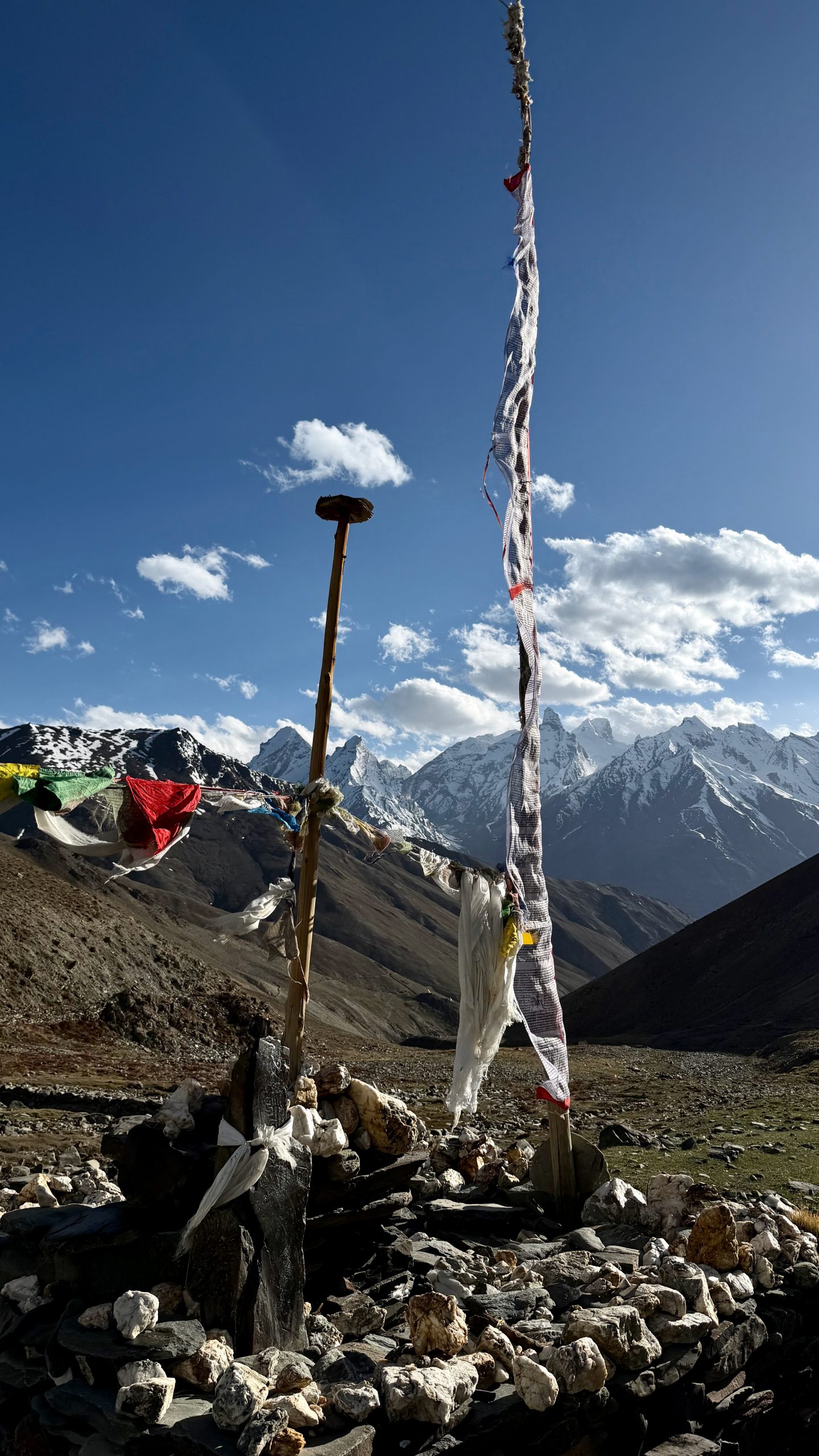
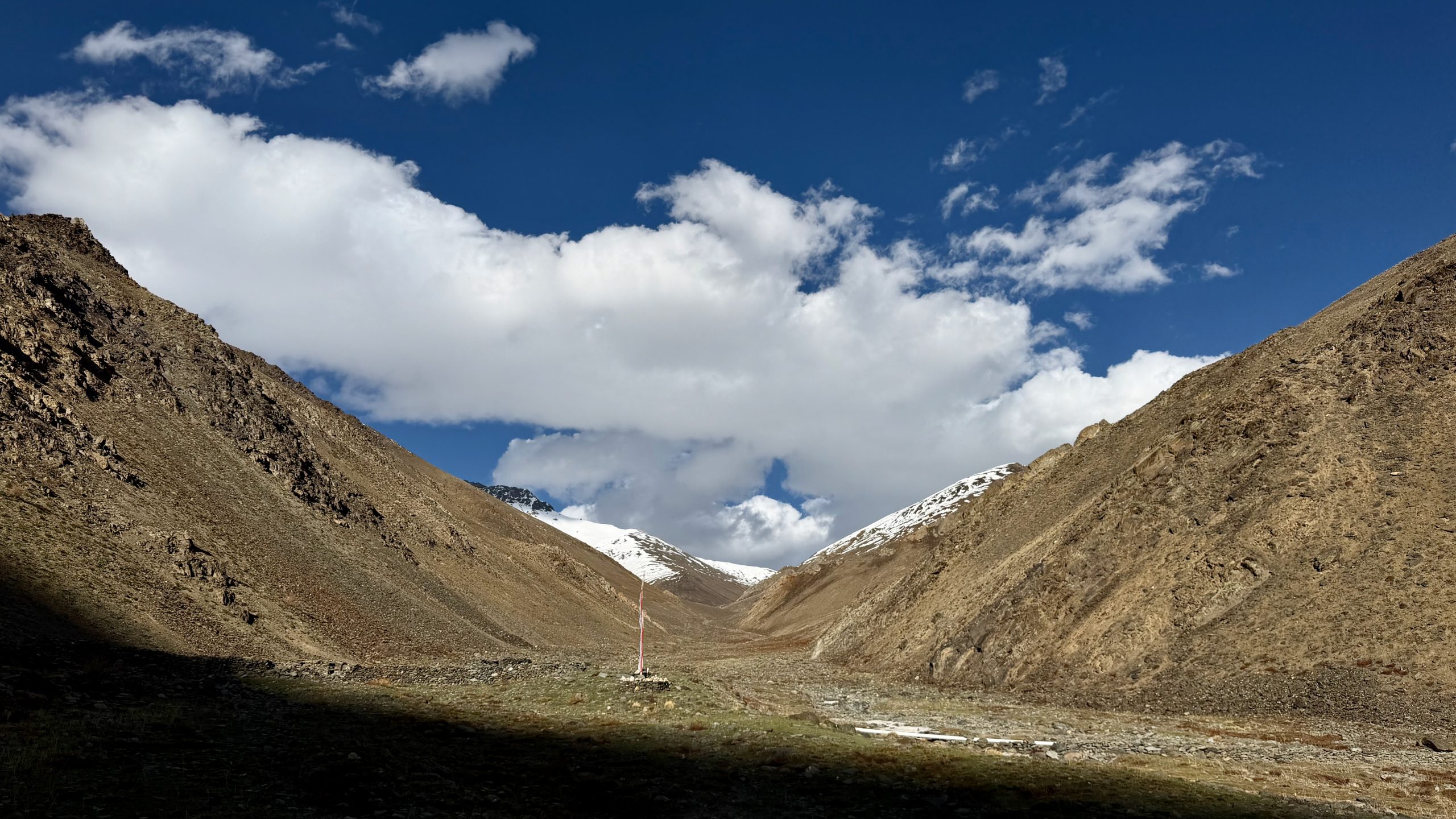
That was only another 150 meters of elevation gain, but better than nothing. The idea: climb higher and sleep lower. And it actually seemed to work — I slept normally, just like I had at lower altitudes. Only a slight headache remained.
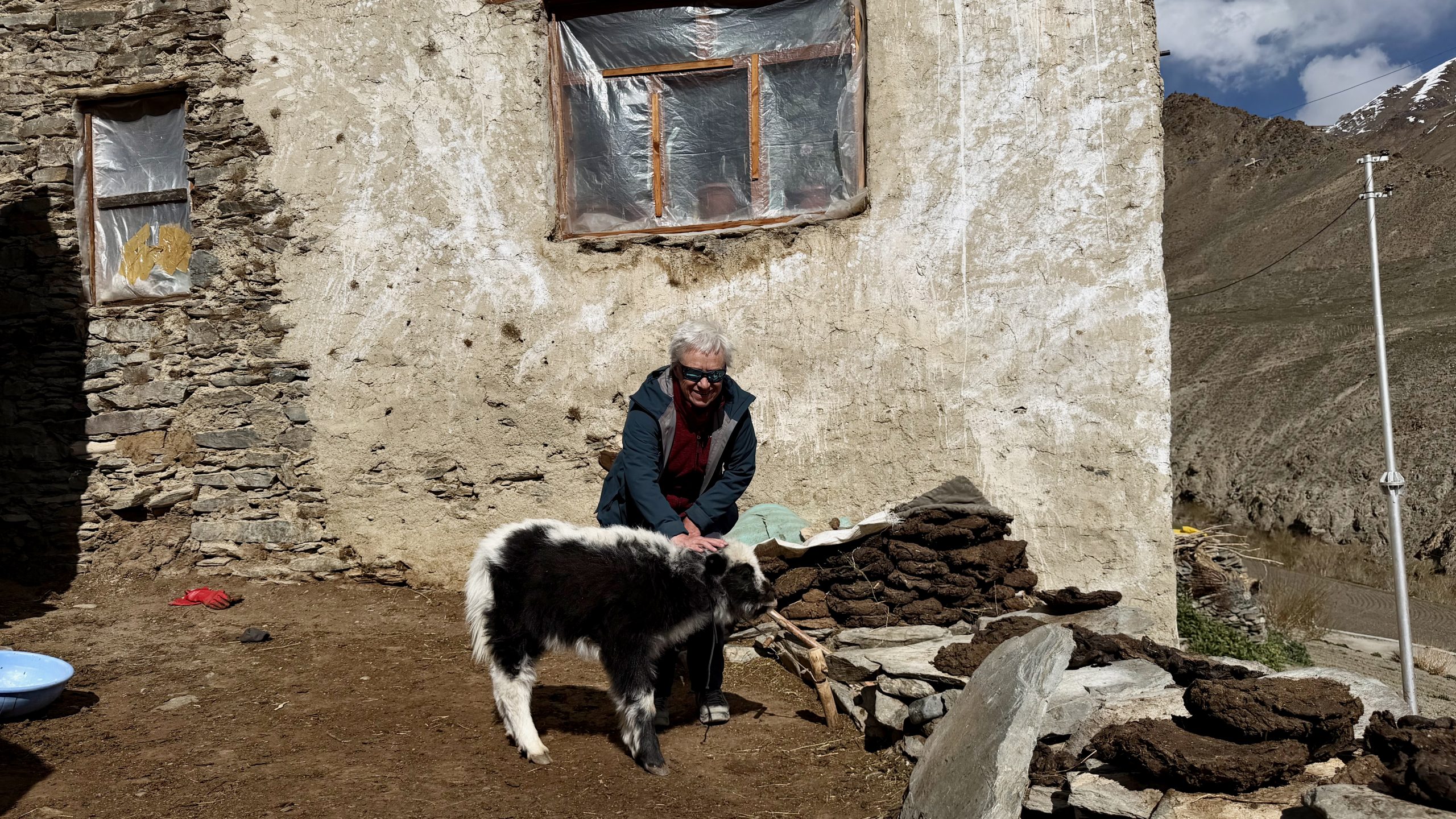
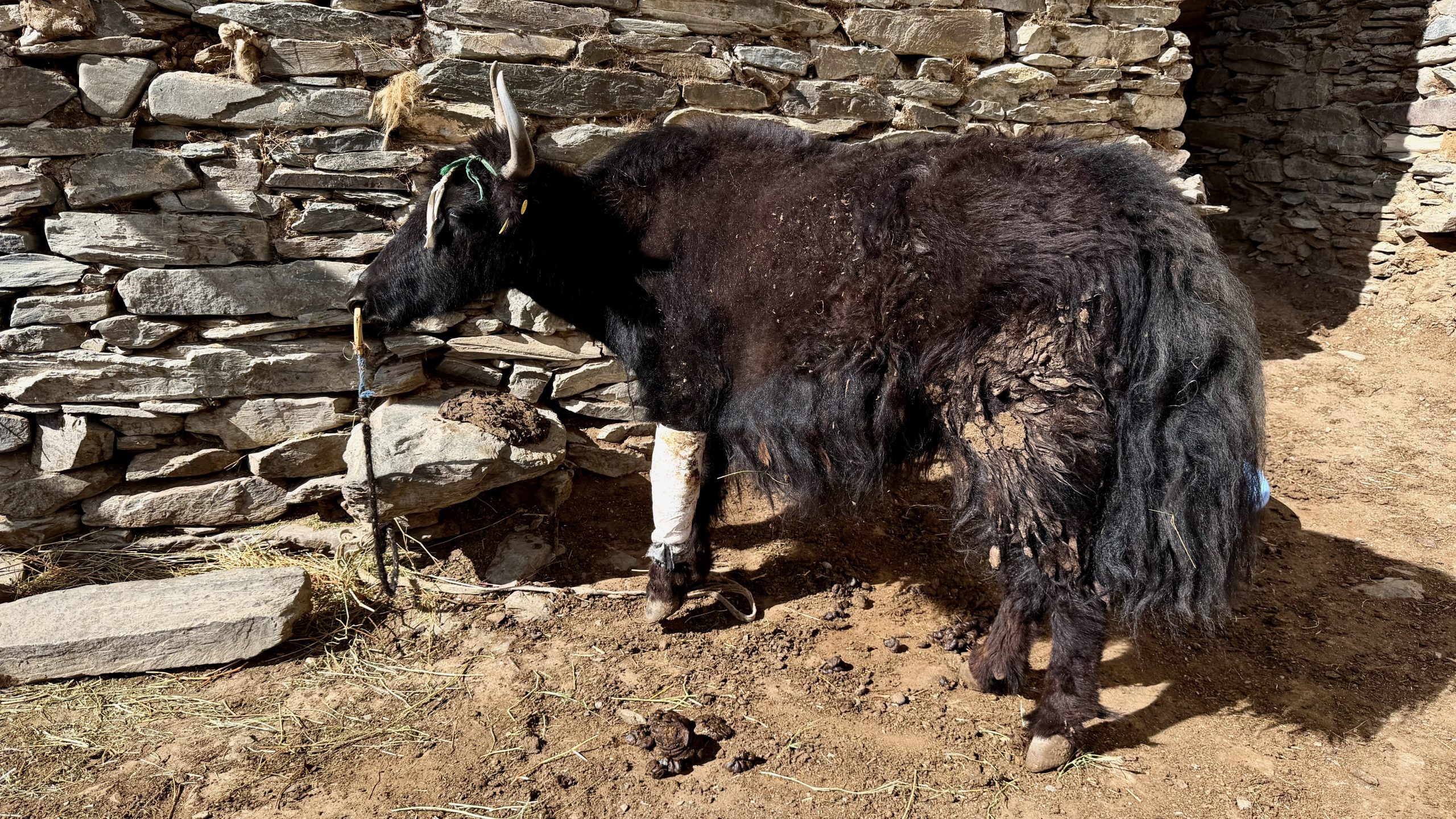
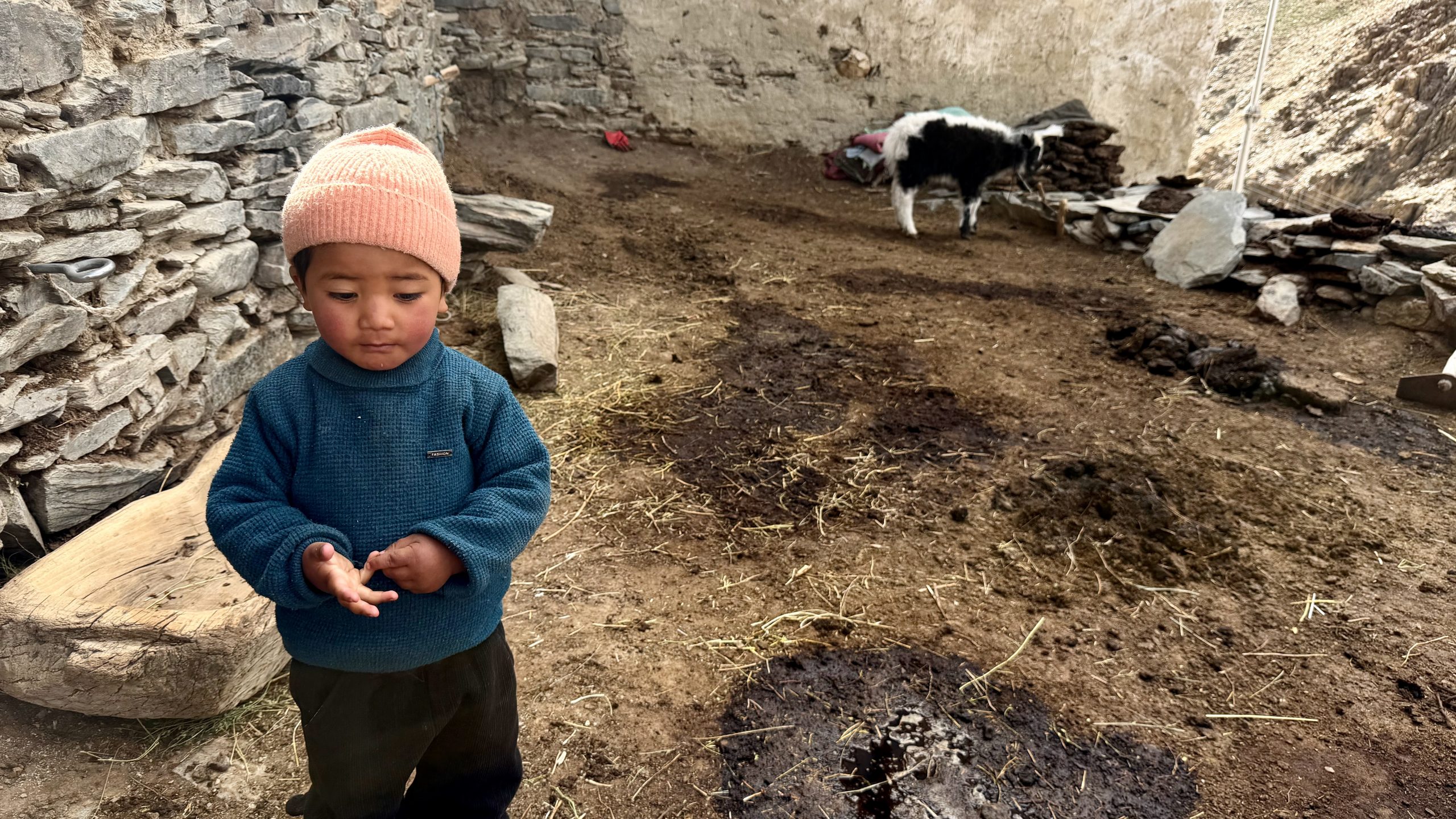
Back at the accommodation, I had a special experience. They had a one-month-old baby yak — and I was allowed to pet it! Its fur was incredibly woolly and soft, but underneath, the bones somehow felt even harder than other bones, and everything else about it suggested pure mass and strength. Another yak had been struggling and had injured its leg. Veterinary care is something people largely have to manage themselves here — specialists are simply too far away.
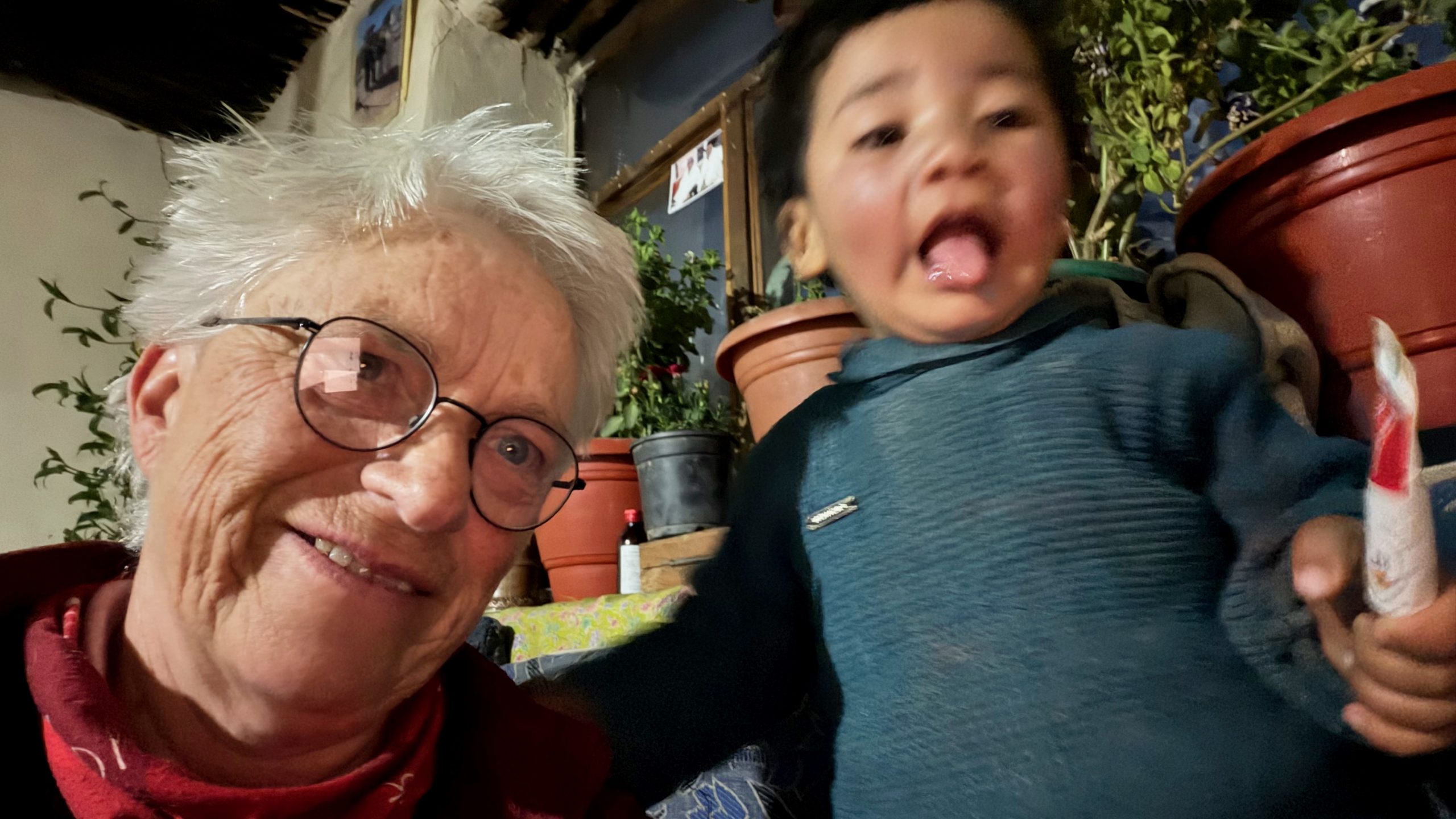
We stayed with Zangmo and her husband. Their own child was grown up and away elsewhere for education. Instead, they had little Jigmeth with them. He belonged to relatives in another village who couldn’t really take care of him properly at the moment. So it seemed like a good idea to bring a bit of liveliness into the couple’s home. Jigmeth was full of energy, climbing and running around everywhere. It was only his third night there. On the first night, he had cried a little, but they said that passed quickly. In the village, he already had a few playmates too.
And this is another thing that keeps surprising me here — how quickly small children seem to trust people who are essentially strangers. With Lameth, Jigmeth was soon sitting happily on his lap. With me, he took a little longer to observe first, but by the next morning he was already jumping trustingly into my arms. I’ve also had strangers’ toddlers placed on my lap in crowded buses before — they would look at me briefly and then sit there contentedly, bouncing on my knees. That never would have worked with me as a small child! I would have screamed.
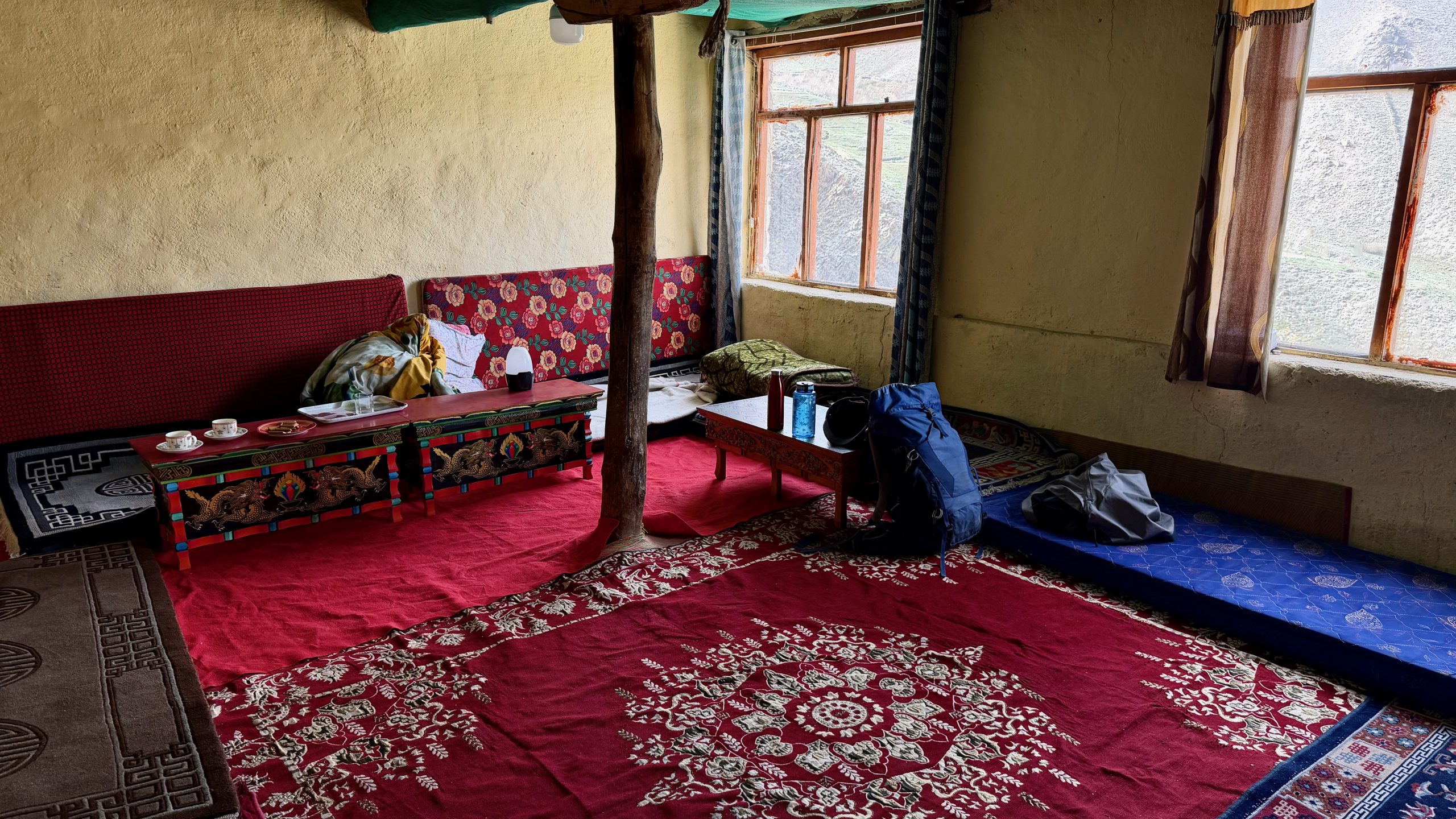
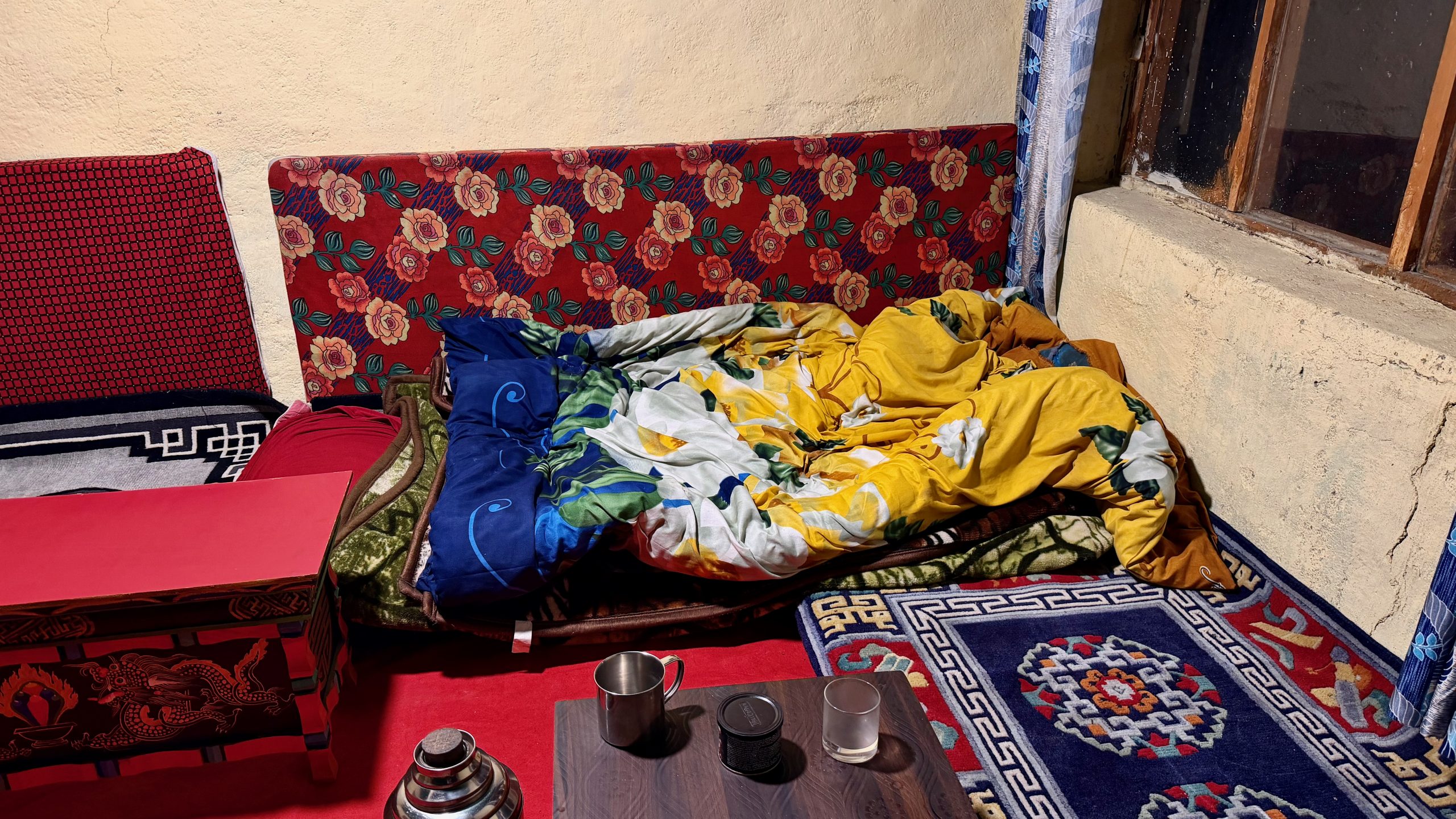
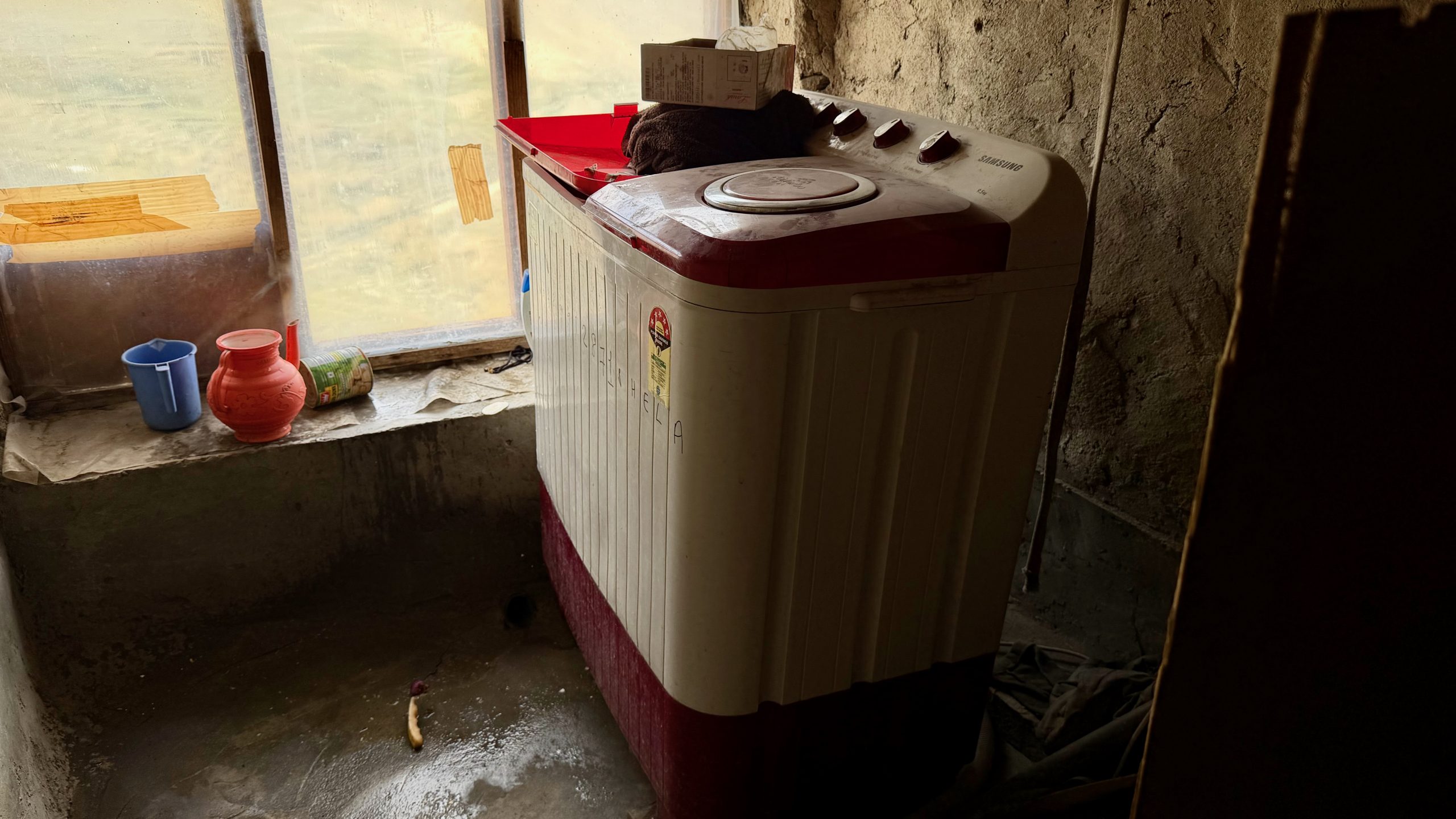
I was staying in a huge room. The house was quite labyrinthine, and to get to the toilet I had to climb down a rather particular staircase. There was also a washing machine in the bathroom. I found myself wondering how they had managed to carry it all the way up there — because the road actually ended quite a bit below the houses.
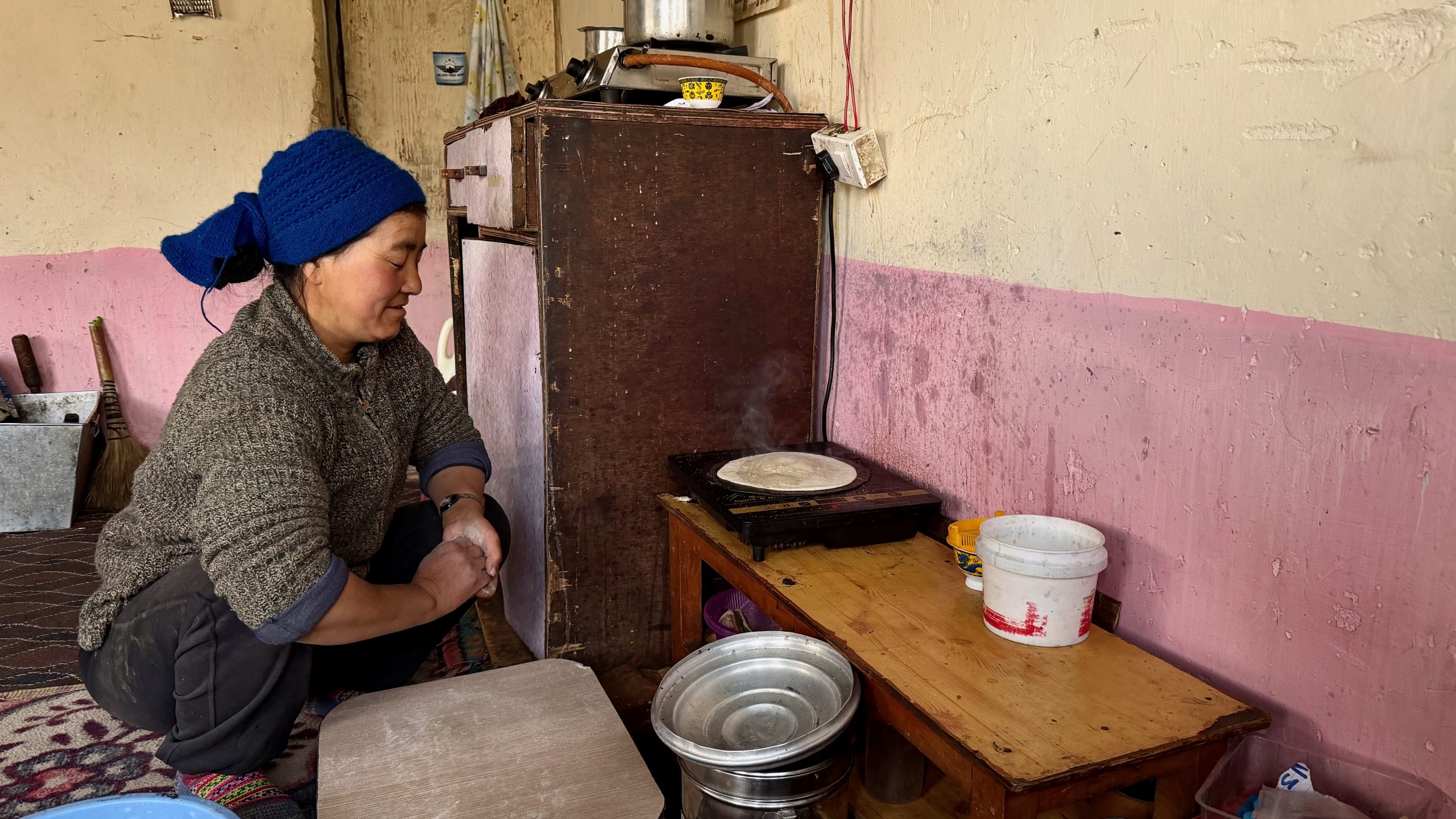
In the morning, the chapatis were baked on a small induction hotplate connected to a solar panel. It took a bit longer than using other heat sources, but it was a great way to save gas and firewood.
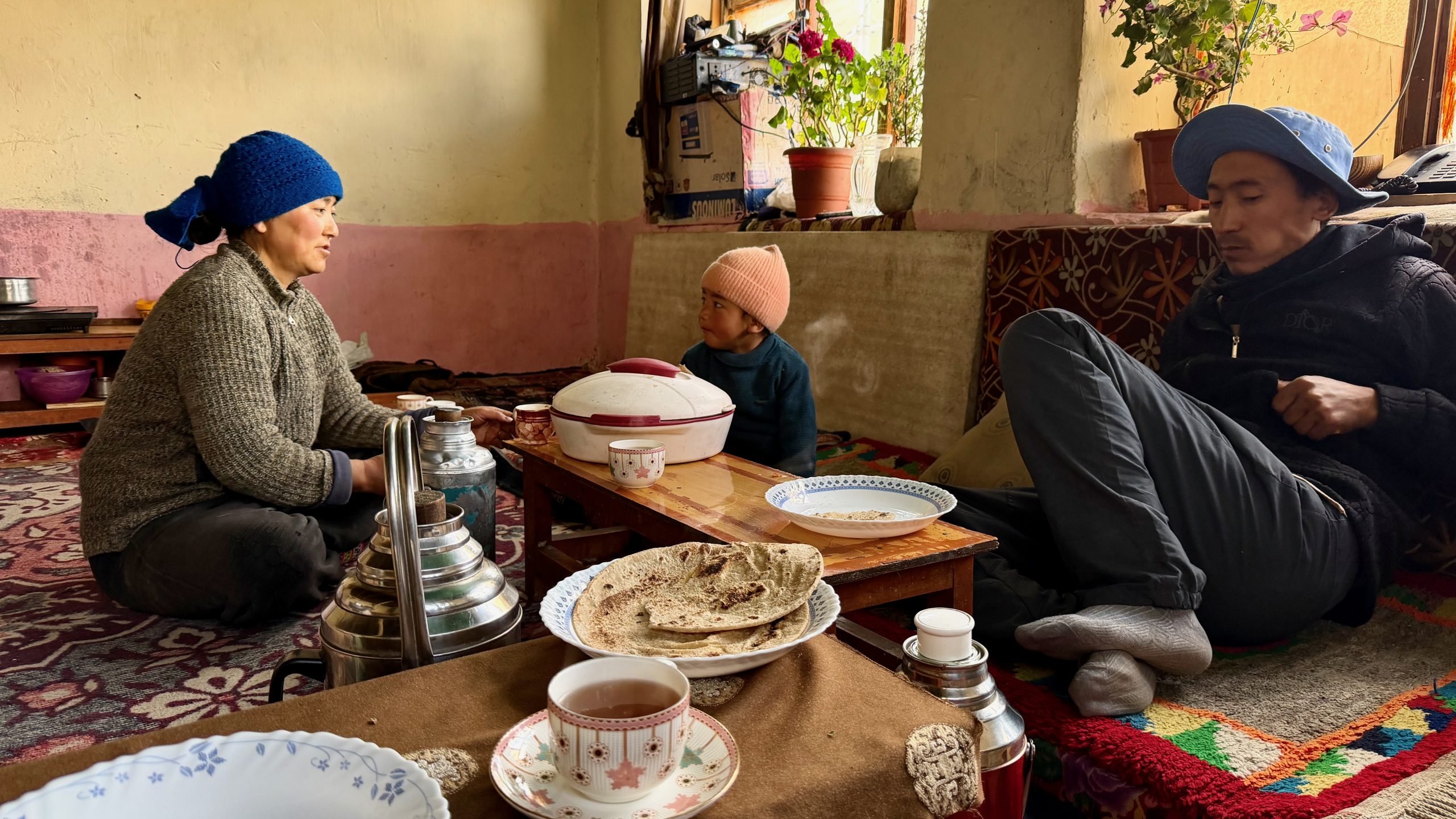
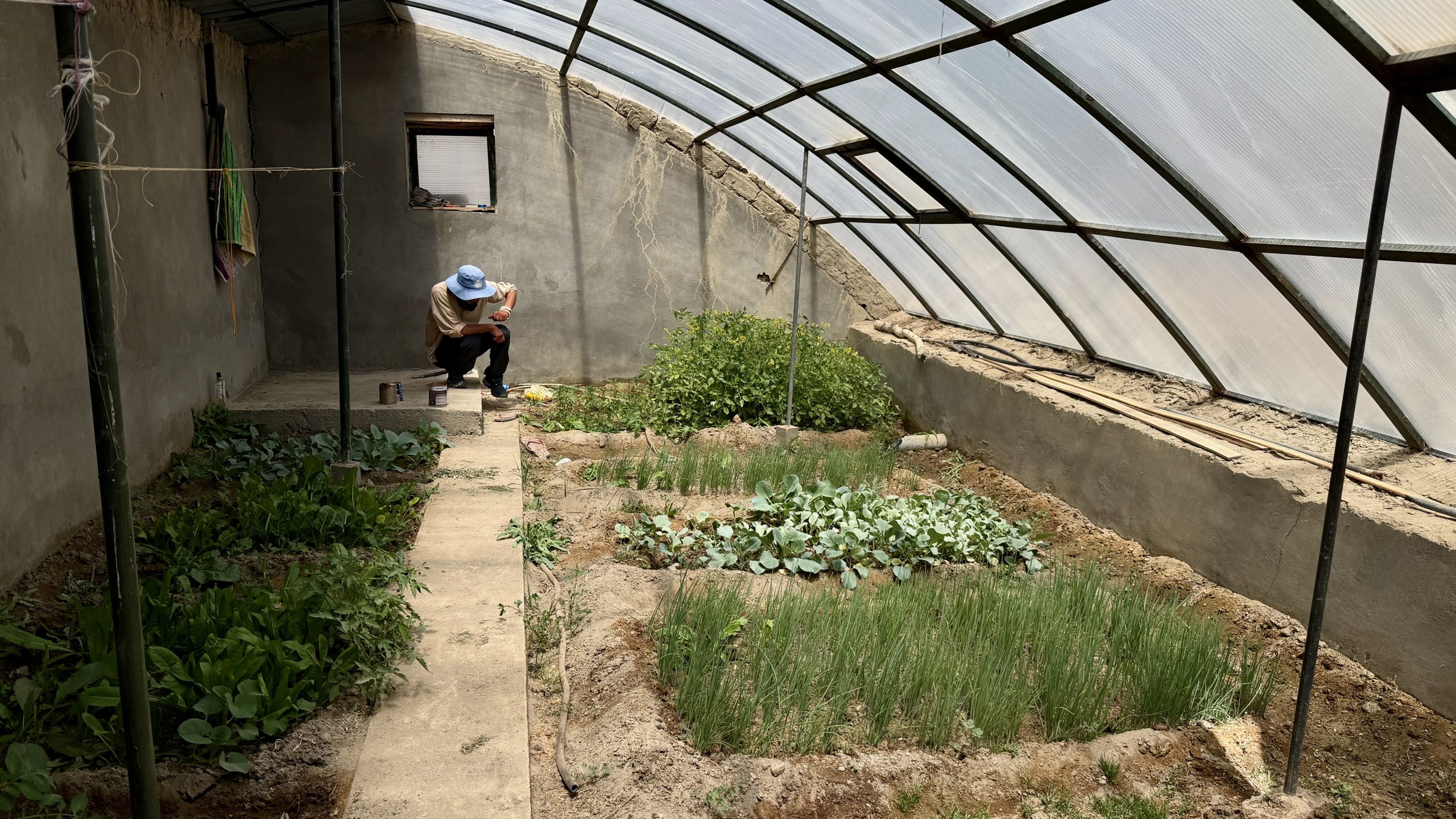
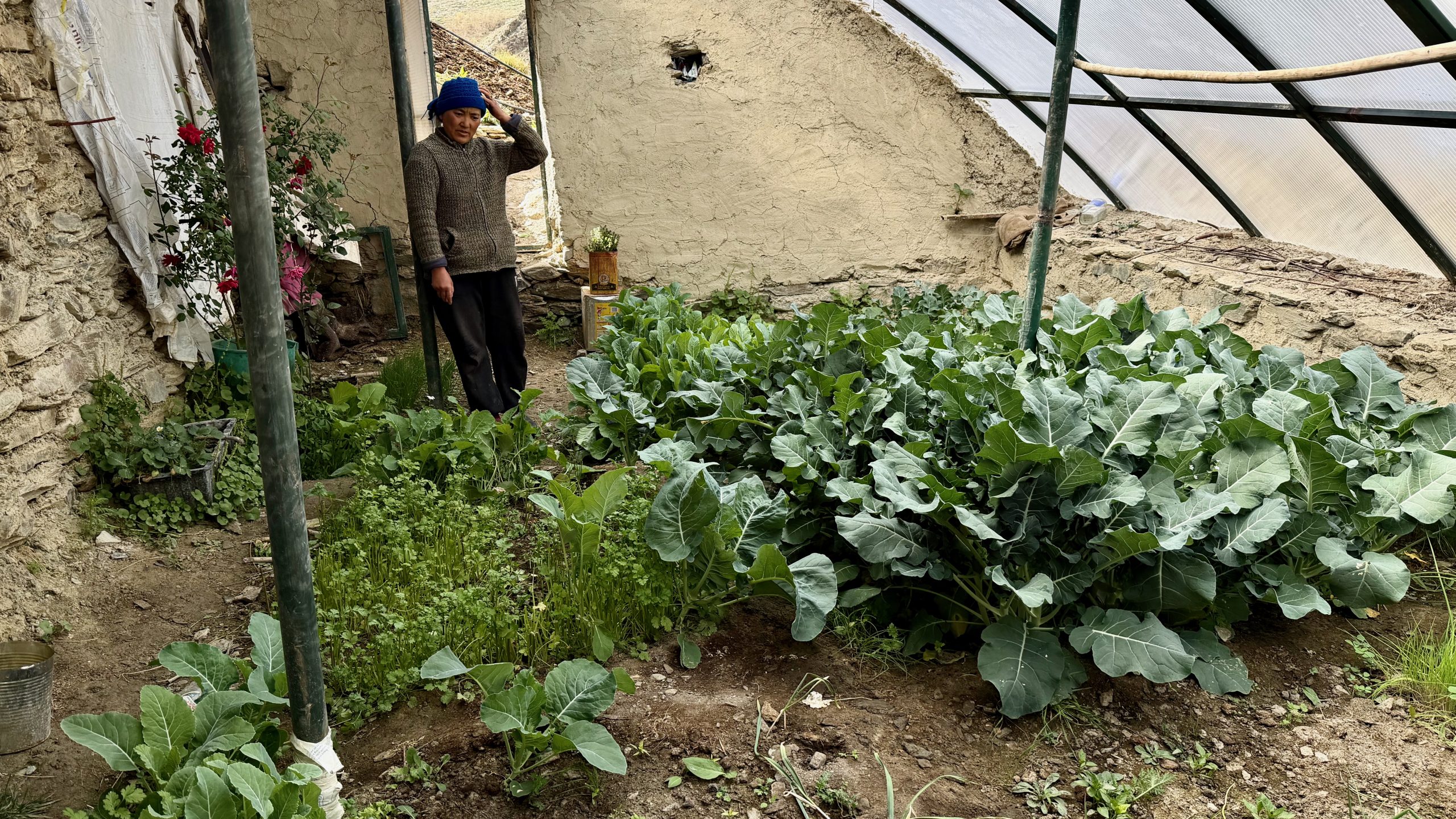
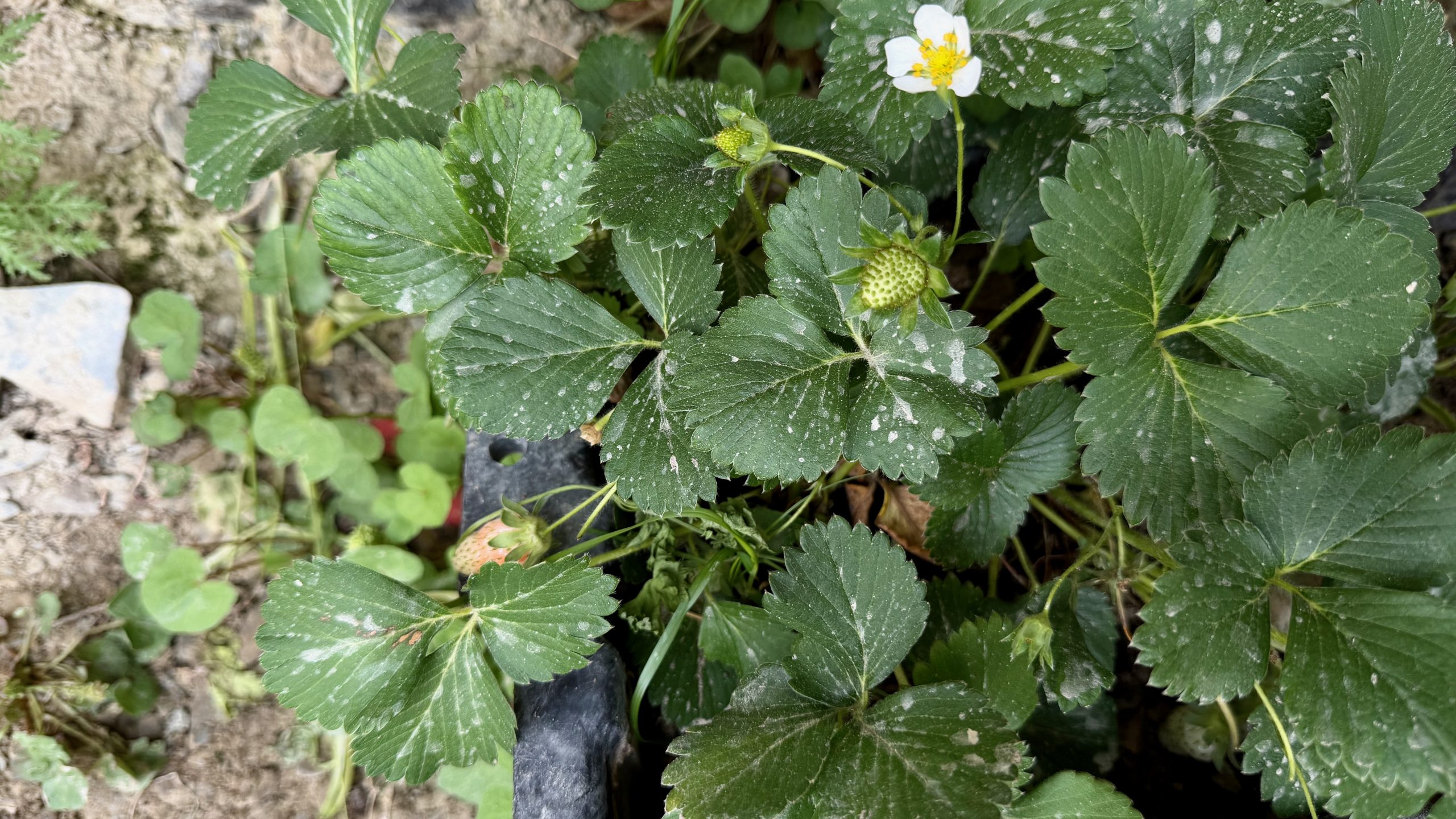
In the evening, I was served a small watermelon (from the market) and strawberries (from the greenhouse). They also had these excellent new greenhouses here. This is what the previous model looked like:
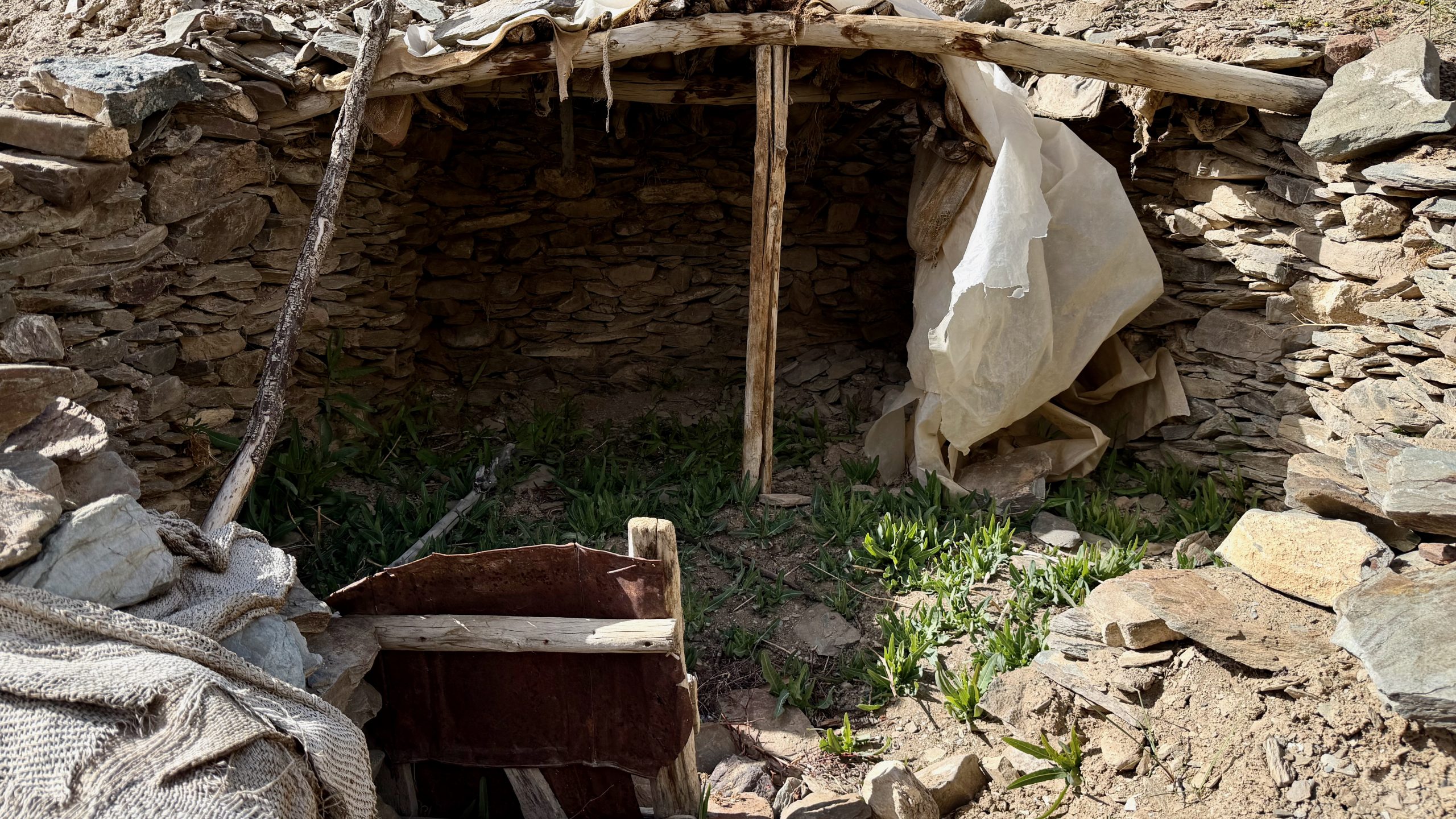
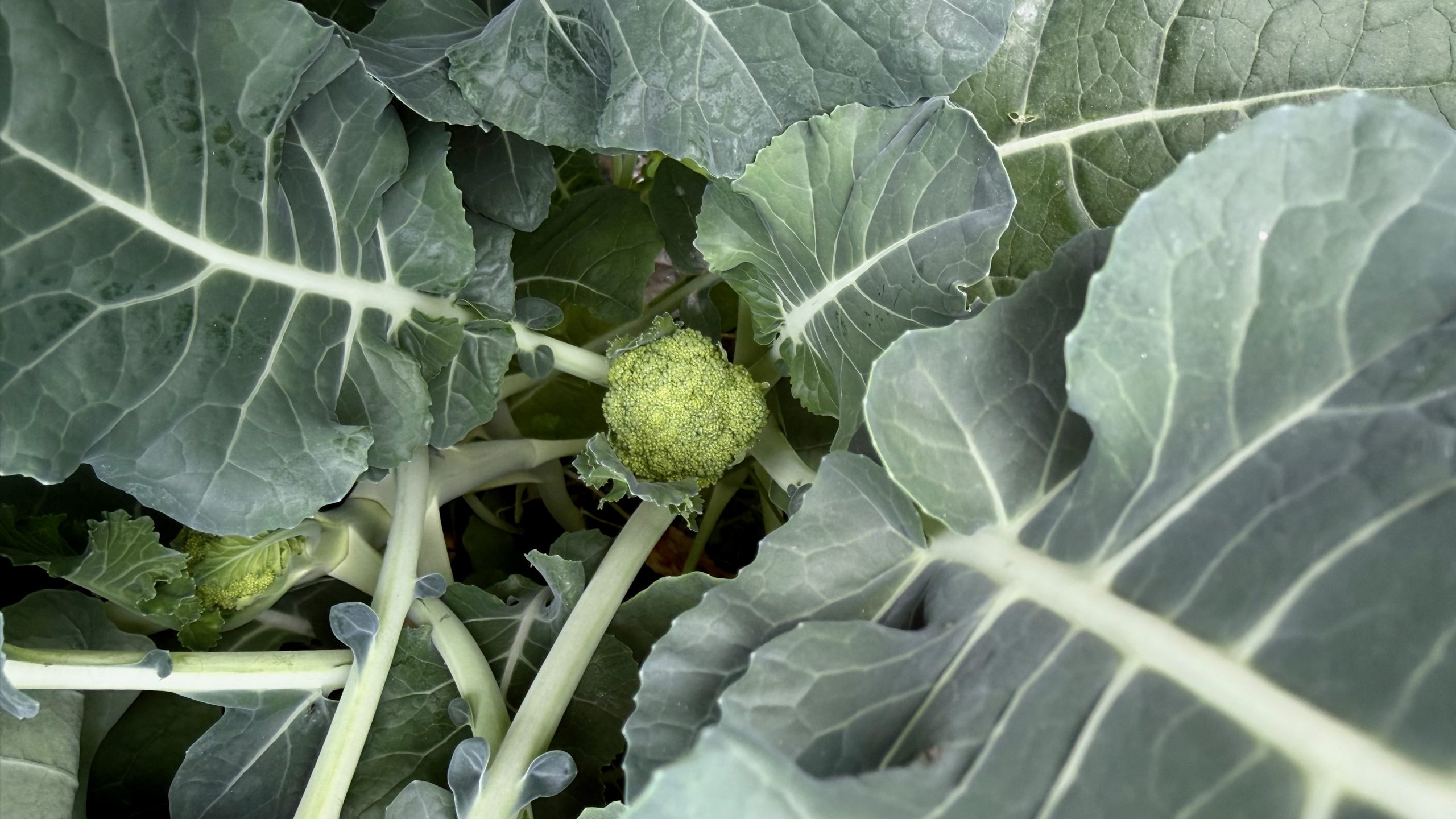
So we headed out once more to have a look at the impressive greenhouse. Besides strawberries, it also contained things like beetroot and broccoli, among other crops.
Photographically, I had become rather fascinated by one particular chorten, and here are the results of my many different attempts. It was here that I noticed for the first time just how perfectly it matched the white mountain peaks behind it.
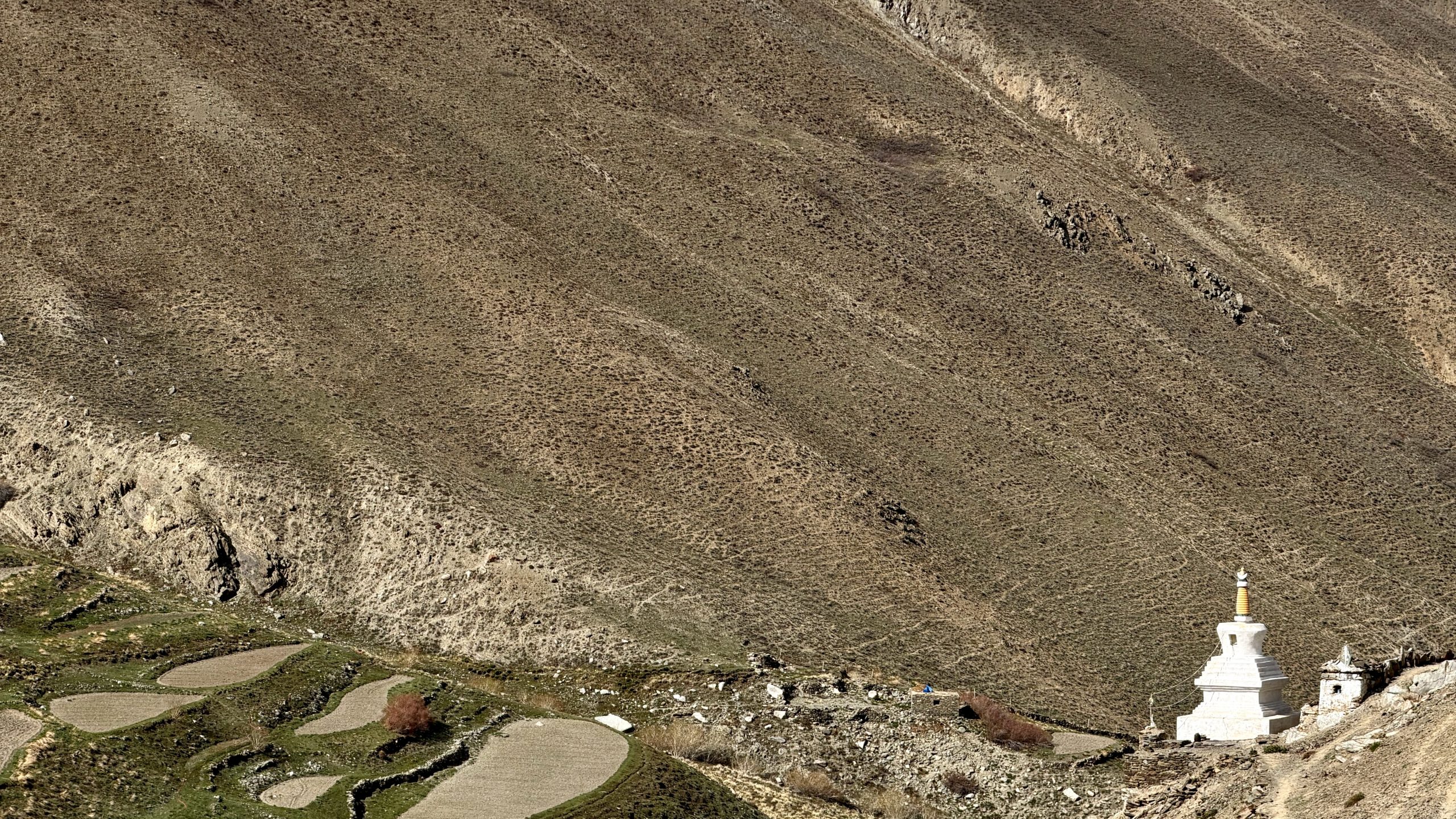
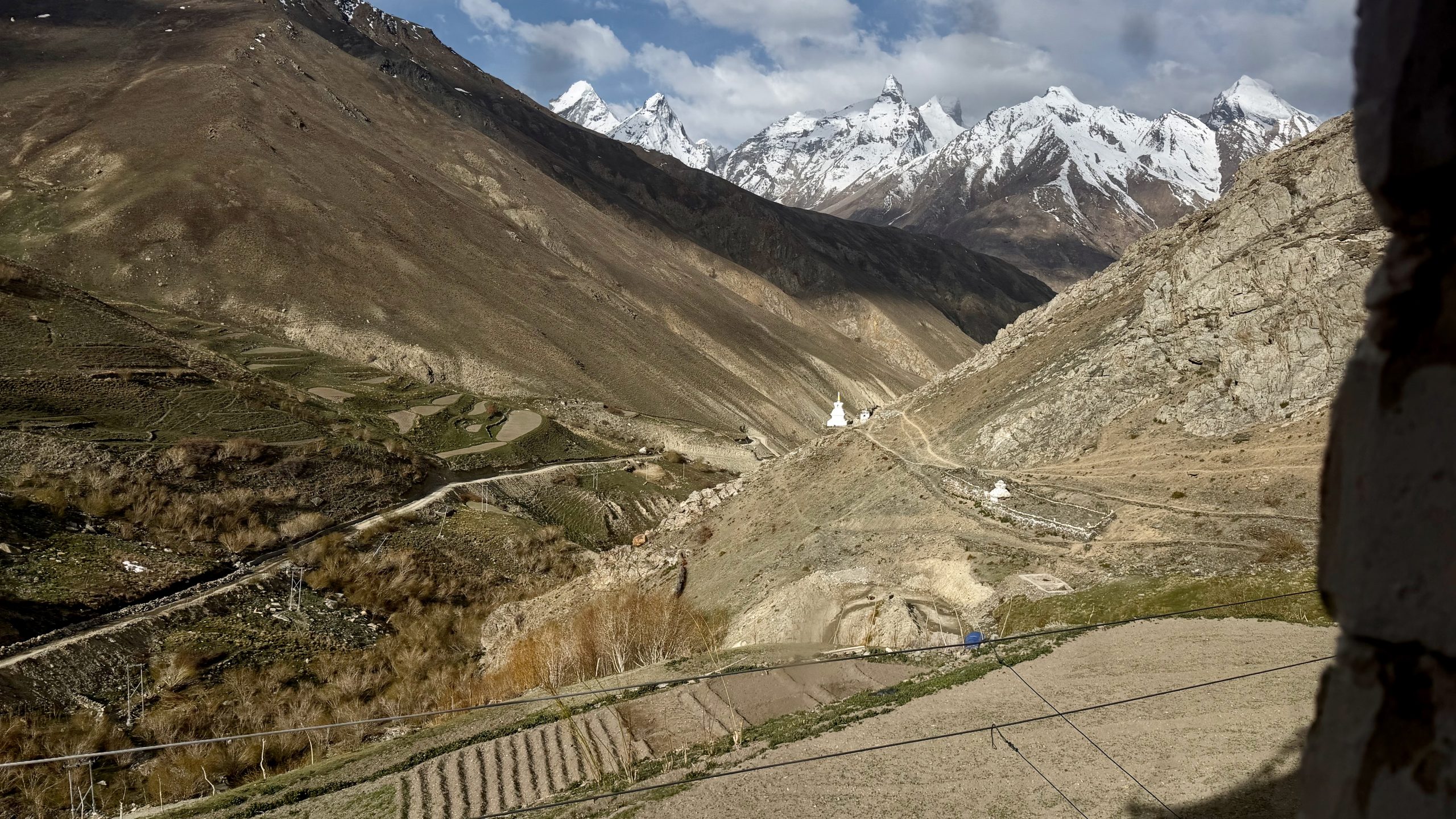
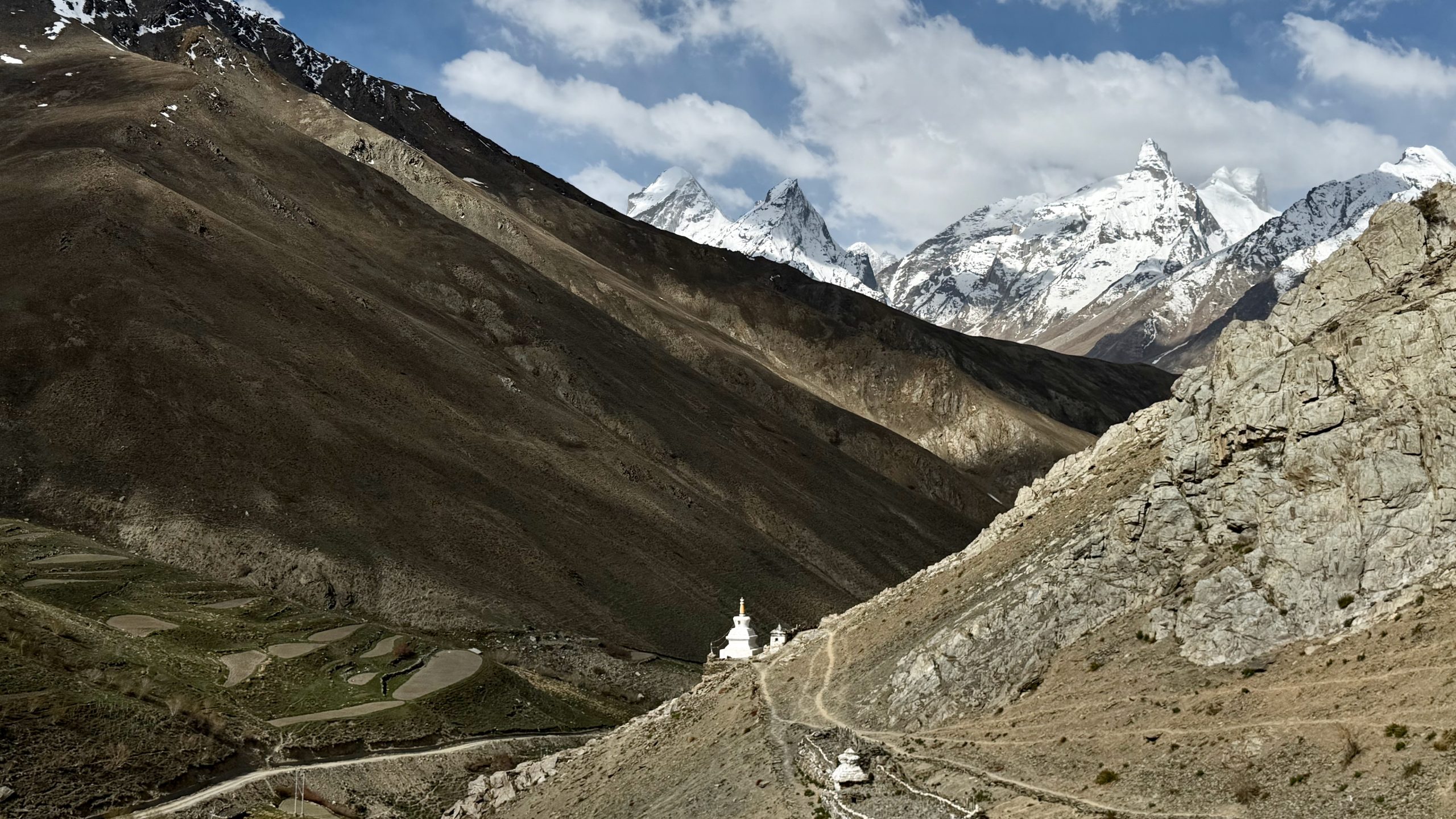
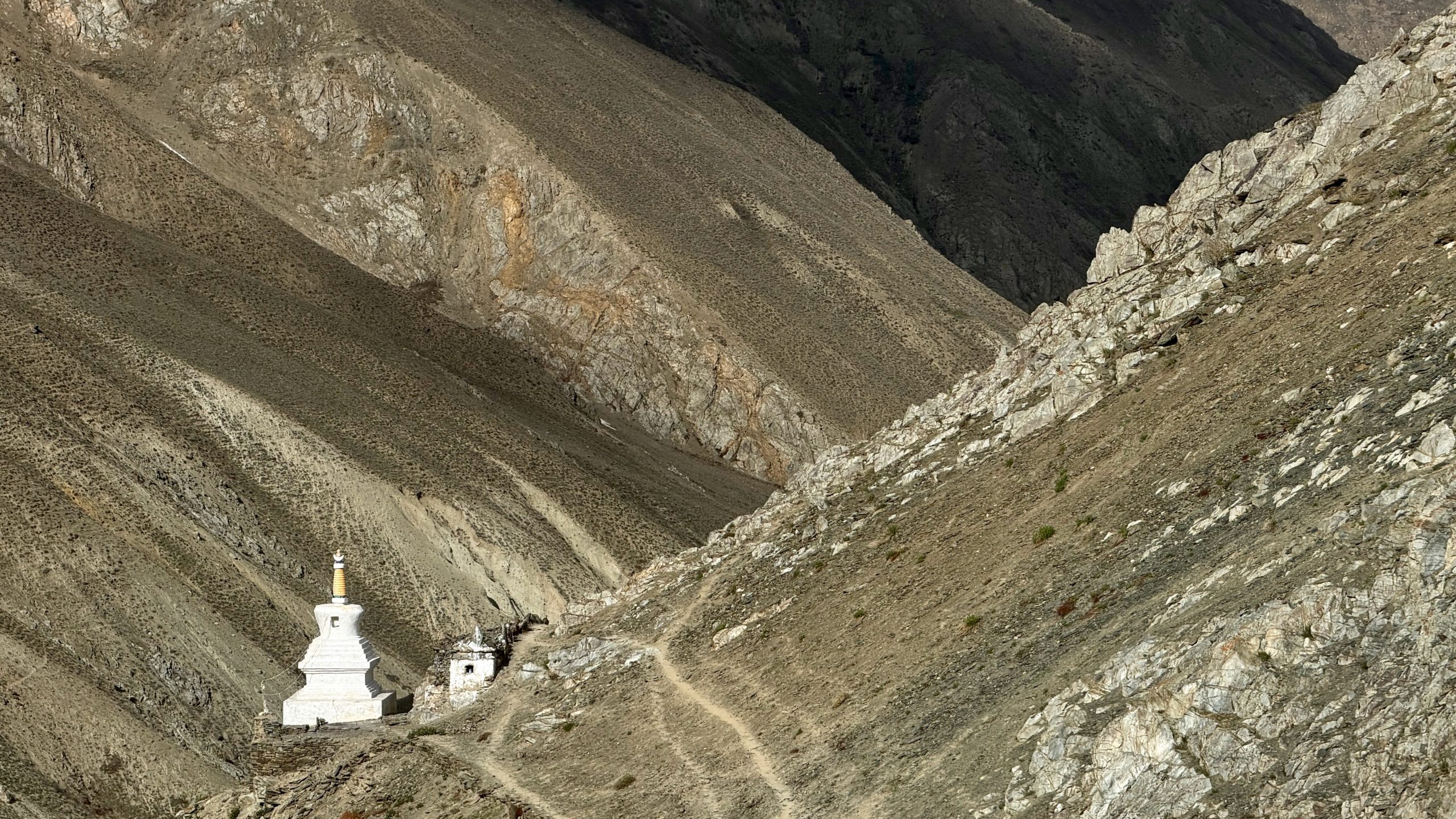
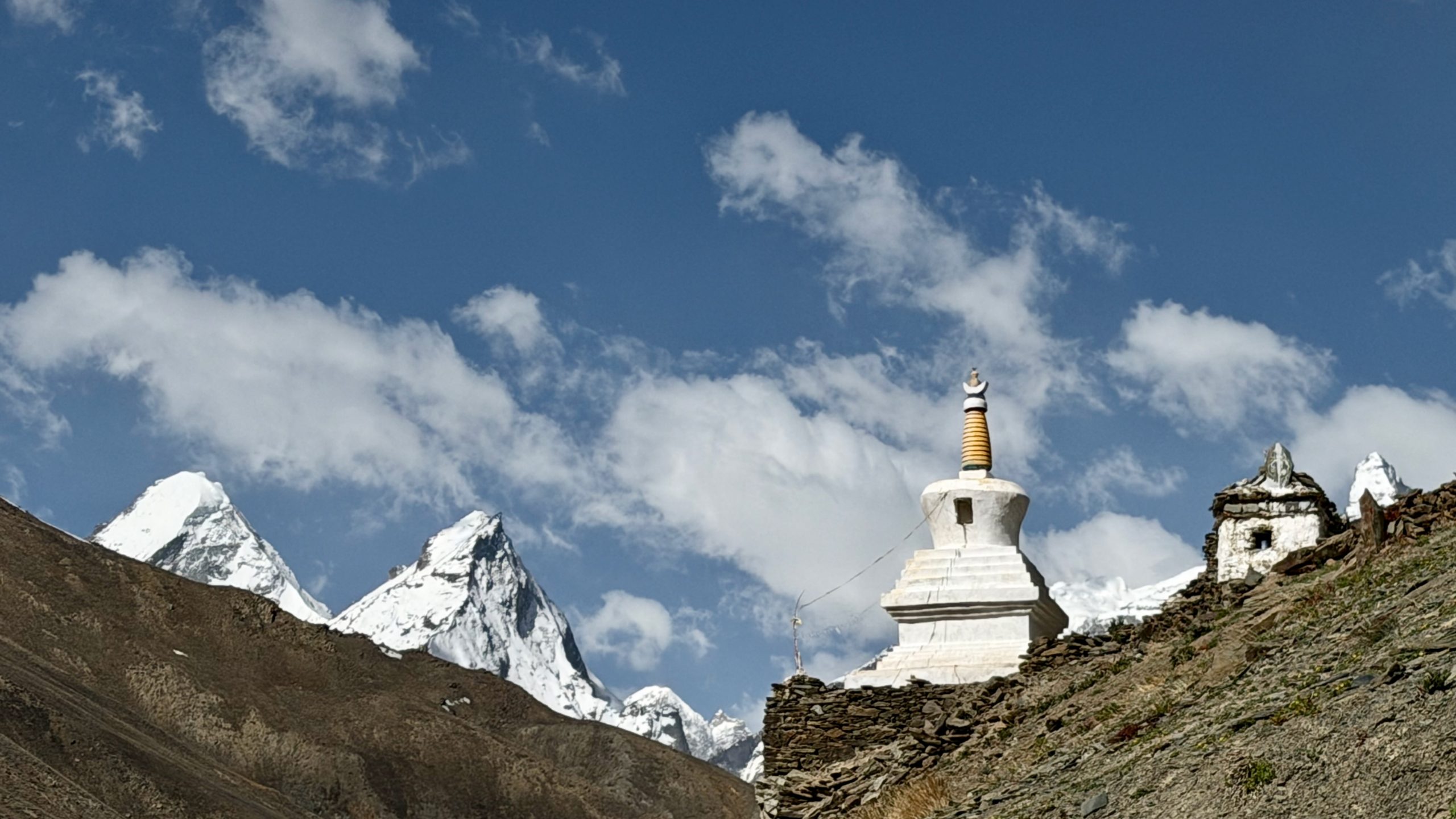
Sorry, I couldn’t decide…..
What a huge number of experiences packed into one day! It had given me plenty food for thoughts, and I felt completely full — in the best sense. But we still had another day ahead of us, one where I would get to experience yet more different aspects of life here.