


Trekkingday 5: Shang Phu -> Matho Phu – many people and a real mountain pass
1. July 2026
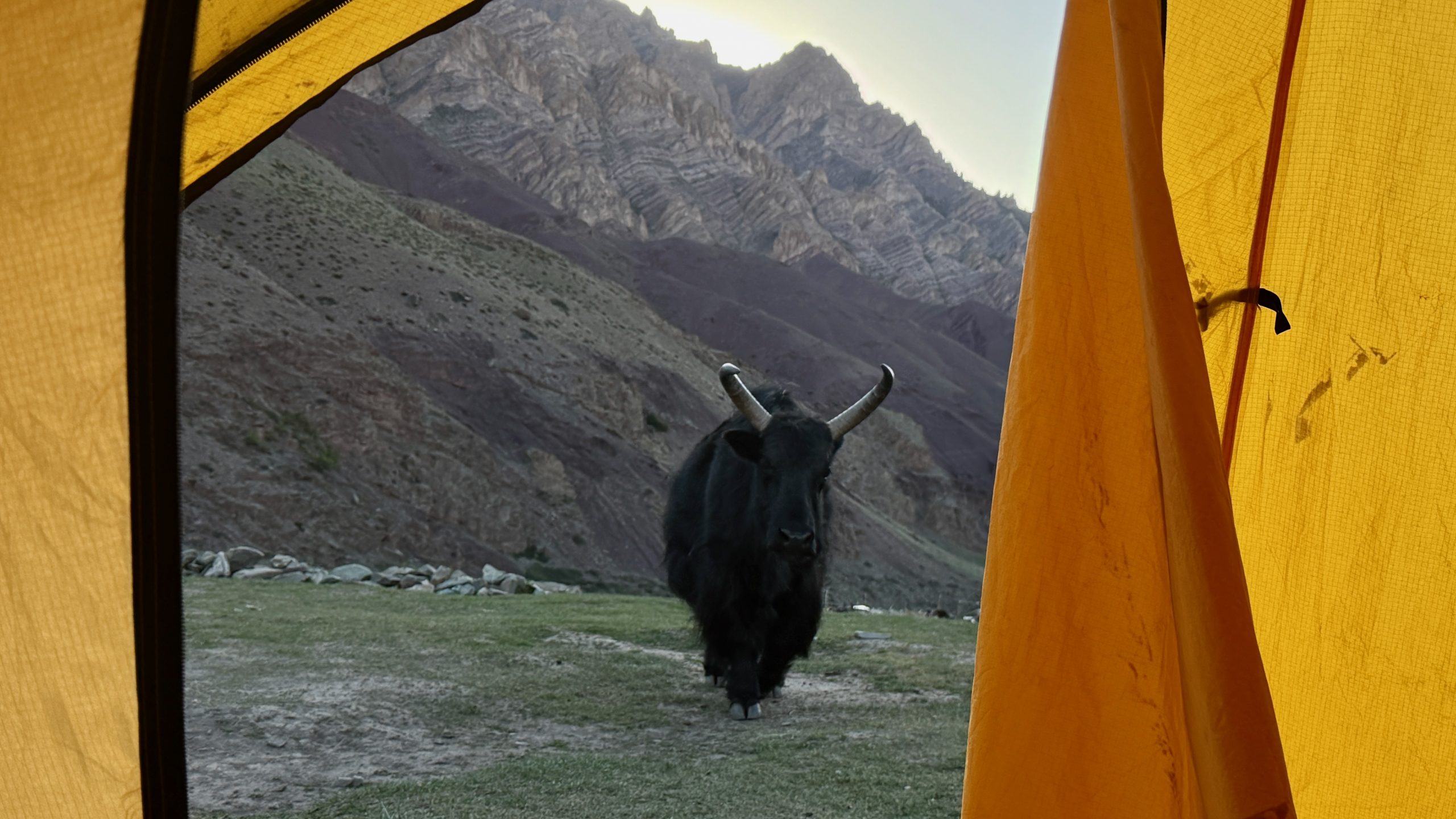
This morning, instead of a horse, a dzo was looking at me from outside my tent. I really liked the fact that there were so many animals wandering around. Sidhar said goodbye after breakfast; he had to head down because of a family matter. The weather started out with a beautiful sky, but shortly after that, it was over.
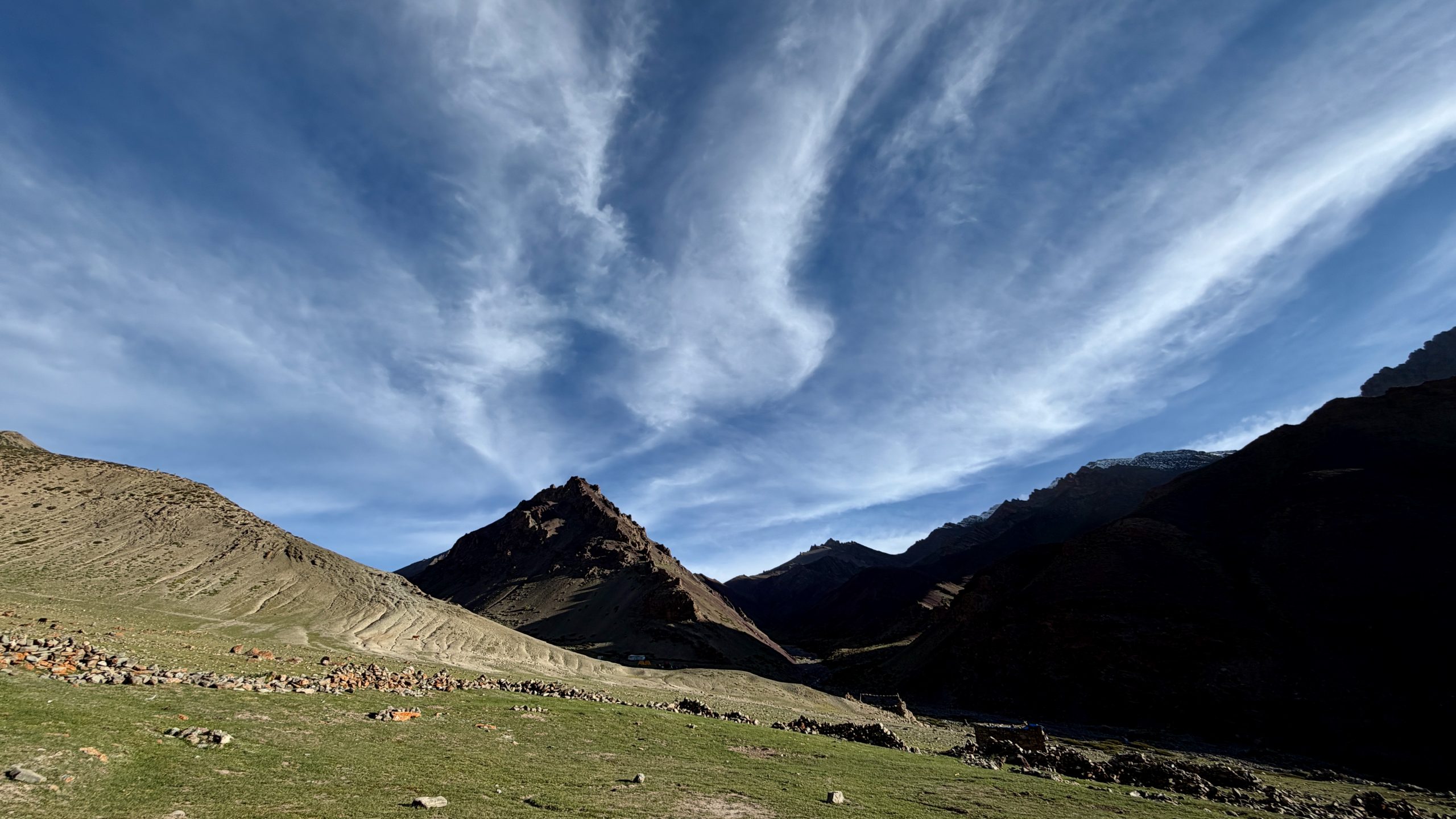
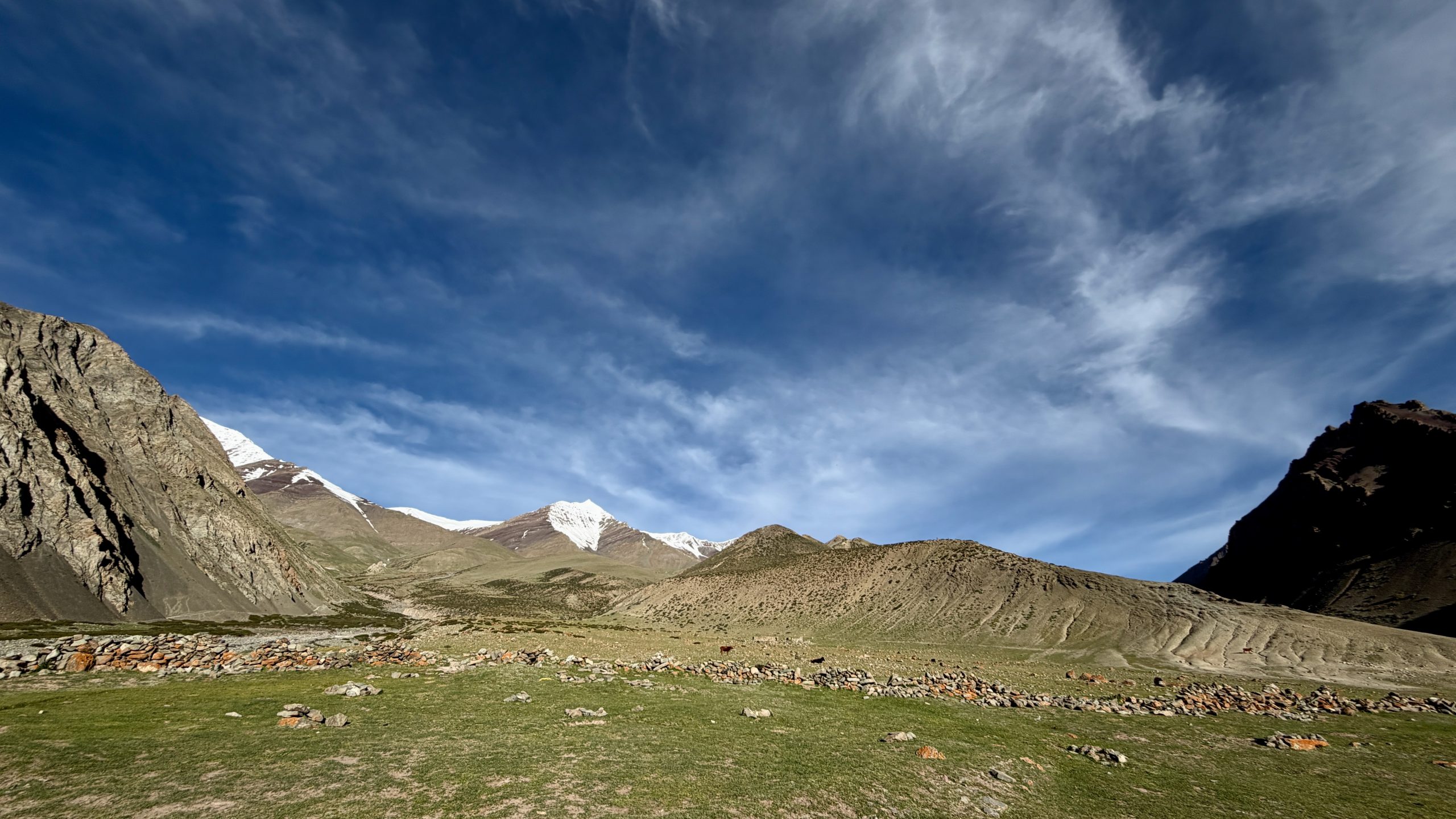
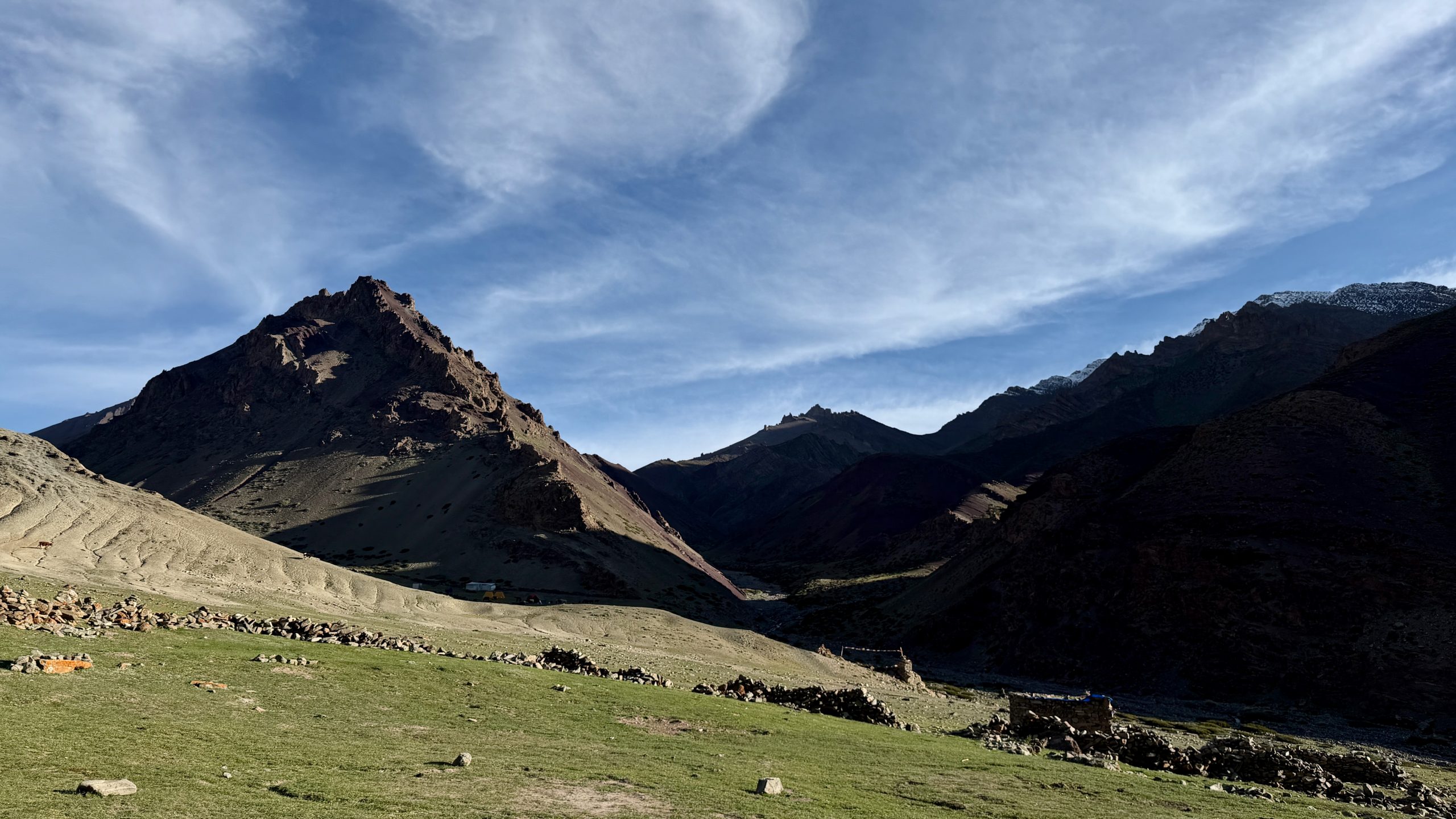
The path was easy to find, and there were even frequent directional arrows and skull markers.
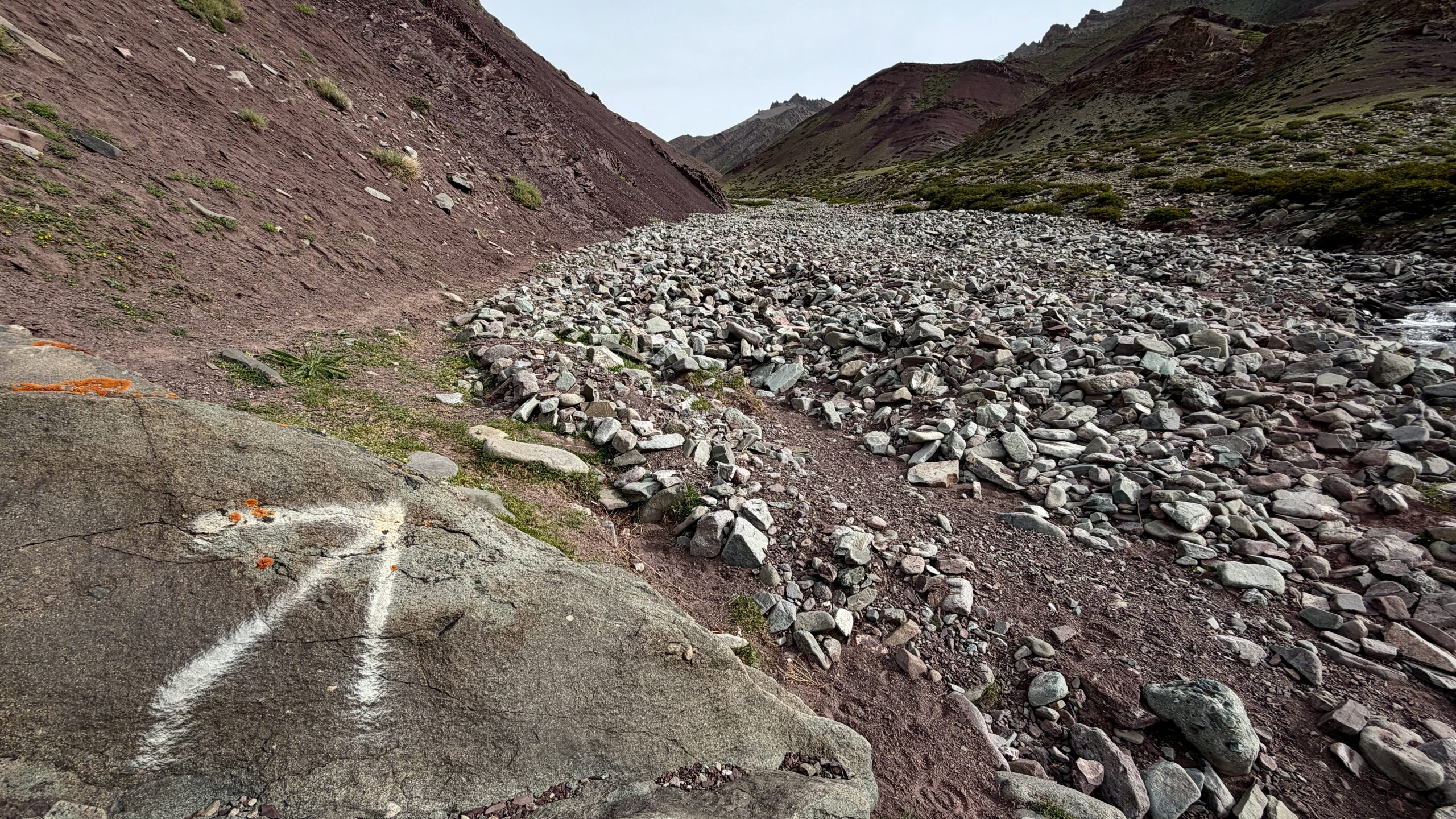
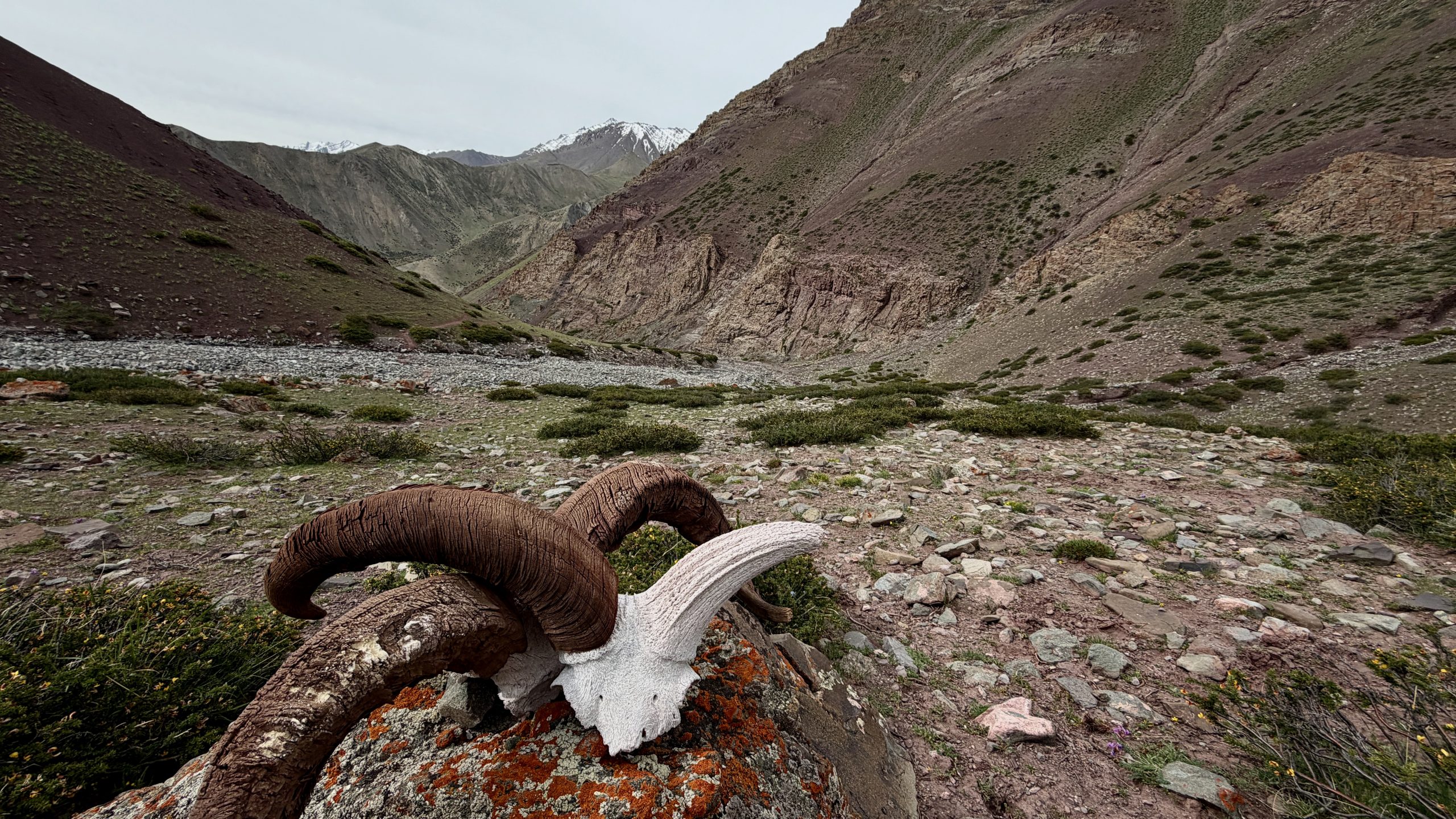
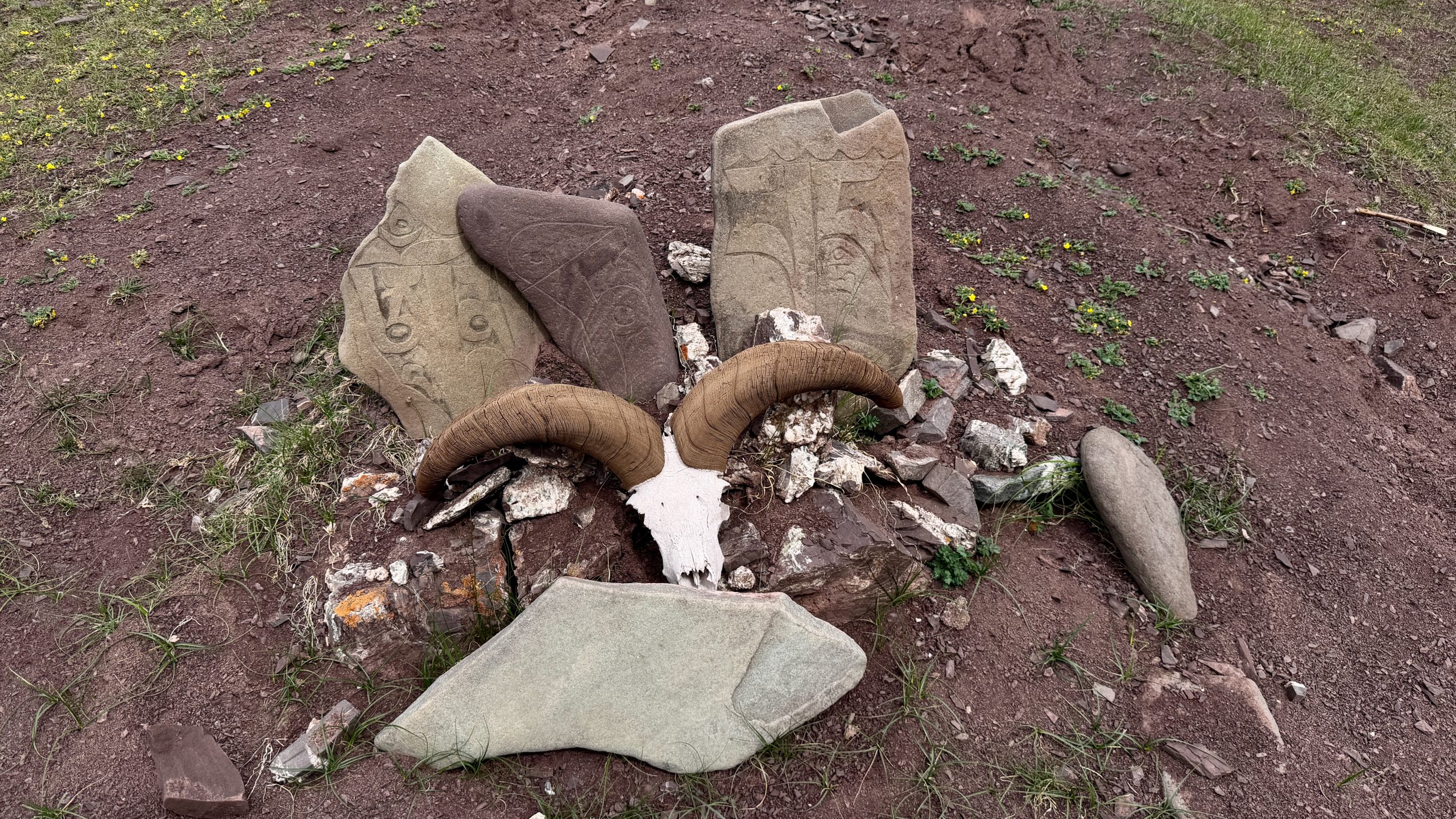
Soon, I met the other trekking group. It was 3 men and 1 woman from different parts of India who somehow knew each other. They were moving very slowly—slower than me. Right now, I can’t imagine them ever becoming as numerous on the trekking trails as they are on the streets, so I am still always happy to meet any of them out there. Mountain- and nature-loving Indians simply ‘have’ to be nice people!
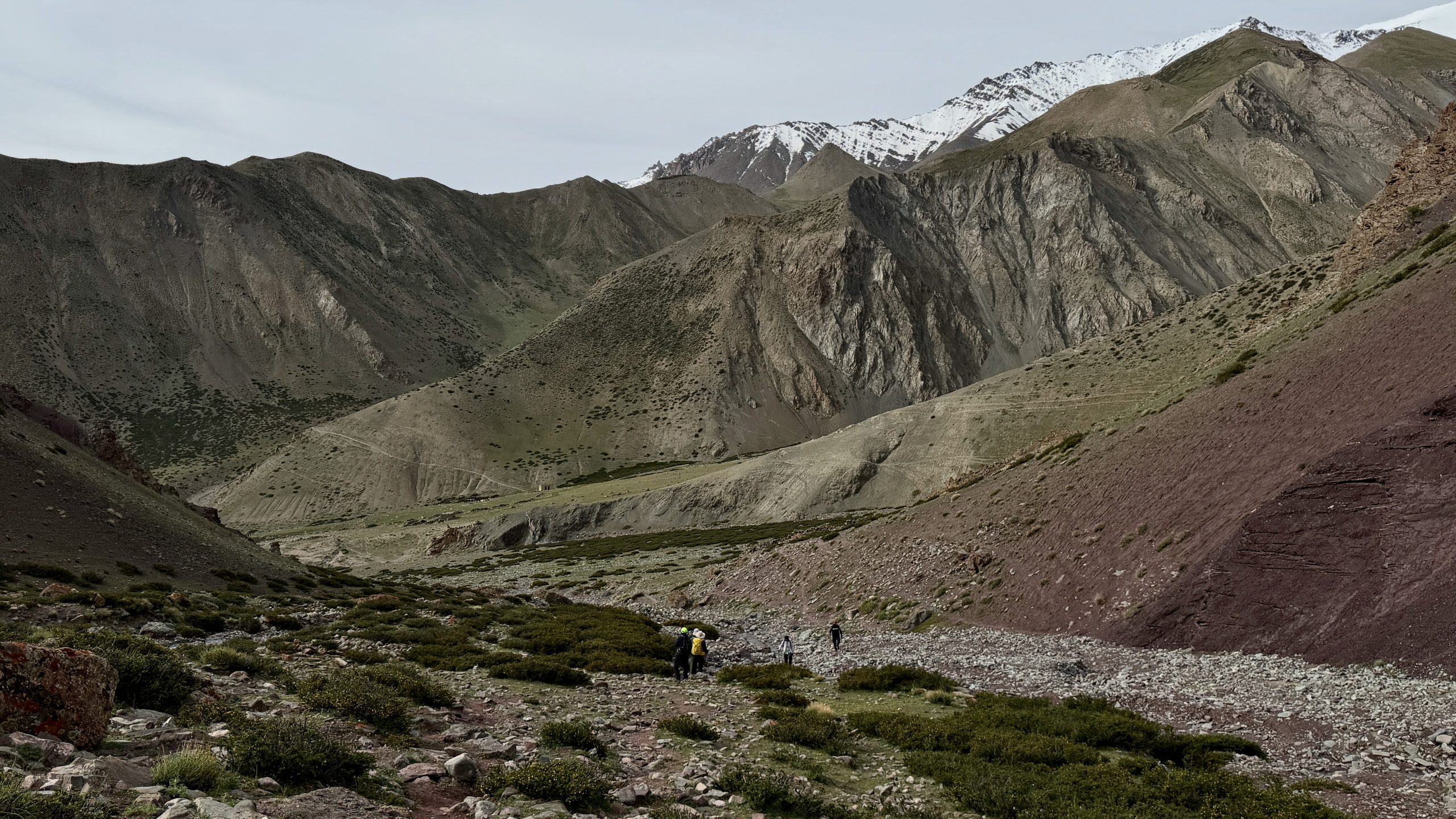
Then the trail kept going higher and higher up towards the pass. Chamba and the horses soon caught up with me too. It went better than expected. I didn’t need any ‘motivational music’ at all; instead—as usual—I just listened to a podcast.
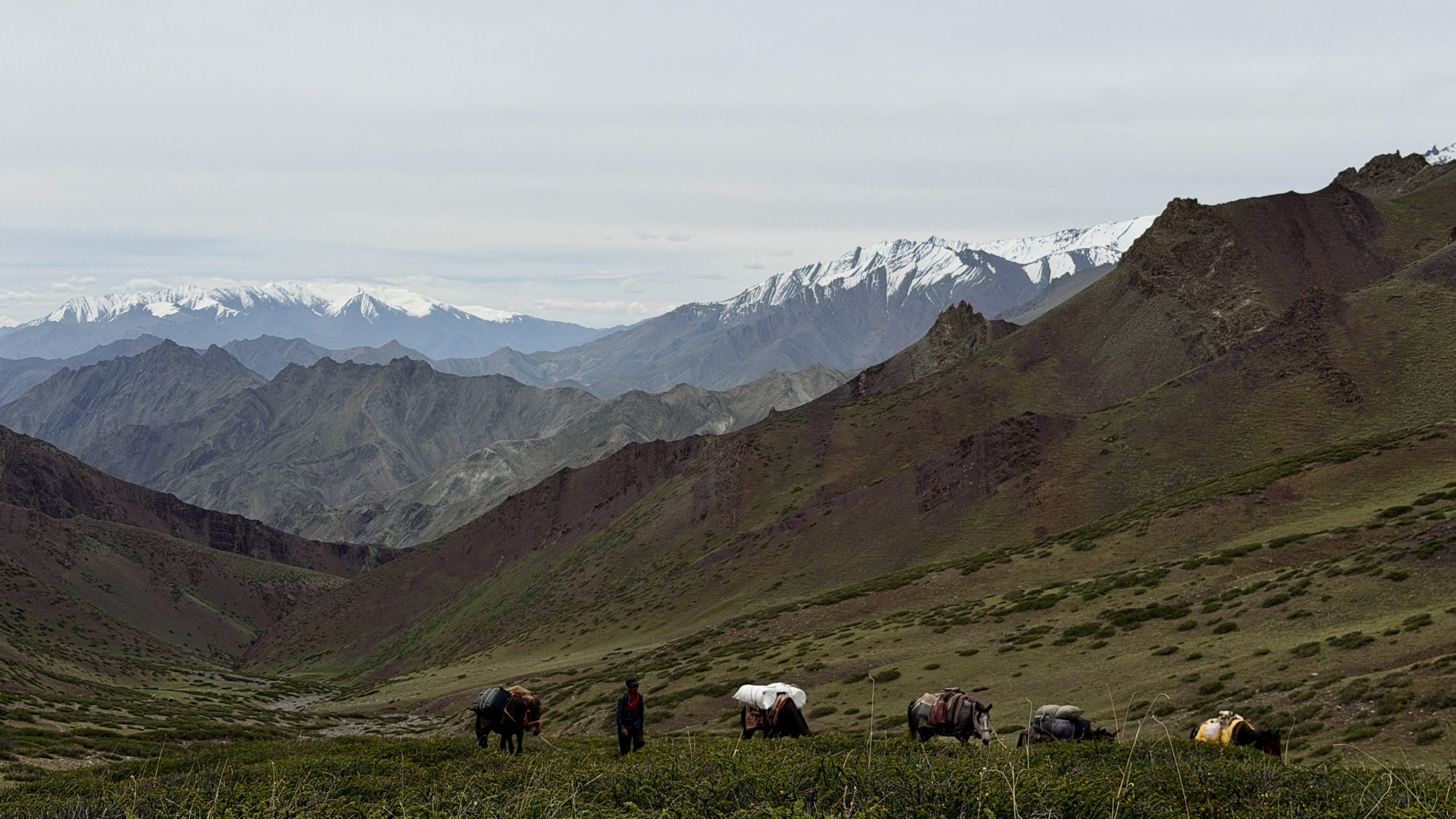
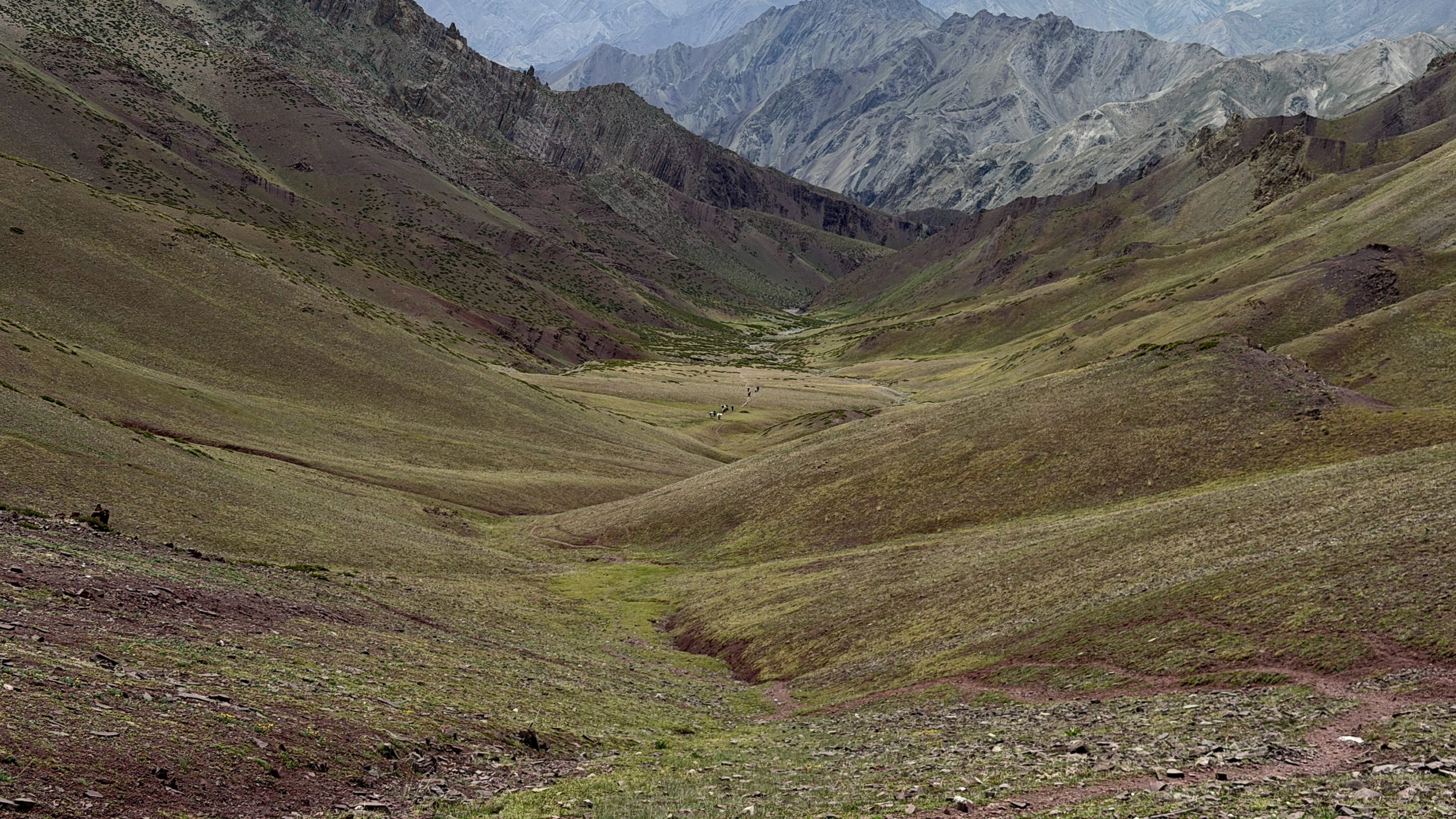
And at the top of the pass, there was a surprise!
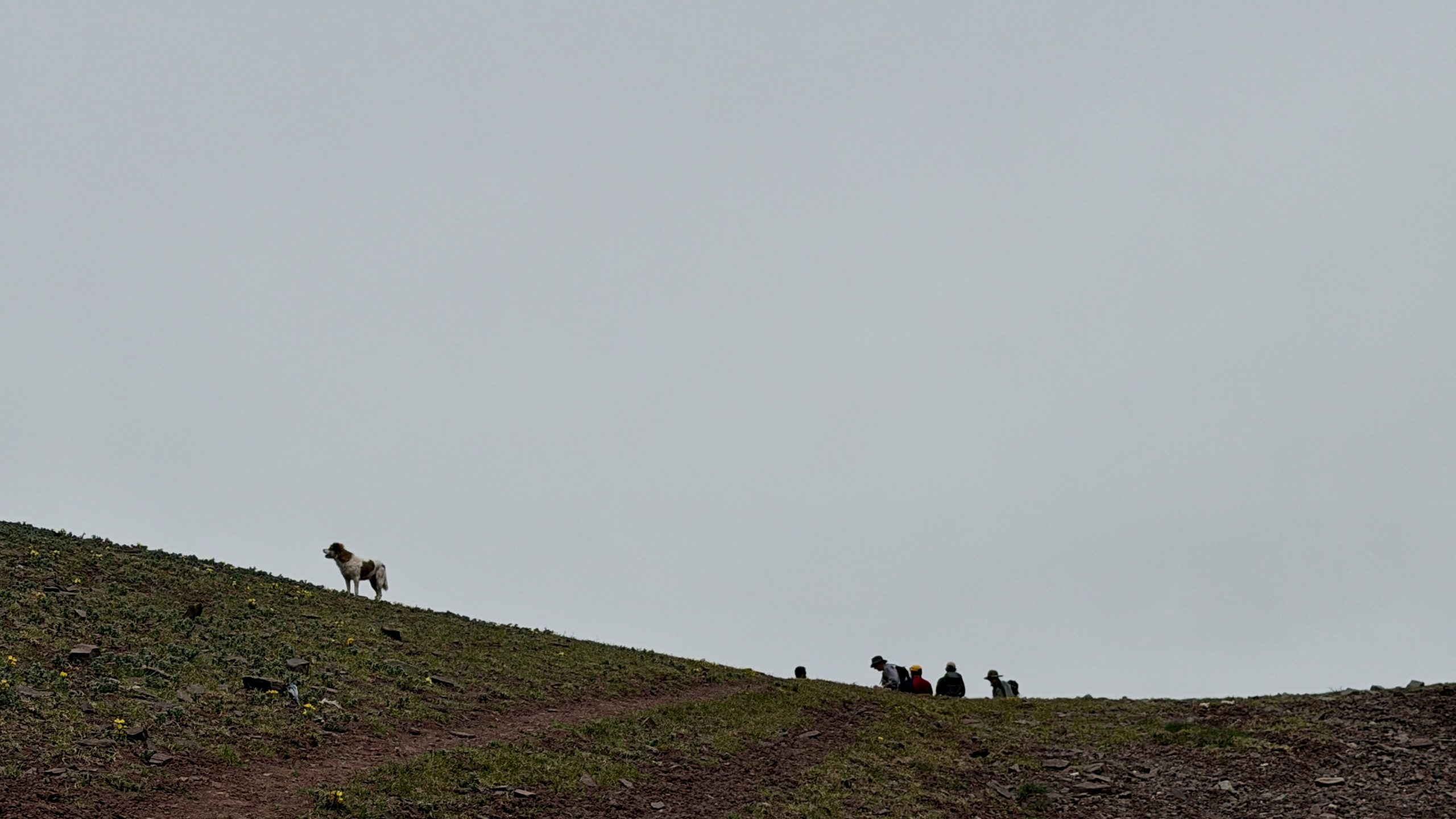
A group of 9 Australians was camping there with their guides and an ‘adopted dog.’ They were planning to climb Dzo Jongo and Kang Yatse, and this was their acclimatization climb. They groaned a bit about the altitude, saying Australia was just too flat… But I ended up talking even more with the guides. The Ladakh world is quite small indeed. One of them had also been a Diamir expedition guide at one point (and had also worked for the company where Tsering Dolma was employed), and another was from Uttarakhand and works a lot as a freelancer for expeditions, having traveled a lot with Hauser and the DAV (German Alpine Club). We talked about the decline in Western travelers, the shrinking number of trekking offers, and so on. And they took a photo of me on the pass. The pass is called Shang-la and is 4,930 m high—the first one on my tour that was so beautifully decorated with prayer flags.
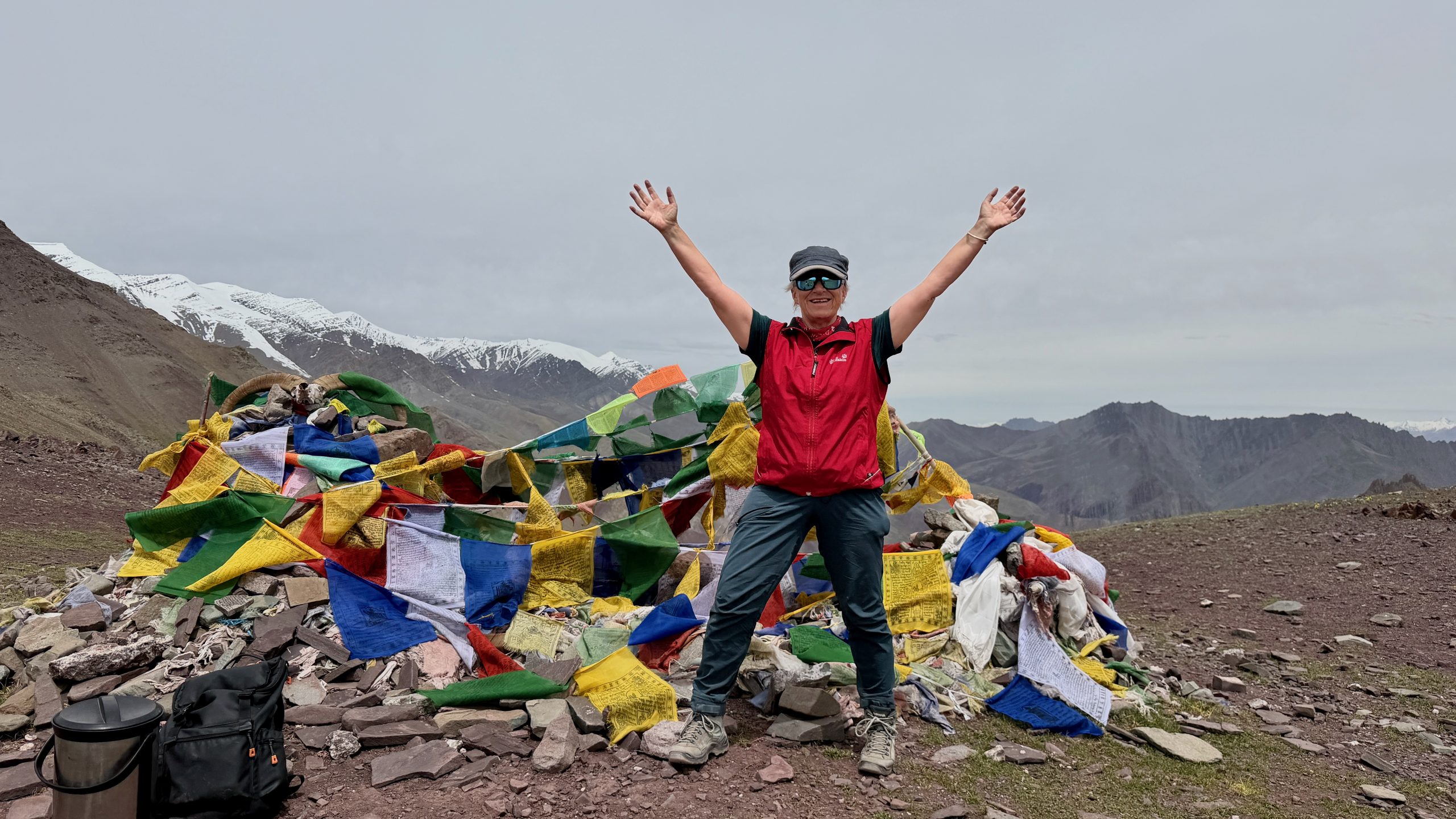
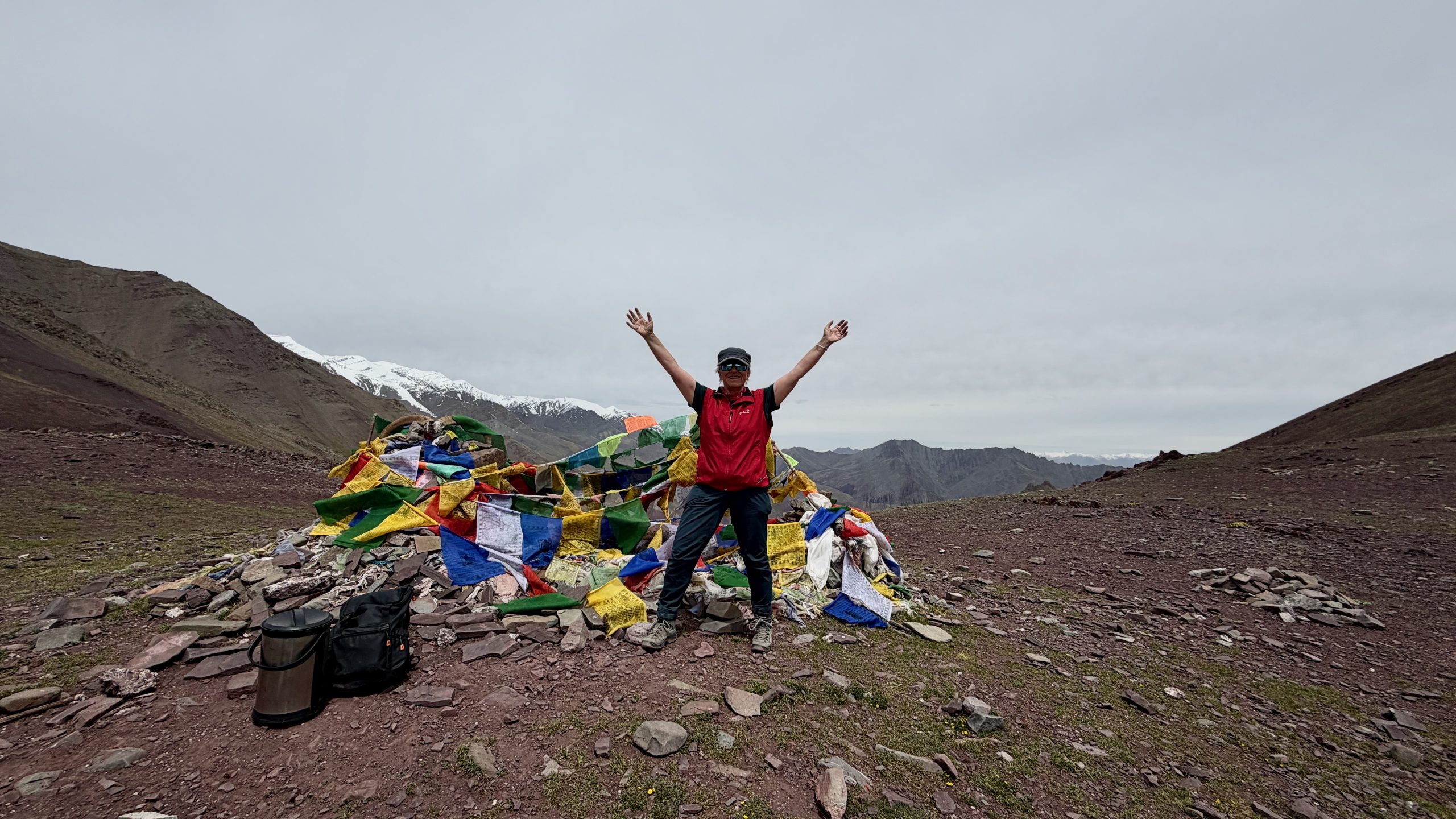
hat you can also see here is the new type of ‘packed lunch’: a huge thermos container from which everyone gets their meal. In the past, everyone carried their own lunch box. I don’t know what the Australians had inside, but the Indians actually ‘only’ had the usual: sandwiches, a boiled egg, an apple, etc. Here, the Australian guides are moving on again.
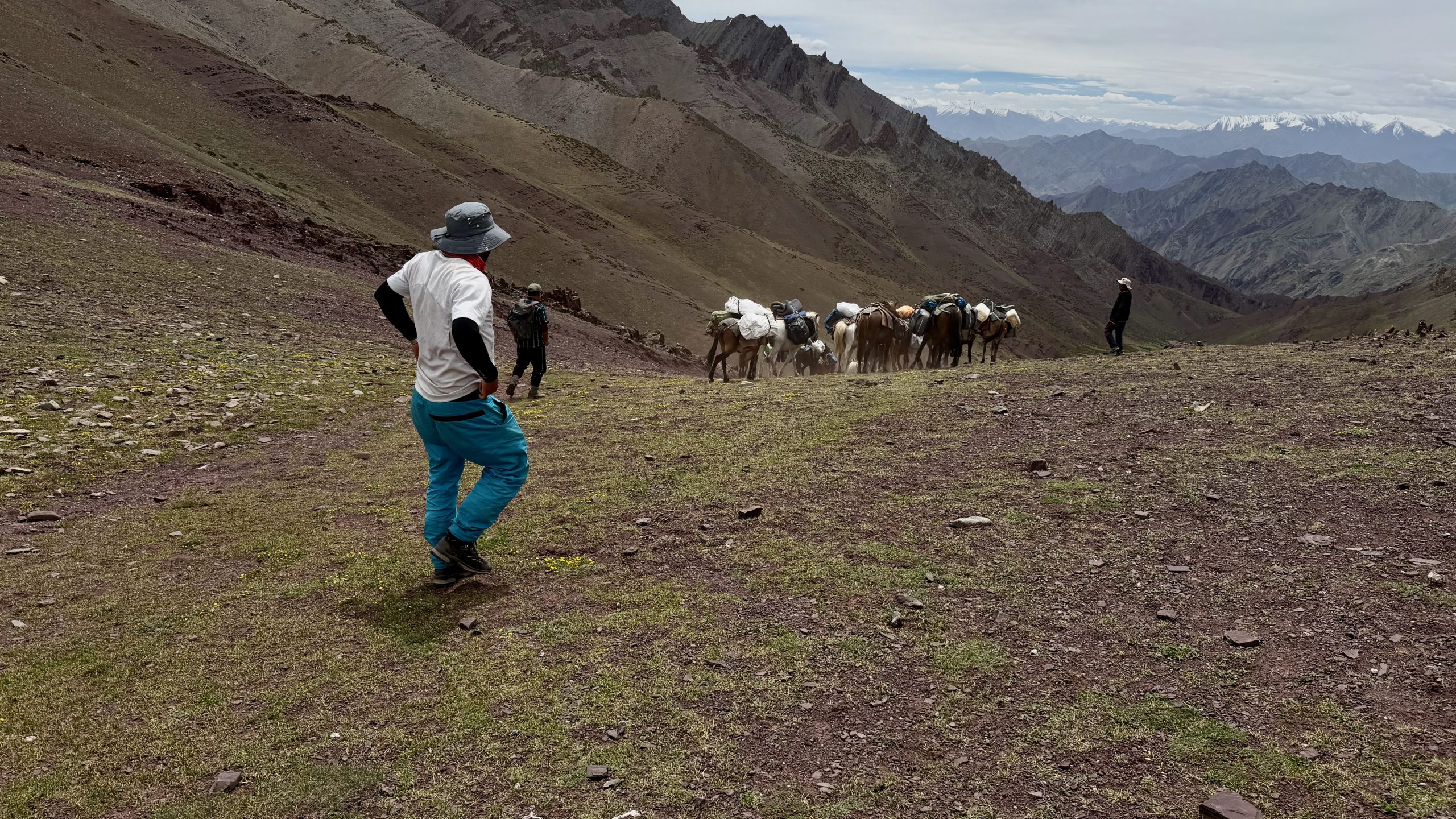
I also talked a lot with the Indians’ guide. He is an agency owner and also runs a homestay in Choglamsar. He has been in the tourism industry forever and really doesn’t like these mass developments at all. He prefers to have just a few groups a year—and enjoys guiding them himself. He loves this trek very much, saying it’s so diverse. I liked it too. But I was still surprised by how few people we encountered. In fact, these two groups would remain the only ones.
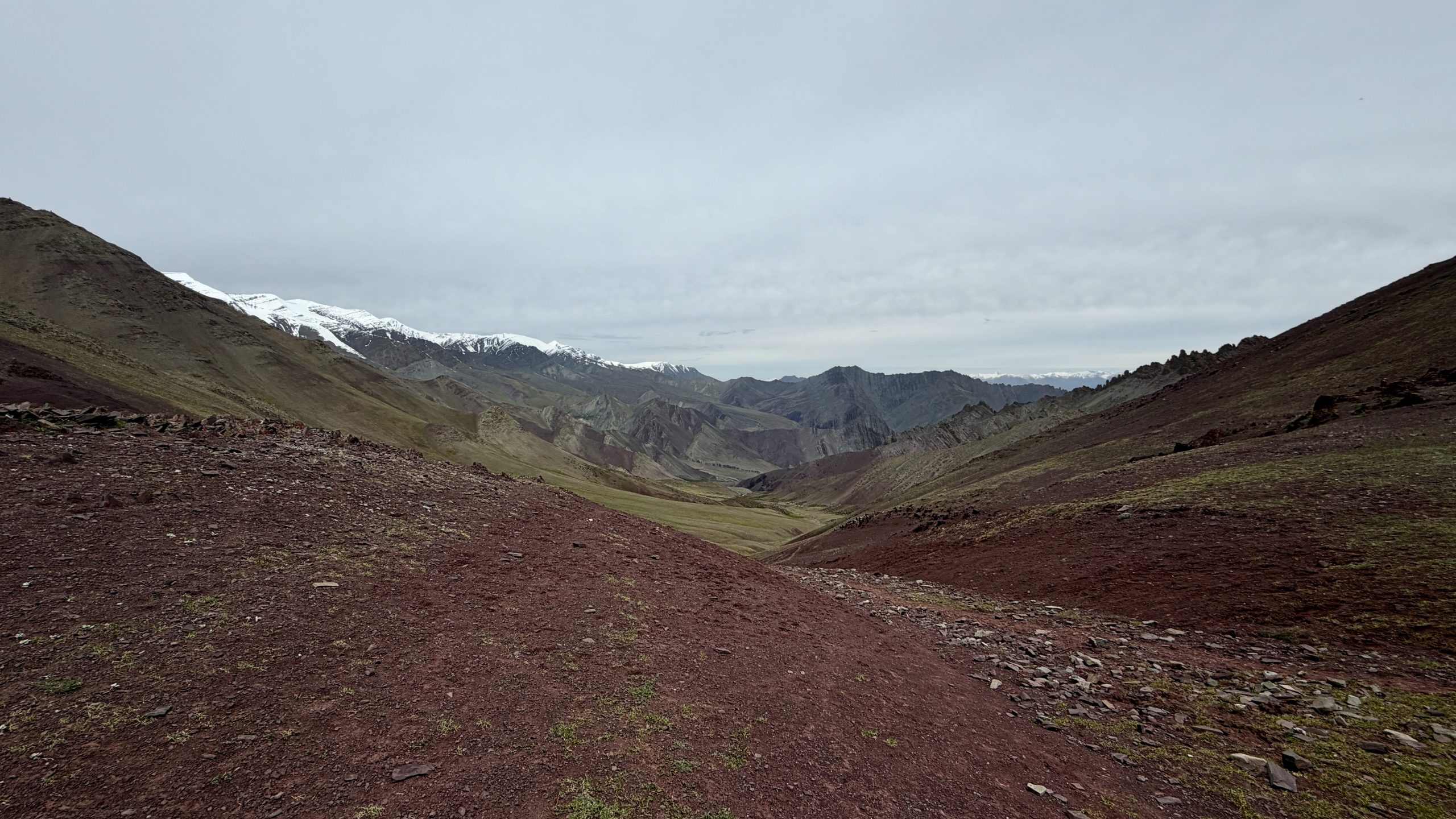
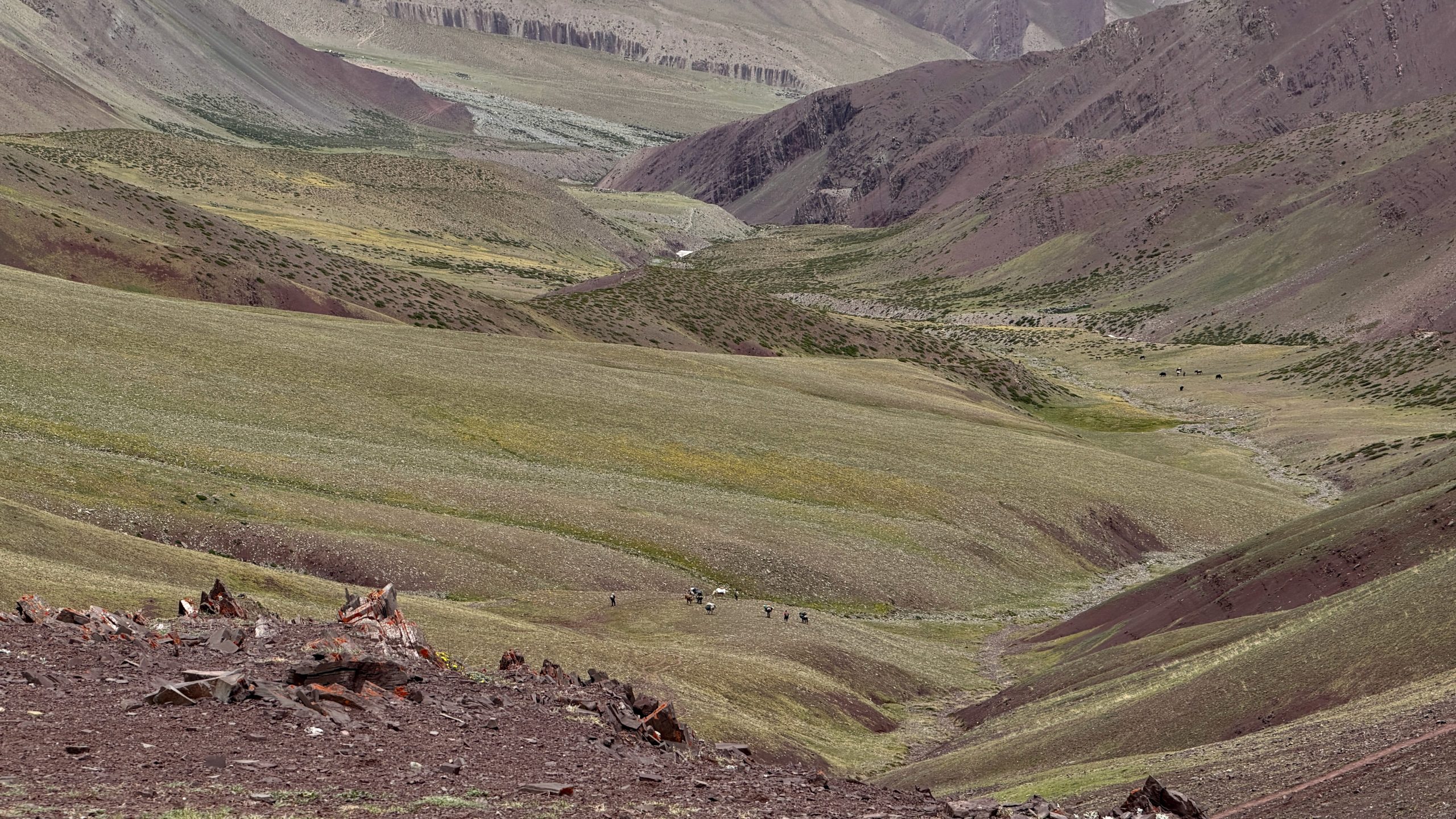
And now here is the view from the pass on the other side:
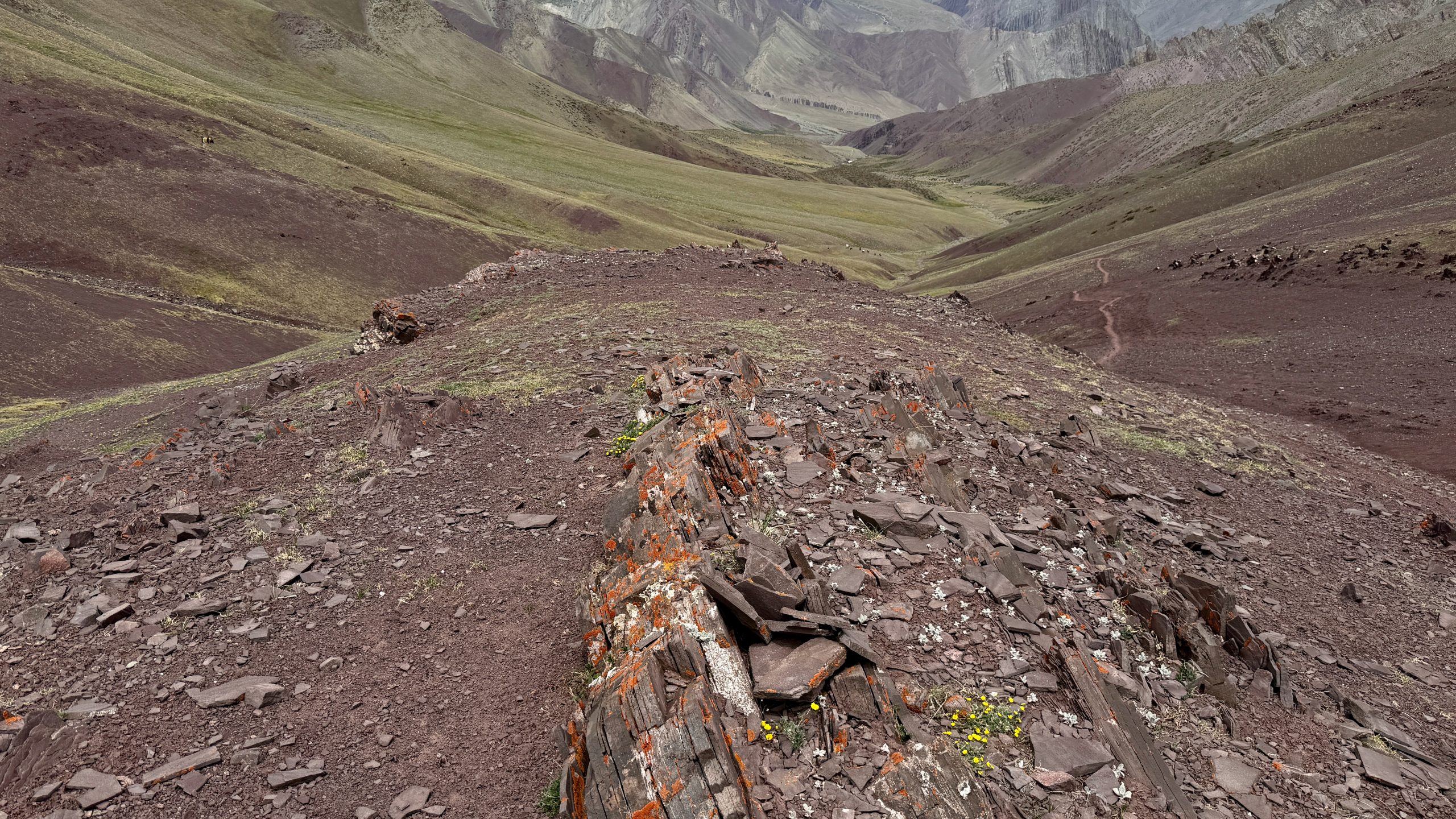
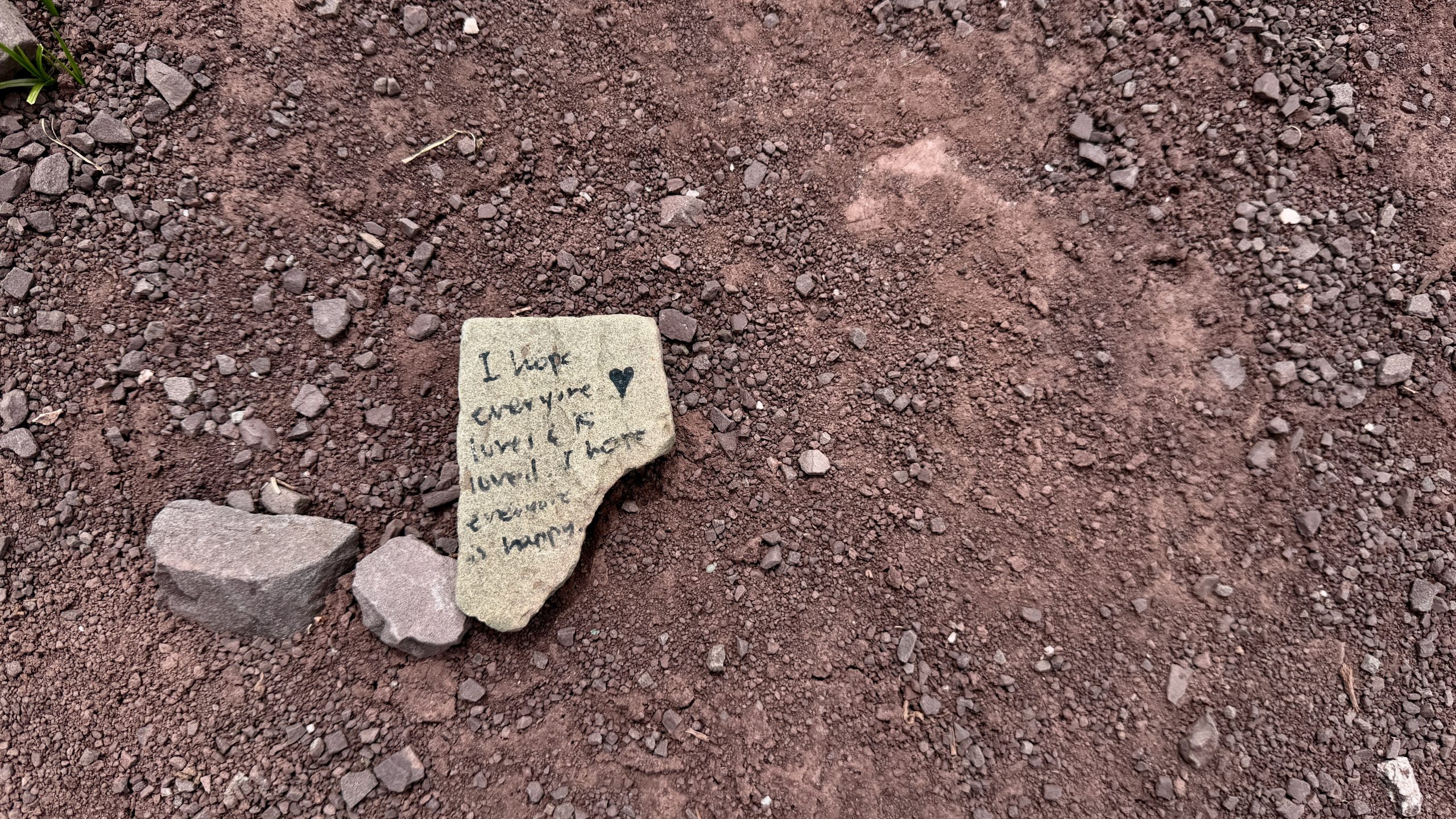
Here is another small find from the pass:
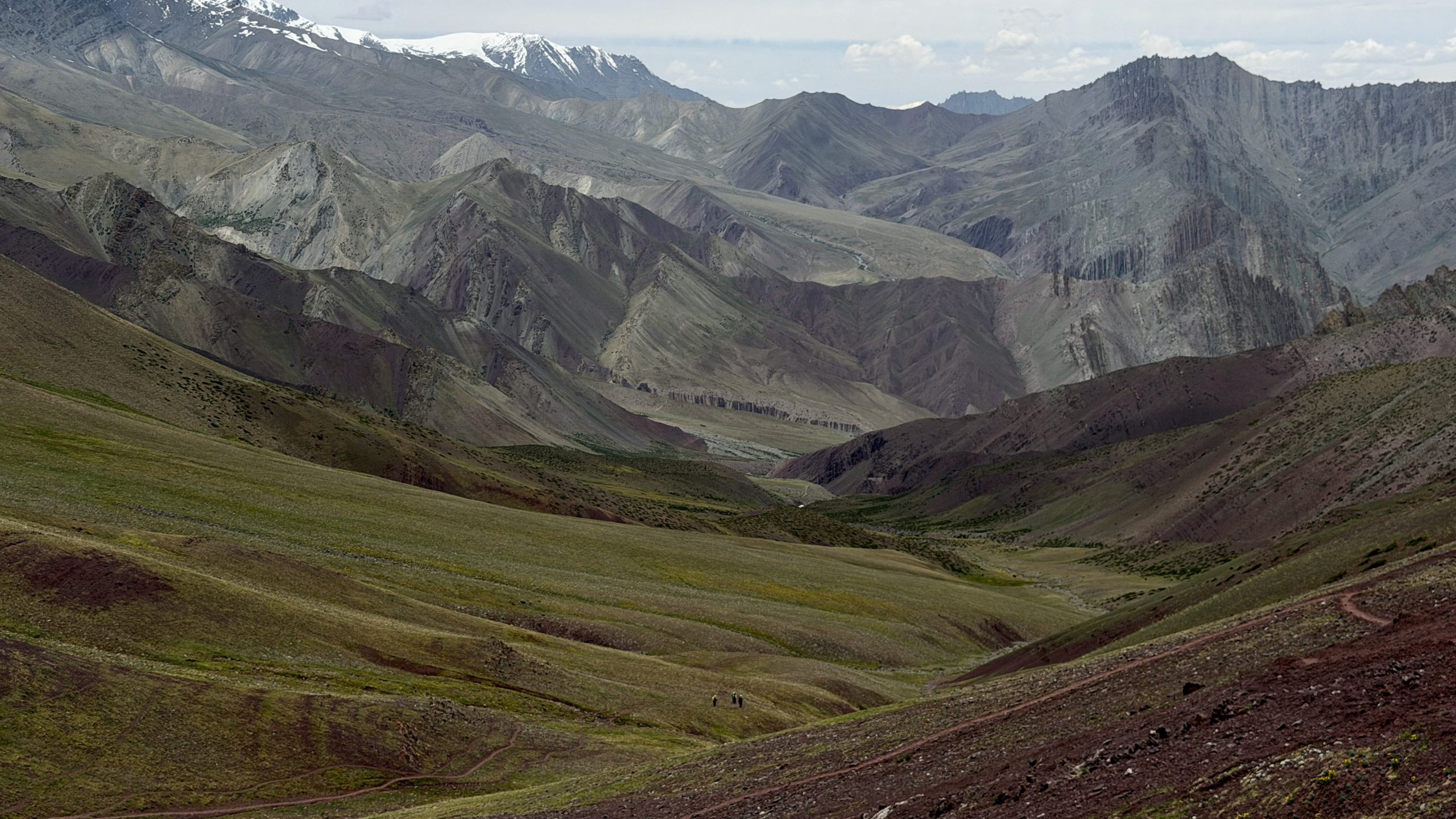
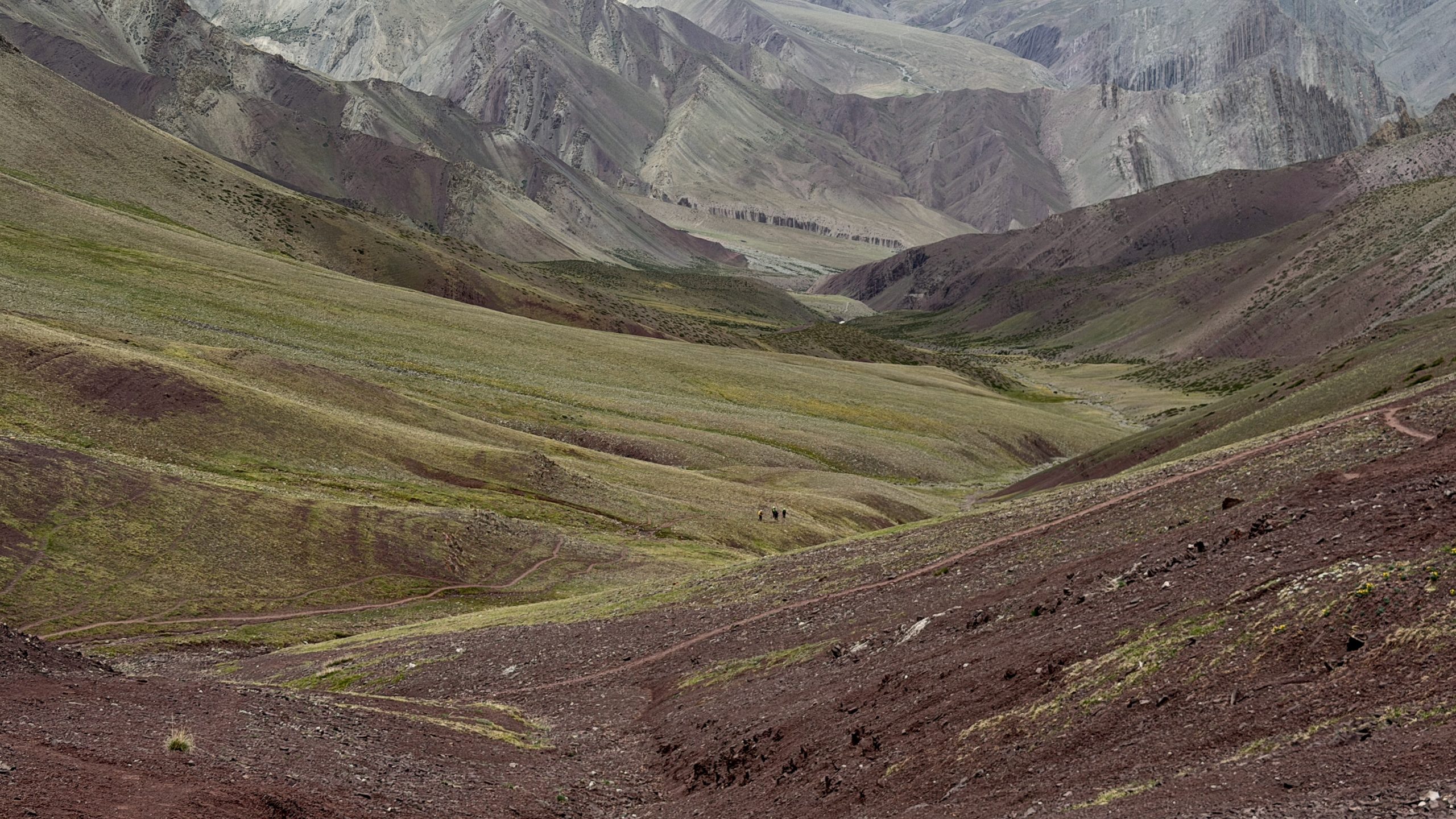
I stayed up at the pass for a very, very long time. The route wasn’t that long for a single day. But eventually, I did set off down the green meadows.
hamba had nicely already set up my tent together with the other group’s horseman. They knew each other well because they belonged to the same nomad group. They were absolutely thrilled to meet here and chatted non-stop.
Matho apparently has a new program for Kashmir wool goats, and 2 or 3 young men had been tasked with bringing a huge herd through the summer up here in the side valley. They were also tasked with collecting camping fees. I asked the other guide, ‘What are the camping fees for? There’s nothing here. Who does it go to?’ The land belongs to the Matho Monastery, and they collect the fees. ‘So it would actually be more like a donation to the monastery then?’ ‘Yes, exactly!’ It annoys me a bit when camping fees are collected but nothing is provided in return—like a toilet shack, for example. Or bridges.
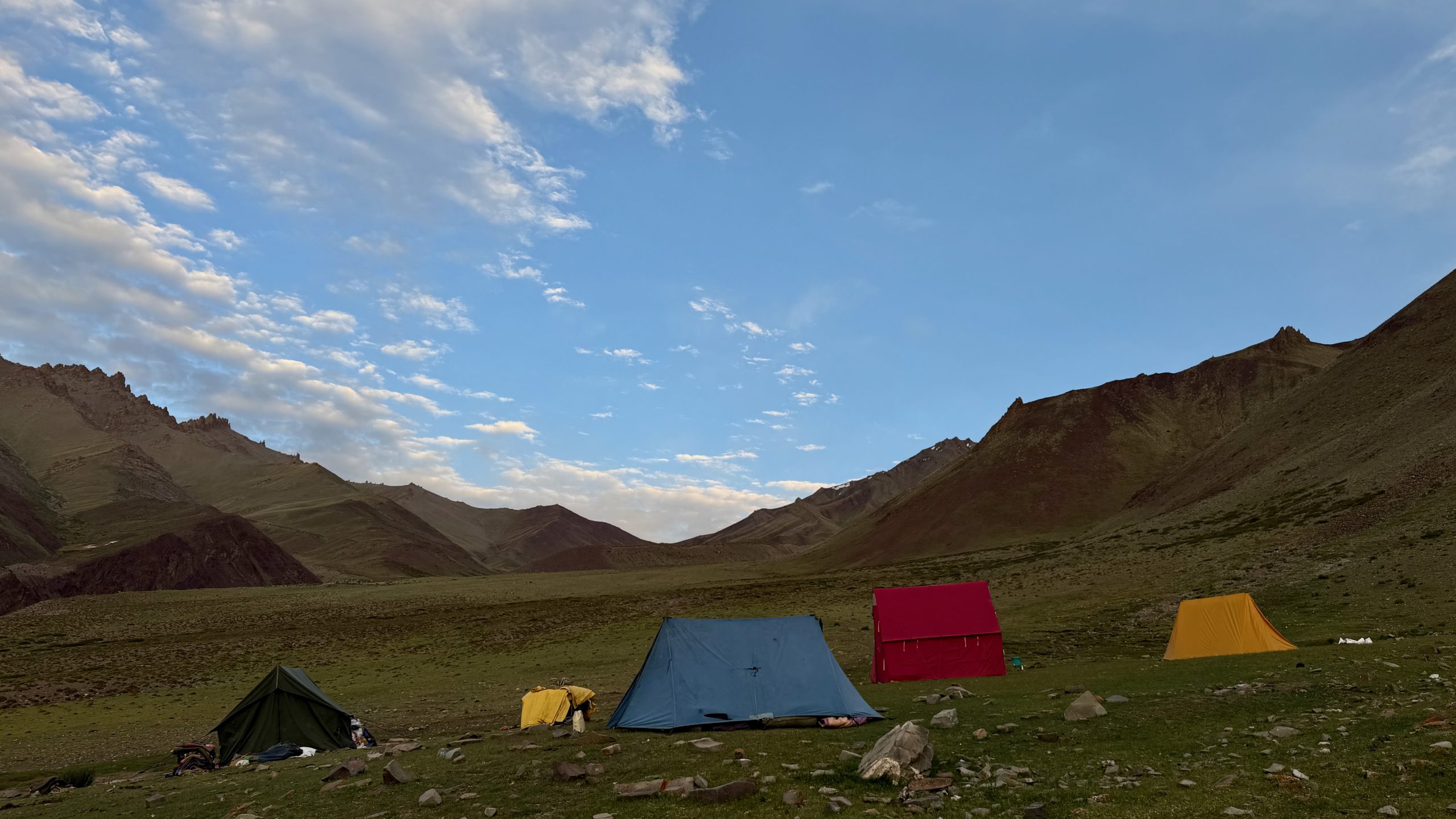
Because the next day, the route was supposed to cross rivers, and for that, I had to start very early, otherwise they would get too big and the crossing would become difficult. I was actually a bit worried.
But first, the sky cleared up a little.
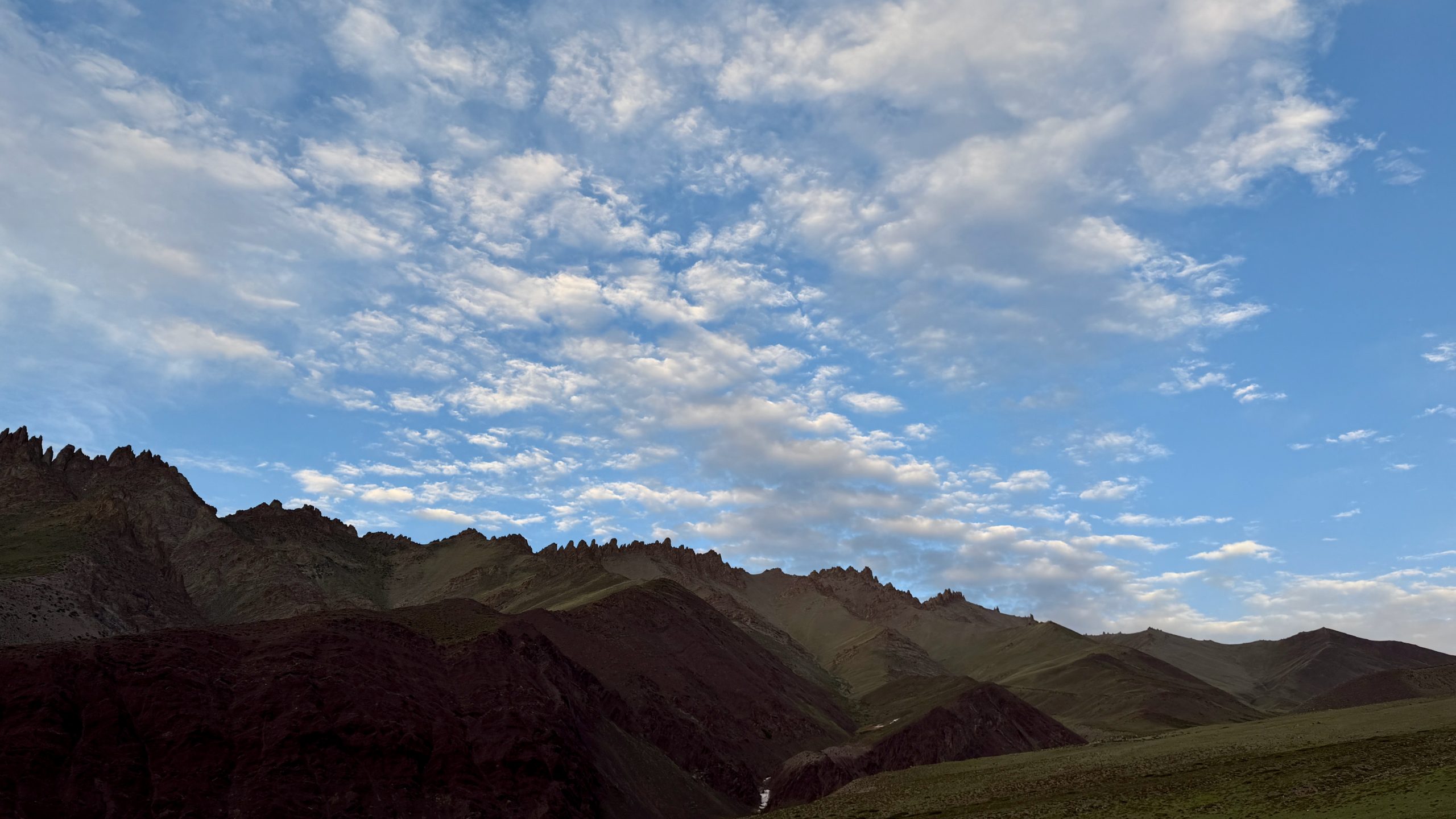
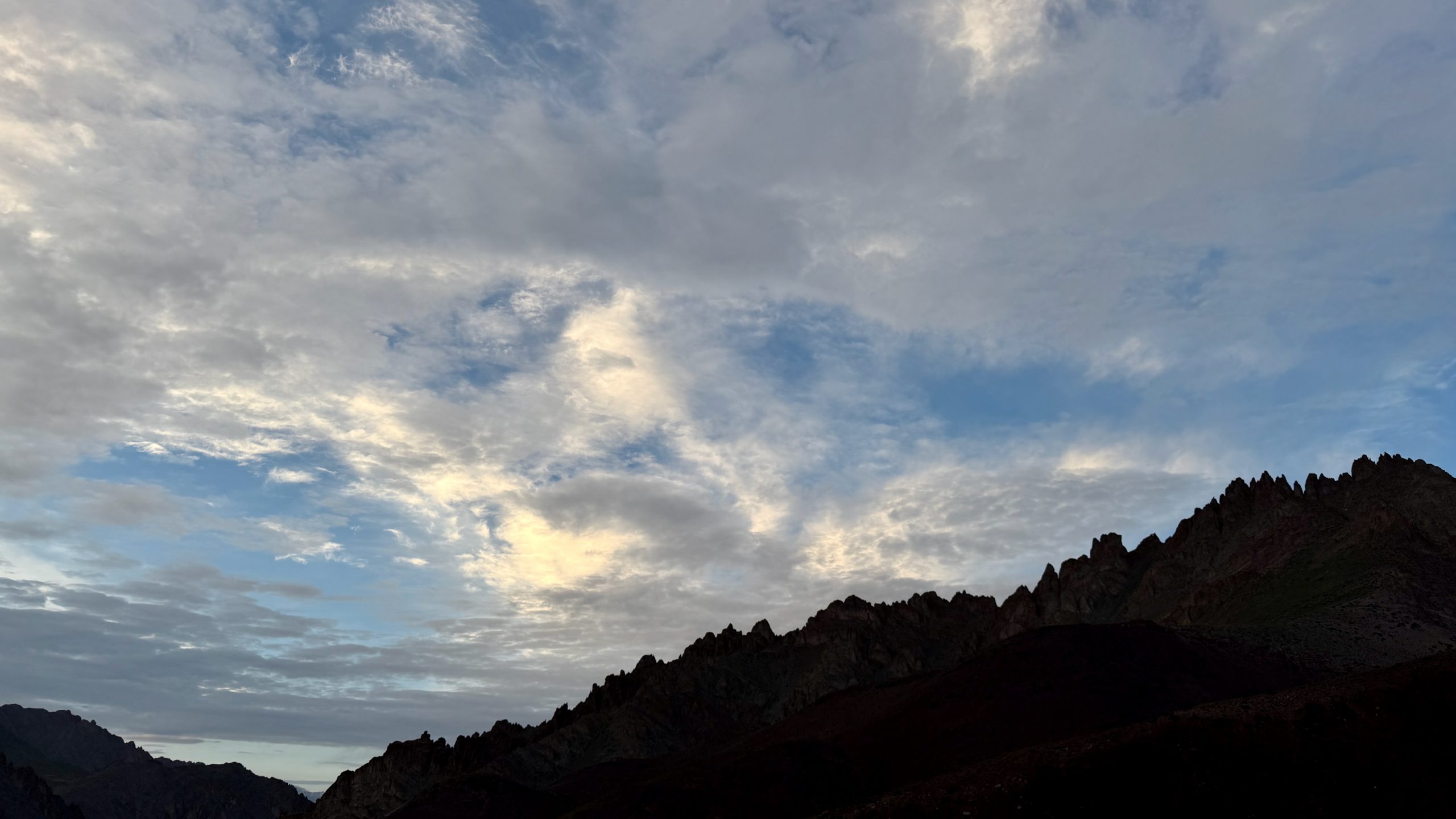
I was very comfortable in my tent and it wasn’t cold at all, but I was also looking forward a little to a room with a soft bed and a flush toilet next door. But first, I had to cross all those rivers!