


Trekkingday 6: Matho Phu -> Matho – The bitter end comes last
2. July 2026
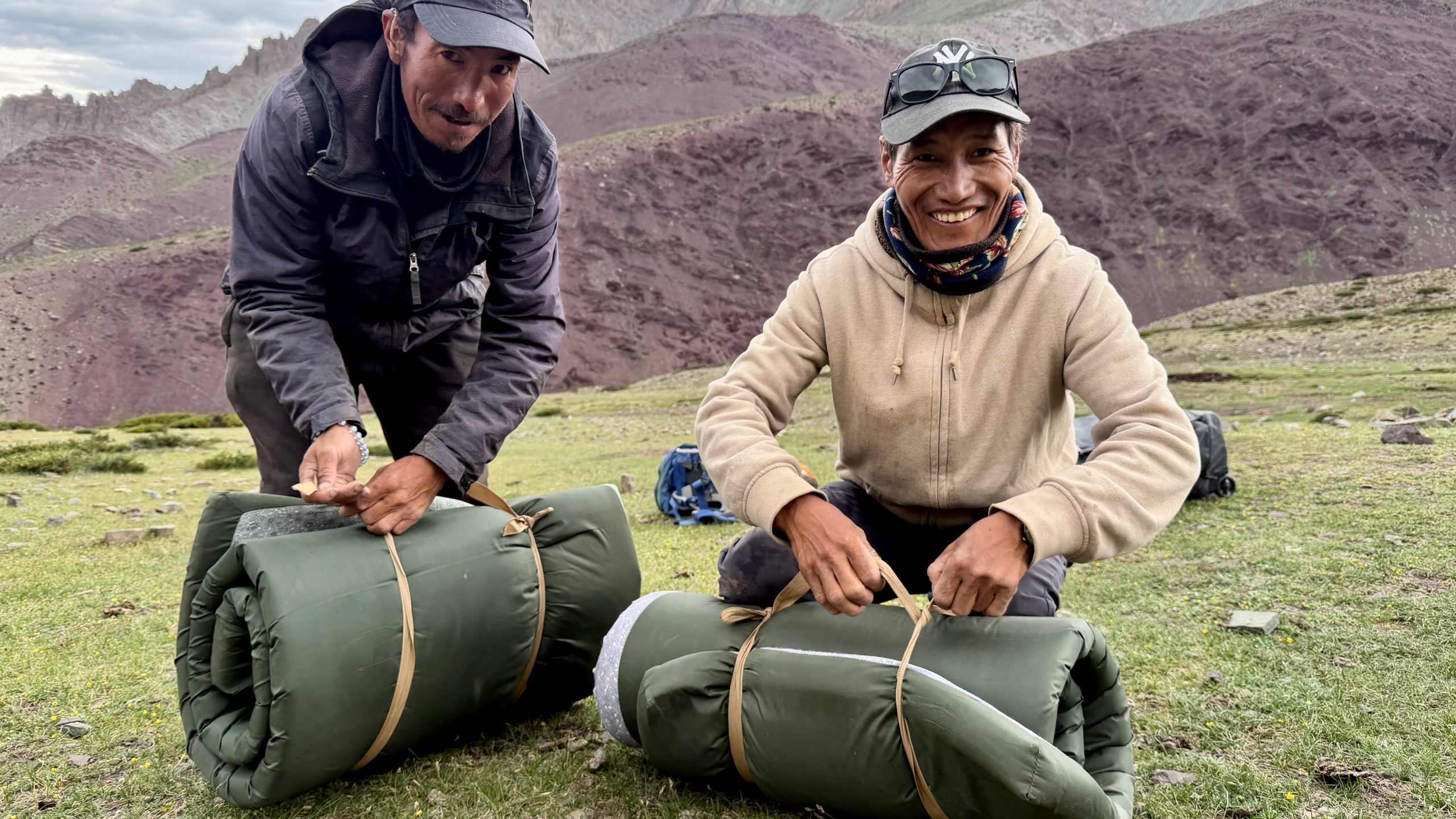
The other horseman-mate had the strongest hands and the best technique for rolling up the sleeping mats. By the way, in this photo you can see that Chamba is wearing a hearing aid. He is the first Ladakhi I’ve ever seen with one.
I ended up setting off as early as 6:30 AM because of those rivers—and was actually able to jump across the first three without any problems. However, I lost the trail a bit and scrambled around some rough terrain. But it didn’t matter. The sun came out for a brief moment and bathed the camp of the guys with the 1,000 goats in beautiful light.
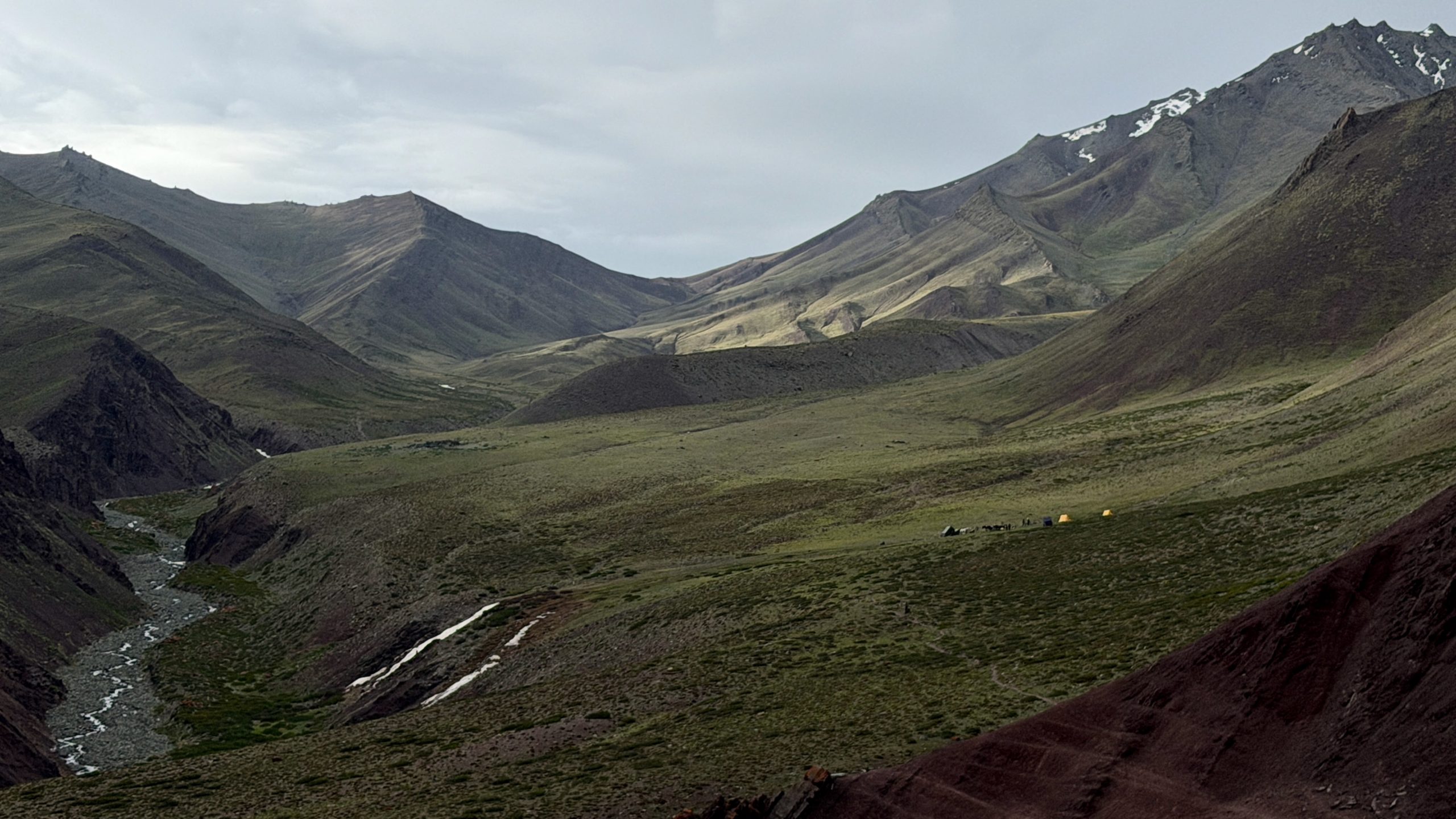
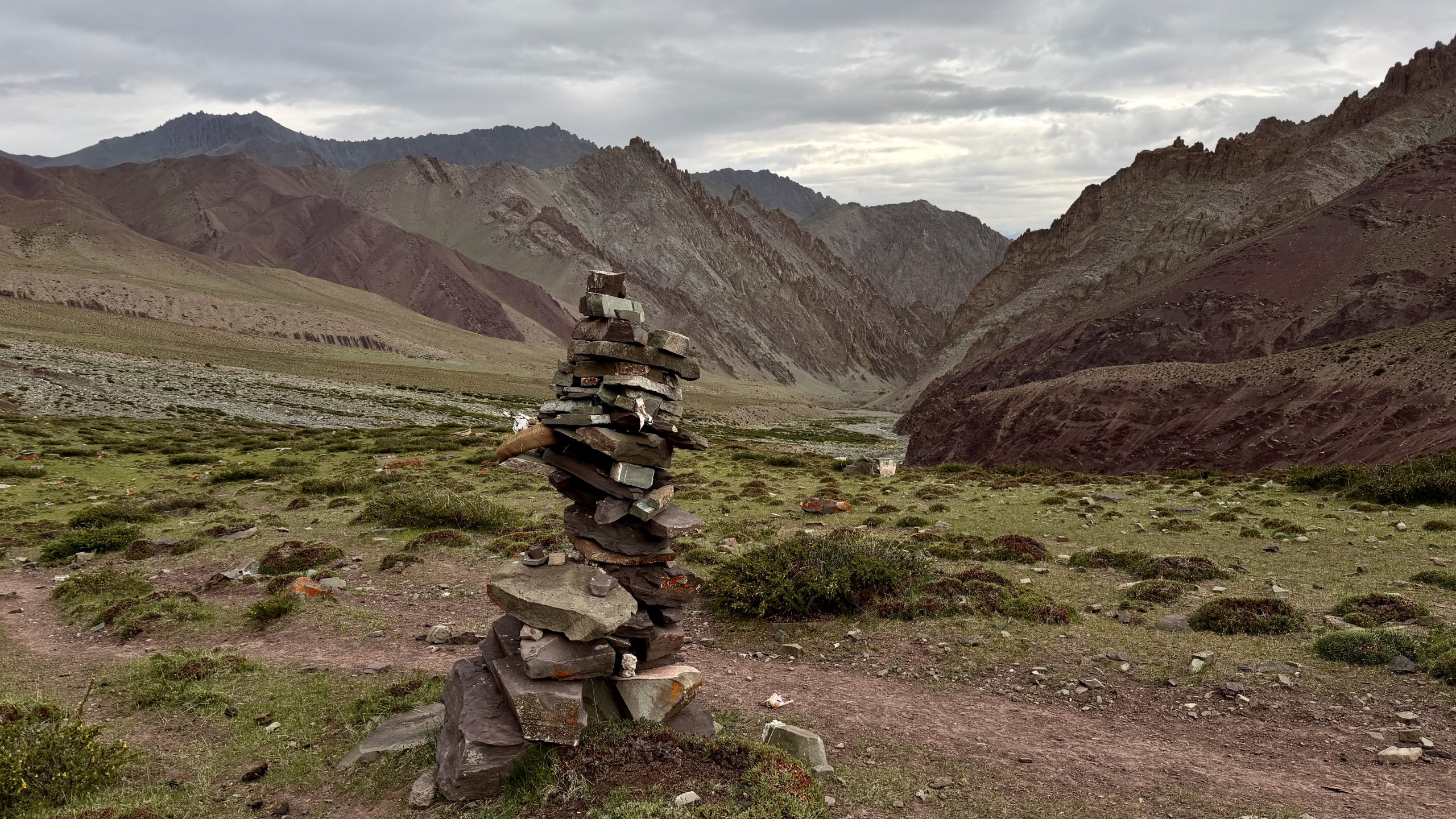
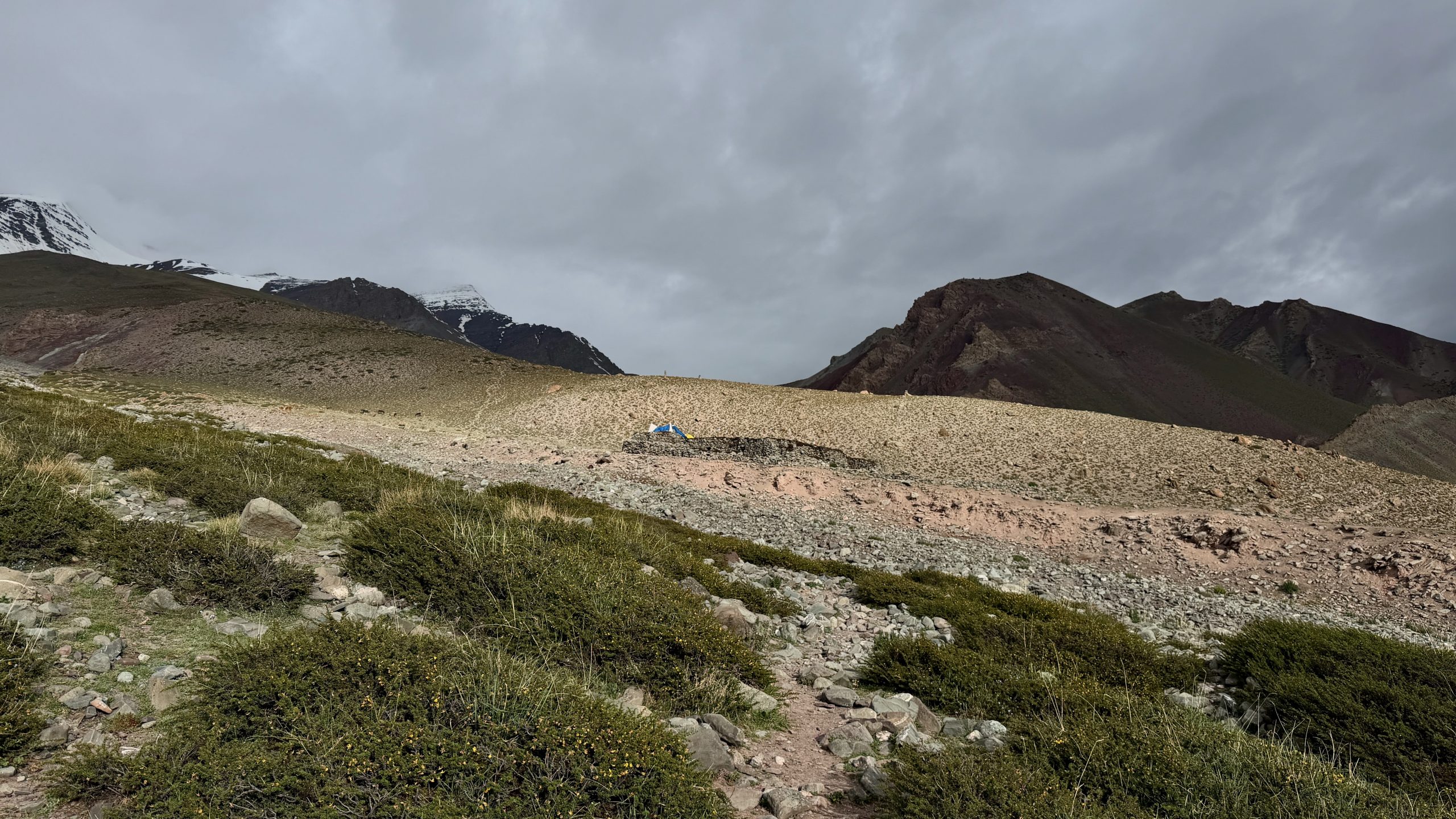
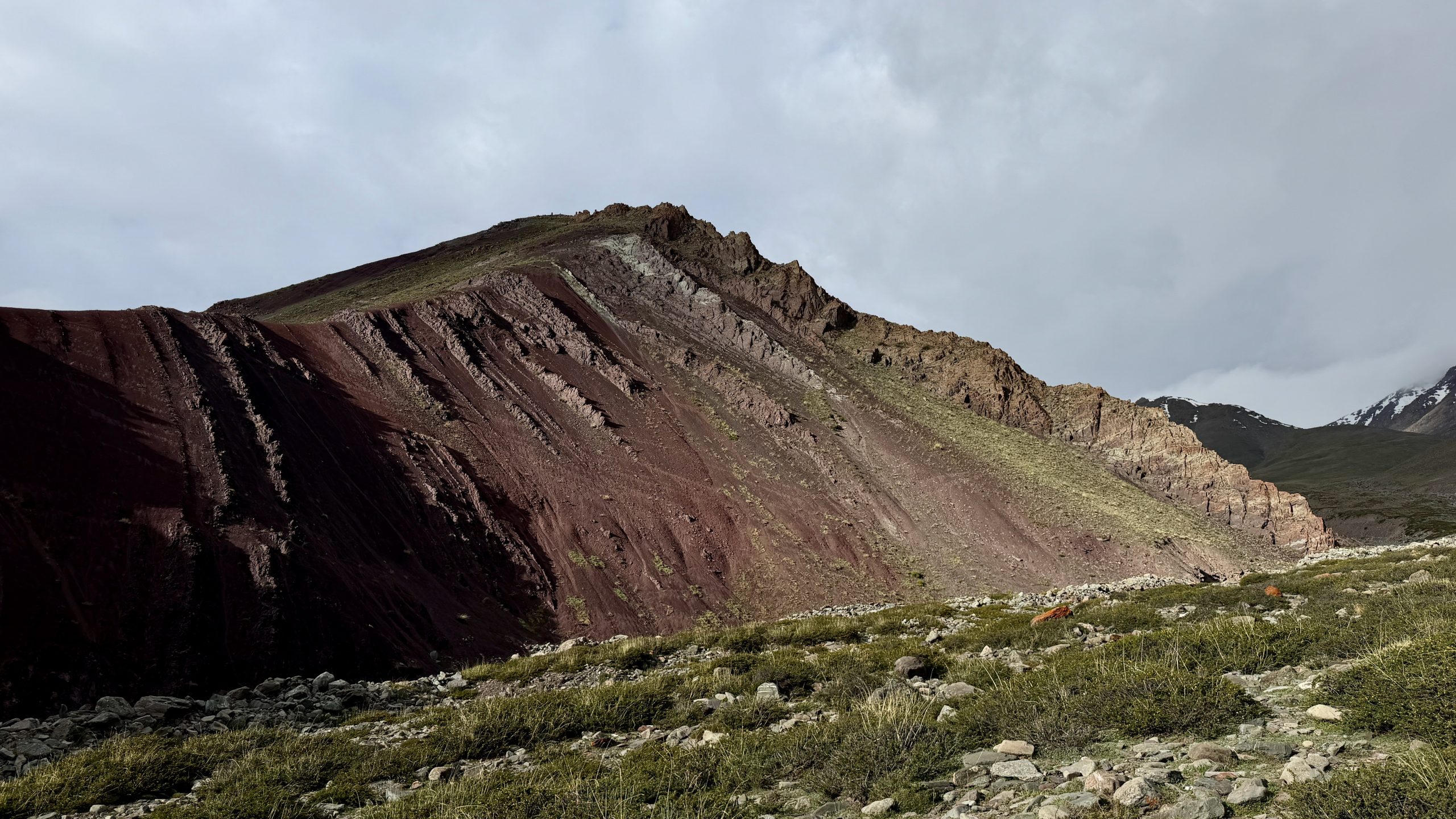
Slowly but surely, the horses approached from behind. And then the trail led into a kind of gorge. It was absolutely beautiful there and fascinating to look at—but I didn’t manage to get any really great pictures. Besides, urgency was still the order of the day.
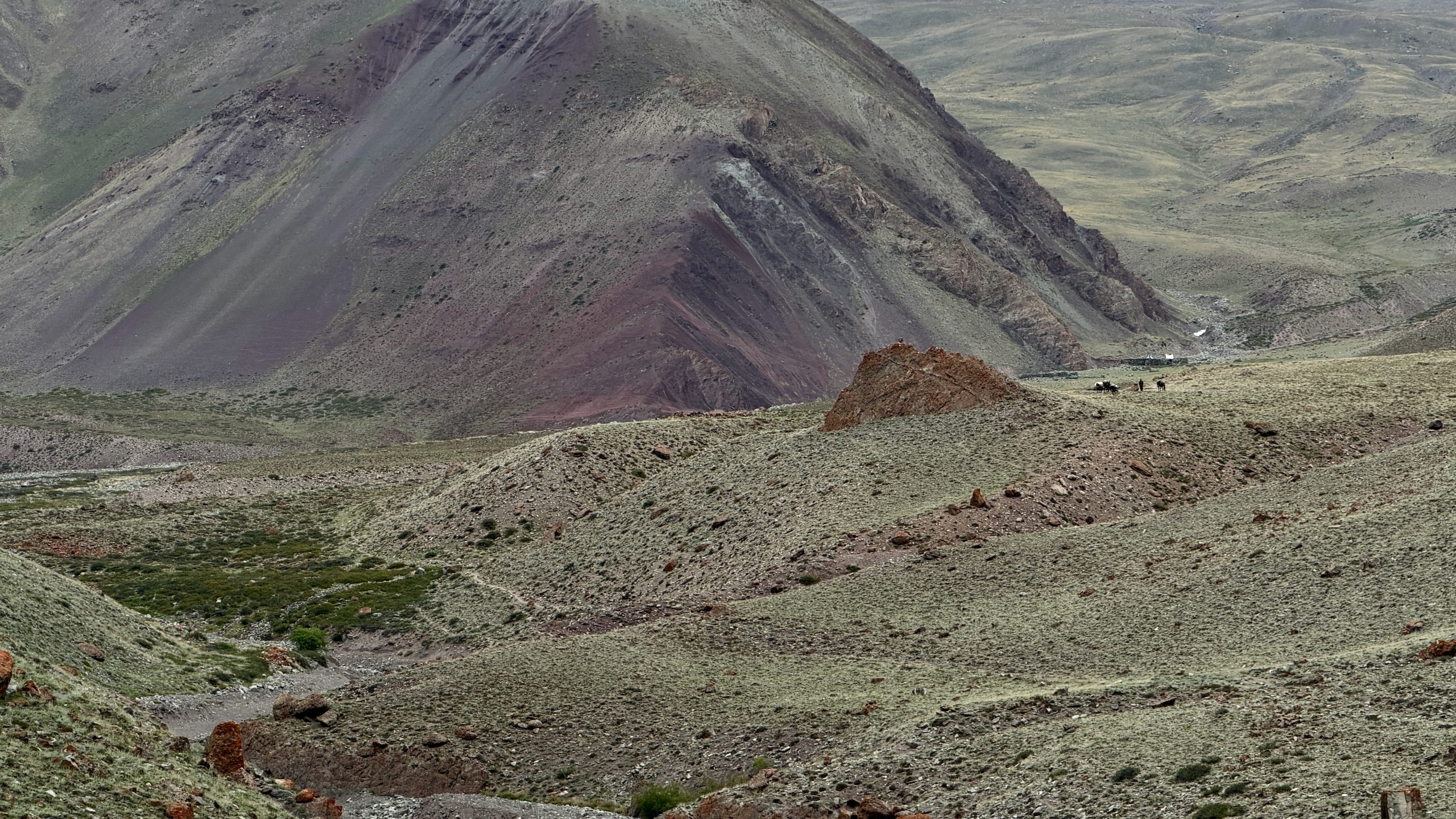
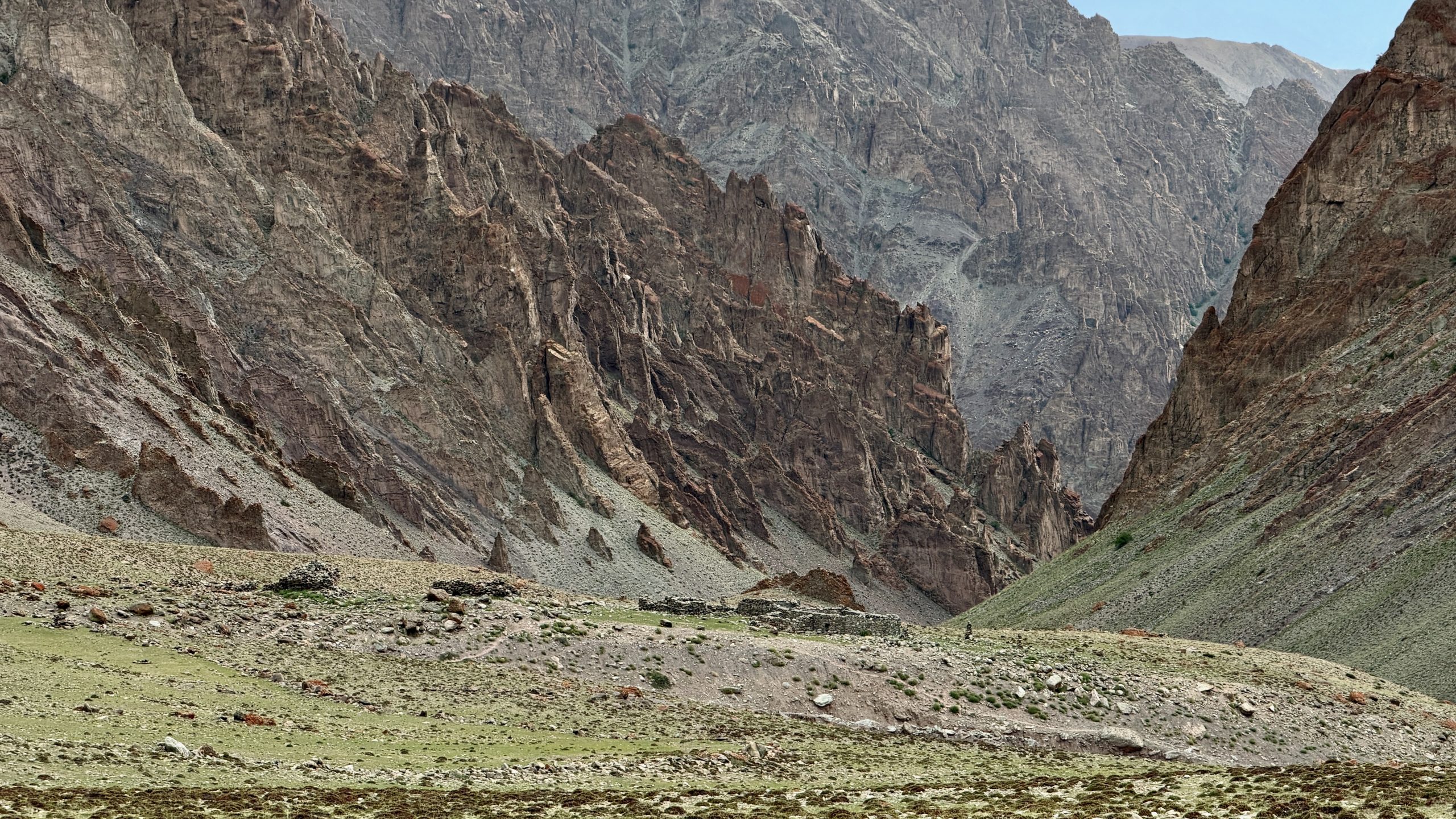
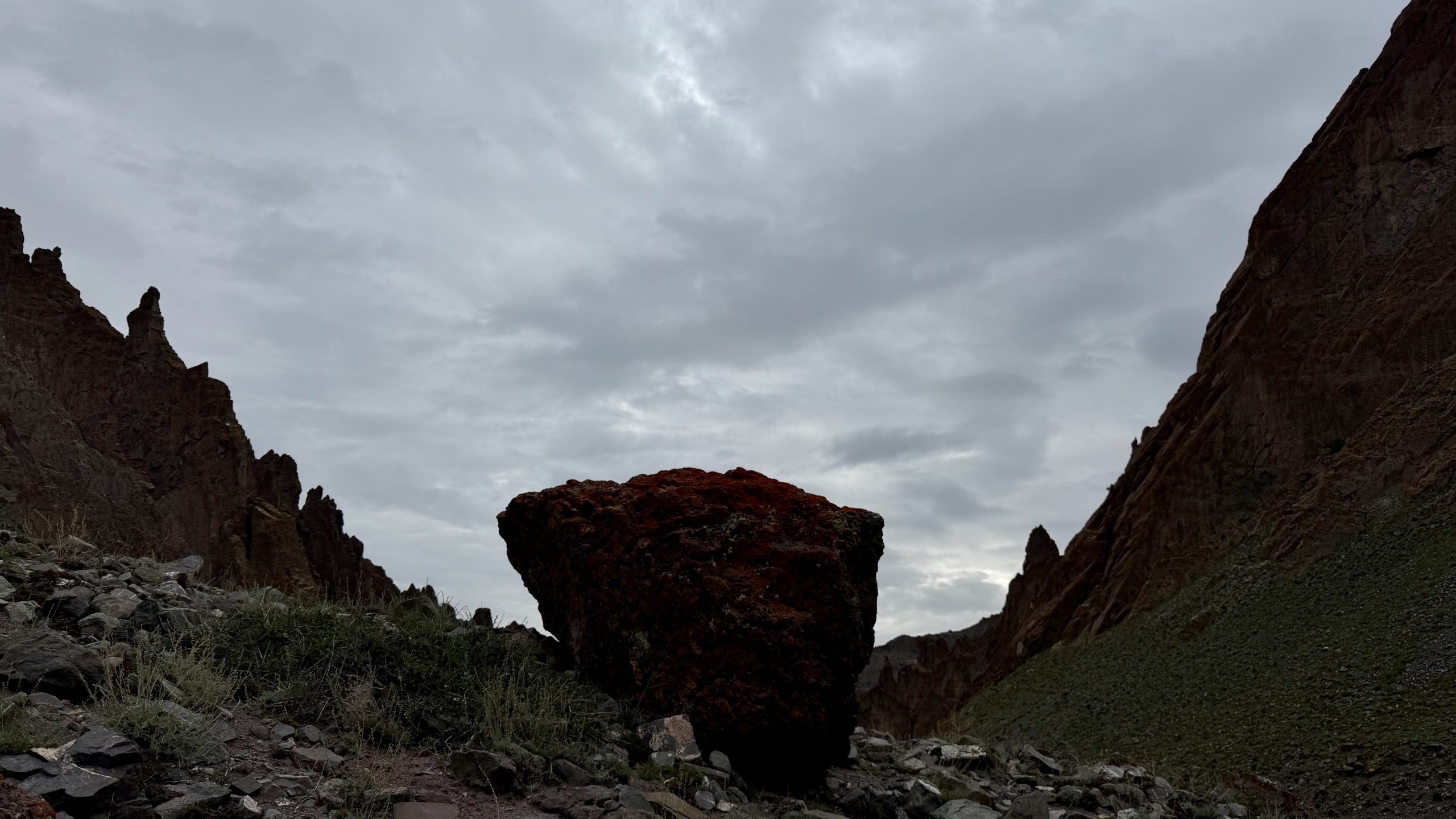
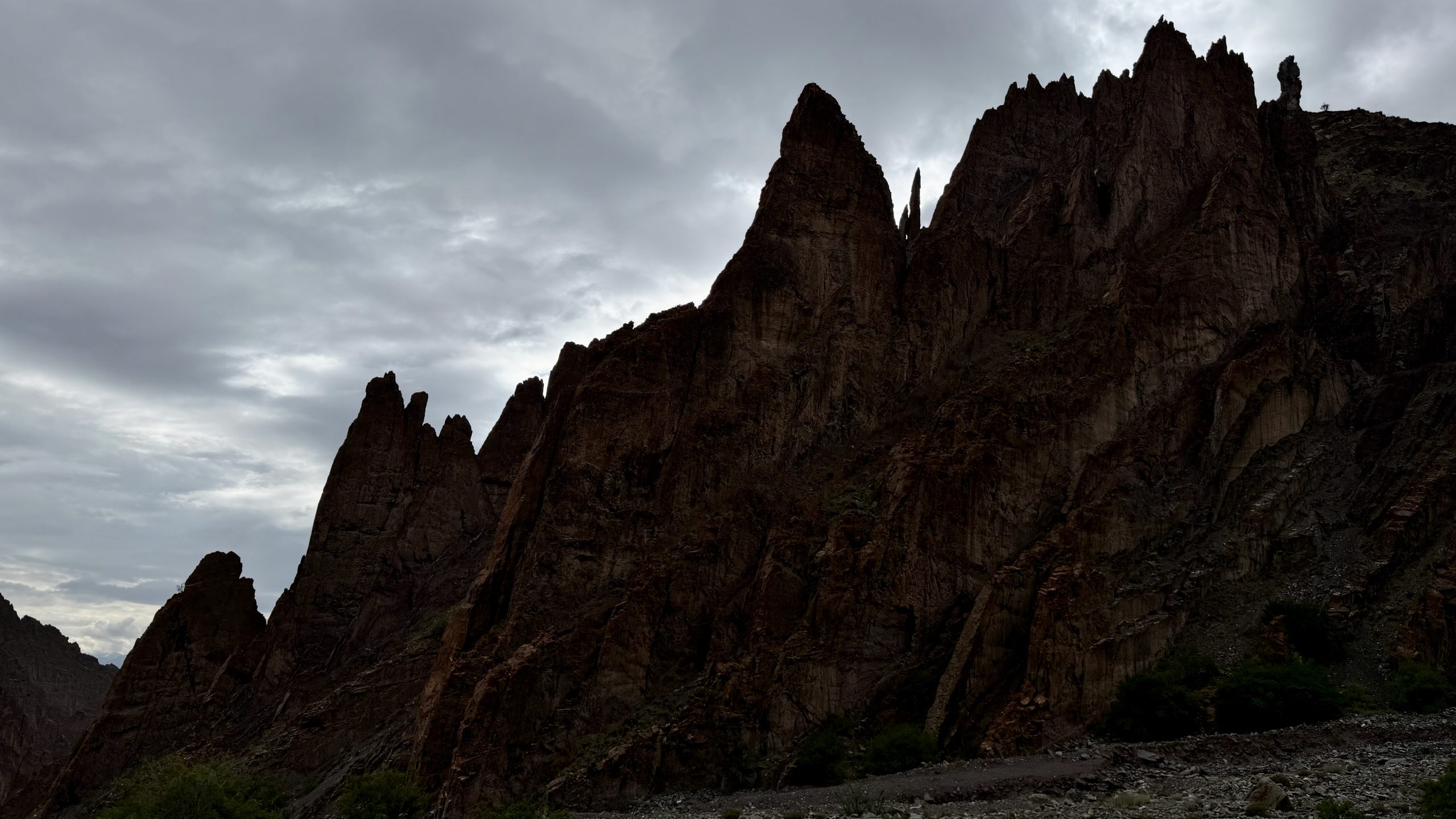
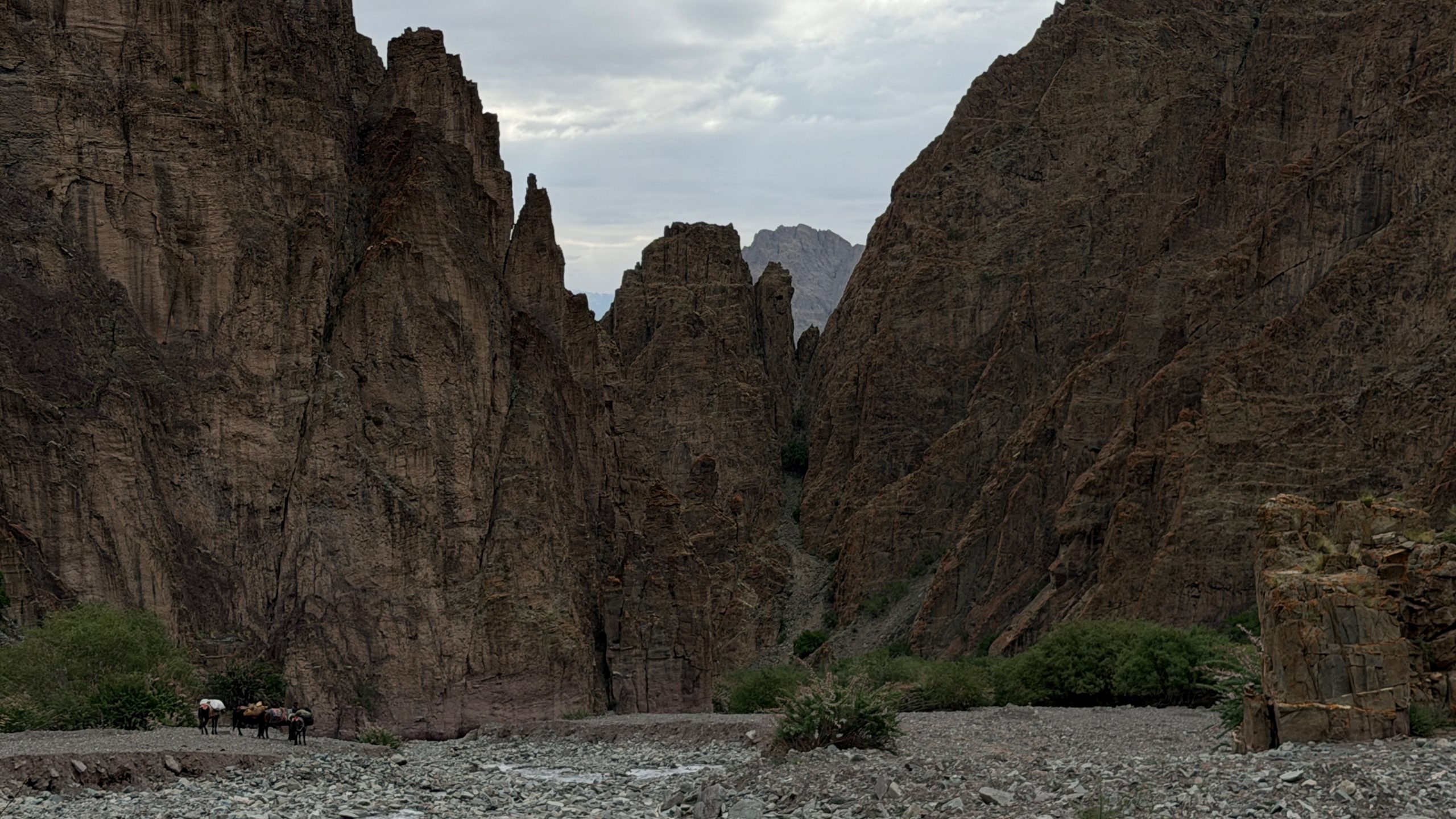
We did have to cross through the river quite a few times now, but I had my sandals with me (which held up better than expected) and the water only came up to a little above my knees. Between some of the crossings, I just kept them on and was surprised by how well I could actually hike in them. Chamba always helped me across the rivers, directing me where to cross and making sure I got over safely. Very nice of him. Unfortunately, no breaks were allowed. Eventually, we came to a kind of hermitage with lots of prayer flags and so on, and a man who was tending to the butter lamps.
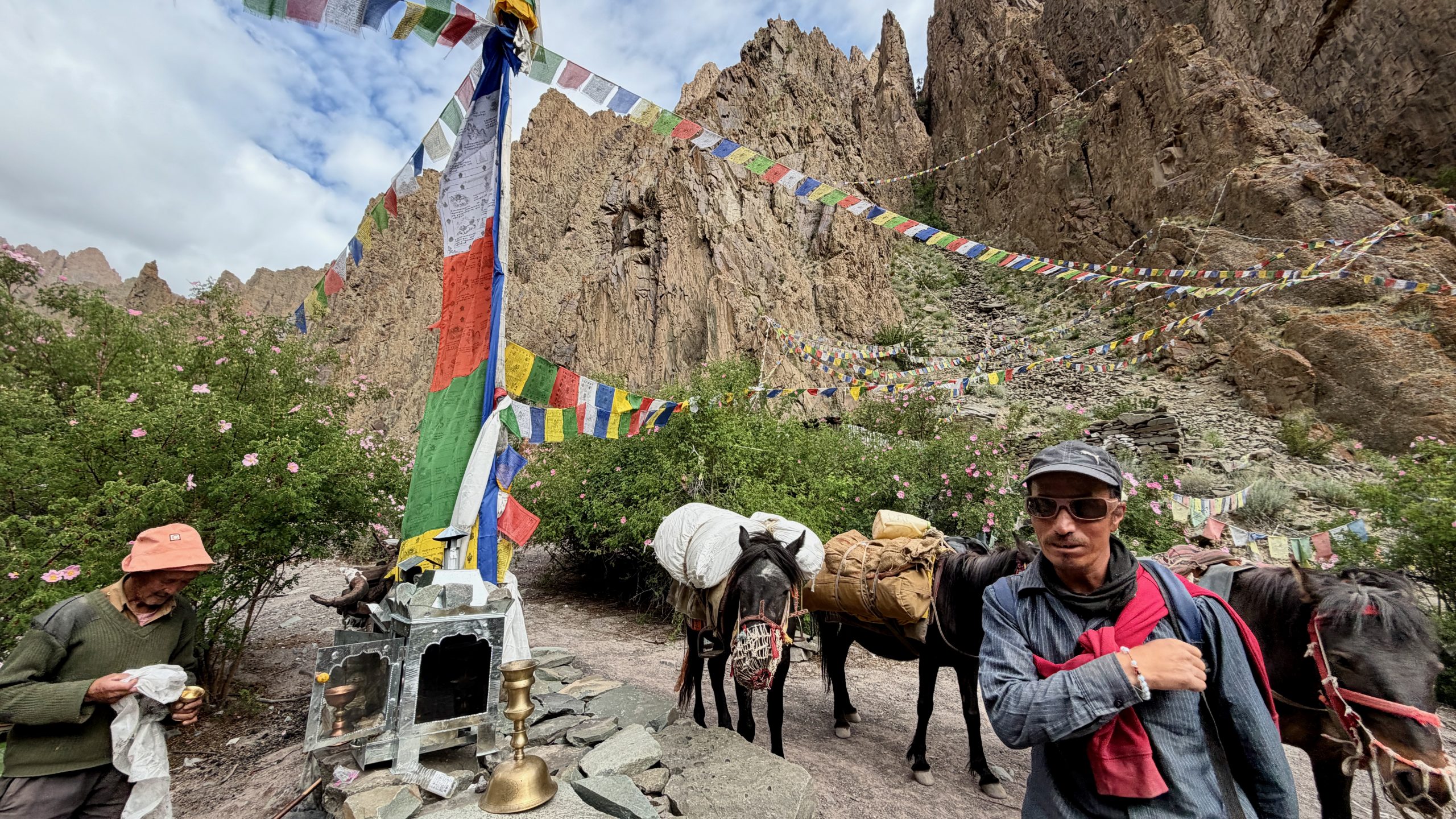
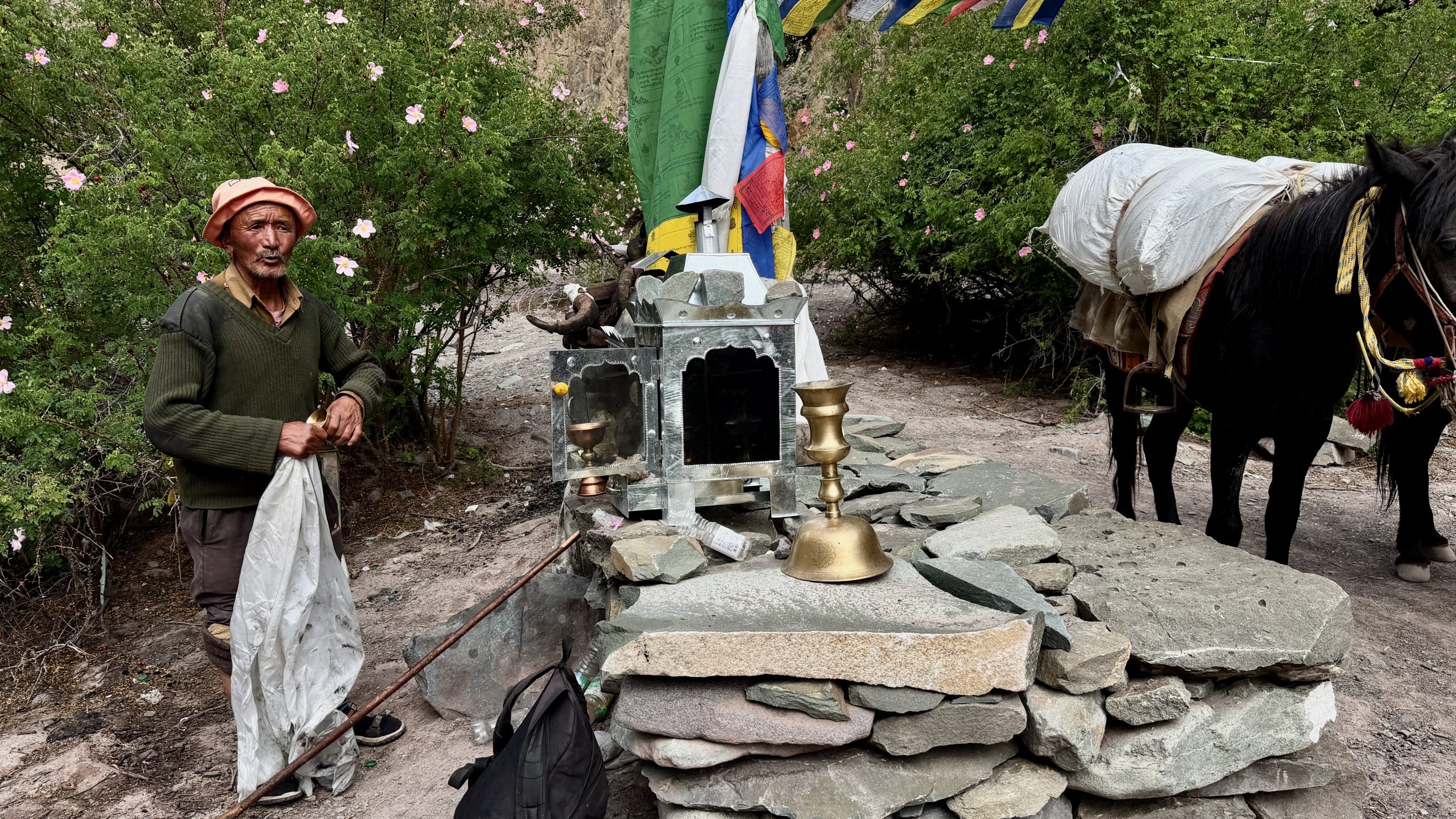
At one point, there was a kind of special bridge for people, which I liked.
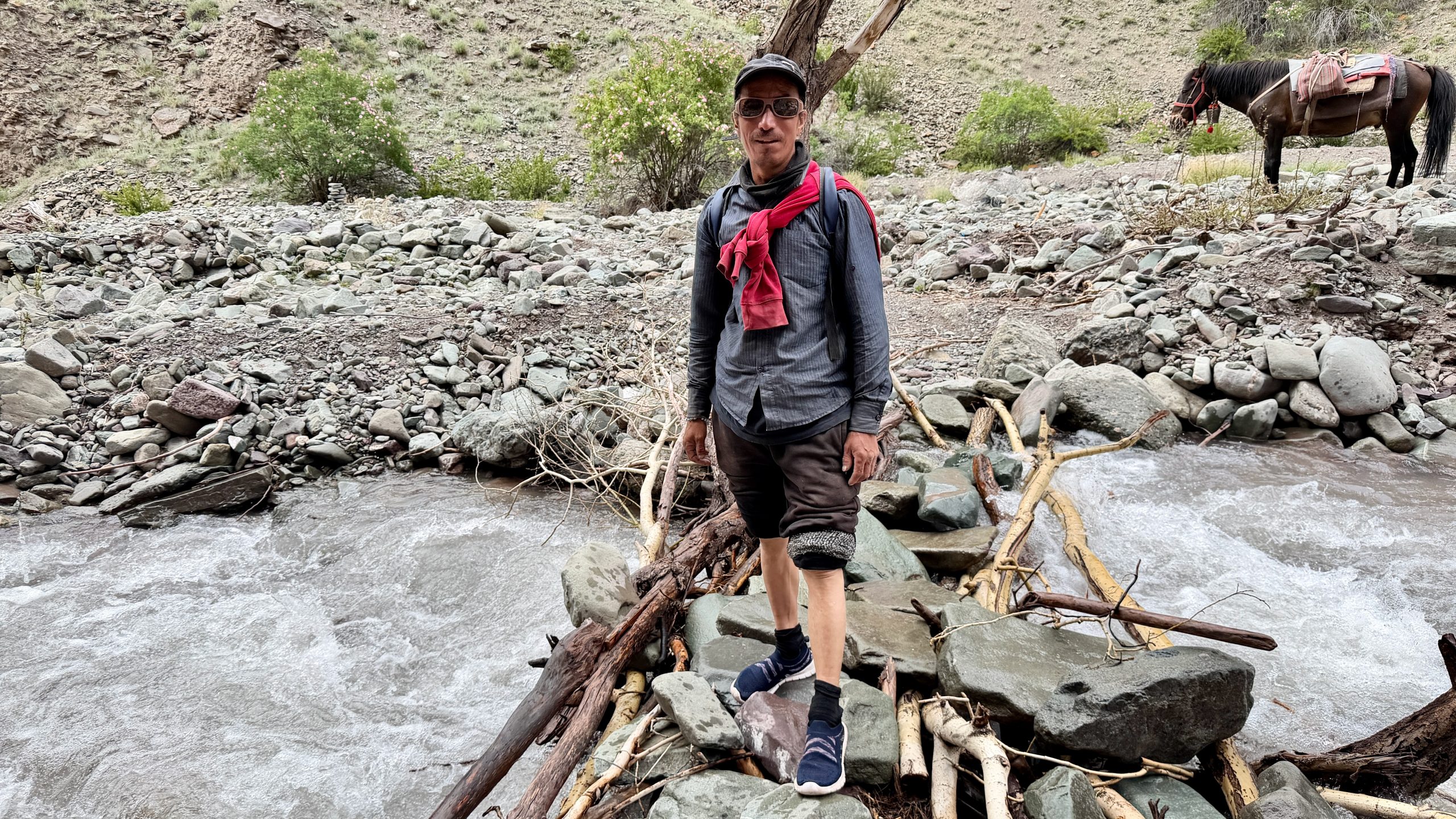
And on and on it went, and at some point, the river crossings finally seemed to be over.
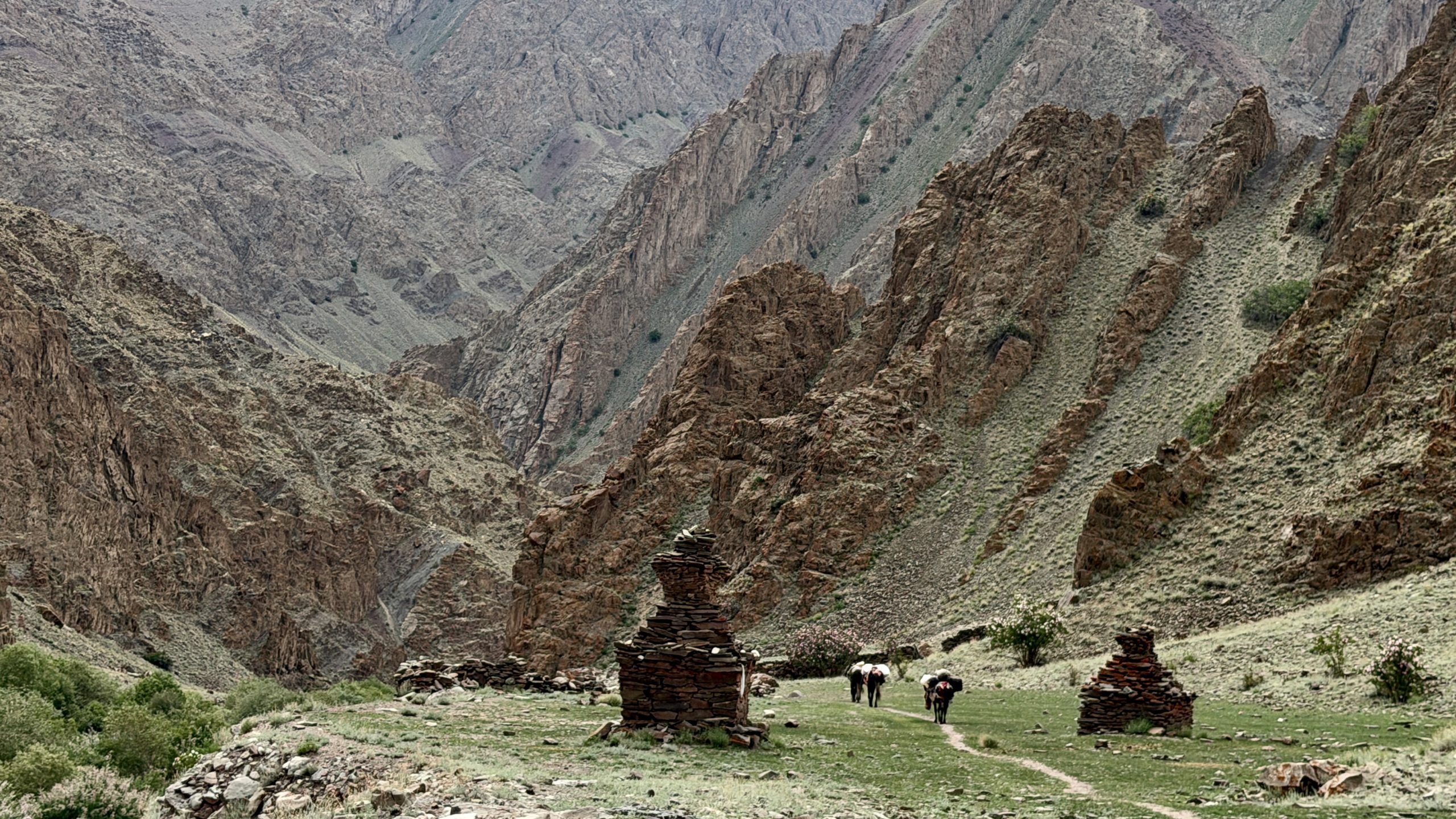
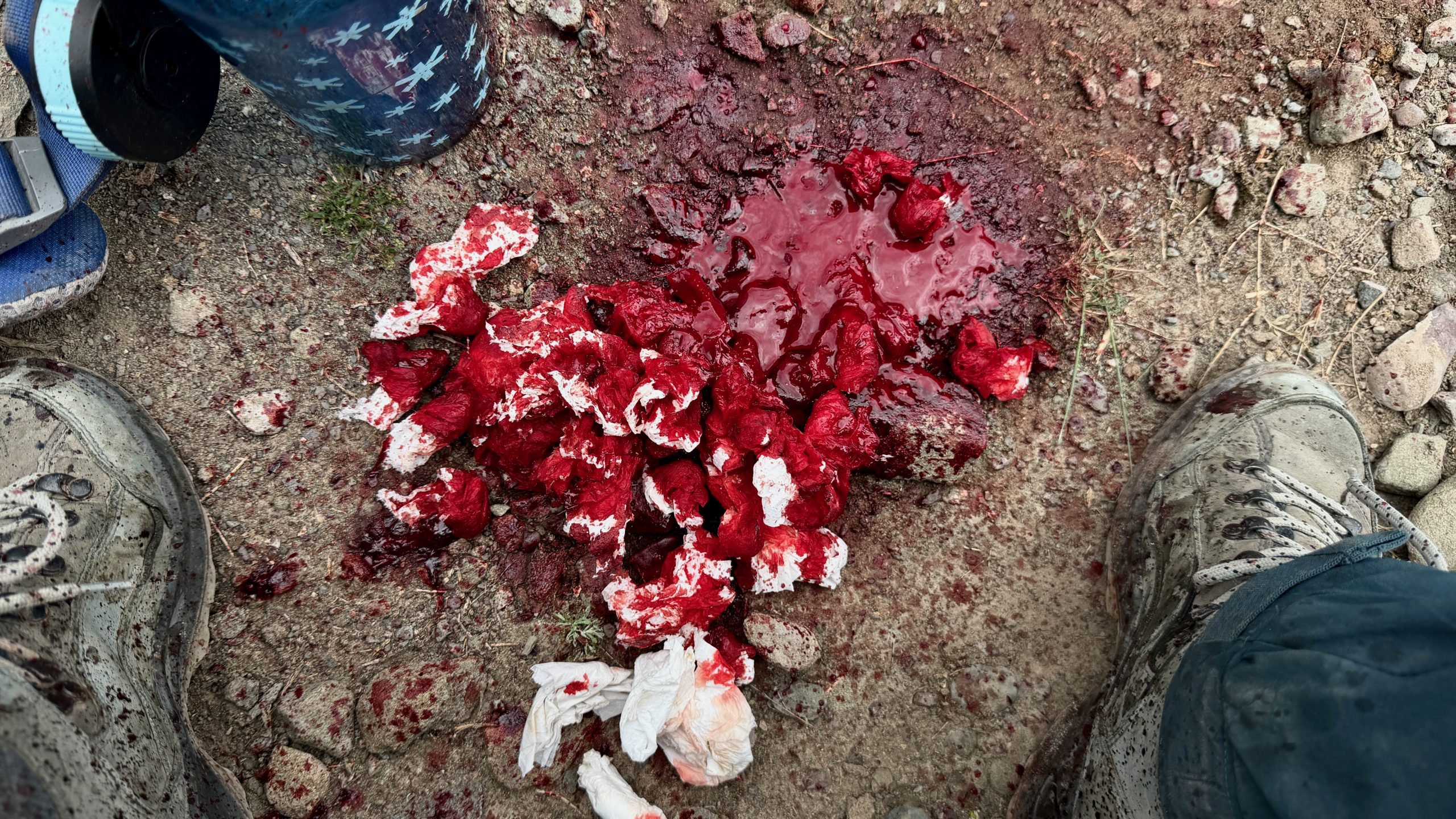
Chamba still didn’t really want to take a break, and then I was forced to stop. All of a sudden, my nose started bleeding. And how! It just wouldn’t stop, dripping and flowing. I hoped to get it under control by plugging it with wads of toilet paper, but no luck—they just soaked through immediately, and it kept dripping like crazy. Keeping my head upright didn’t work either; the blood just ran straight down my throat, and I ended up spitting blood too. Blood clots came out, which usually always means it’s about to stop, but not this time. I was desperate. What was I supposed to do? The river was a bit far away, but eventually, the bleeding slowed down just enough for me to manage to get down there. And the cold water finally brought it to a stop. I had been bleeding heavily for over 20 minutes, which was a bit too much.
Fortunately, I was almost at the bottom. After that, I only walked very slowly and carefully, and I felt a bit dizzy. Just around two corners, Chamba appeared; he had come looking for me and was very worried. Further down, we met one monk who was bare-chested, but otherwise, there was no one else around. And indeed, there were no more river crossings, though the terrain was still a bit rough. After about an hour, we reached the road.
Spalgon came rushing over. Chamba had called (as soon as he had reception) and told him that I needed to be rescued quickly and taken to the hospital. When I was sitting there bleeding and it just wouldn’t stop, I really wondered how long it would have taken for anyone to find me and how I would have made it down. I was so glad it hadn’t happened further up or in a much more isolated landscape.
The blood loss was actually too high; I felt very woozy, short of breath, and had a dry cough. However, I avoided the hospital and hoped for the peace and quiet of my room. I was incredibly relieved to get there, take a shower, throw my dirty clothes into the laundry bag, and lie down in the clean bed. If anything else happened, the hospital wasn’t that far away. Modern infrastructure is certainly a fine thing!
And the verdict on the trek? It was great to get an insight into it. The route we walked is scenically more diverse, lonelier, and more beautiful than I expected. And, as it turns out, much less frequented. It offers plenty of combinations for tour lengths, variations, and links with the Markha Valley and the 6,000-meter peaks. I’m really glad I know a part of it now!