


Leh – breathless days
03. – 10. July 2026
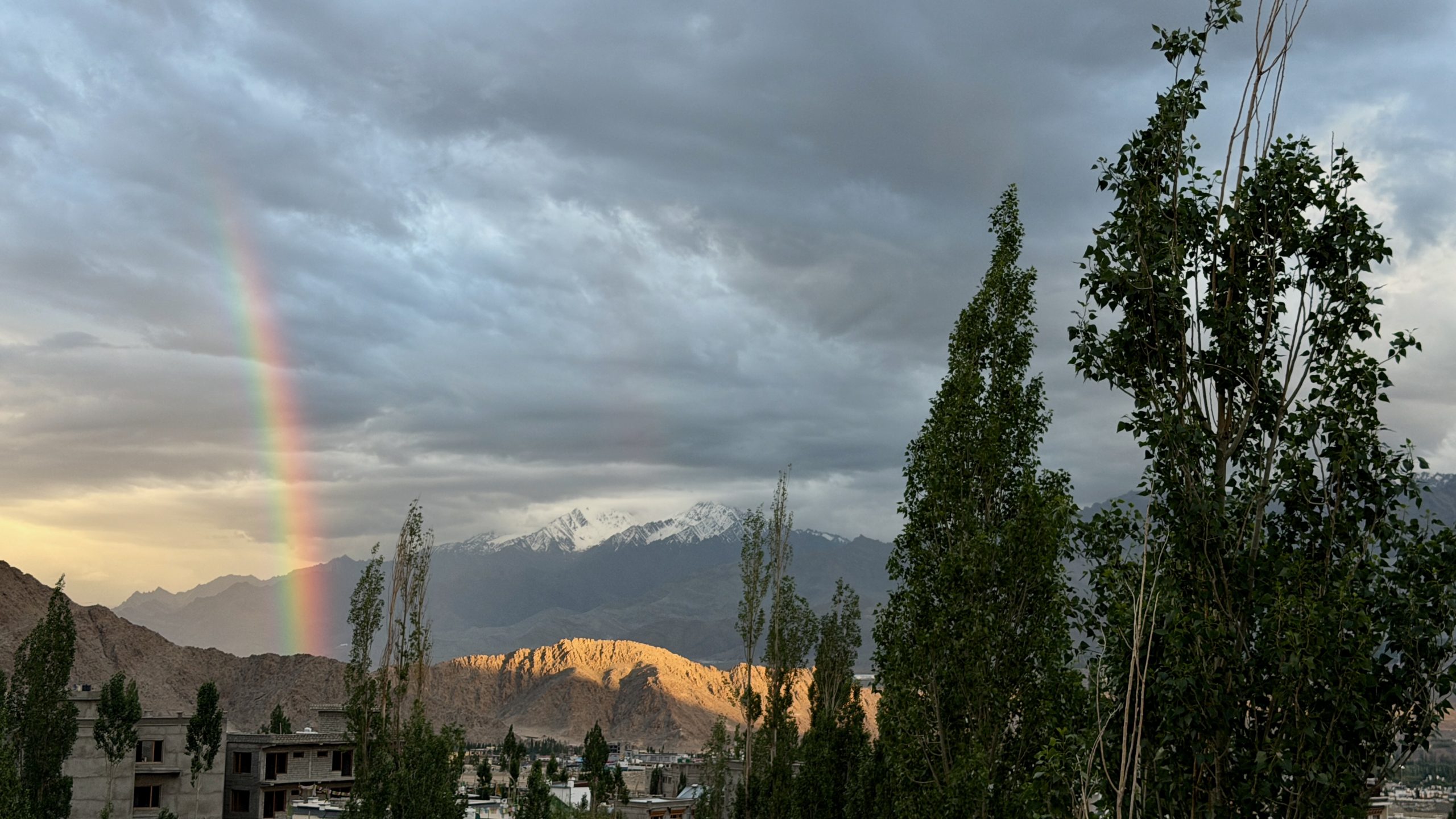
When I was back in Leh, I felt exhausted but had a few things on my to-do list. For one, I had to clean my luggage, drop off all my dirty laundry—and meet up with people!
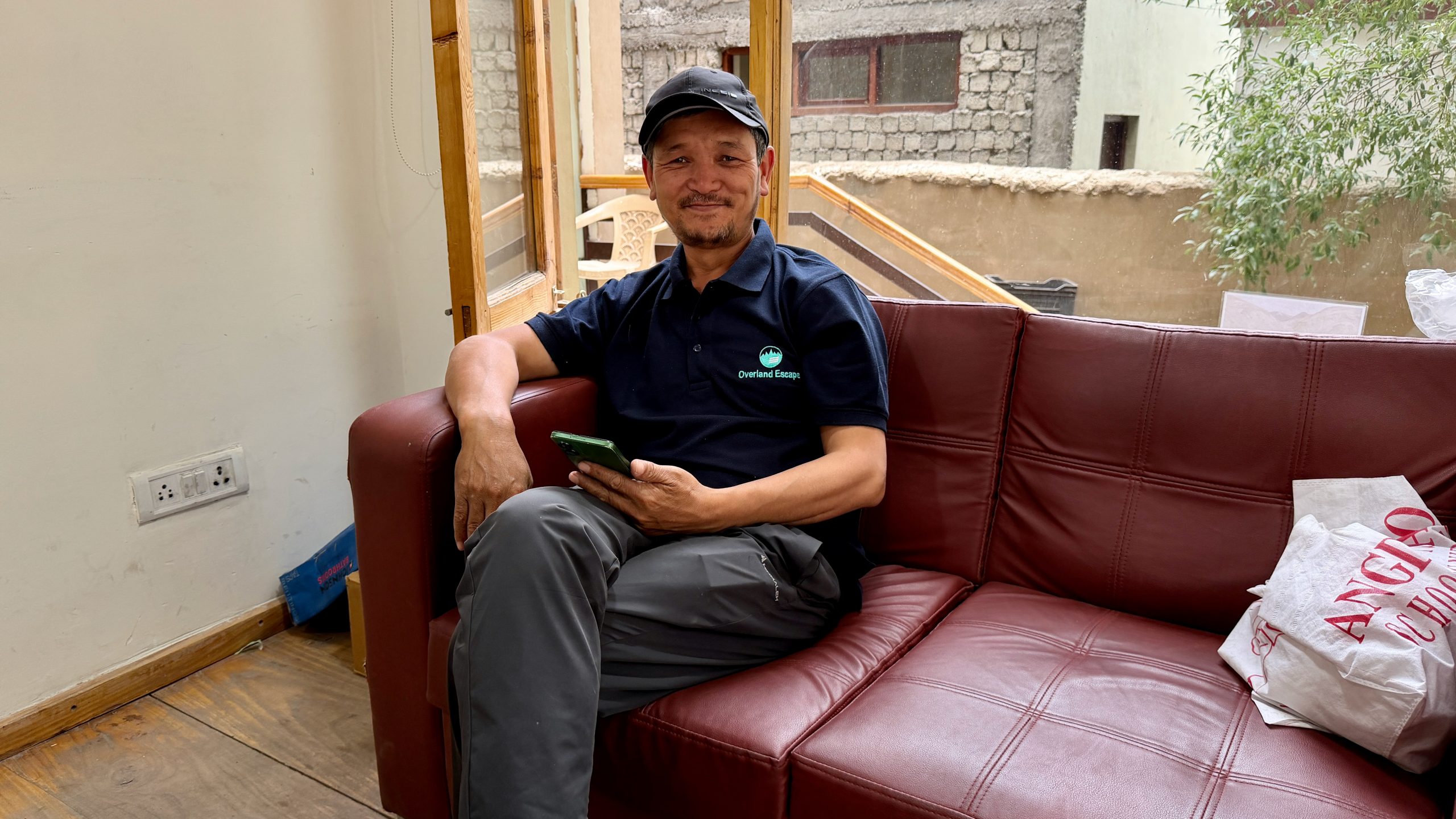
First, I met Markus, whom I first encountered in India back in 2014. Or rather, ‘we’ managed to snatch him from the airport in Delhi out of the hands of the ‘Kashmiri mafia,’ and he ended up coming to see me in Manali. In Delhi, Spalgon had taken care of him. Yes, the very same Spalgon who also rescued me when I had my lumbago. And who is just a great guy all around. And here, I finally took a picture of him:
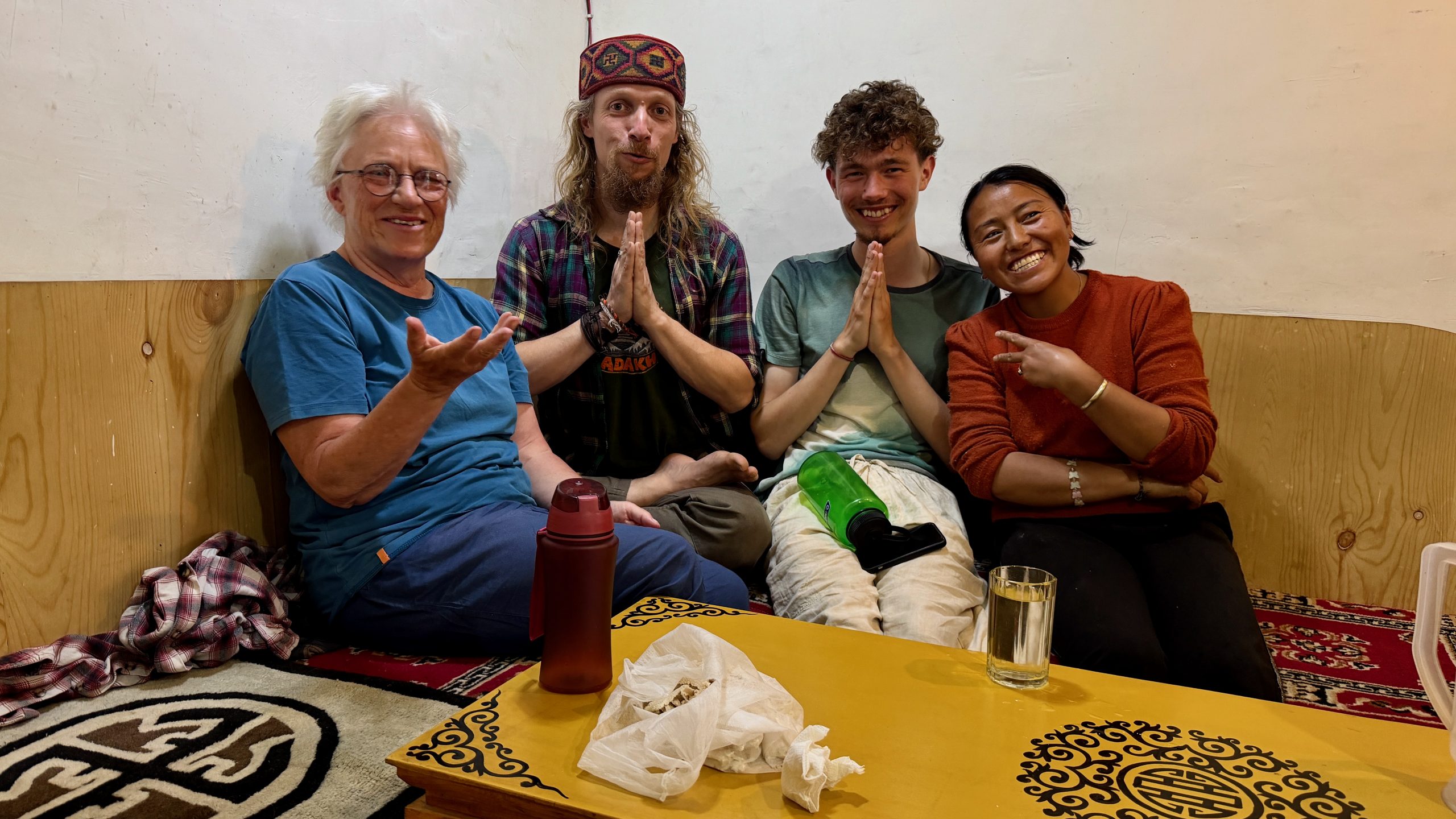
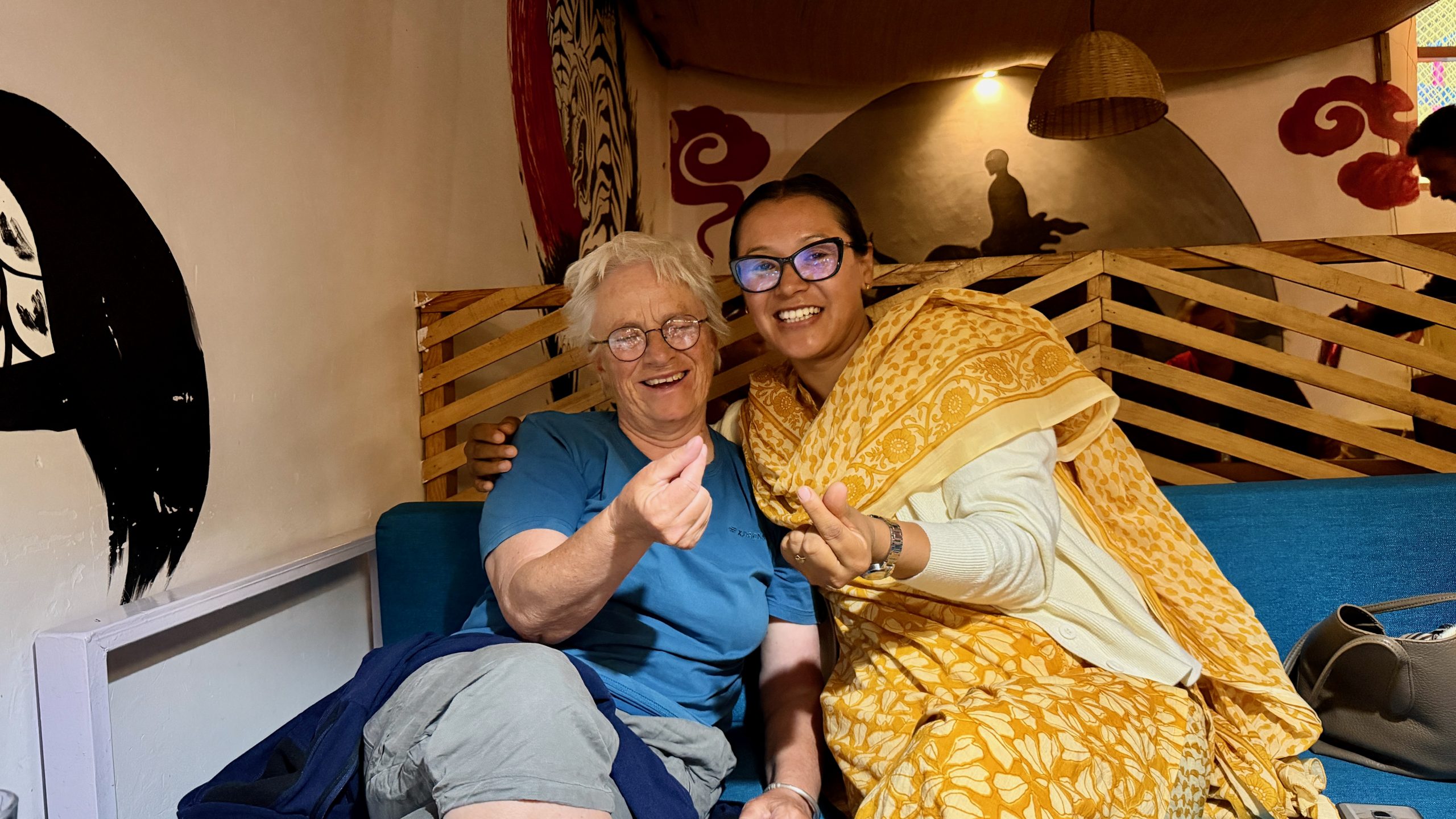
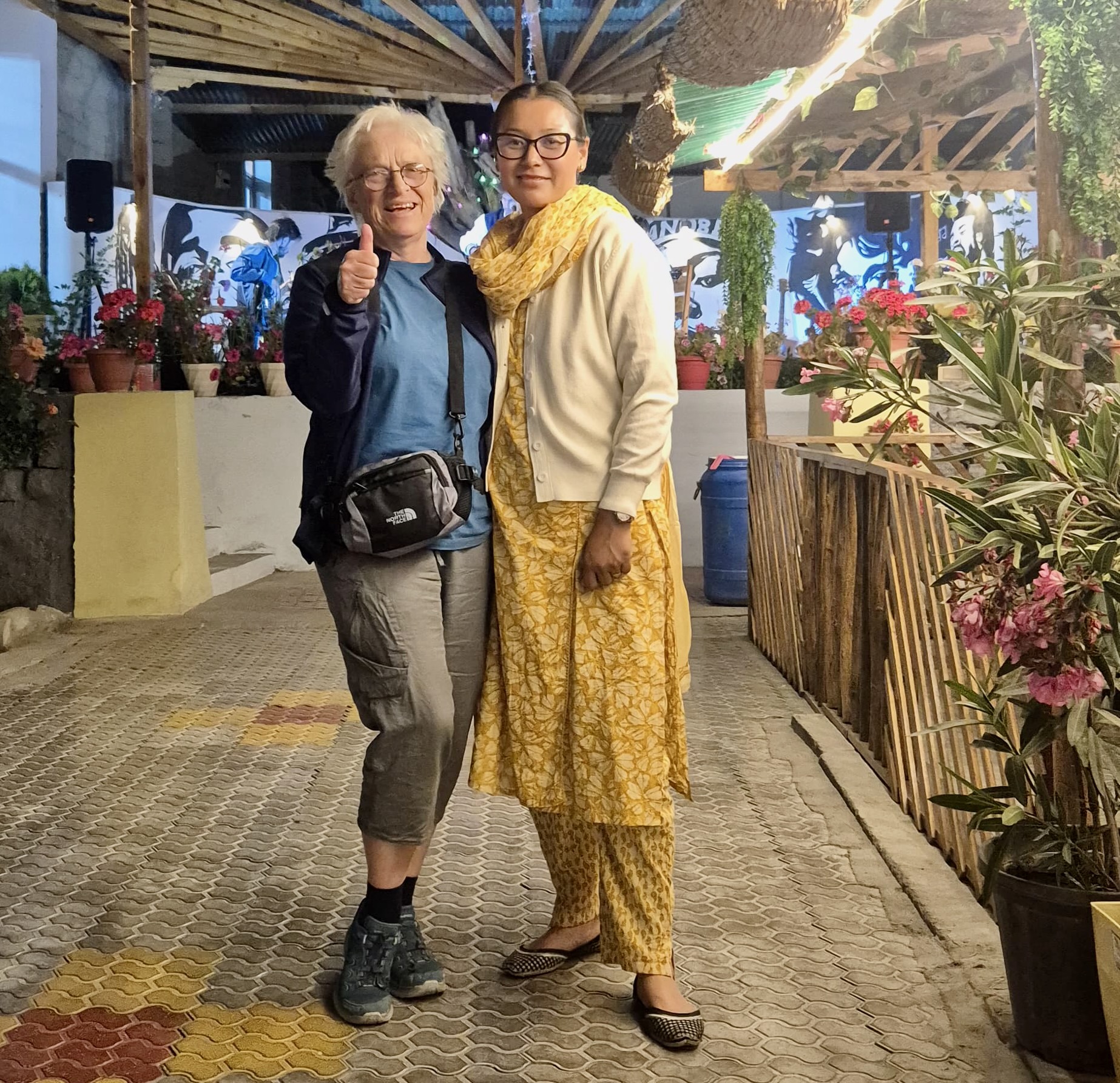
Most of what Markus went on to experience after that was already familiar to me, but I could listen to the story over and over again—it is just so ‘incredible India’! I hope he shares it with the public someday. For starters, he told it to me, Valentin, and Lobzang. Lobzang is from Zanskar—and of course, we managed to dig up some mutual acquaintances. She had worked at the Lala Café around the corner for a long time and started her own little place four years ago. And it’s just the kind of spot where you gladly sit for way too long, getting to know each other and sharing stories. We were three generations: 60, 40, and 20 years old. The ‘baby’ of the group, Valentin, has been on the road for quite a while now and is absolutely loving traveling, though I do wonder a little about ‘the youth’—back then, that would have been a bit too much for me…
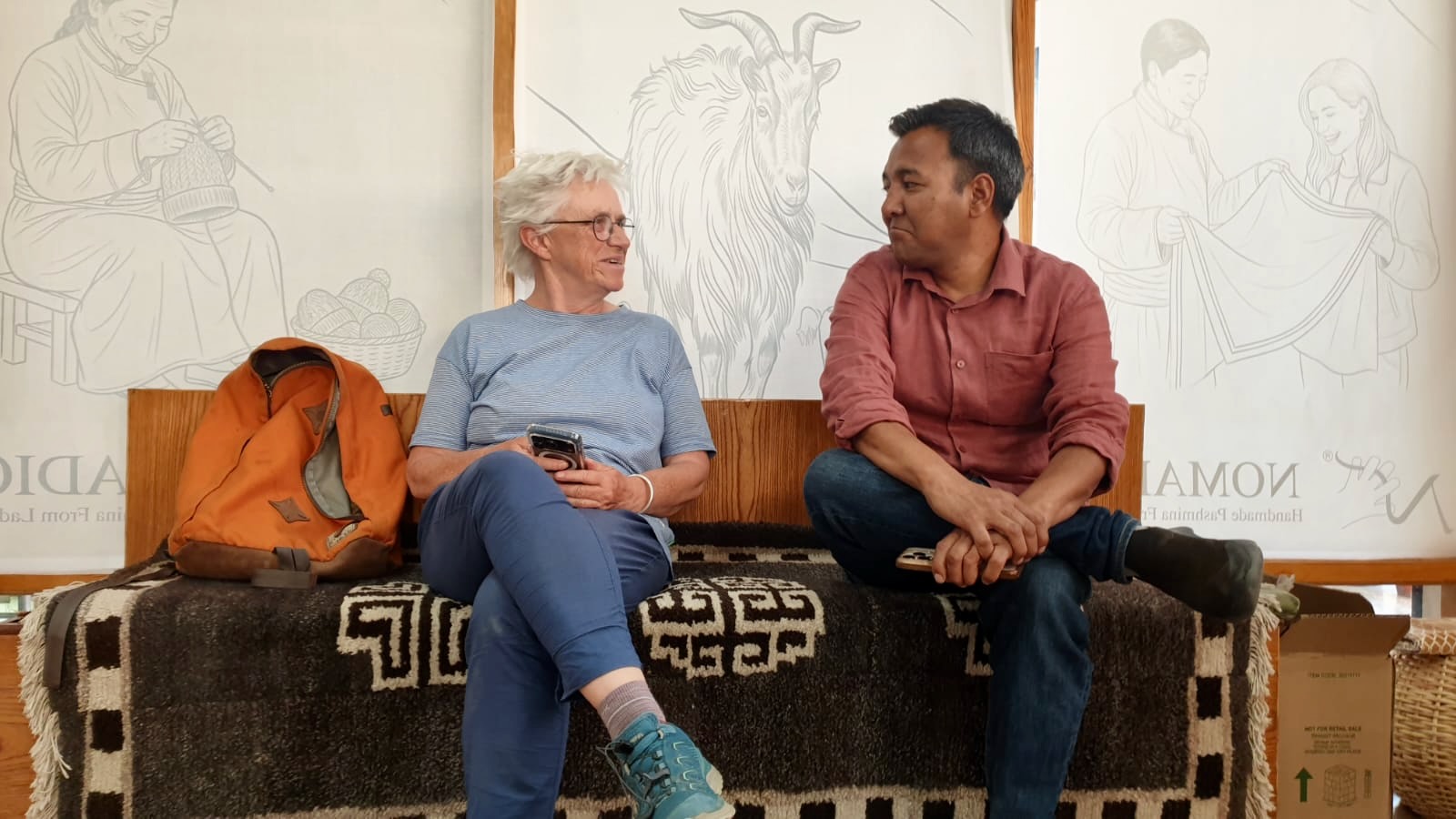
The next day, I met up with Nina and then Susanne (both without photos) and then went with Markus to Nawang’s—to look at shawls and have a chat. It was lovely to have so much social contact. And my laundry was ready too. But I was still short of breath and exhausted.
The next day, I stayed ‘at home’ at first, but in the evening, I finally had the opportunity to meet my dearest friend Dolma. Together with her family members, we went to what has now become my regular spot. It’s really great—especially one of her sons just cannot sit still, and for him, there was a trampoline for free and a whole large room with children’s entertainment where you pay 3 euros for an hour. Perfect for parents who want a quiet meal!
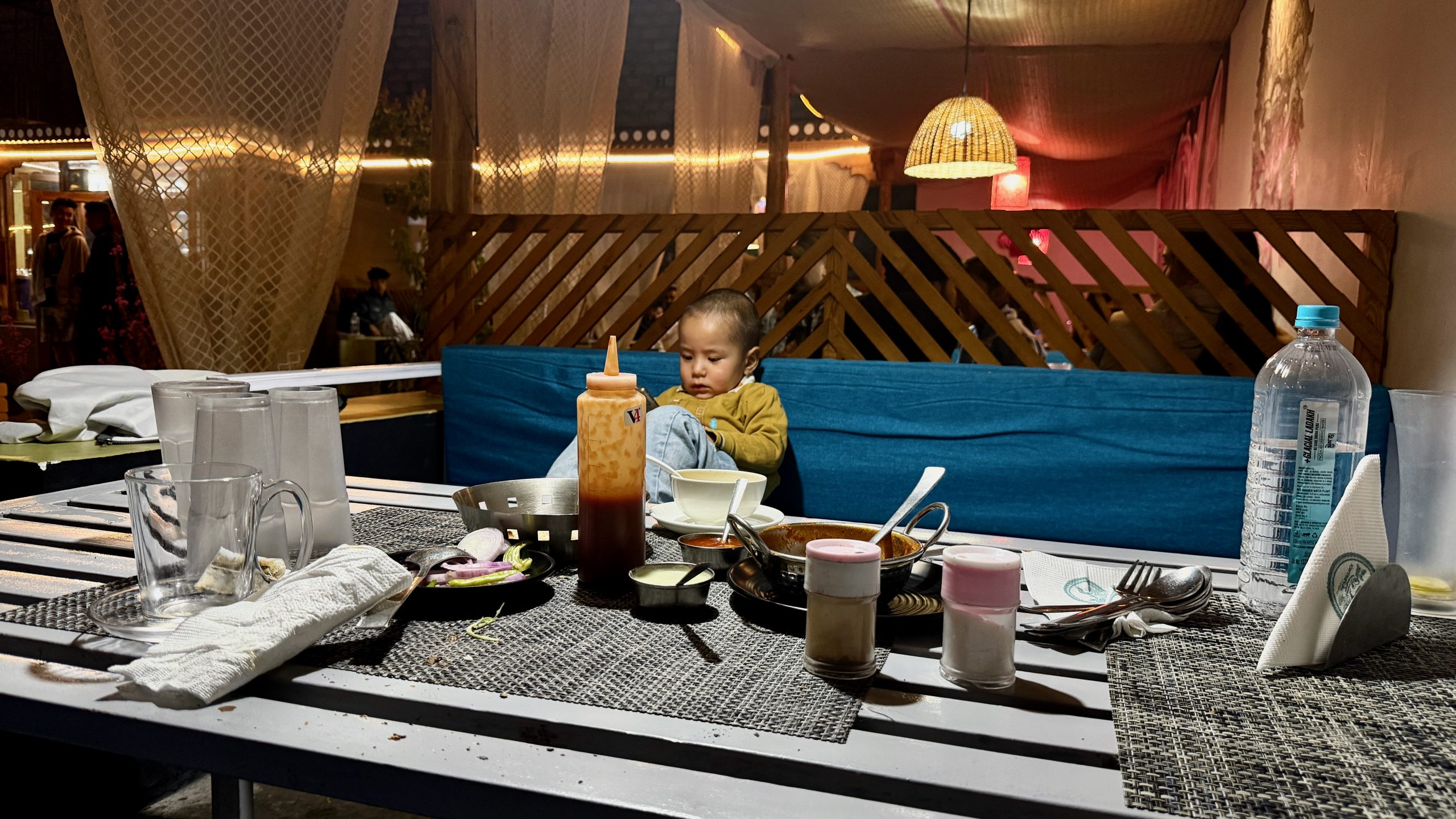
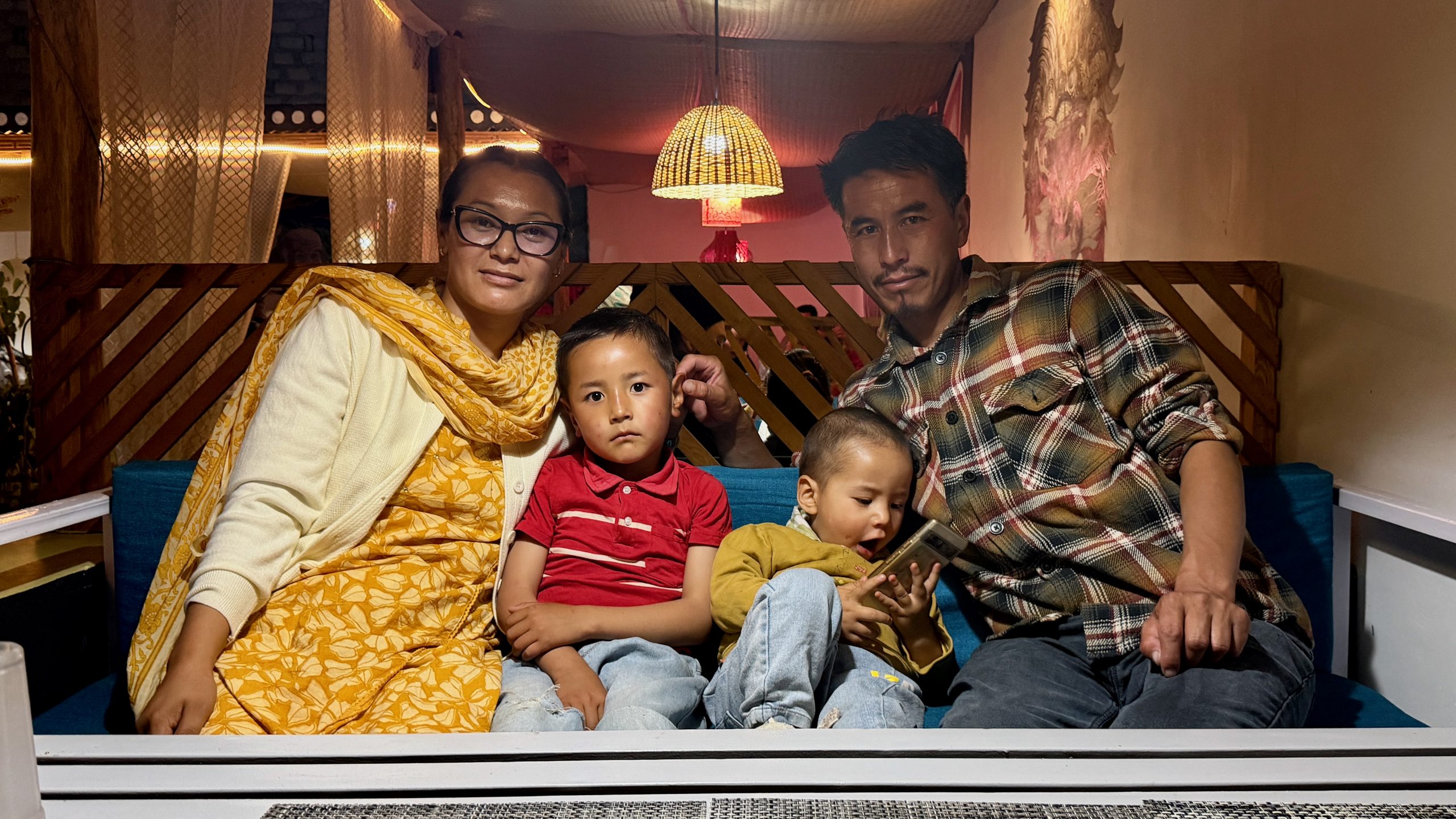
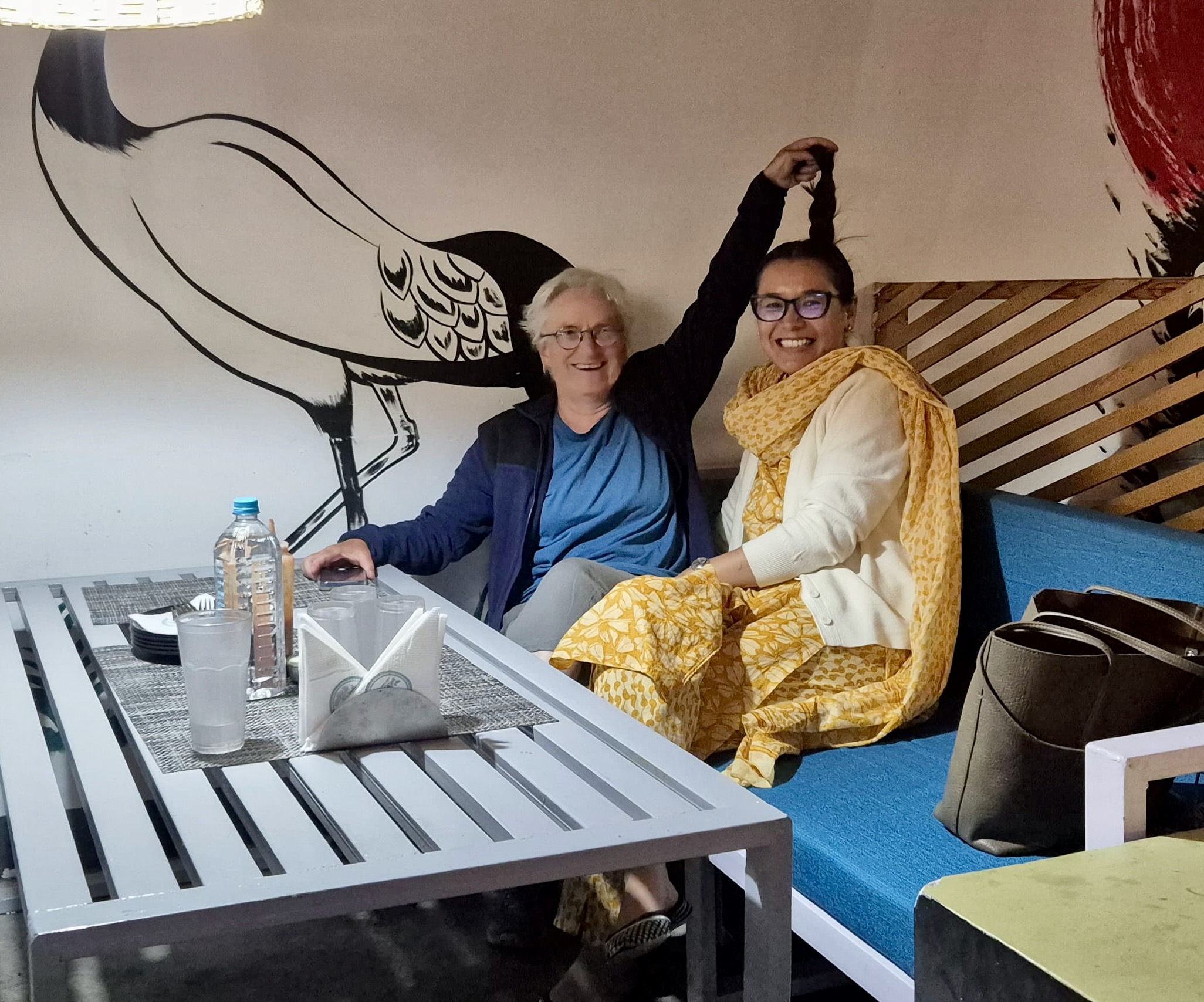
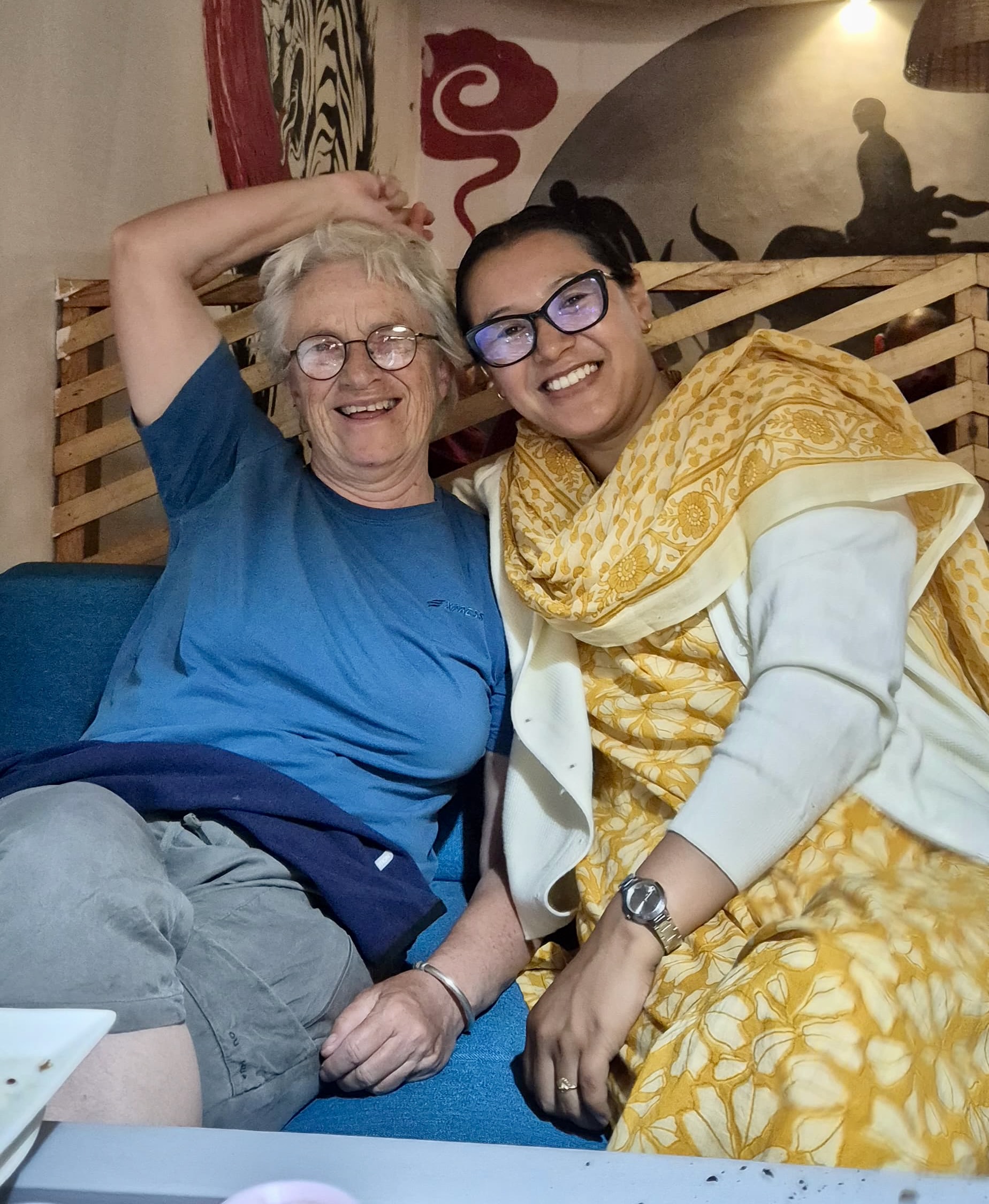
Actually, she is doing well; she has her dream job as a teacher and lives far away from annoying relatives—only she really lacks the time to meet up completely on her own with female friends and such. I hope I’ll have the chance to do that again.
And the next day, things went downhill fast. My shortness of breath and dry cough simply weren’t getting any better—and then, on top of that, I threw up in the morning. A doctor-on-call came and mostly prescribed me something for my stomach. I slept a lot. While my stomach stopped revolting, the severe shortness of breath remained.
The following evening, I thought it was getting a bit dramatic after all and went to the hospital with a very sweet taxi driver. Crowding at the emergency room—I was already familiar with that from before. Sonam tried to push me through, but the whole thing was very unpleasant. Everyone was fighting over who was the worse emergency. And many of them looked in bad shape, too. Most of the time, there was only one female doctor there—and she actually took too much time with the patients, and you were never sure if she was really diagnosing well. I got a chest X-ray. After that, another battle to get into her room. Actually, turned out it wasn’t all that bad. I was given an asthma inhaler, and after three hours, we were back. The beds were all overcrowded, too. Taxi-Sonam also said that I absolutely had to see a specialist the next day!
By the way, someone else had to share a bed with another stranger in the hospital during an oxygen emergency. Not nice either.
I actually got through the night quite well. The next day, Tanu looked after me. Unfortunately, there are hardly any normal doctor’s offices here like we have back home; most of them work in the hospital. So, back there again. I still felt so weak and short of breath—only I wasn’t coughing quite as often anymore. Tanu took me by the hand, and I blinked back a little tear of emotion. When you’re sick here, you don’t really get coddled for the most part; instead, you just somehow fight your way through. So compassionate gestures are rather special. At least, I haven’t experienced many of them. The people are nice, but I usually had to ask and demand everything myself.
Oh yes, that doctor-on-call day, that was on the Dalai Lama’s birthday. He is here right now, and so many people went to celebrate him. He is 91 and was in a wheelchair. I saw it on TV. And he is regarded as a sort of great authority on compassion. Everyone flocks to him and listens to his words. But when it comes down to reality, like in my case, that is exactly the compassion I find lacking. Or is the perception of illness not as universal as I imagine it to be? I think all people like it when someone cares for them, asks how they are doing, offers help, takes their hand or something. Even more so when you are all alone far from home. I cried and complained to Tundup.
Sometimes I don’t know—I easily feel like a dramatic teenager when I get so emotional in situations where I don’t feel well (physically), where something new and major is waiting for me, and I don’t feel welcome, etc. And then I usually complain with tears. And I think that I’m actually right that people should treat me with love. Because I want people to be kind to one another. I really hope that I usually live up to that myself. At any rate, that is my goal. I am becoming more and more aware of that.
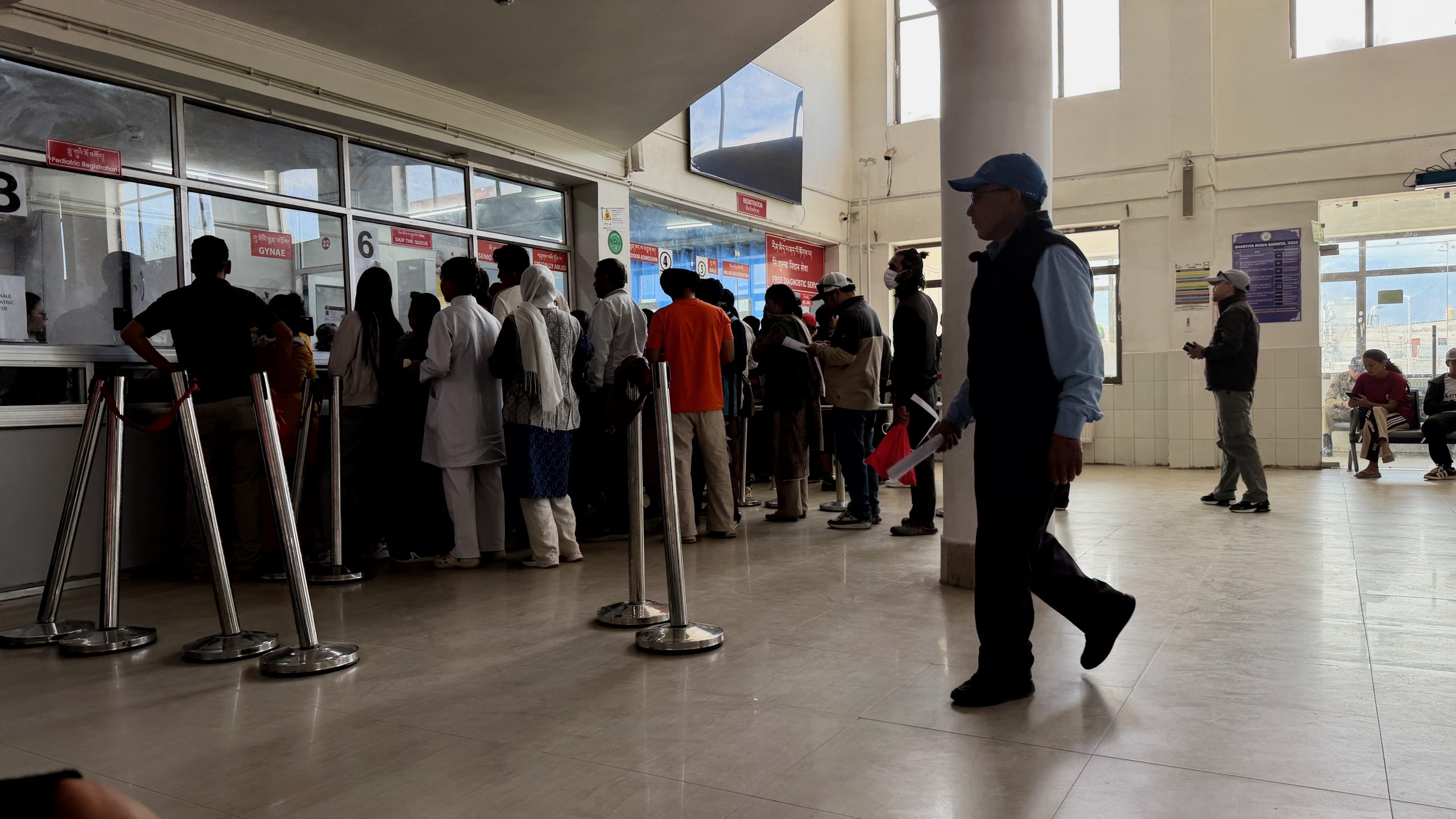
So, back to the hospital odyssey—number 3 already, all in all. Tanu was amazing. She even managed to get me a queue number for a leading specialist. The number was very high, so we tried to get in earlier. Once again, everyone was crowding in front of and inside the room. It’s still so unusual for us that 3 to 4 doctors sit in one (small) room, with patients and their relatives piling up all around them. And despite having numbers, everyone tries to push their way in. One or two nurses secured the door and did their best to maintain order.
The specialist was somewhere else at the moment, but when she came back, Tanu actually managed to snag a consultation for me quickly. My blood pressure, pulse, and oxygen levels had already been checked beforehand. All OK. Next, it was best to get an ECG. That was done in a room with a large bed and about six nurses. Here, all of a sudden, there was an excess of staff. Then it was back again and pushing our way inside. The specialist looked at the X-ray, checked the vitals, asked questions, and explained things. The biggest problem was my bronchial tubes (I had suspected the blood because of the blood loss—by the way, my nose had behaved since then. No more bleeding). And I seem to have something that I call altitude-induced asthma. So I was given medication for that and another inhalation session. This time, a bed was actually free for it—with Tanu waiting by my side.
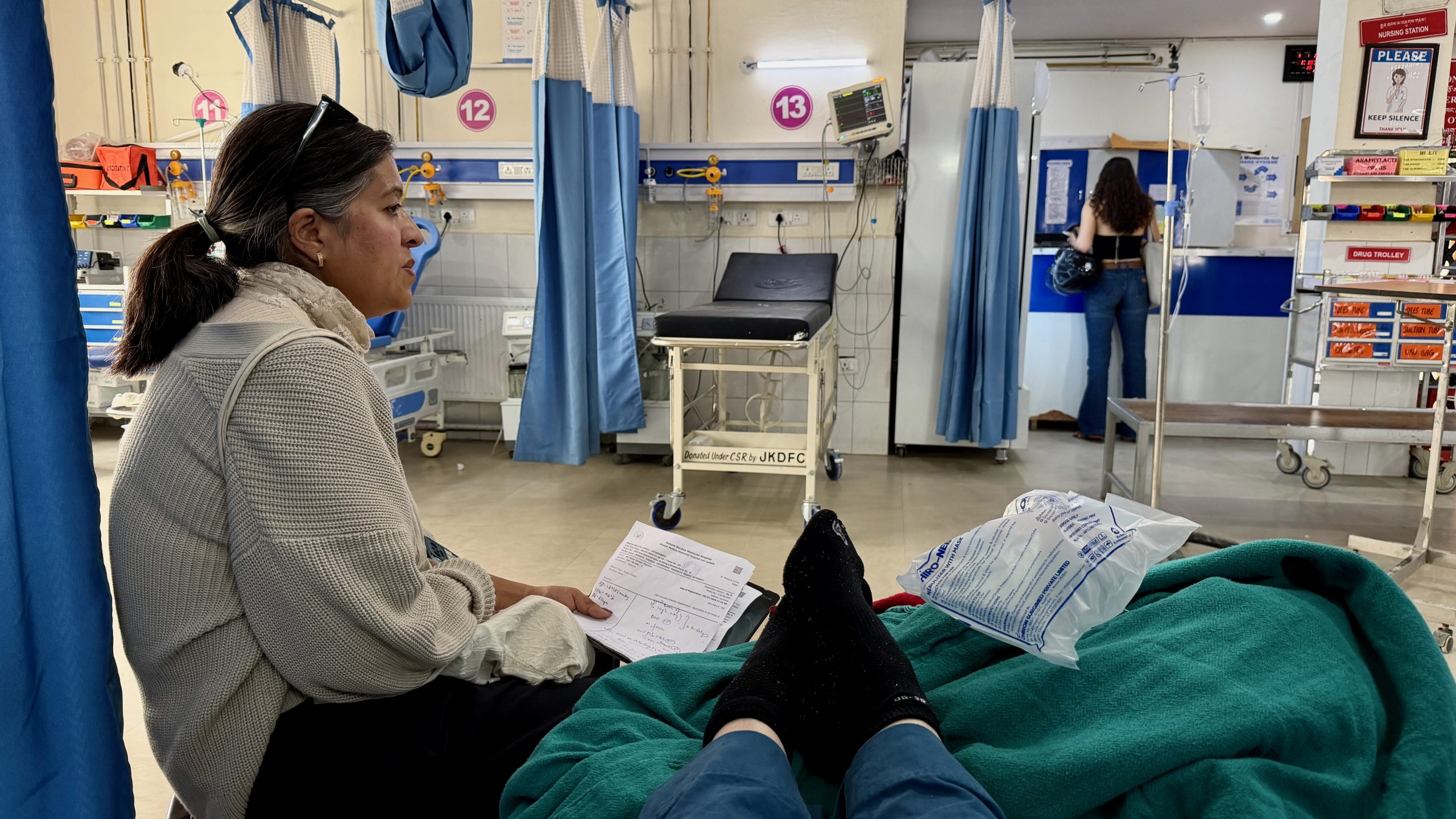
After three hours, we were finally out of there. I had even more medication and dietary tips from the local staff. By that point, they were looking after me a bit more. I rested for the remainder of the day, slept well—and experienced a miracle the next day: I felt enormously better!
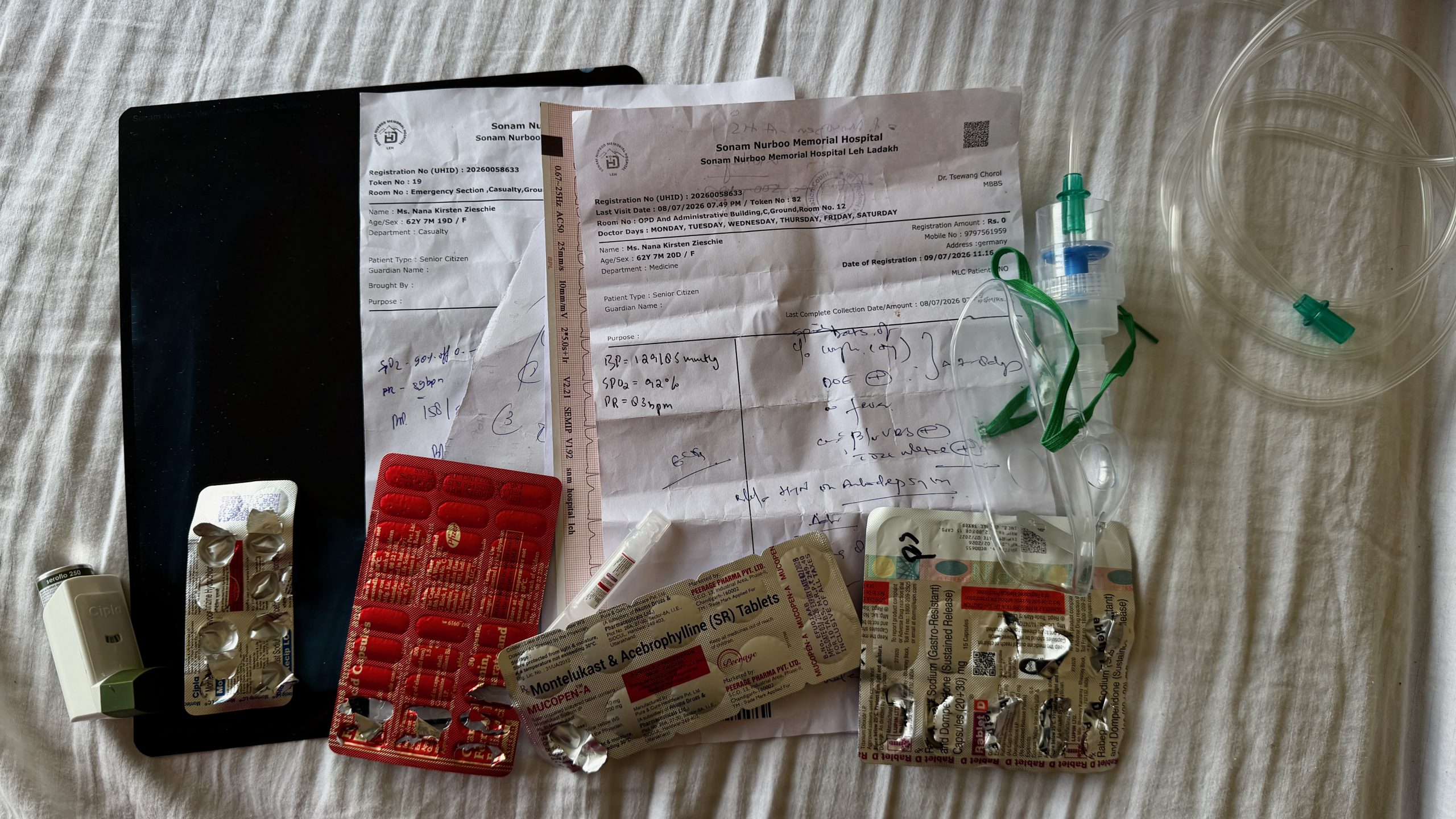
I felt much better in terms of my breathing again and could walk up the stairs without collapsing and gasping for air! Things were finally looking up! I went back to the hospital with Tanu one more time for an inhalation session—it seems to work better than I thought. It’s not quite as great as it was before, but that would probably be asking too much of a miracle.
And all of this happened on the day of political setbacks in the German healthcare system. Even though the hospital here was virtually free (you only have to pay for most of the medication, and that is dirt cheap), I am still glad not to be stuck in this healthcare system. There simply is no alternative here. Except for the still reliable Amchi system, but in a case like my current one, I am glad for the reassurance of the measured vitals and X-ray results, and the allopathic treatments that are now kicking in. But that crowding, the lack of time, and the overcrowding—that really is dreadful!
My current thoughts regarding my health in this respect for the future: I’ll be in Delhi for about two and a half days soon—maybe I’ll have that one nostril of mine ‘cauterized’ there, because I actually get nosebleeds at home sometimes too. But at high altitudes, it happens more frequently and more intensely. And a consultation regarding my bronchial tubes, asthma, and altitude. At first, I thought that I might no longer be ‘suited for high altitudes’ because I get bronchitis, a dry cough, and breathing problems too often. But maybe something can be done about it after all?