


Kagbeni -> Samar – The restless local spirits occupy a spot in the landscape
3. August 2026
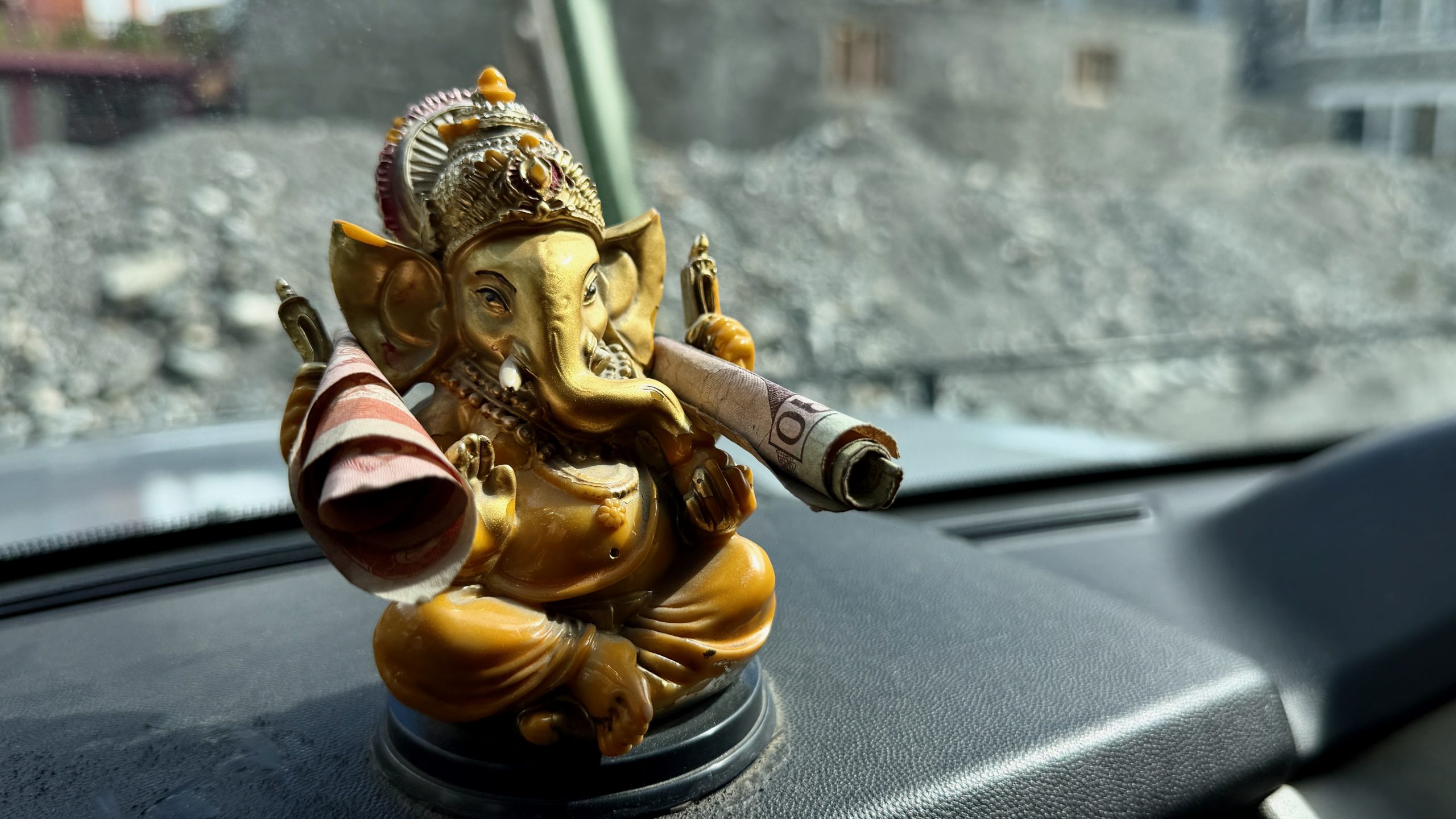
I was excitedly looking forward to it because we were finally entering Upper Mustang—a region that was new to me! Always along for the ride was this little protector in the car. On top of that, driver Shankar also mutters a small prayer before setting off.
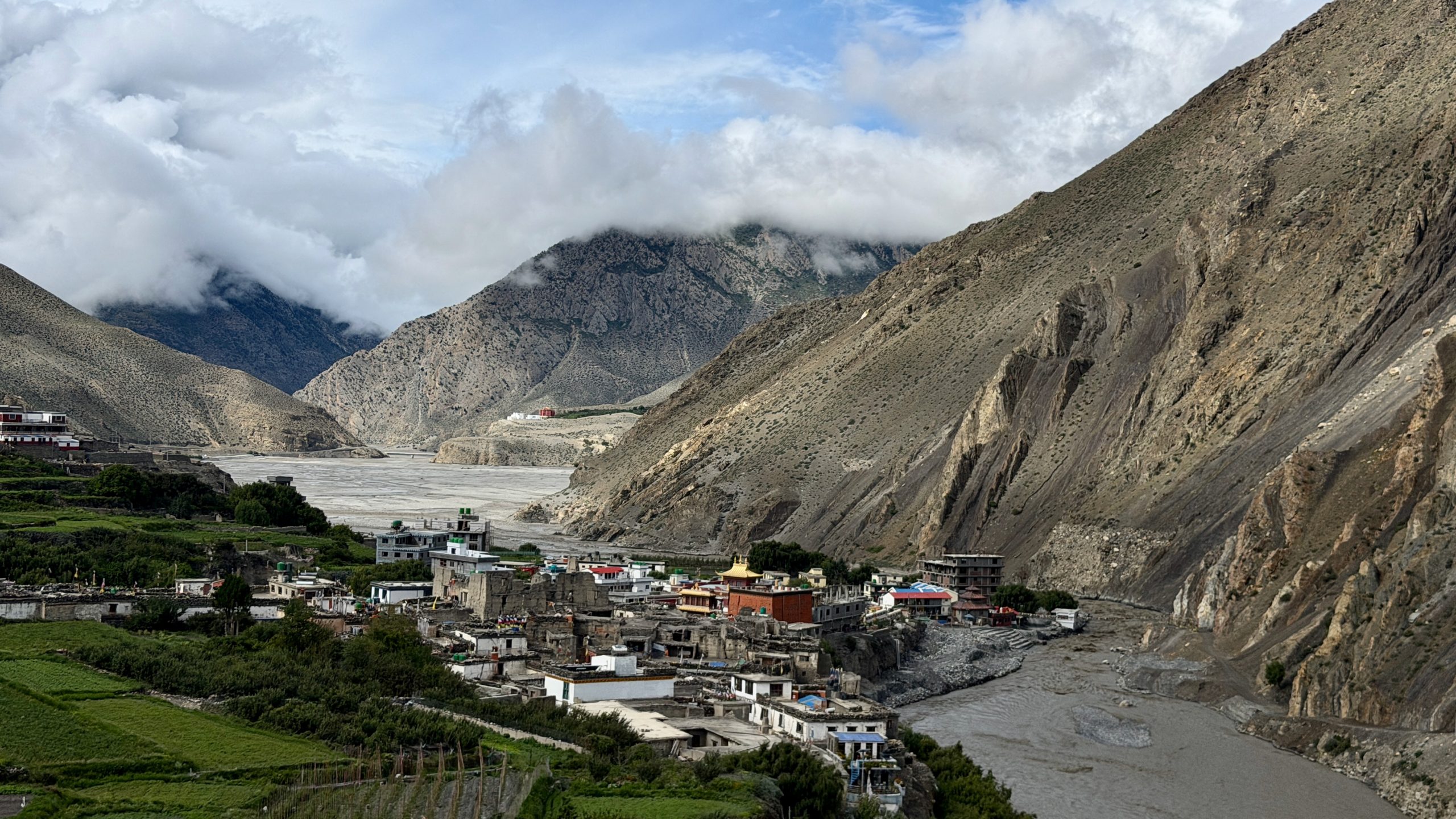
We left Kagbeni and spotted promising patches of blue sky! The road remained paved for just a short stretch before that came to an end.
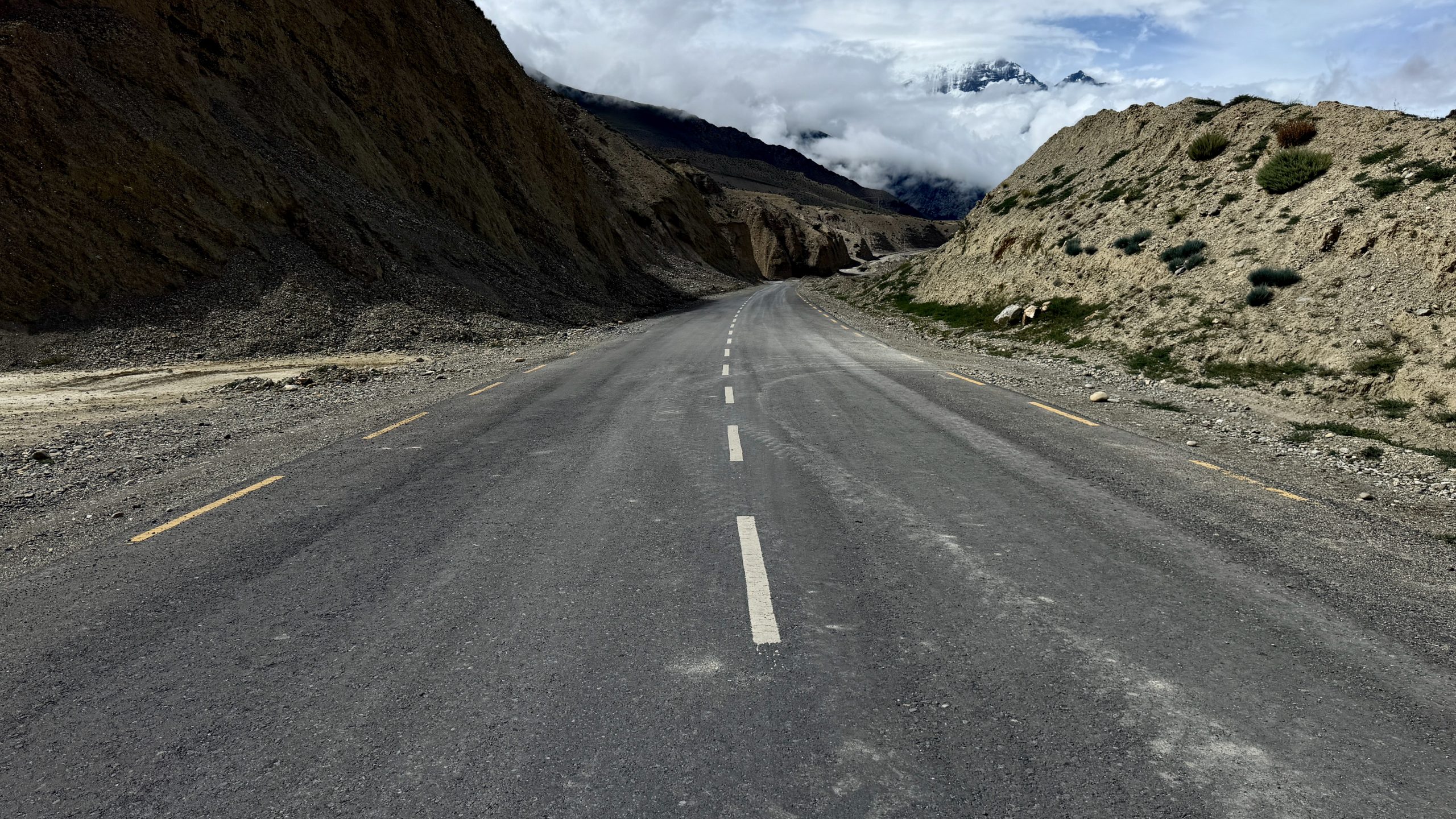
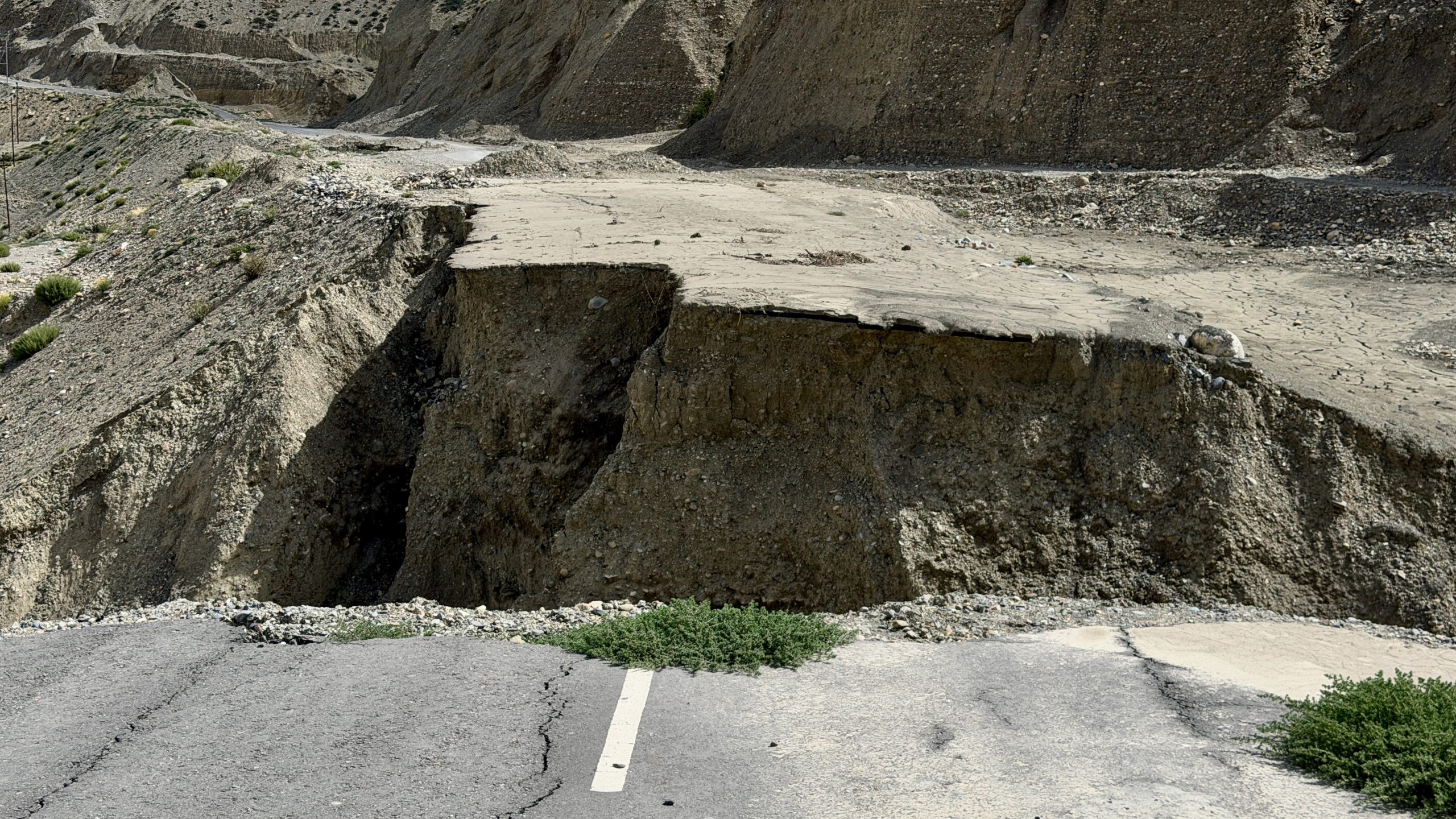
In return, there were fantastic views of the river, mountains, and rock formations on both sides.
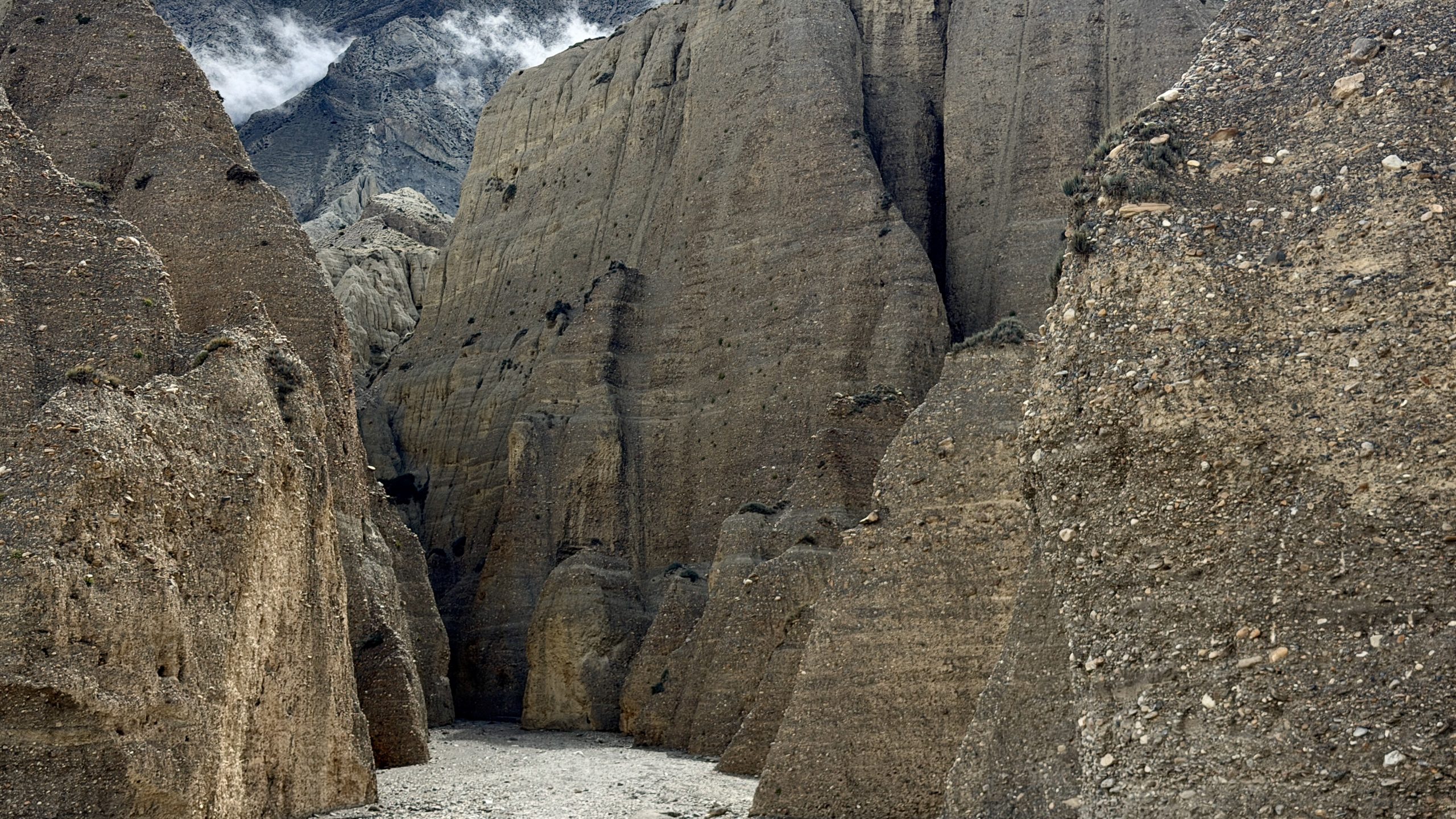
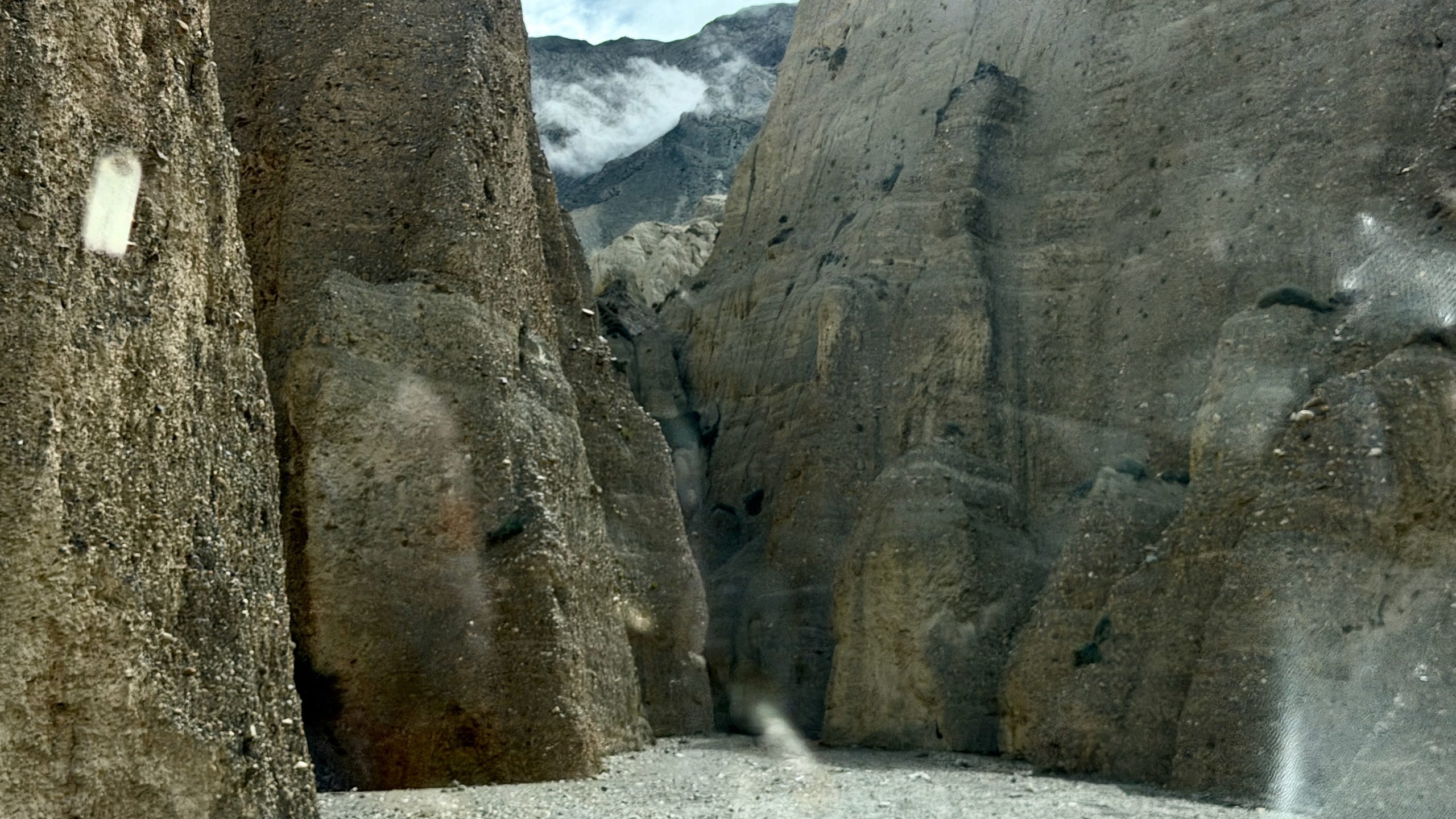
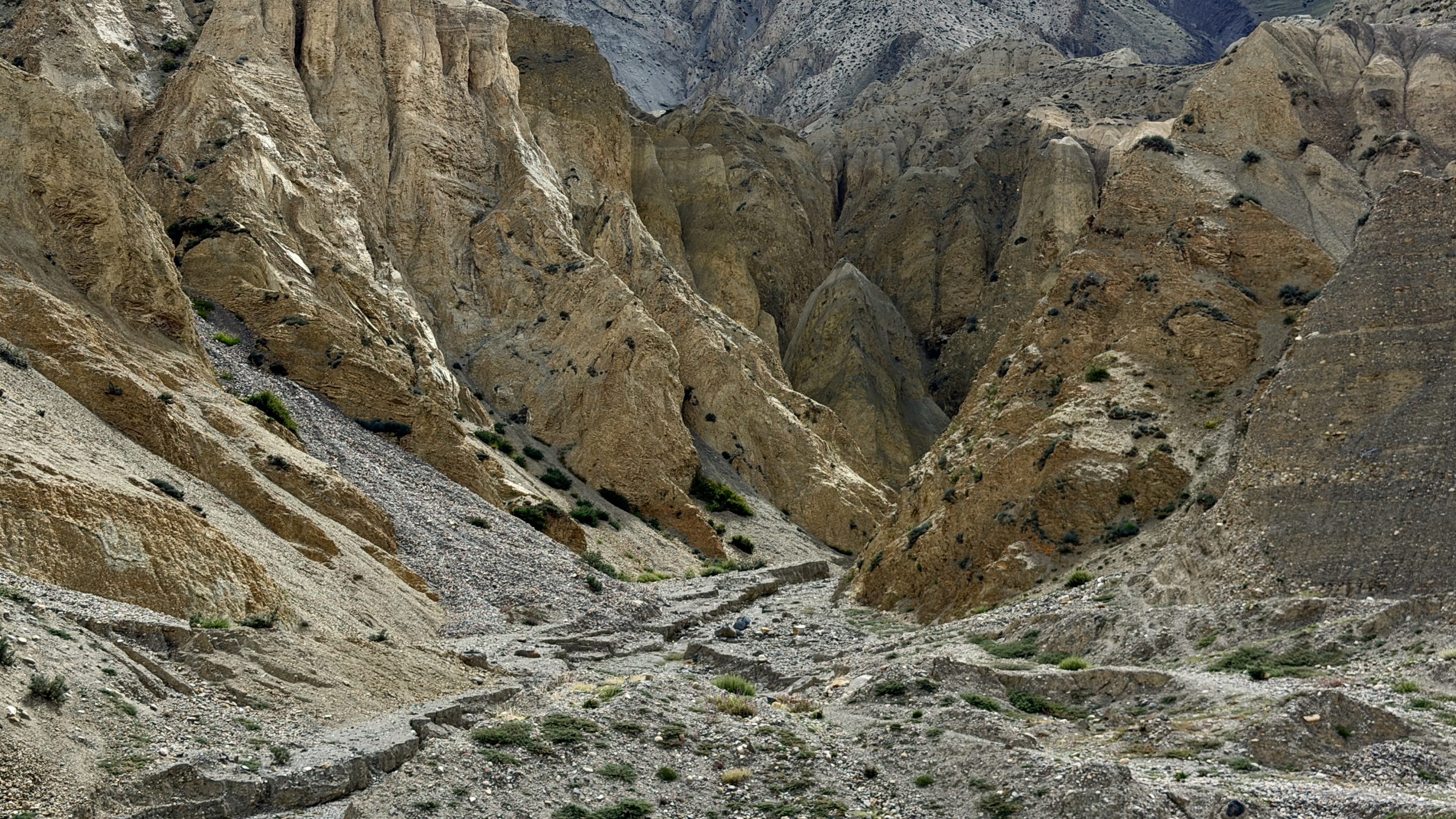
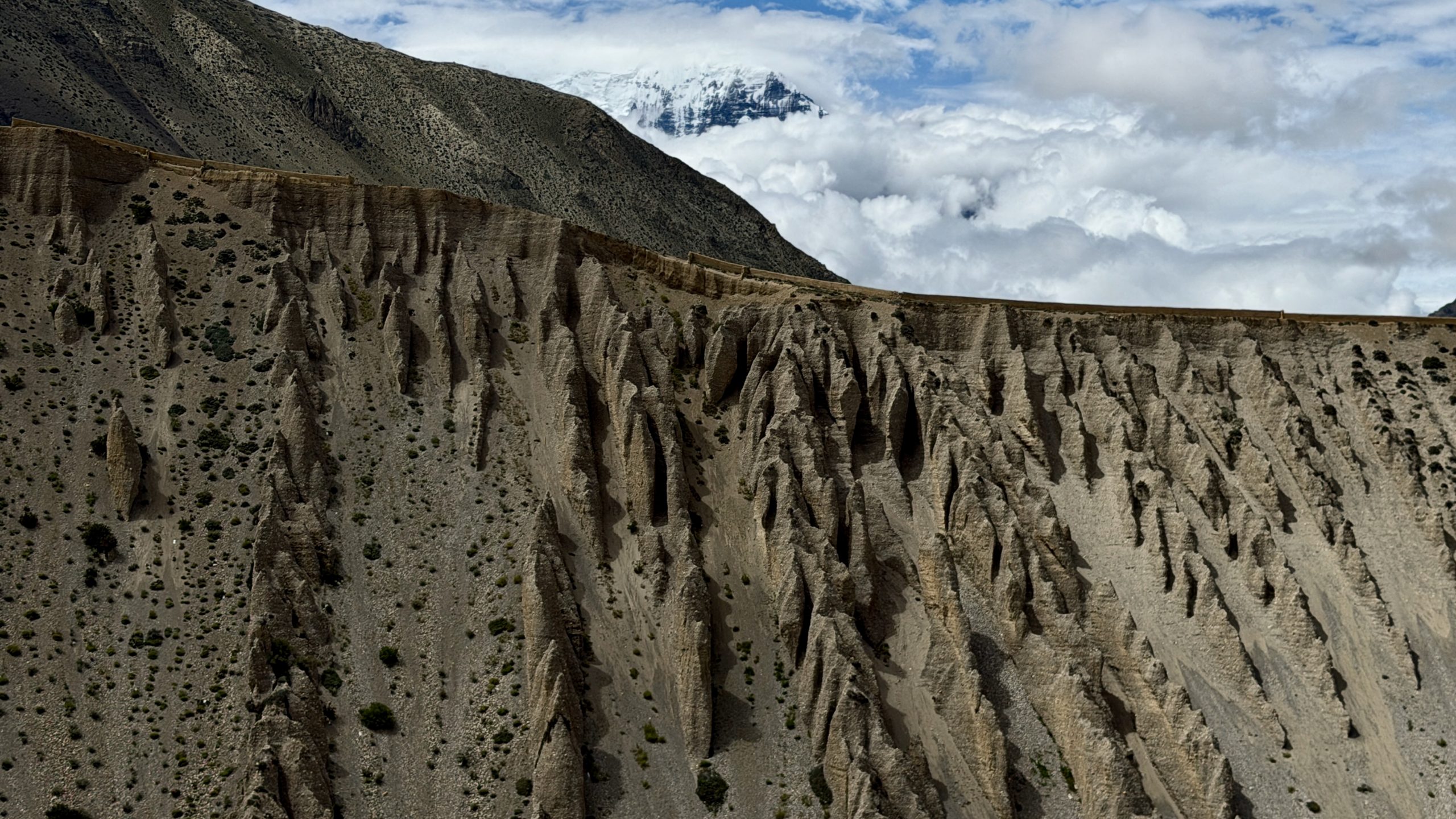
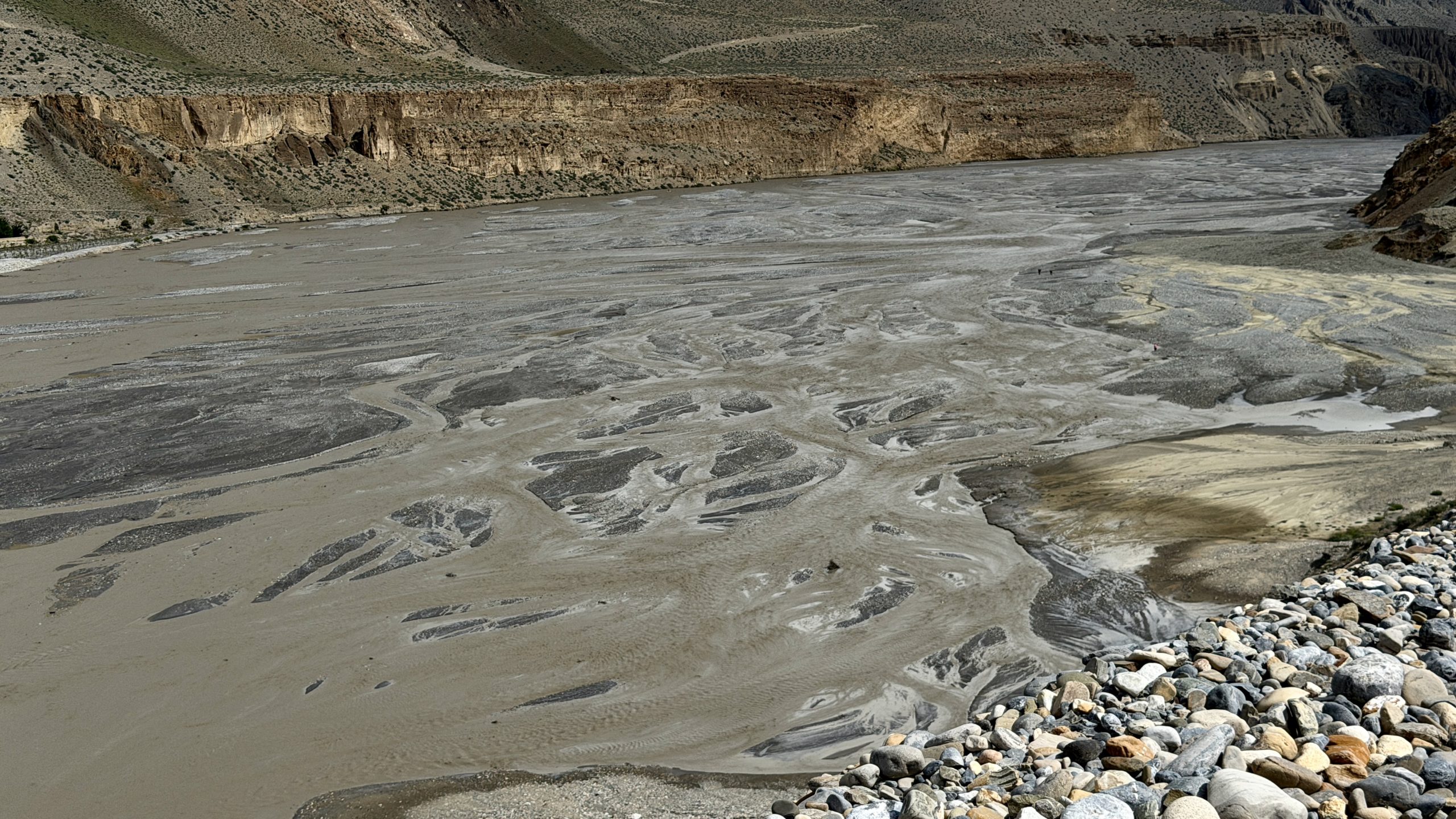
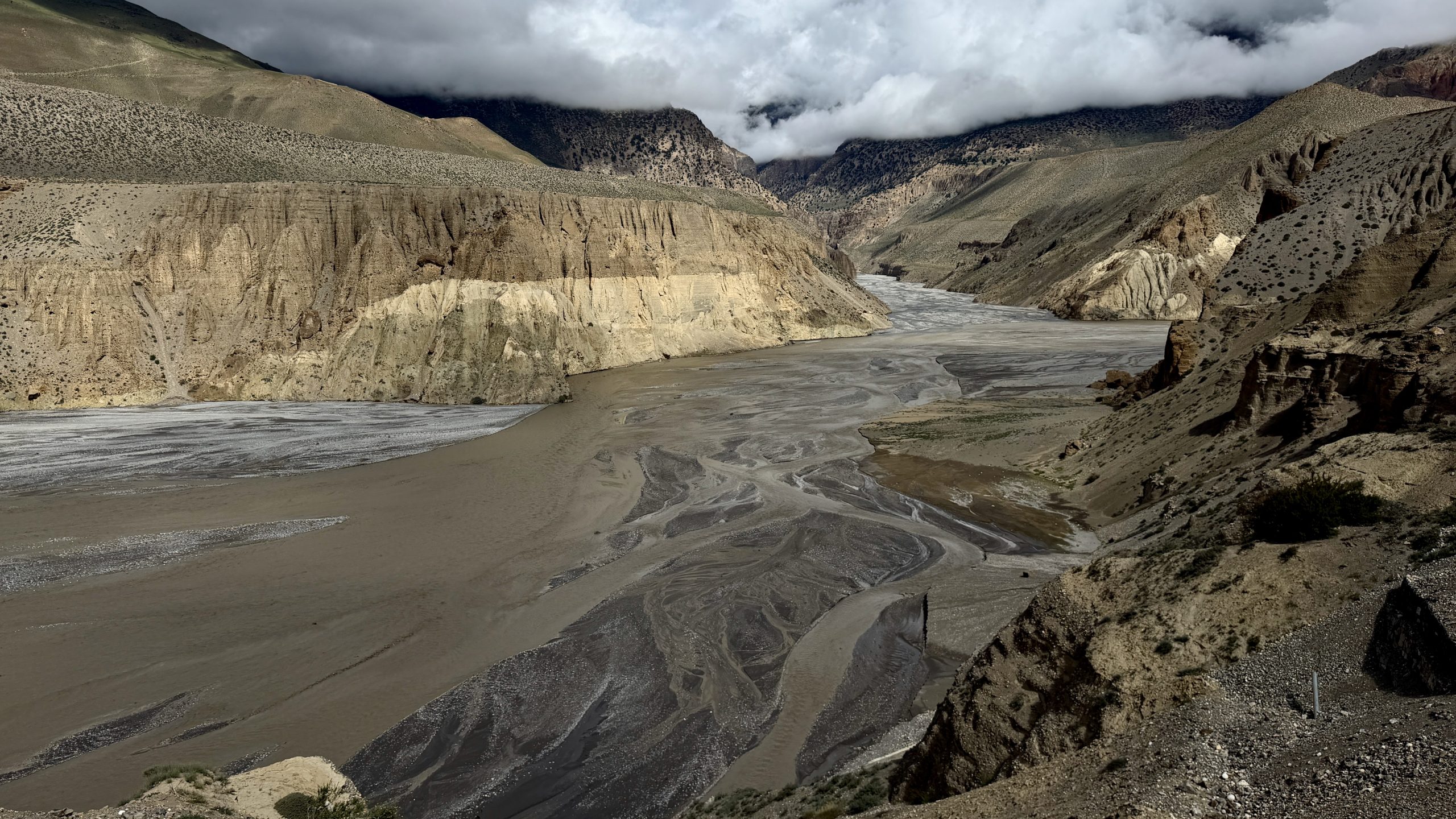
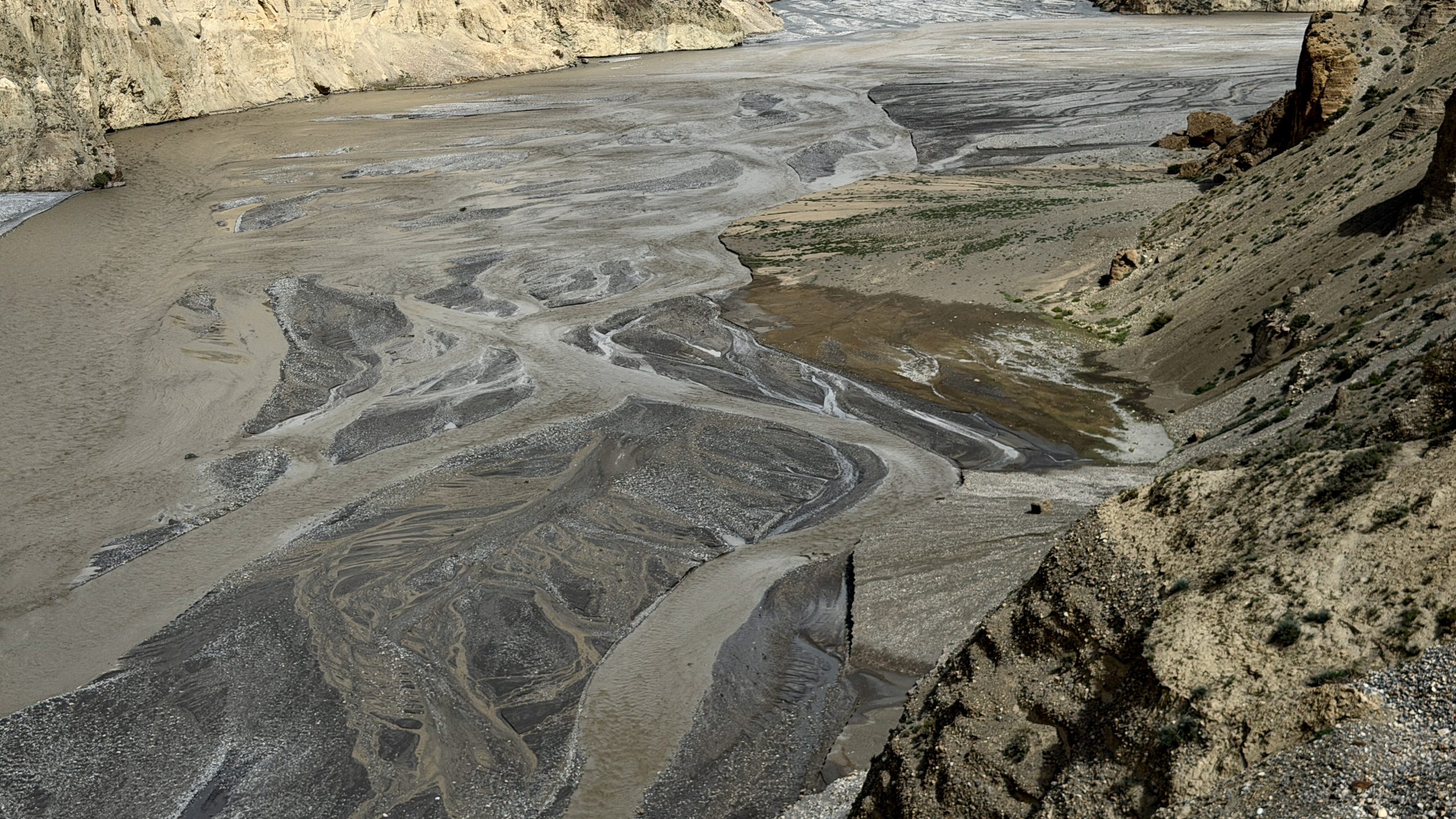
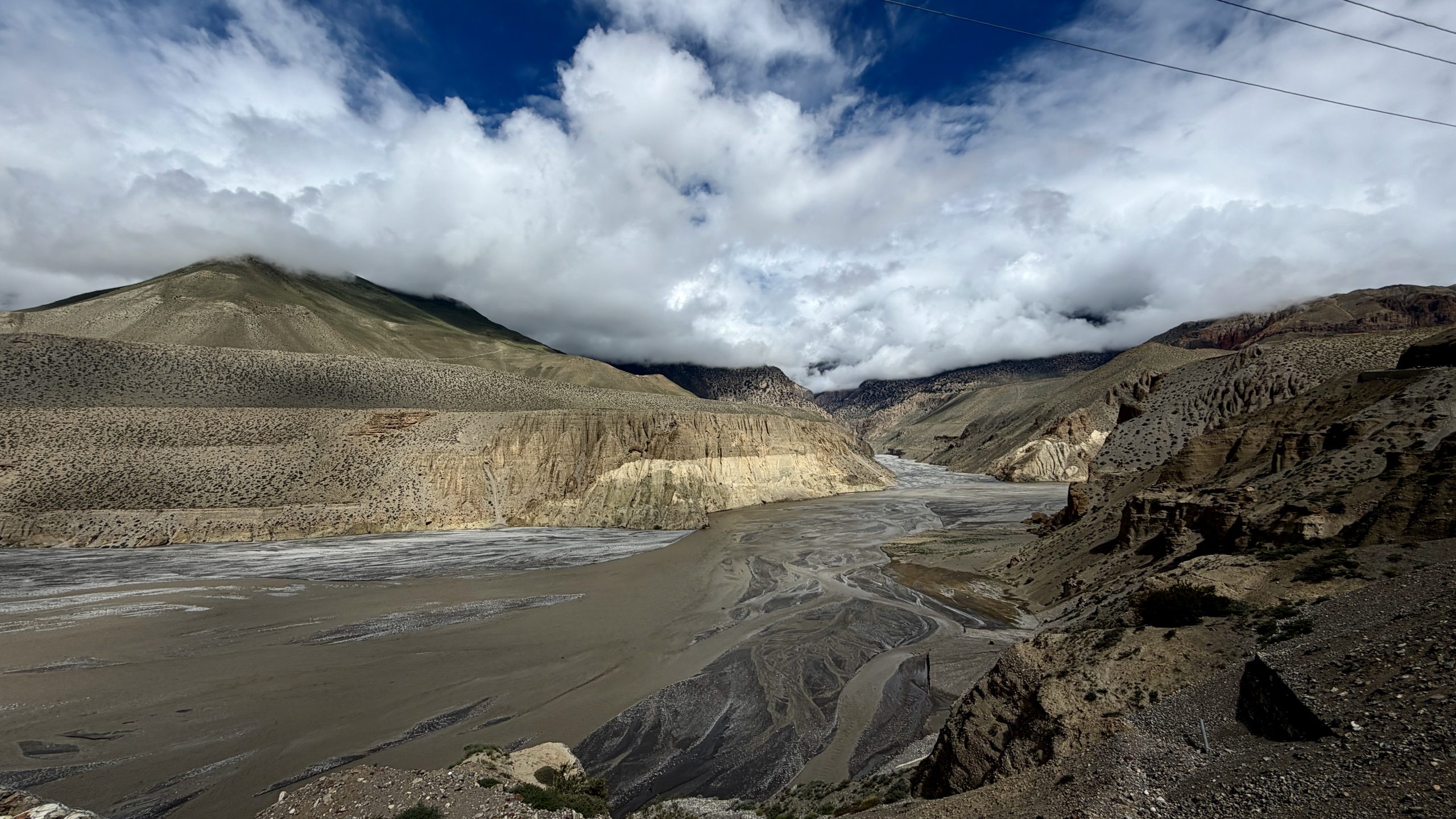
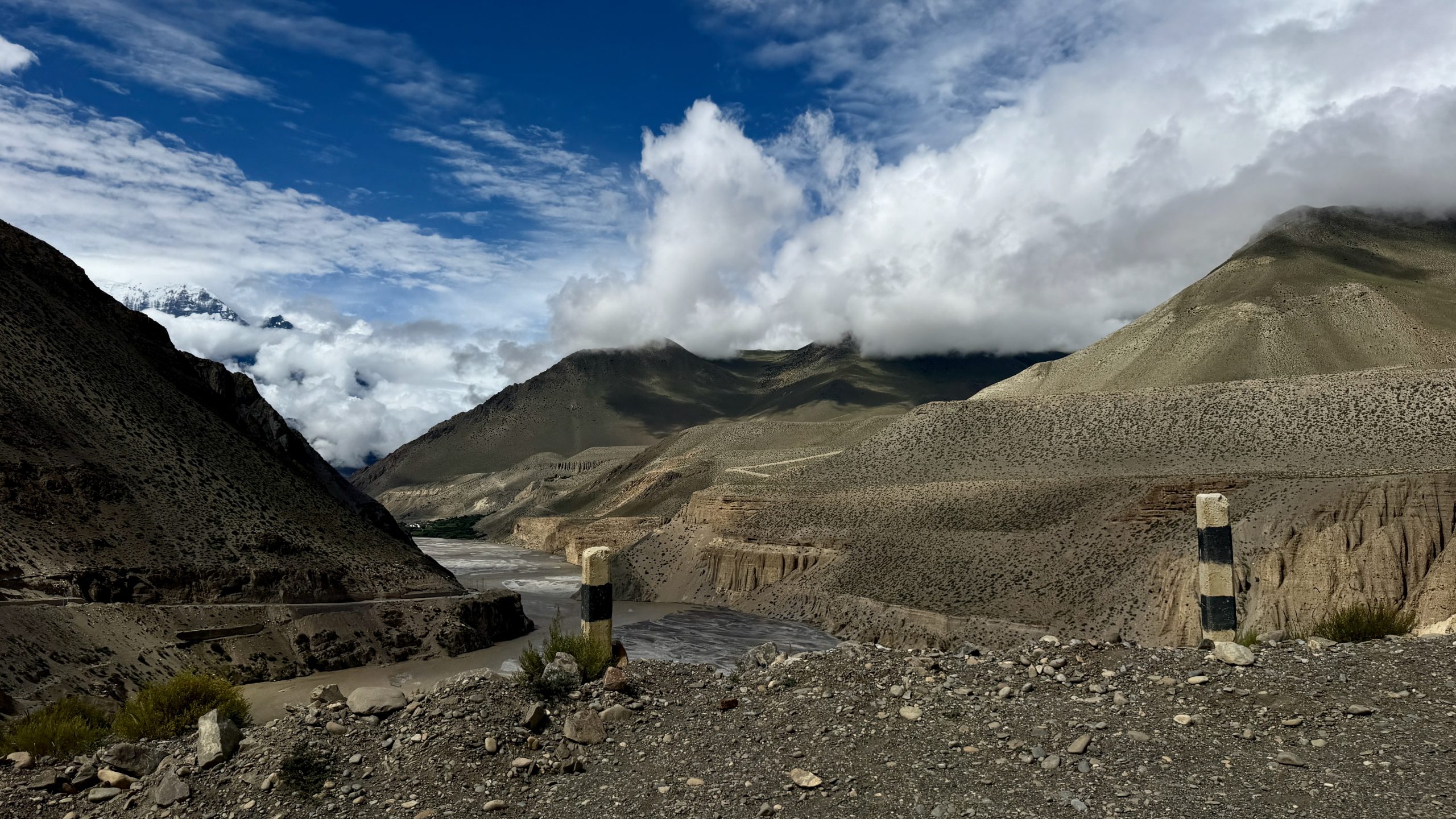
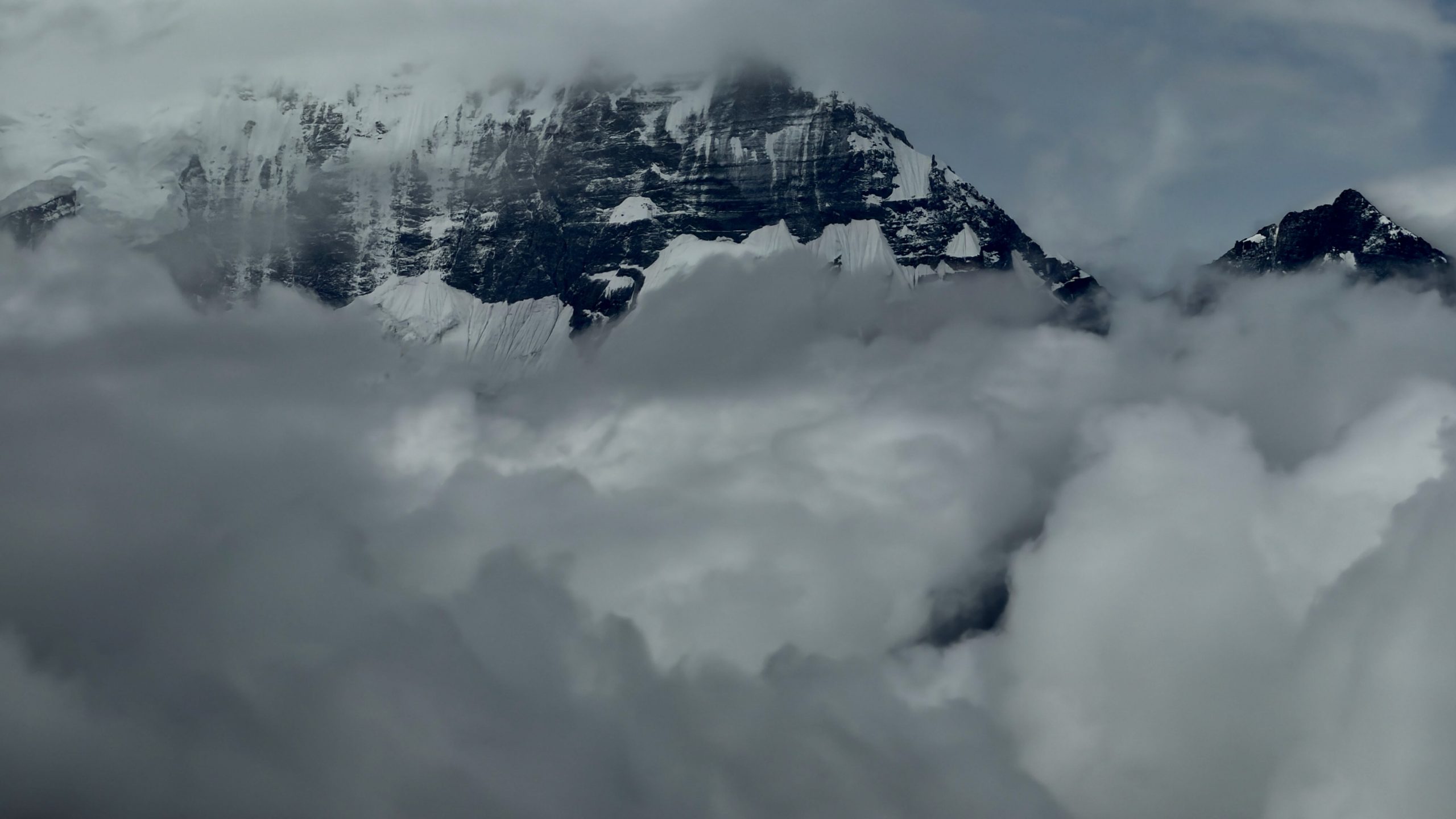
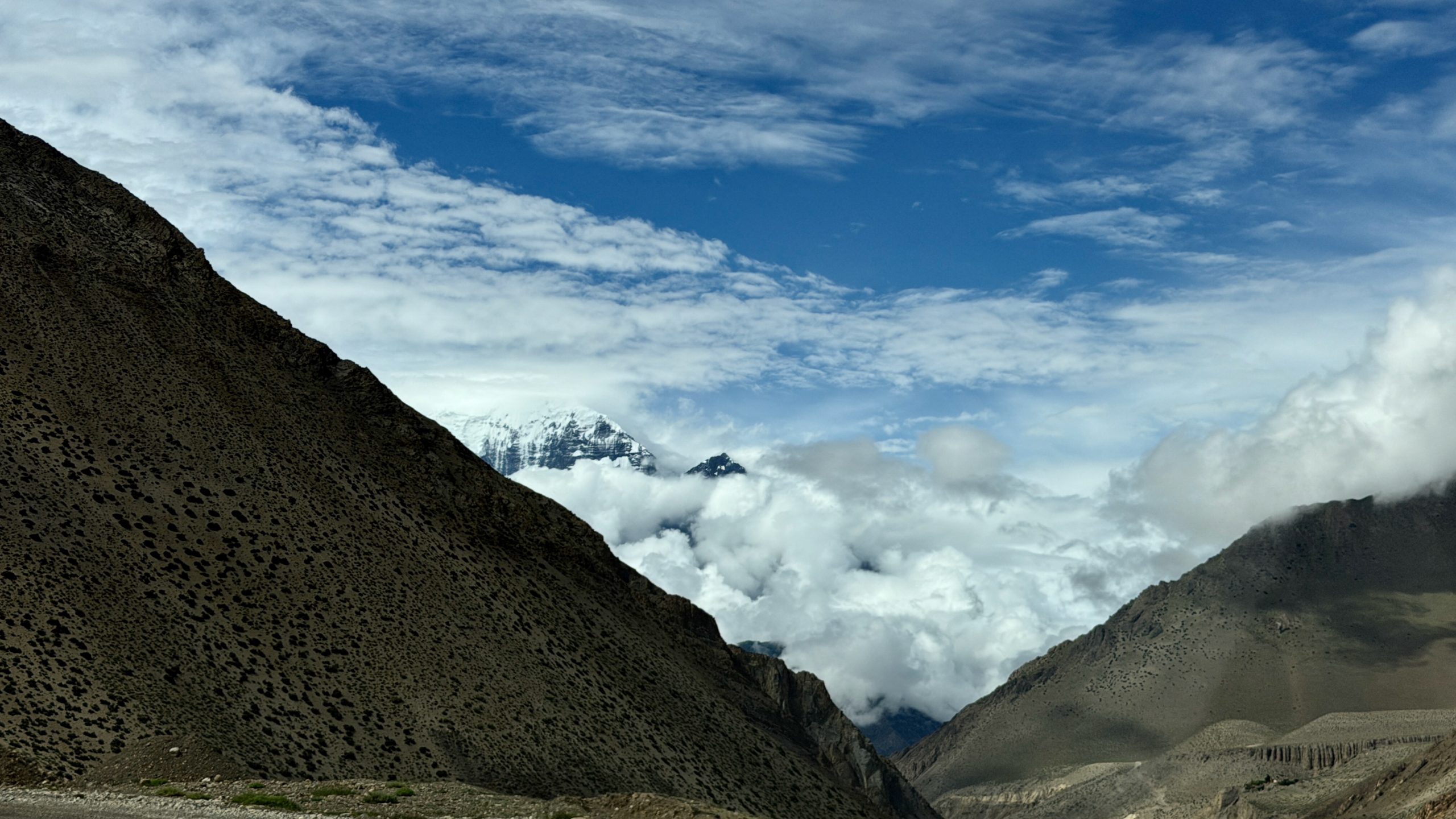
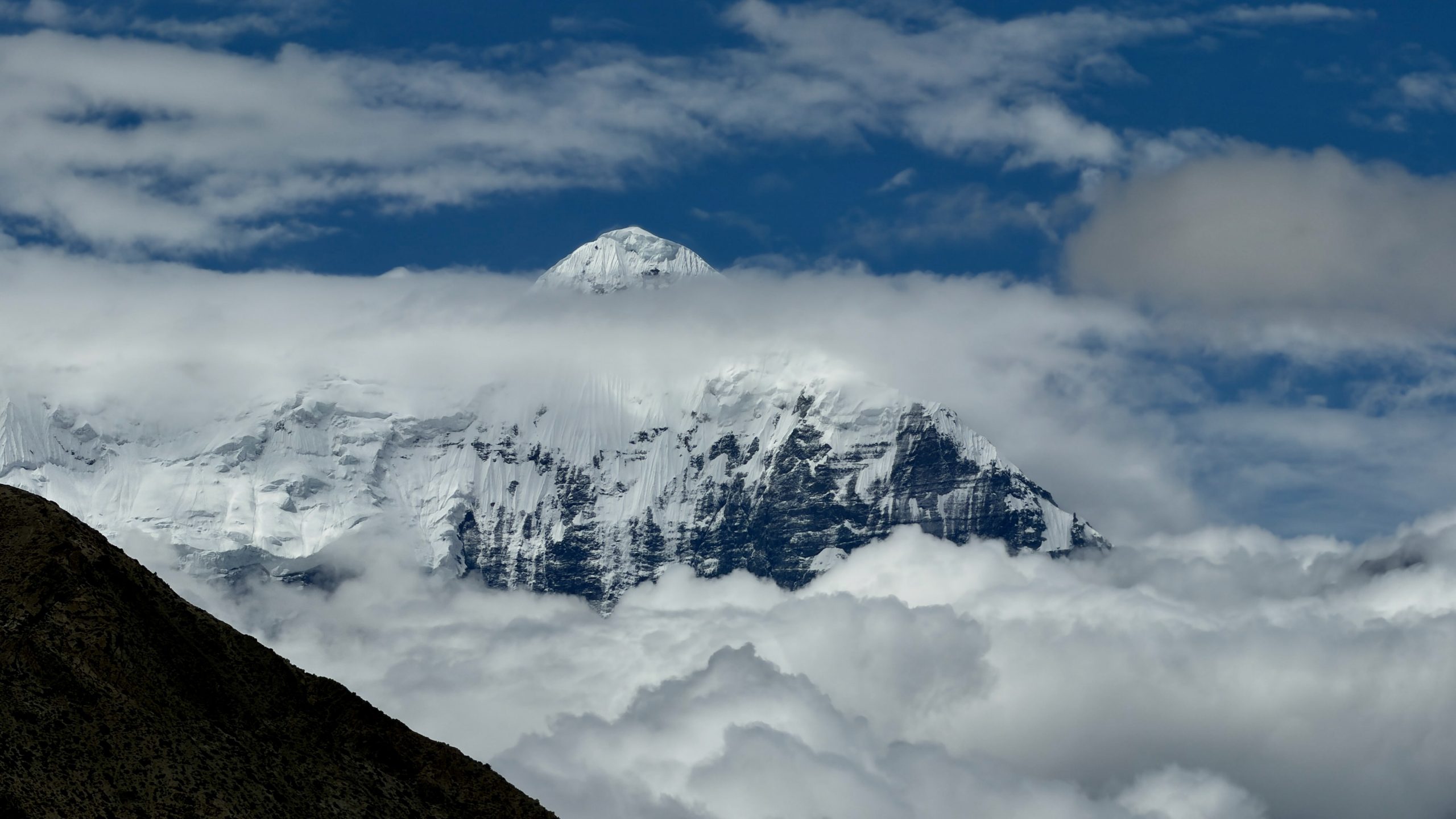
It definitely shares similarities with Ladakh, Zanskar, and Spiti. However, there were high mountain peaks visible in the distance. Those are unique to this place.
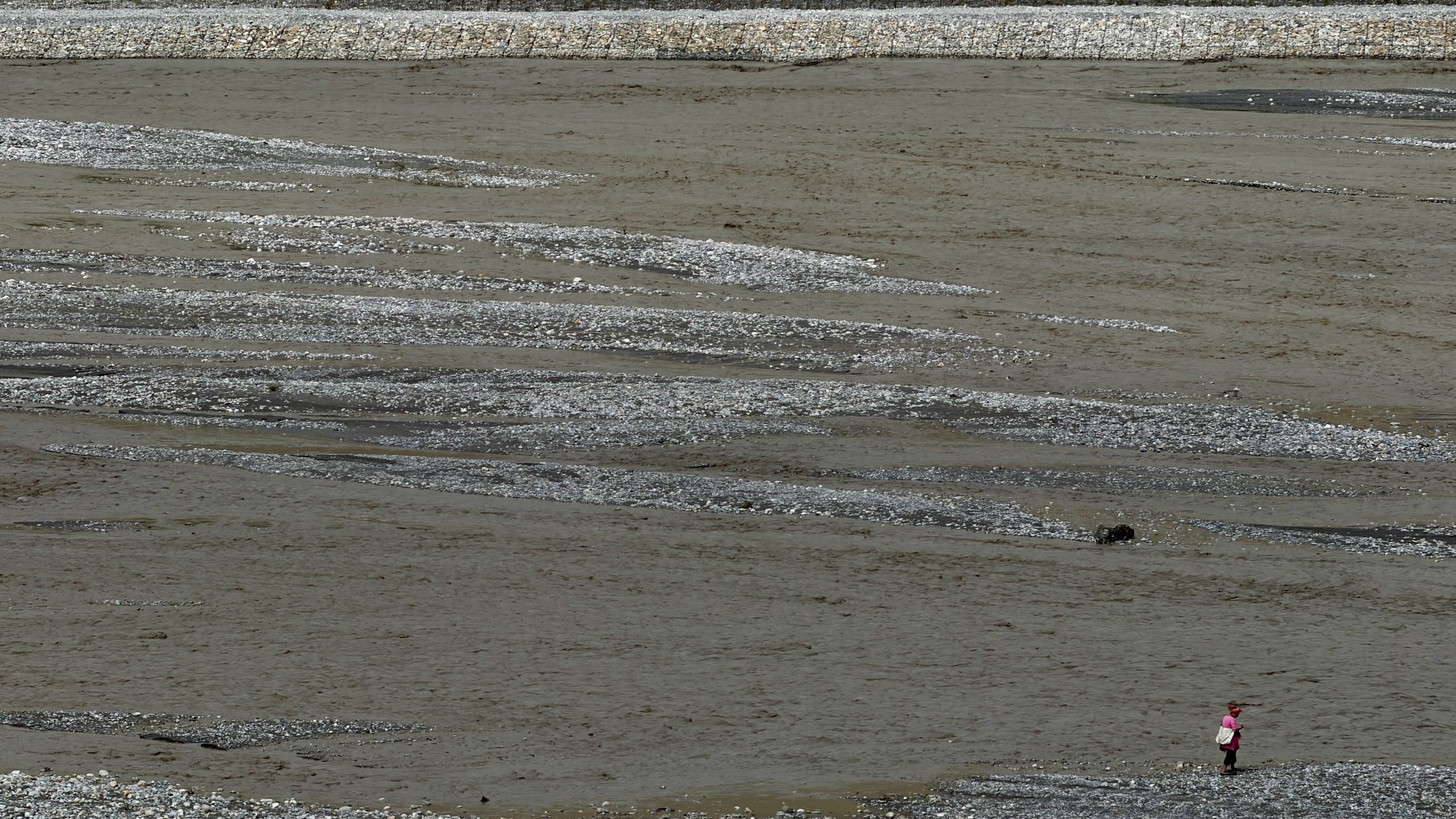
In the river, there were a few tiny figures collecting stones to sell to travelers in Muktinath later. The river was very muddy and hardly differed in color from parts of the dry riverbed.
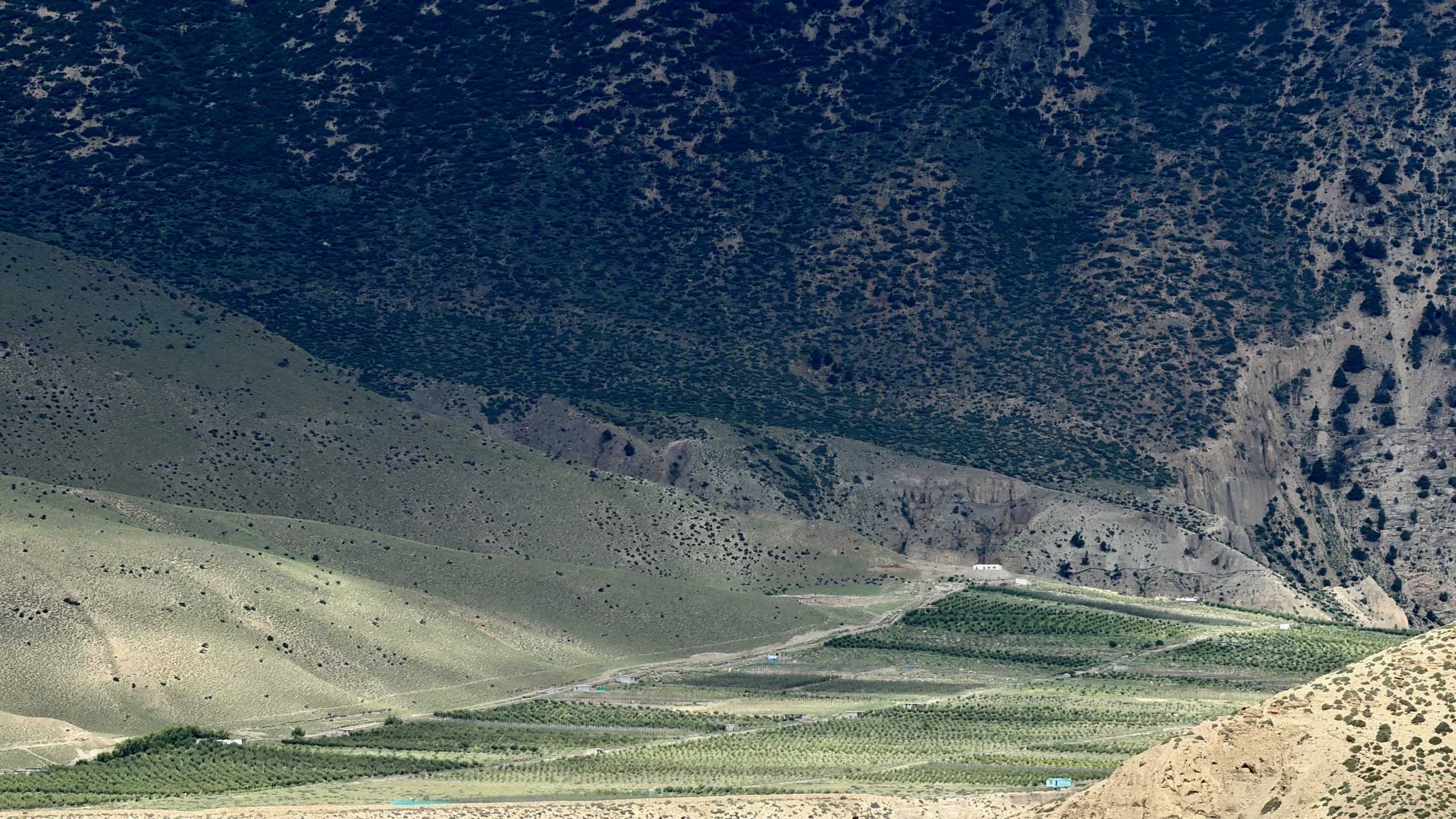
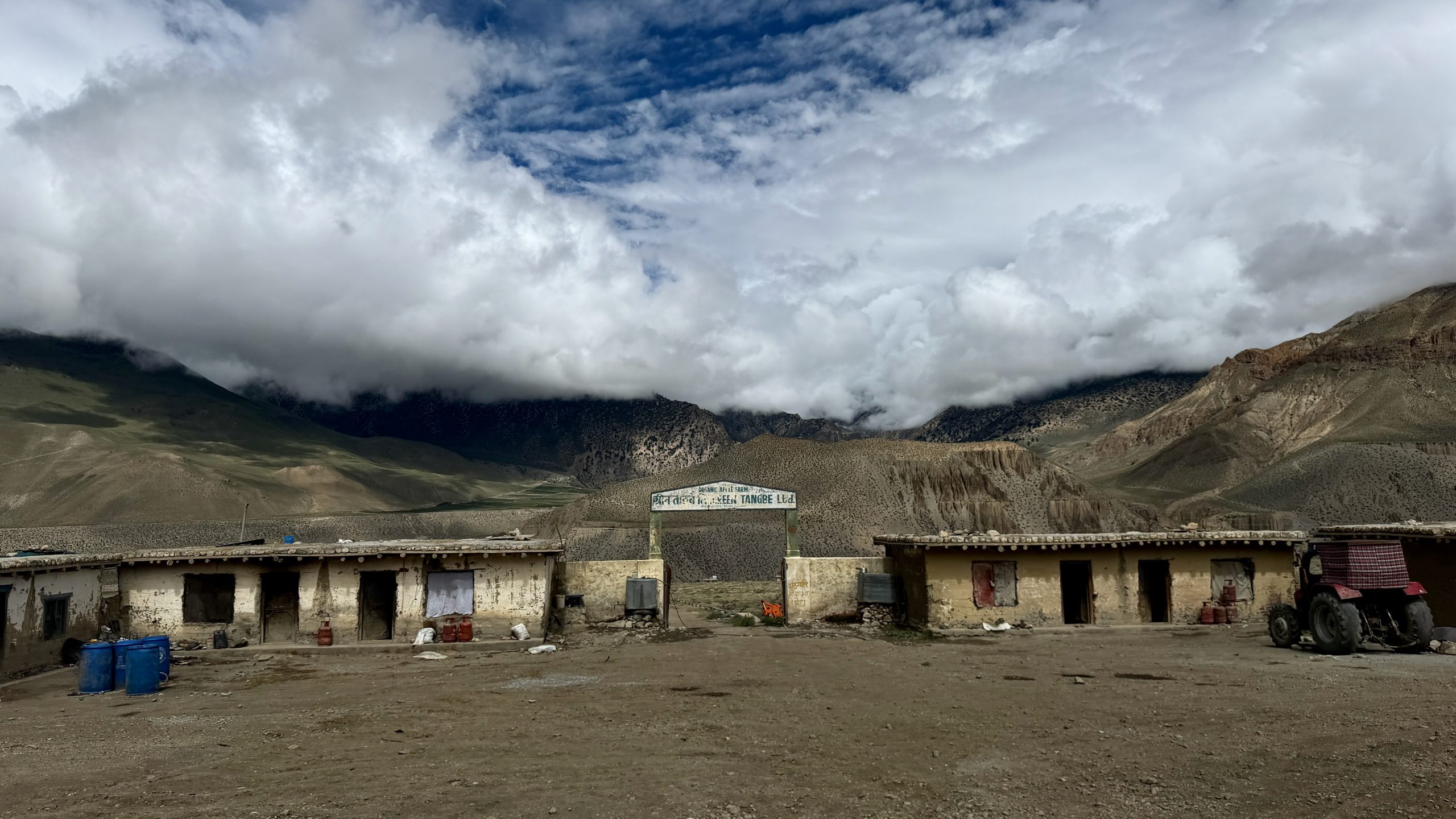
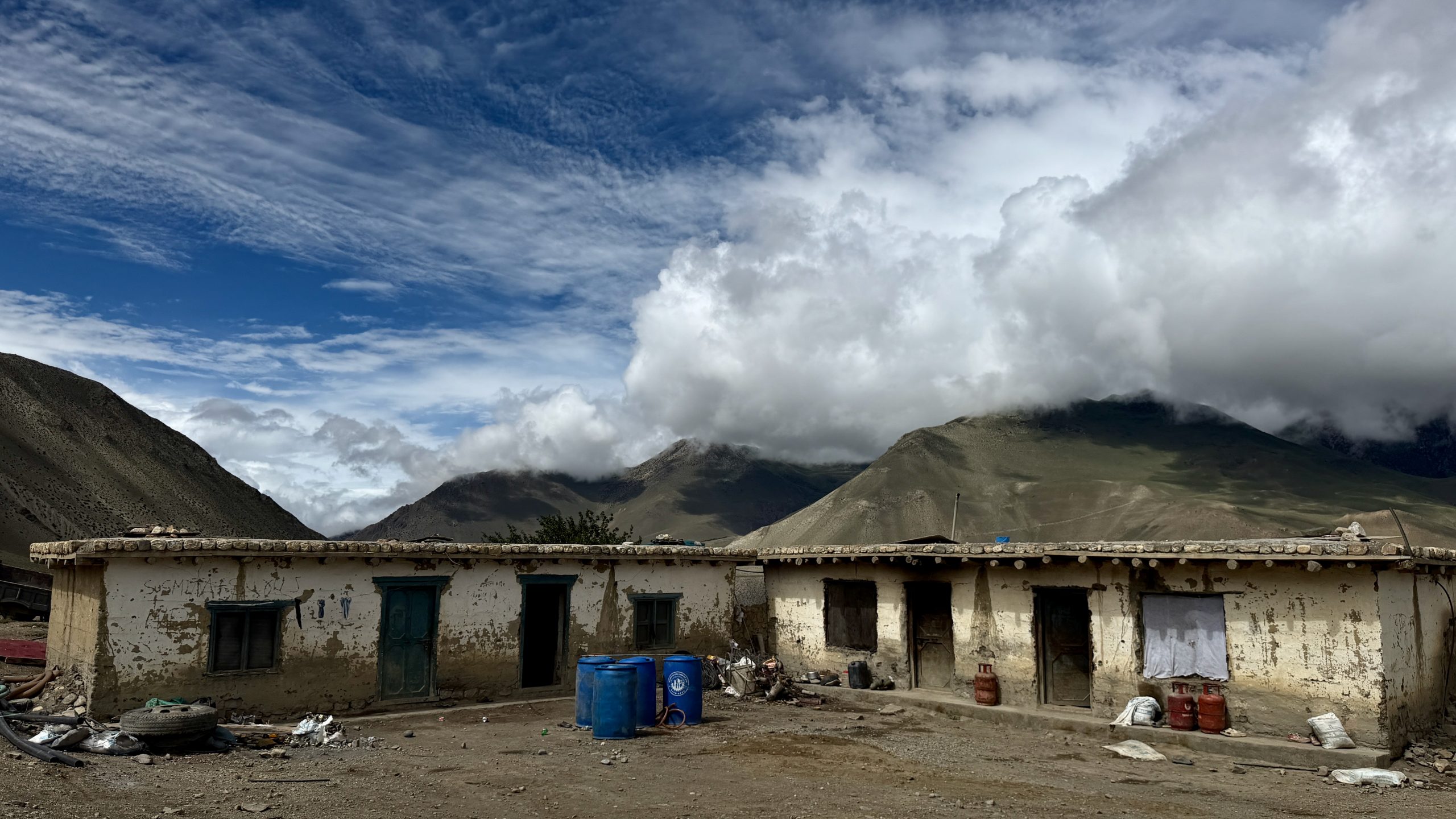
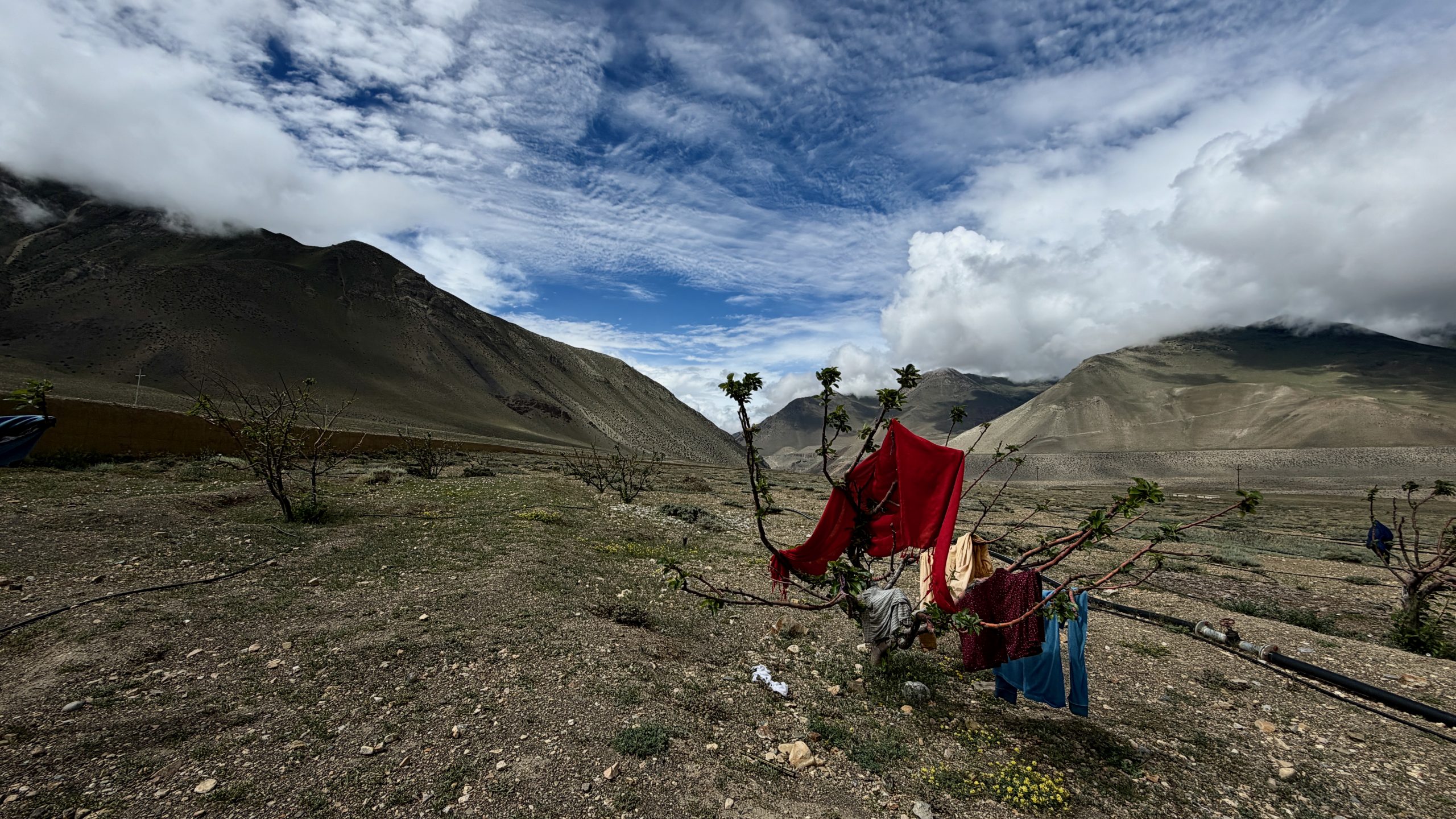
We stopped constantly, jumped out, looked around, and whipped out our phone cameras. In the distance, apple orchards were visible, and right by the road, a large plot of land was also walled in and fitted with a sign. However, not a single apple tree was to be seen behind it, and it was unclear whether something was still supposed to come of it or if all plans had been abandoned. Road workers were living in the huts. The thing with the apples was a surprise to me; I wouldn’t have expected them here.
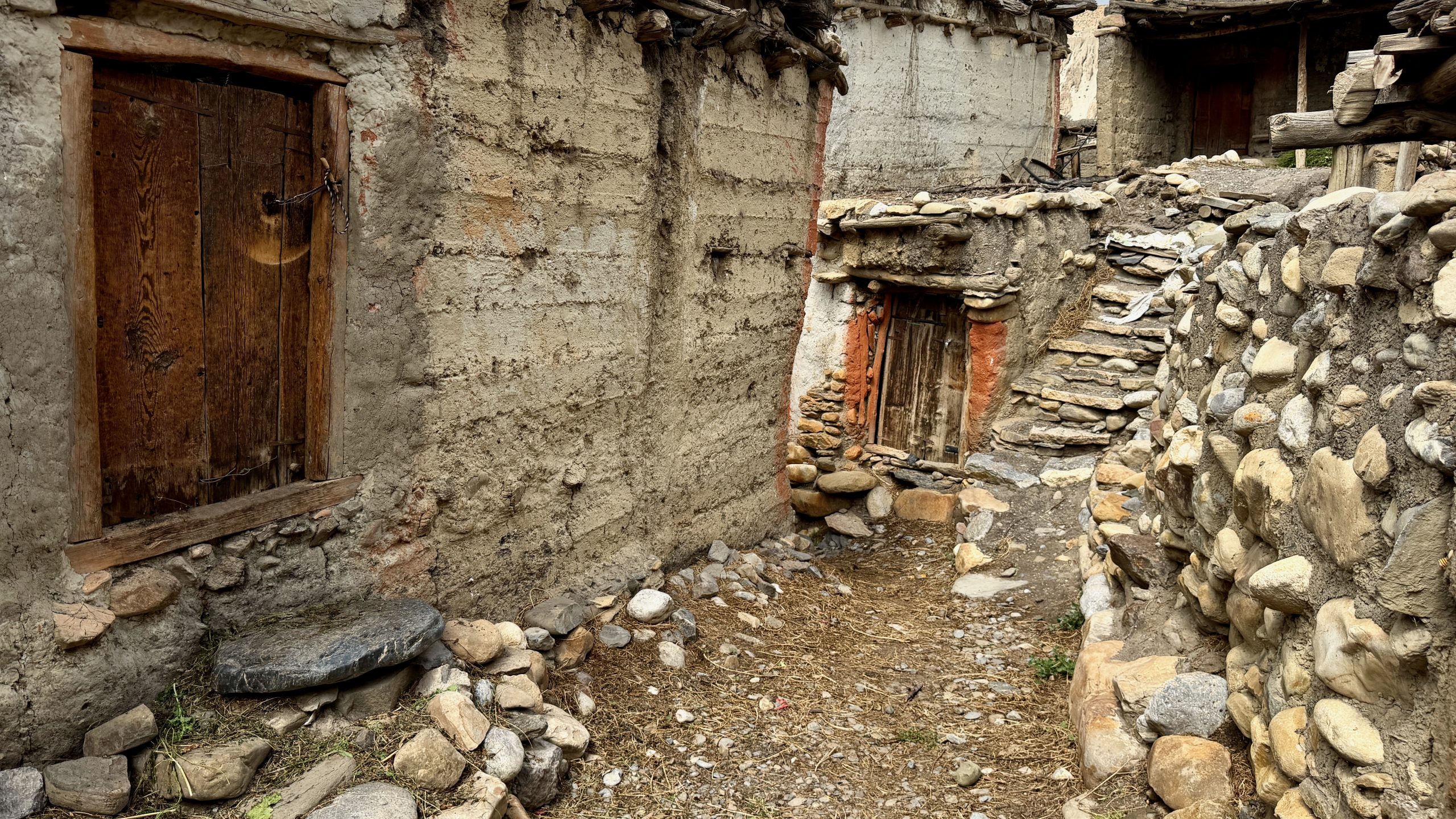
Our first real stop was the village of Tangbe, which had been described as pretty—and we thought so, too. You can walk along an alley between old houses. Even if you occasionally spot garbage lying around, it is no comparison to India. Everything is kept much tidier.
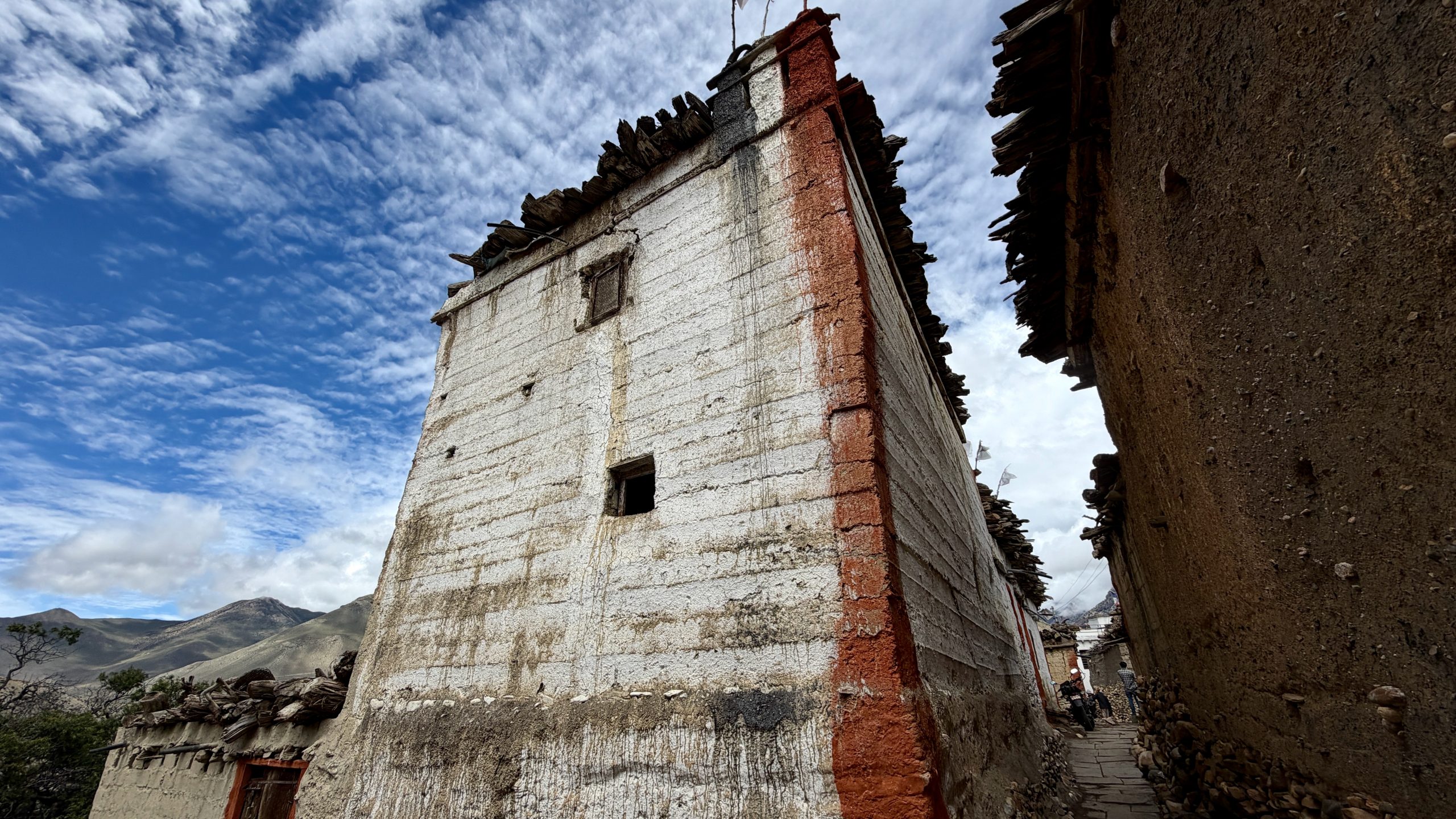
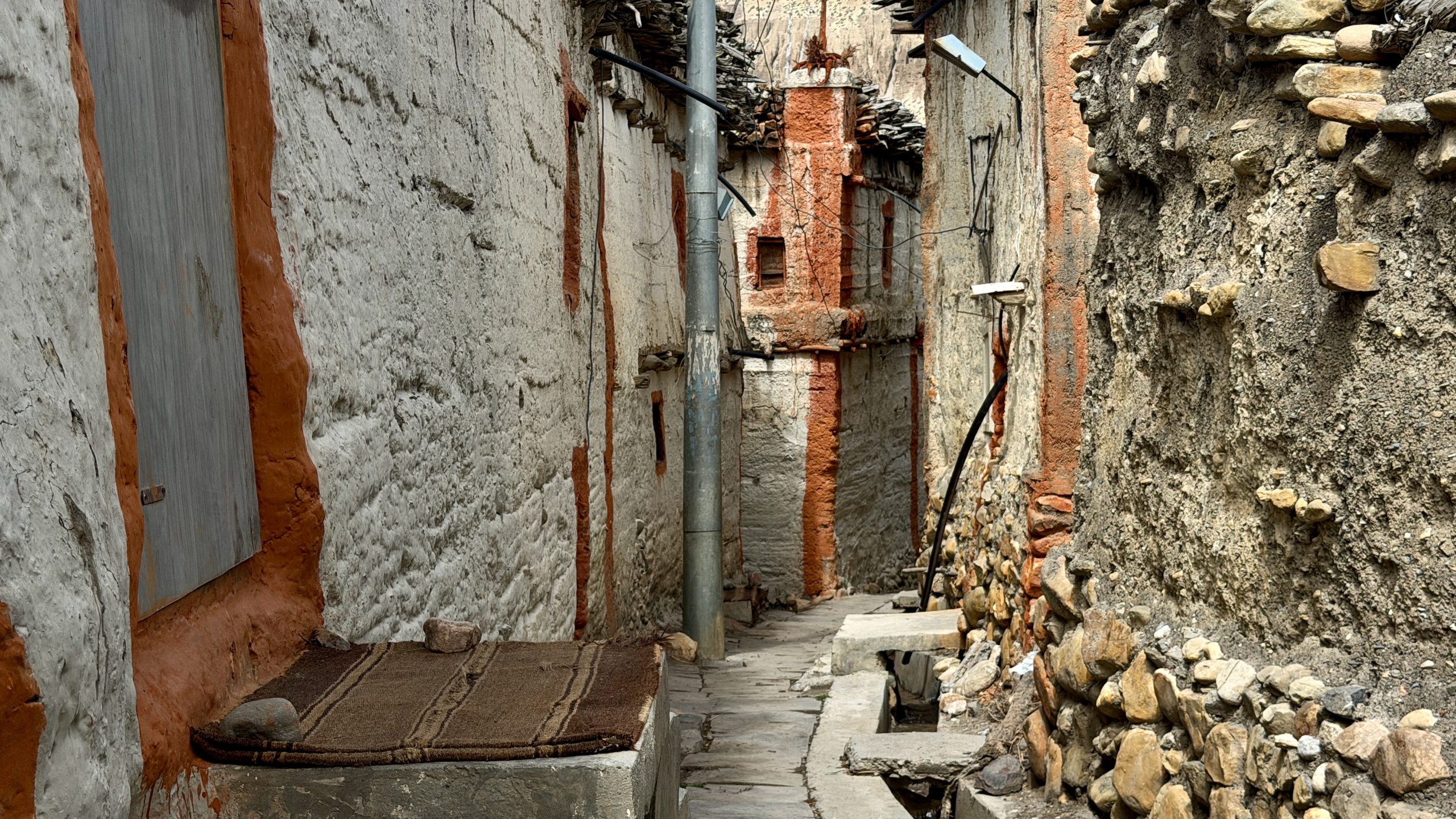
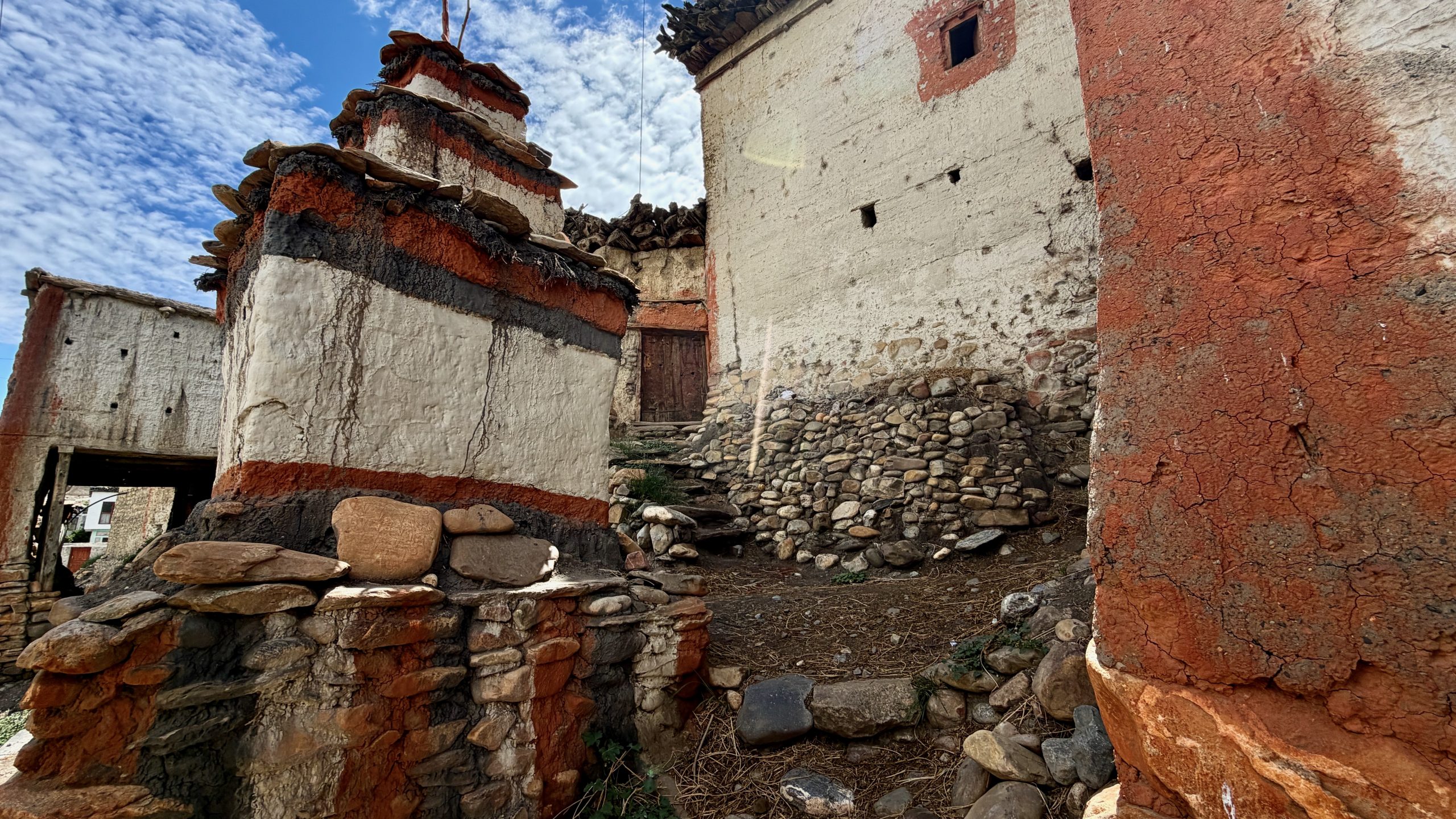
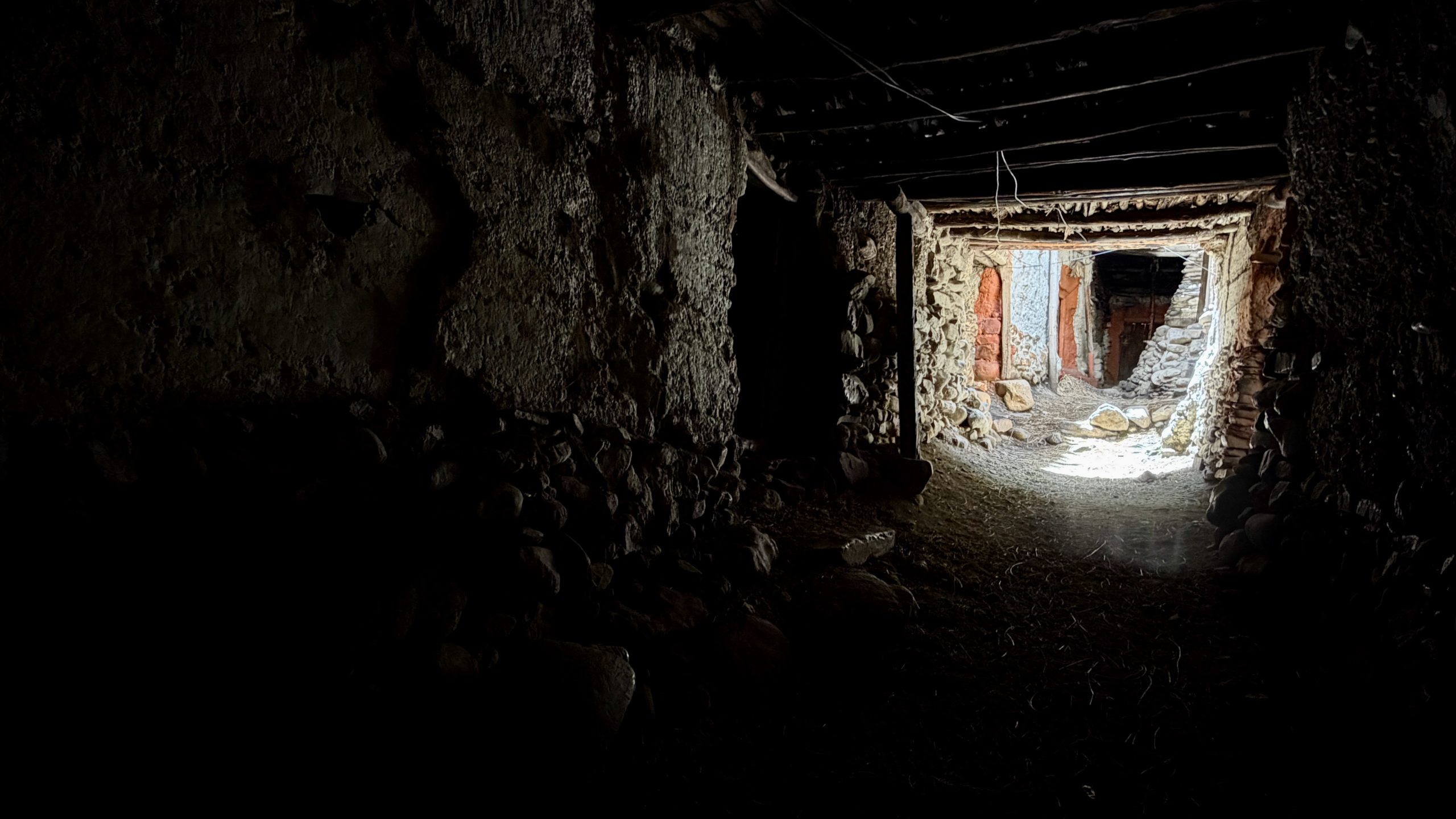
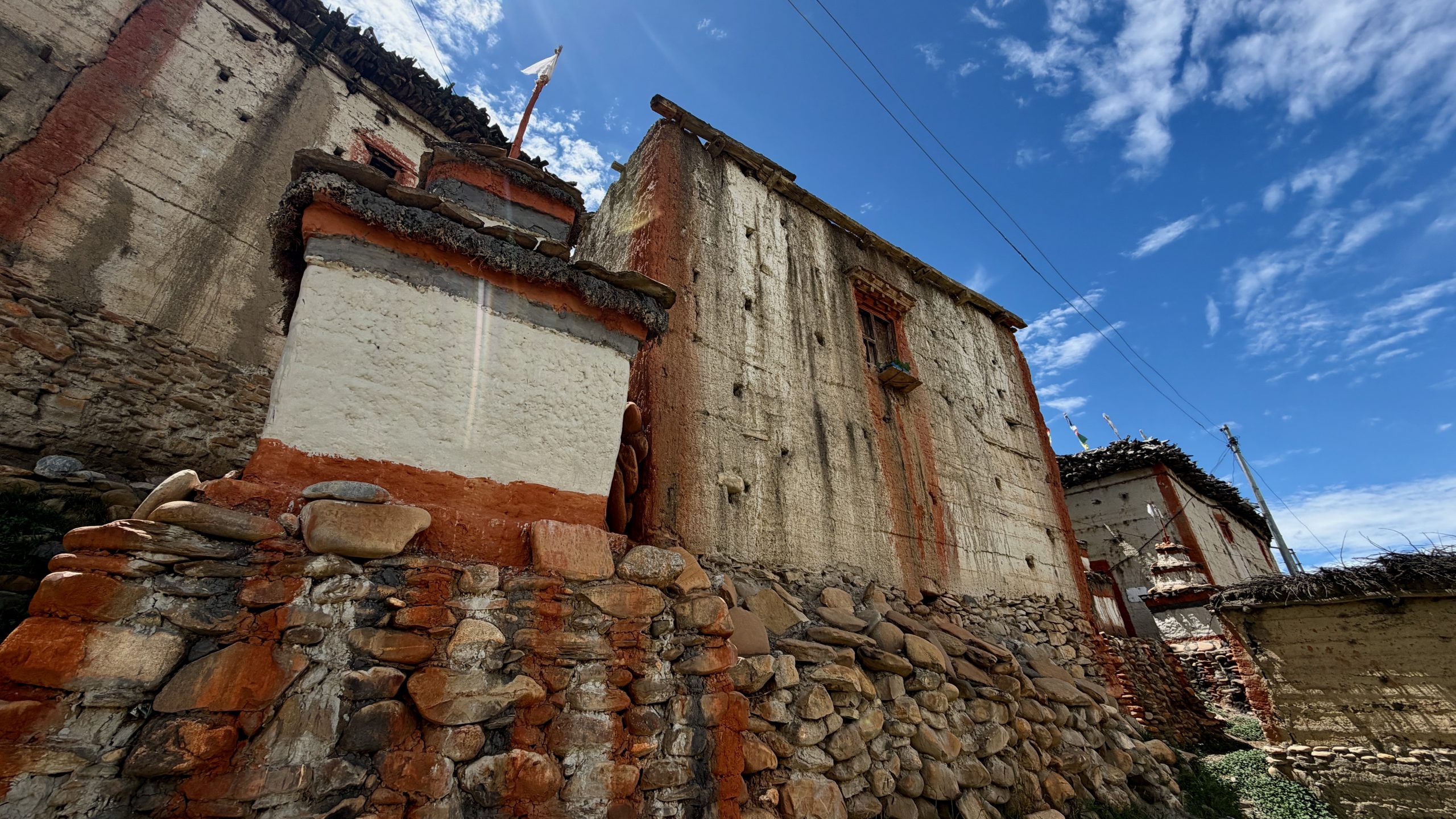
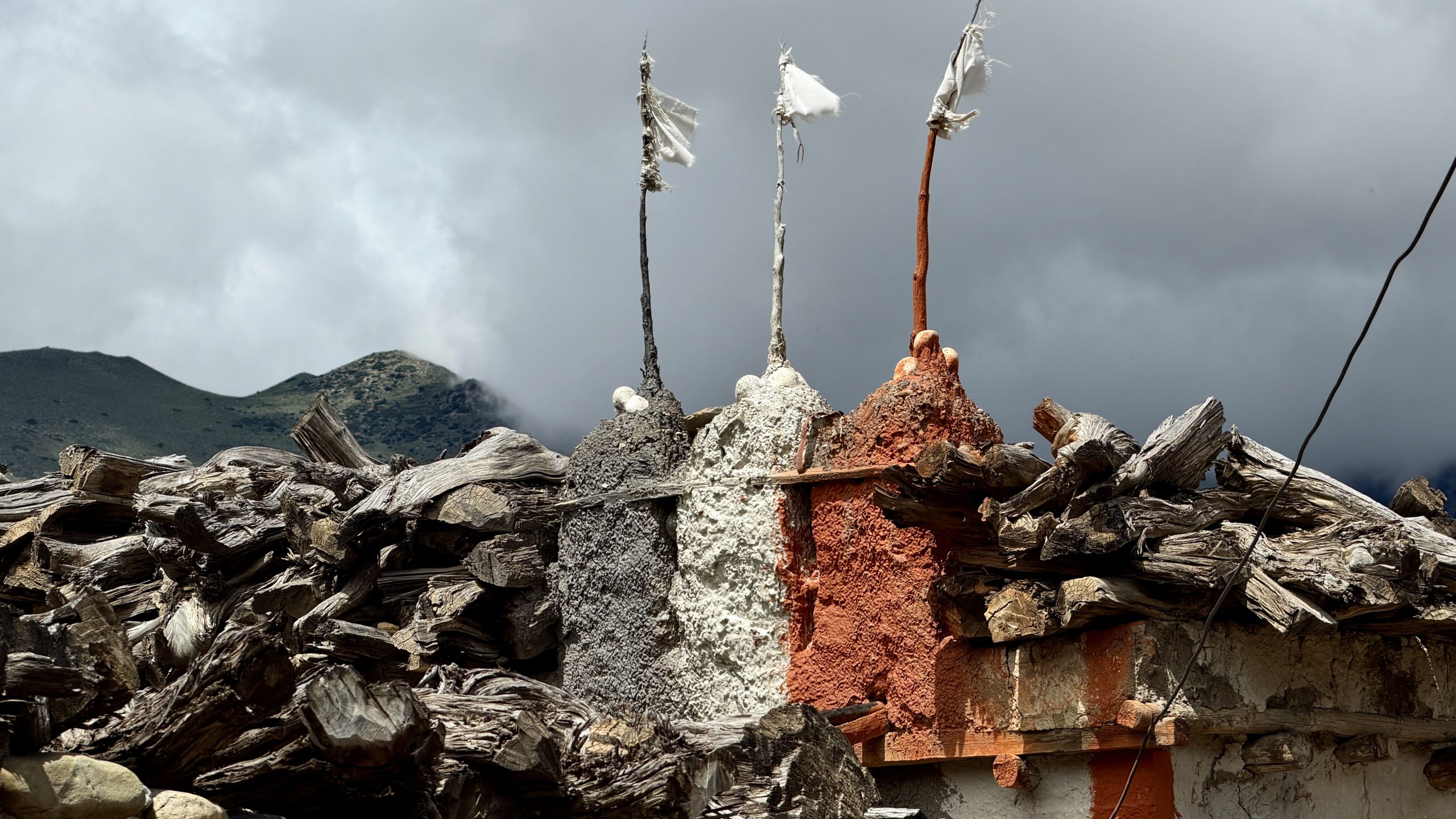
What stands out is this three-color painting. Funnily enough, the color names are the same as in Ladakh: nakpo, karpo, and marpo. However, the people speak a different language, and I haven’t found that many more similarities yet. And people mostly greet each other with Tashi Delek. Back to the colors. These belong to the Sakya order of Buddhism and represent white = Avalokiteshvara = compassion, red = Manjushri = wisdom, and black/blue = Vajrapani = spiritual power / protection from evil.
In other places, the black/dark blue is missing. That’s when you notice that the people follow Nyingma or Kagyu Buddhism. I think highlighting the aspects of compassion and wisdom is a beautiful summary as a guide for life.
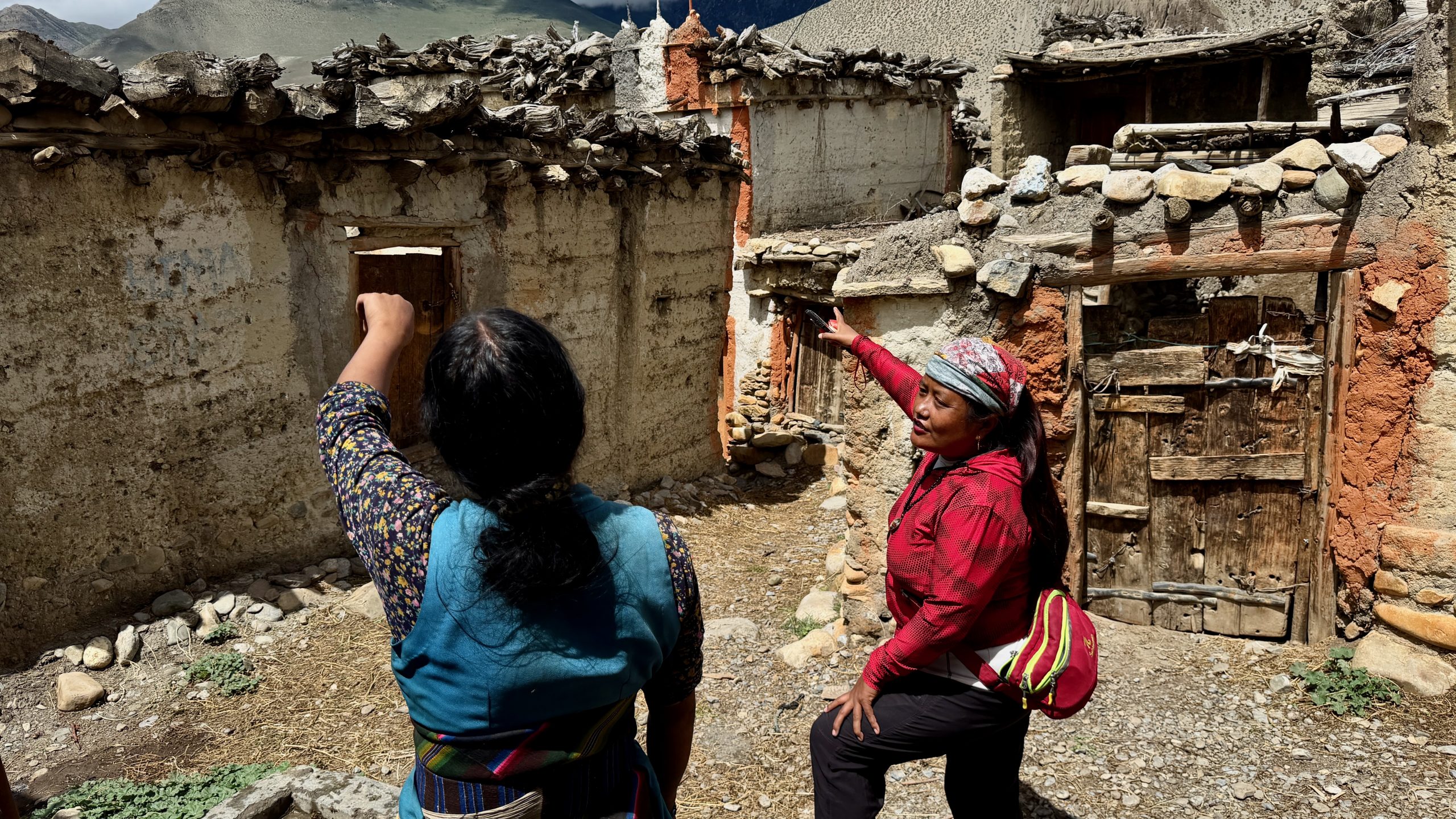
Unfortunately, it isn’t working out particularly well for me when it comes to one aspect of the trip. Our guide, Laxmi, doesn’t live up to what I had hoped for in a guide at all. The fact that she doesn’t know much despite 12 years of being a guide wouldn’t actually be so bad. She could ask questions, be curious, talk to locals and translate, discover things together—or even look things up on the internet beforehand. But she doesn’t. Nor does she talk to us very much, ask us anything, or brainstorm how we could structure our days, and so on. It’s exhausting, and I don’t know how to deal with it. She raised her son on her own after an early divorce and bravely entered the tourism path coming from a modest background. I think that’s wonderful, but the fact that not much more came out of it is sad. On that particular day, we were especially dissatisfied; we talked, discussed, and couldn’t really find a solution. In principle, we don’t even need a guide (though it would be great just for translated conversations) and could navigate our way through on our own—which is pretty much what we’re doing anyway. I’ve stepped up as a sort of “semi-tour leader” because I had already researched the region more anyway and am more familiar with quite a few things. AI has become a good friend of mine in that regard, especially when it comes to interesting facts. We now decide what to do and when, and with the help of Mapy and Komoot, we find the trails easily enough. Laxmi lives in Pokhara and had only been to Upper Mustang twice before for 3 days each, where the travelers only wanted to see Lo Manthang and the surrounding area. The situation makes me grumpy because I don’t know how to handle it. Since I’m writing this a day later, I can give a bit of an “all-clear”—Ute is better skilled at handling it, and the following day didn’t turn out as dreadful as feared. But more on that later.
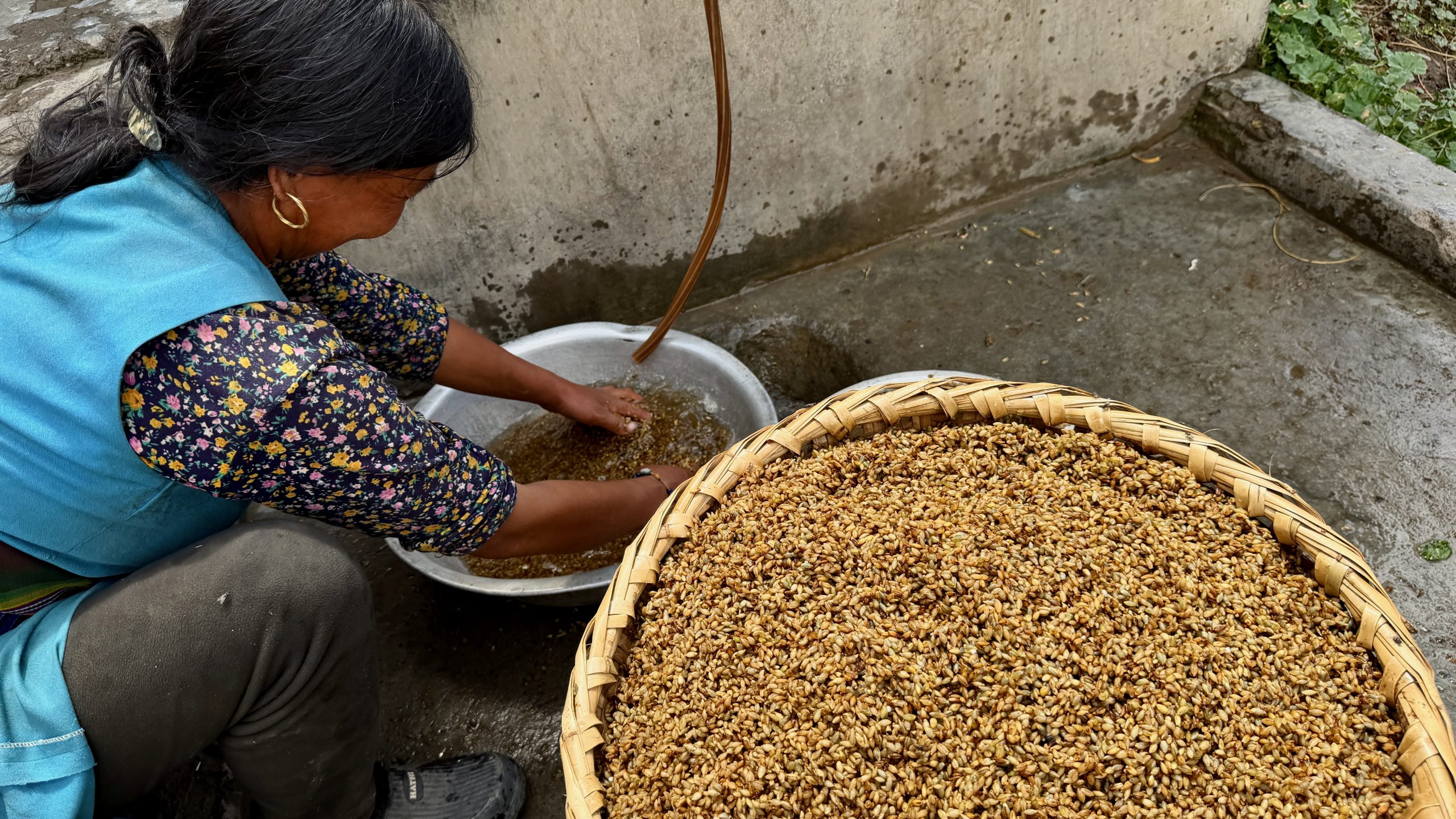
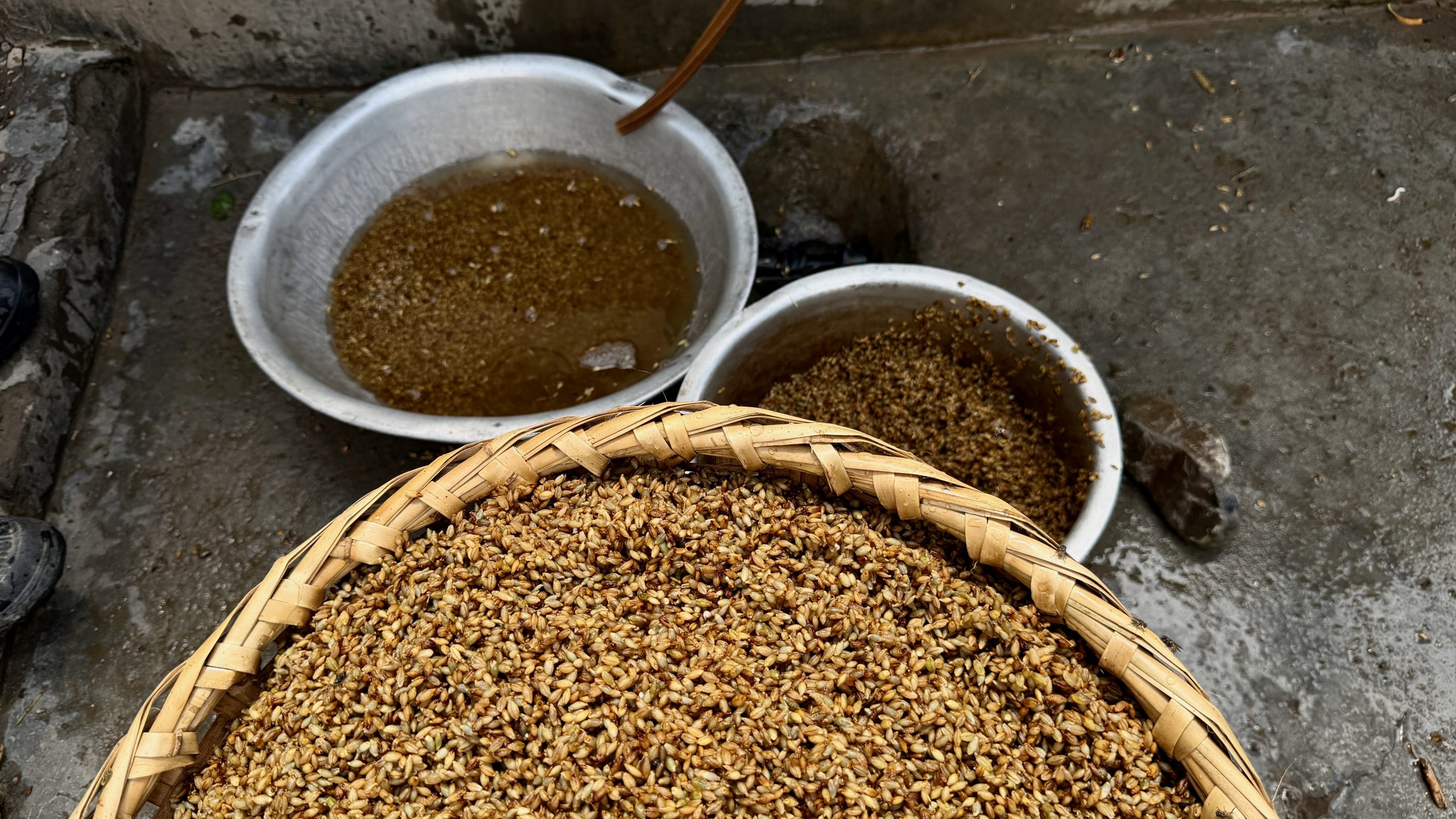
Here it almost looks like what I had hoped for, meaning she actually talks to people, but she doesn’t create enjoyable conversations for everyone. The woman was just in the middle of washing buckwheat. That grows quite well here too, after all.
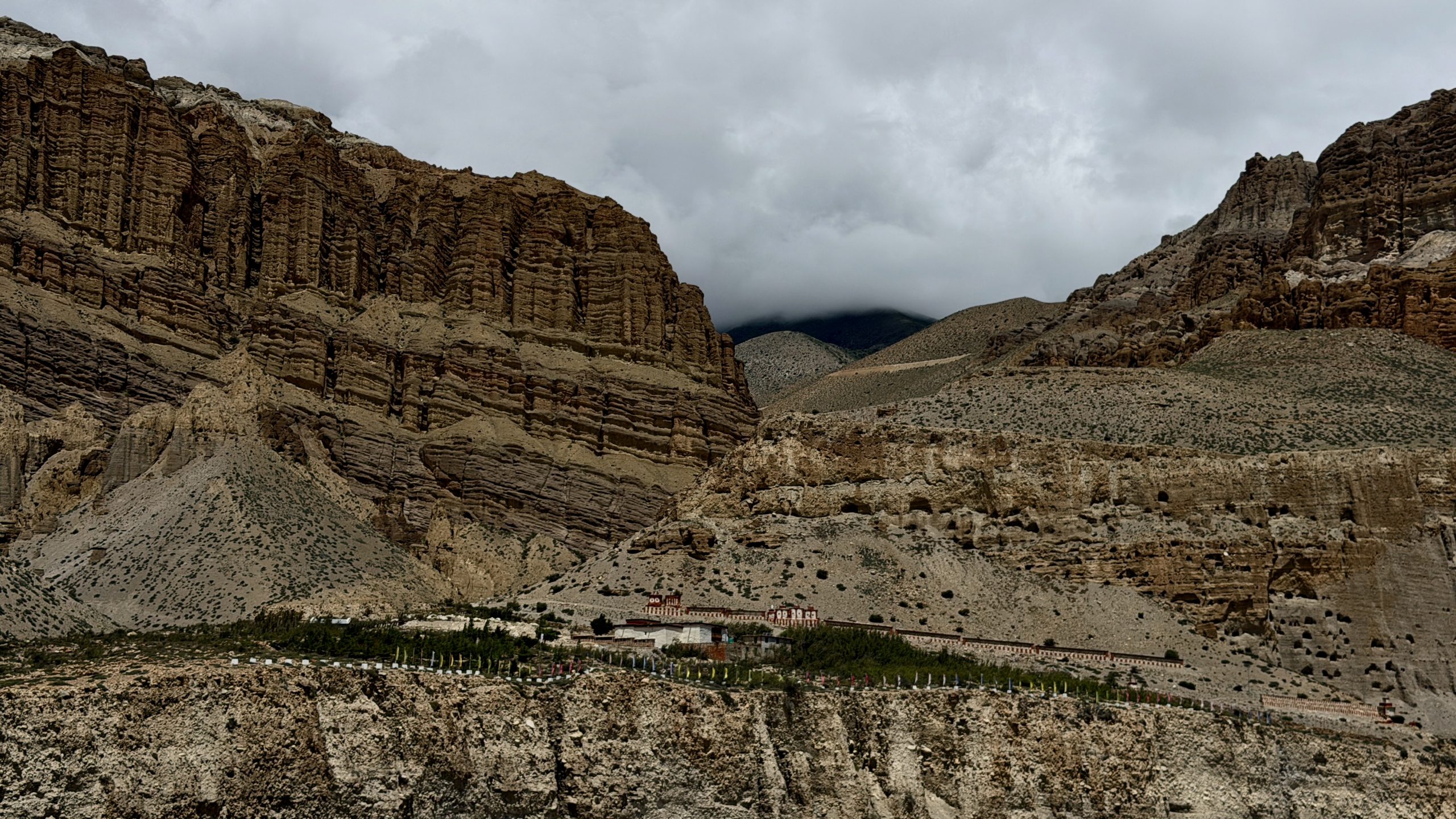
So Tangbe is very pretty and well worth a stroll through the village. Our next destination was Chhusang, along with a short hike to the abandoned Göngma Gang. Göngma Gang was built at the end of the 17th century as a large nunnery. It sits opposite the village on a kind of exposed rocky outcrop. According to local belief, such spots in the landscape are energetically charged or occupied by restless local spirits. A good idea to build a spiritual retreat there. At the time, there was a wealthy noble family in the village who initiated the project. In doing so, they specifically wanted to make inner contemplation and study possible for the female family members.
The site is only accessible by crossing the river. They built lightweight bridges that could be adjusted or rebuilt depending on the river’s flow, as well as ropeways. This was how the nuns were supplied. It was labor-intensive, but at the time they had enough money and staff. However, over the course of the 18th and 19th centuries, this no longer worked out as well, the supply chain became too difficult, and the monastery was abandoned once again.
Since around 2018, enormous restoration work has been carried out here thanks to donations and a lot of hard labor. You can read more about it at the Norbusum Foundation.
First, a fairly sturdy suspension bridge was built in 2018. A scare factor for me, but manageable.
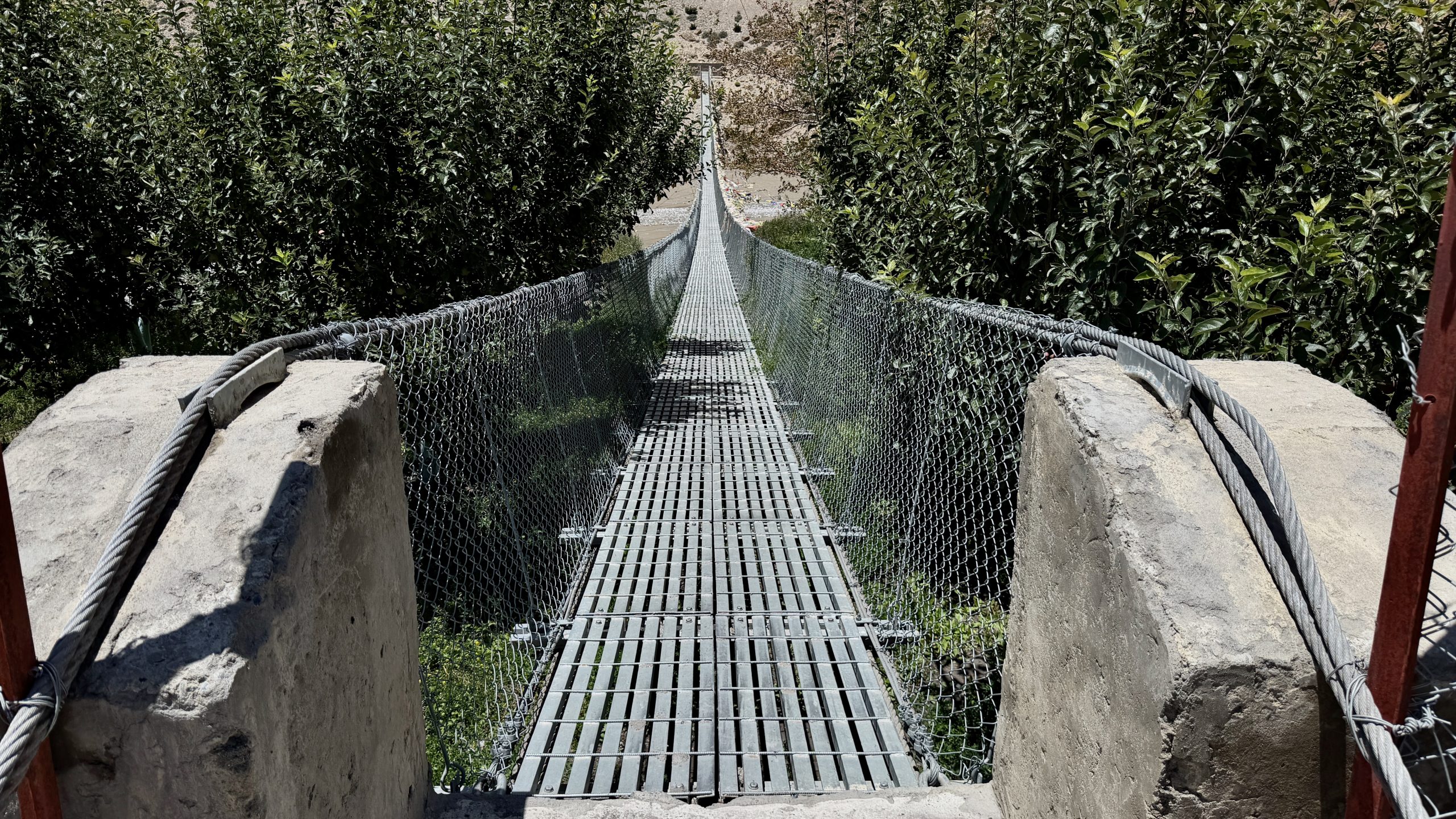
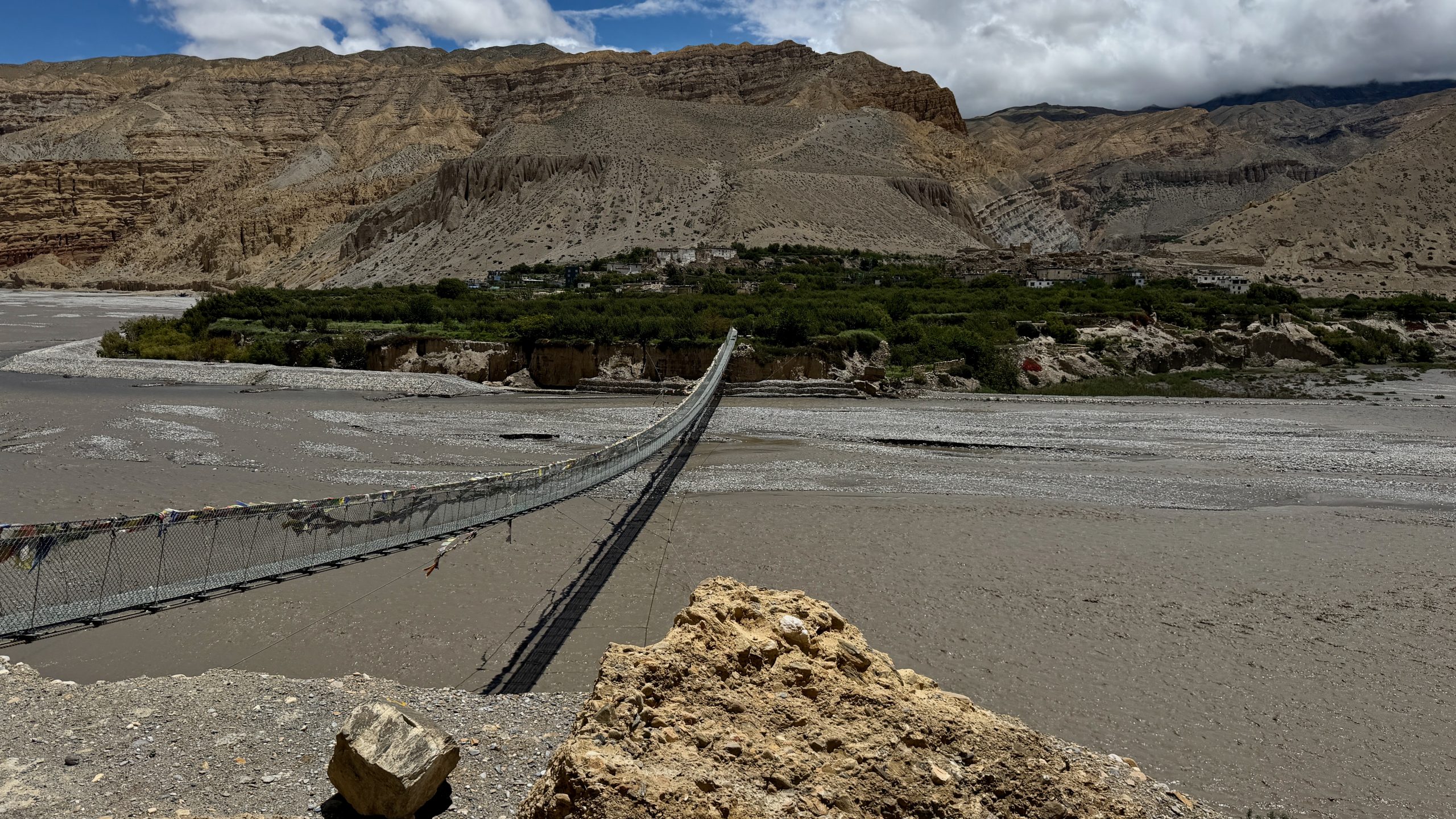
Then we walked up to the temple, where we were able to have a look around. The centerpiece is a large Maitreya statue, who is called Jampa here. In addition, there are numerous paintings of deities in union.
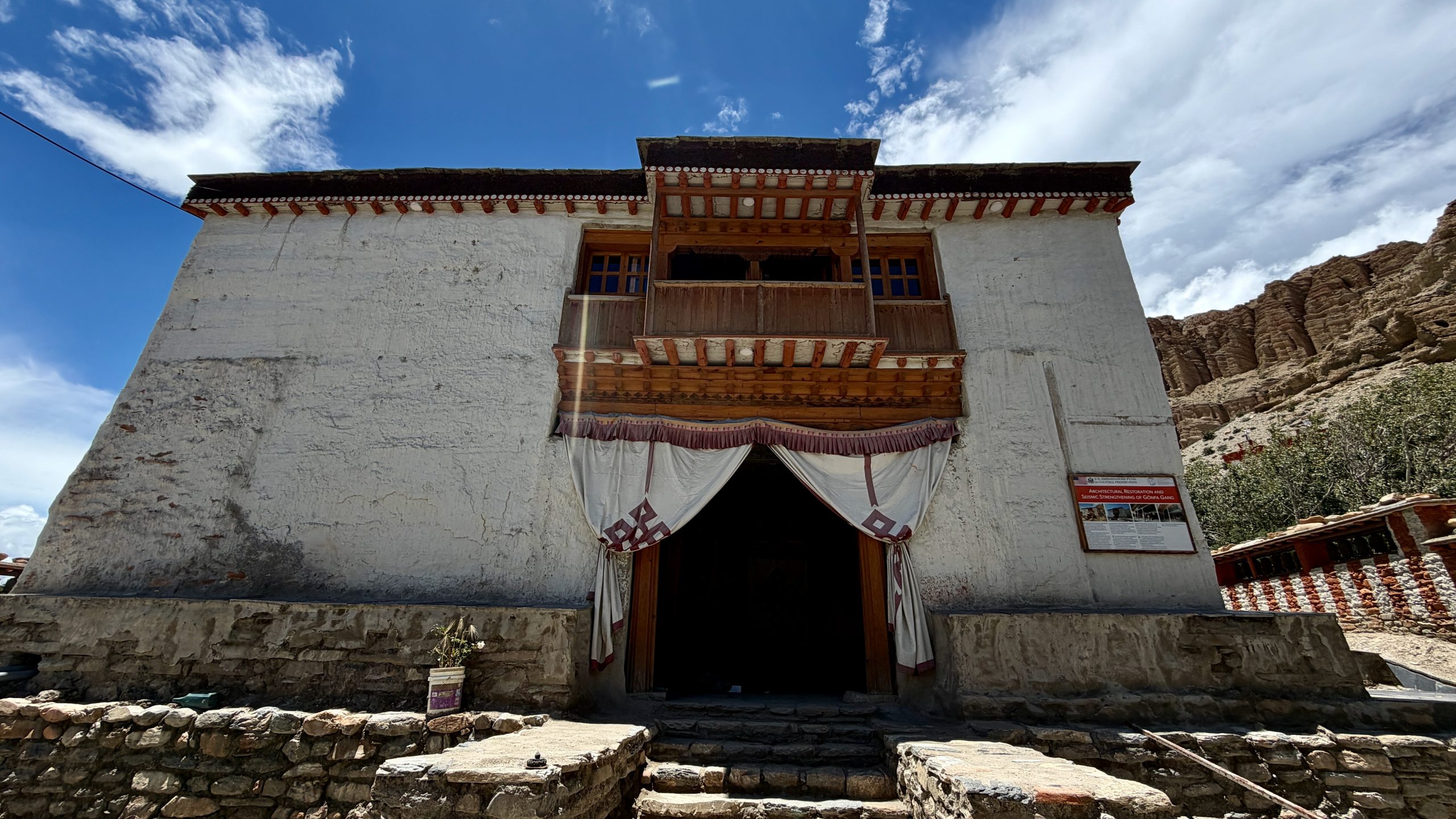
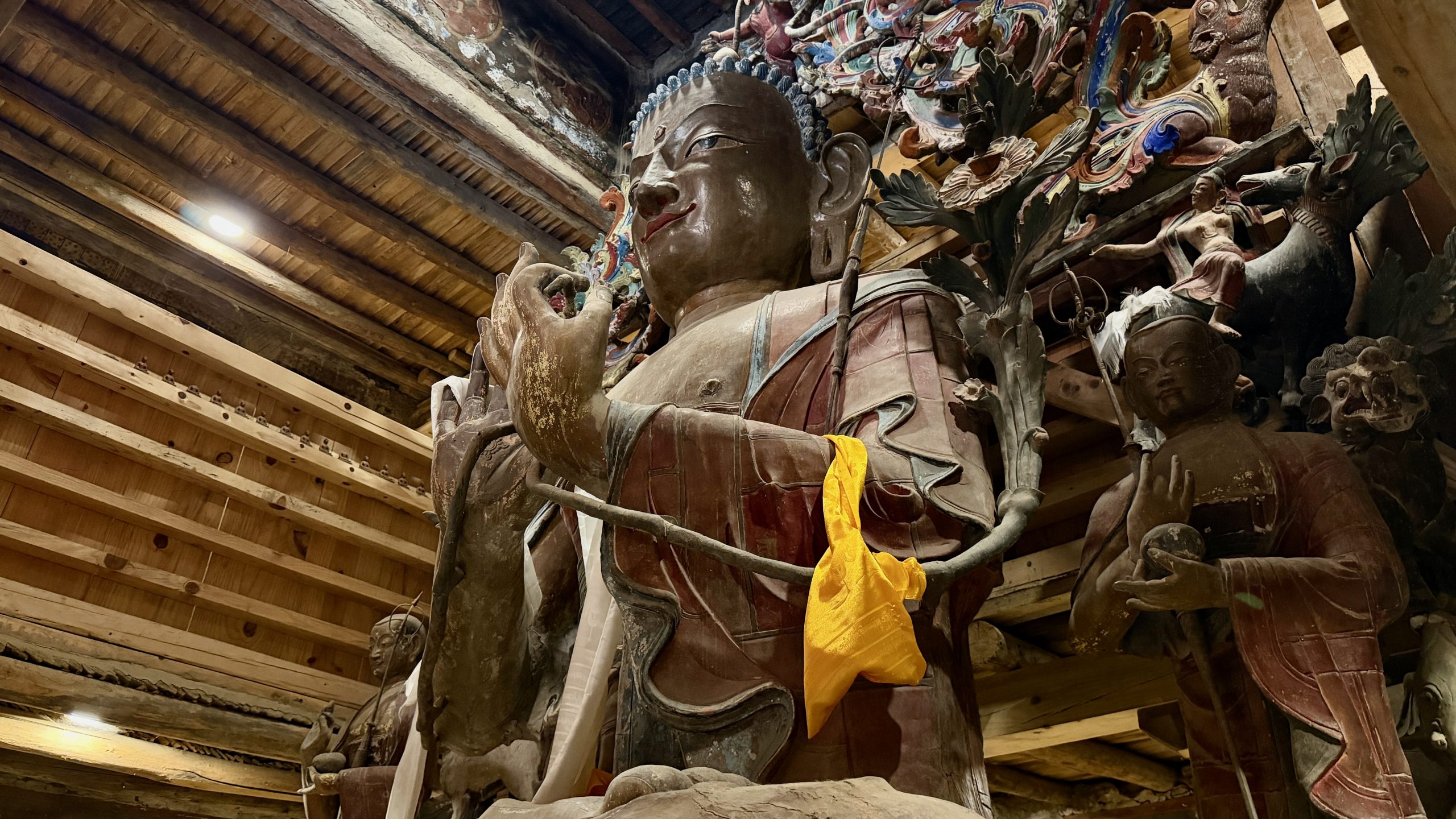
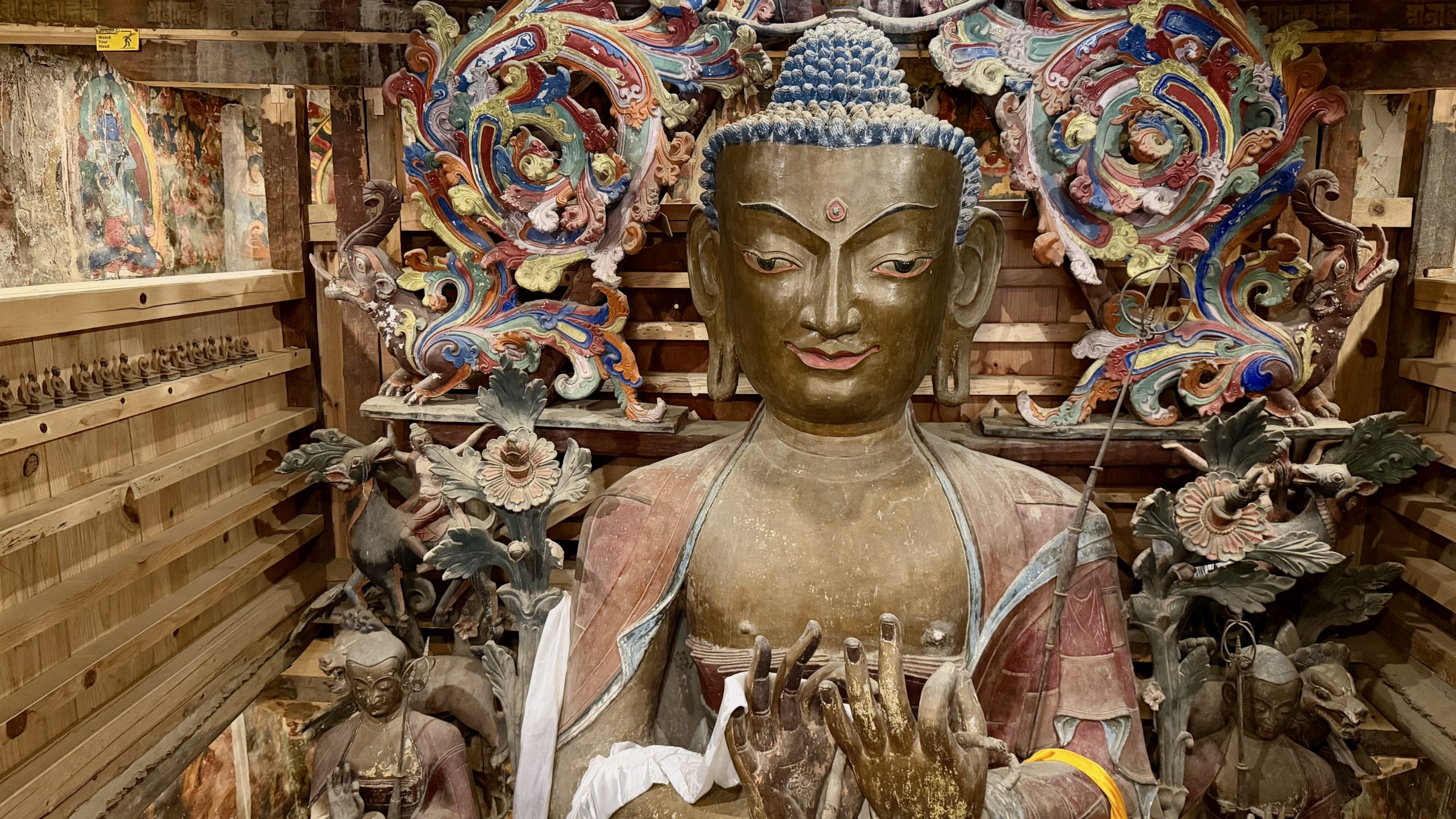
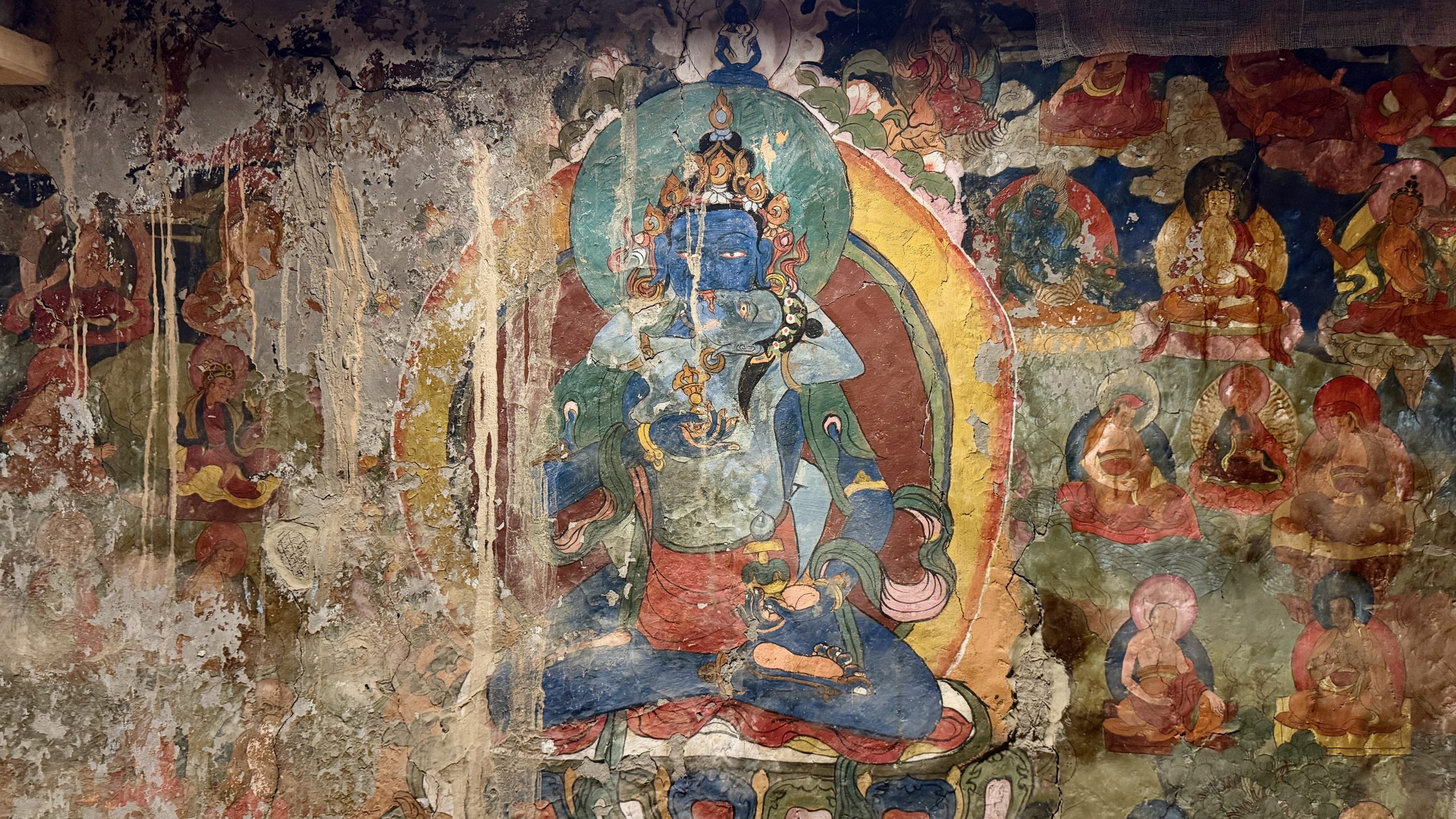
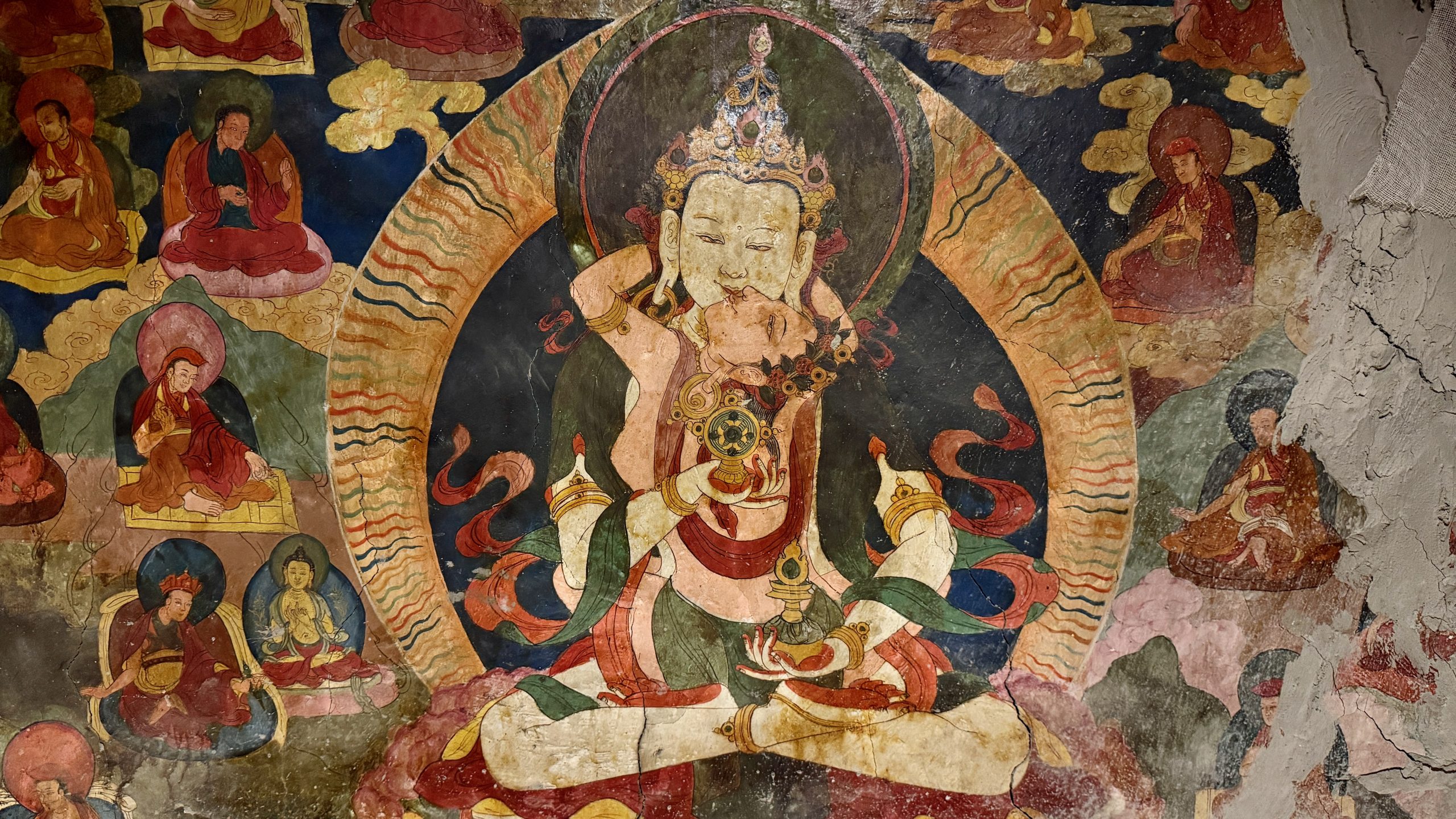
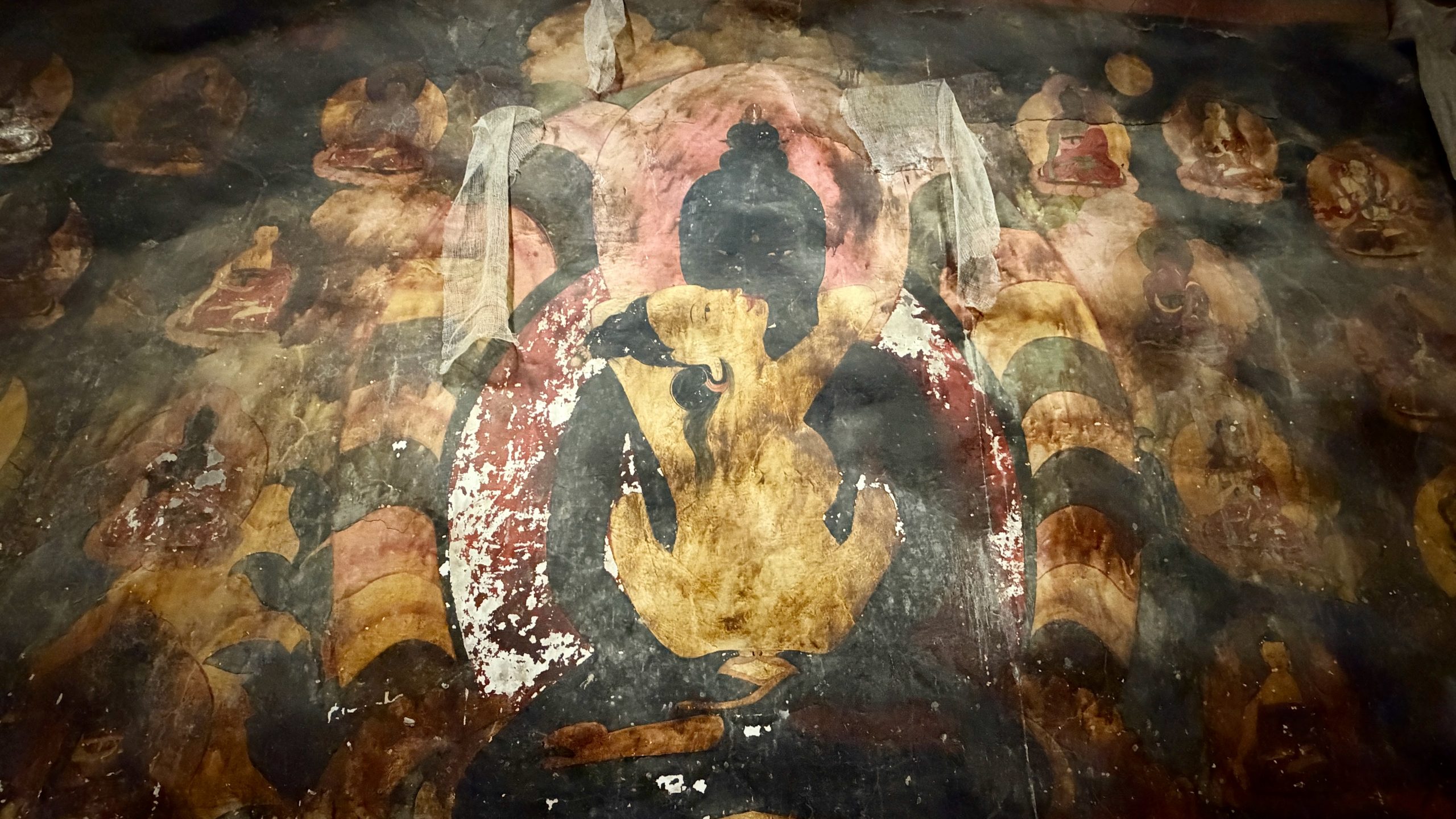
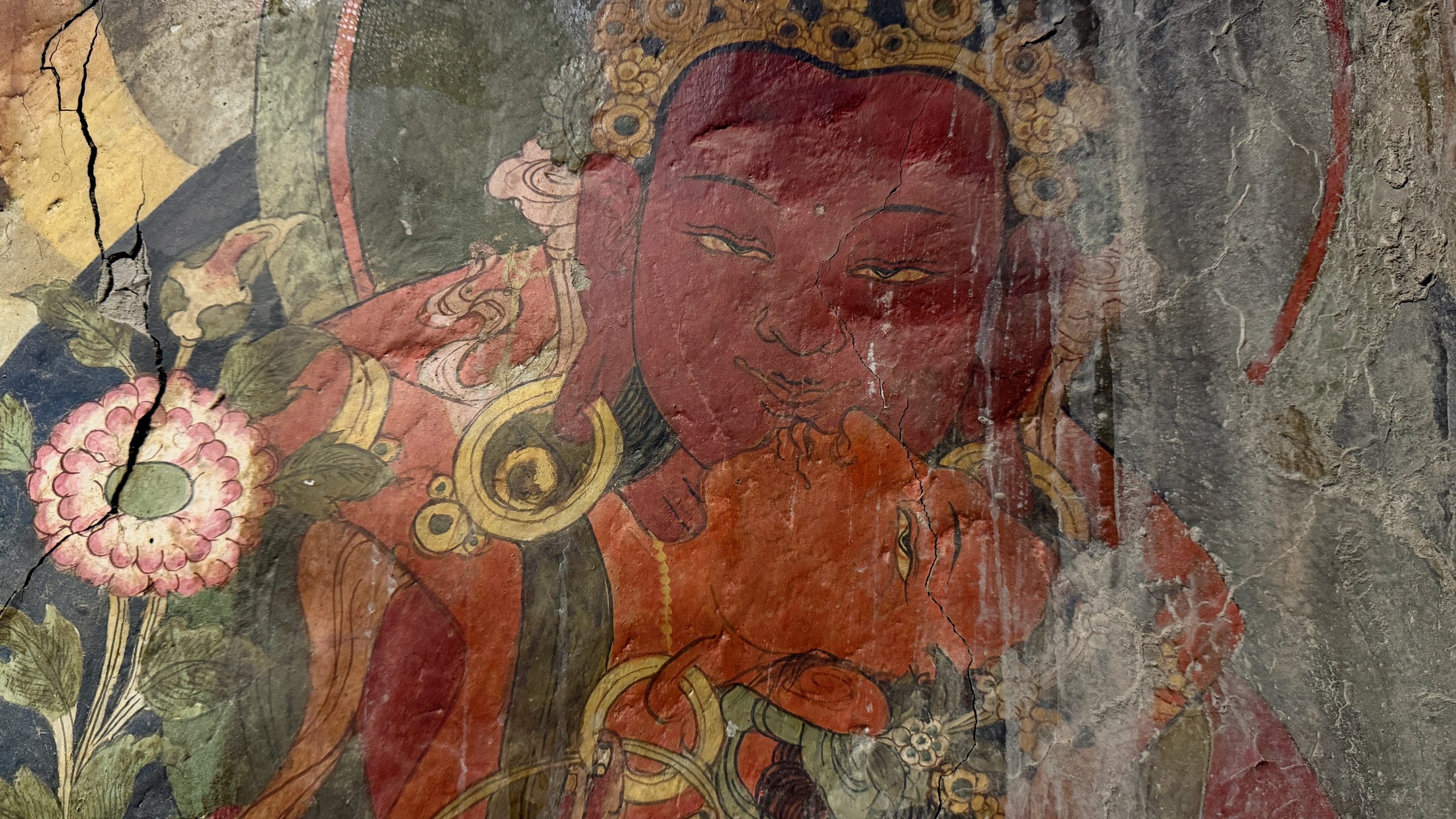
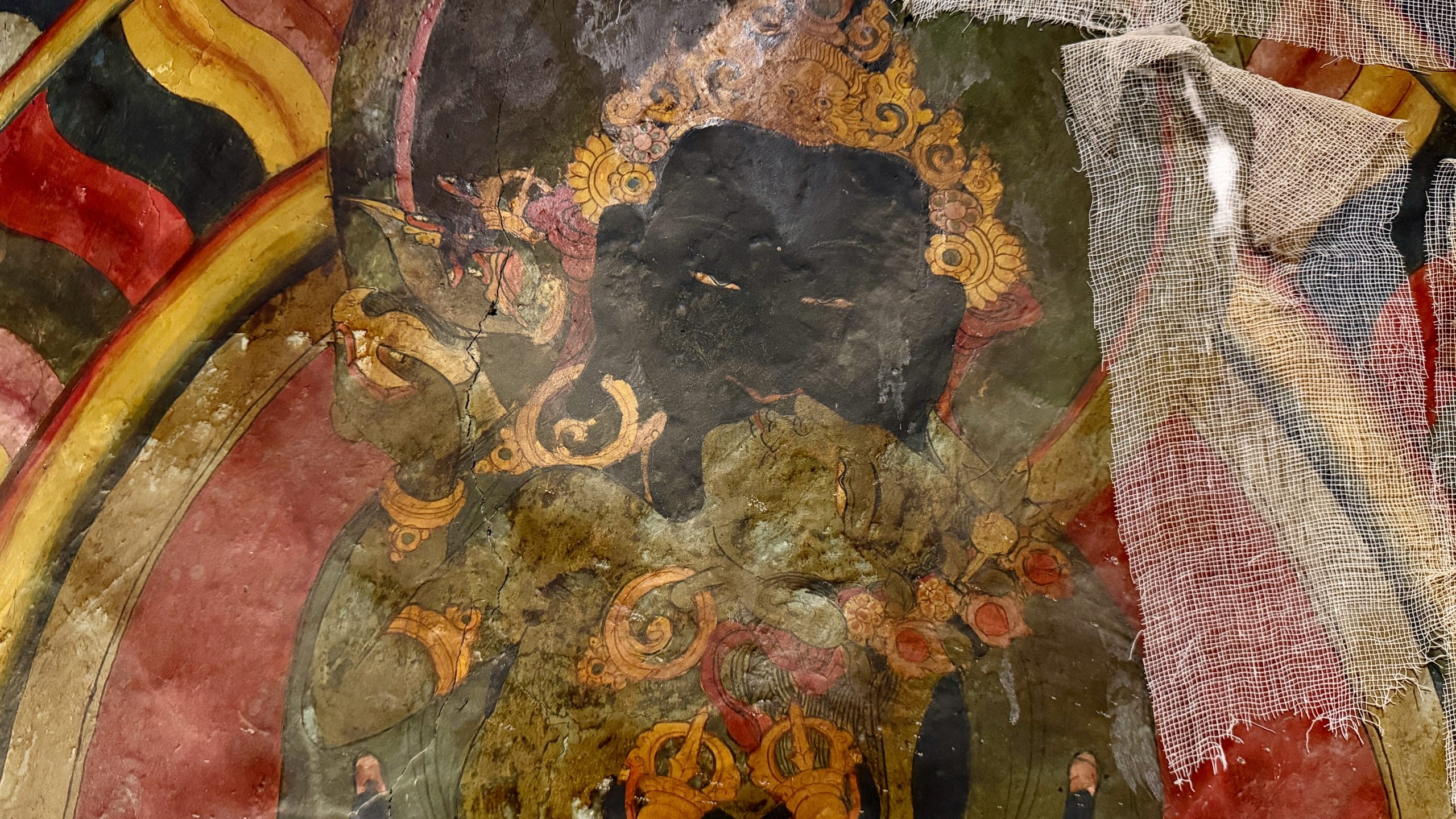
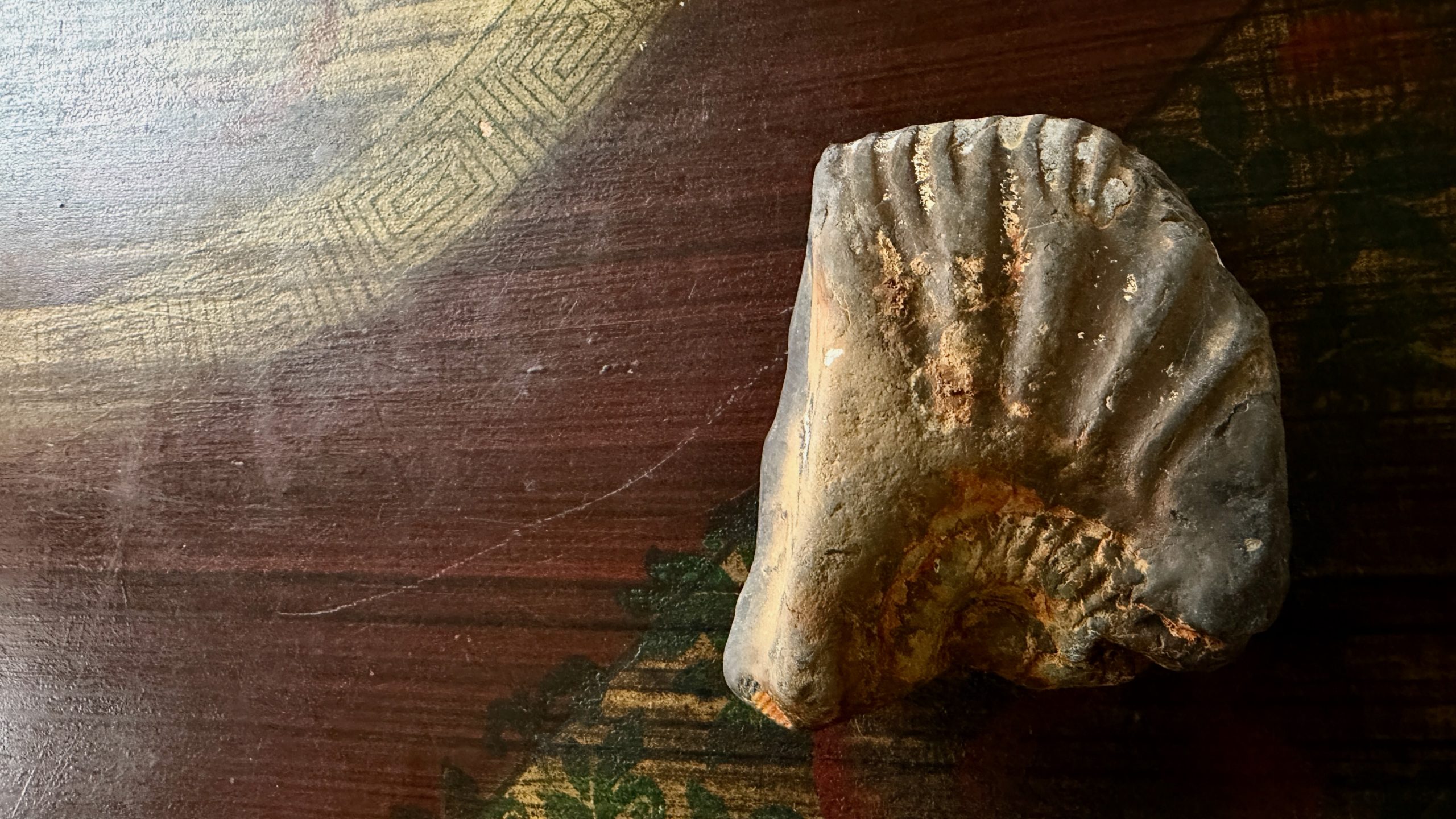
I’m really loving these color schemes right now. We then strolled back, and Laxmi found a great ammonite. It was just lying around right there. Lunch was great.
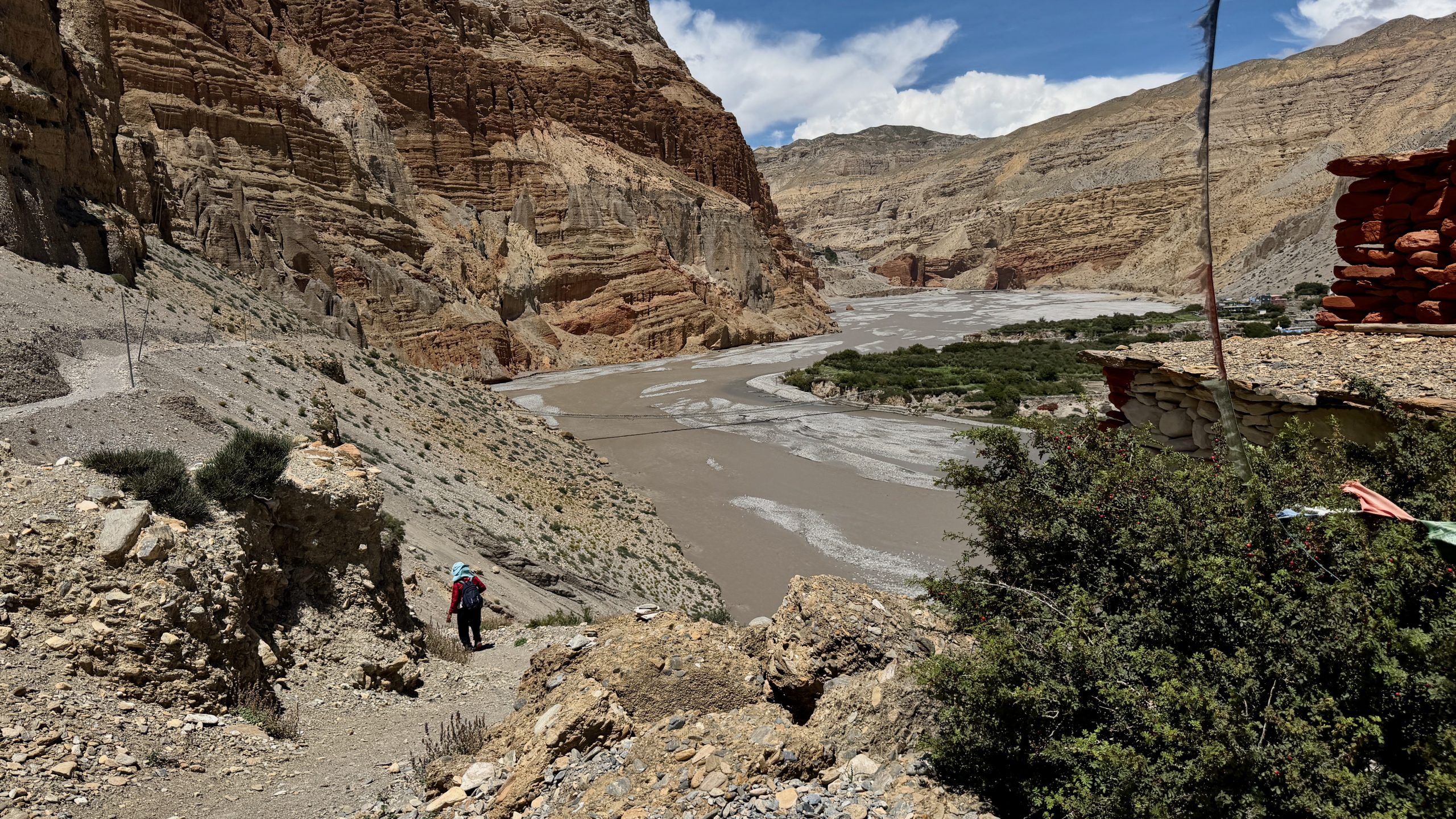
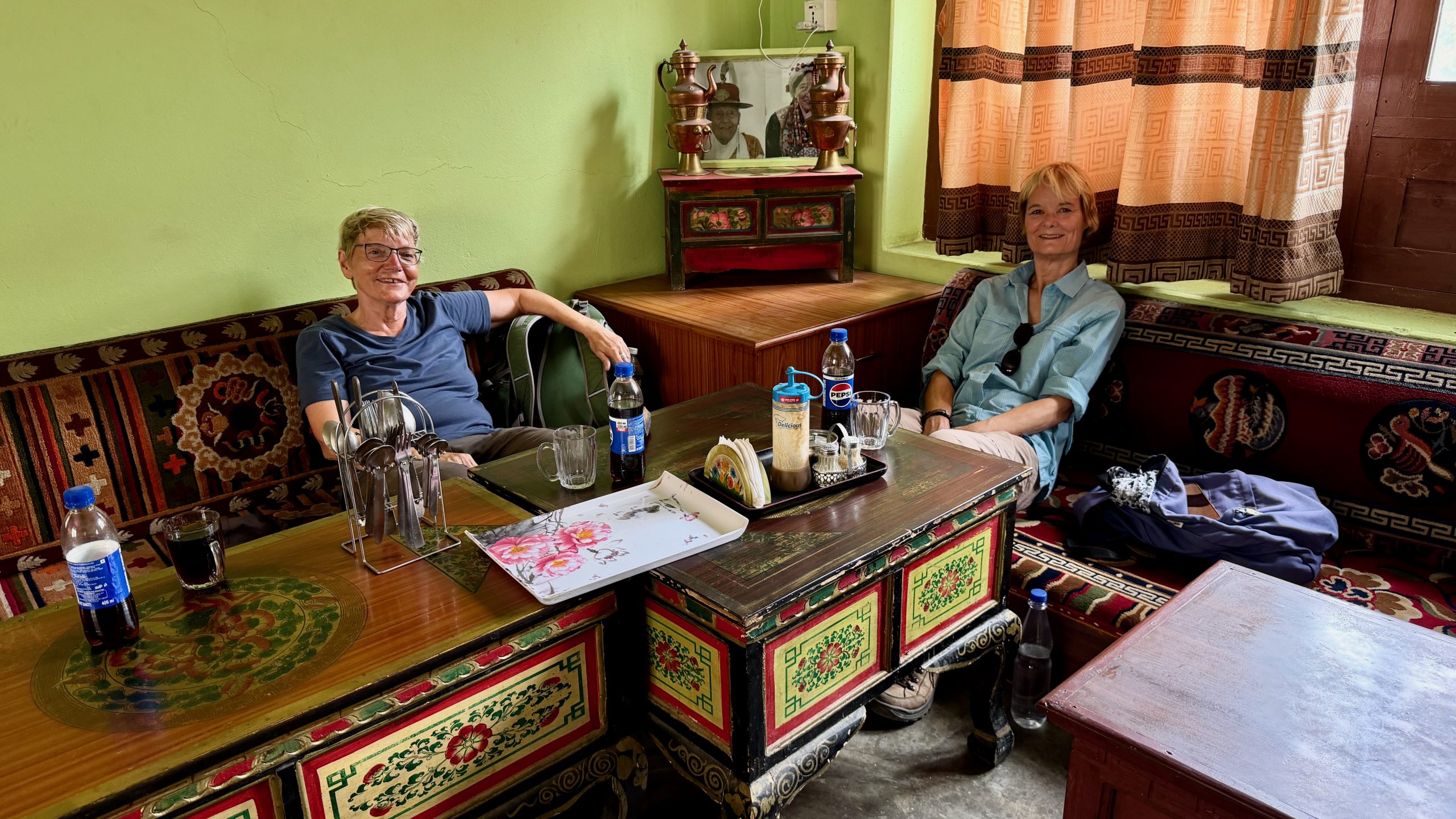
Afterwards, we felt a bit refreshed and ready to admire more rock formations. Honestly, we spent the whole day just in awe. By the way, the three of us are getting along really well. I’ve known Ute for a long time as a pleasant travel companion and great friend, but it’s also very nice with Beate, and we mostly agree on things.
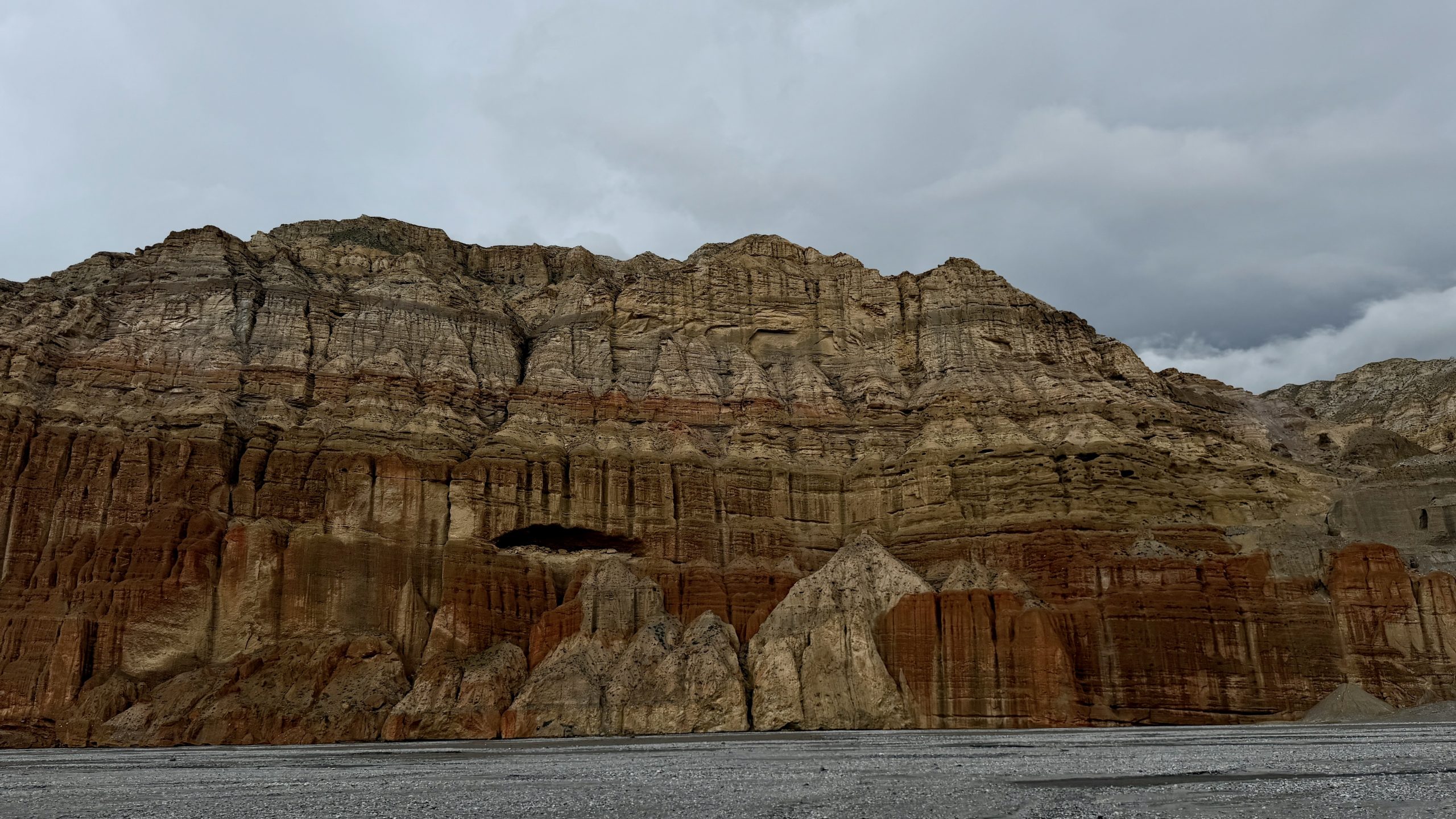
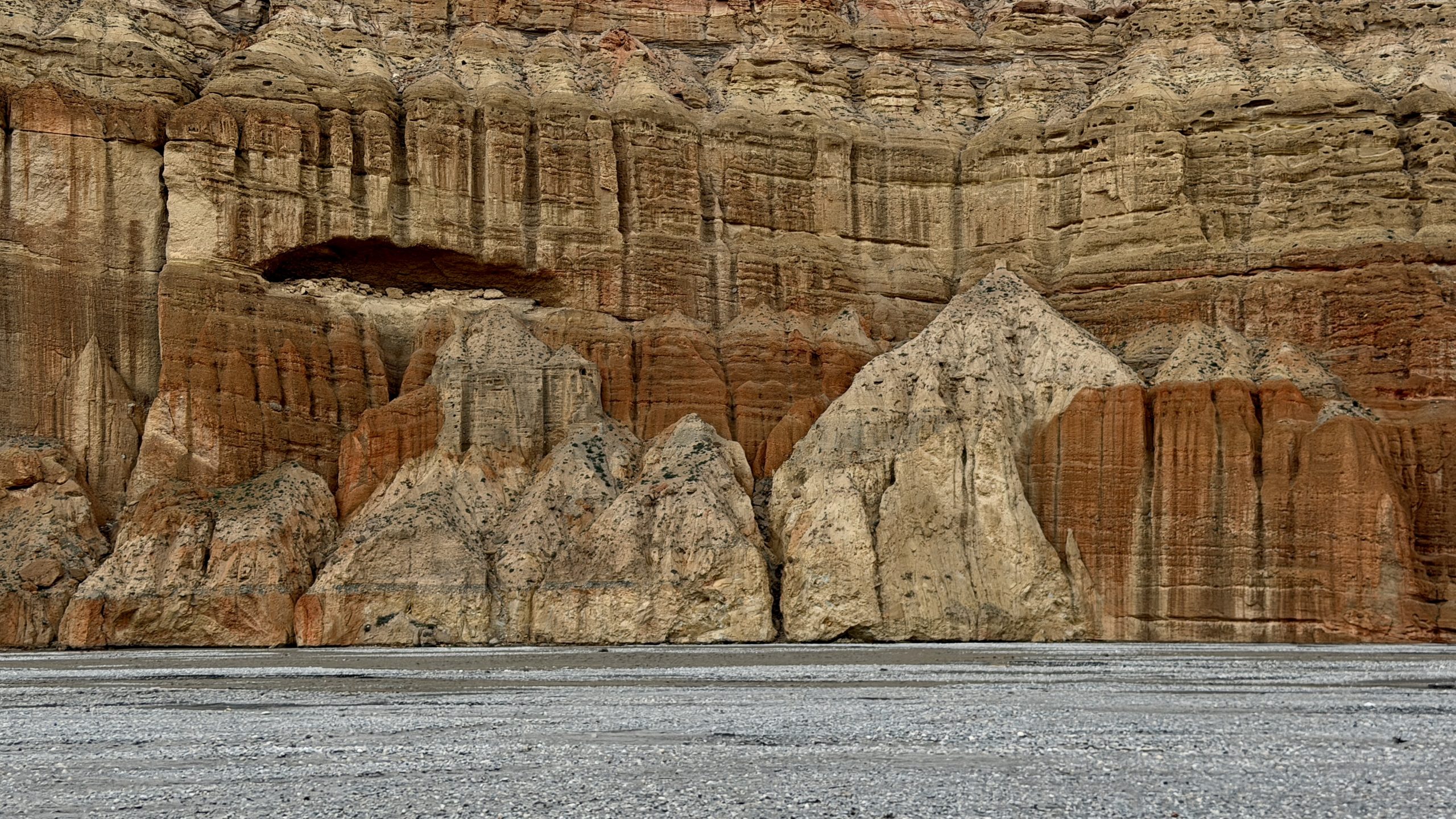
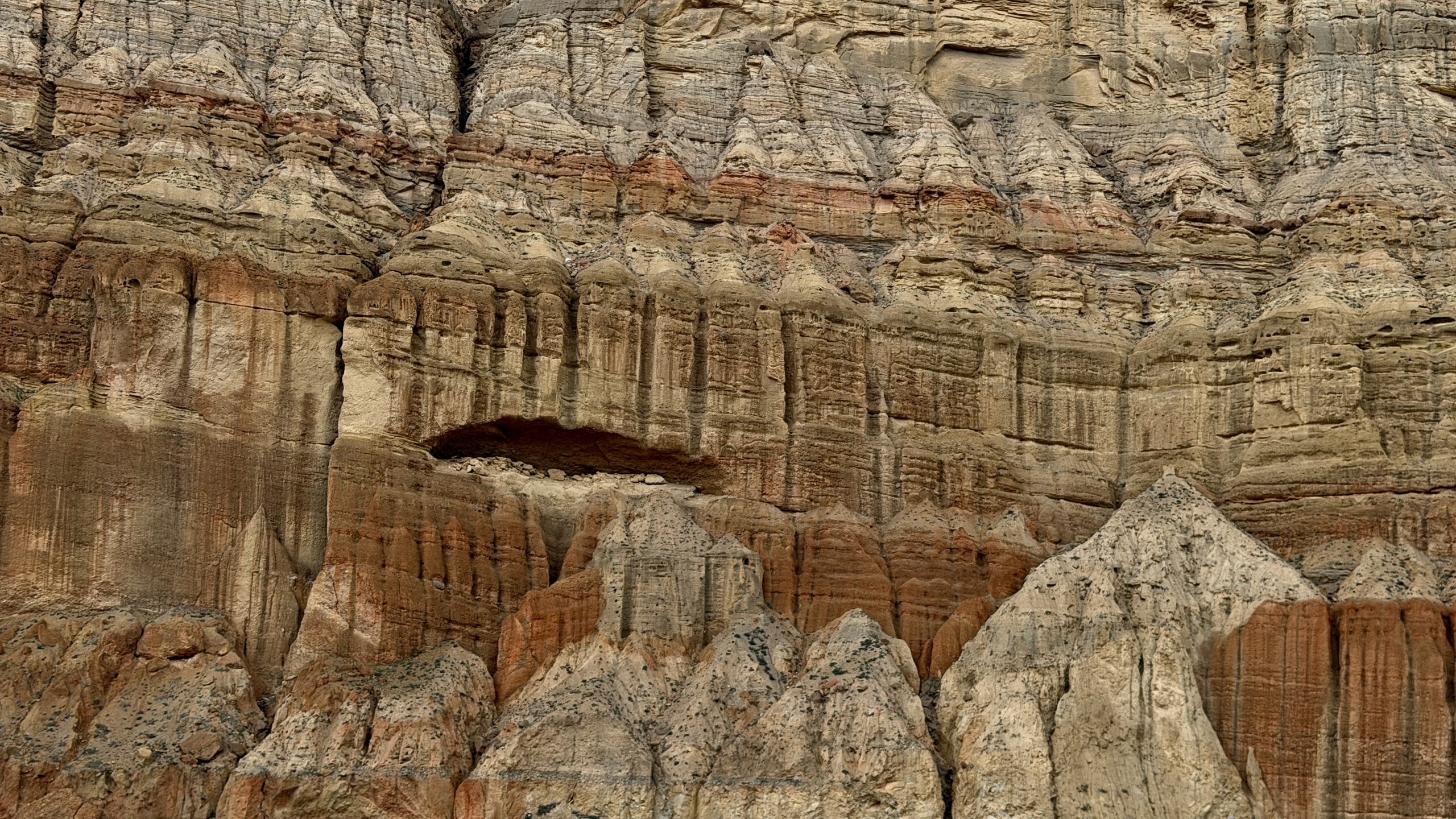
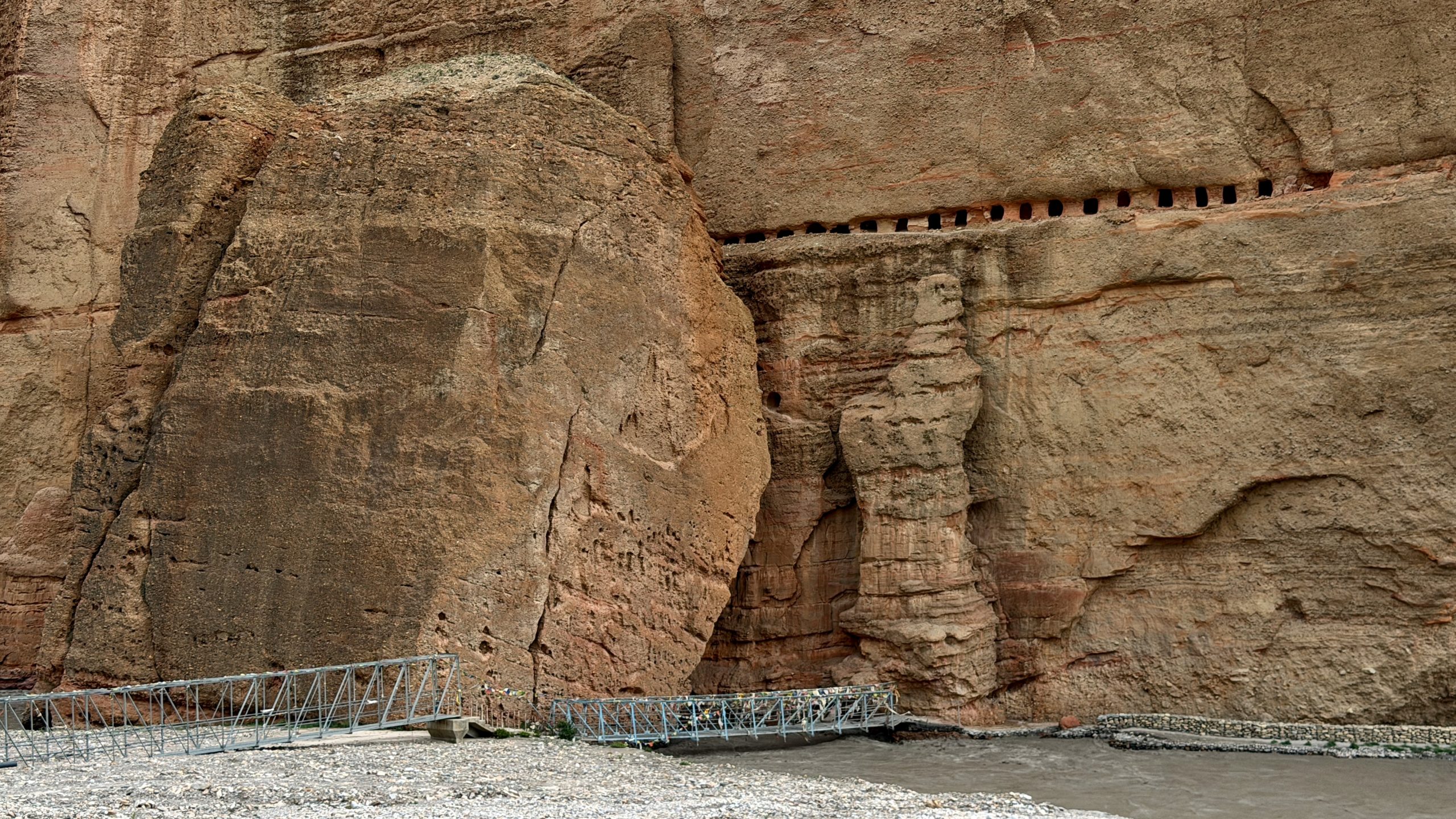
We continued driving to Samar with short stopps for watching.
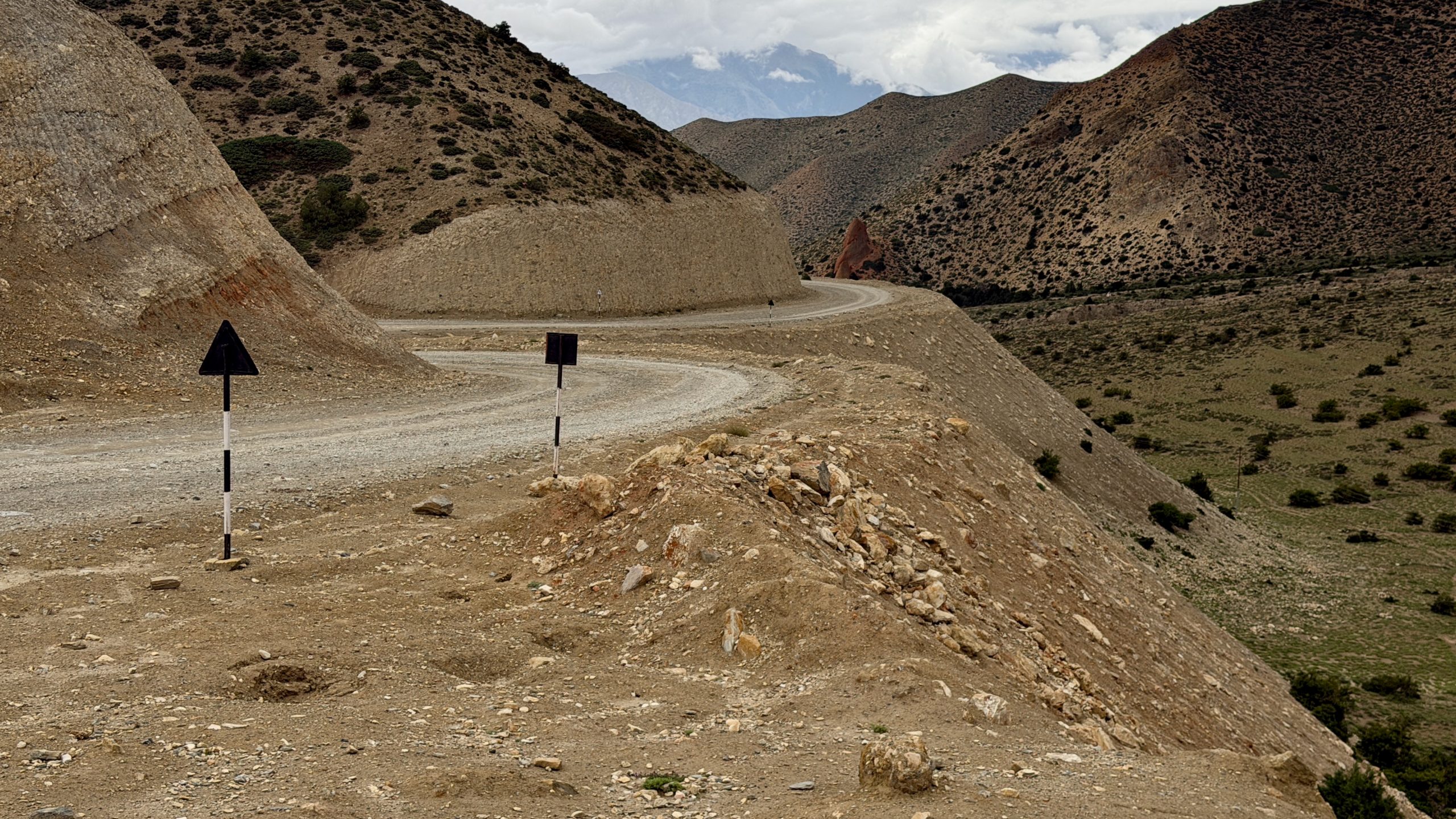
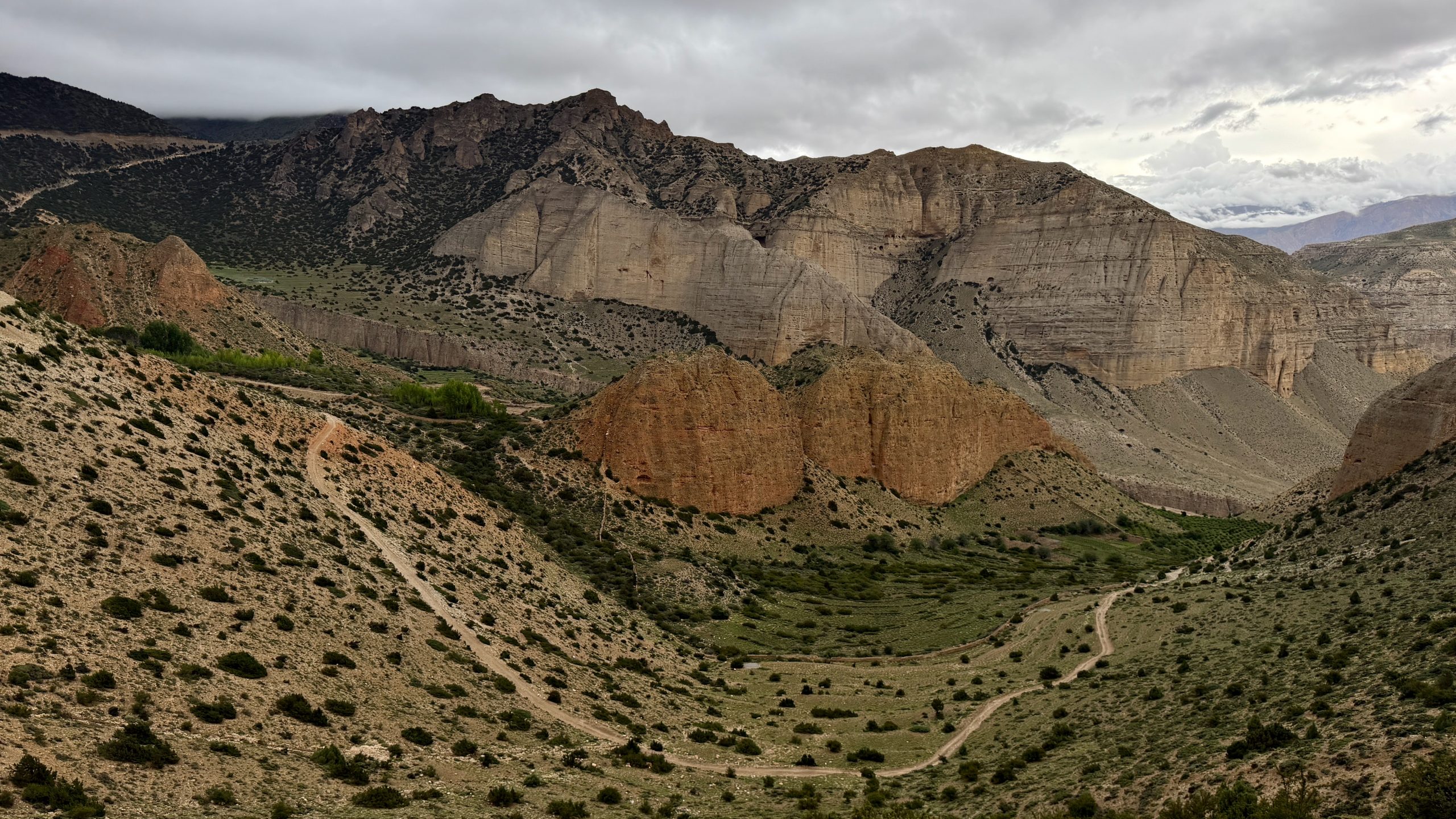
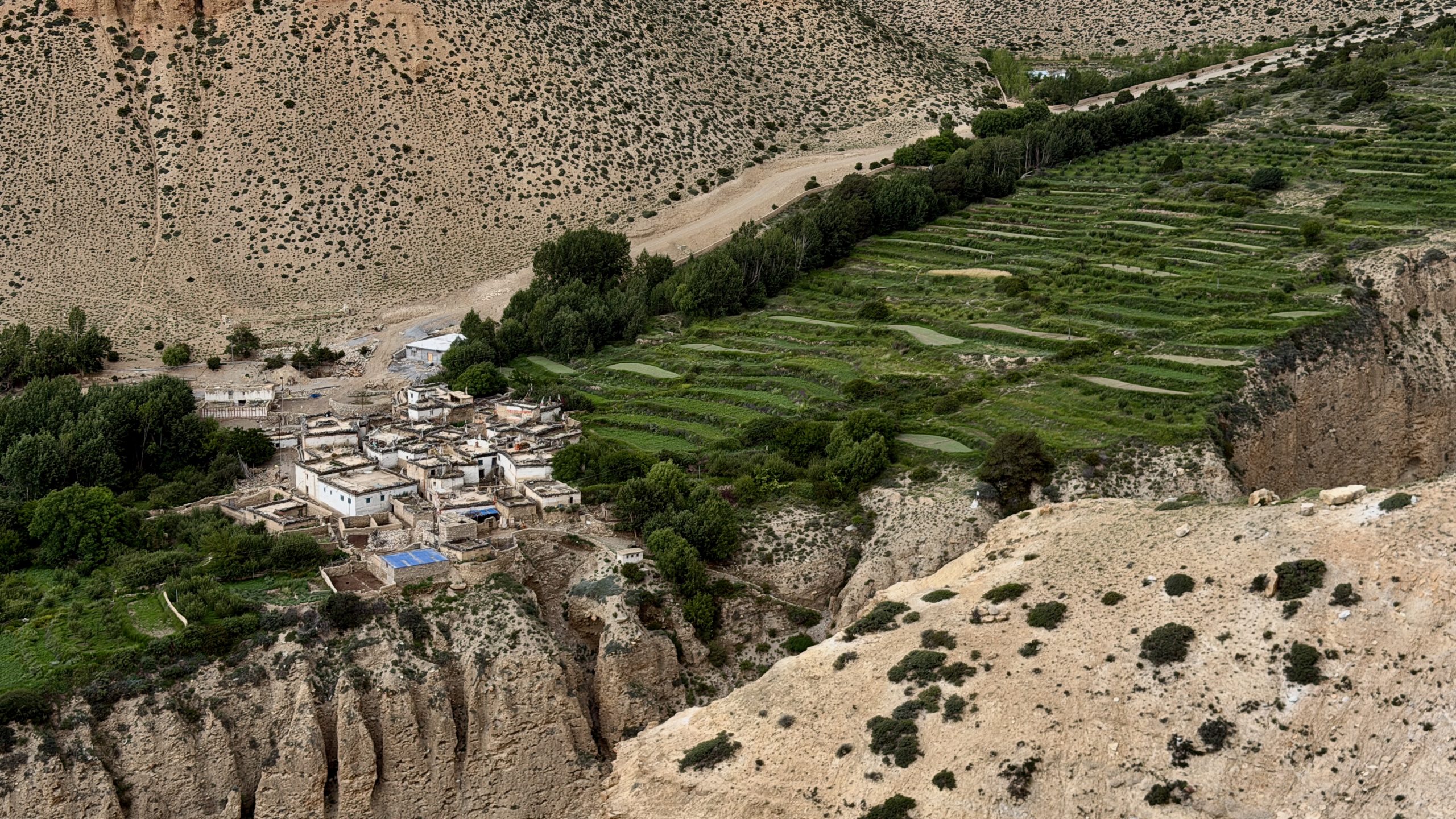
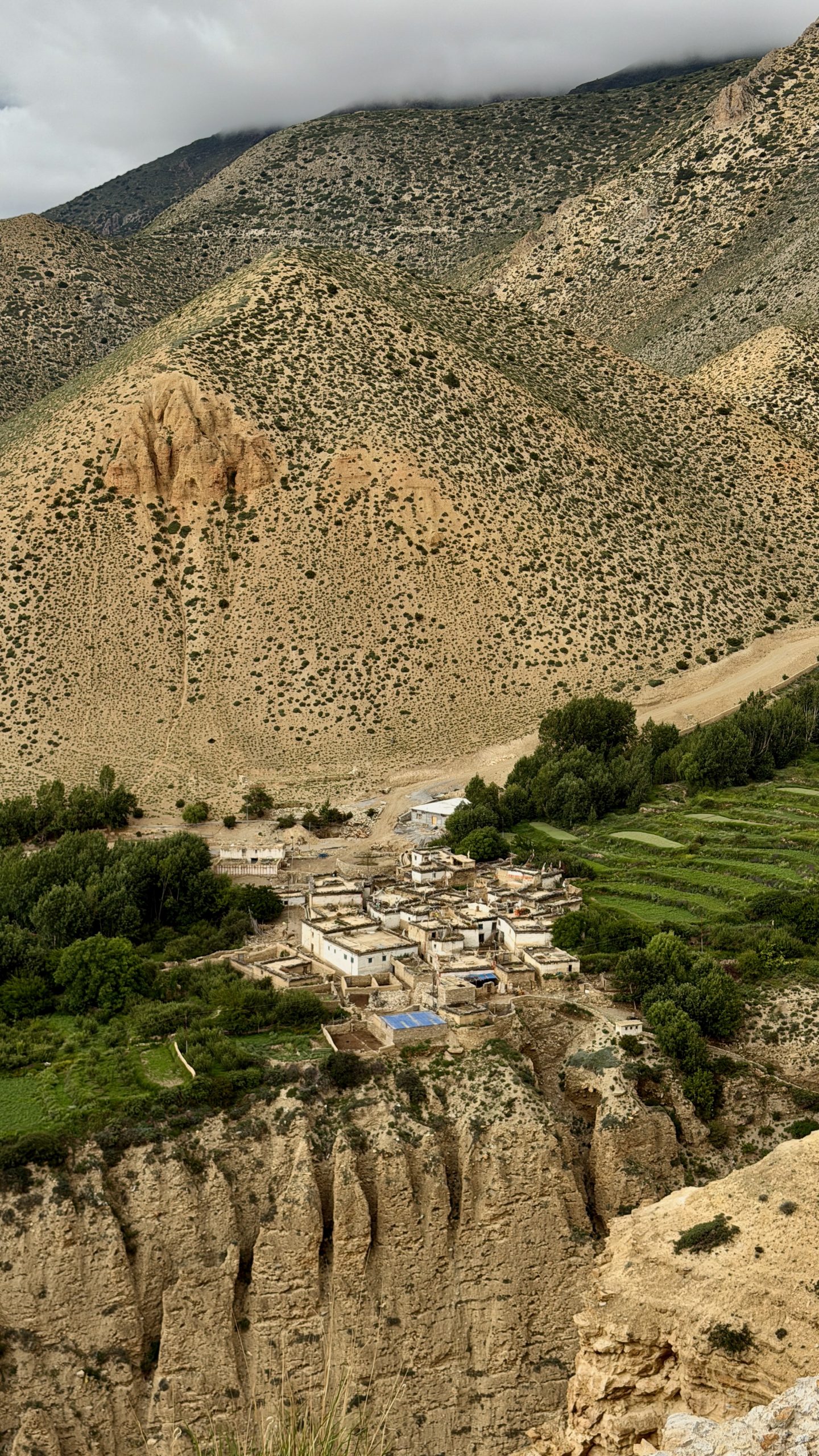
Unfortunately, it clouded over again, but at least we were able to enjoy the sun more often throughout the day. In Samar, we found a pleasant, lovely place to stay with great rooms, which we managed to haggle down. We are the only guests. That said, we had spotted two small trekking groups during the day, one solo hiker with a guide and porter, as well as a couple. They walked a lot on the road. Although there was little traffic on it, it didn’t look particularly attractive to us.
Speaking of traffic and guide issues: our driver Shankar is great, more communicative, and often has better tips for us. For instance, he suggested this accommodation. We booked in for two nights because we didn’t just want to look at the landscape from the car, but rather linger in it a bit more. More on that in the next blog post.