


Saspotse -> Yanthang – Strolling around, collecting trash and washing barley
14. September 2026
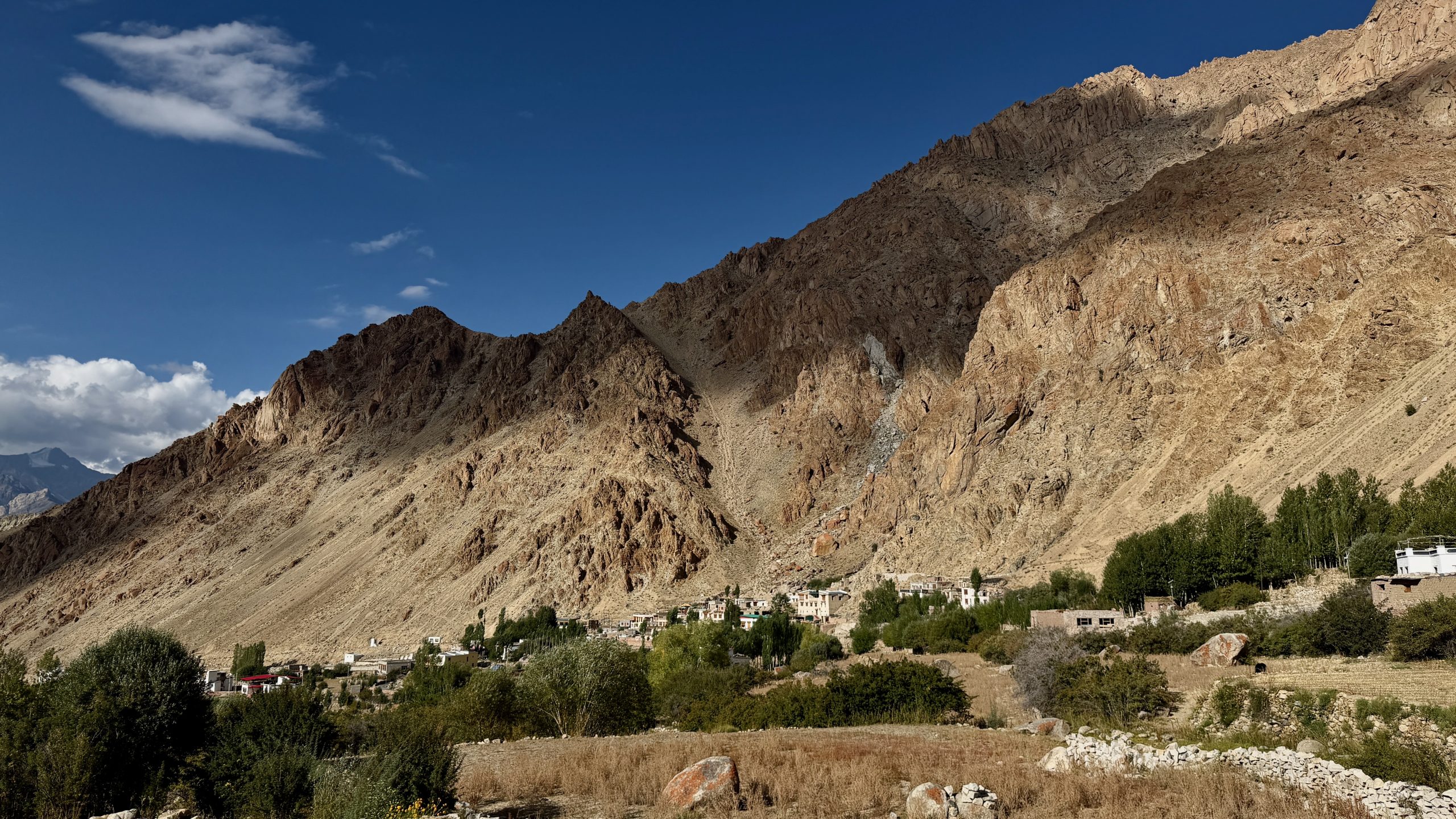
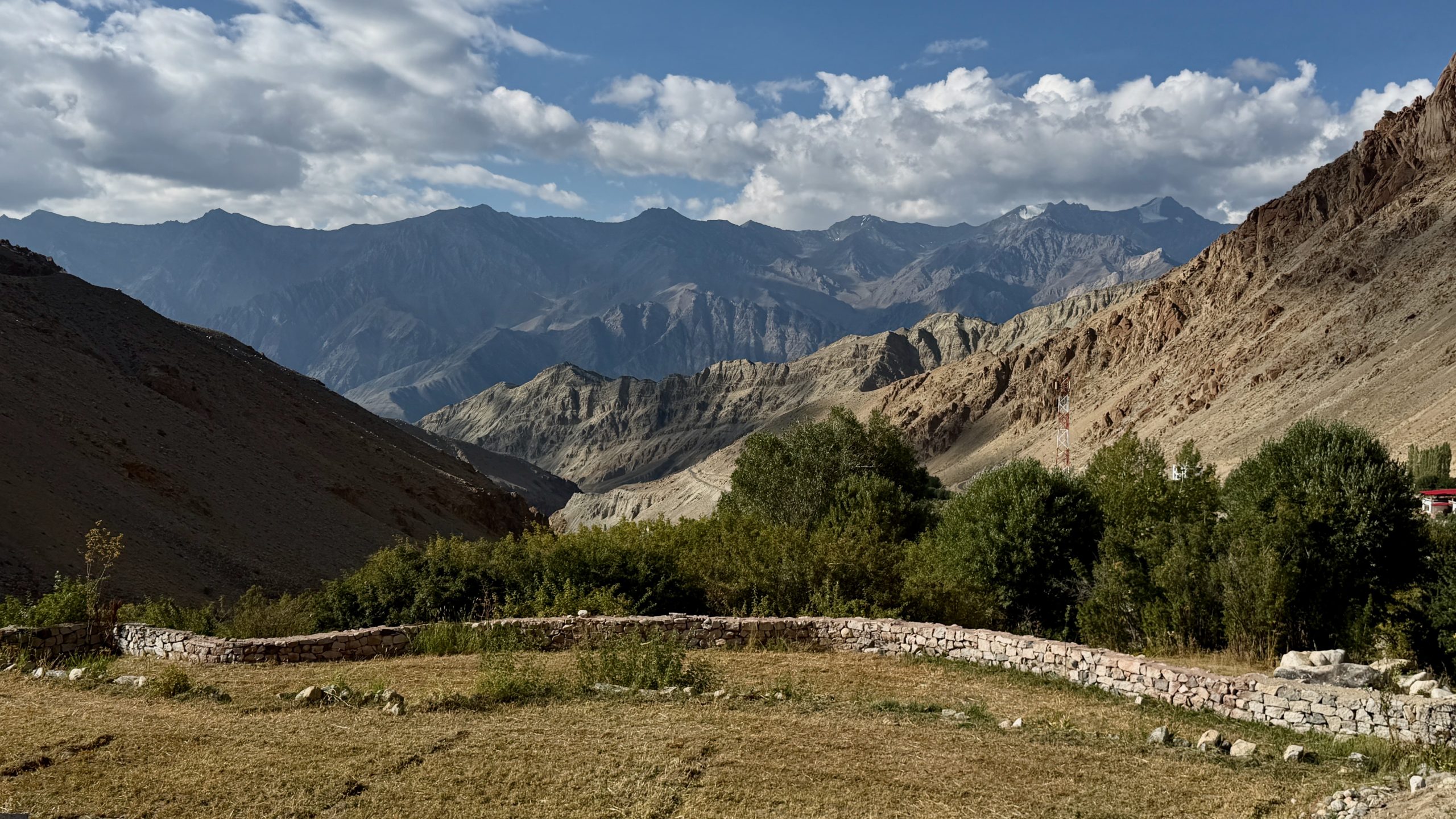
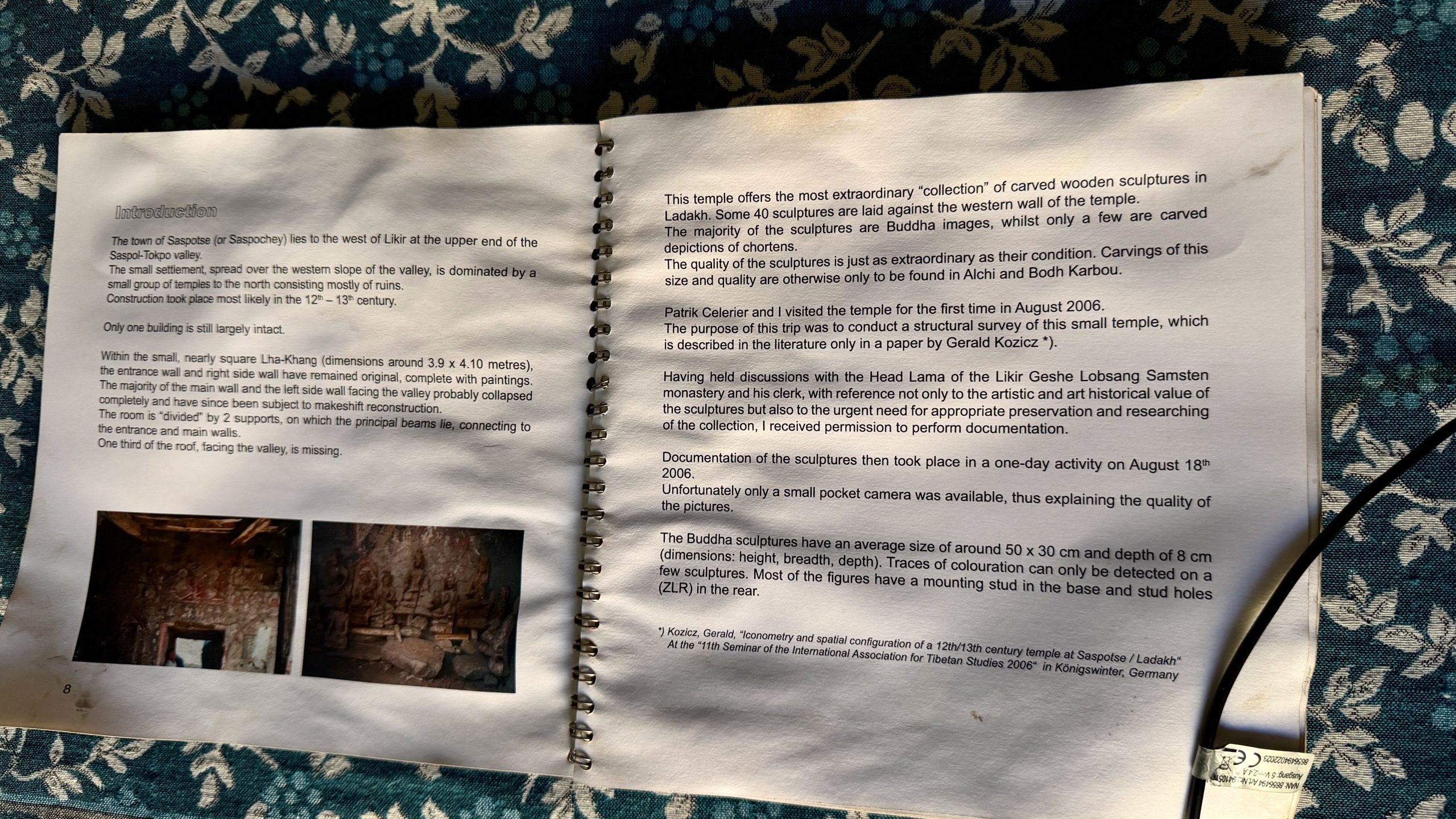
These were the views I woke up to the next morning in Saspotse. During the night, the woman had returned, bringing along two of her taxi-driver sons. They simply gave us a friendly greeting. Since we had time on our hands now, I wanted to show Rinchen the wooden Buddhas, but the key had gone with the man. So she just showed us the book instead.
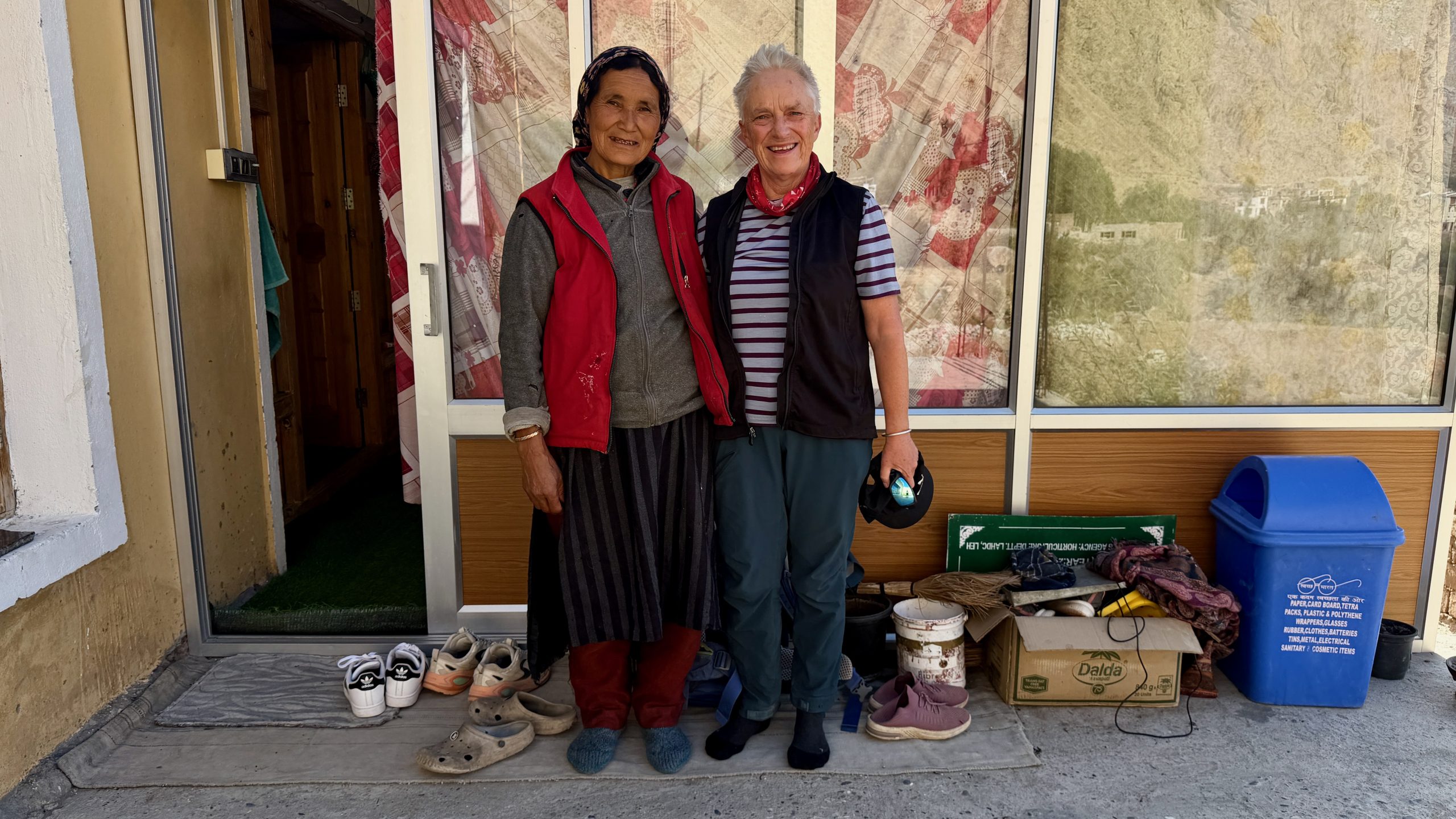
Then we said goodbye.
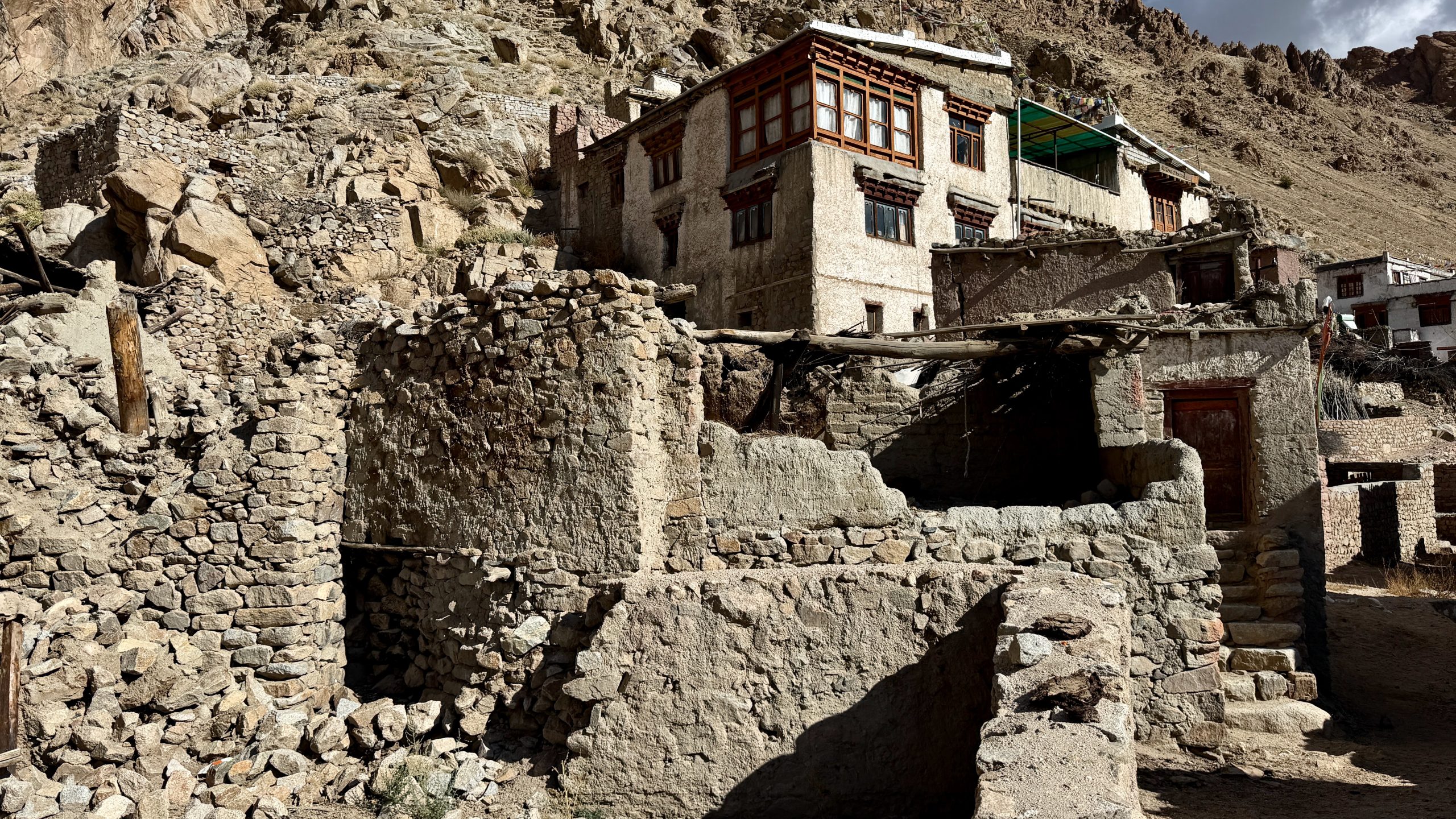
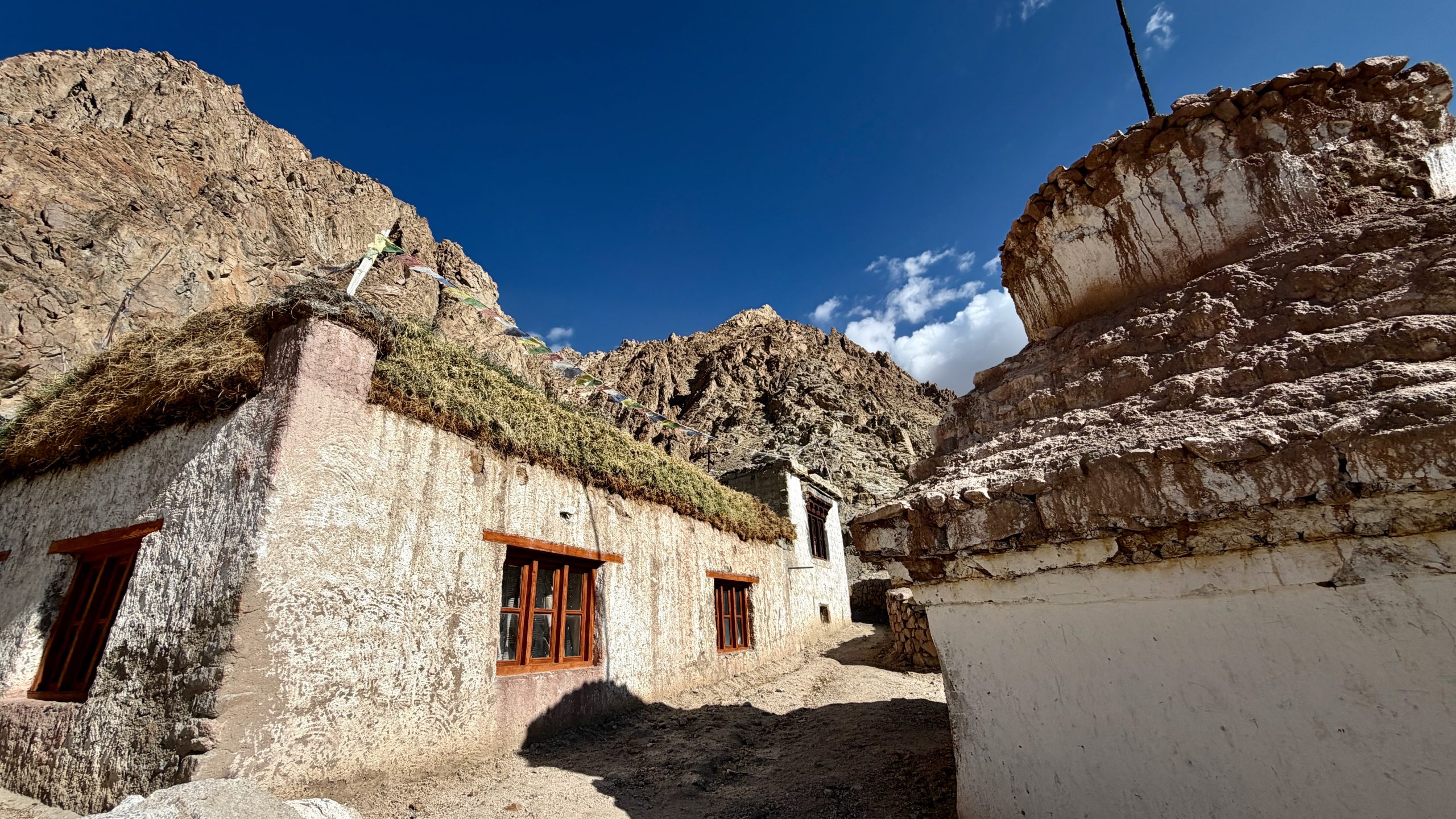
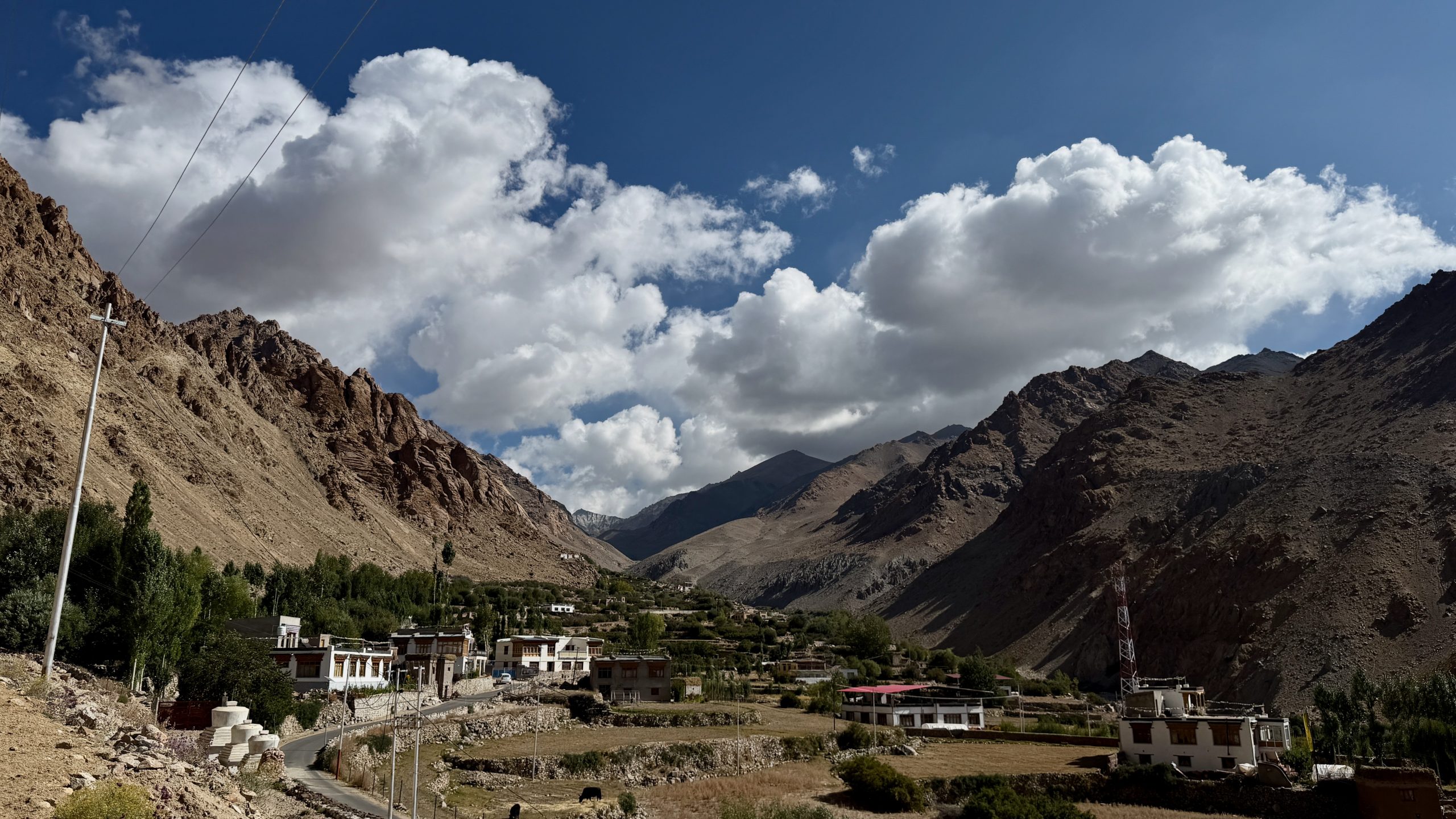
We then walked through the village. It is quite large, but also very empty. We didn’t see anyone we would estimate to be younger than 50. There were old houses where you couldn’t really tell if they were still inhabited, alongside new ones and several currently under construction.
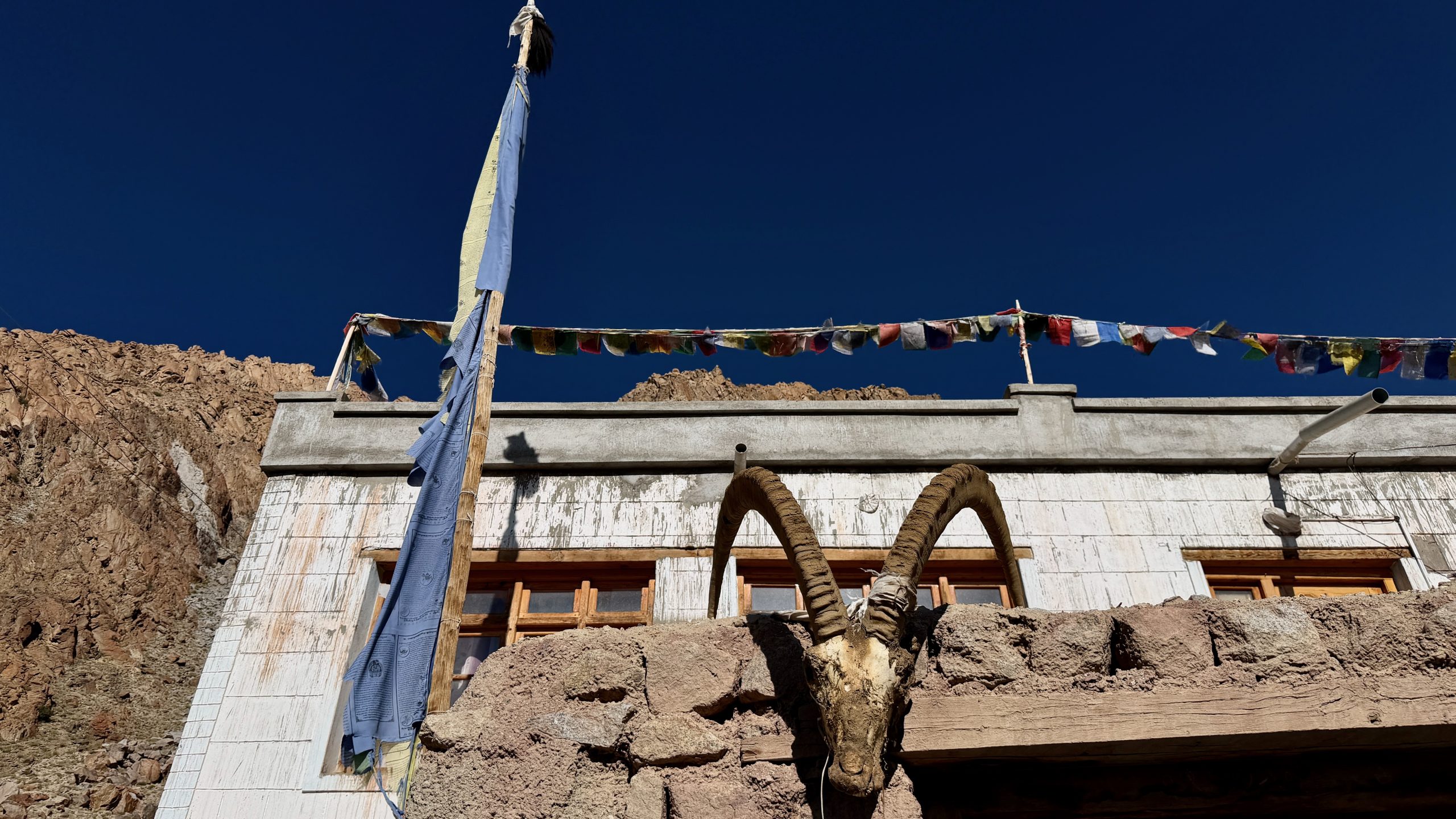
There was a school that had evidently fallen victim to the torrents of water the previous year. Next to it stood an intact building, but it was locked up. And there was no one around to ask.
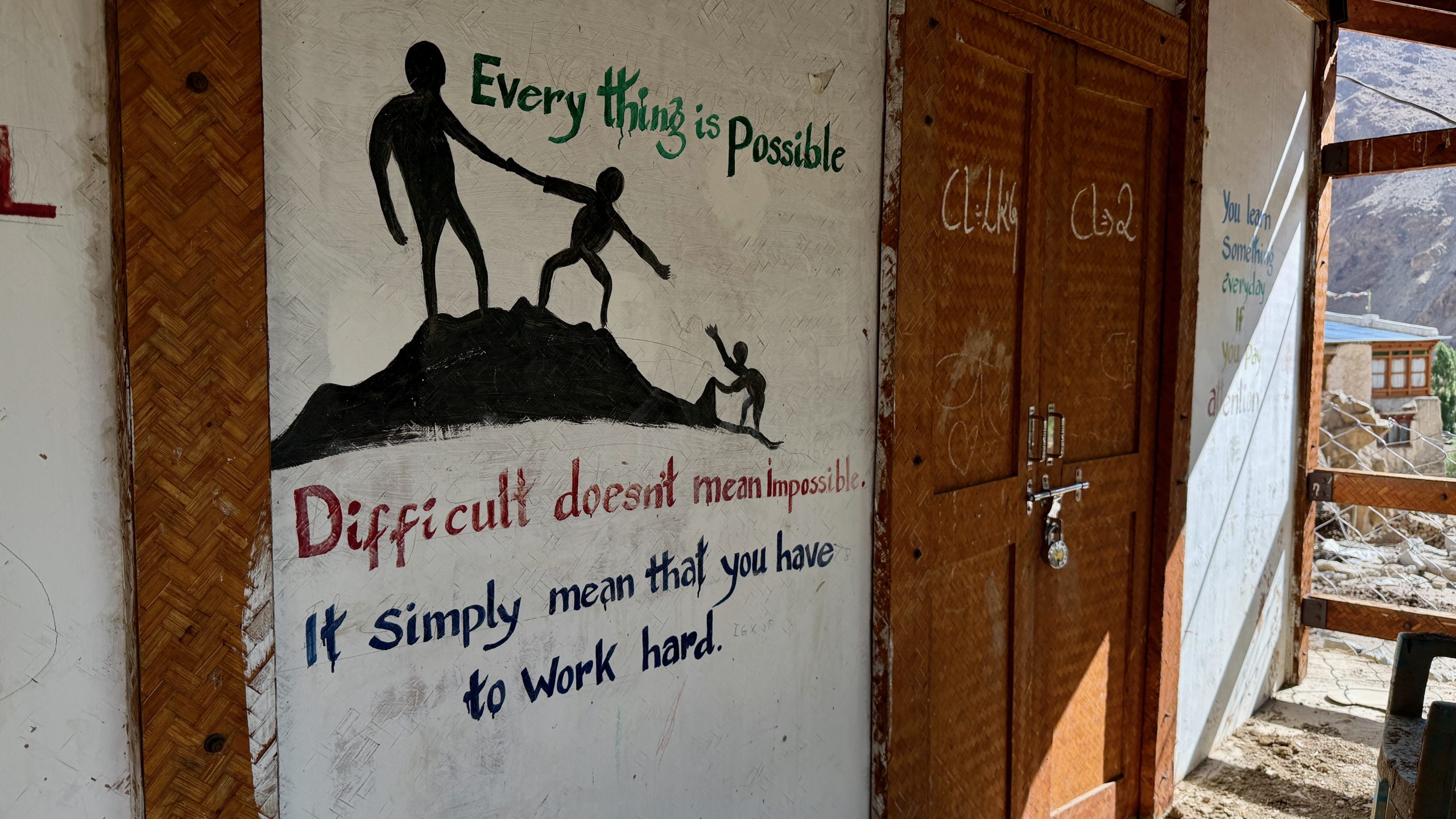
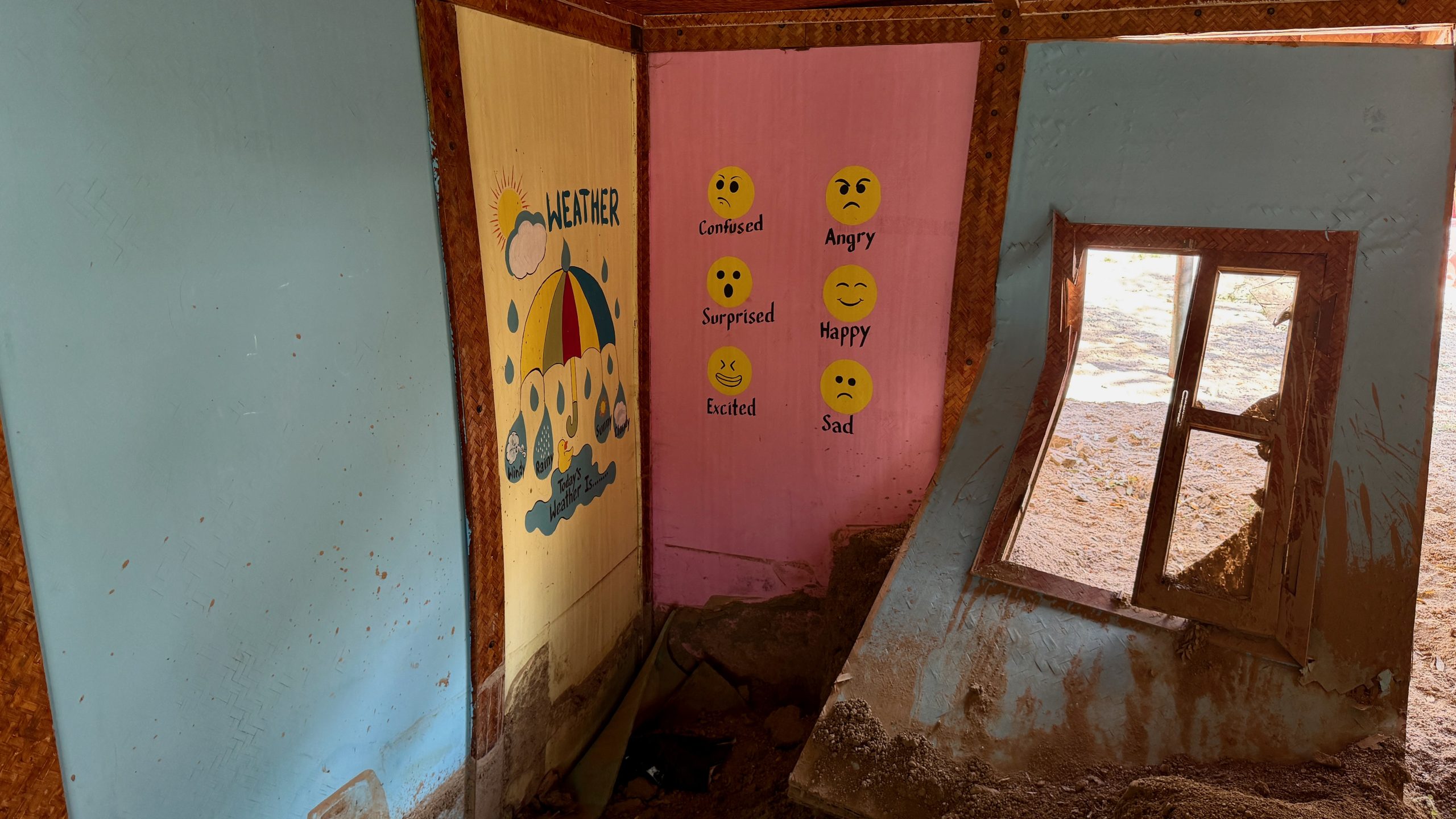
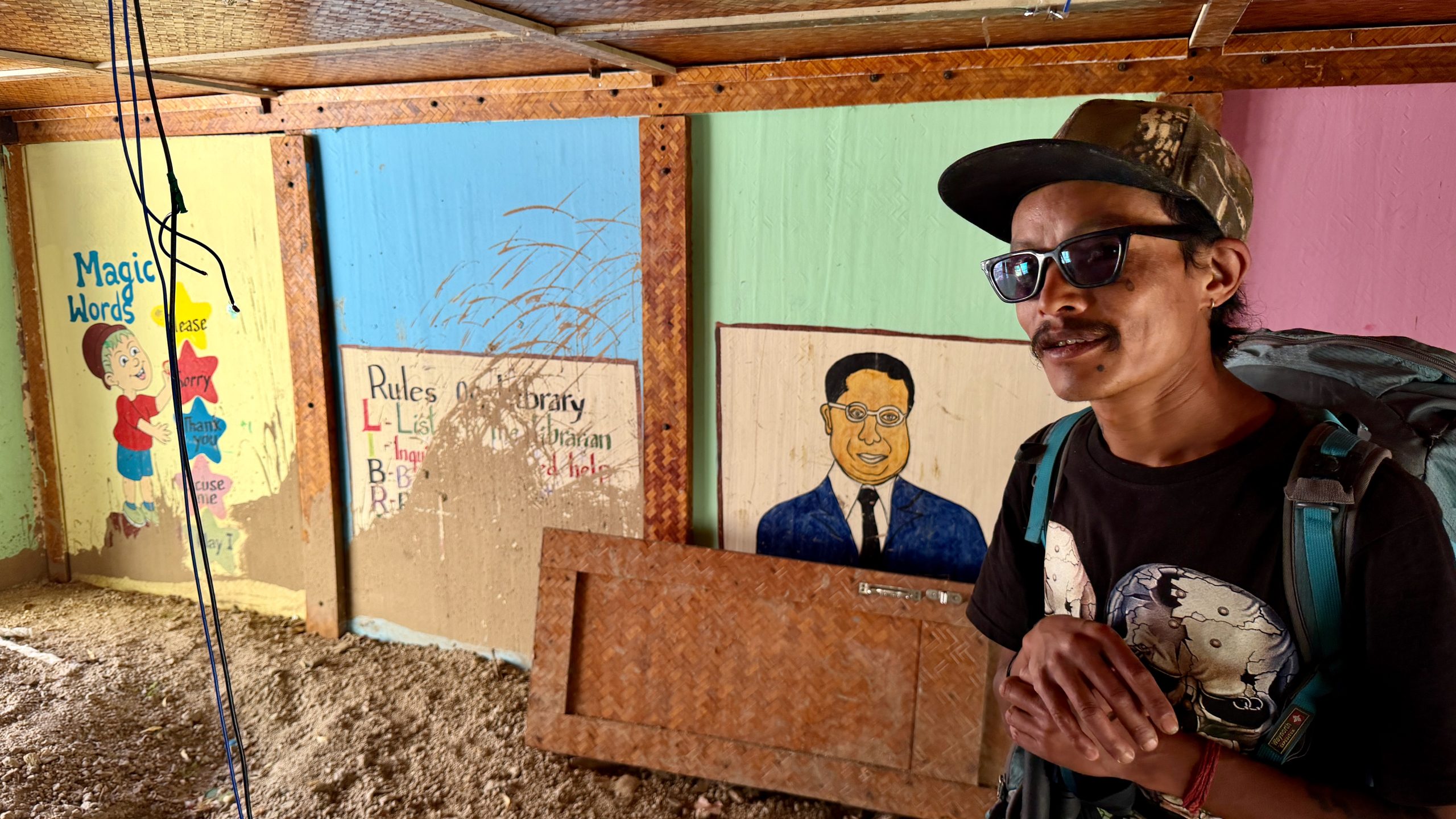
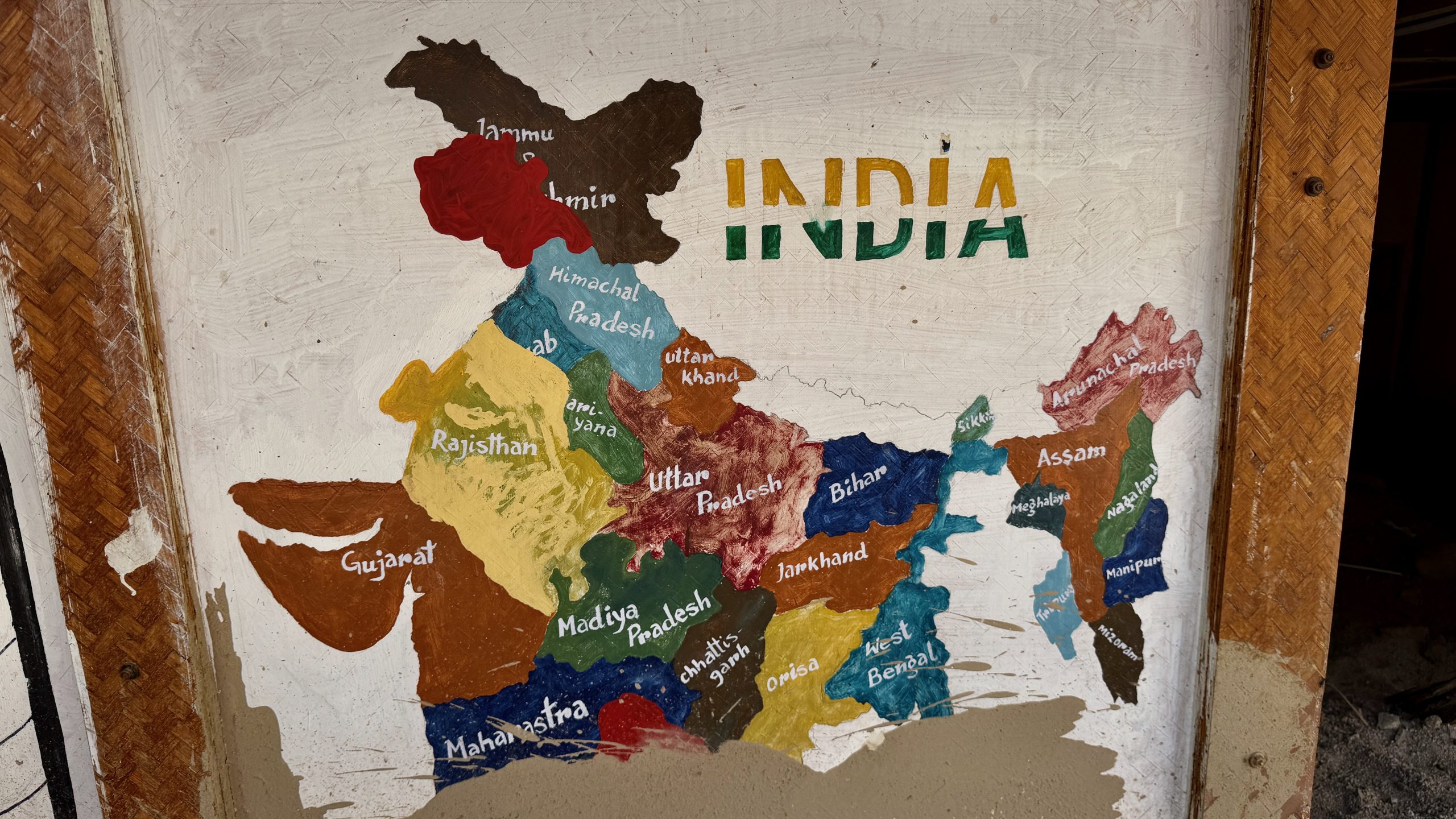
The Indian map is certainly something special. Then I found some rather unusual photo motifs that I just couldn’t resist. Nana-pics 🙂
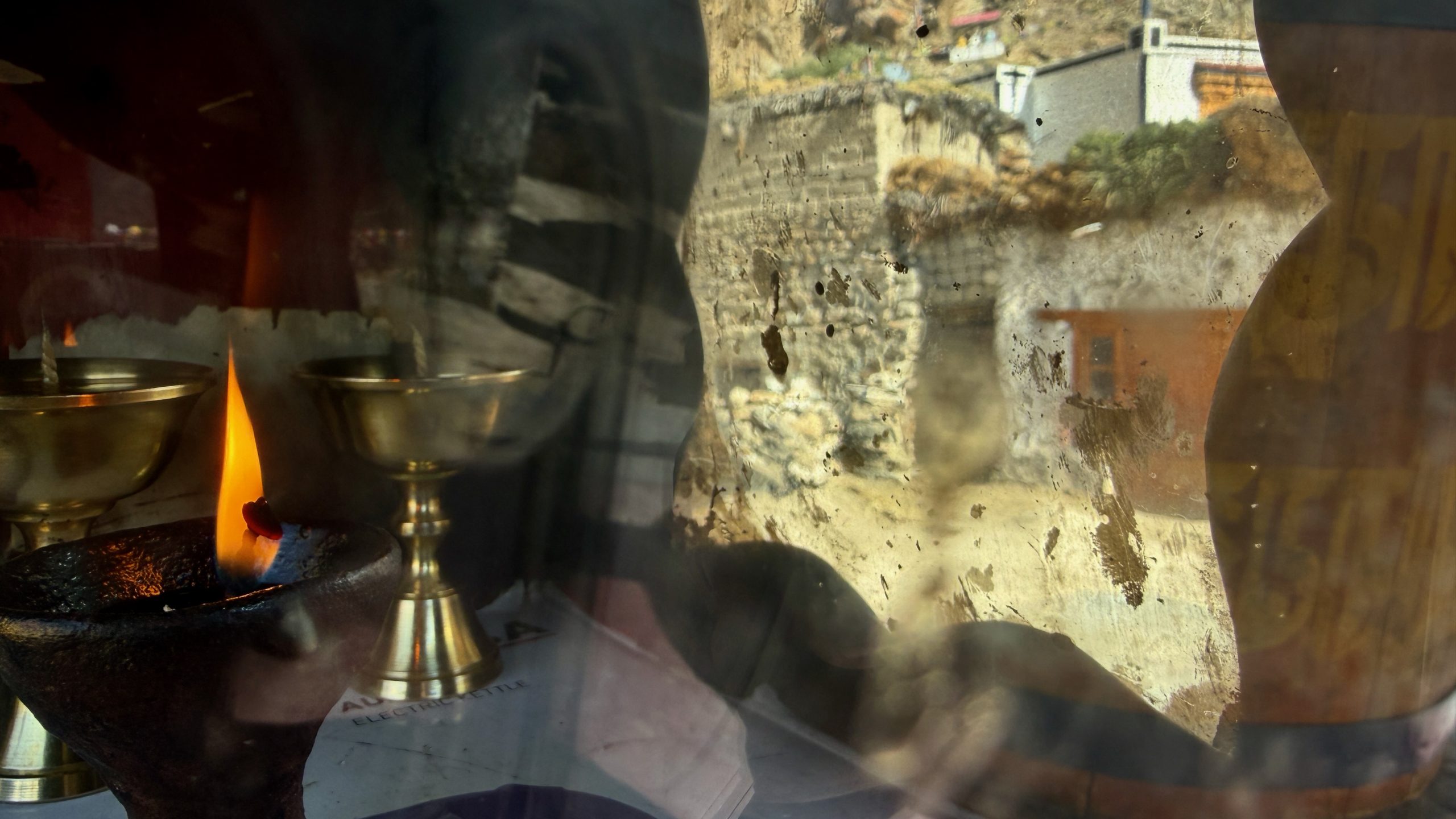
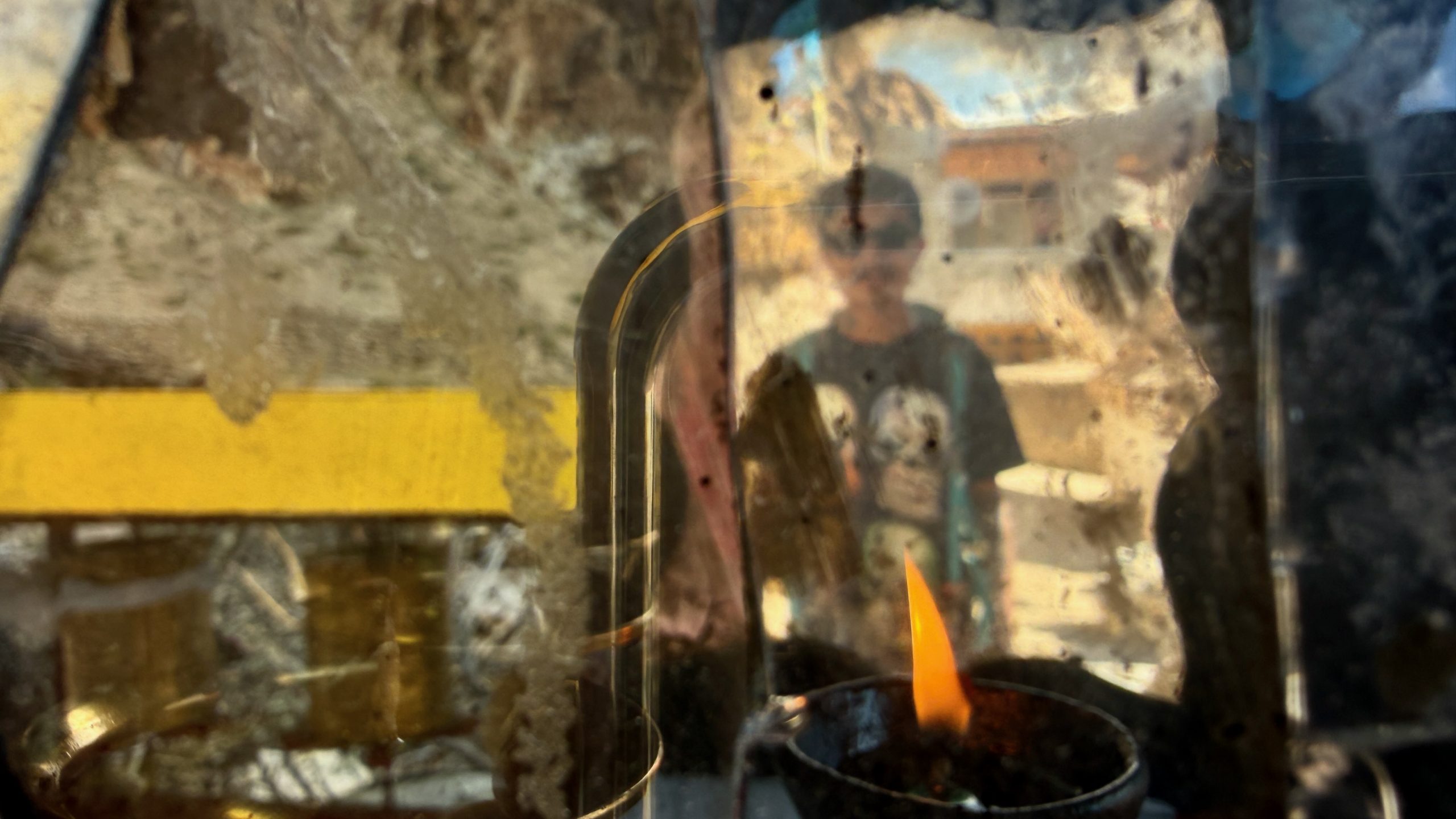
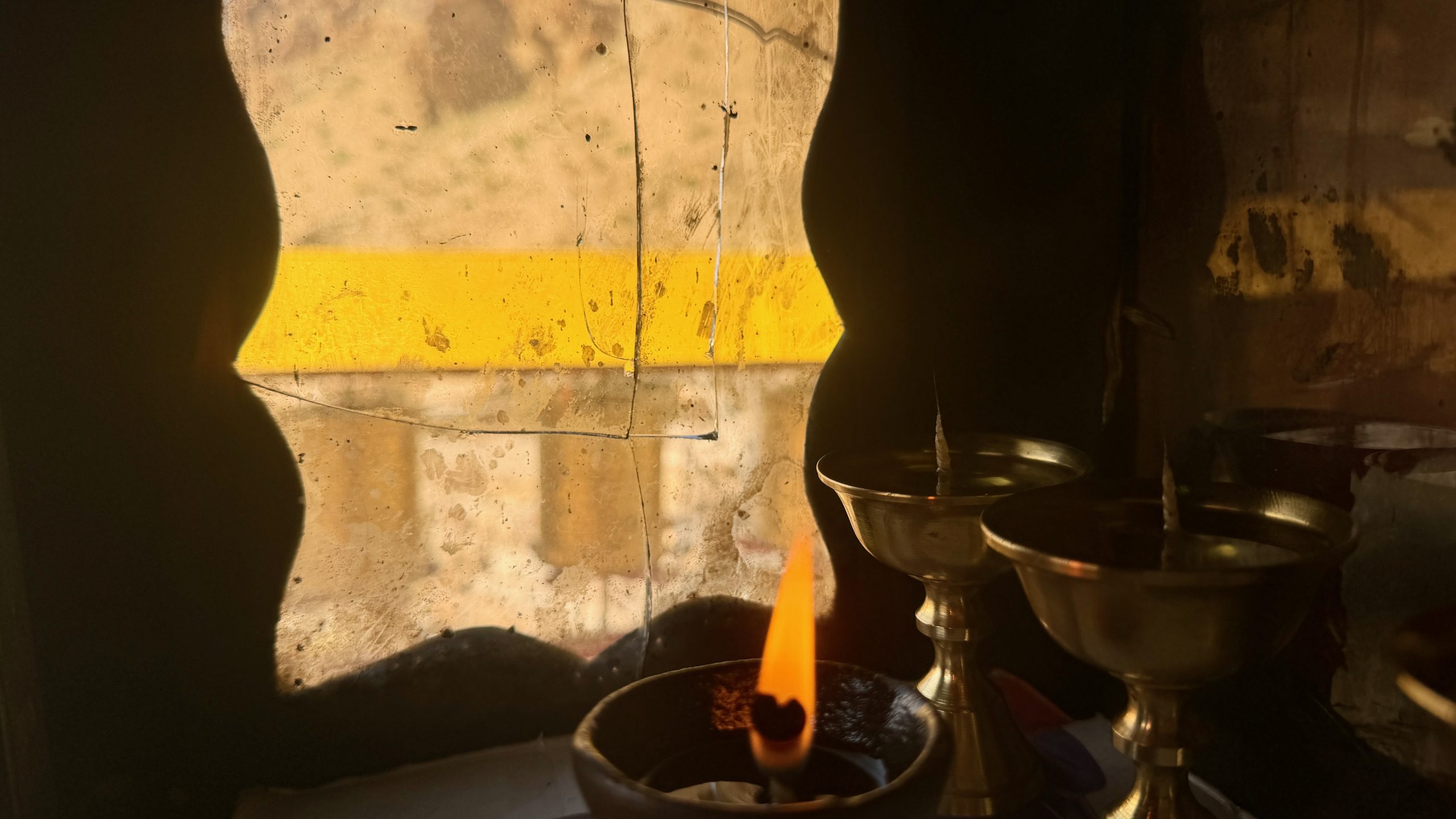
The fields didn’t look like many of them had been cultivated, either. One last look back, and then we hiked along the road toward Yangthang.
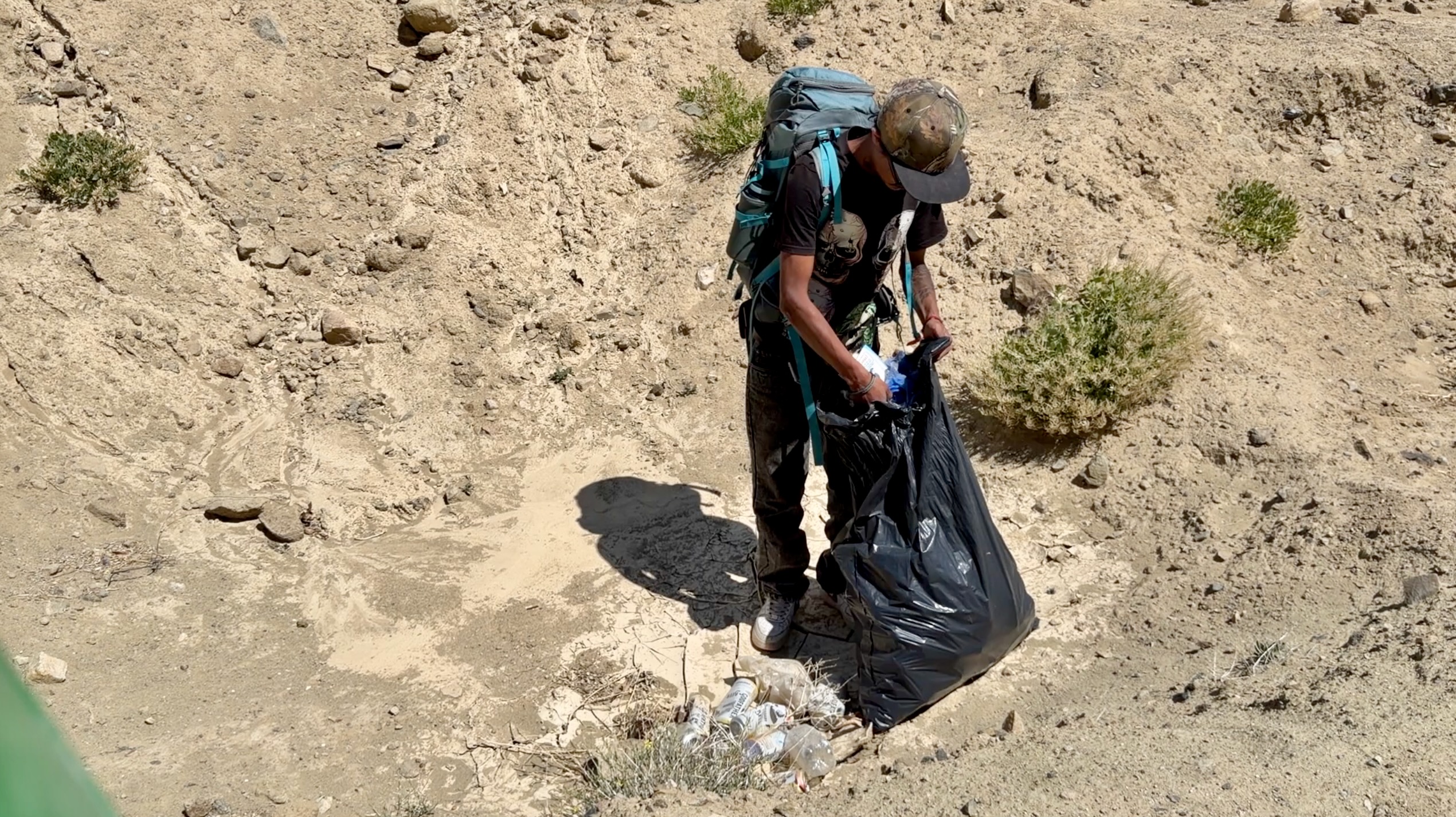
The road had very little traffic (maybe four vehicles until noon), but the shoulders were quite littered nonetheless. Rinchen turned out to be an incredibly eager trash collector. As luck would have it, I still had a German trash bag with me—originally meant for rain protection—which we filled with about 10 kg of garbage. I don’t mind picking up litter either, though I’m not quite as keen on carrying it all. Still, by the end, I had my hands full of trash to carry too.
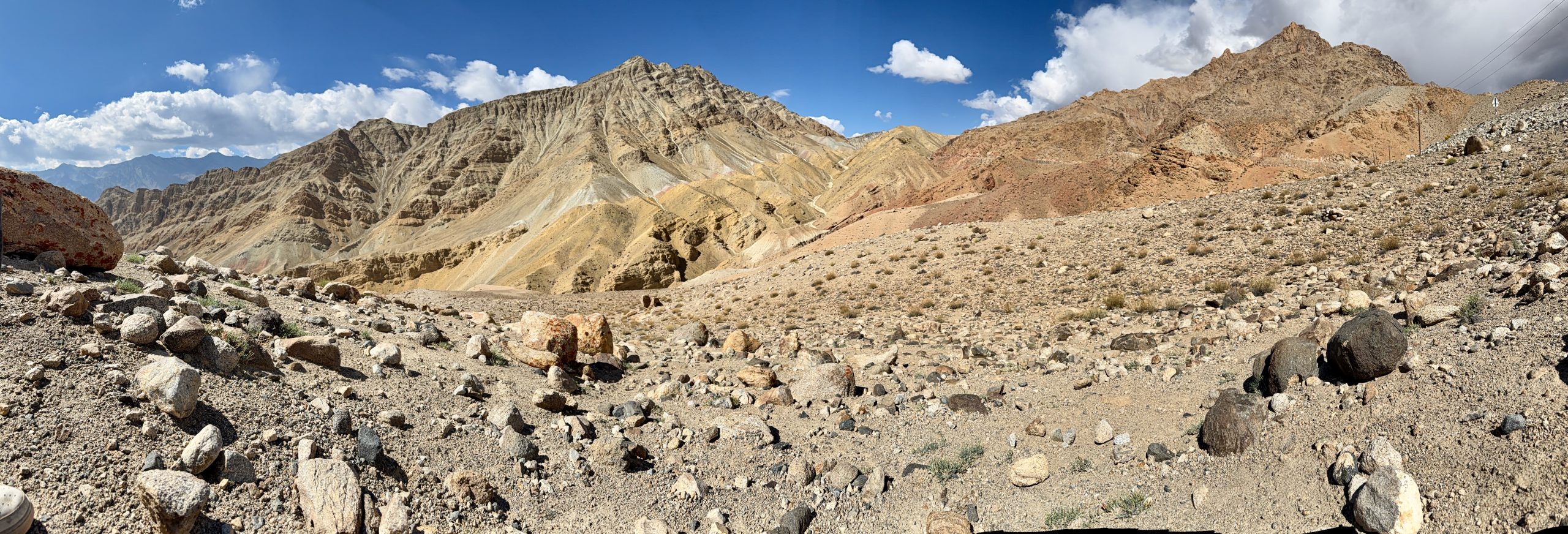
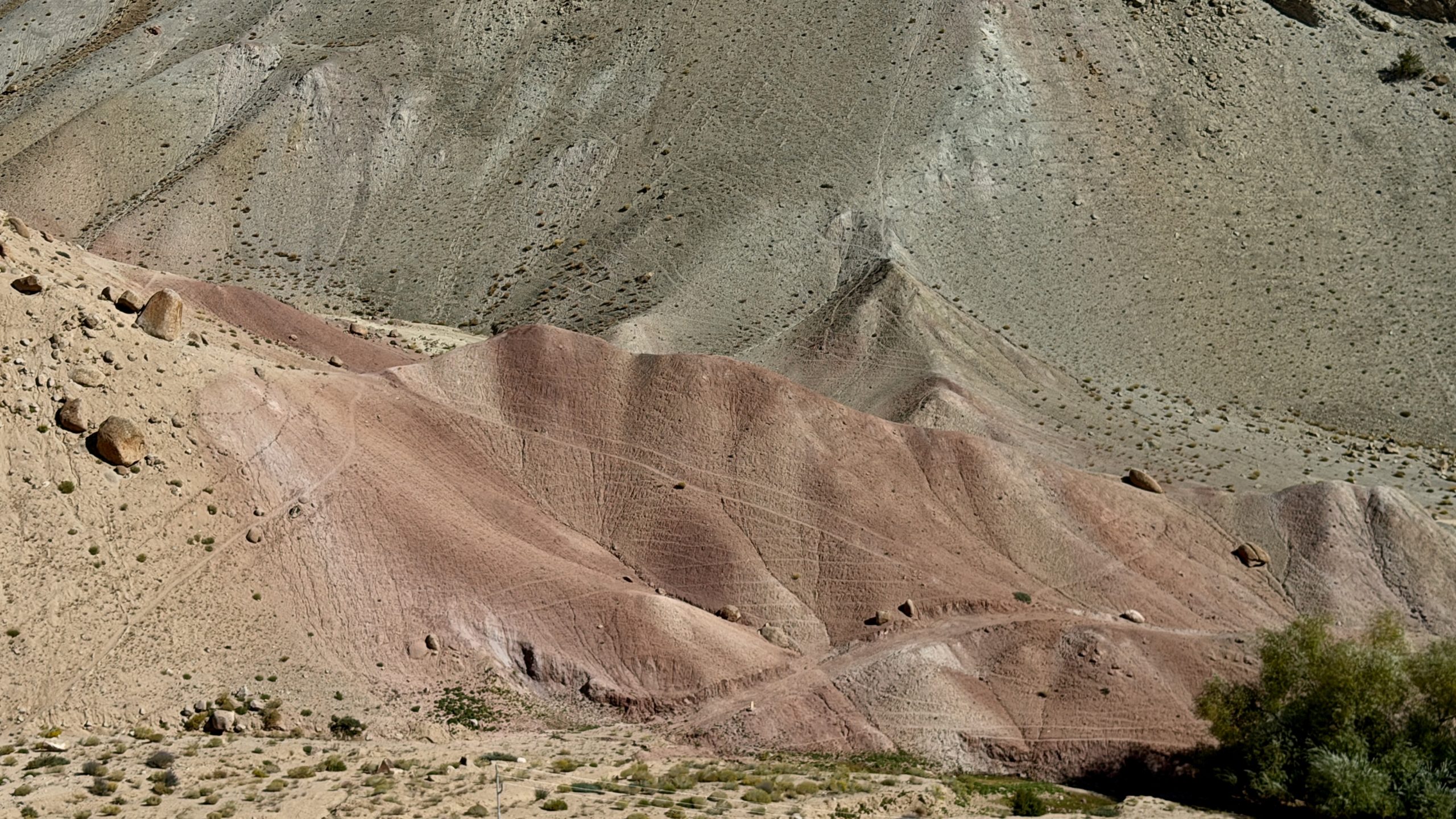
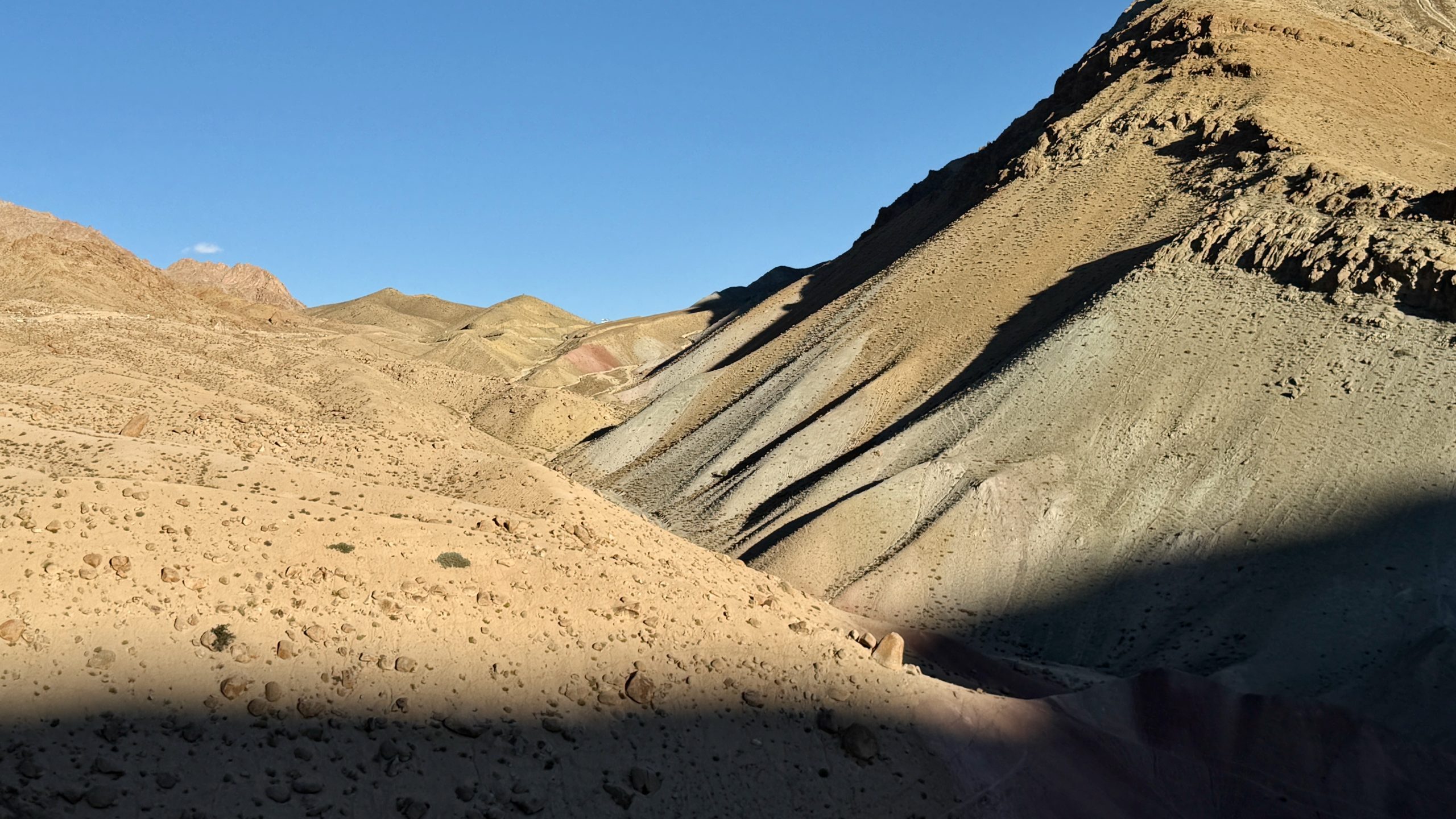
The surrounding landscape, however, was truly fantastic. In the Sham Valley, I’m continually captivated by all those different shades and tones of the dry rock.
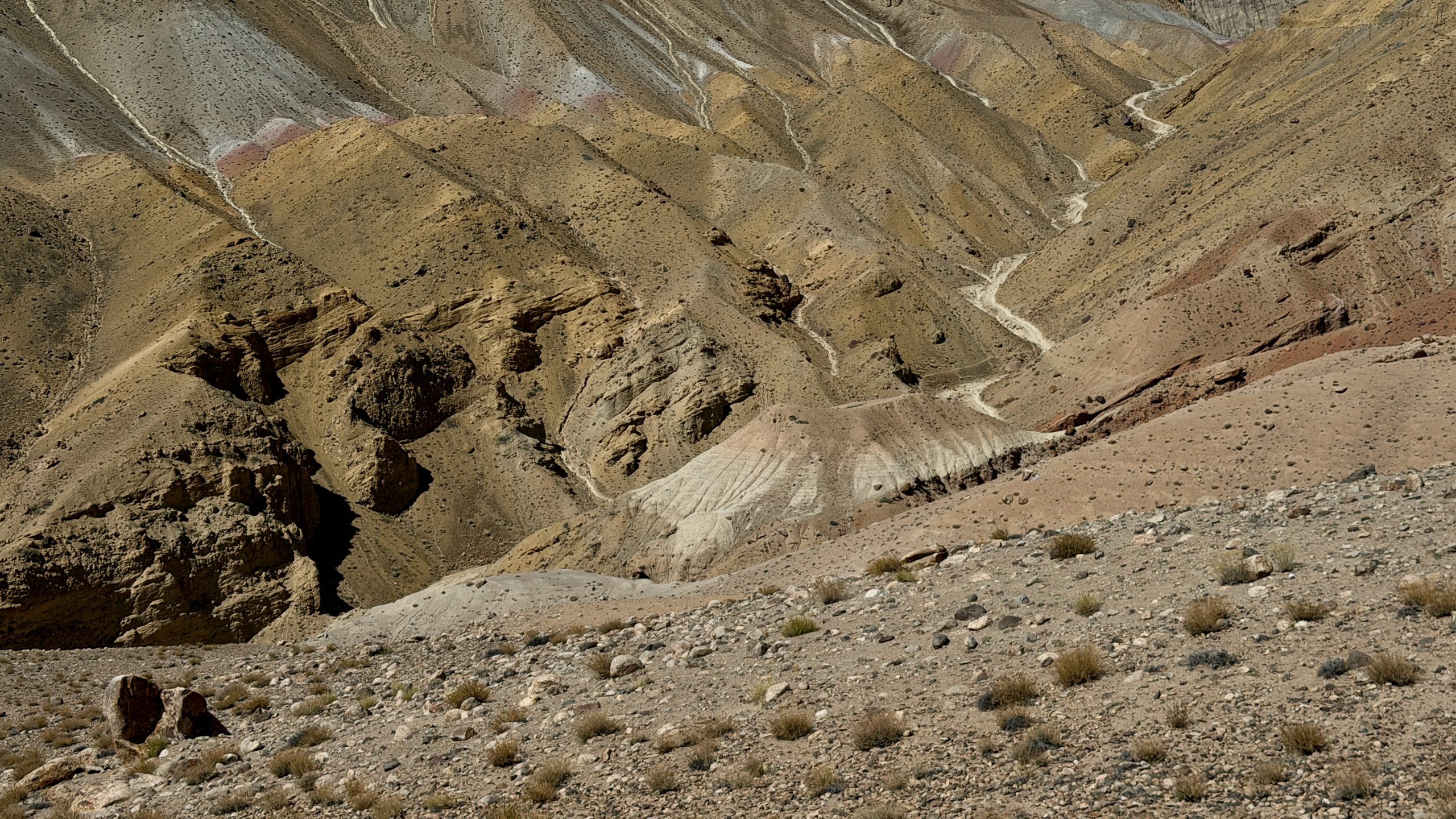
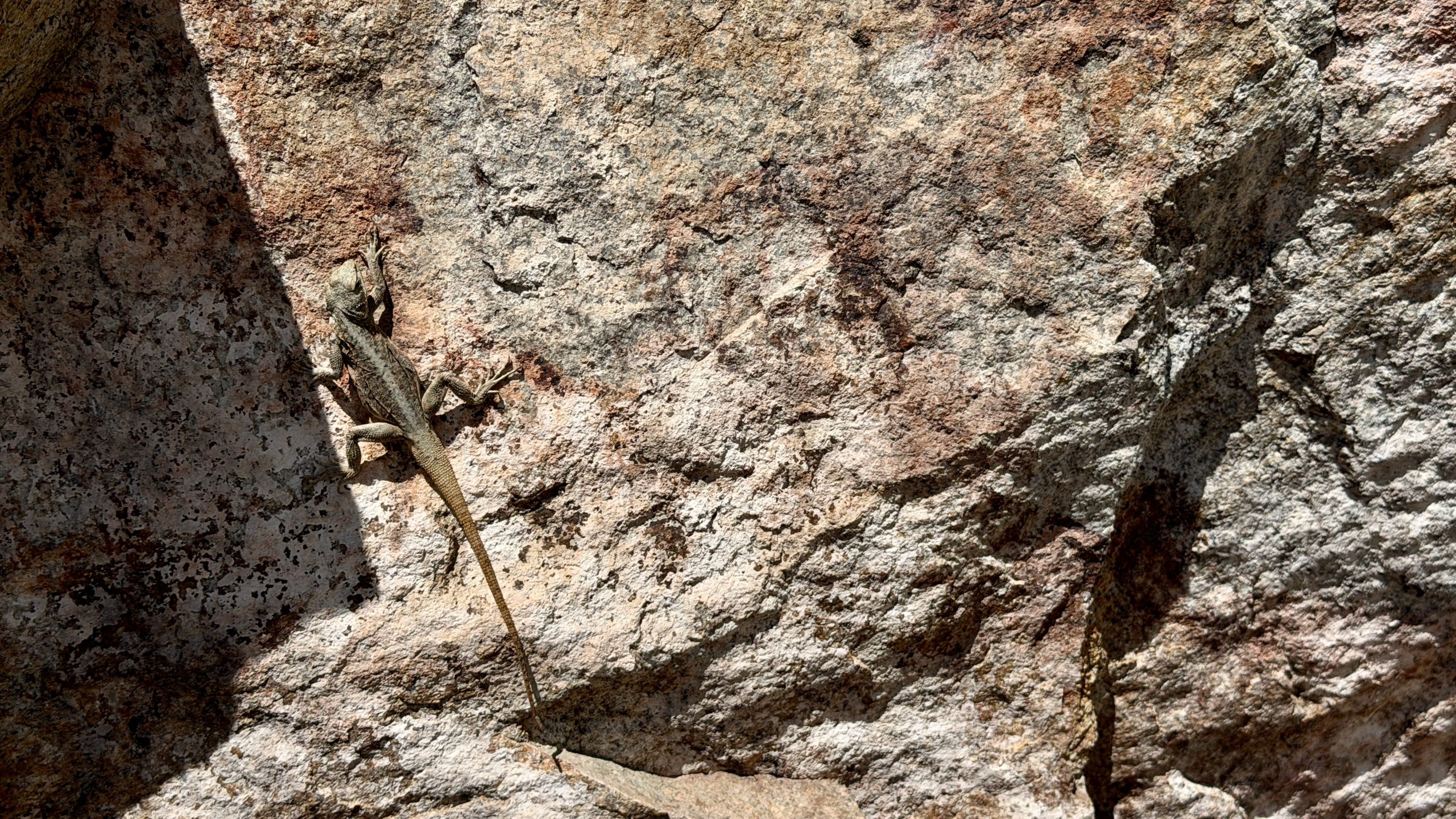
There were very few animals, either. This lizard kept trying to climb the rock face, slipped back down over and over, and was taking a well-deserved rest here. Then, Yangthang came into view.
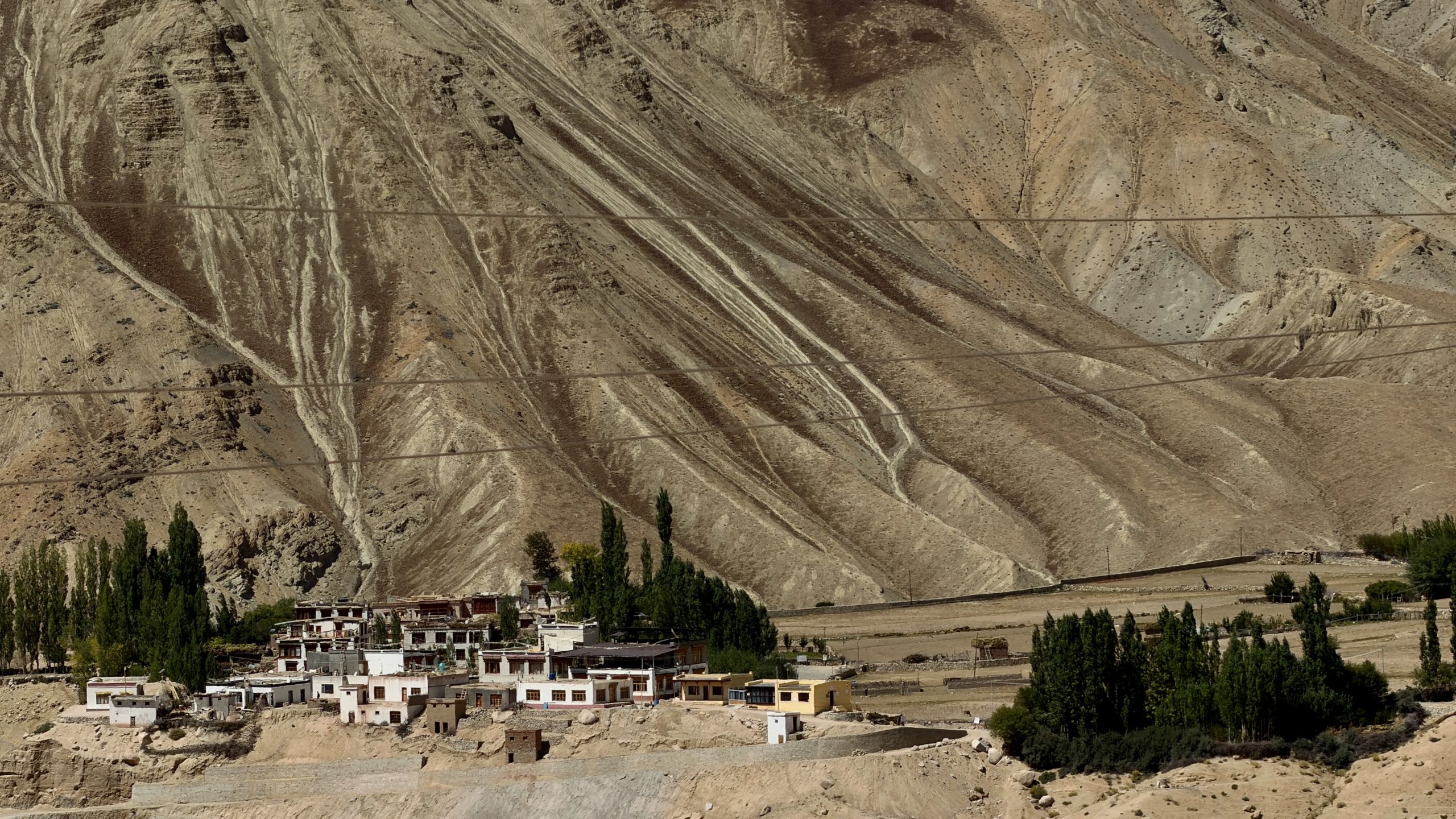
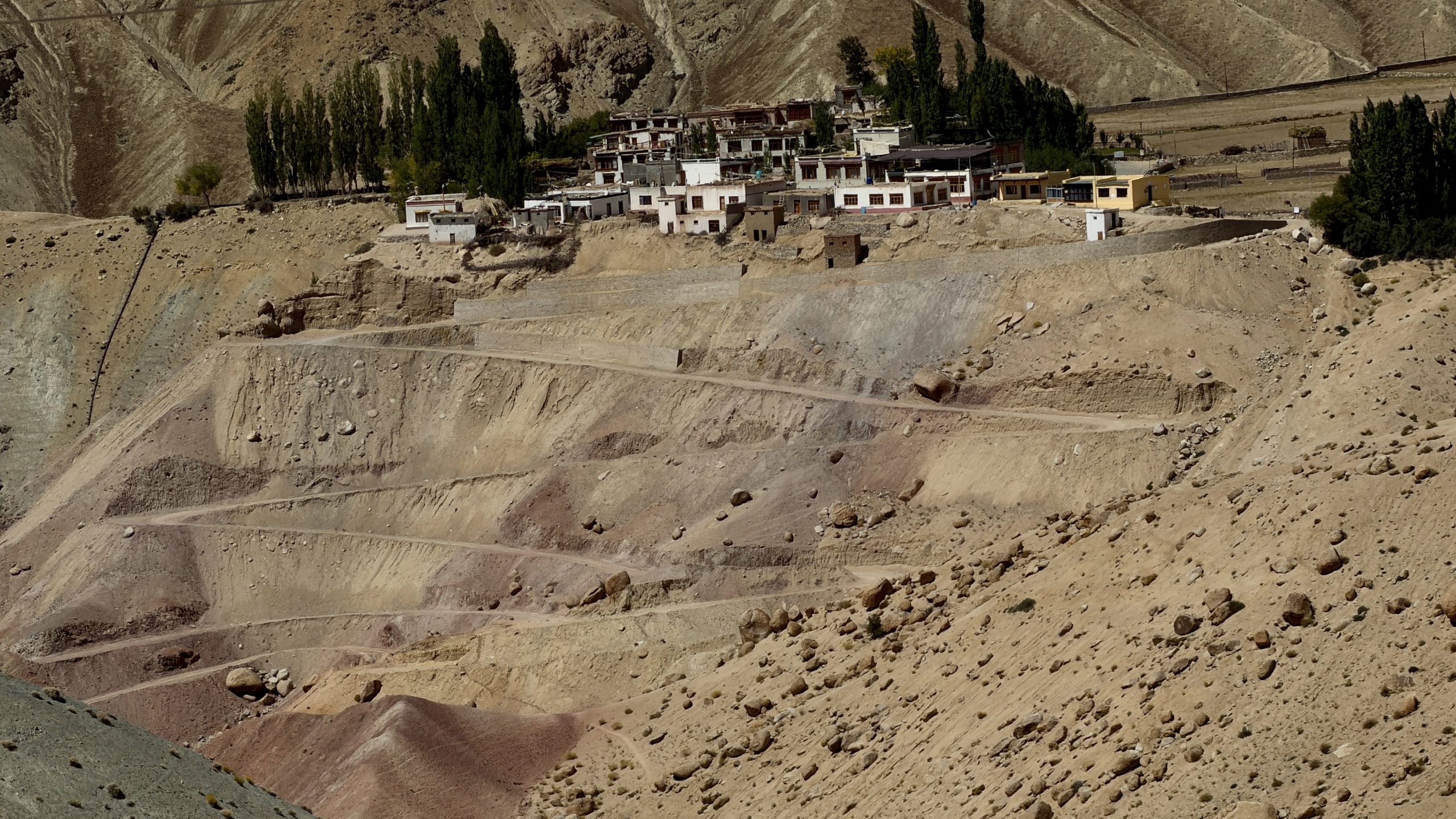
And then we were amazed. Rural depopulation seems to be happening everywhere in Ladakh—except in Yangthang. Land holdings aren’t particularly large here, and under local inheritance customs, the property typically passes to the oldest son. The other children have to figure out their own path, which usually means moving to Leh and the surrounding area. However, because Leh is bursting at the seams and these younger generations would actually prefer to stay in Yangthang, they are receiving local support. There is currently a planned development of 32 housing units complete with agricultural plots. Bringing it all to life requires bringing in water, which is routed through long canal networks. Construction was well underway everywhere.
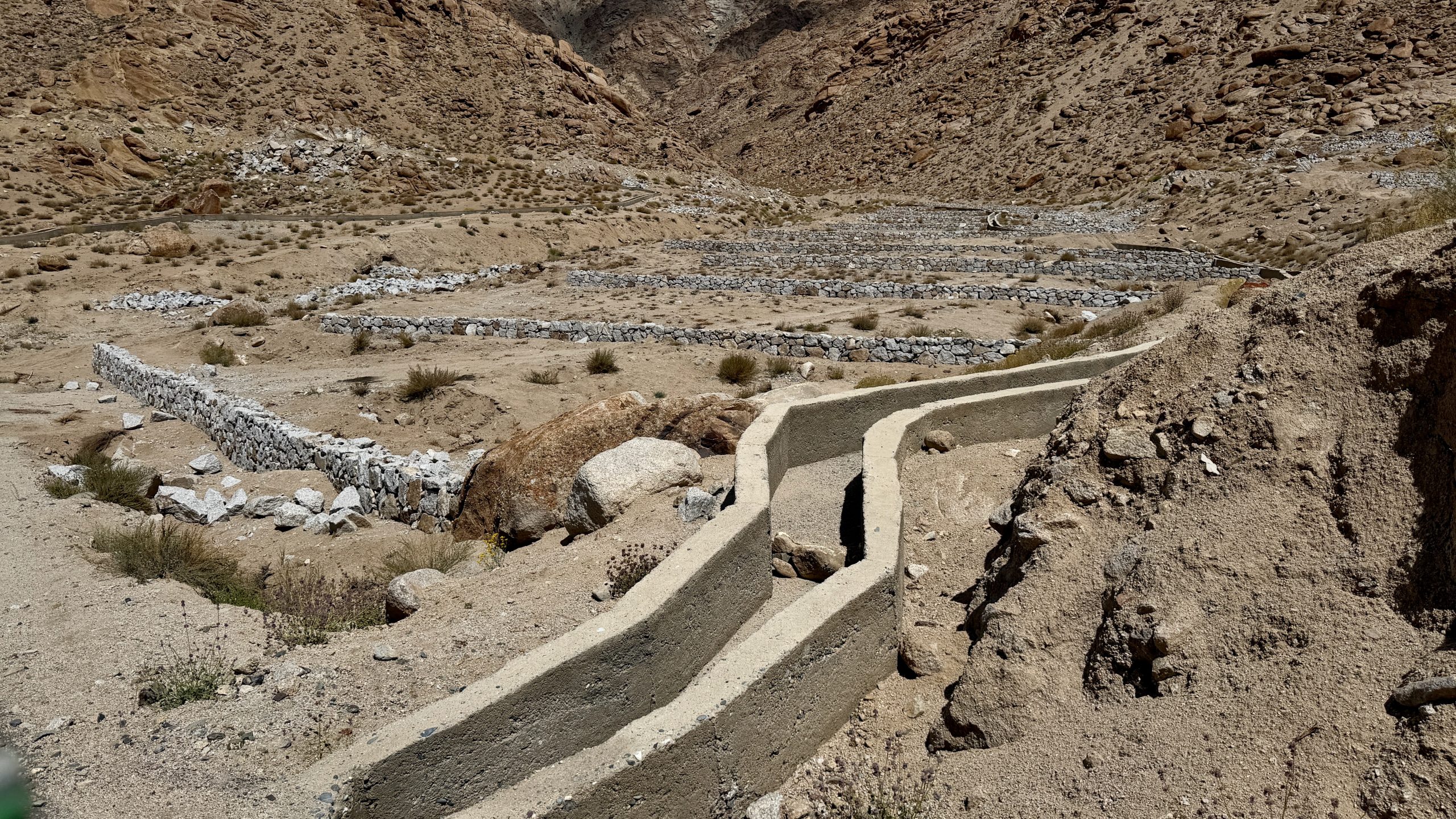
This section is supposed to be where the families will live—or where the new fields will be laid out. Just before we reached the village, a car came up from behind us, pulled over, and the driver asked where we were headed and what on earth we were hauling around. It was Angchuk, who runs a homestay. He thought our trash-collecting effort was wonderful and invited us to stay at his place. He seemed lovely, so we accepted. Angchuk turned out to be a total stroke of luck! Being a second (or third) son, he had managed to secure a spot on a plot of land where he and three or four others had built their homes. He serves in the army, where his musical talent was discovered; he learned to play the bagpipes so exceptionally well that he earned awards and was even selected to travel to Paris with the army band. He is 41 and such a genuinely kind soul. His wife had just left for Leh with the children for the start of the school term, as Yangthang no longer has an active school. Together, they built their homestay with several rooms, finishing it beautifully. It was far nicer than your average homestay, yet thanks to the large, combined living-and-kitchen area, it still had a wonderfully cozy, family atmosphere. A truly special place to stay.
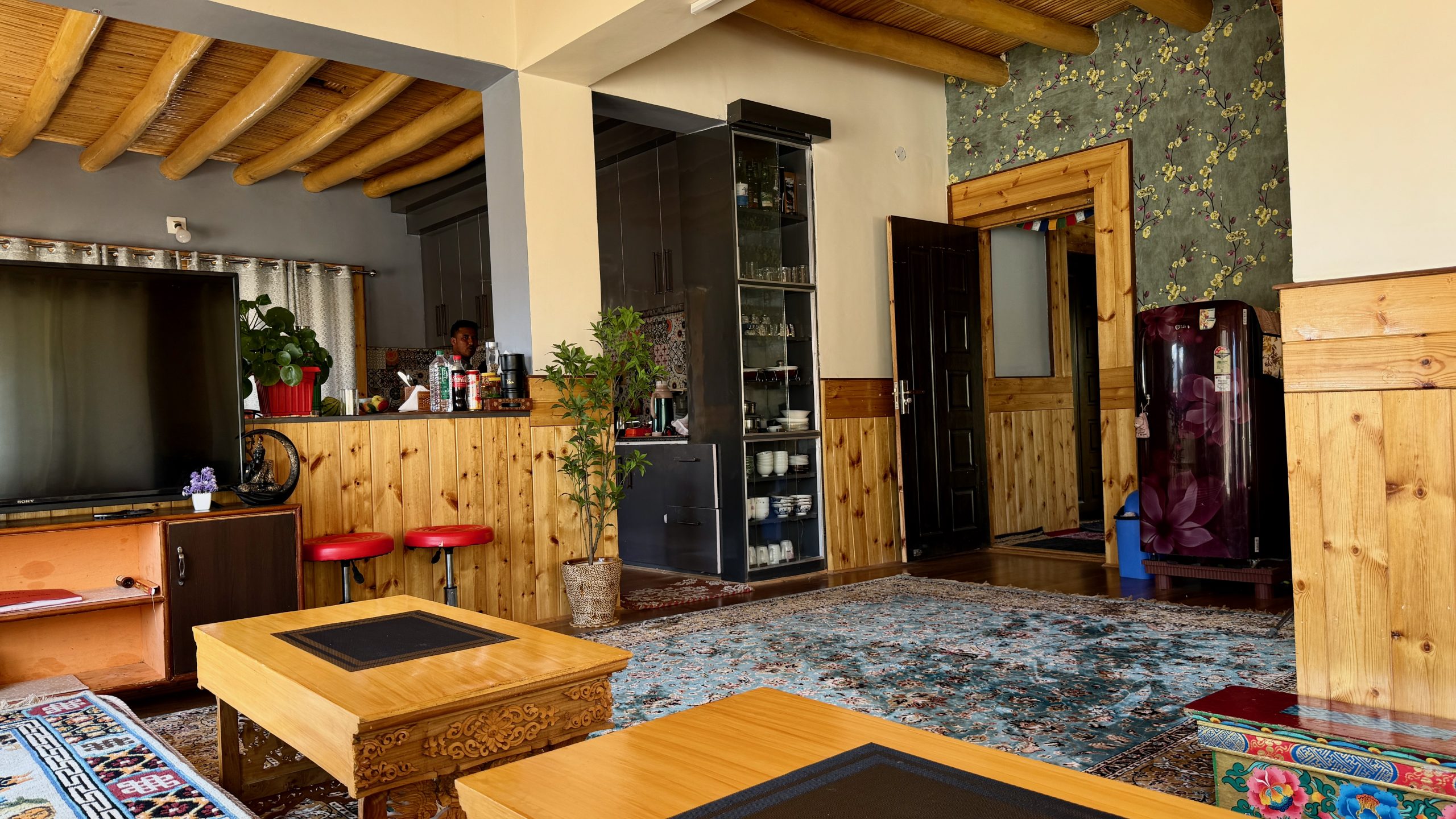
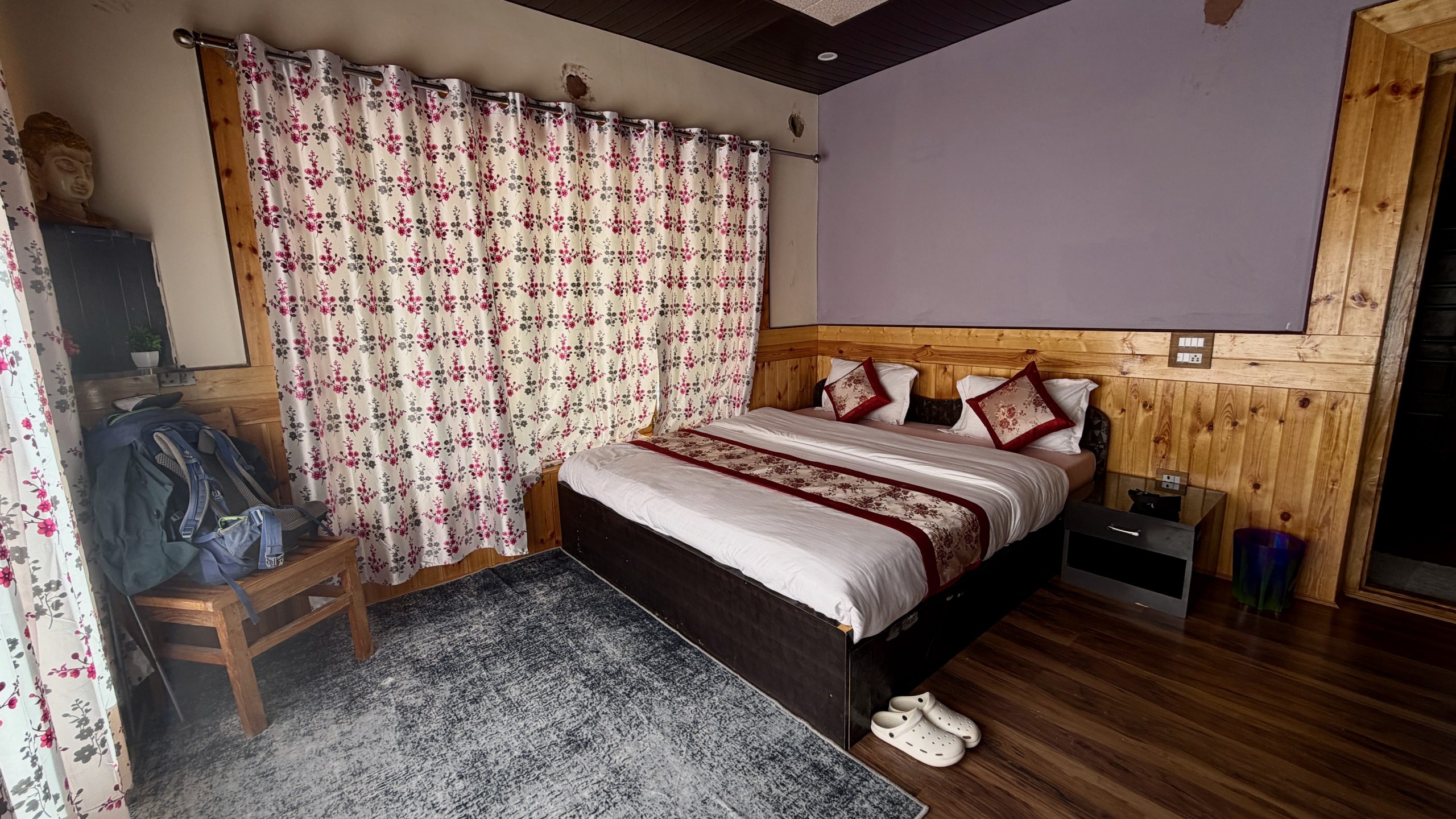
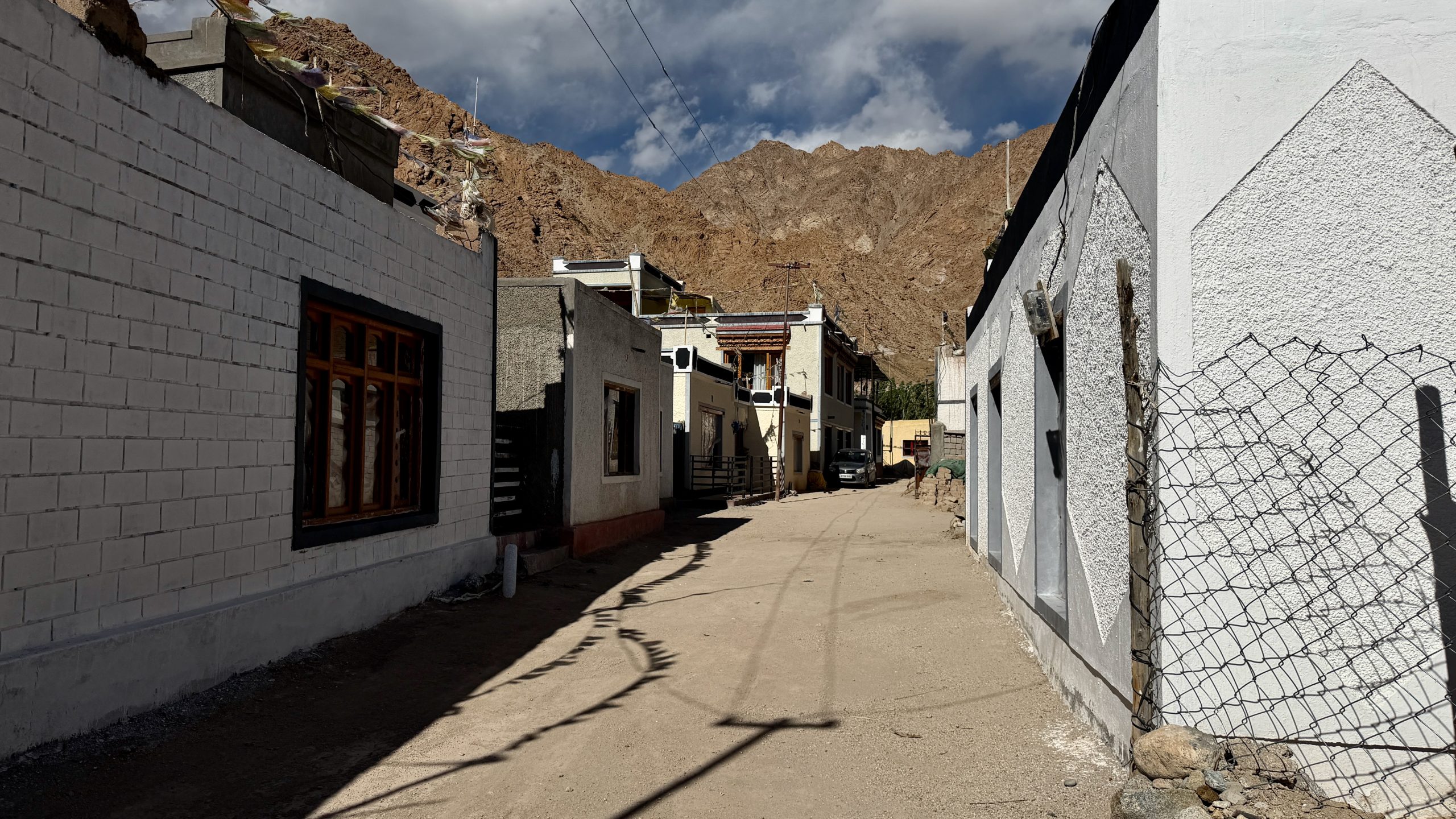
Angchuk can be seen in some of the photos further down. First, we set off to explore the village. There are villages where people live scattered among their fields, but here everyone lives close together, surrounded by the farmland. This is the lane lined with the newer houses:
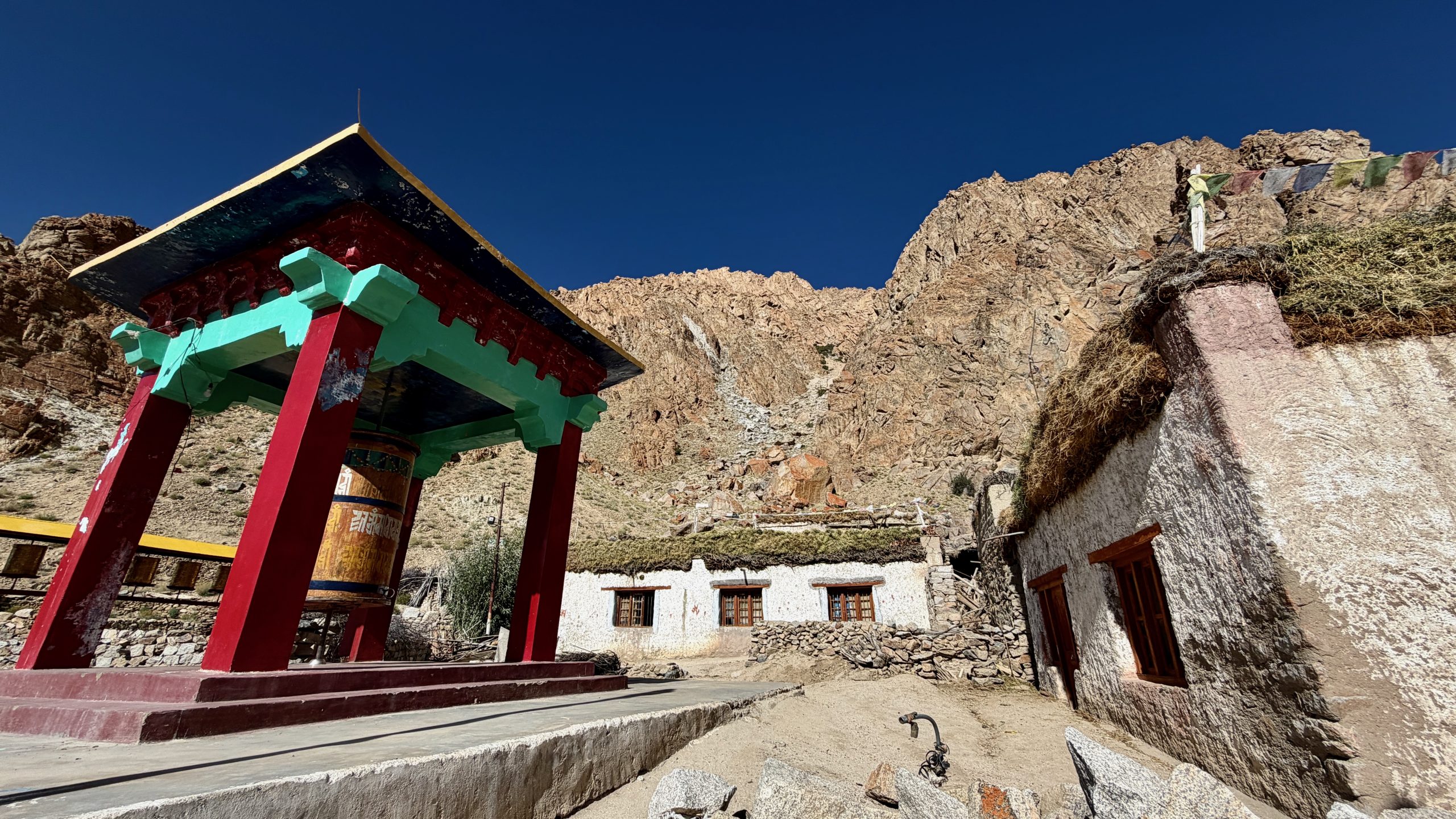
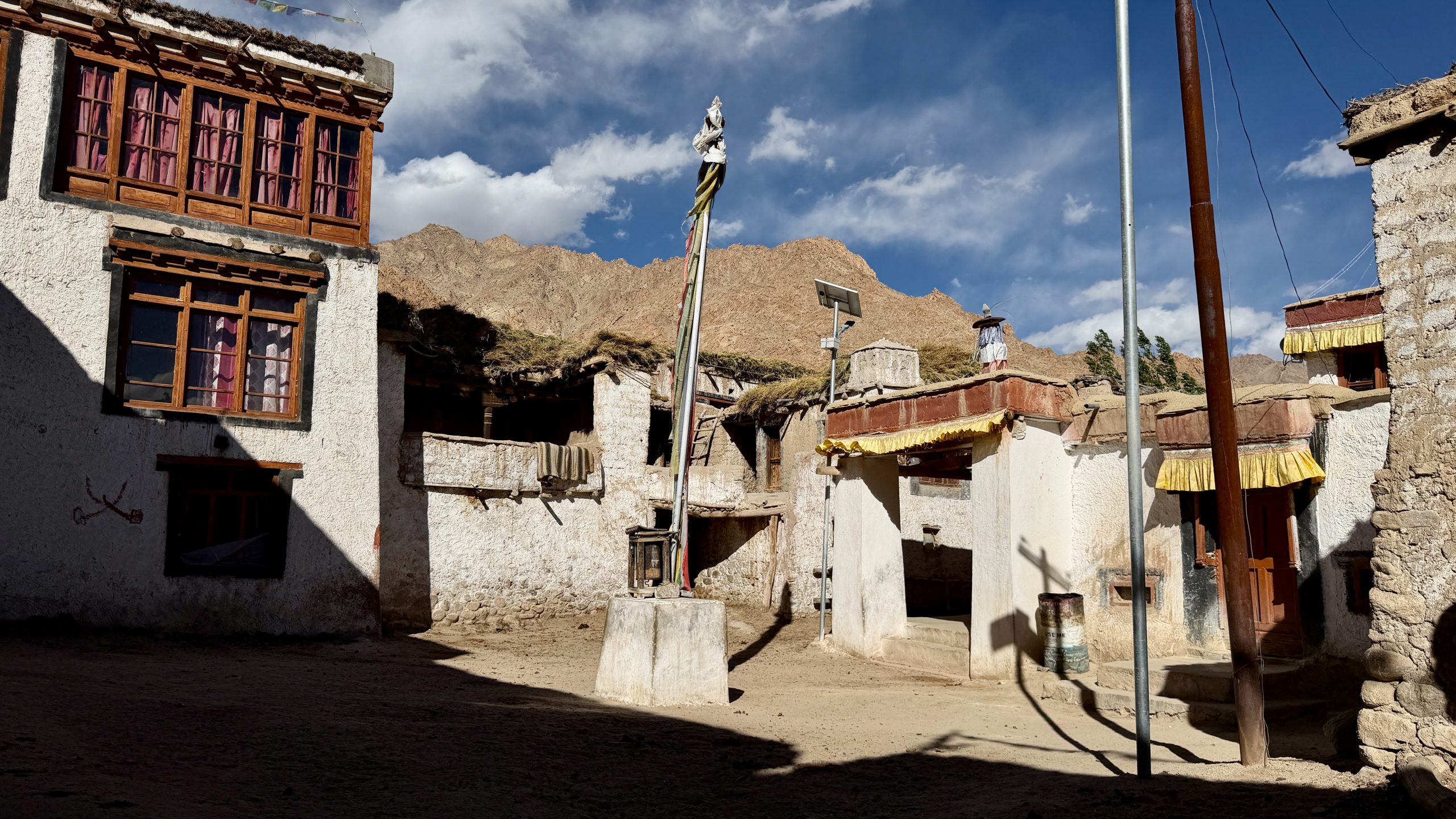
In the old village center, the houses cluster around a square featuring a small gompa room. The light was absolute perfection, so I snapped quite a few photos.
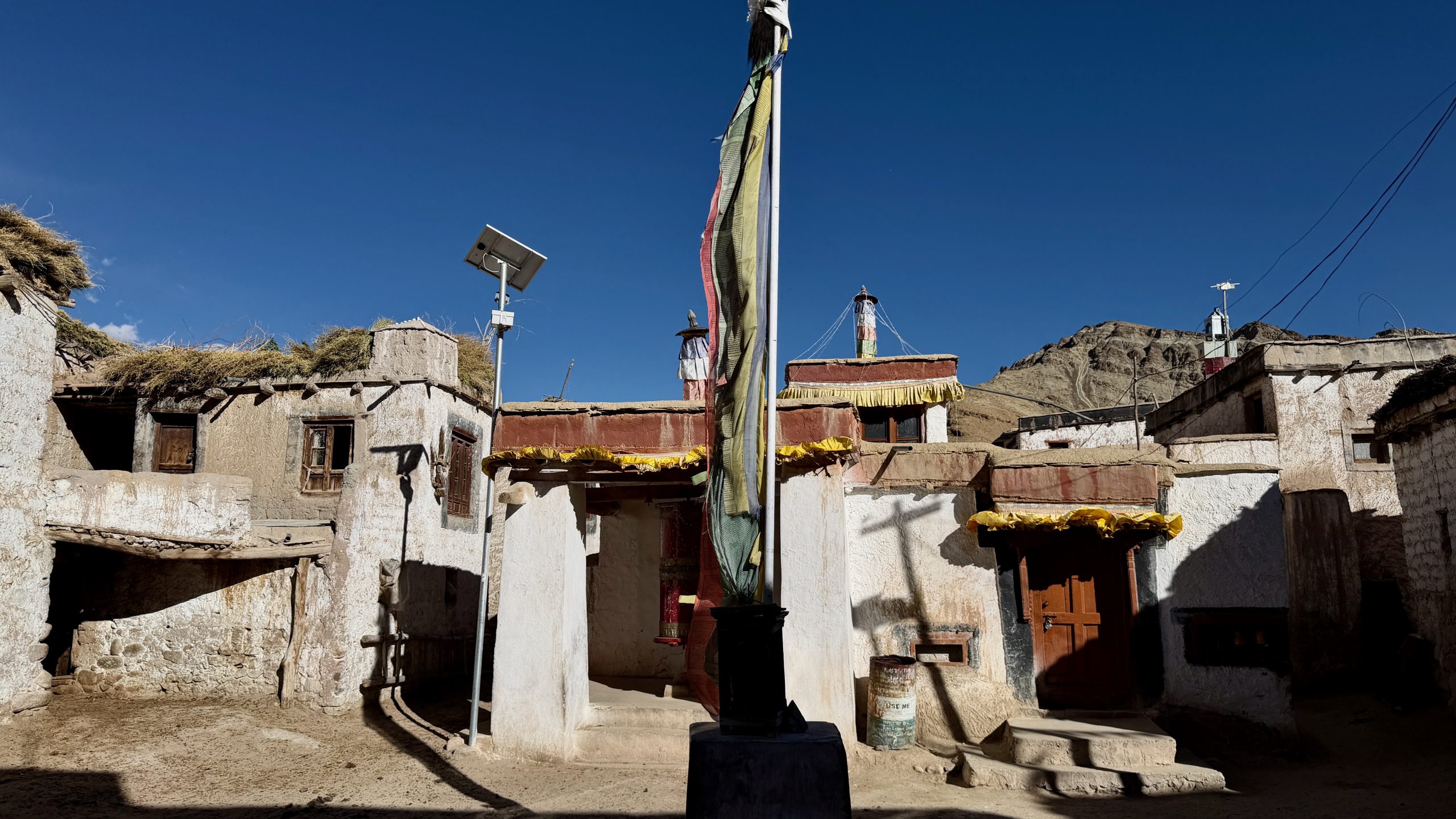
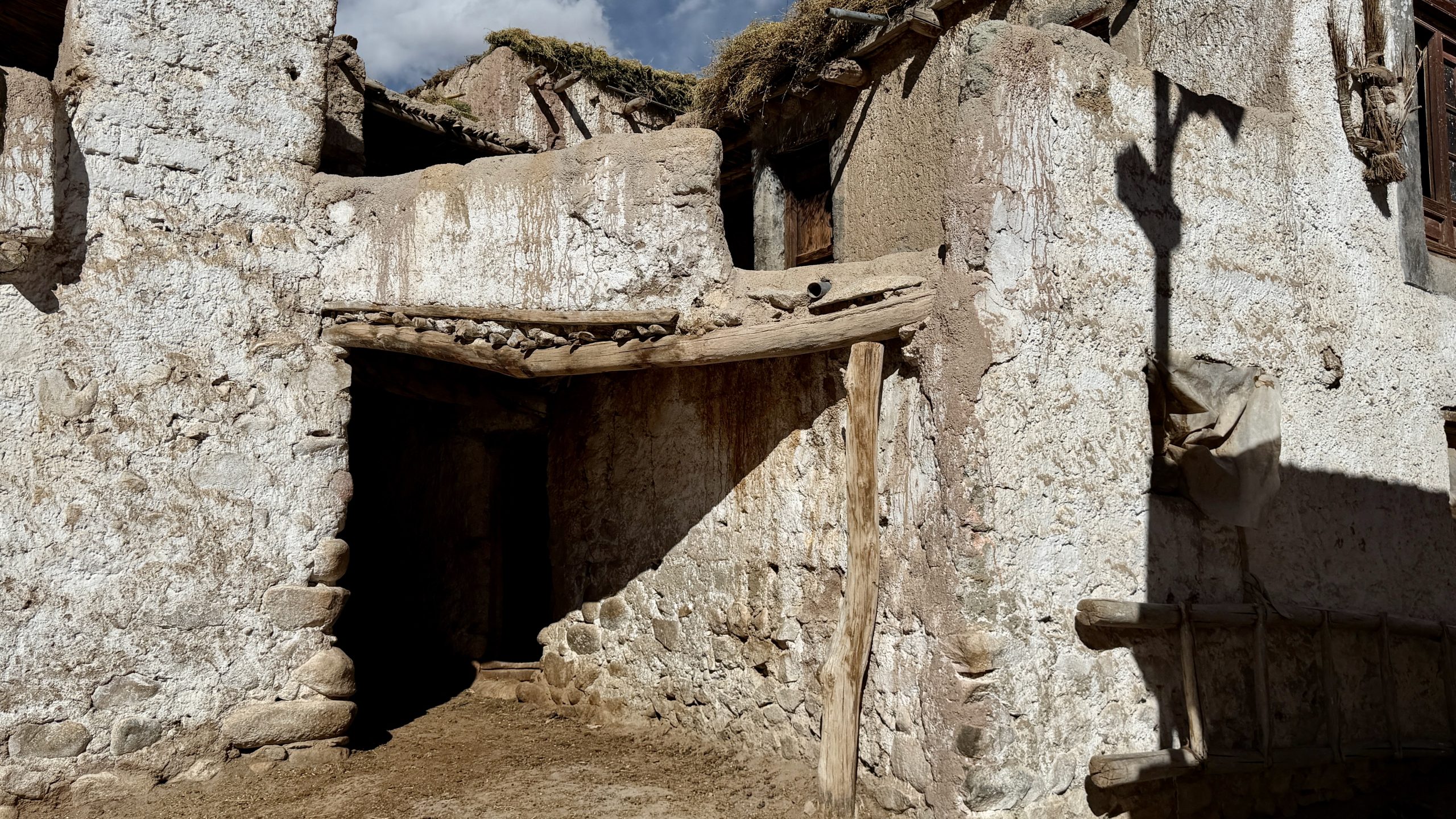
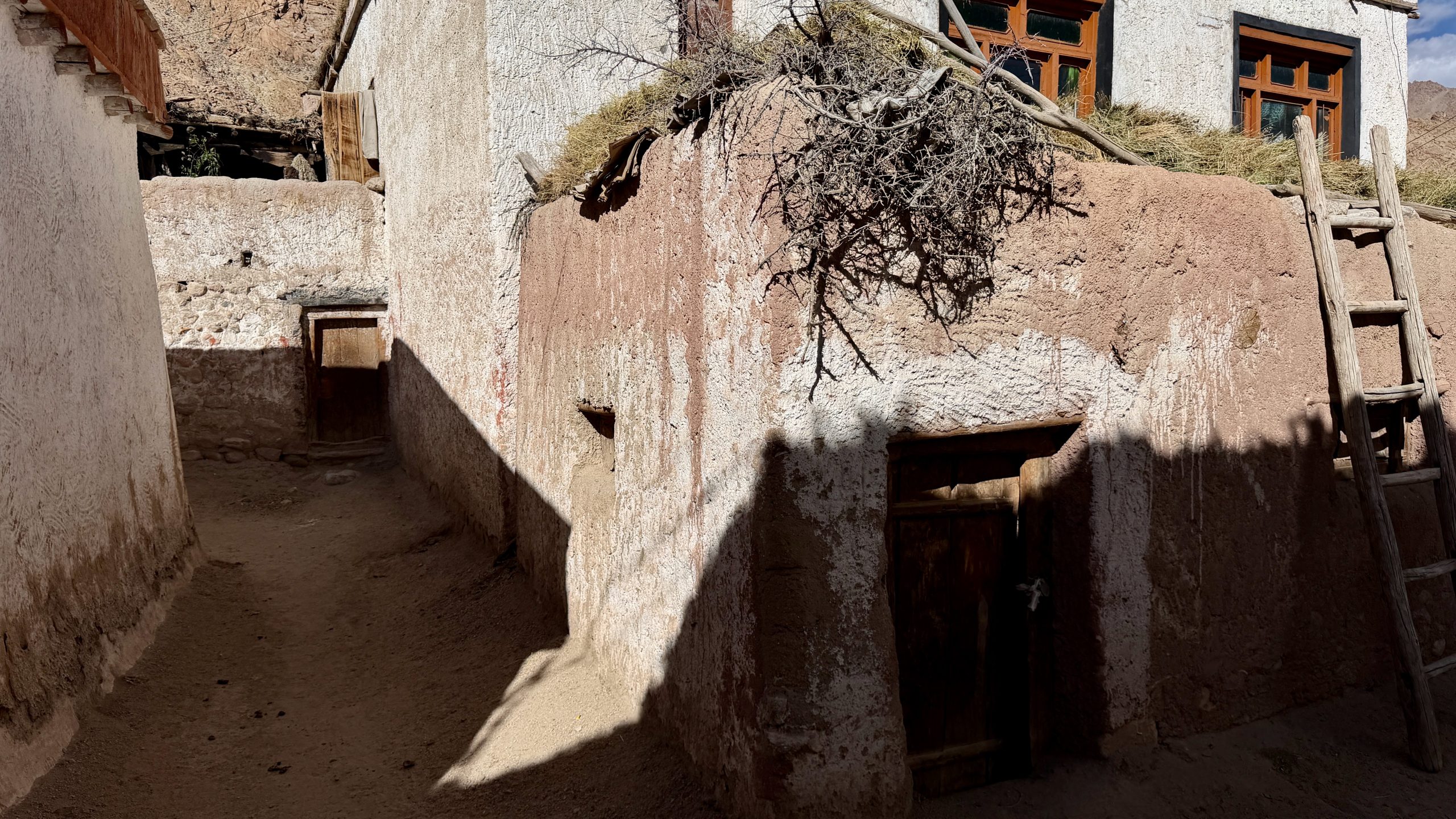
There are also still many paintings on the houses here, as well as traps on the walls to ward off evil spirits. These spirit traps all feature wooden “pegs” representing male and female attributes. As I was snapping a photo of one of them, the woman of the house came out and asked me not to take a second picture, explaining that doing so could bring bad luck back upon herself.
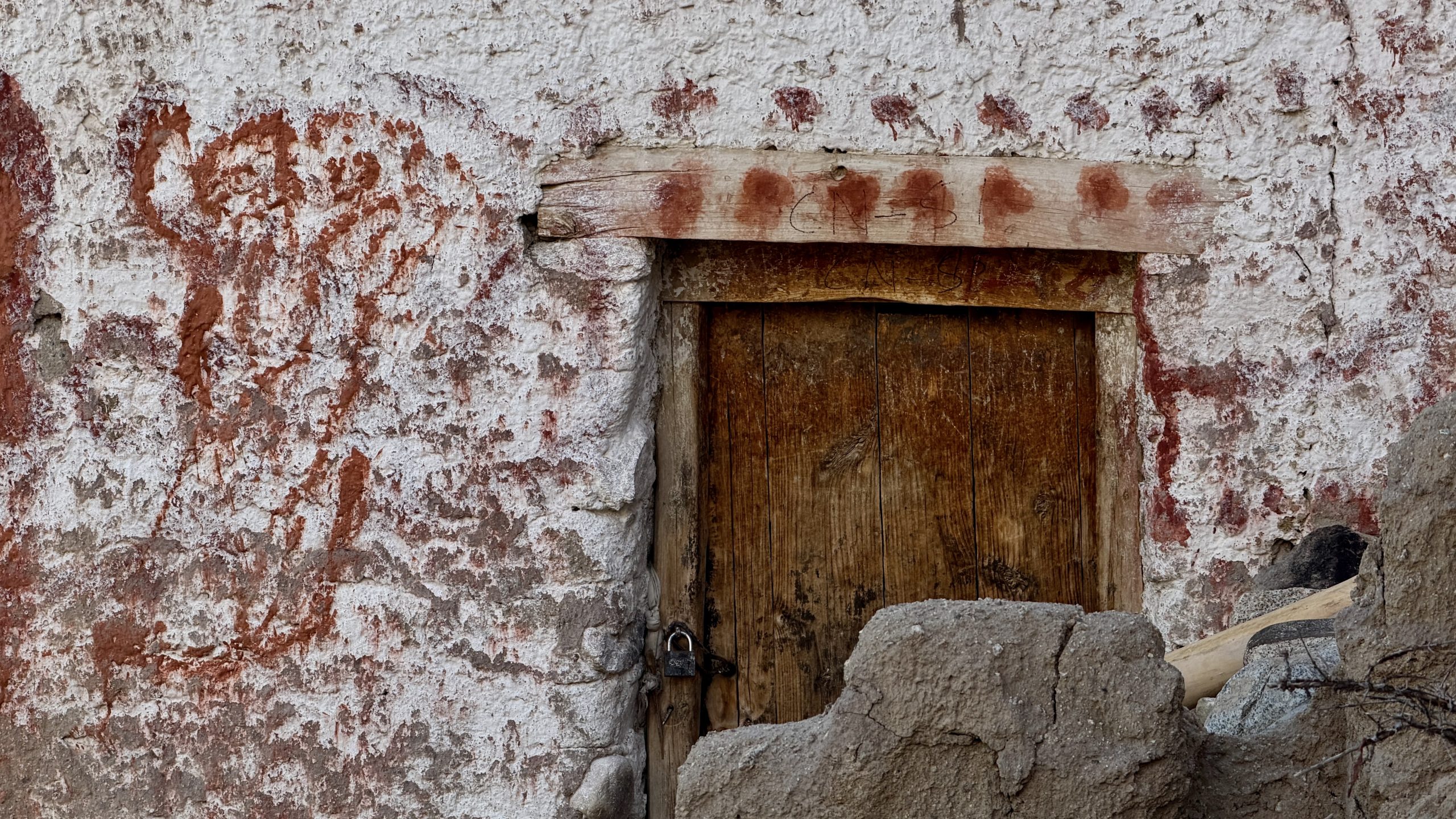
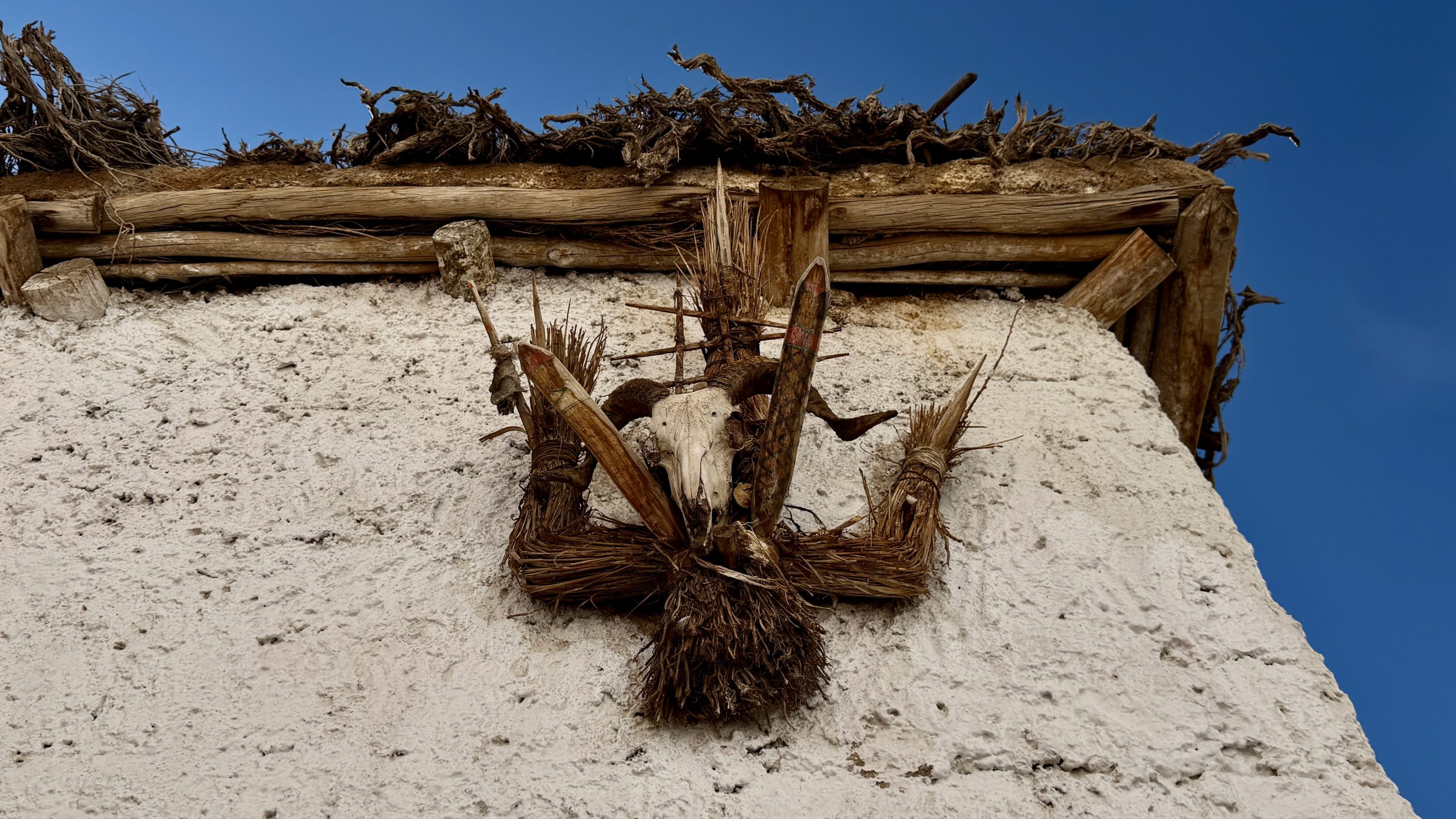
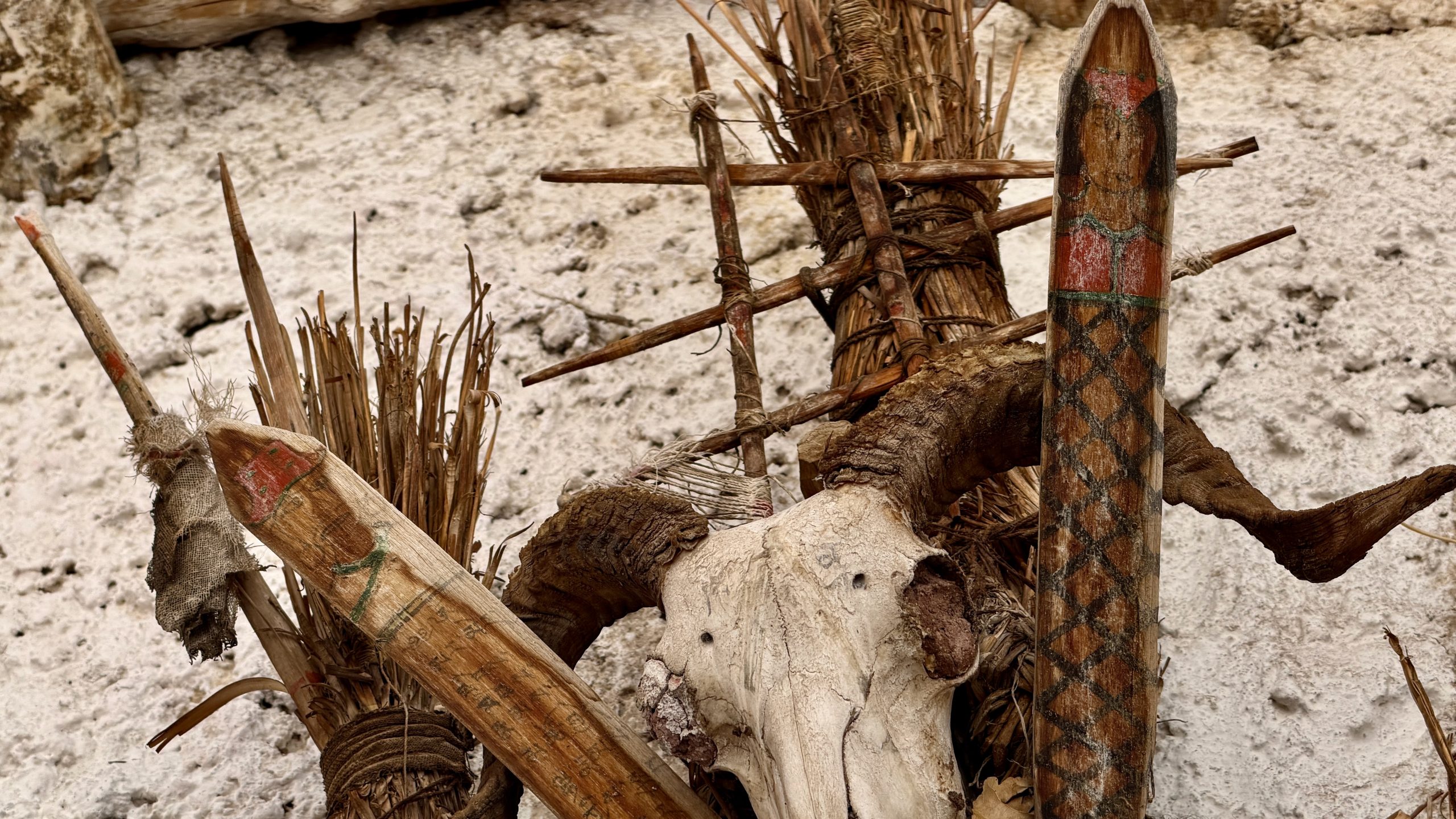
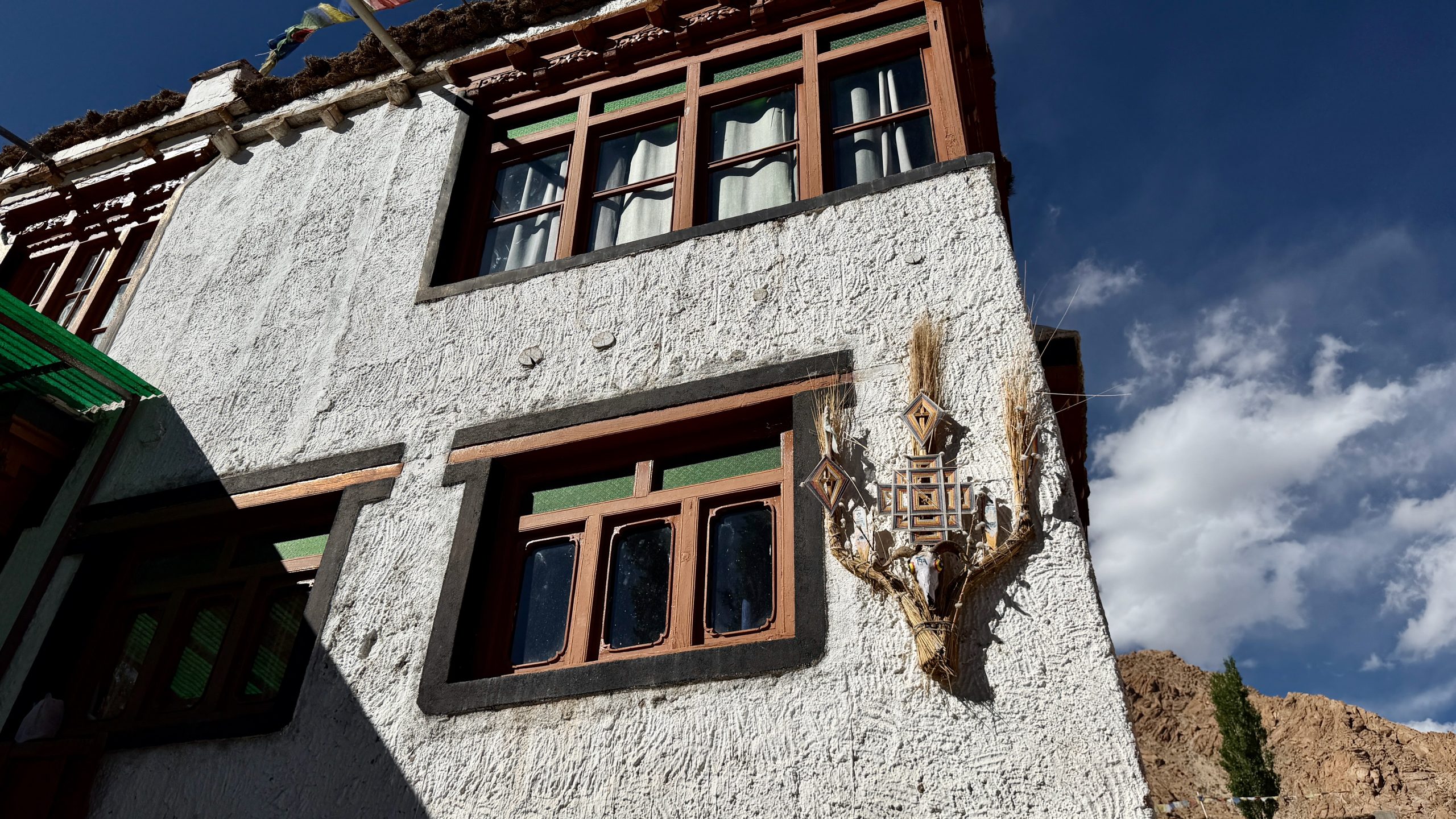
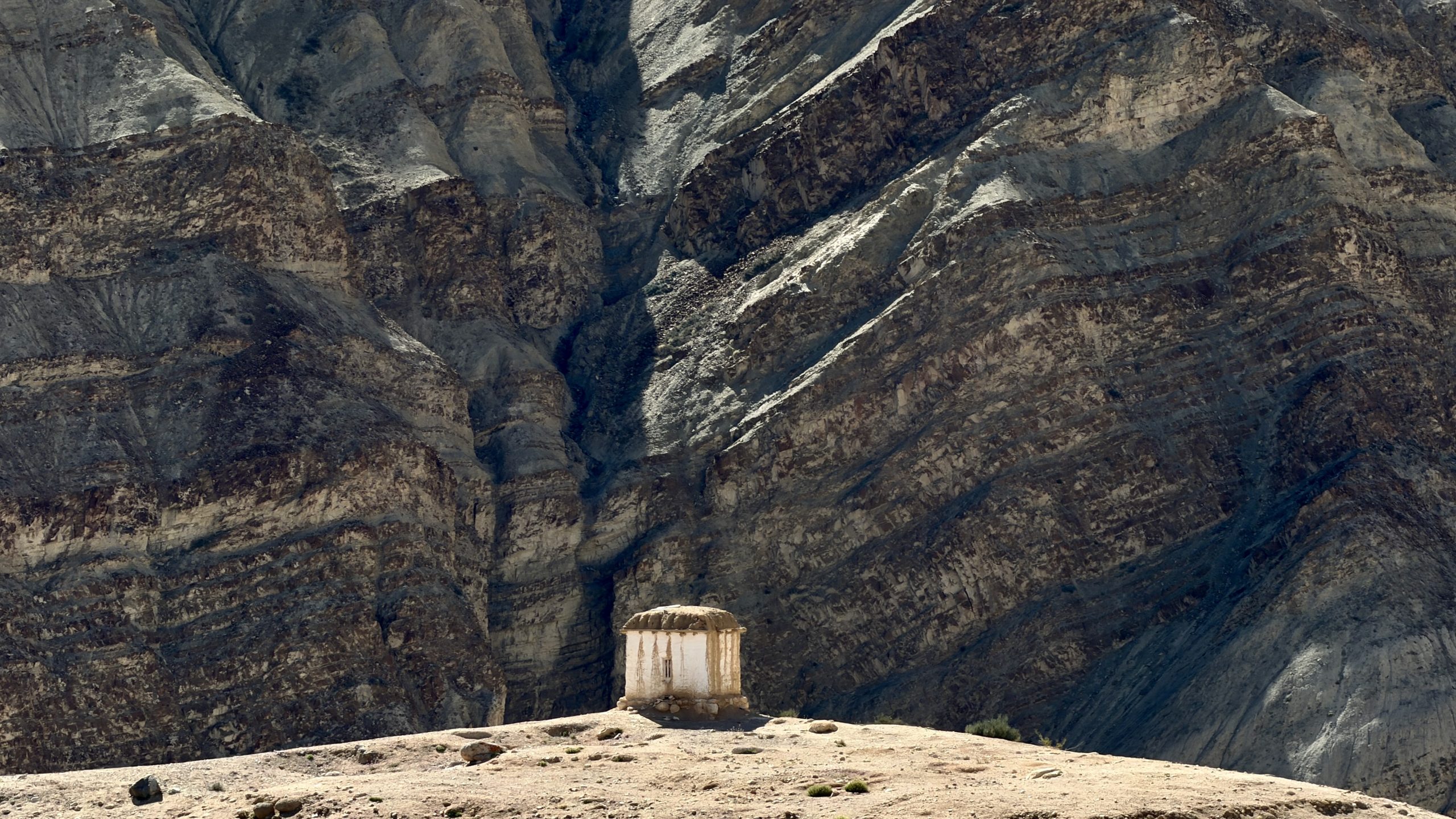
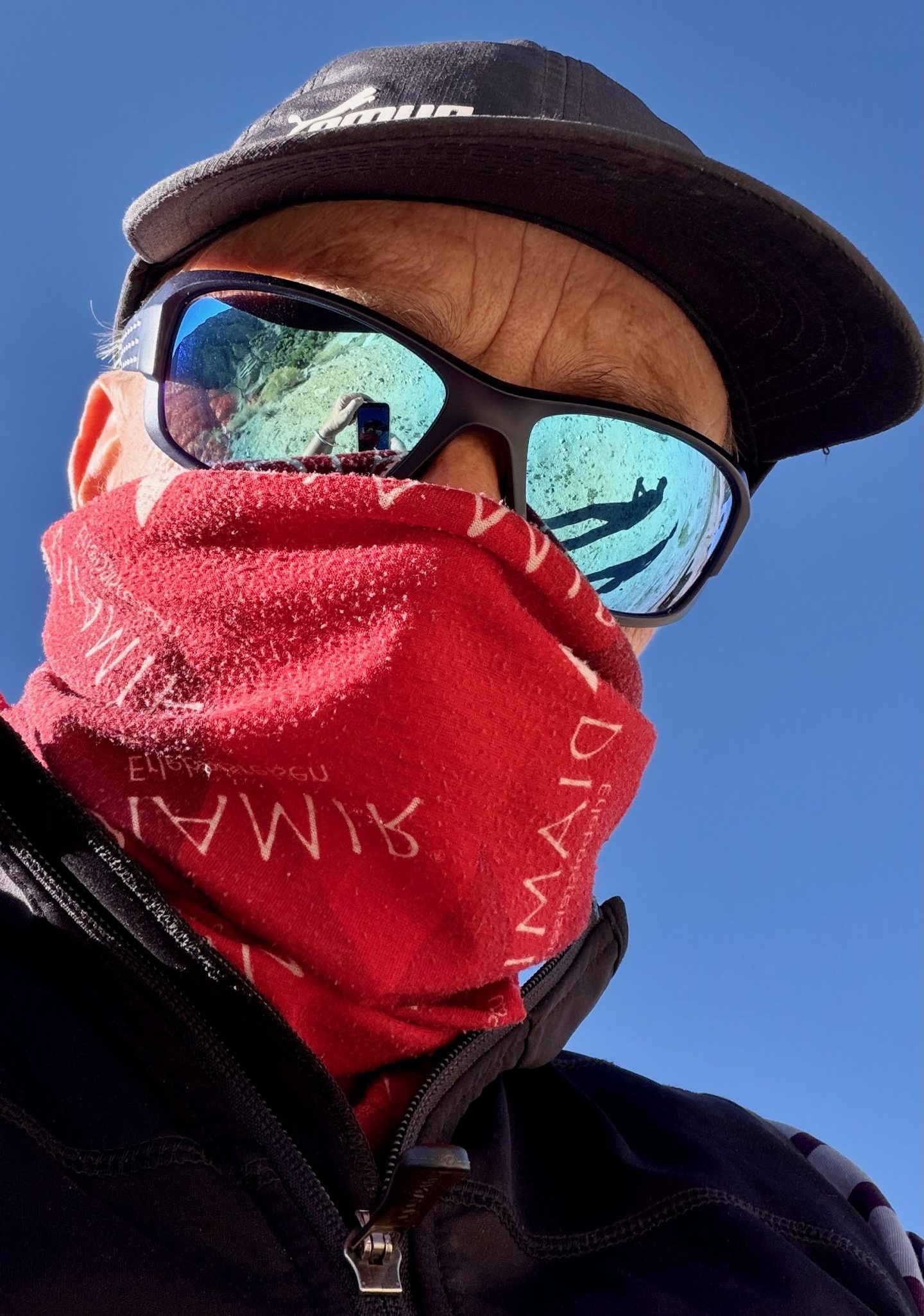
People here believe that (evil) spirits are incapable of walking in straight lines. As a result, the houses are all designed so that upon entering, the staircase leading upstairs is offset, and all the rooms branch off to the left or right, effectively leading the spirit right back out the other side. Behind the houses, there were vast landscapes bathed in beautiful light and a biting wind, which prompted me to pull my Buff up over my face while I snapped a series of photos.
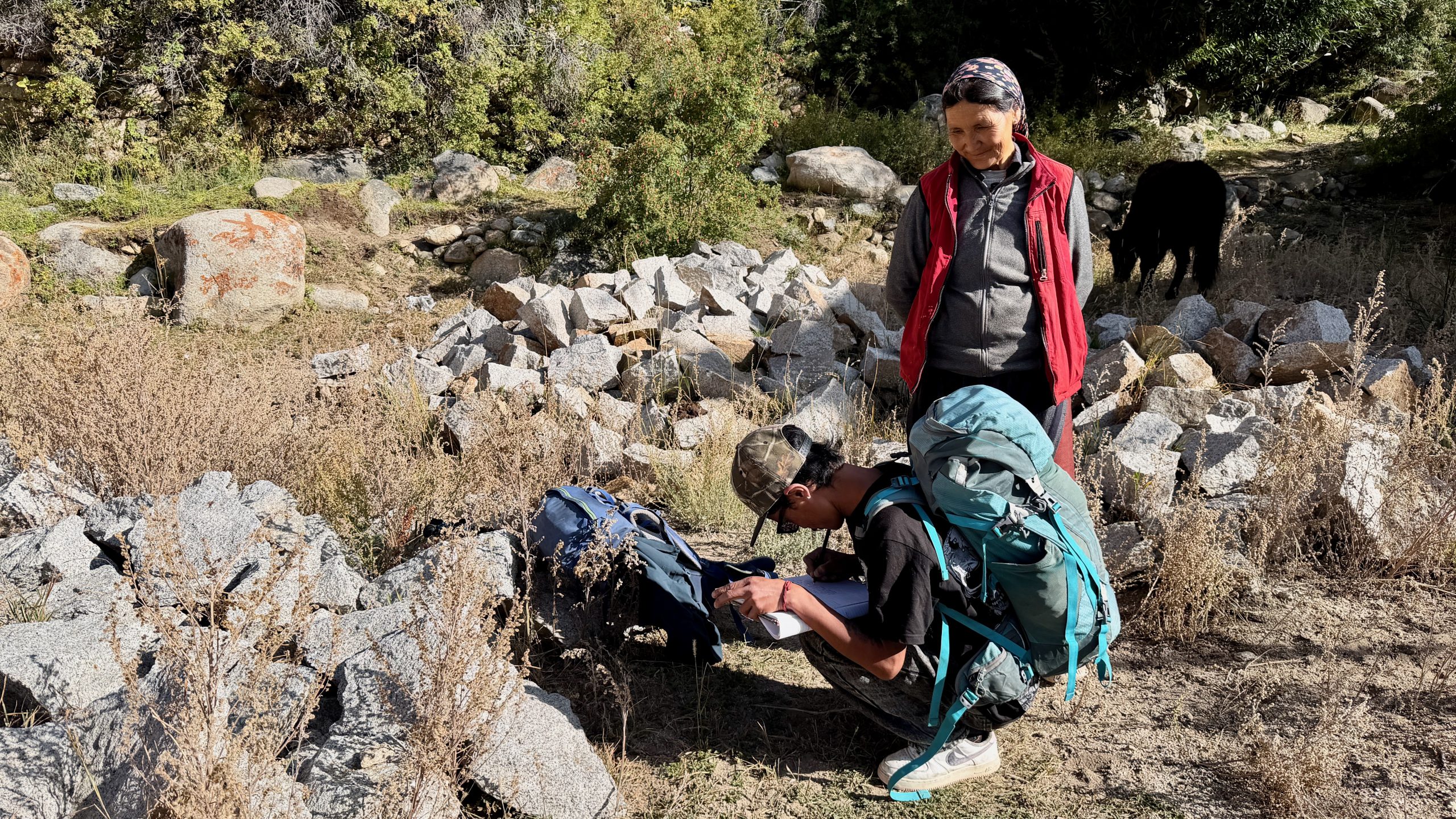
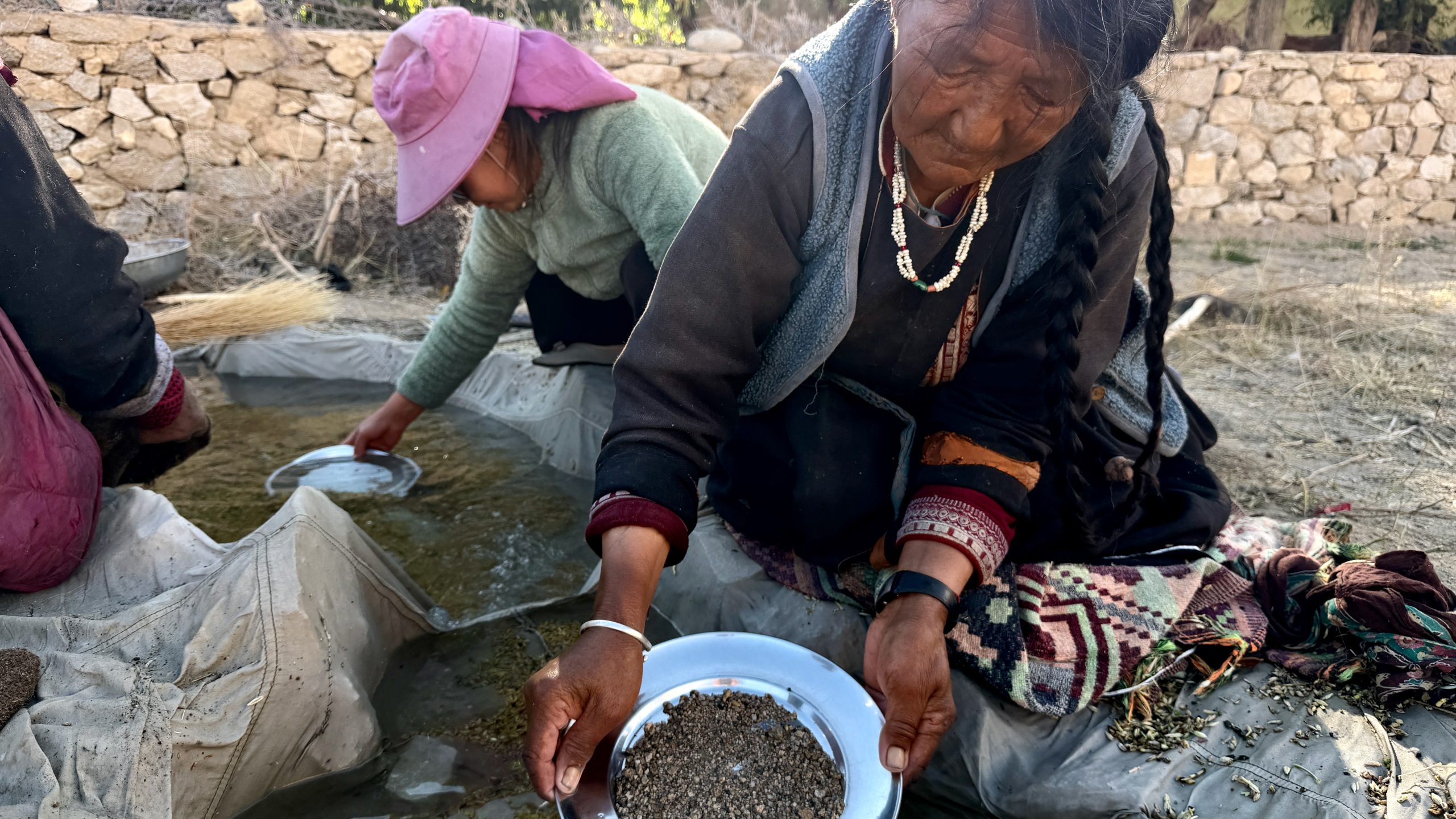
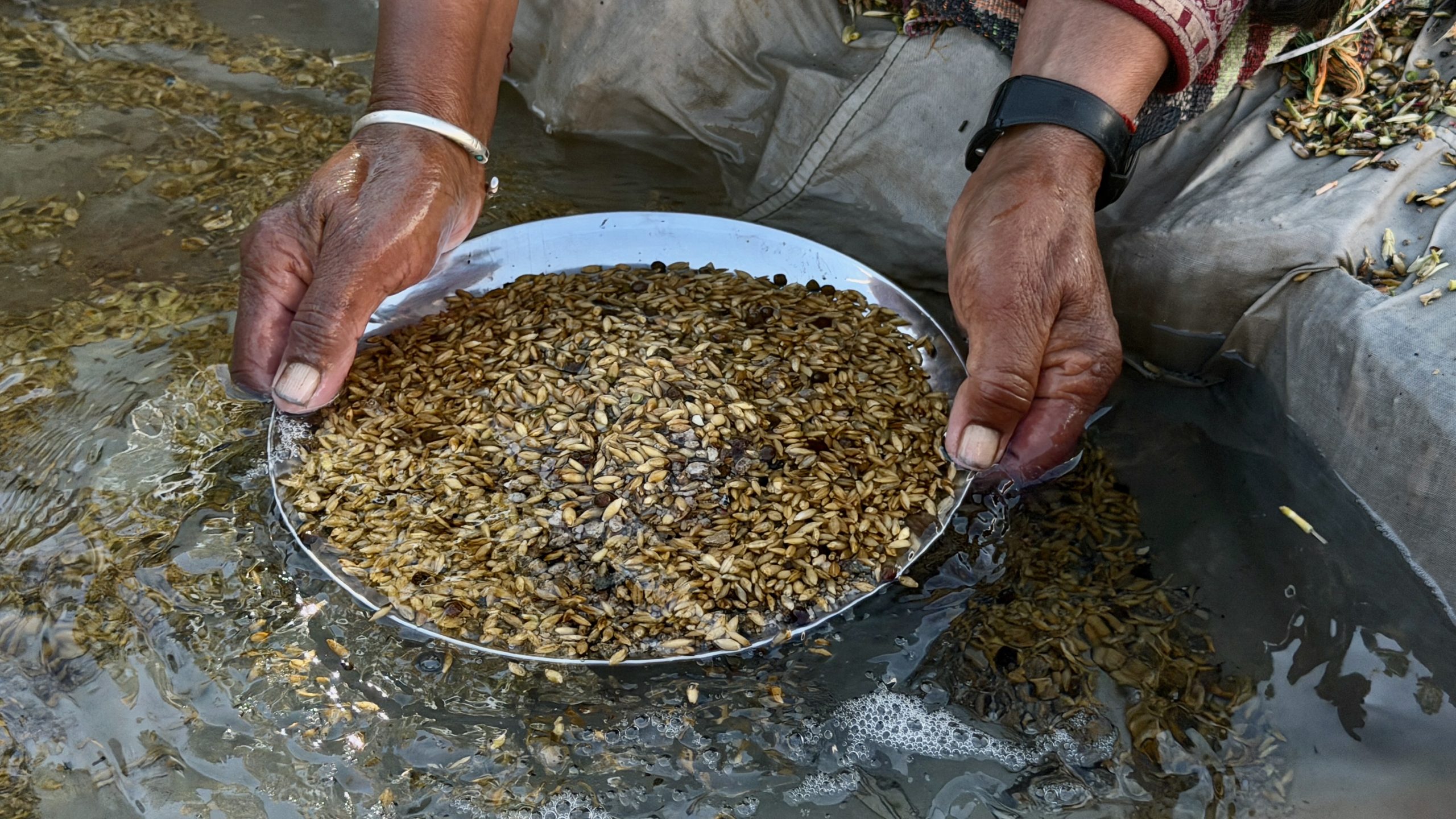
We thought it would be lovely to step inside the old gompa room, so we set out to find the person with the key. We found him busy washing and drying barley alongside a few other locals, and he asked us to wait until they were finished. Rinchen had several heavy sacks loaded onto her shoulders to carry into the house, while I crouched down beside them to get a closer look at the whole process. The barley, mixed with gravel, sits on a large cloth submerged in the river to be washed. Then, you have to maneuver a plate in just the right way so that the barley grains cascade over the edge, leaving the remaining gravel behind to be thrown out. They had me give it a try—it’s surprisingly difficult! I ended up capturing most of it on video rather than taking photos.
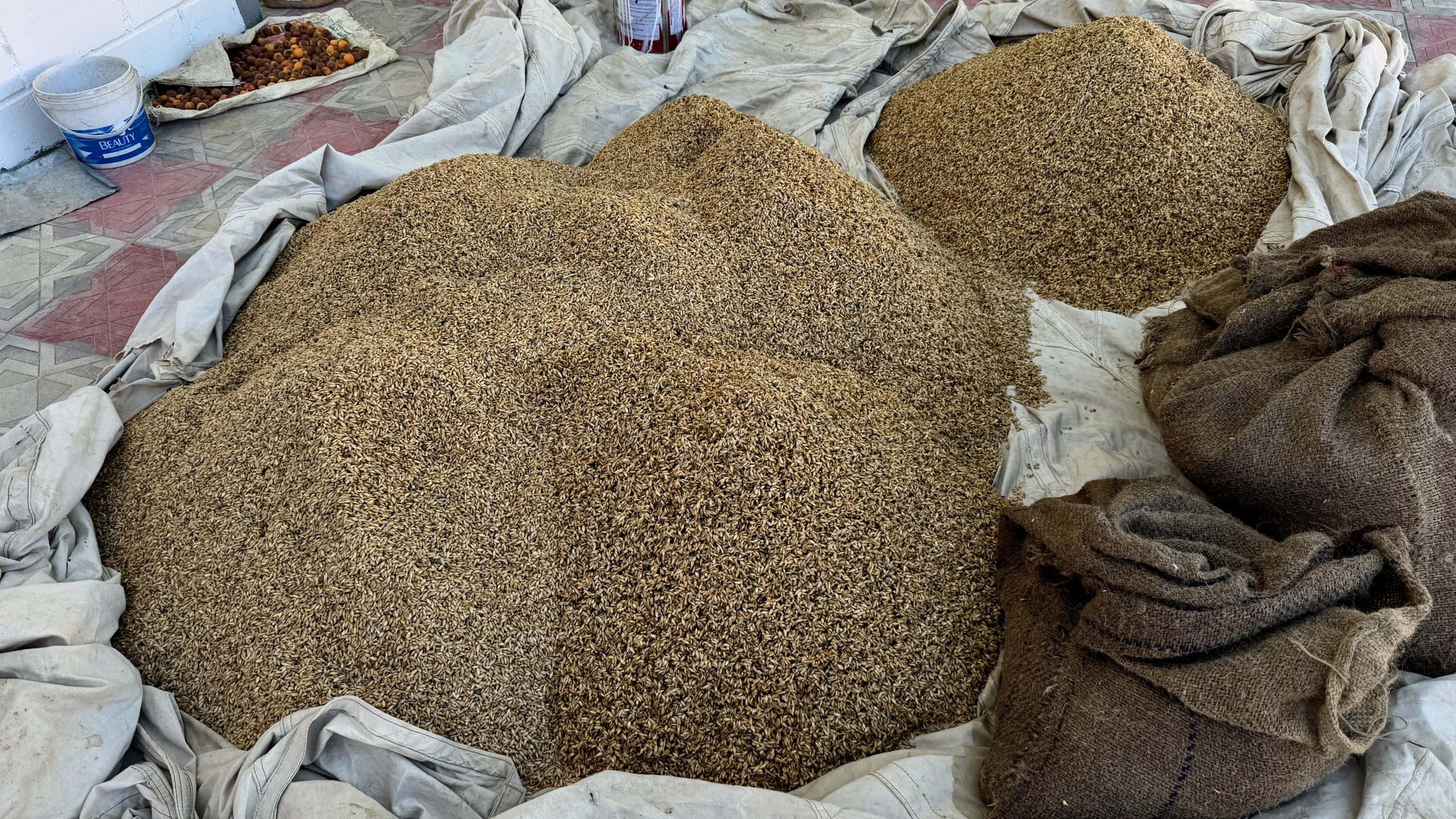
It was so wonderful being with those people—there was such a cheerful, lighthearted atmosphere to their work. We stayed for quite a while until everyone was done and were even treated to a cup of tea. I had been surprised to see that all the fields were already harvested. As it turns out, that’s because they have so much machinery now. Tasks that used to take an entire month are now finished in just a few days.
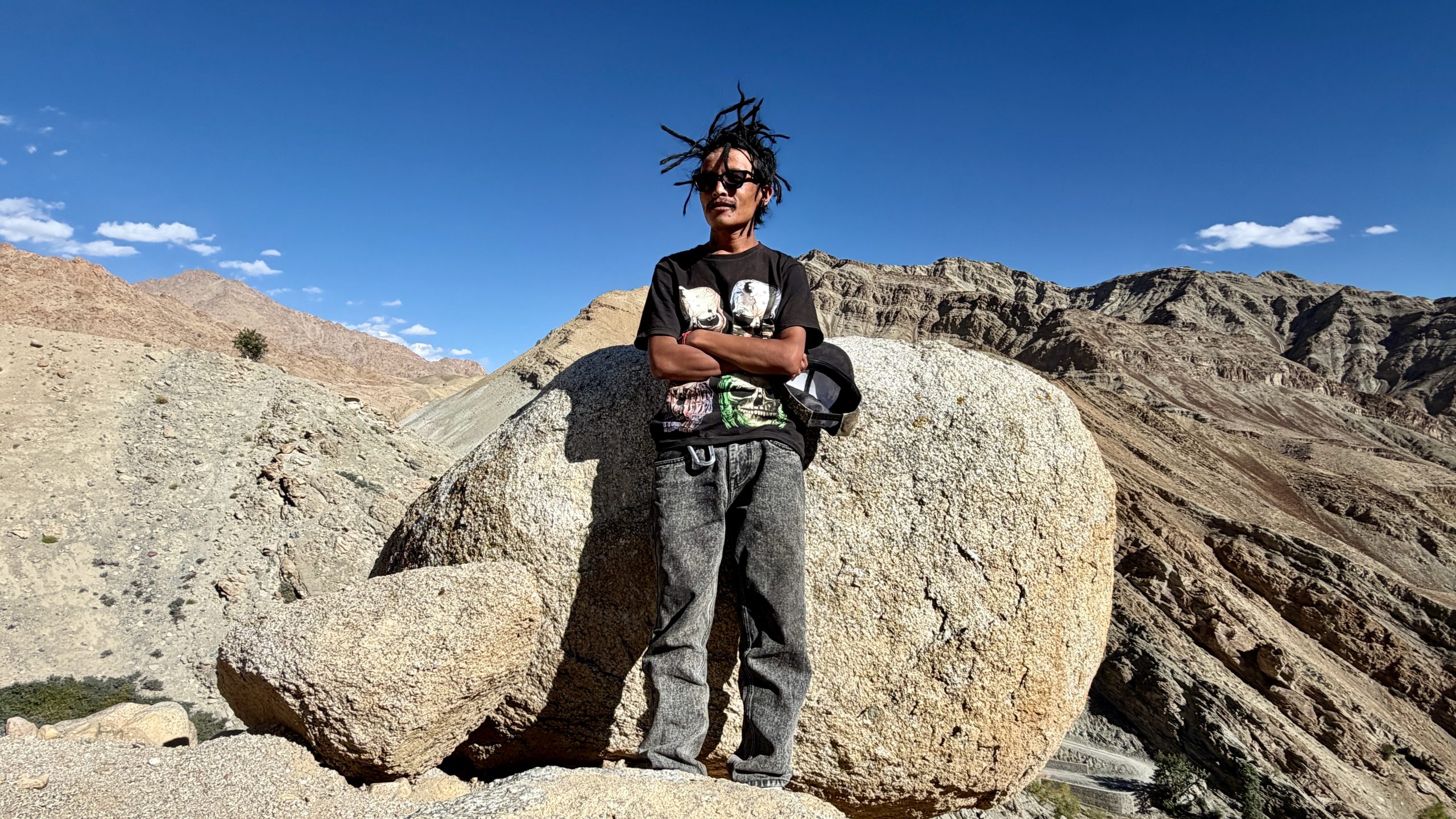
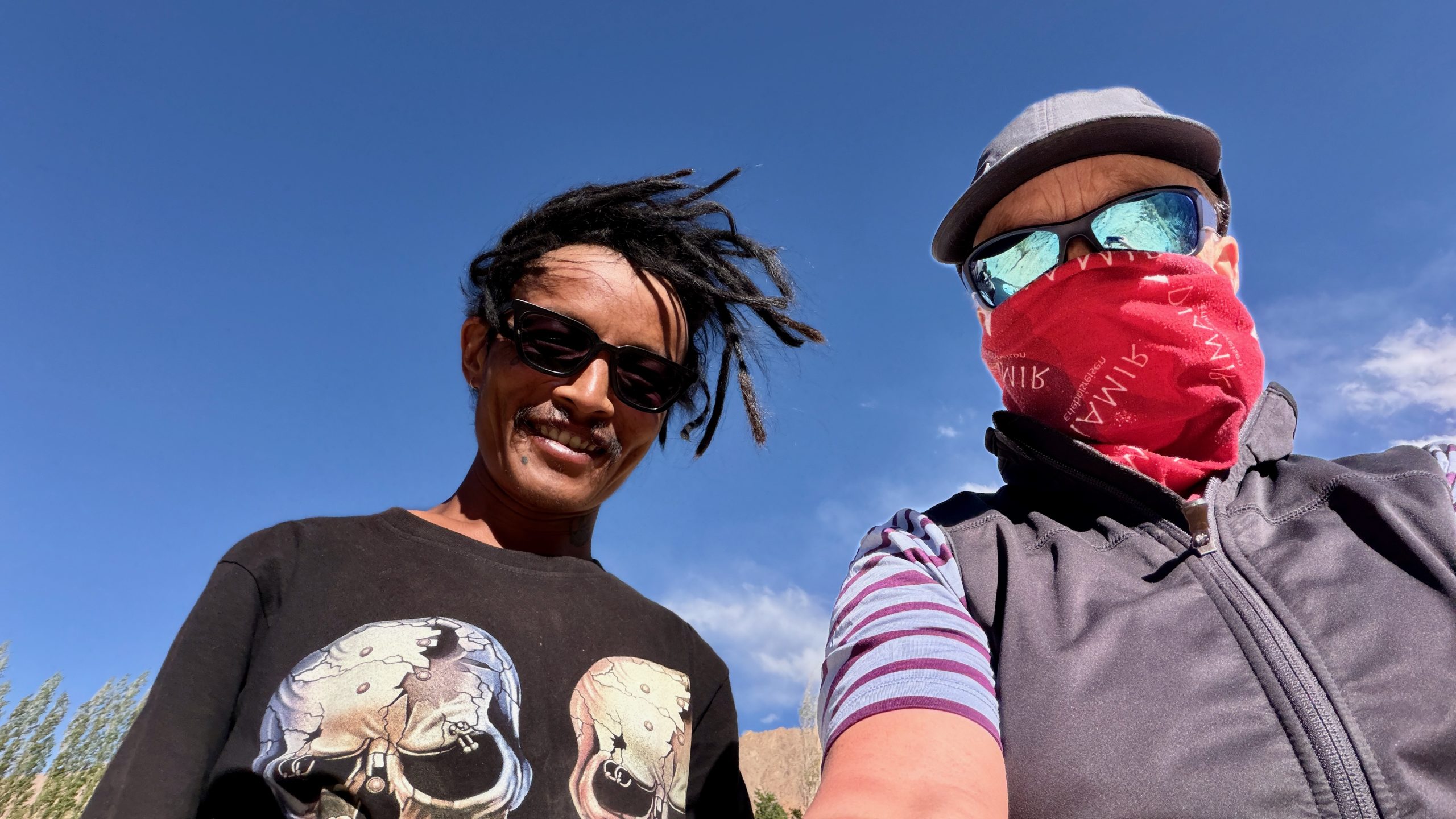
The old man, who also happens to be the local amchi, showed us the gompa room, where taking photos was prohibited. Rinchen had attended a boarding school in Shimla and only returned home after 22 years away. He grew up surrounded much more by Christianity and Hinduism than by Buddhism, so he doesn’t know all that much about it. On top of that, he doesn’t speak particularly good Ladakhi or Zanskari, though he usually gets along just fine communicating with people. Except with this old man, who was eager to teach him a great deal about Buddhism—Rinchen simply struggled to understand his dialect. Since I knew the names of most of the Buddha statues, the old man seemed satisfied that my level of knowledge was sufficient.
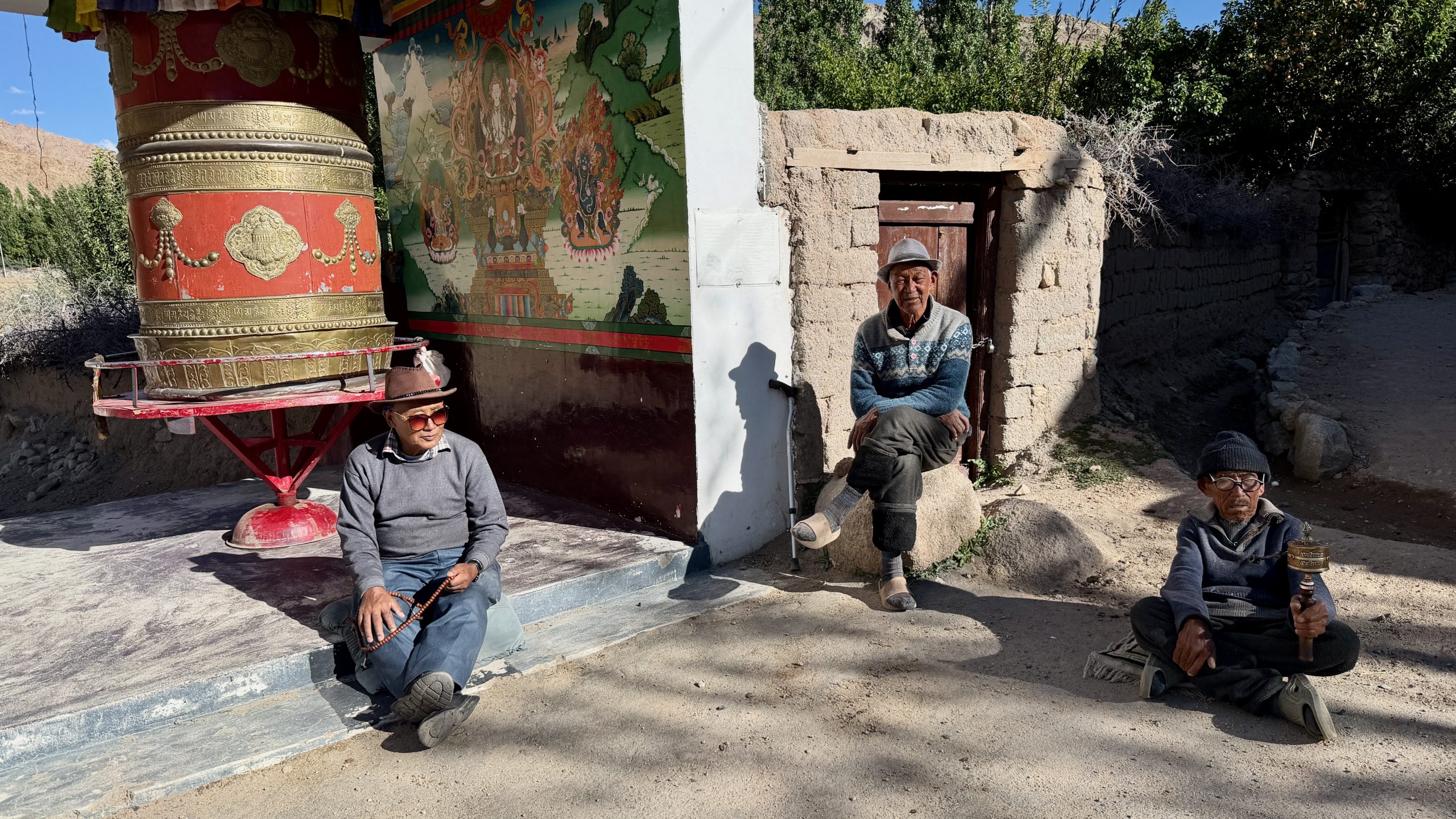
Both of us liked Yangthang very much. It feels like a much more vibrant village, where we actually saw young people and toddlers around. The elders loved gathering together by the prayer wheel.
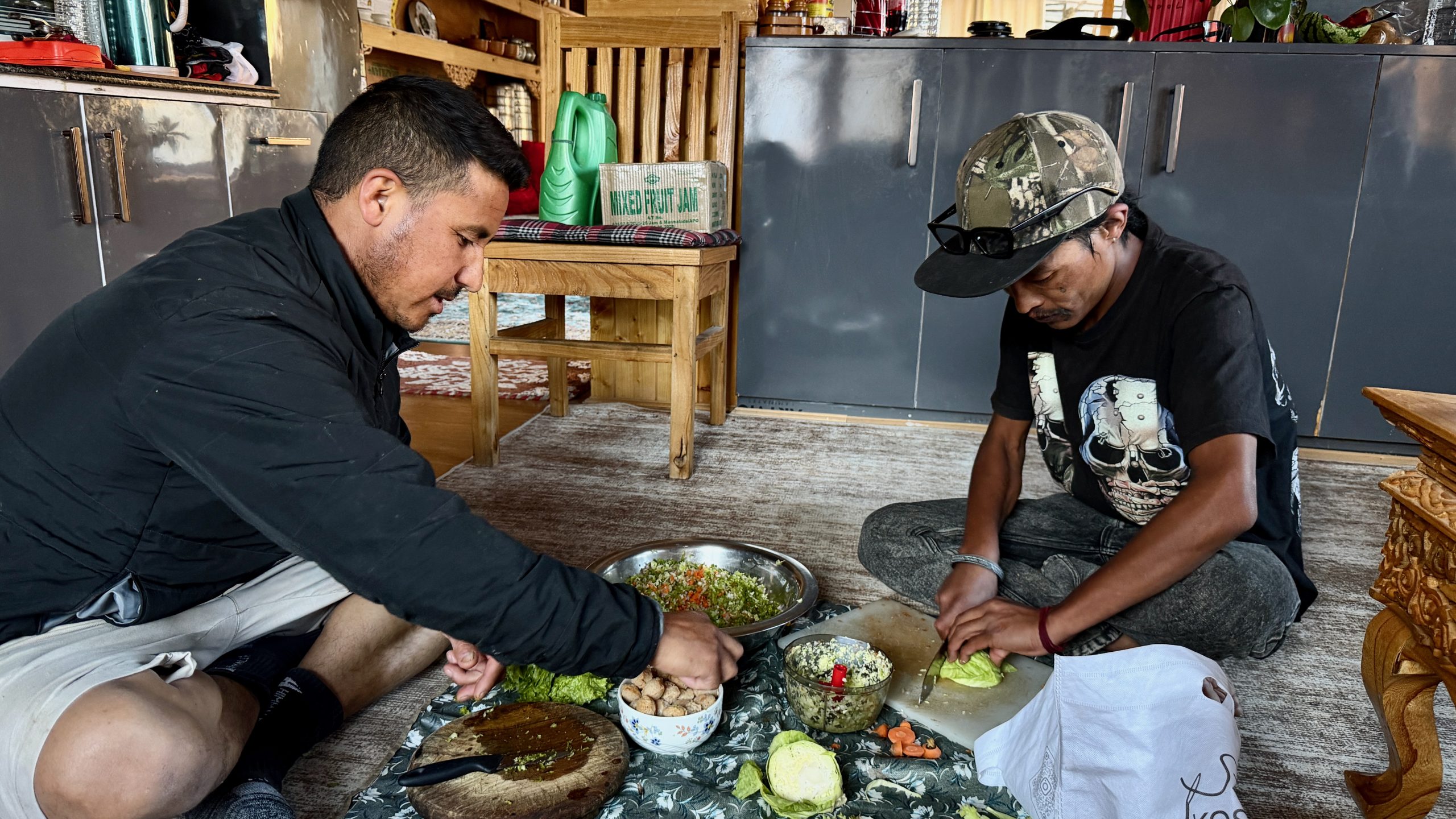
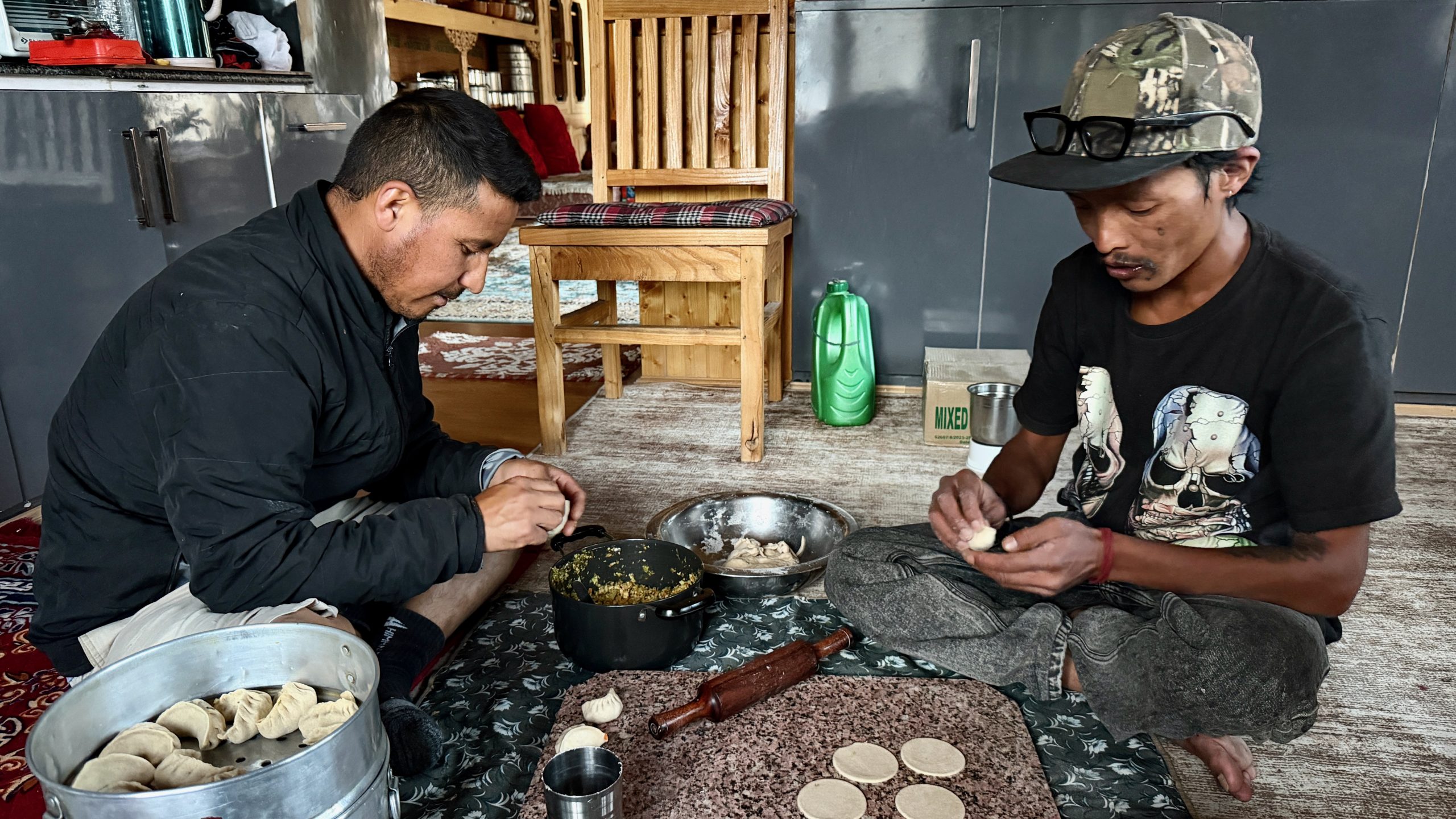
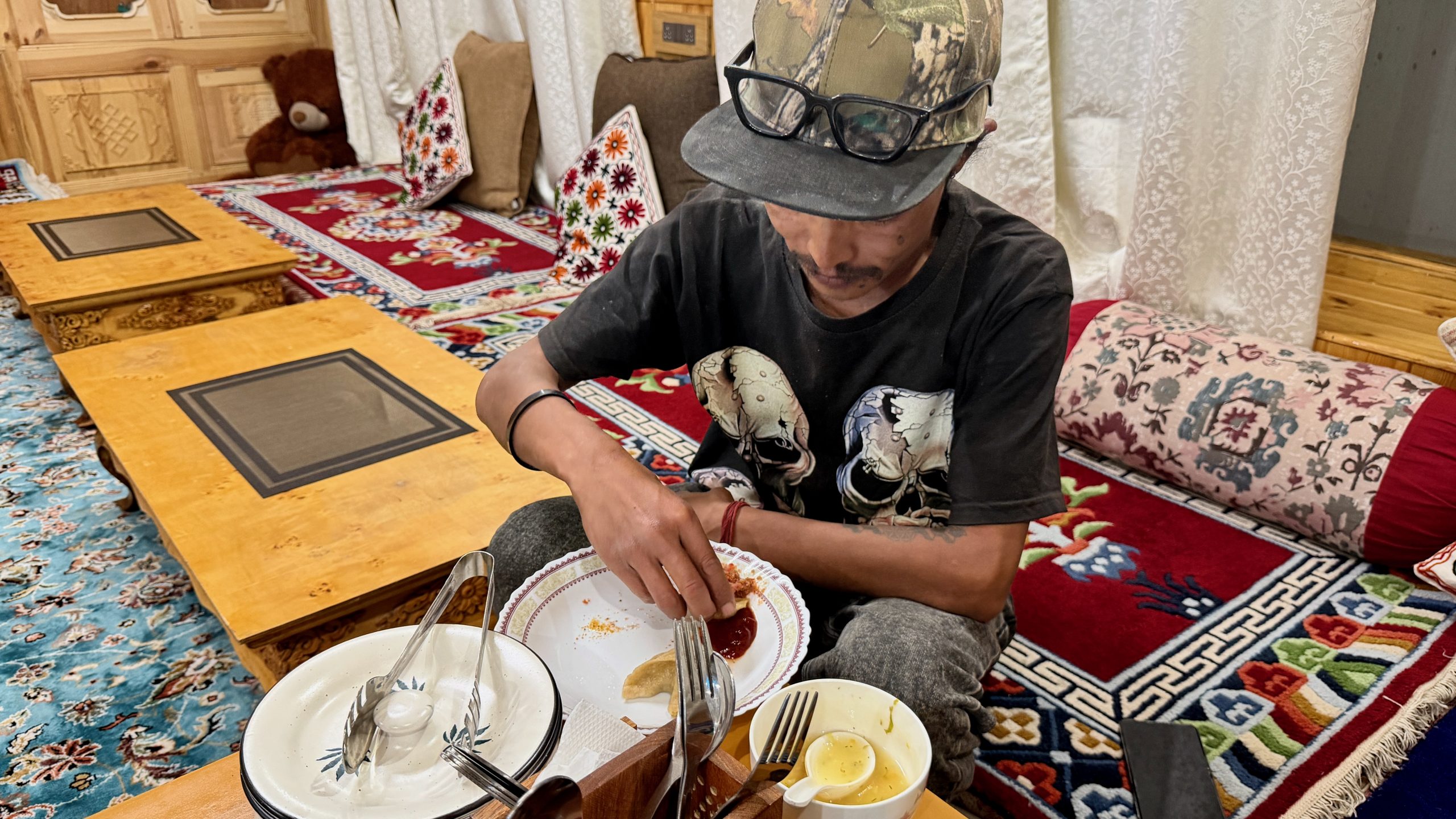
For dinner, I requested momos, and we all made them together. Well, I didn’t actually do much of the shaping—I just can’t get those intricate folds right and have completely given up trying! I was only trusted with chopping the paneer. Still, I loved just sitting there, watching them work, and chatting away. It was another one of those wonderfully cozy, feel-good moments.
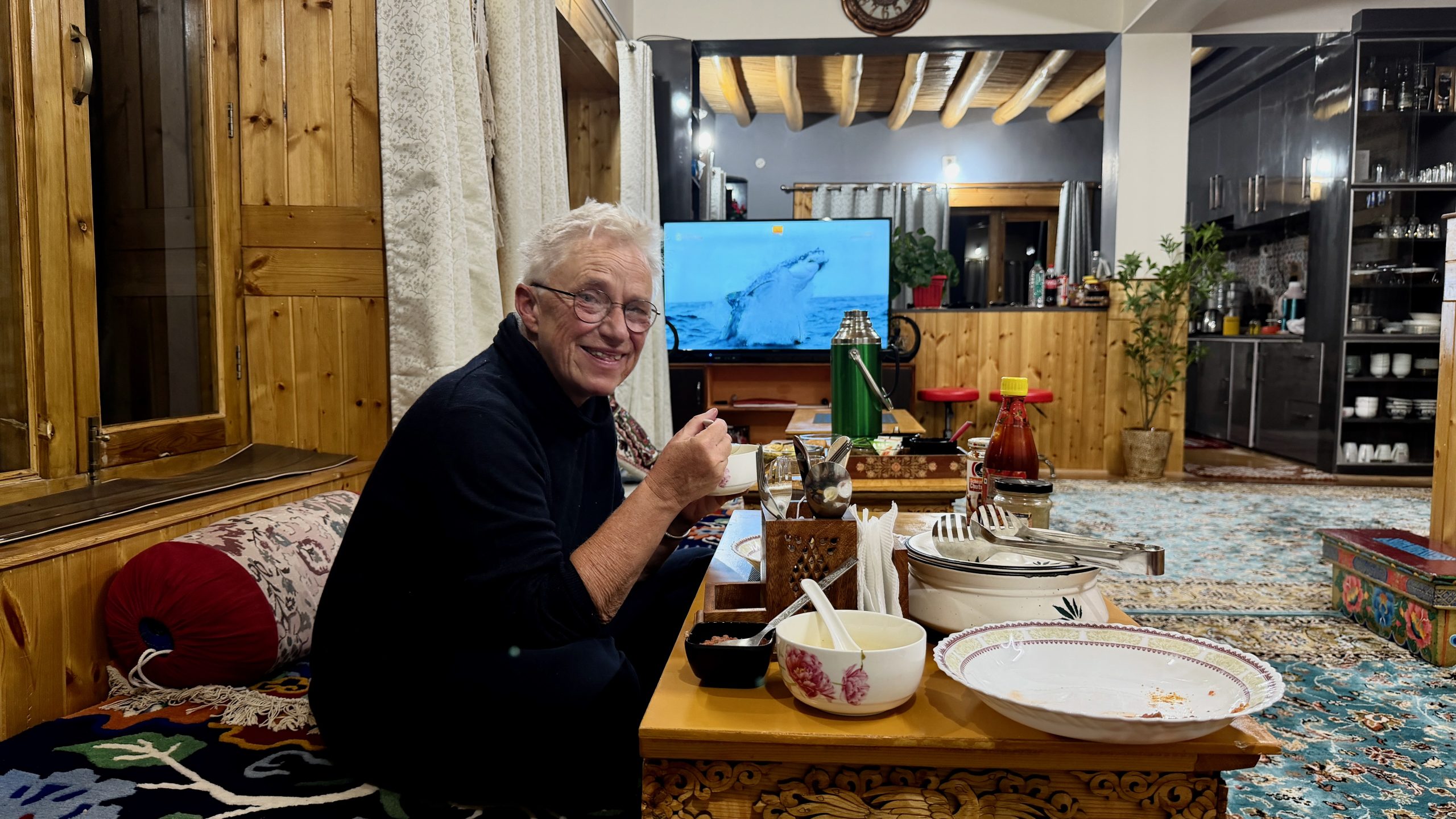
Right after we arrived, I liked it so much that I found myself wishing we could stay for two nights. Rinchen didn’t mind at all. From here, you can head up along the road toward Ulley—or drop down to Rizong and Chulichan.
Years ago, I used to guide tour groups of travelers over 50 through this area quite often. We would start back in Phyang and embark on an eight-day trek complete with horses and camp setups, which included a two-night stay in Yangthang to make that side trip down below. Nowadays, the campsites are largely deserted, and pack horses are virtually a thing of the past—the network of homestays is more than enough to accommodate travelers. Angchuk is making an honest effort to recover his expenses from building such a beautiful house, and he hosted around 200 guests over the summer. Interestingly enough, the guy in the peacock pants had stayed here too, and Angchuk found him a bit unusual as well! July and August are actually quite busy along this trail, whereas September is very quiet. Yet September feels like the absolute best month to be here—earlier in the season, it’s just too hot.
Dry compost toilets are mostly a thing of the past or kept outside, and even here, our room featured a proper bathroom with a flush toilet and a hot shower. Homestays have truly evolved!
In the end, the day turned out to be so much richer and more enjoyable than I had anticipated that morning, when I was only picturing a dull, short march along the road. This is what makes traveling so rewarding. I couldn’t help but wonder if the next day would hold just as many surprises.