


Chulichan-hike – Where the wild floods have raged
15. September 2026
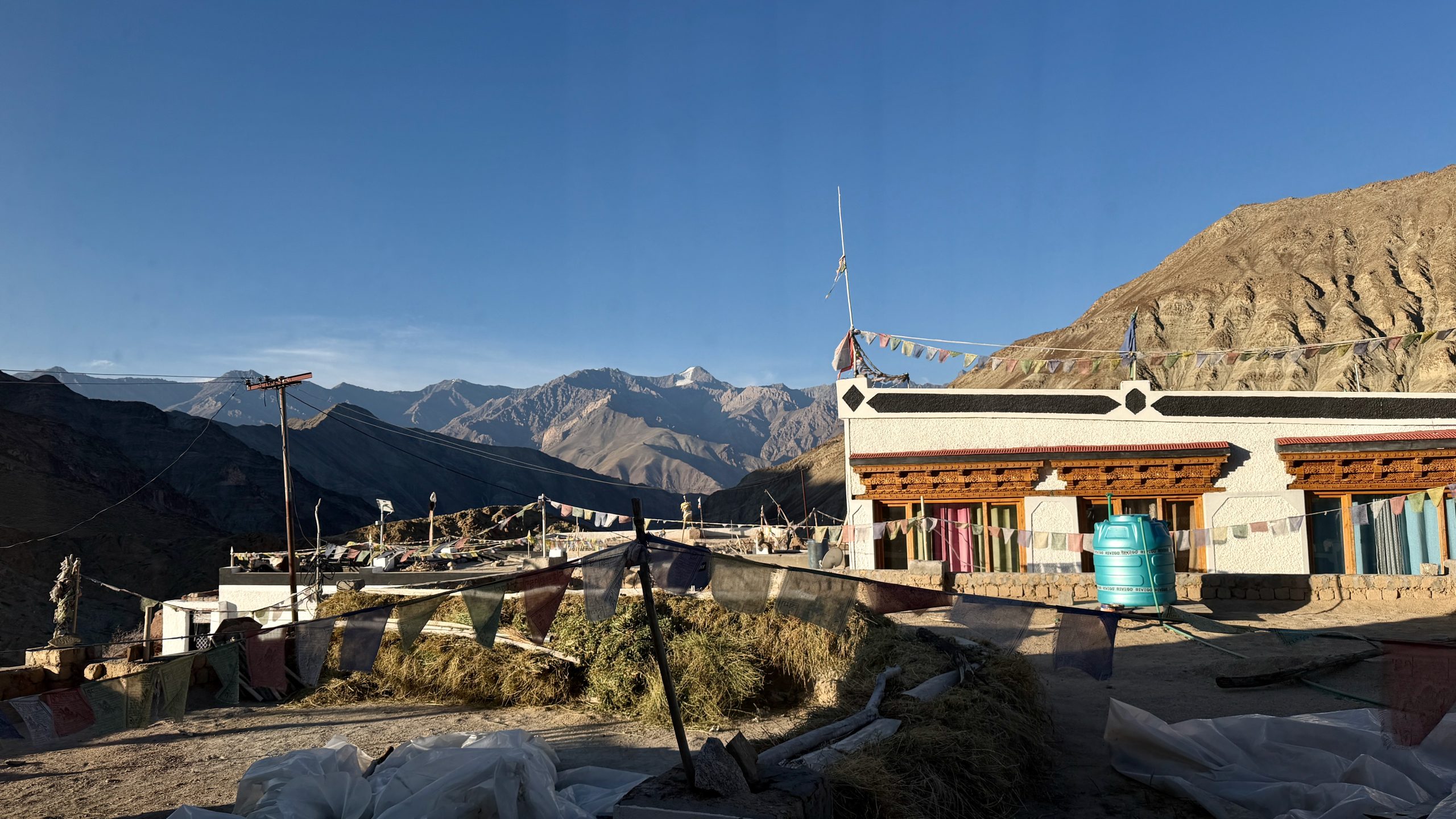
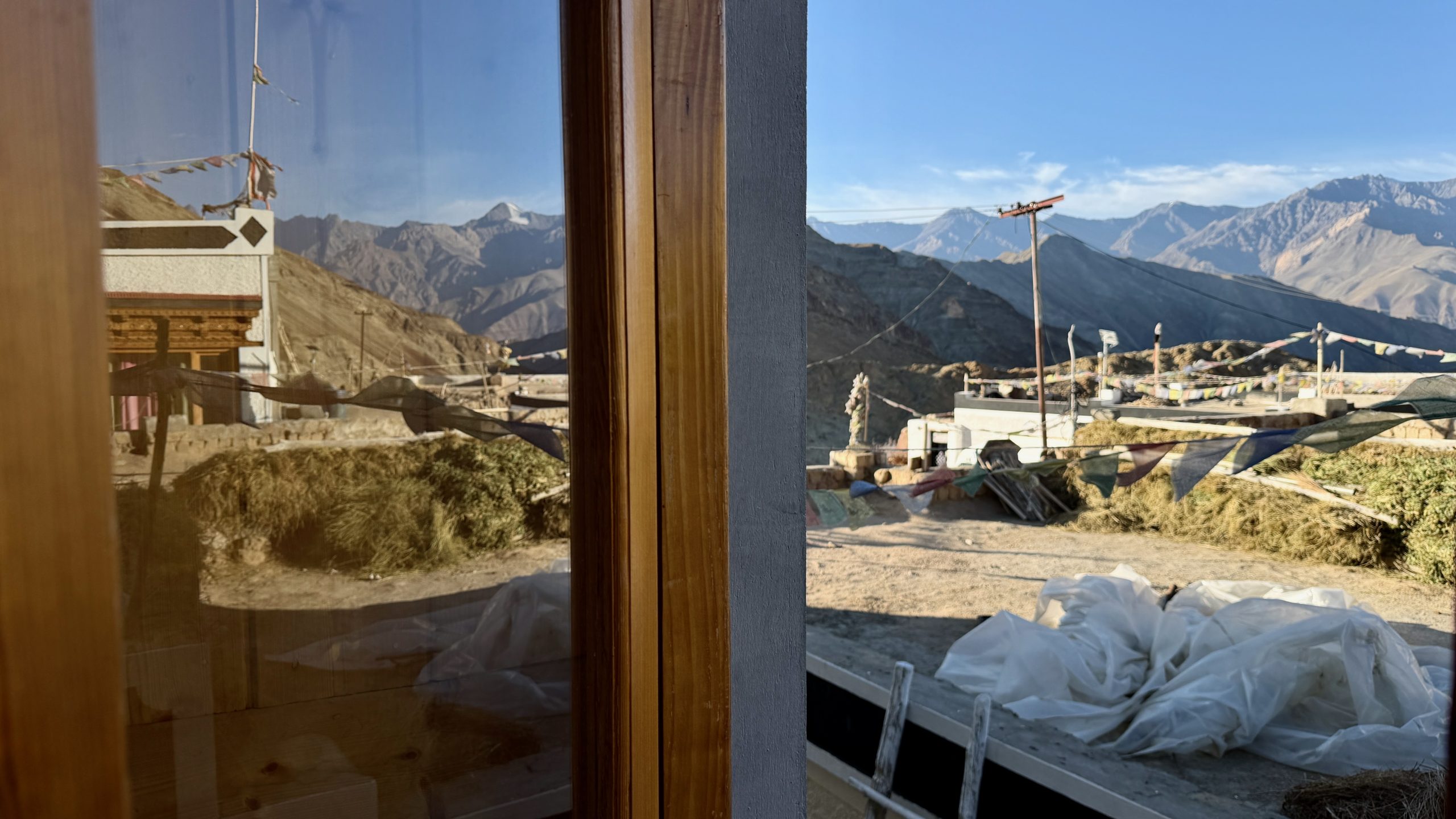
How lovely it is when you get to wake up to a view like that right from your bed. And there was even a neat reflection to top it off.
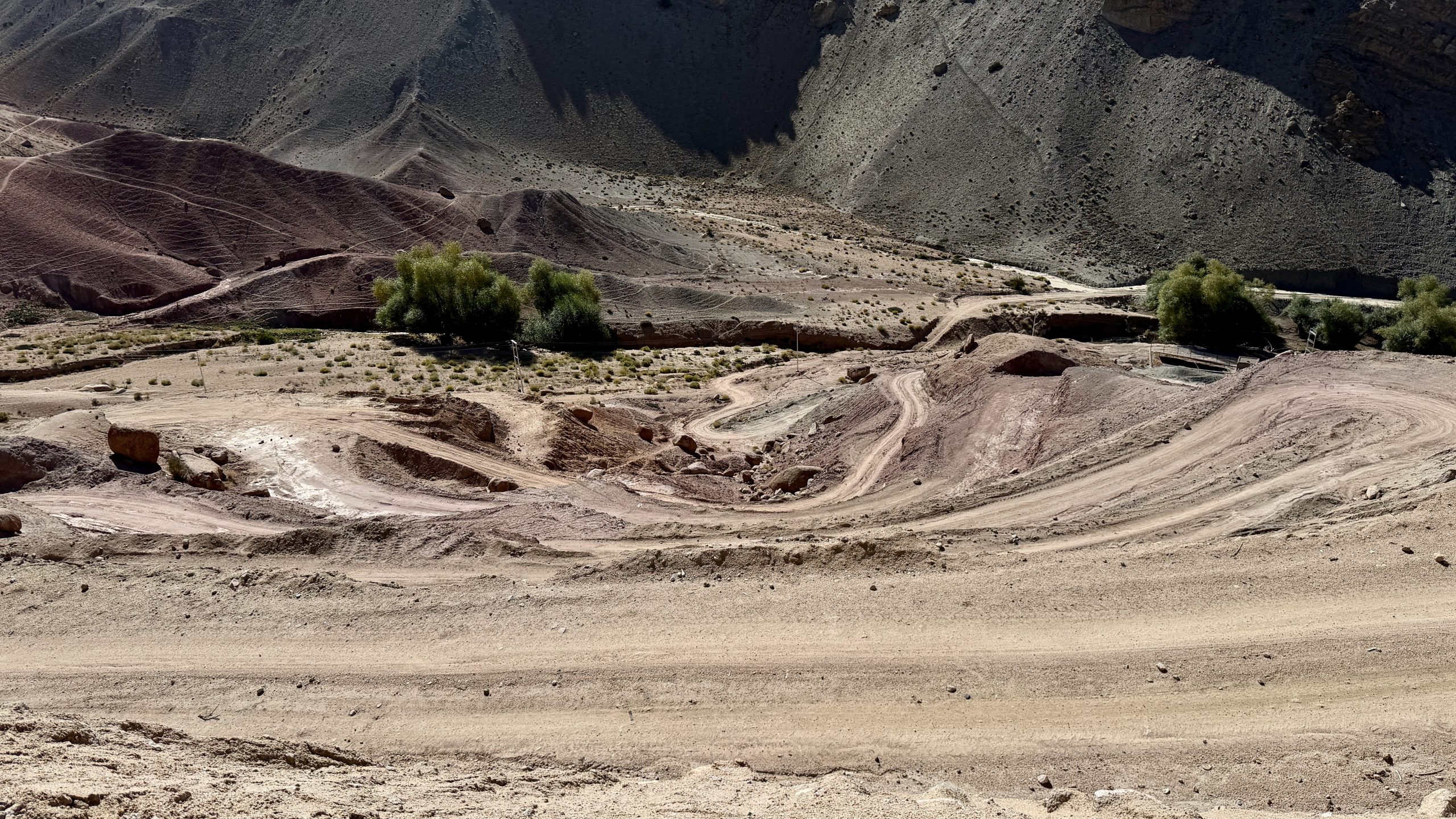
To start, we headed down a gravel road toward the Chulichan nunnery. We had to stop several times along the way just to take photos.
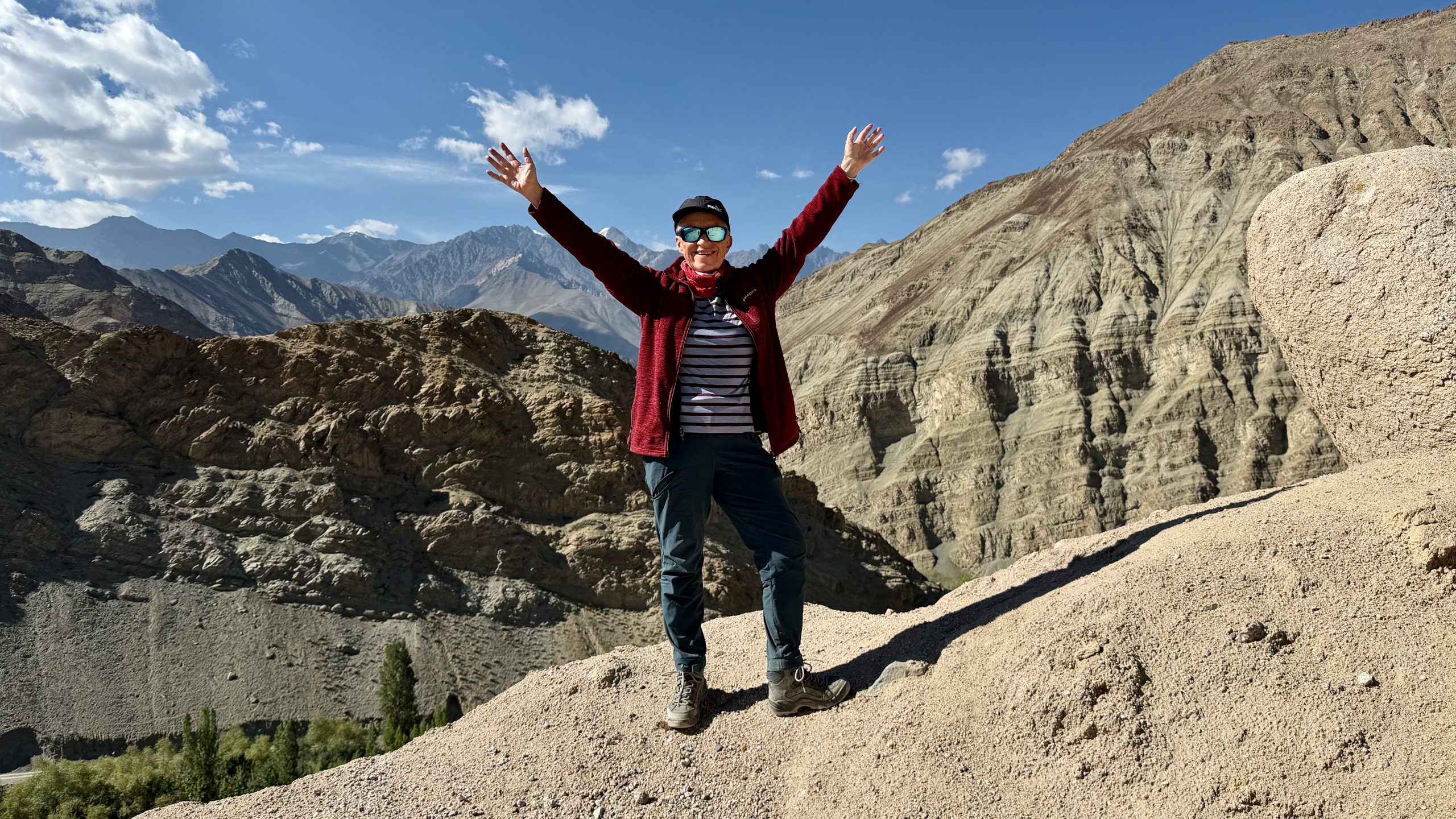
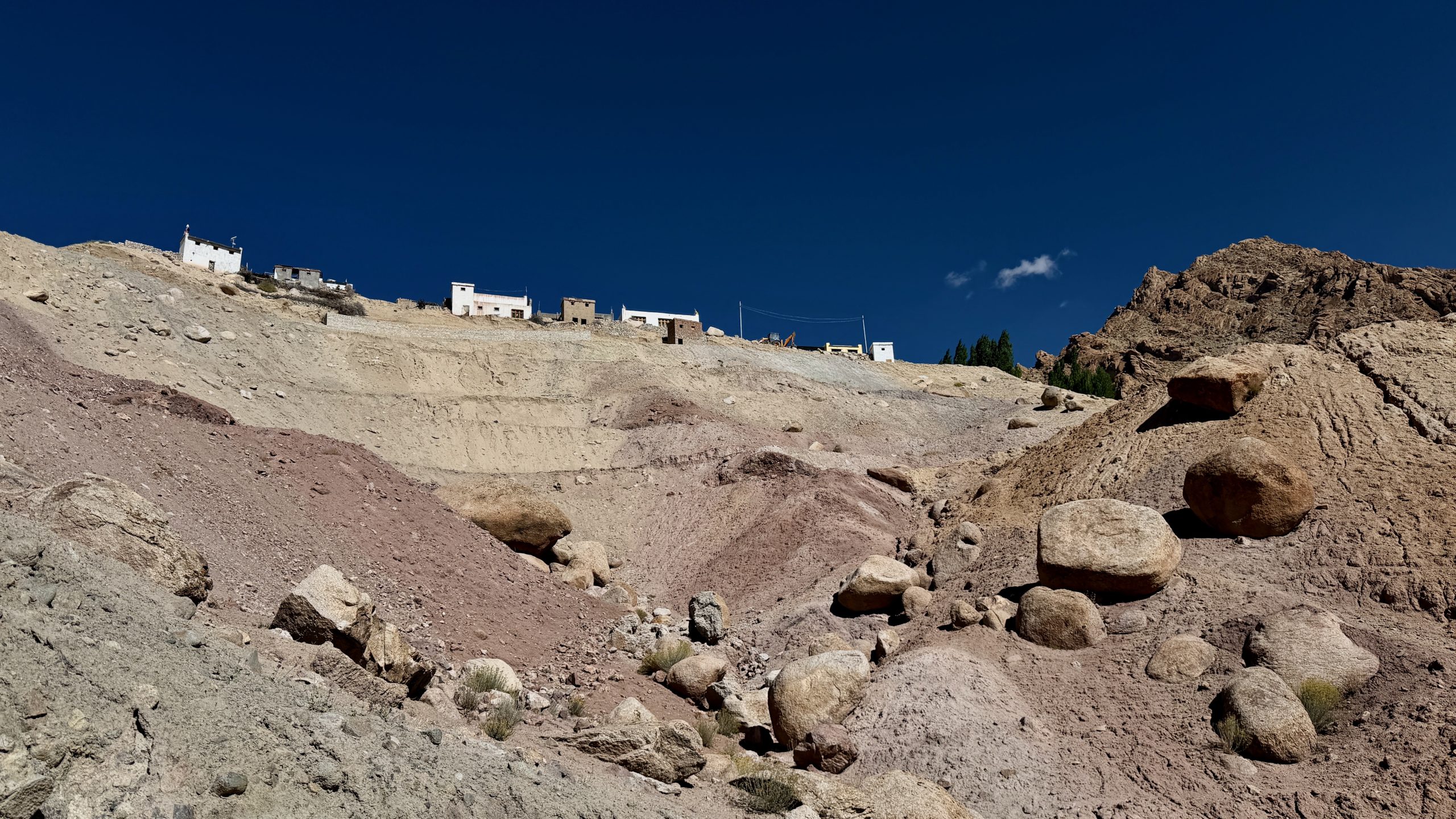
So much rock—and nestled in between, those beautiful green oases.
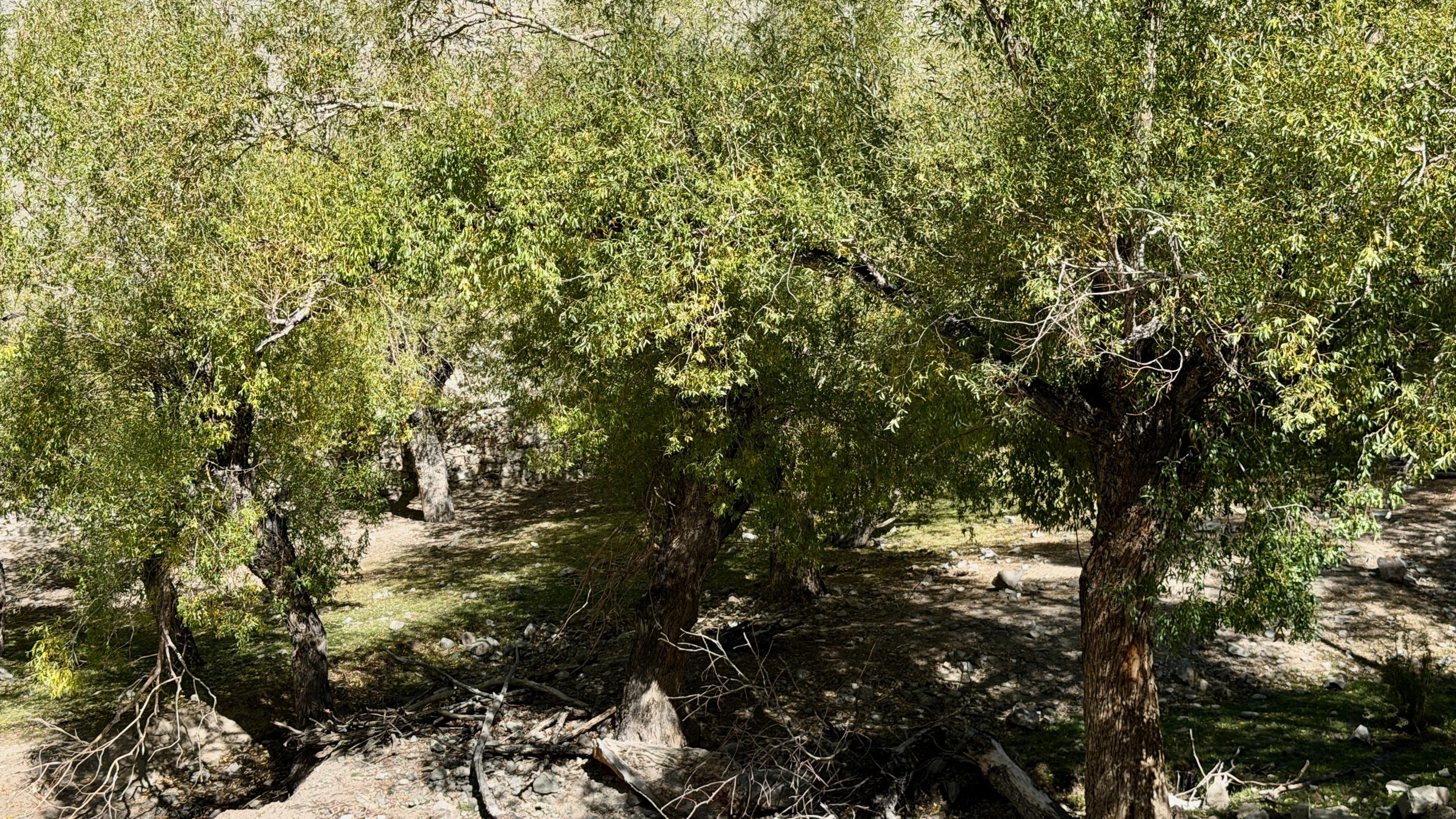
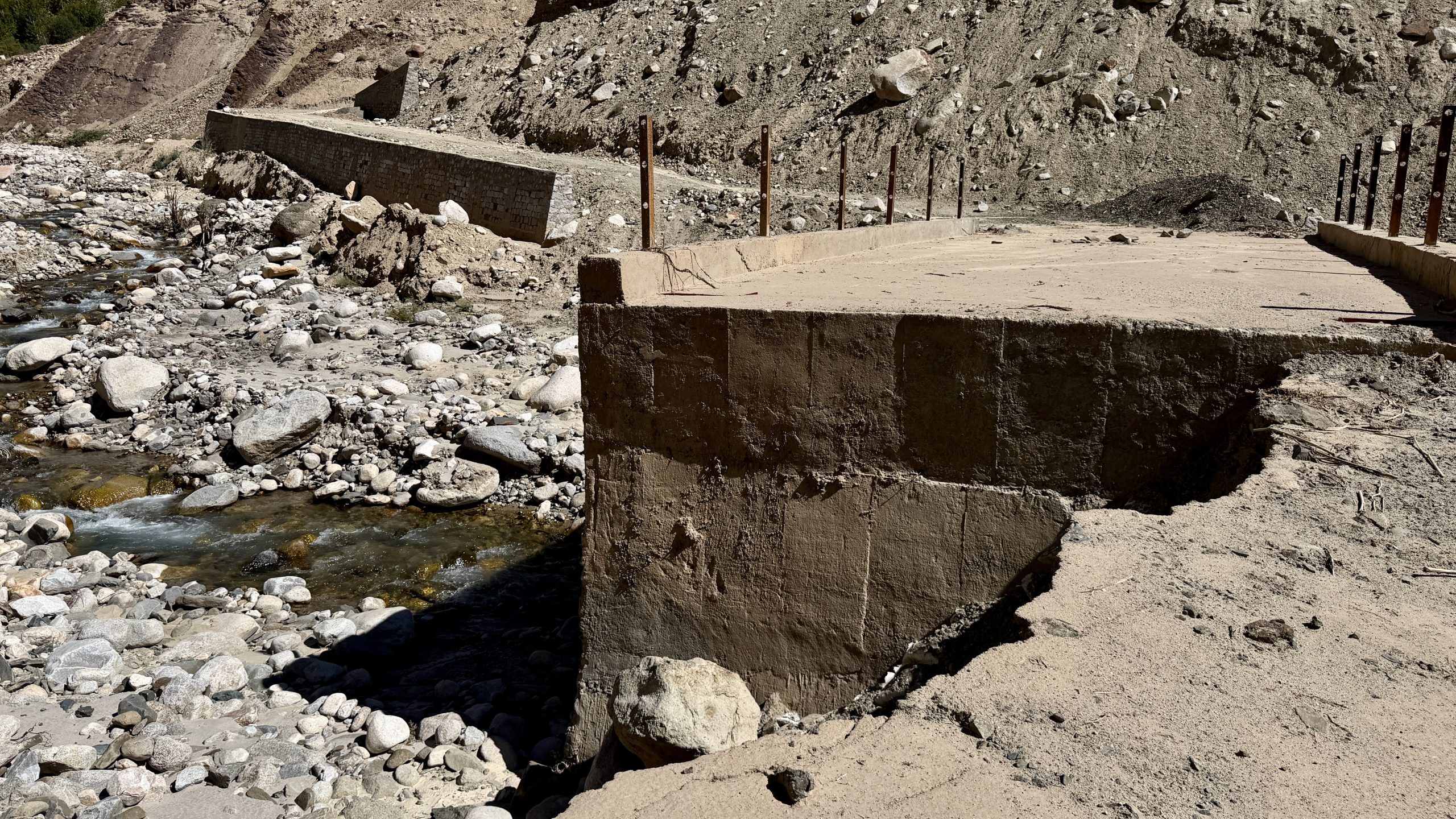
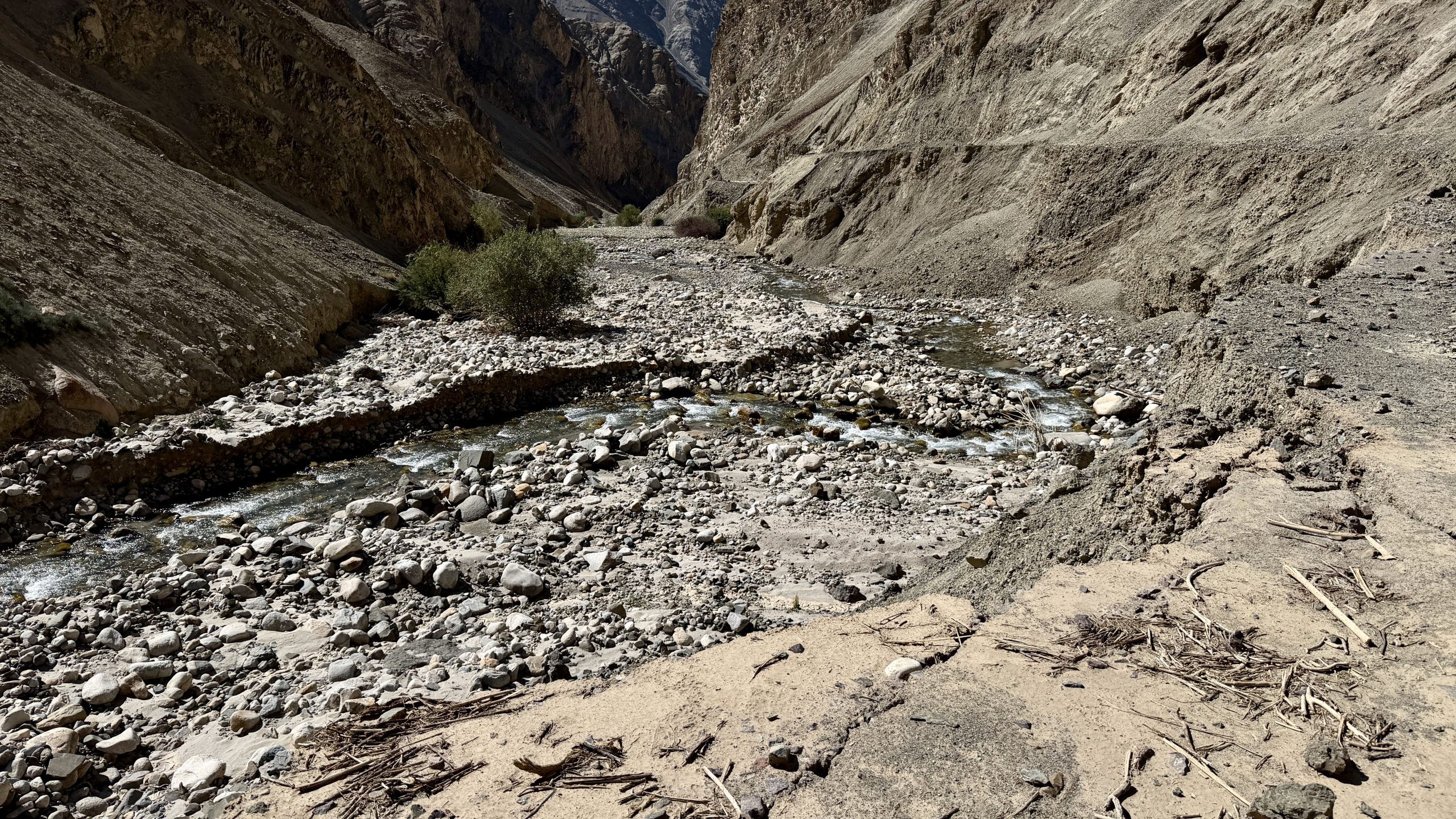
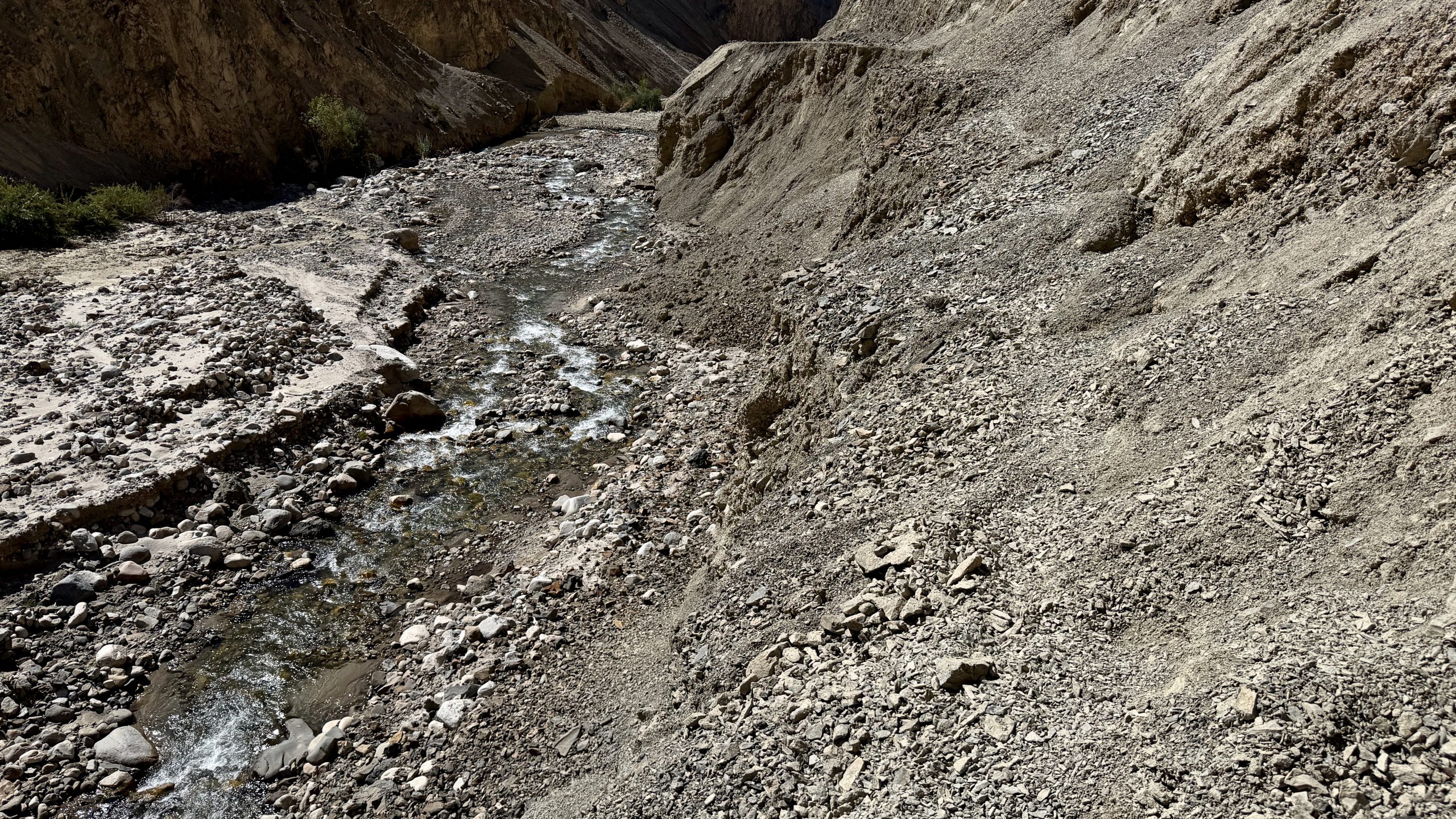
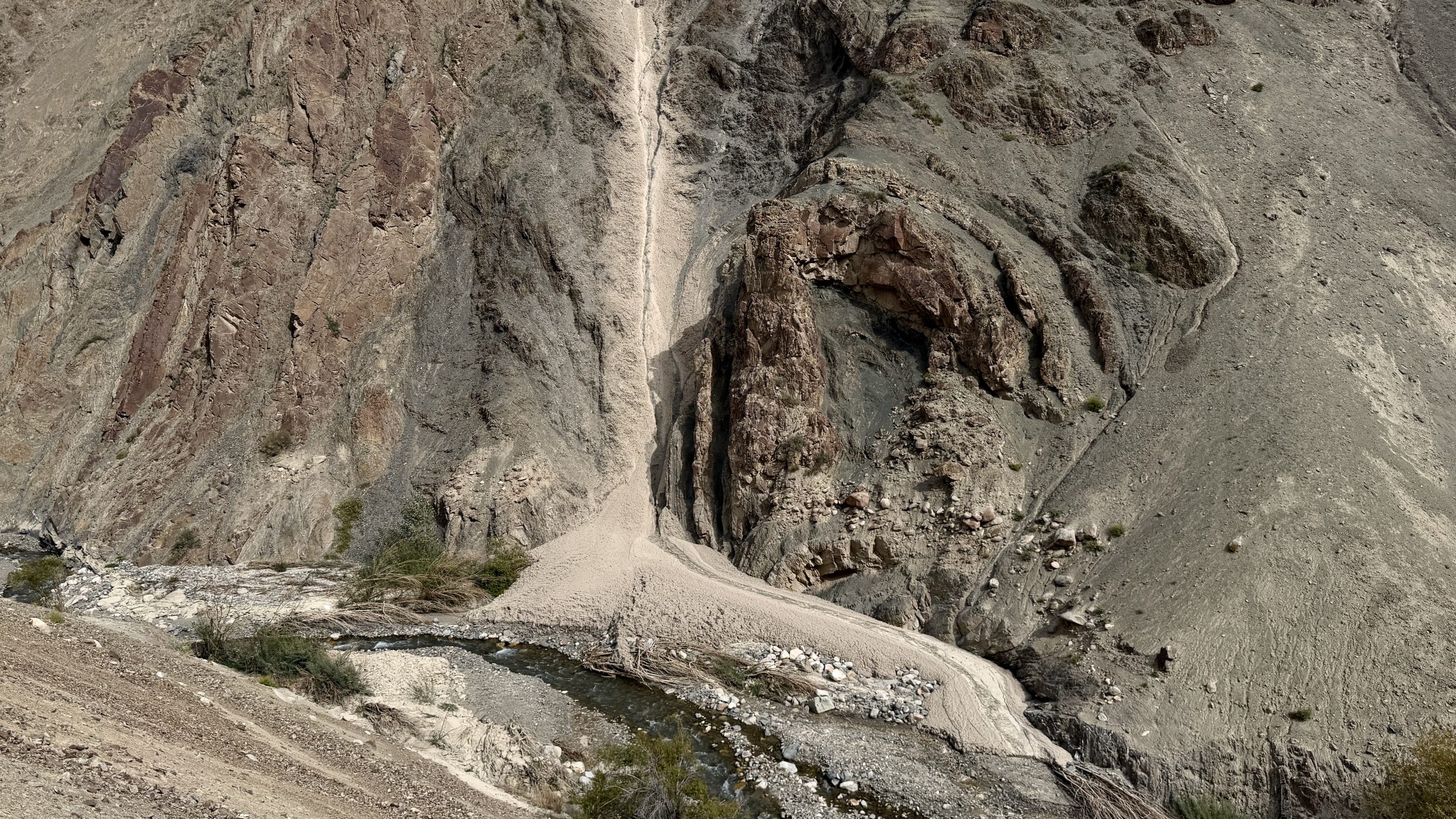
They had built a road between Yangthang and Chulichan/Rizong, but it was destroyed last year when massive volumes of water came rushing down. The entire valley was still scarred by the destruction, and at least for now, there was no construction work underway to restore the road. So you had to scramble along the sides, following the paths made by people before us. At times, it wasn’t completely clear whether more debris might come sliding down, though I suspect the risk was fairly low due to the ongoing dry weather. Either way, the valley was pretty badly battered.
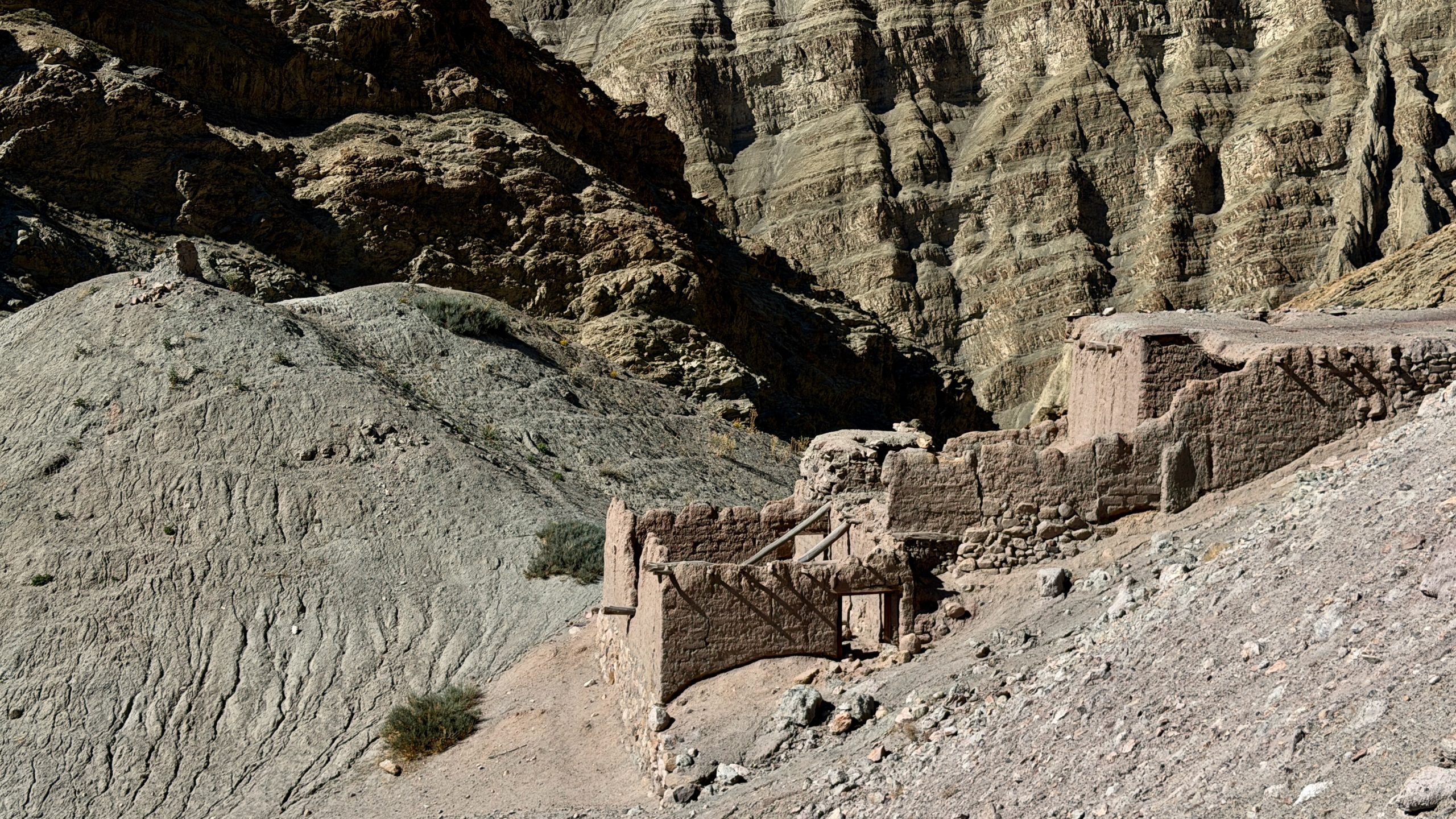
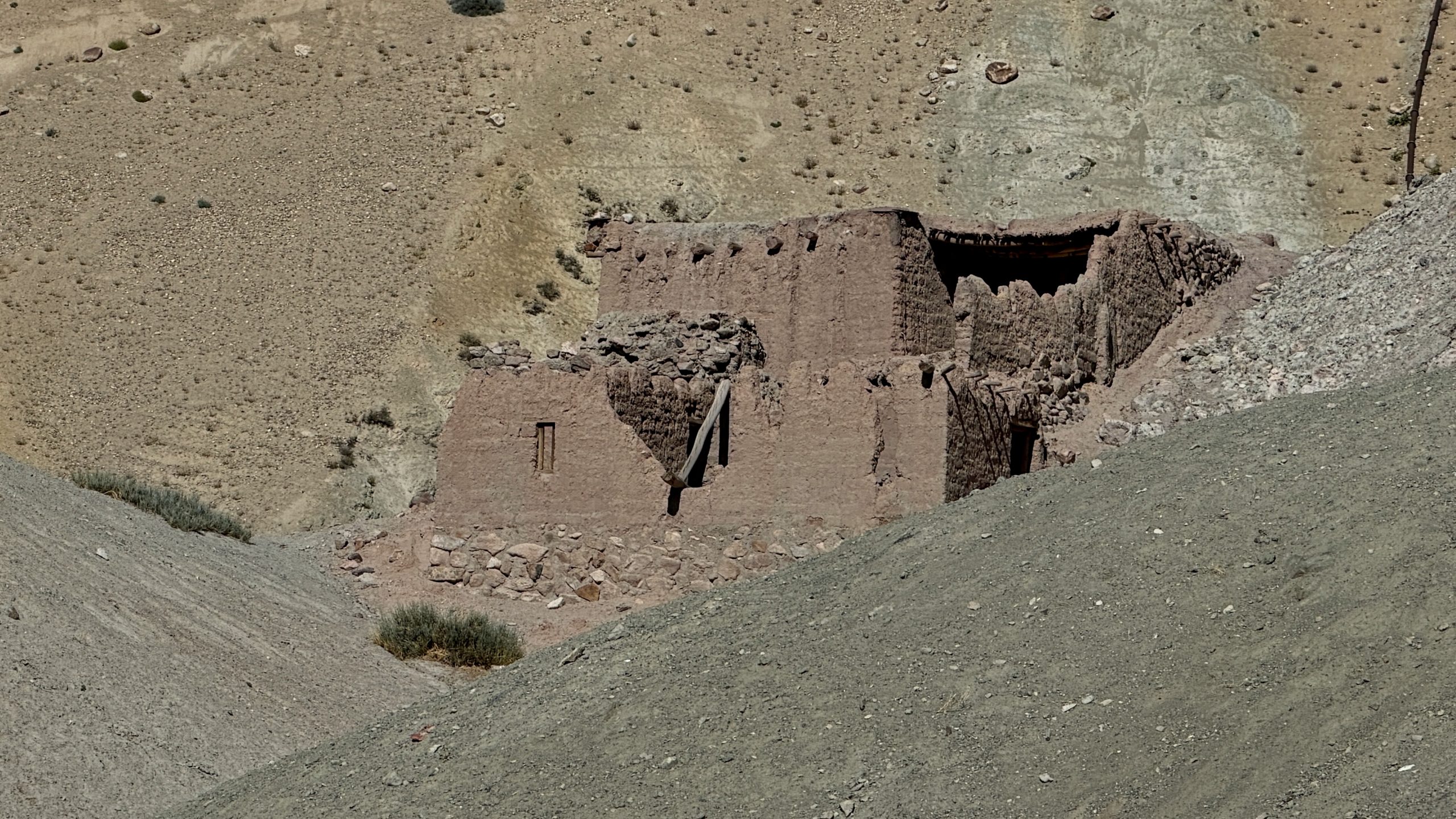
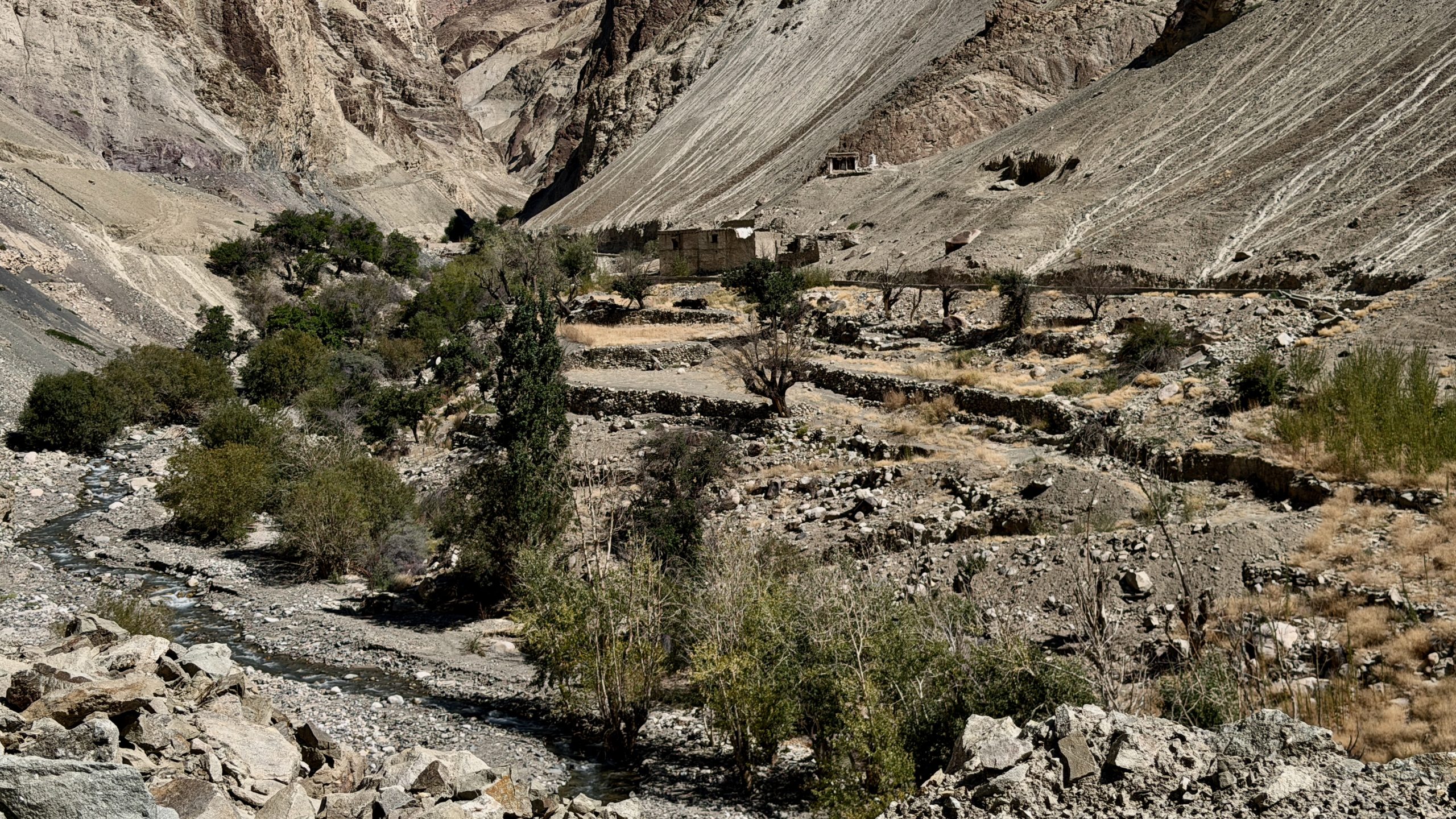
This farmstead belongs to Chulichan, and two elderly nuns used to live here back in the day, often inviting my tour groups in for tea. Now it has been lying abandoned for a long time.
“Chulis” means apricots, and there are tons of apricot trees in front of the nunnery. Village locals are always coming by to harvest them. Just around the corner is the large Rizong Monastery. We didn’t stop in because I’ve been there so many times in the past, but the monastery still heavily dictates life in the surrounding area. The people in Yangthang still have to give up roughly 30% of their harvest to it. For other sources of income, like homestays, they evidently reach compromises based on how much people earn.
In the past, Chulichan was purely exploited, with the nuns being used essentially as manual labor. Starting in the 1990s, Jetsunma Tenzin Palmo campaigned heavily to improve the nuns’ situation. The head of Rizong Monastery, Bakula Rangdol Nyamnyid Rinpoche (Sras Rinpoche), initially paid little mind to the nuns, but eventually changed course and supported Tenzin Palmo and her efforts. He was the spiritual head of the Gelug school in Ladakh and passed away in 2022 at the age of 94. His reincarnation has since been identified—in South India, as the son of an exiled Tibetan family. He was actually in Ladakh this summer at the same time as the Dalai Lama.
But back to the nuns: they had built many new structures, including a small school. However, hardly any of them were around—they had all gone off to a training seminar or something similar. Still, the monastery now counts around 50 nuns in its community. We chatted with one of them (she’s originally from Hemis Shukpachen), offered her some of our fried momos, and were invited to lunch in return.
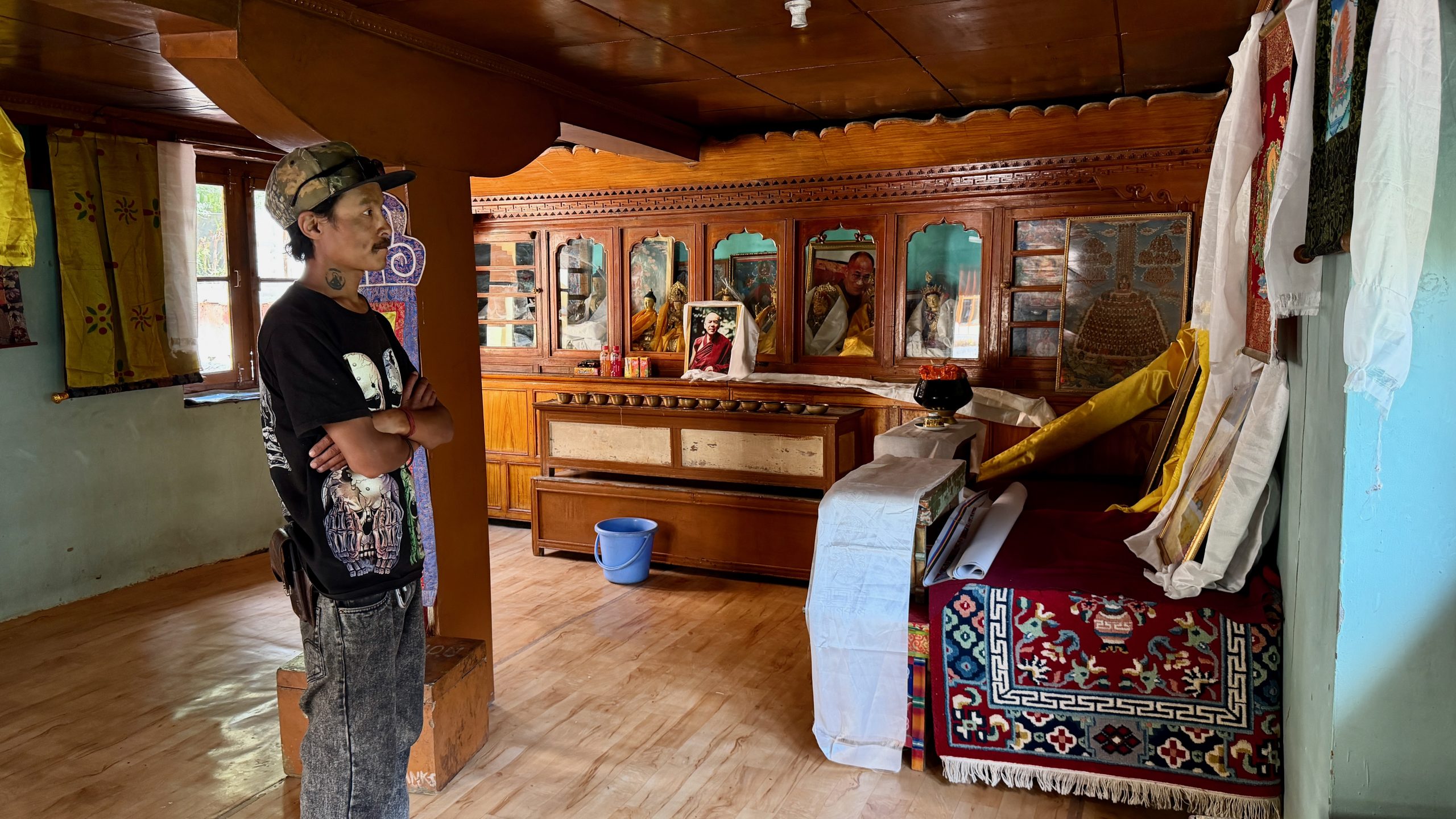
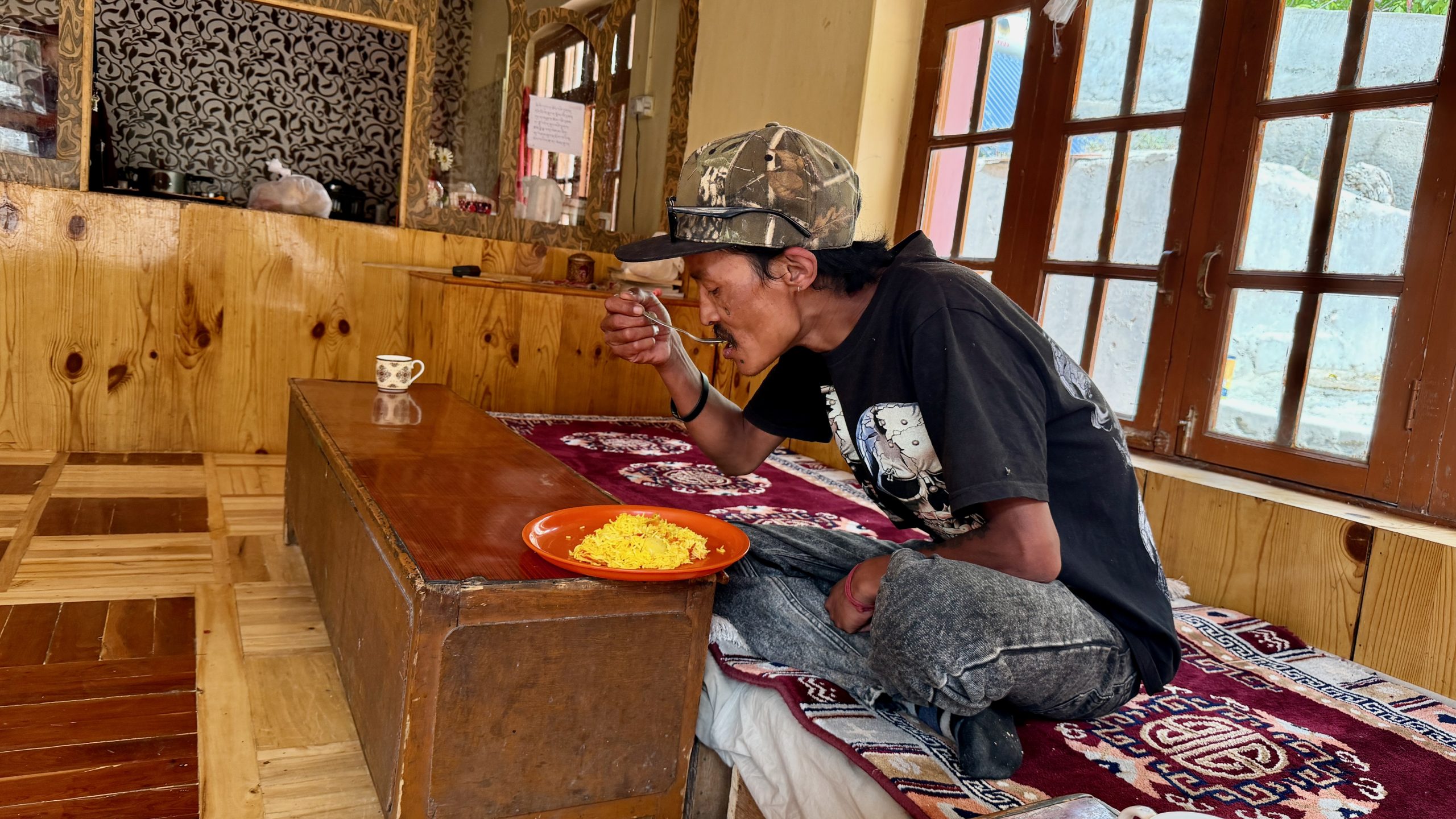
Just before that, three other people arrived: a British (or French?) man, a woman from Leh, and her mother, who works as a teacher. The woman was conducting interviews for an organization focused on indigenous food traditions—specifically centered around tsampa and barley. Because of this, Rinchen was interviewed, and I was invited to share a few thoughts as well. It was a fascinating topic to dive into.
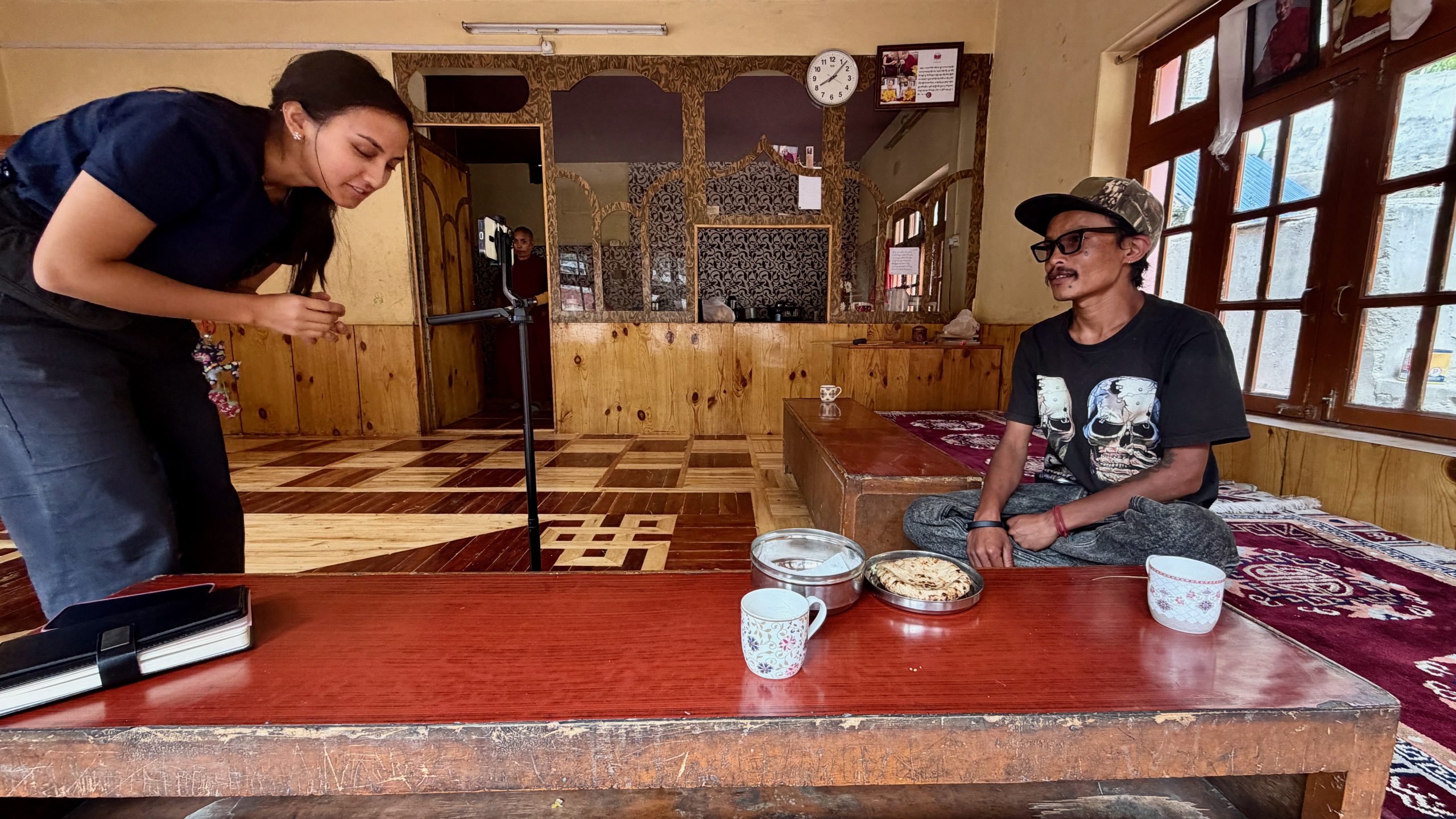
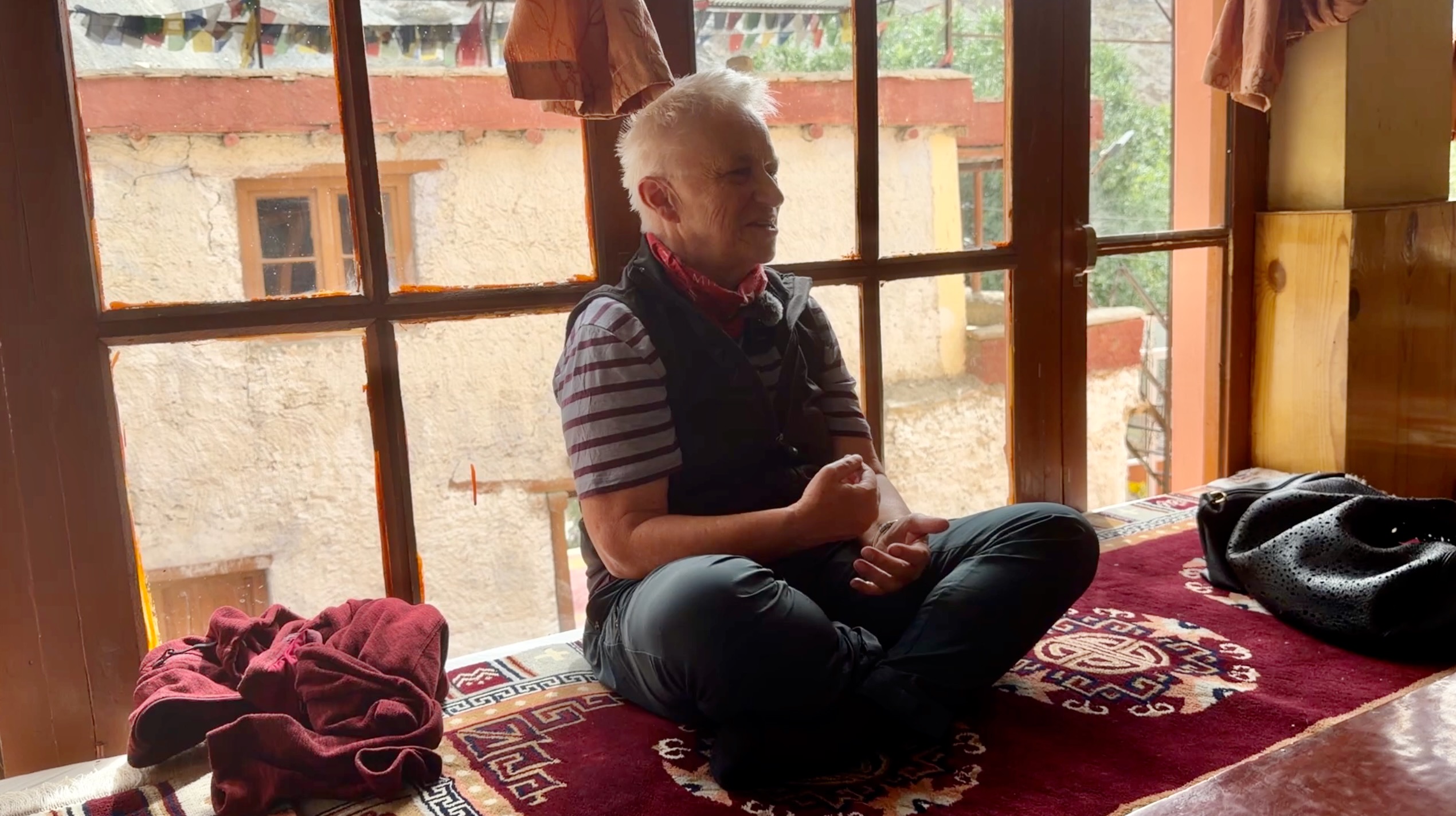
That was a fascinating surprise, and we spent quite a while chatting with her, her mother, and the foreigner about how Ladakh has been changing over time.
Since I didn’t feel like making the detour down to Rizong, we simply headed back up. What was really nice about the hike back was that we had so much to talk about the entire way, and the conversation even leaned a bit into the philosophical. For me, a sense of inner pushback often bubbles up quite quickly when it comes to faith and organized religion—especially Christianity. I just hope I wasn’t being too forceful with my views.
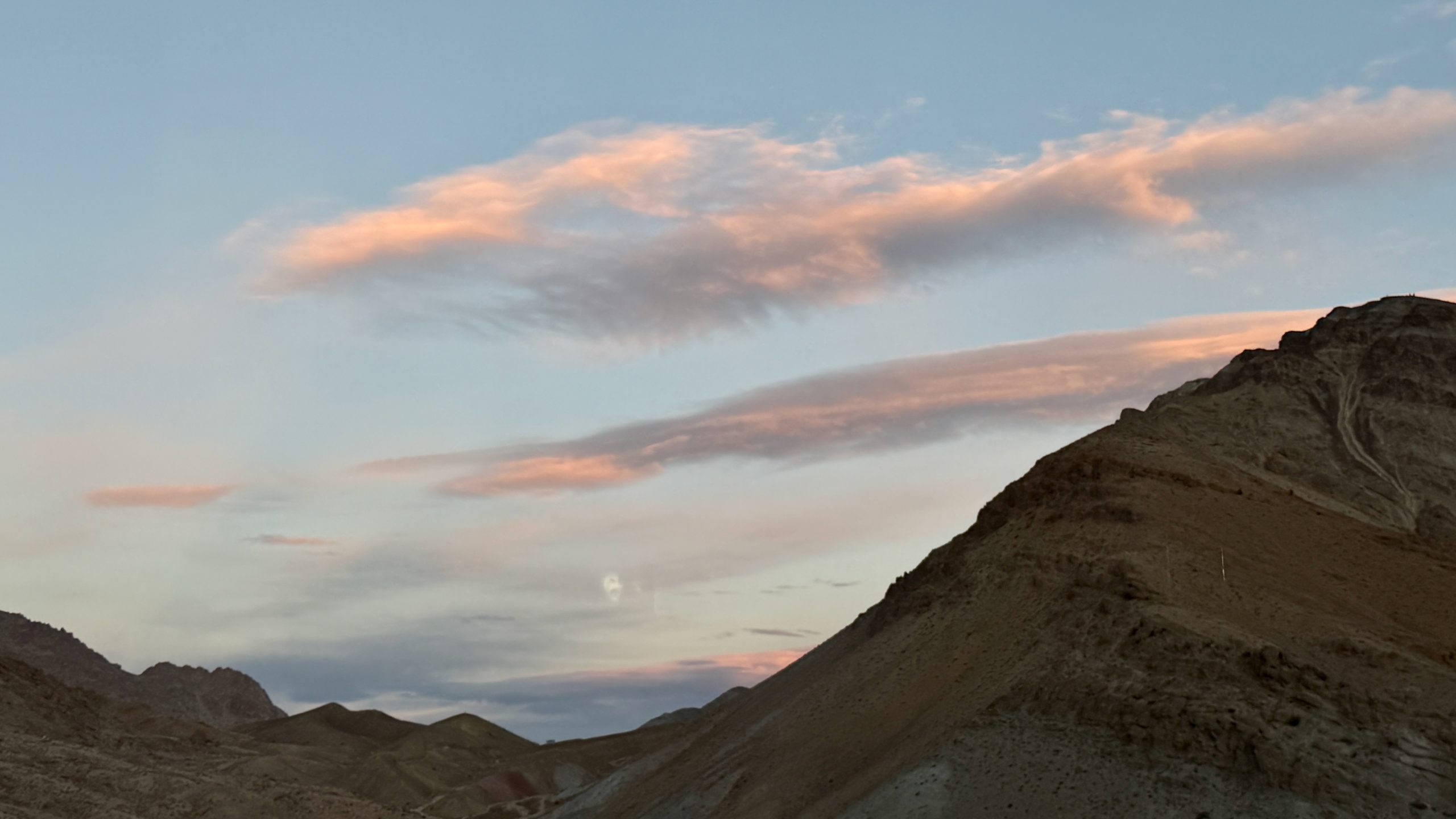
When we got back up, we were greeted by beautiful cloud formations—and new guests. They were a bit strangely standoffish at first, so I quickly sought refuge in the kitchen with Angchuk and learned a little more about making tingmo (steamed Tibetan bread). At least in theory—I still couldn’t quite fathom why his dough turned out so much fluffier than mine. He had folded in some dried fenugreek leaves, which was a brilliant touch. I captured the whole process on video instead of taking photos, and I’m definitely going to have to give it another shot once I’m back home. Dinner ended up being served buffet-style.
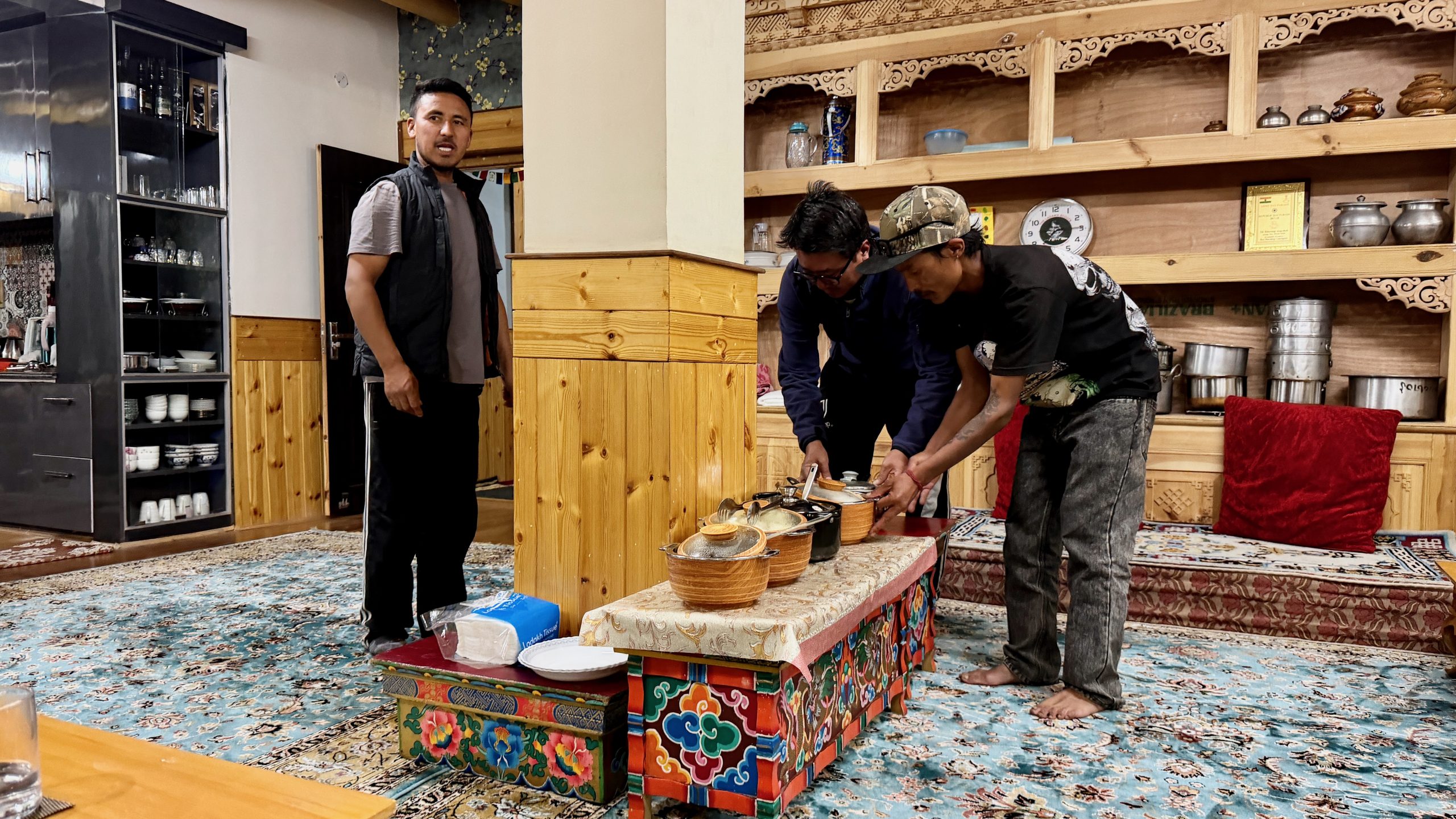
A Swiss couple had arrived with a driver and a guide in tow. After dinner, their guide gave them a lengthy lecture on Buddhism, focusing heavily on karma and the Wheel of Life. It made me realize that I really ought to eavesdrop more often to hear how local guides actually explain Buddhism to travelers. I have a strong hunch they tend to lean heavily into abstract theory rather than connecting it to the reality of everyday life.
We ended up inviting Elsa, a solo traveler from France, to join us on our hike the next day. That turned out to be a quite good idea—but I’ll share more about that in the next blog post!