


Greater Noida -> Manali – From Crowds in the City to Crowds in the Mountains
14. + 15. May 2026
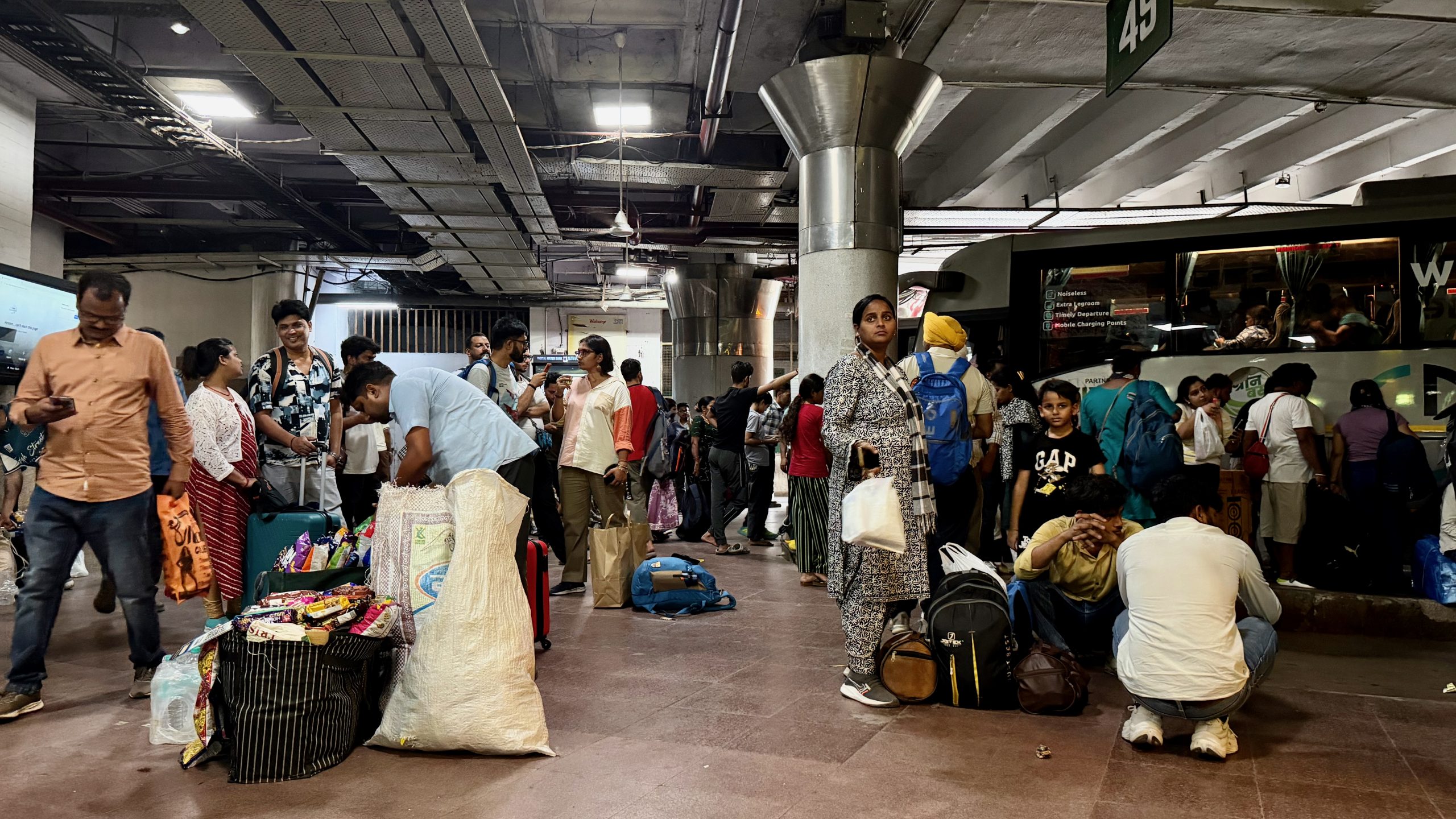
Traveling around India is just as exciting as taking the train in Germany when it comes to that slightly anxious question of whether everything will actually work out as planned. I still haven’t fully adopted that famous Indian sense of calm, so I was quite nervous about my journey to Manali. I was staying pretty far from the bus terminal, so I left far too early—because, after all, you never really know how long traffic jams and other delays might take. This time, I was finally able to use a taxi app, which was much, much cheaper and worked perfectly. I arrived far too early and proceeded to sweat my way through the enormous Kashmere Gate terminal, with its more than 50 platforms and additional departure points scattered outside around the area. Buses arrived, were packed full, and departed. Crowds waited, rushed back and forth, vendors tried to sell snacks, books, and neck pillows, and I struggled with the digitalization process.
On the one hand, an incredible amount in India is handled through smartphones. On the other hand, people still absolutely love calling and talking directly—and I quickly found myself doing the same. The digital system for my bus was having some difficulties (for example, because when booking I had entered my German WhatsApp number, while the app was now connected to my new Indian SIM card, which caused the live tracking feature not to work). And so, I spent a lot of time calling a certain number to figure out exactly where my bus would depart from. I was genuinely worried about somehow missing it because although I had been told Platform 50, there always seemed to be buses there heading somewhere completely different.
To cut the story short:
- I spoke with a young woman from Dehradun who works in Delhi but travels home every weekend—Delhi is simply too unpleasant to stay there any longer than necessary—and she helped me sort out my phone setup.
- My bus had a 1/2 hour delay
- He stopped indeed on platform 50, but was named differently then mentioned in the booking.
- Flixbus is surprisingly spread in India..</li
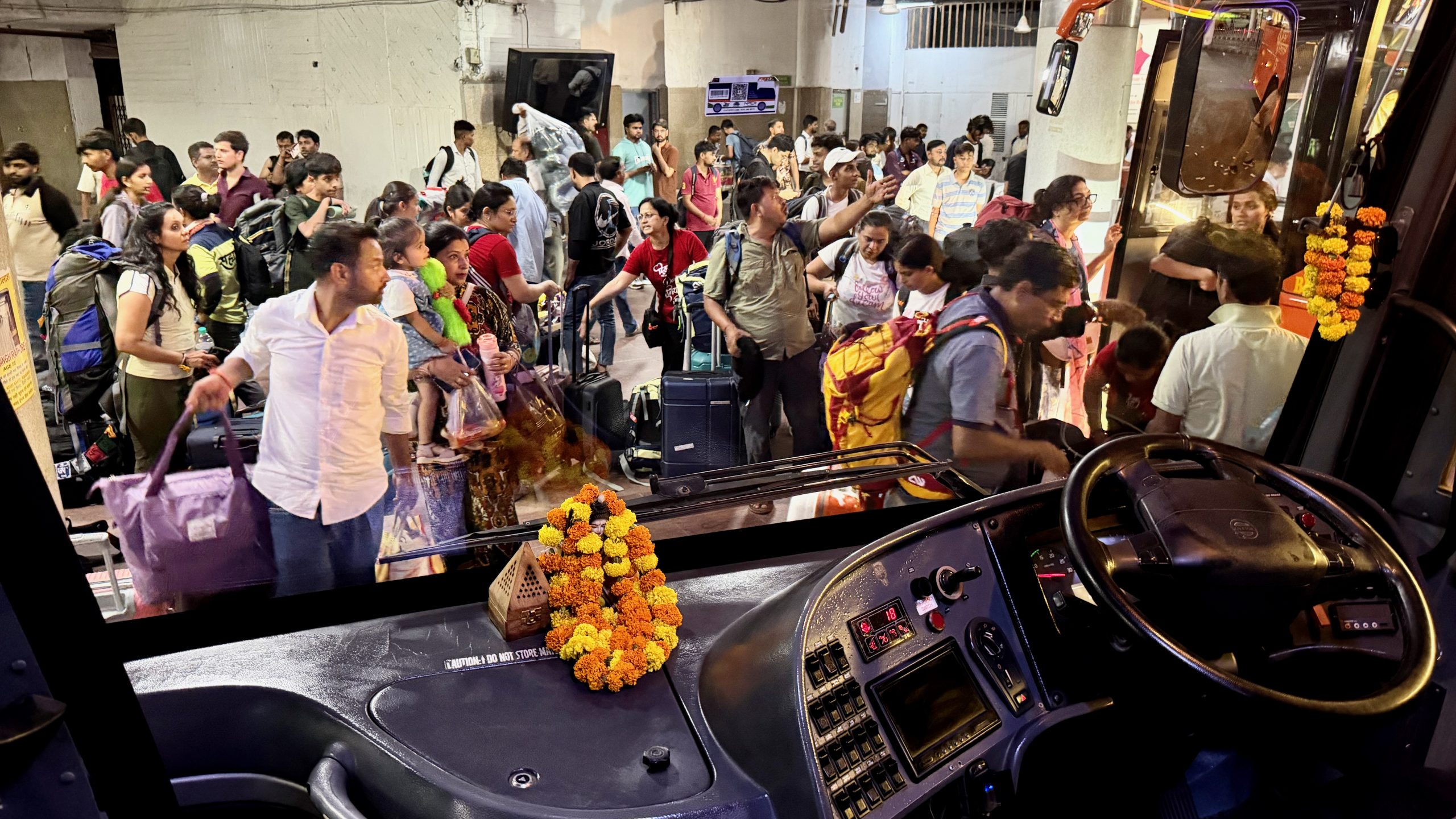
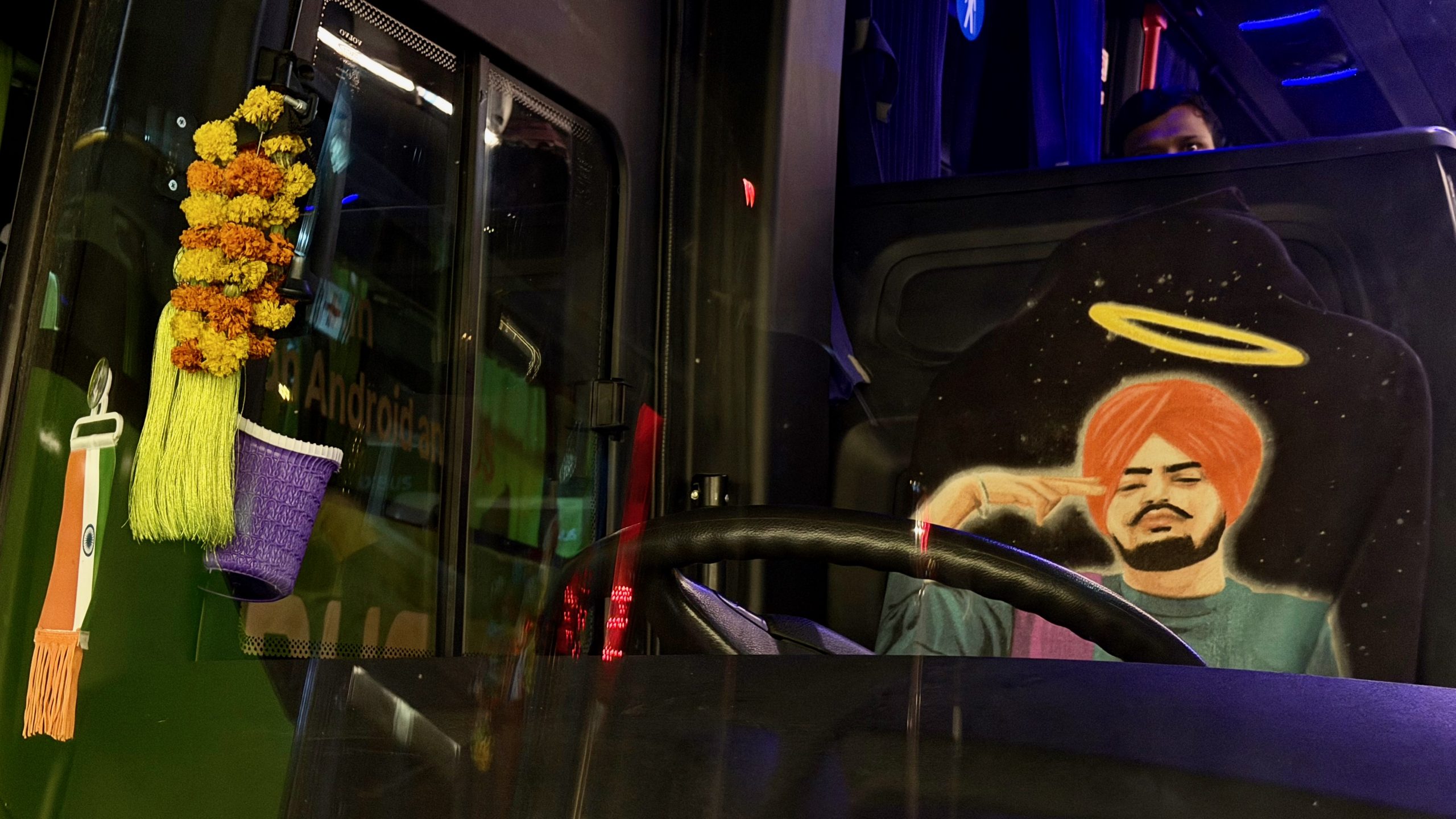
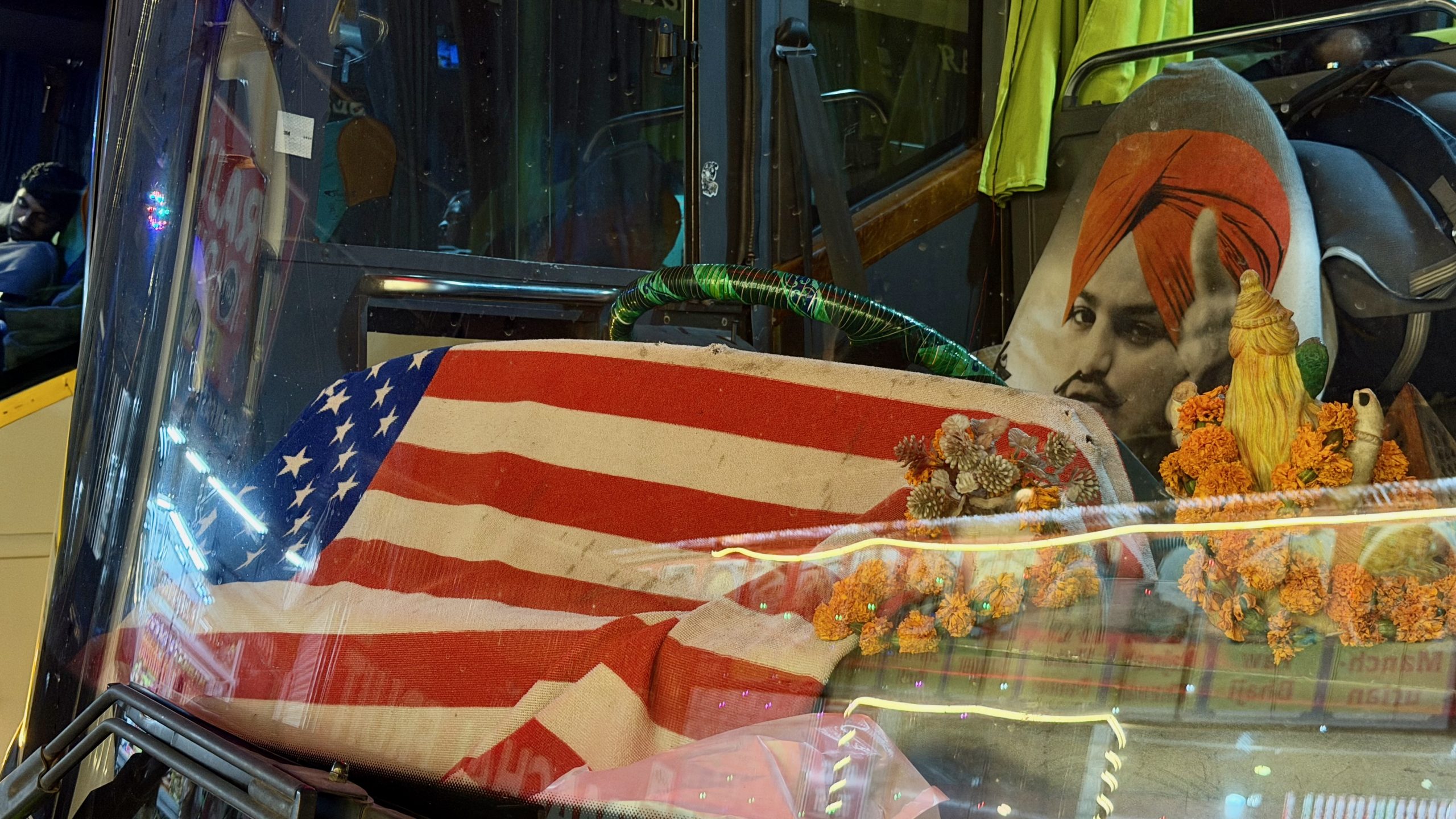
- Busdriverseats are likely to be decorated with a Sikh.
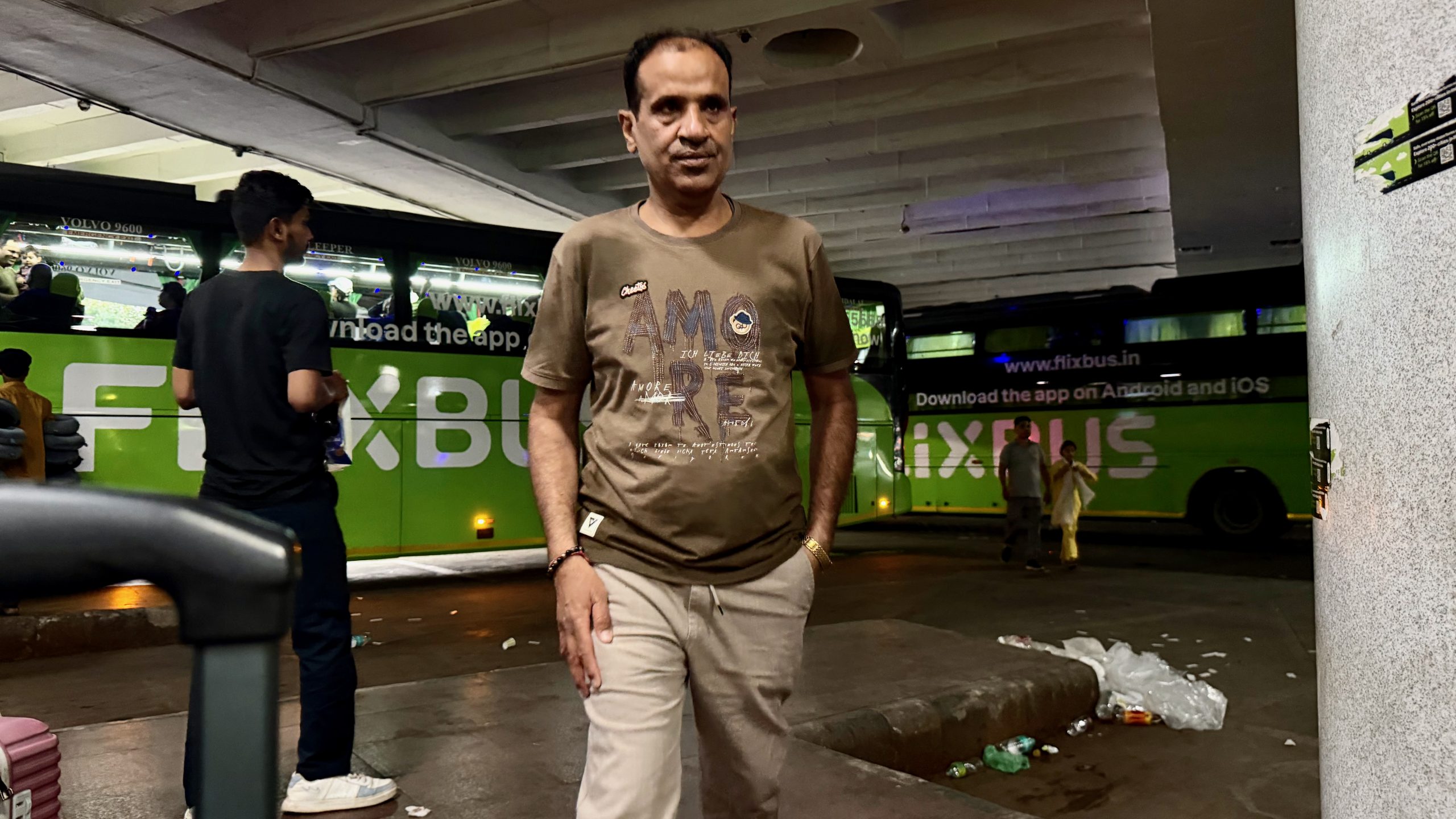
Buses heading into the mountains mostly travel overnight (Indians generally have very limited vacation time, so they have to find ways to save as much time as possible for the actual holiday itself). They are very comfortably equipped, with good legroom and adjustable seats. They’re also genuinely well-maintained and clean. And I was lucky: I had a seat right at the front, and the seat next to me stayed empty for most of the journey, except for a few hours when a man sat there.
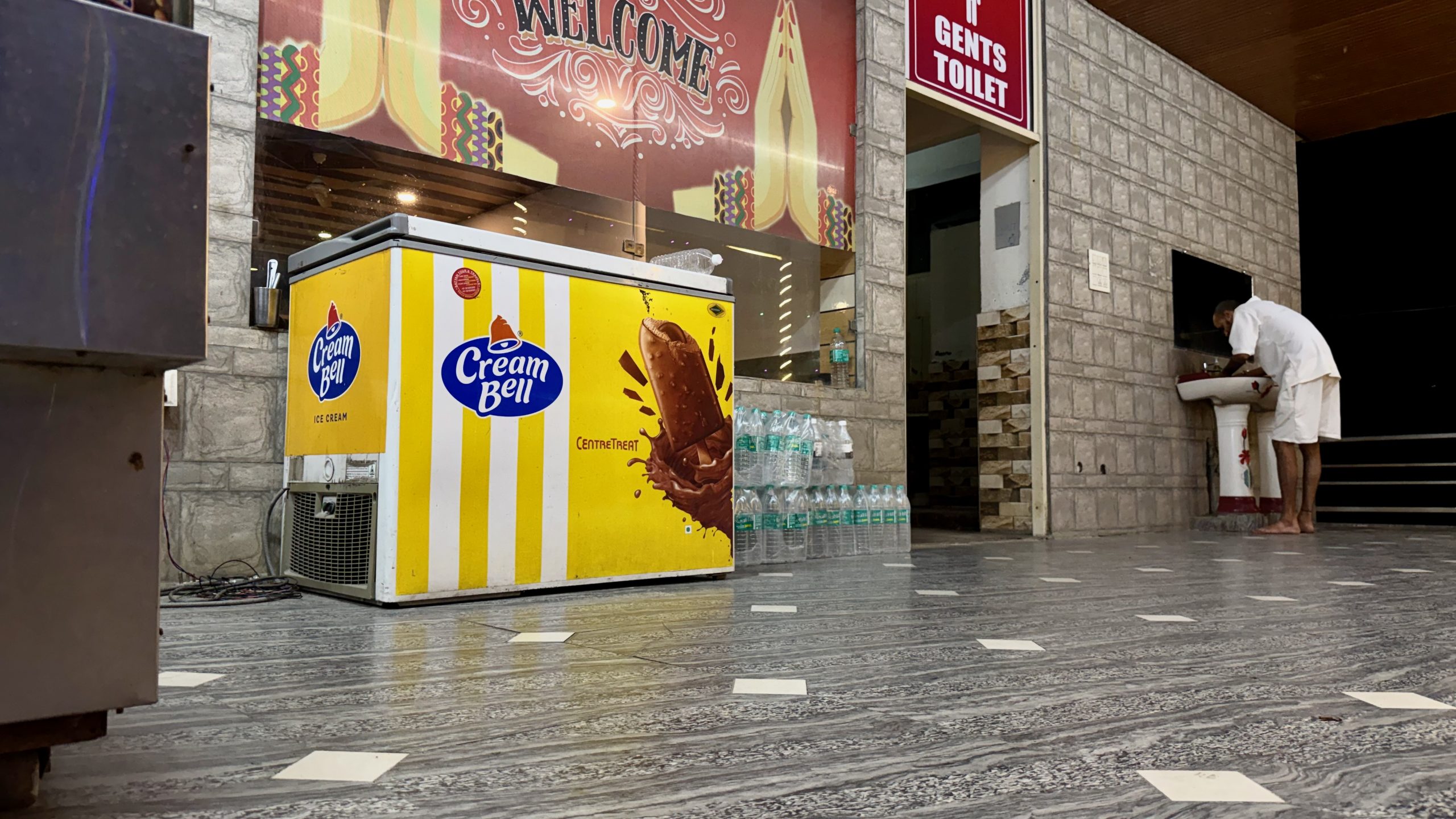
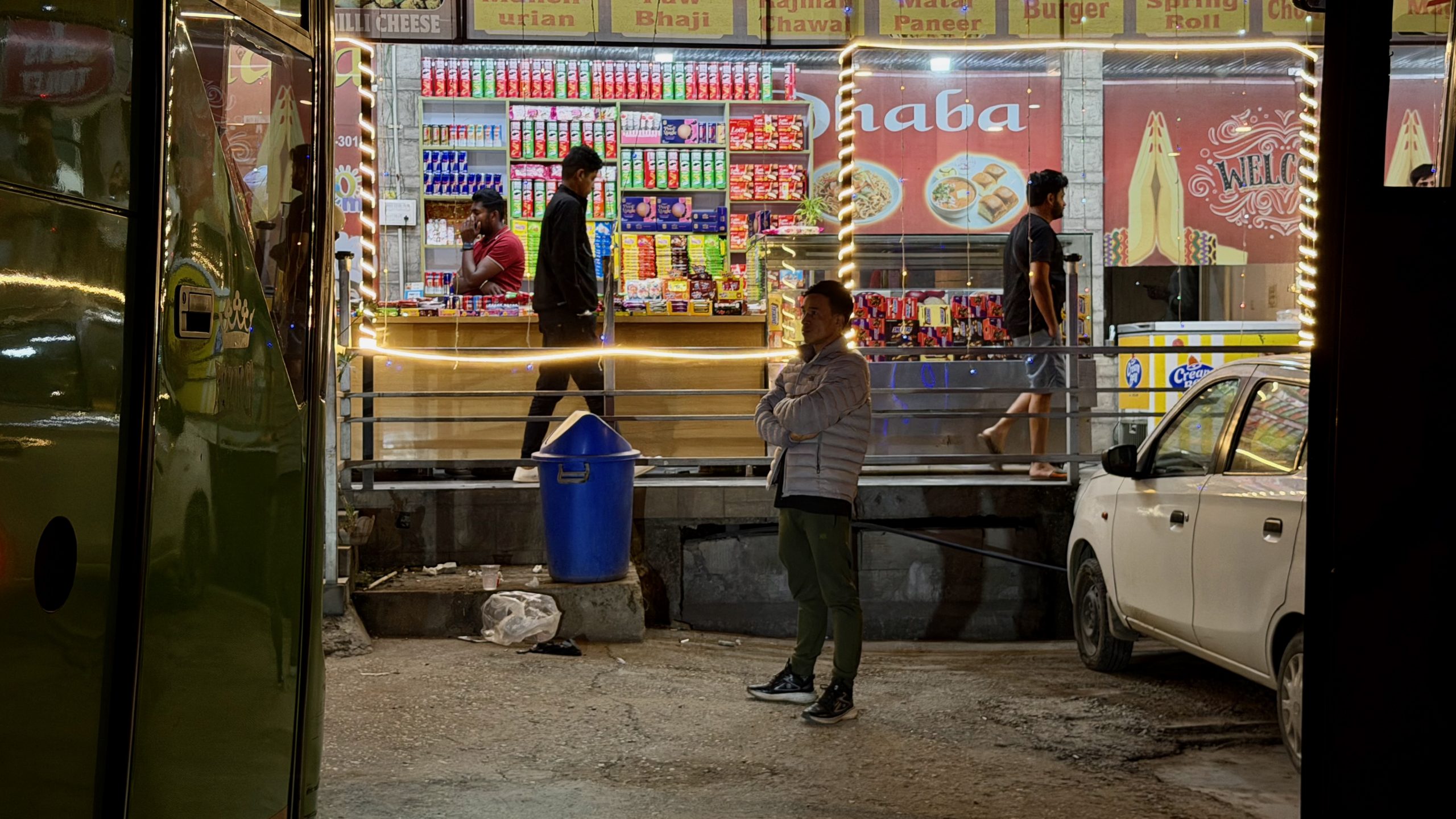
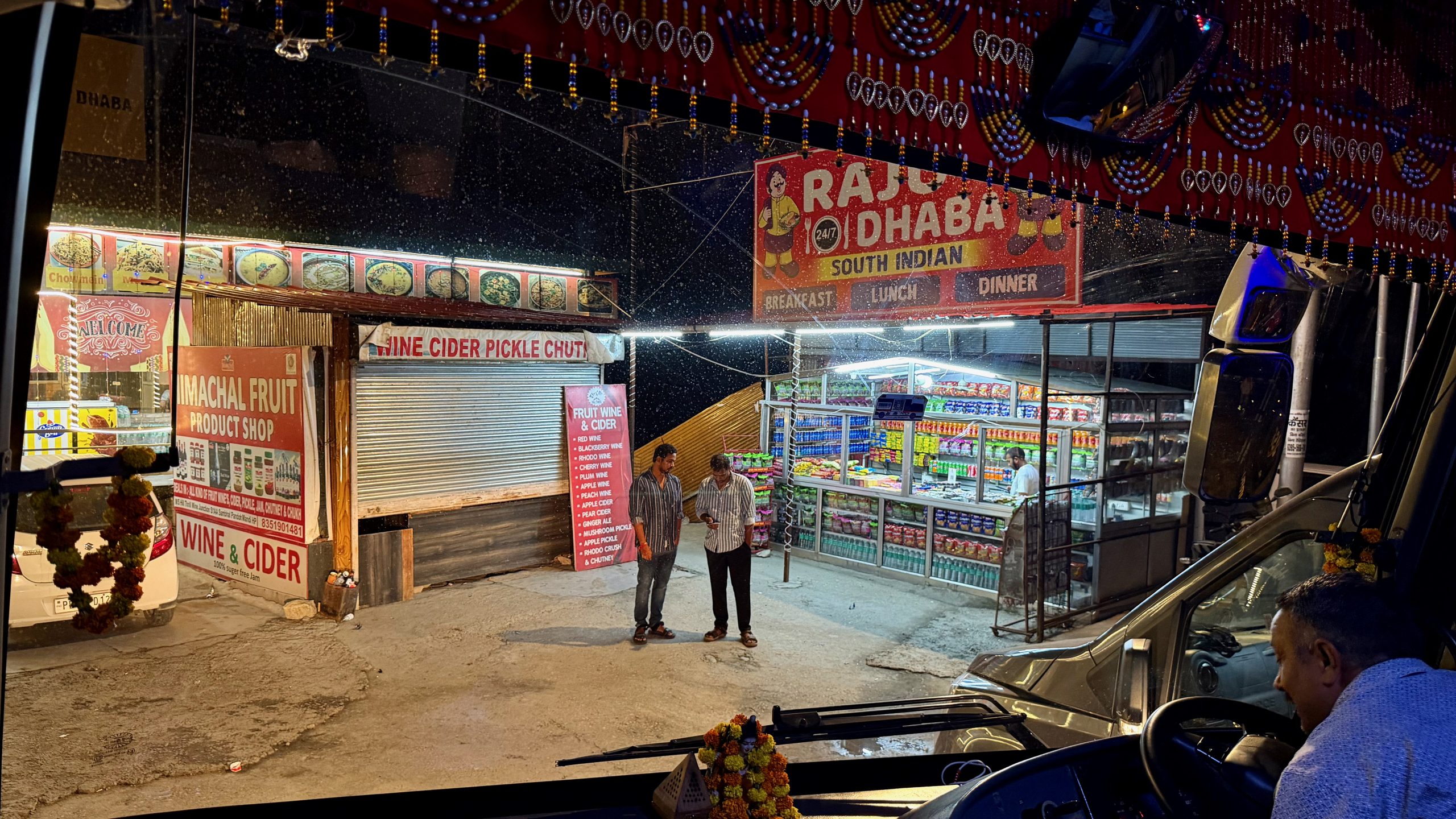
We actually traveled almost exactly the planned 11.5 hours. The driver only made two stops for food and tea, and he drove very safely and with great focus. Despite my comfortable situation, I hardly slept at all—my body was filled with that unpleasant restlessness I sometimes get. The toilets at the roadside stops were surprisingly clean and even stocked with toilet paper.
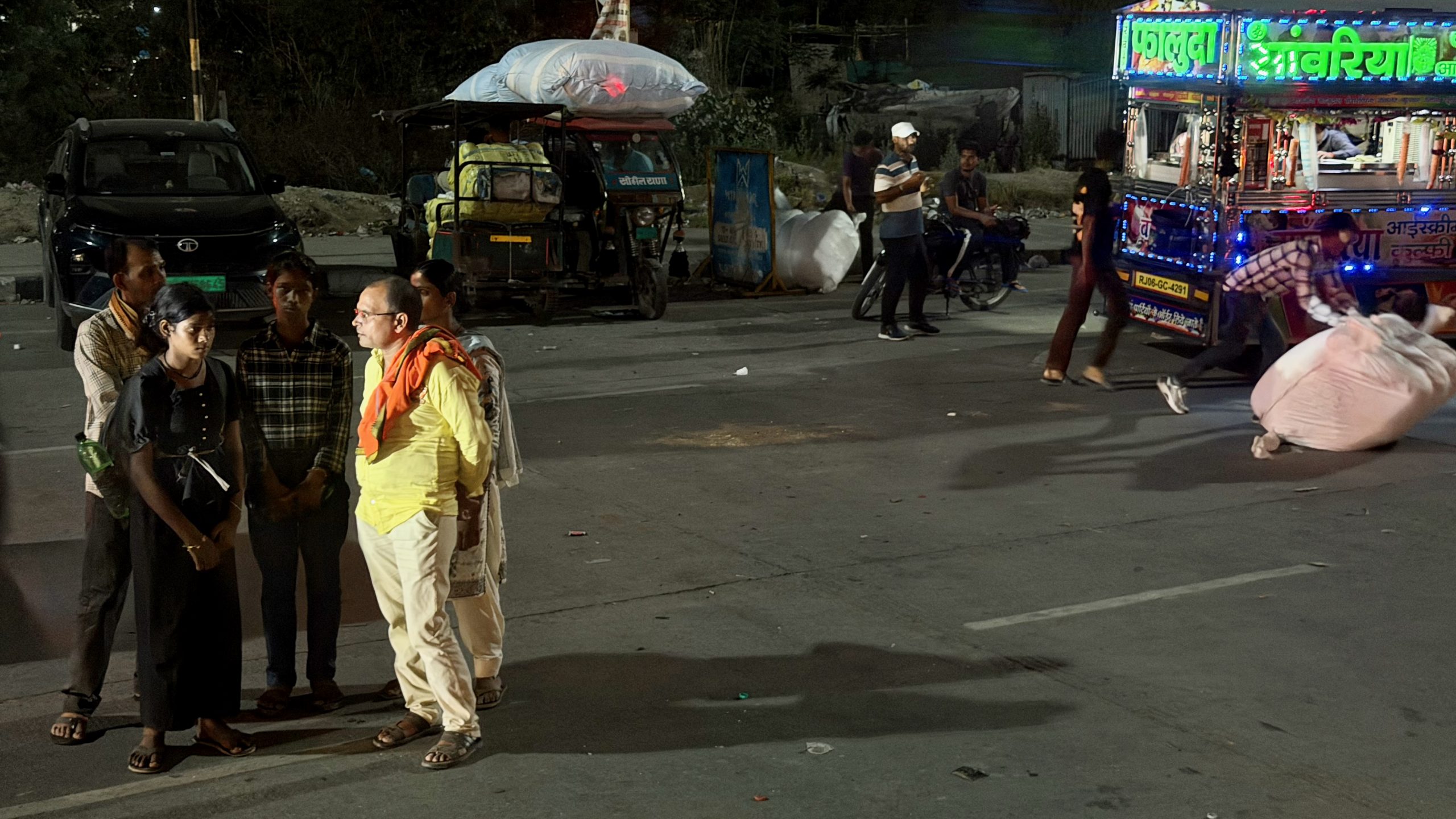
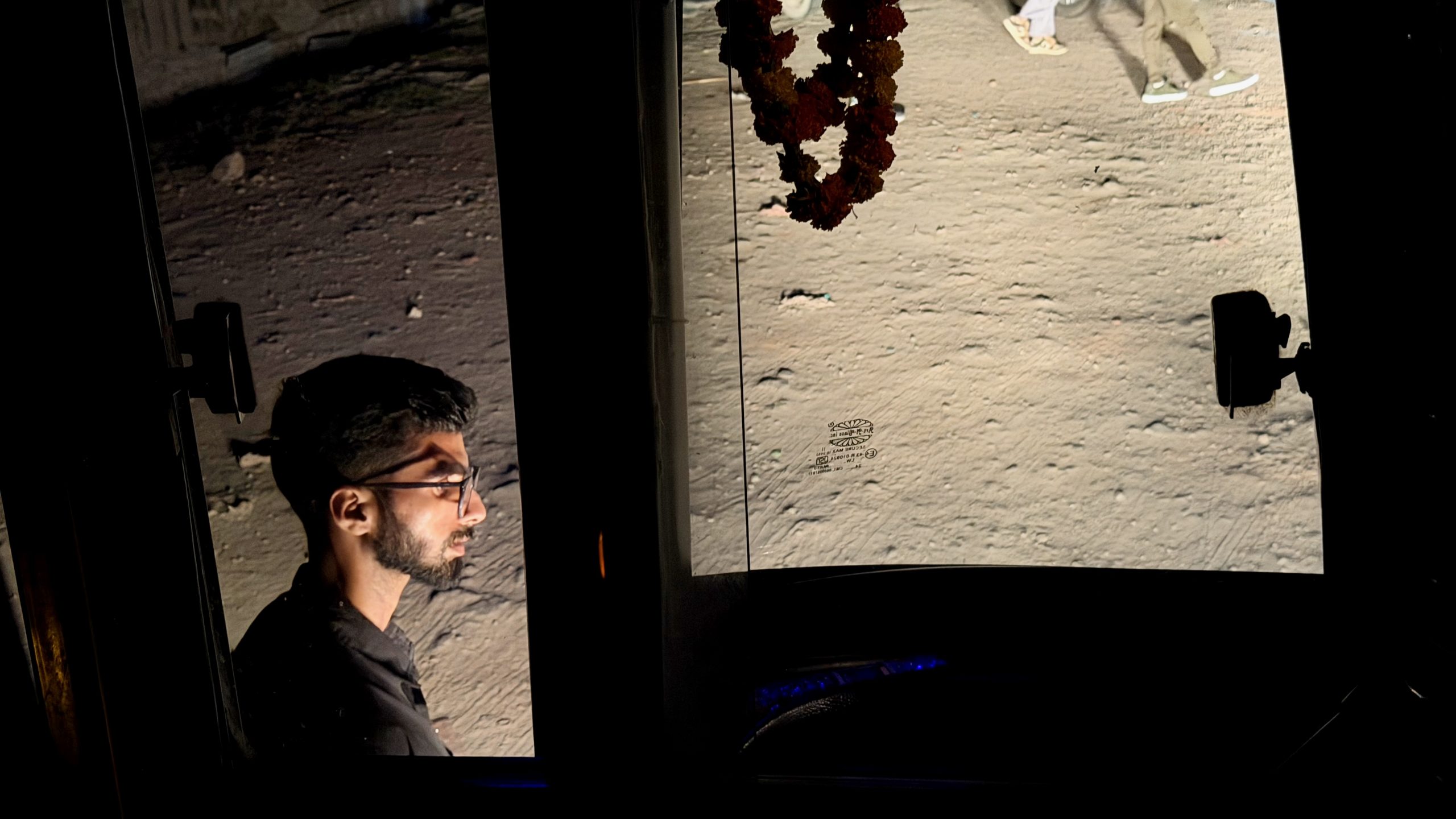
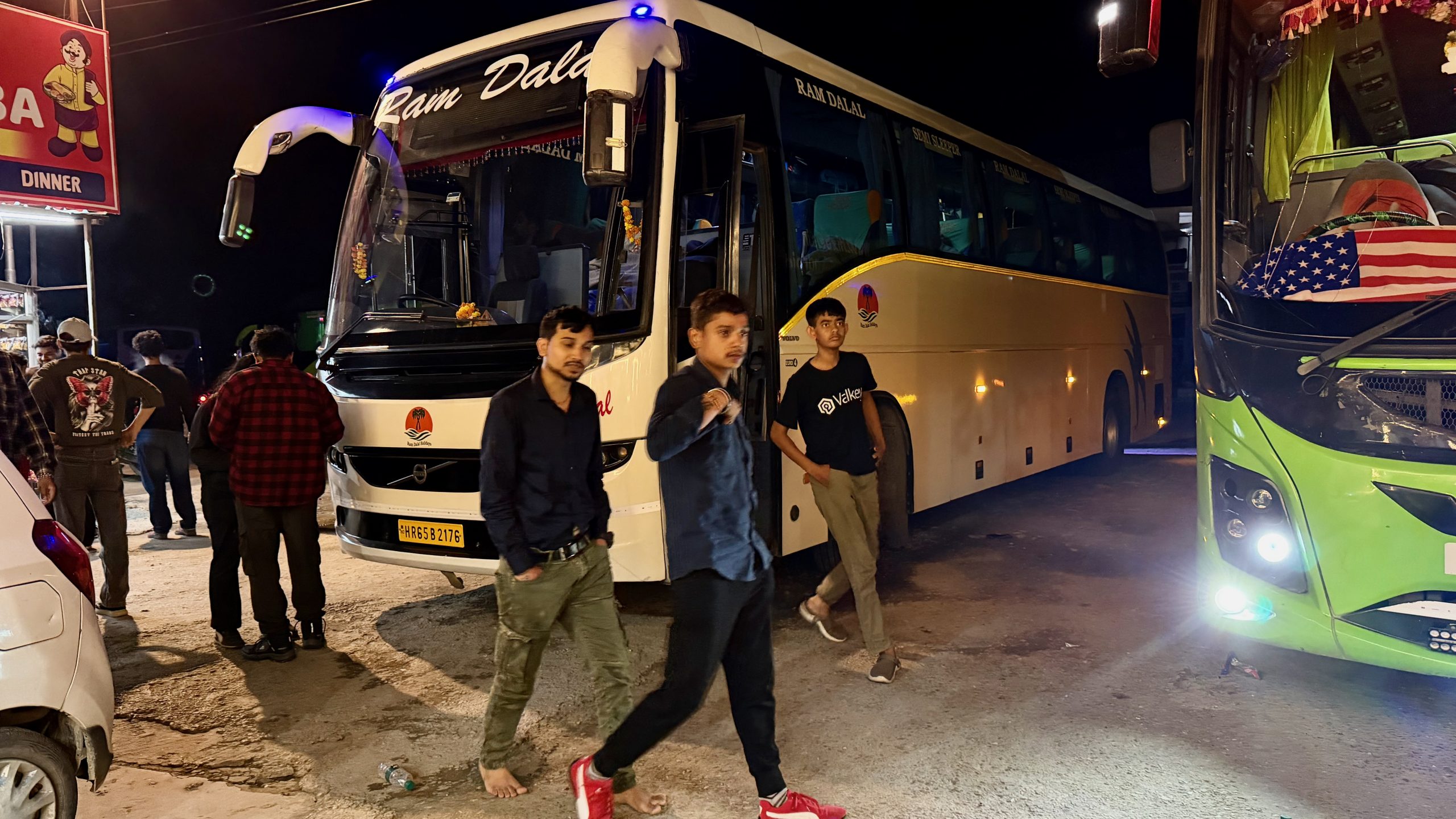
Here are some pics from the drive:
Ich war die einzige westliche Reisende (es waren auch im Flieger nur eine Handvoll und auf dem großen Bushof sah ich auch kaum andere westliche Gesichter).
In Old Manali, a friend from an agency had arranged accommodation for me—and there, I had something of an emotional meltdown. The reception was rather unfriendly, the property itself felt soulless (apart from the room’s interior), none of the staff smiled at me, half of the breakfast options were unavailable, and just when I was thankfully able to check in early and collapse into bed, my neighboring guest started blasting annoyingly loud techno music.
Let me elaborate a little here:
I was in Manali back in 1992—it was a backpacker and stoner paradise. Even then, it was considered fairly crowded, but by now everything has increased tenfold, perhaps even a hundredfold. The stoner crowd has mostly moved further into other valleys, but in Old Manali—a very particular part of town—some of that atmosphere still remains. These days, it’s filled more with Israelis and Indians trying very hard to be cool. People stroll around, hang out, and party. And right next to it, there’s still a much quieter village life, where traditionally dressed locals go about their farming and livestock routines. I’ve spent quite a bit of time here over the years—not partying or socializing, but working on my laptop and going for walks. That used to work wonderfully. But now, I very clearly feel too old for Old Manali.
hen there’s the other Manali—and practically the entire Kullu Valley—where Indian mass tourism has exploded beyond imagination. After Kashmir ceased functioning as a honeymoon paradise due to civil conflict, people shifted to Manali instead. Here, they get romantic mountain scenery, the chance to see snow, a few temples, and various leisure activities.
And it’s “only” about 11.5 hours from Delhi, making it an accessible escape from the unbearable heat of the plains.
Since India’s reasonably well-earning middle class has grown enormously, many more people can now afford such trips—and in May and June, they descend here like locusts. After the monsoon arrives things thin out again.
What’s truly insane, though, is that the region still struggles to cope with this mountain environment. Every year, there are floods and landslides. Roads are often destroyed and then rebuilt. Massive traffic pushes endlessly through the valley. In many ways, it feels like this place has become nearly impossible to visit. And yet, it remains practical as a gateway to Ladakh, Zanskar, and Spiti. And in the villages scattered along the mountainsides nearby, you can still genuinely find peaceful, nature-connected tranquility. But no matter where you are, your eyes eventually drift down into this completely overdeveloped valley.
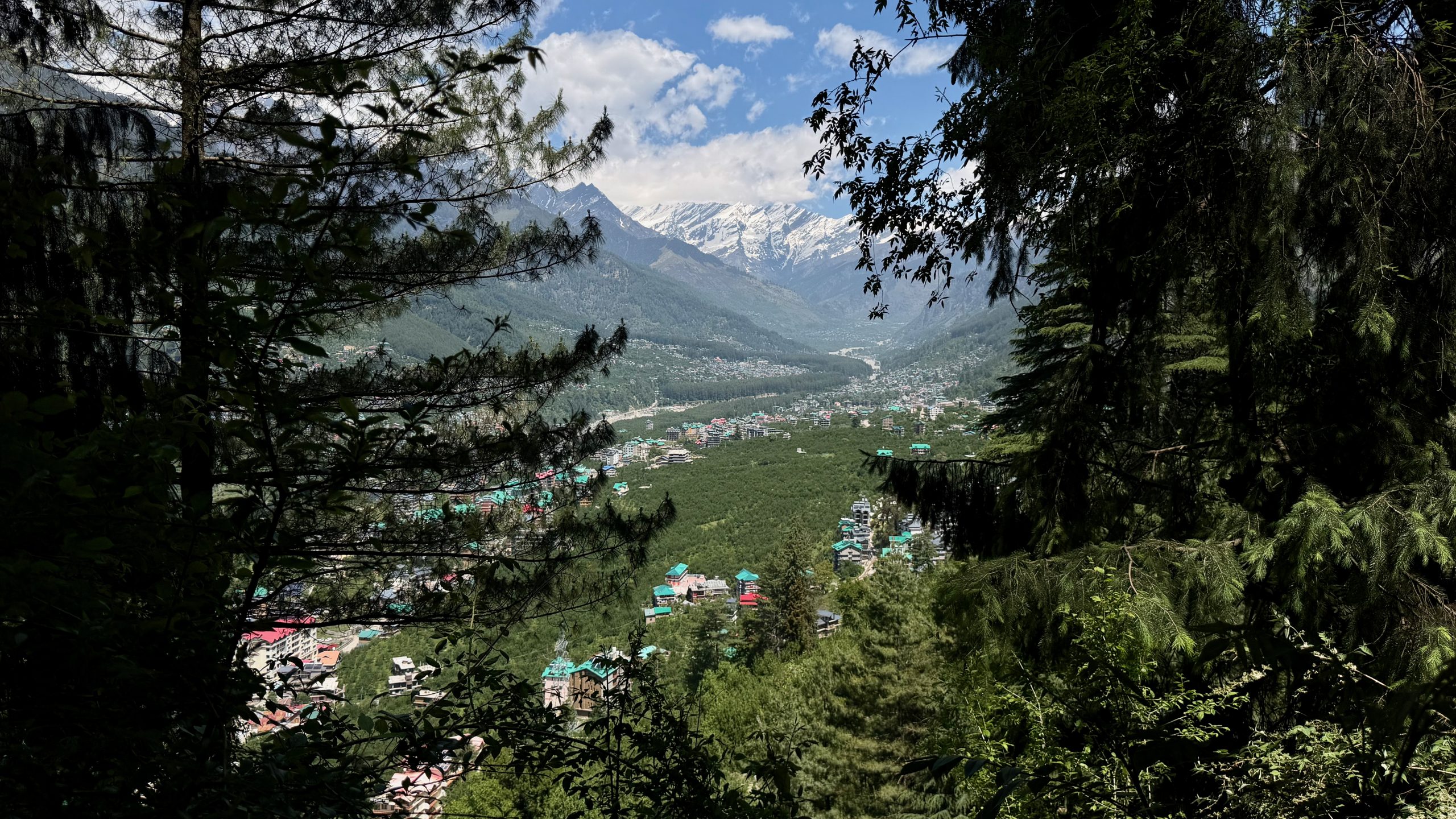
Back to my own situation: still exhausted and sleep-deprived, I continued fleeing the unwelcoming accommodation, emailed my colleague about my misery, and walked up through the main lane. I felt completely alone and out of place. And yet, somehow, I still found traces of the old village life—and eventually, a solitary spot where I could simply sit and gaze at the mountains.
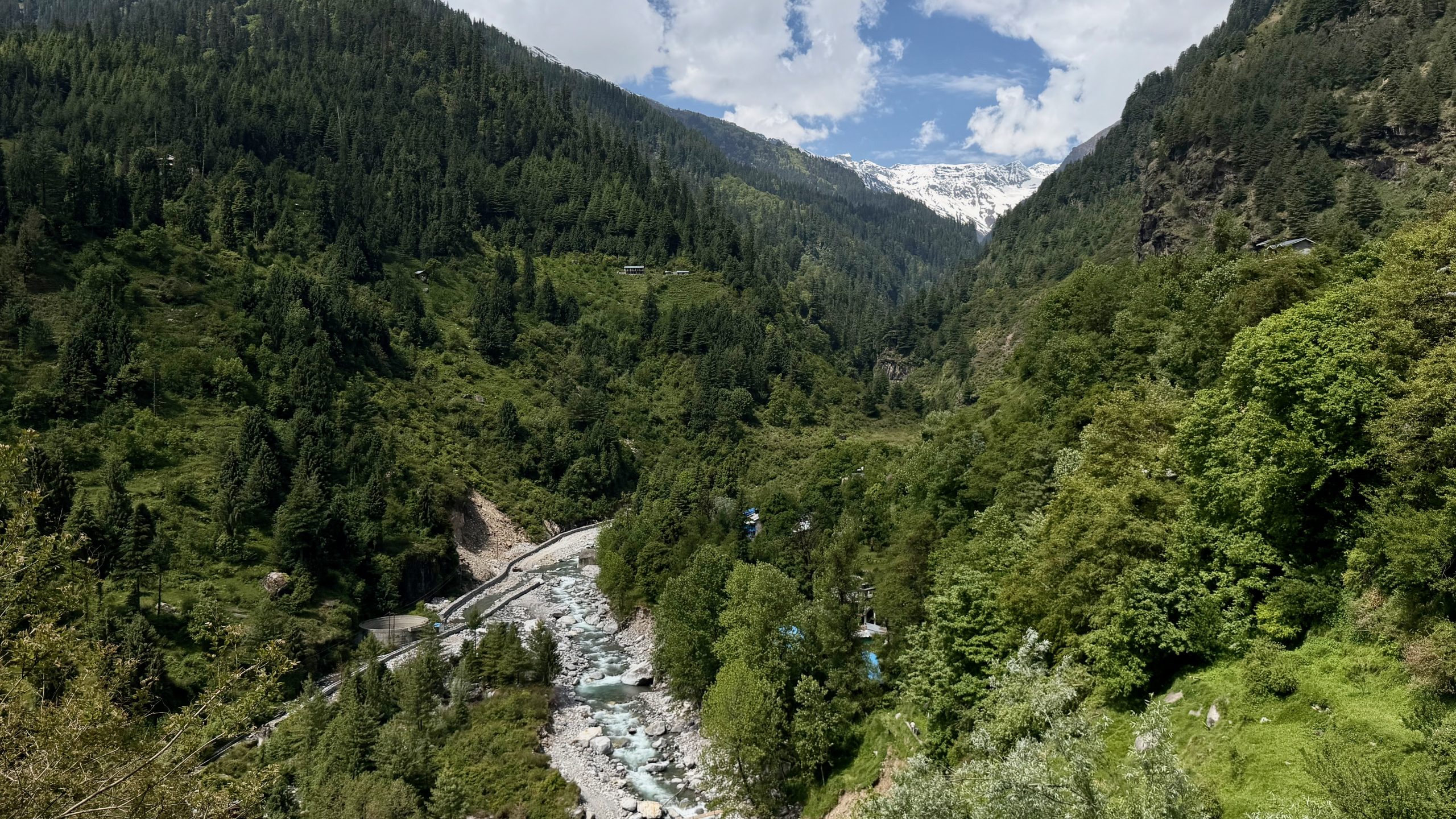
Still, my unhappy feelings refused to settle. I even cried a little—and at the same time felt like a complete little drama queen. Later on, I reflected on it more deeply. This actually happens to me sometimes: particularly when I don’t feel welcome, and perhaps also when I sense that something “bigger” is beginning, I can react incredibly intensely. I end up feeling almost pubescently, dramatically miserable, while my adult self feels completely at the mercy of these emotions. It’s really quite interesting. And then, over the course of the afternoon, everything gradually began to turn around again.
I spent some time in the more peaceful part of the village, in a quiet and beautiful forest area, met my guide (more about him later), who is taking wonderfully caring care of me, found a new place to stay for the following day (I already went to have a look and was actually welcomed very warmly and kindly), and no longer felt quite so alone and unwelcome.
Once again about the intense mountain landscape here: last year, a mountain river swelled so much that it tore away the bridge to Old Manali and also washed away quite a lot of the surrounding edges.
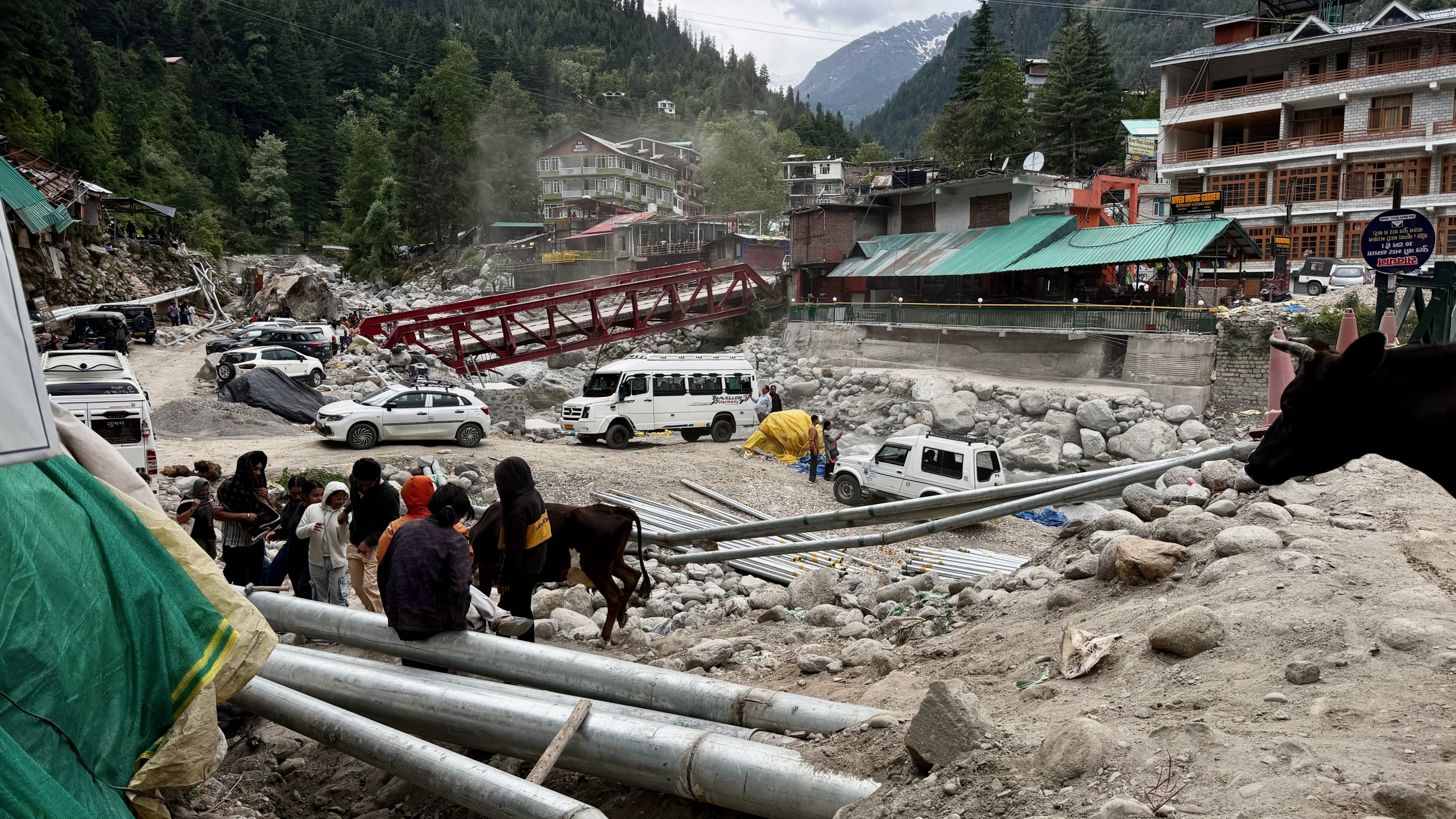
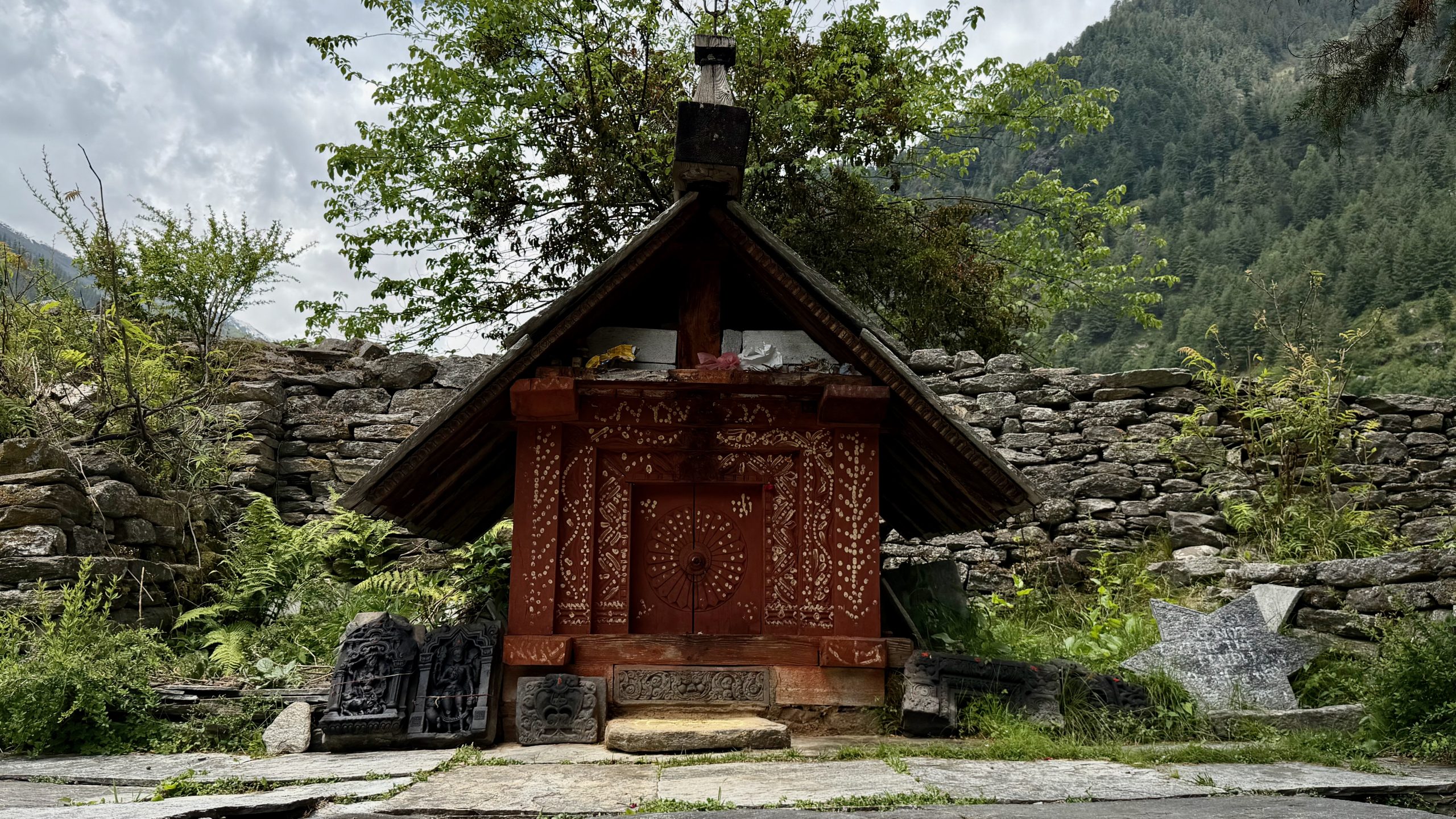
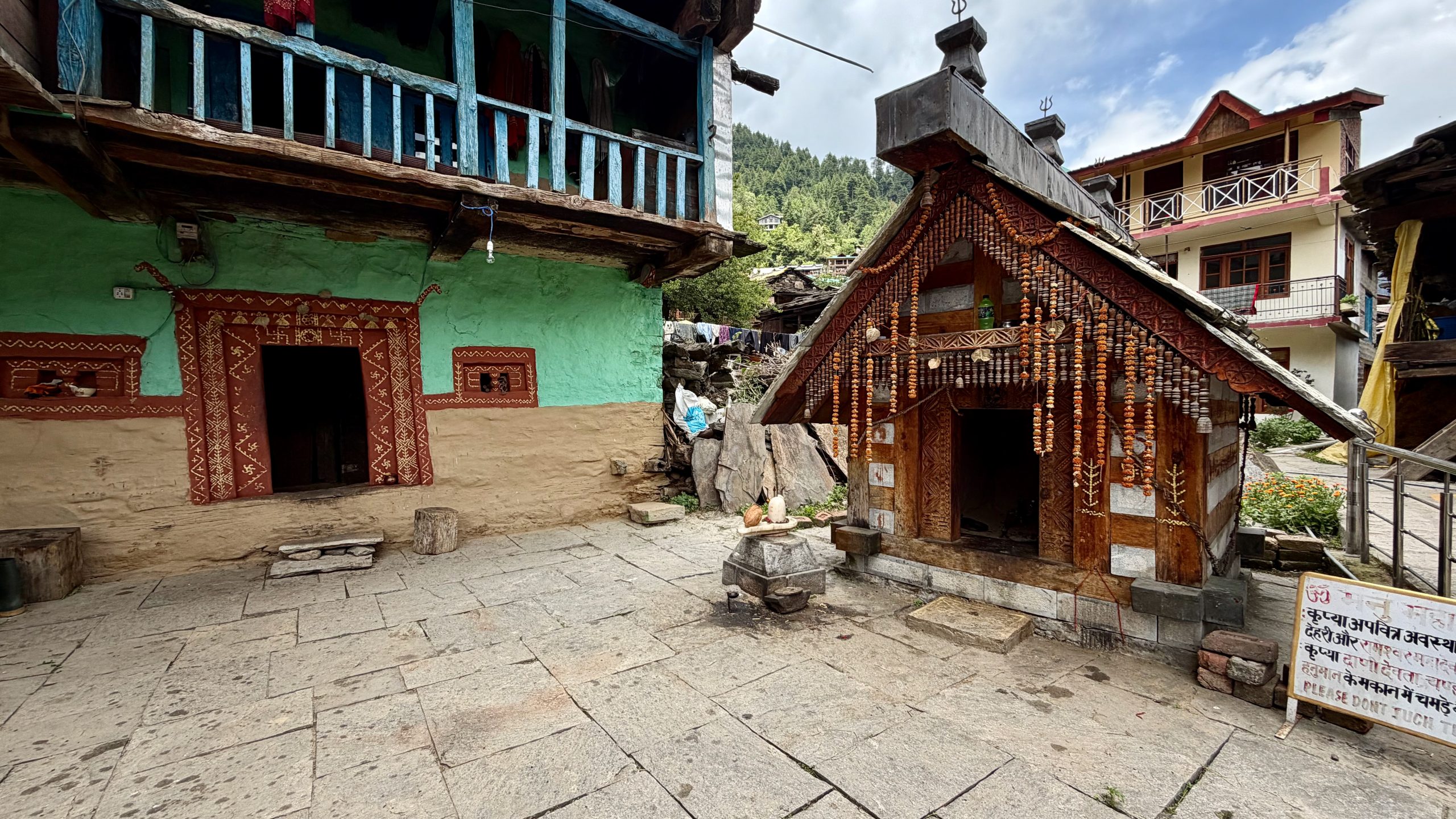
This worries people quite a lot, and since reliable structural reinforcement can’t exactly be counted on, people may place more trust in the gods instead — and are stricter because of it. That means access is often forbidden; among other things, an entire hiking route can no longer be done because the temple located there has been closed off over a wide area. There are a great many temples here, including very tiny shrines — the Kullu Valley is also known as the “Valley of Gods.”
The evening held another surprise for me. I went into a restaurant, still hesitating about whether I really wanted to eat there, when an Indian man approached me. Was I from Hamburg? Yes, but… oh right, I was wearing my St. Pauli hoodie.
How did he know that? Arpit had lived in Germany for eight years, completed his master’s degree in IT there, worked there, and so on. He’s originally from Kota, the rarely visited city in Rajasthan that I had been to in January. What he admires about Germans, he said, is their physical activity — how much they walk and cycle. He had picked up some of that himself and was now trying to encourage his friends to do the same. He had really liked Germany, though he was somewhat critical of himself for not putting more effort into learning the language, as he felt he had missed out on quite a lot because of that. He also spoke German — but we switched to English fairly quickly. In any case, it was one of those lovely encounters I tend to have while traveling: you meet somewhere, spend a little time together, share a lot about life — and then simply part ways again. I really like that.
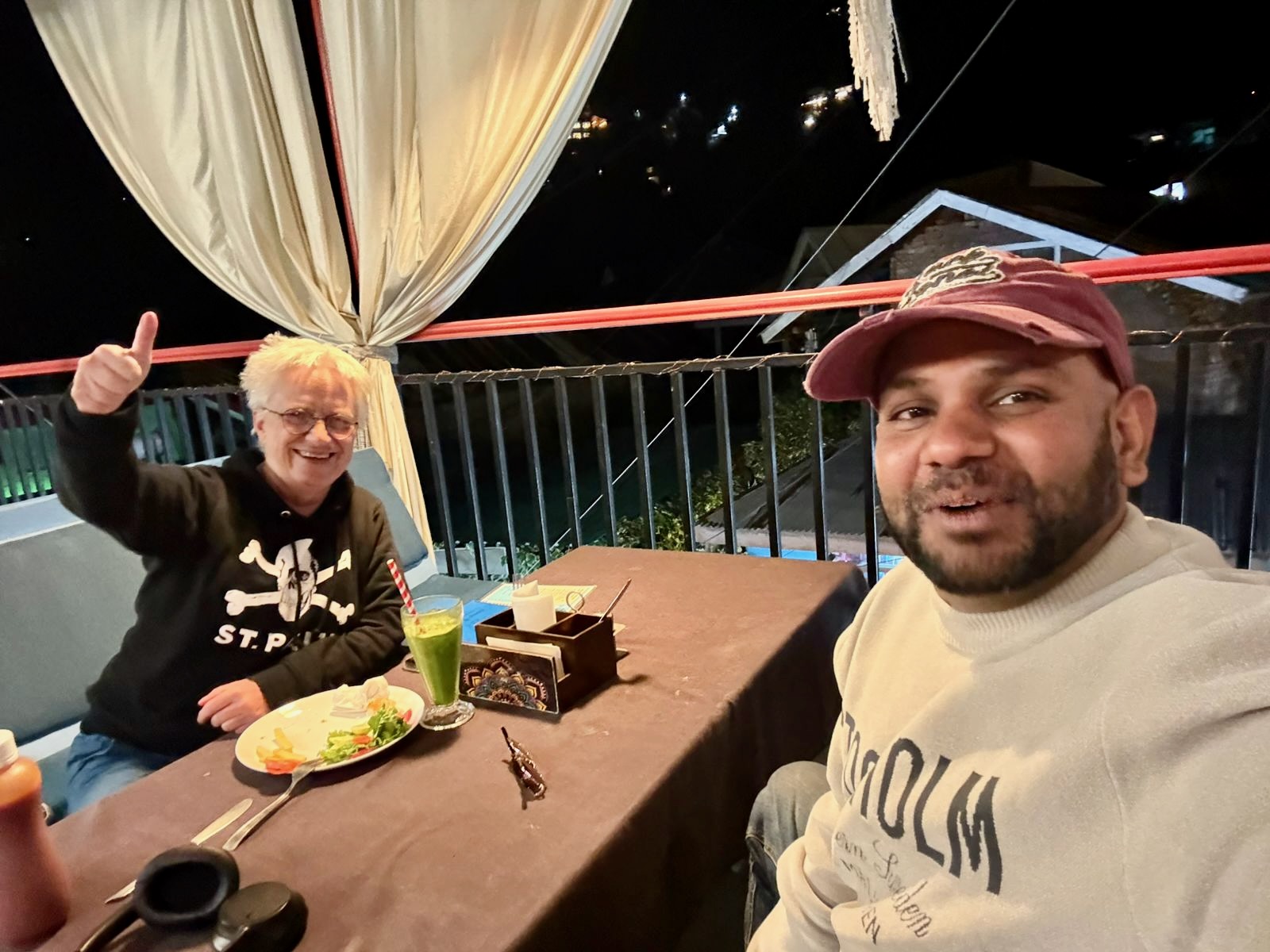
And sometimes, you really do run into each other again somewhere. That’s actually the next funny part: Raju and I had already crossed paths once before — back in 2012! Raju is a local guide here, recommended to me by someone from Zanskar. They know each other from a winter when they were both selling goods at the Tibetan market in Pushkar. I booked Raju for three days of hiking — partly because I’ve realized by now that I don’t enjoy being quite so alone anymore, and also because traveling with a guide always means learning so much more.
So, 2012. I was in Zanskar at the time, and there was unrest because a large lower-caste Buddhist family had converted to Islam, which caused conflict between the religious communities. A curfew was imposed, and I ended up essentially trapped in an accommodation in Padum for, I think, two days and nights. Nobody was allowed outside. And Raju? He was working there back then! He actually remembered me (I had long dyed hair at the time, so I looked quite different) and recalled how he had managed to find some muesli for me, which had made me incredibly happy. I, on the other hand, didn’t really remember him specifically — only vaguely that I had spent that strange period there completely alone with the staff, since there were no other guests.
The next morning, one Indian guest decided it would be a great idea to sit outside my room window at 6:00 a.m. and chant loudly at full volume. Some Indians really are delightfully insane! I complained, and he immediately retreated with a sheepish “Sorry, sorry.” At least my good mood had returned by then, because once I was back in bed, I just started giggling about it. Incredible India!
And now I’ve already written so much again that my hiking days with Raju will all have to go into the next blog post.