


Ladakh: Saspol + Alchi + Mangyu – old and very old and very very old drawings
25. December 2025
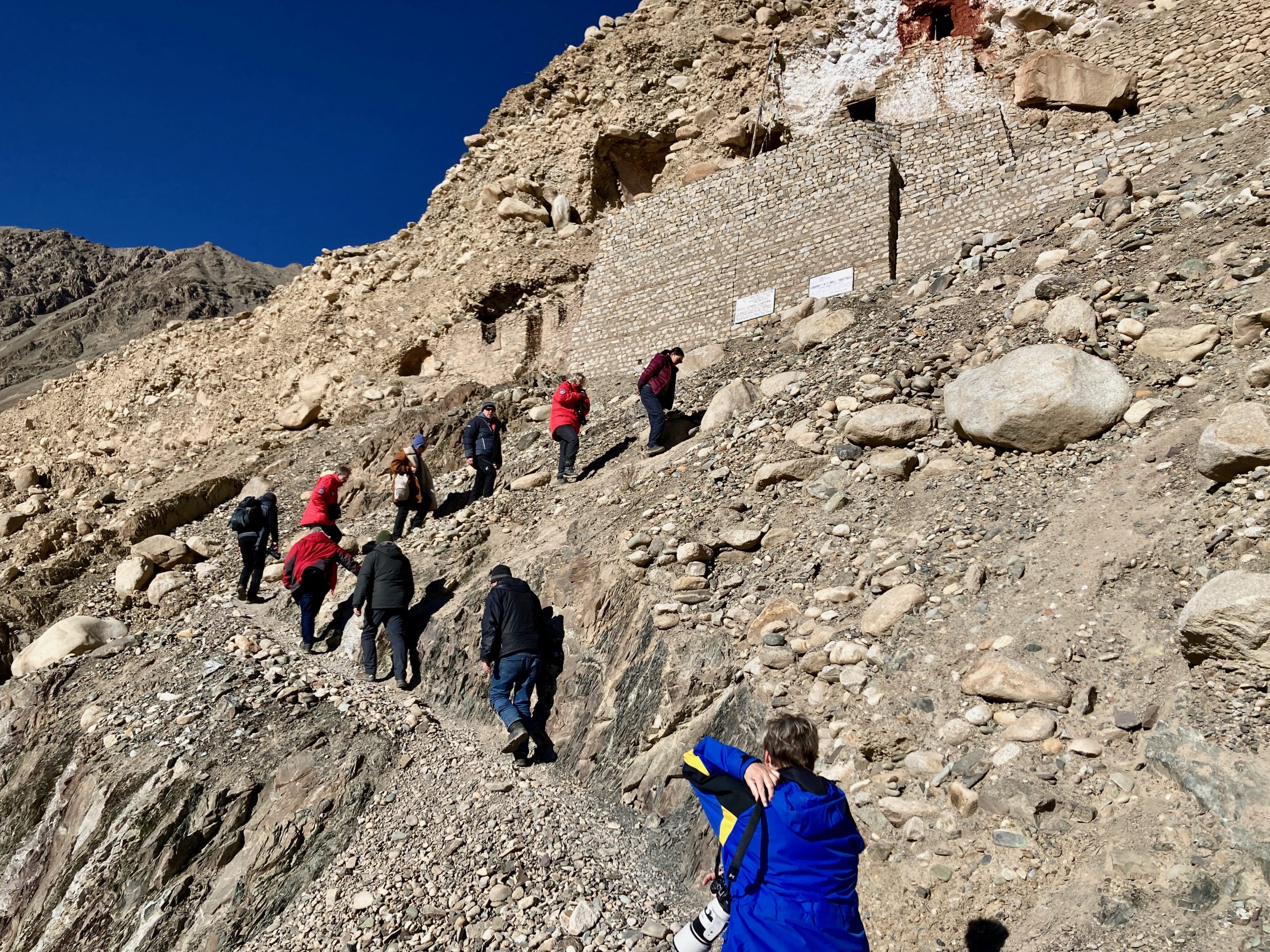
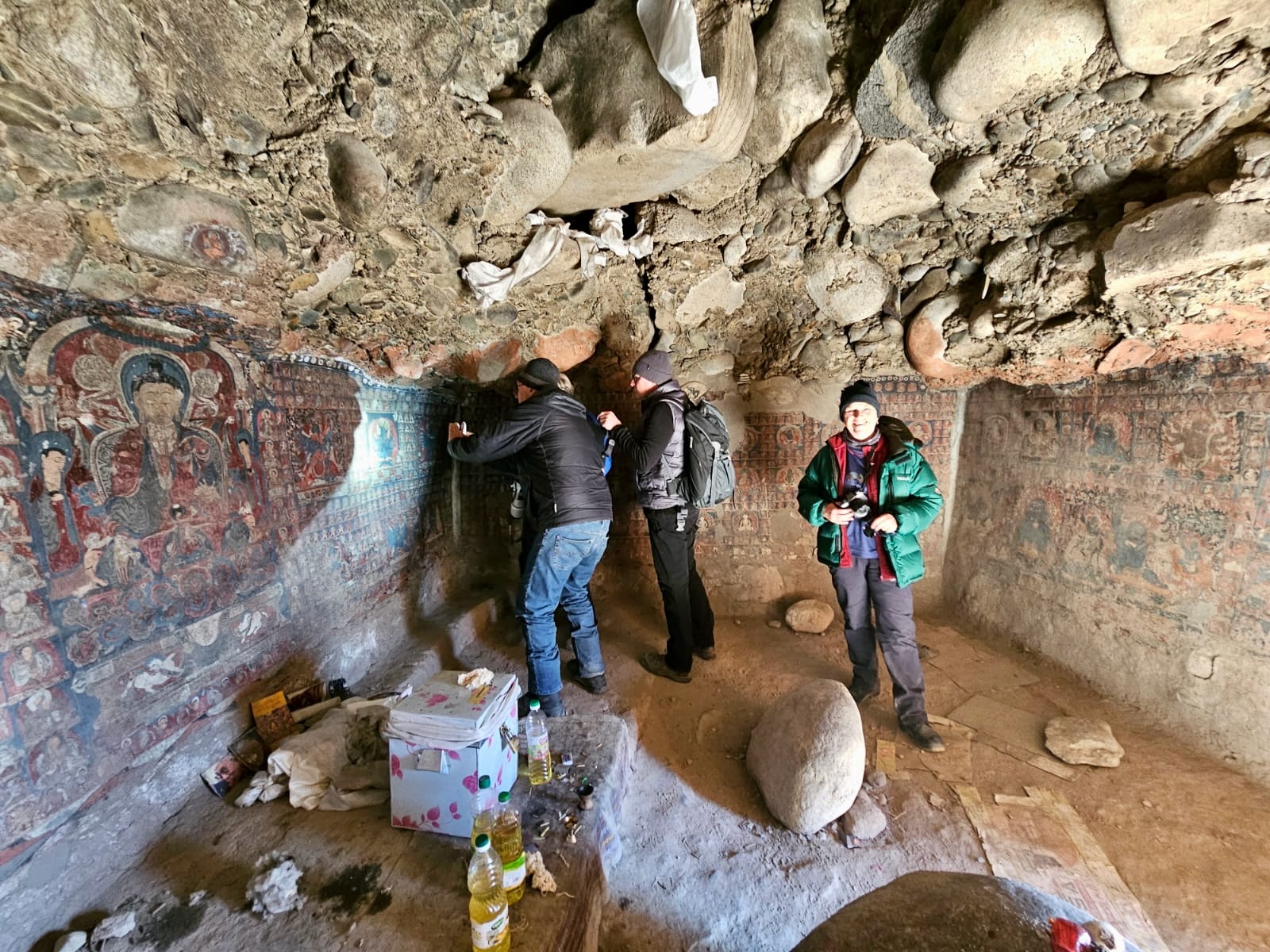
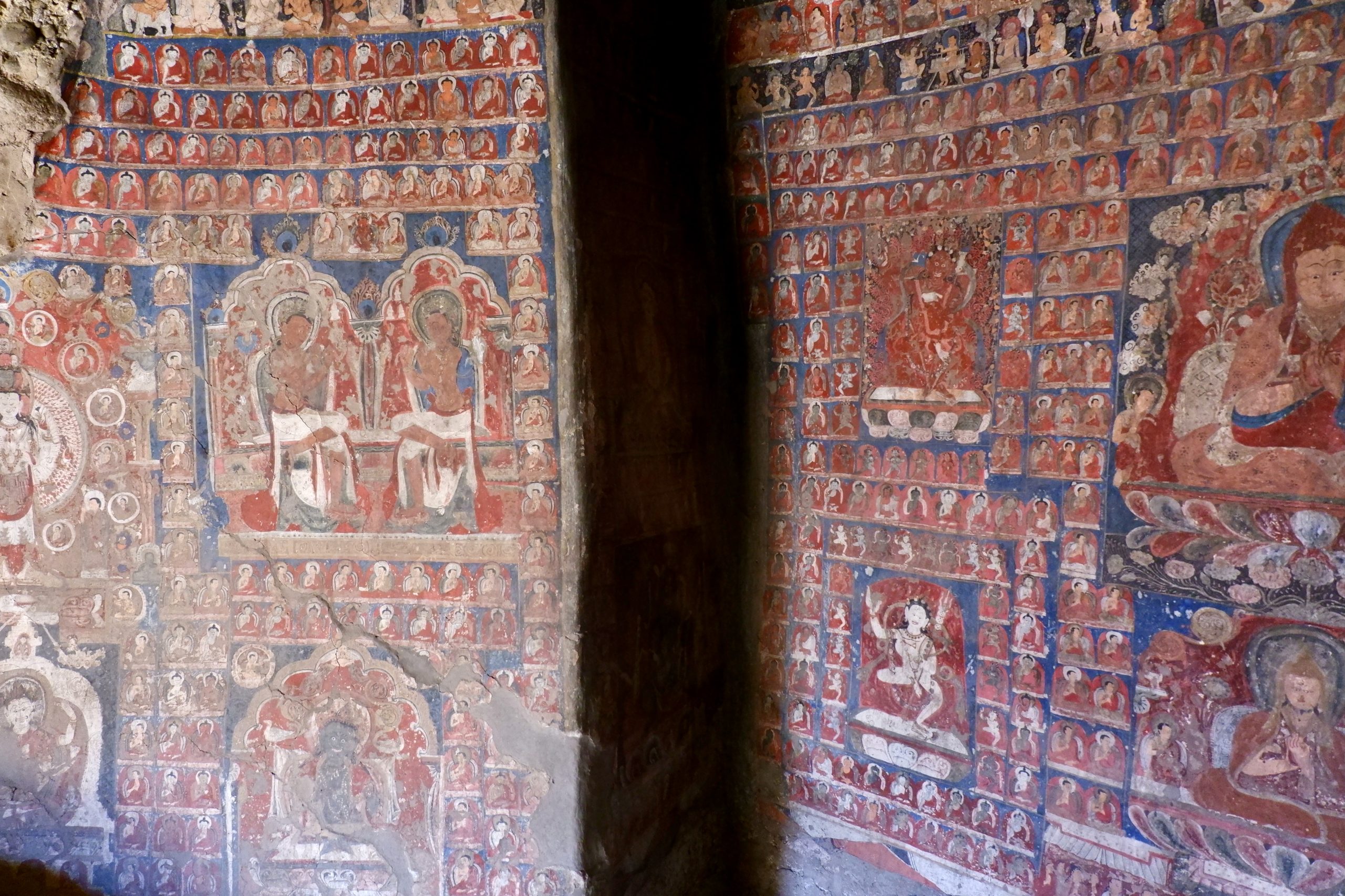
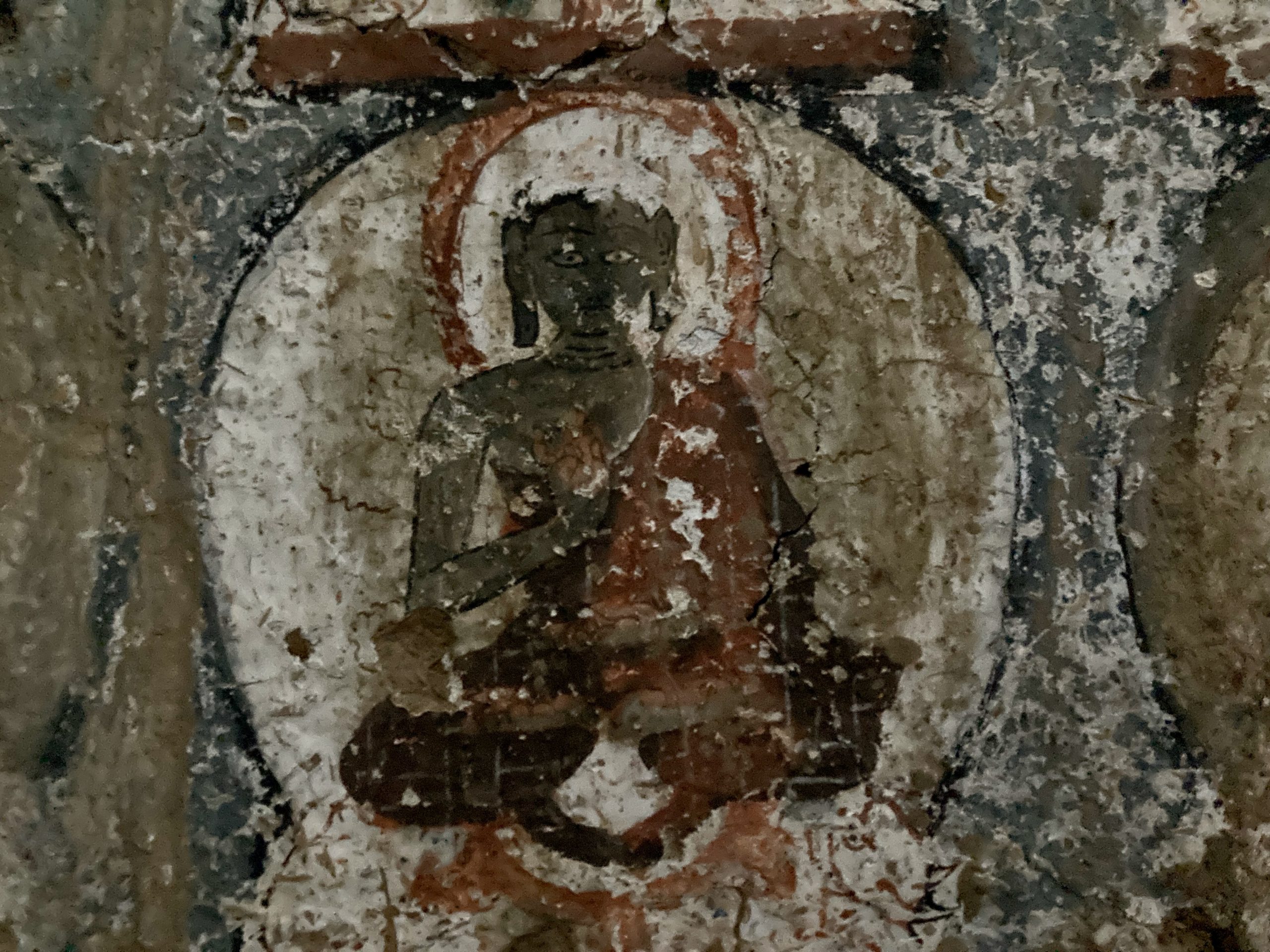
The first ancient wall paintings we set out to see were in the Saspol caves. Unfortunately, only one cave was accessible; at the others, the entrances had not been prepared. They date from the 14th/15th century and were partially restored after severe damage (Prince Claus of the Netherlands had also donated funds for this).
 1
1
 2
2
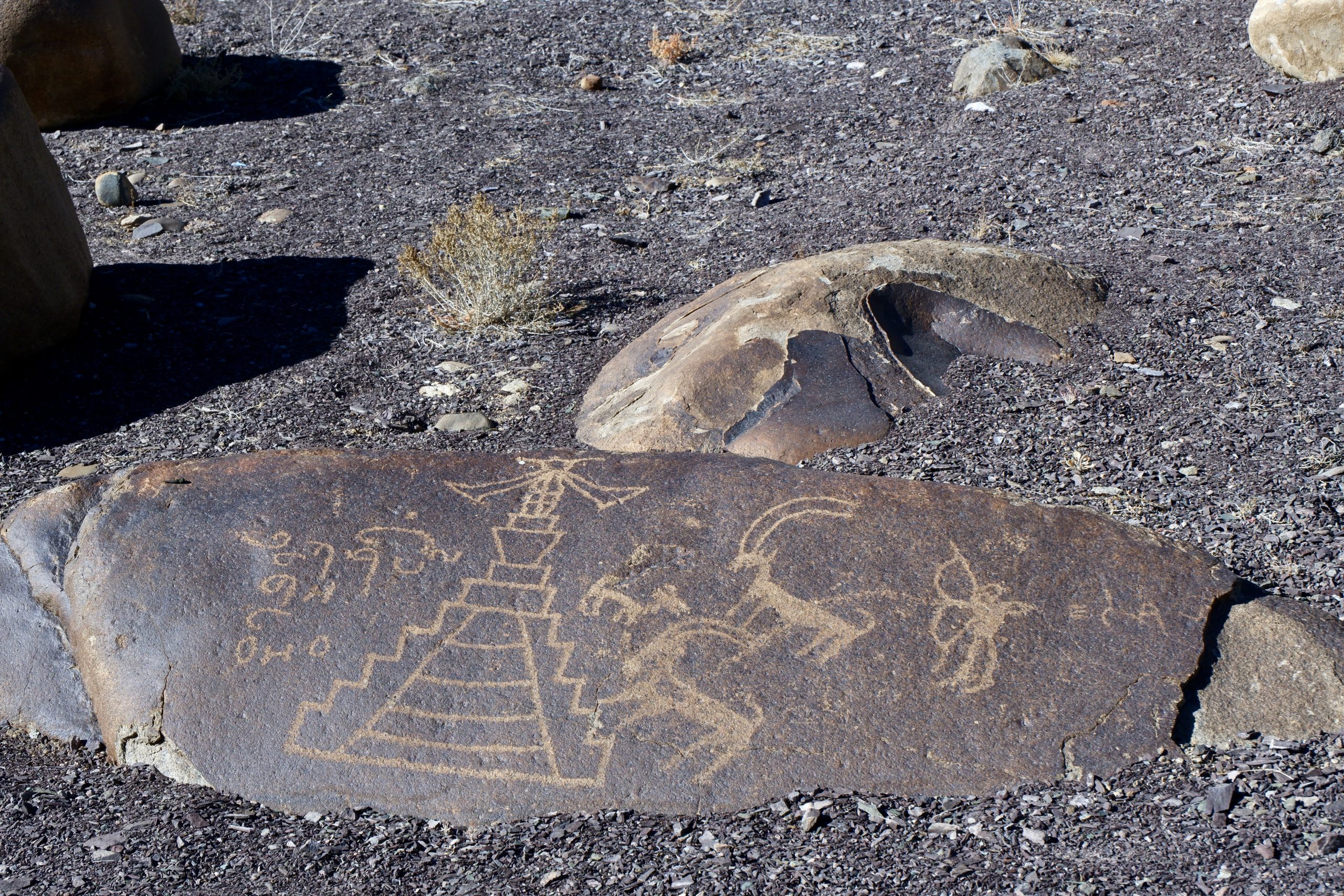
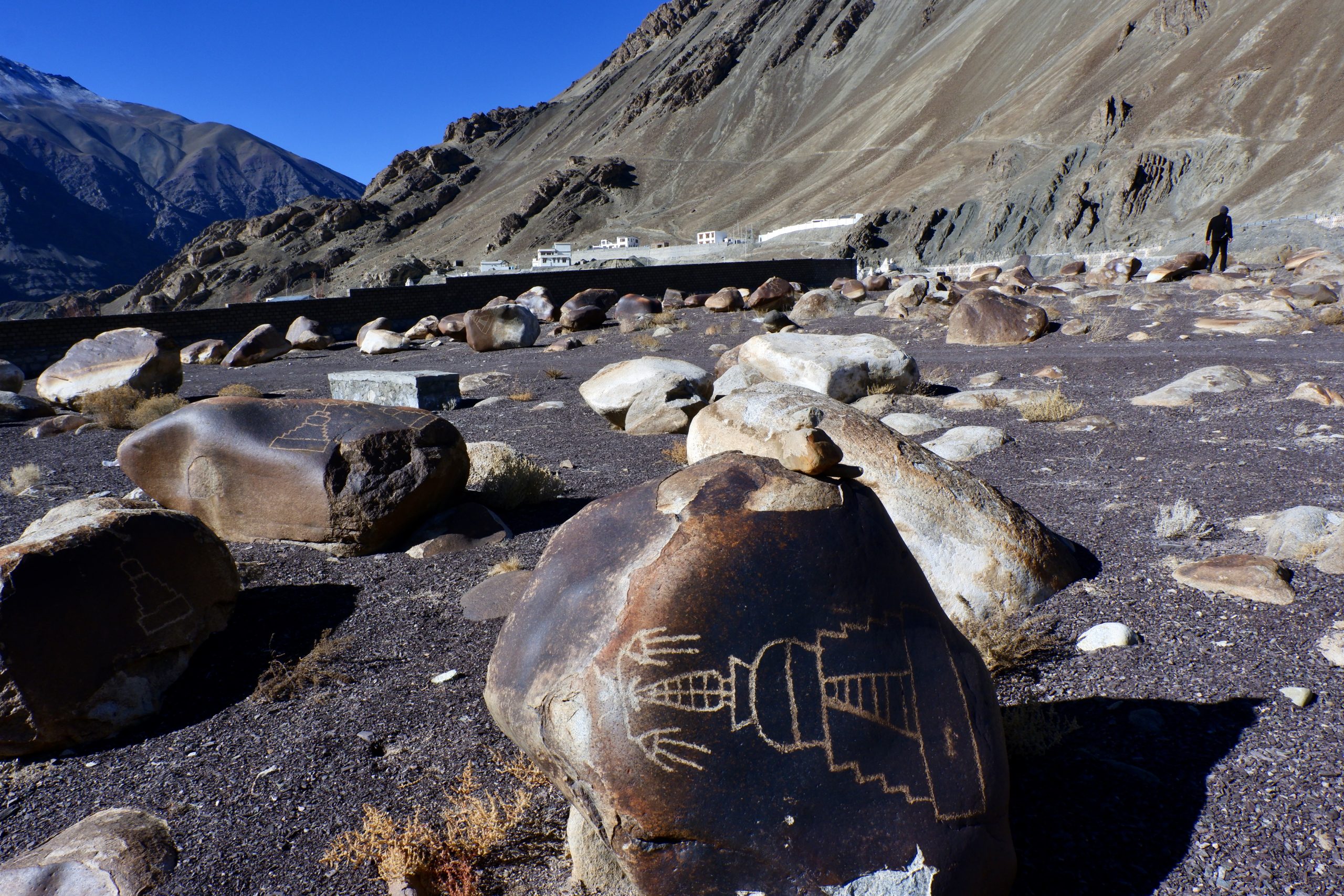
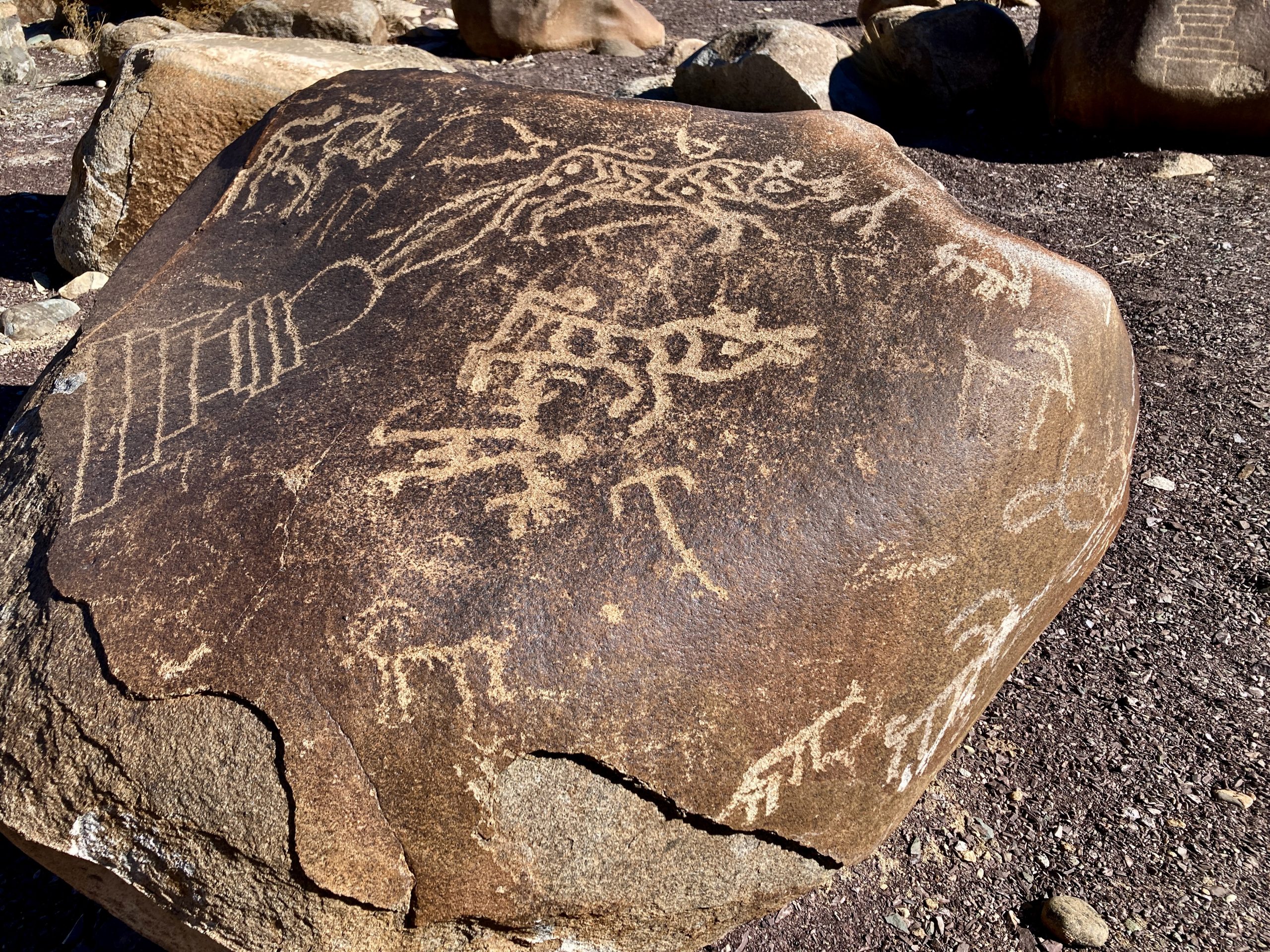
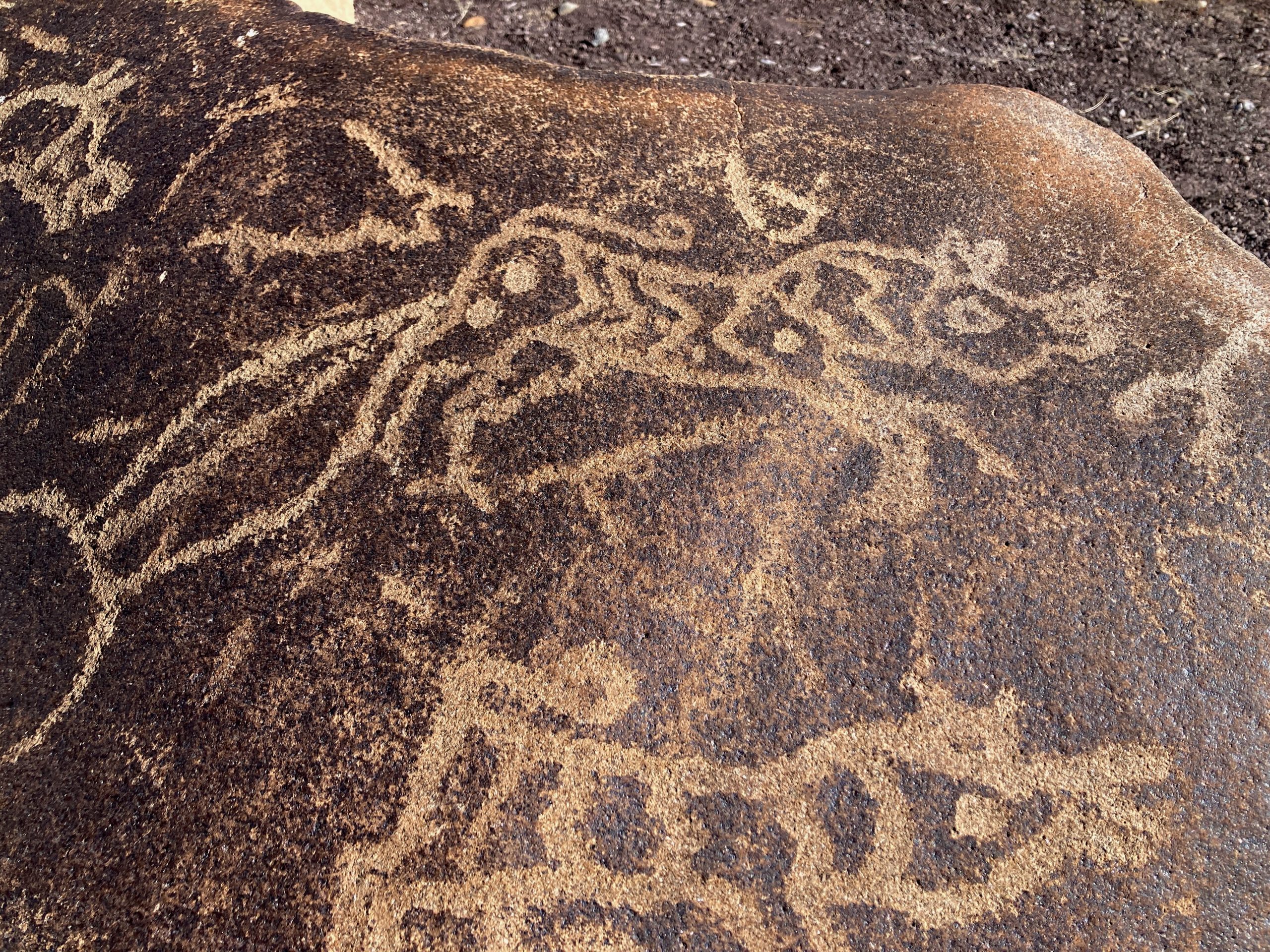
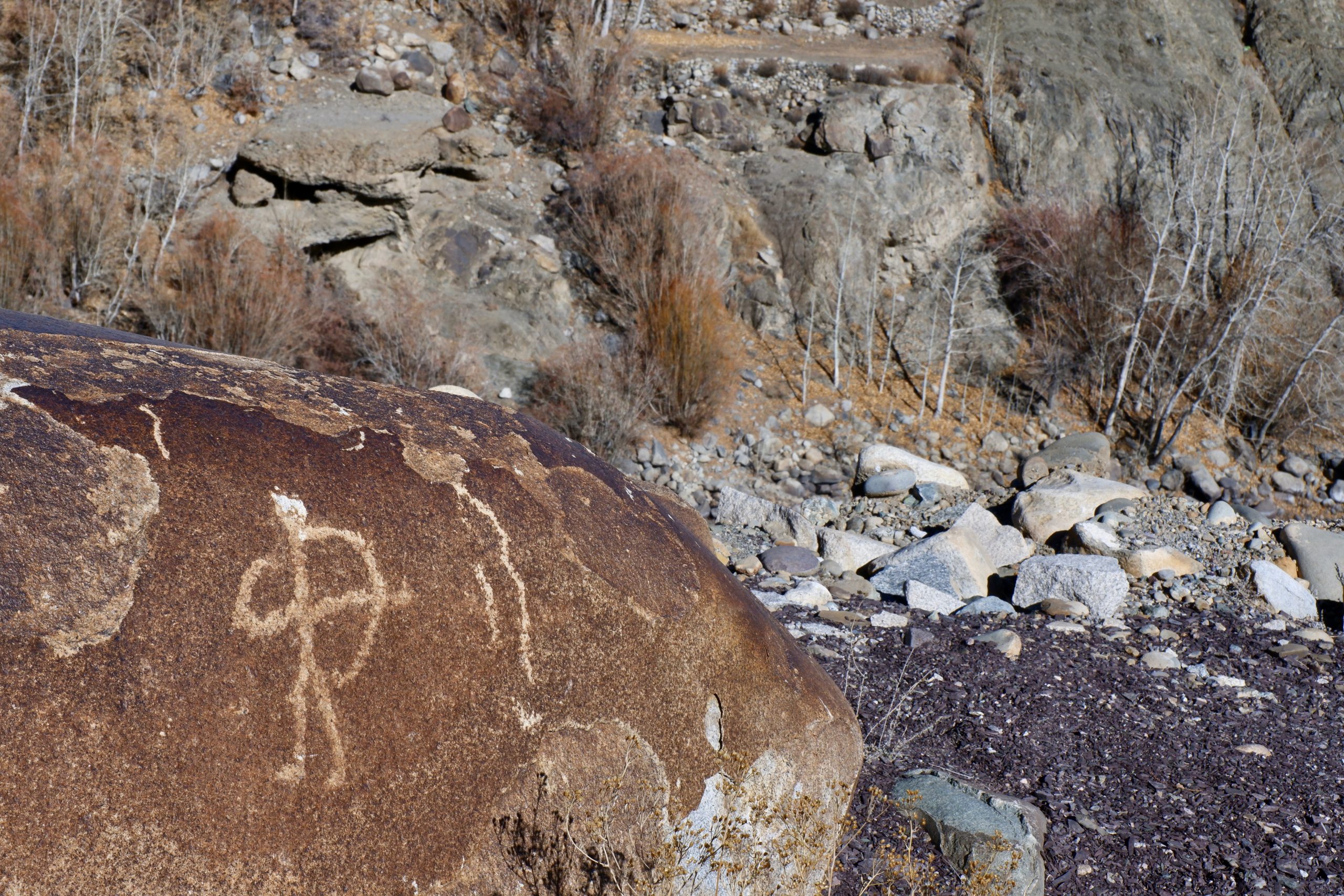
The next drawings were even older, although their exact dating is unknown. Those depicting Buddhist subjects are younger than 2,000 years (even though some of the stupas look quite unusual), while the ones without Buddhist imagery – showing animals, hunters, and similar scenes – are estimated to be 2,000 to 5,000 years old. Incredibly ancient! I always try to imagine what life must have been like back then – and I fail.
Along the Indus near Alchi there are quite a number of rocks with paintings. You really have to search carefully to find the truly ancient ones. I enjoy that immensely. Of course, it’s more time-consuming than if they were signposted. I’m sure I haven’t found them all yet – but a few of them.
 3
3
 4
4
 5
5
 6
6
 7
7
After these old and very ancient drawings, there were even more ancient paintings to see – but not to photograph – in Alchi Monastery. The photography ban there was so strict that cameras and mobile phones had to be locked away in a locker. Instead, I took one photo outside:
 8
8
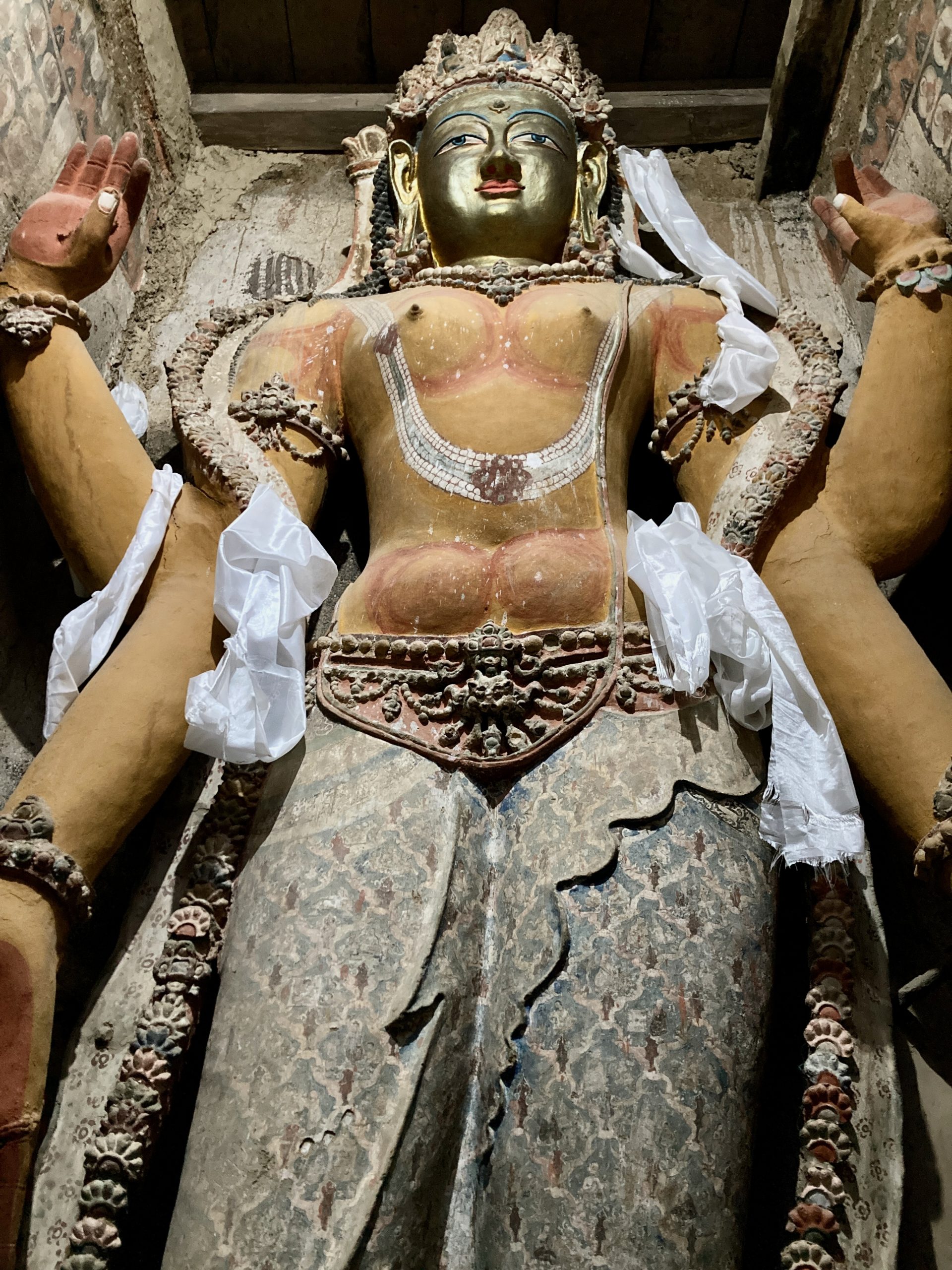
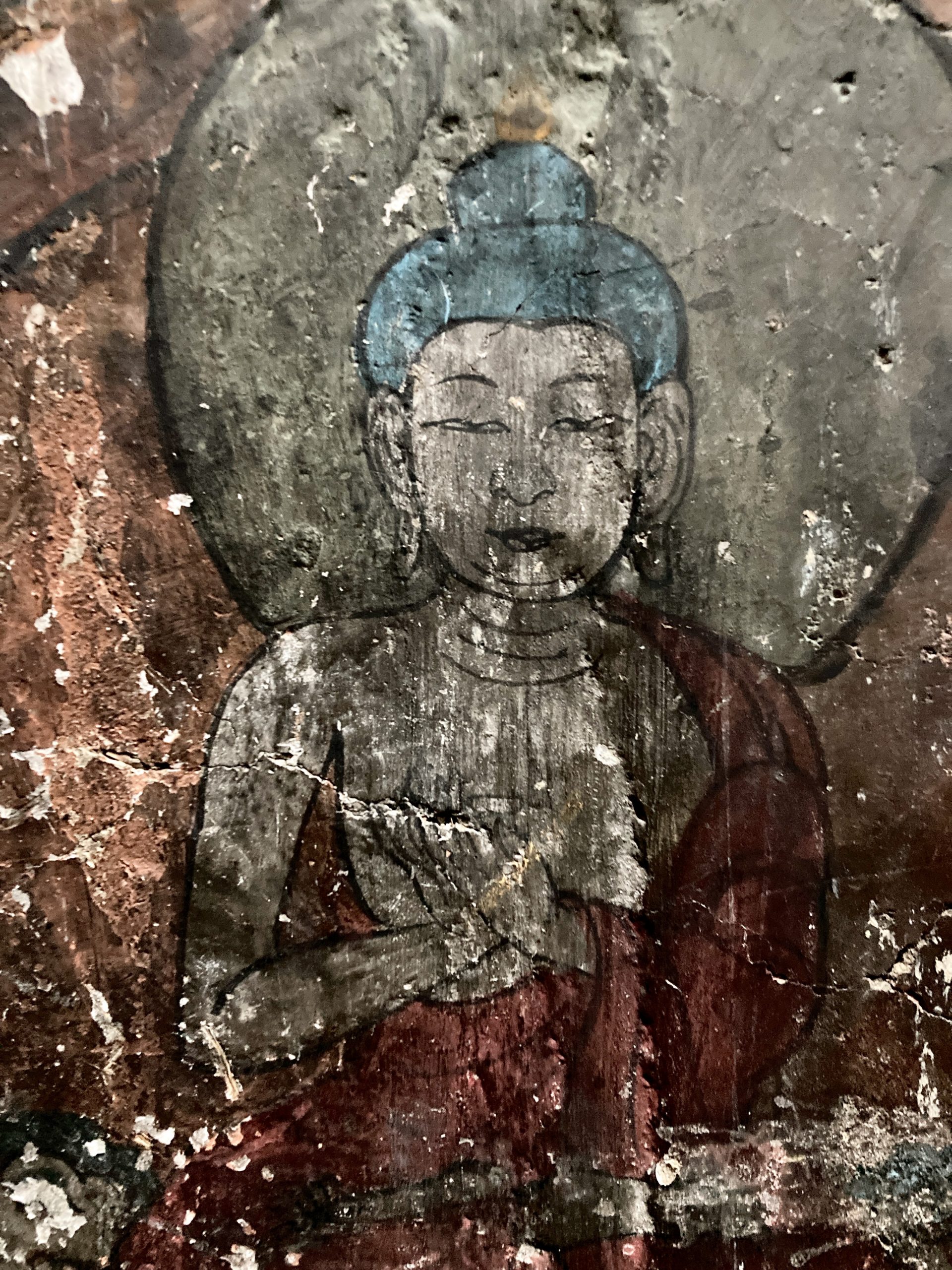
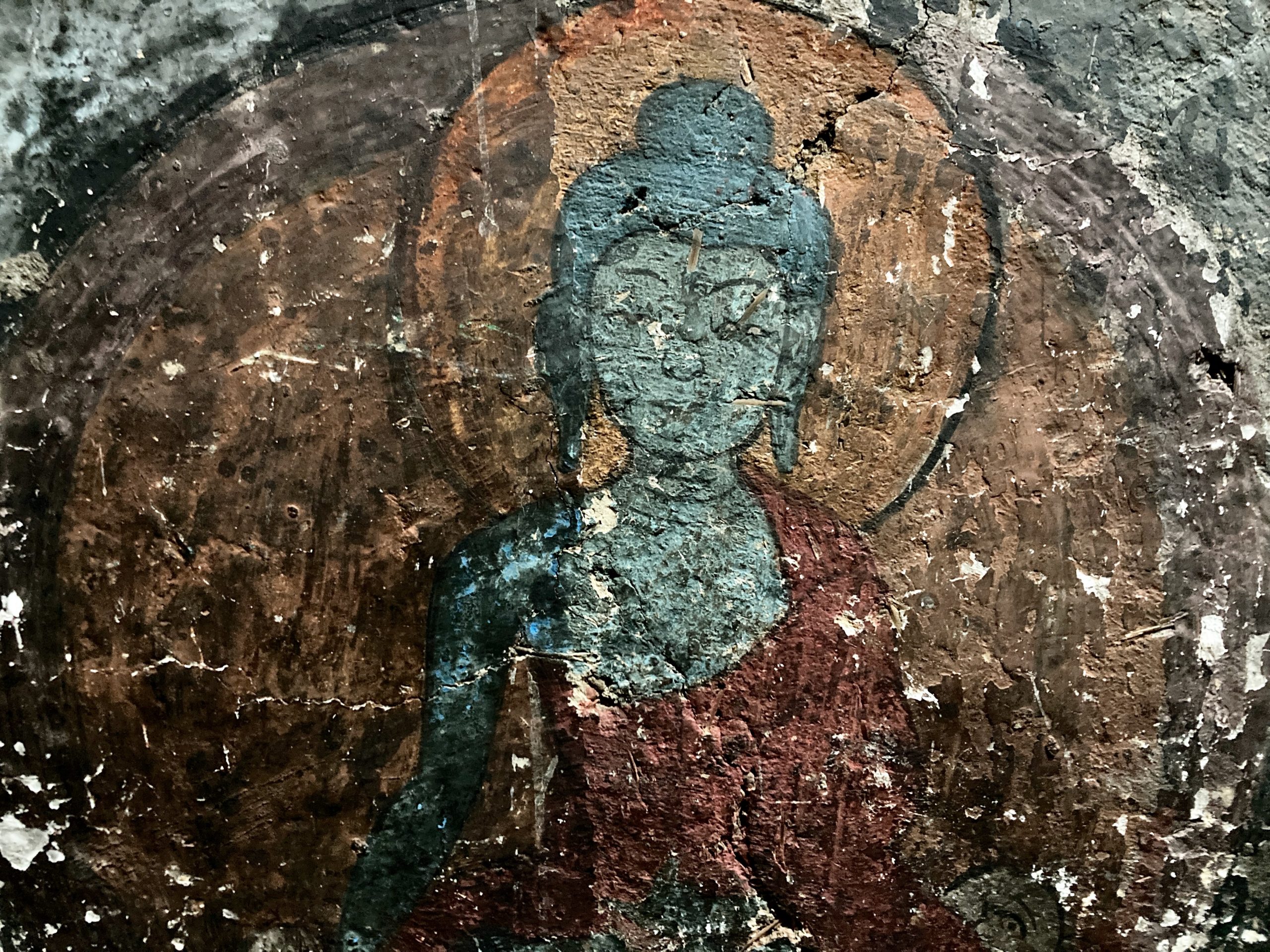
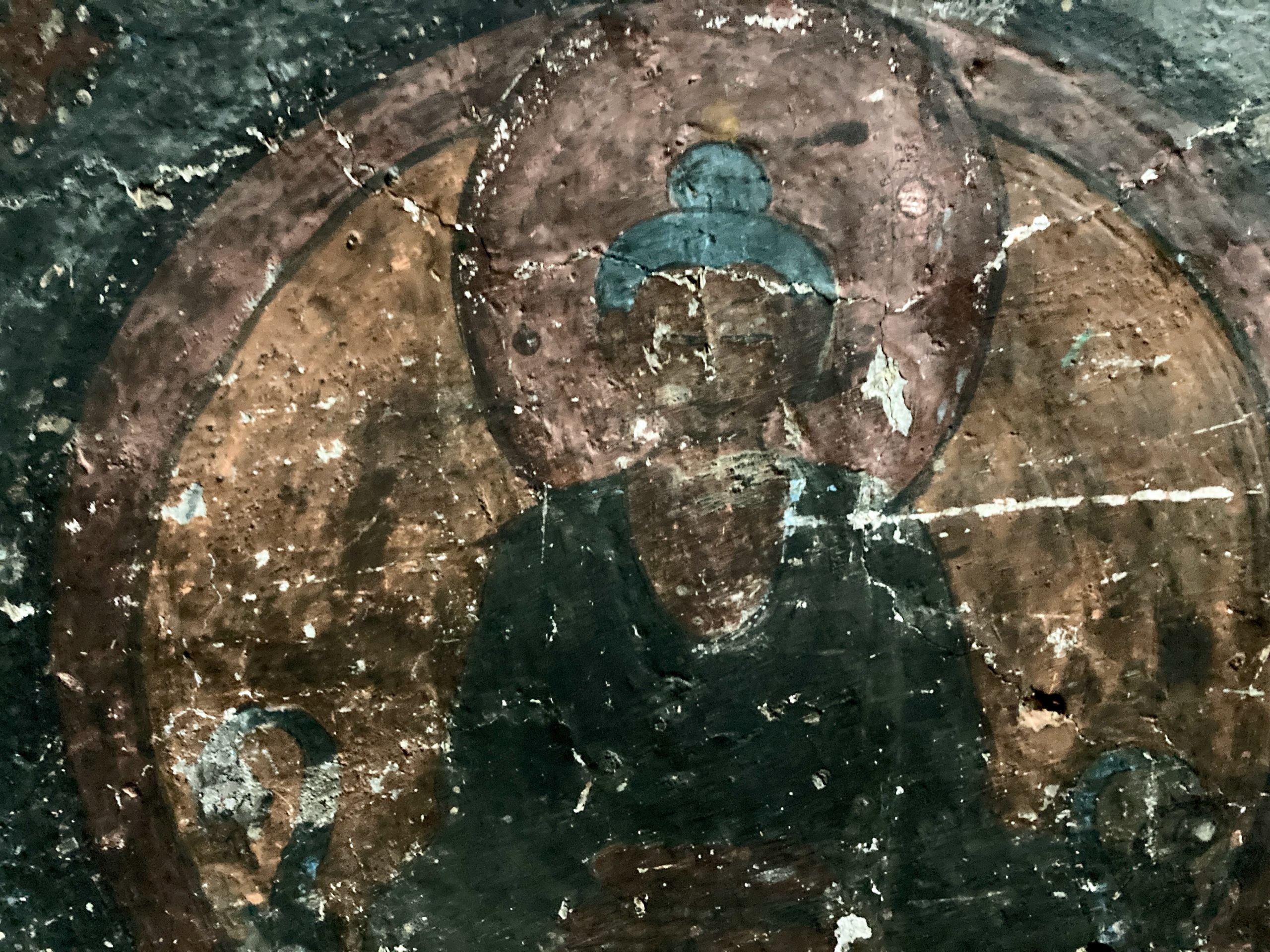
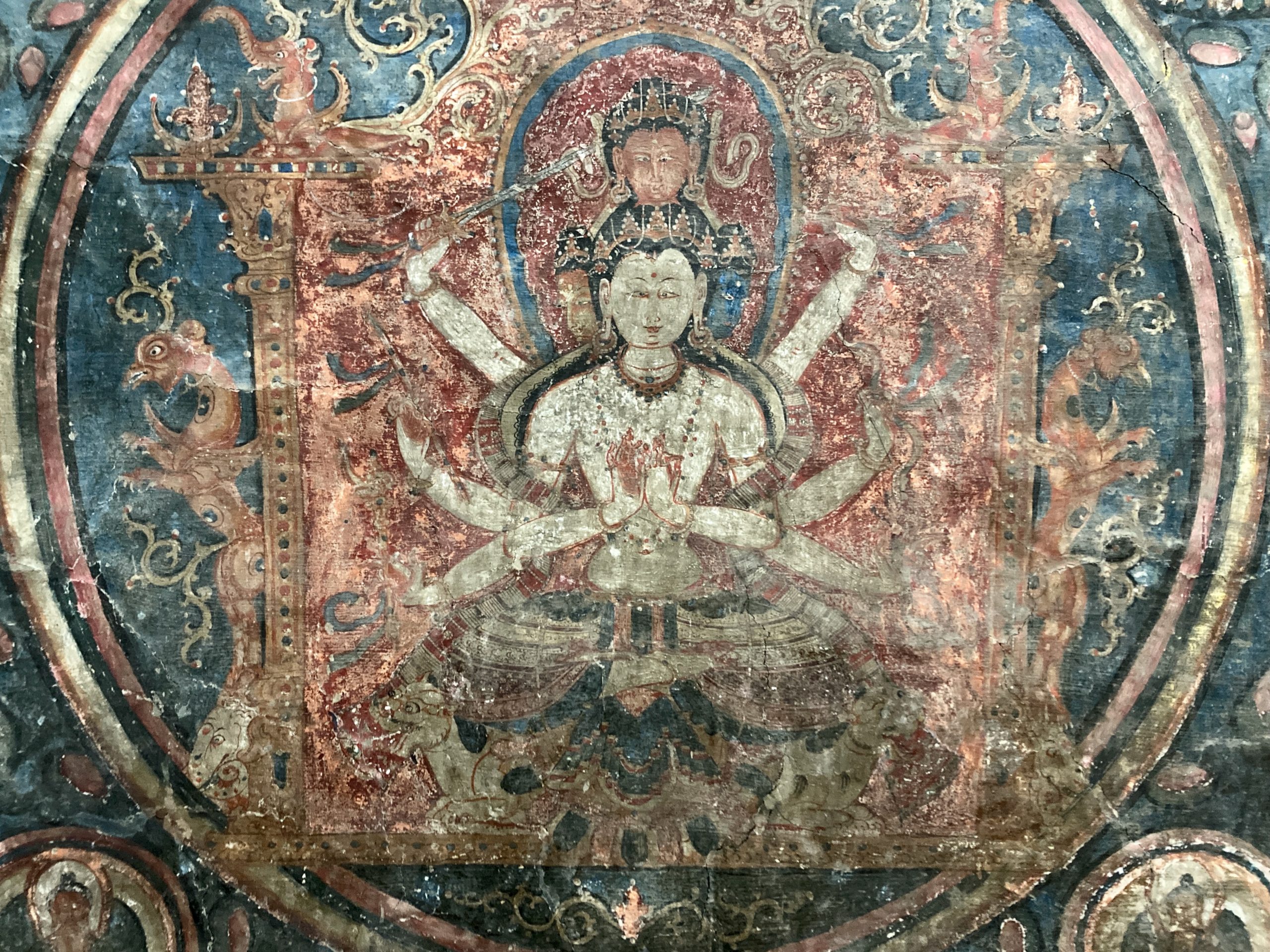
Alchi is part of the UNESCO World Heritage Site, though not on its own. It is included together with the monastic complexes of Mangyu and Sumda Chun, dating from the 10th/11th century. At that time, the translator Lotsava Rinchen Zangpo was traveling throughout the Himalayan region, translating a great many texts from Sanskrit into Tibetan and founding more than 100 monasteries. He came to Ladakh with several students from the Kashmir region, that is, from the west. These students created many of the wall paintings in the monasteries, some of which are still remarkably well preserved or have been restored. Alchi has the most magnificent collection of them.
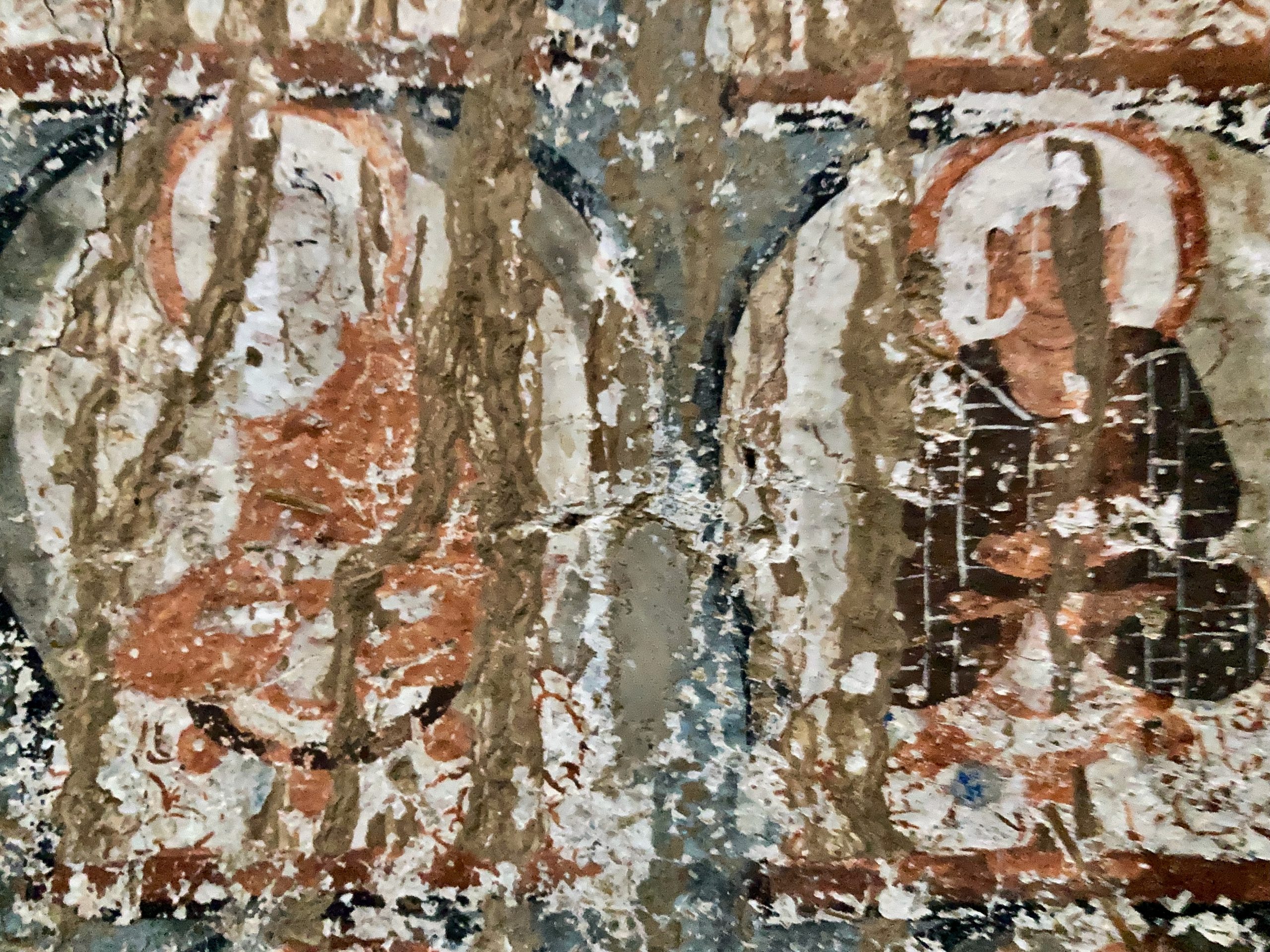
To see even more, and also to experience a village tucked further away in the mountains, we drove to Mangyu. The track was dusty, the village remote, and the monastery rooms were open and could be photographed. In Chemre I had been delighted by the strange drawings; here I discovered the beauty of decay and took many photos as well:
 9
9
 10
10
 11
11
 12
12
 13
13
 14
14
 15
15
 16
16
 17
17
 18
18
 19
19
 20
20
 21
21
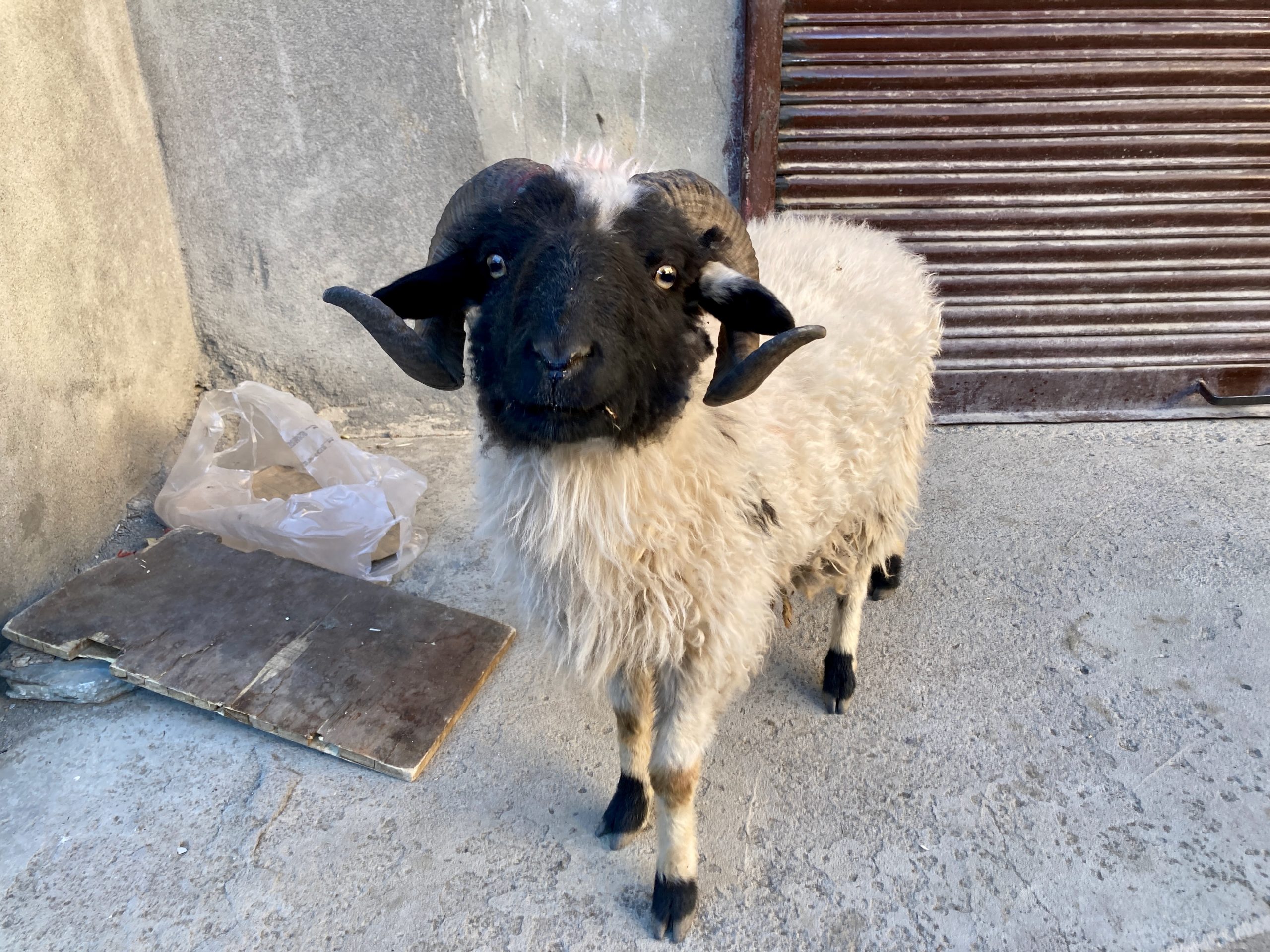
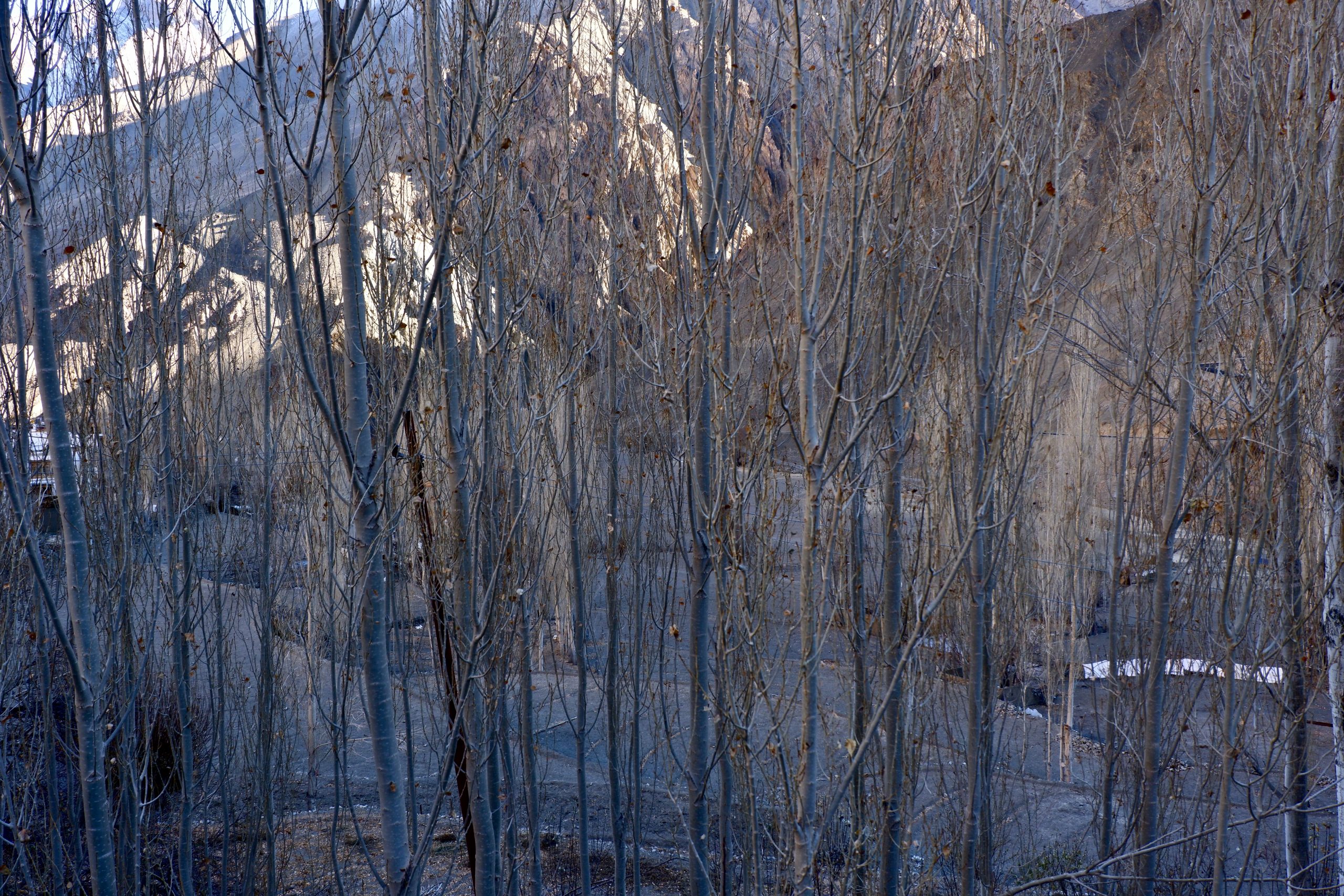
And then we were already hurrying out of the village, so I only managed to quickly grab one photo of a sheep and one of the trees:
 22
22
 23
23
Another snow leopard had been spotted again – this time above Mangyu! So we hurried over. Unfortunately, we were out of luck with the sighting. The snow leopard had apparently made a kill and was lying somewhere out of sight, where it couldn’t be seen. In any case, everything was about 3 km away as the crow flies, high up in the mountains, and would have appeared very small even through a spotting scope. But the same people as in Saspotse were there again, so there was a happy reunion.
And in any case, it was wonderful simply to be deeper within the mountain world.
 view to Mangyu
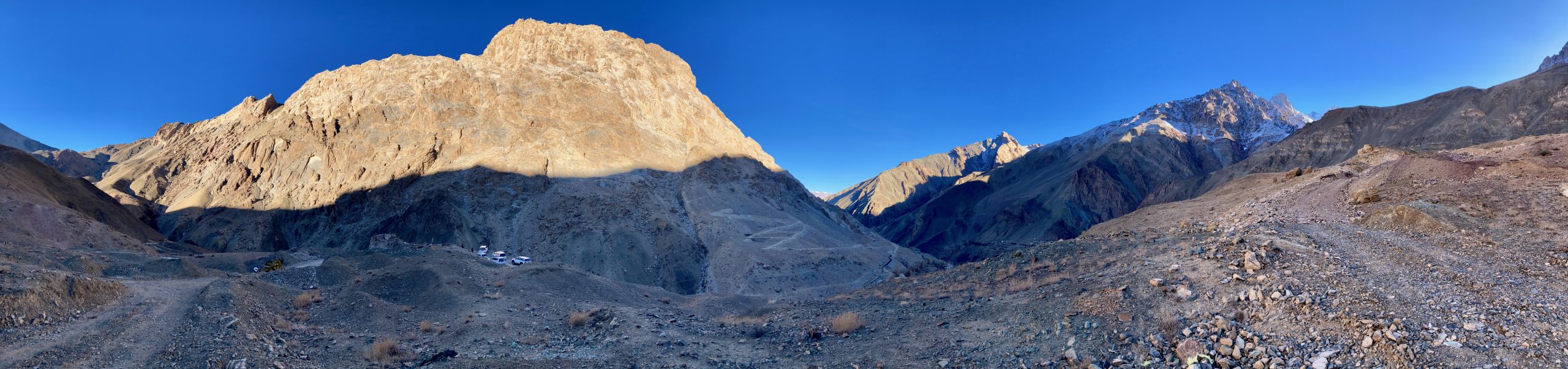 mountain world
And then we even discovered a wolf/snow leopard trap! We were told that the skeletons were already quite old. Today, the trap is no longer active, as all animals are now protected.
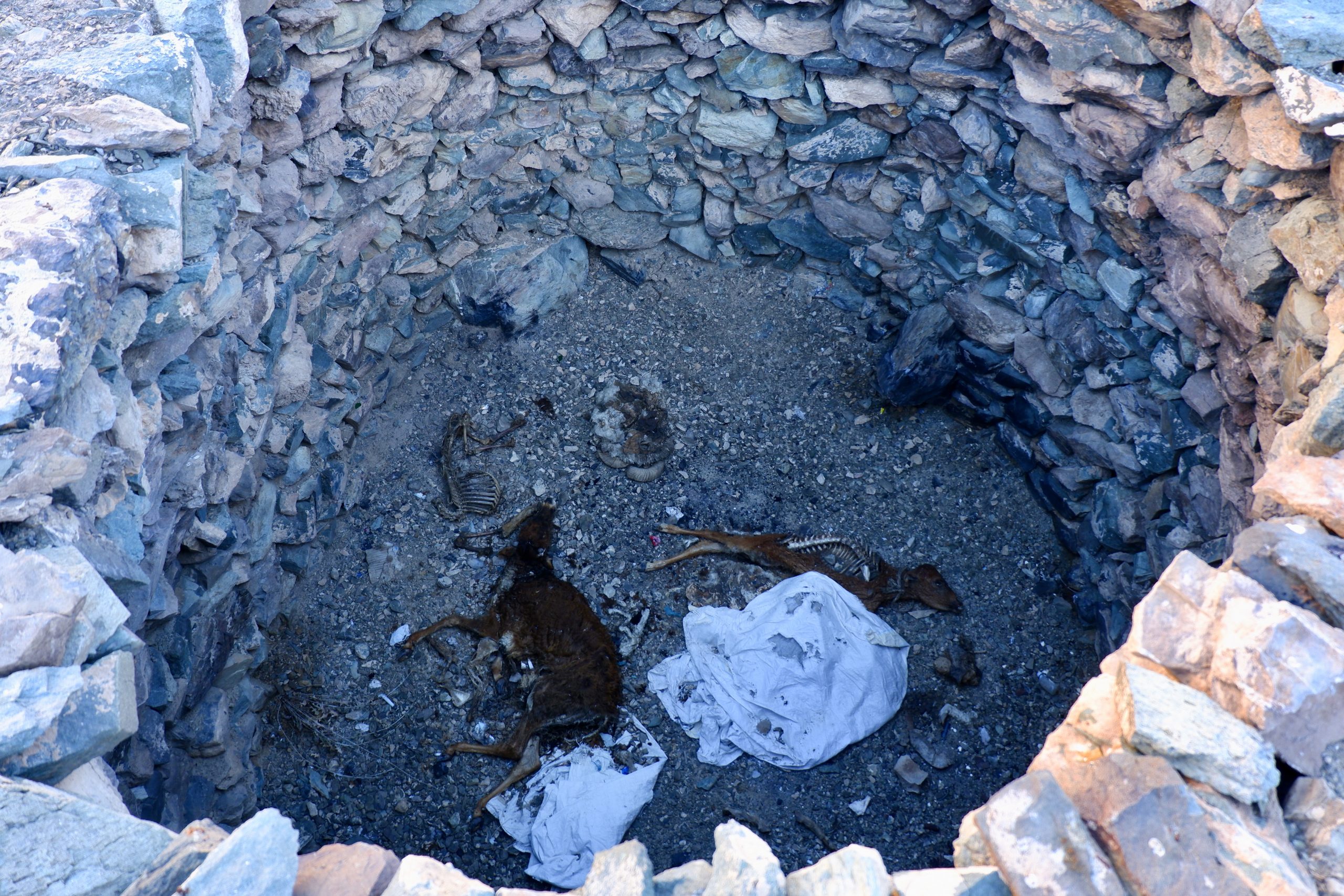 trap 1
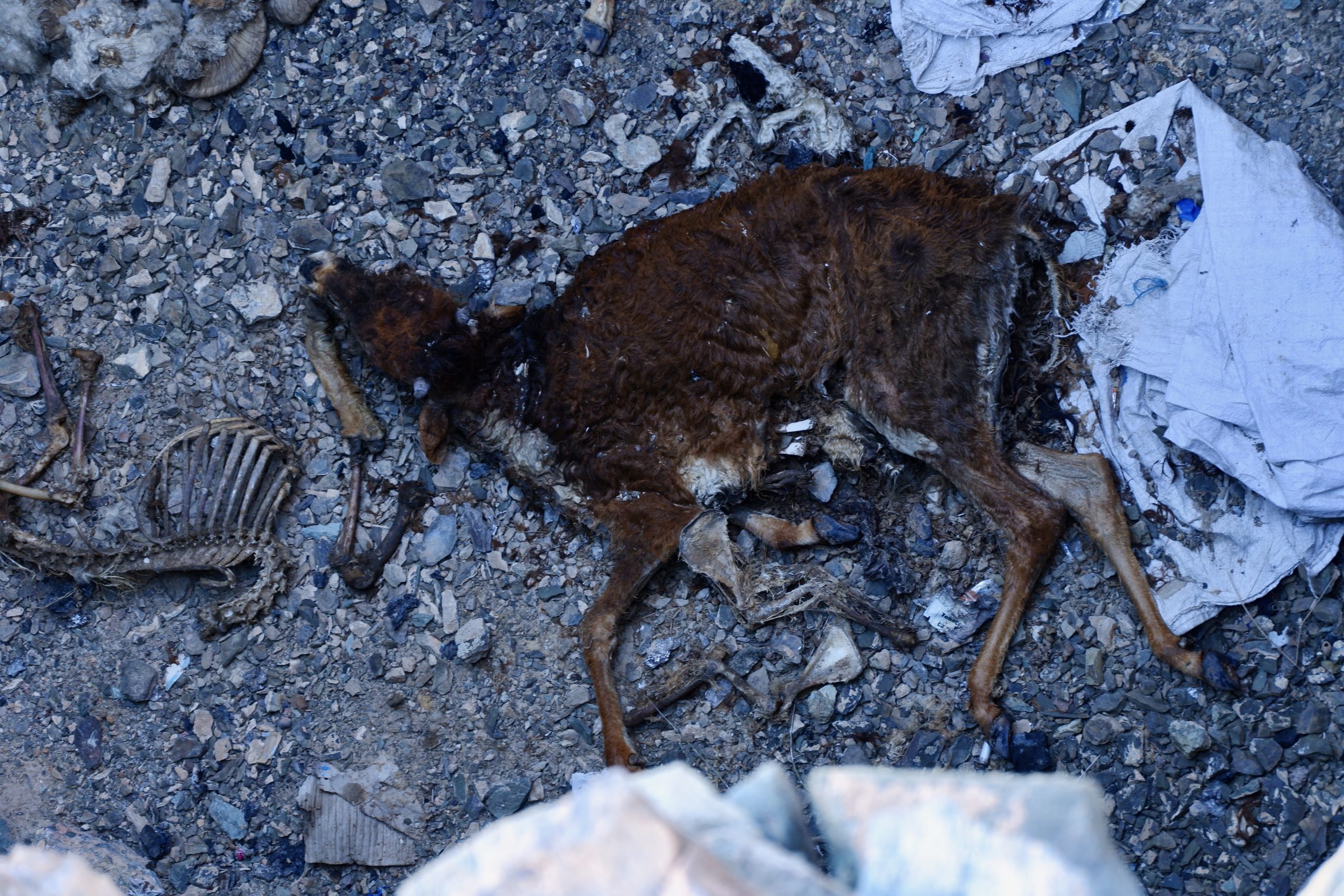 trap 2
On the following day there was an Appu Appi closing ritual – and that will appear in the next blog post together with one from a few days earlier.