


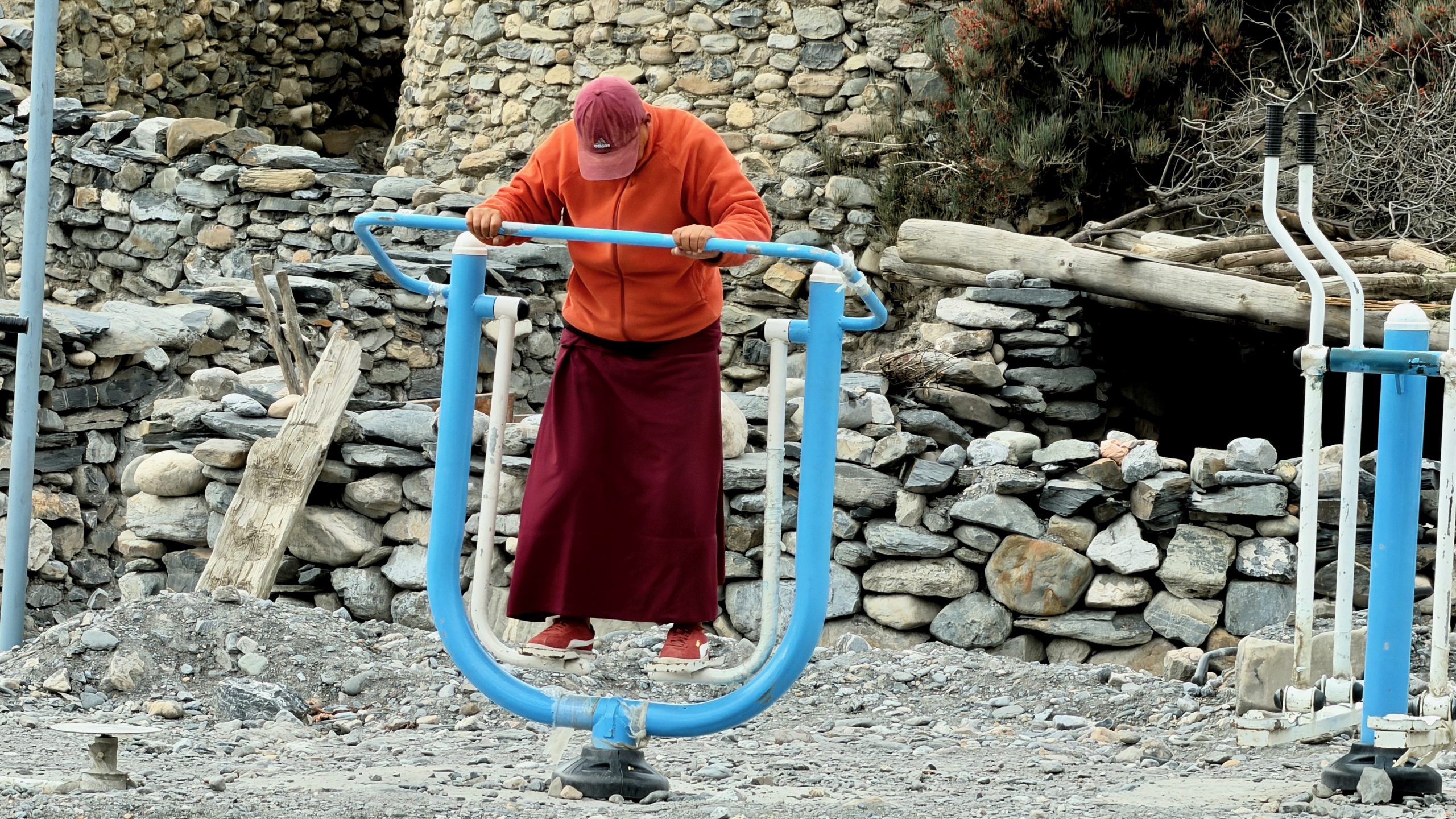
Naurikot -> Kagbeni – Sankar is shredding cabbage and a monk is using the exercise machine
01. August 2026
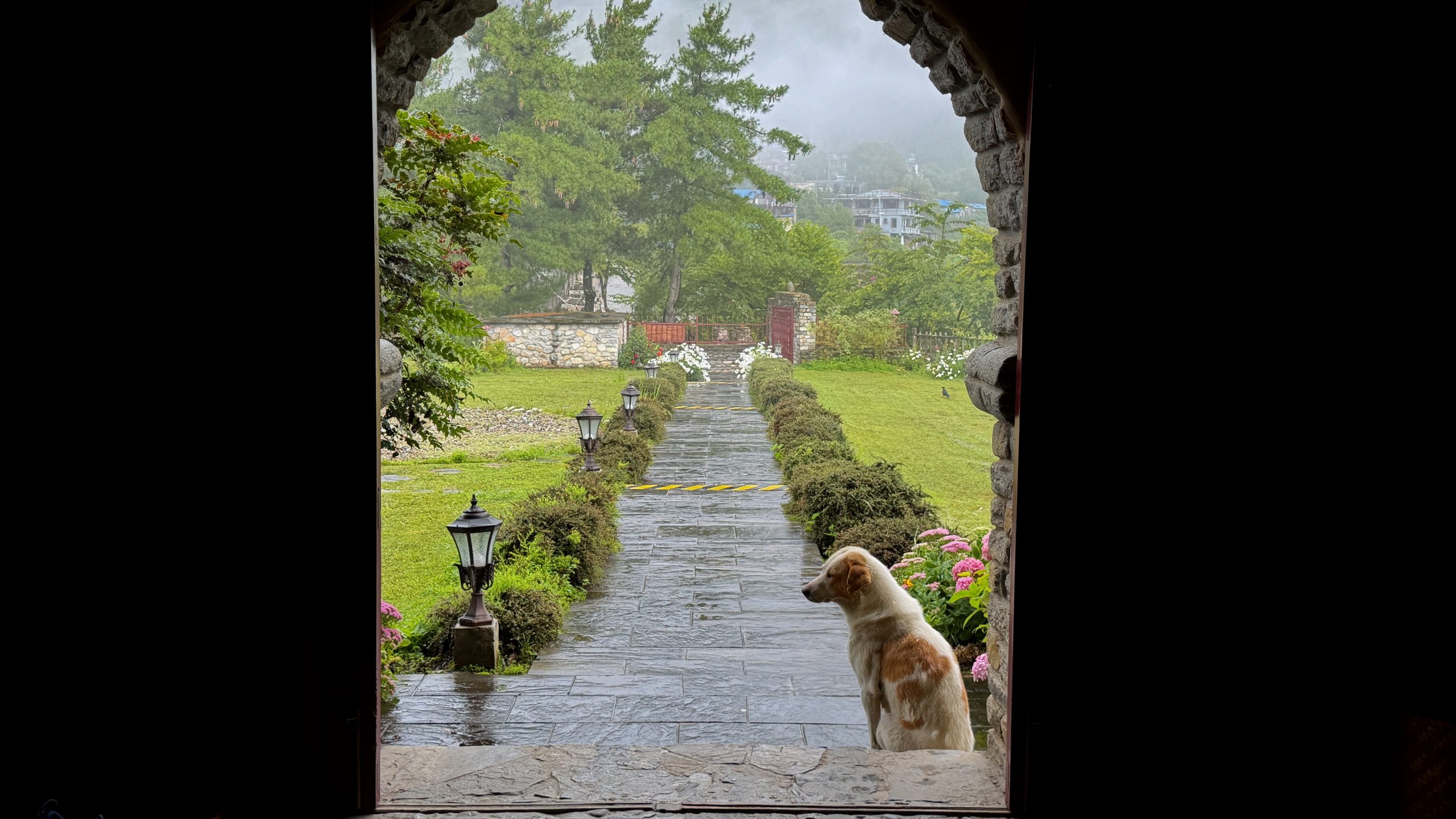
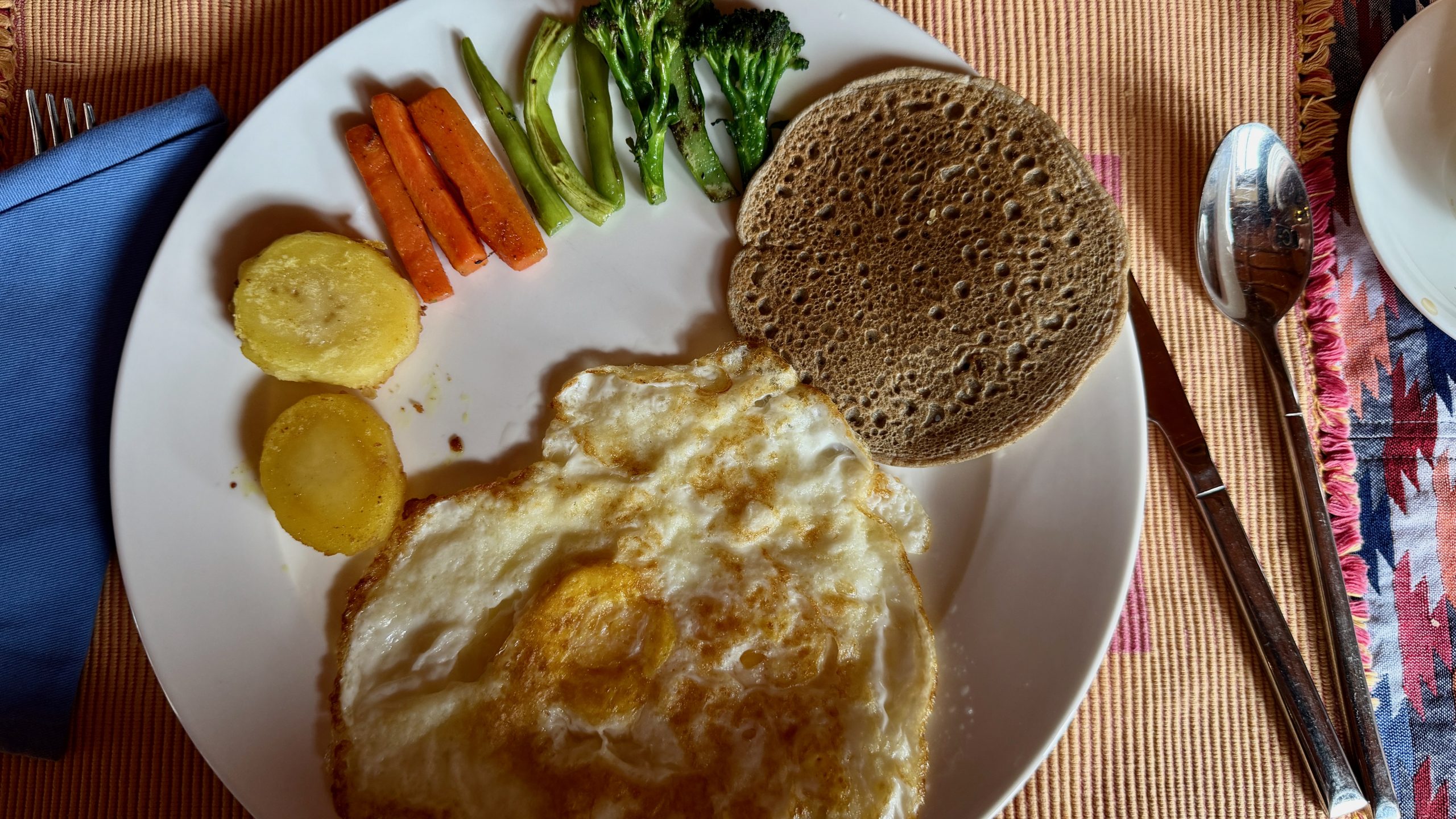
Although the morning was damp from the night, it was generally not bad. And so, after a delicious breakfast, we set off in high spirits on a hike to the Rinchen Sangpo Cave. However, we first made a stop at the local Bon monastery. There was a monk there who performed all the rituals, but otherwise wore regular clothes and helped his family with the lodge and farming.
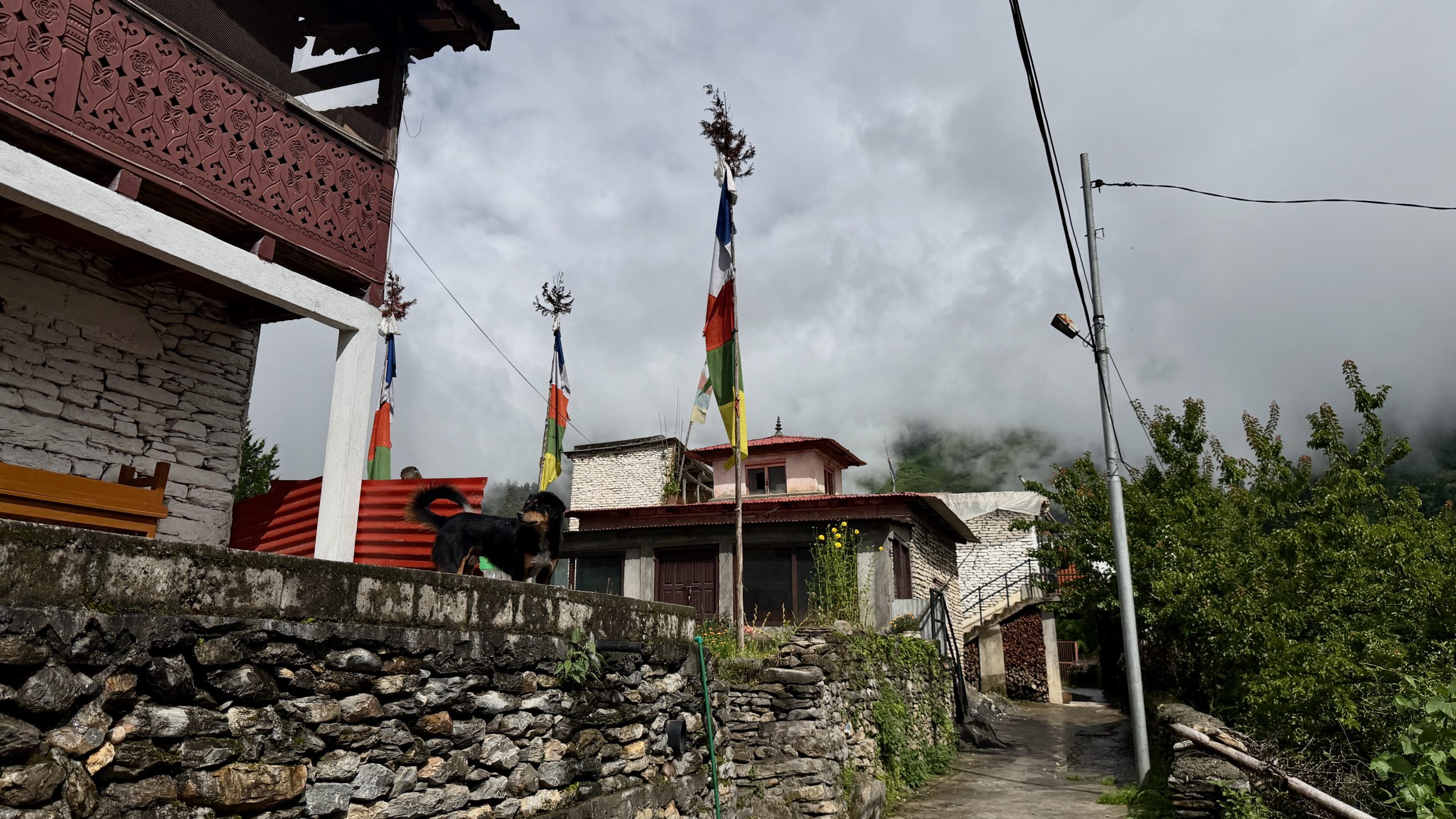
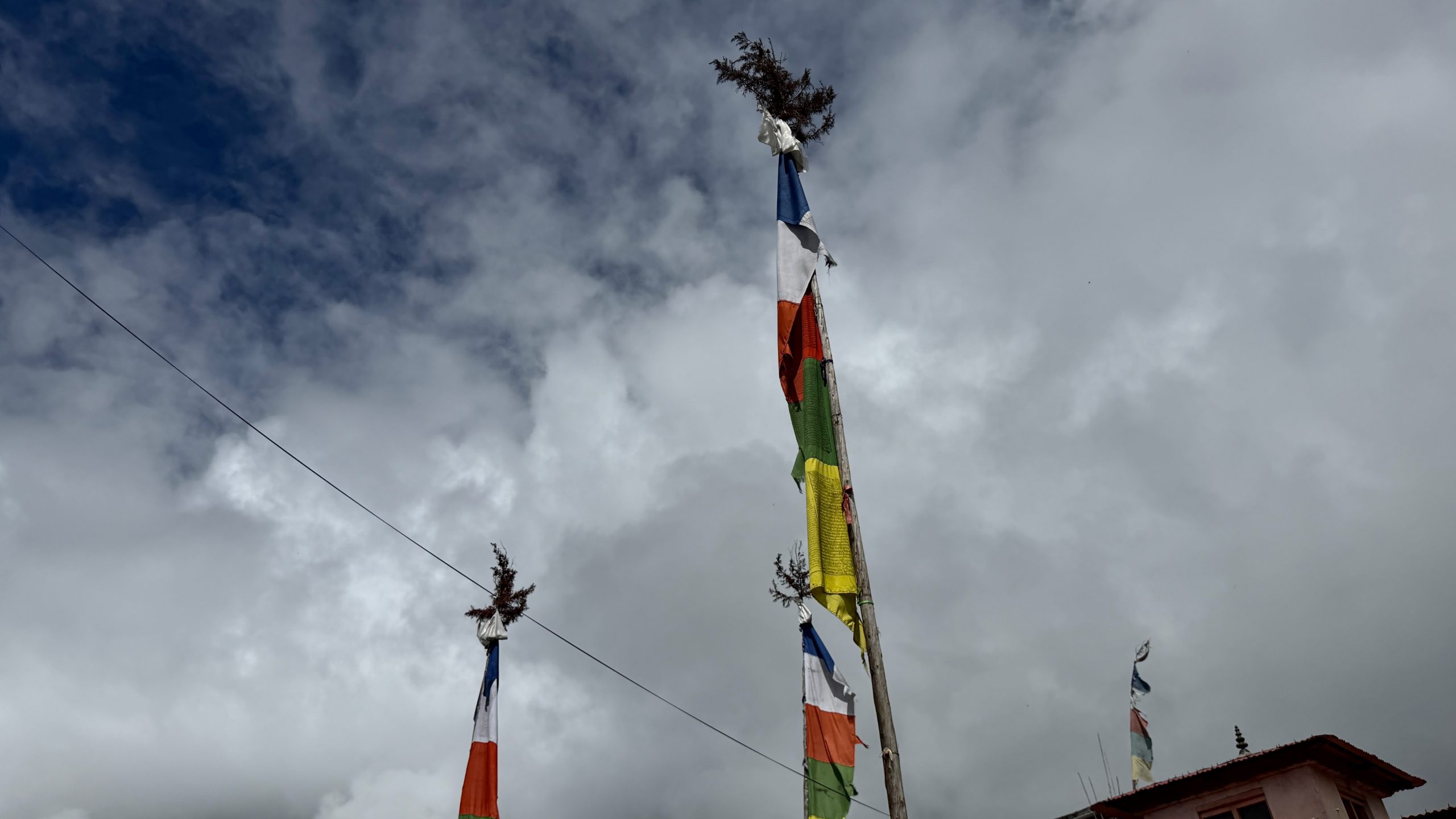
I just can’t get the differences between a Bön (monastery) and a Buddhist (monastery) straight at all, and so far I can only tell them apart by small external details—like how you always make circumambulations counterclockwise and that the monks have blue in their robes. In addition, there is more emphasis on harmony with nature spirits, ancestor worship, and oracle rituals. In any case, Tibetan Buddhism and Bön share quite a few similarities—one could even view Bön as another school of thought. Inside the monastery, there was a statue of the monastery founder as well as some very old statues and a prayer wheel.
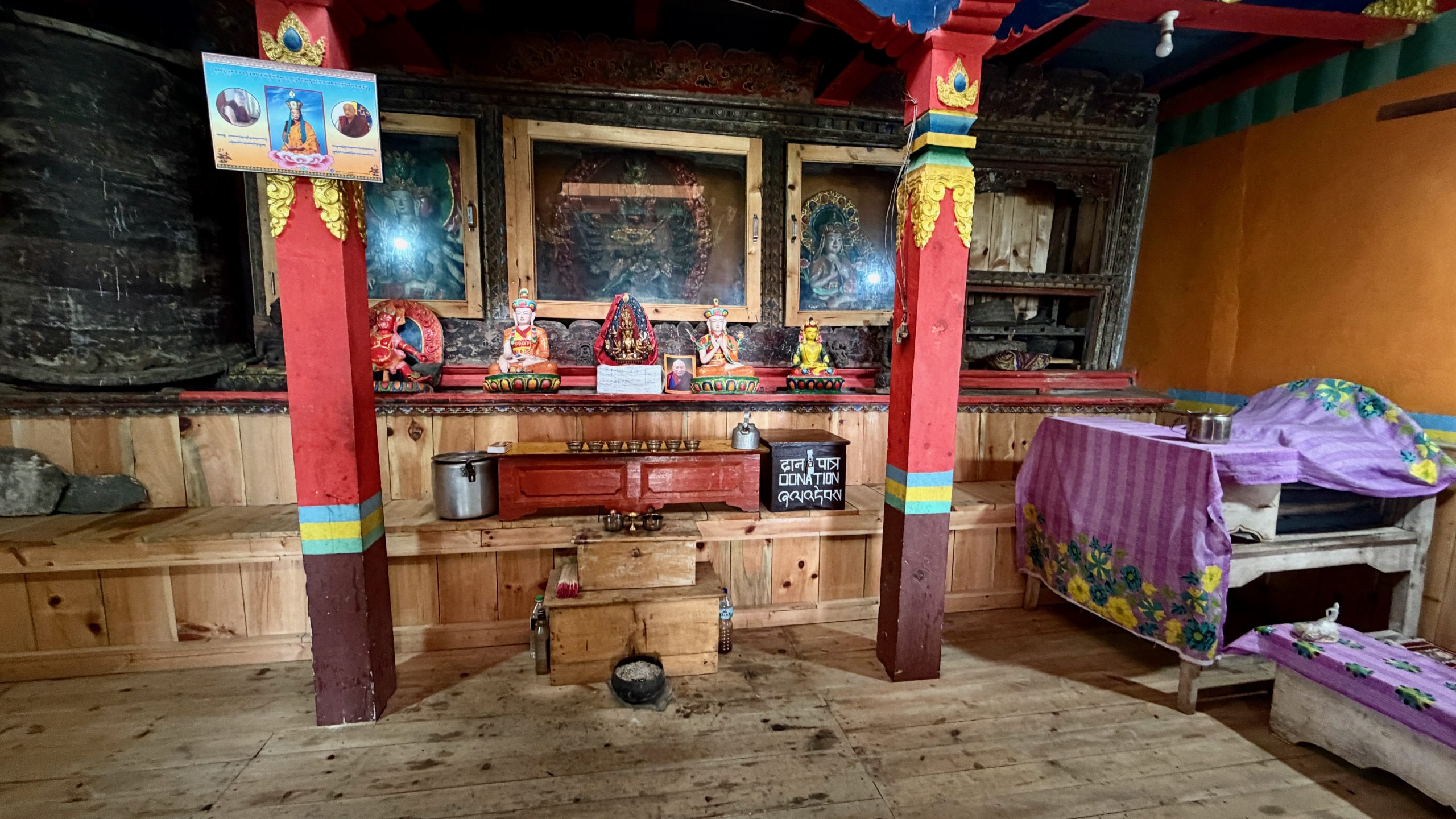
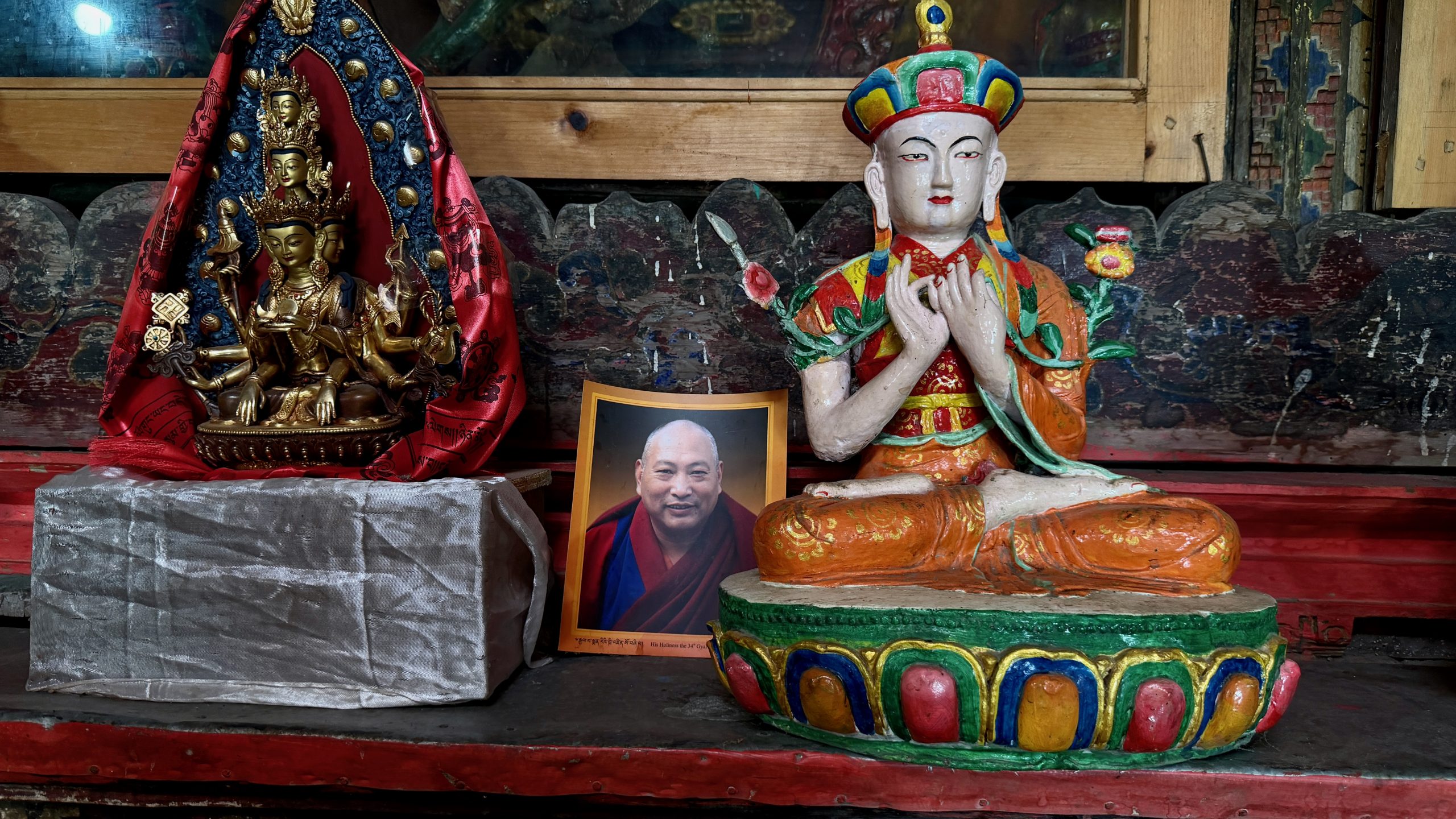
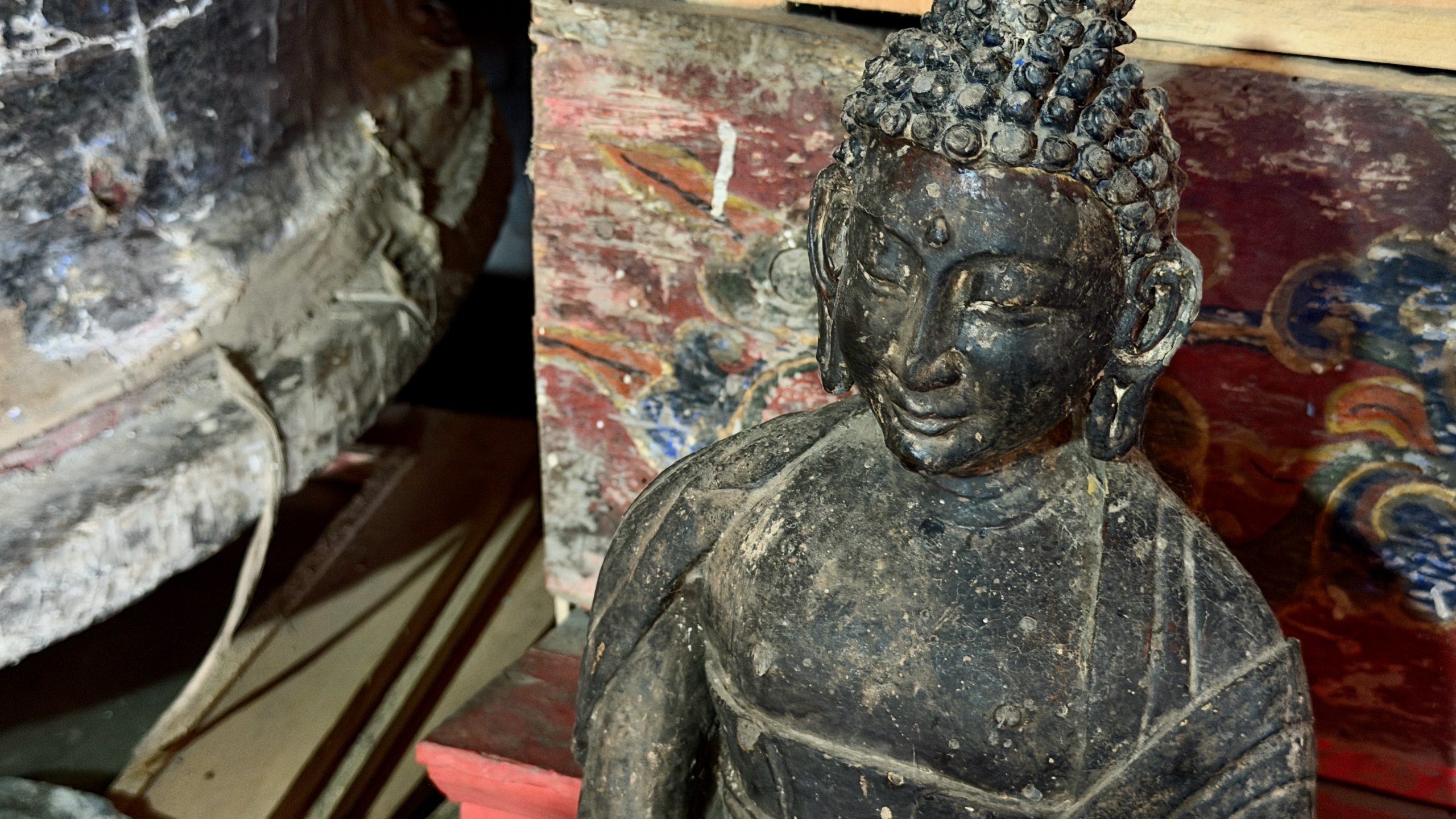
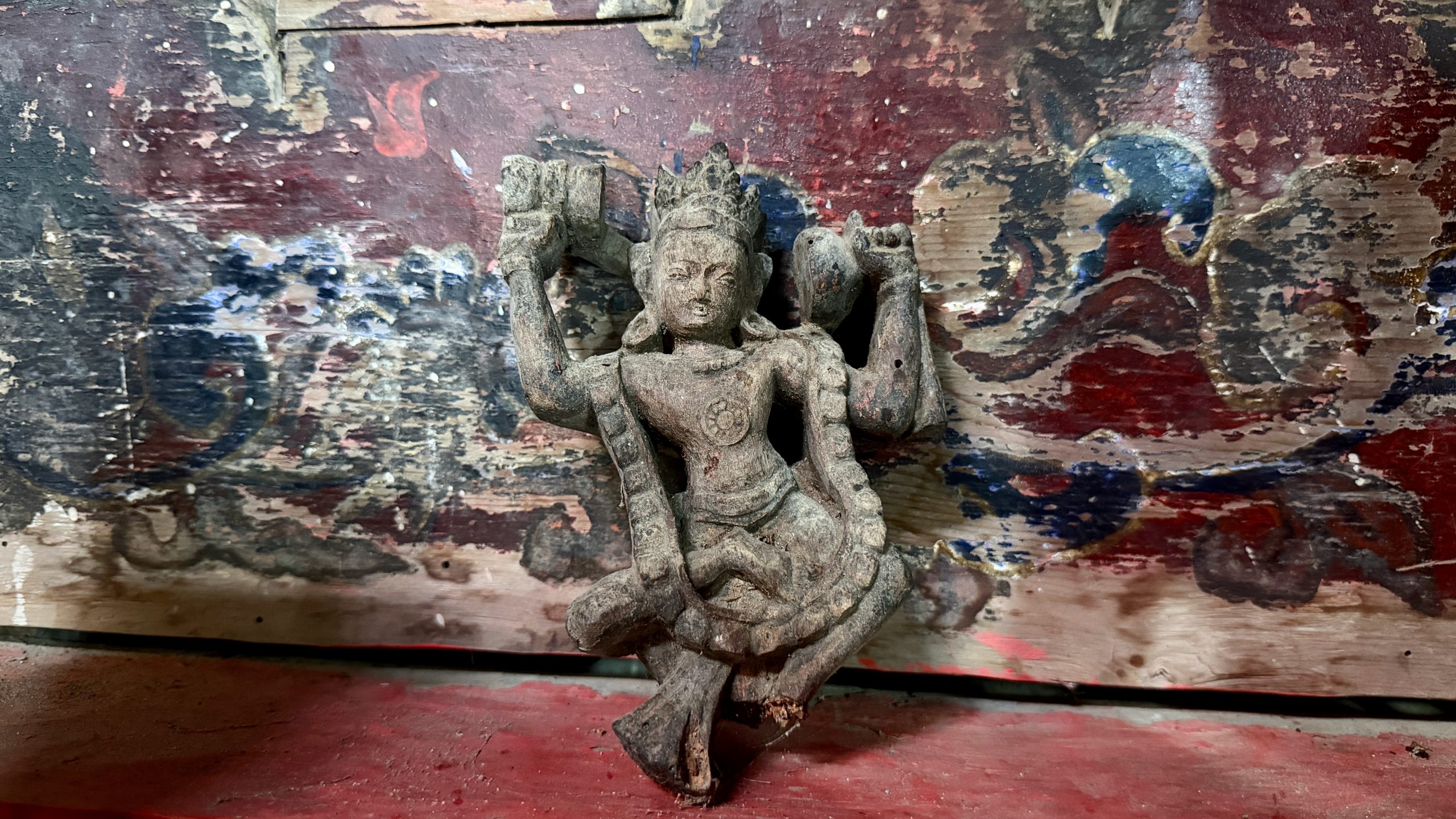
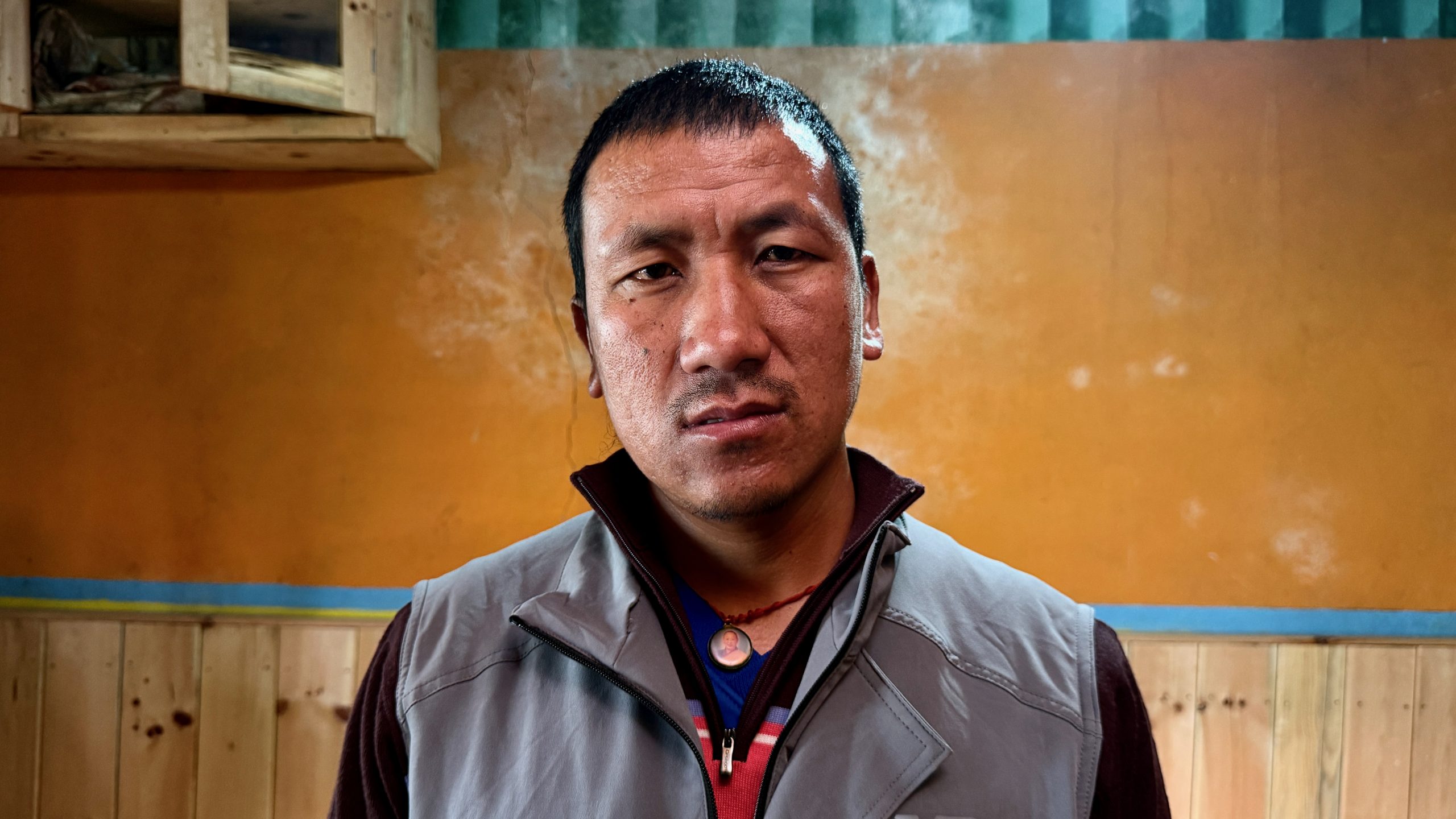
As a young man, the monk was sent to Solan in India, where he studied at the monastery. Then he continued his studies further and is now back home taking care of his native monastery.
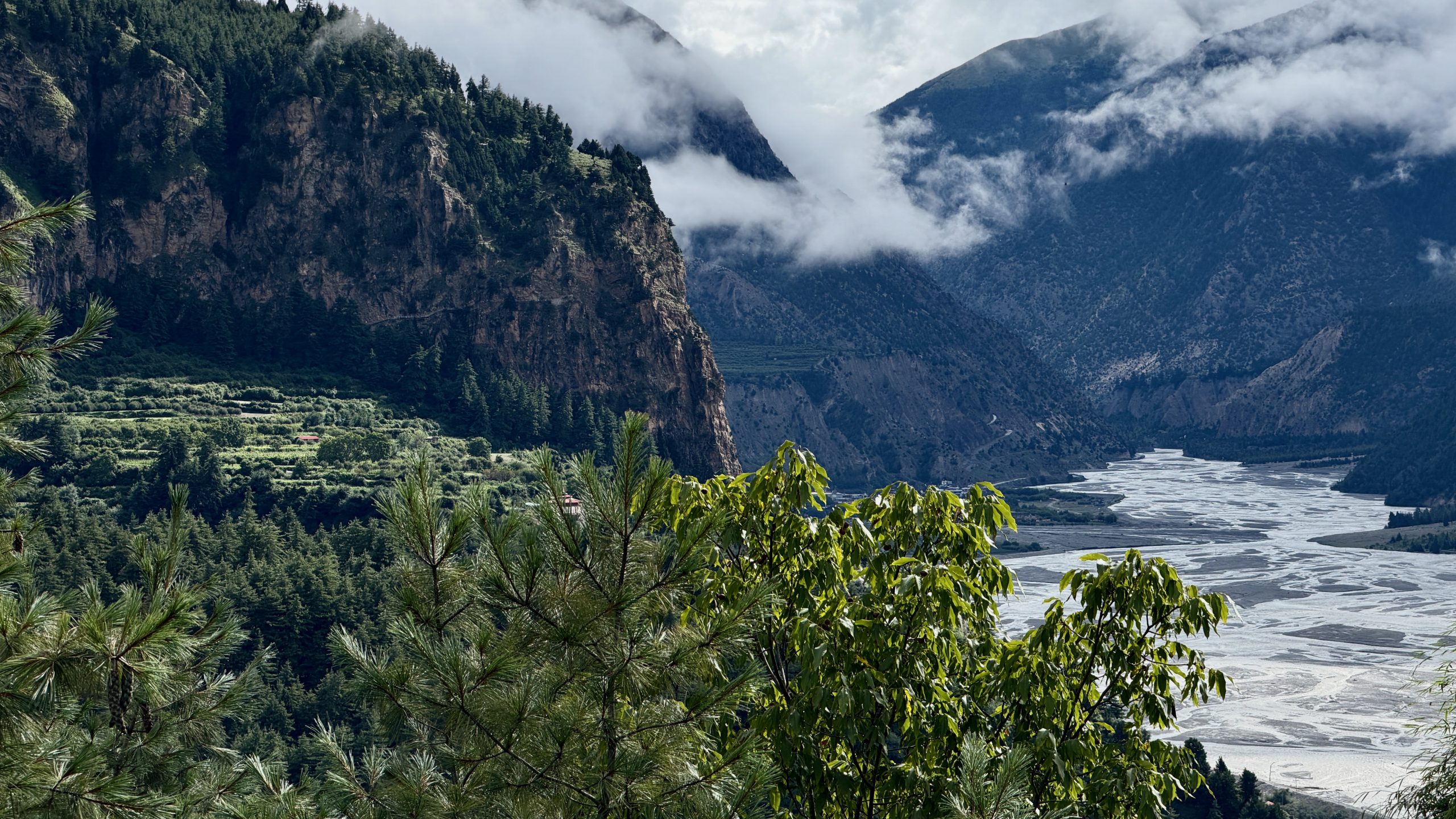
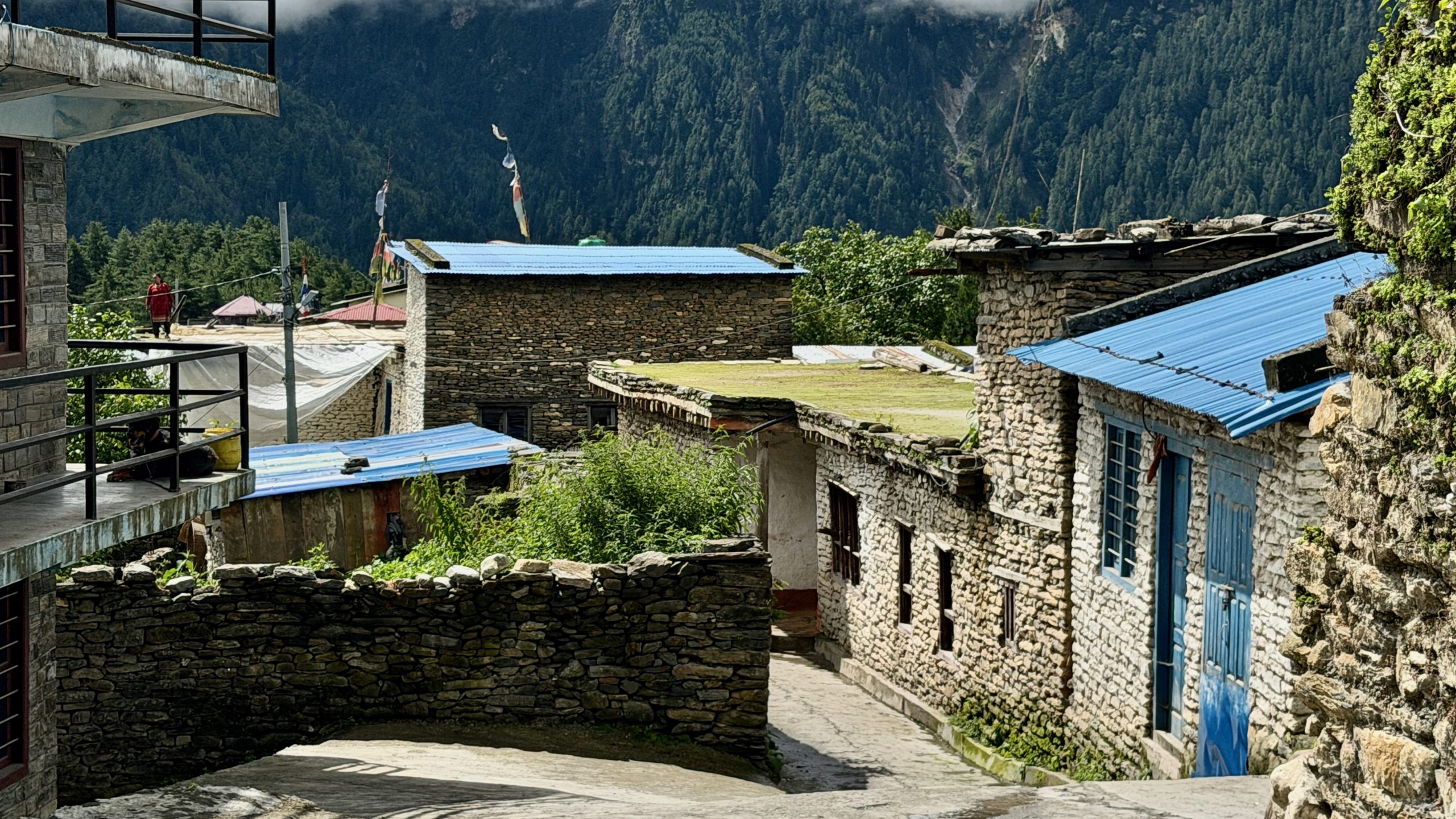
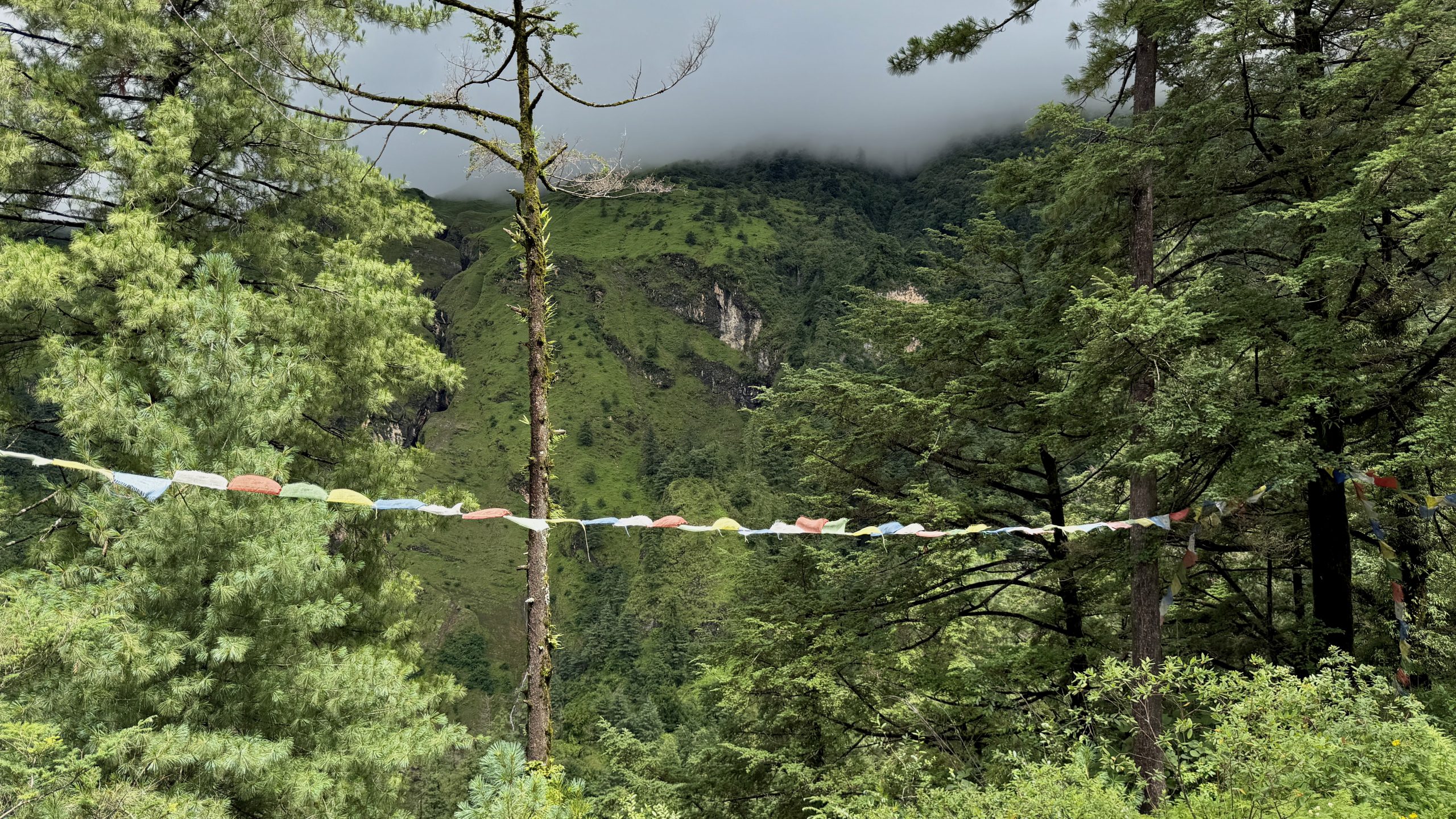
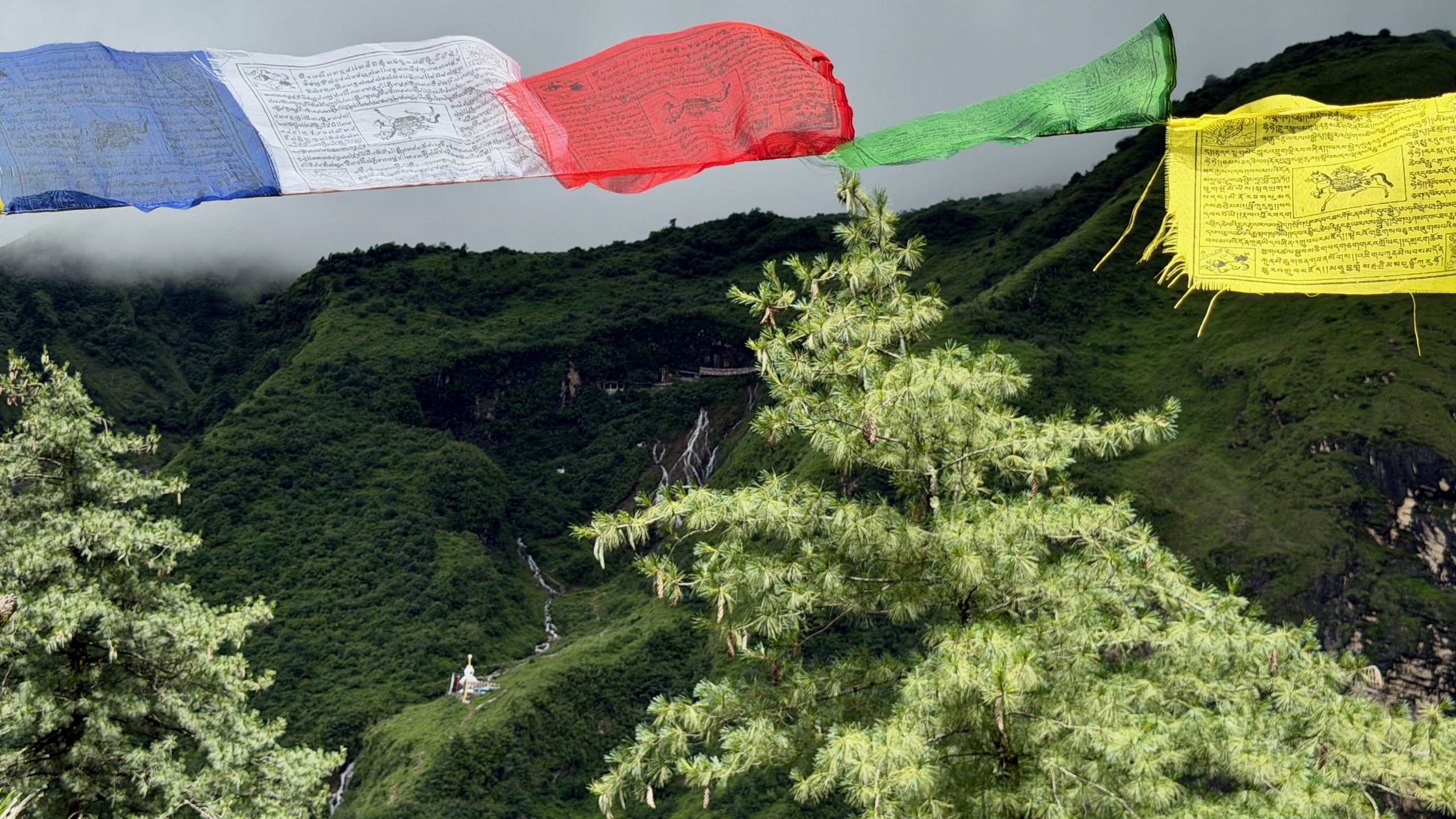
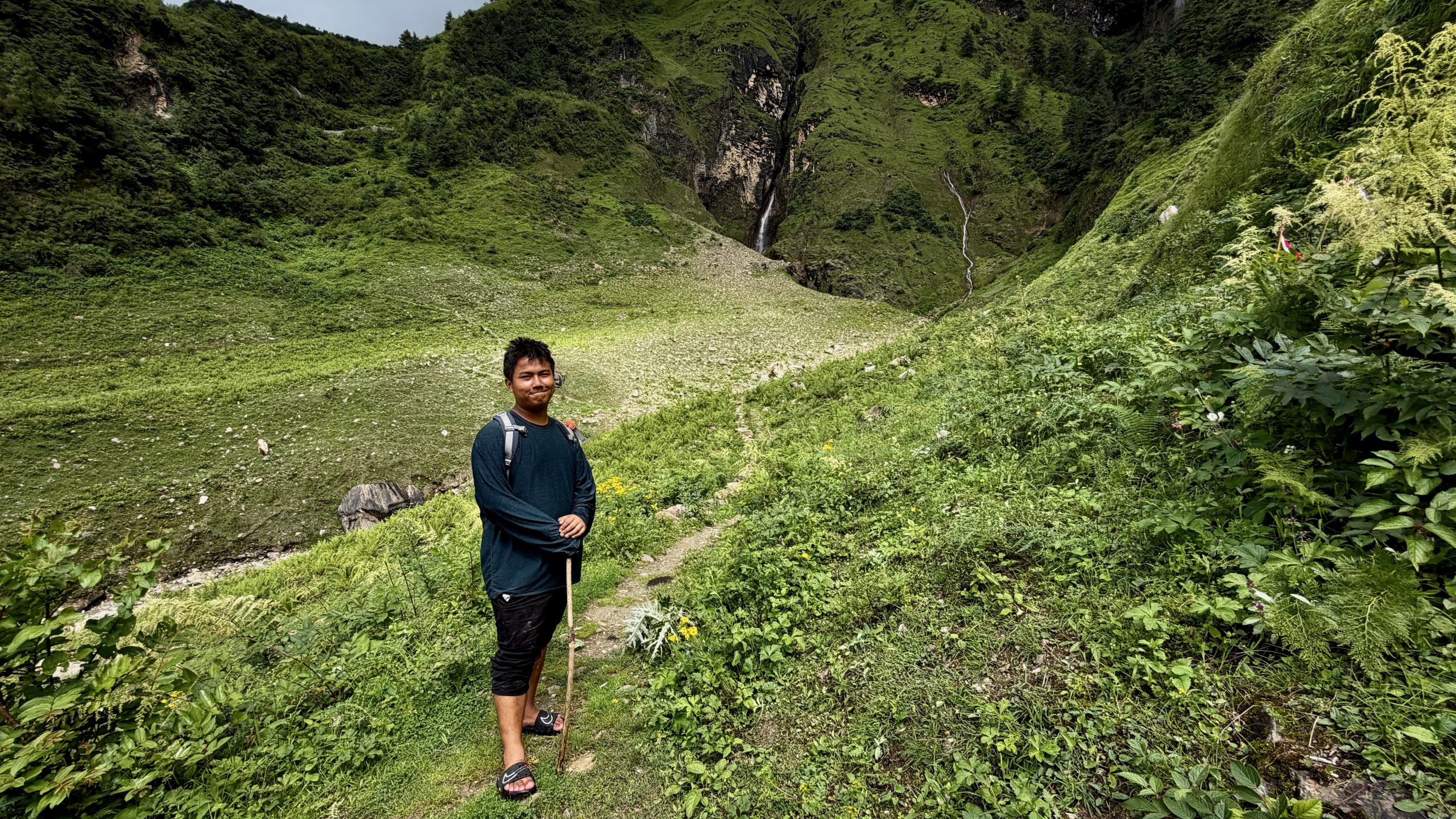
Then we started the actual hike. It went through the village, through a forest slightly uphill, down again to a river with a bridge, and then a bit steeper upward past a stupa. The cave is situated quite spectacularly in an impressive landscape, and the hike was fantastic.
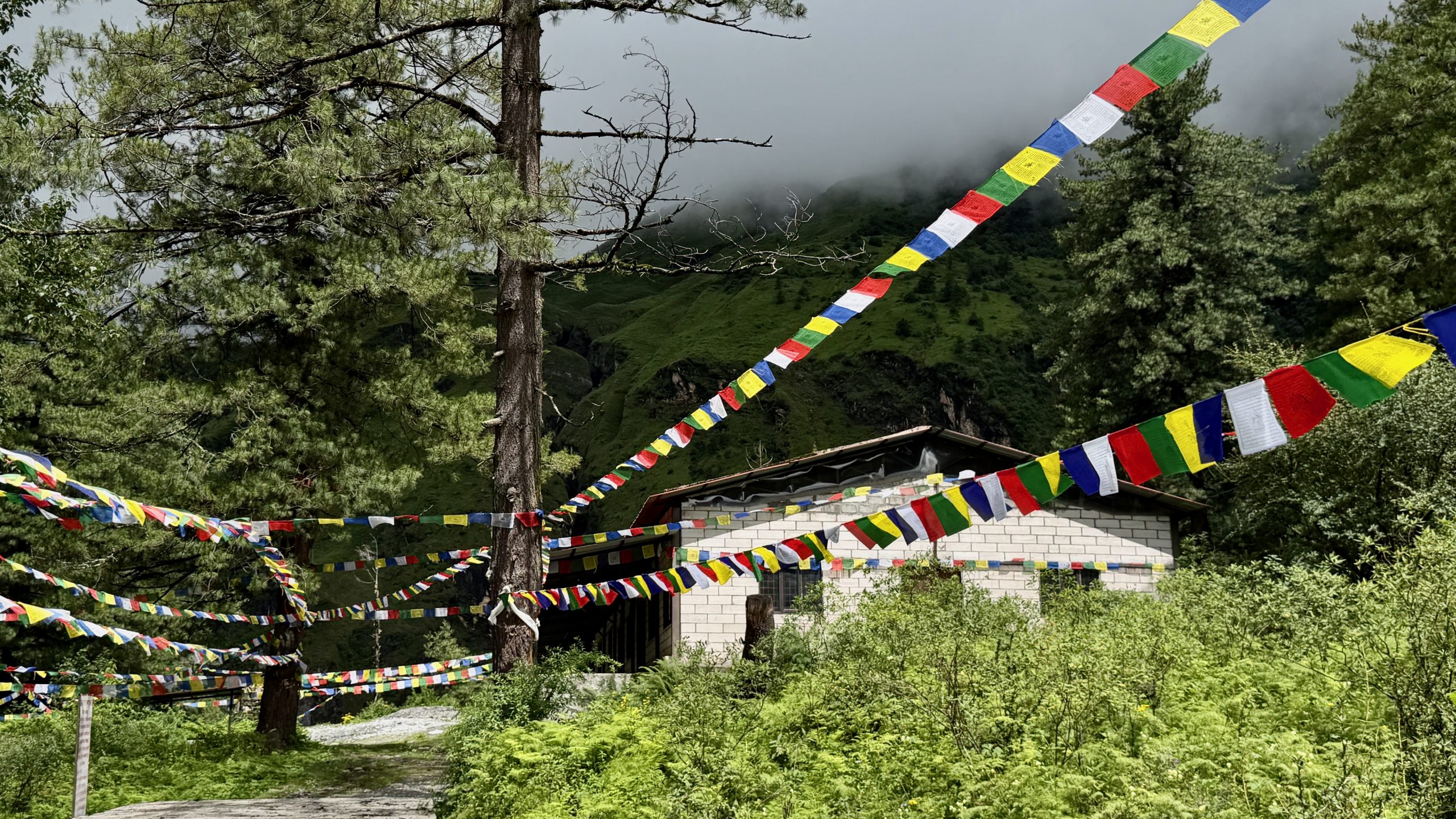
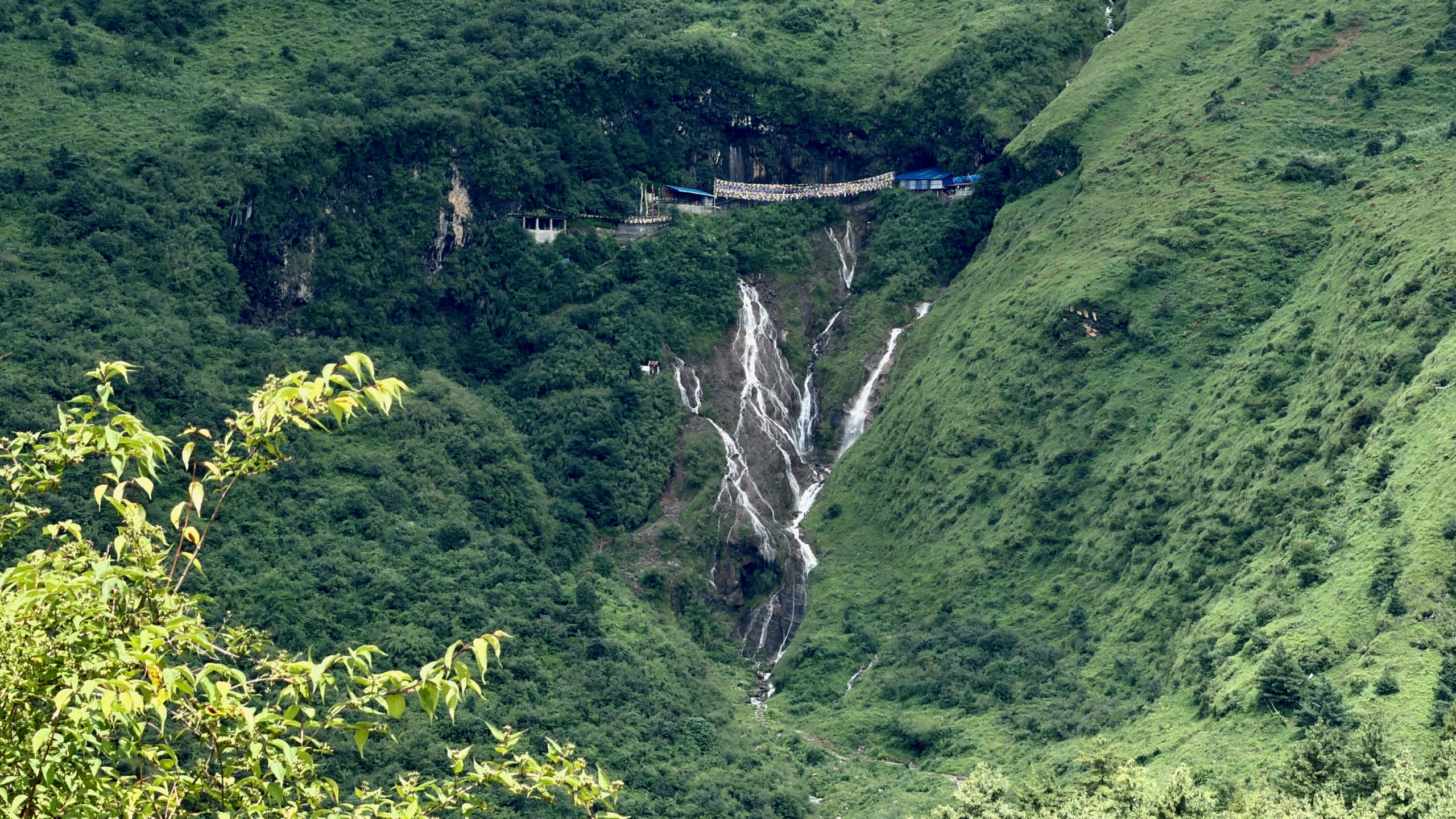
Things got very exciting at the cave. Water was gushing down like mad, making the approach extremely slippery while water was coming down from above as well. Getting there was really tricky, but we all managed it. There wasn’t much chance for taking photos there.
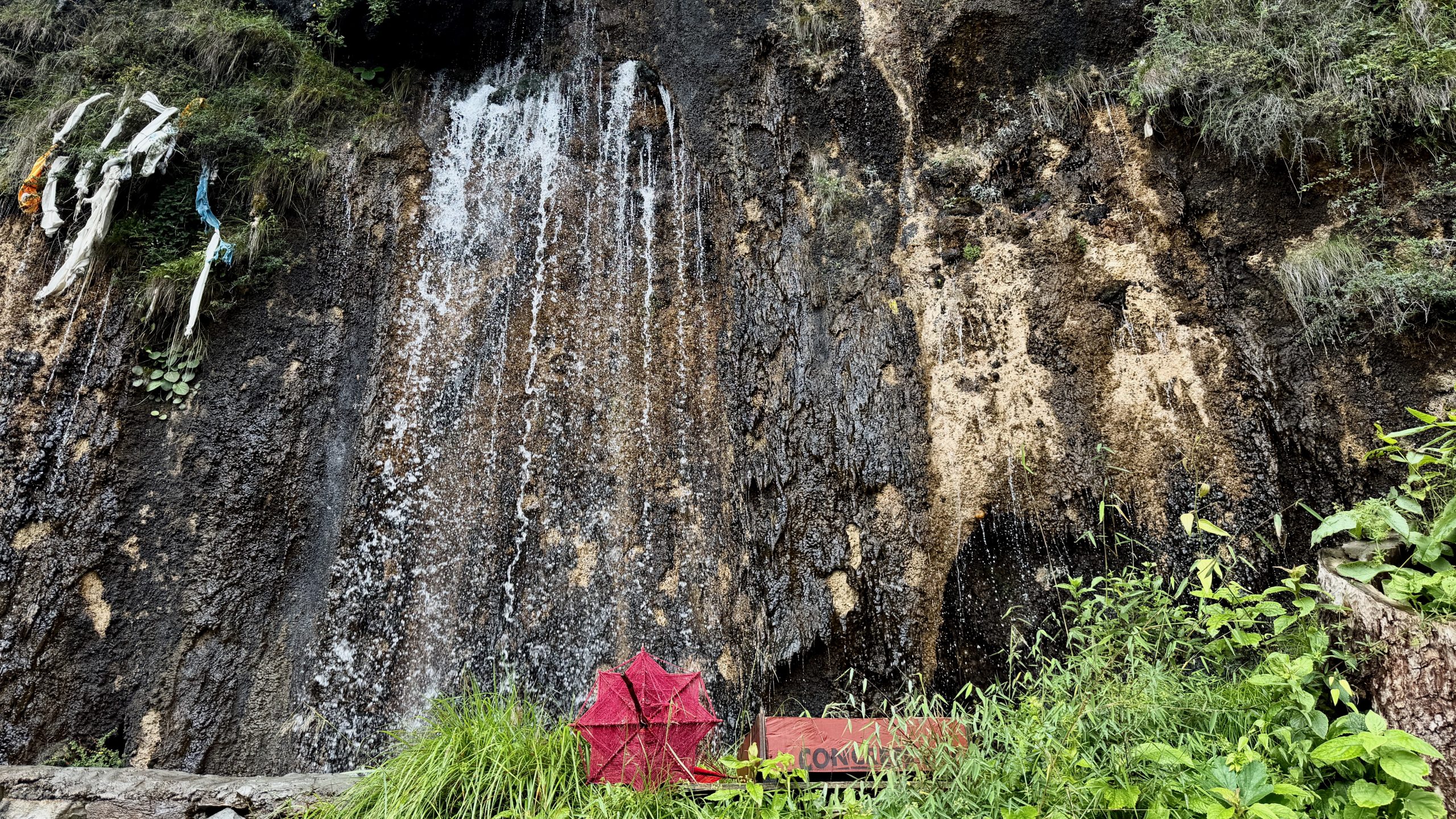
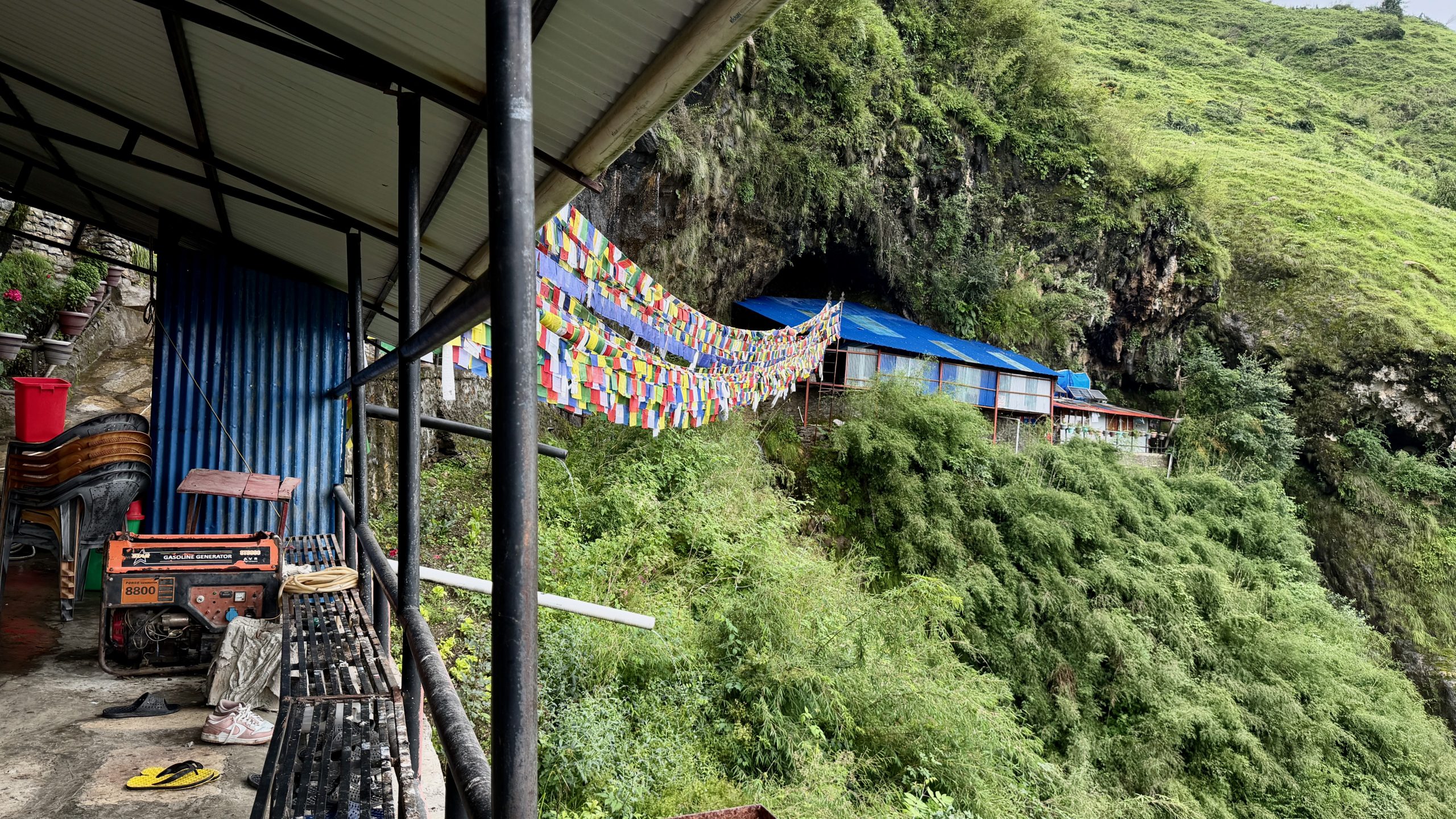
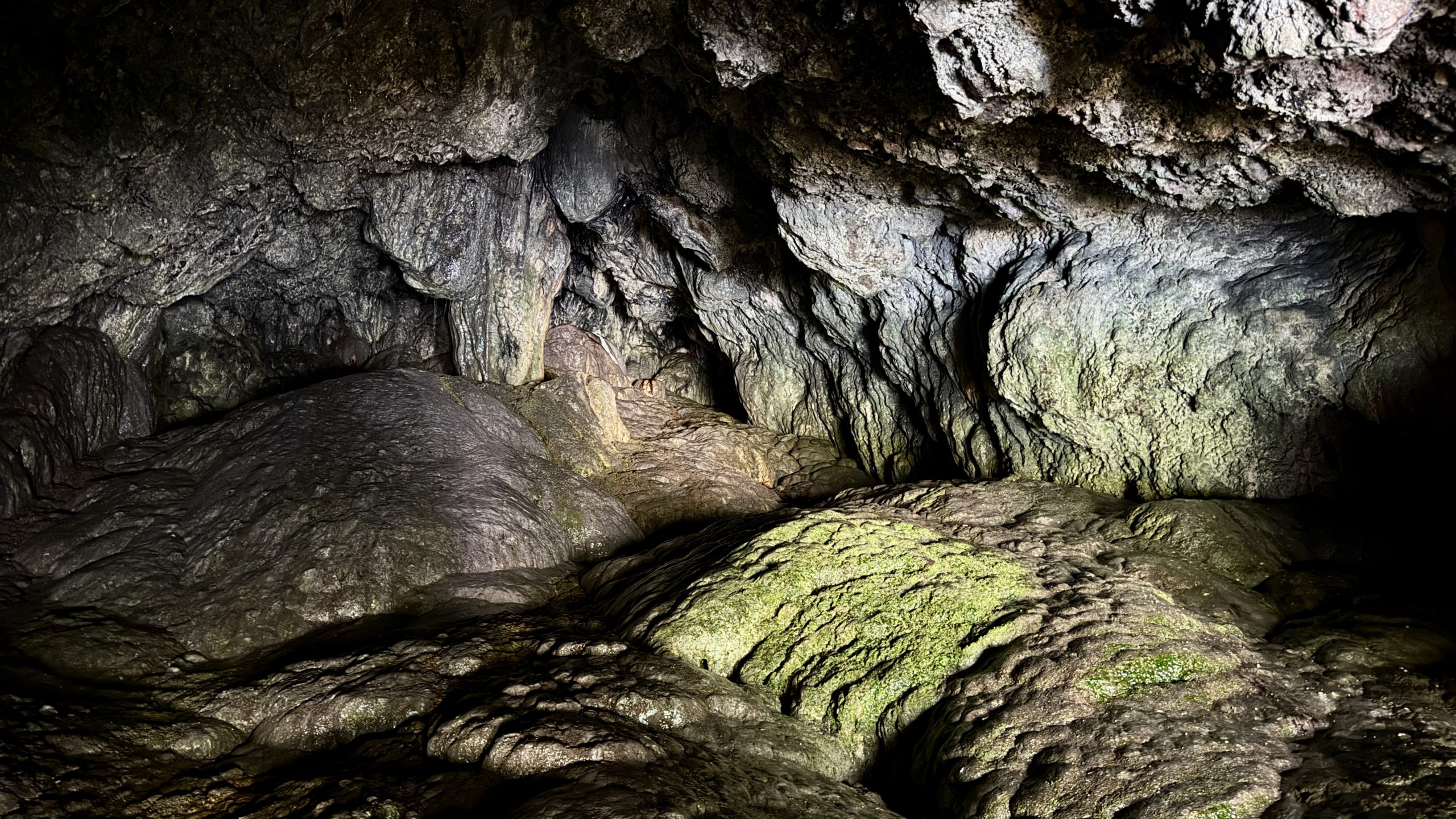
Regarding the cave, it is said: In Tantric Buddhism, it is considered a sacred place of the perfect union of primordial male and female forces (Yab-Yum). In the mystical interior of the rock grotto, the solid stone walls symbolize the male method, while the constantly flowing spring water stands for female wisdom. Particularly impressive are the naturally formed stalagmites and stalactites (Rangjung), whose shapes bear a striking resemblance to male and female anatomy as well as brain-like structures. For pilgrims, this meeting point of the two polarities embodies a profound source of fertility, spiritual transformation, and enlightenment. For an uncultured person like me, however, it had little effect, and my high expectations were somewhat disappointed. I had imagined a large, walkable cave, but it turned out to be just a slippery little cave hole.
But thanks to the impressive landscape and the dangerous slipping experience, the hike was definitely worth it. We then went back down and stopped in at the family home of the Bön monk, where our driver Sankar helped with the food preparation.
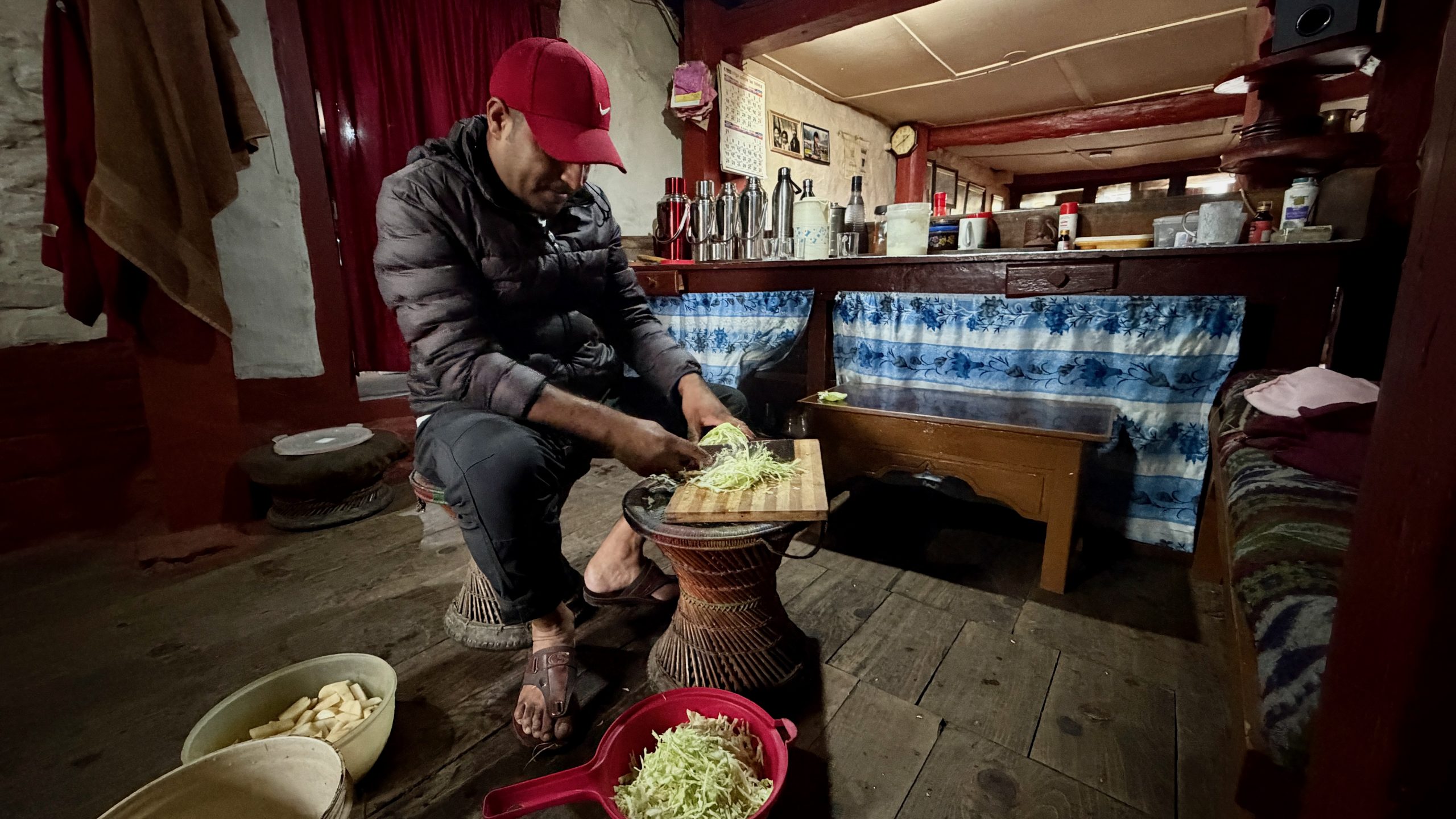
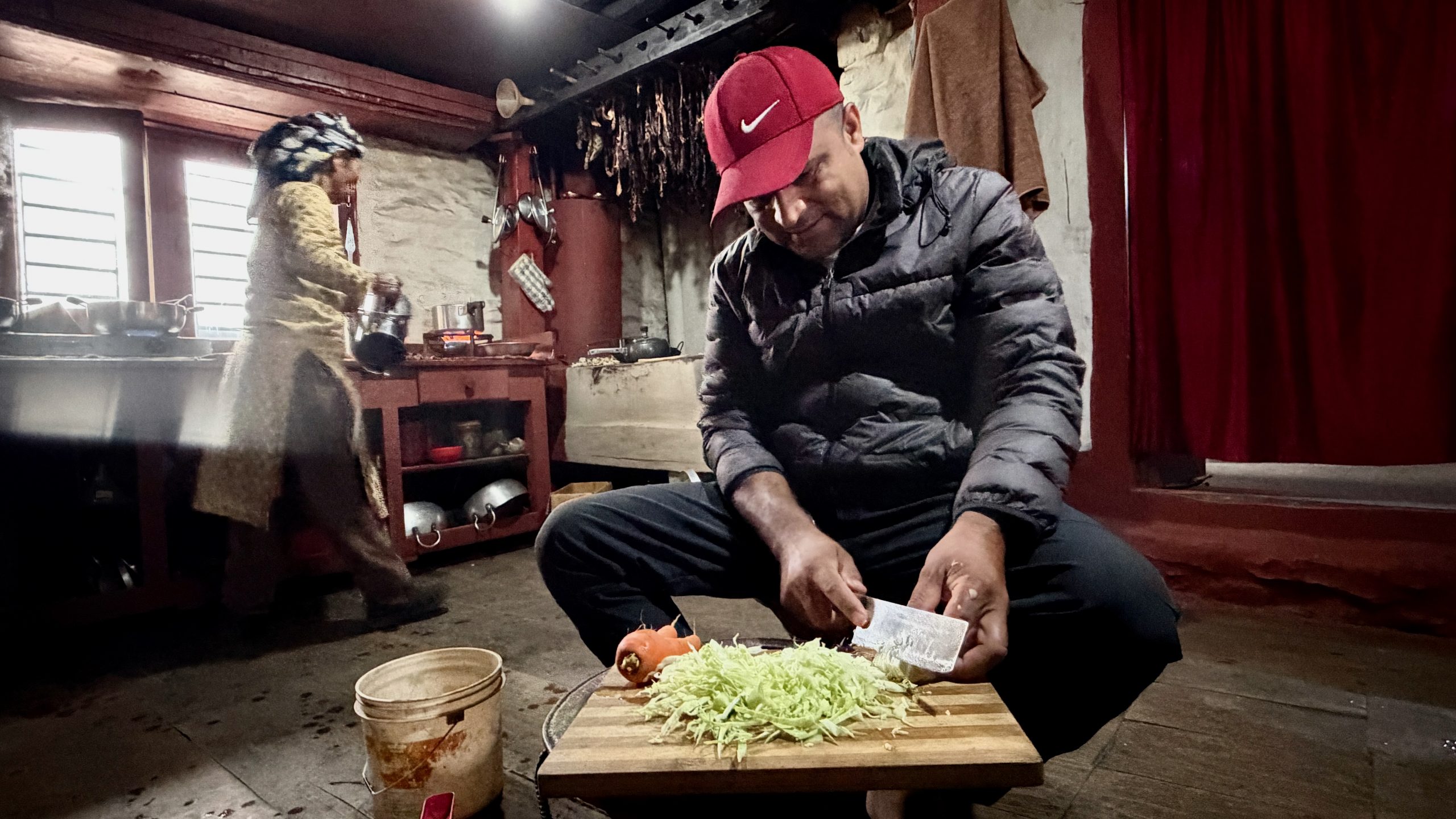
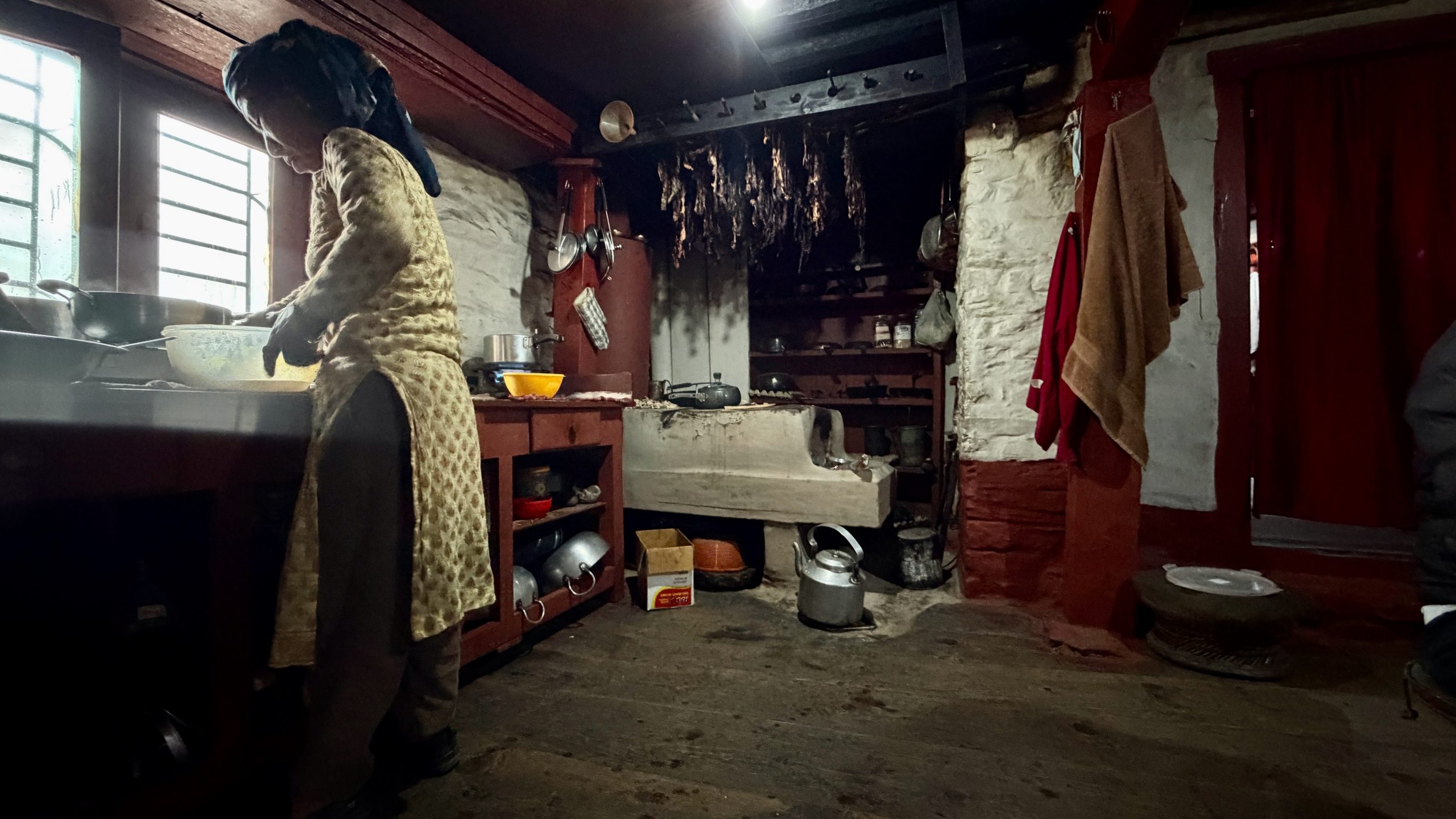
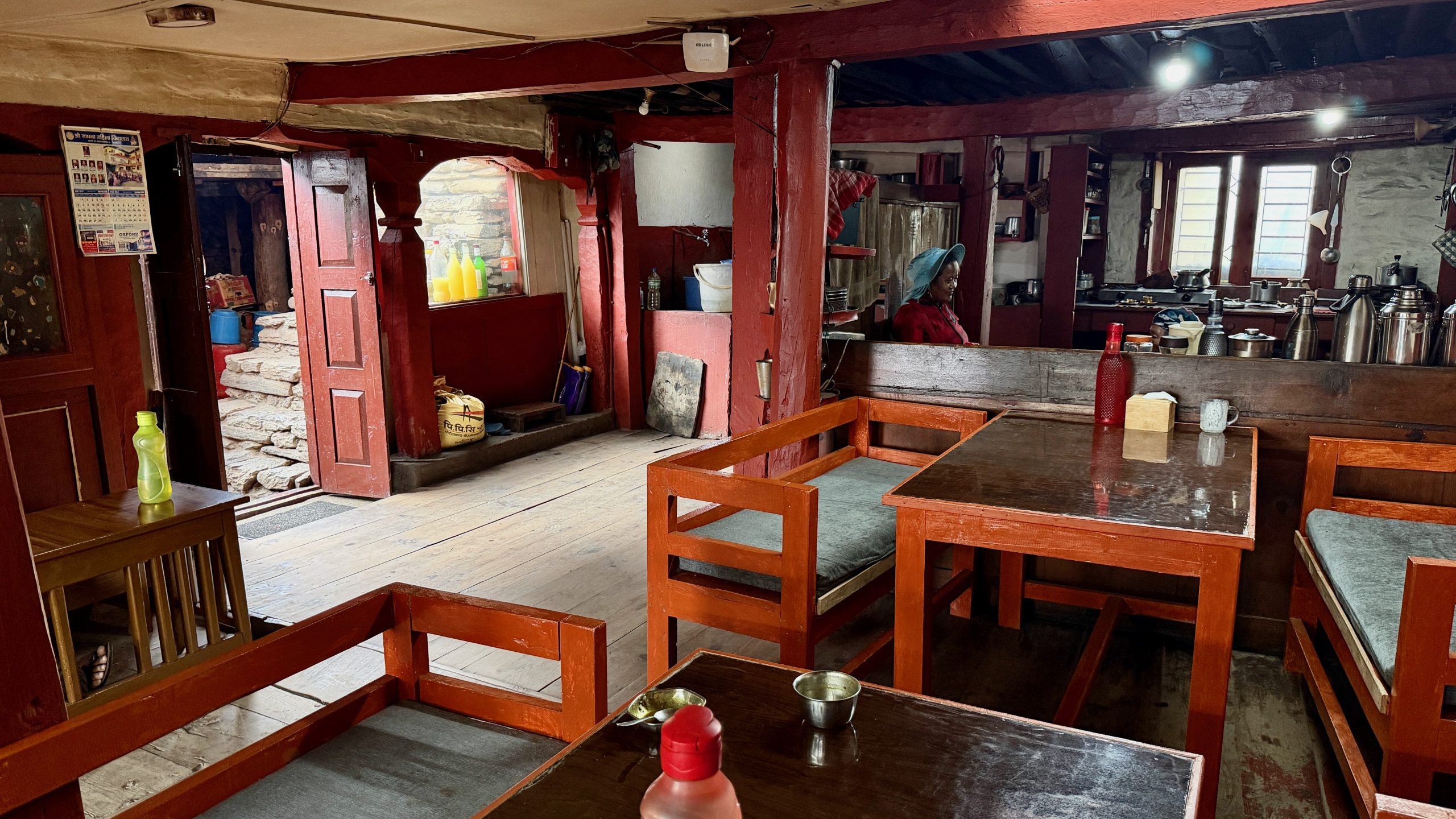
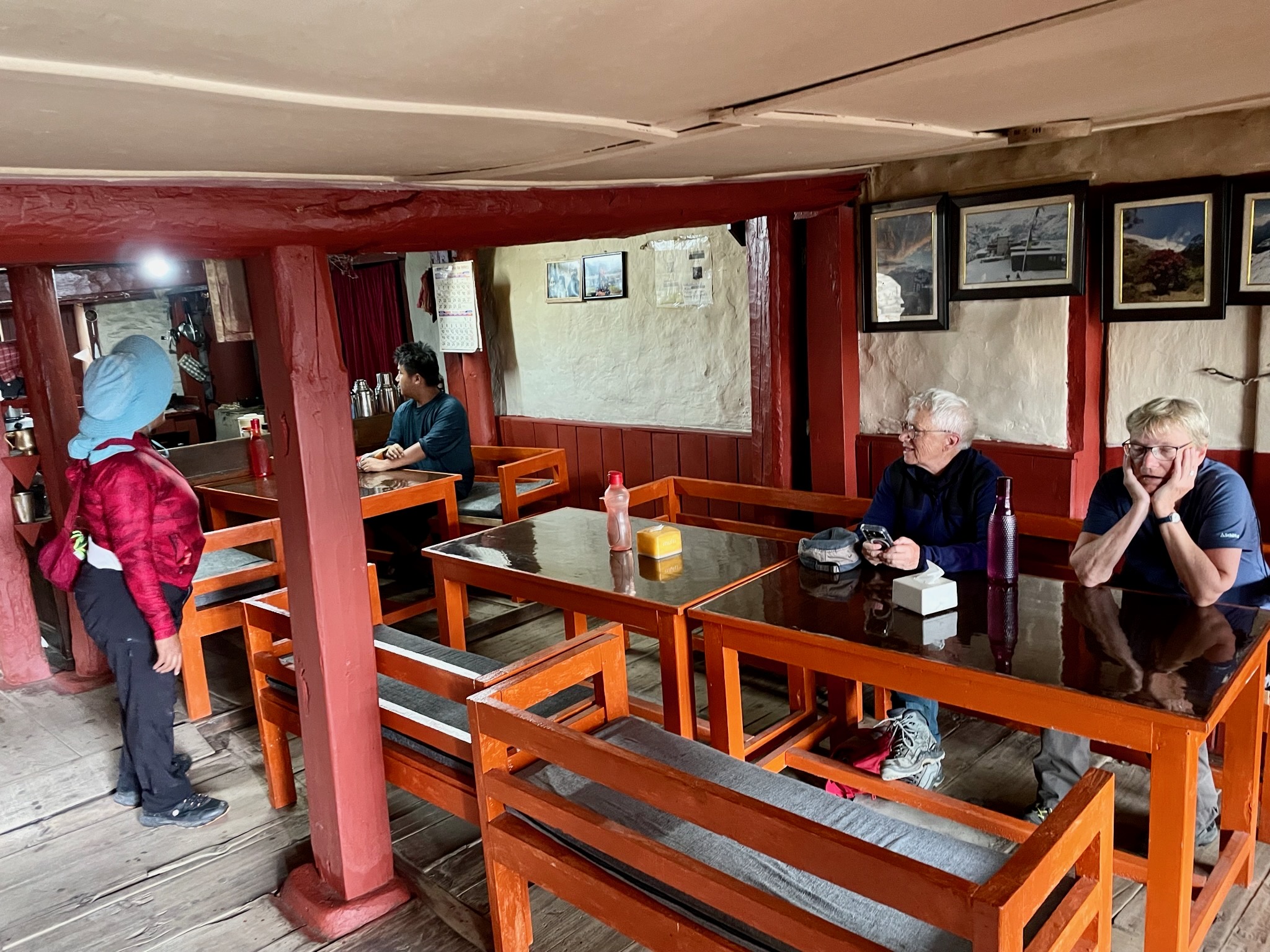
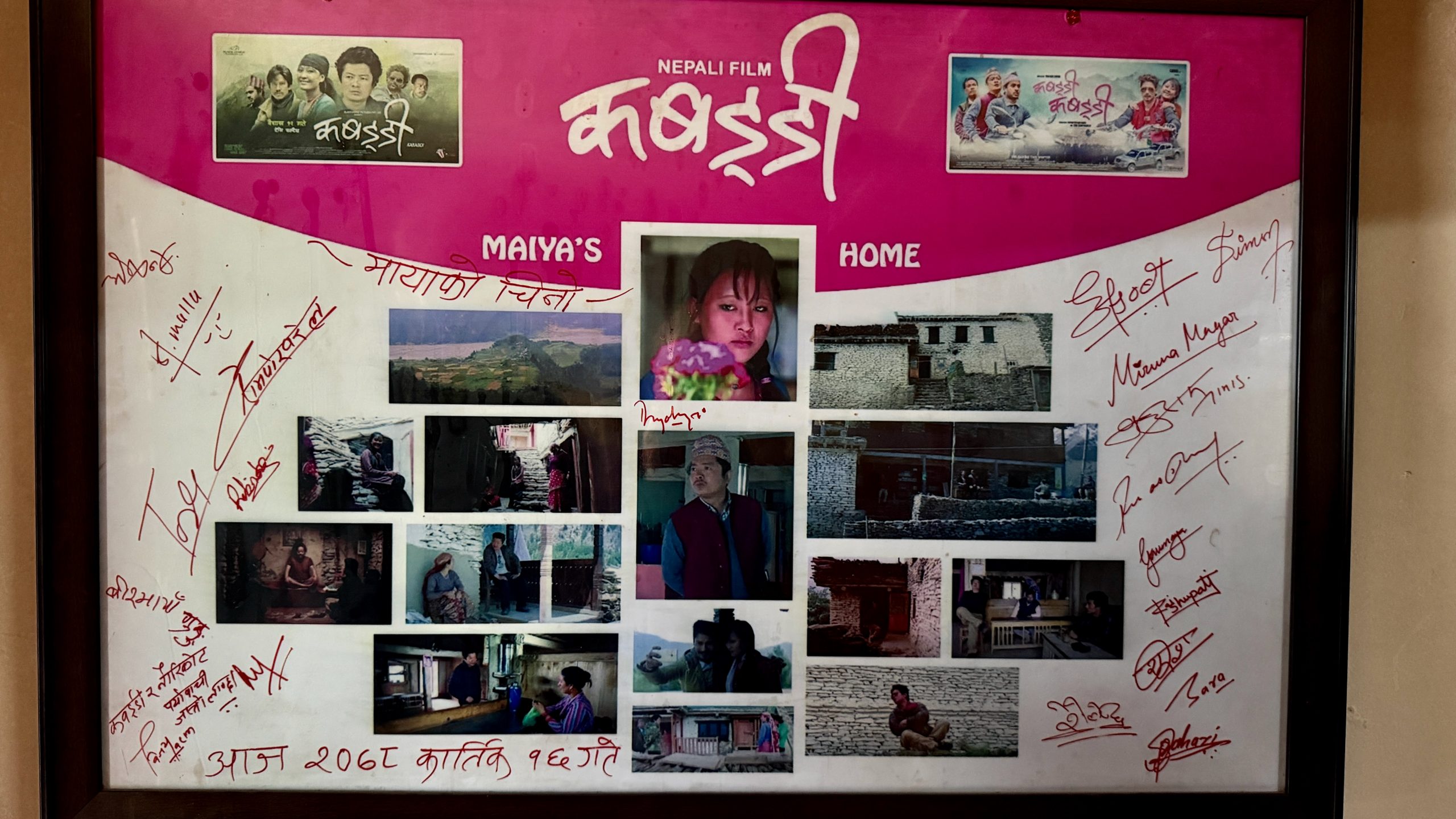
We really liked it there. Cozy, interesting, and friendly. And we learned that filming for the Nepalese series Kabaddi had taken place here.
Then we got into the car and drove to Tukuche to a rather rarely visited Sambha monastery with a monk who radiated a very friendly, positive aura. He was there alone (it is customary for only one lama to look after the monastery and perform the rituals on a rotating basis), but during the mask festival, lots of monks come to perform the dances. He is still quite young, studied at the Namdroling Monastery in southern India, and is now here where he will also learn the mask dances.
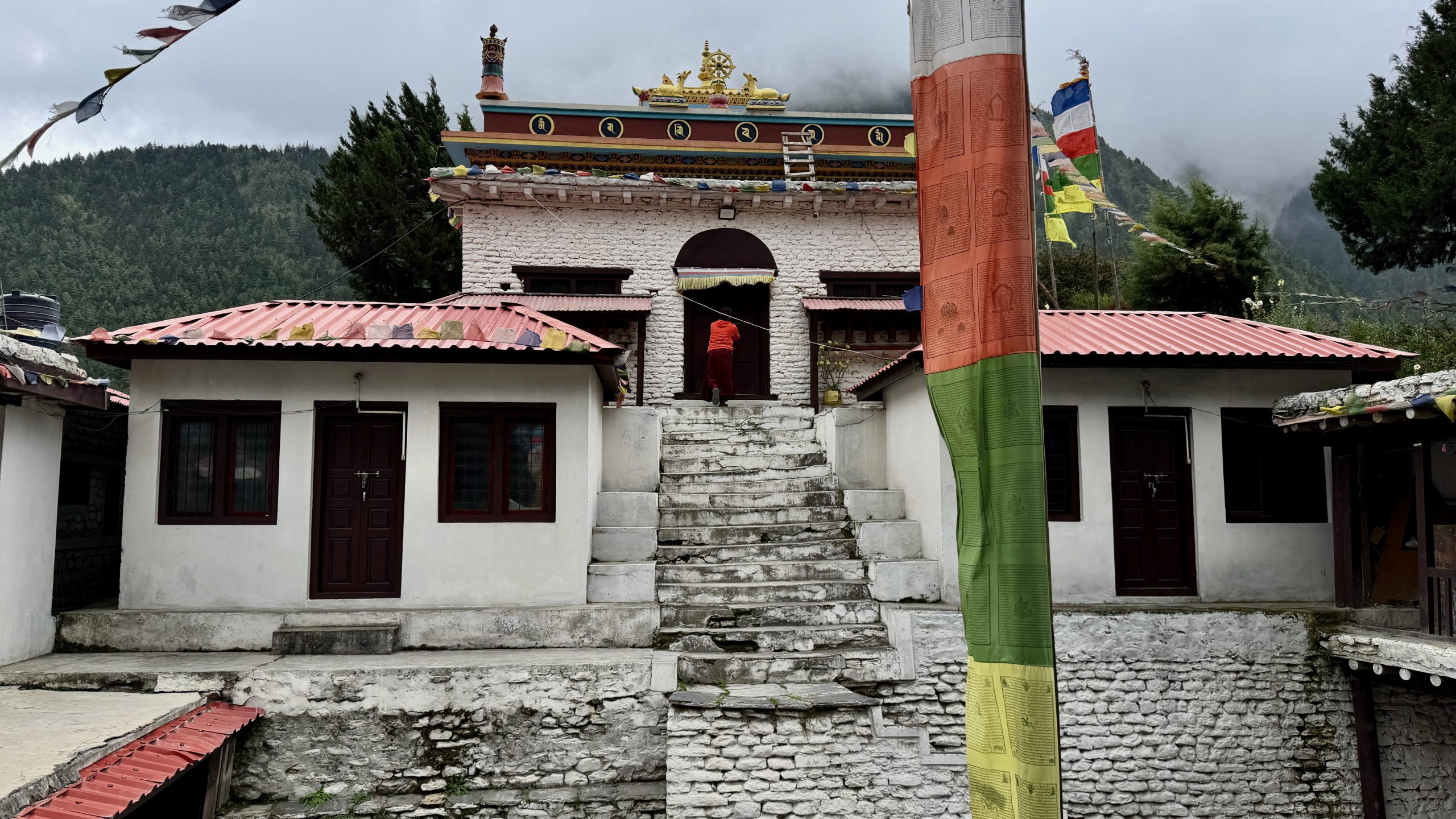
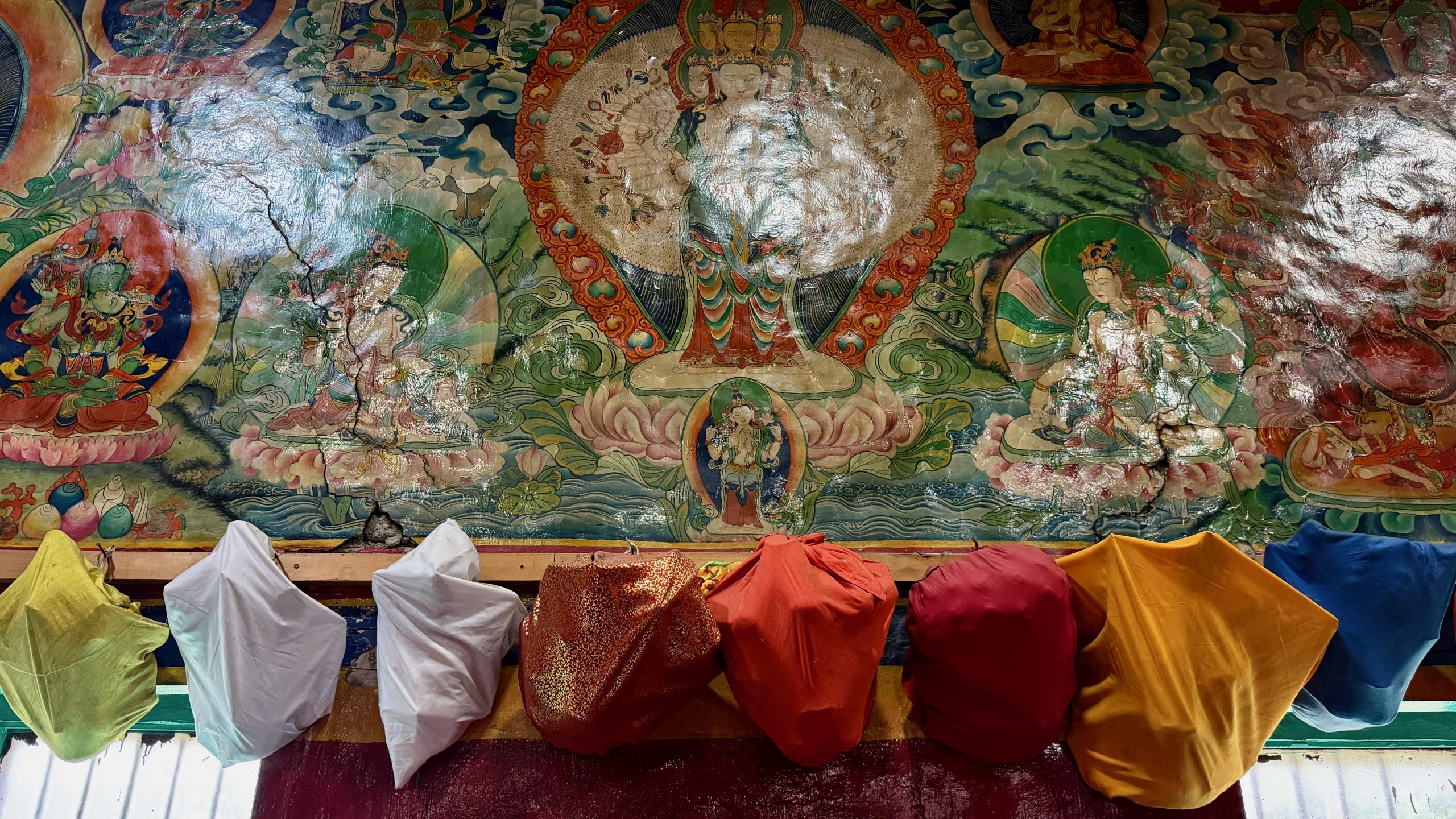
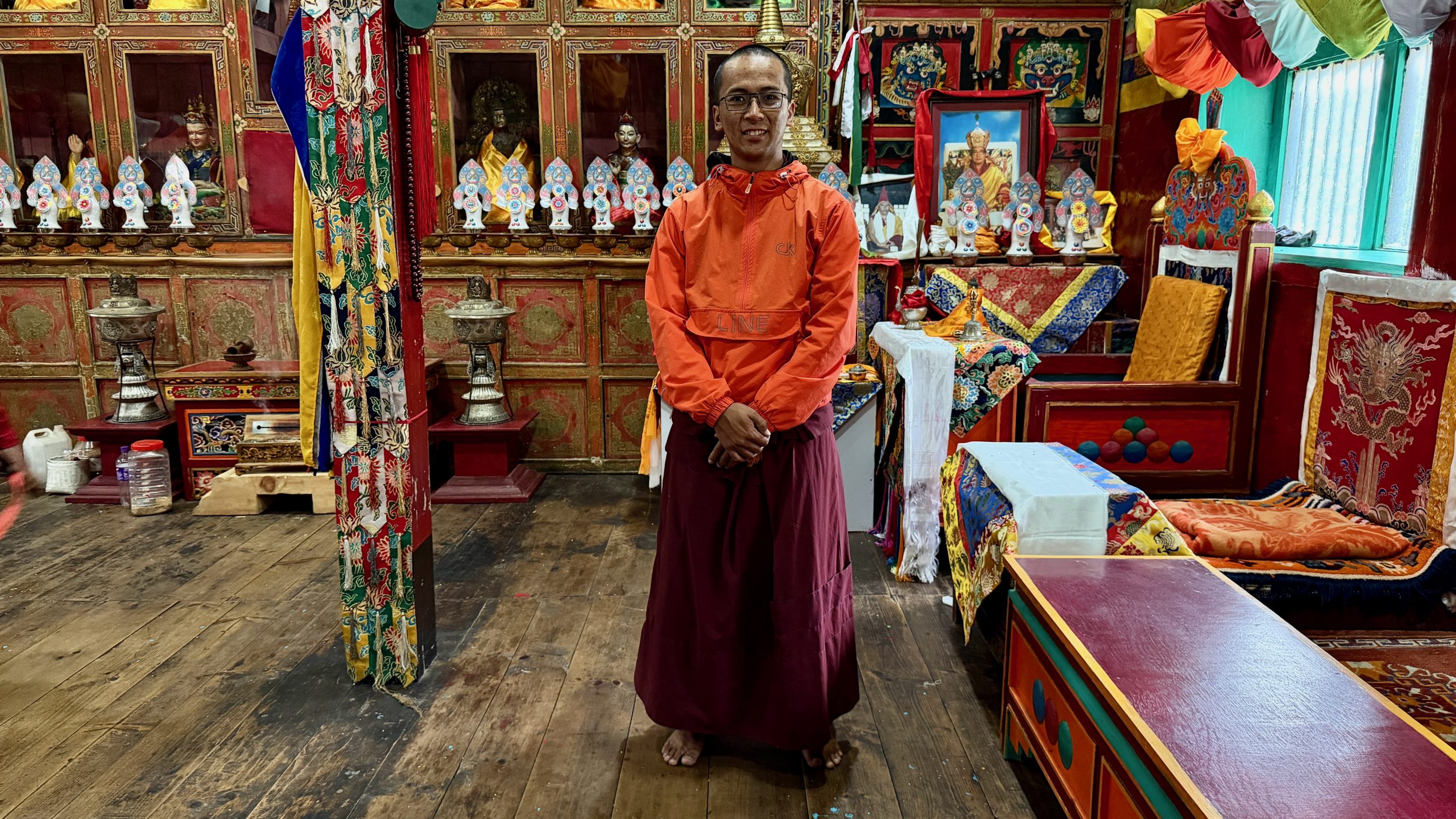
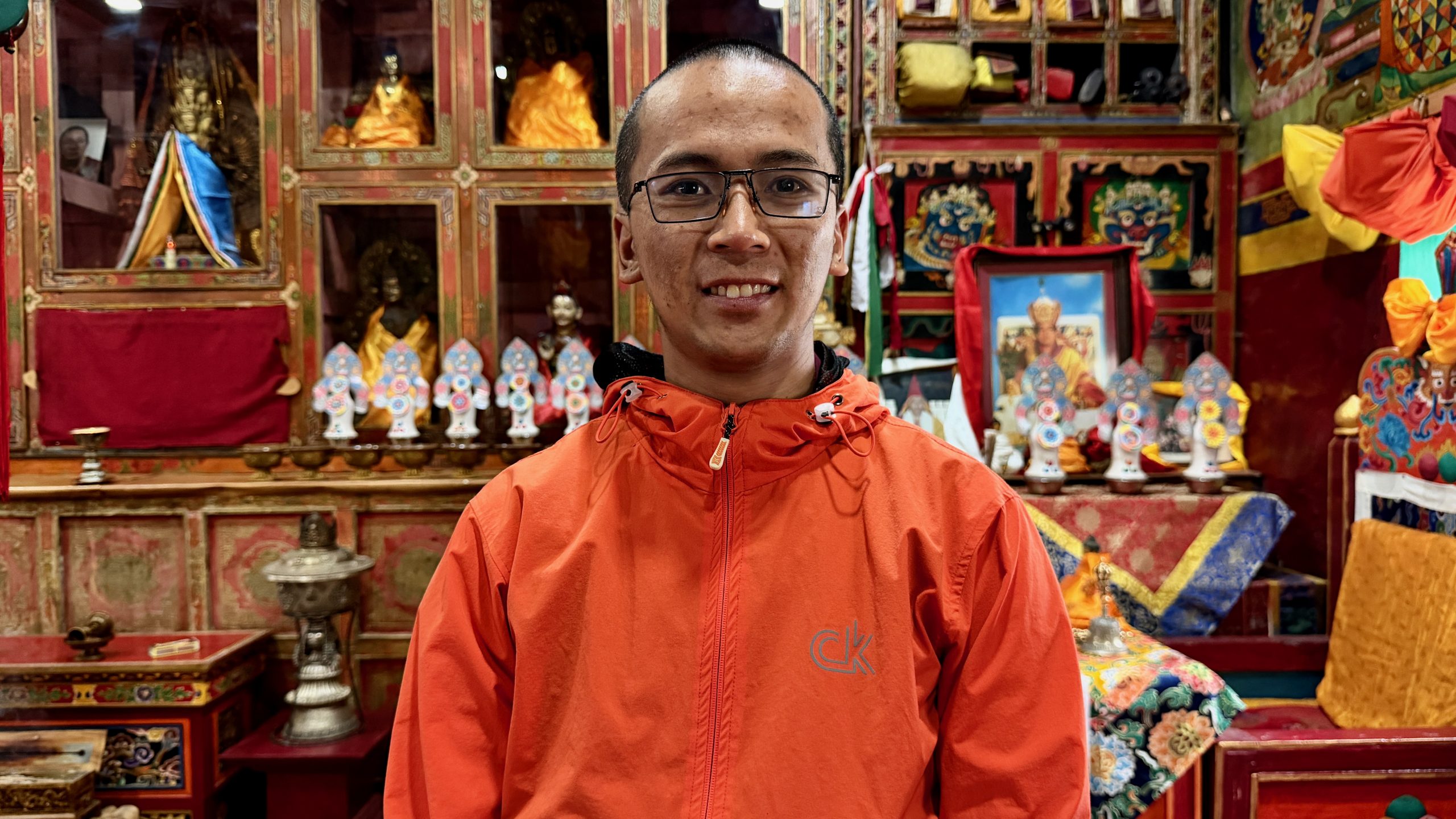
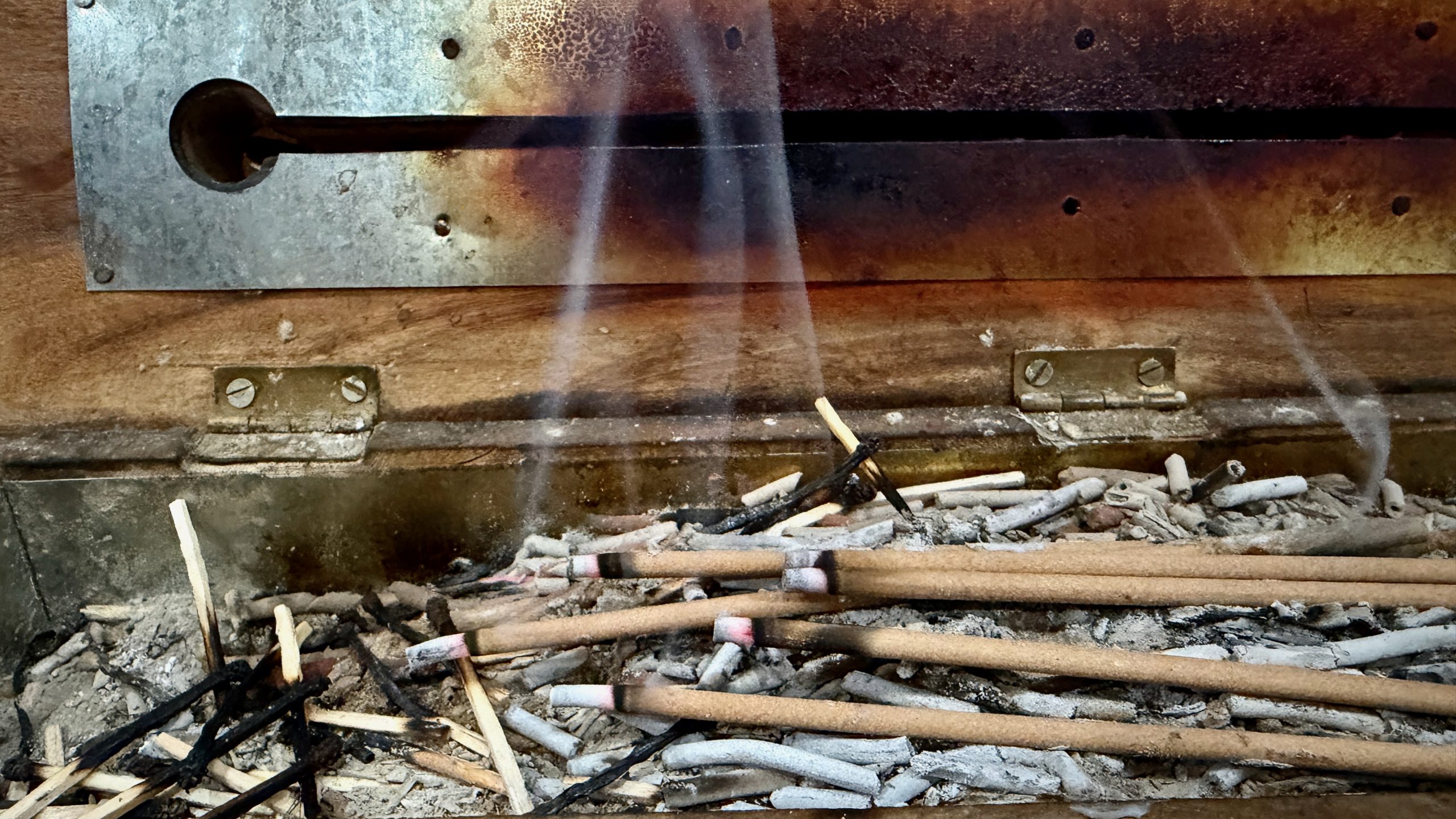
We lit incense sticks and were very happy with this visit.
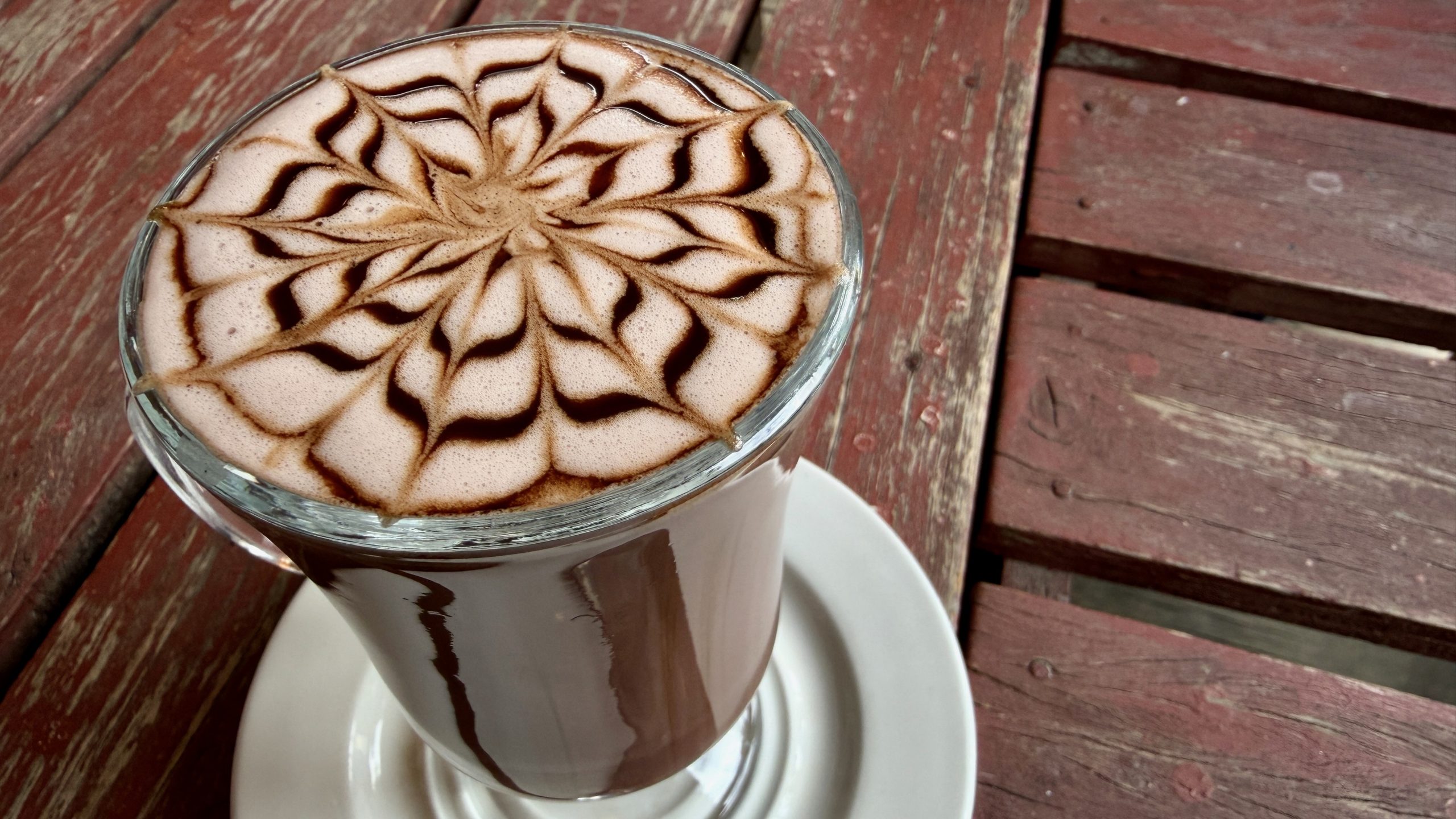
Then we continued up the road. Paved sections alternated with bumpy tracks. In Jomsom, we drank coffee and hot chocolate.
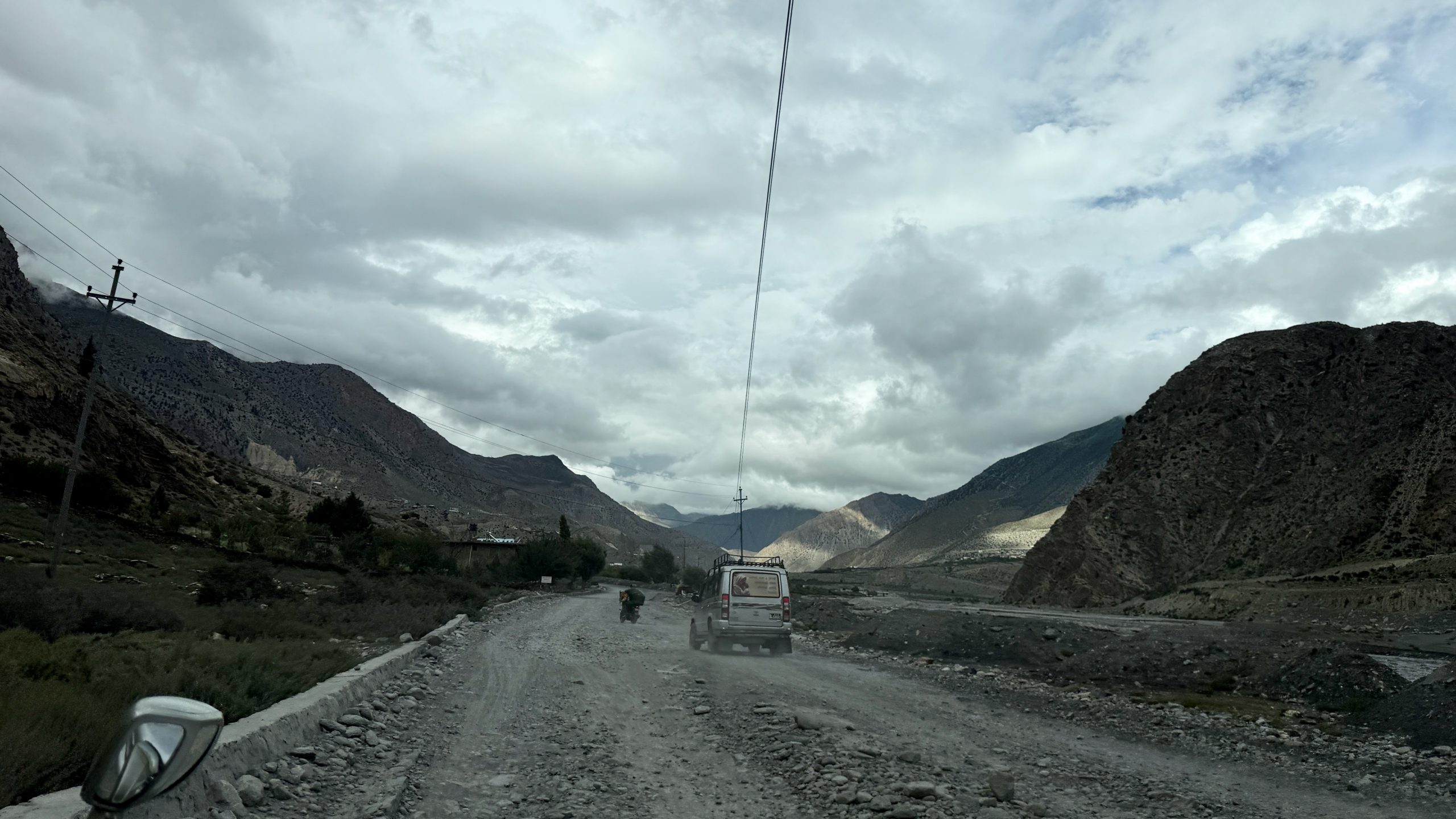
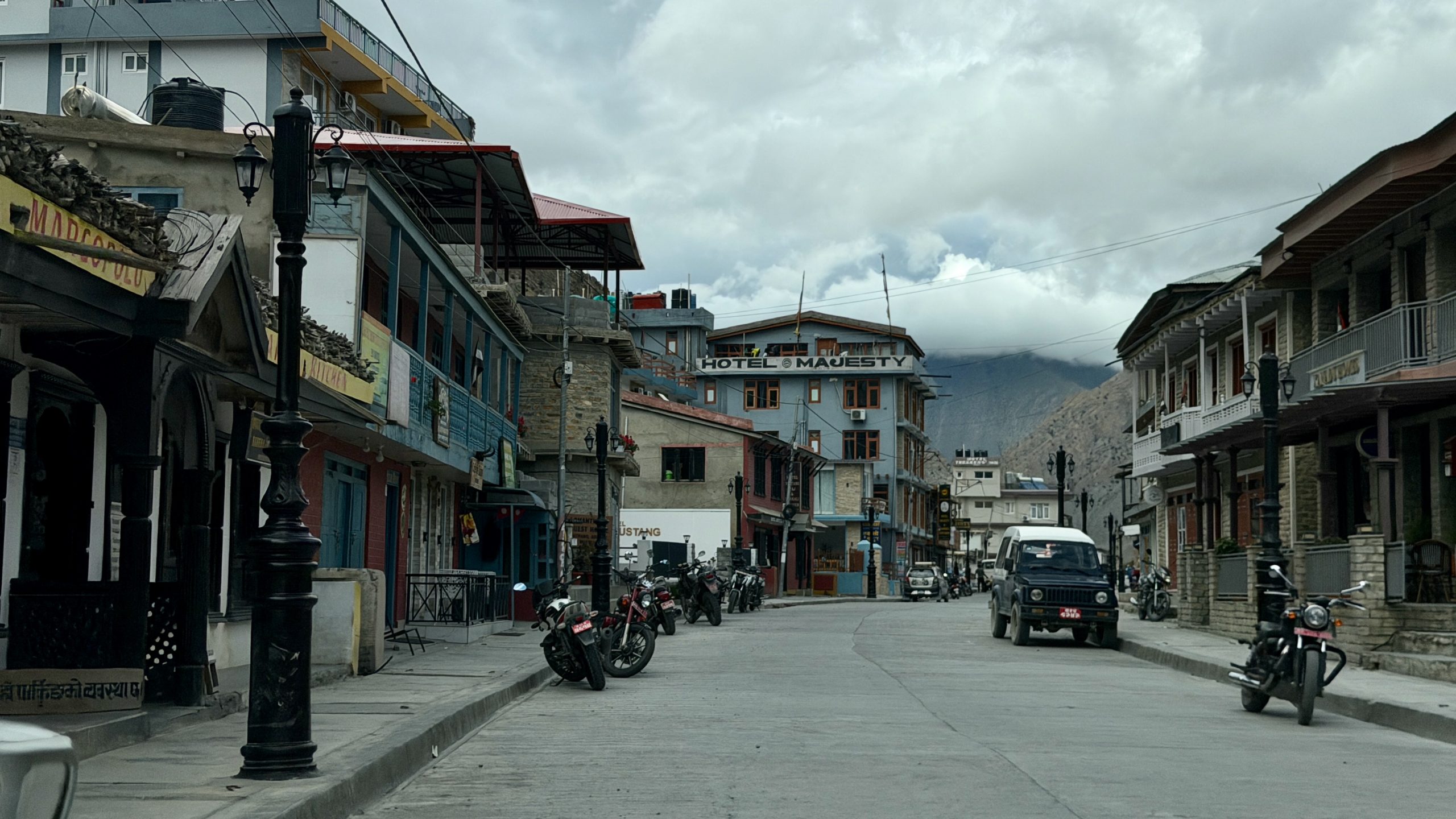
The landscape grew sparser, but the clouds remained. In Kagbeni, we were greeted, in a manner of speaking, by a monk on an exercise machine.
Our guide headed toward a place to stay (it’s called Jonny Cash), but we didn’t want to stay there. And so we had to walk around a bit until we found something that suited us better. Unfortunately, several places were currently closed for renovations.
It’s all a bit tricky—guides and drivers get their meals and accommodations for free in certain establishments (restaurants and lodging) if we eat/sleep there too. Unfortunately, those aren’t necessarily the places we like, so it isn’t always easy. Our guide then sometimes complains that she has to pay for things out of her own salary—where she’s already sharing everything with her son anyway, since for the three of us, only one guide is actually required. But so far, they’ve still been lucky in the end. In any case, I find the system somewhat burdensome for traveling. The alternative is probably to book everything as a package deal and then just have to live with accommodations and other arrangements being dictated by someone else.