


Aryan Valley – That didn’t go so well again
11. – 13. June 2026
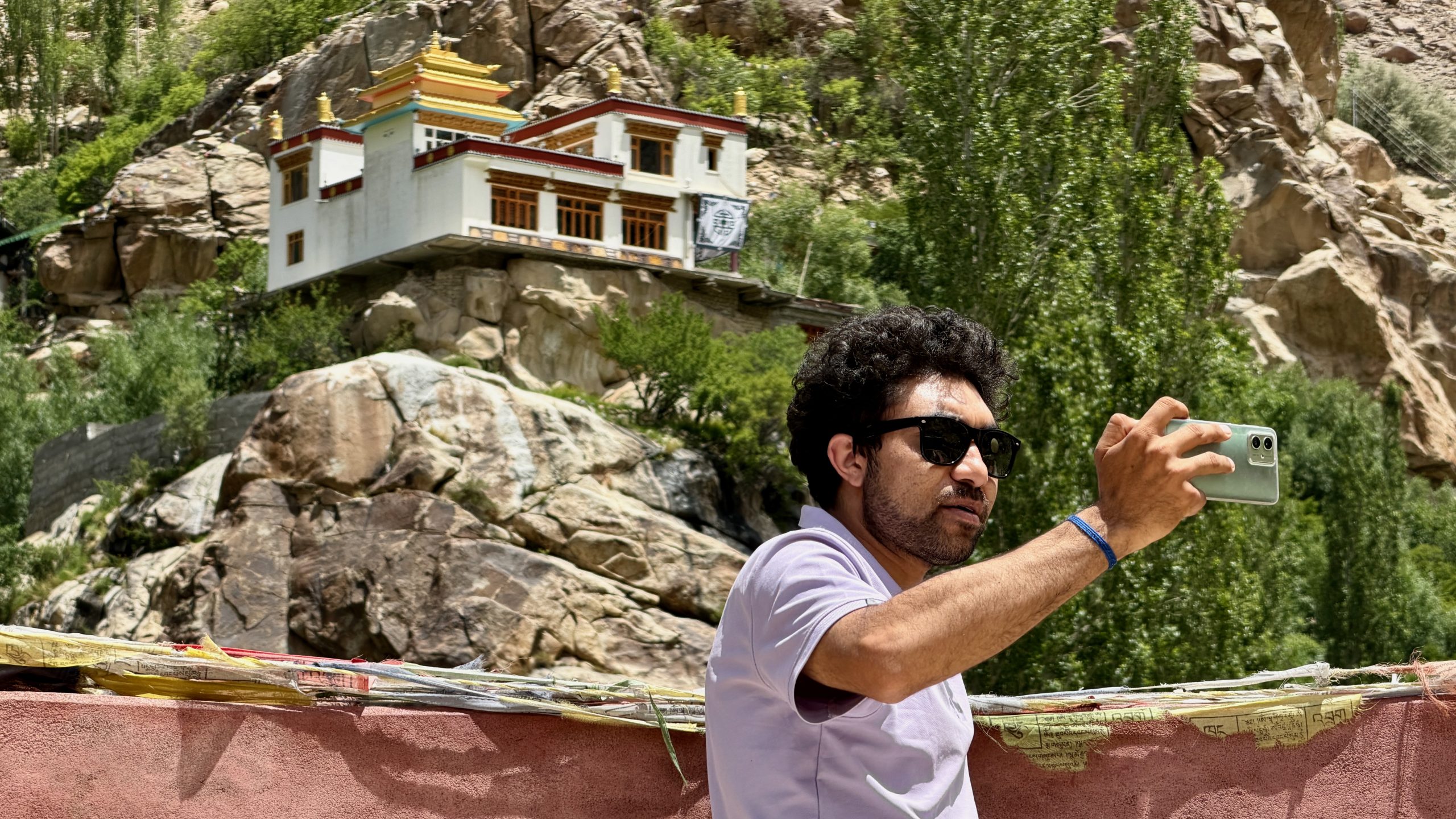
I looked it up: back in 2007, I was in Dha with a friend, and in 2013, we had finished a trek in Dhomkar and wanted to spend one more night in the Dha Hanu area. Even back then, I found it strange to travel to a region where the exoticism of the inhabitants was supposed to be the main attraction. And indeed, I didn’t really like it much. My main memory of 2013 was the grumbling of my Ladakhi trekking partner, who found the people there rather unfriendly and money-minded.
But the region still exists, and I thought I’d give it another chance. Perhaps I had just been unlucky before and would have better luck this time. Just like in Manali and Zanskar, where the connections I made had shown me such amazing things. So, I hired a guide here too: Tani.
Tani is 27 and my third unmarried guide this year (gotta establish stable financial footing first!). He greeted me in beautiful German! He holds a B1 certificate and has a big dream of working in Germany, at least during the winter season, to earn good money. His family in Beama doesn’t exactly have it easy—two of their houses have already been washed away by floods. The third one is small and far away from the water. You then have to haul water over kilometers in a wheelbarrow or something similar. According to Tani, you can cart about 180 liters at a time, which lasts a little while. Though maybe it’s not a wheelbarrow but a handcart, and/or the 180 liters is an exaggeration. His father has knee problems. It really sounds like a hard life.
Tani is a true-blue Brokpa who was discovered at a young age by a Swiss woman, who made it possible for him to attend Tibetan schools in Choglamsar and Bylakuppe. The Tibetan schools here have a better reputation and more dedicated teachers. His university studies after that didn’t go so well, so now he works pretty much any job that comes up in the tourism sector.
We didn’t really click that well, though. The first thing that struck me negatively was his Muslim-bashing. I also had to ask for pretty much everything rather than him telling me things on his own initiative. Even though he knew a lot of people, he never made any effort to initiate pleasant conversations. For a guide, I would have wished that he took some joy in showing me his homeland. “Loveless” would be too harsh a word, but that spark of joy was definitely missing. There was probably a lack of chemistry on both sides.
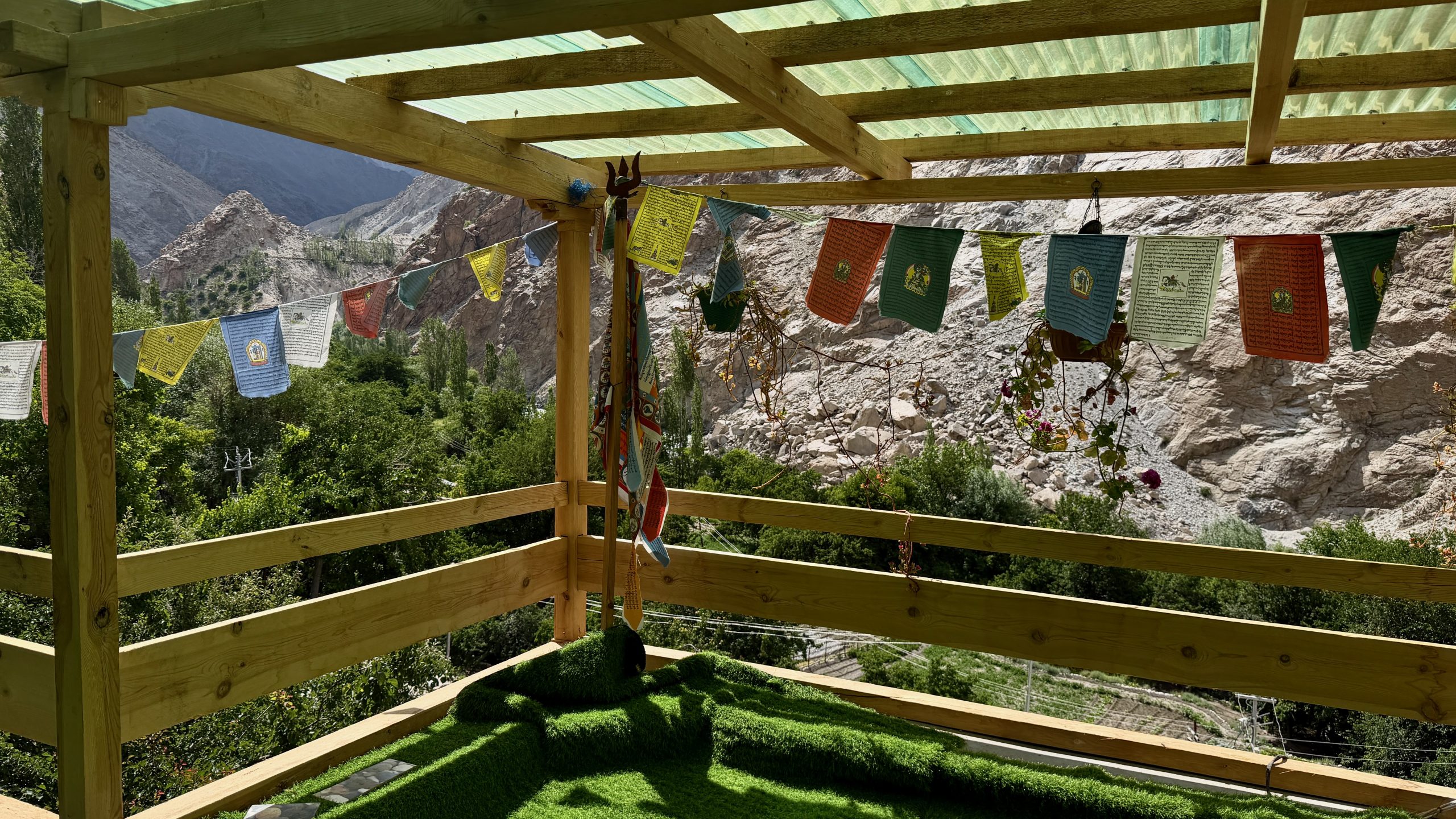
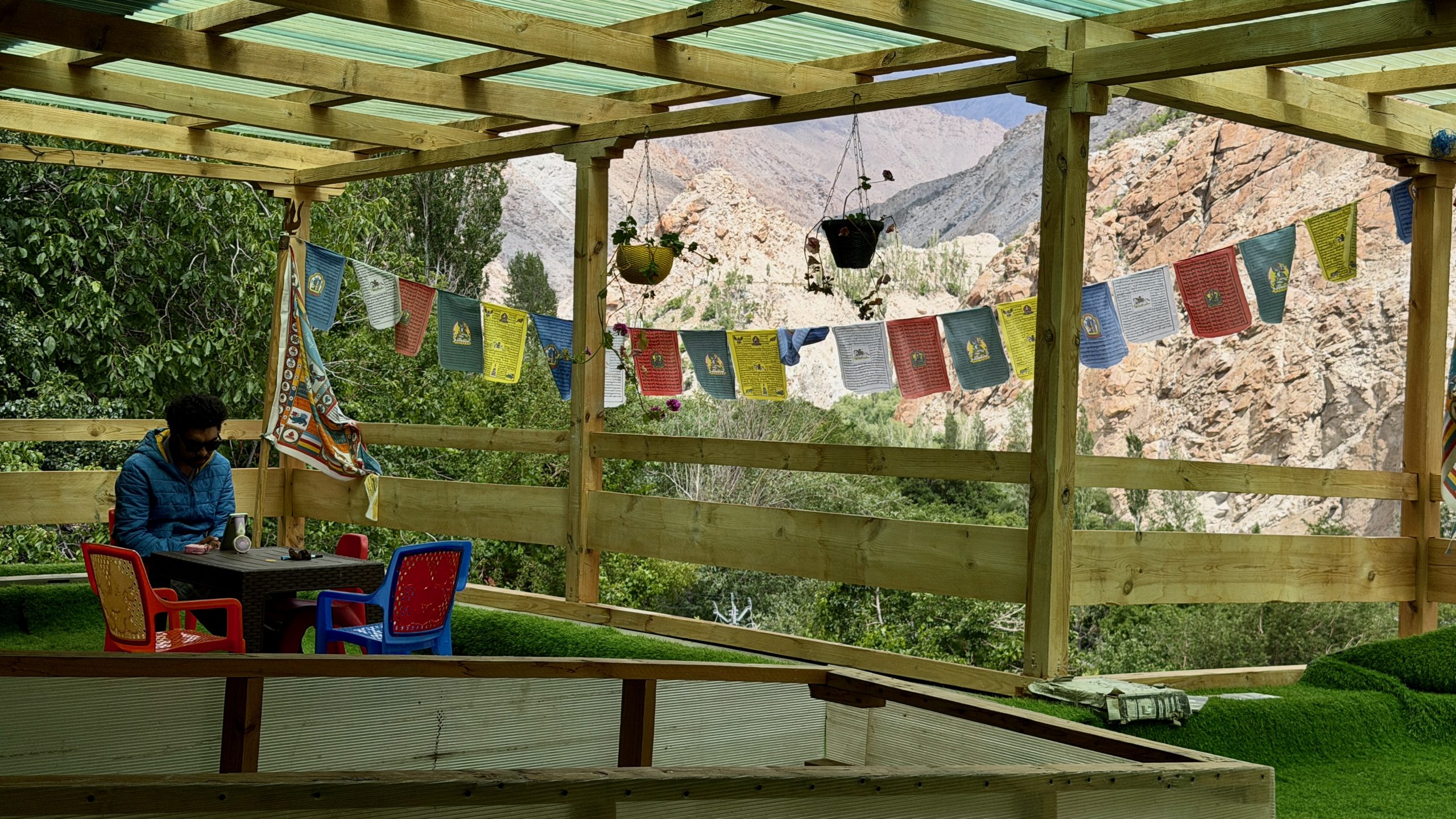
But other things didn’t make my stay easy either. The accommodation has been open since 2017. The husband is a teacher, and I only saw him for all of five minutes. The wife is a very good cook, but the first evening was already a bit strange. Tani had disappeared back home, and I was the only guest. I was given dinner, and she sat down right across from me, pulled out her phone, and just scrolled and made calls. Not a single word to me. No question about breakfast time or what I would like. Nothing beforehand either. The next morning around 8:30, the husband came by and asked if I wanted coffee or tea (those were the five minutes), brought the coffee, asked if an omelet with chapati would be fine (yes, please!), came back and asked if toast would be okay too, and yogurt (oh yes, I love yogurt)—in the end, I got very lightly buttered toast, peanut butter, honey, and one tiny plastic packet of terrible Indian jam. Why build up joyful anticipation in the first place? This time, I didn’t cry or rant about this poor hospitality; instead, it actually amused me. They had a helper, a young man from Assam, who unfortunately didn’t speak any English at all. He quietly went about all his cleaning work—a nice, welcoming atmosphere for workers/employees looks very different.
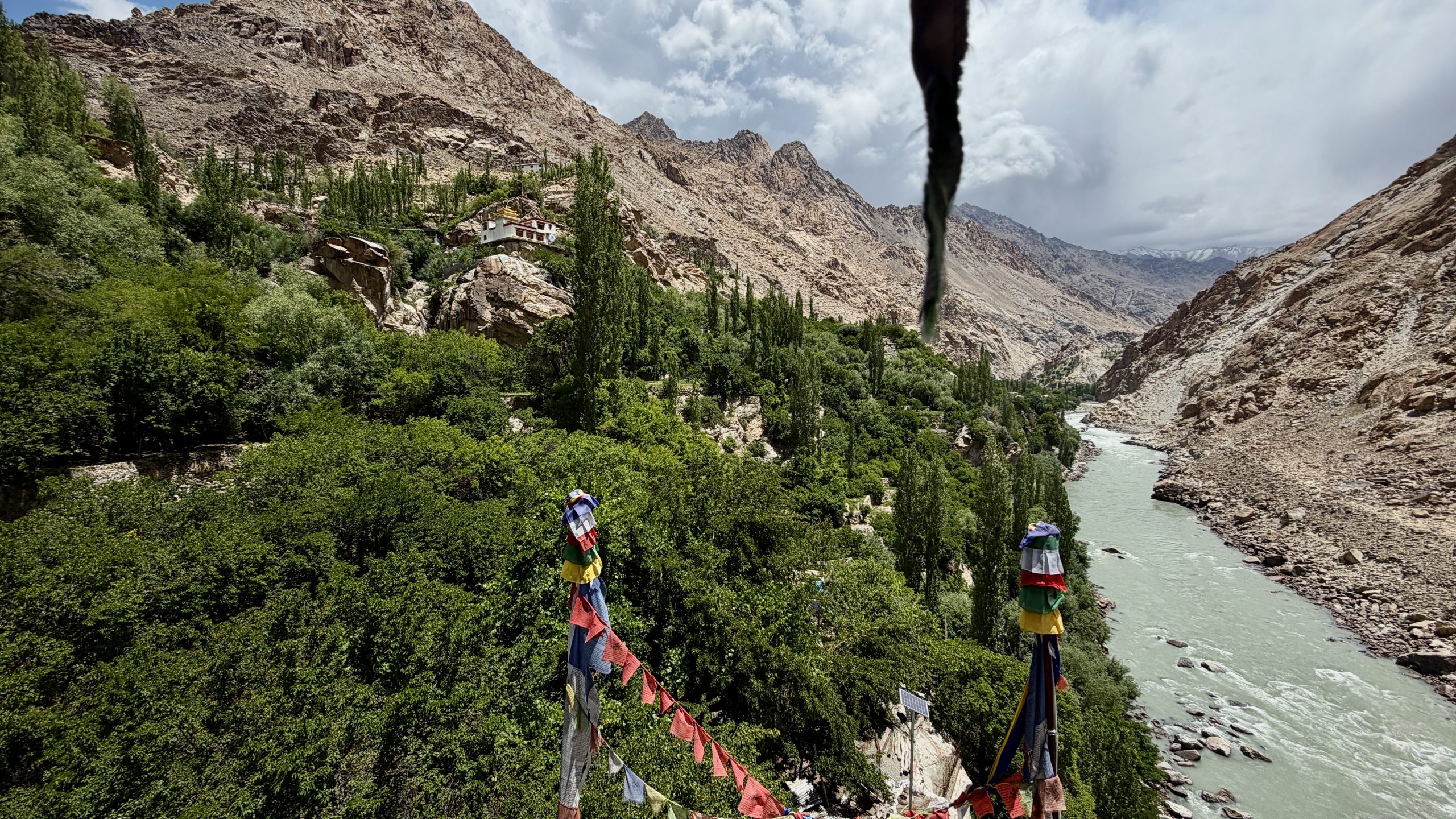
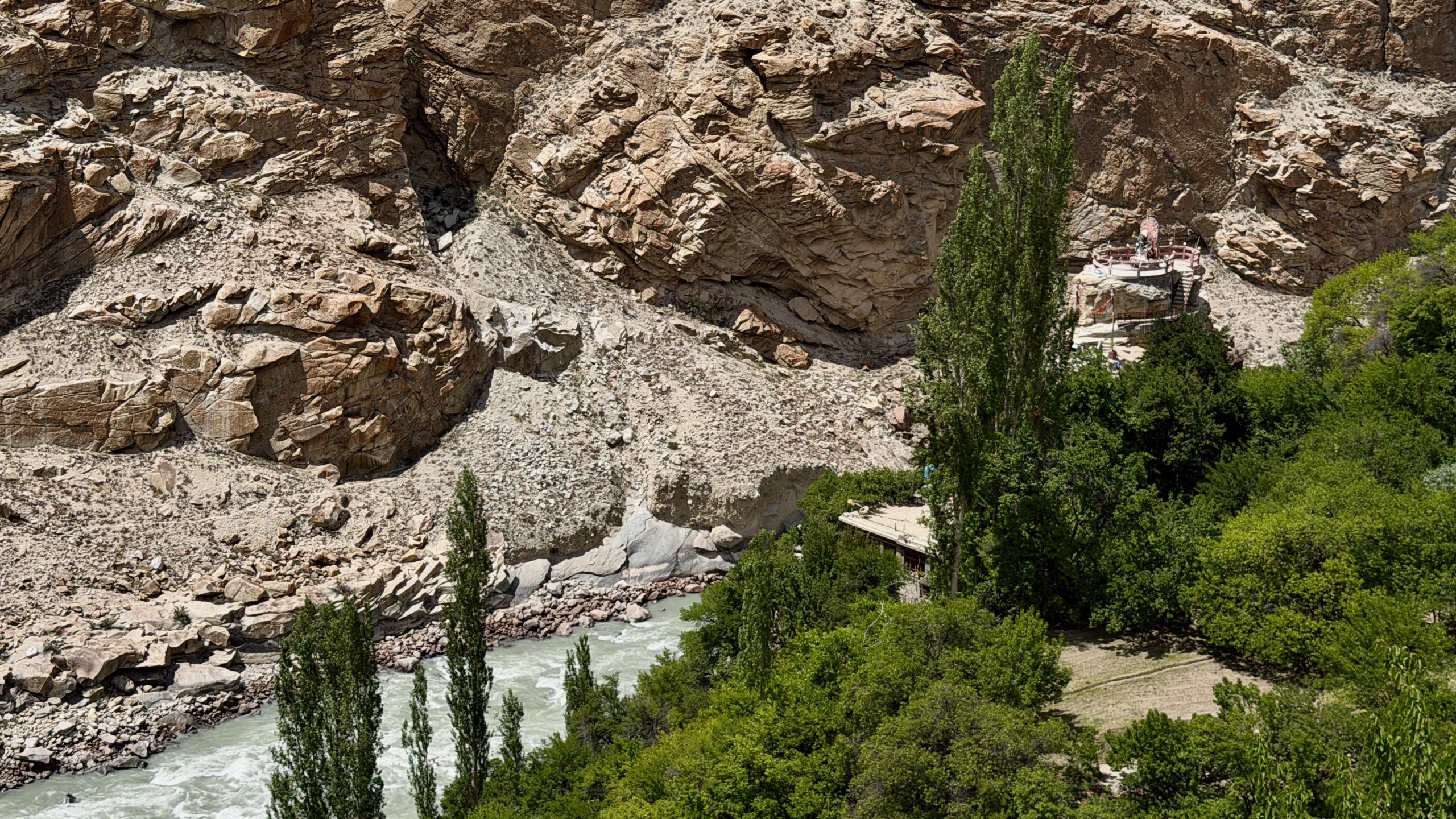
And the third thing I find unpleasant is the landscape. The Brokpa villages are situated in a very narrow valley along the Indus. You are basically just staring at a rock wall and have no sense of open space. That kind of landscape makes me feel quite uncomfortable.
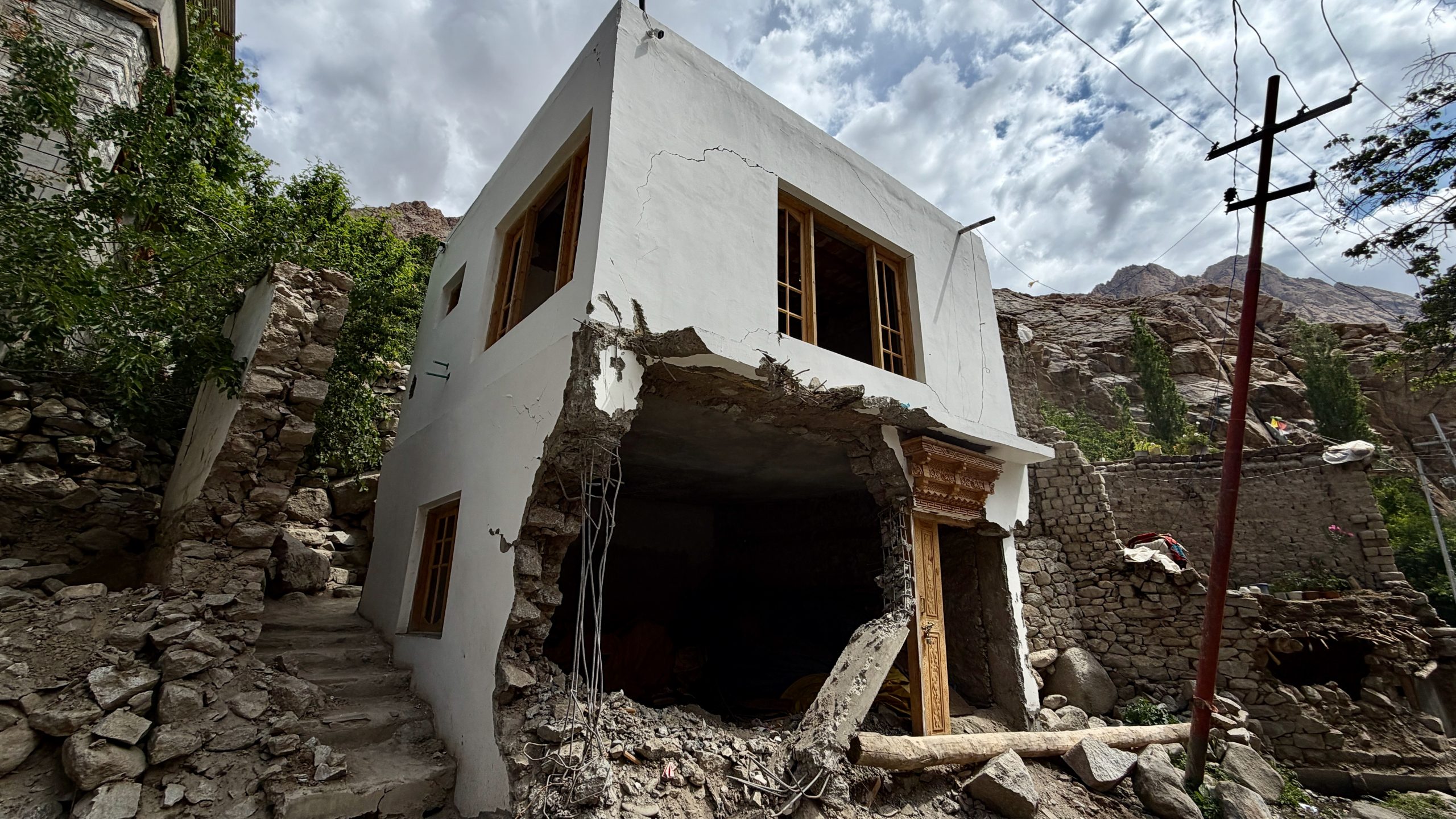
On the inside, however, the village is quite interesting and pretty. At the very bottom by the river is the paved road. Running parallel to it, a bit higher up, is a path. Parallel above that is a dirt road, which gets you closer to the houses. And parallel above that, yet again, is another path. To make room for the dirt road, a house was partially demolished. It belonged to my accommodation and was no longer habitable. There are videos of the demolition on the internet. On Instagram, the comments are very pro-demolition (built incorrectly, a proper road is good for progress, etc.), while on YouTube, people disagree (the government can’t just do that! He built that with his own money).
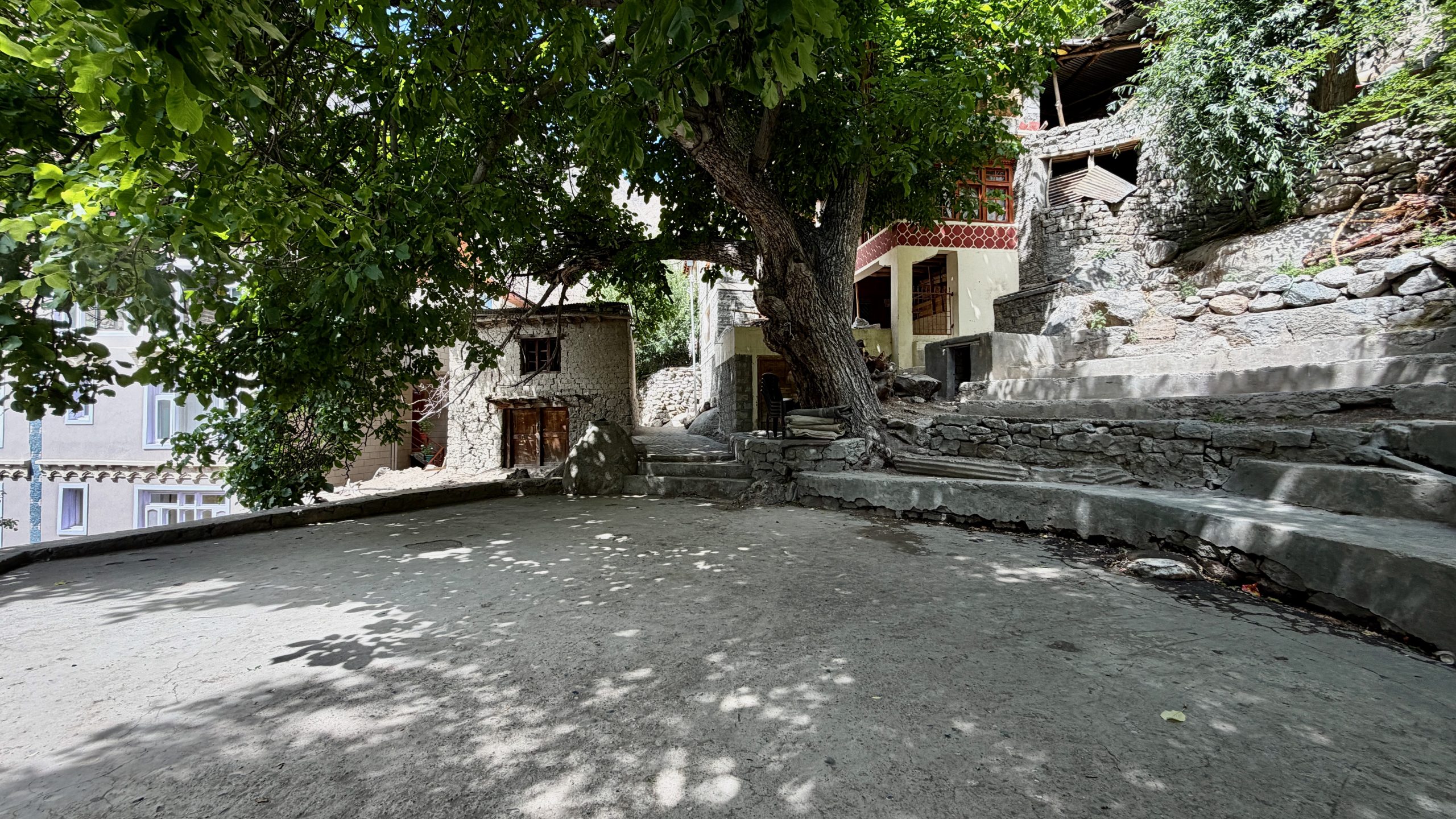
In the middle is the village square under a walnut tree. That is where local celebrations take place.
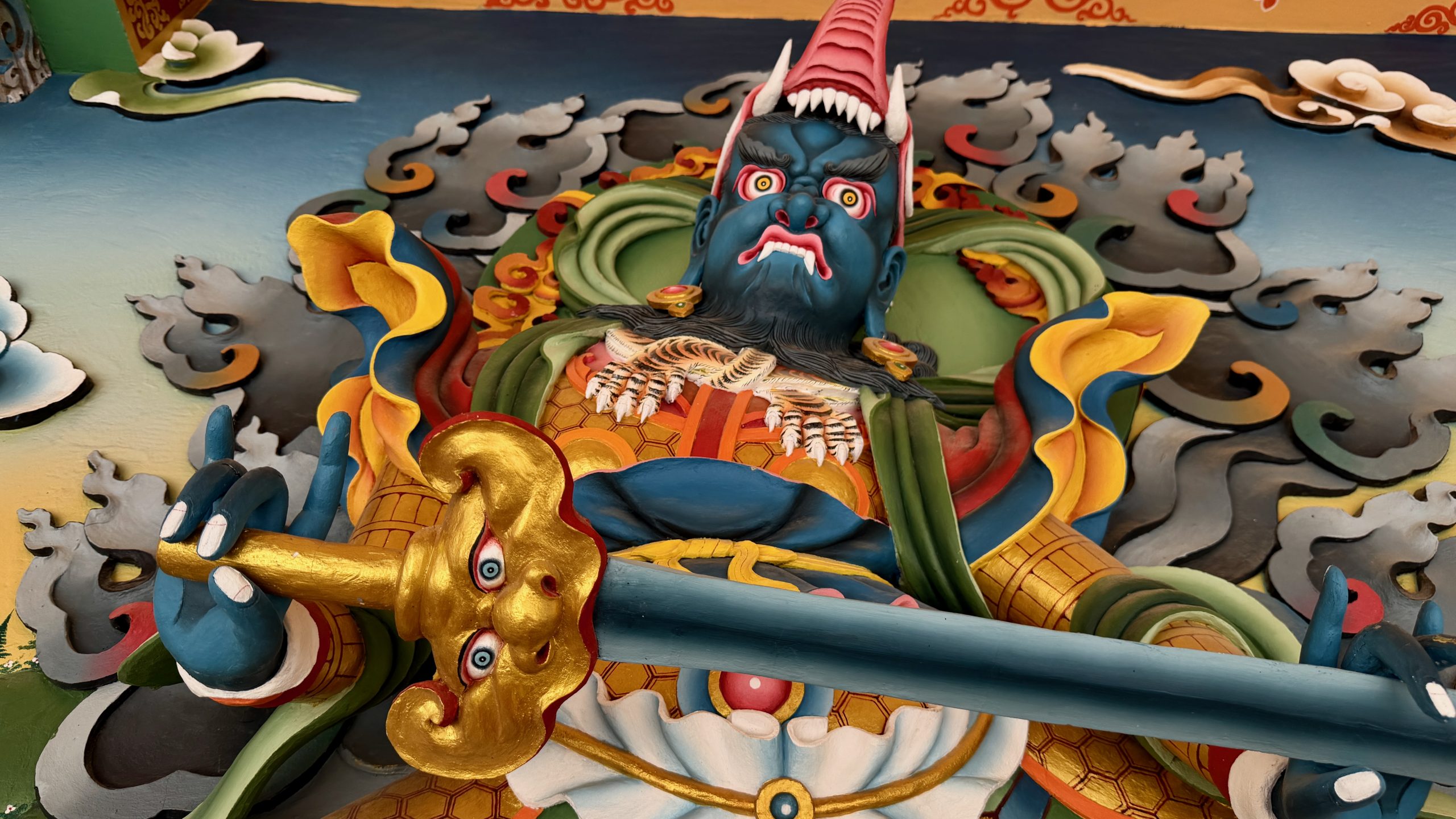
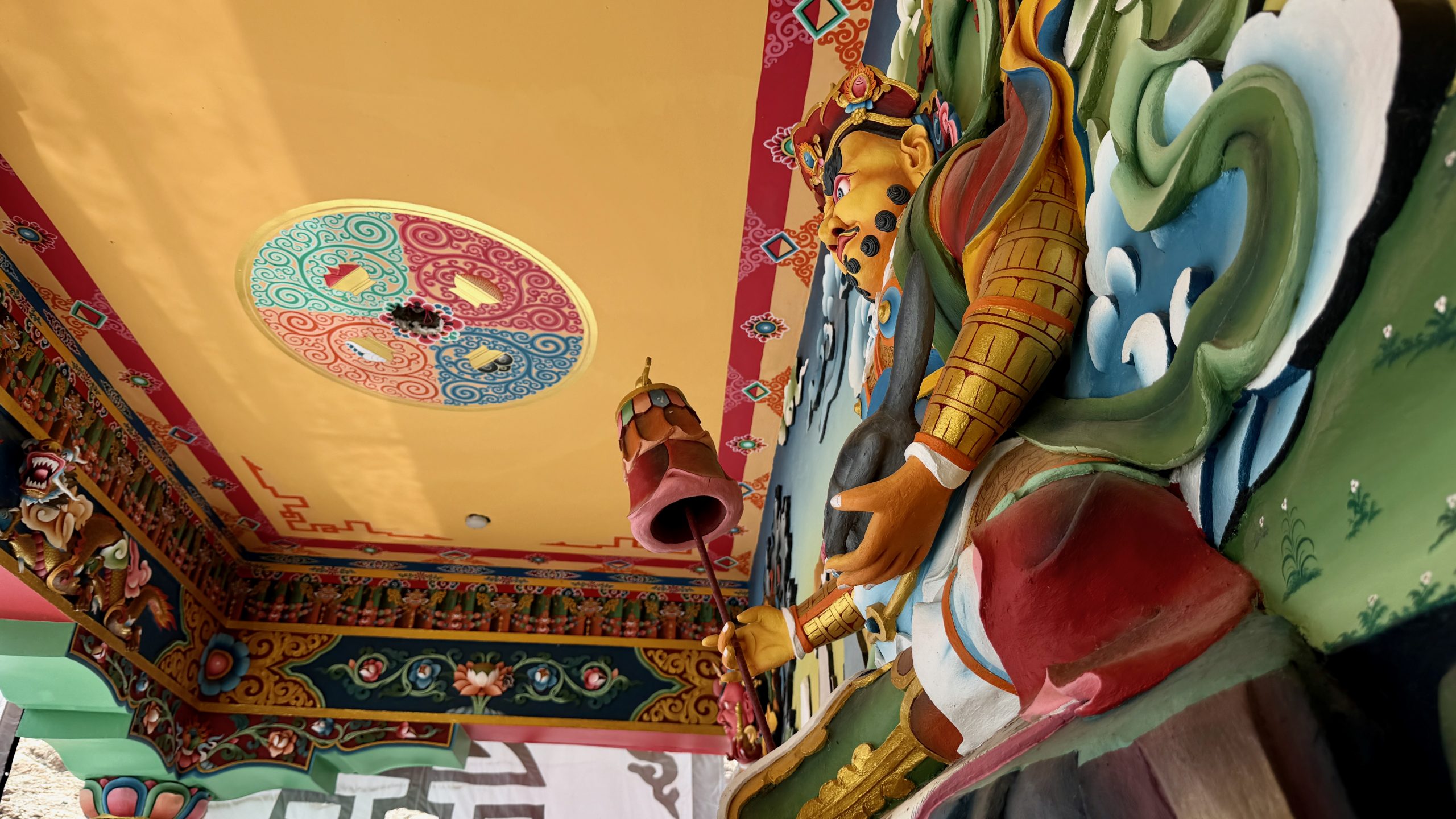
Then you walk a bit further and reach the monastery. It was very new and locked (the monk/s are somewhere else for rituals). Three-dimensional guardian figures on the front facade are something I hadn’t really seen before.
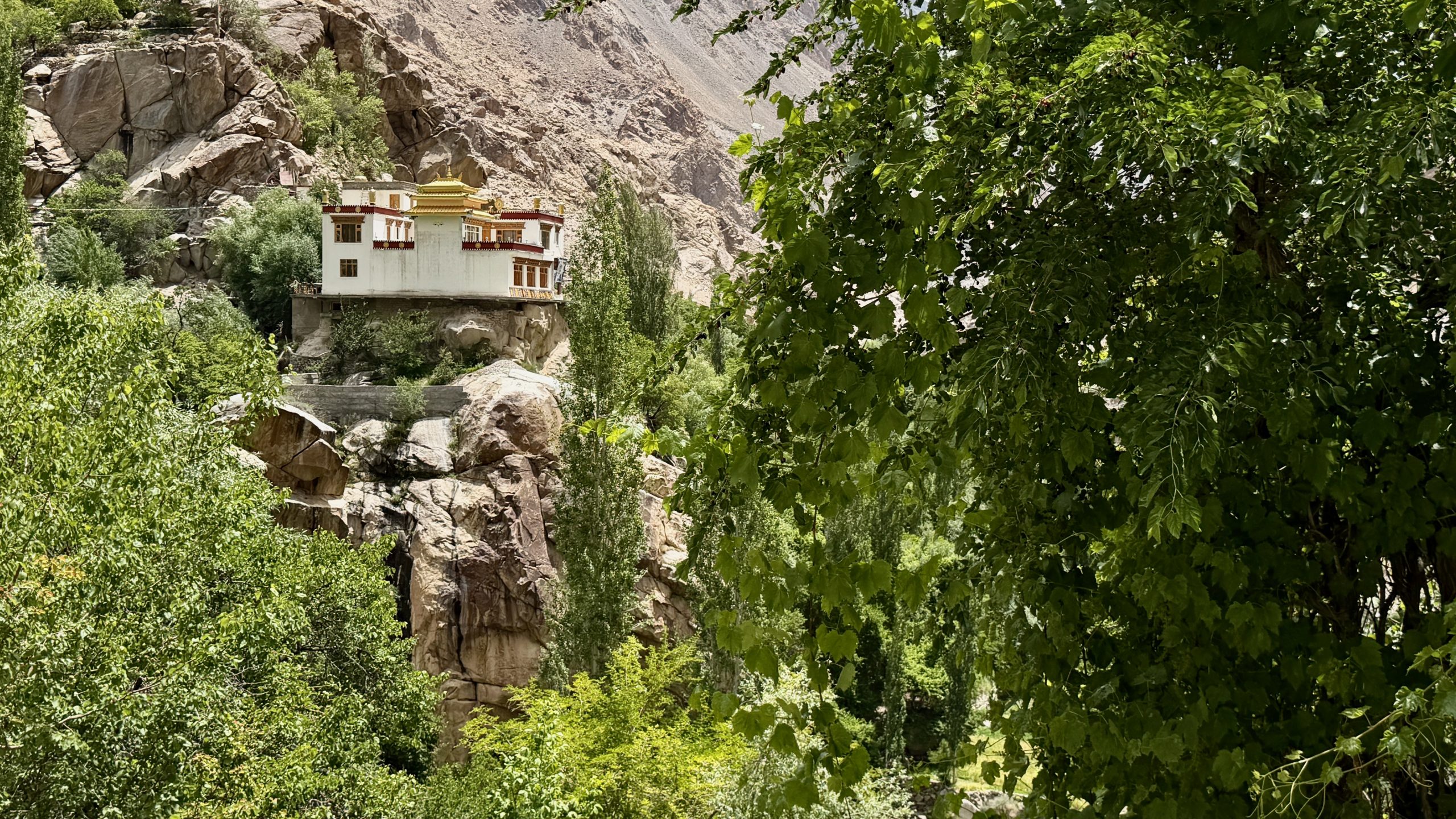
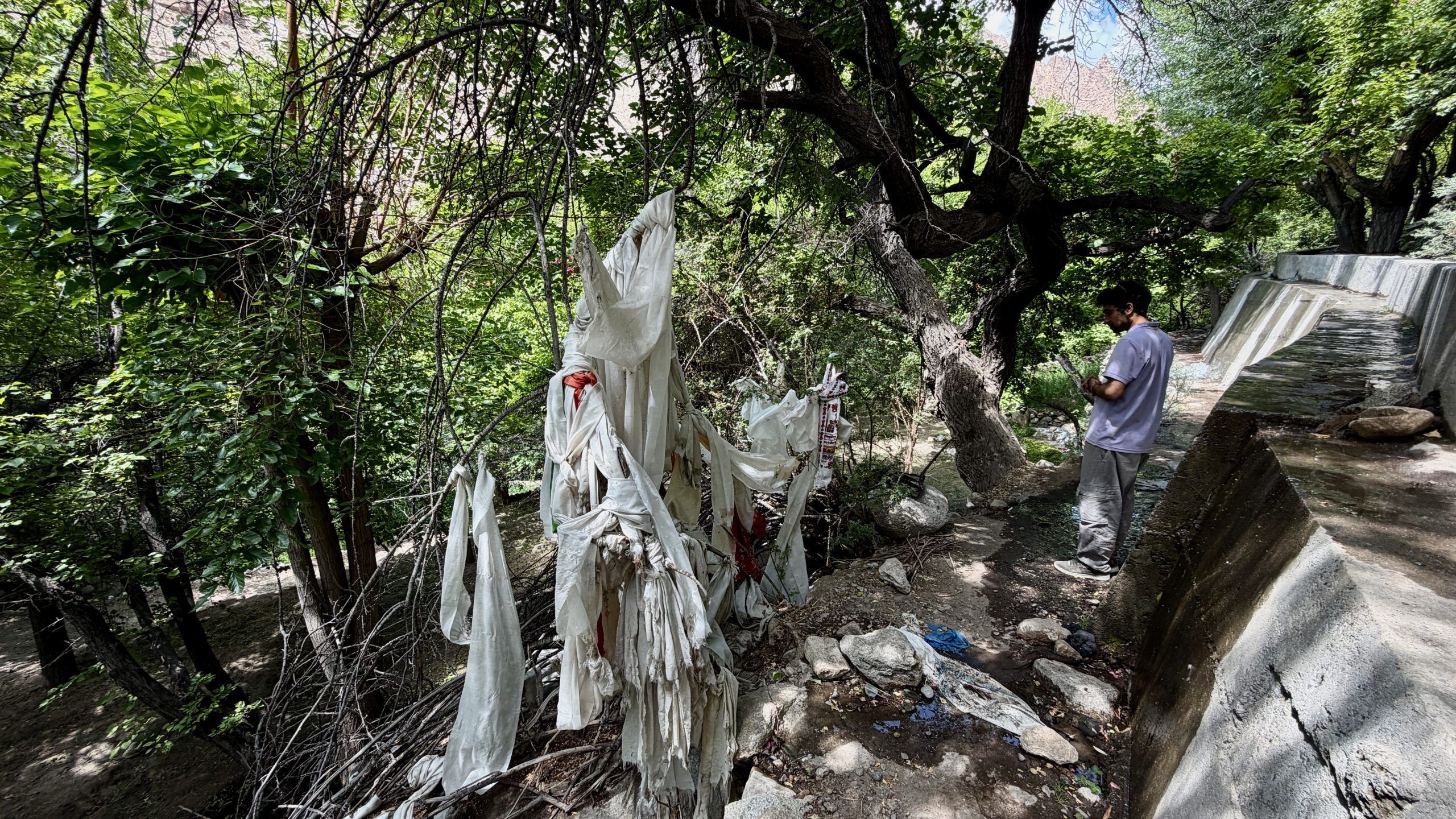
Buddhism arrived rather late here. These Brokpas converted in the mid-19th century, essentially to align themselves more closely with Ladakh. Before that, and indeed even now, people lean more toward animism and the Bön religion. Spirits still play a major role today. There are 4–5 oracles/shamanesses in the village (though none happened to be around at the moment) as well as spirit-filled places like this one:
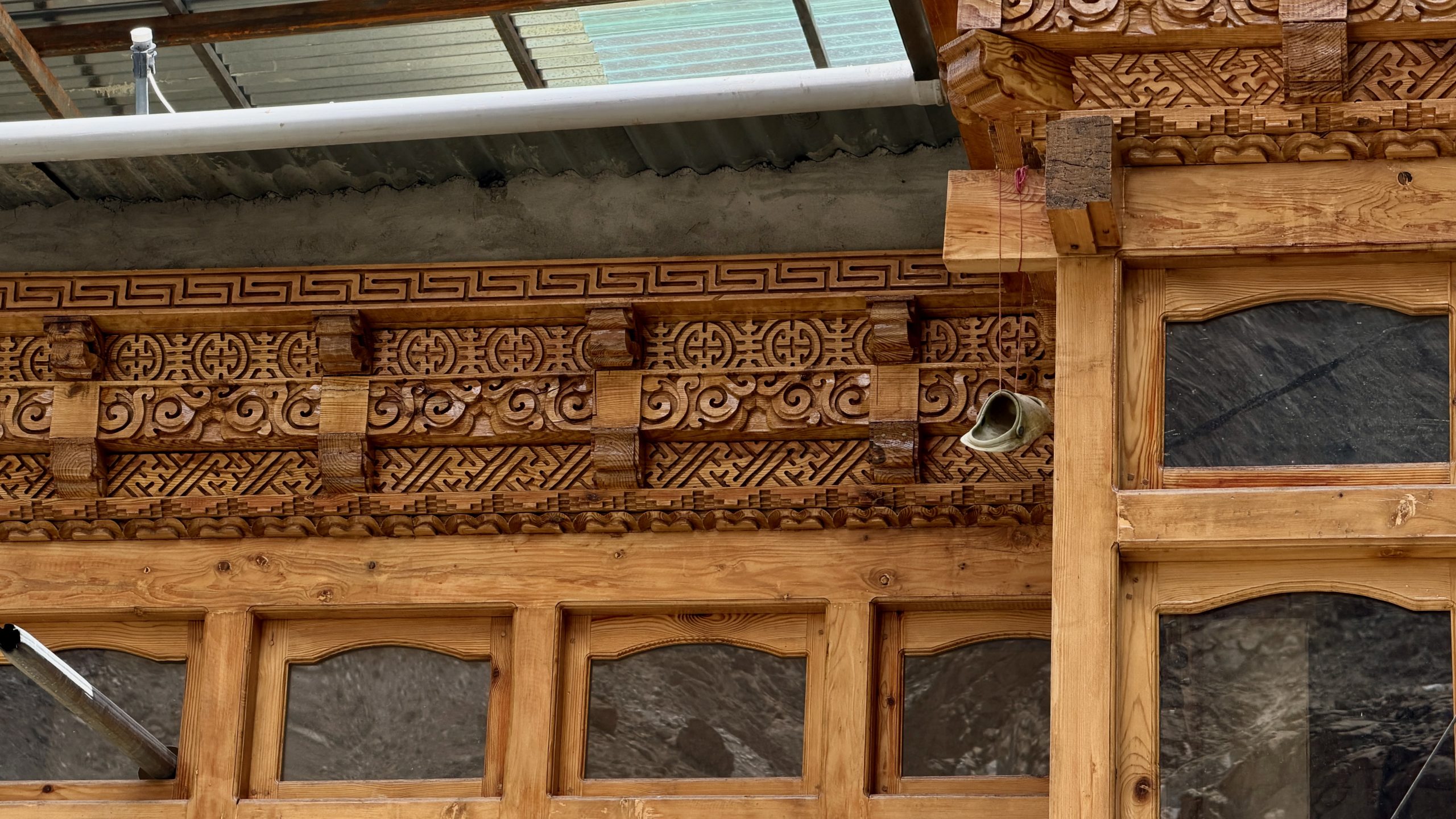
AI also saw a shoe hanging at the entrance, which was meant to attract evil forces so they wouldn’t make their way into the house.
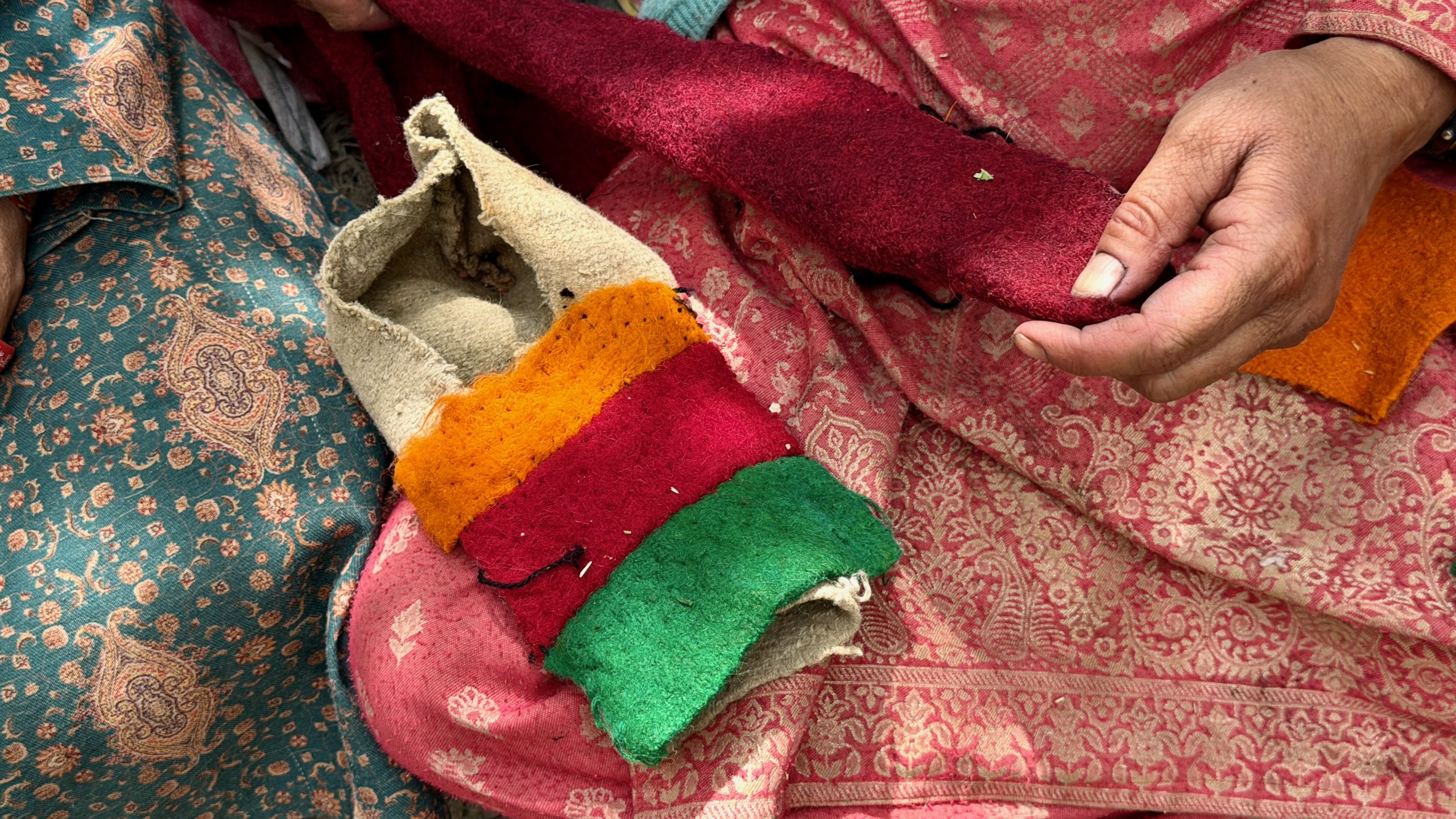
Speaking of shoes—I also came across a group of ladies sitting on the ground doing handicrafts. One of them wanted to make shoes. I watched with great interest, but the guide stayed back, and no real conversation took place. I only took a photo of the shoe and asked later: everyone expects 100 INR each if you photograph them. On the day I arrived, about five picturesquely dressed ladies were also crouching on the ground near the accommodation, and Tani offered to take a photo. But I didn’t want to—regardless of whether money was involved or not. There wasn’t much interaction anyway, but somehow this piece of information didn’t exactly help to establish one either. It might be wrong, but I had the impression that people would rather get photo money from travelers than have any kind of exchange. In any case, that is the reason why there are pretty much no pictures of people here.
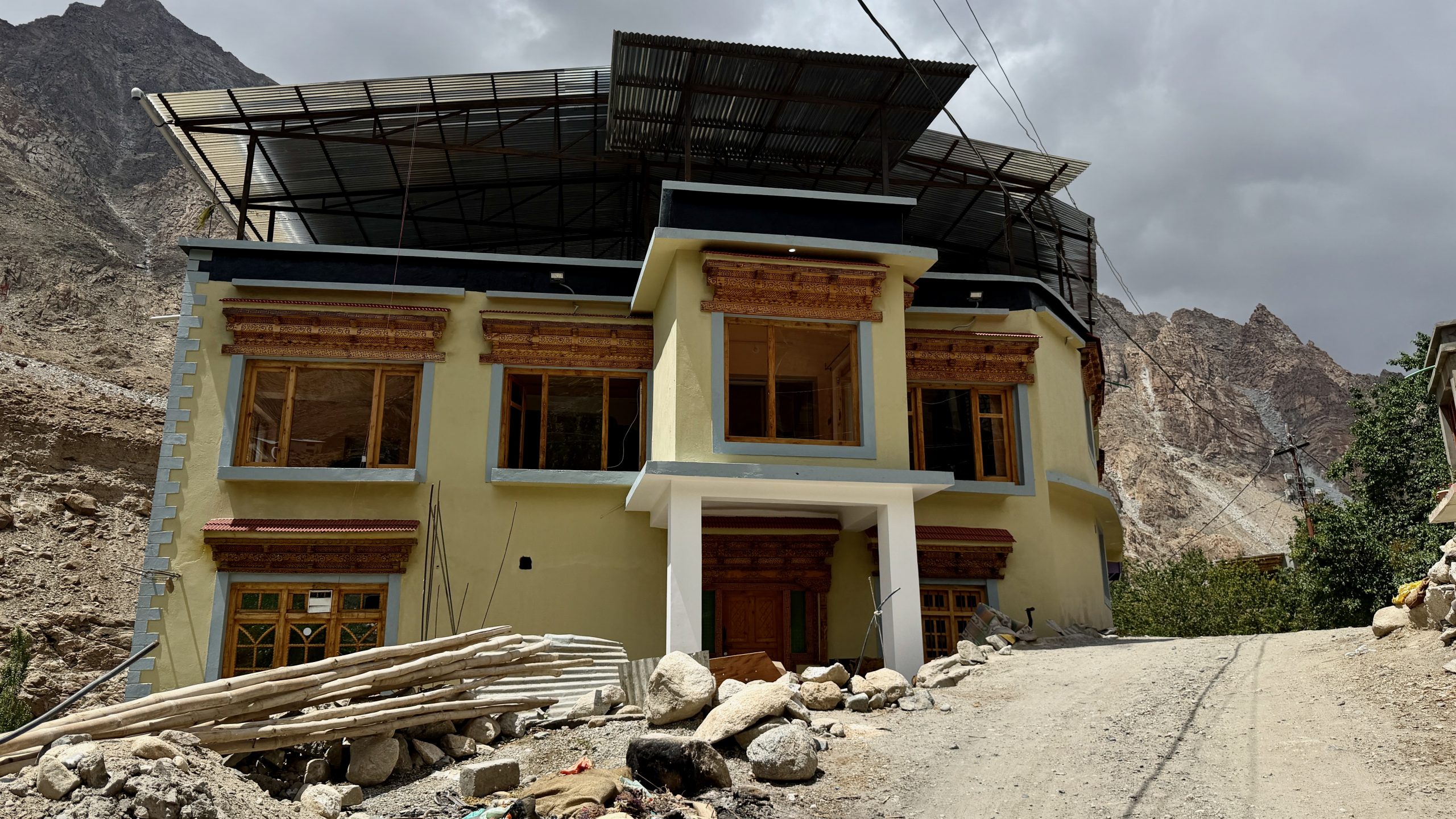
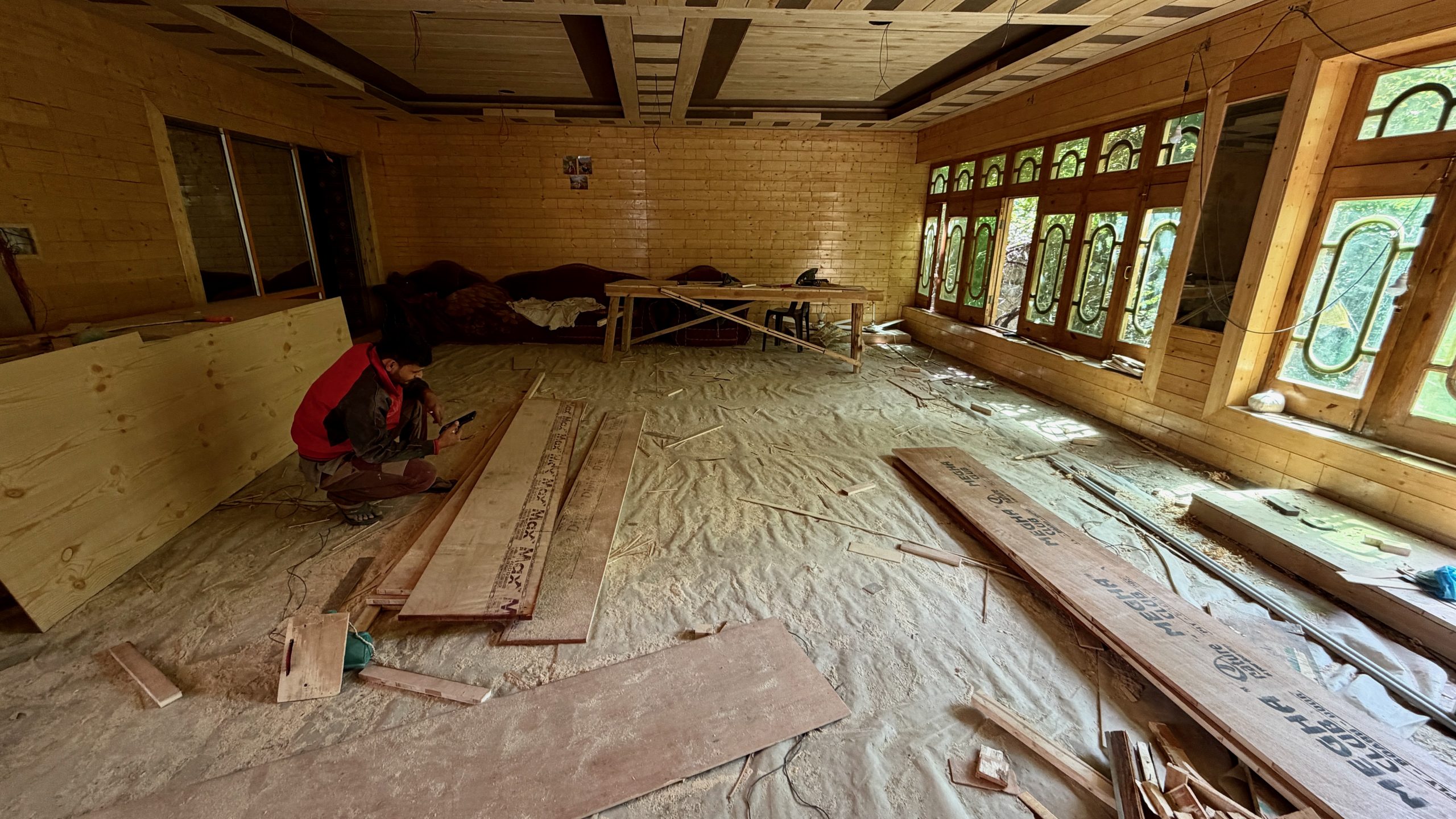
Otherwise, there was a lot of construction activity going on here as well. They have small fields and a vast number of fruit trees. In principle, the region is highly productive, with a wonderful variety of peaches, apricots, grapes, pears, apples, cherries, mulberries, walnuts, and a double grain harvest. But what about jobs? For those, people head to Leh and earn their living there. With that money, they build their houses bigger or build an entirely new one—to use as a new tourist accommodation. While tourism here isn’t exactly booming yet, the proximity to the Pakistani border is a huge selling point; soon there will be more construction for a military museum, a memorial, and a viewpoint, and then the Indian tourists will come in droves! (This line of thought doesn’t seem completely far-fetched to me.)
Until April, Garkone and Darchiks belonged to the Kargil district. Now, however, the land has been reorganized a bit, and all the Buddhist Brokpa villages belong to the new Sham district. Kargil was actually relatively generous, but it was, of course, Islamic. The town of Kargil is only two hours away, but people prefer to go to Leh for shopping. In Kargil, for instance, they allegedly don’t have any nice clothes at all, only “Muslim stuff” that people don’t want to wear. Besides, there is no alcohol there. No tourist wants to go there anyway. By the way, the villages between Kargil and Darchiks are also inhabited by Brokpas. However, these converted to Shia Islam centuries ago. Religion clearly makes a massive difference here, and people don’t really view themselves as one people.
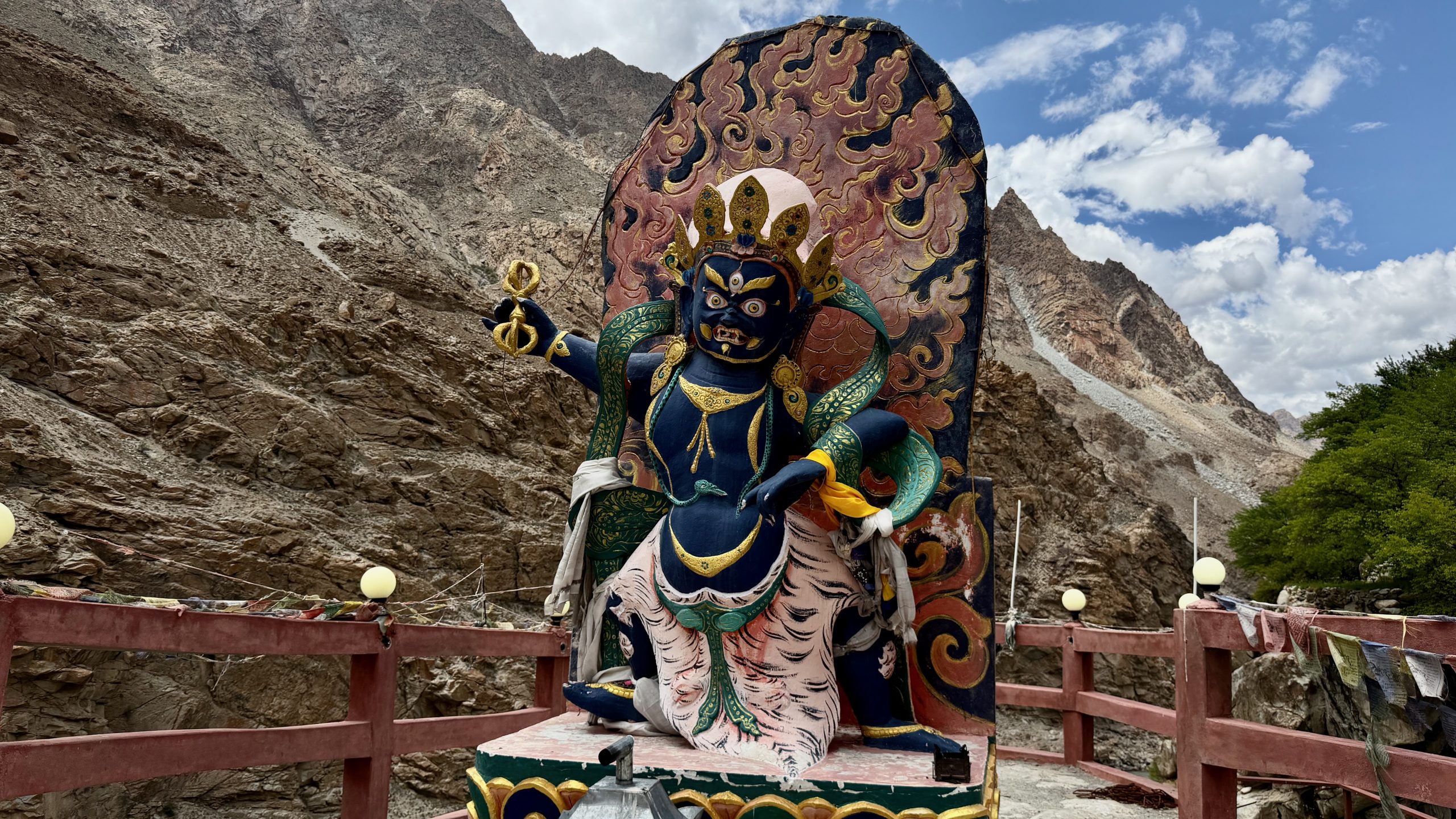
Then we walked over to the Vajrapani statue that protects the village. Speaking of “walked”—I was slowly limping around on my trekking poles. Speed was definitely not on the agenda, but at least I managed to get everywhere.
And there was also a waterfall—practically right in the middle of the village, just below the monastery.

Here is the English translation for your text:
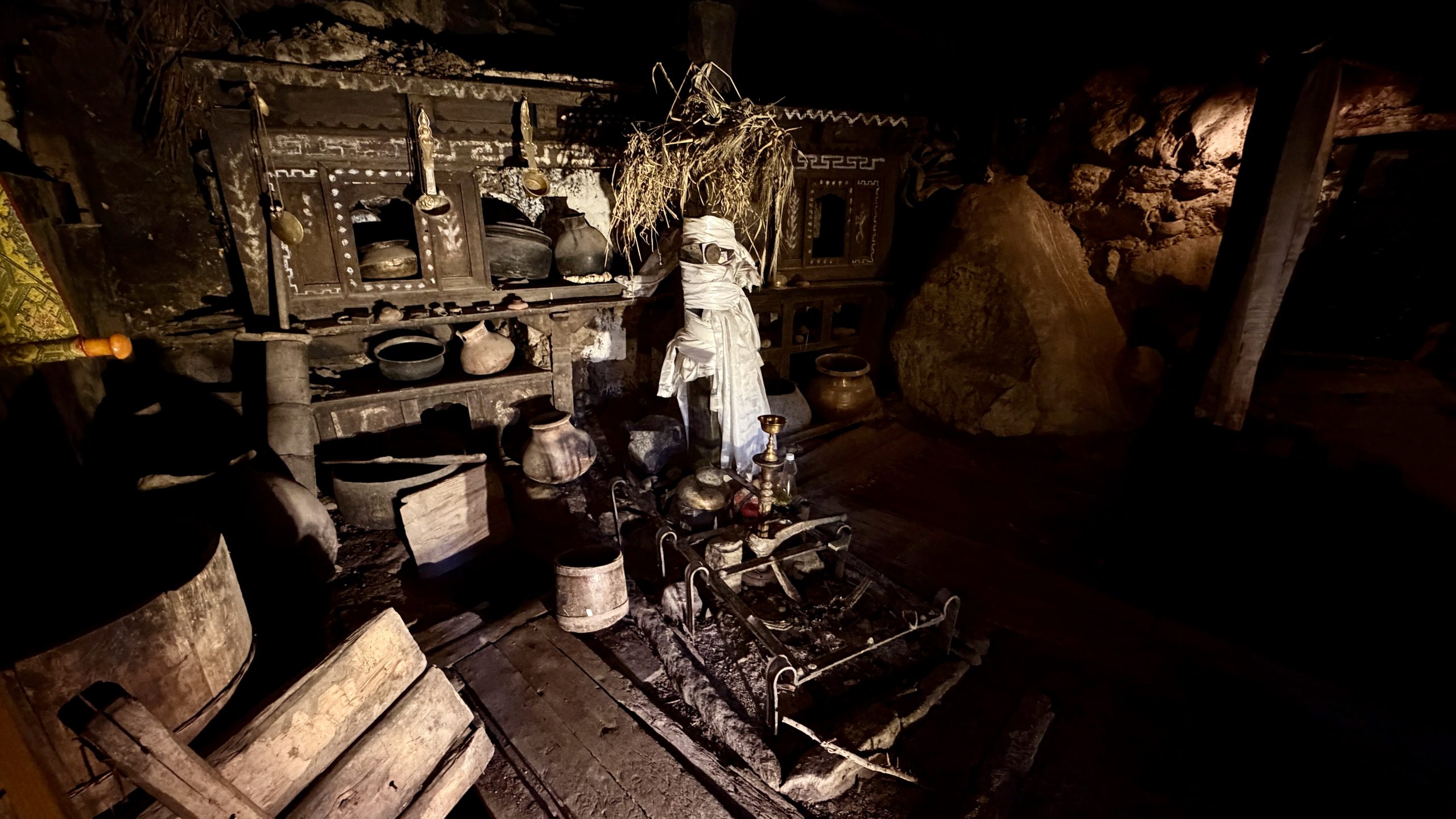
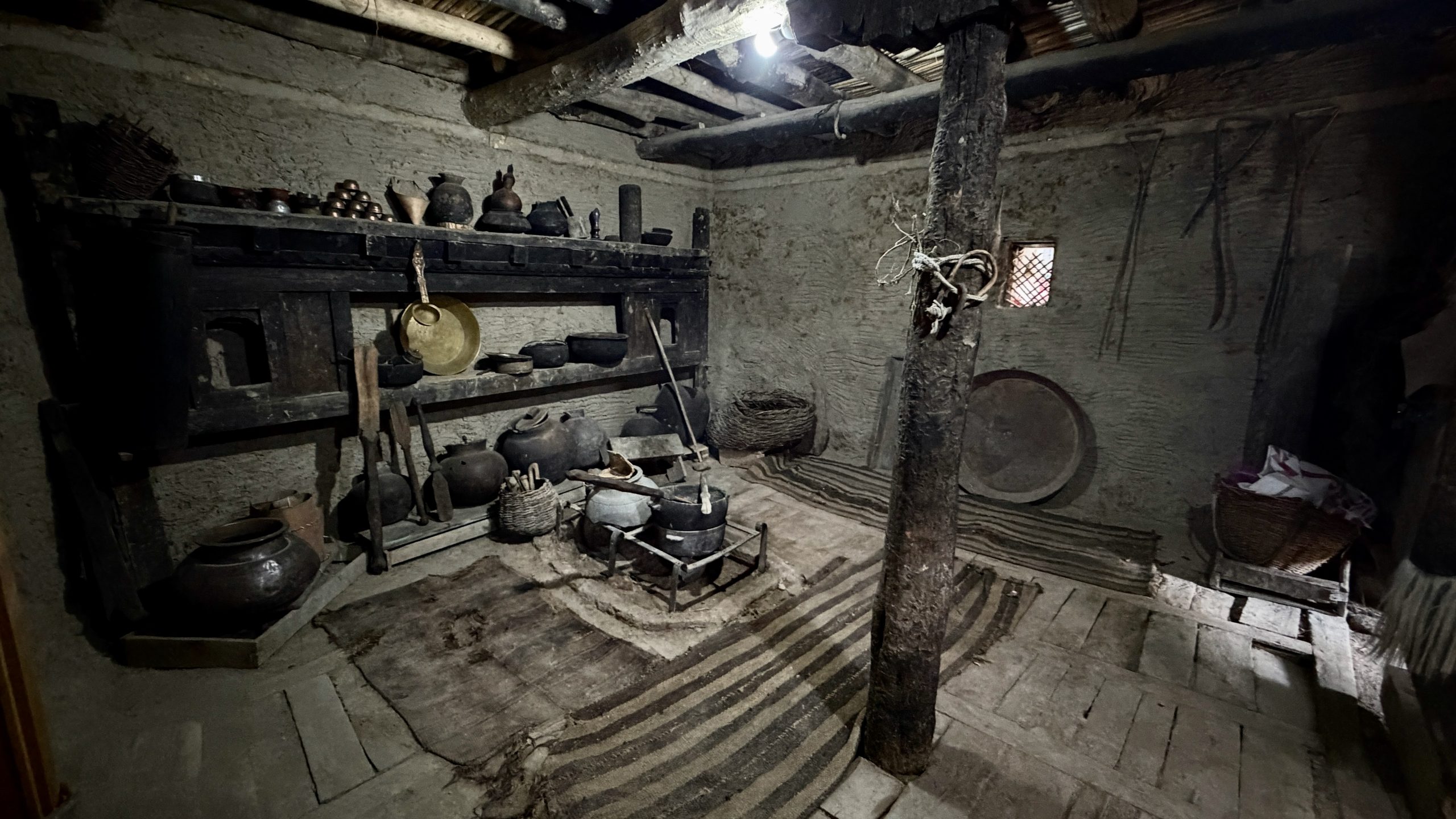
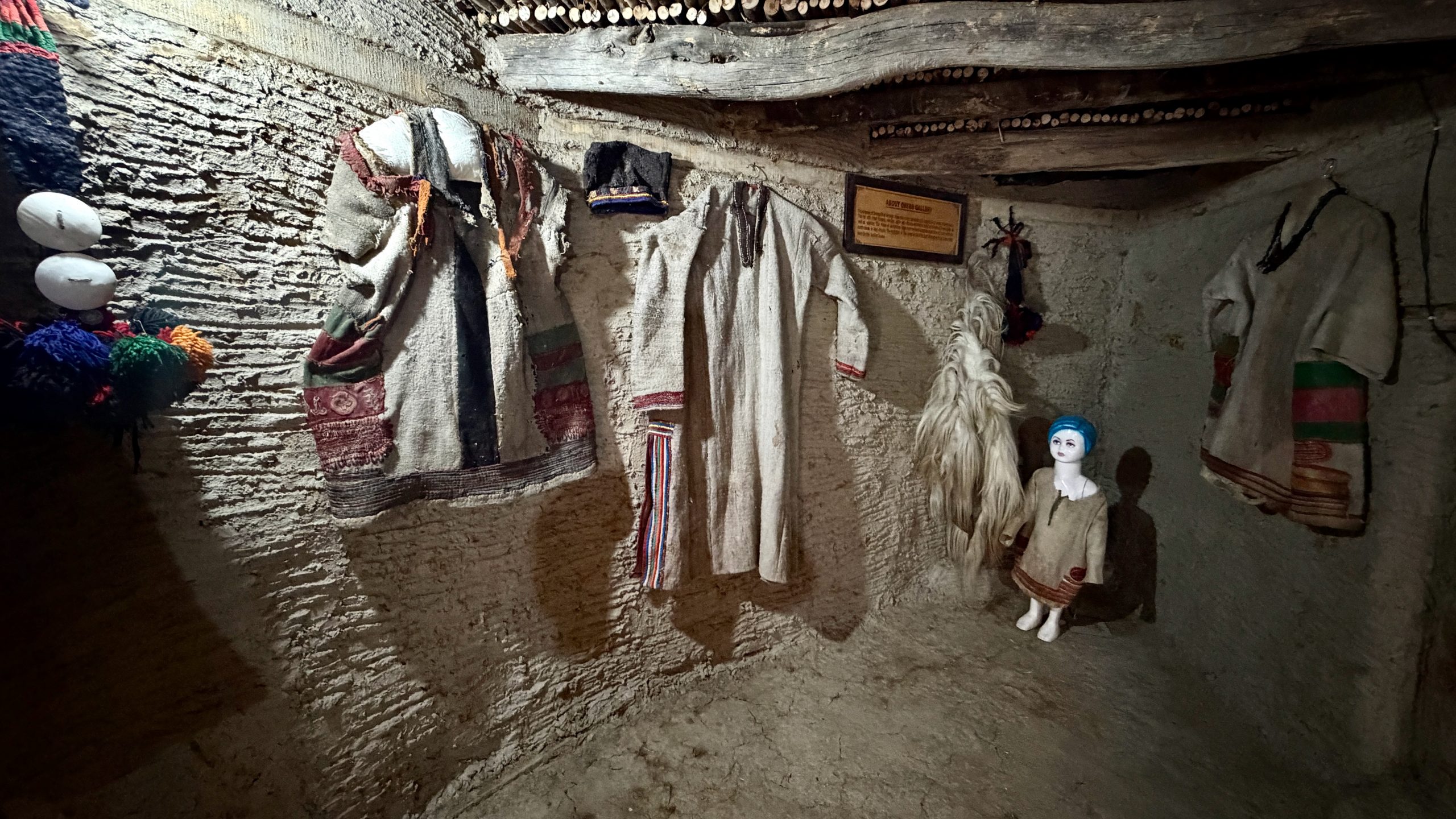
In the afternoon, we visited the museum. There weren’t any detailed explanations regarding the exhibition—except that a stone near the stove, which you weren’t allowed to get too close to, bore the handprint of Padmasambhava. It happened like this: In the 8th century, Padmasambhava traveled from Kashmir toward Tibet, constantly stopping along the way to meditate. He didn’t do so here in Garkone, but an old woman invited him in and hosted him. When he passed by again on his return journey, he wanted to thank her once more, but she happened to be out. So, he pressed his hand onto the stone, leaving an imprint, and told the people: “Give her my regards with this proof.”
The little doll in children’s clothes with the blue hair really fascinated me.
Then we wanted to head to the other side of the river. To do that, you have to cross the longest local bridge over the Indus. The weather had taken a turn, and it was even raining and windy at times. Because of that, the bridge was swaying, and I felt a bit scared.
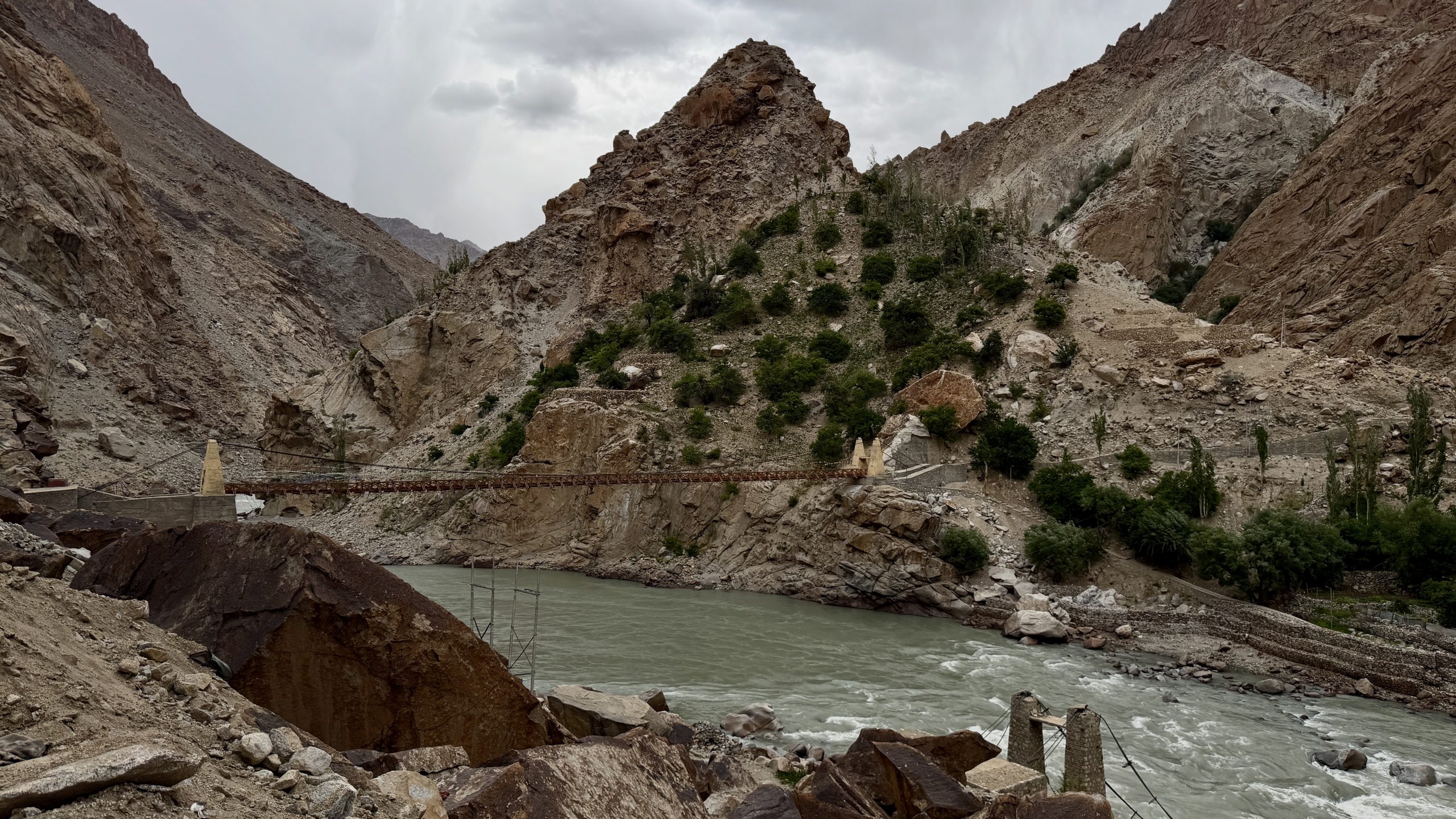
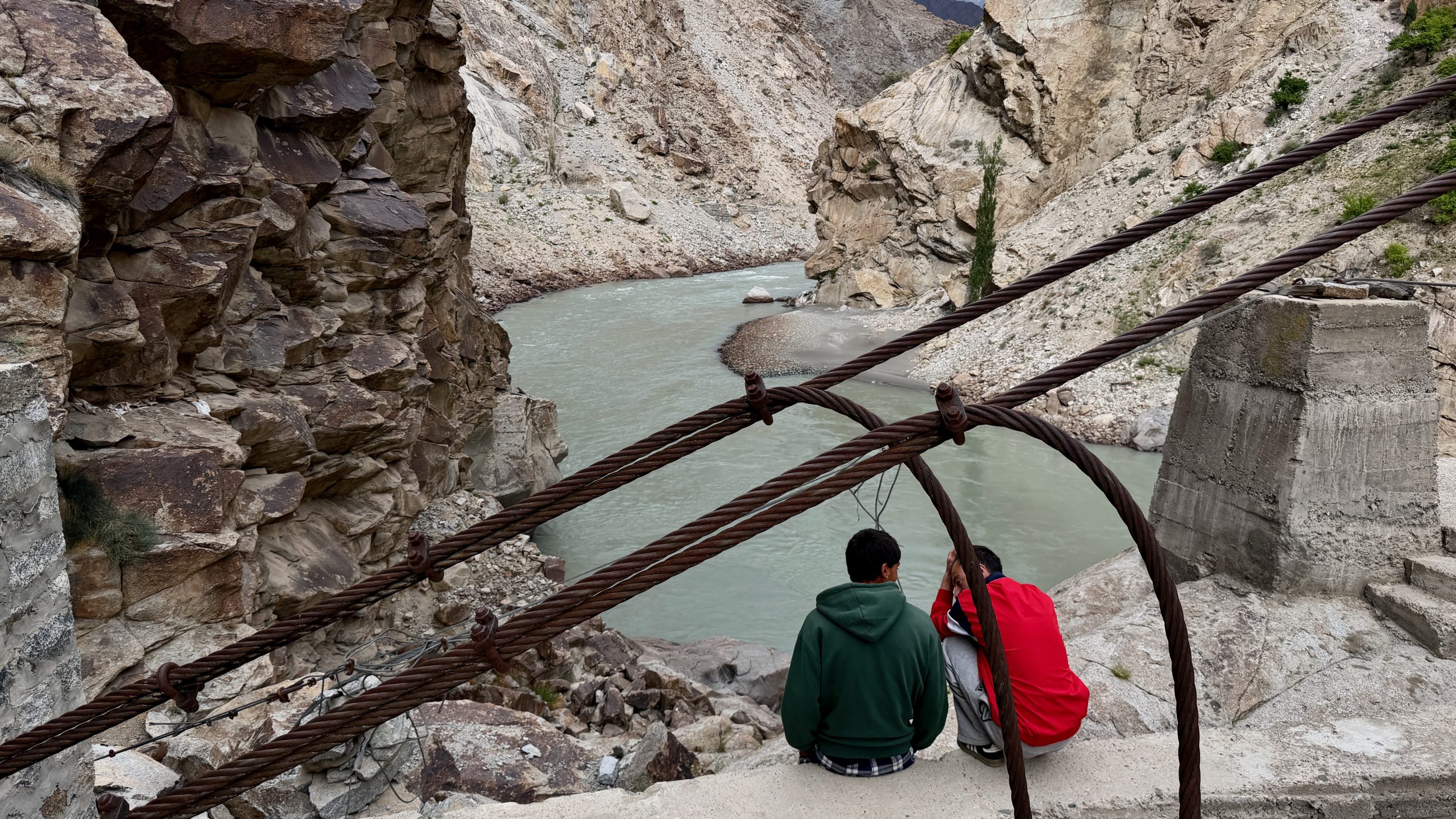
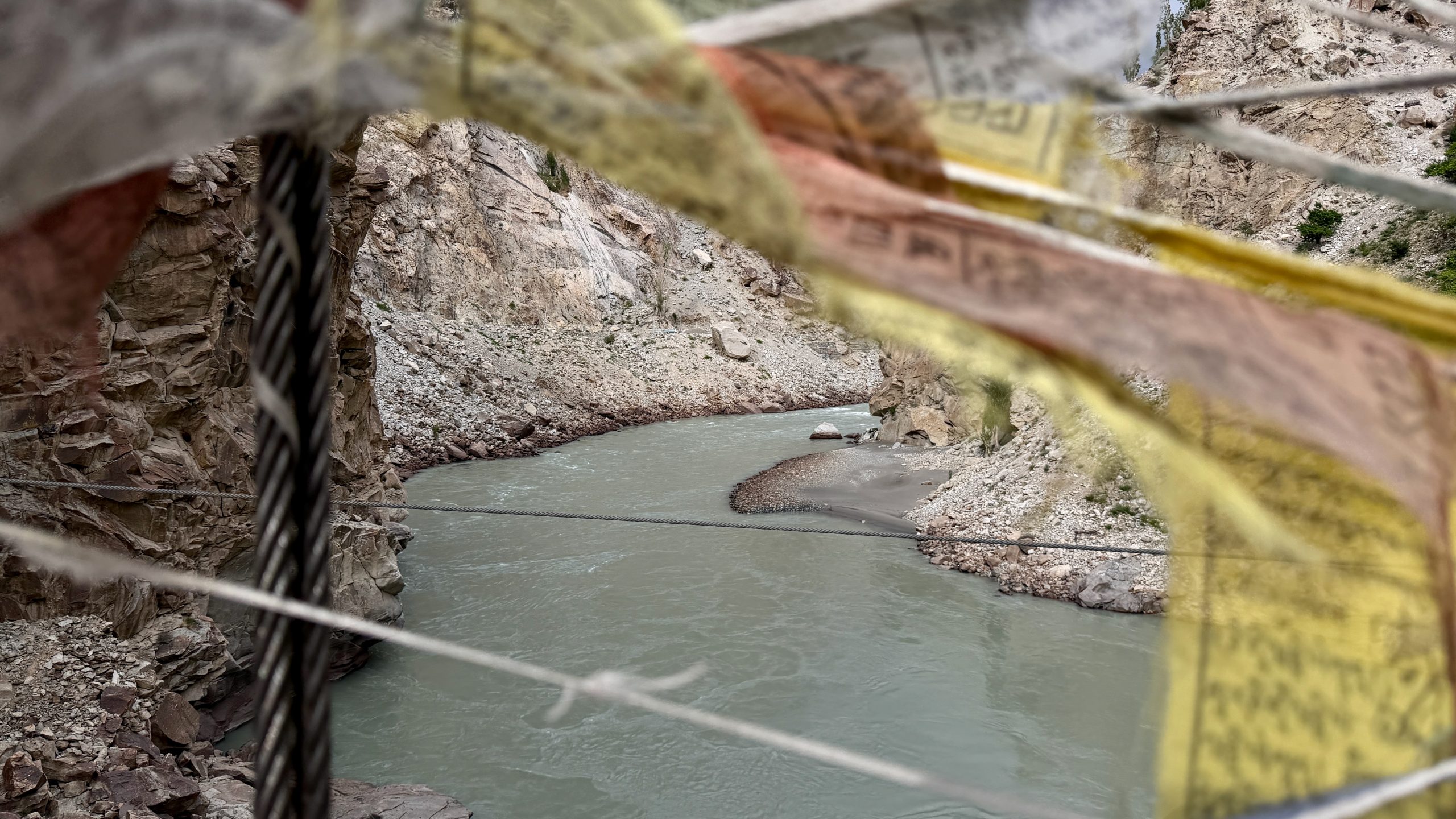
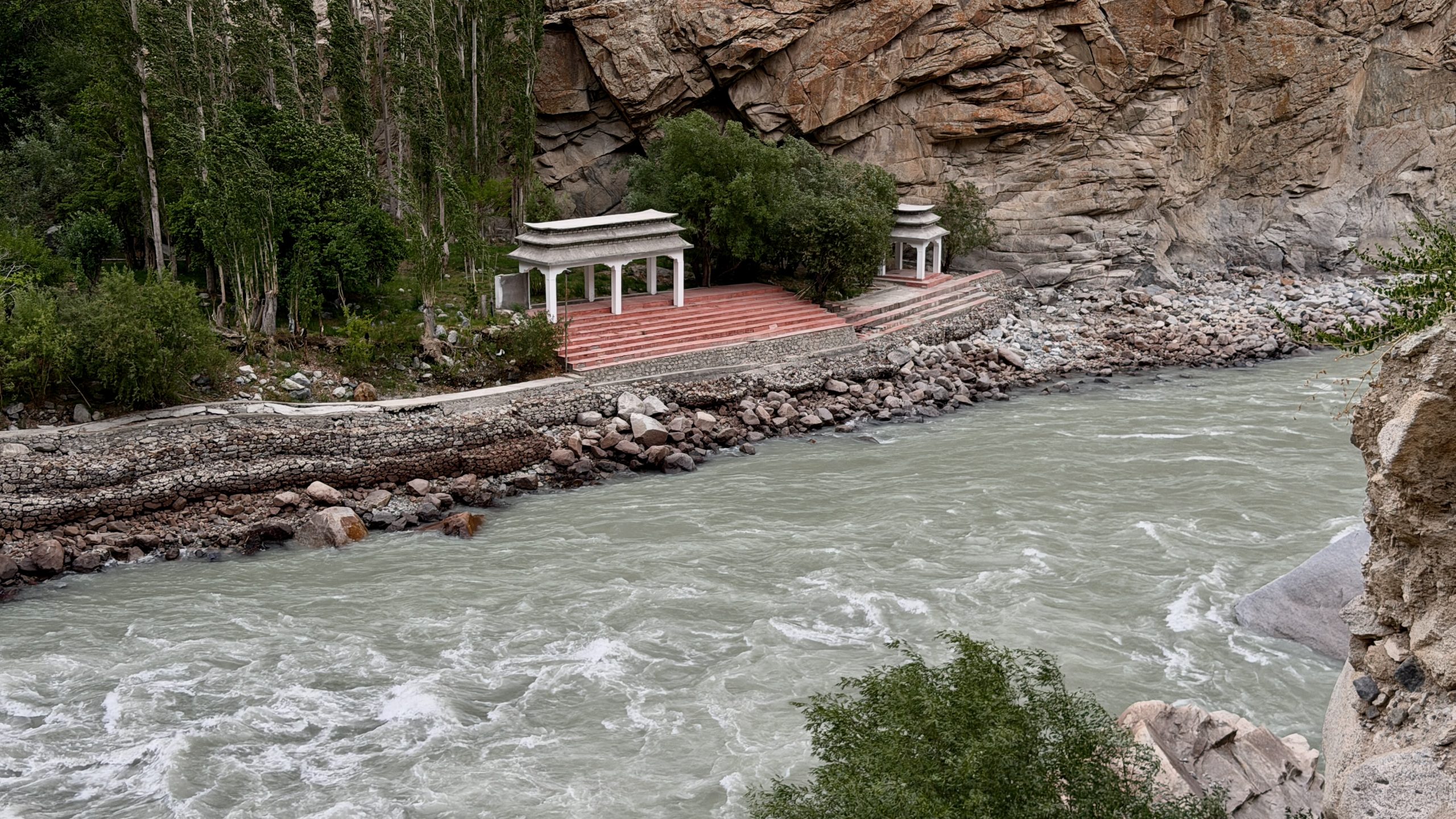
On the other side, there was a) a path leading to a village further up, which surely would have been great but was too much for me, b) a prettily situated camp, which wasn’t being run, though, and looked a bit run-down, and c) the Sindhu Ghat, where a devout Hindu is supposed to be able to take a good dip in the Indus. Nobody was doing it, though.
Actually, I had planned to stay longer, but I cut it short. My back made any major undertakings impossible, and I wasn’t enjoying myself anyway. I also couldn’t see how staying longer would change that. So, I preferred to head back to my truly comfortable bed in Leh.
The next day, the bus was only running from Hanu, and a car took me there for a fee. I had to wait for quite a long time, but that didn’t matter. A group of Indian workers was lounging around, trying to make some small talk, and seemed relieved when the bus actually arrived for me. The day before, I had taken a lot of painkillers and used a very hot hot-water bottle, and my back has been significantly better since then, not requiring any more pills. It is still painful and stiff, though. In any case, the ride back was fine, and I was glad to have escaped that narrow valley again.
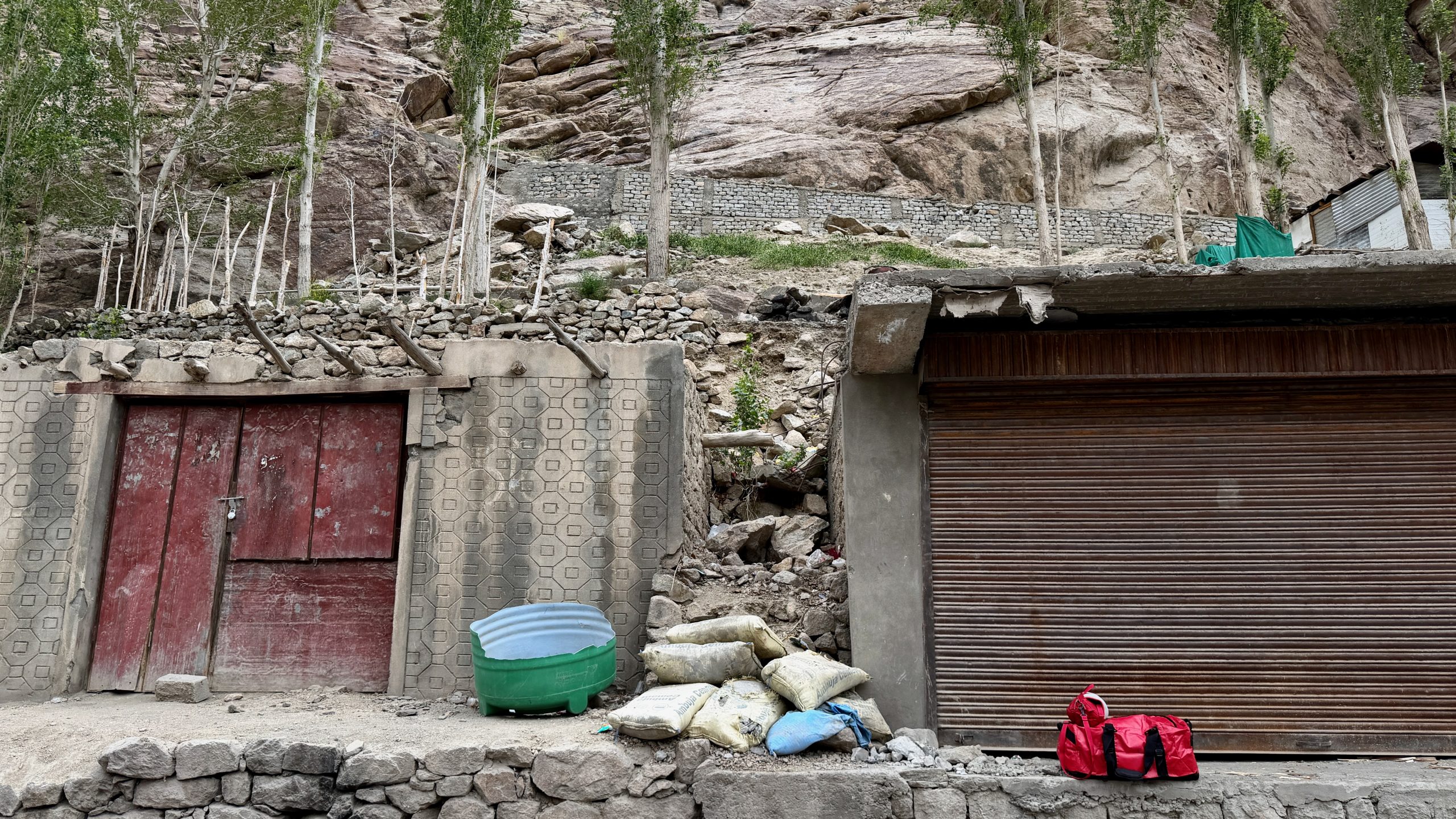
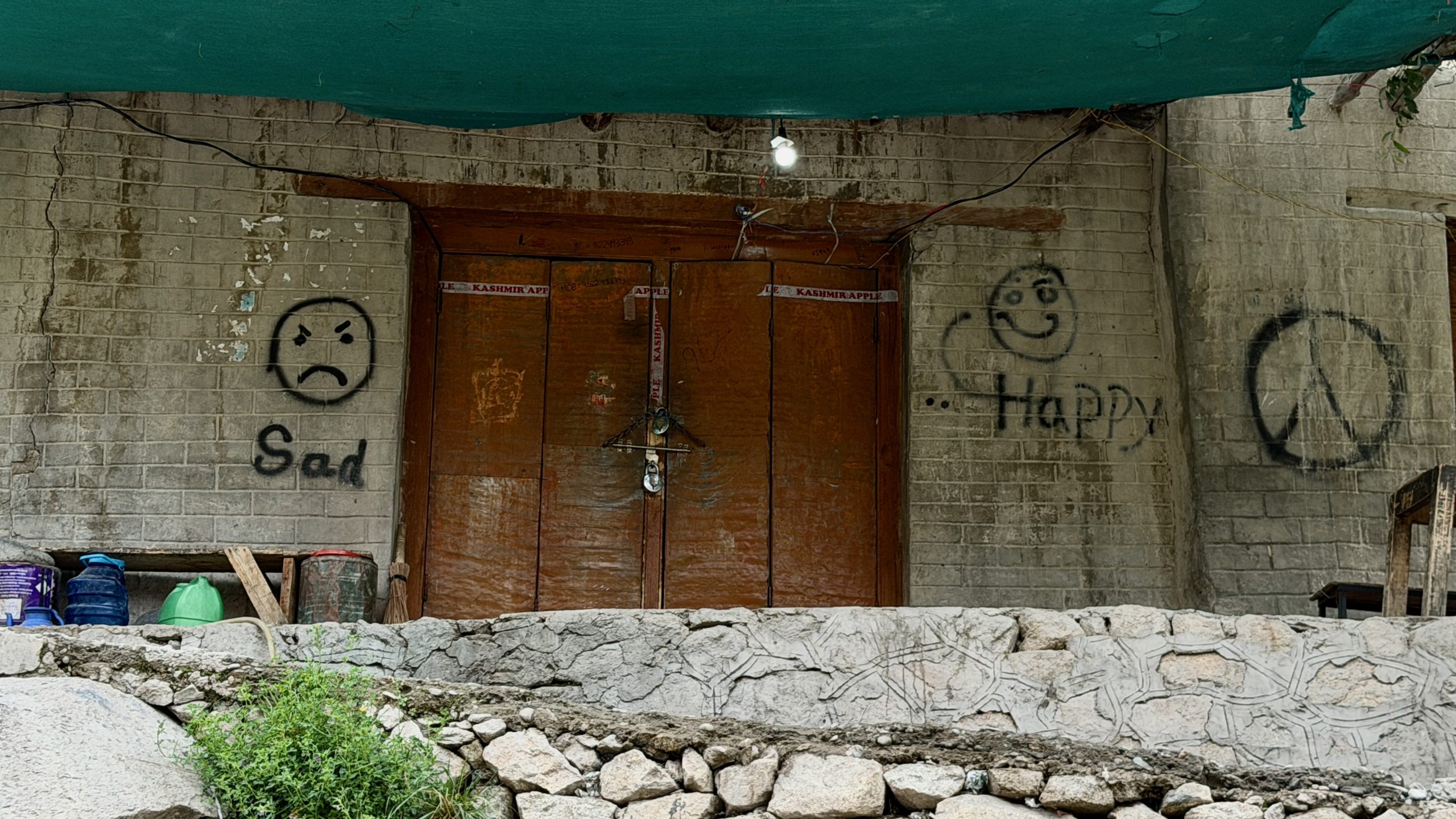
I was so glad I did the tour! Now I have a third impression of the area and am convinced that I really don’t need to go back there. Only the stretch between Garkone and Kargil, with the Muslim villages and more open space, would still have interested me a bit. But my body just wasn’t up to it.
So, I personally cannot recommend the Aryan Valley, but if someone still wants to go: why not. After all, the road along the Indus is quite spectacular and great to drive. And all these stories and the history aren’t uninteresting either. Plus, if you have the right people by your side, it might be more accessible.