


Hemis Shukpachen -> Leh – Workout before the tour
17. September 2026
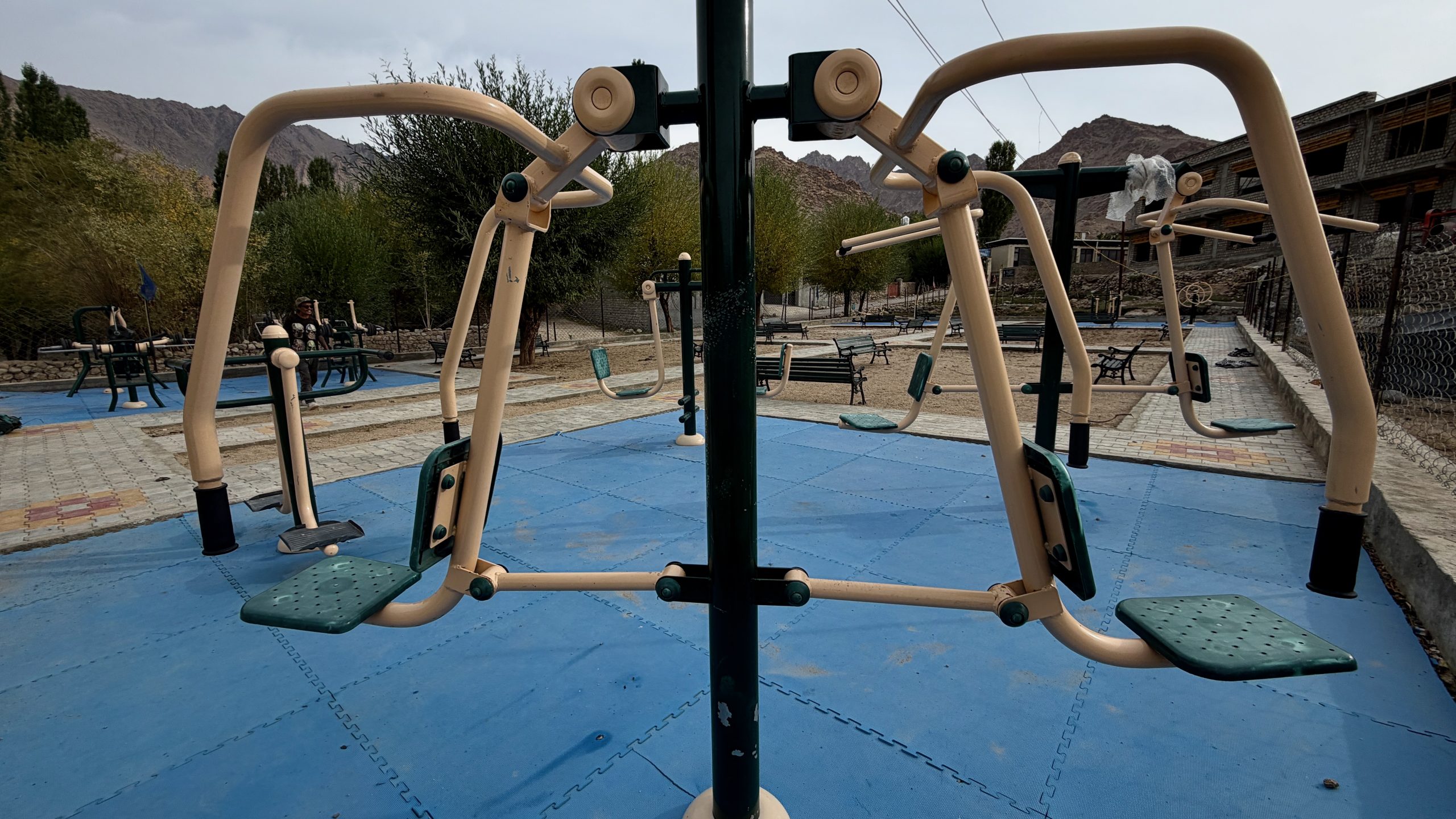
We didn’t manage to visit one sight the day before: this incredible outdoor workout park located right between the homestay and the large Buddha statue. Nobody was looking to pump iron while we were there, and I’m really curious who built it and for whom. Stupidly, we forgot to ask….
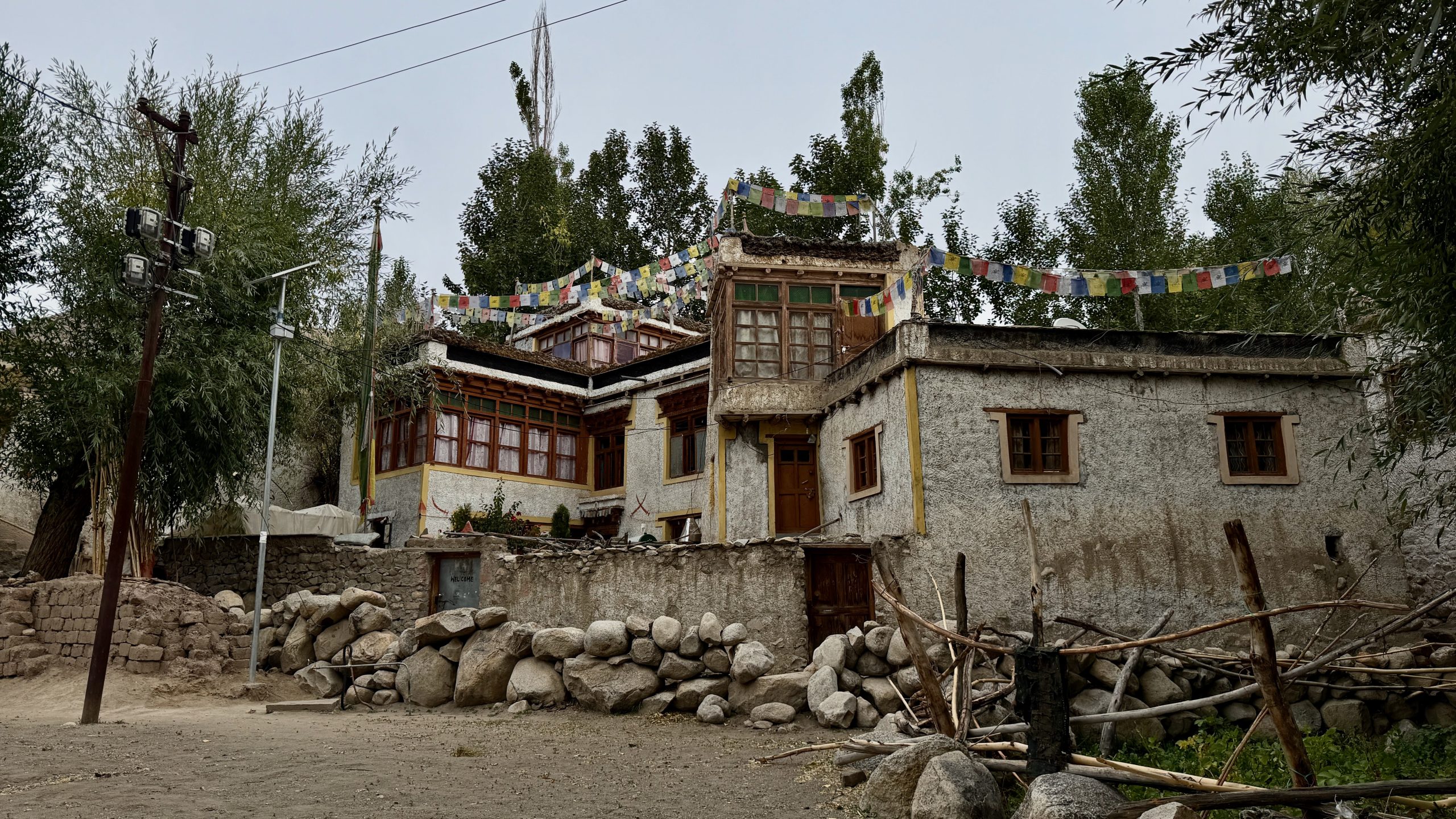
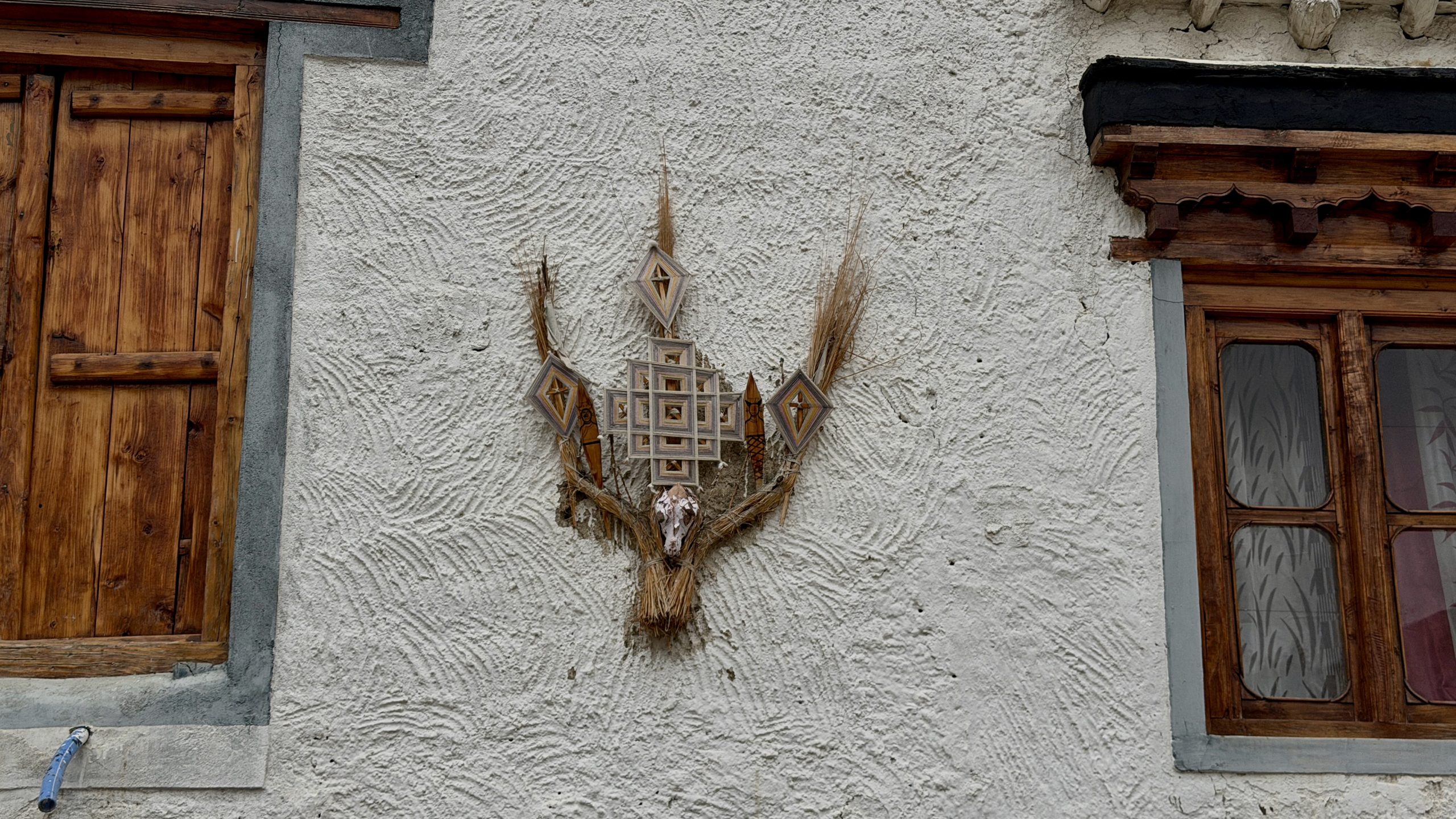
Elsa had already taken off early on her own, and our only plan was to walk the 10-kilometer road down to reach the highway. I had a fair bit of work to do on my laptop and didn’t want to get into Leh too late. The sky was overcast as we ambled downhill. There were still old houses to admire along the way, as well as some intriguing “art.”
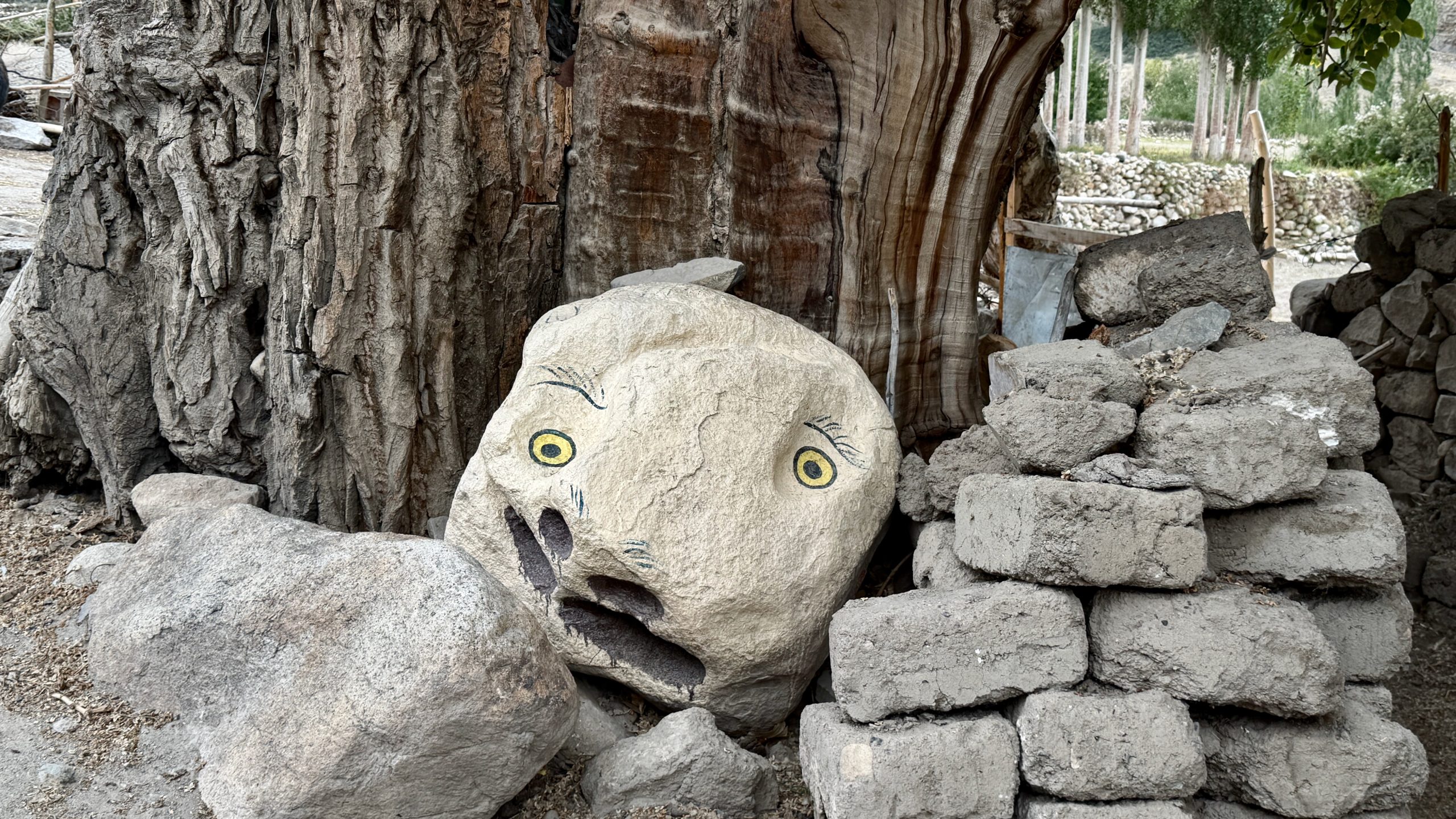
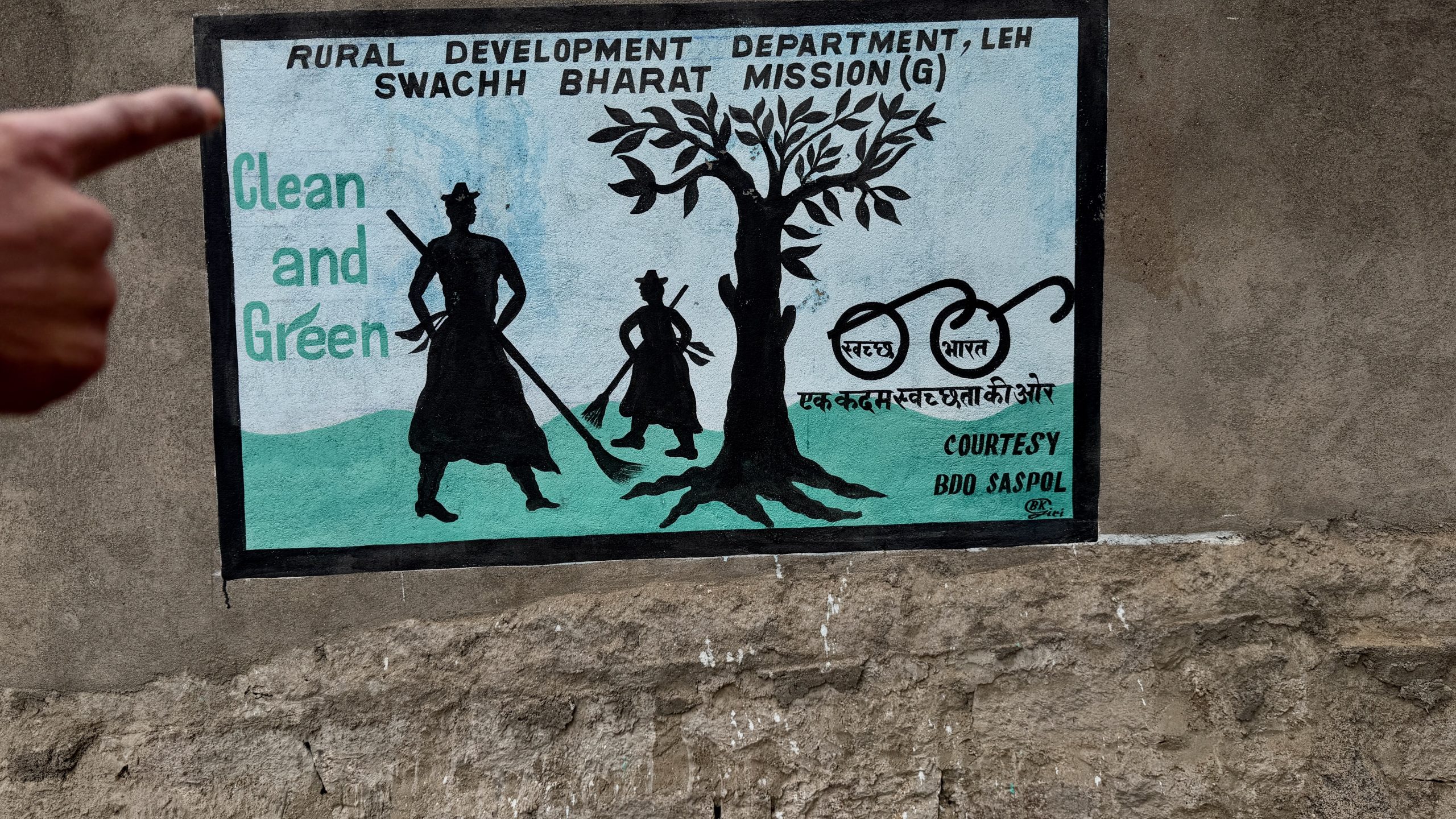
In the left lens of the glasses it says “clean” and in the right “India”—and the joke is that they’re written in two separate lenses of Gandhi’s glasses because they don’t belong together. Cleanliness and India just don’t go hand in hand. Or so local humor goes.
Years ago, I visited a small private museum around here and wanted to see what had become of it. We managed to find it, but the building had been damaged by heavy rains the previous year, so the artifacts were being stored elsewhere, waiting to be displayed in new premises. Unfortunately, that wouldn’t happen until next year. But wouldn’t we like to come inside for tea? Of course—tea invitations are always a great opportunity to learn a bit more. This time, however, a completely different surprise was waiting for us.
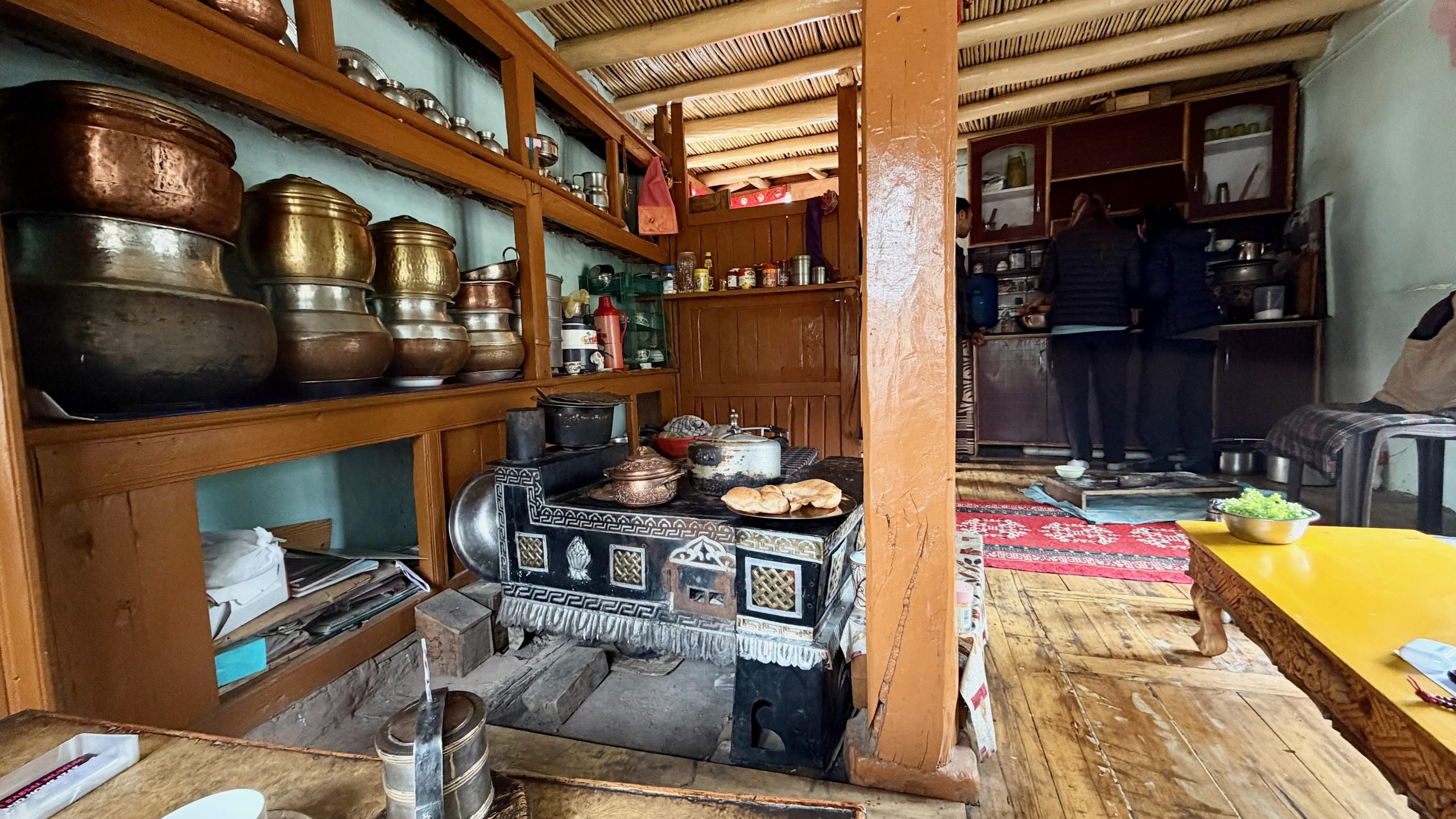
In the tiny kitchen, two young Israeli women were busy frying up small puris. They had rented a room for a few days to help out and learn the ropes. Our conversation started off a bit hesitantly—because of history and current politics, I always feel a certain reluctance when talking to Israelis. But it turned into a truly wonderful, moving conversation. The two of them were remarkably open and curious, and we learned about historical perspectives we hadn’t known much about before. A major topic was the silence that followed World War II. I hadn’t realized that many survivors on their side remained silent as well, and that shame and guilt actually weave through both of our social histories.
It’s through conversations like these that I find a bit more optimism for the future, and hope that at least parts of the younger generation are on the right path.
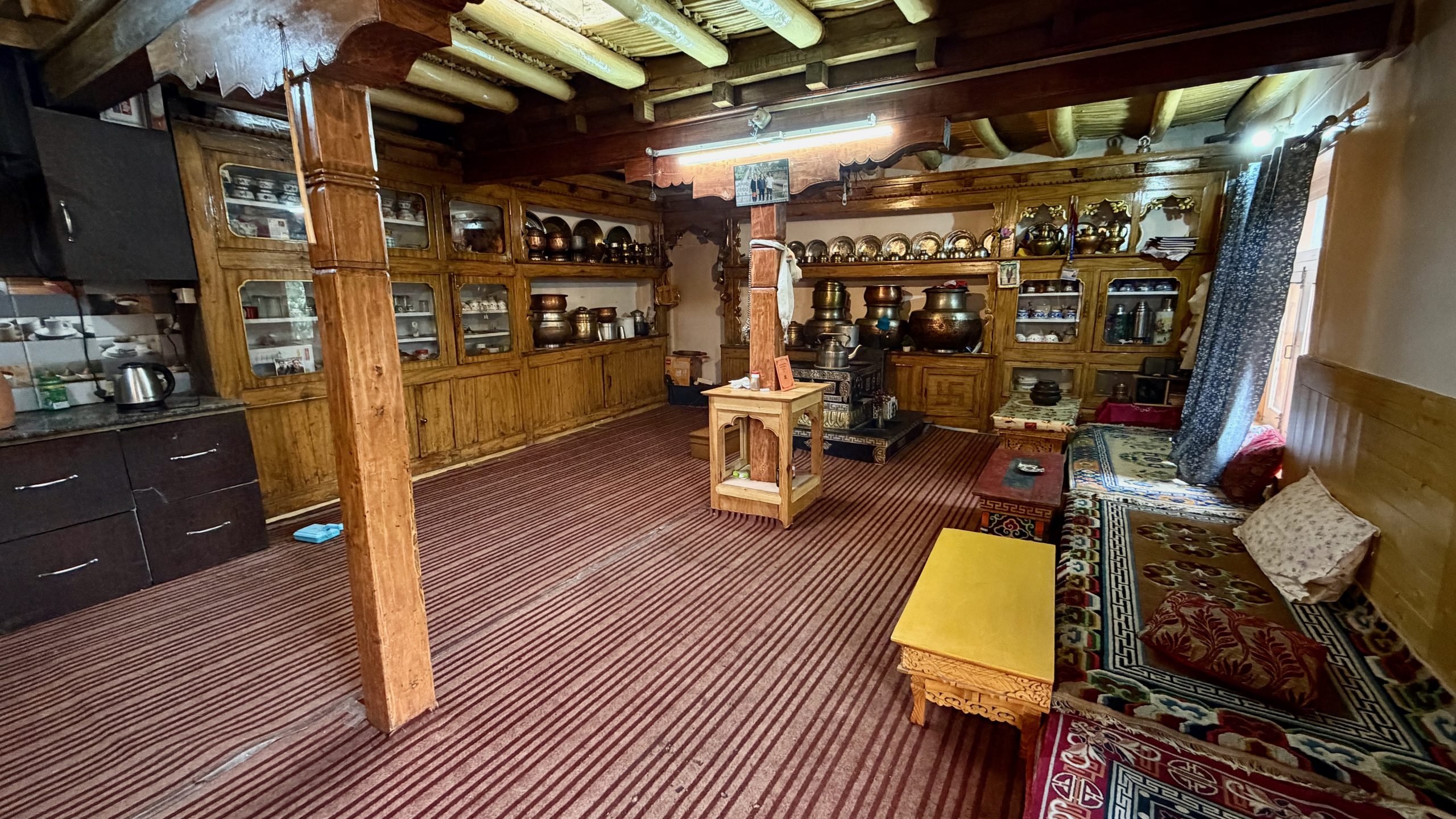
The homestay family was also incredibly sweet and warm, leaving us regretful that we hadn’t stayed here instead. They even showed us their large winter kitchen, and we were glad to leave Hemis Shukpachen with a much warmer, more hospitable impression.
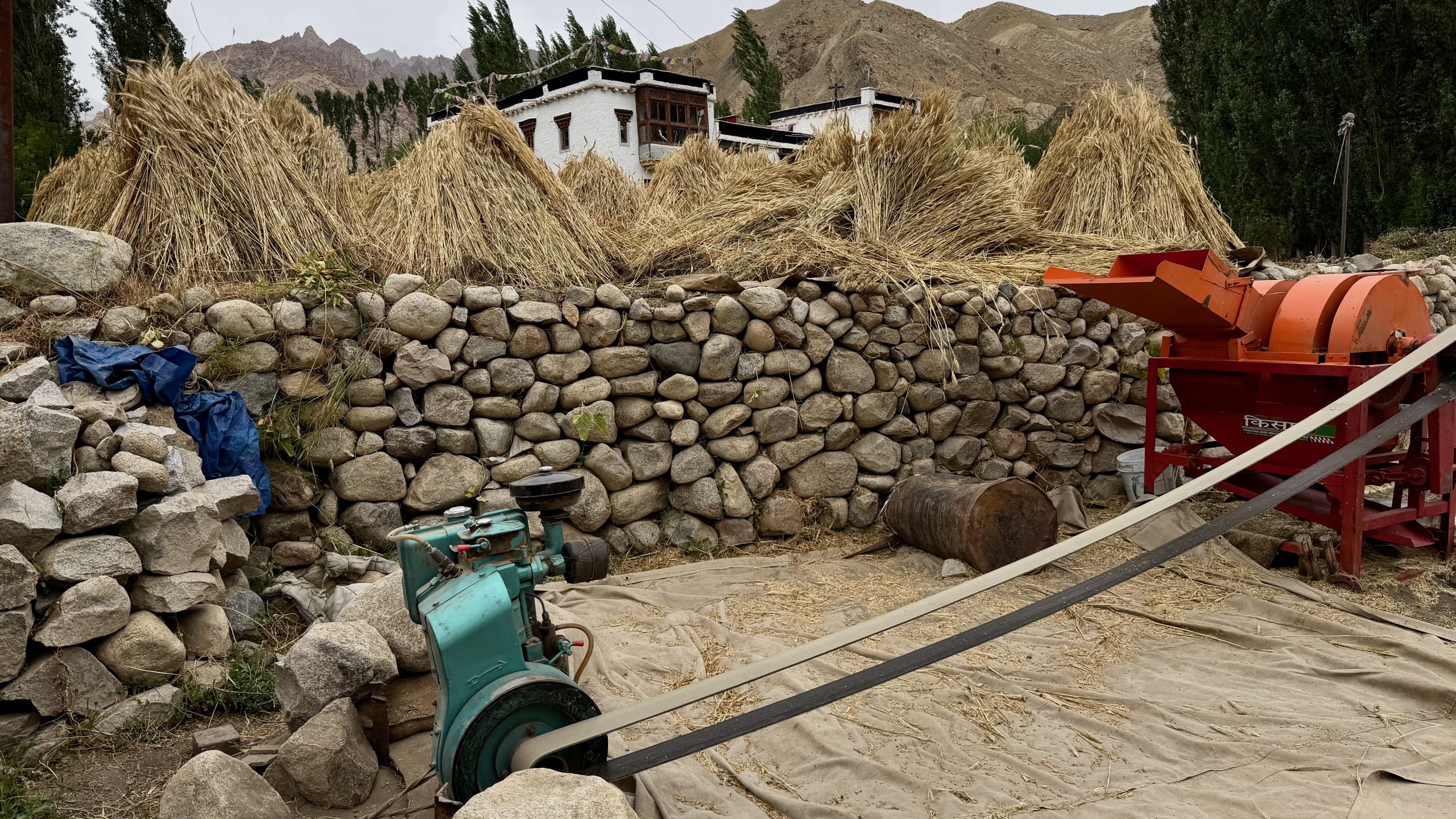
Here, the harvest wasn’t quite as far along yet:
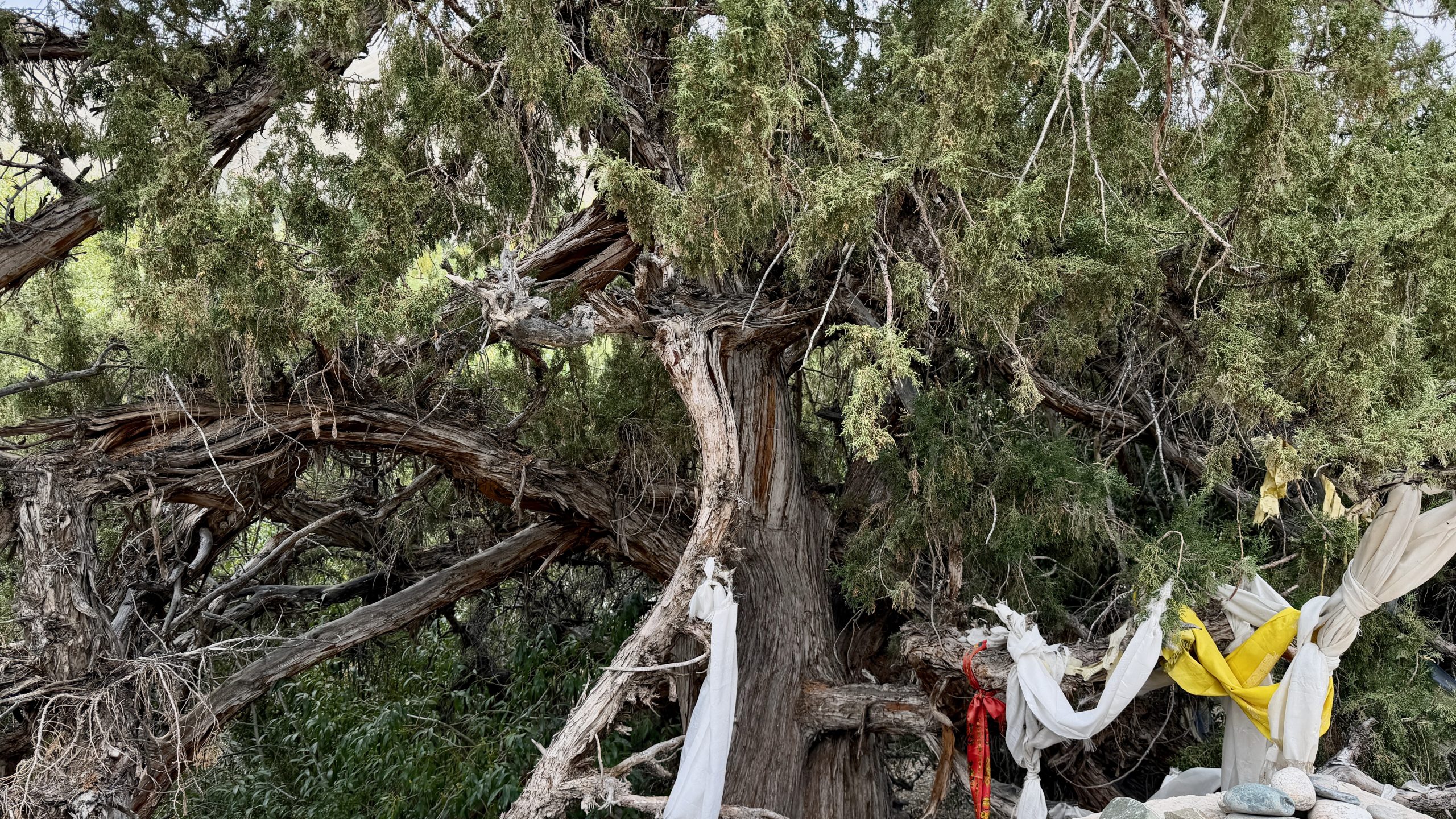
Shukpa means juniper, and Hemis Shukpachen is famous for its large juniper trees. Up higher, they stand gathered together in a small grove, but there were also individual, magnificent specimens further down.
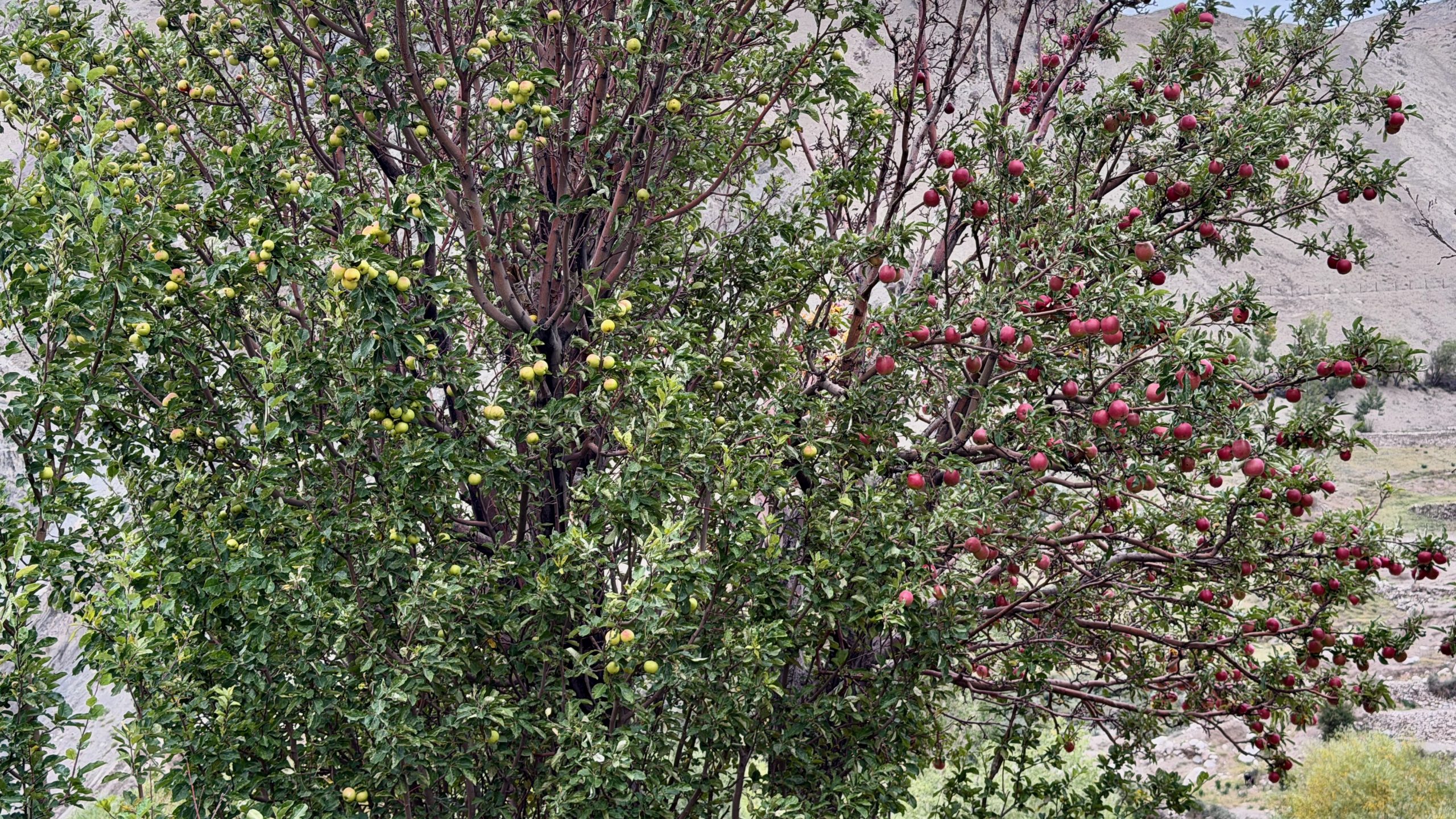
The apples were ripe as well. In the past, I always found Ladakhi apples a bit bland, but this time I was offered a few that were delightfully sweet and juicy.
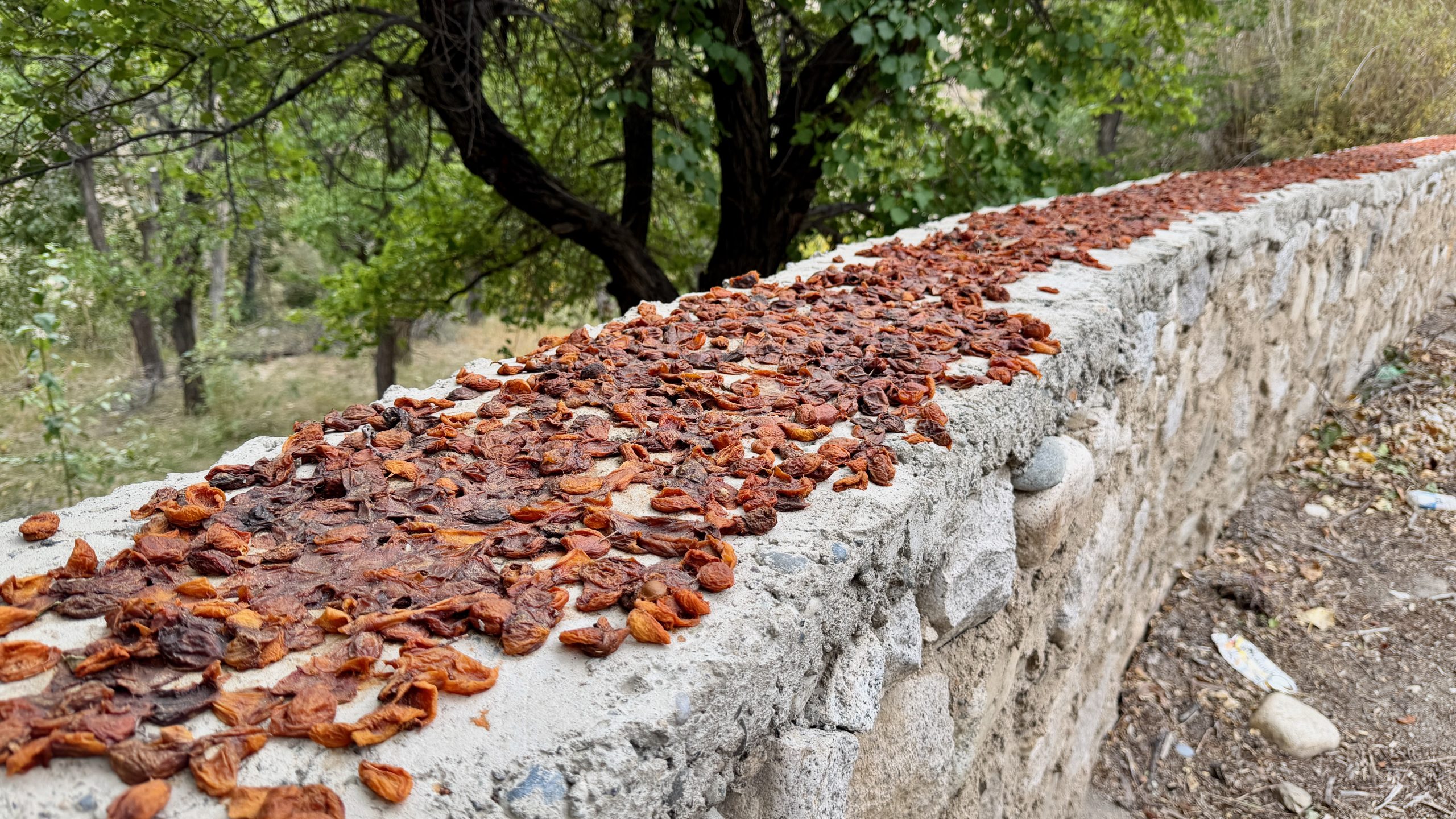
The apricots were being harvested as well, with some set out to dry.
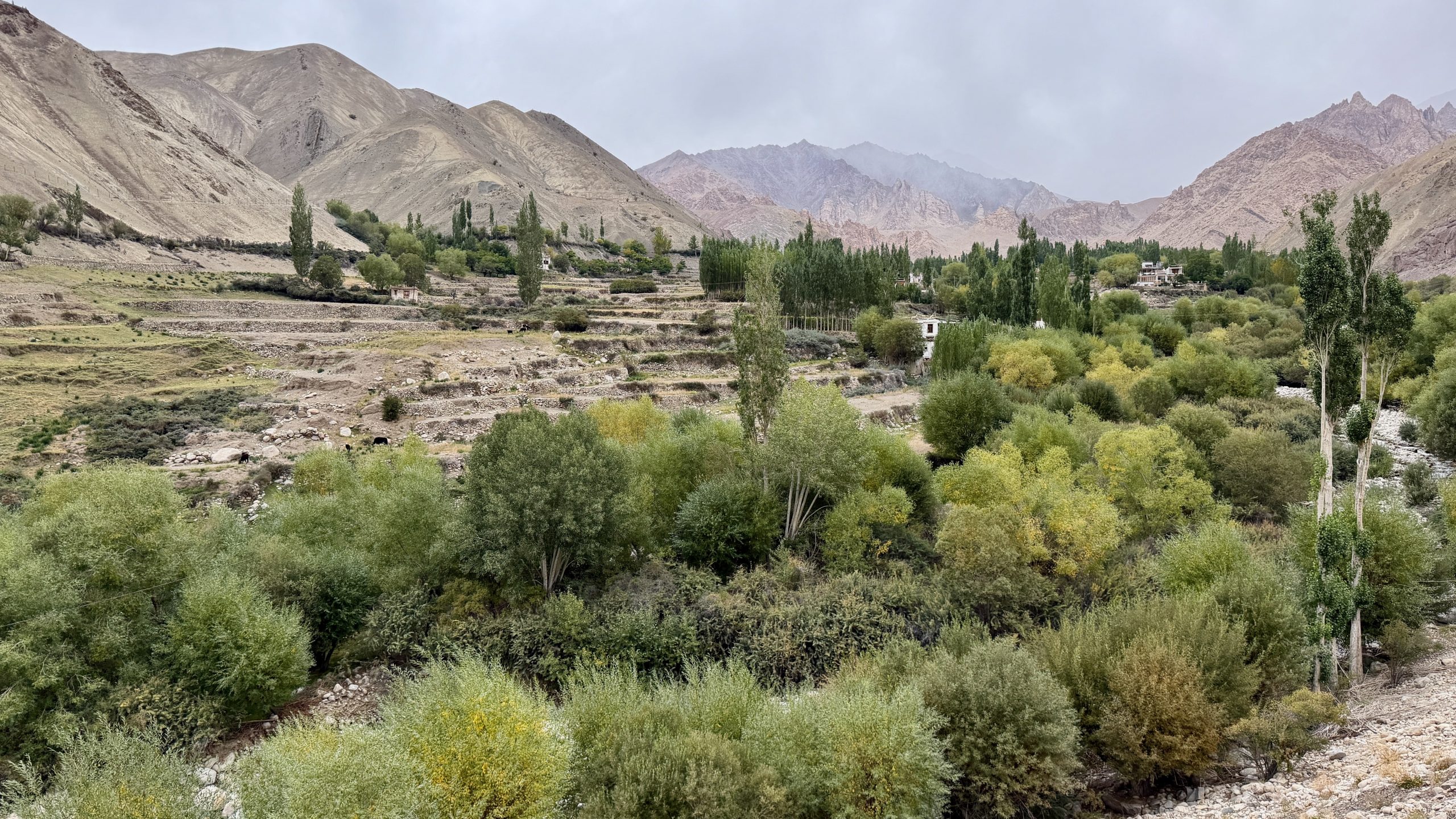
The village is truly huge; you just keep walking and walking downhill, and yet more homesteads keep appearing. Here’s a look back:
There were hardly any cars on the road. It wasn’t bad at all to just amble downhill like that—it made for great conversation. Even so, we kept an eye out for a ride, and right at the far end of the village, our luck held: a car heading down had enough room for us. Before long, we were standing by the main highway, trying to flag down a lift.
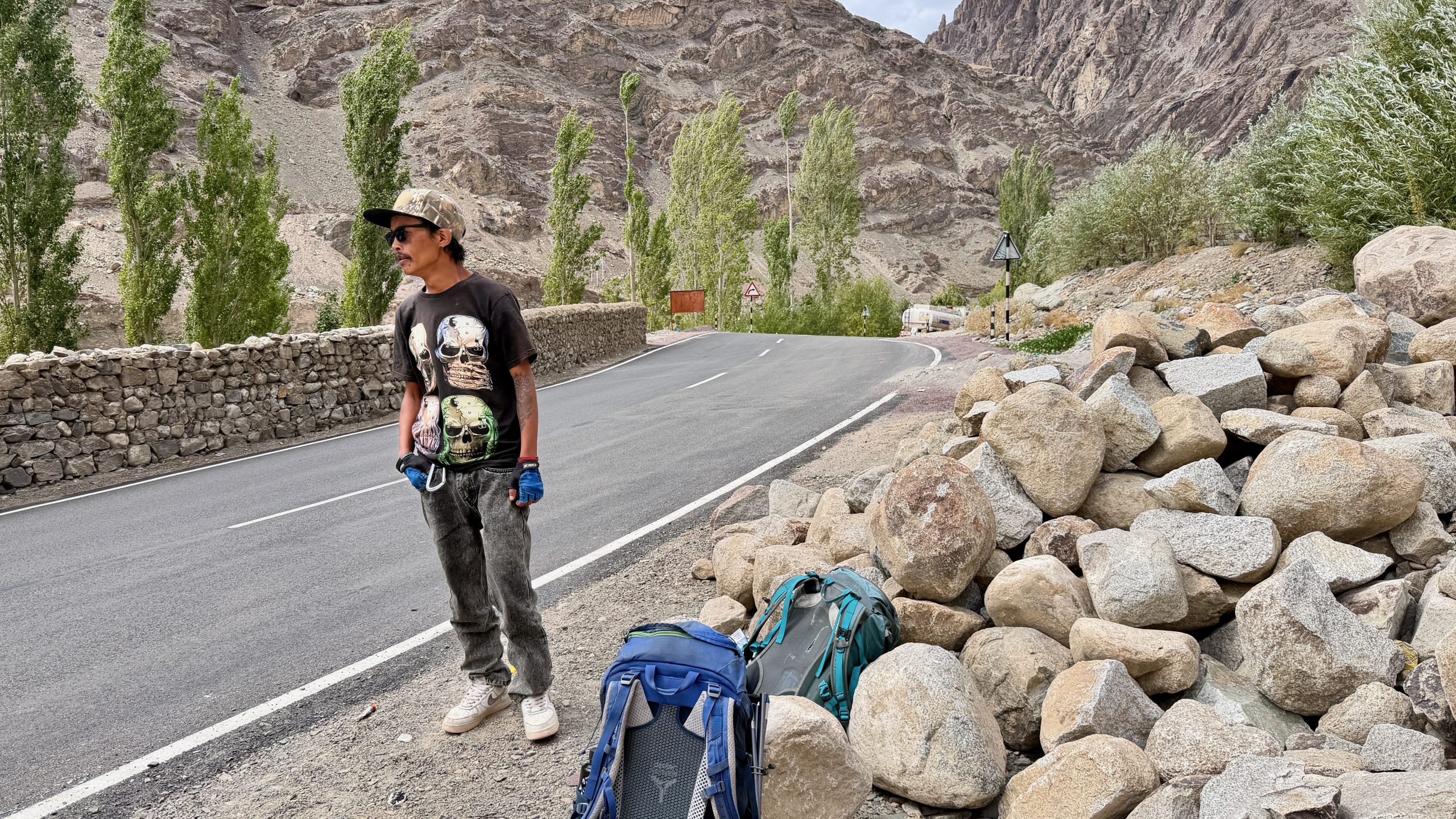
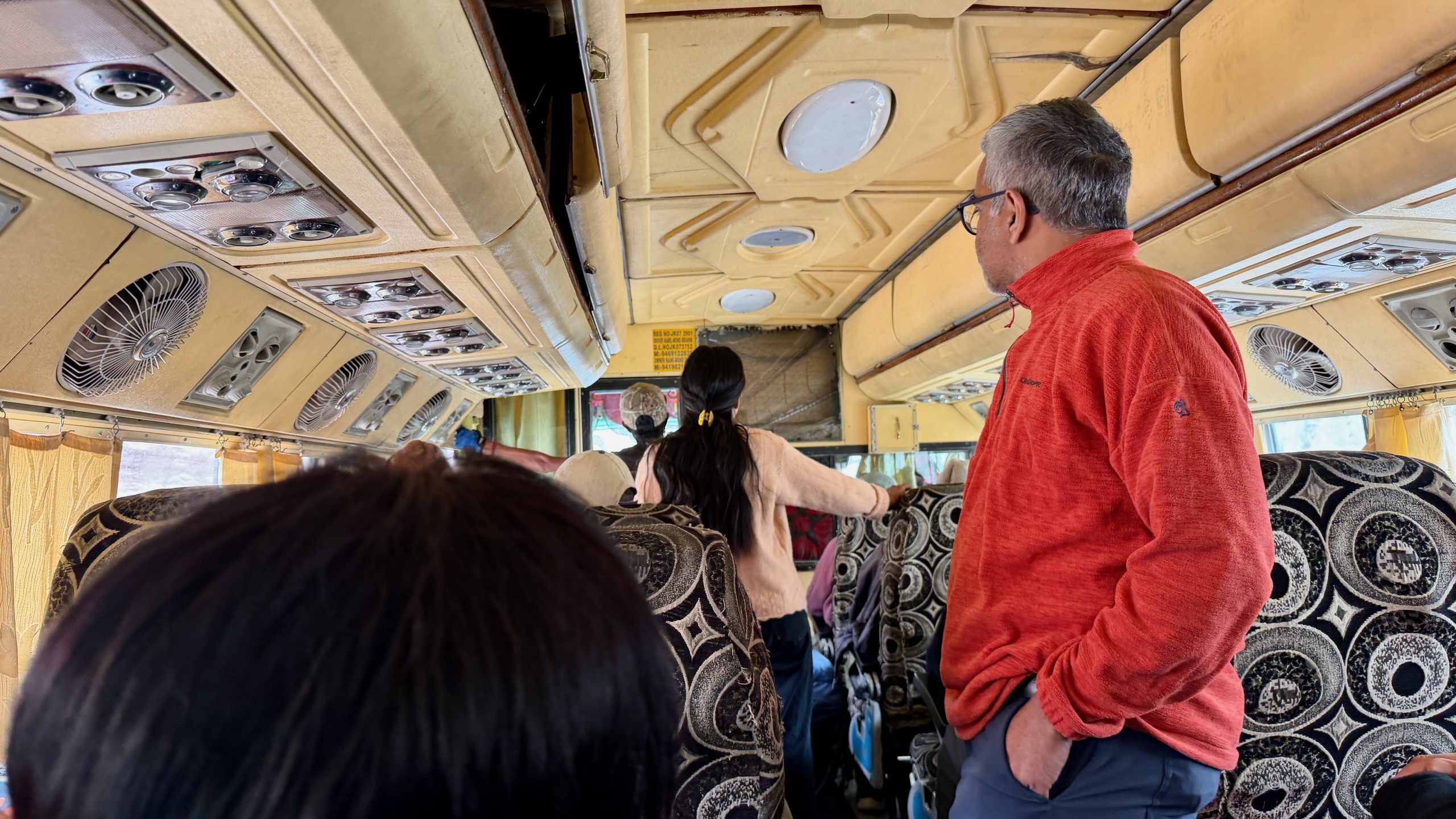
But even the ones with empty seats didn’t stop. Luckily, a bus came along. It was comfortable, though all the seats were already taken. But I must have looked pretty exhausted and old—this nice man offered me his seat.
And before long, we were back in Leh, enjoying lunch together before Rinchen walked me to the guesthouse. On the way, we showered each other with compliments. I honestly couldn’t have asked for a more pleasant companion. Rinchen was always in high spirits, loved sharing stories, conversed effortlessly with everyone we met, helped out wherever he could, and constantly looked out for my well-being. Despite my frustrating asthma (which improved at lower altitudes—we kept the inclines to a minimum and I relied more on my rescue inhaler), I had an exceptionally good time filled with new discoveries, wonderful encounters, and fresh perspectives.
It was an all-around successful trek that made me feel somewhat reconciled with tourism in Ladakh. So much of what I loved about Ladakh was still there, and I actually quite liked some of the new changes. The Sham region is definitely always worth a visit!