


Kharu – One Highlight follows right after the Other
19. June 2026
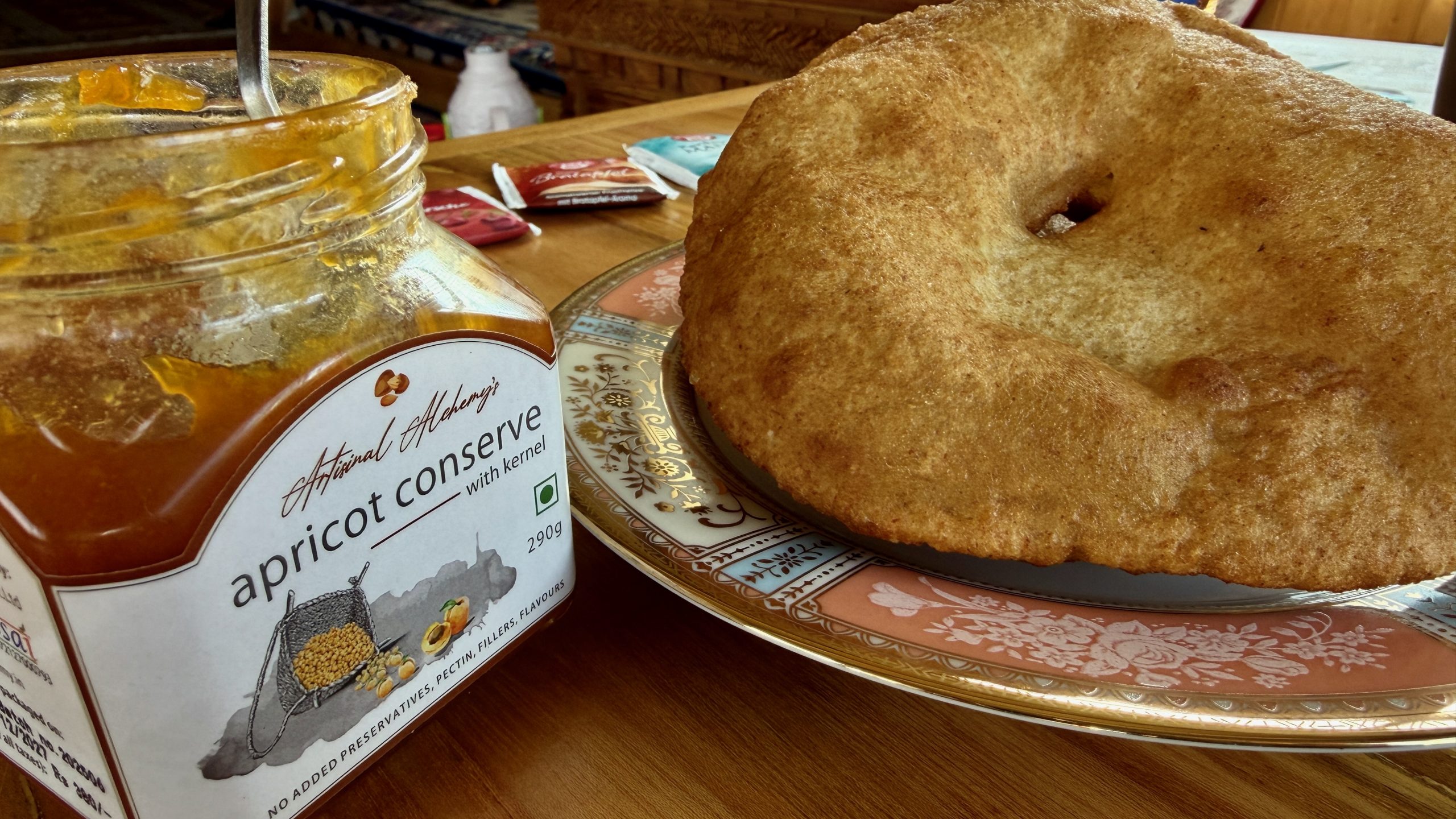
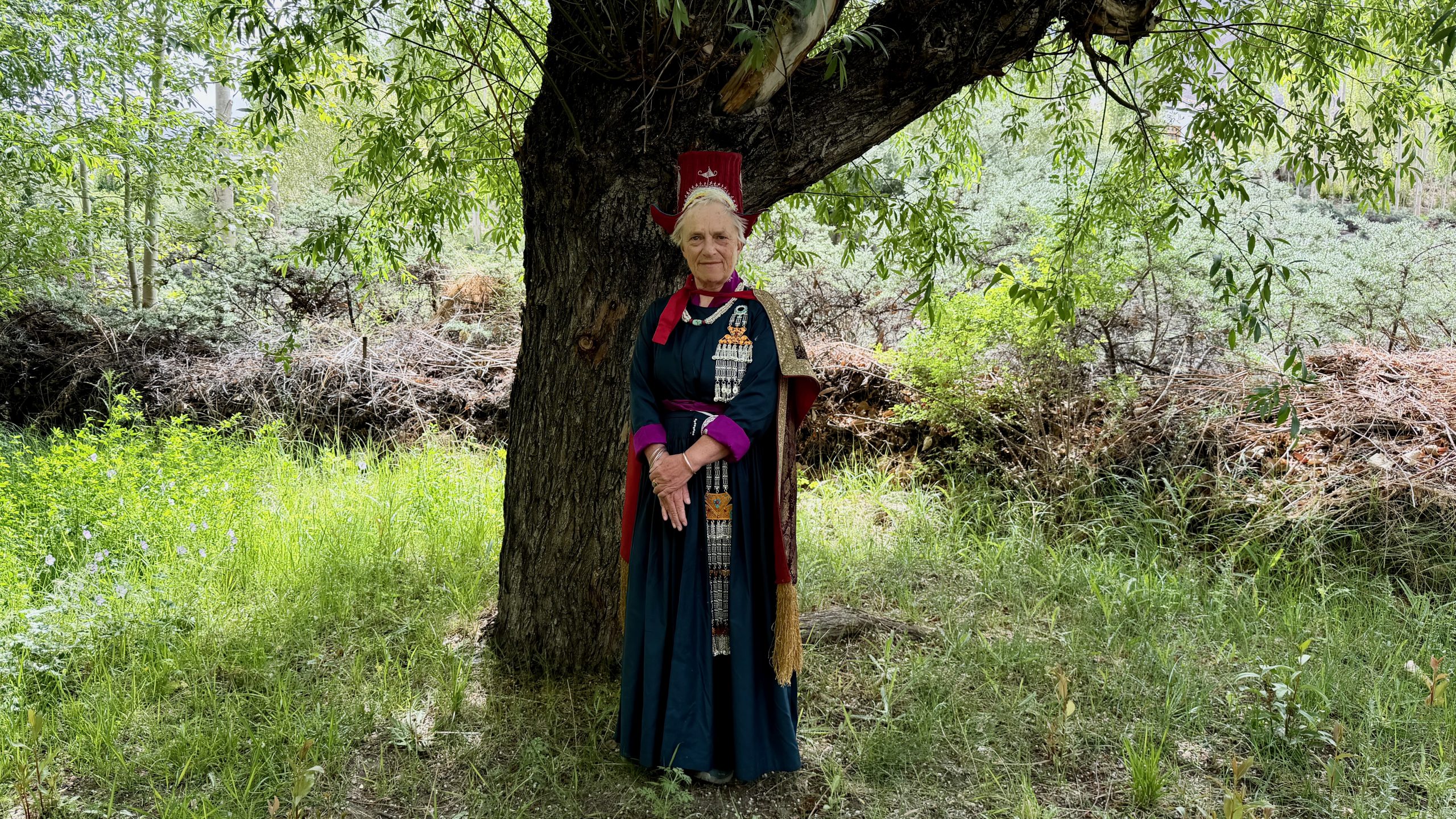
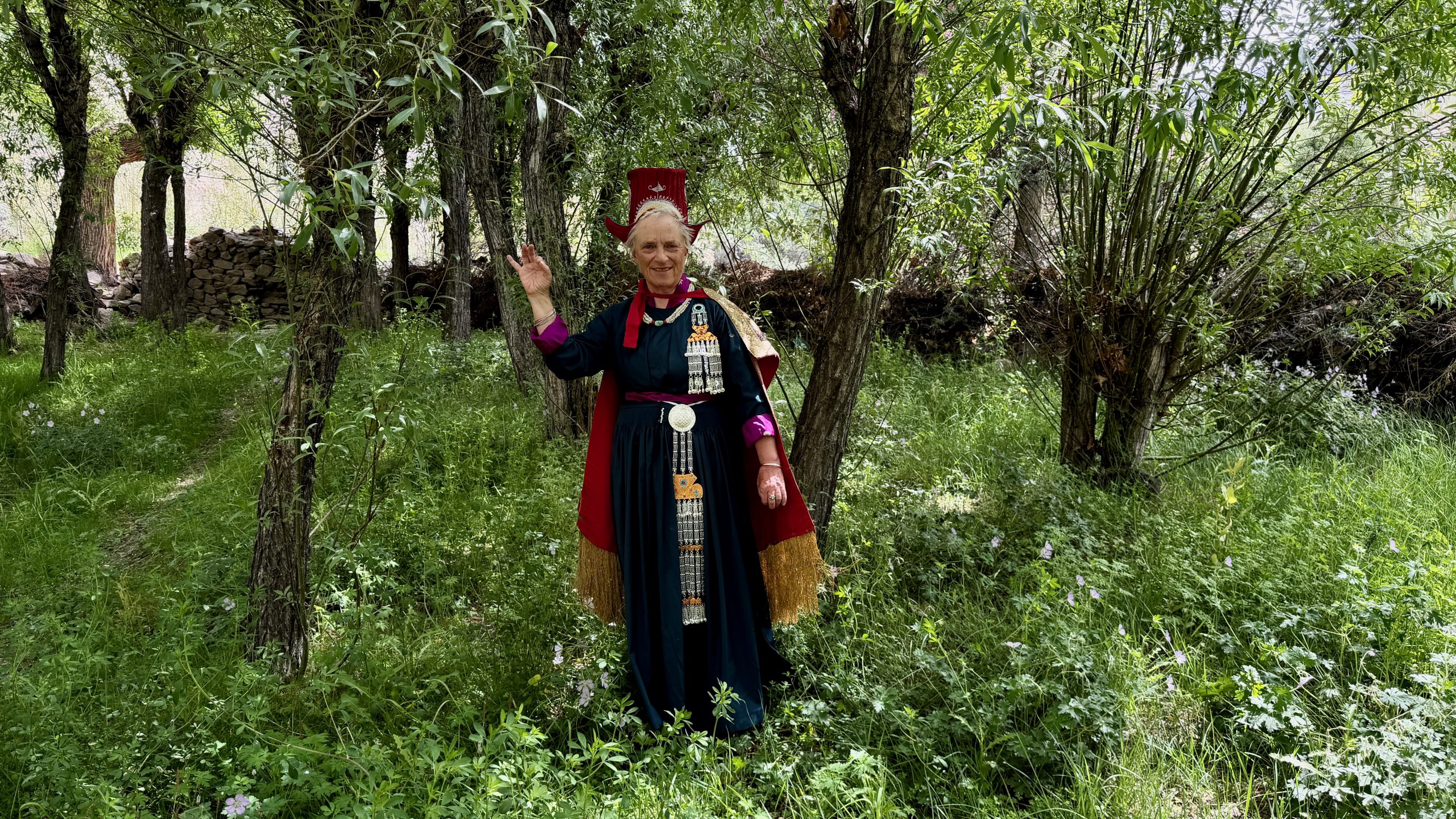
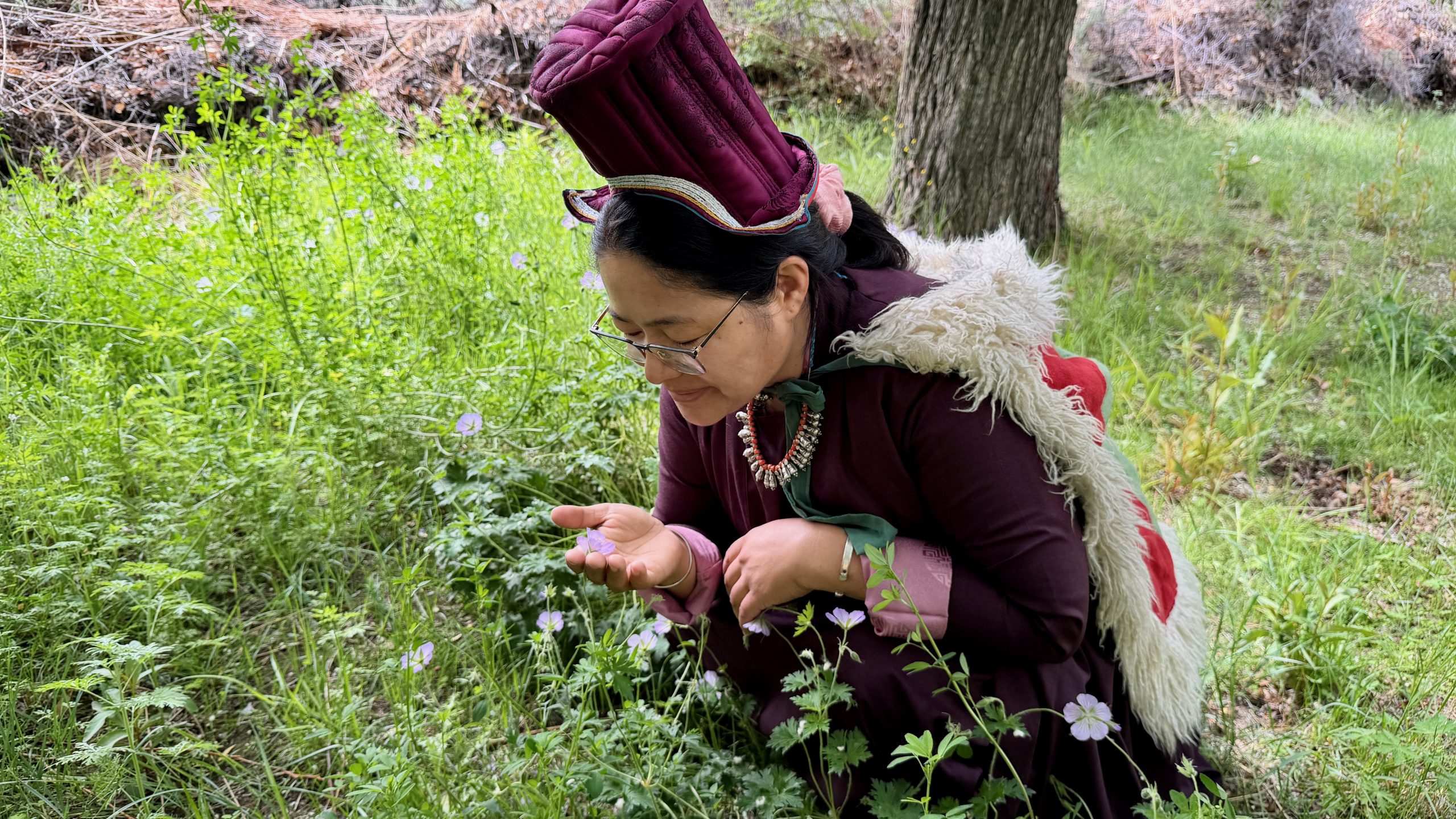
After a delicious breakfast—an interesting discovery: when you deep-fry puris in mustard oil, the whole house smells of mustard, but the puris themselves taste completely neutral—we dressed me up very elaborately and Tsering Dolma somewhat less elaborately in traditional clothing, then danced and took photos. I felt like a queen and found the title “Gyalmo” entirely appropriate.
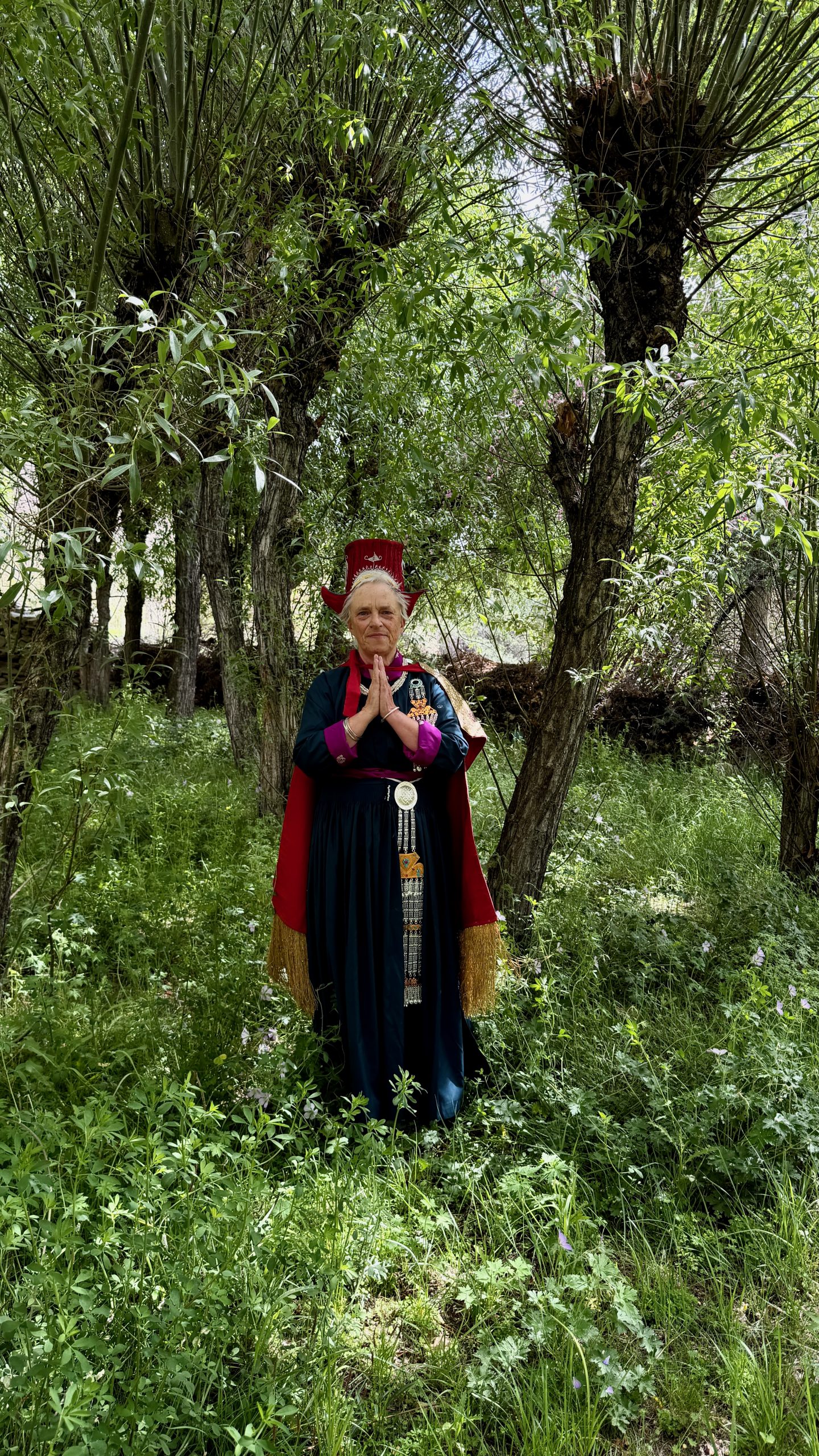
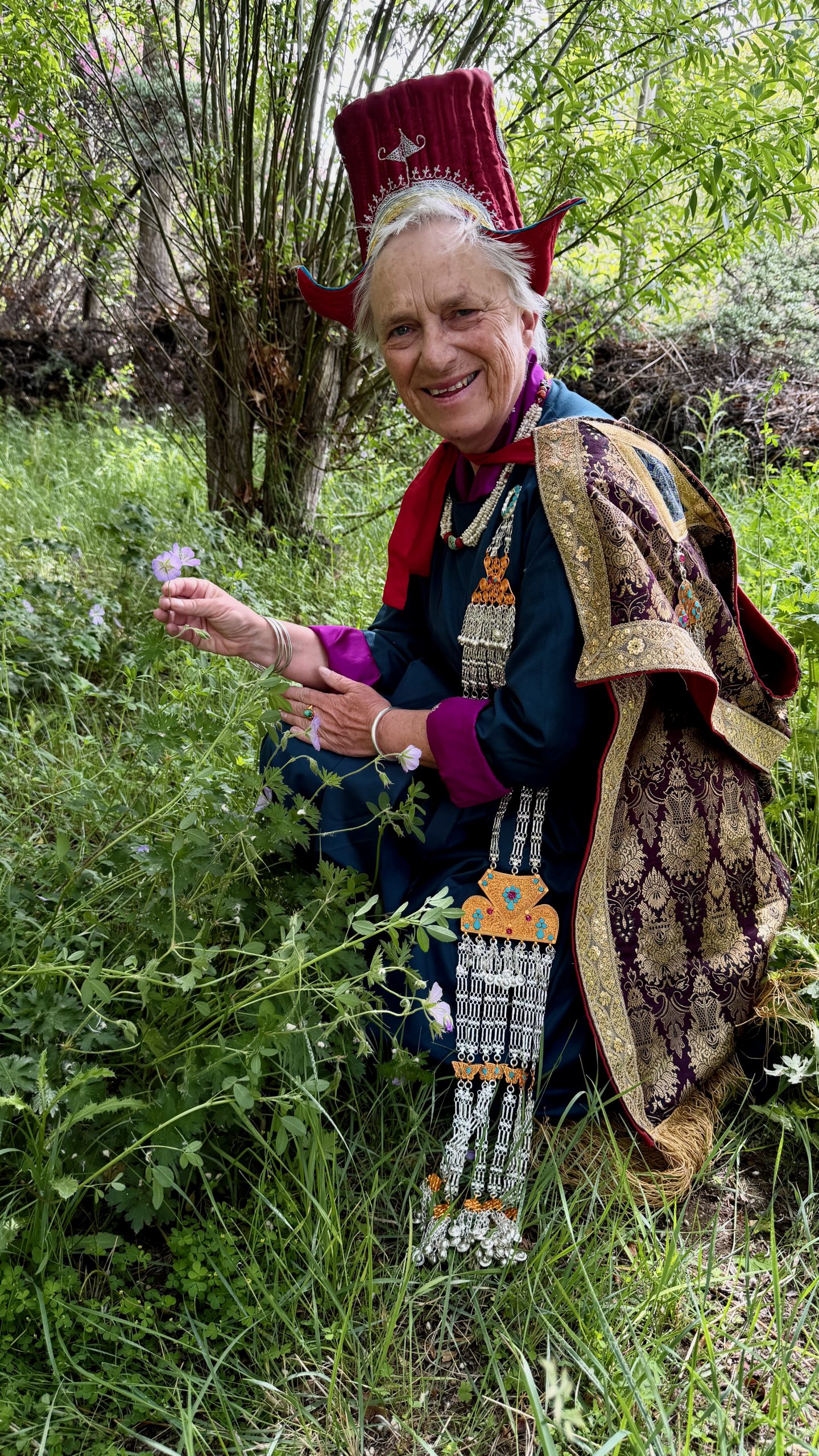

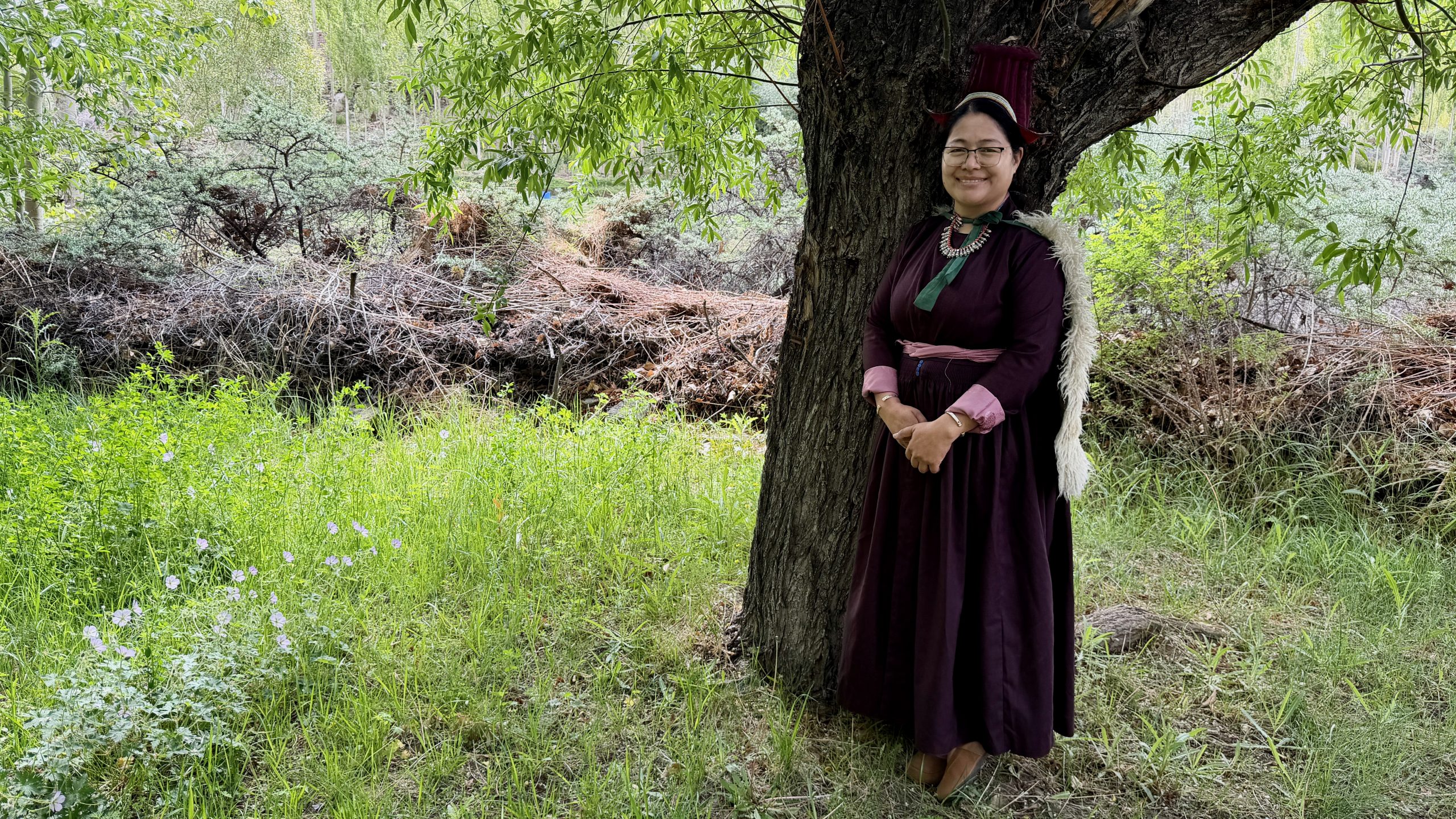
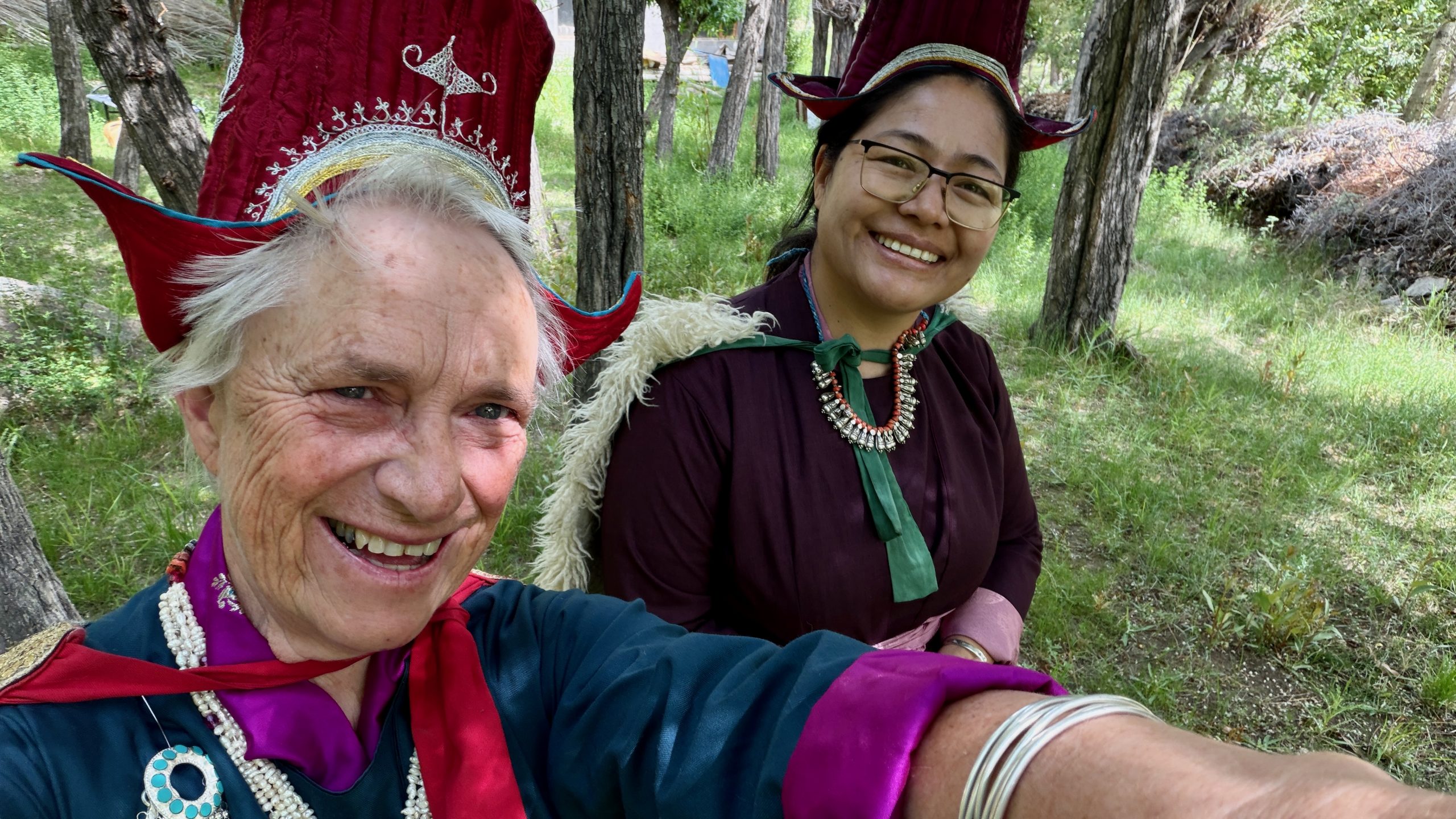
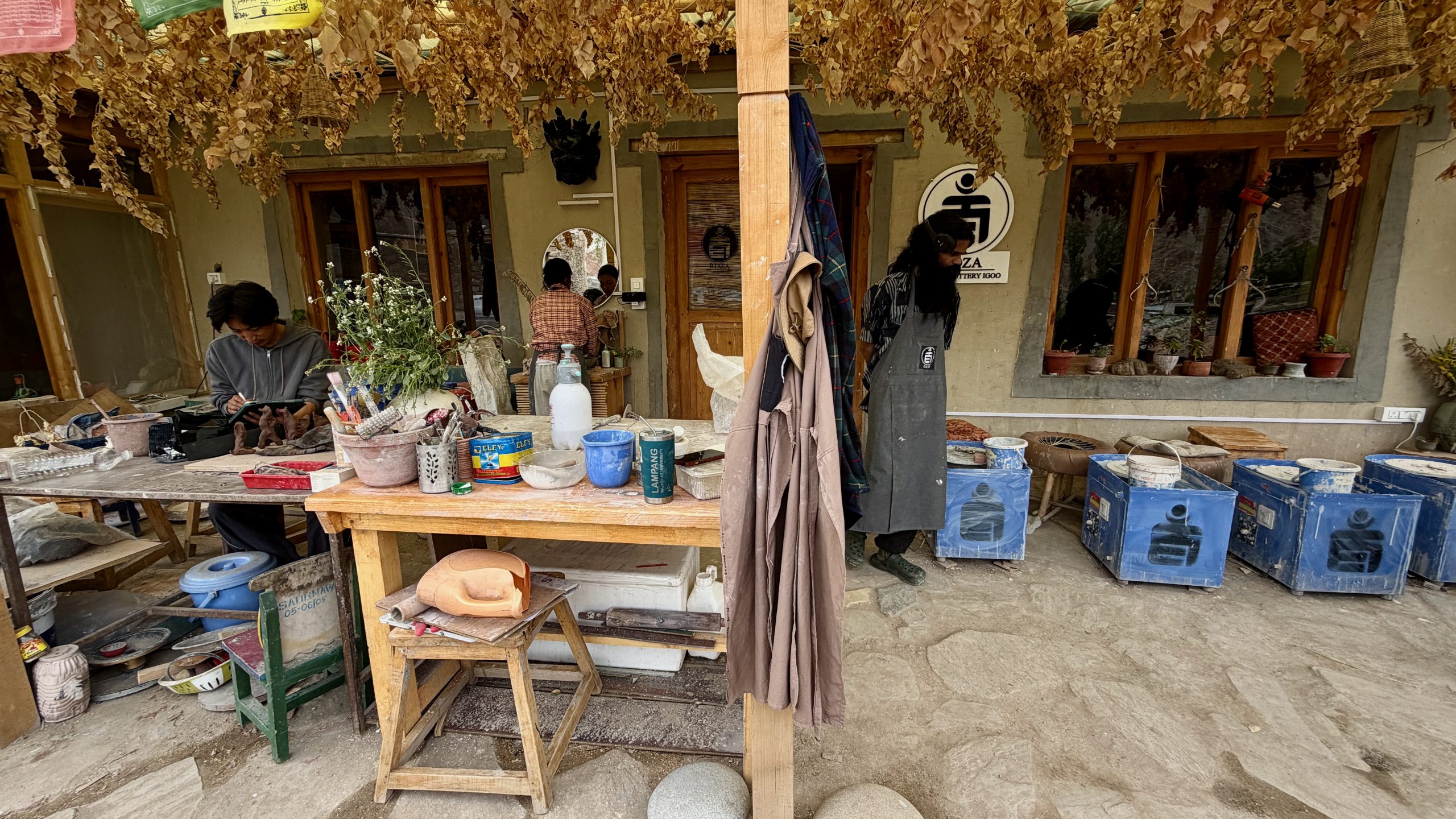
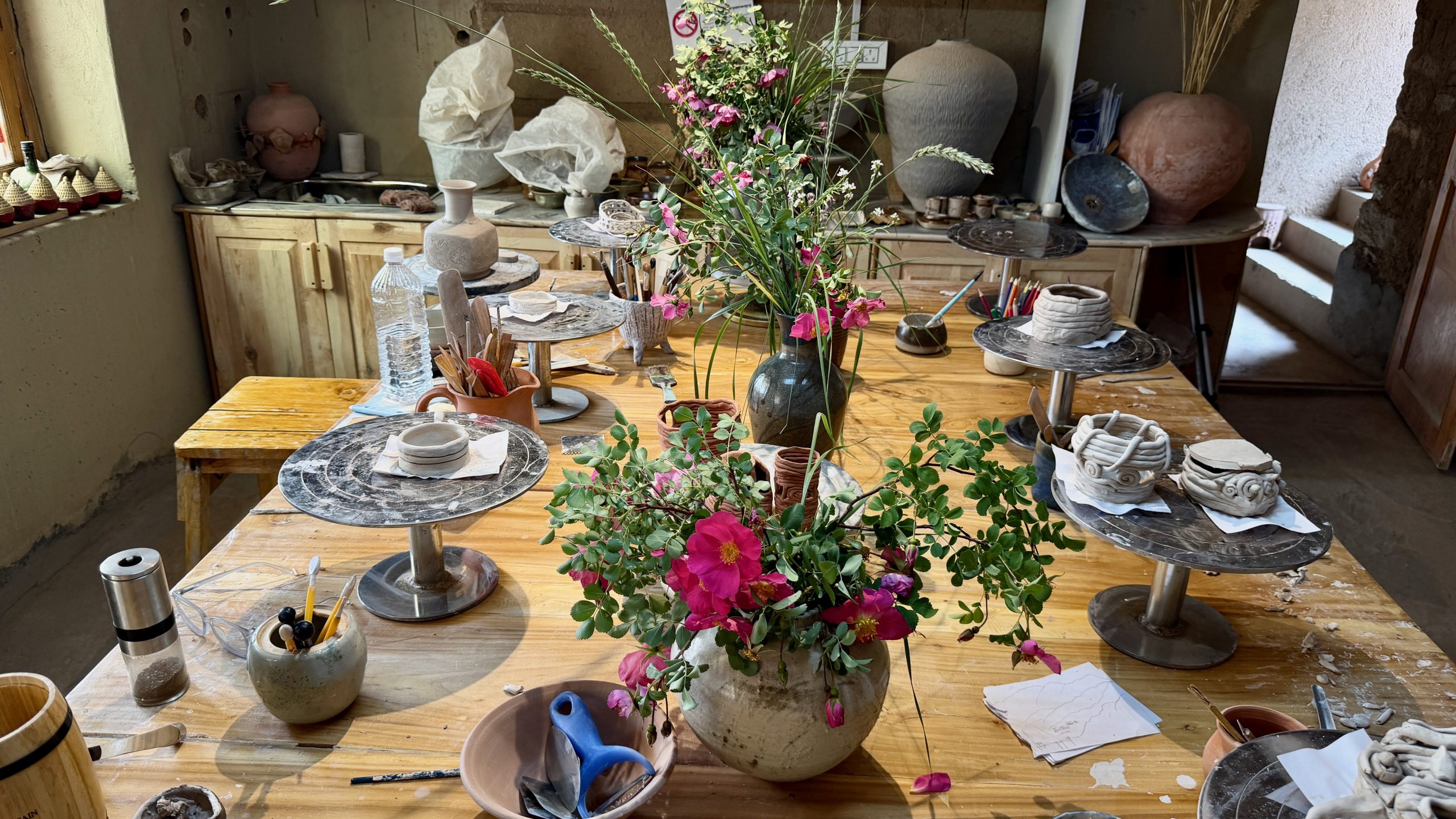
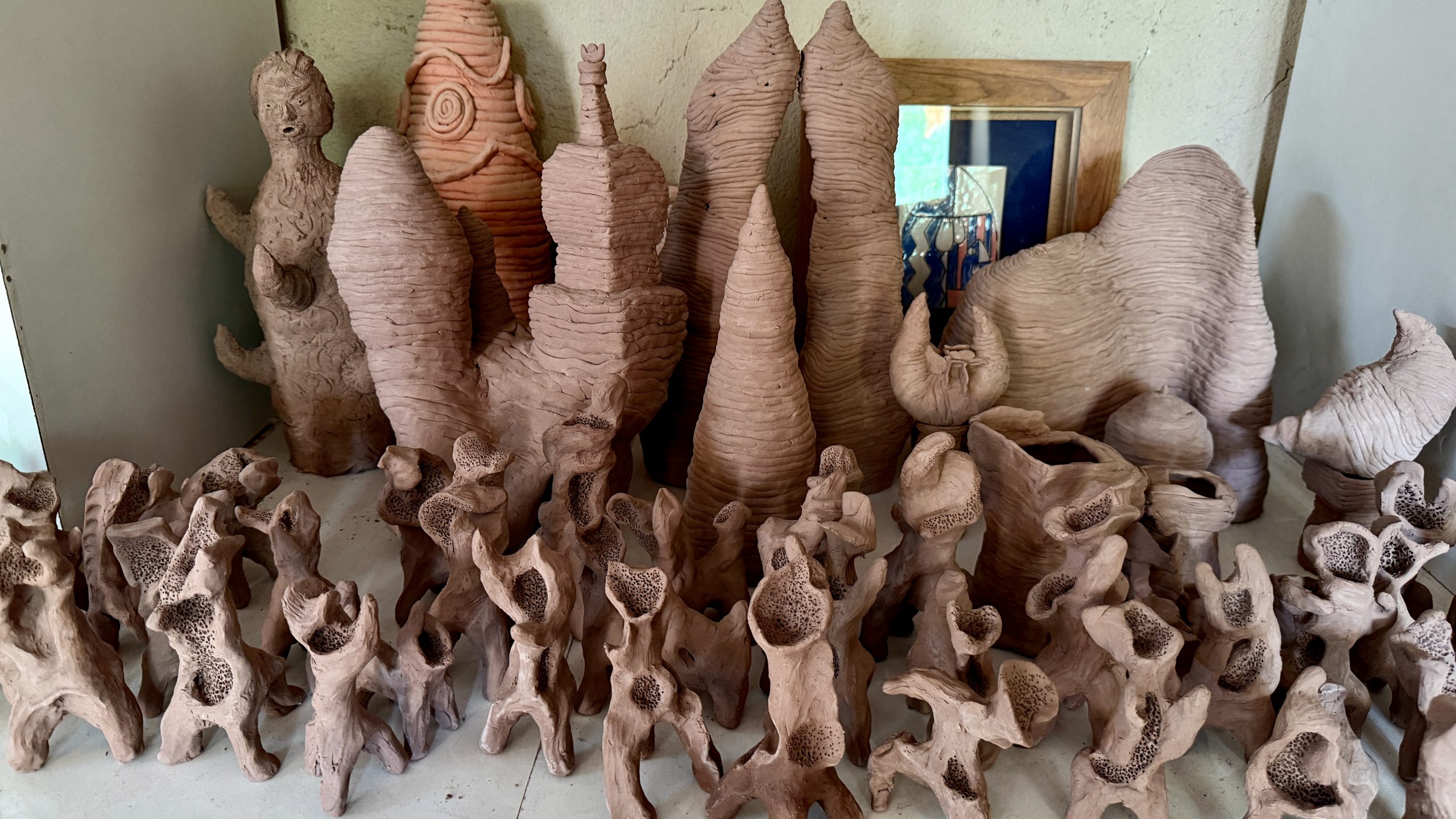
After that, I had had enough of being a Gyalmo, so we changed back into our normal clothes, got into the car, and drove to Igoo. Igoo lies in the neighboring valley and stretches a long way up the mountainside. The name is said to come from goo, meaning “nine,” as the village consists of nine separate hamlets. One of these hamlets is home to a pottery workshop, and it was quite different from what I had expected. Rather than a traditional pottery shop, it felt like a place dedicated to art and creativity—more workshop than showroom. We were welcomed by a young man from Nagaland. He had applied for a three-month workshop here and had been accepted. What a wonderful place! One of his friends, also from Nagaland, was drawing on a tablet; a gentleman with an impressive mane of hair was busy tinkering with something; and a young woman was shaping clay on a potter’s wheel. We were served coffee—prepared at a wonderfully leisurely pace by a Philips coffee machine—admired some of the creations, and eventually Tsering Dolma bought a couple of pieces, one for herself and one as a gift. Because gas prices have increased recently, making the firing process more expensive, the pottery is currently a little pricier than before. If you would like to learn more about the pottery workshop, have a look here: RDZA

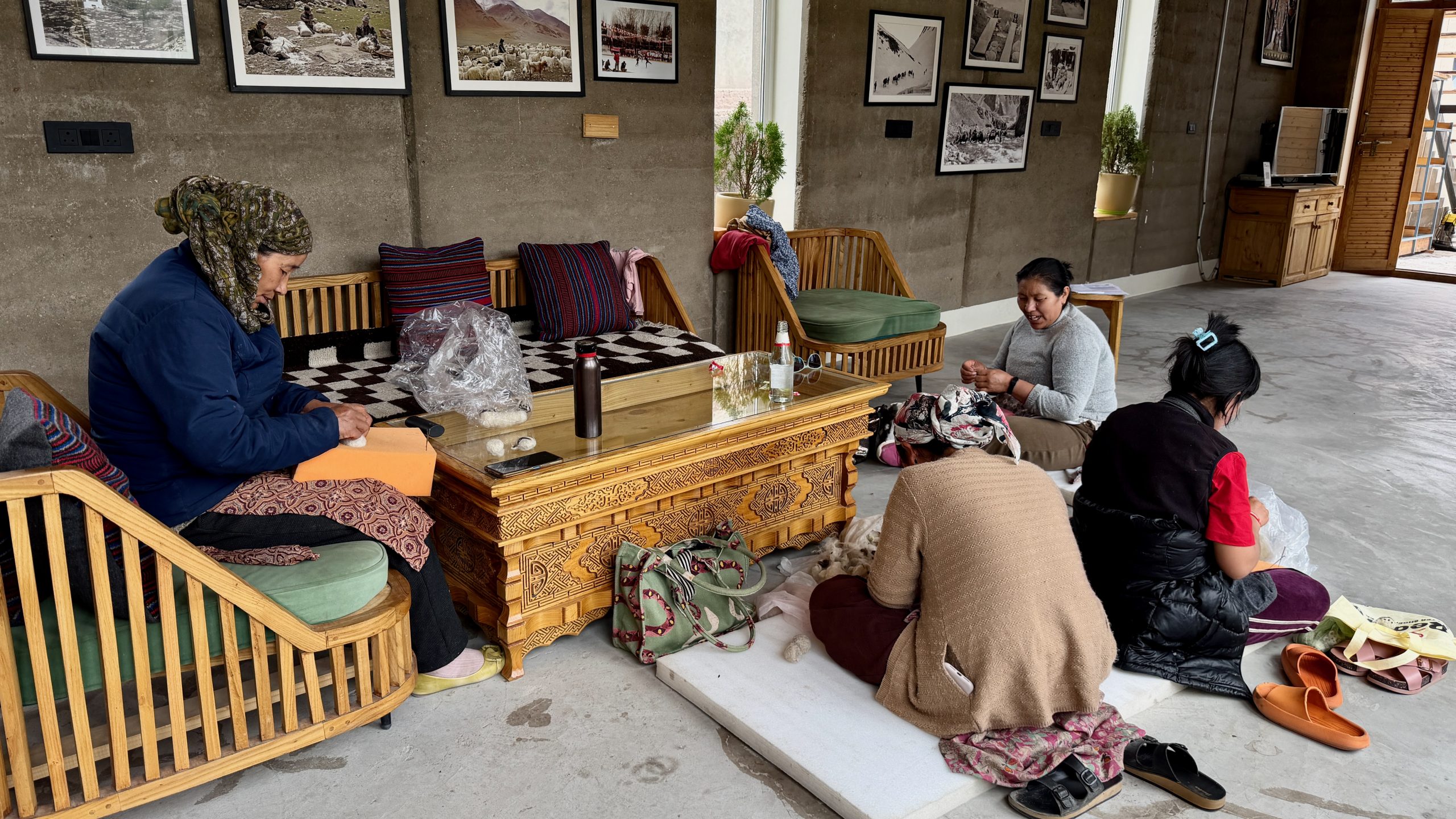
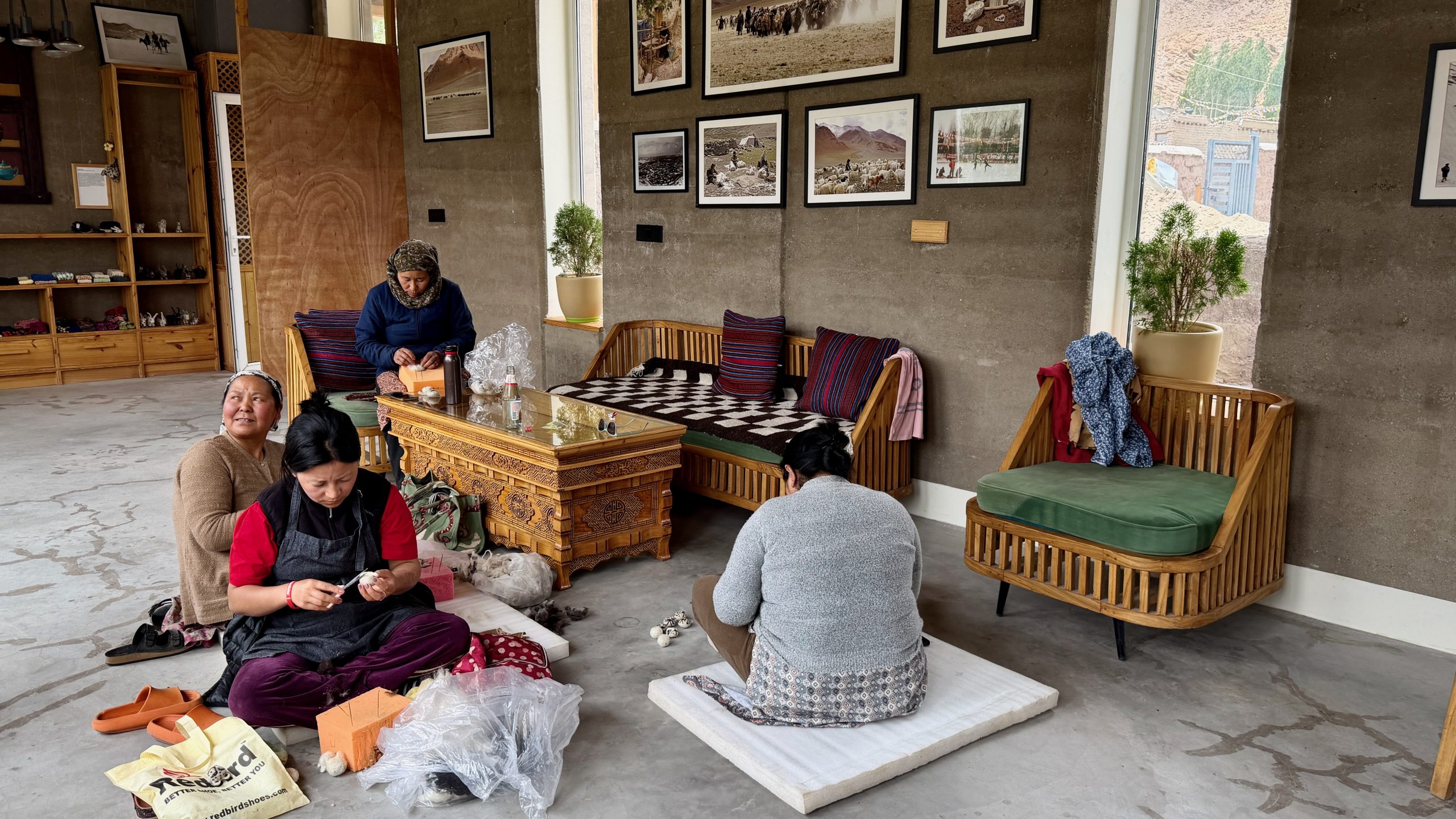
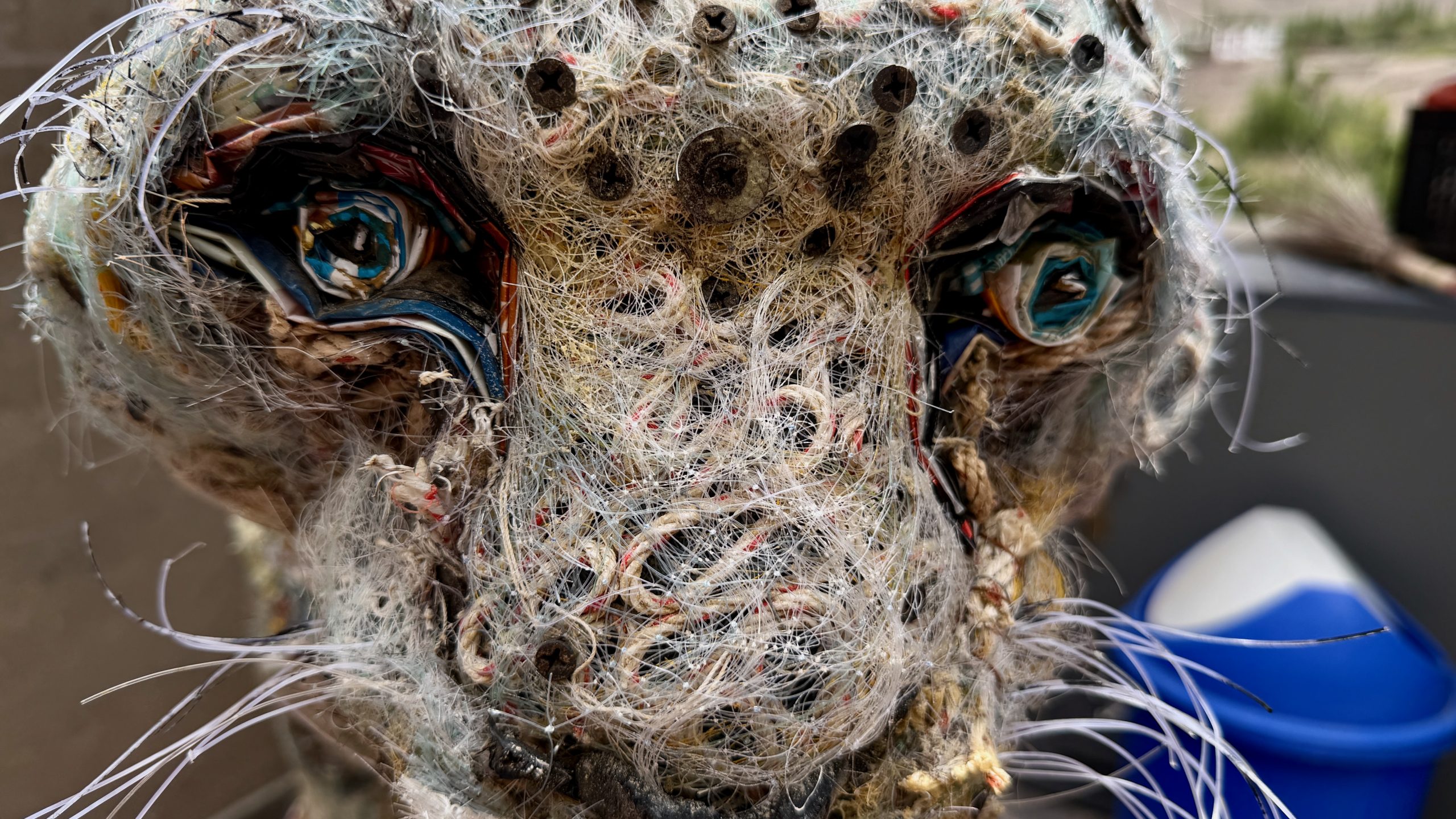
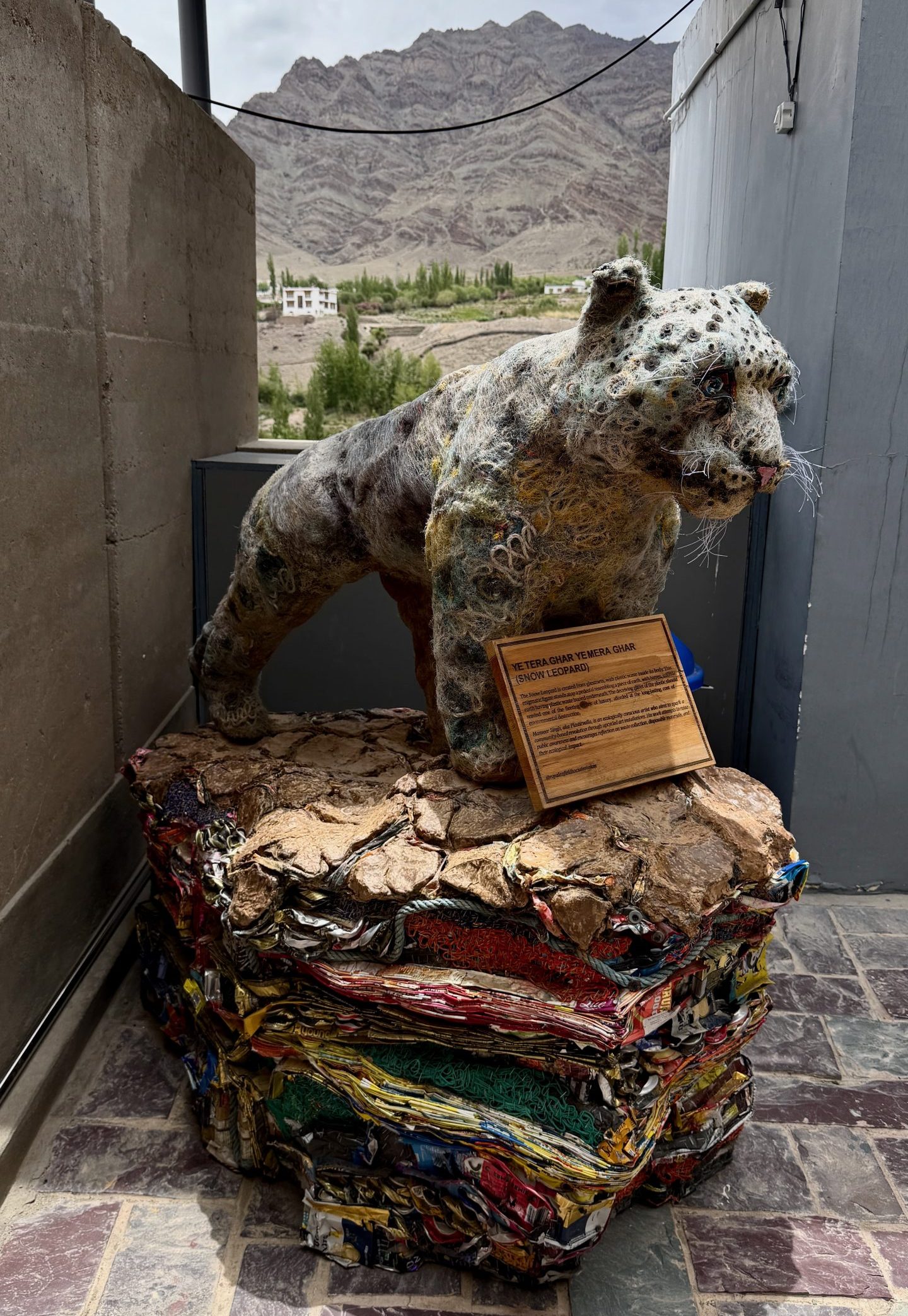
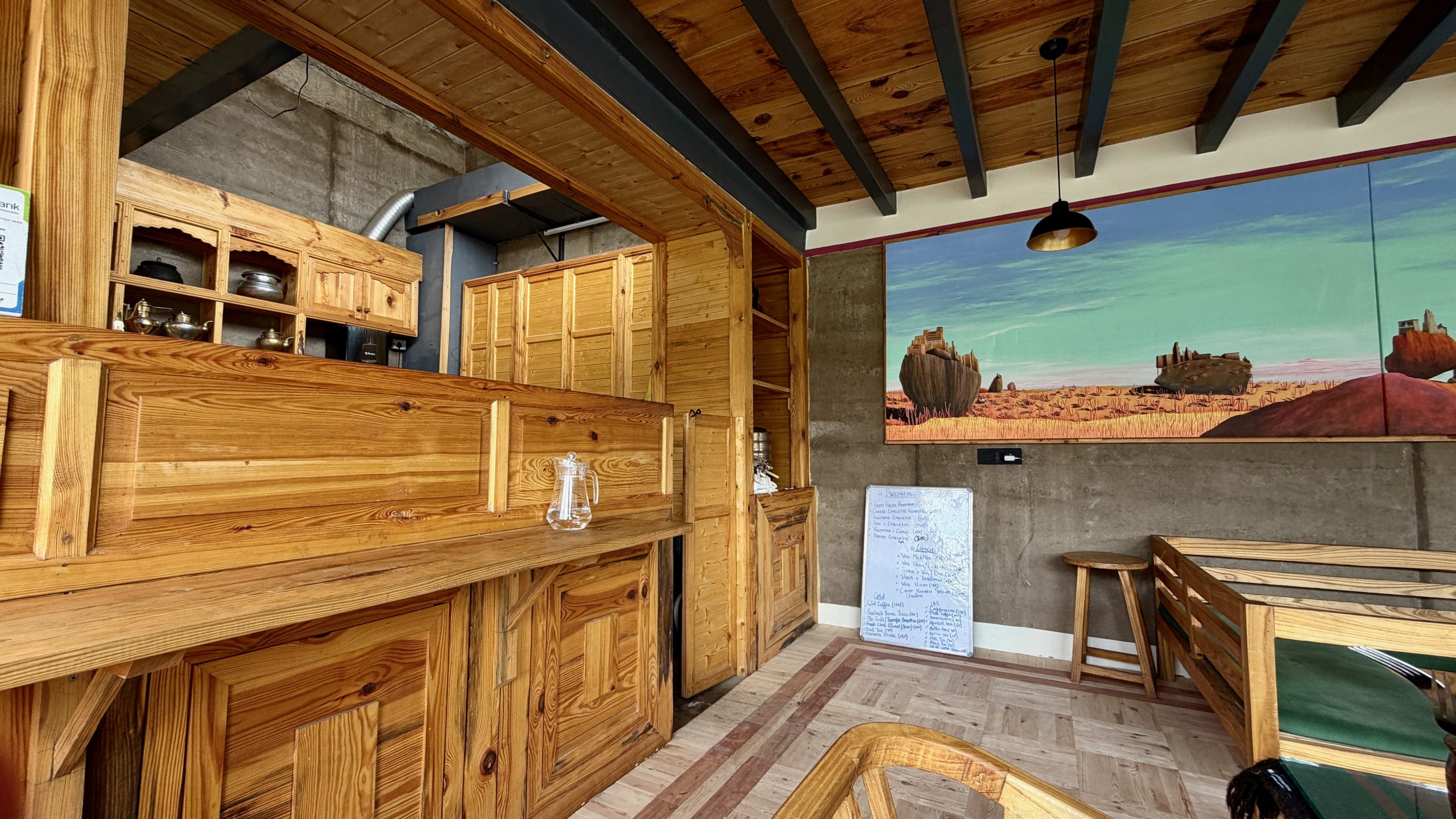
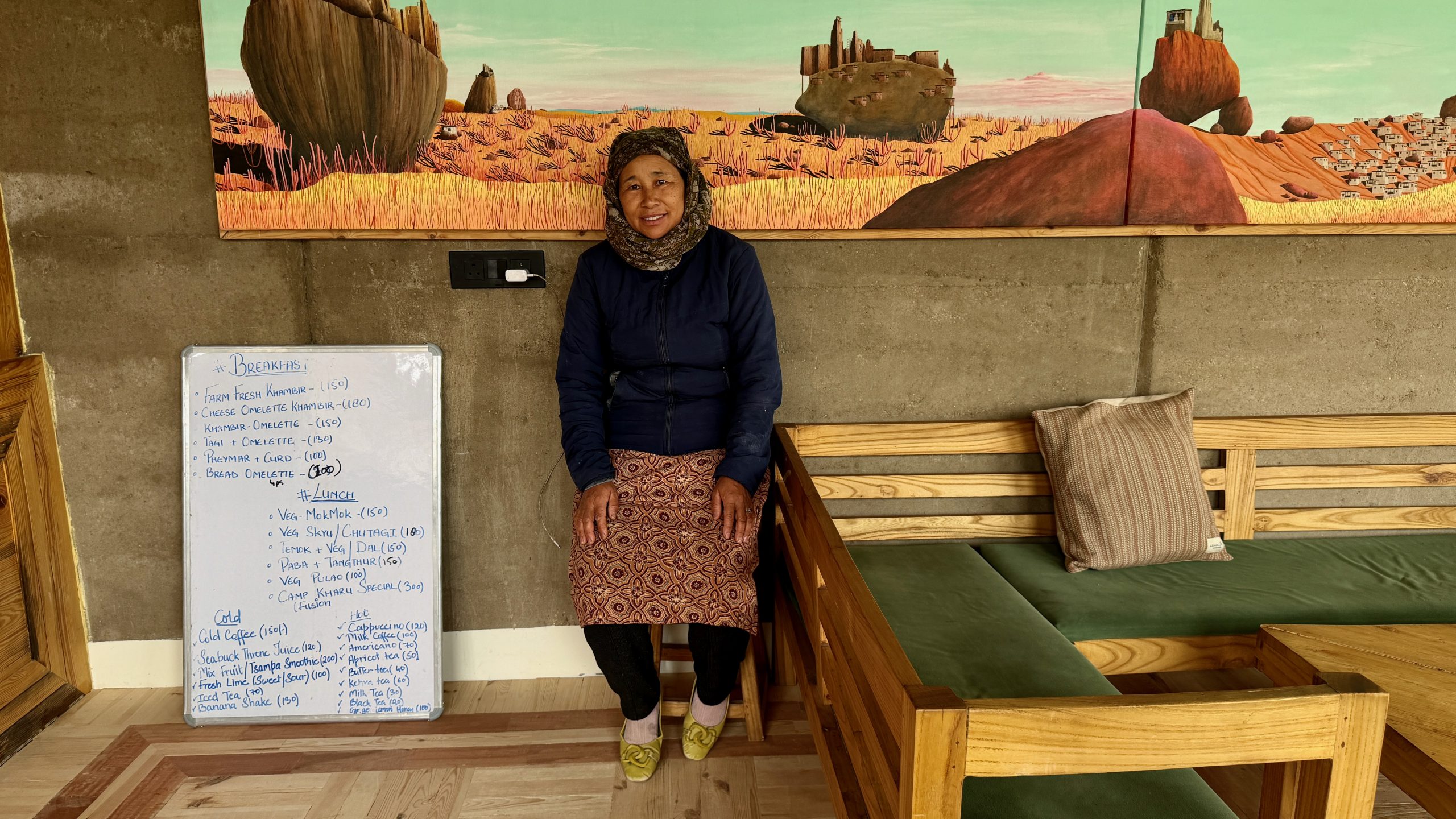
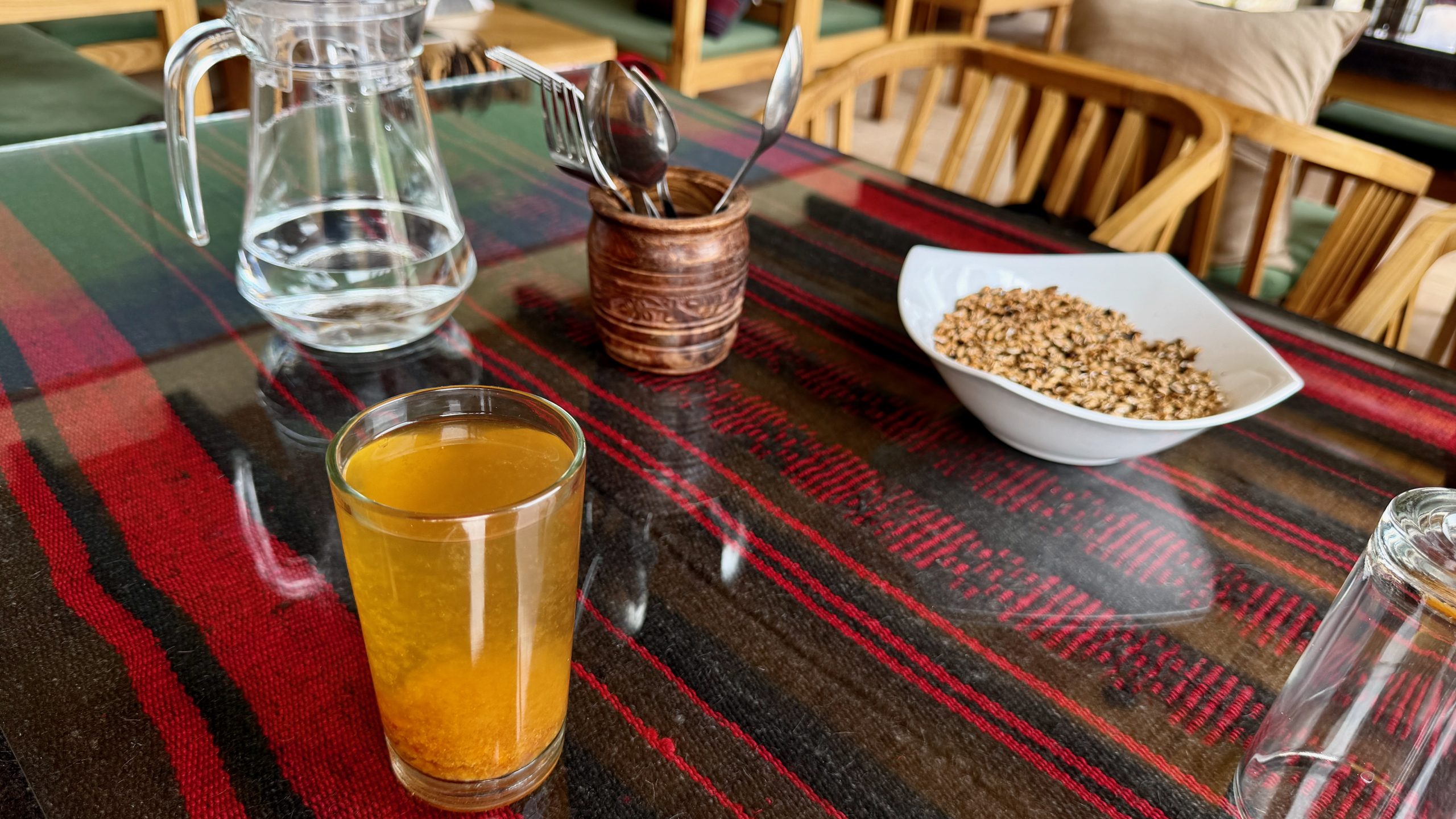
Most of the time I’m not really happy about the developments in Ladakh, but I think things like this are great. I mean, when someone tries to create something new that is in harmony with traditional ways. And for lunch, we headed off to a special place yet again. Ladakh and its surroundings are a paradise for motorcyclists, and the Royal Enfield is the cult machine to go with it. Because of this, Royal Enfield is involved in Ladakh on several levels. They have committed themselves to valuing and preserving the local culture, as well as engaging in eco-social initiatives. It sounds a bit strange and naturally needs to be eyed very critically, but in Karu they have created a place that actually lives up to that. They built a kind of sustainable rest stop. The two-story building was constructed using traditional, extremely environmentally friendly rammed earth techniques, runs on solar power, and offers free water refill stations to combat plastic waste. It is run by village women, who also receive additional work orders. While we were there, a few of them were in the middle of felting 150 snow leopard heads. The women get 300 INR for each of these, or 200 INR for bulk orders like this one. But since they are very fast at it, it seems to be quite a worthwhile endeavor. In addition, they supported an artist who built a snow leopard out of trash. The restaurant mainly serves local dishes. I actually liked all of that quite a lot.

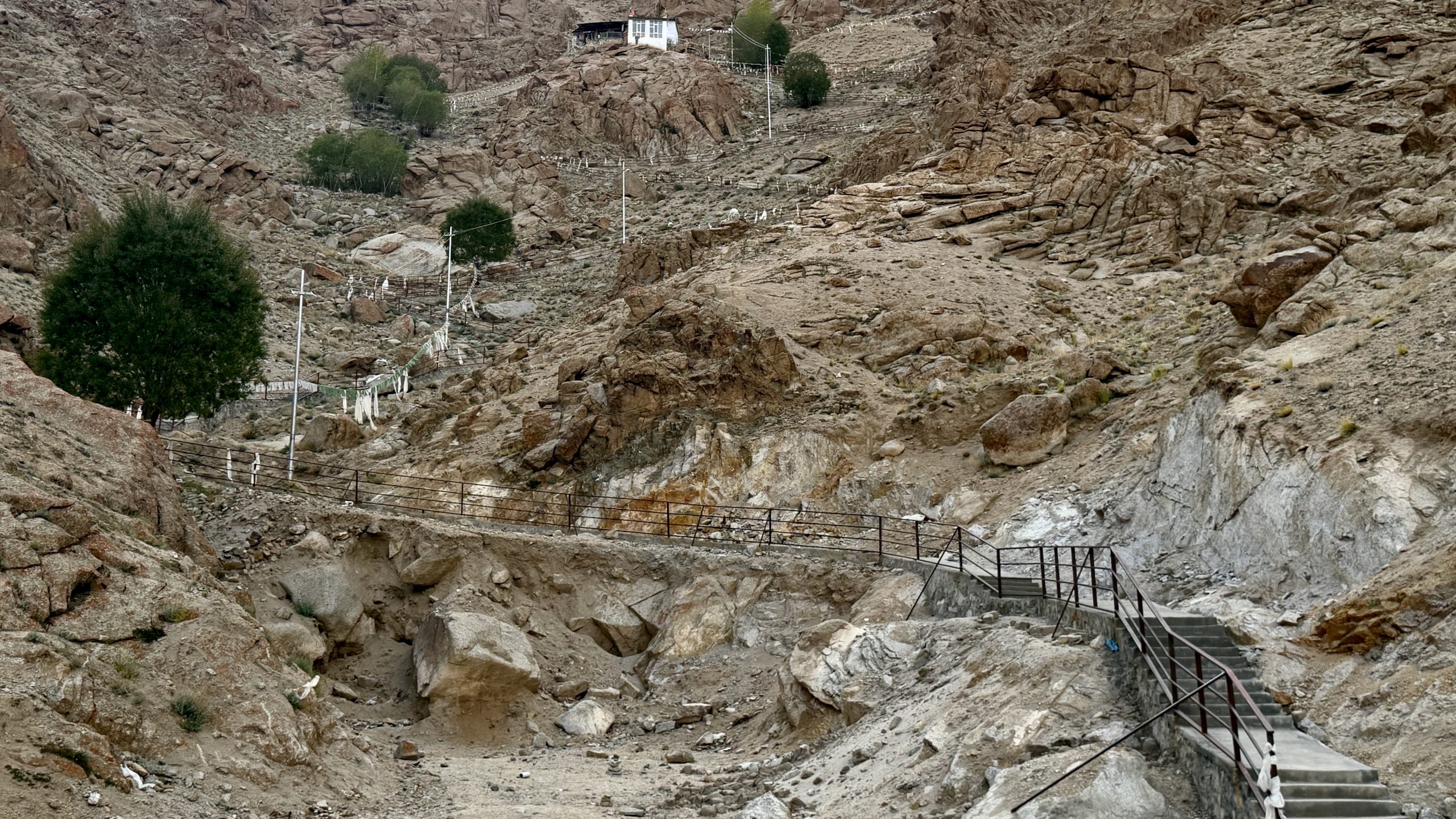
The day had already offered me quite a lot, but the highlight was yet to come. We drove up to a hermitage. Even here, development is moving ahead at a rapid pace. Forty years ago, a monk withdrew to a meditation hut high above the valley—and he stayed there. Today, he is around 70 years old. A group of Malaysian believers discovered him and chose him as their guru. Out of deep gratitude, they (along with other sponsors from Singapore and Taiwan) are improving his living conditions. The dangerous mountain path has been replaced by a dirt road, plus a path with steps and railings.
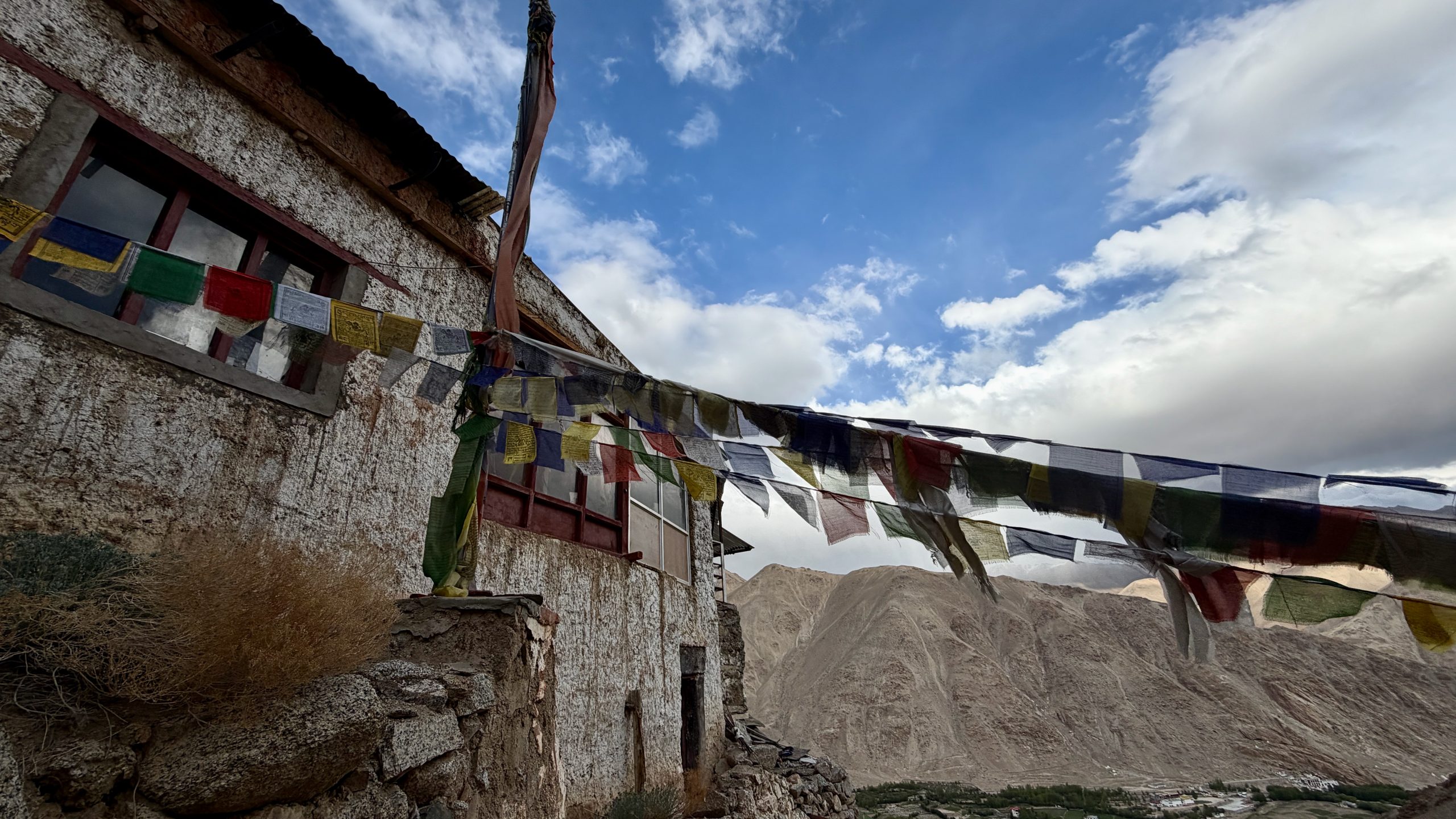
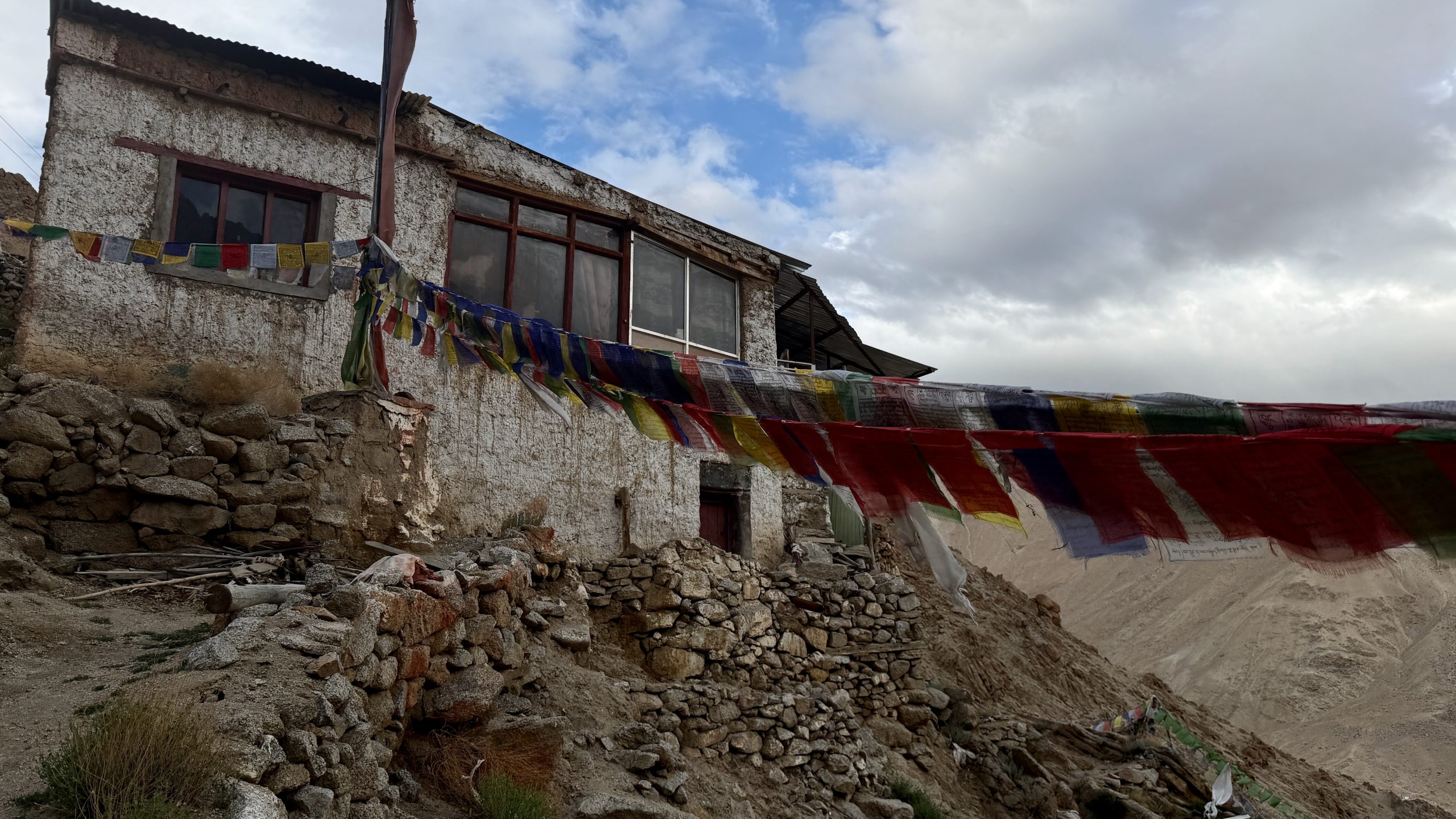

Not only is the location impressive, but the interior is too. The monk has a wonderfully friendly, kind aura, and so many believers from the village come up to see him as well. Two women had set off at the same time as us, and they made us some tea. The monk mainly occupies three rooms: two puja rooms and a kitchen-cum-bedroom. The amenities are impressive. He has solar power, a gas stove, radiators (one of which was on), and a fan. So while his life has evolved to be much more comfortable, it is still lonely and austere. He is up here almost uninterruptedly, has never been sick, and only gets visits from friendly animals. Snow leopards, wolves, and wild dogs haven’t stopped by so far.
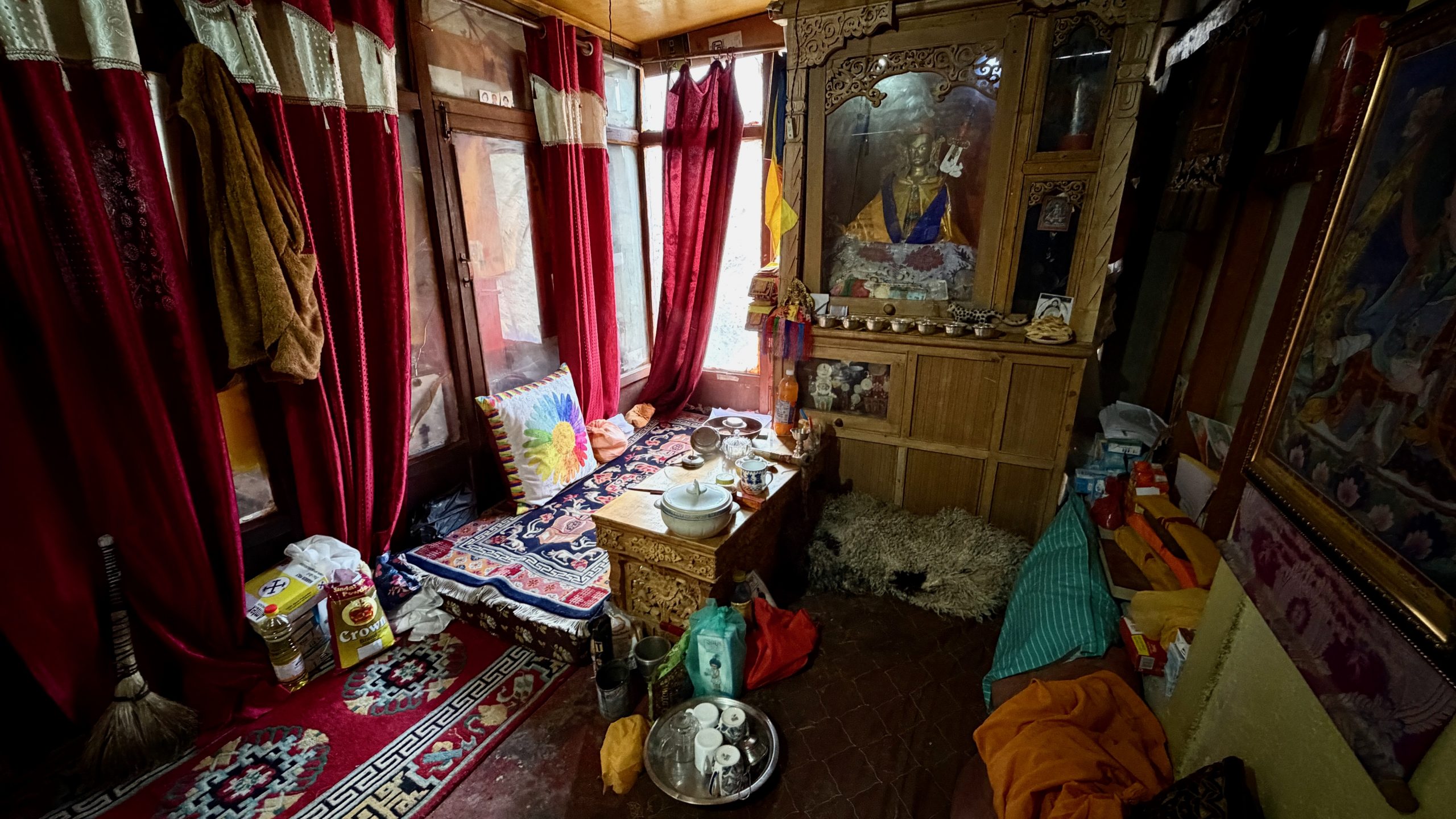
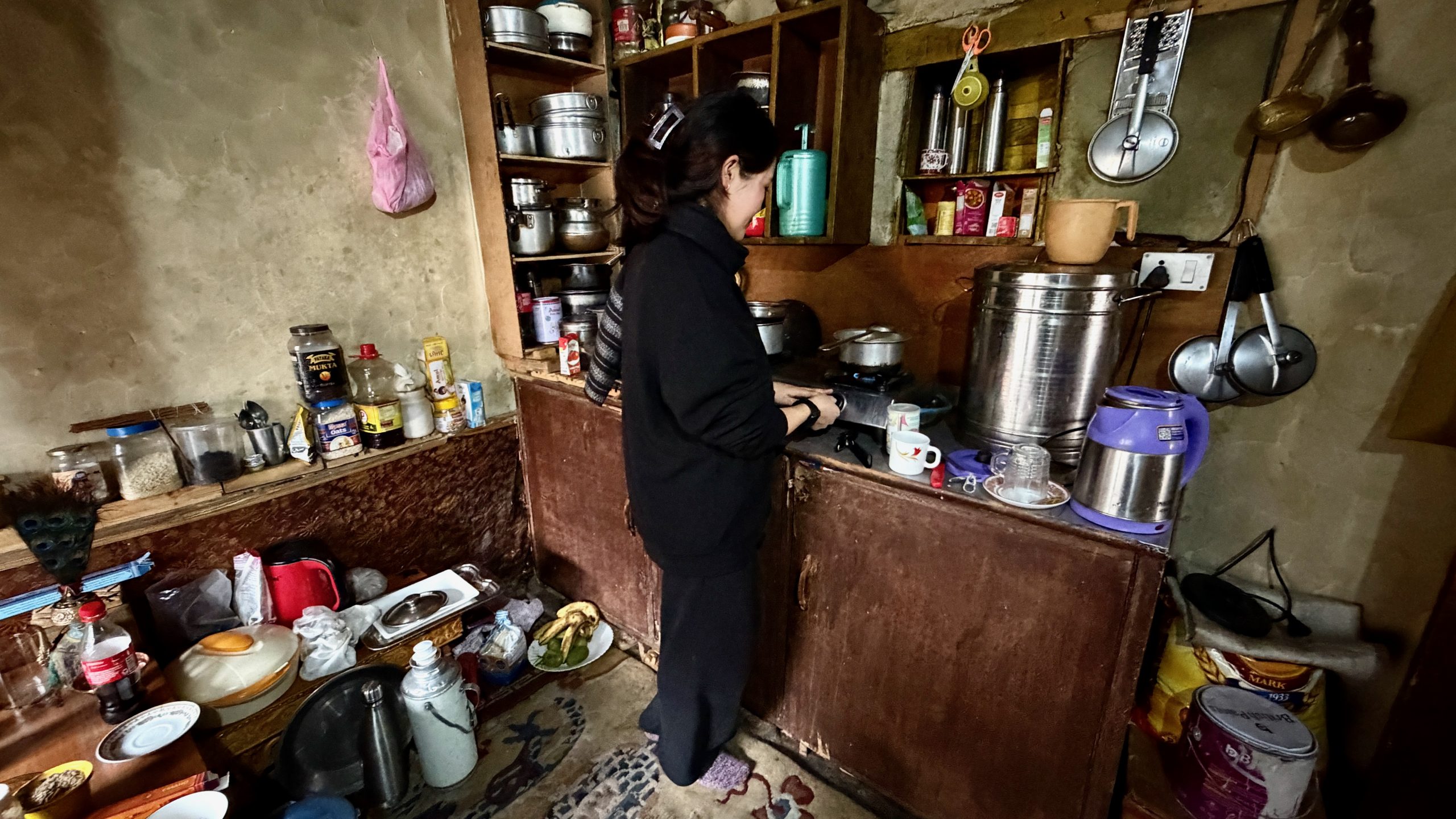
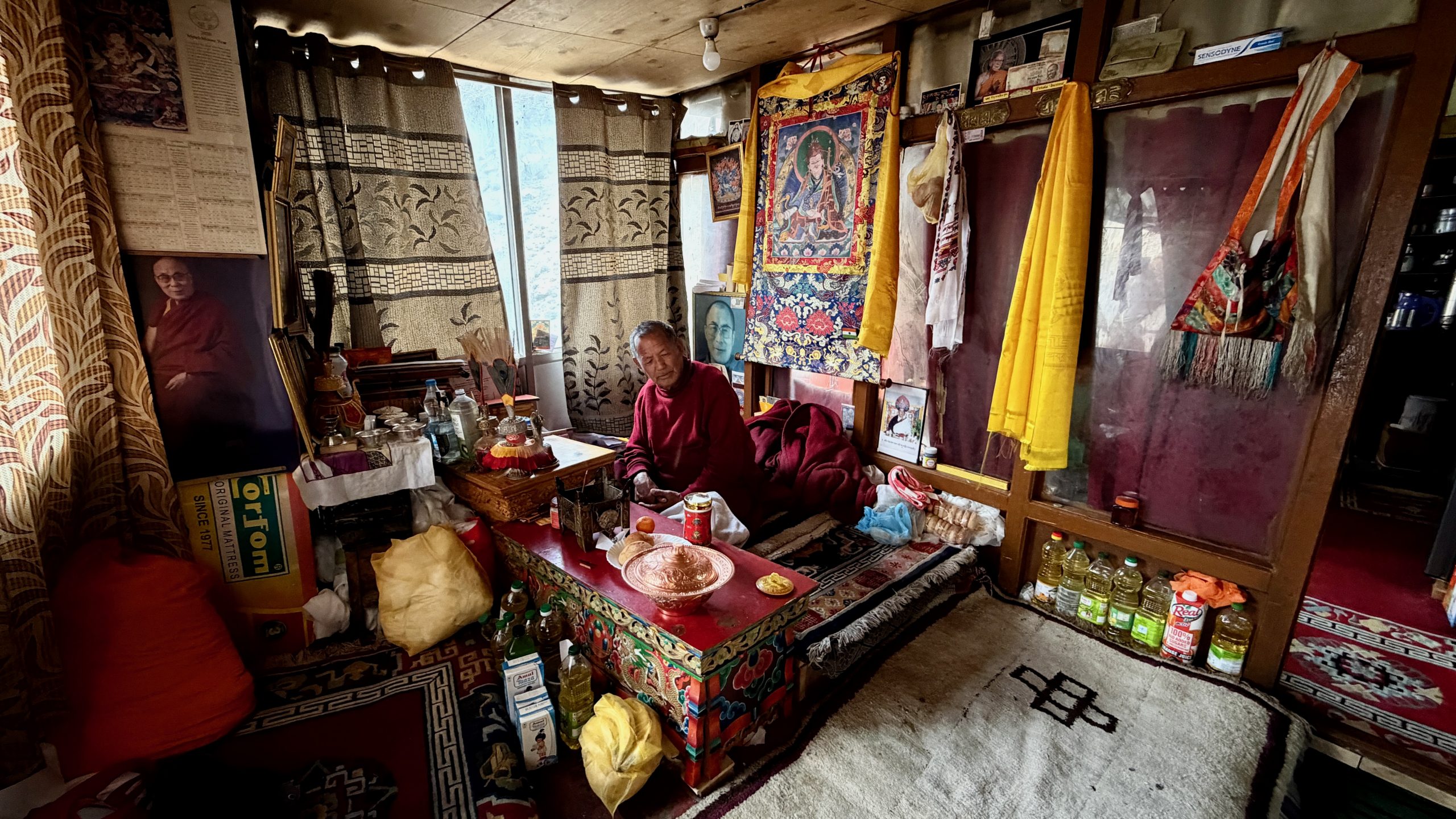
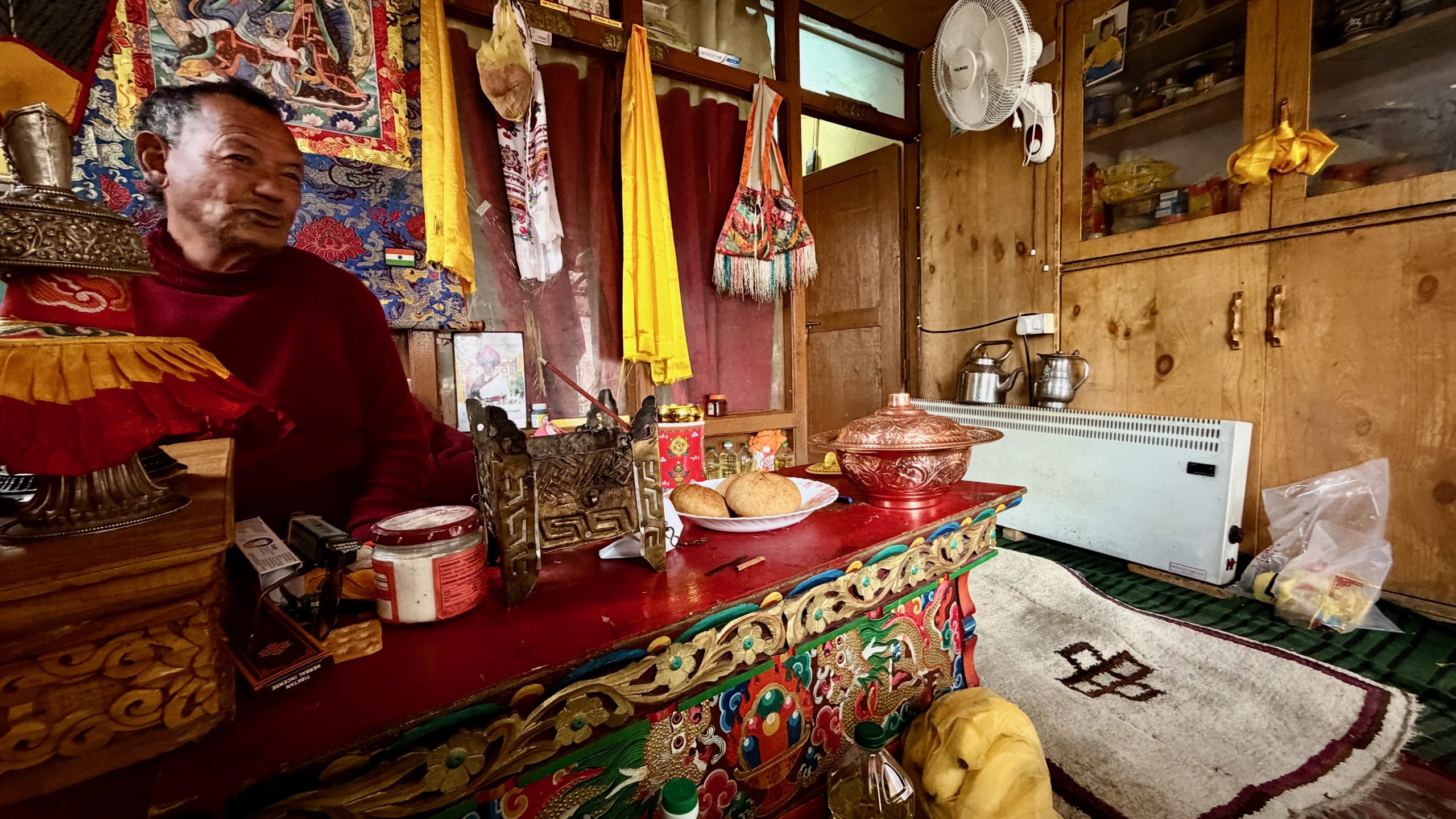
What a place, what a life, what a human being! It was already getting a bit late, and the women probably wanted to have some time with the monk too (usually you request a puja when you come up here—or you simply bring him more gifts), so we headed back down.
Deeply content after such a beautiful day, Tsering Dolma and I had even more wonderful, interesting conversations, offering a lot of insight into each other’s lives. The next day I wanted to—and had to—go back, but we made plans to come see each other again. There is still more to experience! And that is exactly what I love so incredibly much: discovering things, being surprised, having conversations, and then being able to ponder them afterward. Right now, it seems to me that within this conglomeration of changes—which usually tend to put me off—there is still a lot of interesting stuff hidden away for me to discover. That brings me so much joy!