


Lo Manthang -> Chhusang – Who recognises the Tara will be honoured with a Khatak
9. August 2026
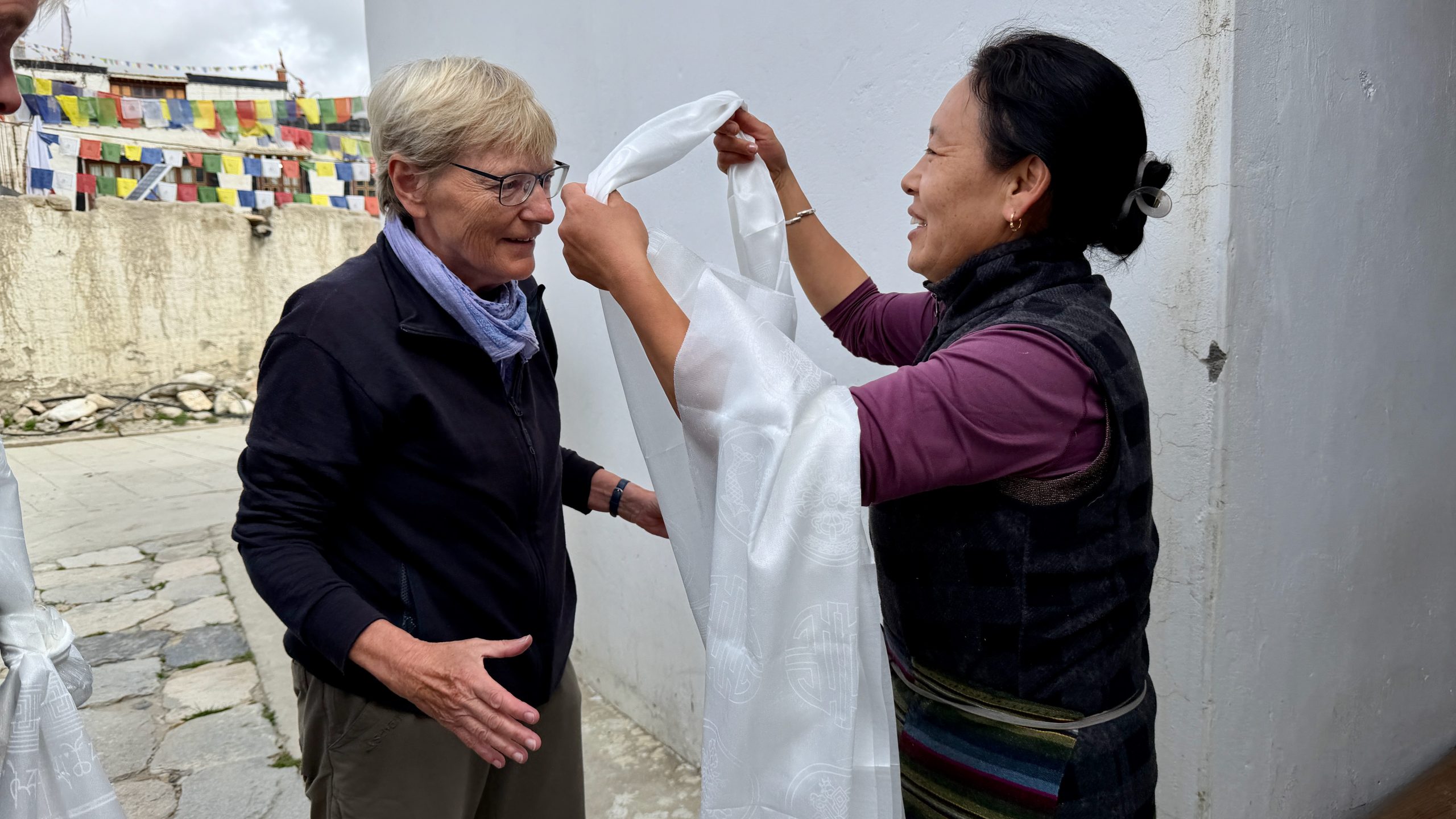
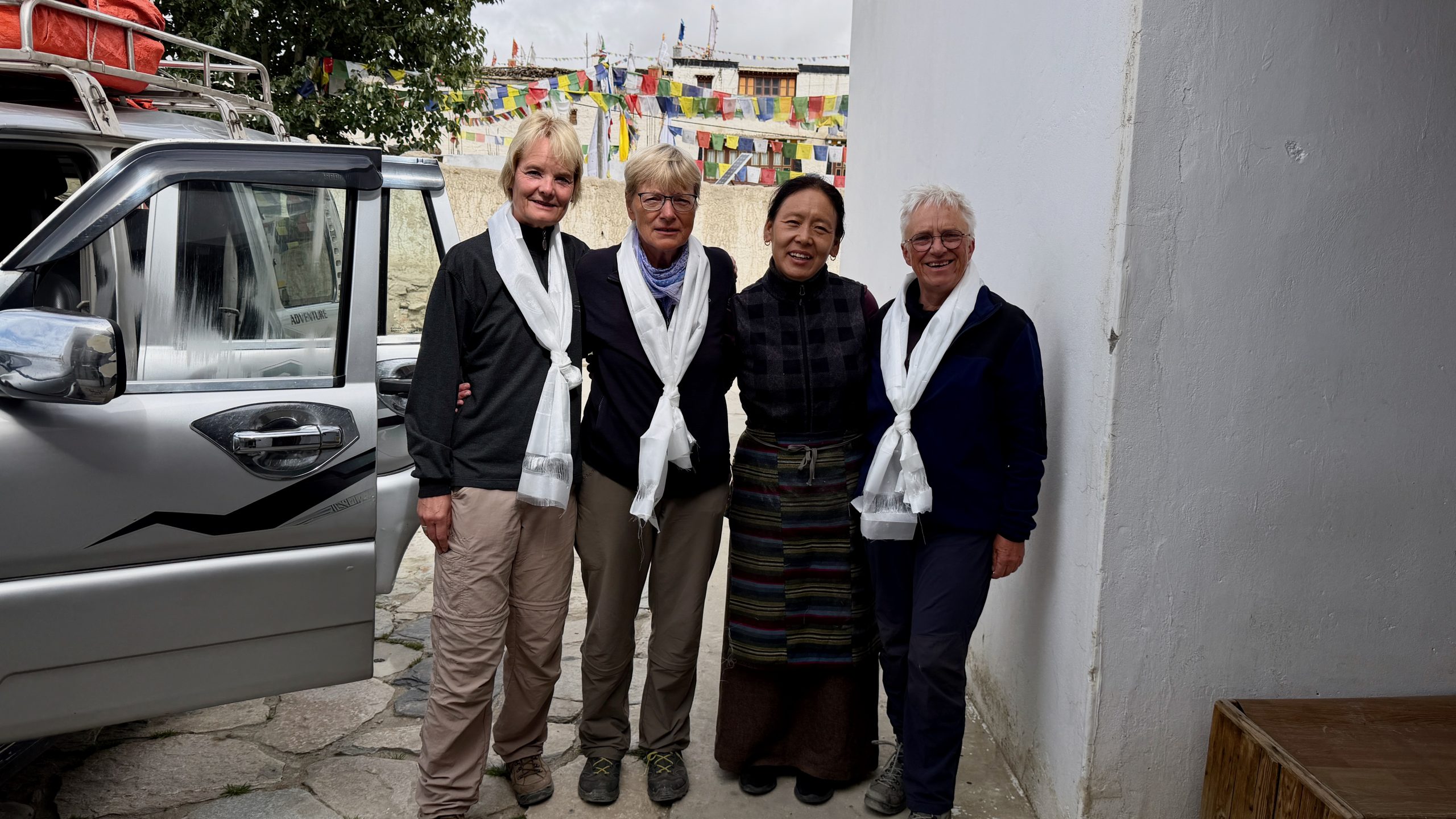
We stayed in Lo Manthang for 3 nights and could have stayed even longer. In the beginning, our hostess was quite plagued by a cold, but by the time we said goodbye, she was feeling a bit better and saw us off warmly with khataks.
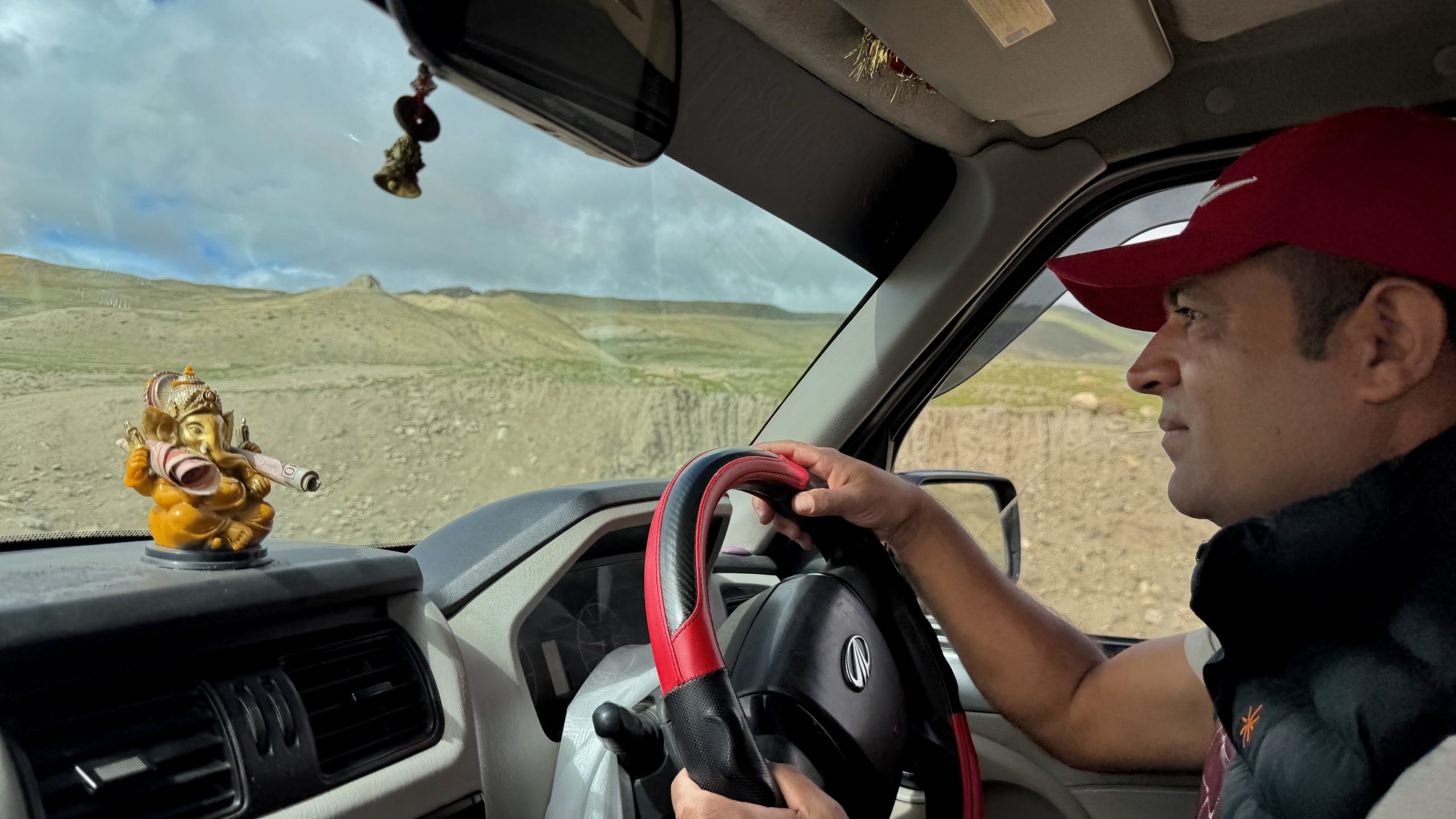
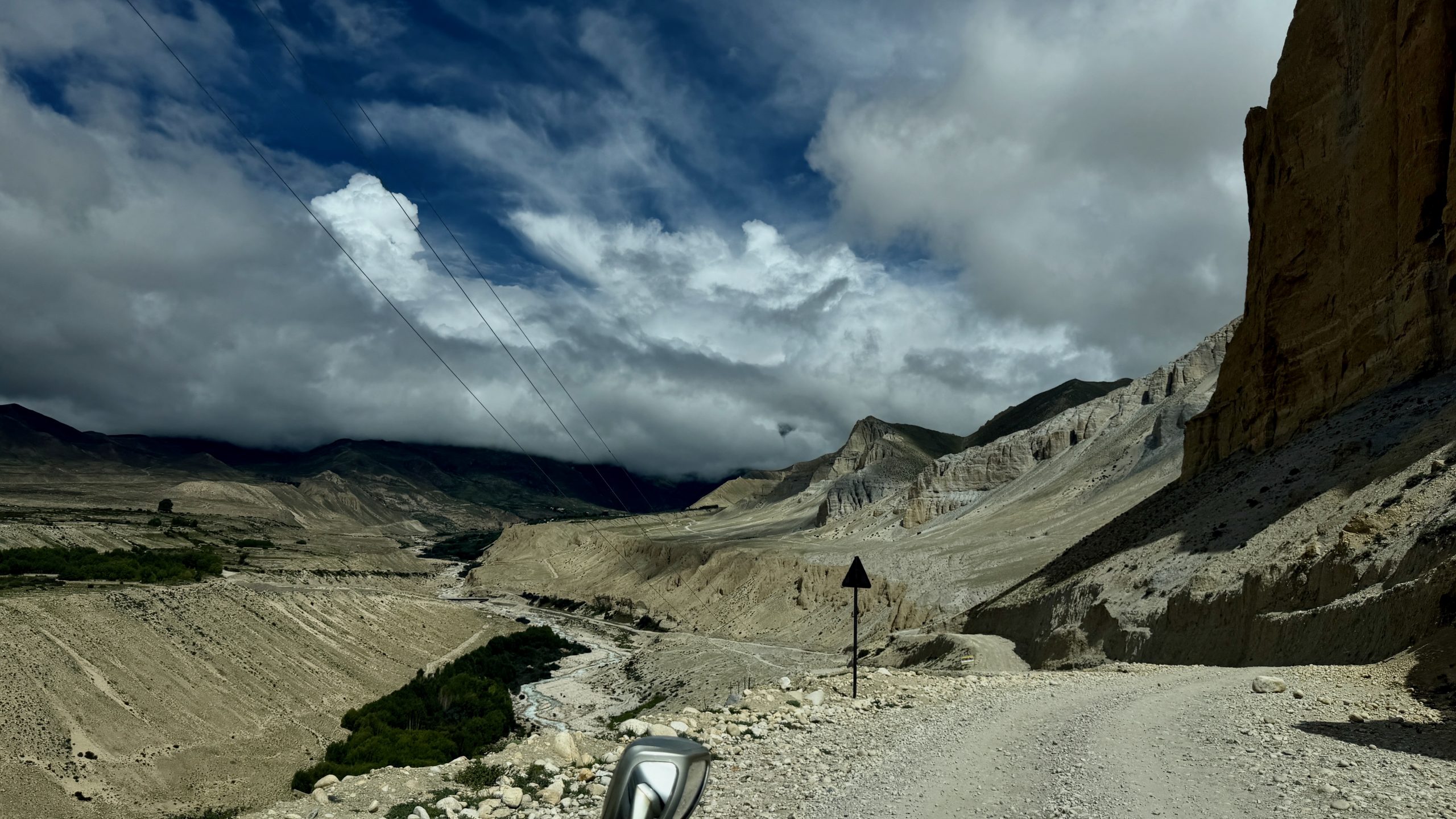
Then we set off. For the return journey, we had requested a detour to Ghar Gompa. The drive was quite impressive.
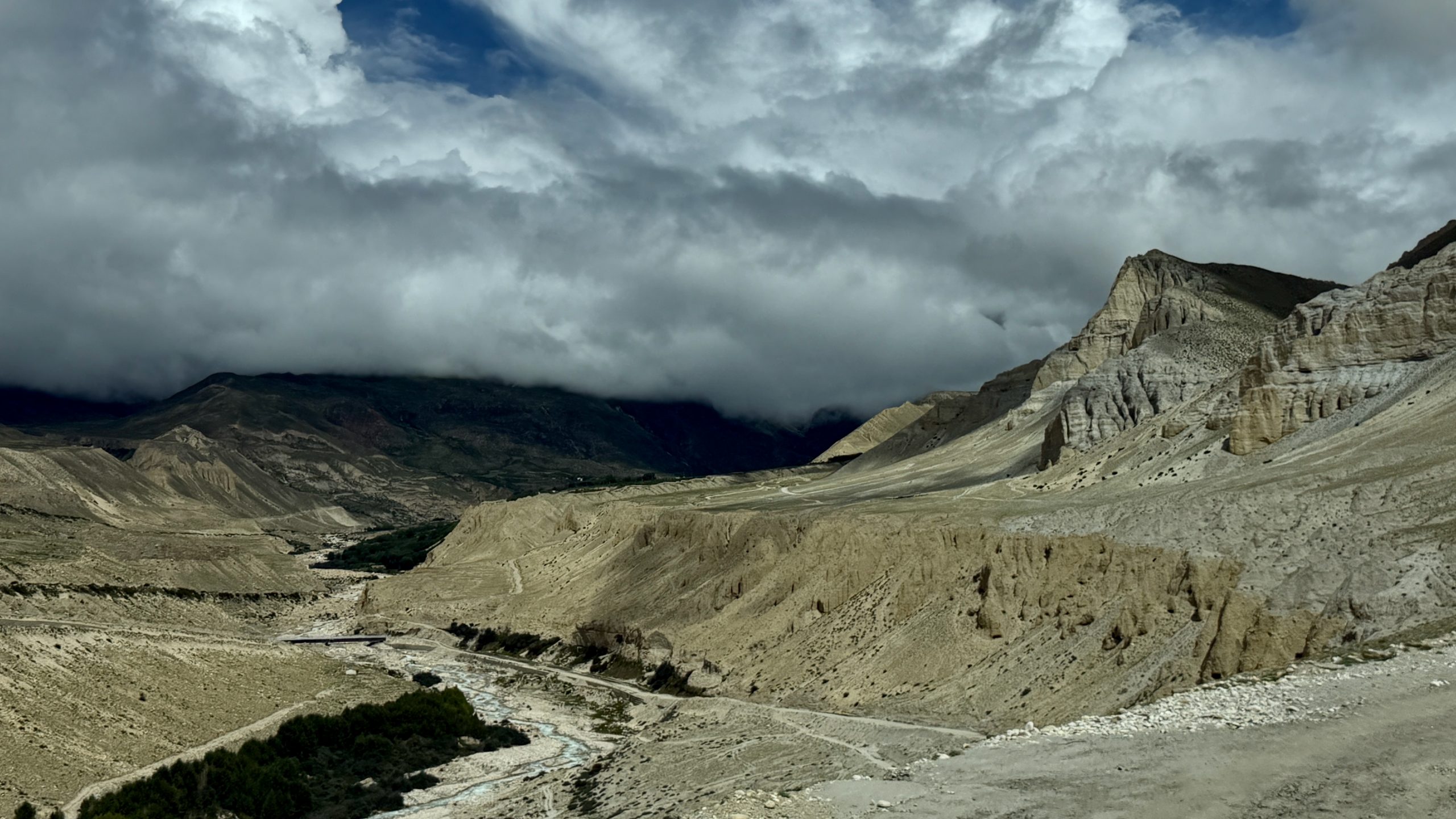
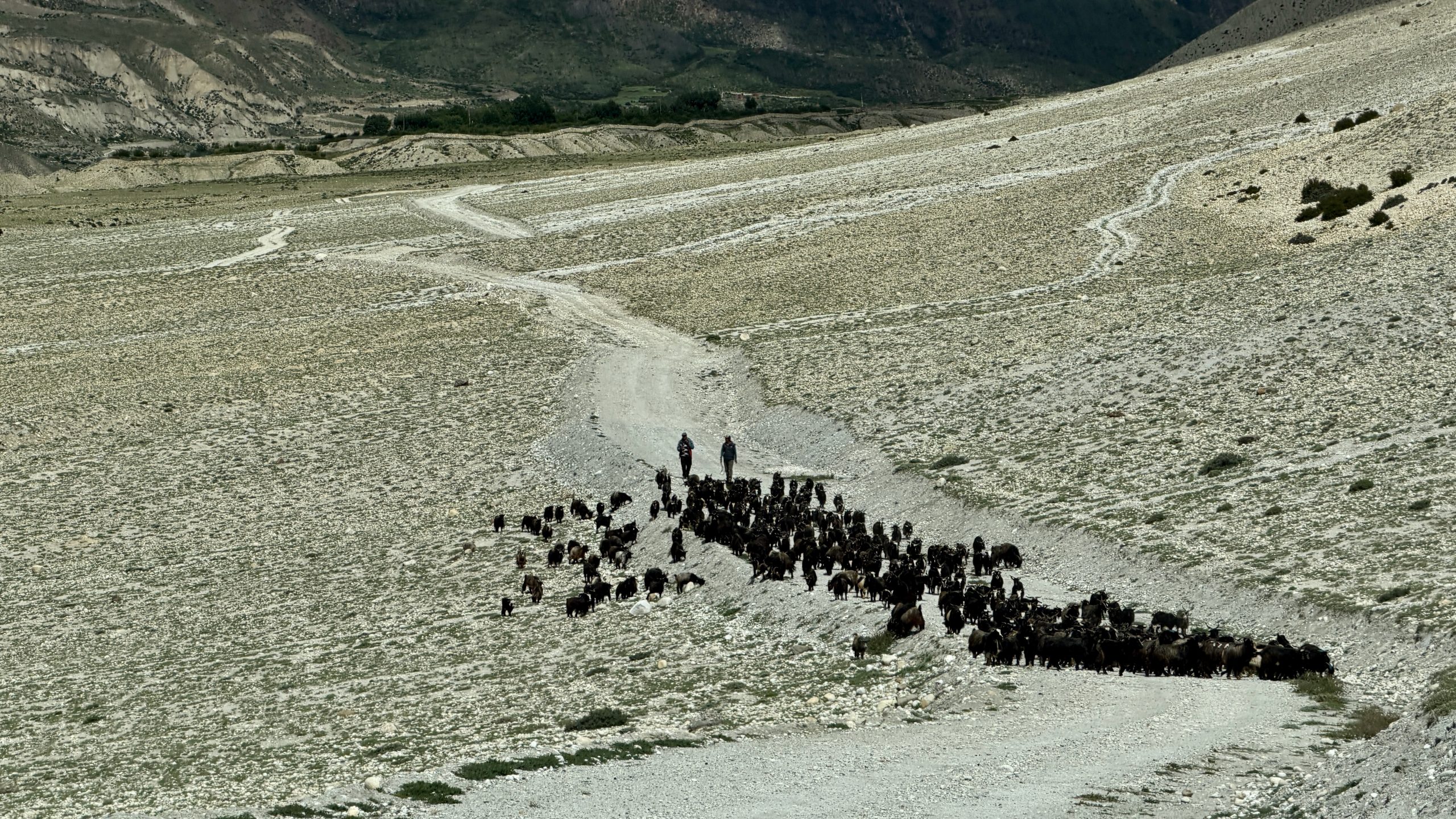
Ghar Gompa is considered the oldest Tibetan Buddhist monastery in the world and is directly connected to the founding of the Samye Monastery in Tibet. The story goes that King Trisong Detsen wanted to build the first Tibetan Buddhist monastery in Samye back in the 8th century. But there was a catch: construction work was constantly disrupted by earthquakes, landslides, and evil spirits that would destroy the day’s work during the night. So, the ultimate superpower had to step in, and Padmasambhava was summoned. He recognized the nasty, wicked female demon looming over Tibet and Mustang that was at work. So Padmasambhava set off, found the demoness near Dhakmar, and killed her (are you allowed to kill demonesses in Buddhism?). Her blood stained the cliffs red, and her intestines and heart formed hills, upon which they then successfully built Ghar Gompa. And because everything was fine now, they were also able to build the second-oldest monastery in Samye.
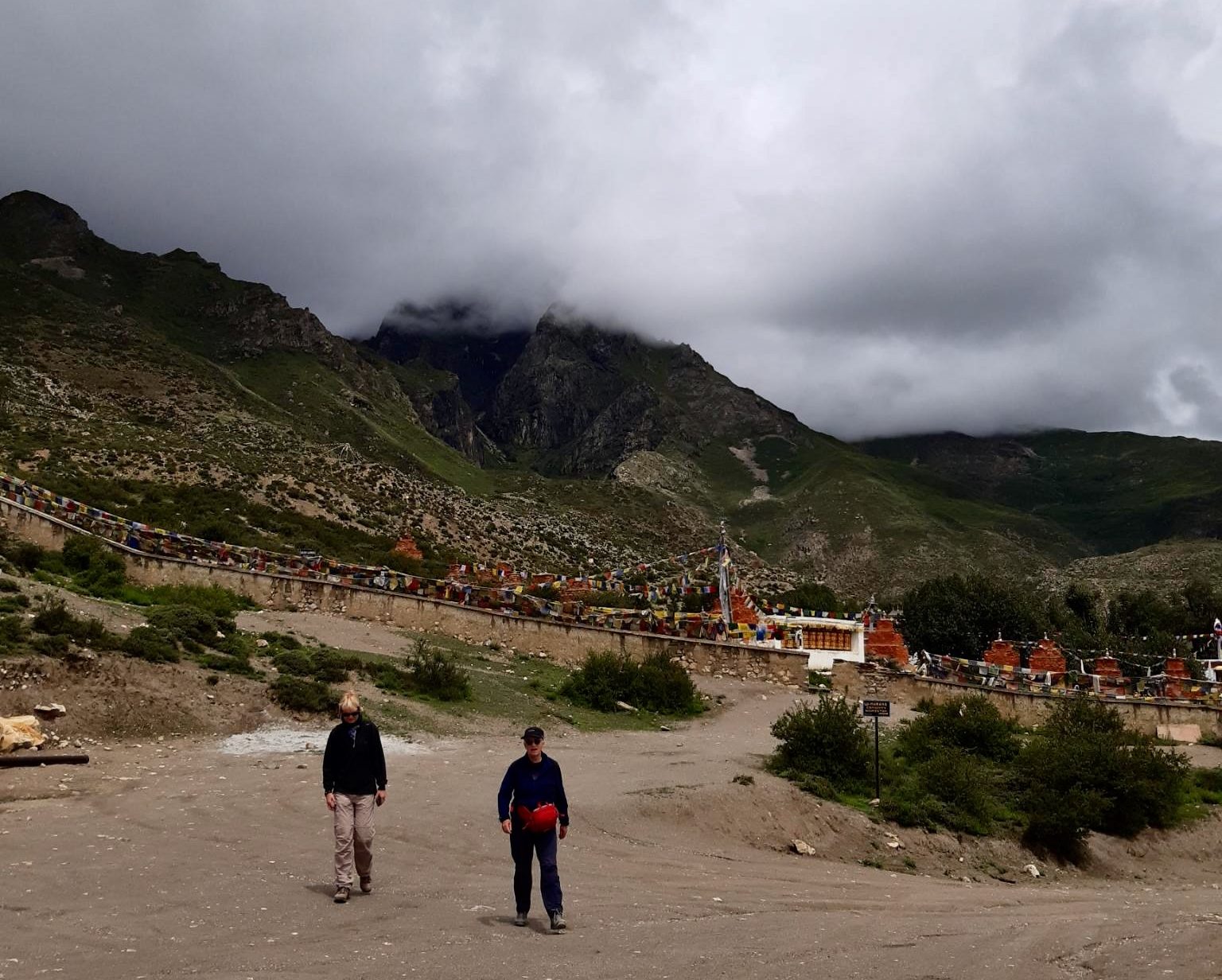
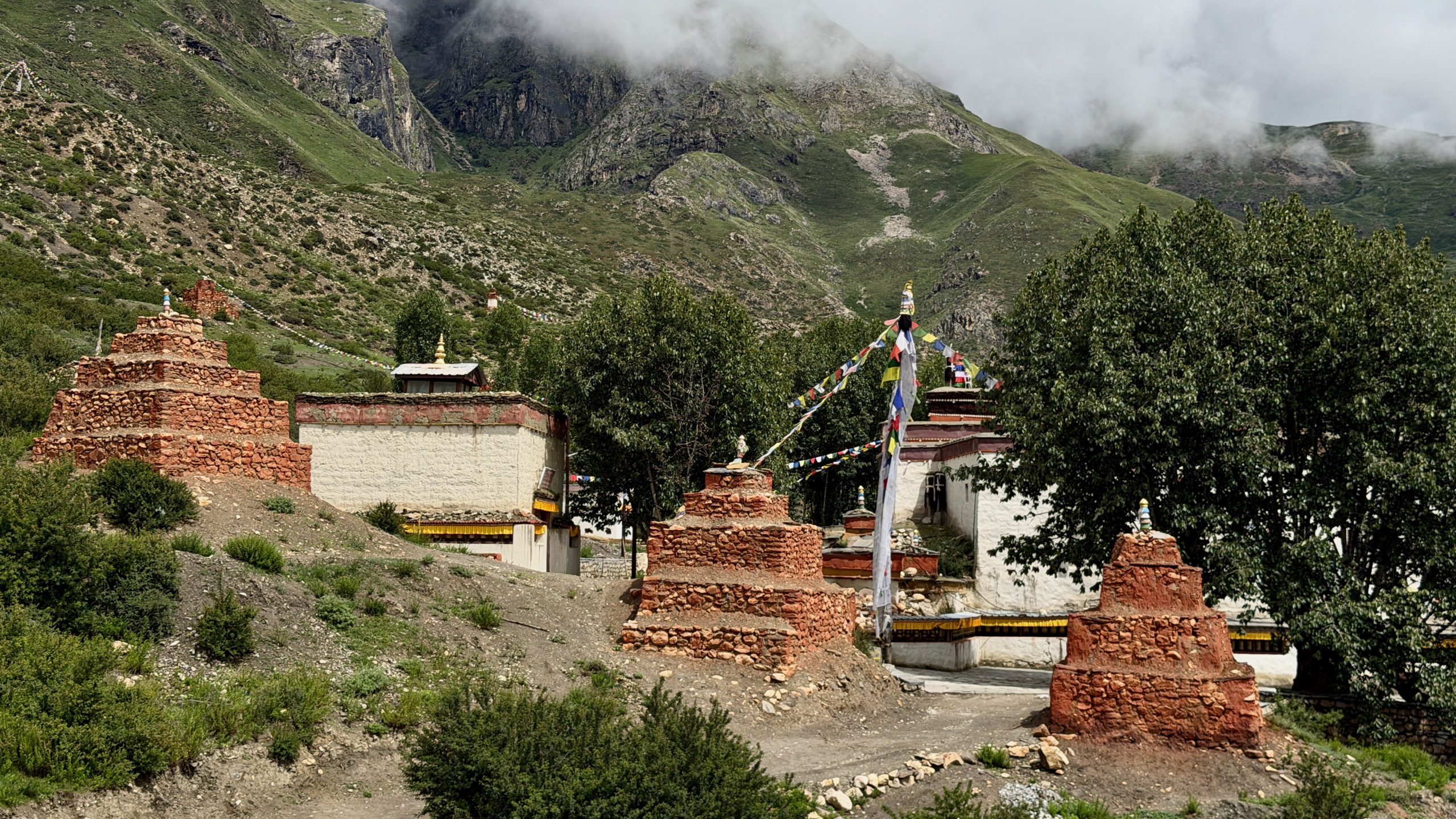
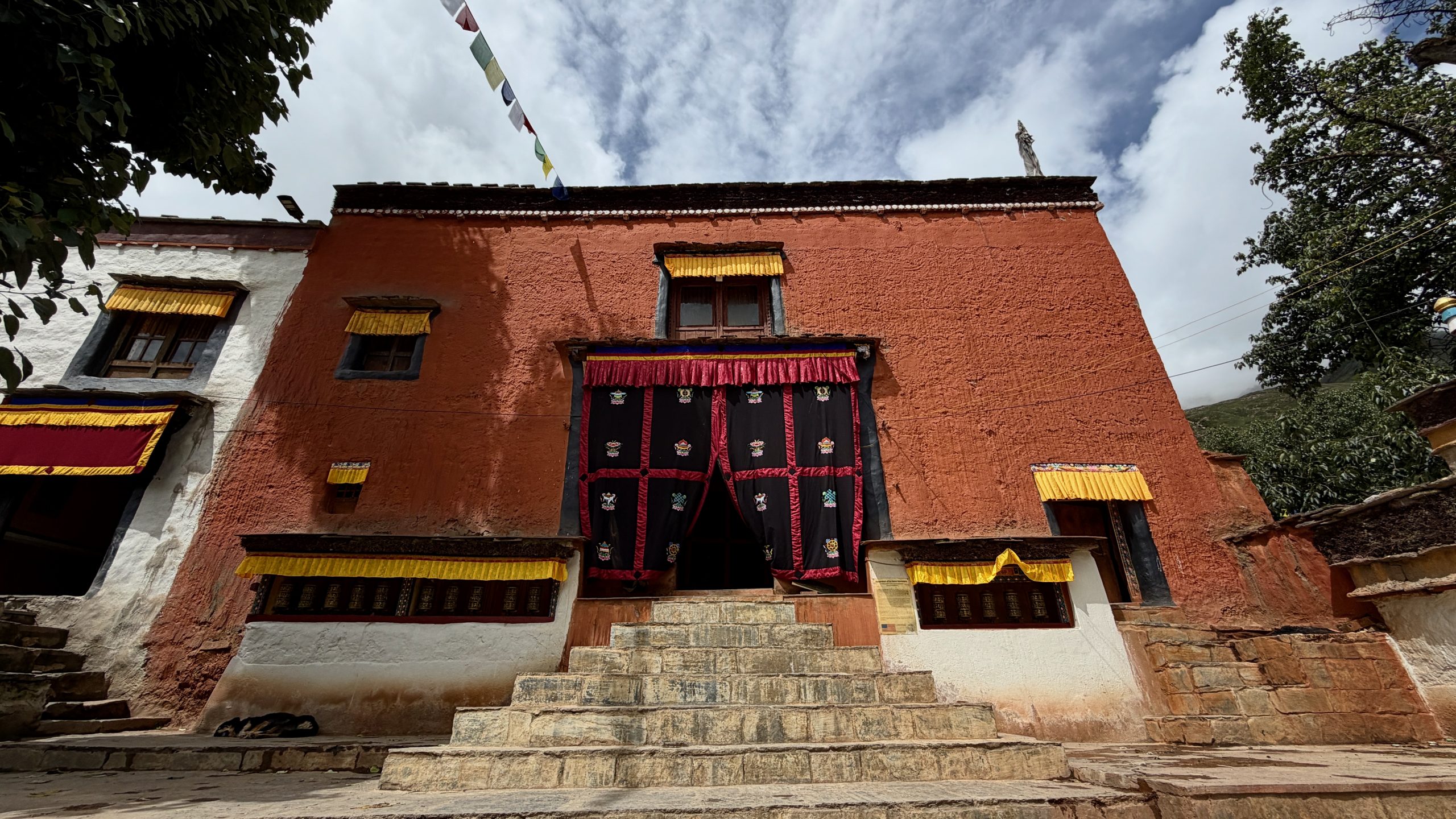
As in the other monasteries, taking photos inside wasn’t allowed. We had actually planned to hike from here over a small pass to Dhakmar, where the car would pick us up to continue our journey, but two of us were feeling quite groggy, so we all took the car back to the main road and drove on. Instead, we made a stop in Chharang and strolled through the village. Like most of the other villages so far, this one was surprisingly empty, too.
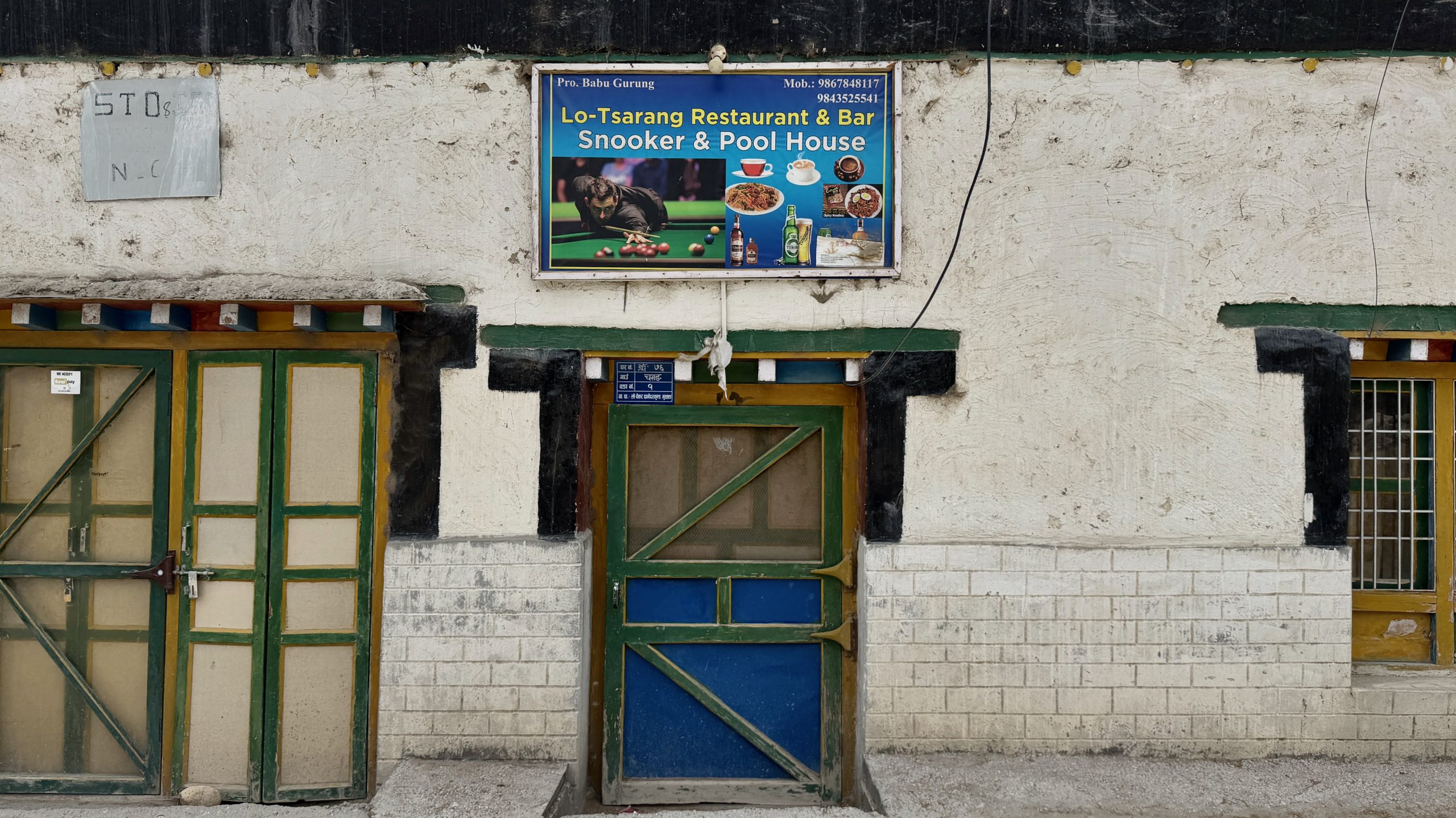
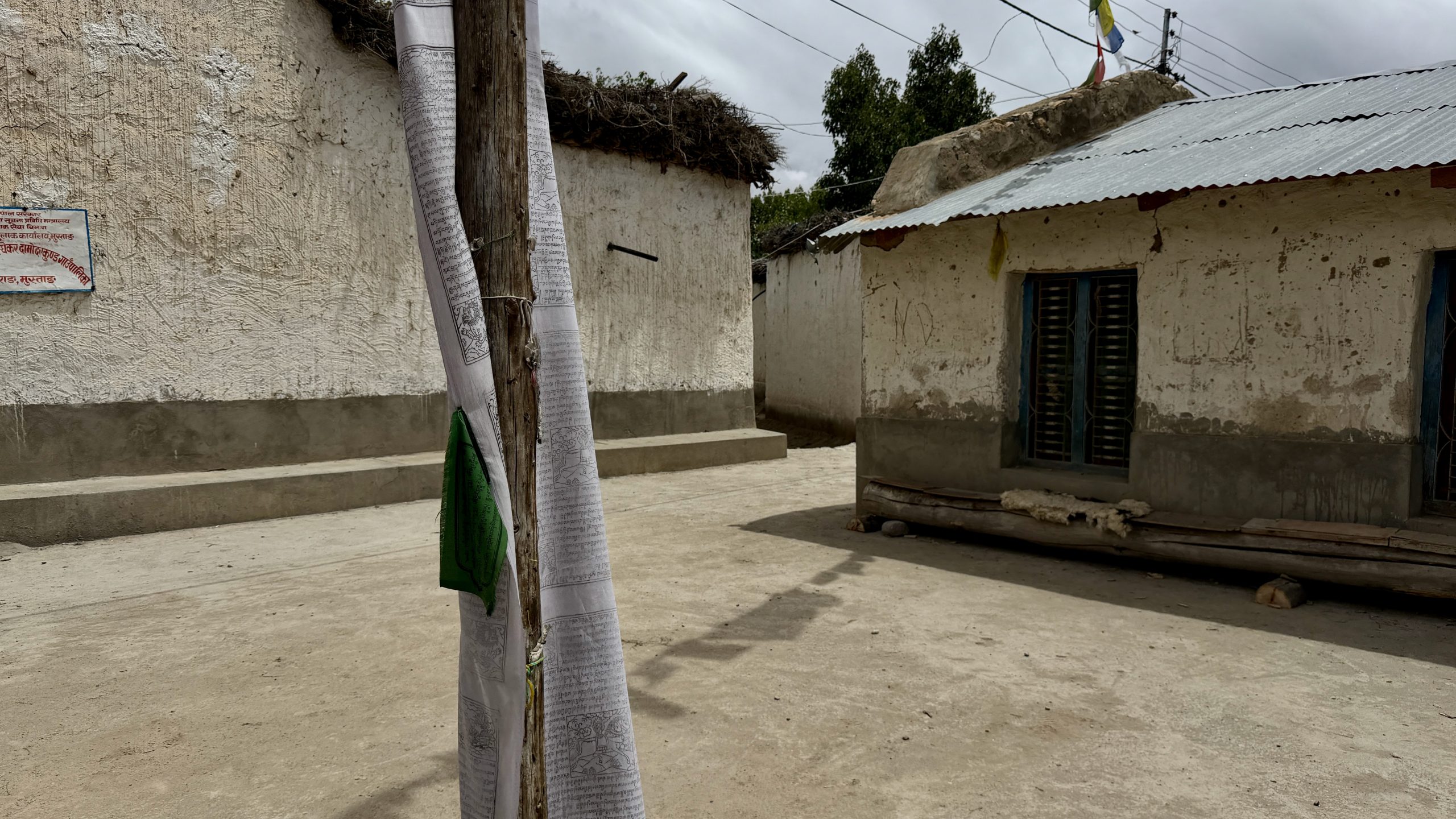
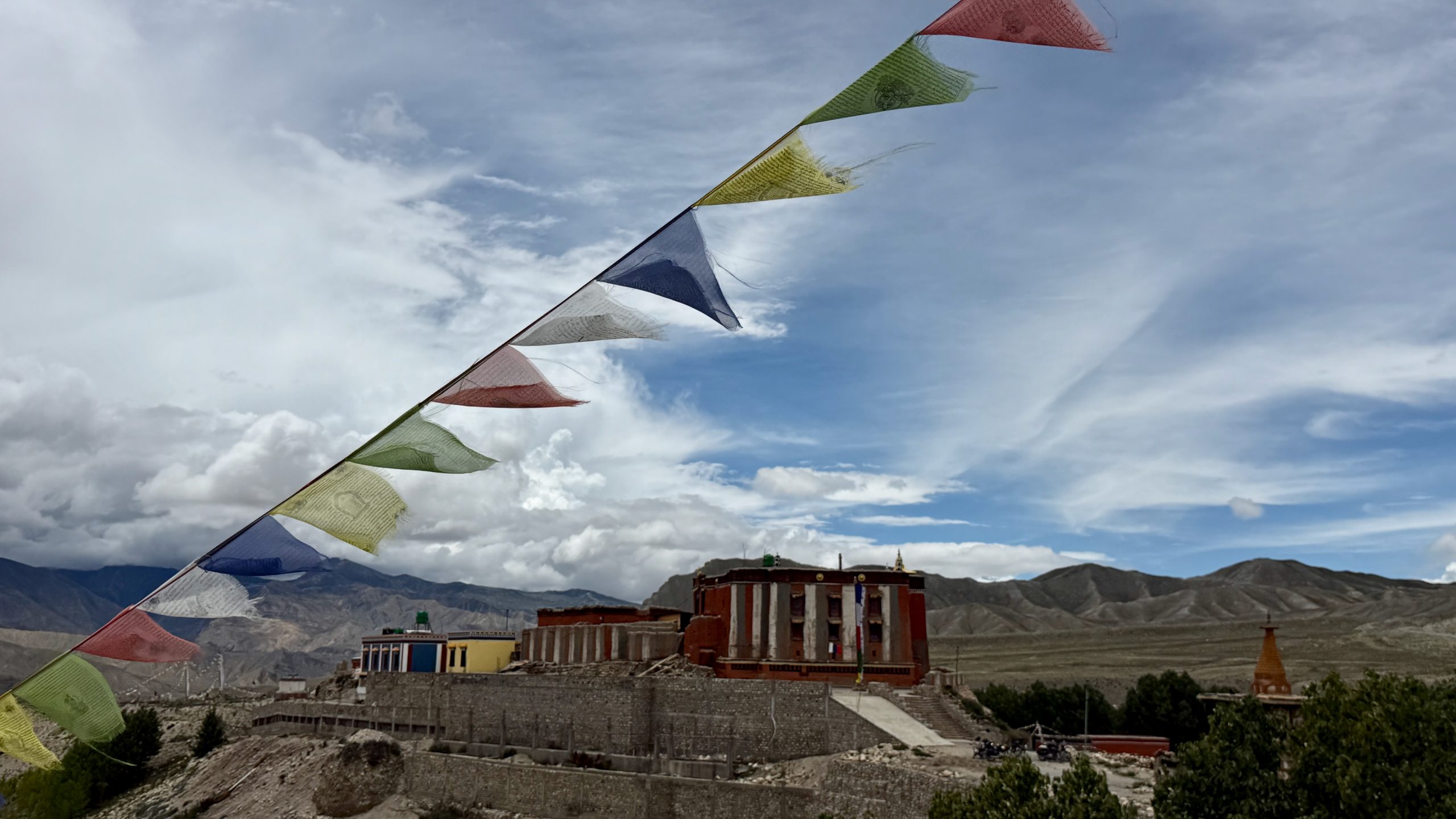
Chharang used to be the second capital of the region. Lo Manthang was a fortress city, while Chharang was simply a large, fertile place with a palace and a big monastery. We bypassed the monastery—we had already seen enough of those.
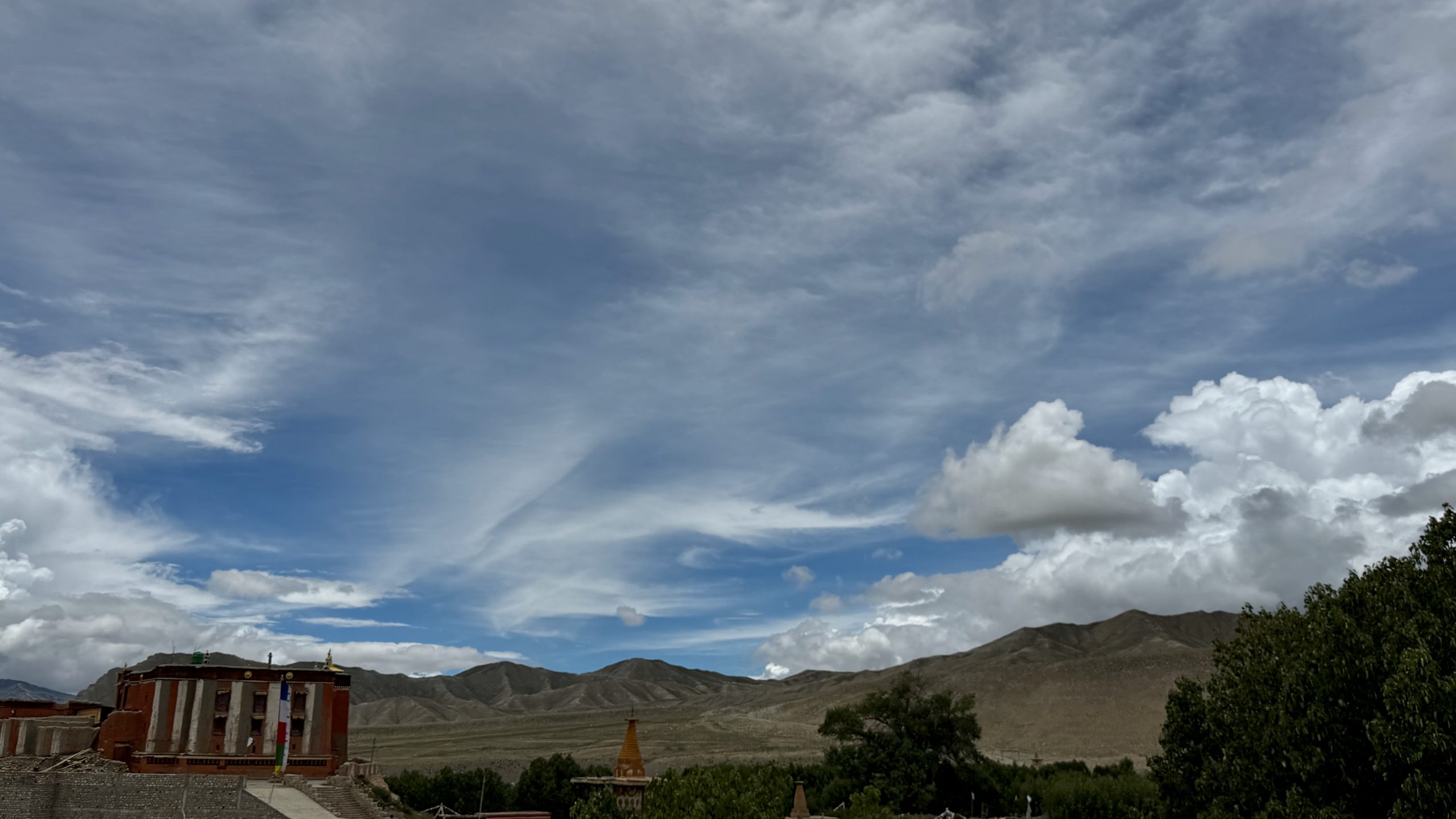
But you could also go inside the palace and discover amazing things. Except for two rooms, nothing had been fixed up, and these two housed a few special items. In one of them, there were boots, a helmet, and armor (chain mail—surprising that this was used here as well) from way back when, as well as a mummified hand. Taking photos was prohibited, but I was allowed to take one of the hand after all. It is said to have belonged to the former master builder.
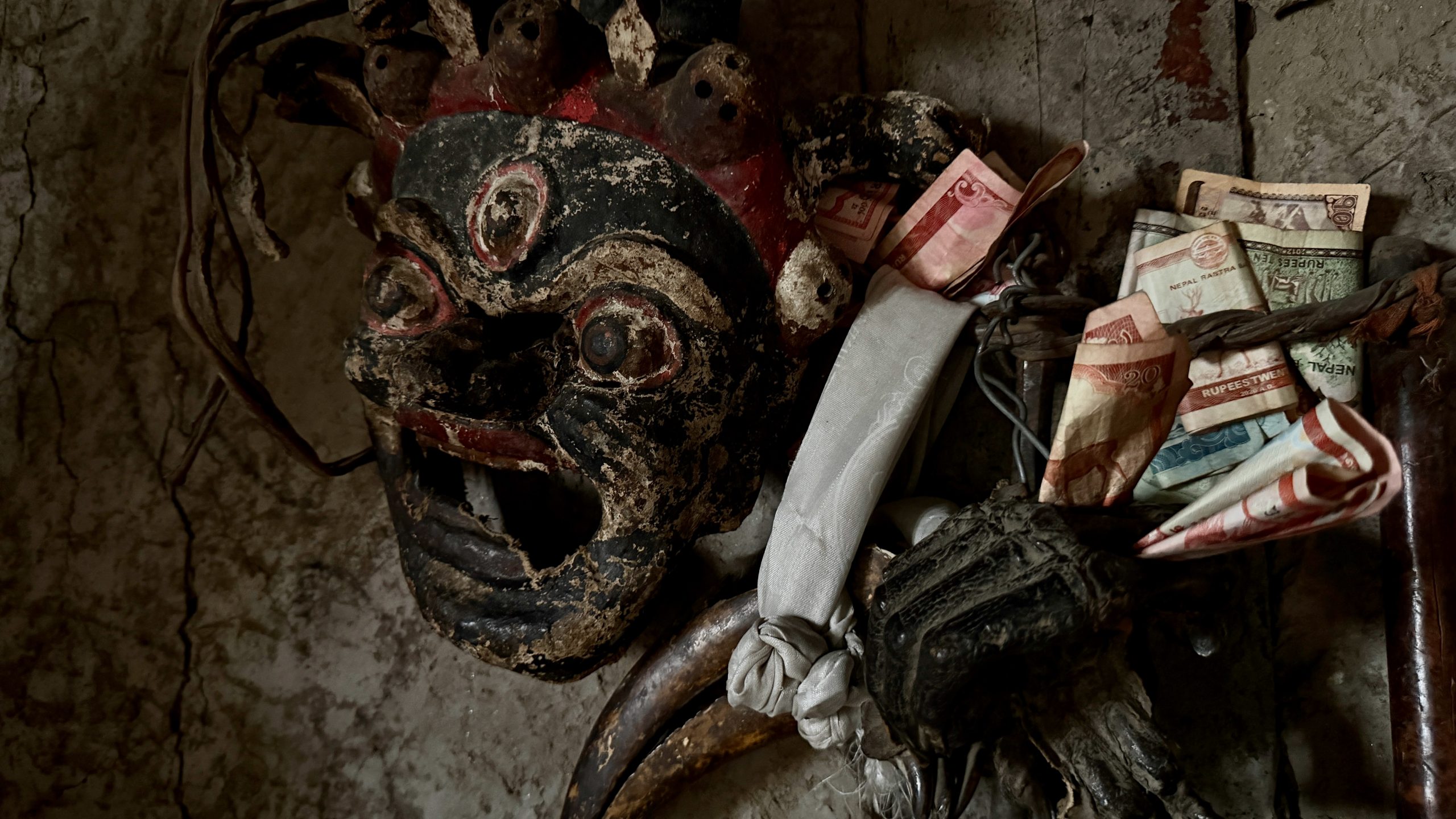
DThe other room was essentially the monastery room with a few statues. This one is said to be Ame Pal, the first king.
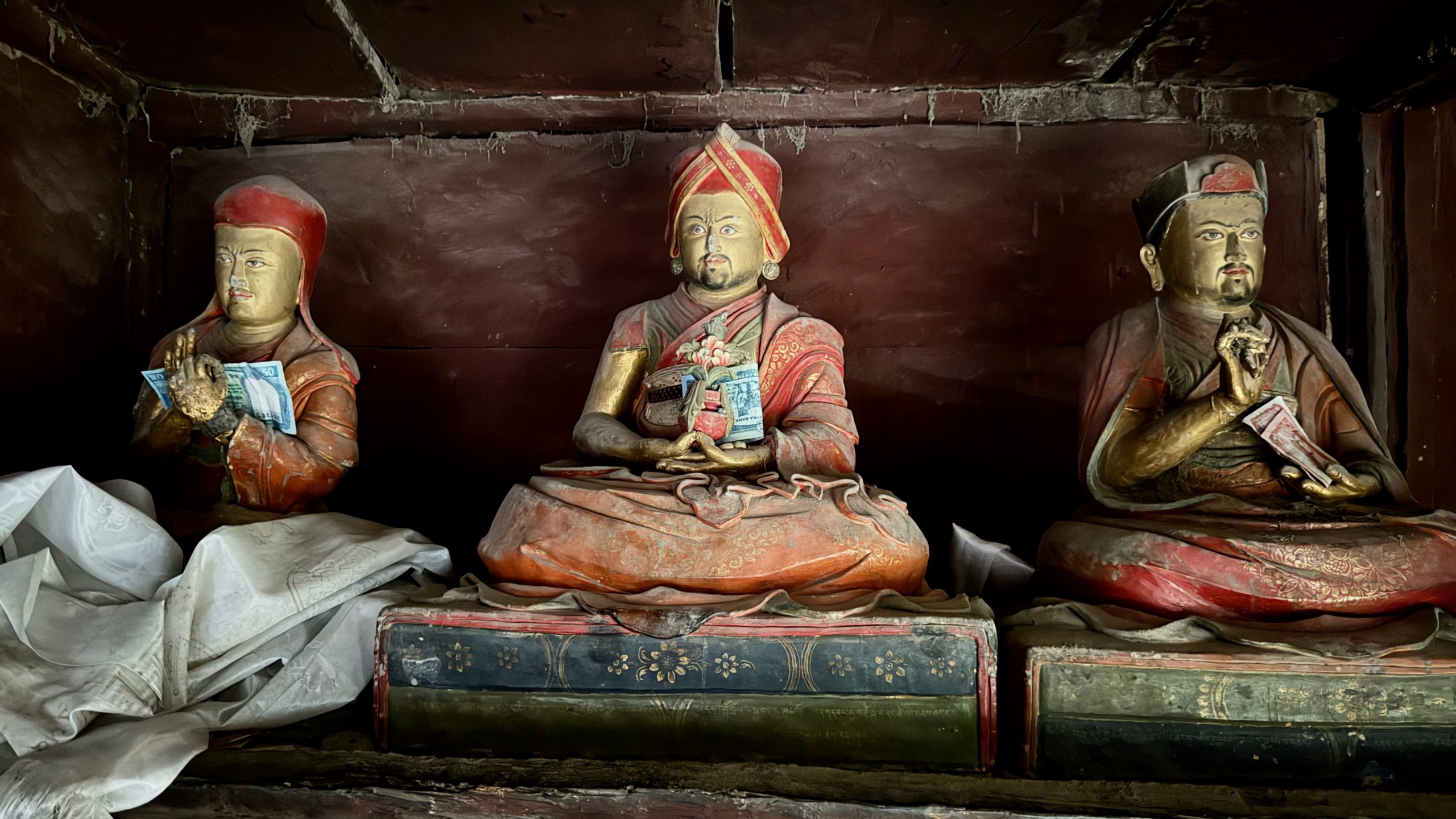
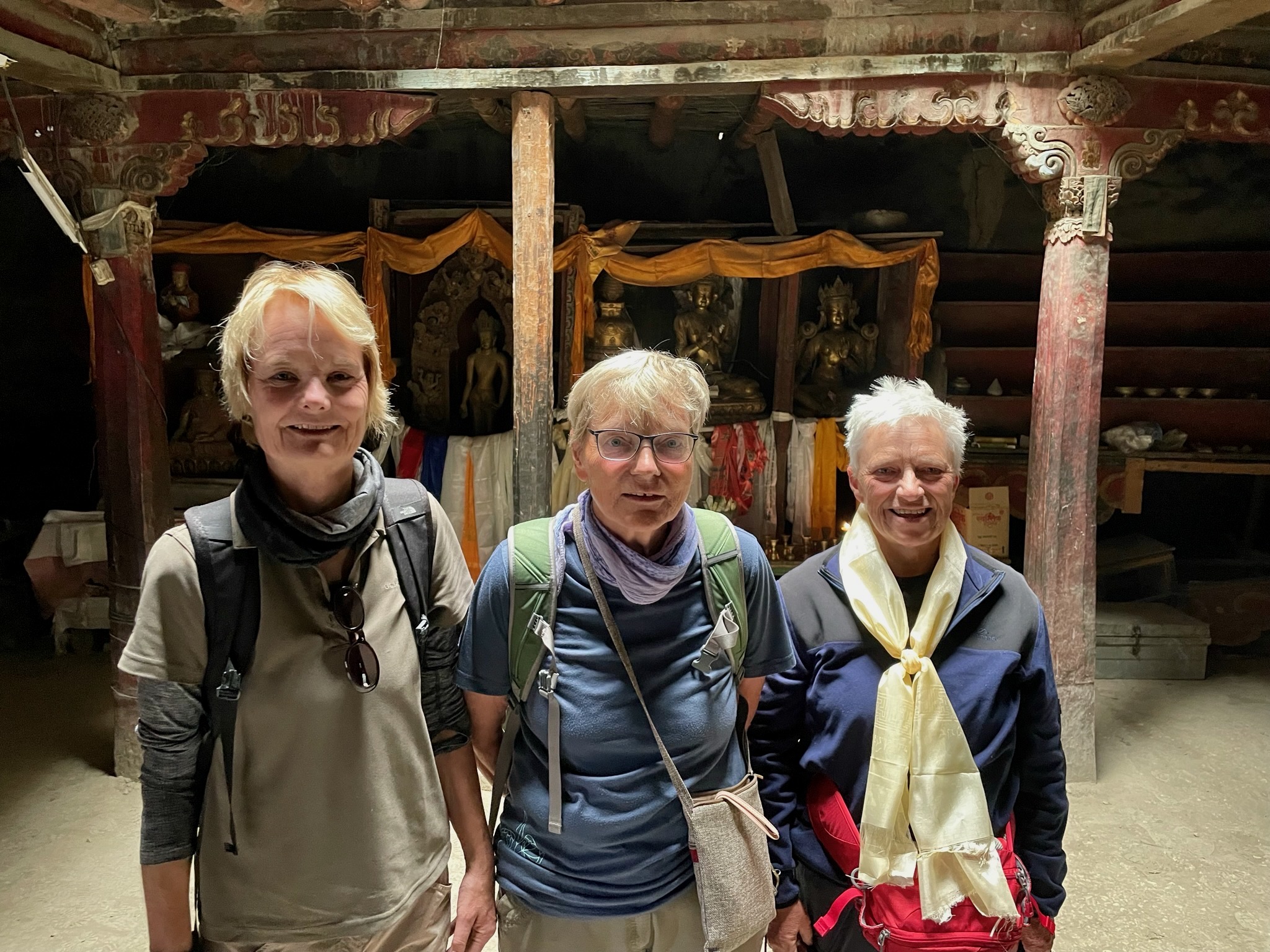
The other statues were well-known Buddhist deities. An older man showed us around and had me guess which one the last statue was. That was pretty easy—a typical representation of Tara. The man was so thrilled that I knew it that he untied a khatak, wrapped it around me, and was absolutely delighted.
Then there was also a mural where the eyes look straight at you—no matter where you stand.
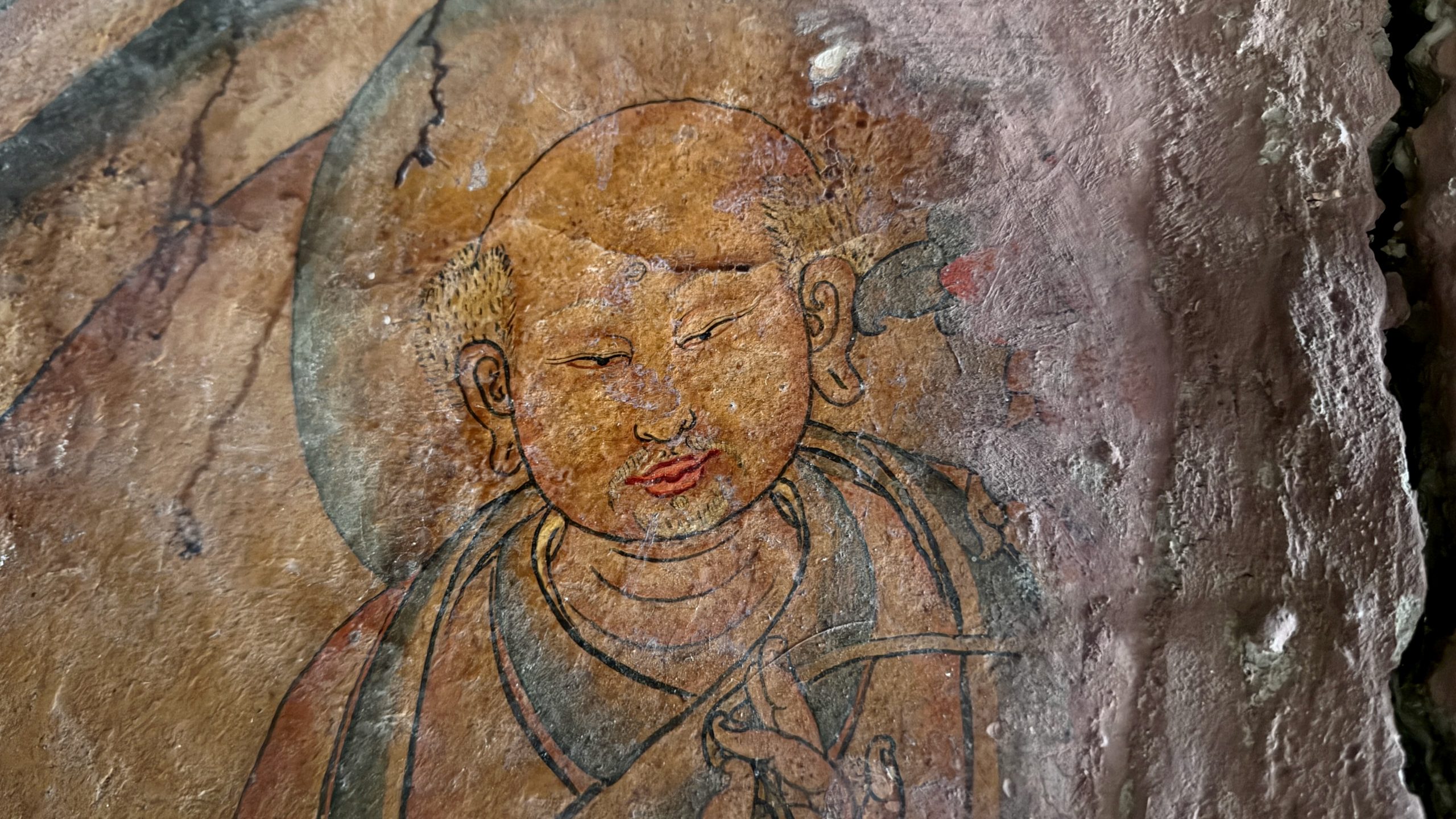
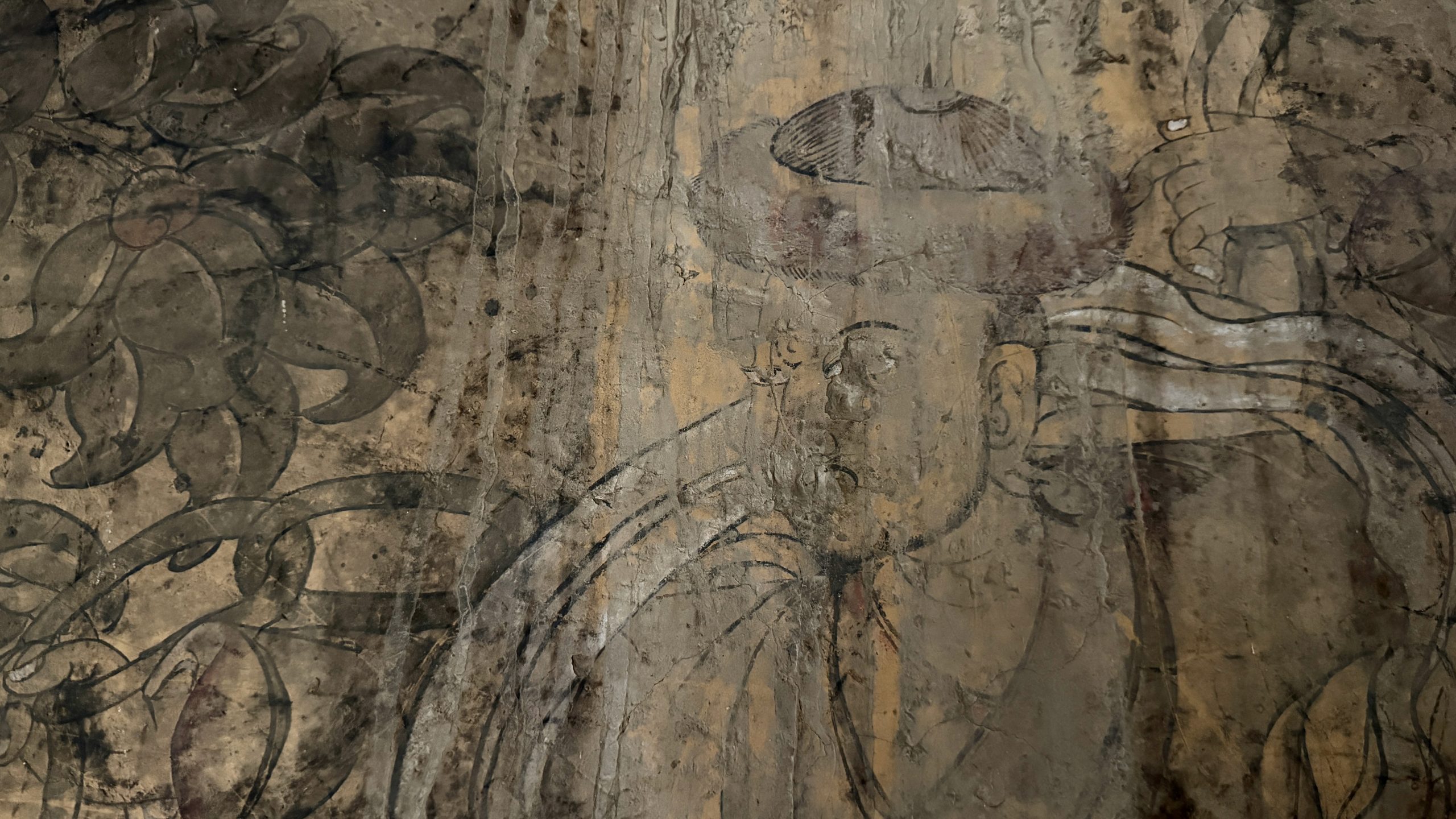
There were very faded murals in the stairwell, and I think it would be lovely if someone were to put some money and work into those as well.
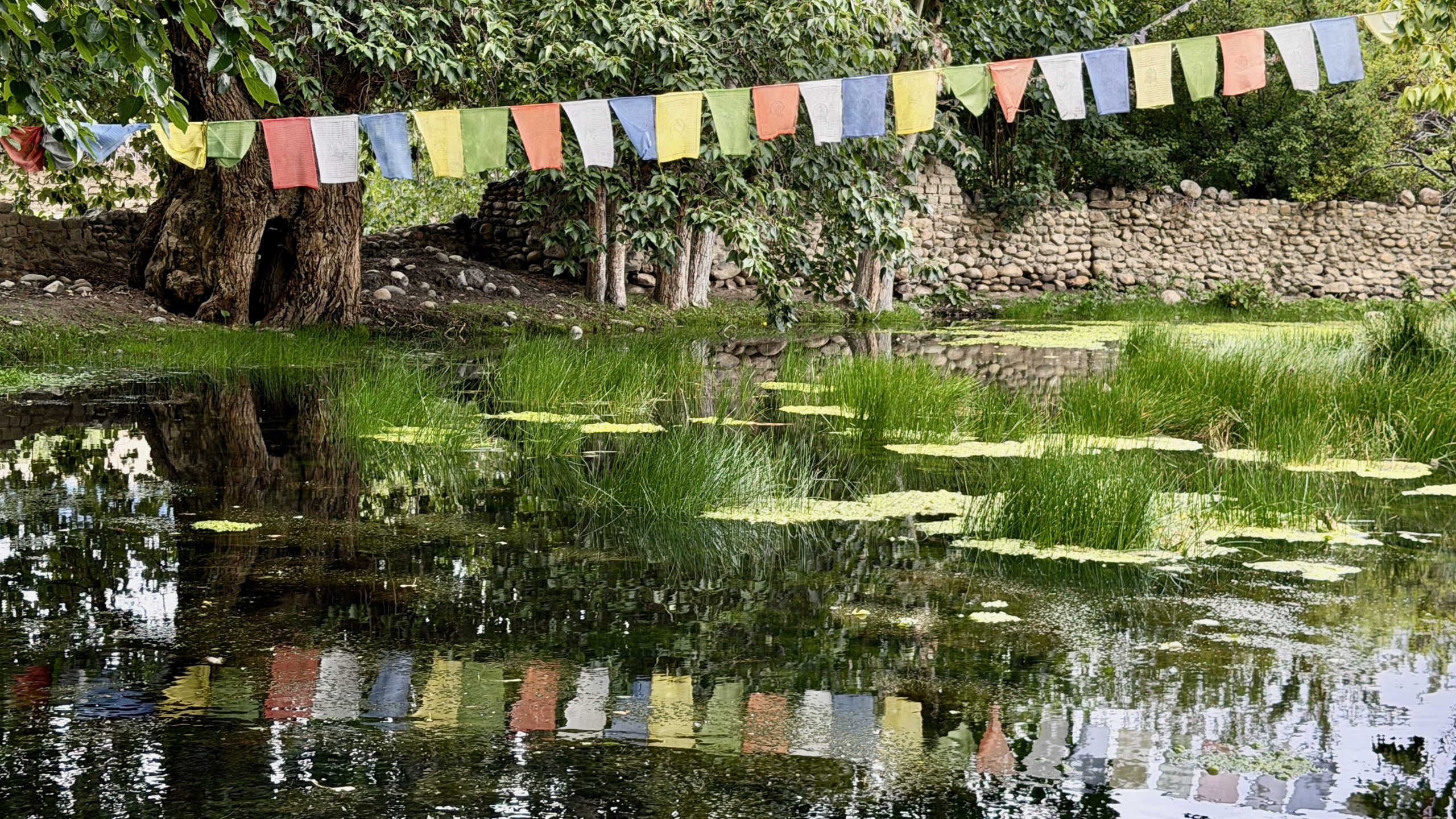
In front of the palace was a pond.
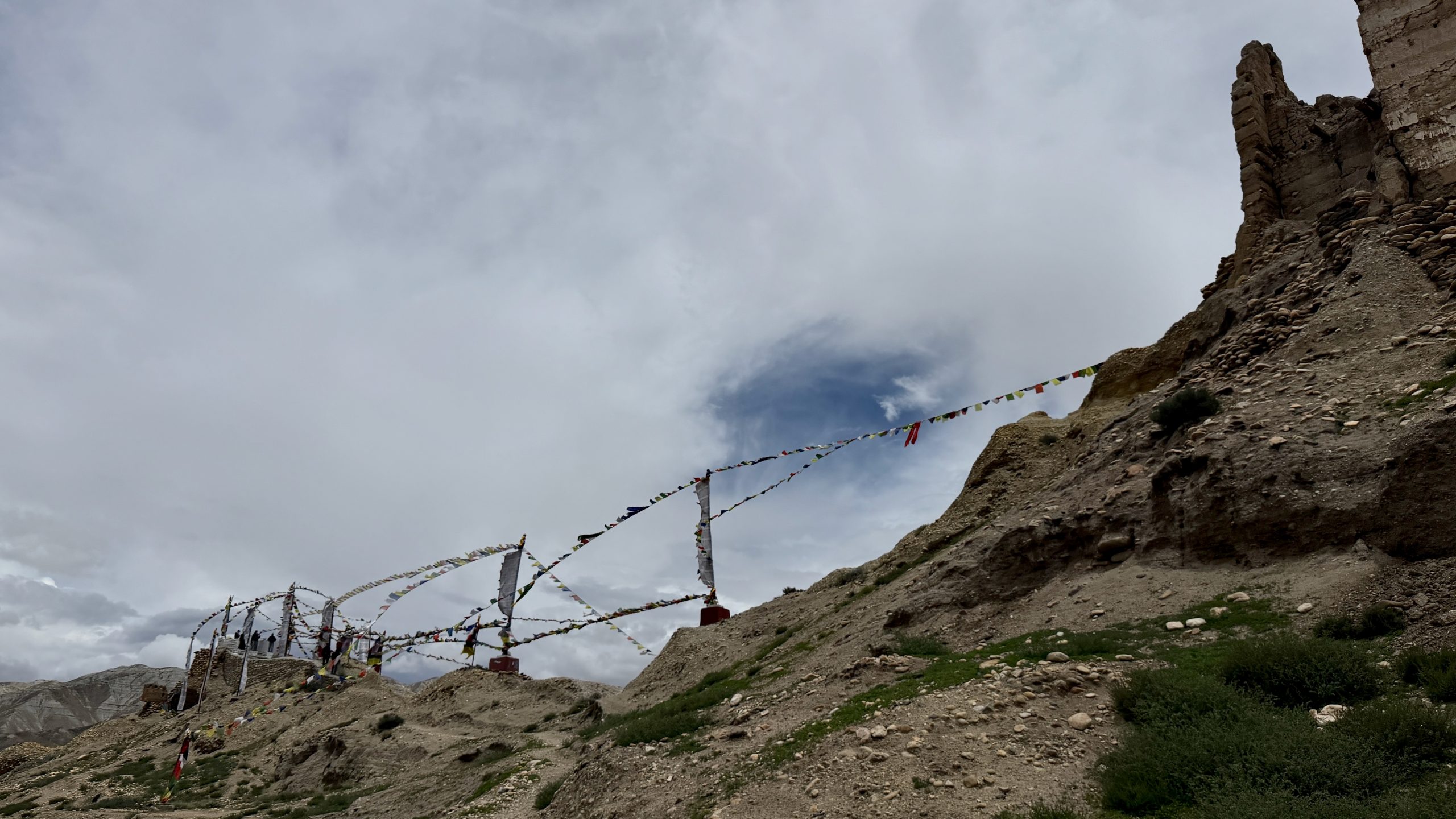
And next to it was a viewpoint. Great! That is, the view of the landscape with caves to visit far below, as well as a view back at the palace. You can’t see the caves in the photo. But in principle, it’s good to know they are there—so a stay here would definitely be well worth it.
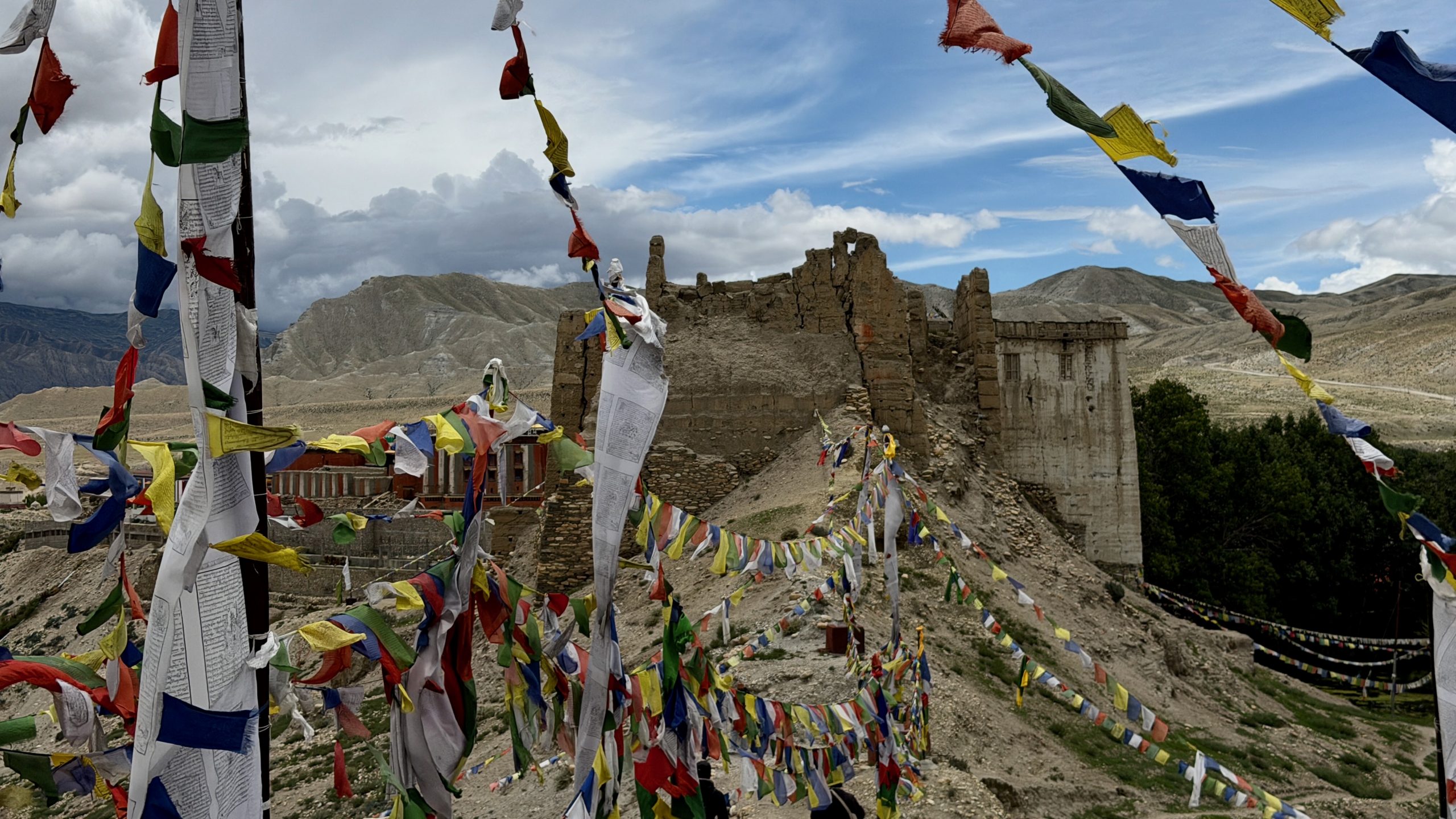
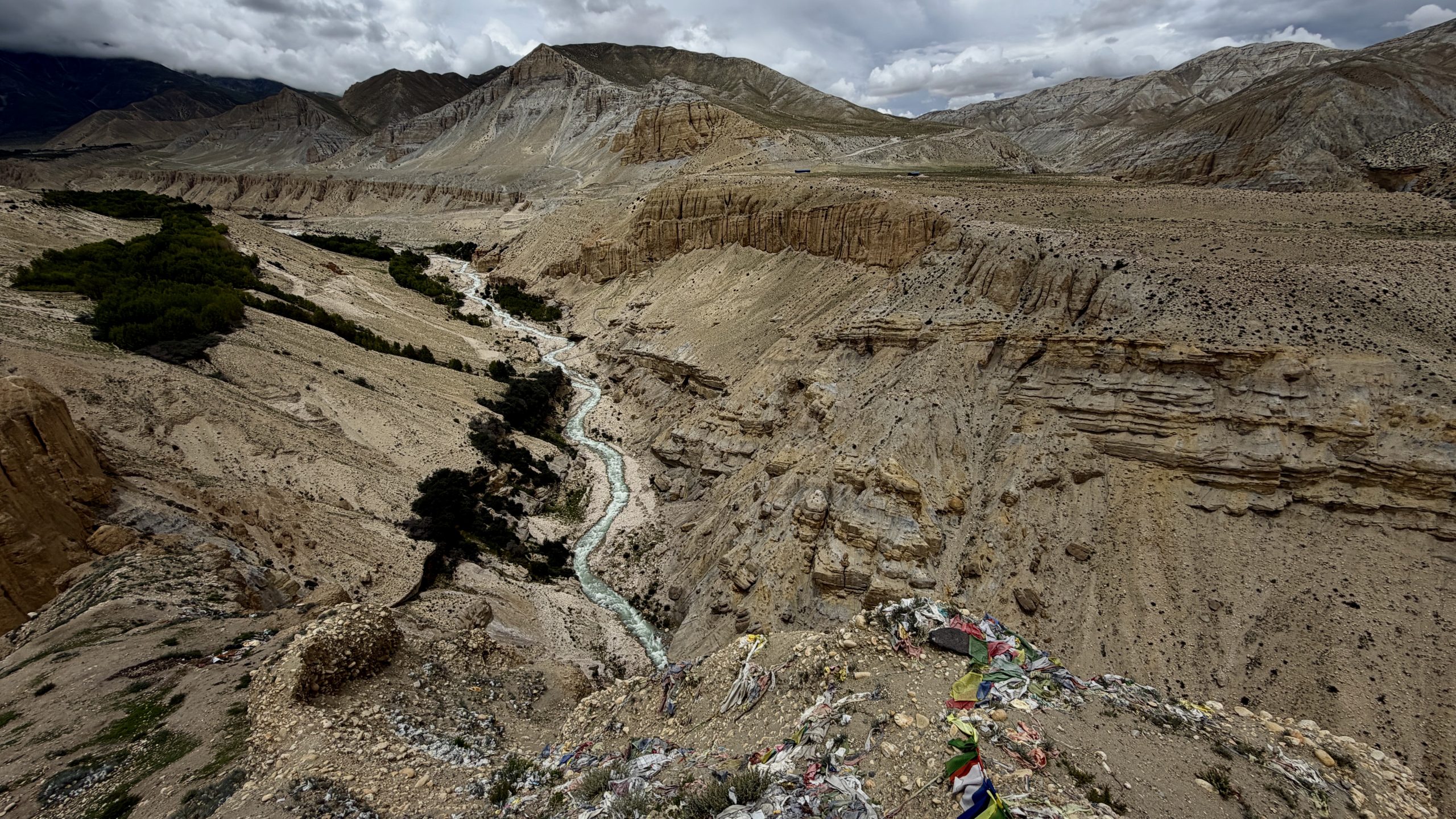
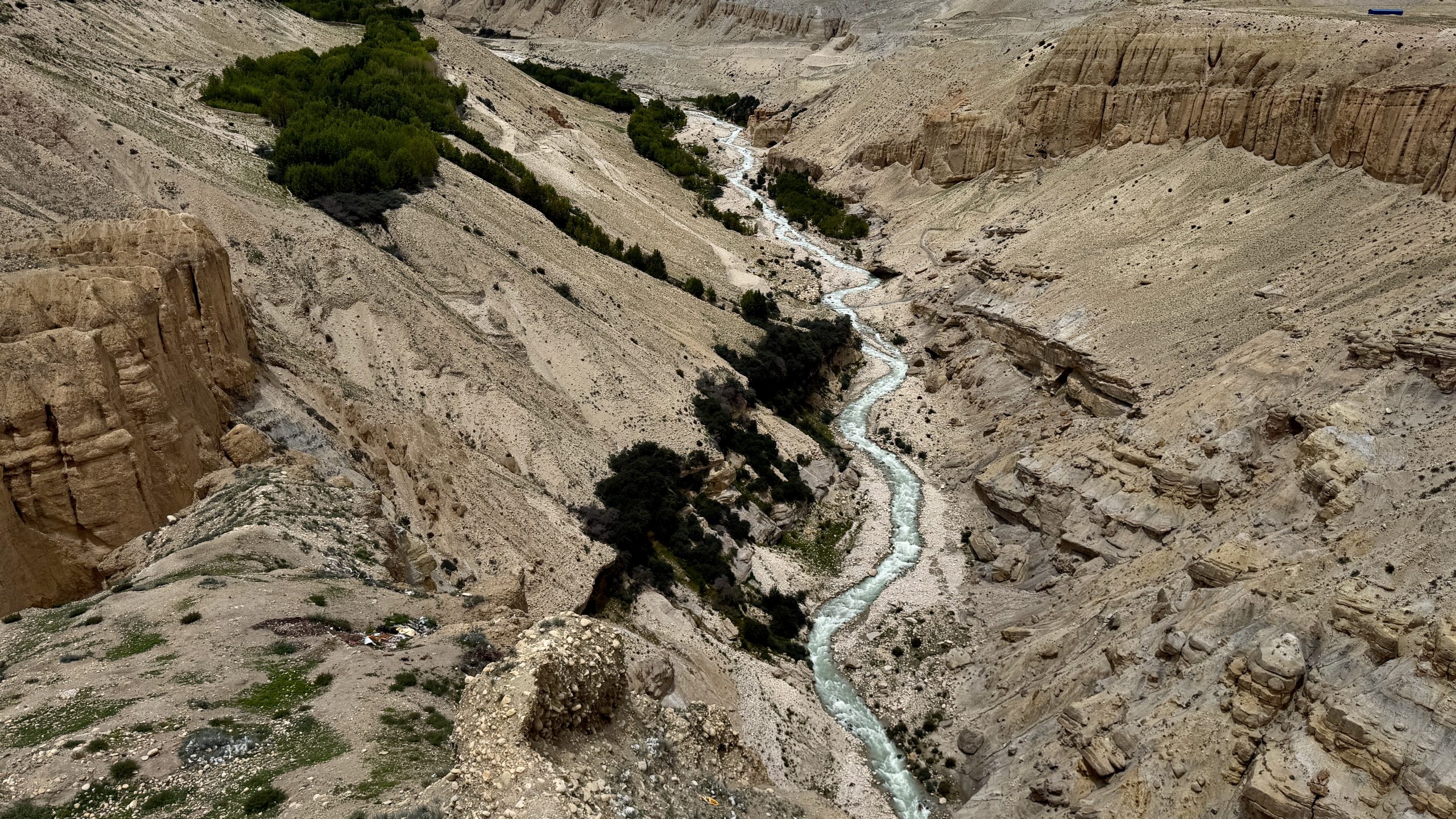
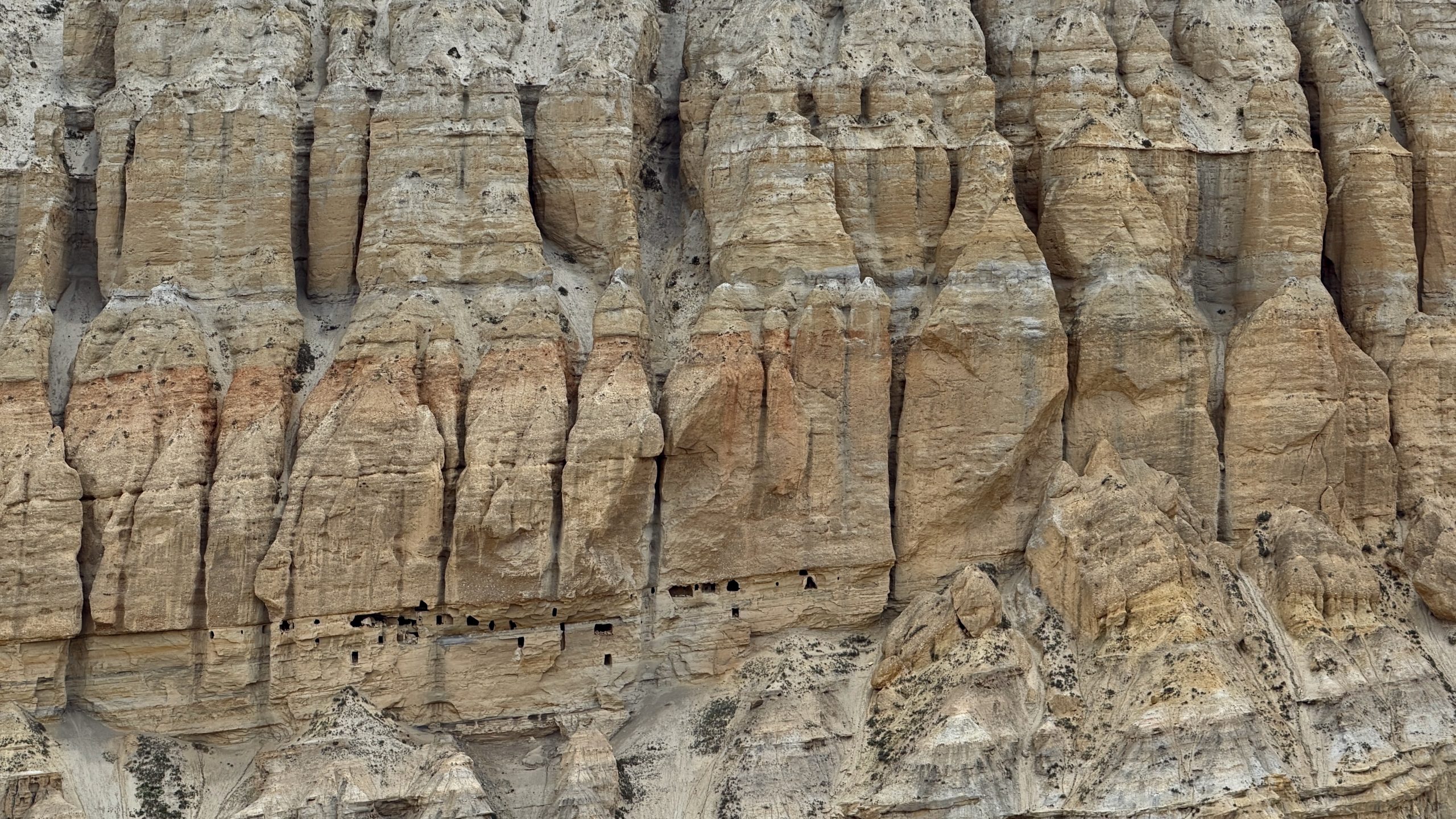
It was lunchtime, so we stopped for a bite to eat. While there, we met an amazing Nepalese couple who were spending a lot of time and money exploring their own country. Nepal has 77 districts—he had already been to 75 of them, while she had only been to 65. Here, they were planning to trek over the 6,000-plus-meter Seribung La pass to the east, and then make their way back down along the eastern side of the Annapurna range. Nice and interesting people—a pity that our time chatting was so short.
Then we drove on to Chhusang. In principle, I wasn’t really in the mood for landscape photography anymore; with the low-hanging clouds, the scenes felt a bit too similar to me. Still, it was interesting to drive the same route back again. Where before we had just stared in wide-eyed wonder at all the different mountain formations, we had now gotten used to the fact that our surroundings were so magnificent. Only that winding road—that was the one thing I still wanted to capture on camera.
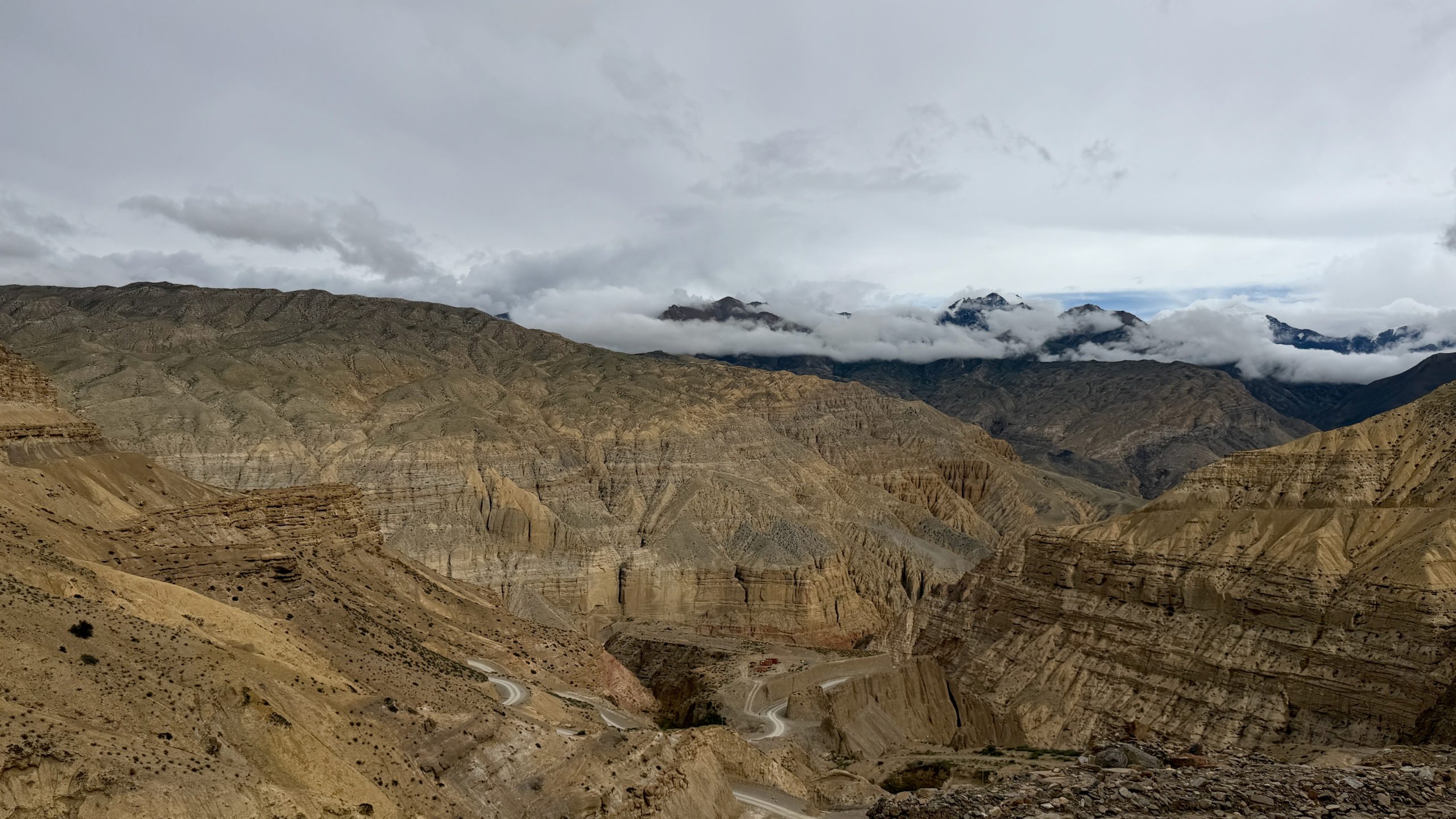
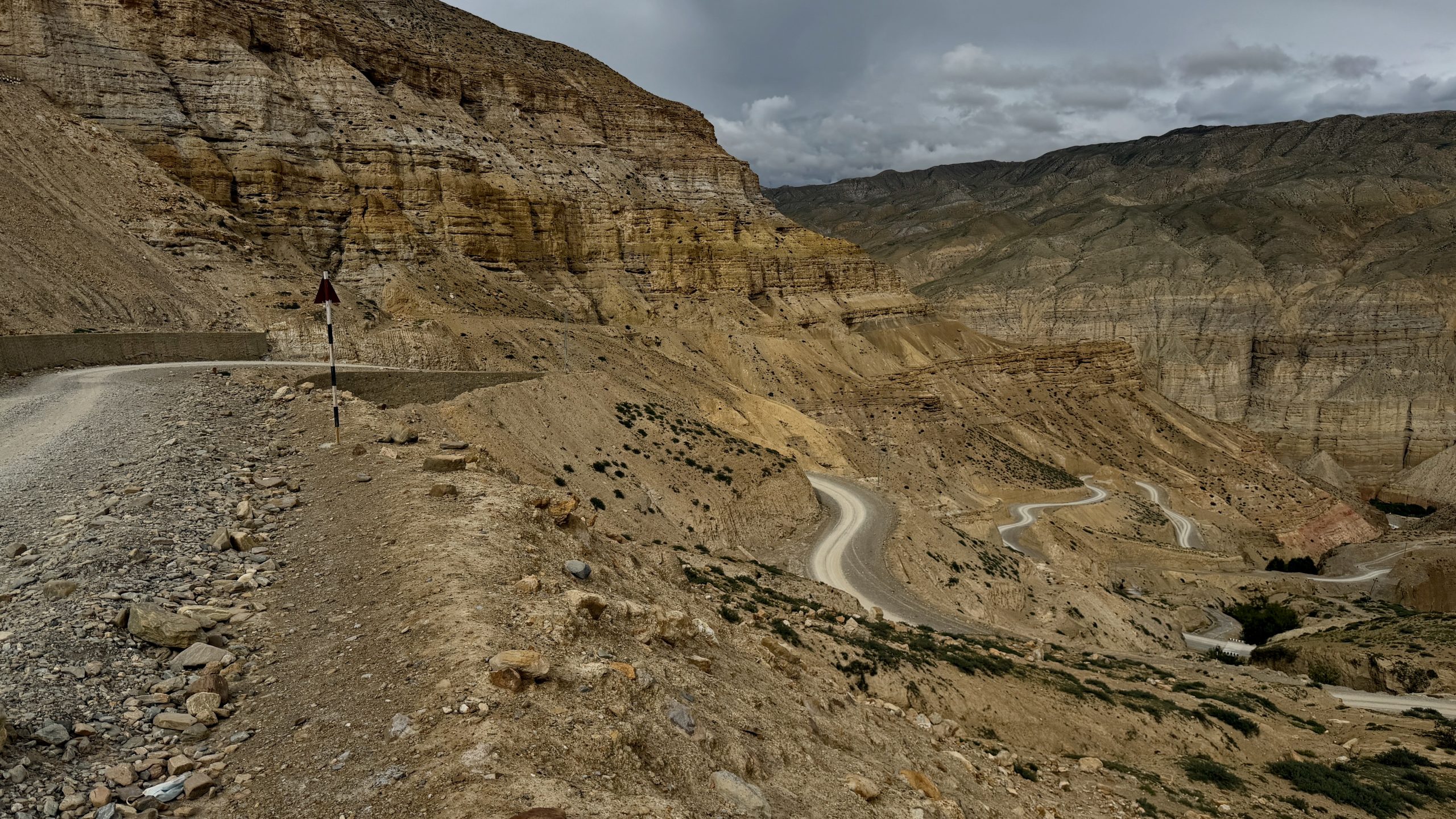
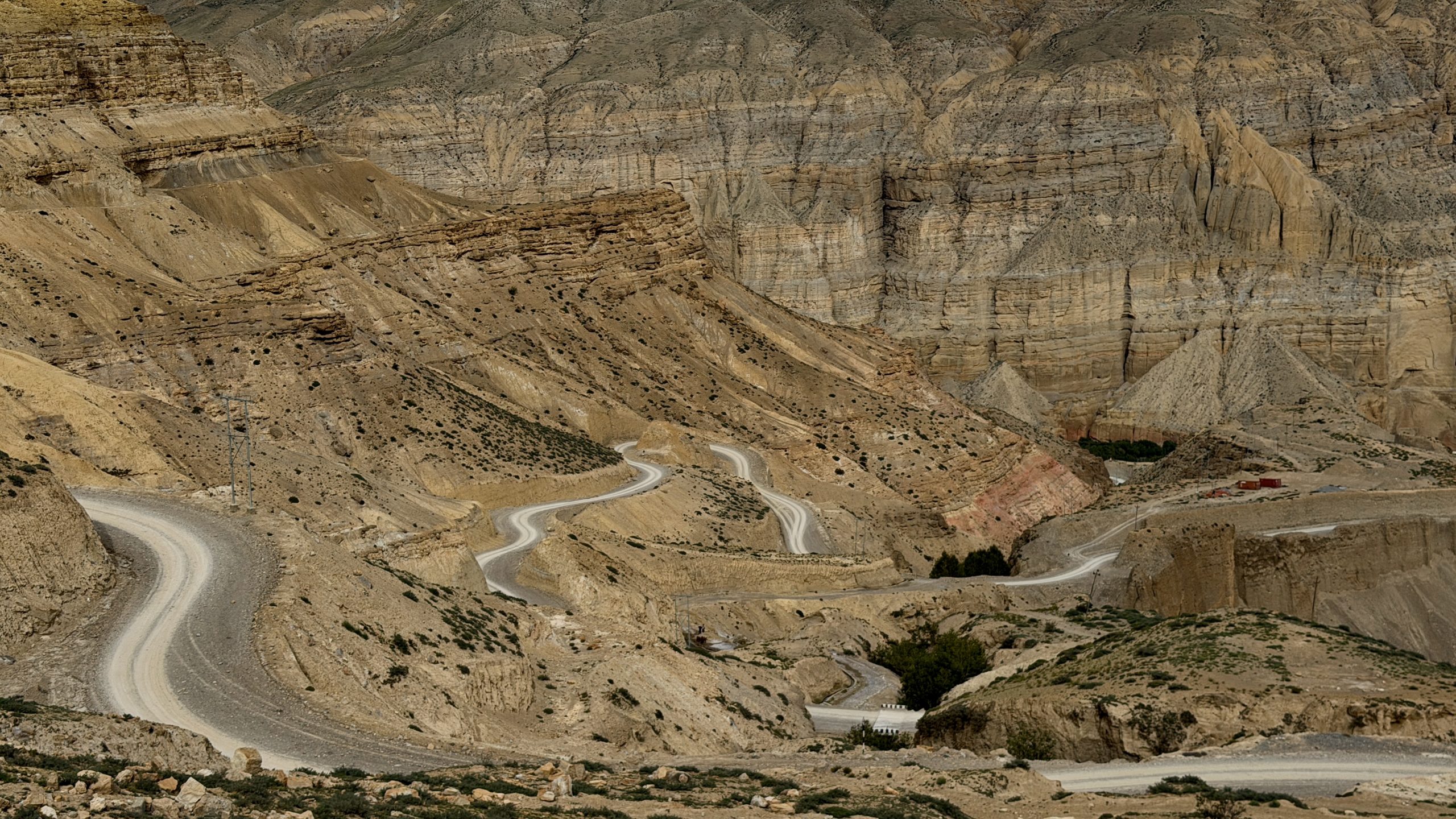
Chhusang is the place where that elaborate, expensive permit was checked. And this right here is the checkpost:
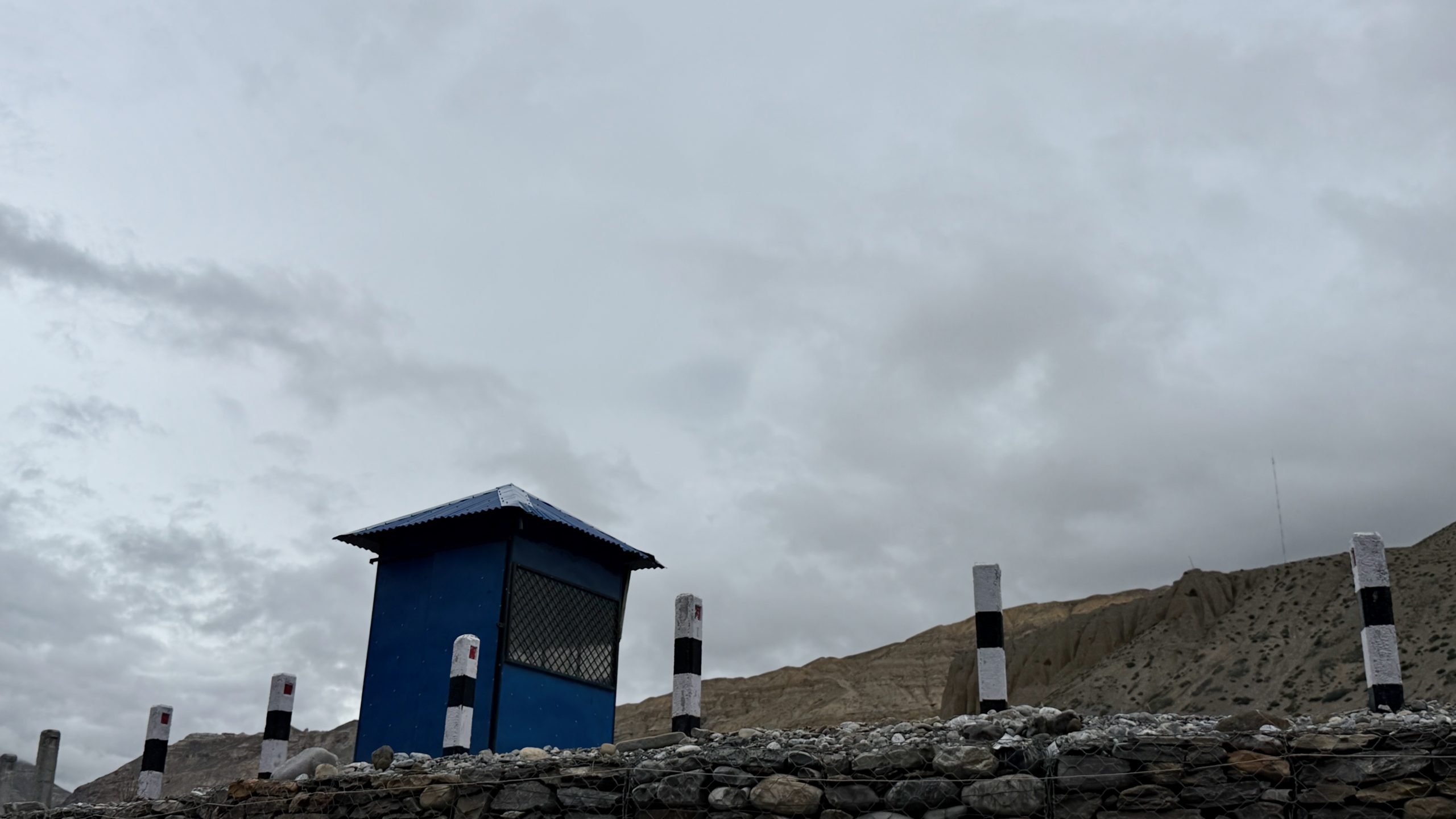
After that, no one ever wanted to see it again. However, whenever we were out without our guide, people quickly asked us how she was doing. We would then say that she wasn’t feeling very well. We had come to terms with the fact that she wasn’t particularly helpful, but we still kept wondering how little curiosity and interest she and her son showed. Because—they didn’t know the area either; he had never been here before, and she had only been 2–3 times with clients who had solely visited Lo Manthang and Chhoser.
In Chhusang, we spent the night where we had previously stopped for lunch on the way in. The dining room was really nice and the cooking was very good, but otherwise, it was rather simple. The innkeeper didn’t really live there either; he was from Pokhara and had leased the place or something like that. He was a neighbor of Shankar’s, and the two of them were thrilled and chatted away with each other. The host then went on to tell me his entire complicated life story in 5 to 10 minutes—about a restaurant in Qatar where he had lost everything during COVID, and what his daughter had said about it (“well, at least it was just your money and not the whole family’s too”), along with all the other places he had worked, adding that he wanted to head back to Chandigarh soon, as that was his favorite city in India anyway.
Shankar had spent four years working in Malaysia, and in general, we met so many Nepalese people who had also worked abroad for years. It was quite a distinct phenomenon, leaving us with a very different way of thinking about Nepalese society.
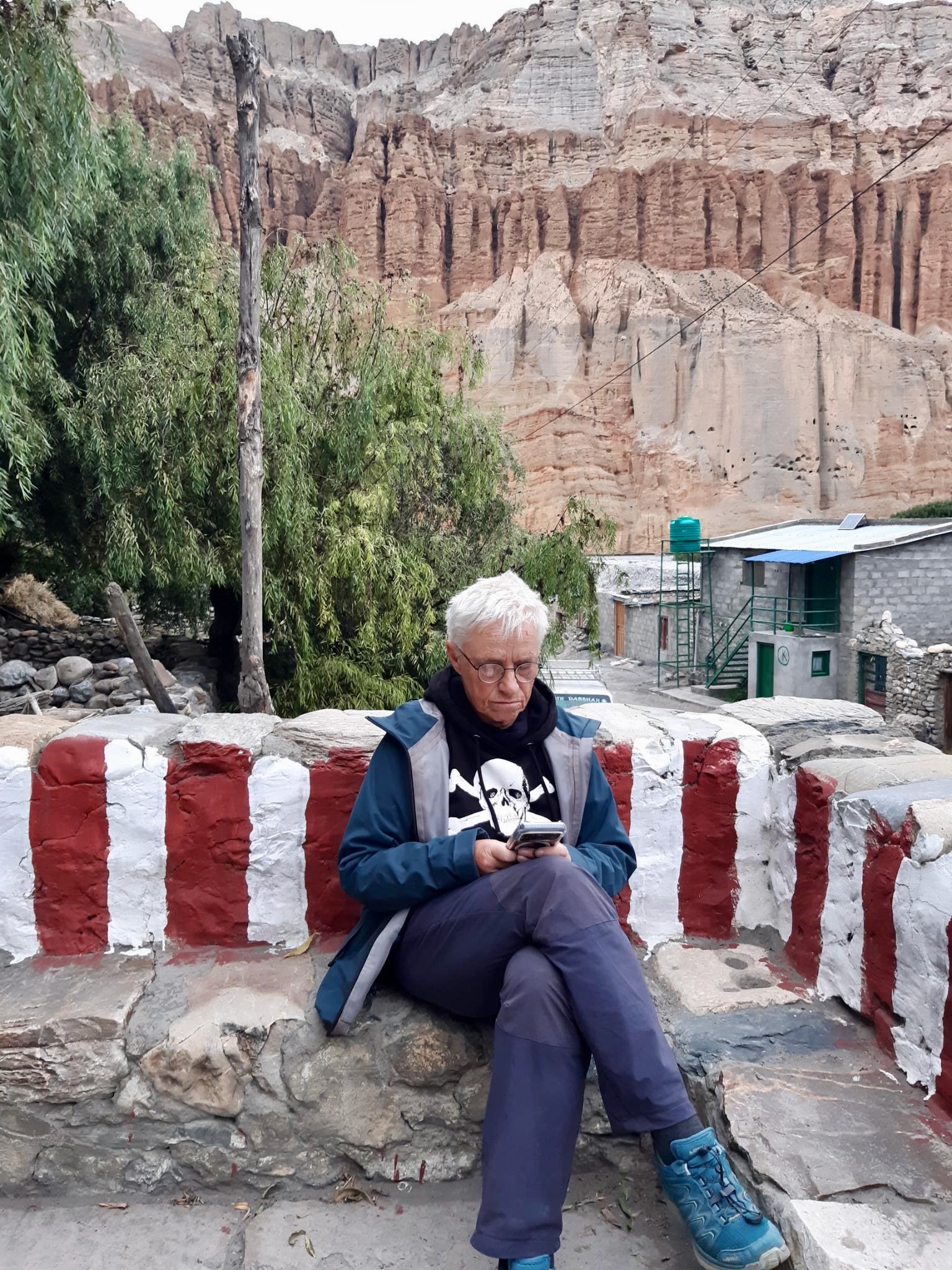
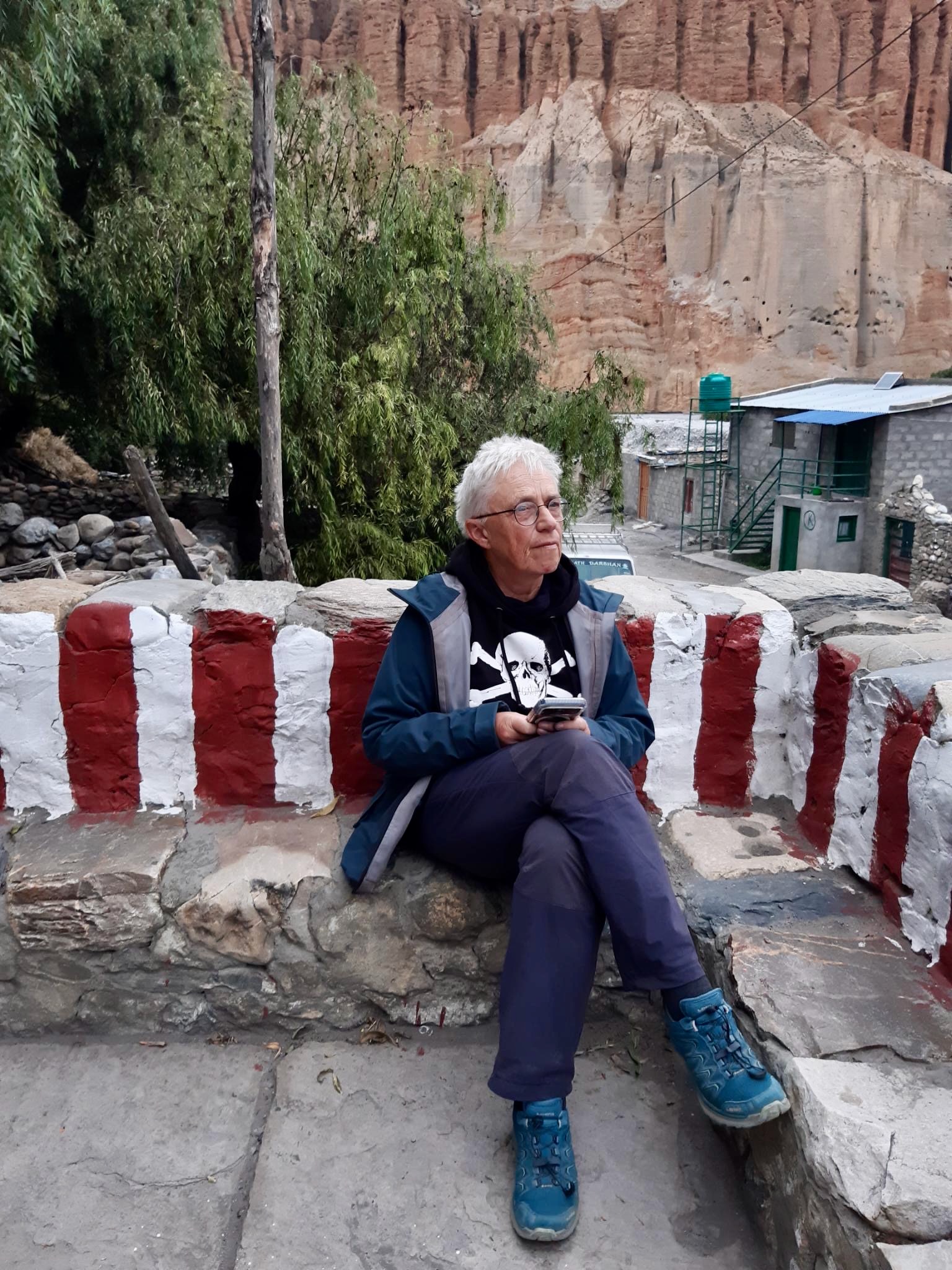
In the evening, we played games again, and other than that, I can’t really think of anything else from that day right now.