


Lo Manthang – The head gets stuffed full though its a sieve
7. August 2026
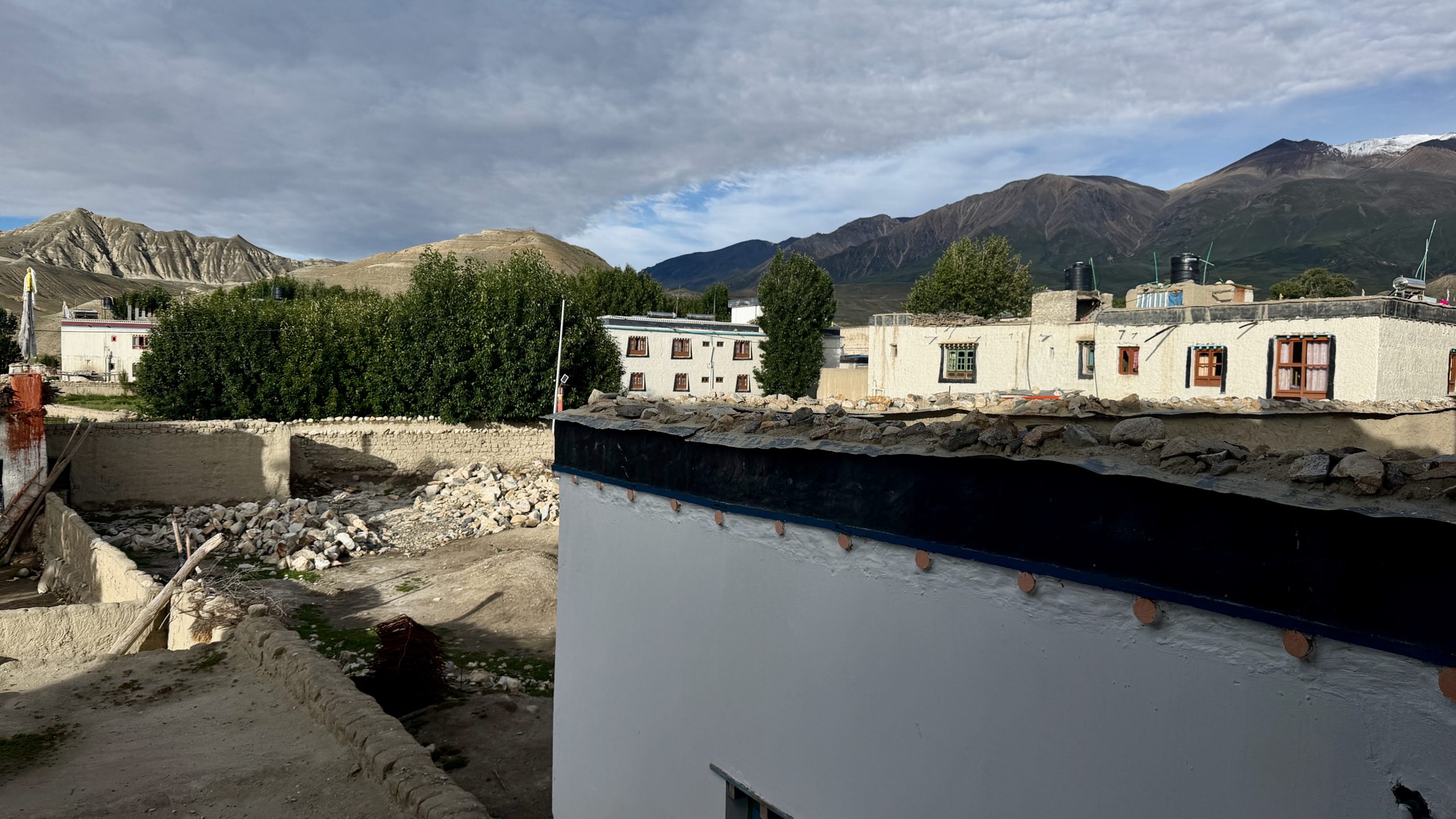
In the morning, I looked out the window and was both surprised and delighted: the sun was shining! What a rare sight! Feeling cheerful, we set off. Right around the corner, someone was riding a skateboard.
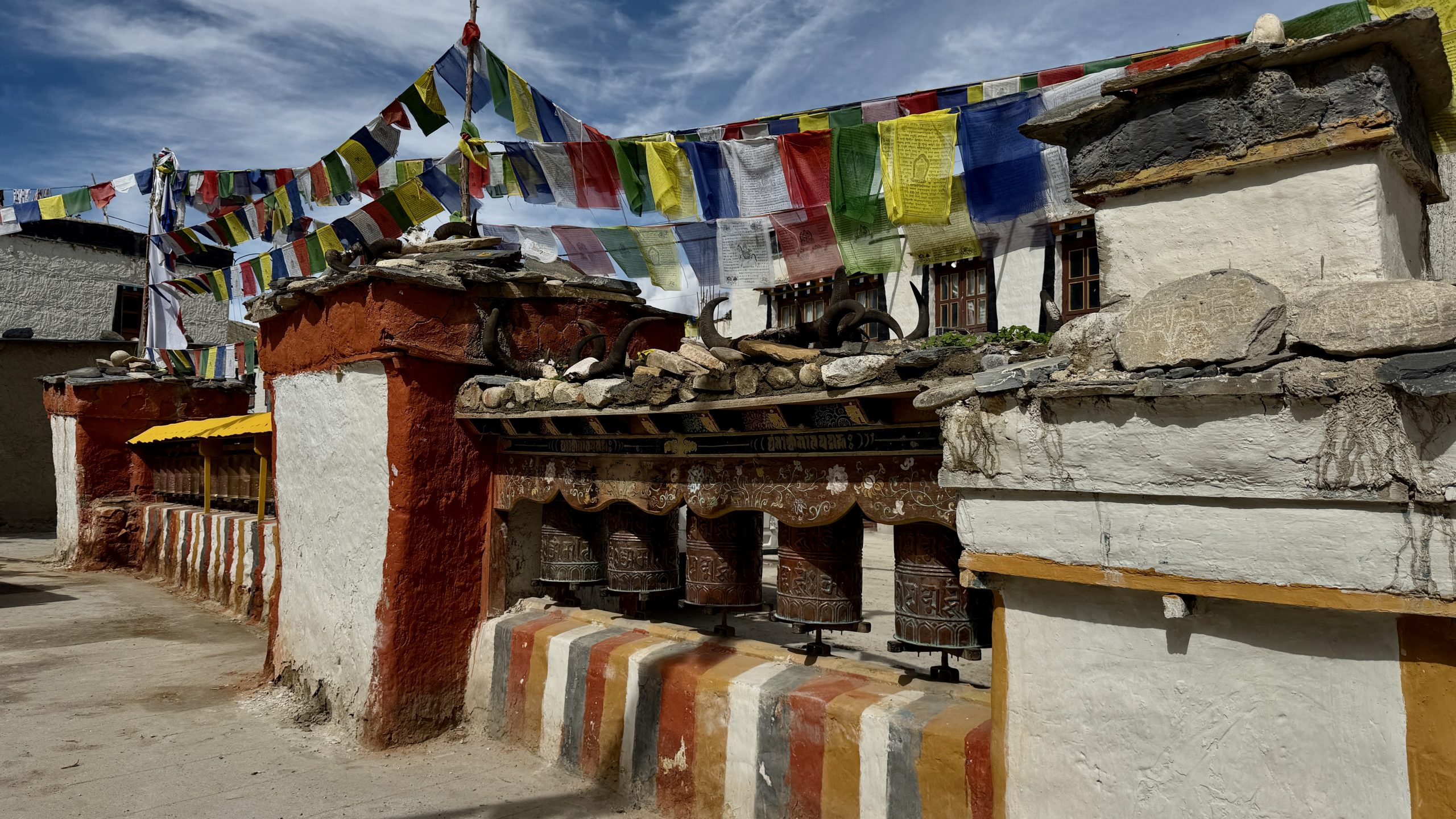
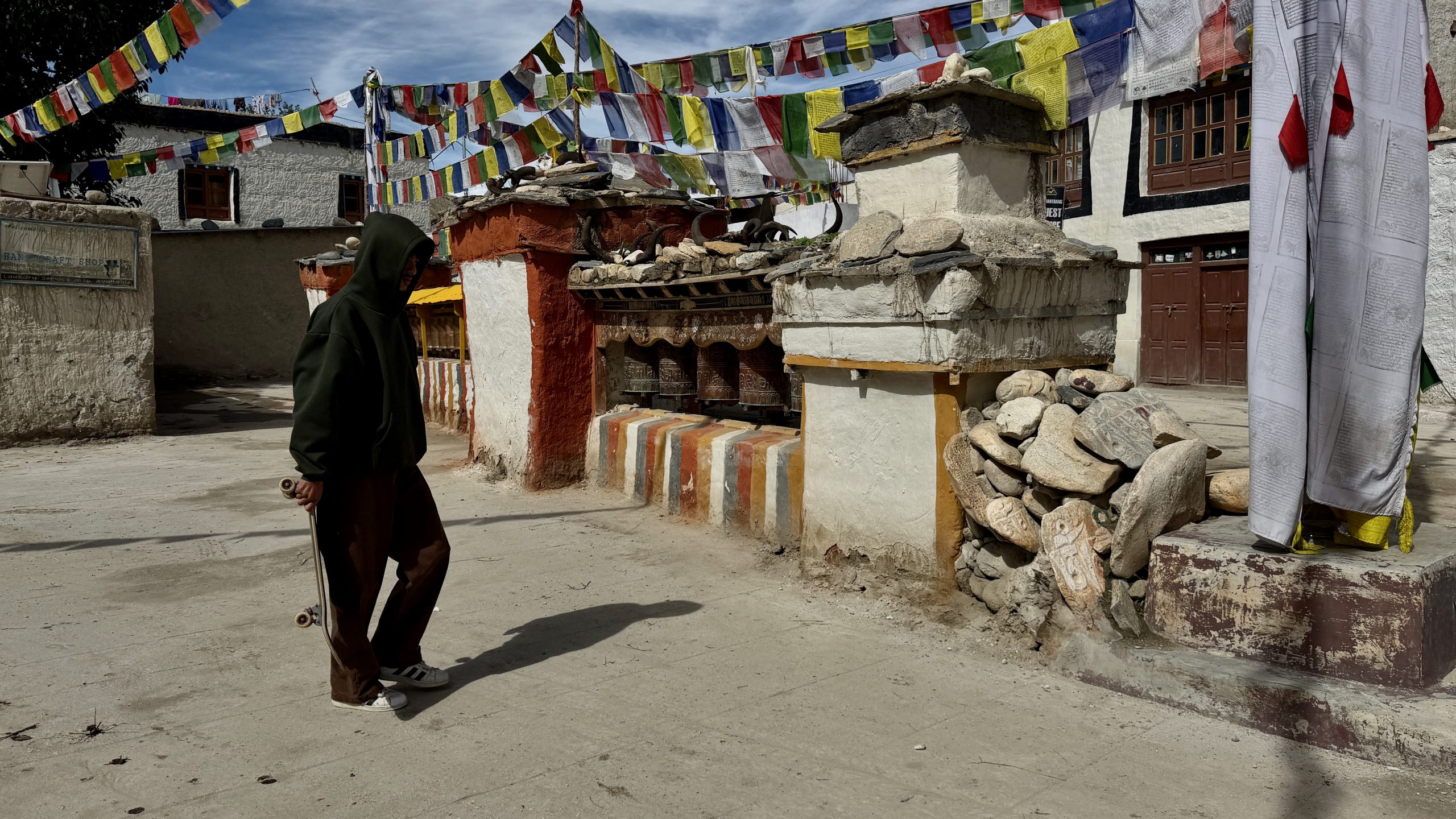
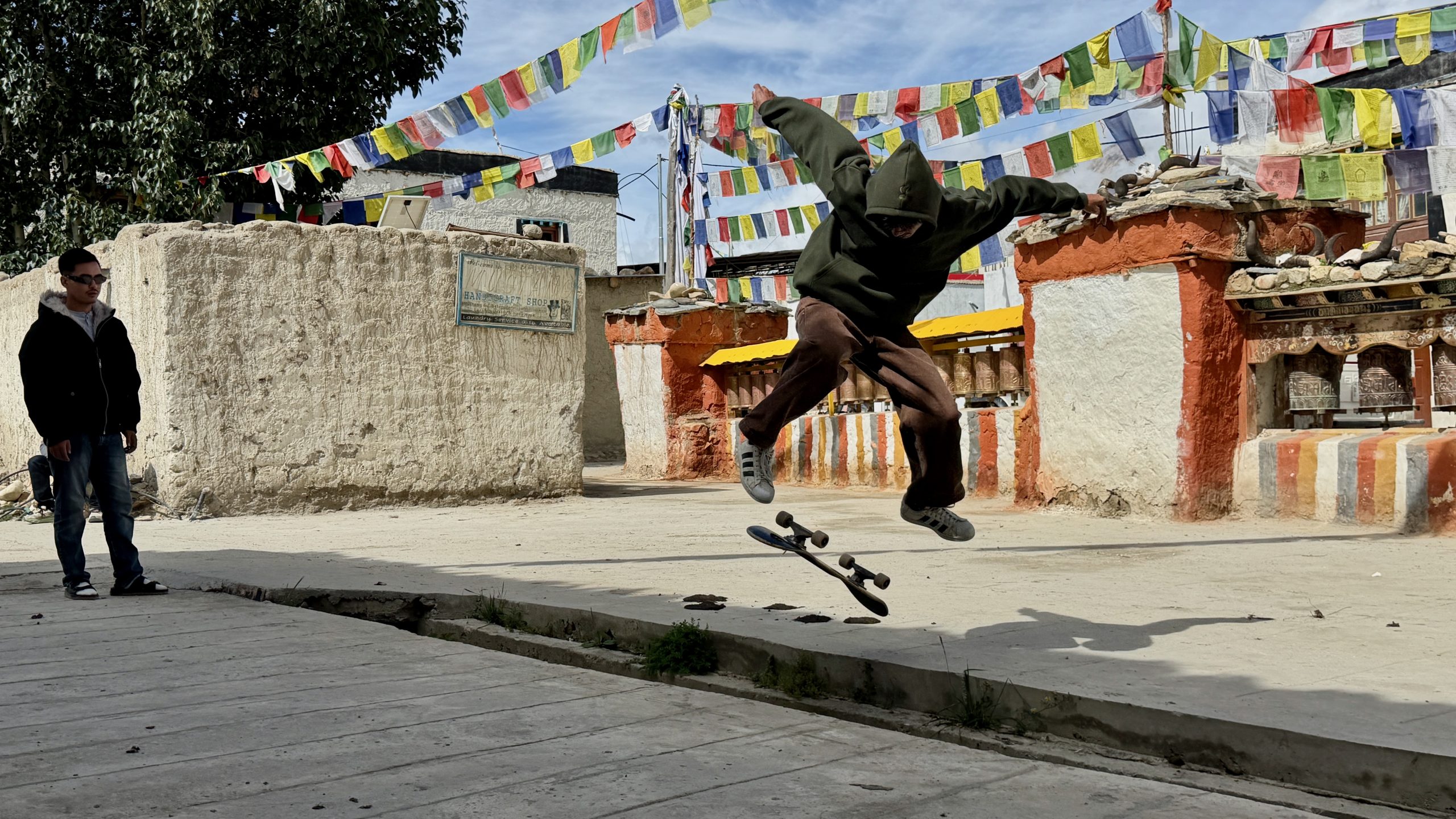
And then we went into the walled inner city. It was very, very quiet. Almost everything was closed, and only a few people were out and about.
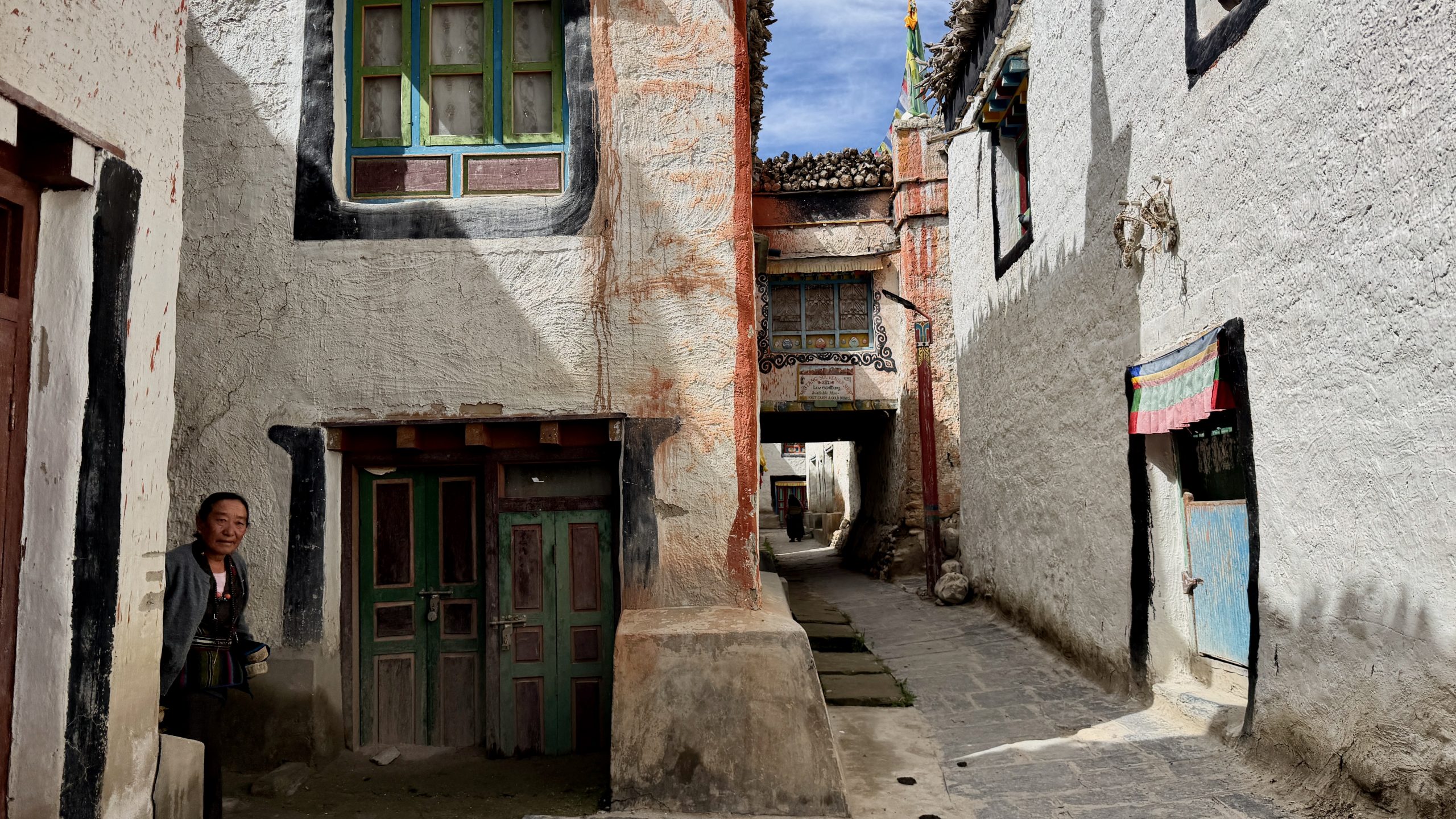
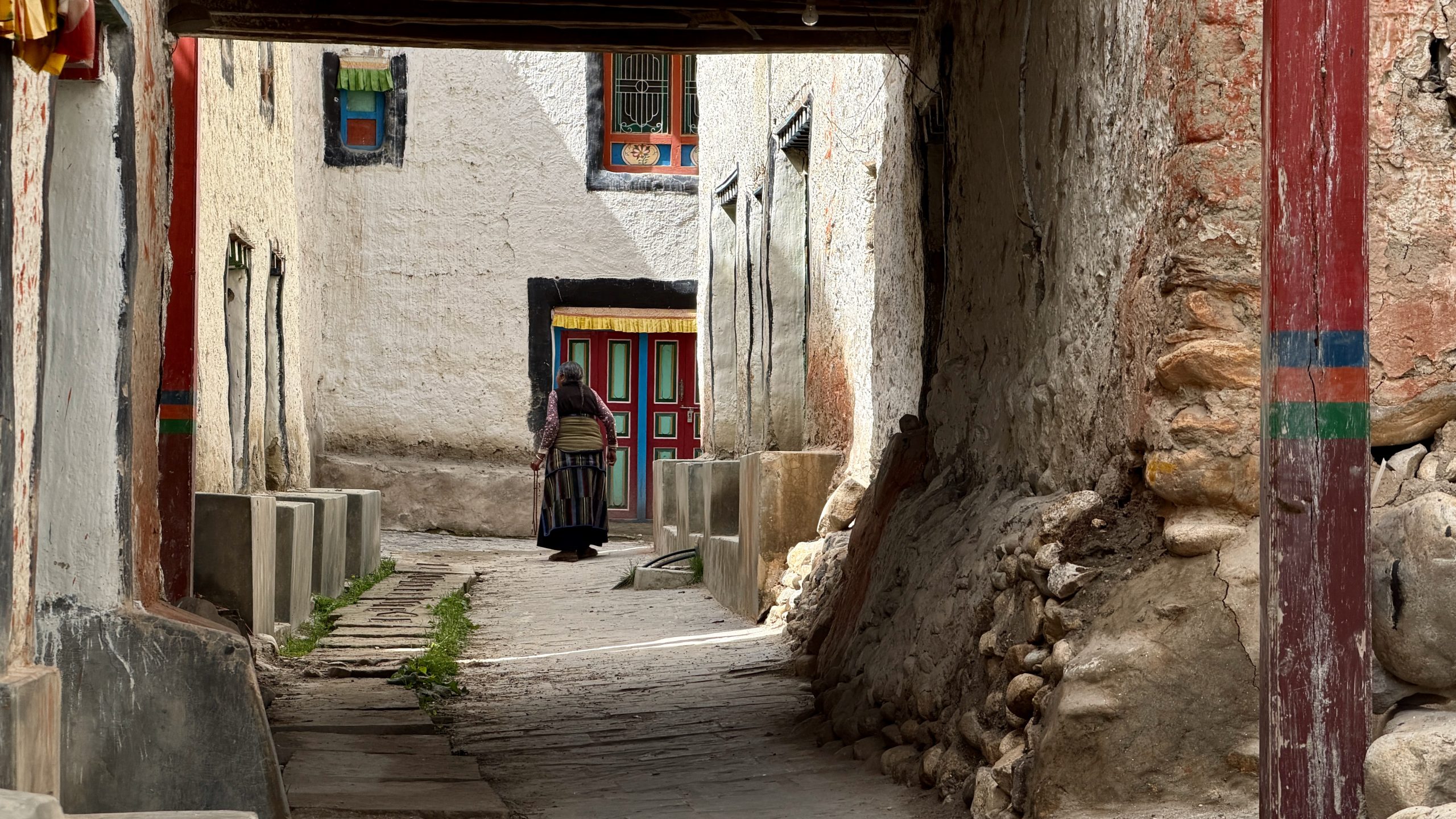
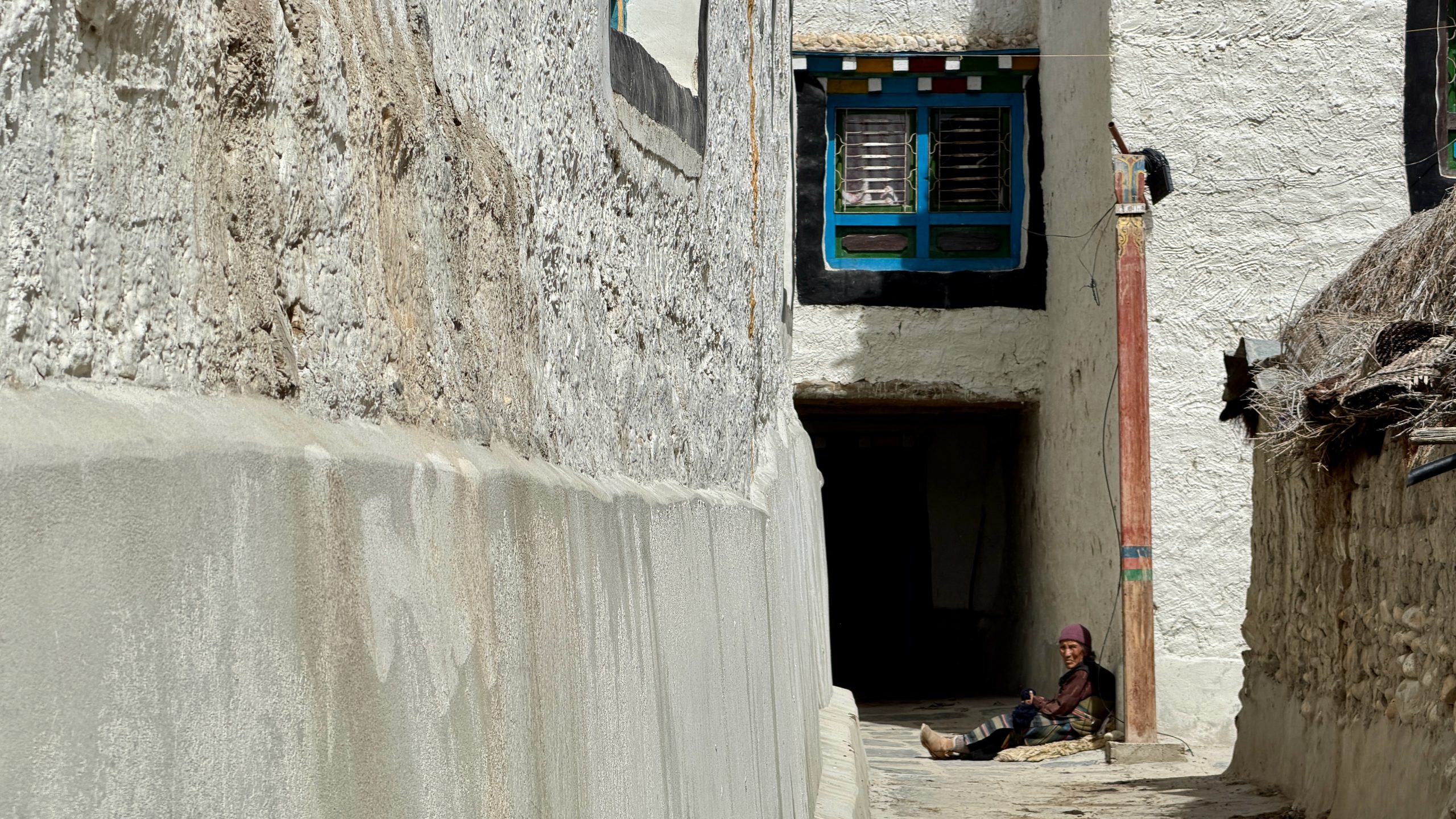
Time for a little history: Around 1380, the warrior Ame Pal founded the Kingdom of Lo after uniting the local tribes, established the capital Lo Manthang, instituted Tibetan Buddhism, and took the title Gyelpo, meaning King. The location was prime for trade in salt, wool, and grain, mainly between Tibet and India. This brought prosperity and several monasteries. At the end of the 18th century, the even larger Kingdom of Nepal emerged and Mustang was essentially swallowed up. However, it retained its own autonomy, and the king was able to continue ruling—though he had to pay taxes.
With the Chinese occupation of Tibet, the border with Tibet was closed. Trade came to a standstill, but Mustang suddenly became a strategically important border region. Tibetan refugees as well as armed Tibetan freedom fighters, the so-called Khampas, came over the passes and operated here. After they were disarmed in 1974, the area became a strictly protected restricted zone and was completely closed to foreigners. It wasn’t until 1992 that Mustang opened up to travelers again—under strict conditions and high fees.
In 2008, the monarchy in Nepal was abolished, bringing an end to the official status of the King of Mustang as well. The last king passed away in 2016, but his family is still held in high regard by the population today.
Crucial to Mustang’s development is the road. Until the 2000s, the region could only be reached on foot. Starting in 2007, the first dirt tracks were built before the state-led expansion of the route from Kagbeni via Lo Manthang to the 4,660-meter-high Korala Pass began in 2016. Today, an unbroken track exists, and since late 2023, the border pass to China has reopened.
Because the narrow southern gorges are impassable for large trucks, small four-wheel-drive trucks have since handled the transport of goods, replacing the old barter economy for good. Beyond freight traffic, the road brought mobile networks and grid power to the villages—as well as jeep tourists alongside the trekking tourists. Today, tourism is the most important economic sector in Upper Mustang, accounting for a good 50%, followed by traditional subsistence agriculture (approx. 30%) and regional trade (approx. 20%).
Phew, that’s enough to make your head spin a bit, and you could dive deeper into every single detail. Instead, we upped the ante and expanded our knowledge by visiting the monasteries in Lo Manthang. There is a large inhabited monastery, the Choede Monastery, complete with a museum, as well as 2 old restored temple buildings. The entrance fee includes monk guides who explain everything to you. Photos are forbidden inside. On the upside, school was just starting in the Choede Monastery.
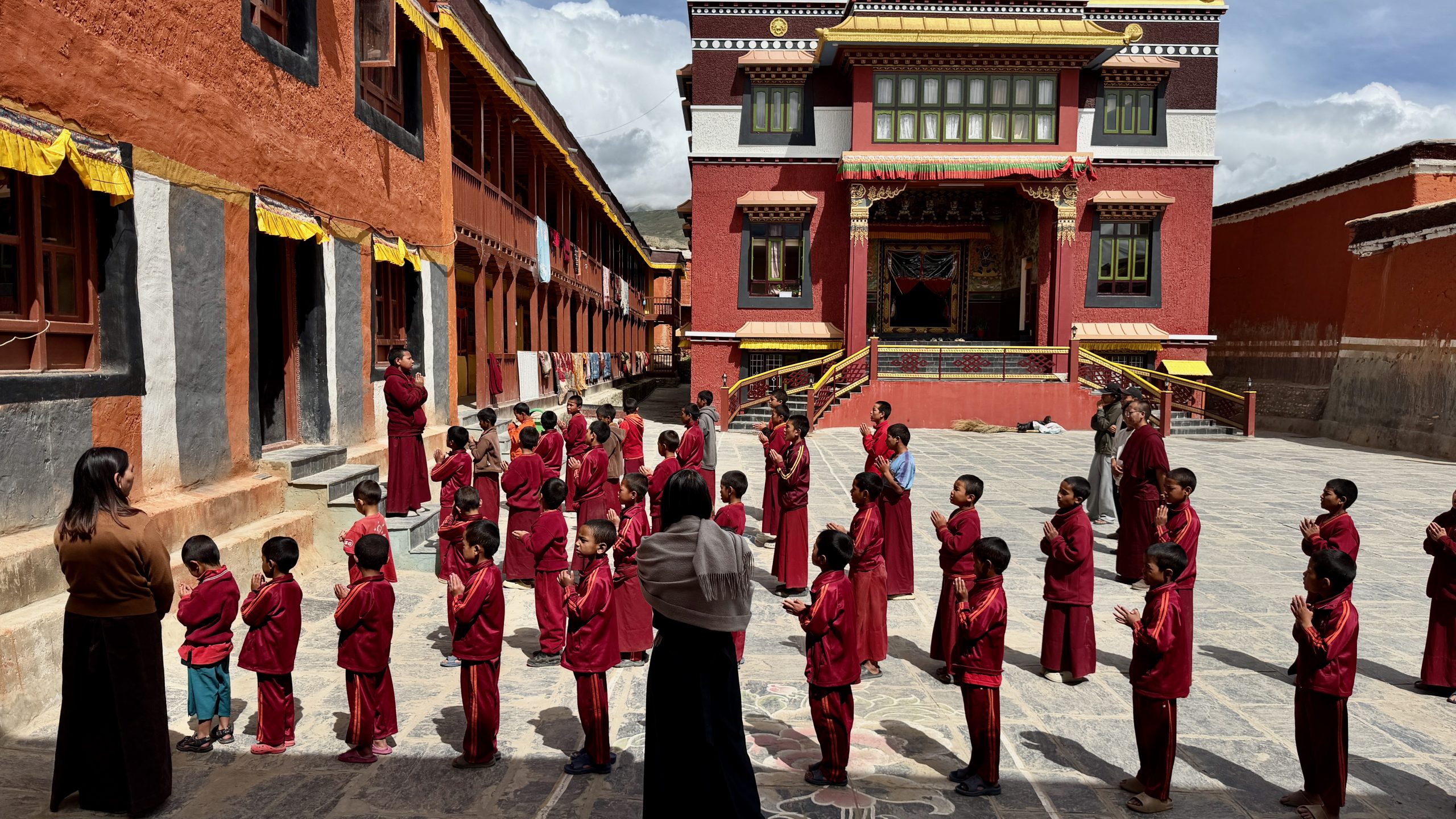
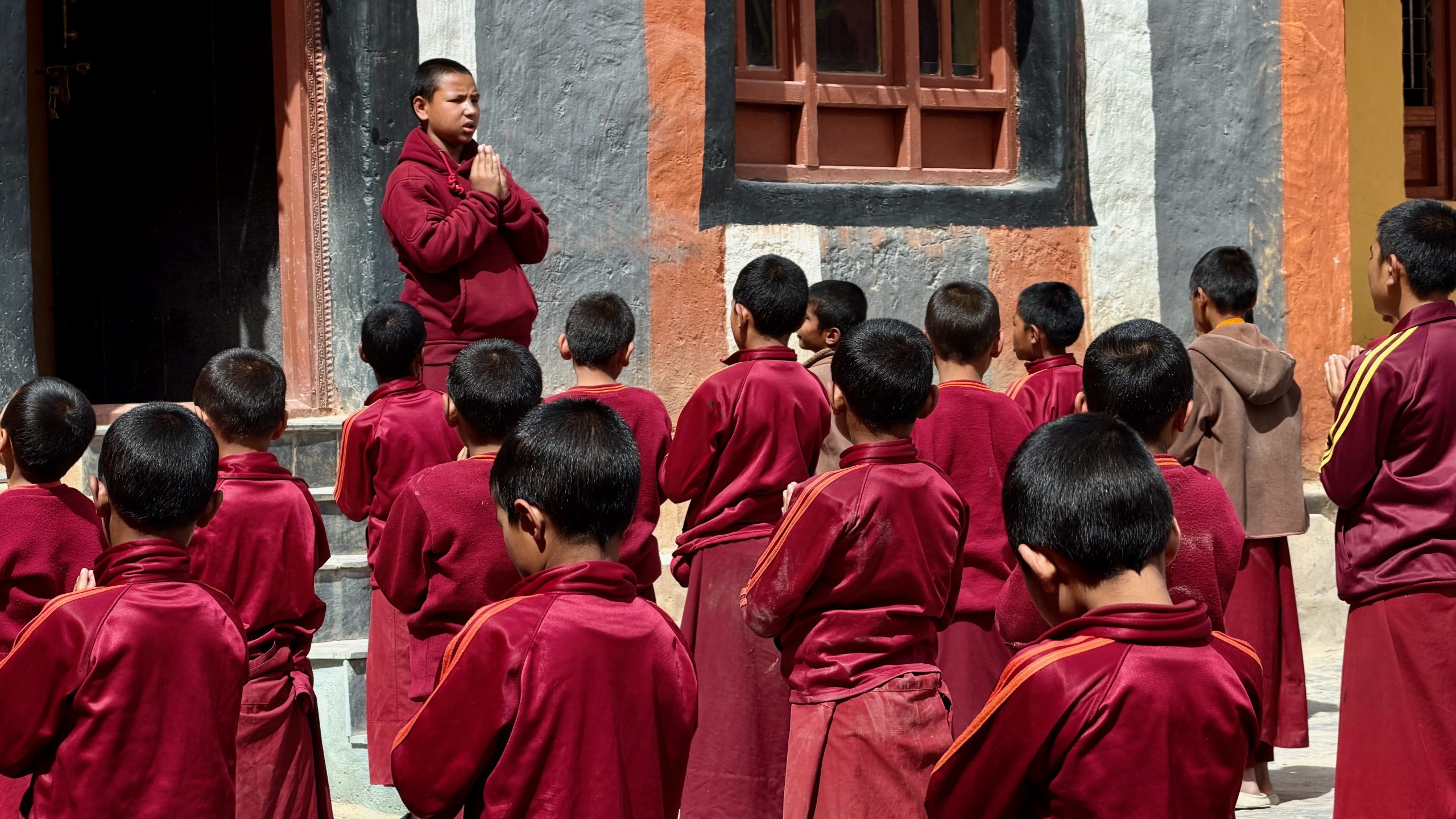
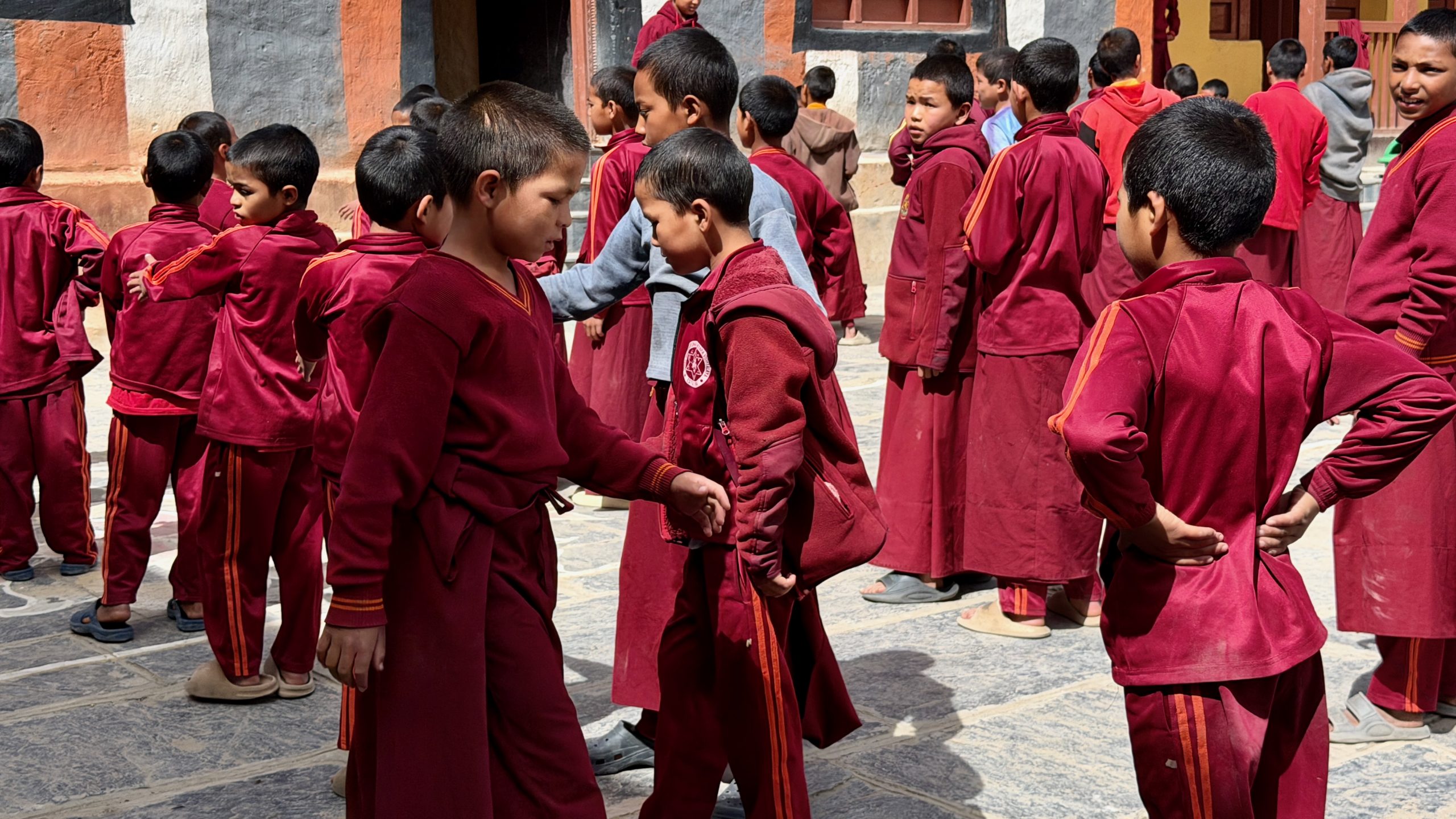
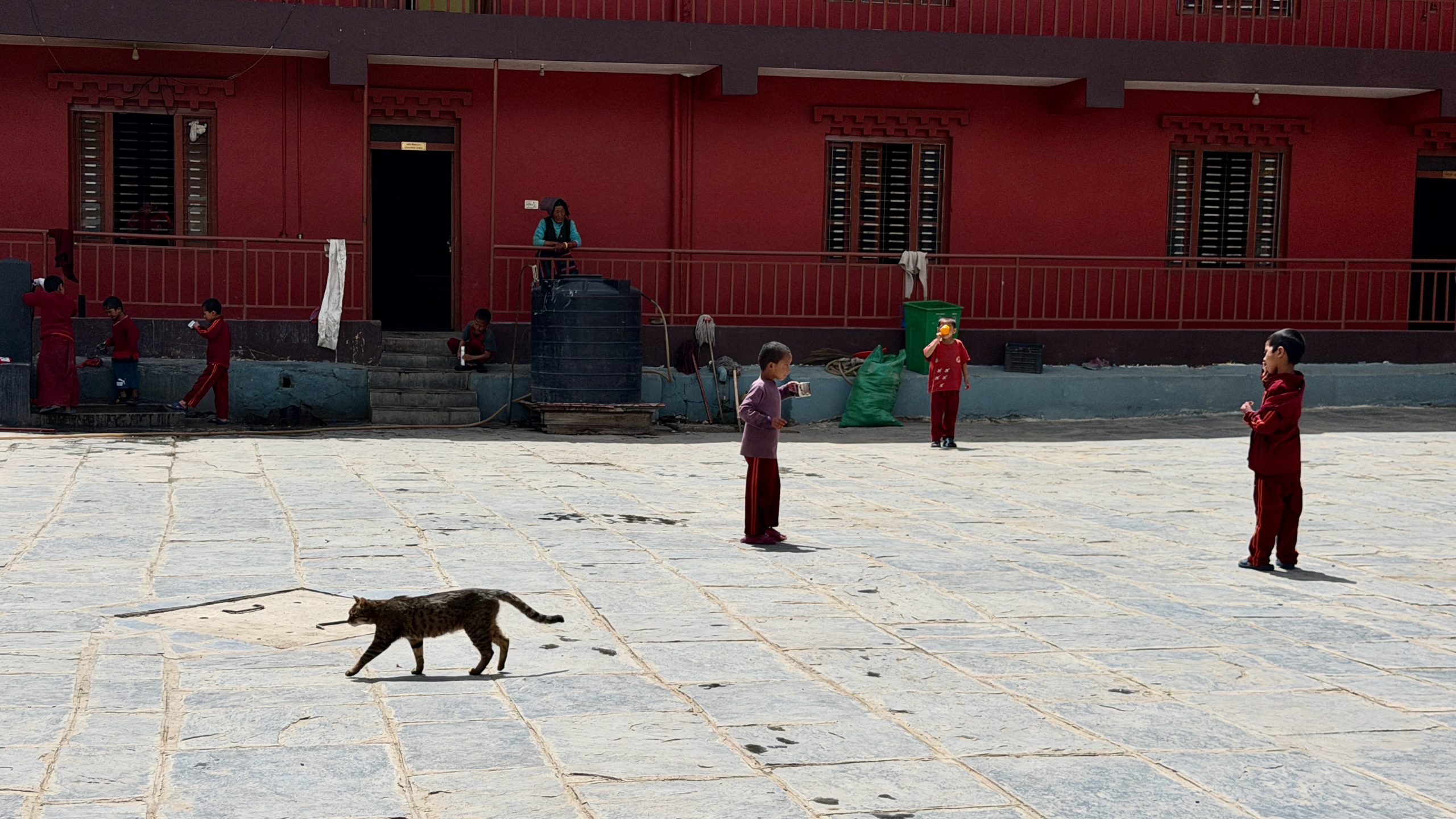
Like most in the area, the monastery belongs to the Sakya order, a branch of Tibetan Buddhism that I had dealt with the least so far (there are only two Sakya monasteries in Ladakh). One of the most important deities in Sakya Buddhism is Mahakala, a wrathful protective deity. He is depicted on many walls and as a statue. In one room, we marveled at the 108 mandalas, which were restored in an insanely elaborate process starting in the 1990s by an Italian and his team. The details painted by the master: incredible! And the wealth of detail with which the only 19-year-old monk explained everything to us through wonderful stories was fantastic too! It’s just that my head is a sieve, and a lot of it has leaked back out.
Here are a few pictures from the outside—and the wonderful monk. Our guide could really have taken a leaf out of his book..
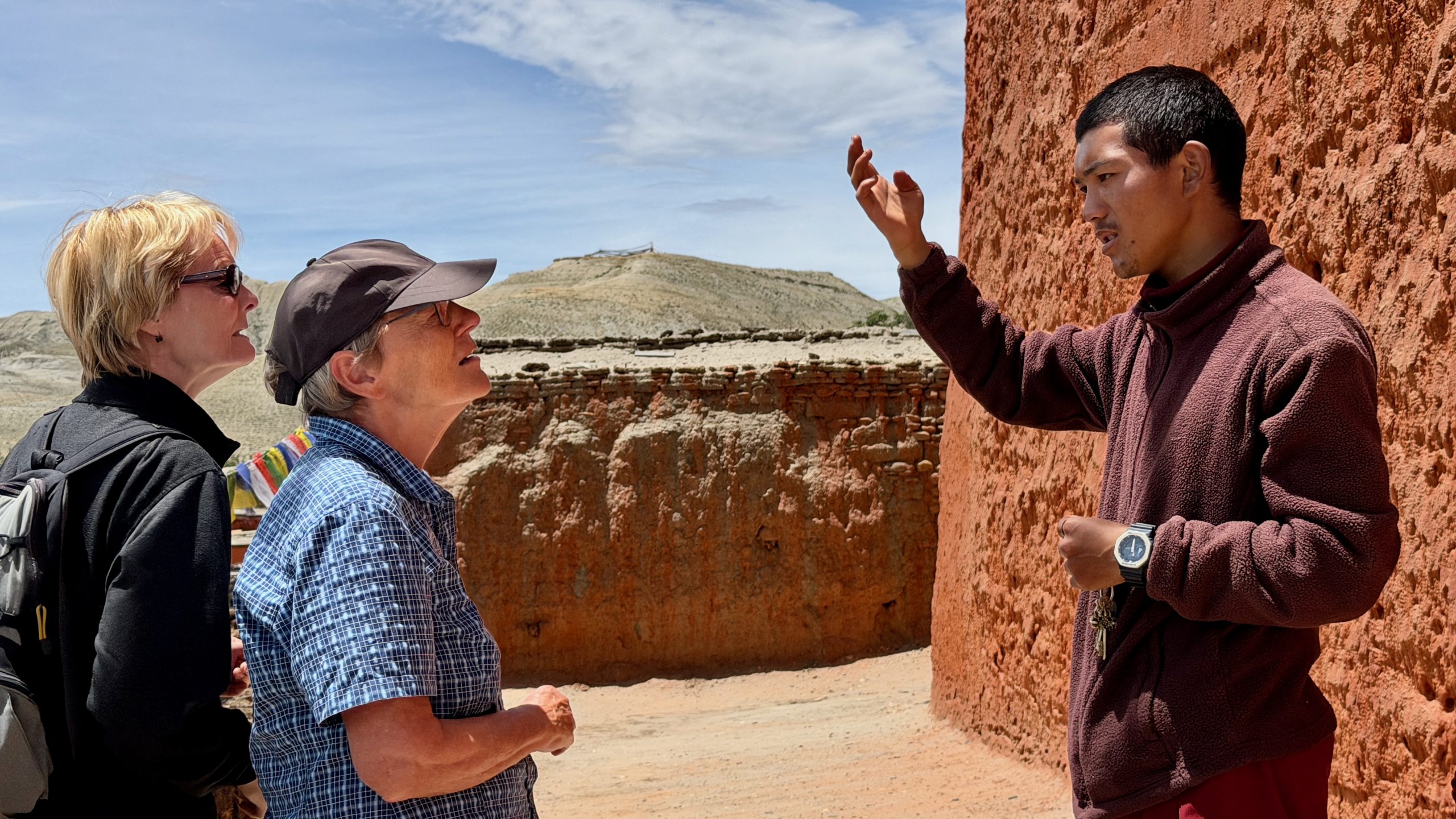
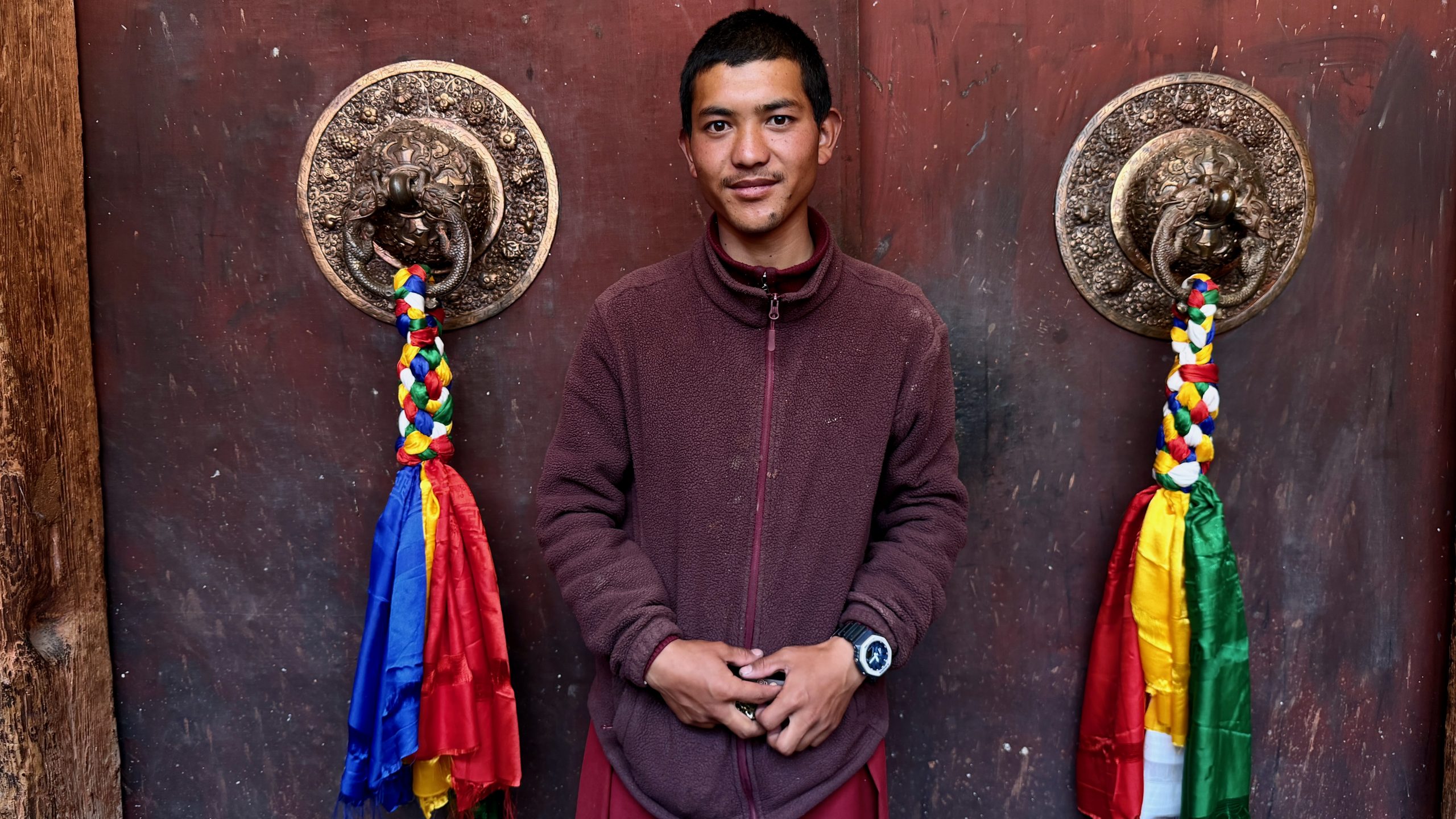
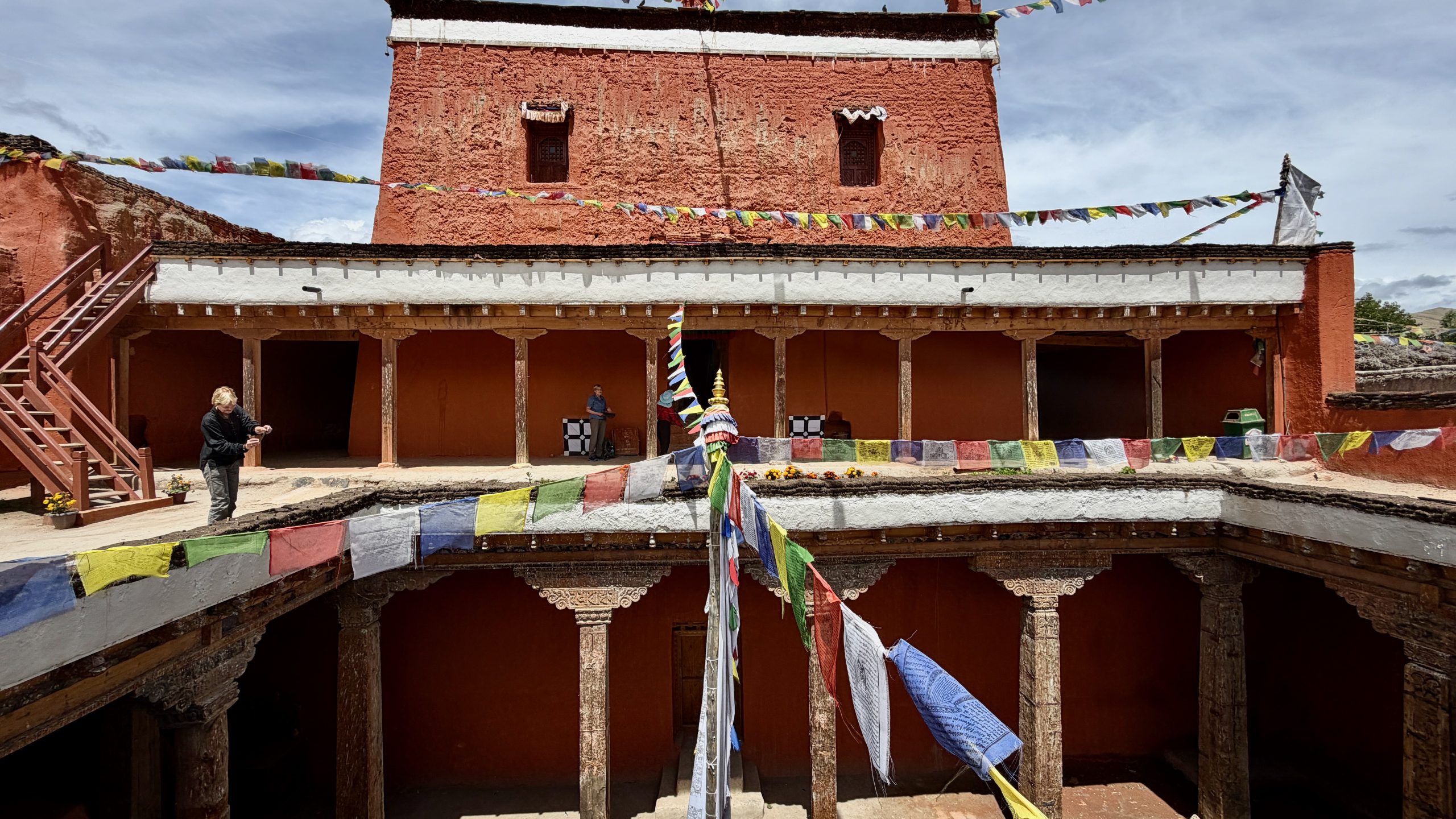
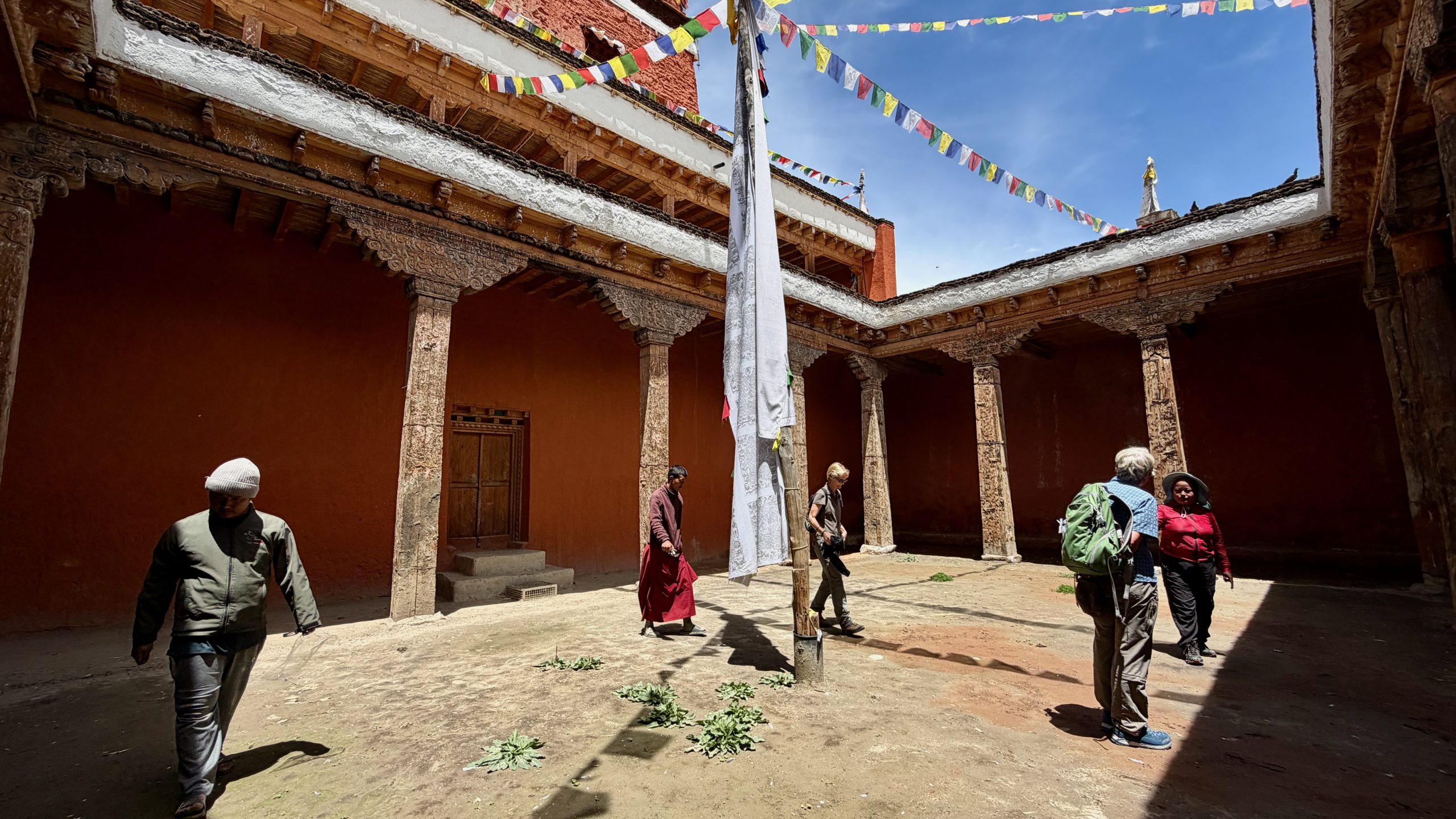
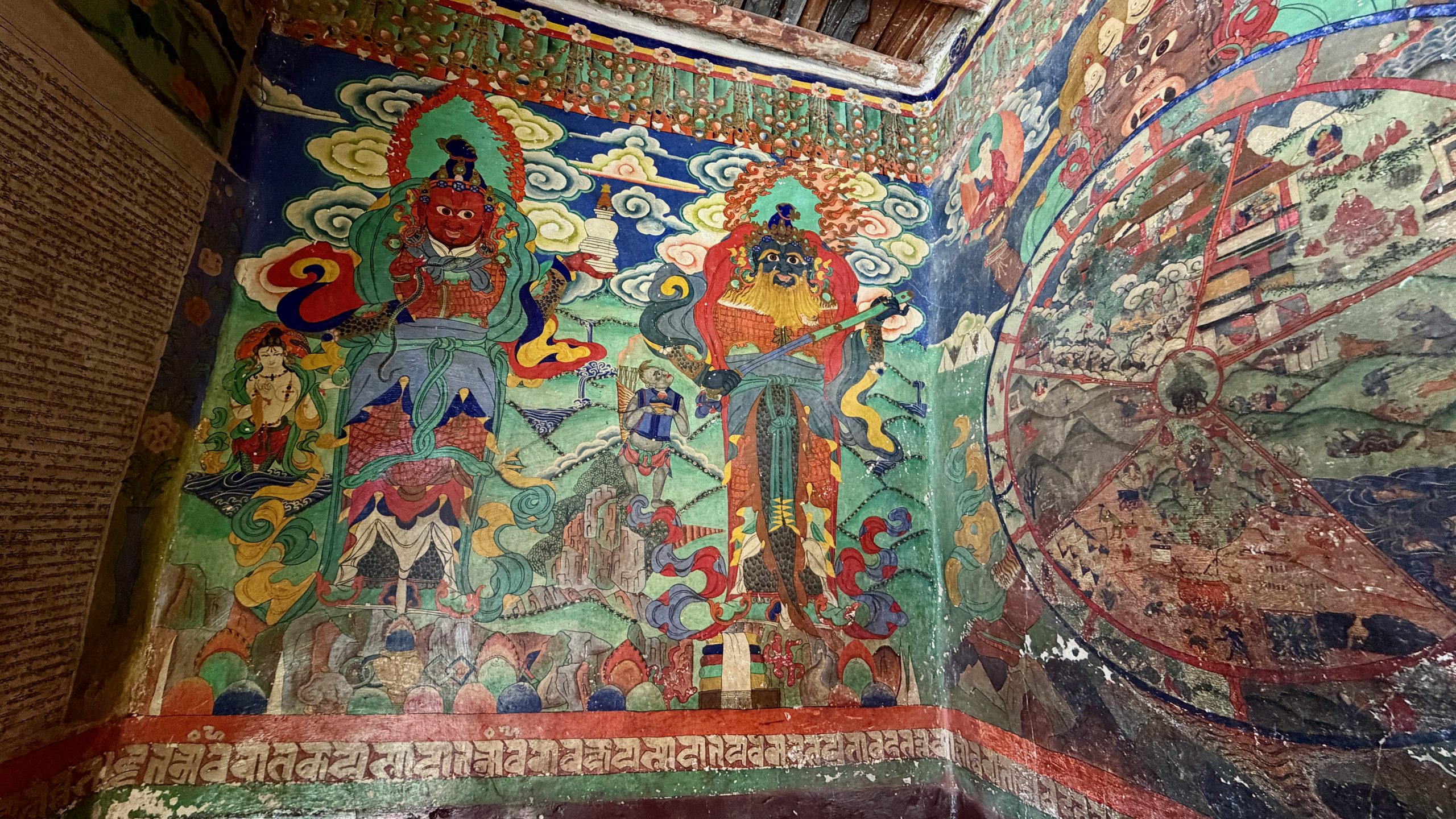
But I think I just need to read and hear a lot of things more often—and then it will settle better into my active repository of knowledge. Despite the fact that everything was insanely interesting (in principle, we were probably trying to absorb a week’s worth of knowledge packed into two hours), or perhaps precisely because of it, we were completely wiped out and needed a break with espresso, the most delicious hash browns, and some quiet time in our room.
After that—without the sun—we set off again. Destination: the Namgyal Monastery on a hill across the river. Walking felt good.
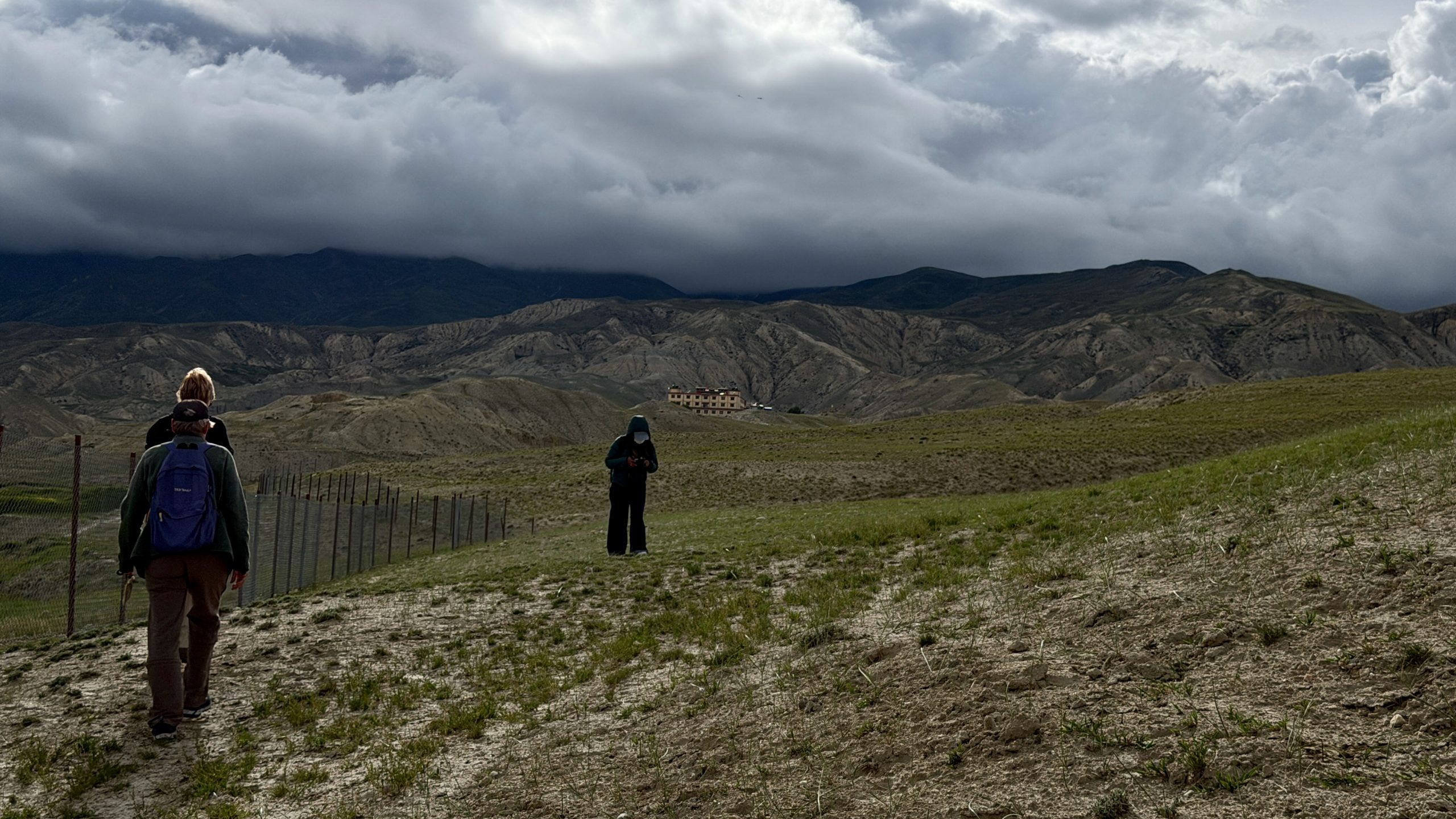
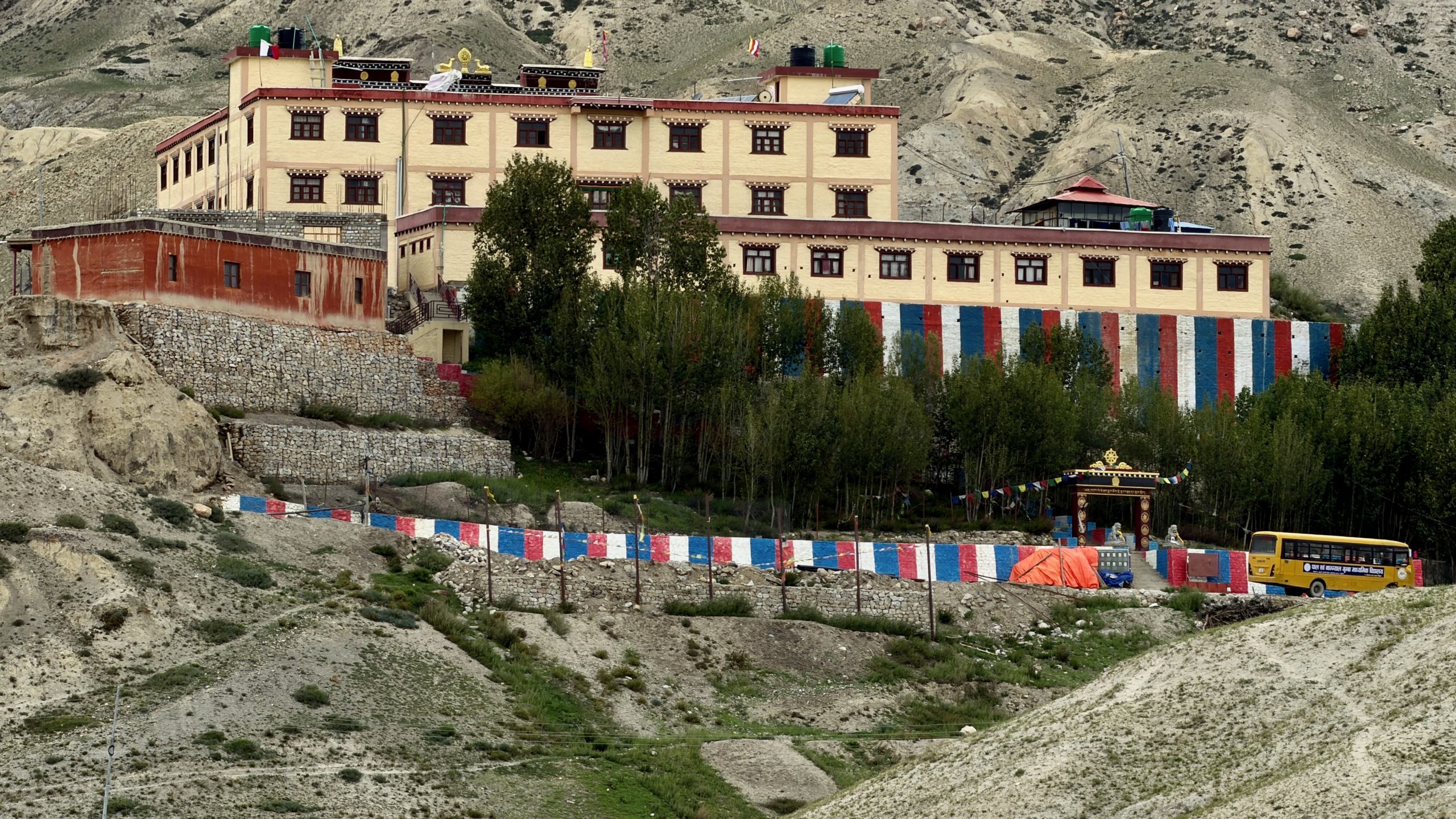
In the monastery, they were having a multi-day Mahakala Puja, which had just finished when we arrived. A monk showed us around the rooms, and not much stayed in memory except, actually, a string of flickering colorful disco-style light bulbs in the main hall—because real flames flicker like that too, after all…
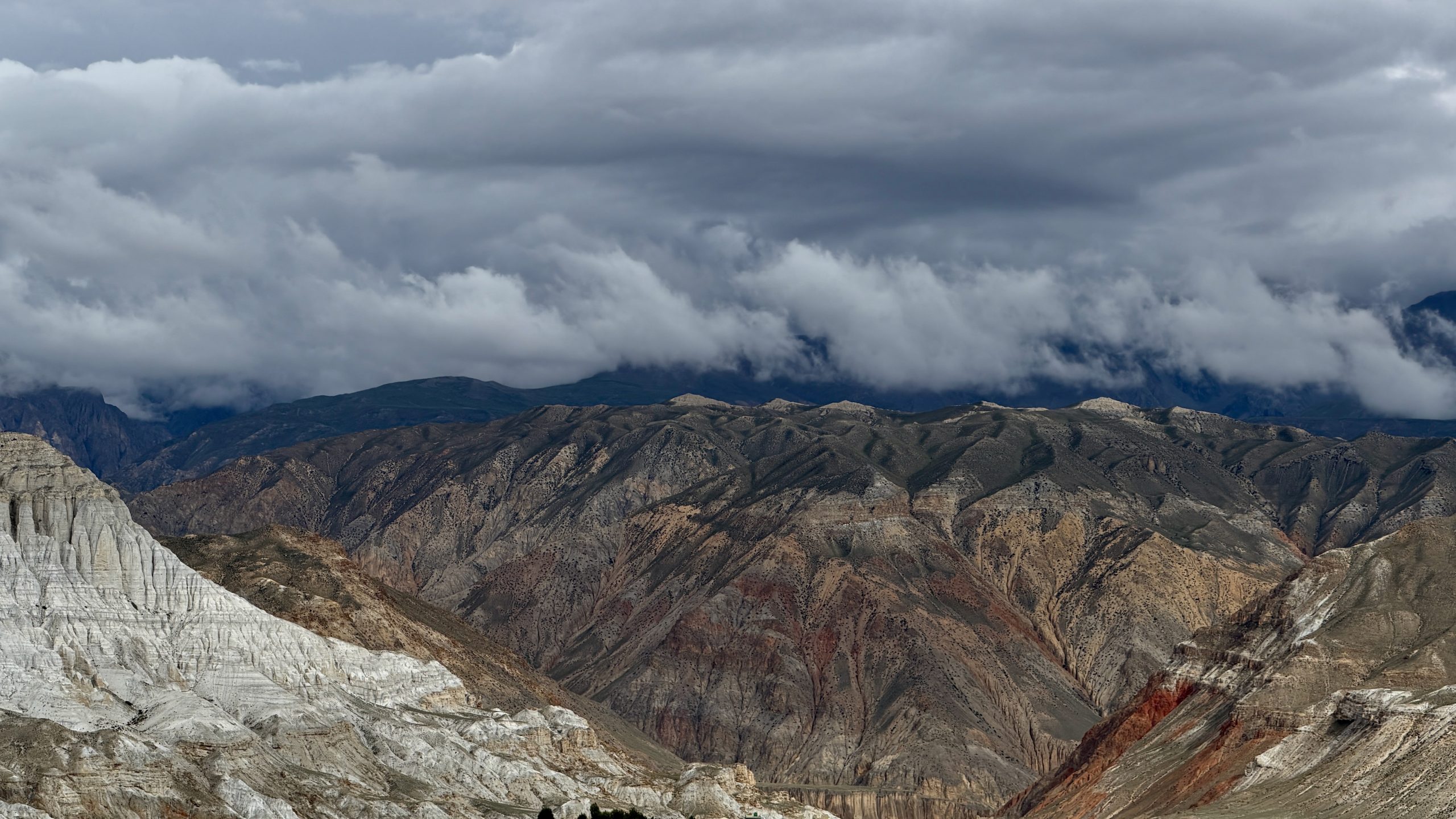
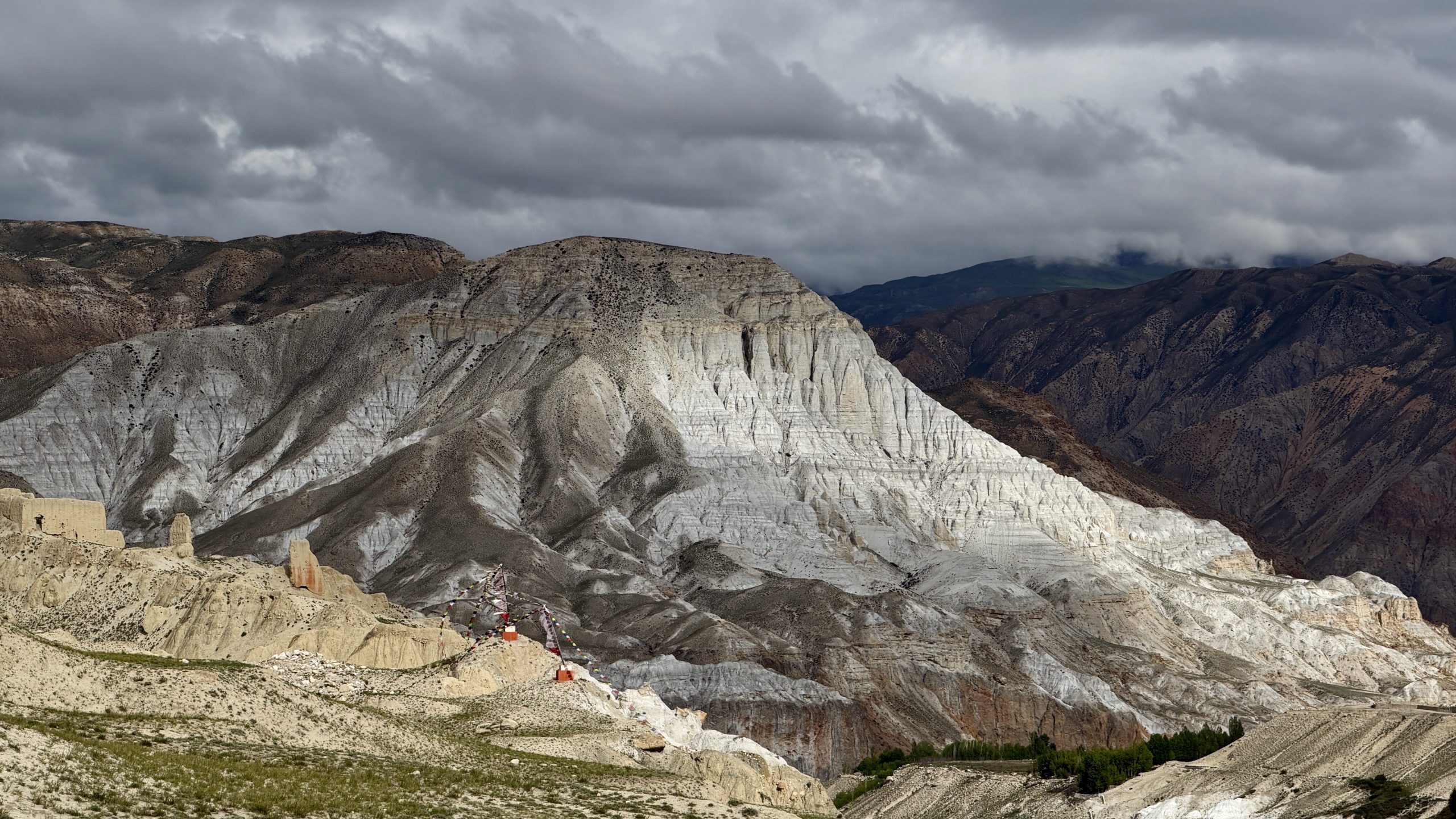
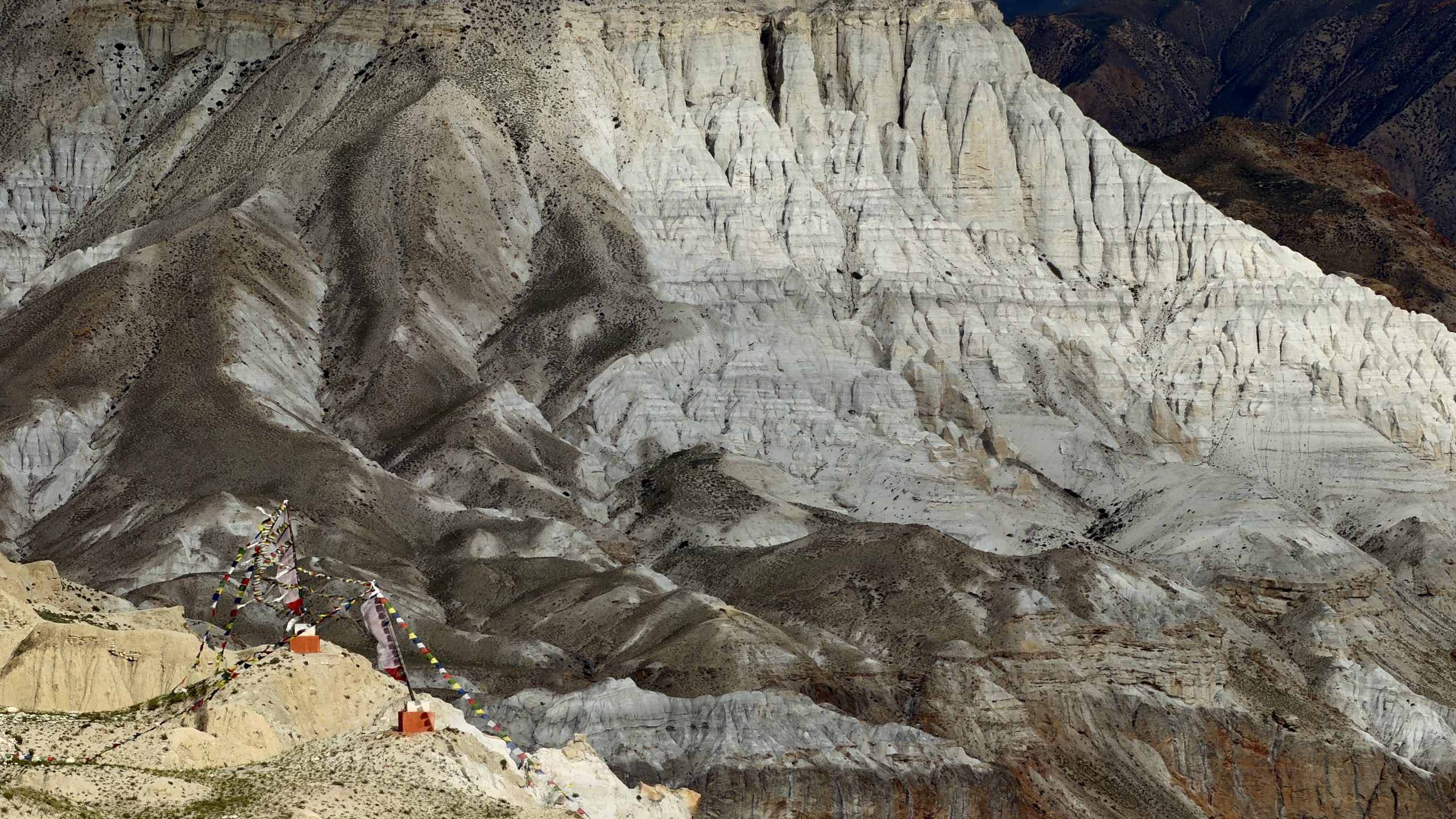
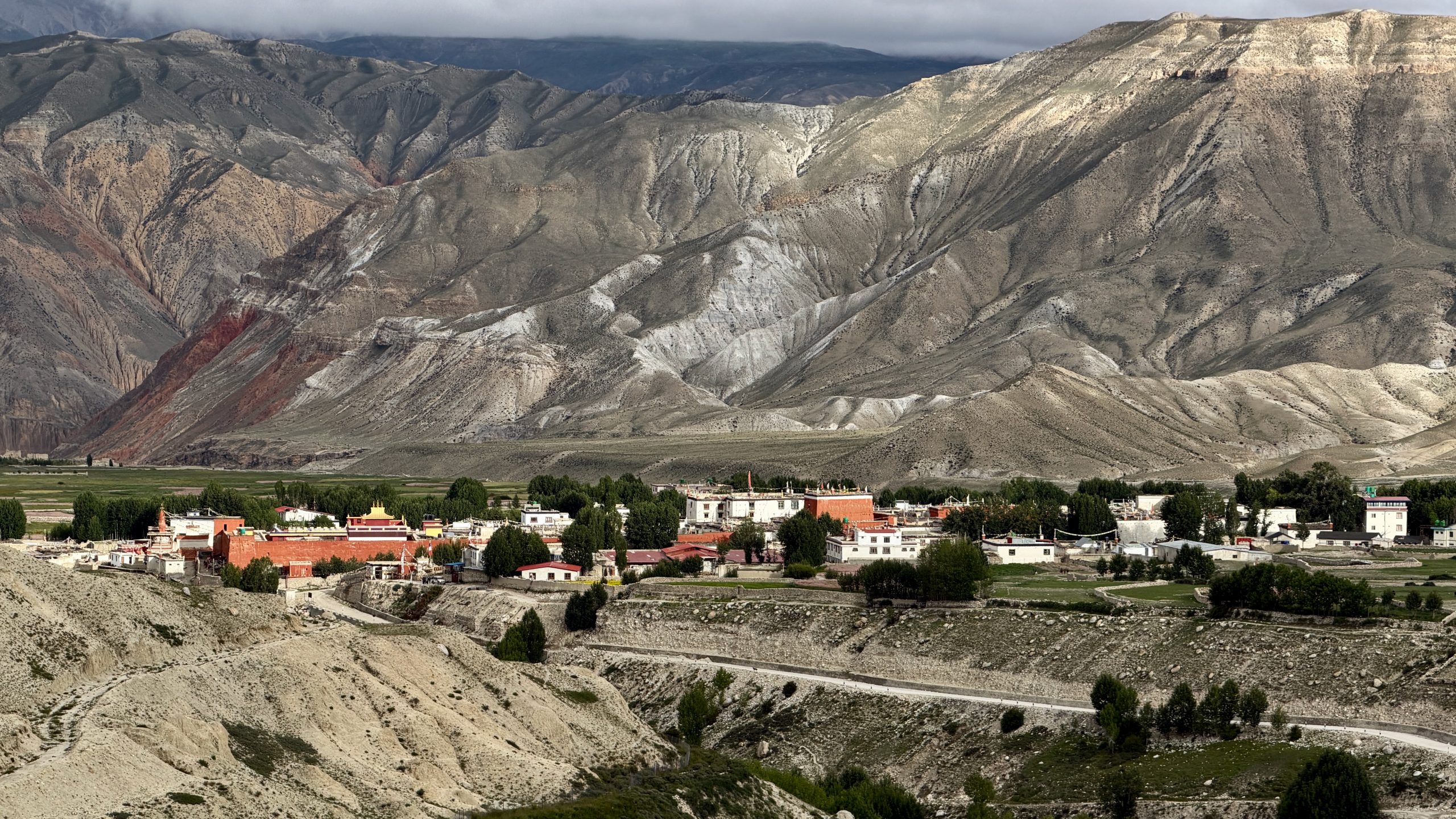
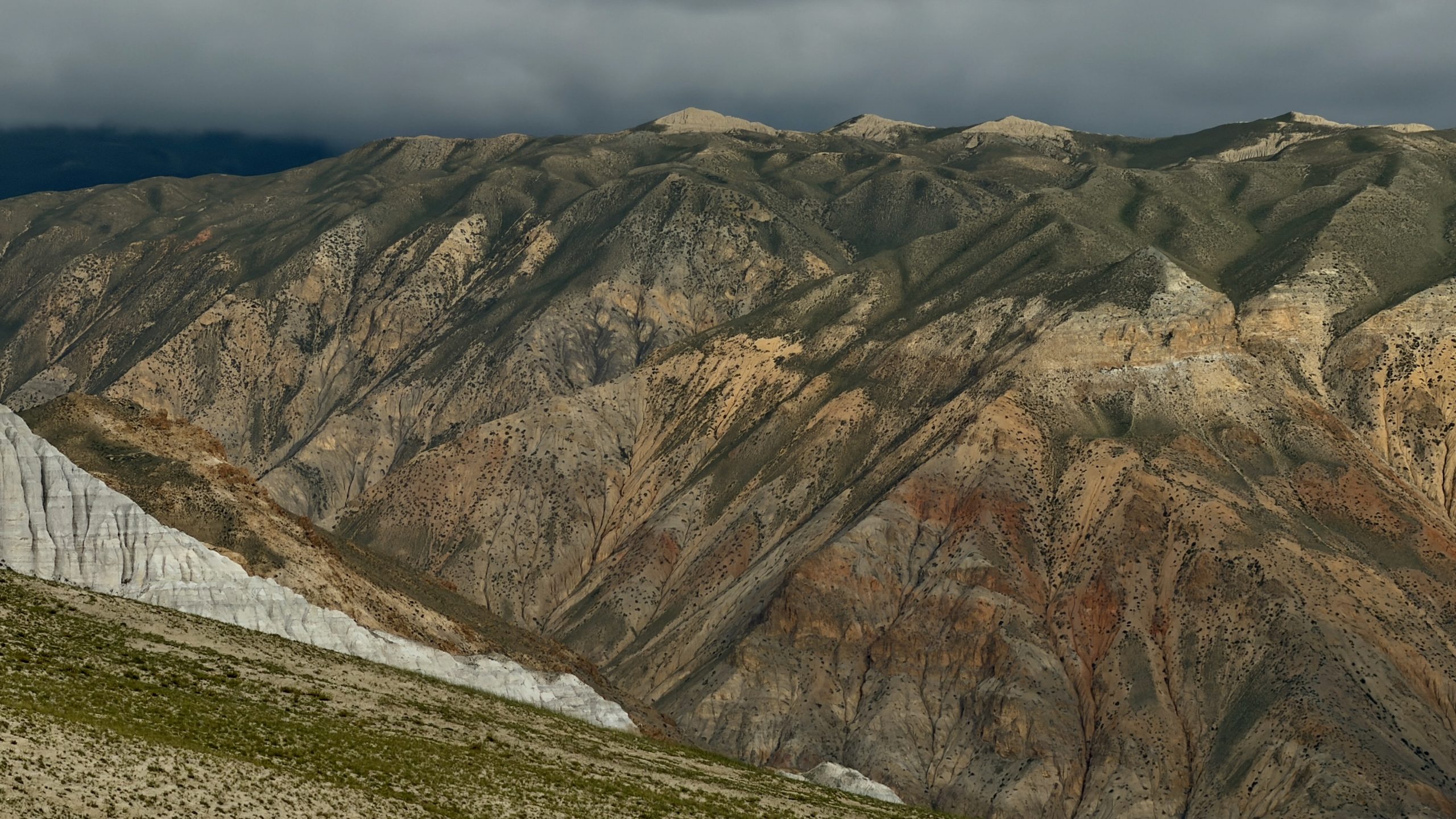
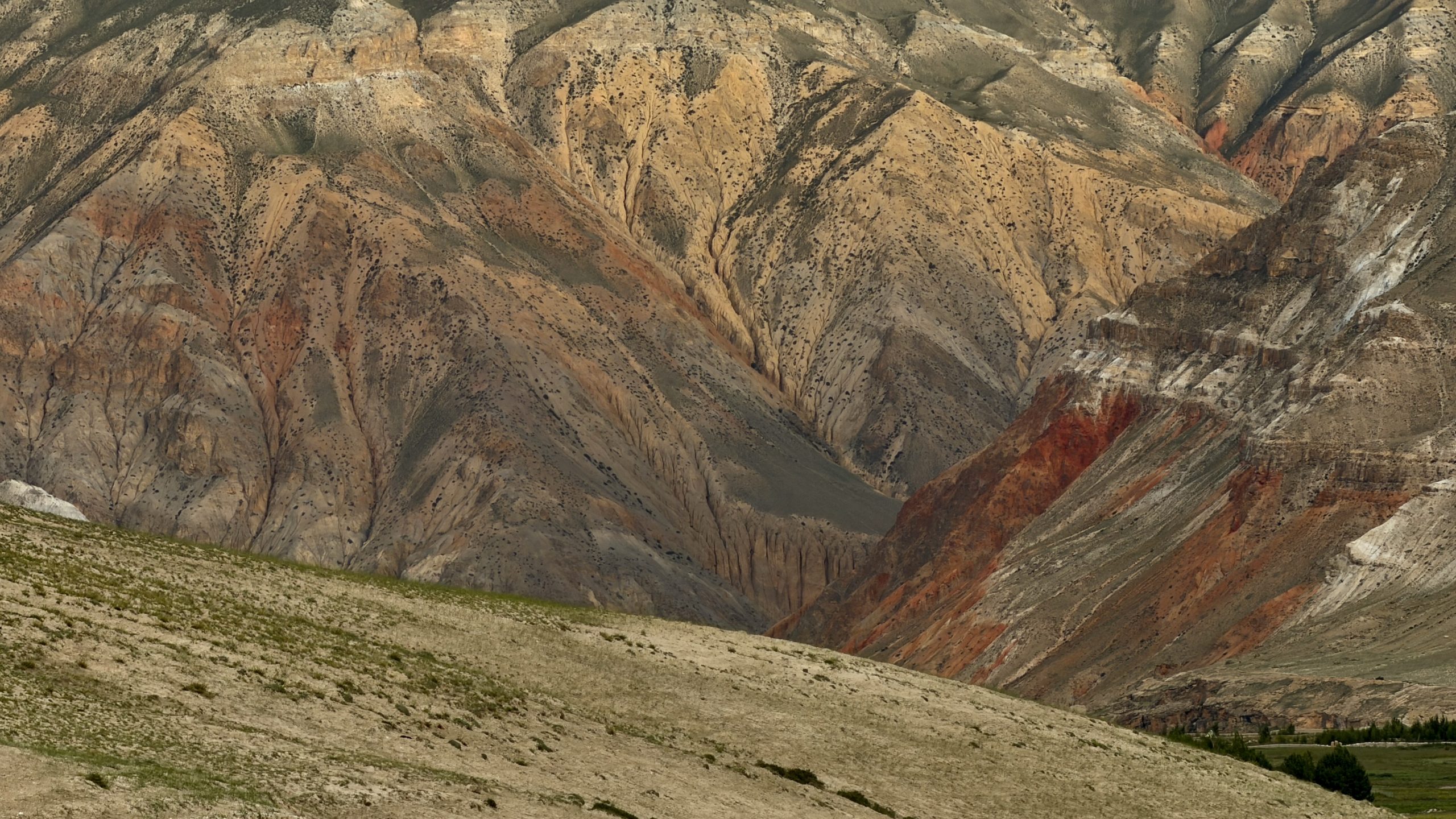
And because there was so much input on this day (I’m afraid I didn’t convey it terribly well, my brain is still in a bit of a scramble), I will end this blog post now with landscape photos from this walking hike. Because the mountains and their tranquility here are something I marvel at and rejoice in constantly. A great balance.
Would the sun break through again the next day? That would be nice!