


Manali – The apples have difficulties and Shiva has rescued the Kulluvalley
18. + 19. August 2026
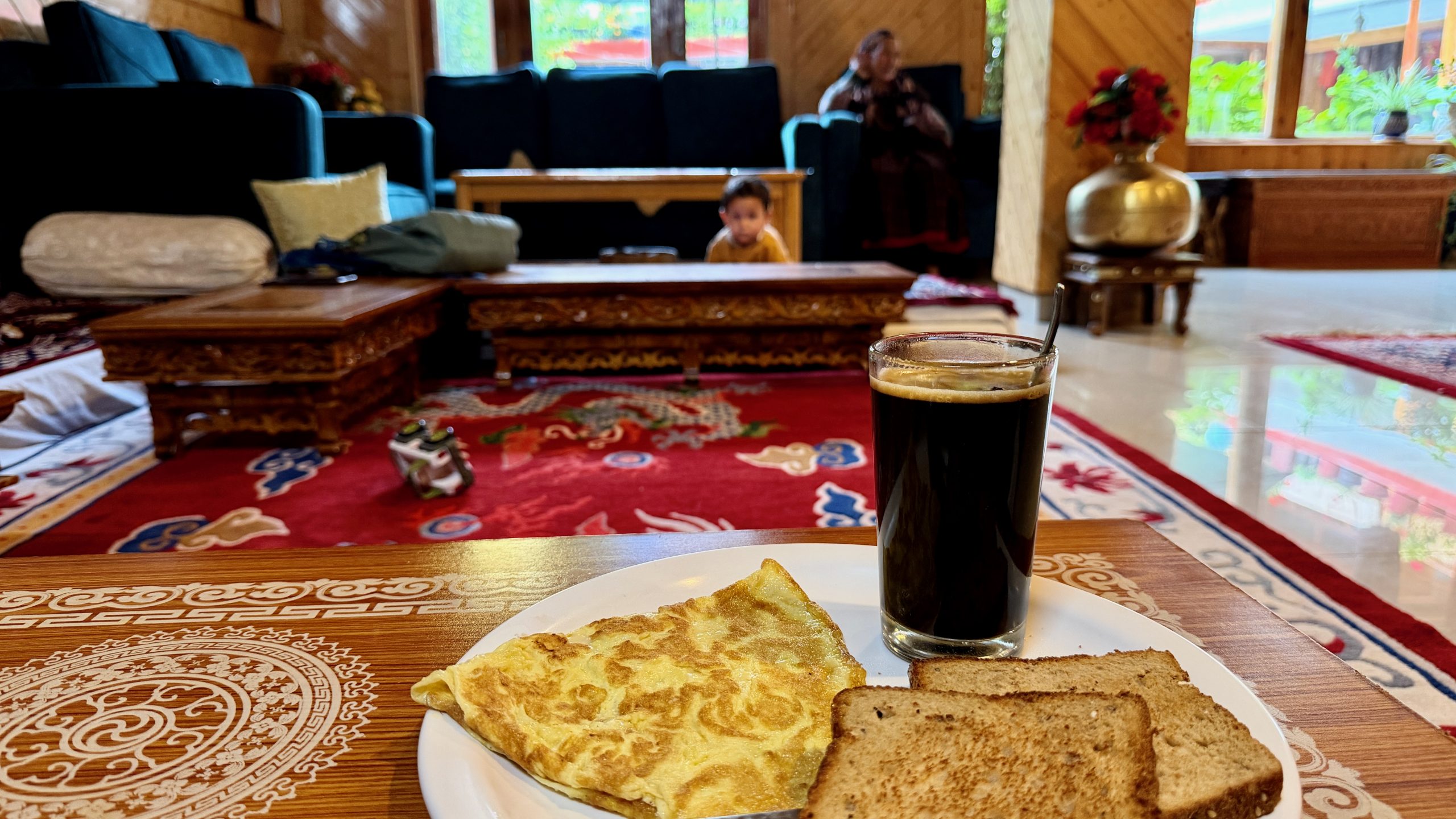
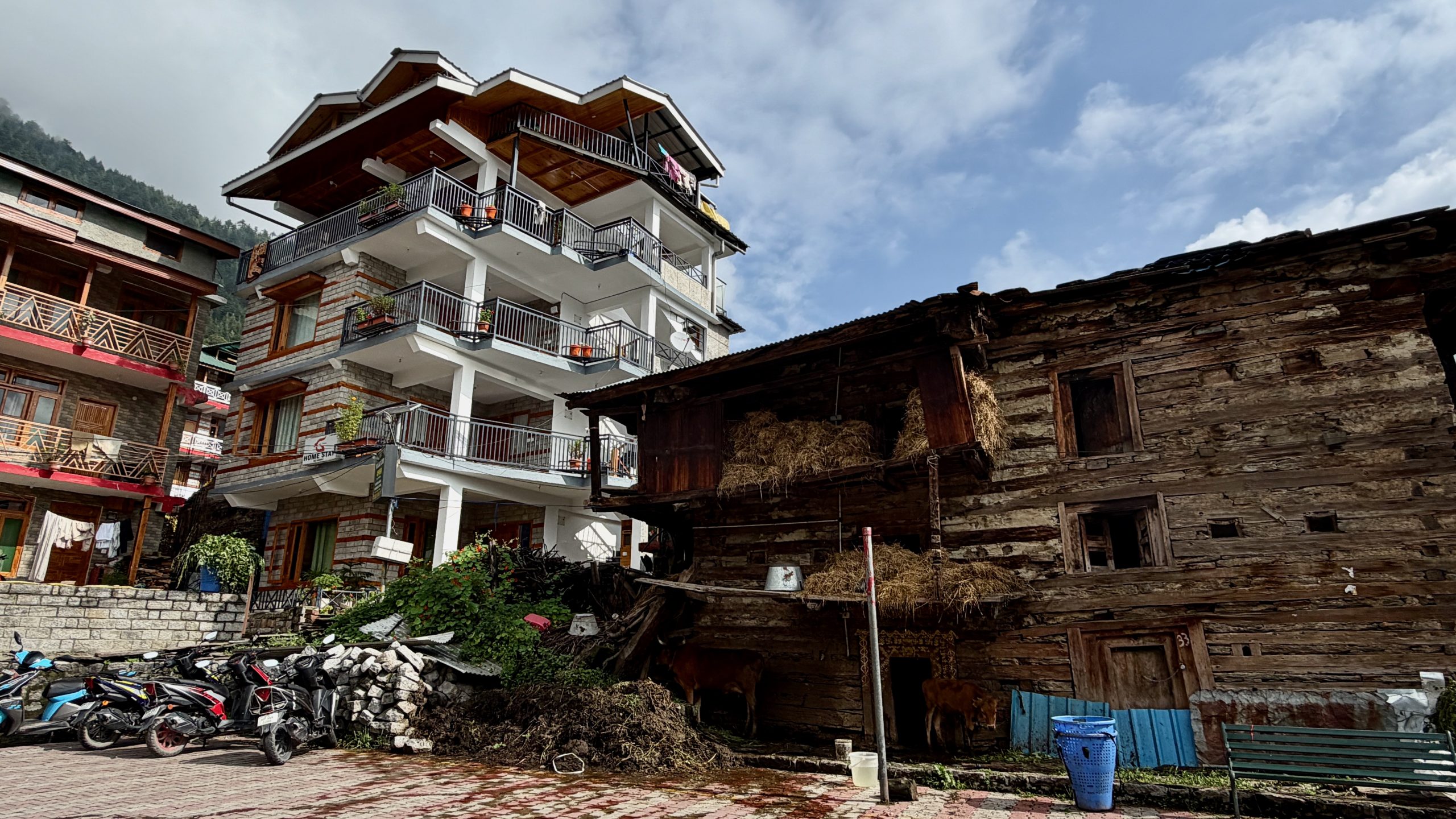
After breakfast in a lovely atmosphere (though without an Americano—sniff sniff), I strolled through Old Manali to the meeting point. The weather didn’t look too bad. Here you can see a bit of the old and the new Old Manali.
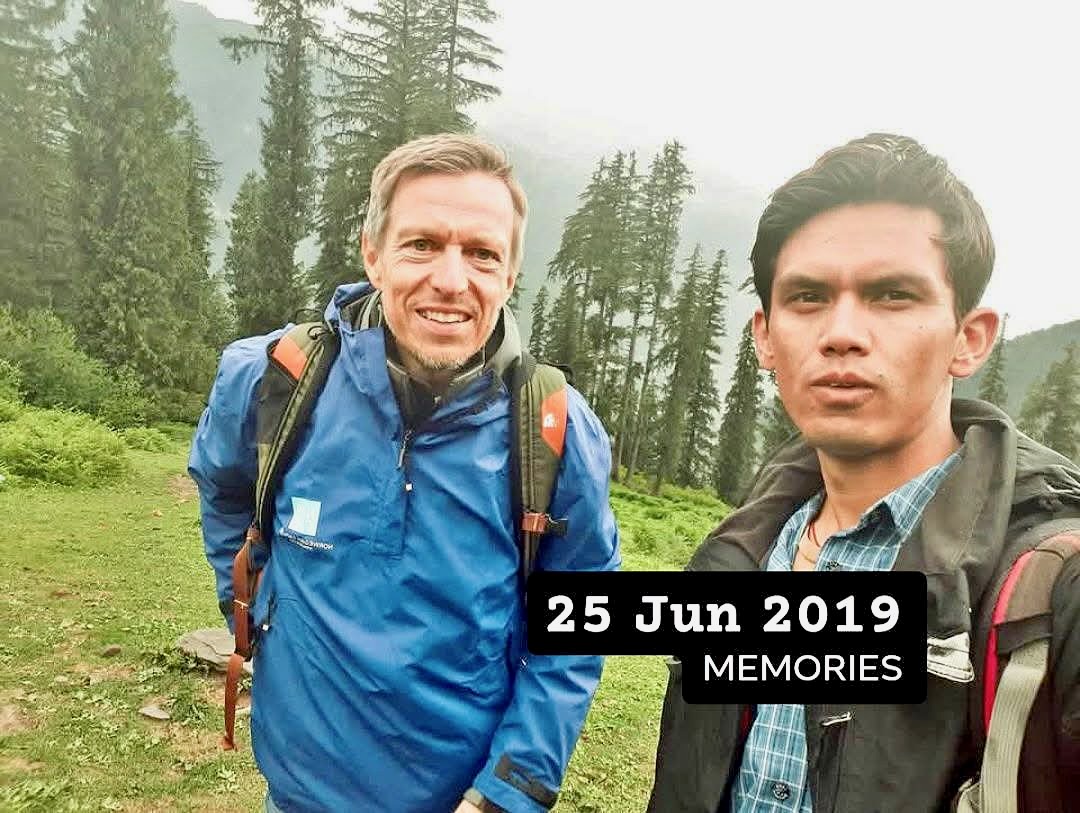
We wanted to go for a short hike. Raju had the first surprise ready right away: he showed me a photo of a German client. I glanced at it briefly. Raju mentioned the guy told him he was married to a Japanese woman working for the UN. That caught my attention, so I took a closer look (I wasn’t wearing my glasses). It actually was my cousin Soenke! The one I met right at the beginning of this trip in Greater Noida. Back then, I had organized a trip to Manali and the Tirthan Valley for him. The fact that we now actually have the exact same guide—it’s practically a miracle considering how many guides there are around here. And we both connected with Raju through completely different paths, too. Small India-world!
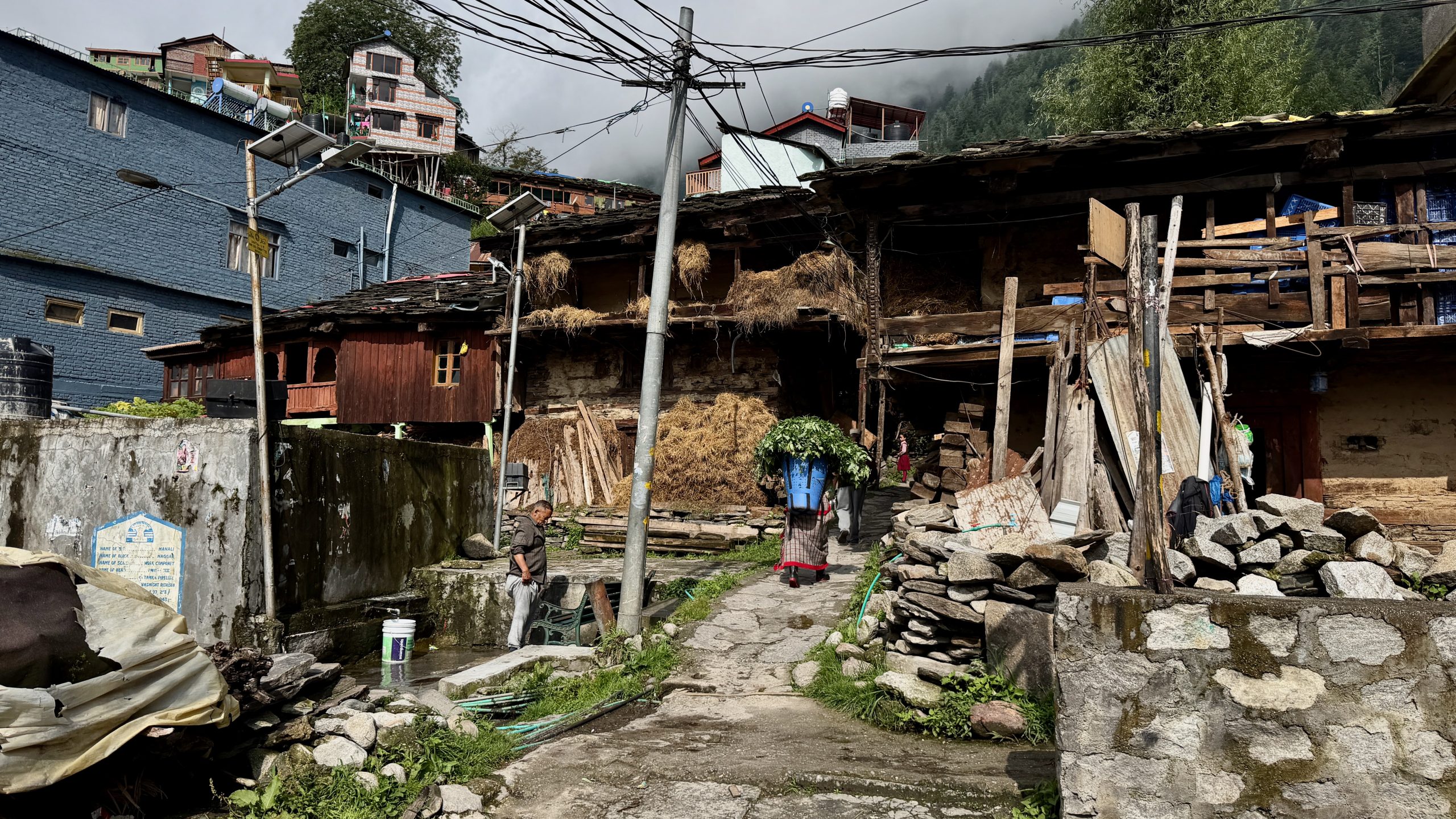
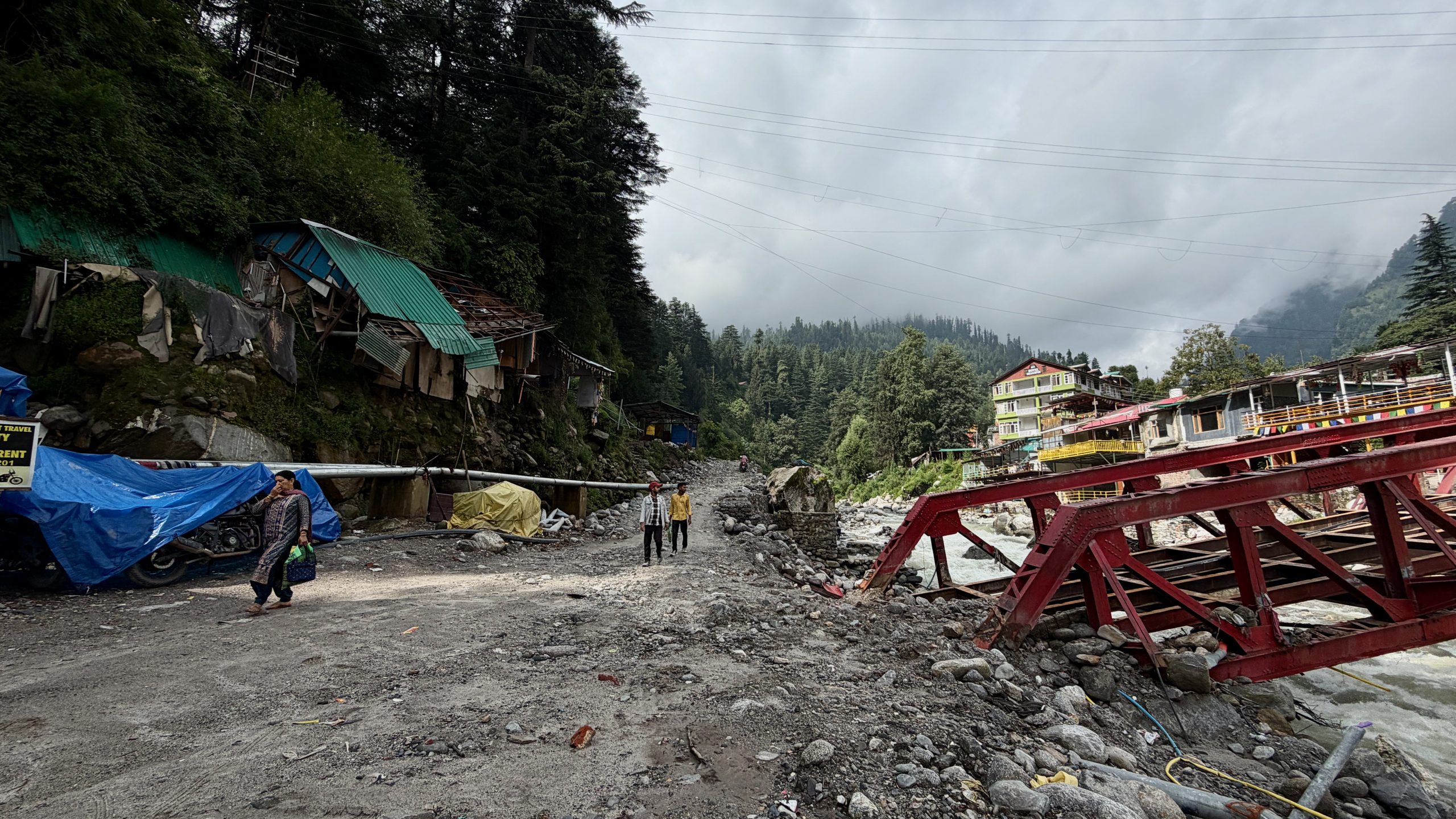
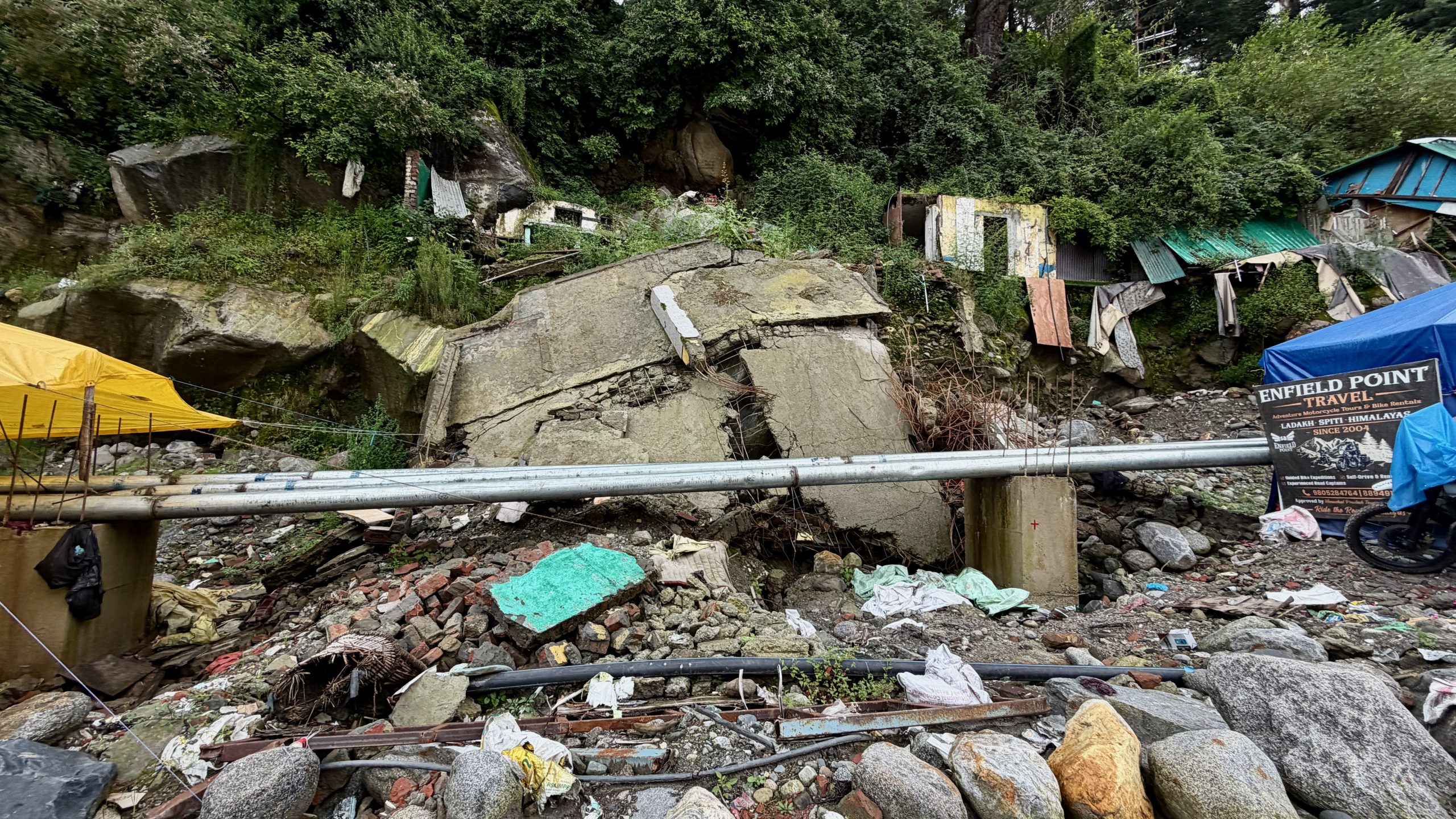
First, we saw the damage left behind by the last (or the one before that?) monsoon, when the river had swollen wildly and washed away both the bridge and the surrounding area. Raju knows someone who used to run a nice little dhaba there. He’s moved elsewhere now, where business isn’t going nearly as well.
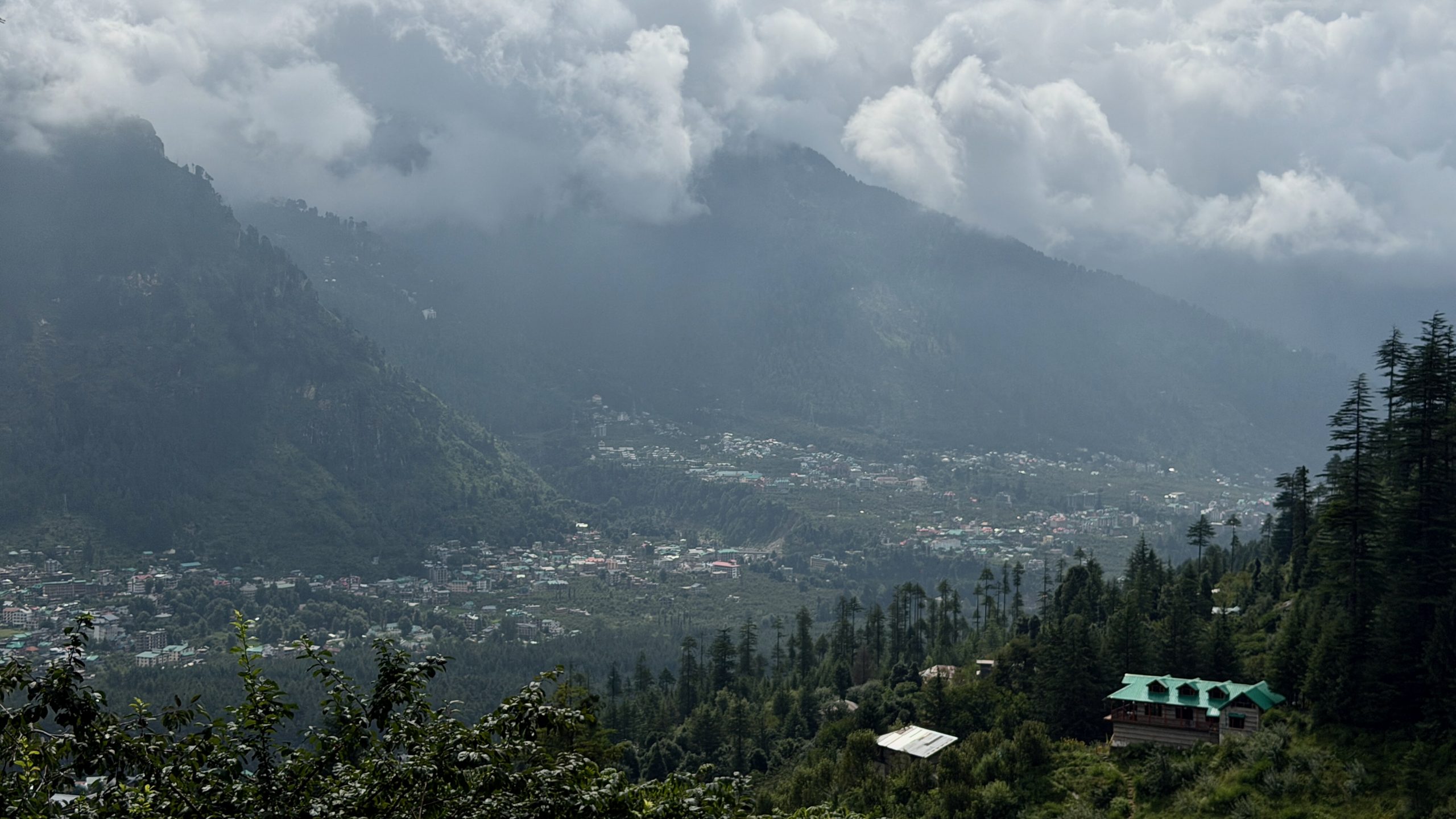
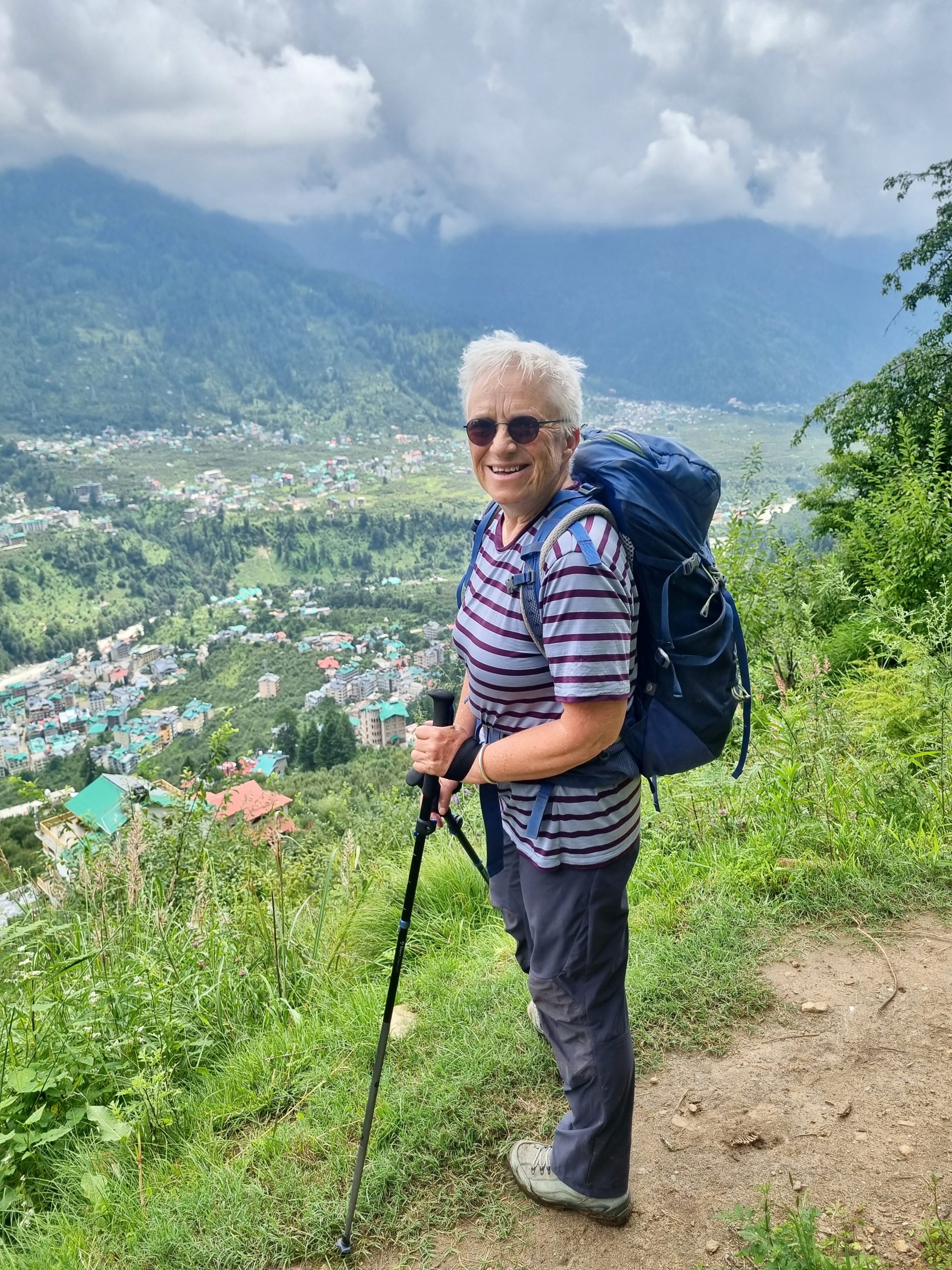
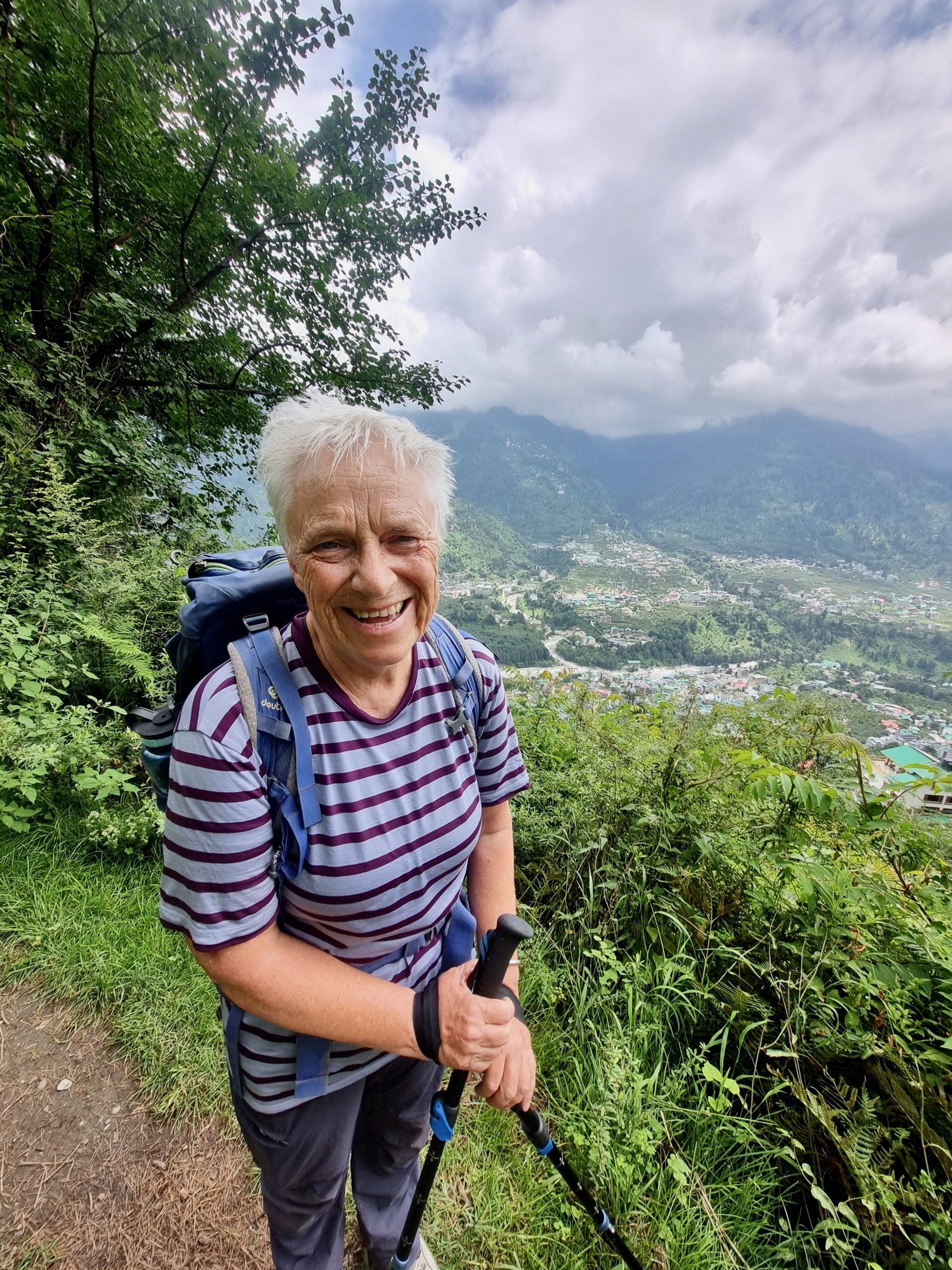
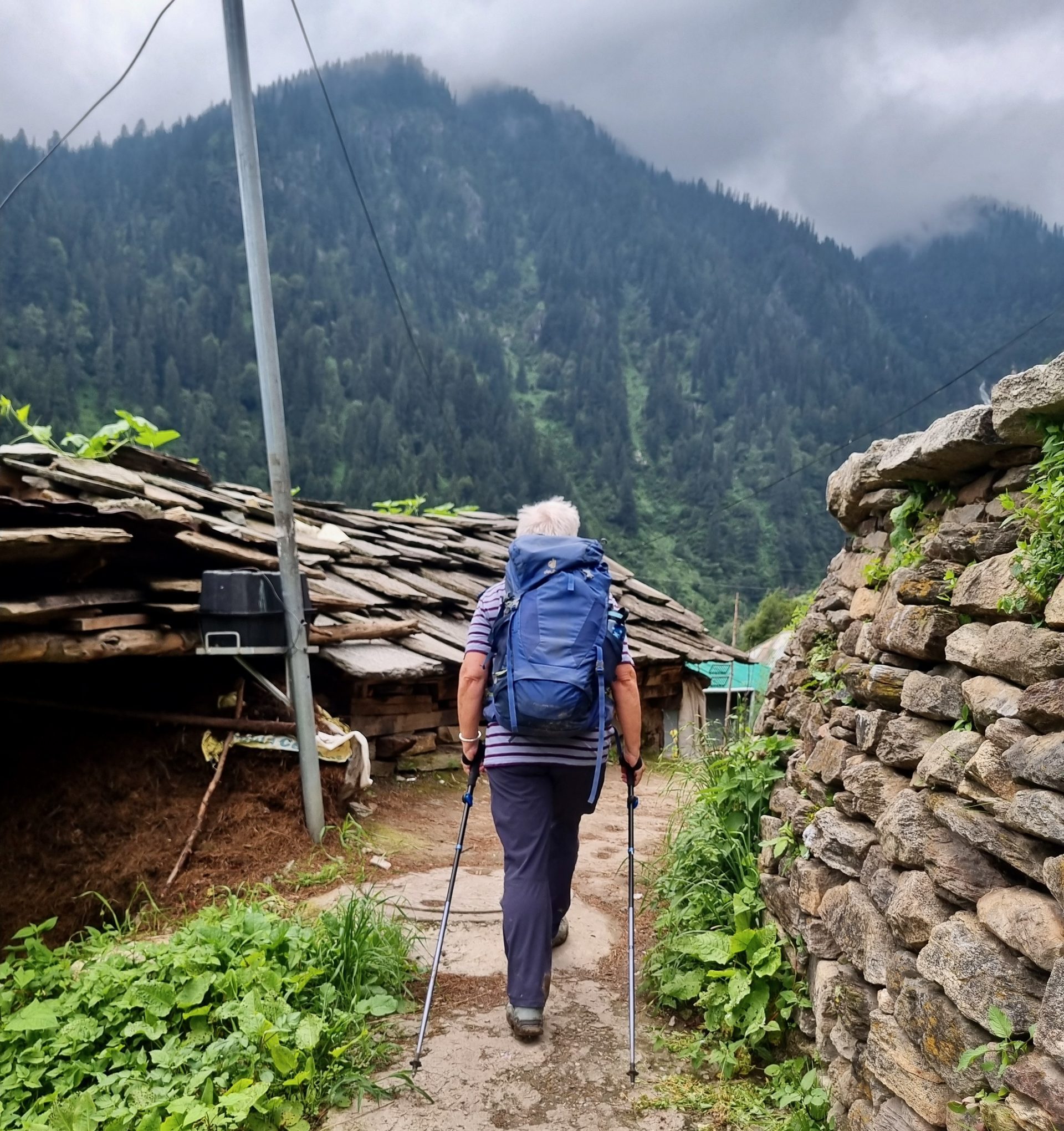
And then we headed up into the forest. The humidity was quite intense, and I immediately started sweating. I’m really not a fan of that. But then the trail leveled out, and we walked along a very pleasant contour path on the mountain for quite a while. Hardly anyone knows about it, even though it’s truly great: you can set off directly from Manali, it isn’t difficult, and it offers plenty of shade, which is wonderful in the heat. You often get views across the valley—though today they weren’t quite as stunning, given the thick blanket of monsoon clouds.

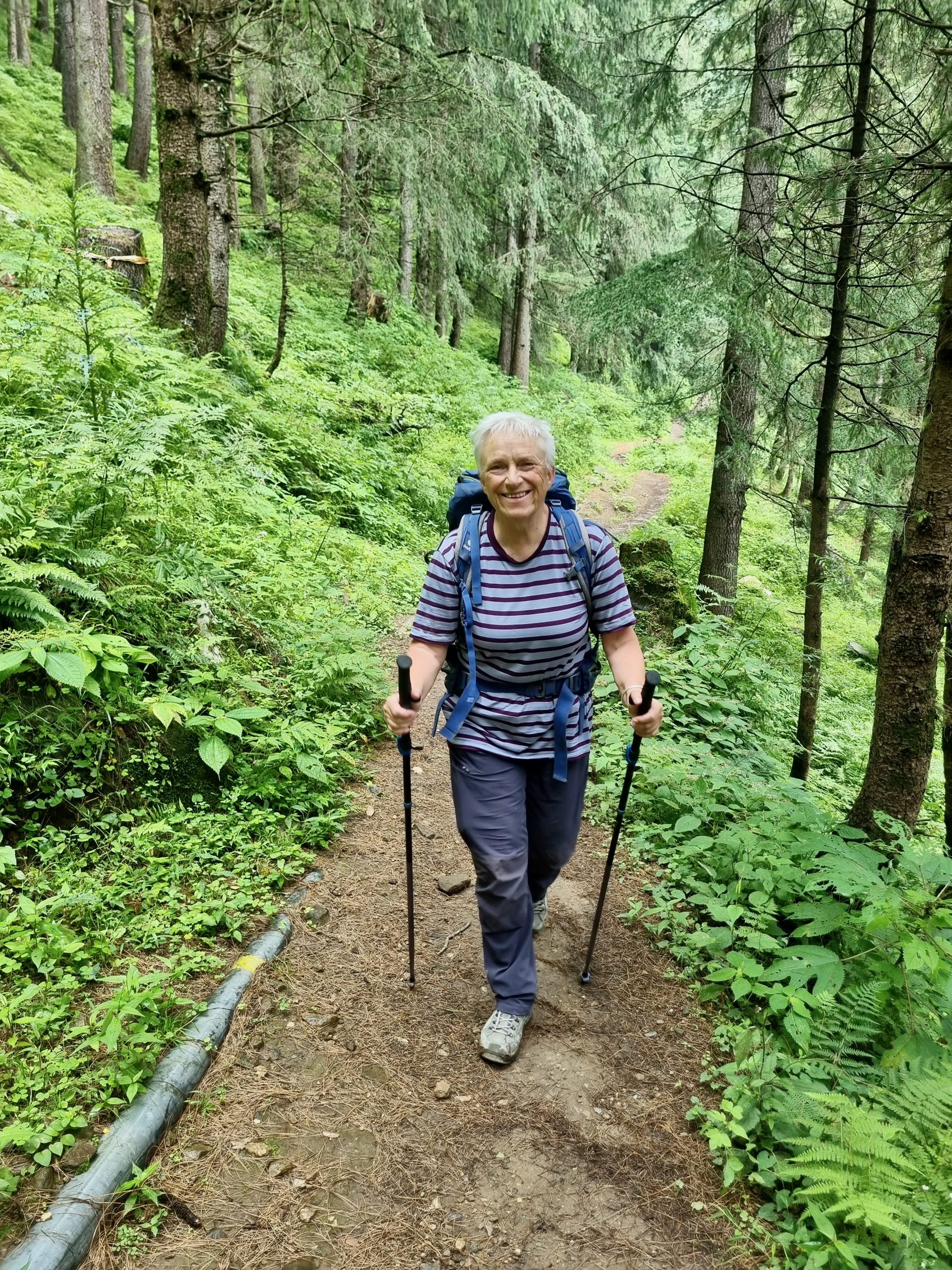
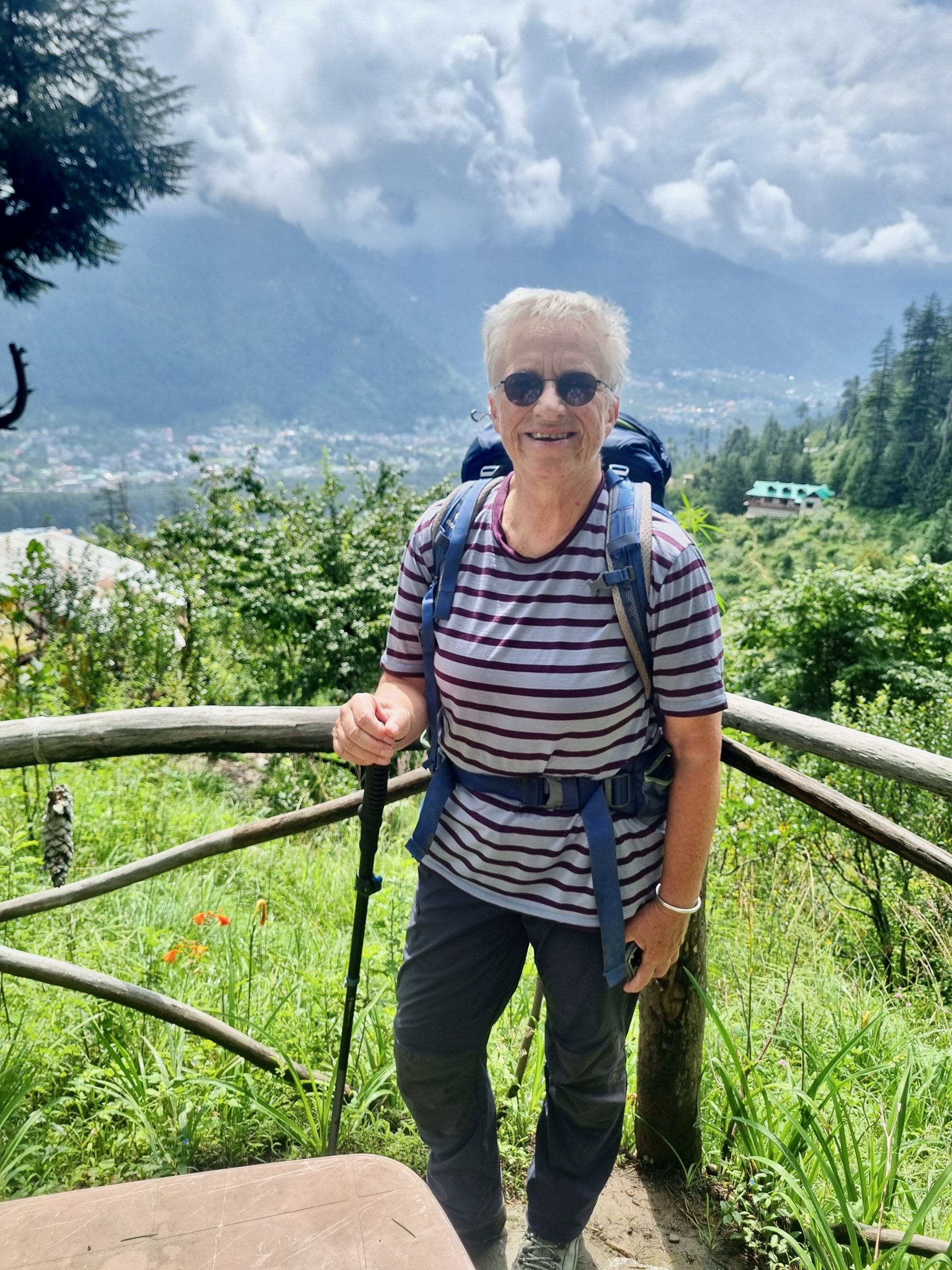

Since the trail wasn’t super long, we took frequent breaks and looked around. Time for a few words on tourism in Manali. It is striking how much it has boomed over the last three decades, with more and more accommodations being built, cars rolling continuously through the valley, and restaurants packed with people. Yet the peak Indian travel season really only lasts about three months: April to June. July and August are pretty dead due to the monsoon, and from September onward, things pick up slightly again. So, who actually profits from all of this?
Actually, the locals! All those accommodations were built by outsiders. However, they aren’t allowed to own the land. Section 118 of the Himachal Pradesh Tenancy and Land Reforms Act (1972) makes the land unsellable to non-Himachalis. But they can lease it, and the local population does just that for good money—or rather, quite inflated rates. The leases run anywhere from 10 to 99 years, and the landowners are completely off the hook: they collect the cash without carrying any of the business risks tied to the construction on top of it (though some naturally build themselves, too). Those who don’t lease out their land usually have apple and other fruit orchards growing on it.
Apples are a lucrative business on the one hand, but an exhausting one on the other. You have to spray an insane amount of pesticides because of the challenges posed by (monsoon) humidity, monocultures, increasingly resistant pests, and visual perfection standards. You won’t find organic apple farming anywhere around here. That was actually true back in 1992 as well, when a traveler told me she once had to see a doctor after eating a huge amount of apples. The culprit was indeed all the pesticides, as she hadn’t washed the apples properly. So if someone offers you an apple around here (which happens sometimes), you absolutely need to give it a thorough wash first—or peel it.
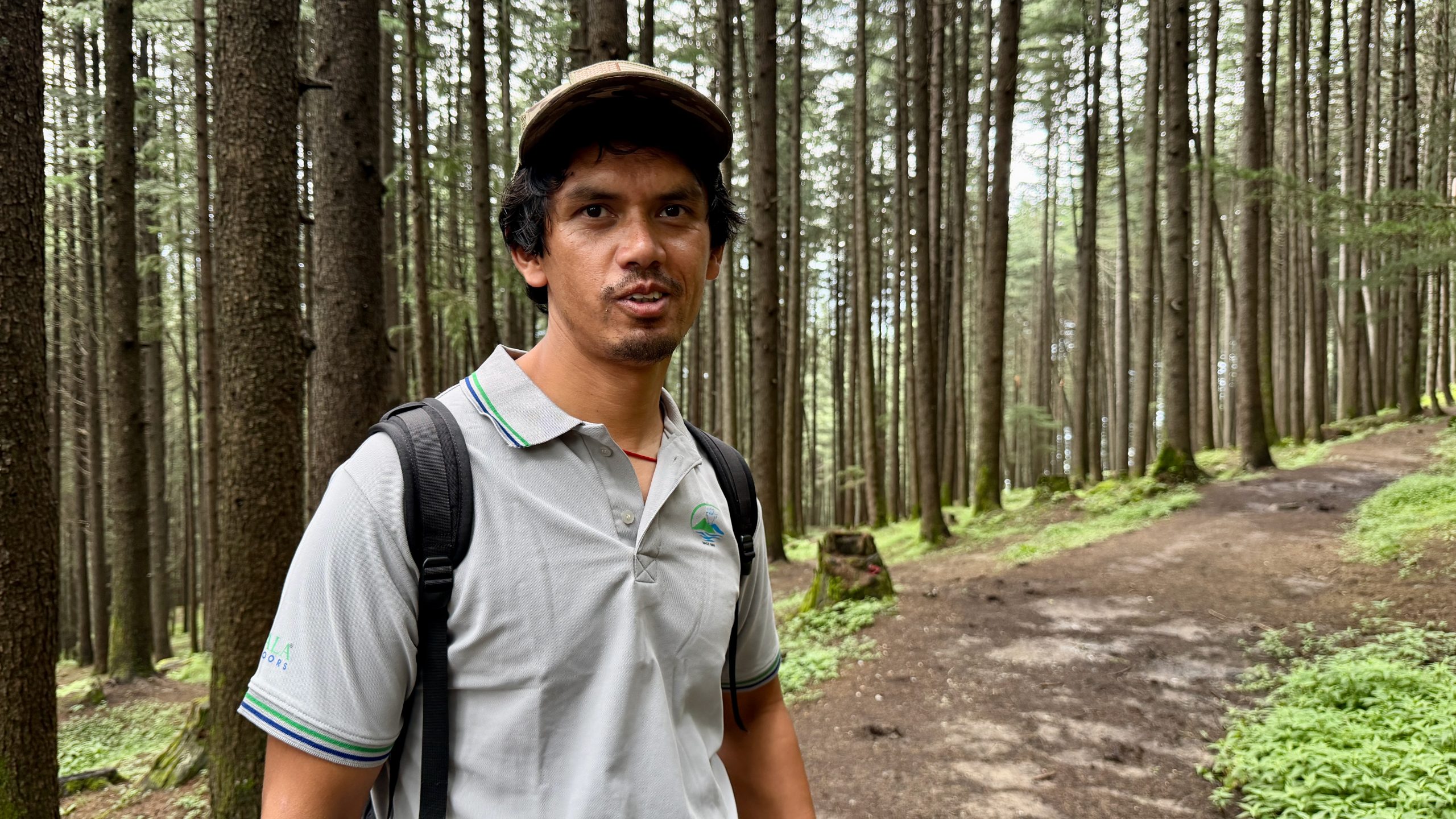
You can still make pretty good money with apples, though. However, people don’t do much of the actual work themselves—at least not the picking, which is mostly handled by Nepalis. Often, the women do the harvesting (for far too little pay) while the men carry the heavy baskets up to the road. You get 100 INR per trip for that—and at around 15 trips a day, that adds up to 1,500 INR, which isn’t bad at all. But of course, it’s also heavy, grueling work. That’s what this Nepali man told us:

This year, however, things are looking pretty lean in many places. There was heavy hail during the blossoming period, so many trees aren’t yielding nearly as well.
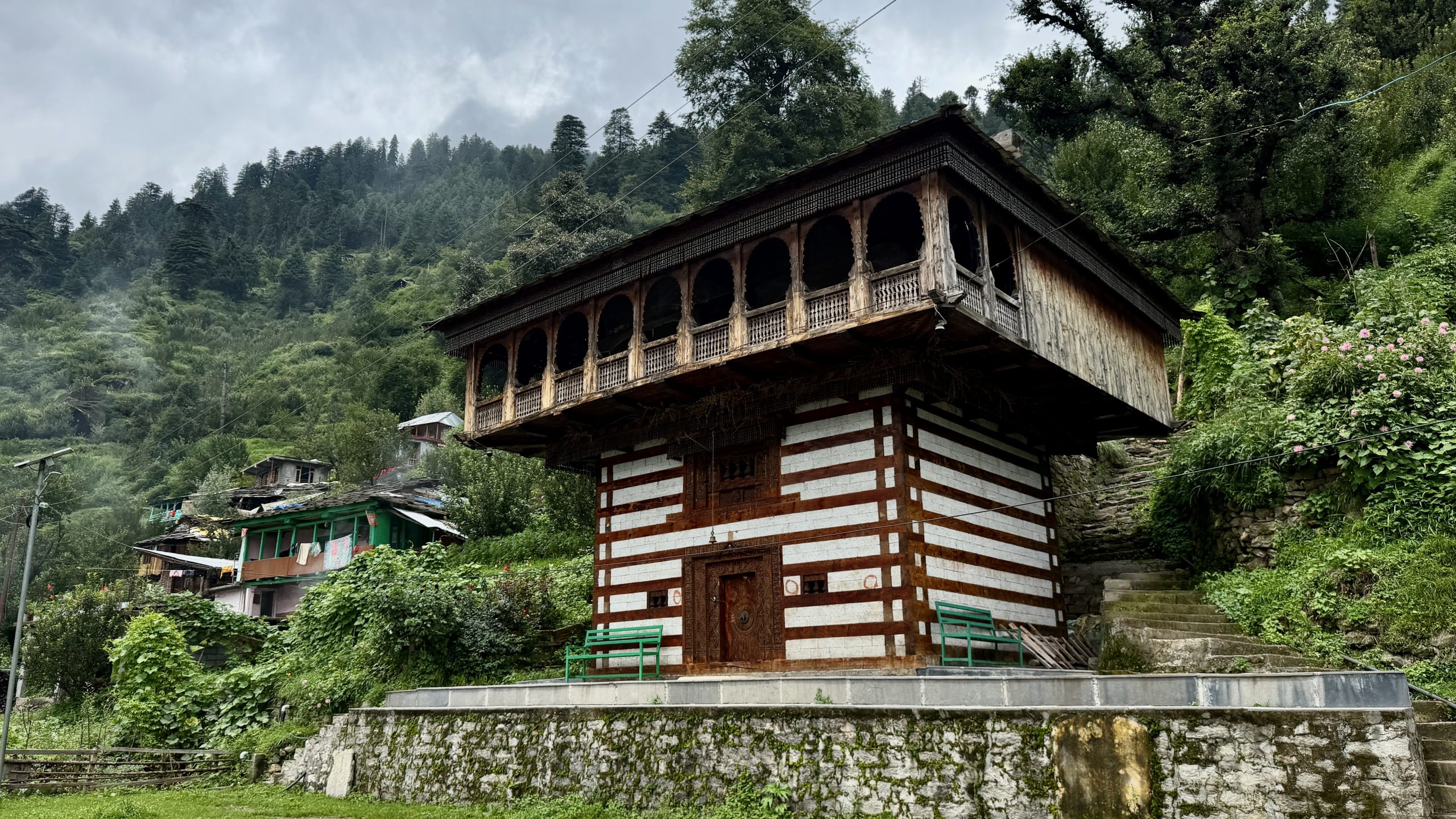
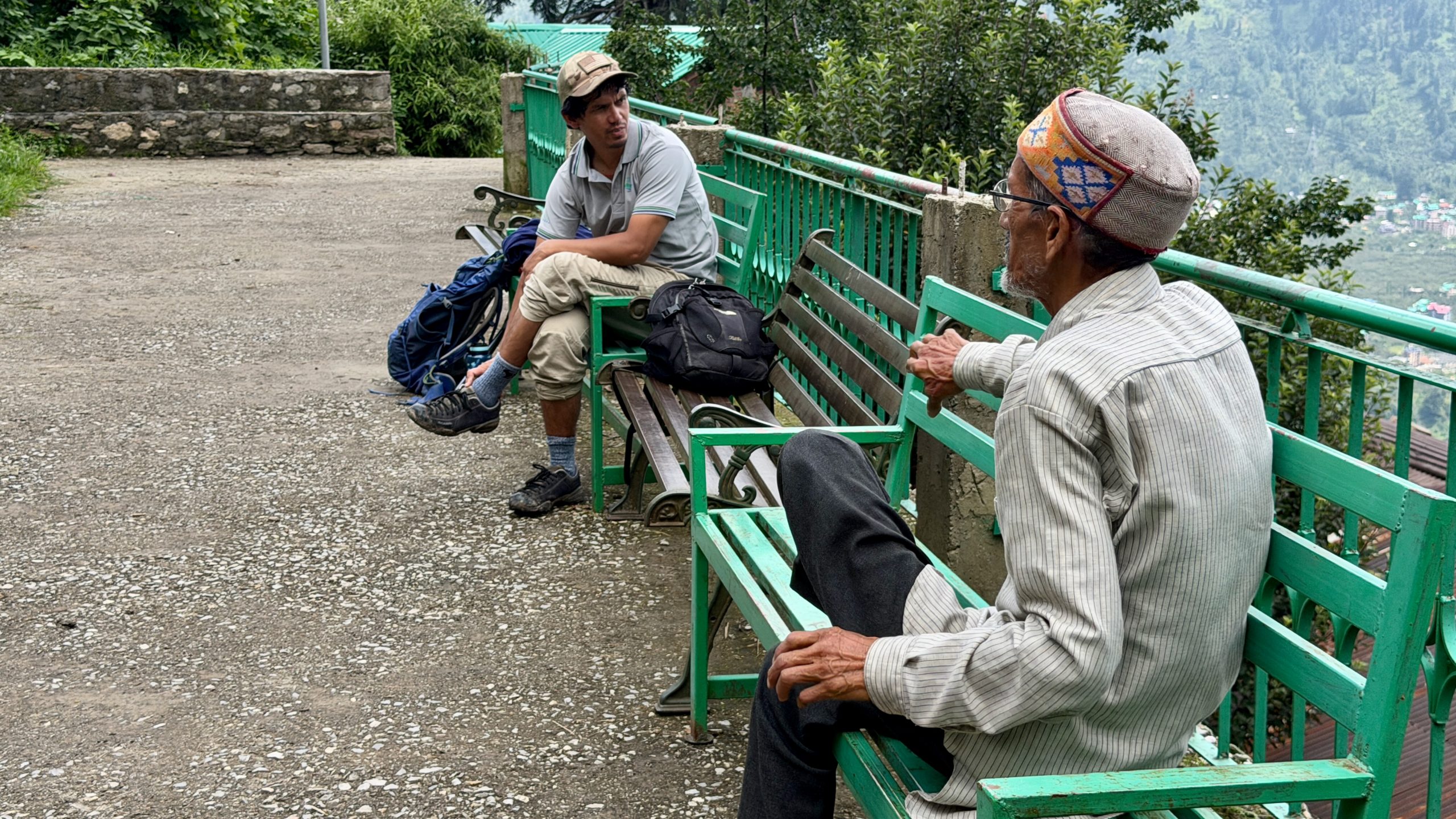
As you can see, we were lucky and had no monsoon rain. But due to the high humidity, I was sweating quite a bit and found everything rather strenuous. For lunch, we stopped at a small village temple in Kangal, where there were still some lovely old houses. And an elderly gentleman Raju chatted with—as it turned out, he knew Raju’s father (as a reminder: his parents are divorced and he has no contact with his father, whom he doesn’t speak well of).



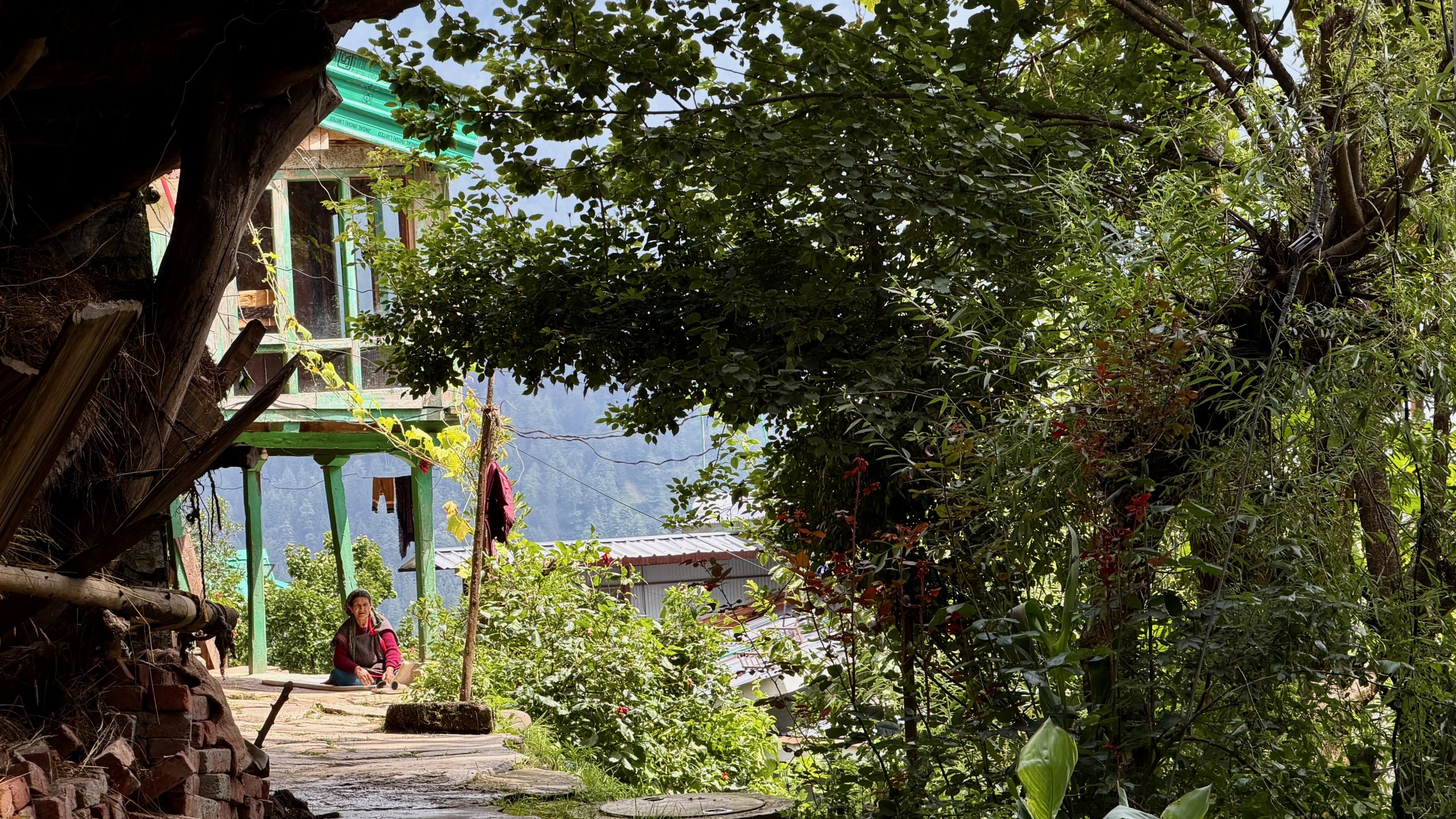
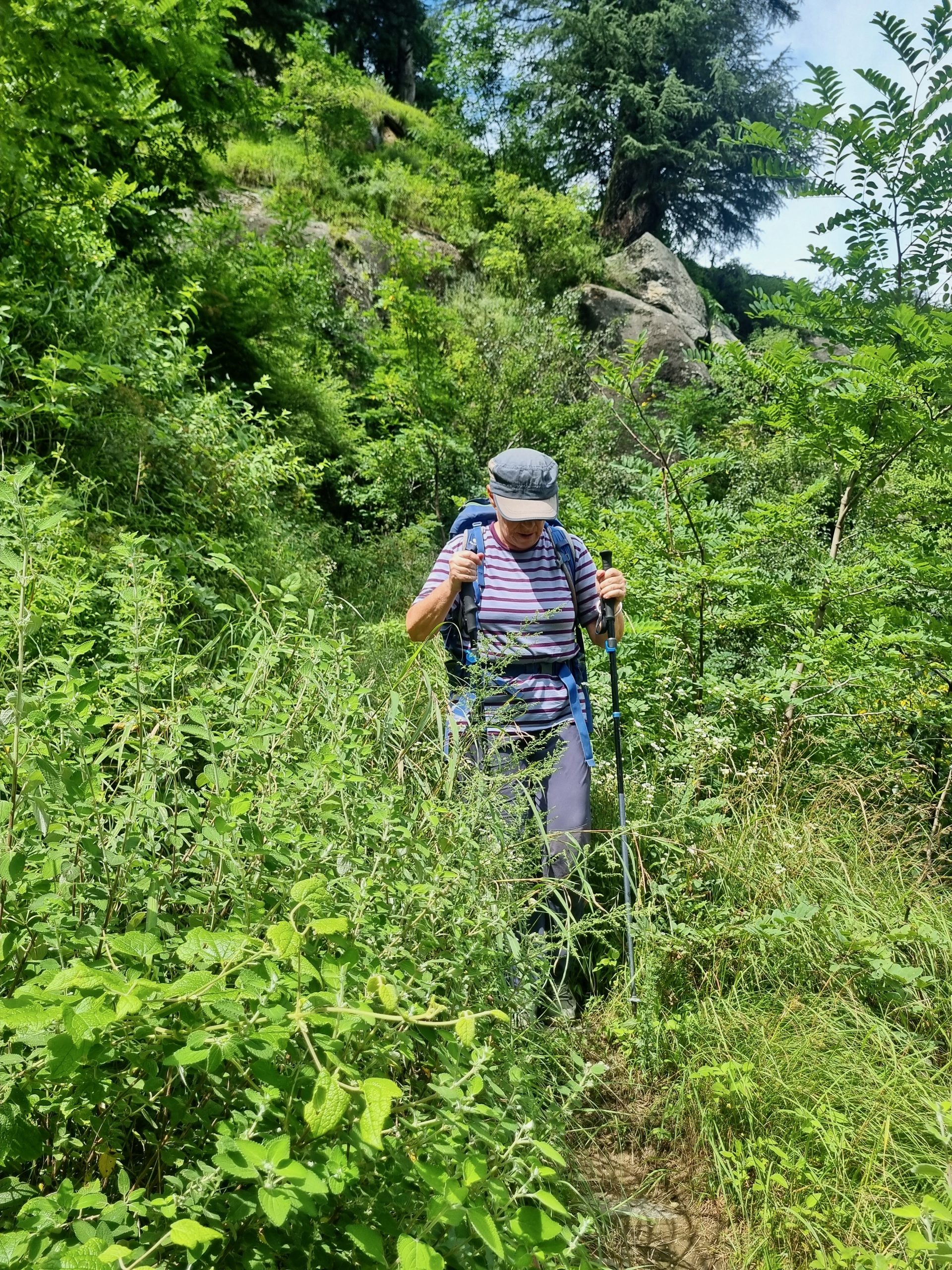
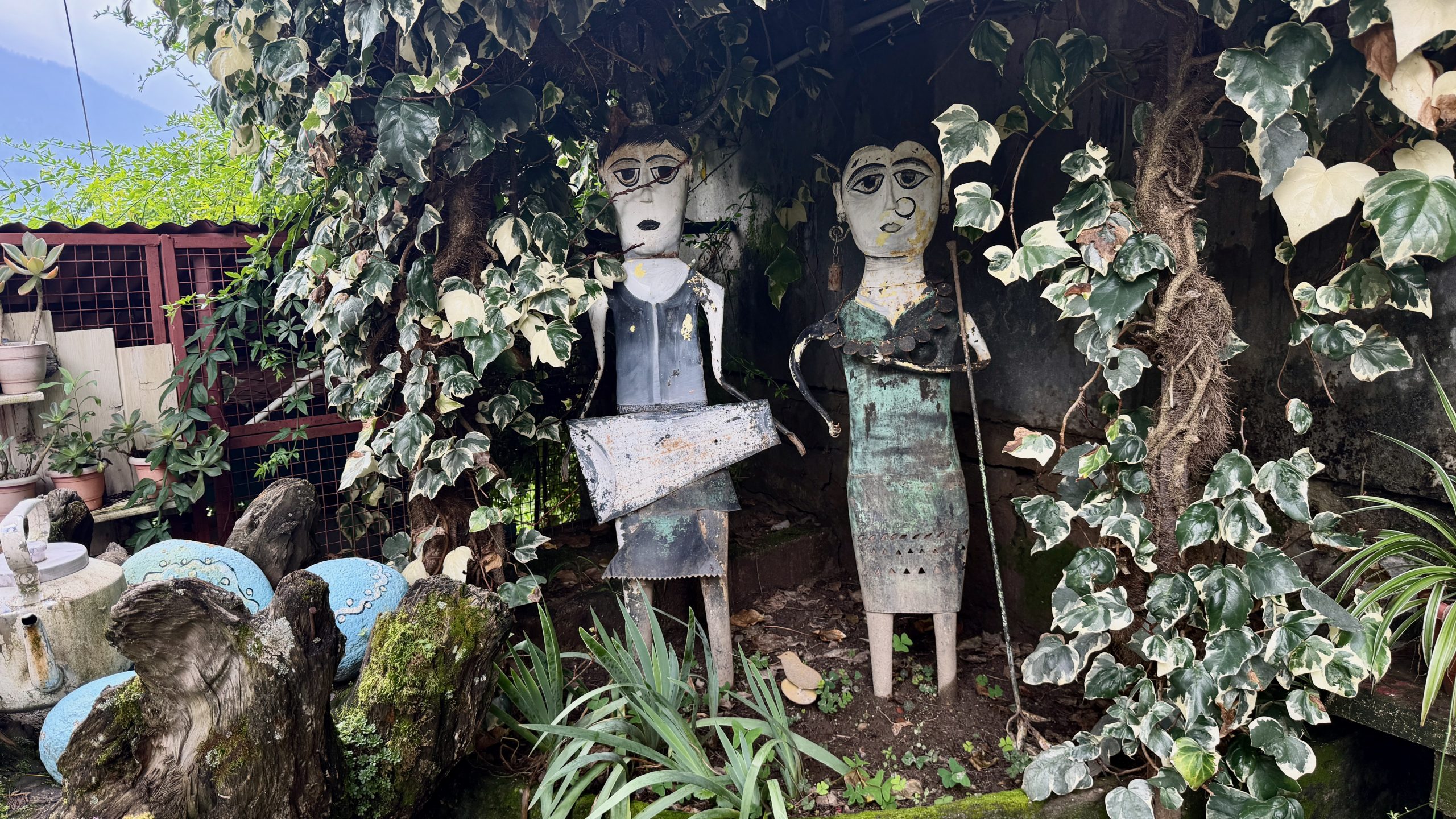
On the way down, the trail led partly through dense, tall vegetation (it’s truly astonishing how much the monsoon makes the plants here shoot up), and there were a few interesting sights along the way, such as a trash bin complete with its own little roof and artwork.


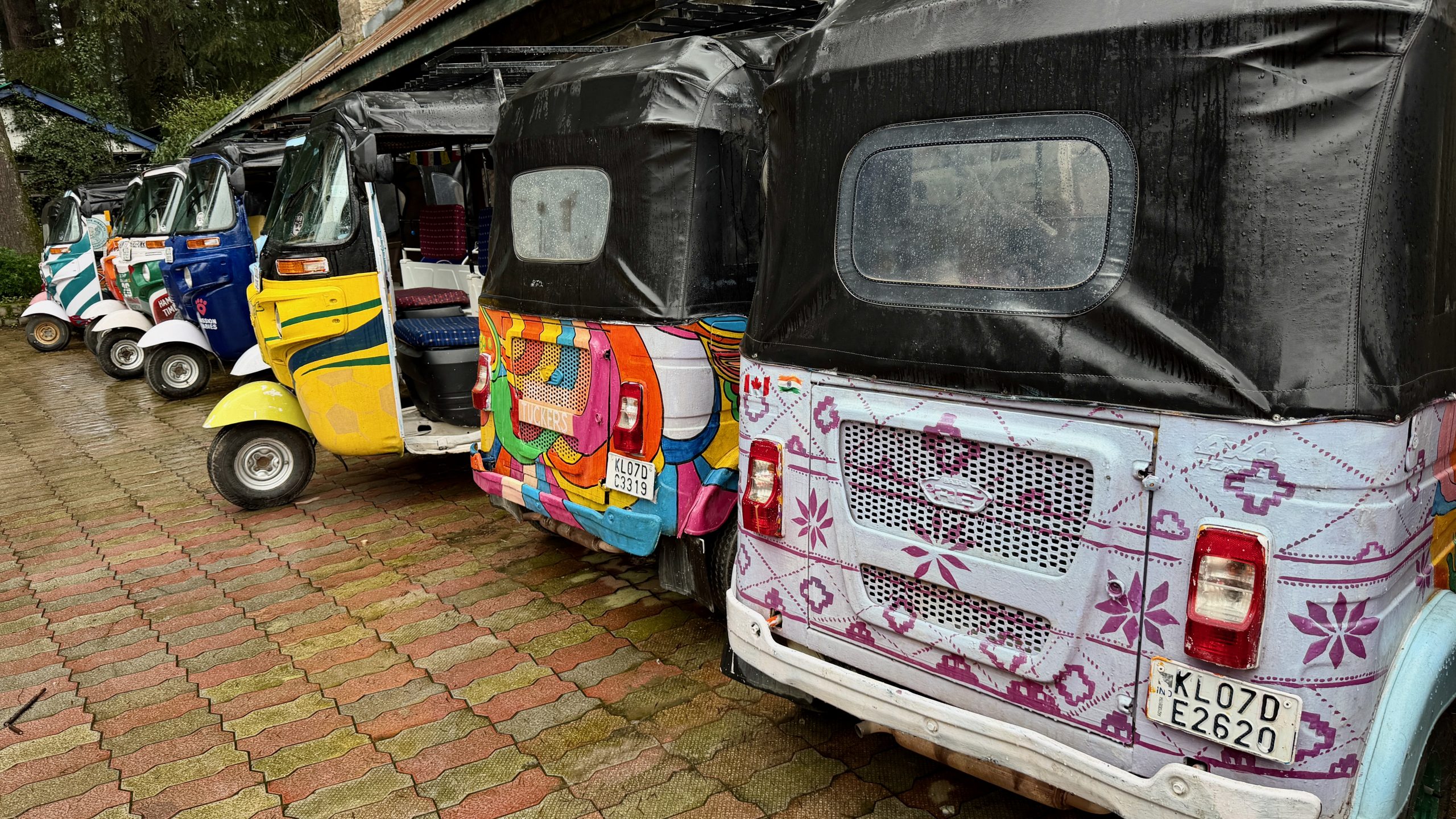
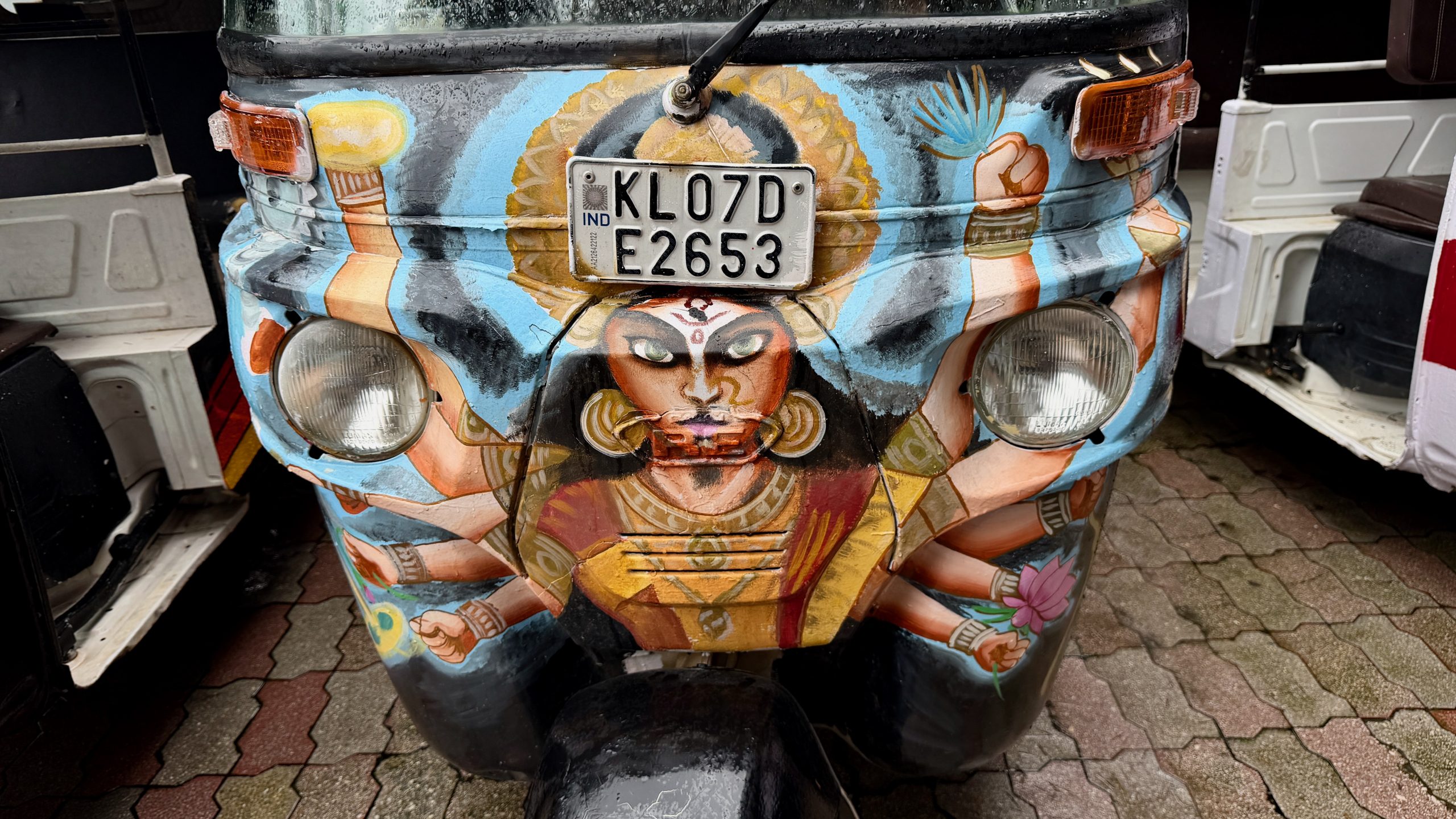
I’ll cut things short a bit here and skip straight to the next day. It started off wet. It was raining and looked just like a steady North German drizzle. It was hard to drag myself out of bed. But an appointment is an appointment, so off we went. First, I spotted these interestingly painted auto-rickshaws—they belong to a rally or something similar, where participants book them to tackle a long-distance route across India.
We then entered a bus and drove through the rain to Kullu.
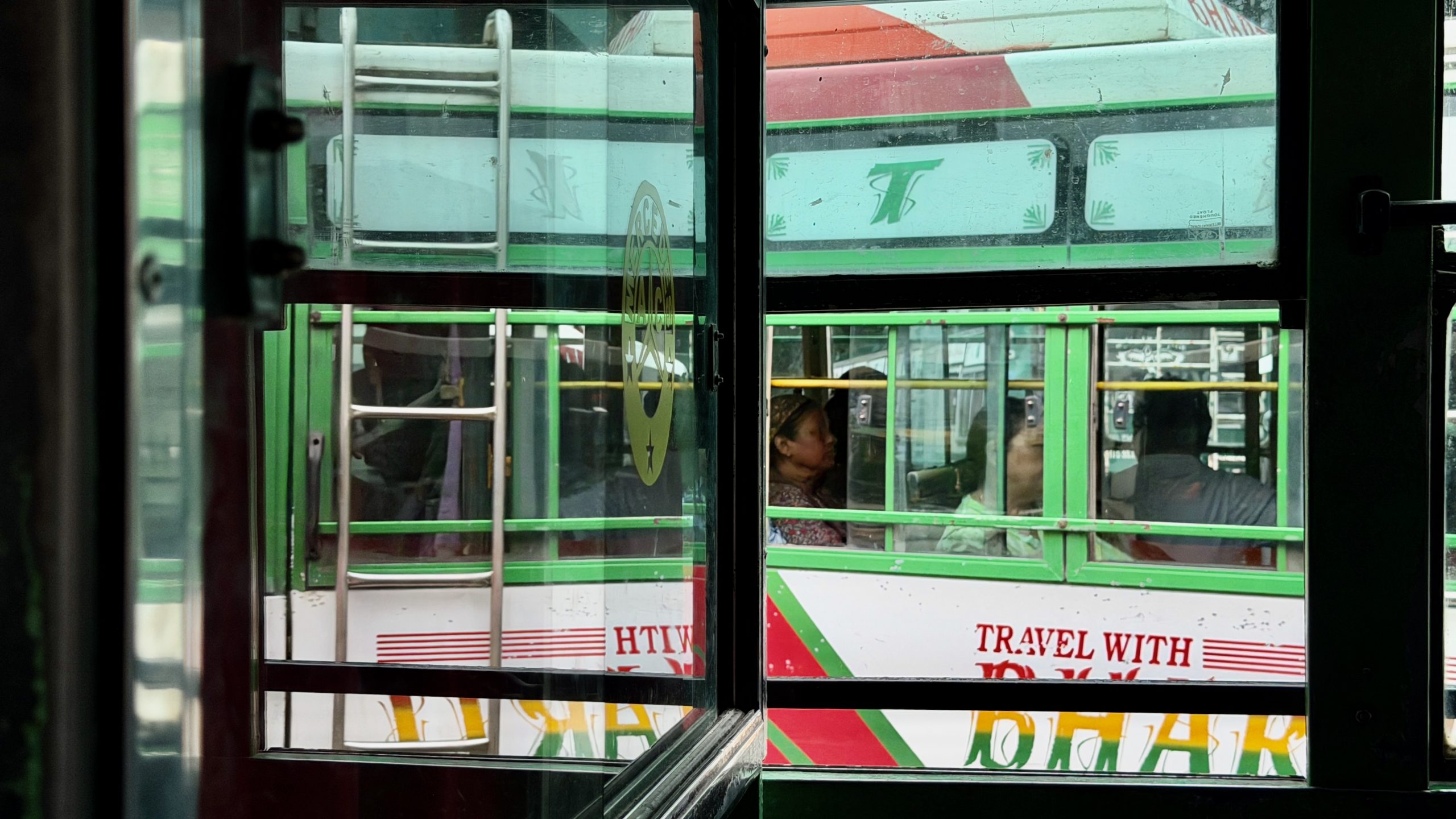


It was a bit drier in Kullu, but the connecting bus was already packed full, and the next one wasn’t due for another hour, so we took an auto-rickshaw instead. That turned out to be a good call since it was already getting quite late. Overall, though, the timing turned out to be absolutely spot on.

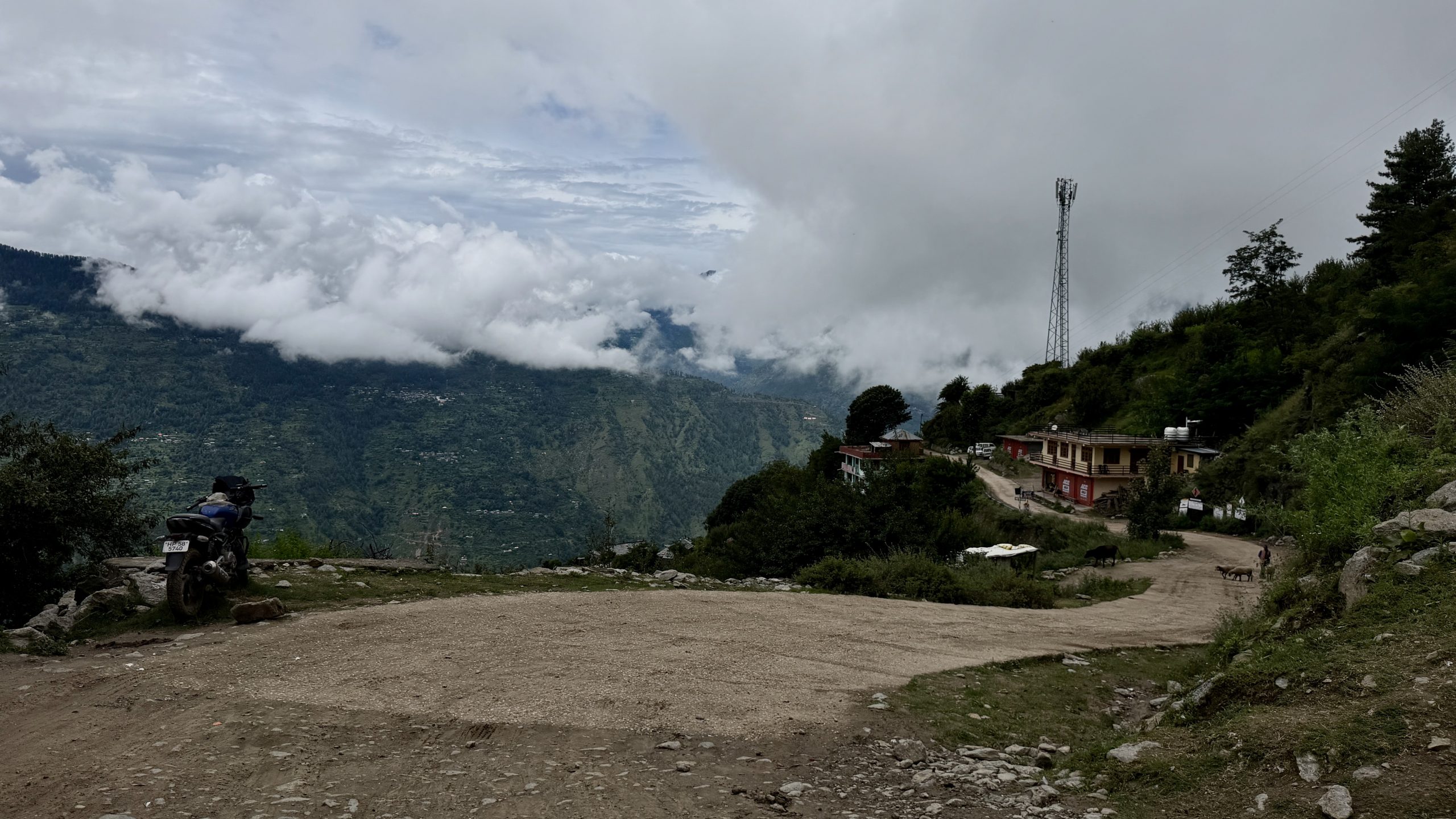
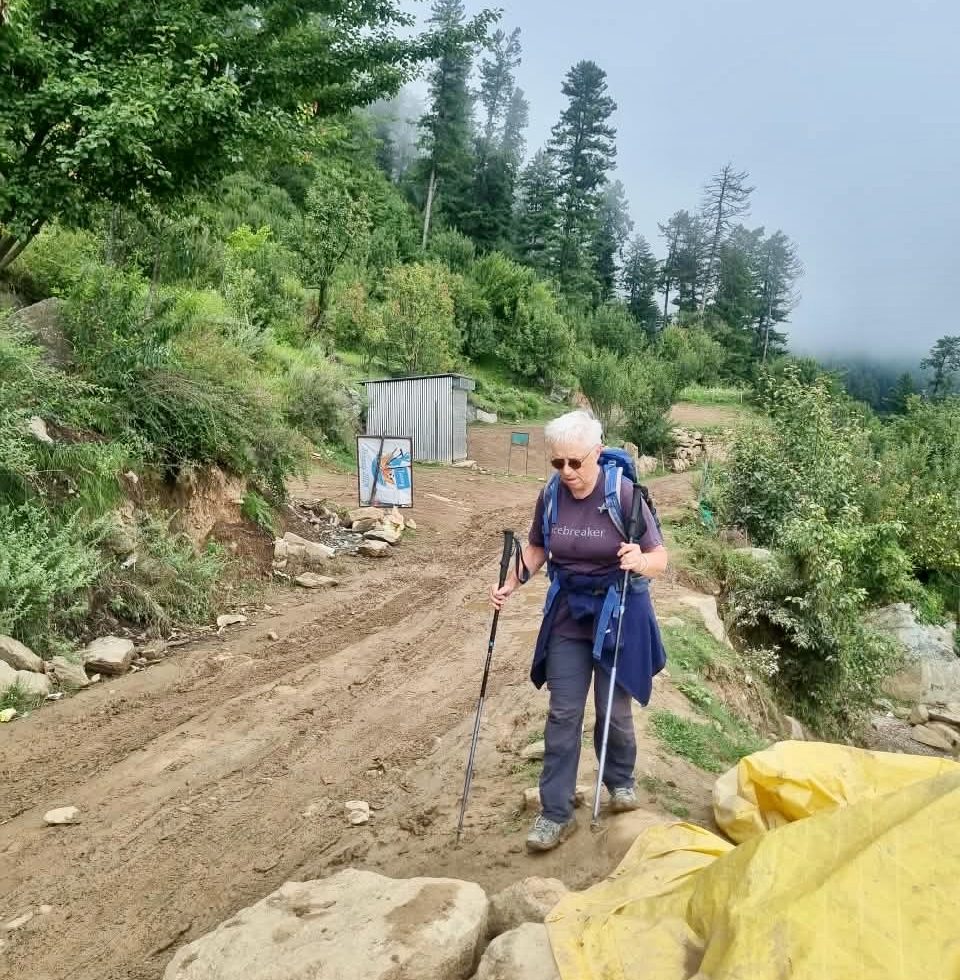
The rickshaw drove us all the way up the opposite hillside. Up there, we had lunch at a Shiva dhaba with reggae music playing.

And then we headed up the hillside, and I had (yet another) India meltdown, totally grumbling to myself about all the litter lying around, the people lounging about doing nothing to tidy the place up, and just everything in general. Every 200 meters or so, there was a trash bin, but it was hardly fit for purpose. It was completely open, meaning monkeys naturally had to rummage through to see if they could scavenge any tasty treats. As a result, plenty of garbage ended right back on the ground. Why hadn’t anyone thought of that and just installed closed, monkey-proof bins in the first place?


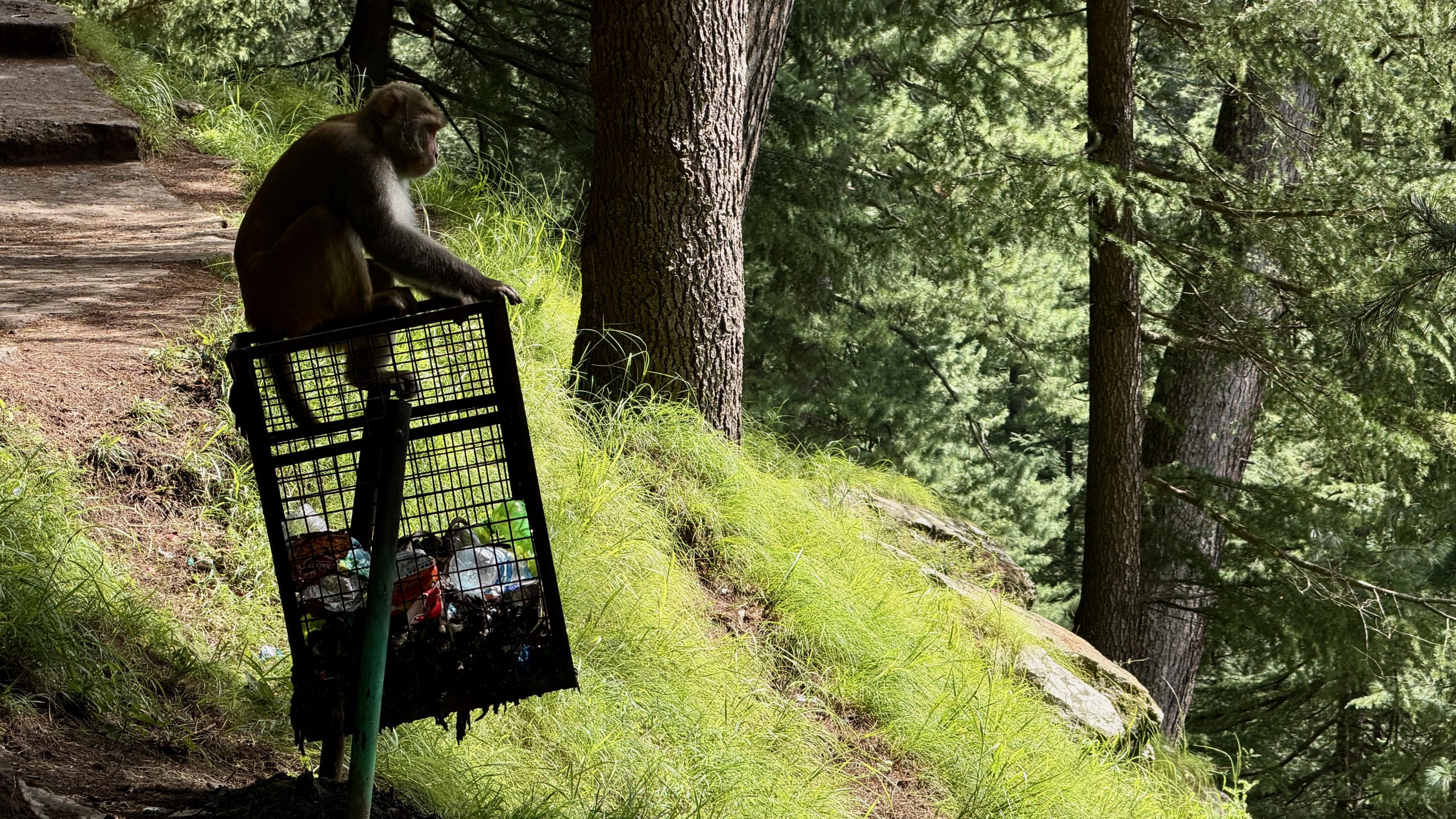
Since it was the monsoon and off-season, many of the stalls and dhabas were closed.

The trail itself was otherwise quite lovely, and once at the top, we hit the absolute weather jackpot! The sky had cleared completely, giving us the most incredible views!
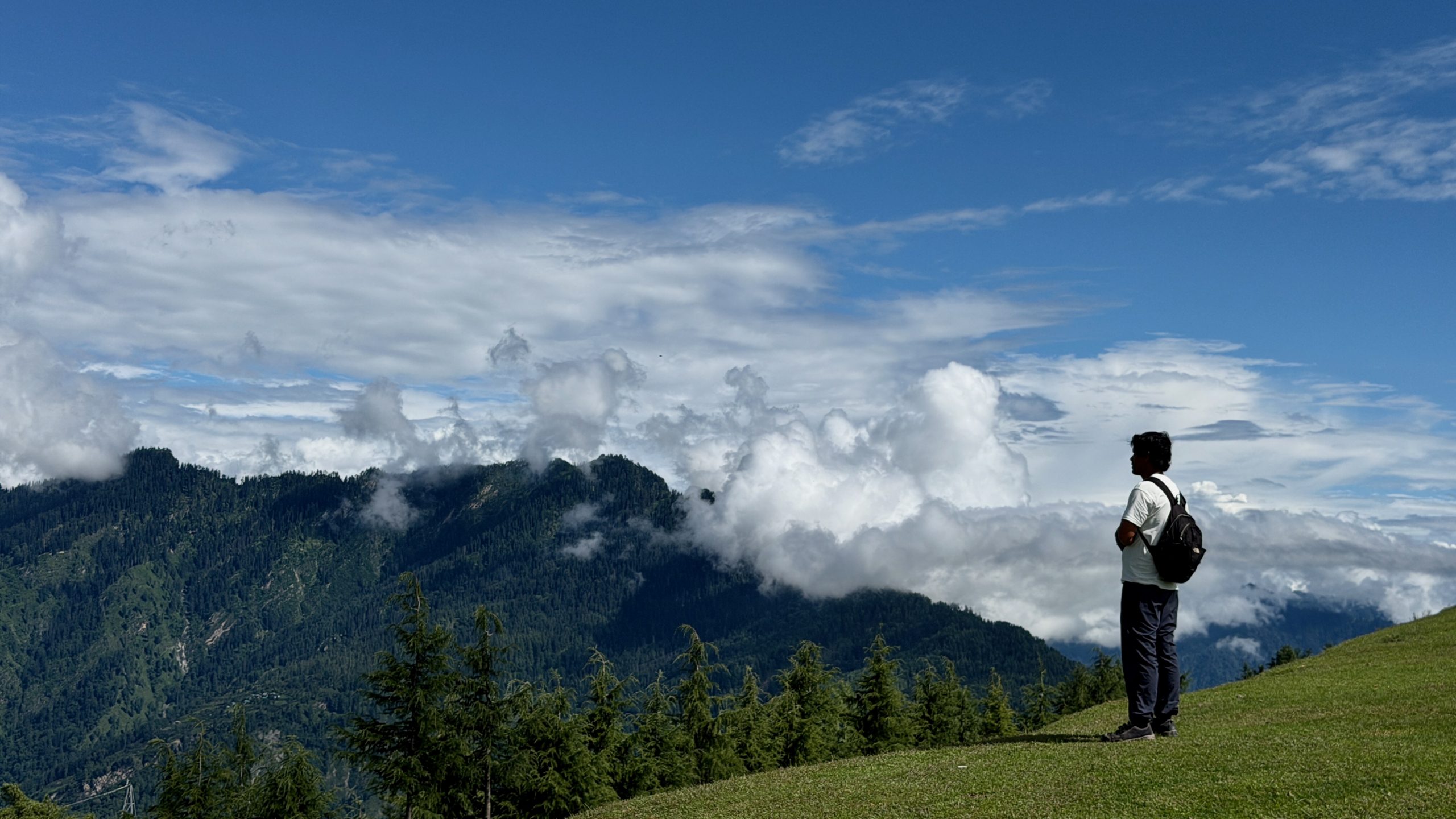
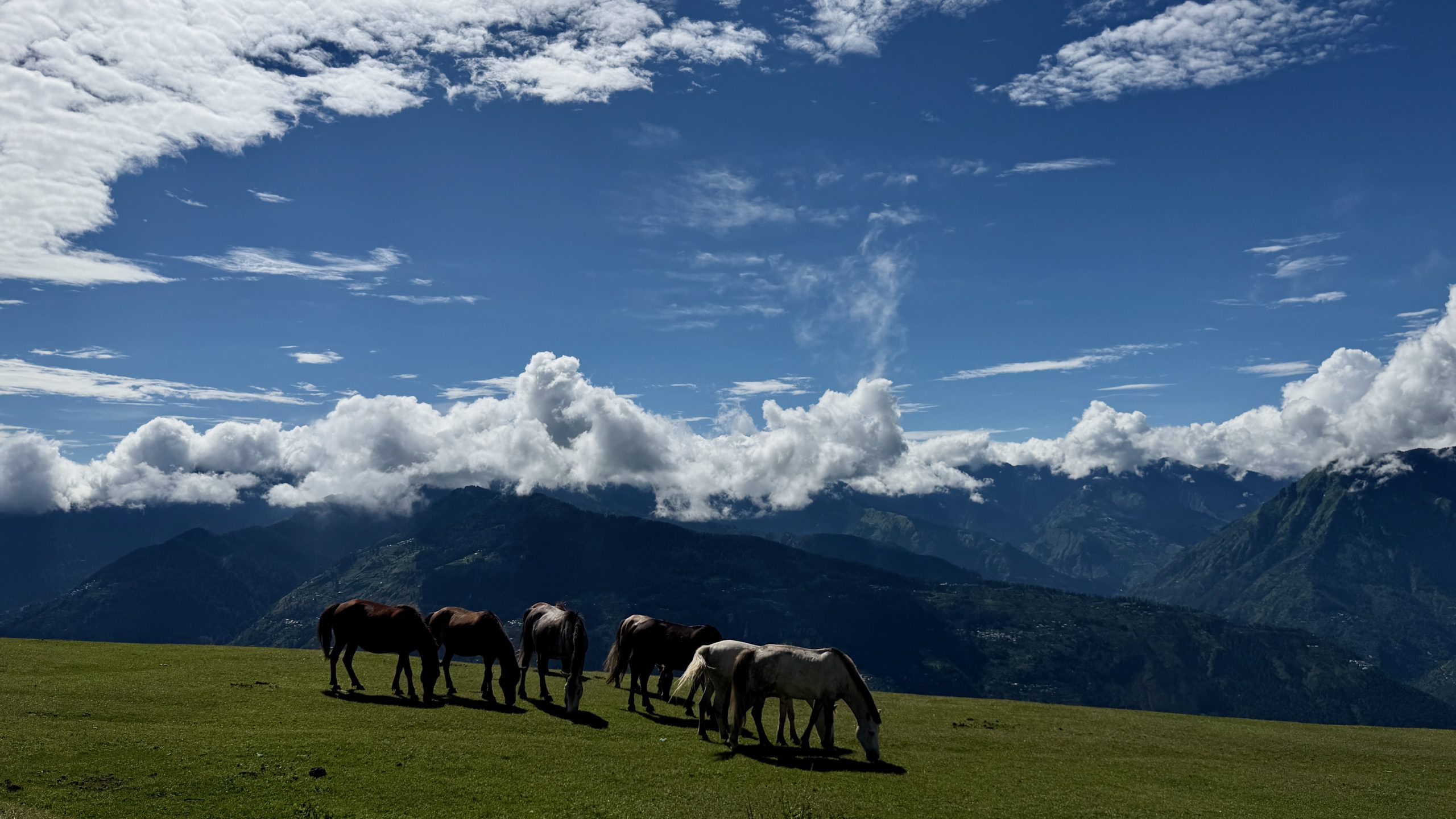
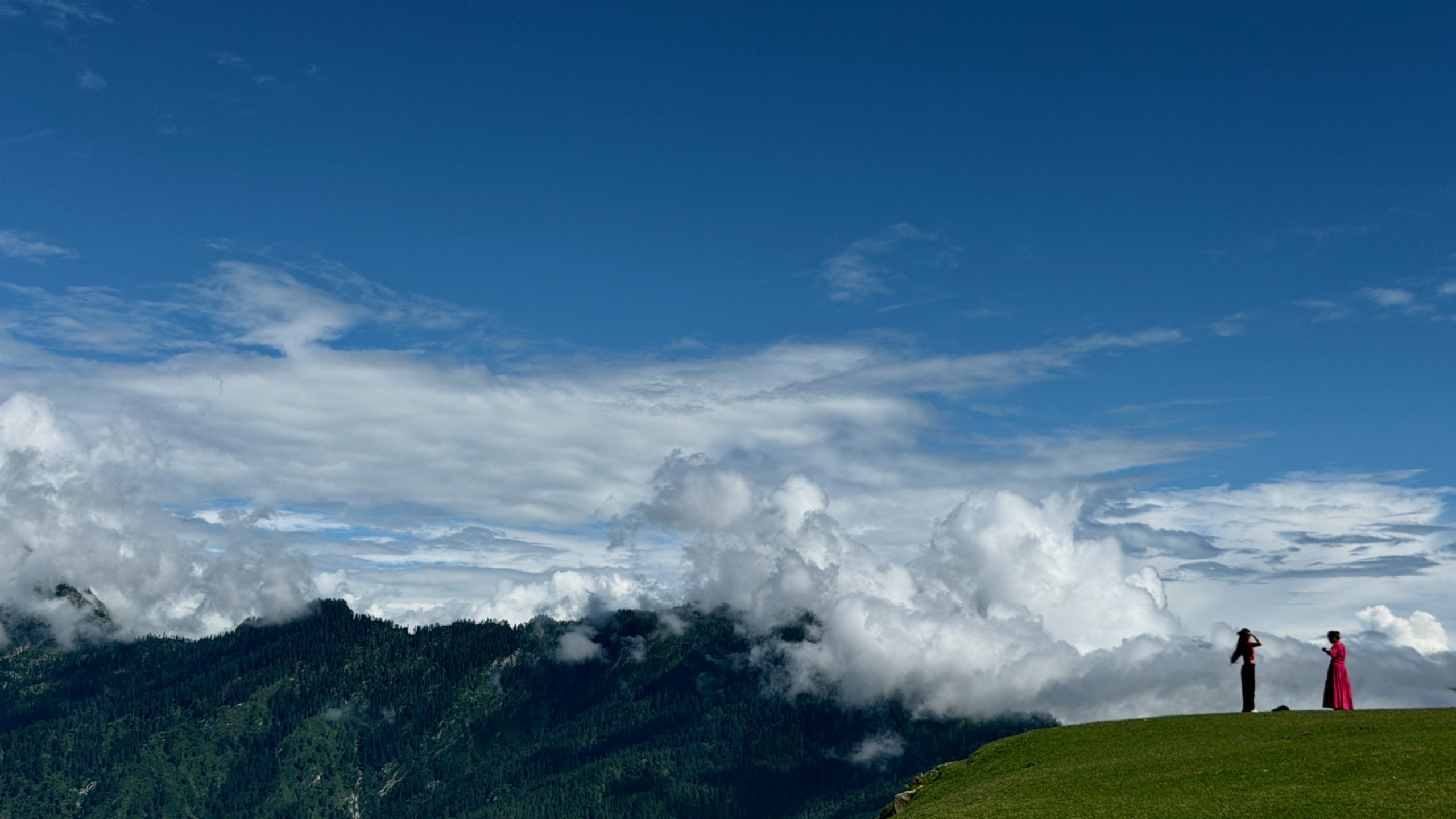
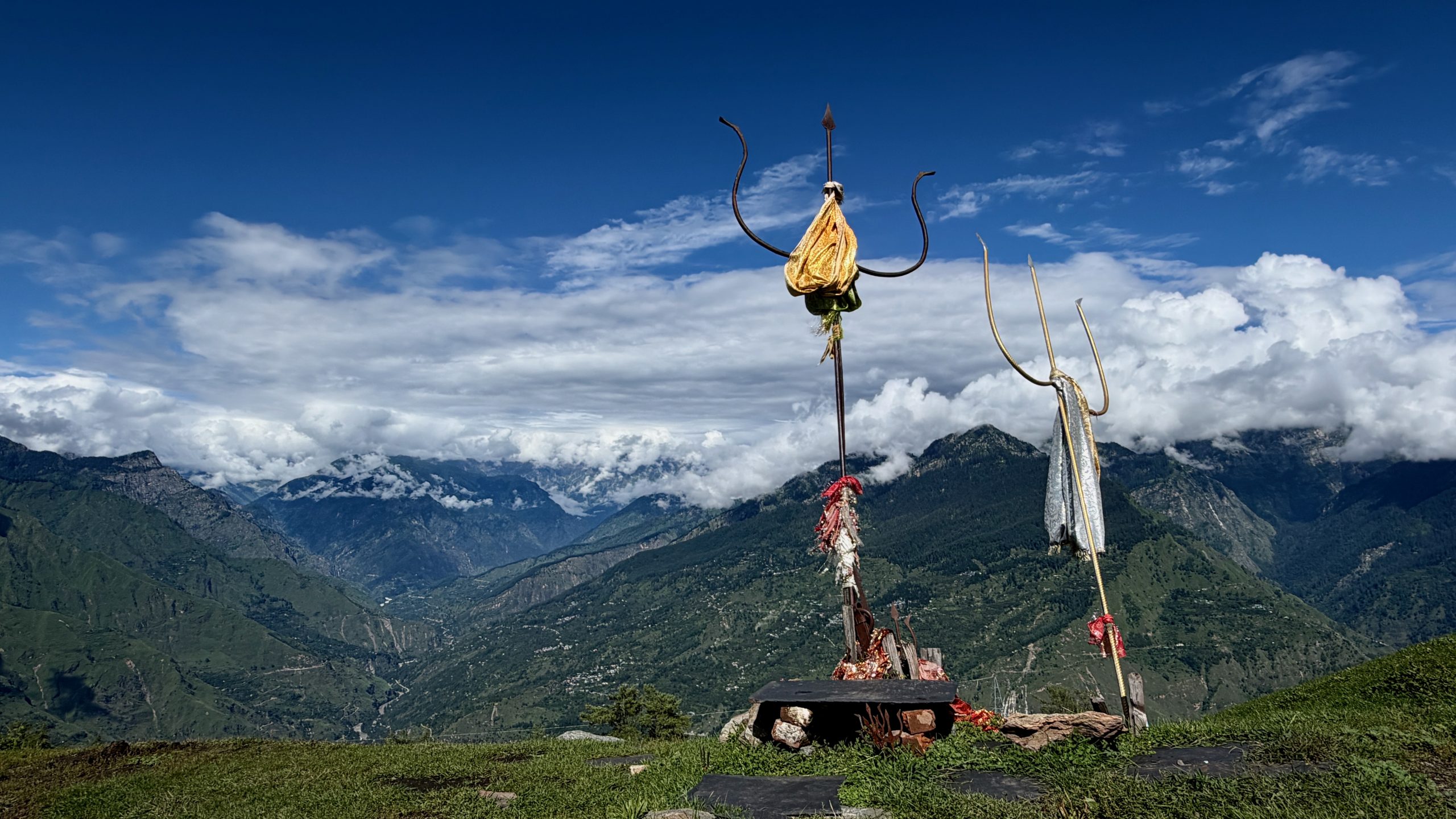
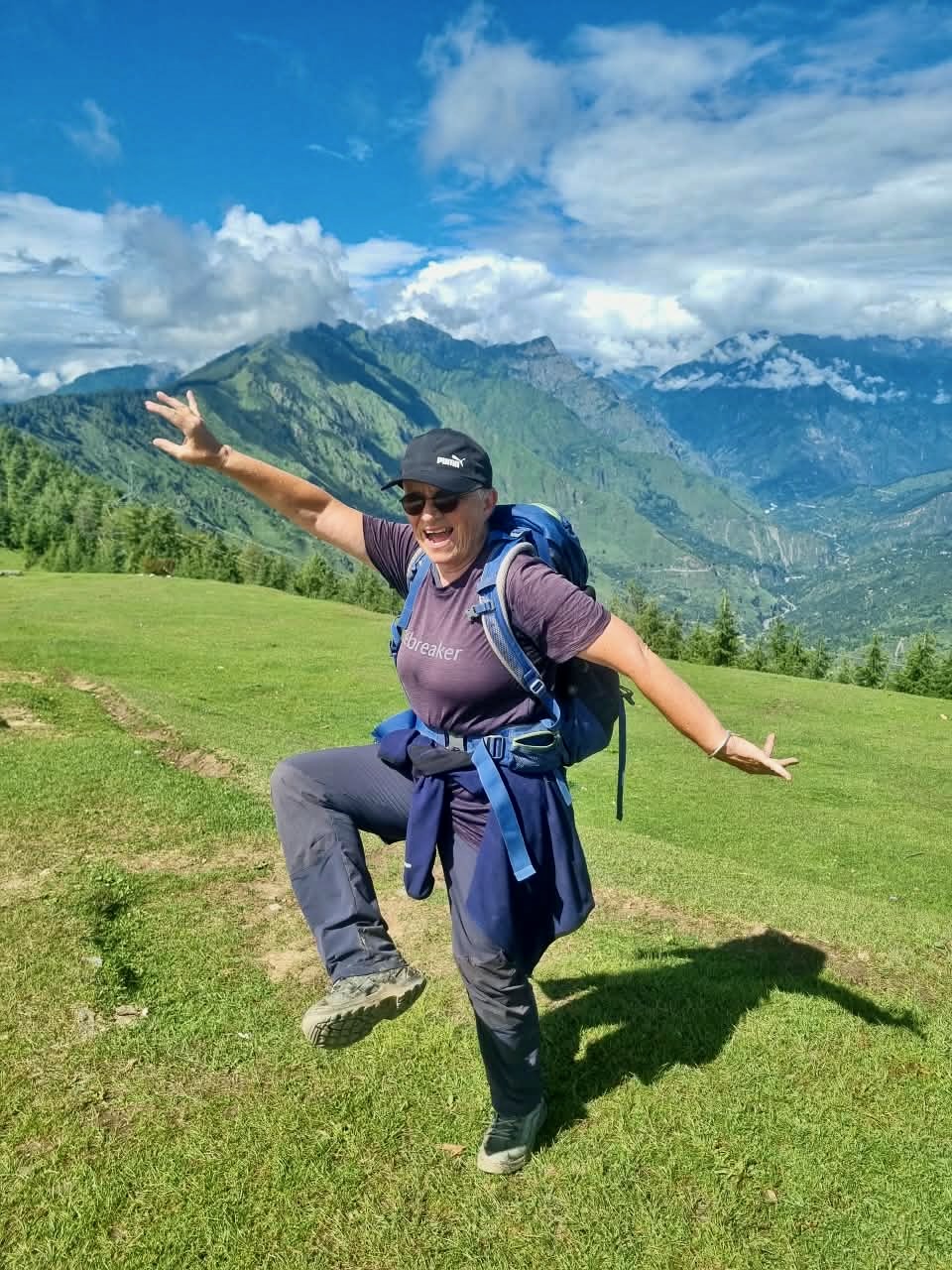
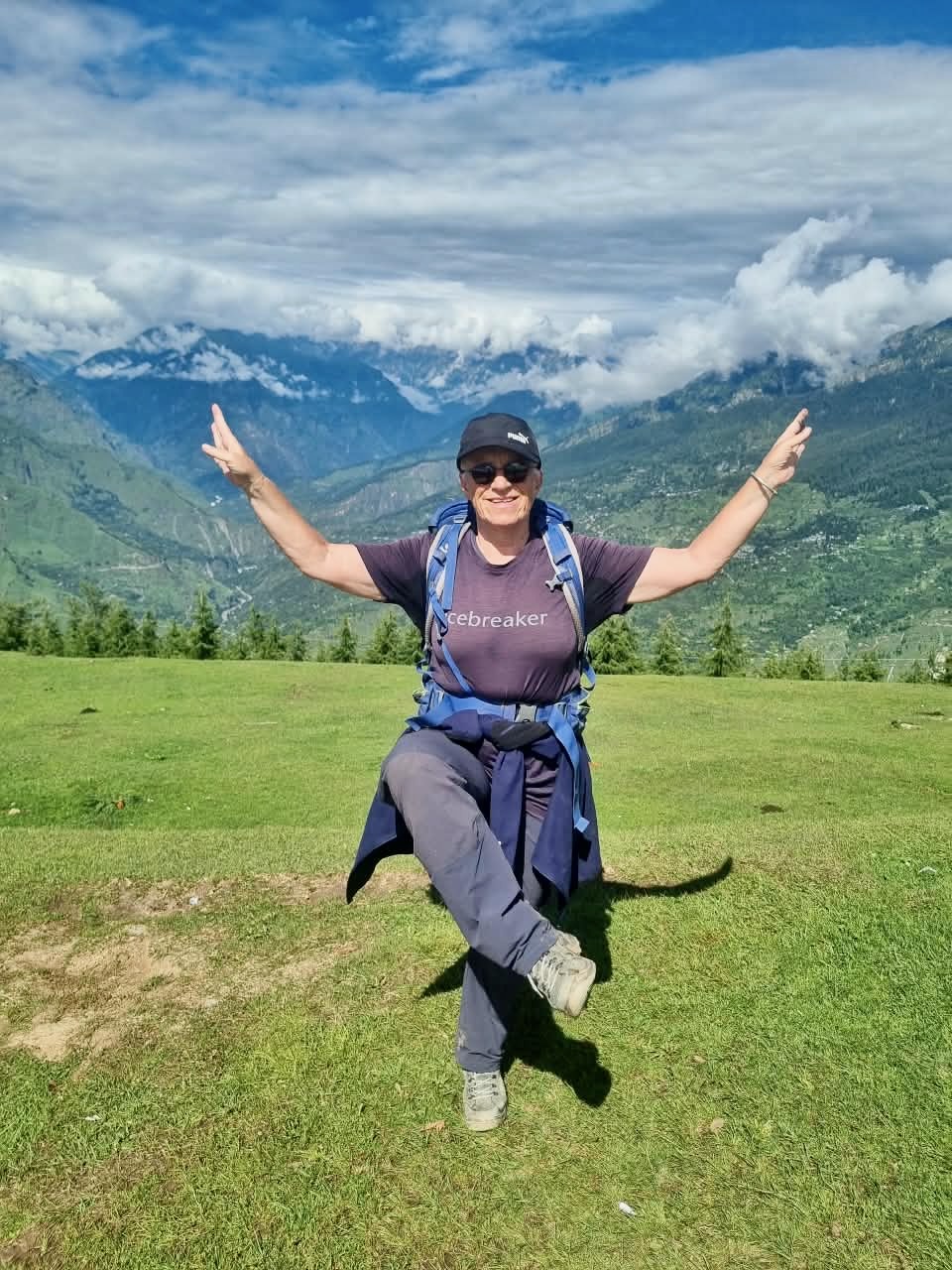
Where on earth did we actually hike to? Our destination was Bijli Mahadev, a temple I had already visited back in 2012. I wanted to see what it looked like nowadays. And there are two stories to go with it. First off, why the Kullu Valley is called the Kullu Valley and how it came into being:
Once upon a time, a demon named Kulant wreaked havoc across this area. He came up with the wicked idea to transform himself into a giant serpent, stretch across the valley, and dam up the Beas River. His grand plan: to drown the entire valley along with every last human and animal in it. Demons really are nasty, vile creatures! But luckily, Shiva was around! He looked down at the scene and thought: Not on my watch! He approached the giant snake and whispered into its ear: “Hey Kulant, your tail is on fire!” When the confused monster turned around to check, Shiva seized the moment and struck off its head. Ha! Shiva the cool guy! The serpent’s massive body turned to stone—and from that very form, the mountains surrounding the valley were born. Over the centuries, “Kulant” evolved into the name Kullu.
And here is the legend behind Bijli Mahadev:
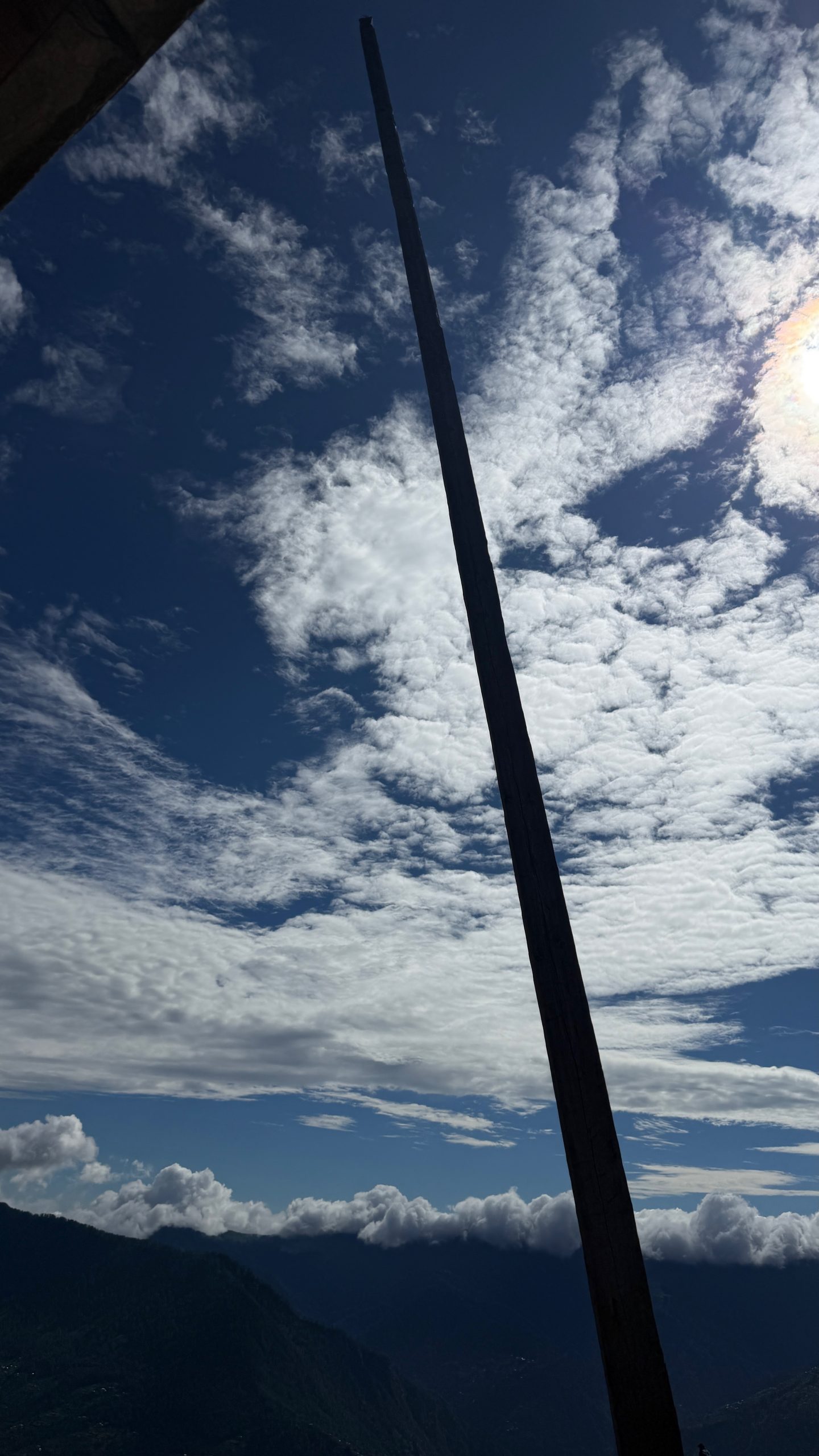
After the battle, Shiva asked the gods for something quite unusual: every few years, Indra (the god of thunder) was to strike a massive bolt of lightning directly into his mountaintop temple. Shiva wanted to absorb the destructive energy of the lightning himself so the villages and people down in the valley would be spared. That is precisely what keeps happening there: lightning strikes the temple’s wooden flagpole with full force, shattering the stone Shiva Lingam inside into a thousand pieces. Afterward, the priest gathers up all the fragments and pastes them back together using a mixture of raw butter (makhan) and sattu (roasted barley flour). Miraculously, after just a few days, the Lingam hardens completely and looks exactly as it did before—until the next strike.
We wanted to go for a short hike. Raju had the first surprise ready right away: he showed me a photo of a German client. I glanced at it briefly. Raju mentioned the guy told him he was married to a Japanese woman working for the UN. That caught my attention, so I took a closer look (I wasn’t wearing my glasses). It actually was my cousin Soenke! The one I met right at the beginning of this trip in Greater Noida. Back then, I had organized a trip to Manali and the Tirthan Valley for him. The fact that we now actually have the exact same guide—it’s practically a miracle considering how many guides there are around here. And we both connected with Raju through completely different paths, too. Small world, India!
With the beautiful weather, I took way too many pictures—here is a selection:
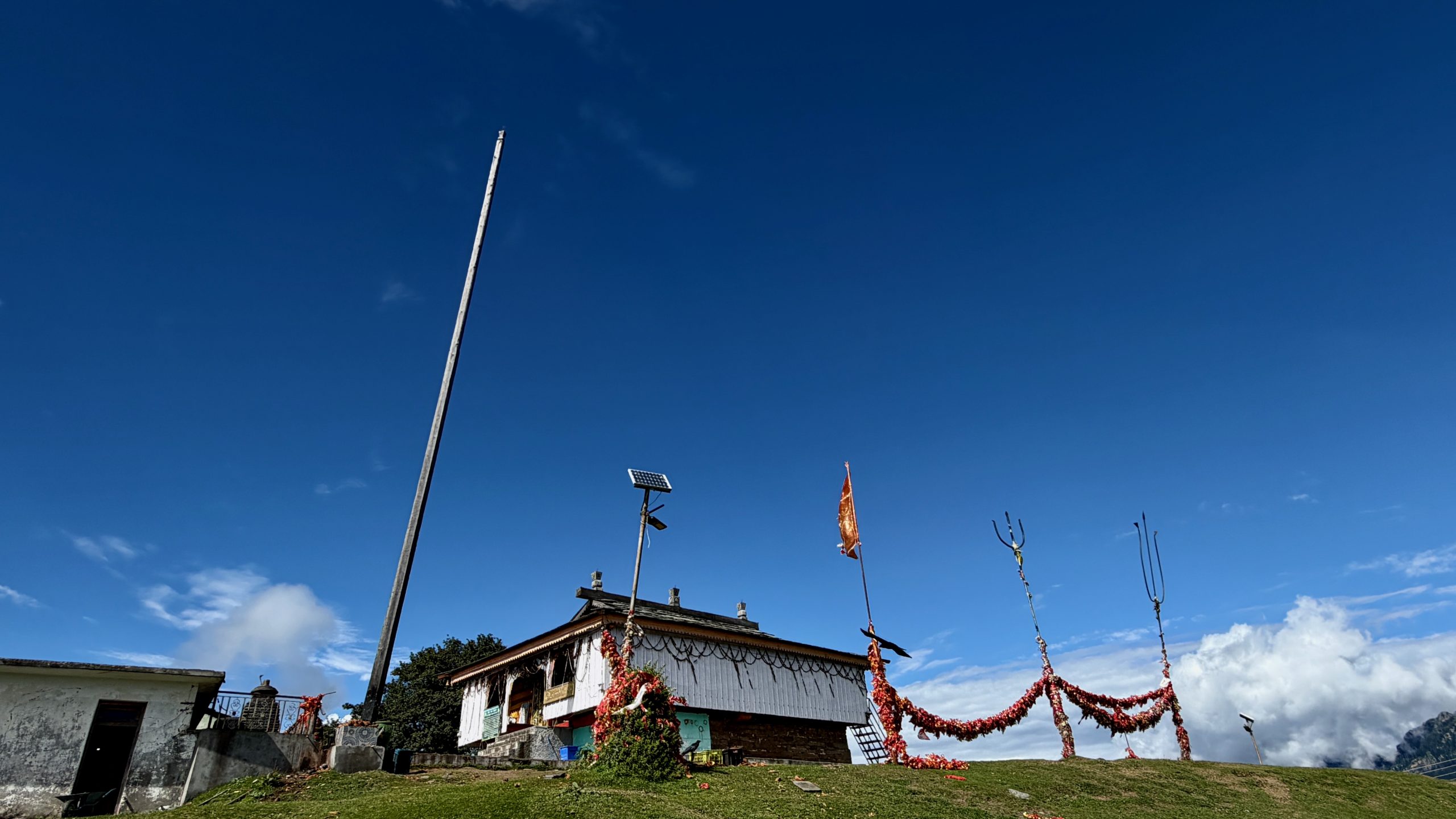

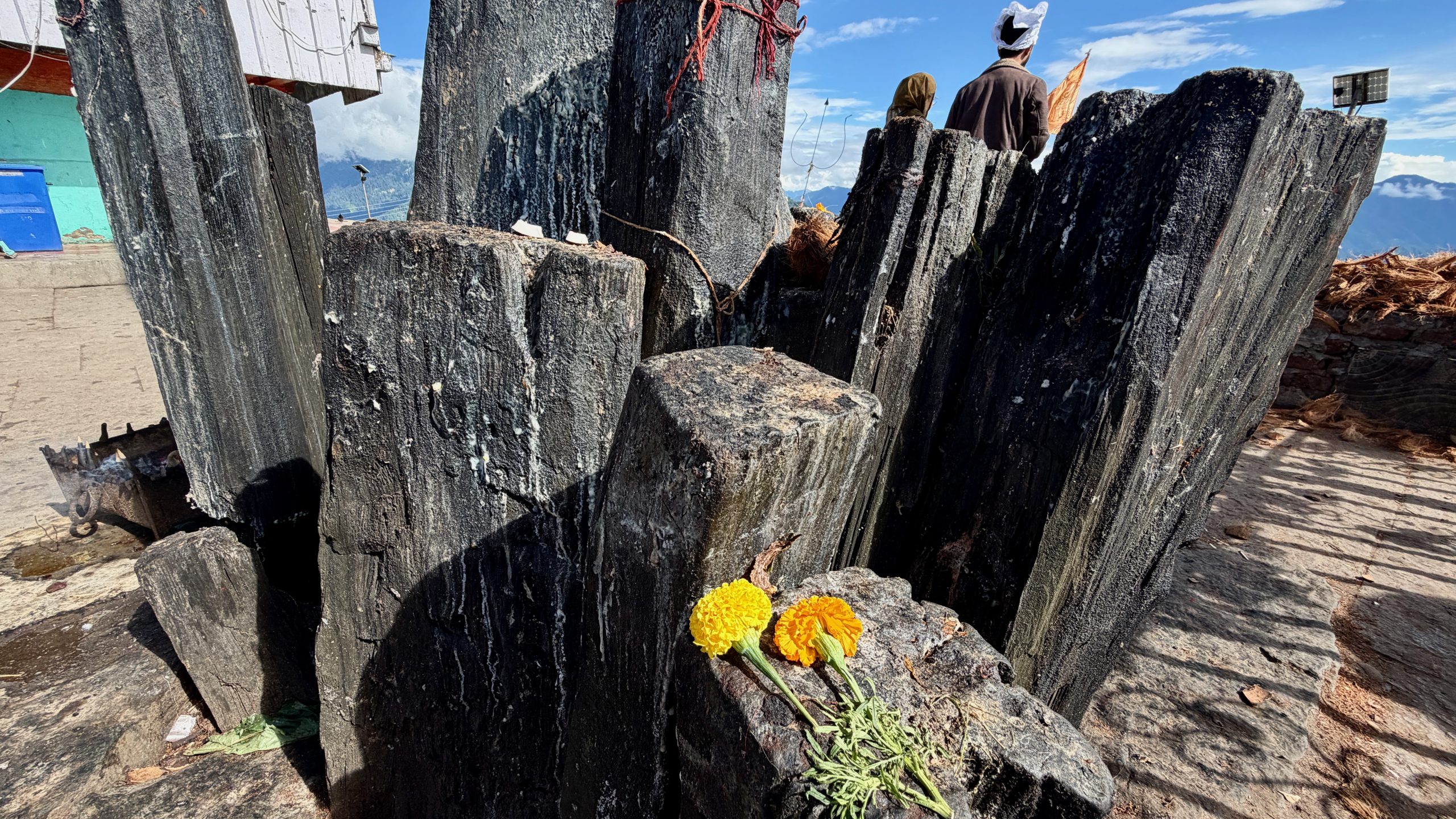
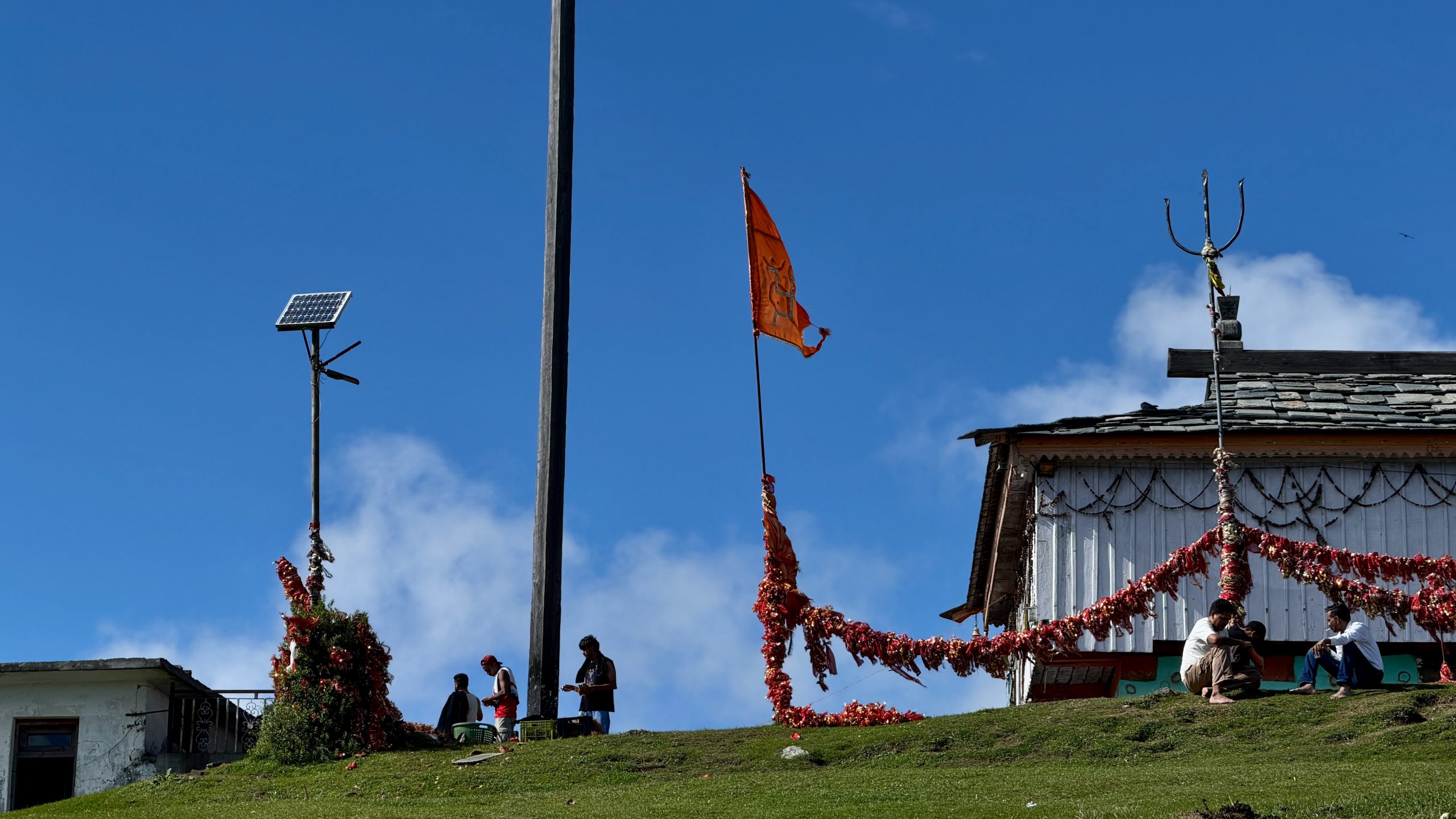
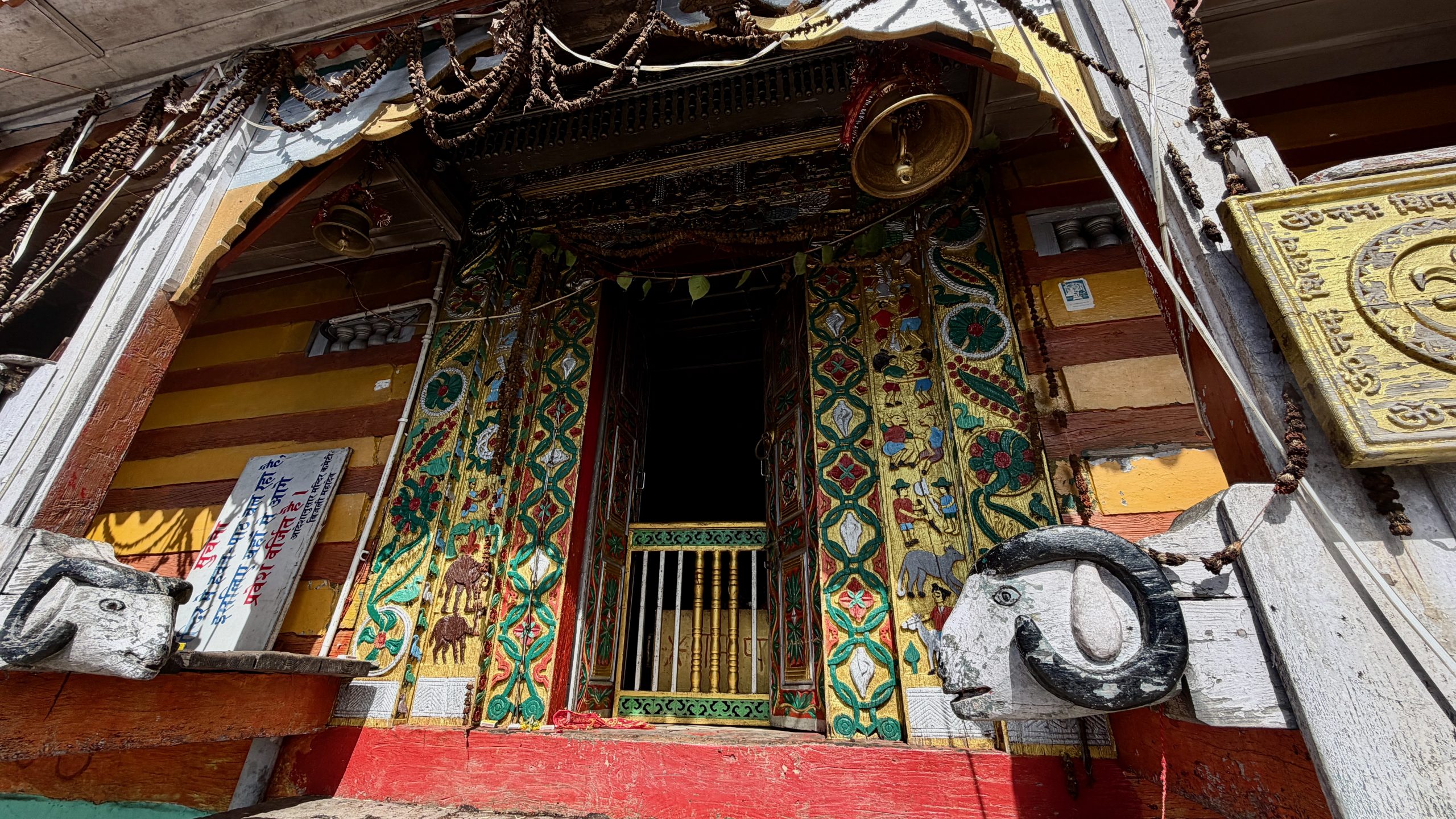
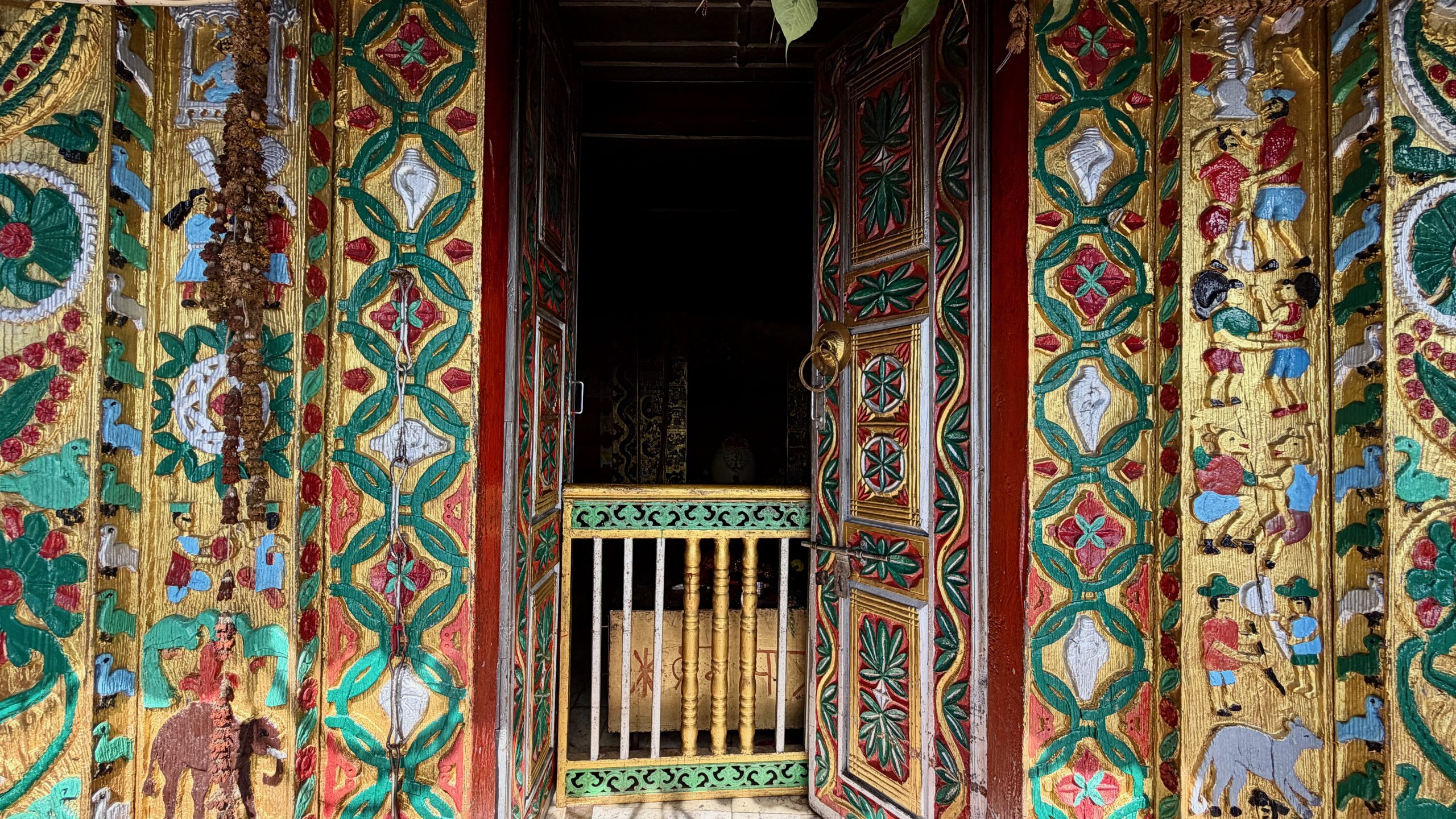
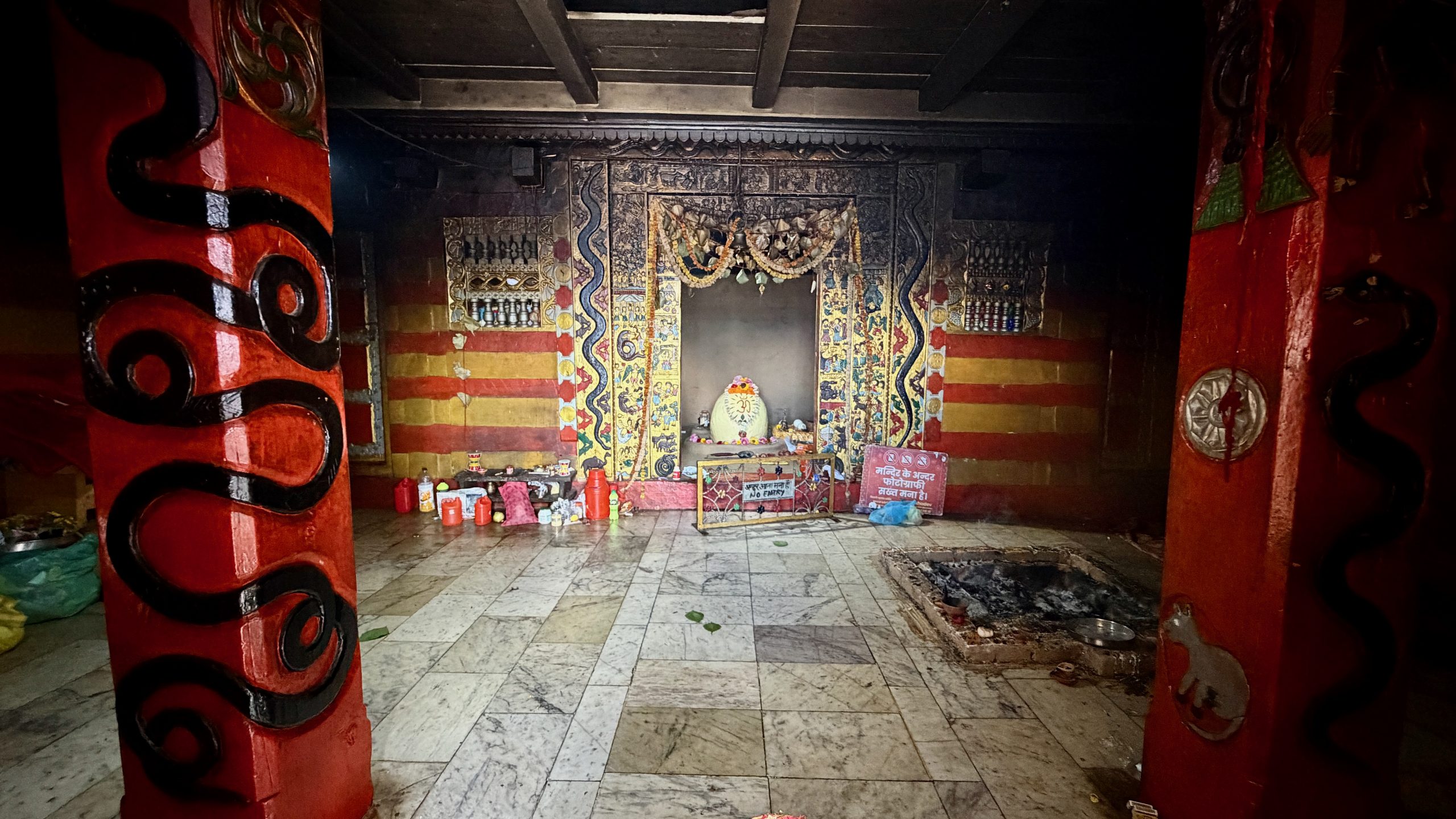
So many fascinating carved details! Essentially, they all serve to protect the temple.
Up here, there were lovely meadows and fantastic views down towards the confluence of the Parvati and Beas rivers, as well as Bhuntar Airport.
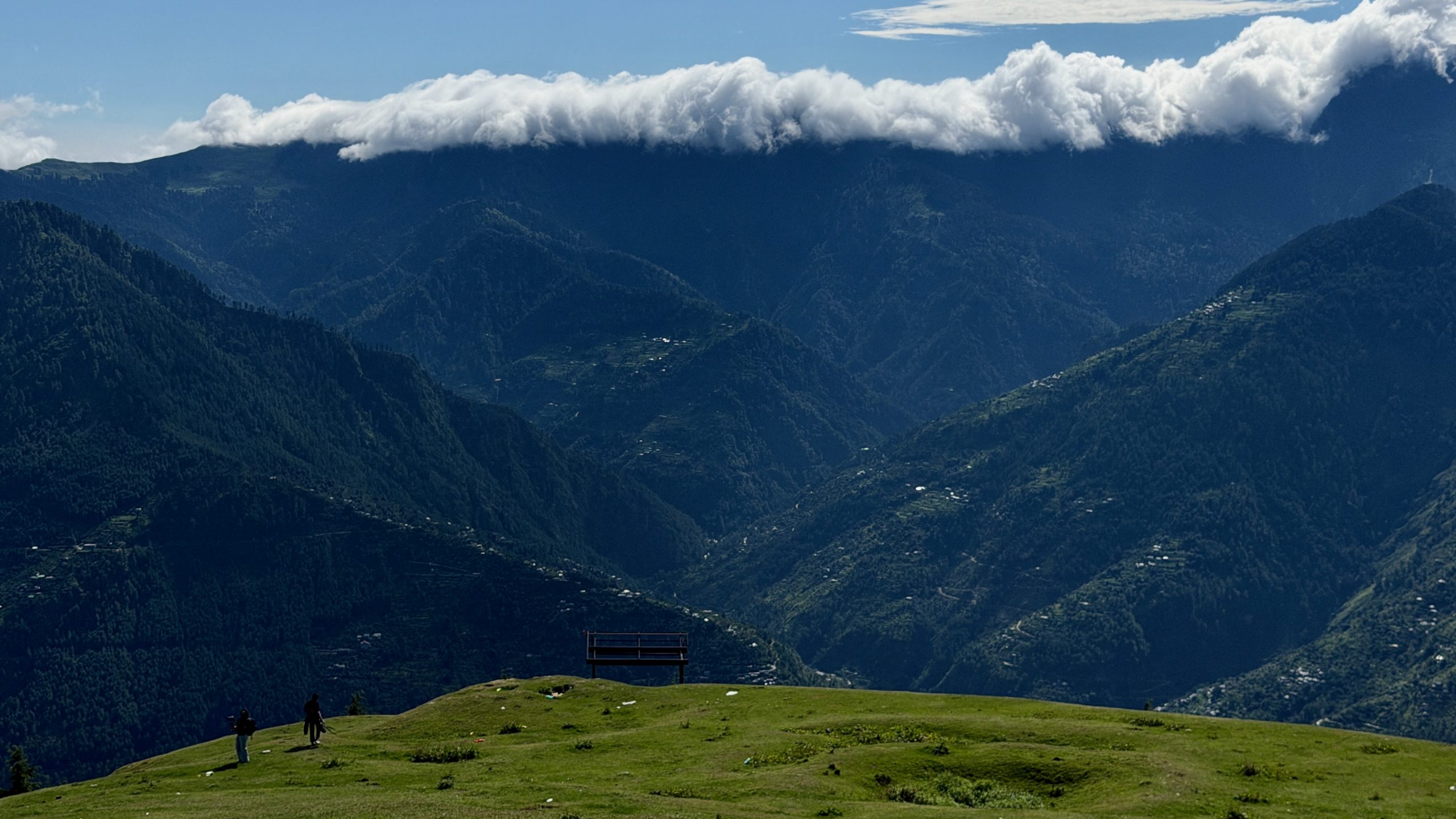
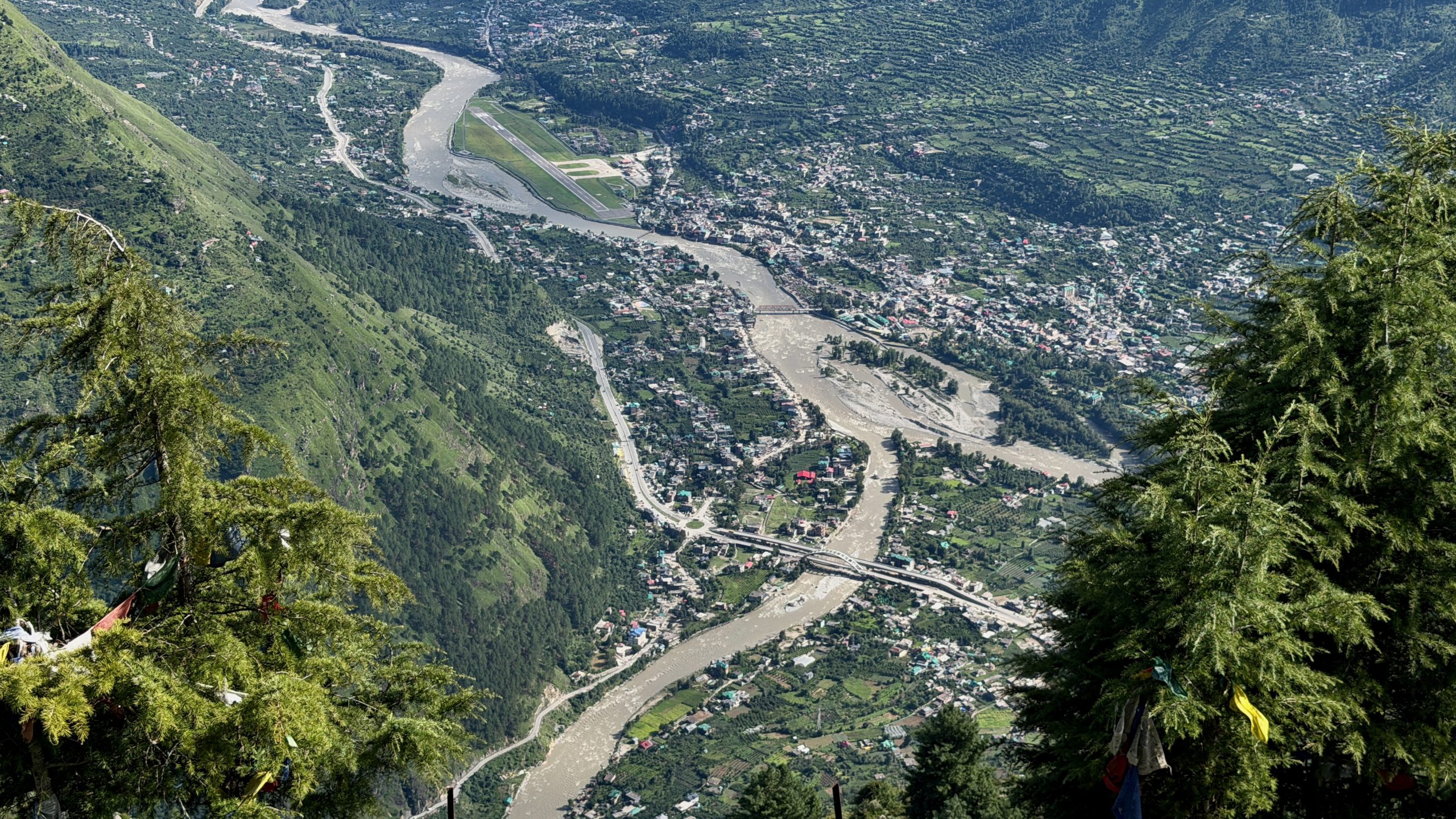

On the way down, the monkeys weren’t at the trash bins anymore; instead, they had hijacked a shuttered dhaba and were trying to break into the locked-away supplies.

And then there was a bus skillfully winding its way down the narrow road. Traffic worked in such a choreographed way that the driver always seemed to know well in advance where to pull over and wait to let an uphill bus pass. The road, after all, was pretty much single-lane.

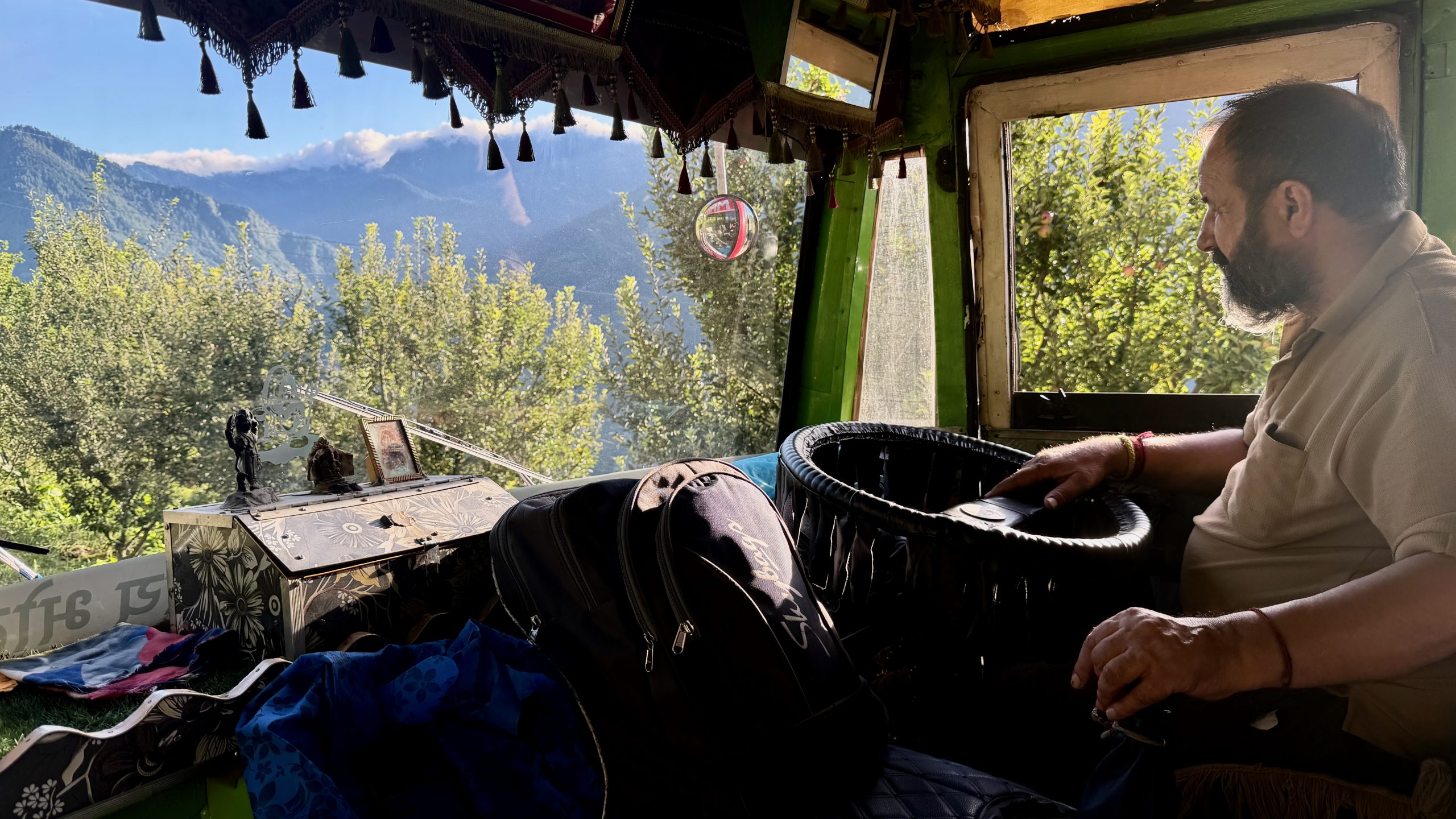
Once back down, we bounced and rattled along in the next bus to Manali, and from there I took an auto-rickshaw to Old Manali. Despite the sheer stroke of luck at Bijli Mahadev, I was somehow in a rather sour mood over the run-down buses and terrible roads—where it’s never entirely clear who’s responsible and people would clearly rather line their own pockets anyway, leaving you to get violently thrown around by potholes. It’s utterly exhausting.
A rest day was on my plan for the next day! I have a feeling I could really use it. Far too much grumbling on my part!