


Manali – The Fragrance of Apples and Cedars
20. – 22. August 2026
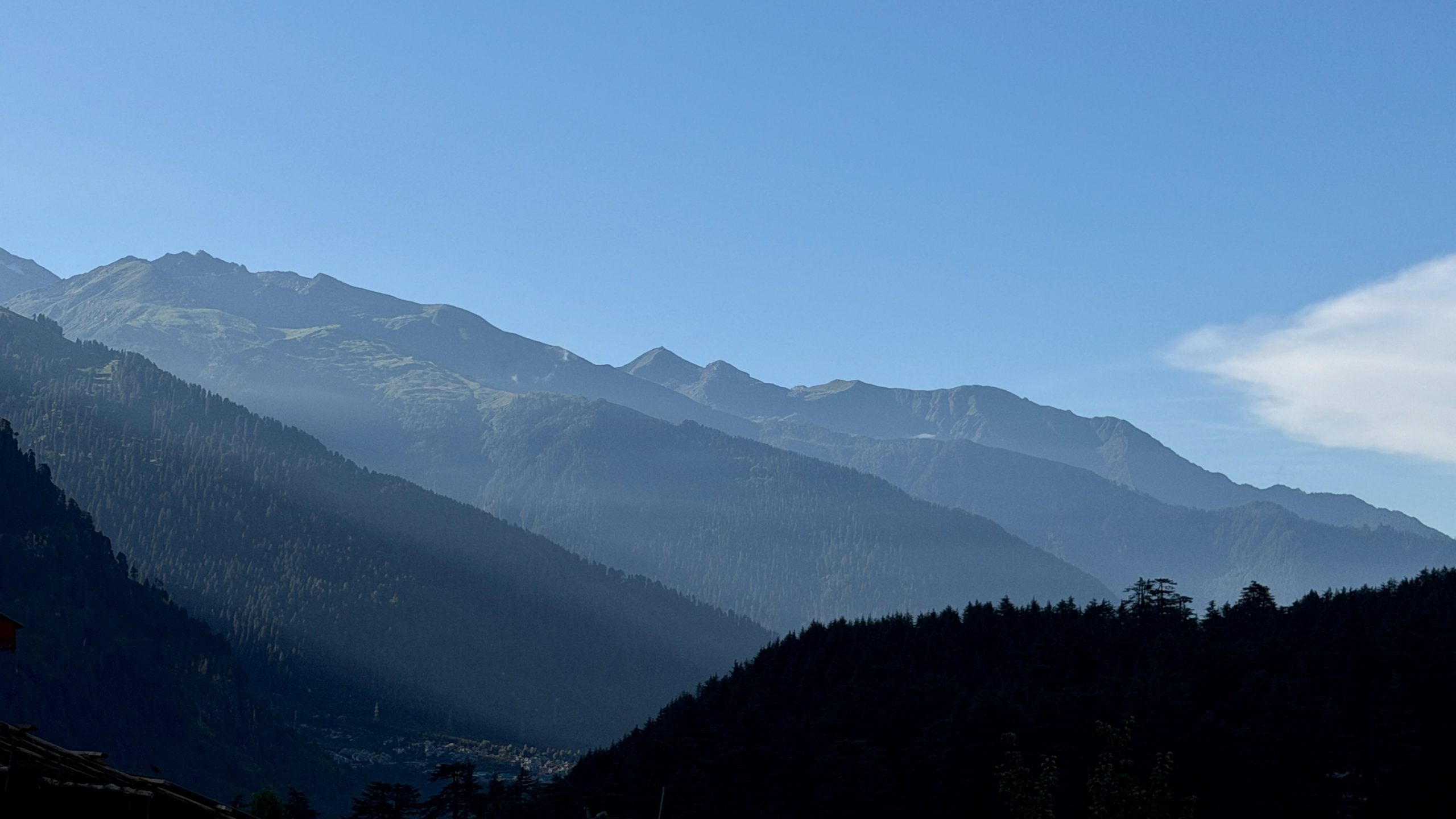
Over the past few days, the monsoon had actually receded a bit. Everything is unquestionably much nicer when it’s dry. Markus arrived from Ladakh on his way to Delhi, from where he—just like me—is leaving for Nepal due to the visa regulations allowing a maximum of 90 consecutive days in India. After that, he plans to re-enter.
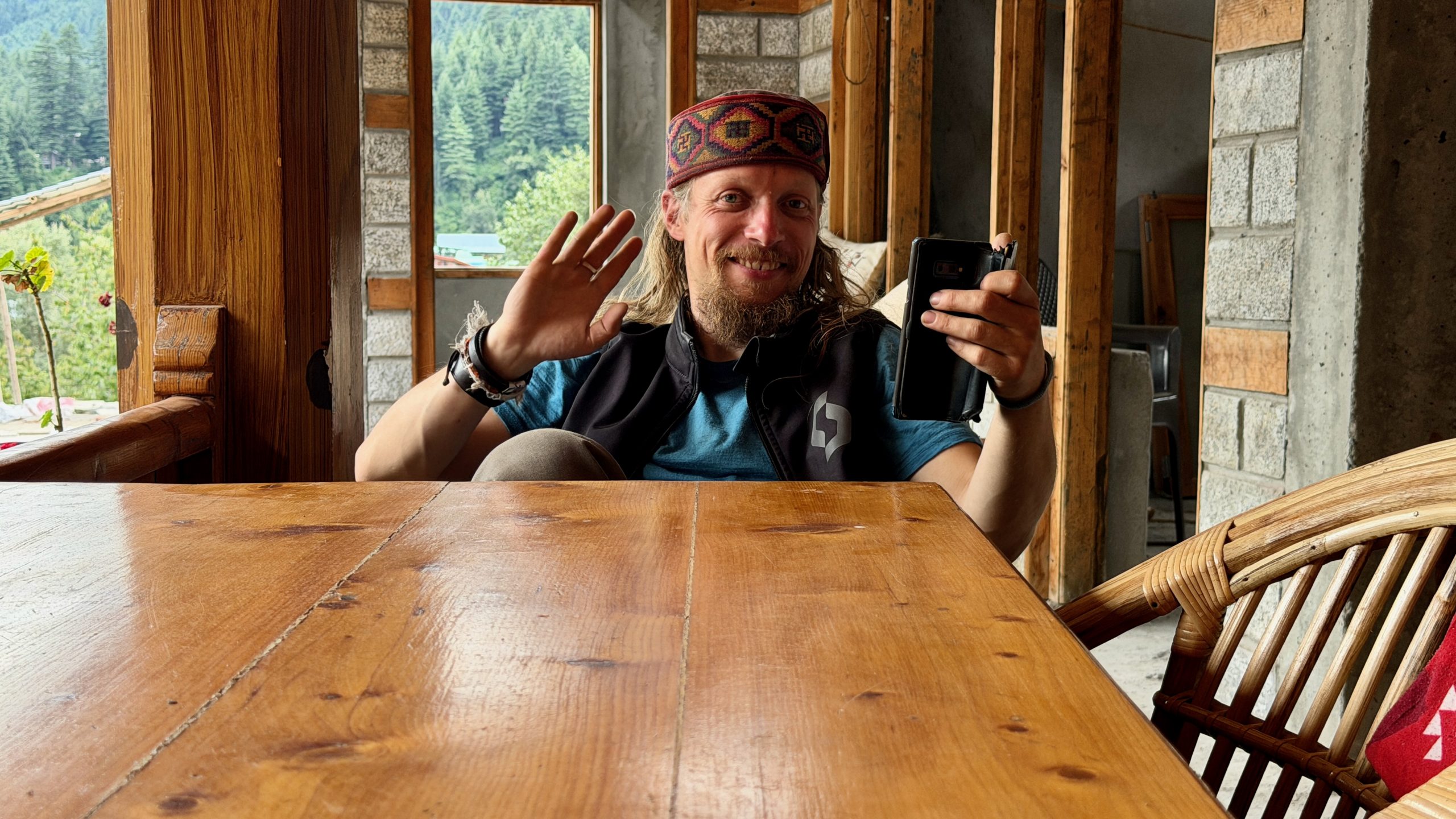
We first met here back in 2014, and he had connected with people who ran a musical instrument shop and made drums. I got to know them a little as well, but only in passing. Markus, on the other hand, got to know them really well and went on to spend a great deal of time with them there, in Chandigarh, and in Goa—a long and wonderful story that I truly hope he shares with the world one day.
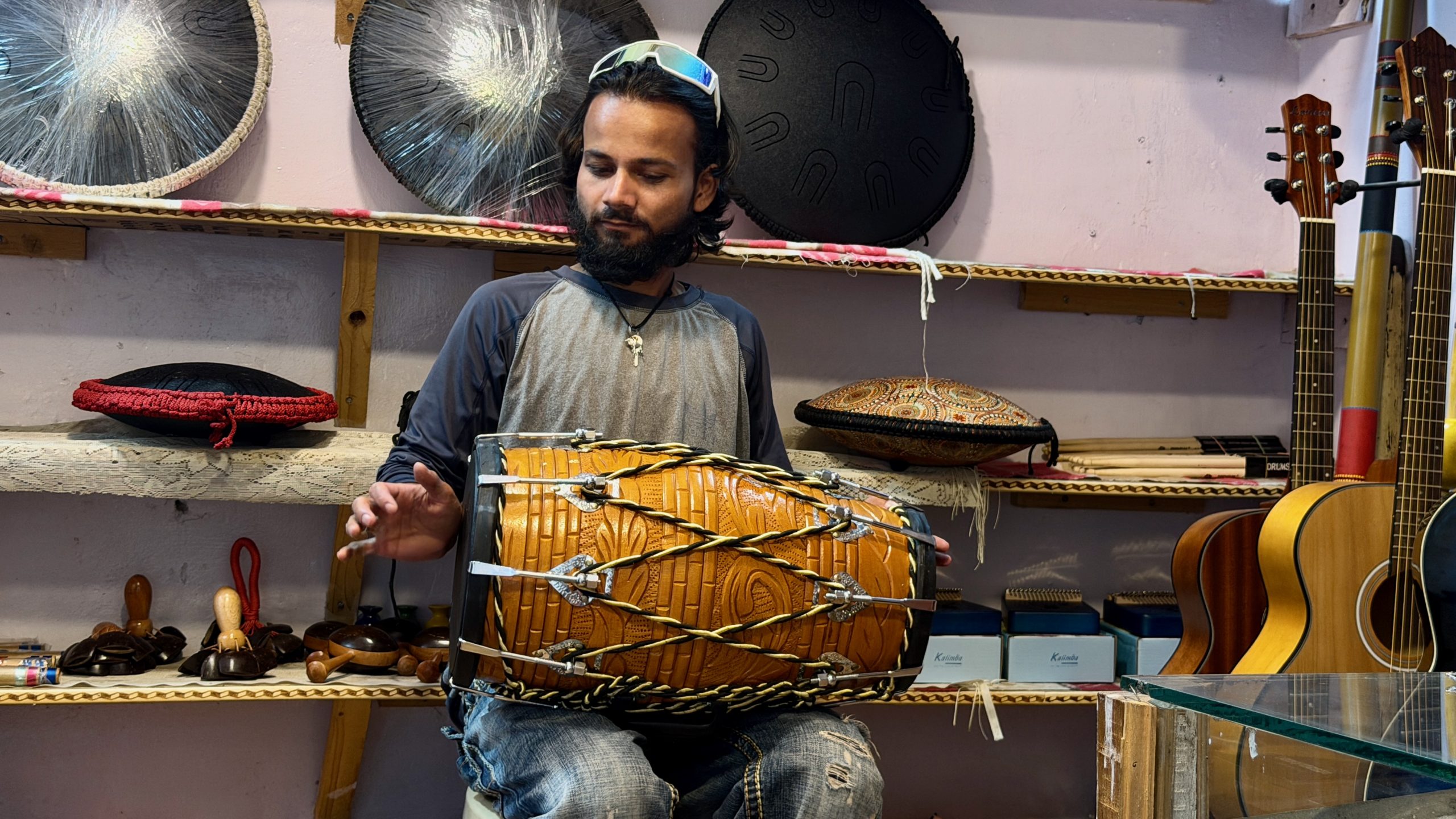
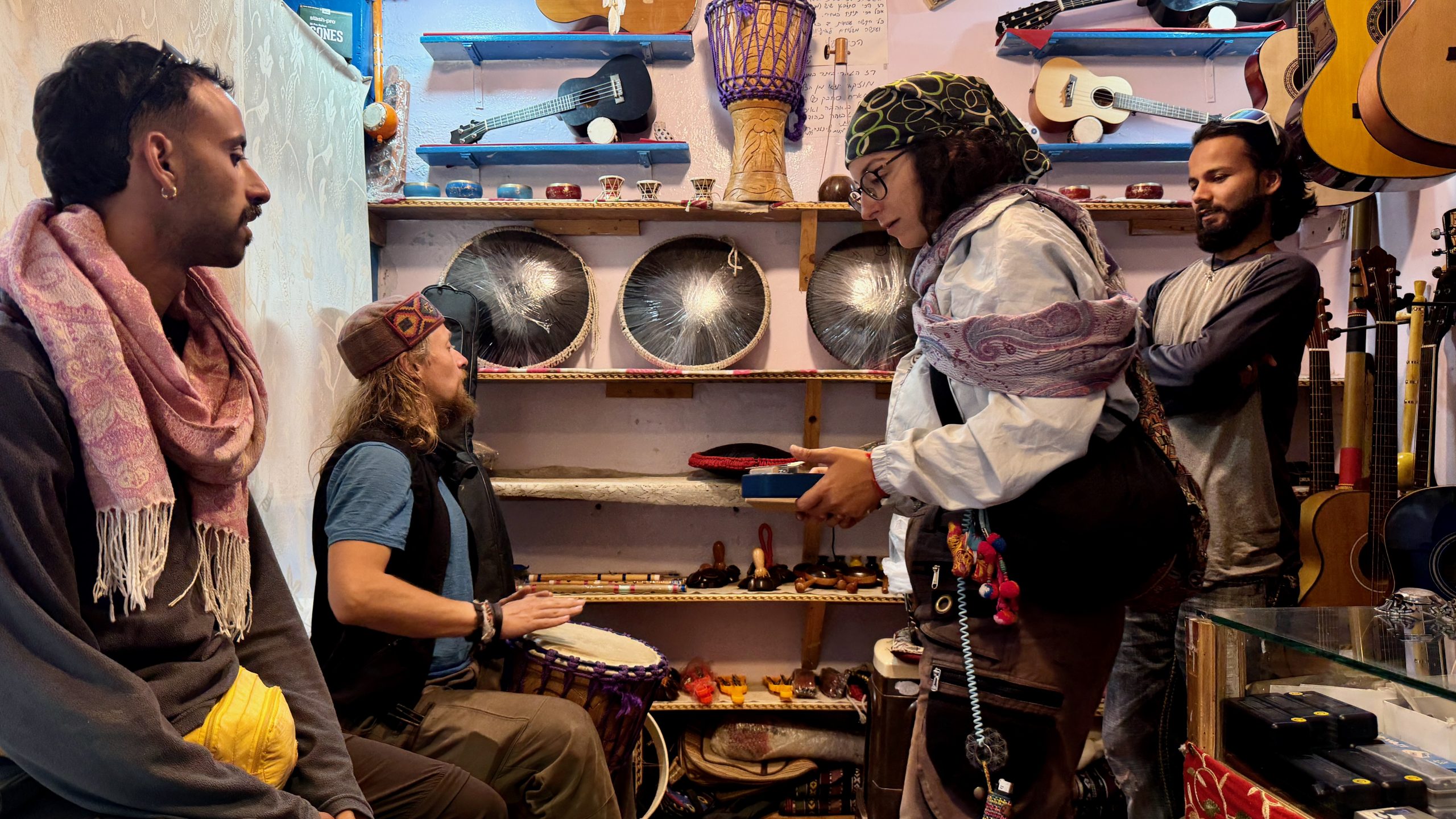
Here, we visited a music shop that is now run by one of the sons from back then. He was friendly and charming, and people did drop in occasionally, but business isn’t exactly thriving. Then again, I’m amazed that it works at all and that people actually buy musical instruments—big and small—while traveling.
The next day, I wanted to neatly finish editing my YouTube video clip, only to realize that for one topic, I had way too much spoken text and nowhere near enough footage. That made me grumbly. I walked down to main Manali and shot the rest of the b-roll I needed. It actually worked out quite well because I also needed a shot of myself at the barber. The catch was, my haircut was still holding up great and I really didn’t want to trim anything off just yet. So, what to do? I simply asked for a head massage instead, and that did the trick nicely.
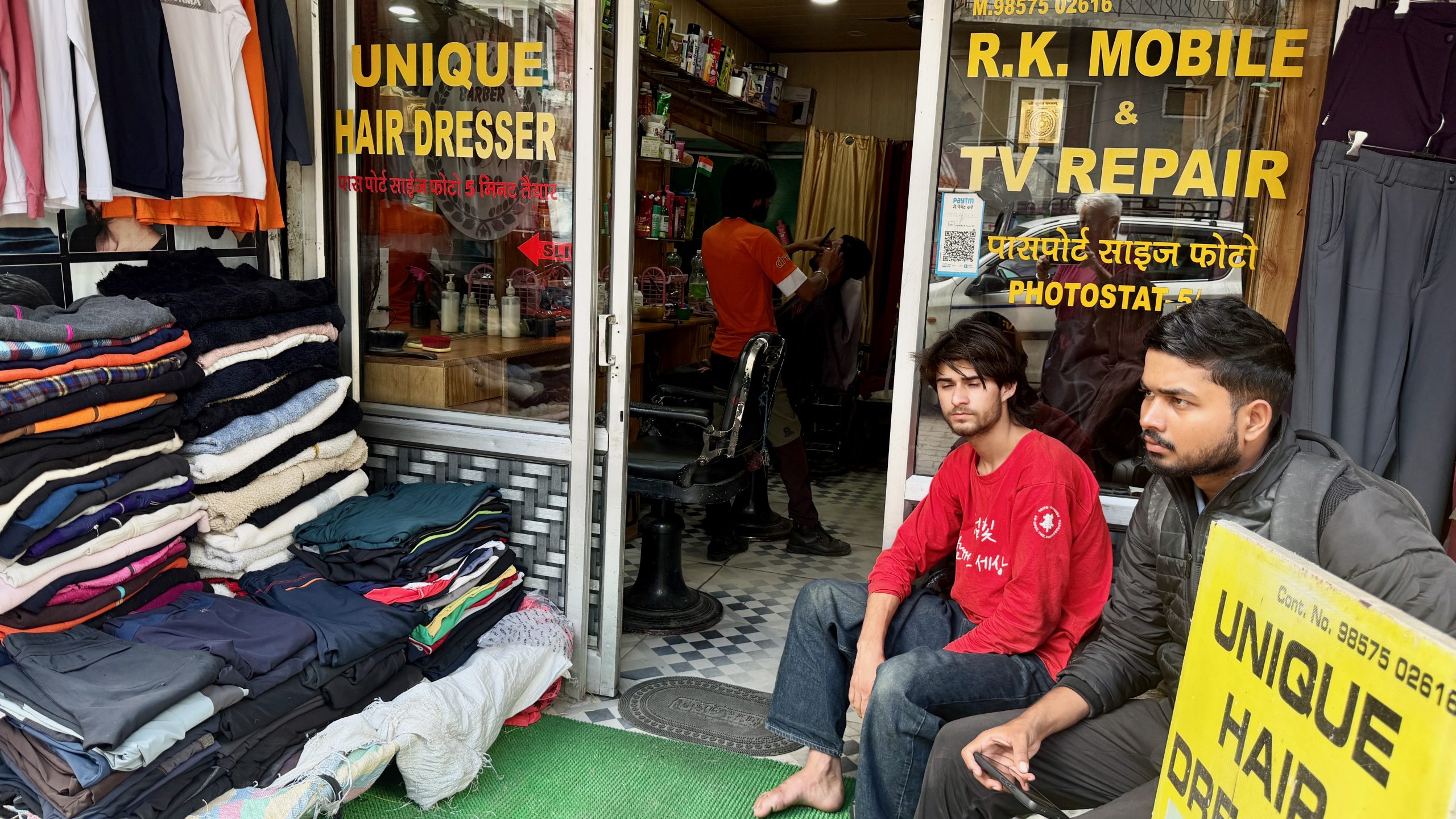
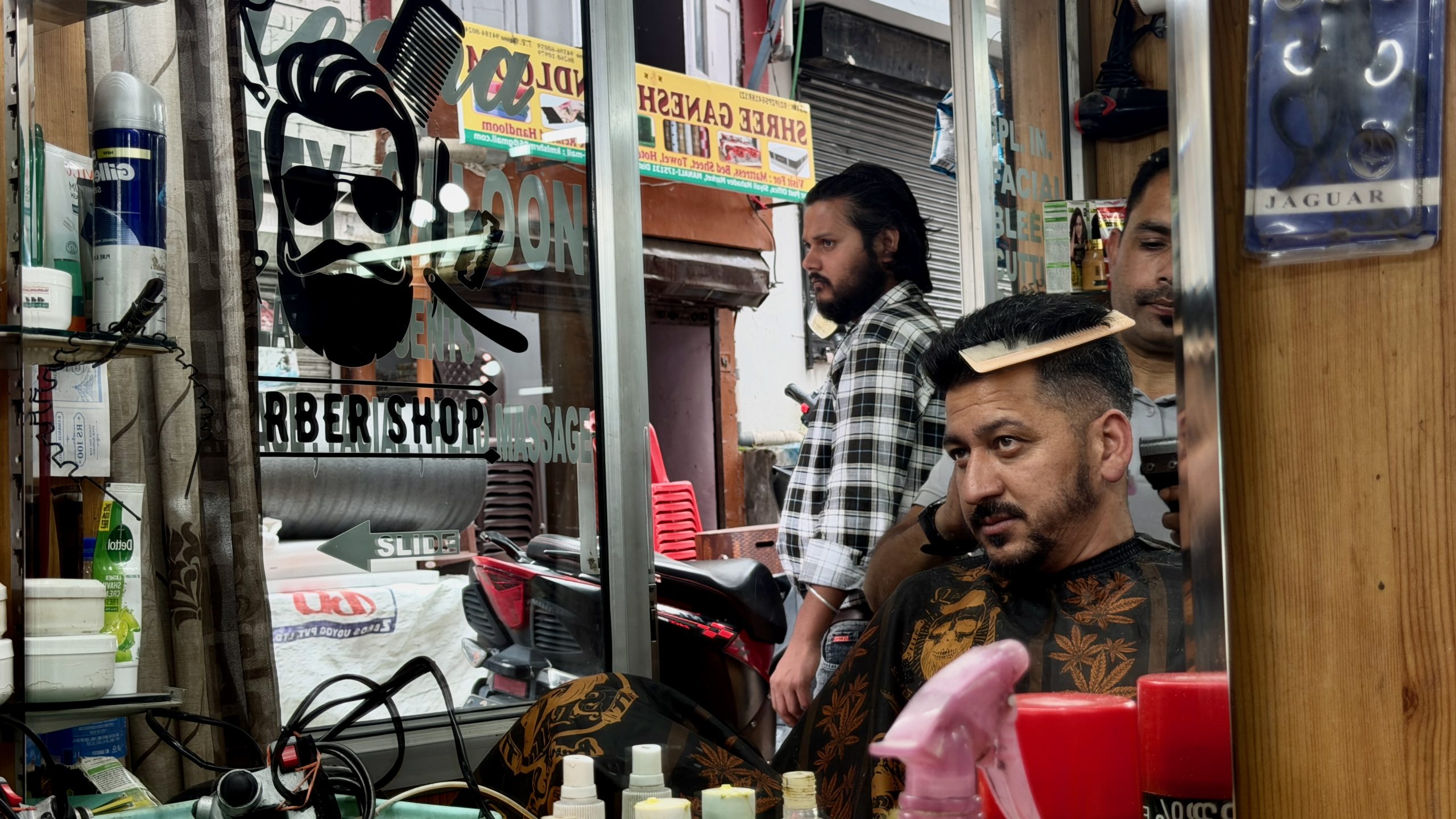
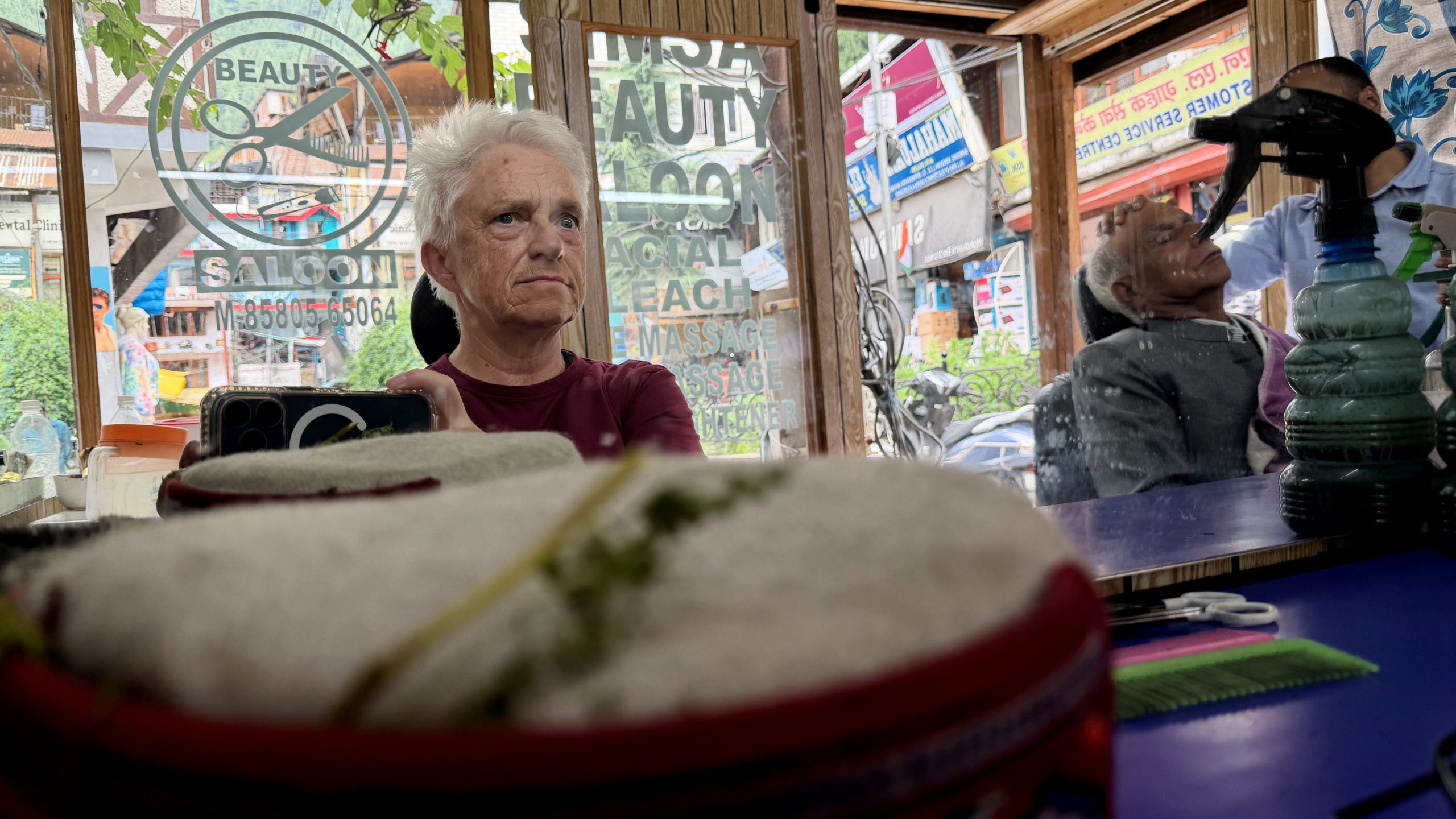
The next day I could finally finish the clip and upload it on Youtube.
I also stopped by the Airtel office. I still had my SIM card from Ladakh, which the woman in Delhi had managed to get working again, and it needed to be topped up. However, word was that this card would also be deactivated after 90 days, meaning I’d have to buy a new one. I figured it was best to ask directly at the shop. Two friendly people were sitting there; they checked the system and sighed. My postpaid SIM was set to expire at midnight going into August 24. It couldn’t be extended anymore—I’d have to get a new one. But a postpaid SIM could only be purchased directly in Ladakh; their hands were tied here, and they could only sell me a SIM that wouldn’t work in Ladakh. Once again, I got terribly worked up over how exhausting India can be, constantly throwing baffling bureaucratic hurdles in the way of a pleasant stay.
In the evening, Markus and I were invited to dinner with Mr. Sharma, his wife, and his son. I didn’t take any photos of our hosts at all, just one of the delicious food, and there are two pictures of me.
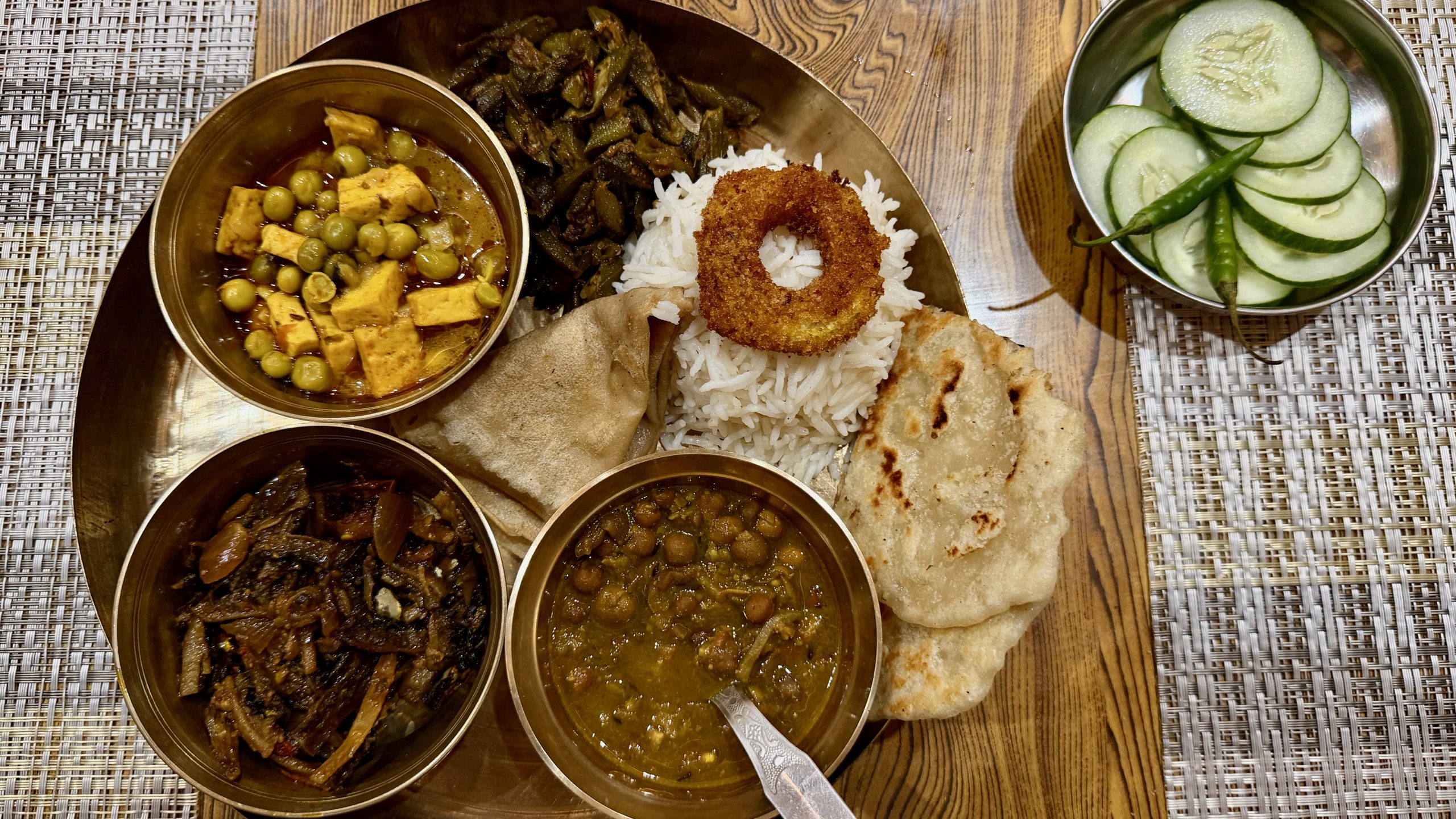
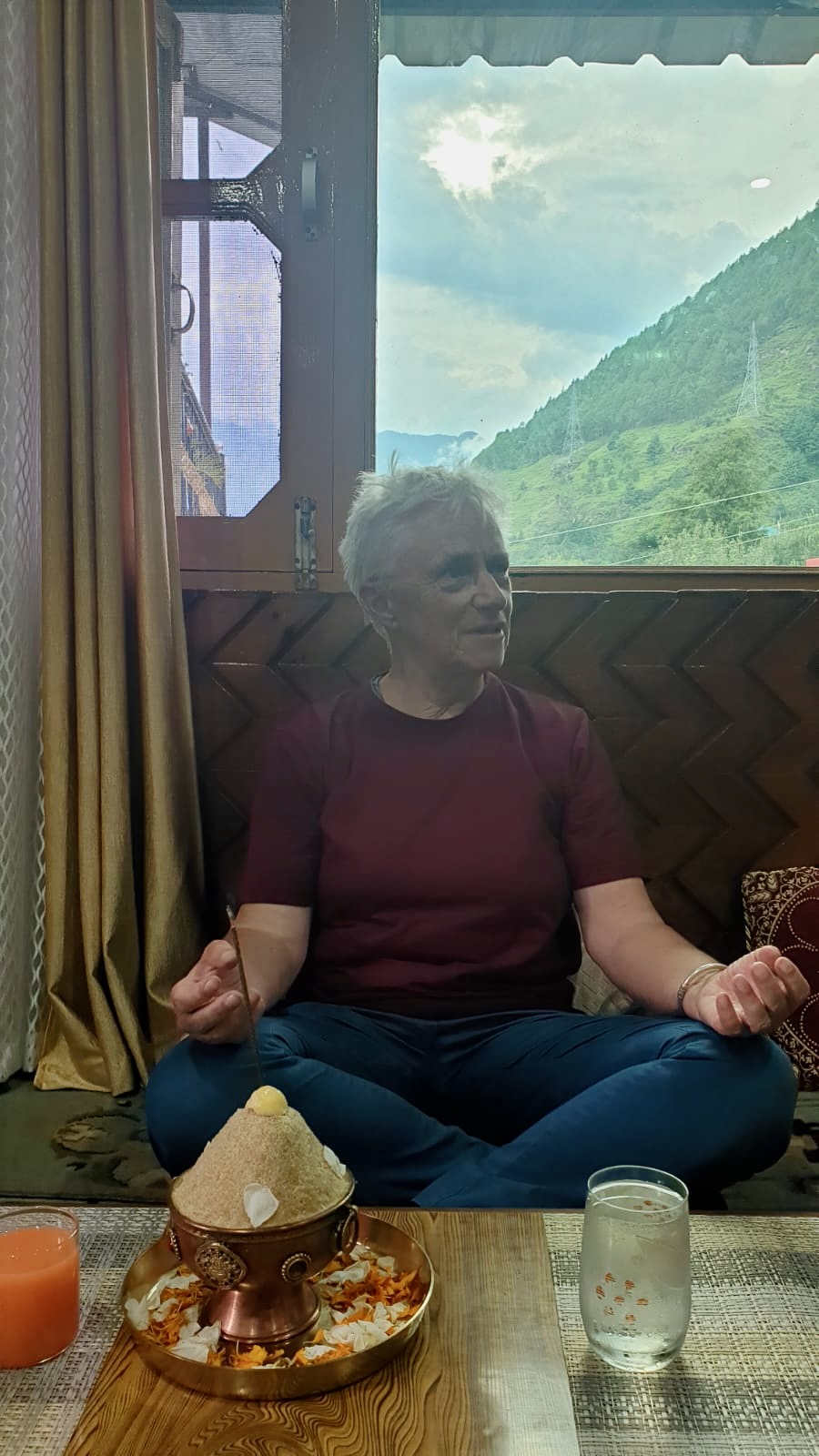
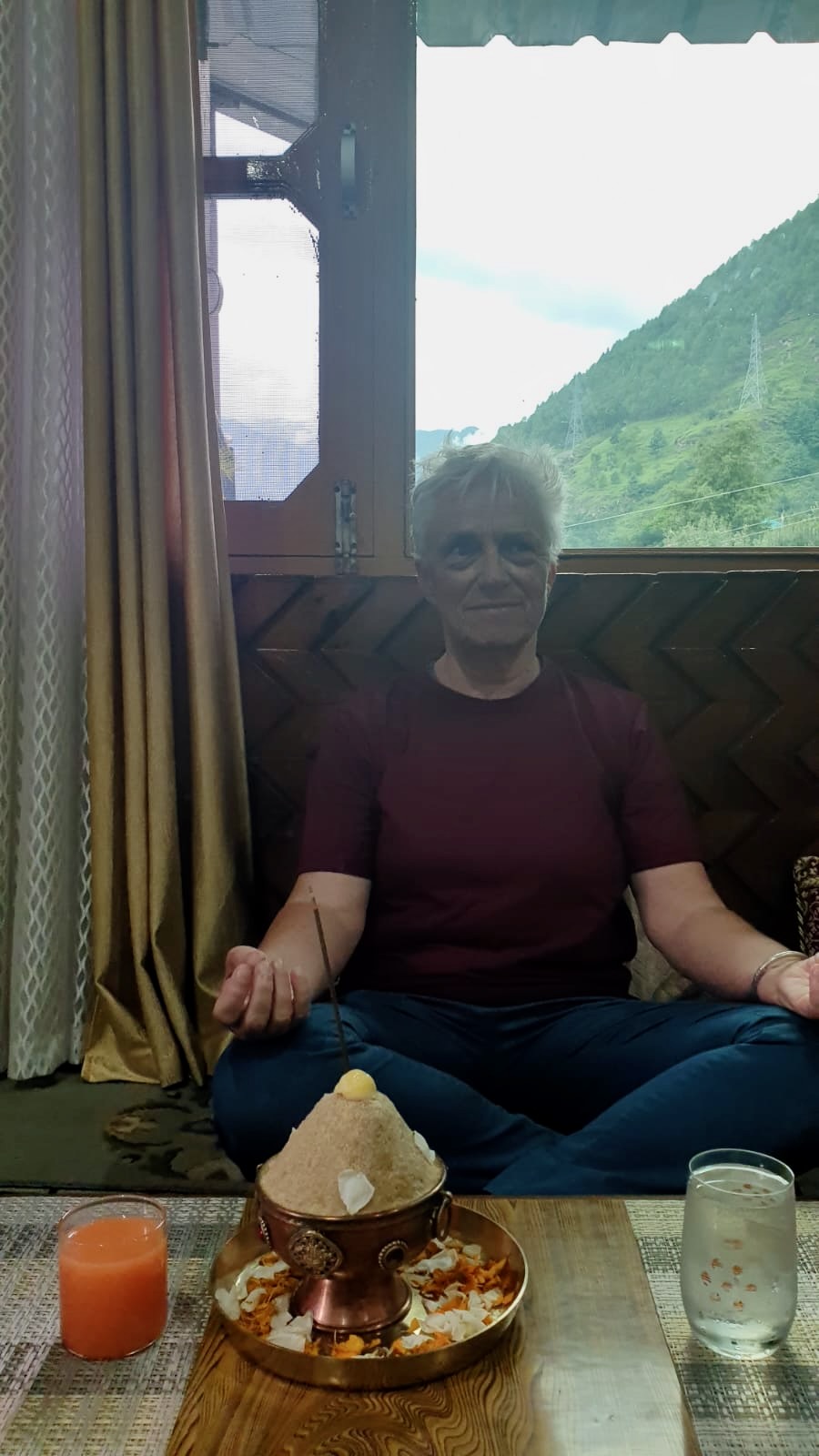
Mr. Sharma used to run the school in Zanskar where I spent so much time, but returned home years ago and now teaches just up the hill in a small village school around the corner. There are definitely positive developments: teachers are now required to complete 50 hours of professional development each year, gradually shifting the style of instruction from traditional rote memorization toward genuine comprehension. He is thoroughly content with his current life as a village schoolteacher.
I also learned a bit more about the drug trade in the Kullu Valley. It has always been a major stronghold for cannabis. Hand-rubbed cannabis resin, known as charas, is produced especially in the more remote valleys where, for instance, fewer apples grow, bringing in a solid income on the black market. In the past, it took place much more openly in the main valley, but since it is illegal, the police try to clamp down. Even so, the region is full of rugged, hard-to-reach side valleys, and business continues to boom. A fraction goes directly to tourists whose travels center around consumption, though that accounts for only about 15–25% of total production; the rest makes its way to major Indian cities and international markets. For the locals, selling directly to travelers is ideal, as they pocket the entire profit upfront.
A new issue emerging in the Kullu Valley is the influx of hard drugs from the outside, primarily chitta—a heavily adulterated, cheap synthetic heroin powder that is extremely addictive. While cannabis was traditionally consumed by the older generation in a relatively controlled manner, the youth are pivoting toward it as a “recreational drug,” sliding far more easily into chronic use and addiction. In Ladakh, public warnings about drugs are very visible and overt; here in the Kullu Valley, as an outsider, you don’t notice it as readily. The Sharmas, however, explained that it has become a severe problem.
One funny thing: around 8:30 PM, when I asked about catching a bus back (the Sharmas live about 20 km outside of Manali), they looked at us with wide eyes. Naturally, we were supposed to stay the night! For me, that sort of thing is never a given; I’m not quite that carefree, and I really don’t like spontaneously sleeping over somewhere without my toothbrush, medication, pajamas, and the like. So, a neighbor with a taxi was hired to drive us back instead.
The next day, I booked a seat in a shared taxi to Leh for August 23. That way, I could buy a new SIM right away on the 24th. Except when I’m out on treks and the like, I find it far too tedious nowadays to be without a functioning SIM—while traveling, I like texting people, looking things up, and staying connected.
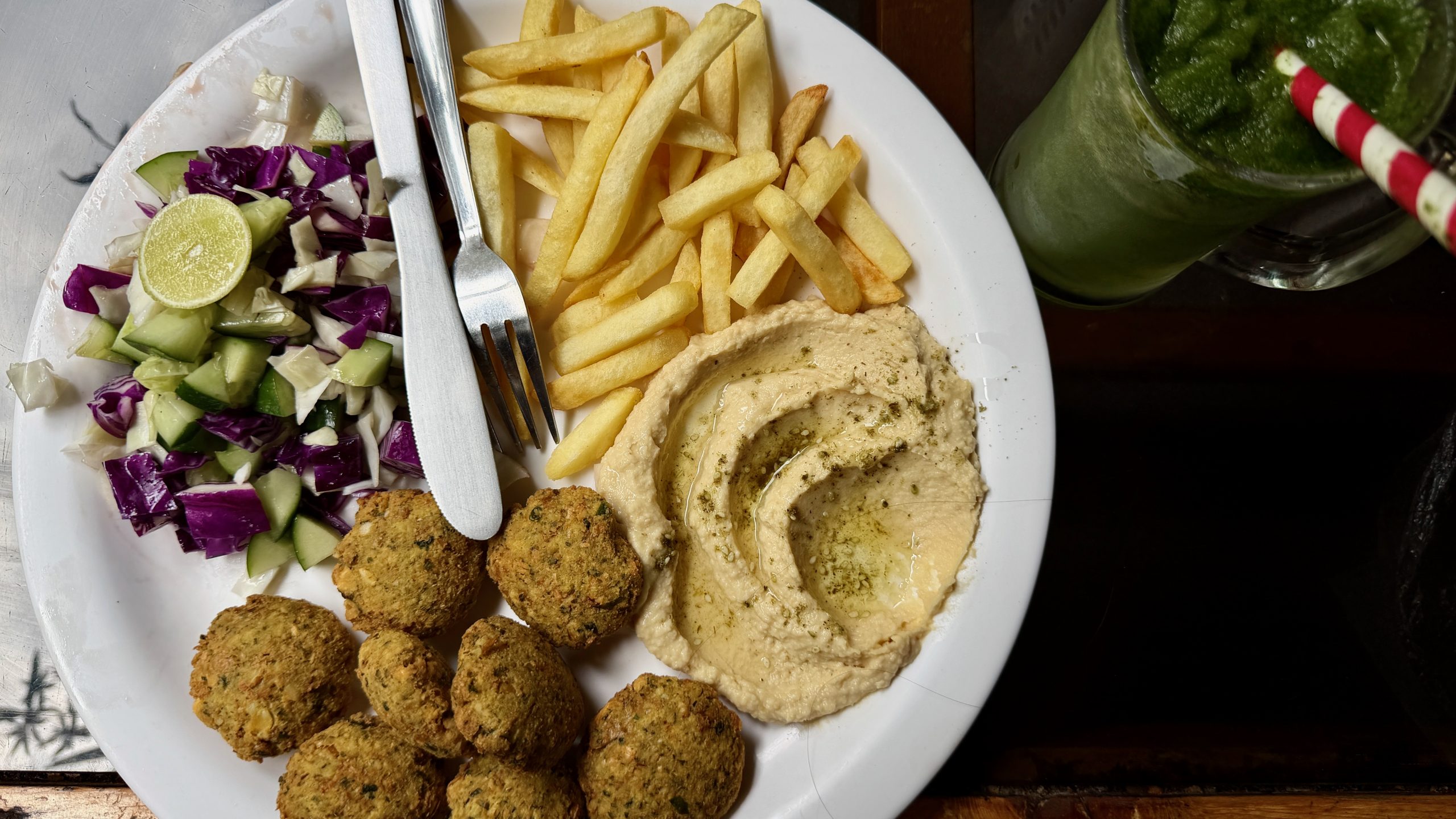
And I have to confess, I truly enjoy having a good selection of international food. A clear perk of tourist hubs, as far as I’m concerned. Just look at this plate! The drink is called lemonana, which I find absolutely delicious, and not just because of its great name.
In the afternoon, I met up with Raju for one last shorter hike—I had to give him his wages anyway. However, the trek ended up unintentionally even shorter, getting cut short almost right after we started. I wasn’t paying close enough attention and failed to realize how extremely careful you have to be with slick clay on solid rock; when it’s as wet as it is now in the monsoon, it gets outrageously slippery. Sure enough, I wiped out hard on a rock, and my arm really hurt.
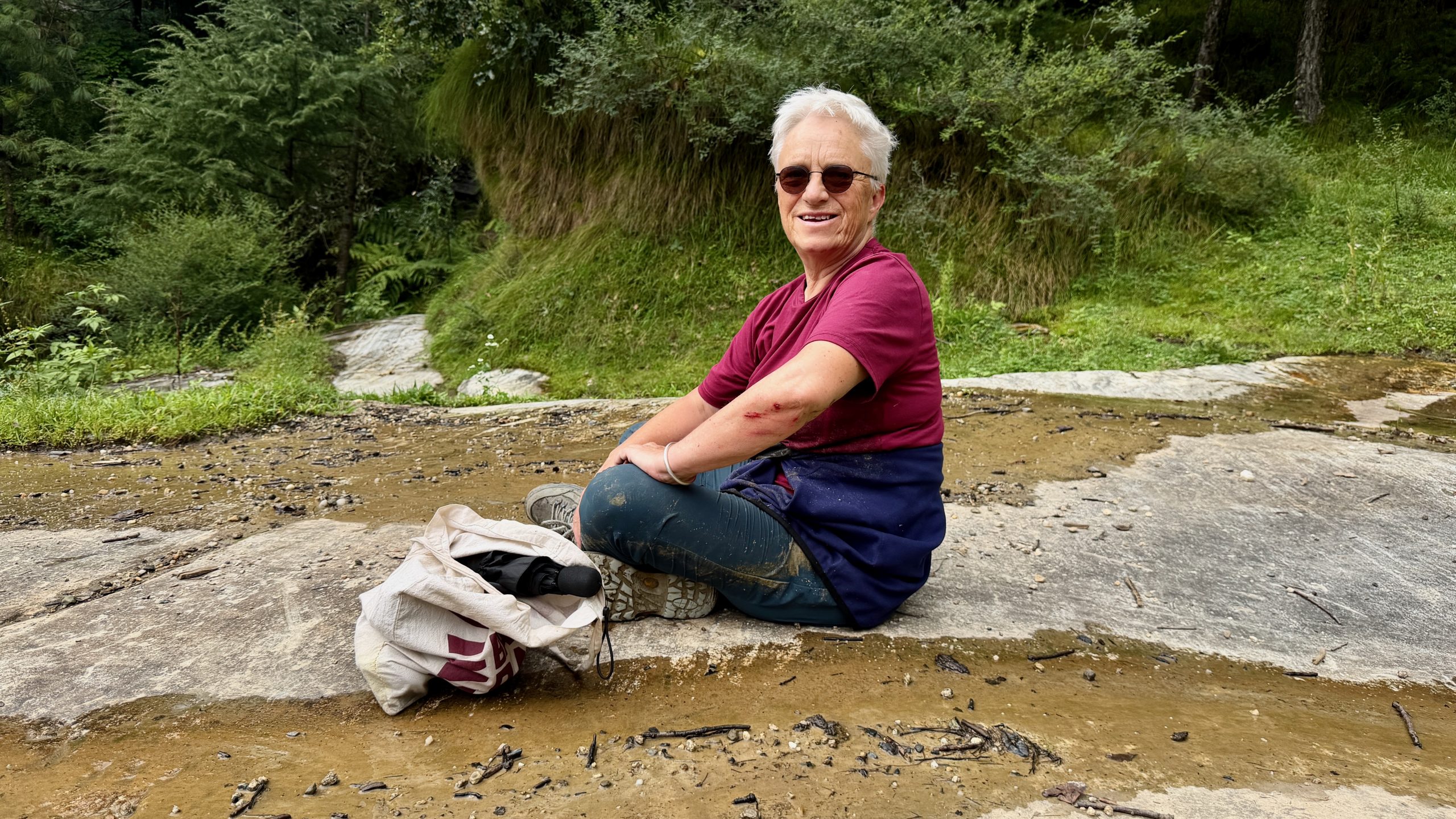
Luckily, nothing was broken or seriously injured—just bruised and scraped up. I wanted to disinfect the scrapes and wrap a bandage around them, so we headed to a pharmacy. The first one in Old Manali stood out for its exceptionally rude and unhelpful shopkeeper; on top of that, he didn’t even carry proper bandages, only small plasters. The second pharmacy was closed. We had to go all the way down to main Manali, where I learned that pharmacies aren’t permitted to clean or dress wounds for you. You’re only allowed to buy the supplies and have to patch yourself up. At least this pharmacist had the materials in stock and was friendly enough.
In the evening, I saw Markus off to his bus to Delhi (completely independently of me, he also chose FlixBus; it was only half full, and he was quite pleased). It’s quite funny running into each other in India time and again (we had also crossed paths in 2017), even though our compatibility only goes so far. For shorter stretches, though, it’s genuinely interesting and often quite amusing. He simply takes a vastly different path through India and has become deeply involved in spirituality over the years.
I took very few photos over those days, but here are two more:
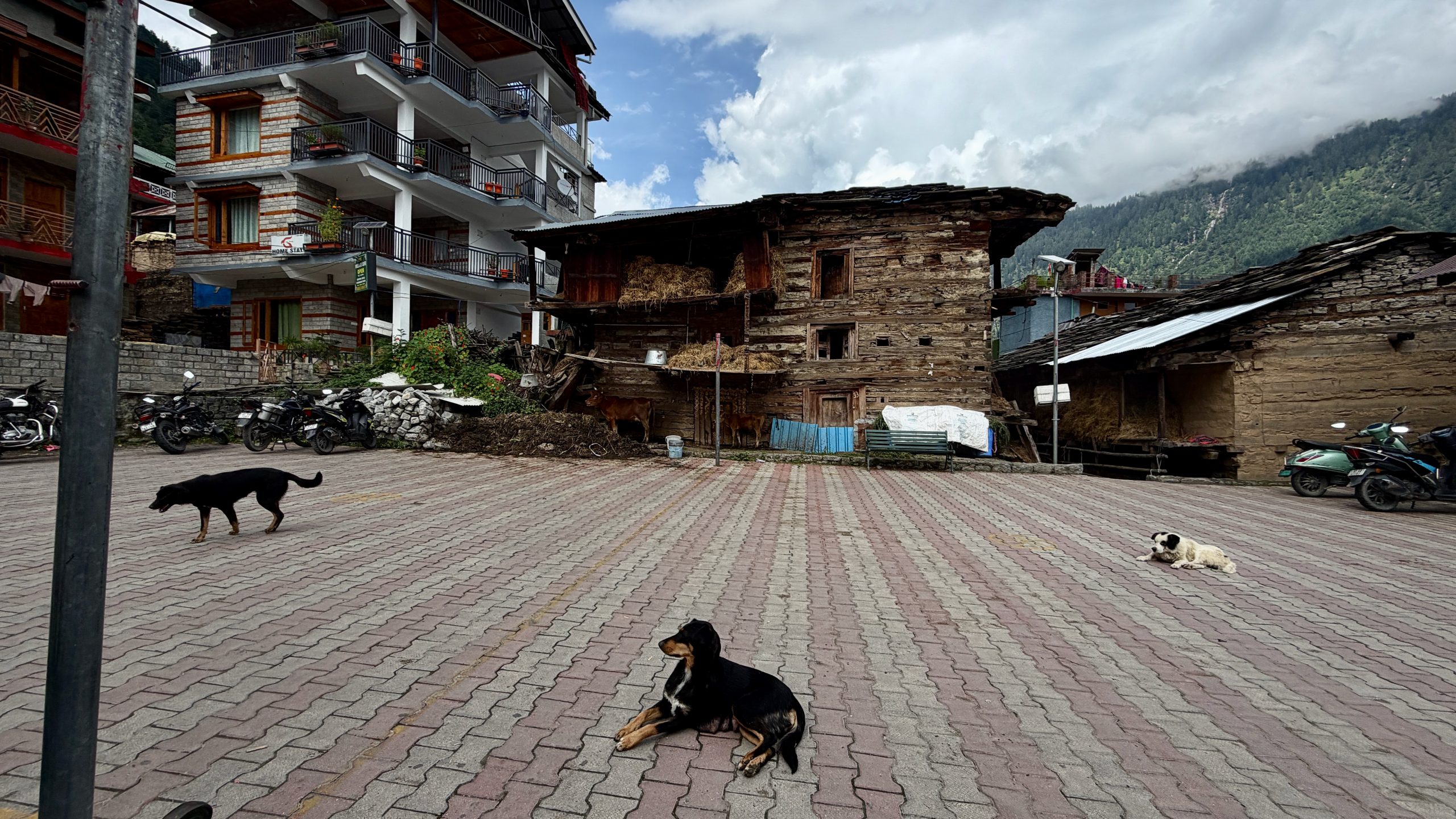
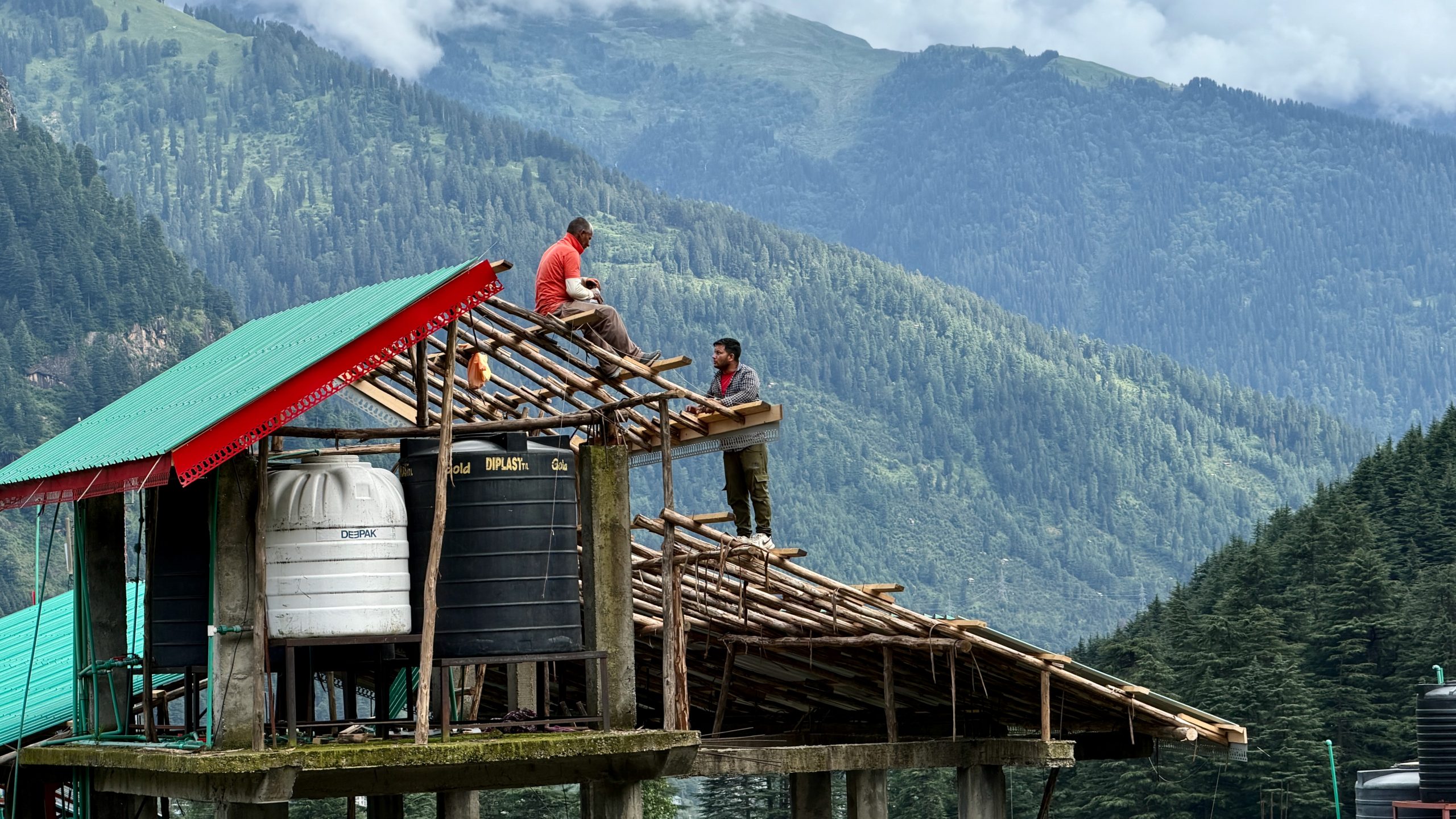
The Kullu Valley remains a study in pure contradictions to me. The rampant construction, the overwhelming tourism (though there were thankfully few travelers around right now in the monsoon), the hopelessly congested valley, the dreadful roads, and so on—all of it stirs up a real sense of aversion in me. Yet, just around the corner, I’m continually captivated by the peaceful nature, the stunning mountains, the scent of cedar and apples, warm encounters with locals, and the authentic, quiet village life that still endures.
For now, that wraps up my time in this region, but we’ll see how everything actually unfolds next. I still have a little over two months left, and my Kashmir trekking plans have fallen through. To start with, I was curious to see how I’d hold up long-term in Ladakh with my asthma inhaler and medication.