


PKR -> KTM -> DEL – We have seen them! All!
12. – 14. August 2026
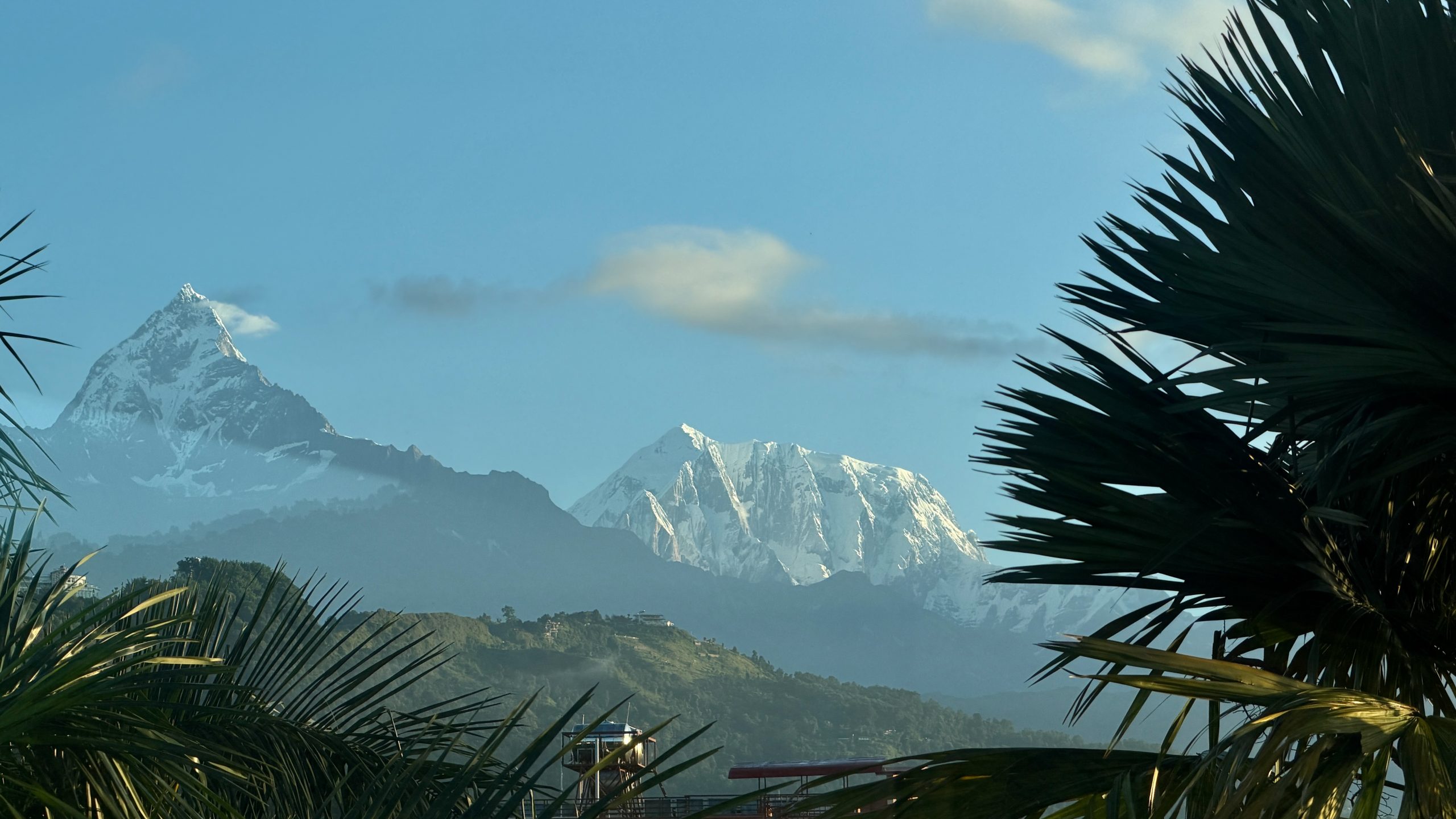
Since the clouds hadn’t looked too ominous the evening before, I suggested to the other two that—since we had to get up so early for the bus anyway—they might want to look up to see if they could spot any 8,000-meter peaks. If ever, early morning offers the best chances. And when I woke up, the odds looked good to me, so I ran up to the hotel roof myself—and there they actually were! Dhaulagiri, Machapuchare, and the Annapurna range! I quickly grabbed the other two, and there we stood, staring in awe.
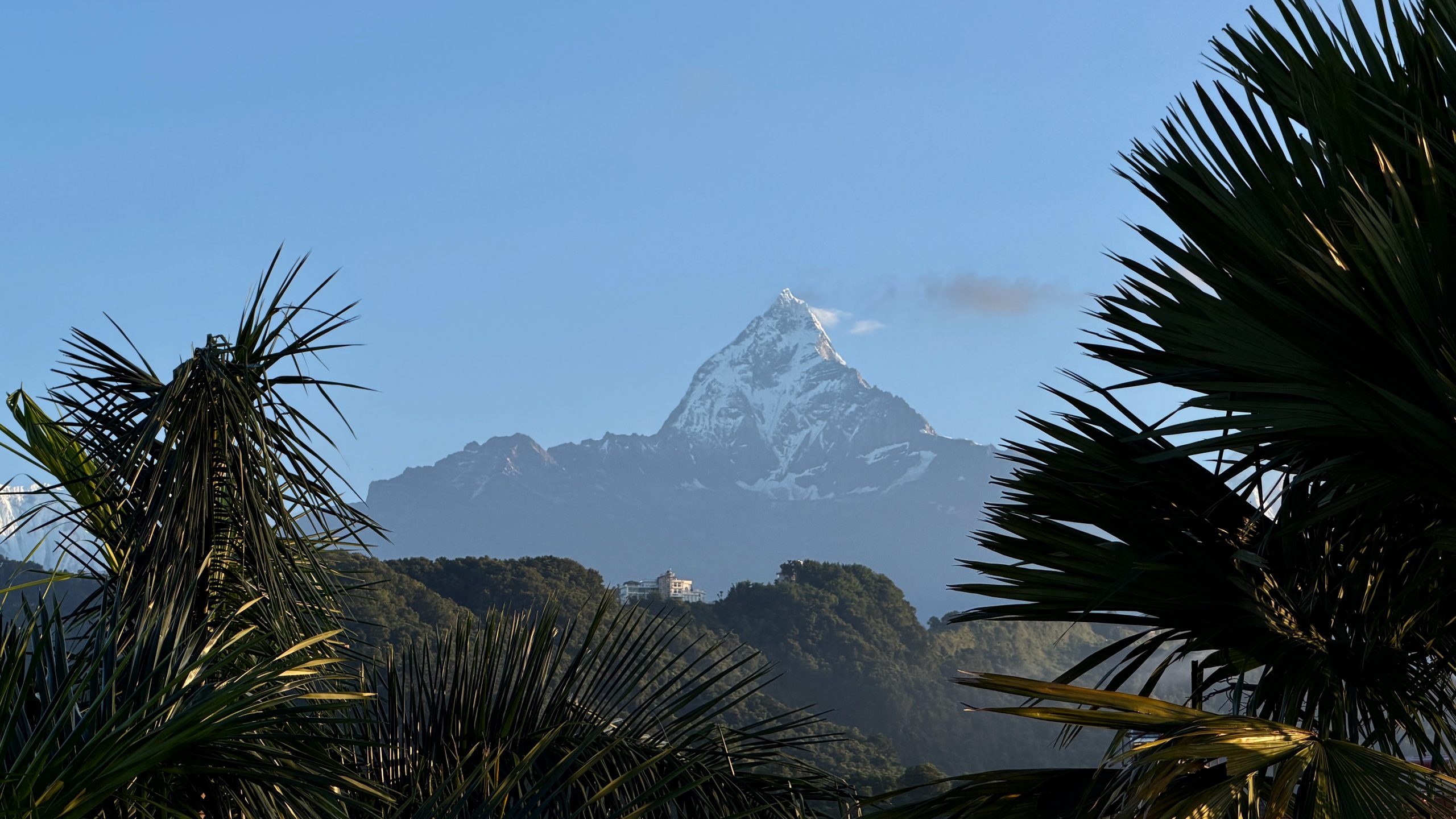
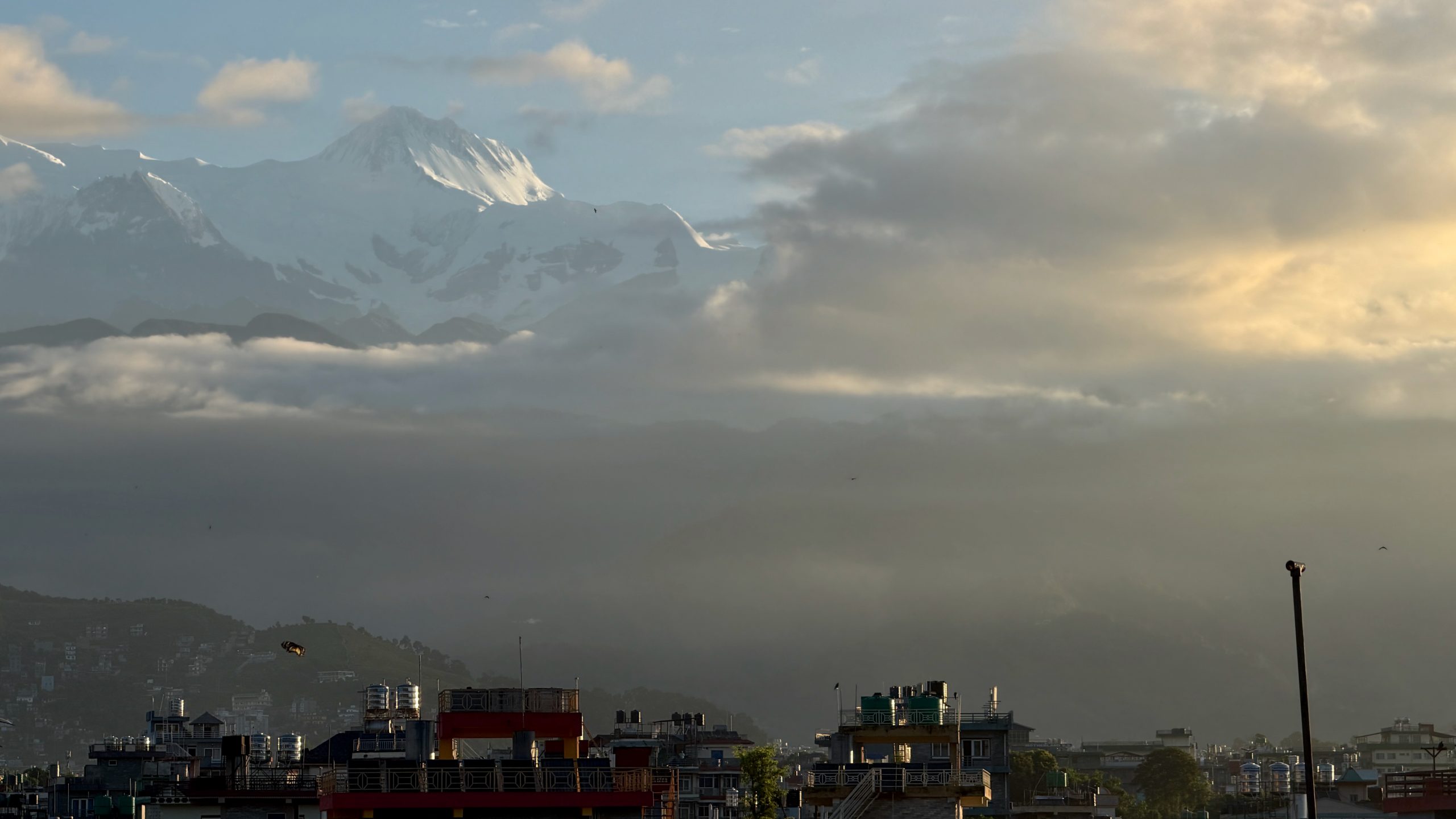
Then we had breakfast and crammed into the taxi (it always amazes me how everything in Nepal just works—the menu hardly ever has unavailable dishes, taxis are punctual, and breakfast is served right on time at 6:30 AM, or packed to go as a lunch box like on two other occasions). We were welcomed onto the bus (we were the first ones there, of course) and set off. And the marveling continued—the mountains remained fully visible under a clear blue sky! That hadn’t happened even once when I was here three years ago in March!
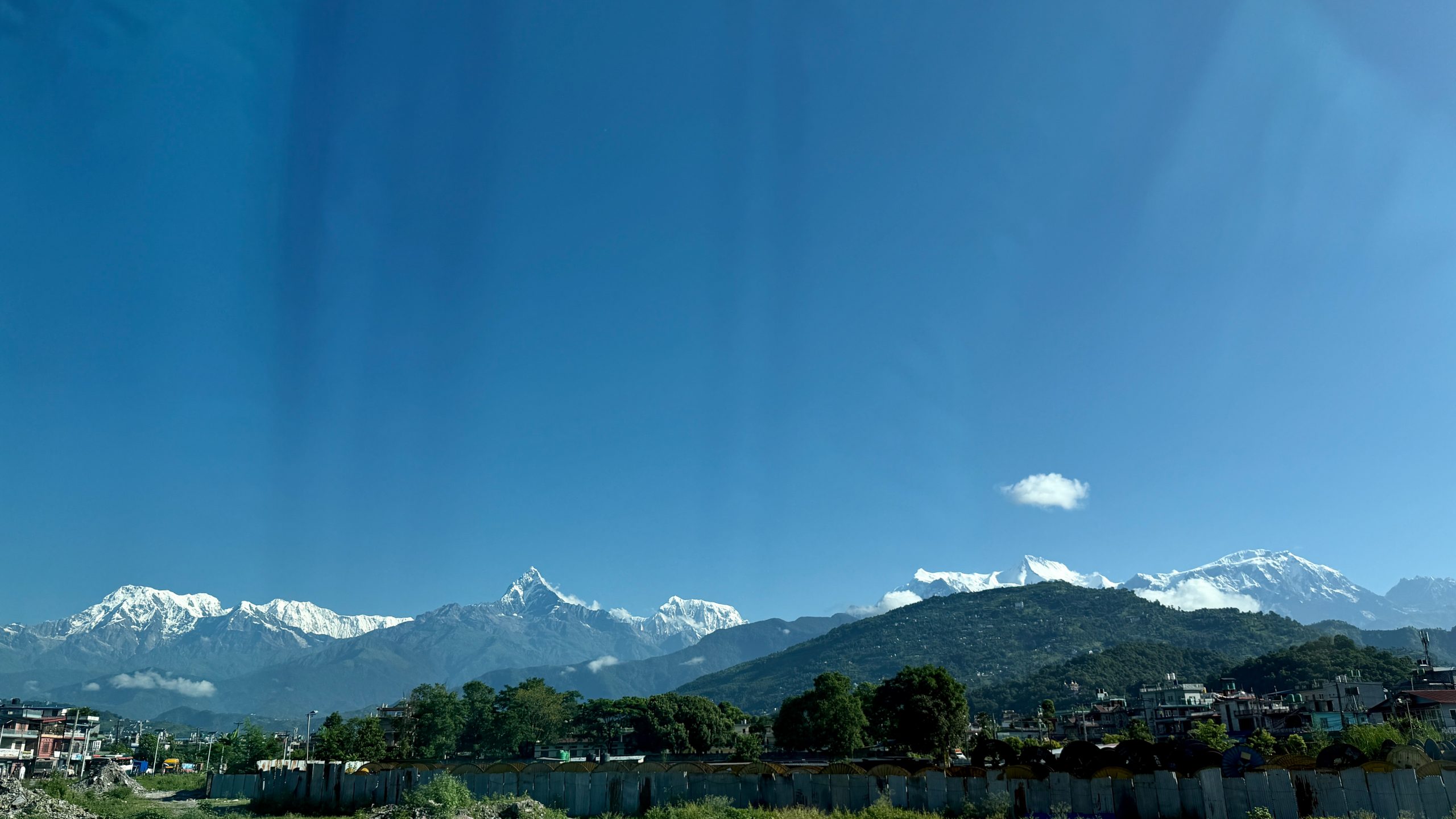
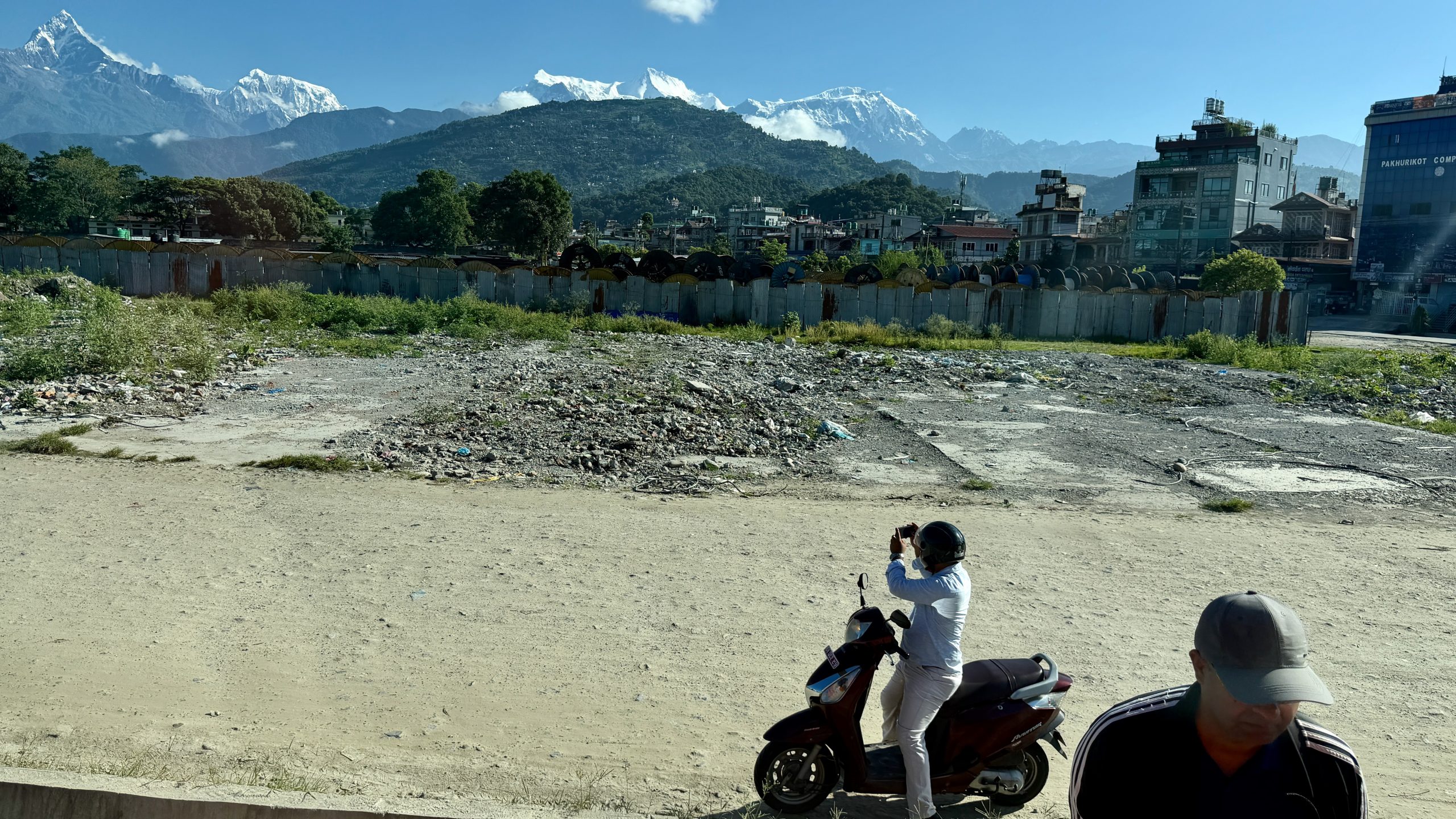
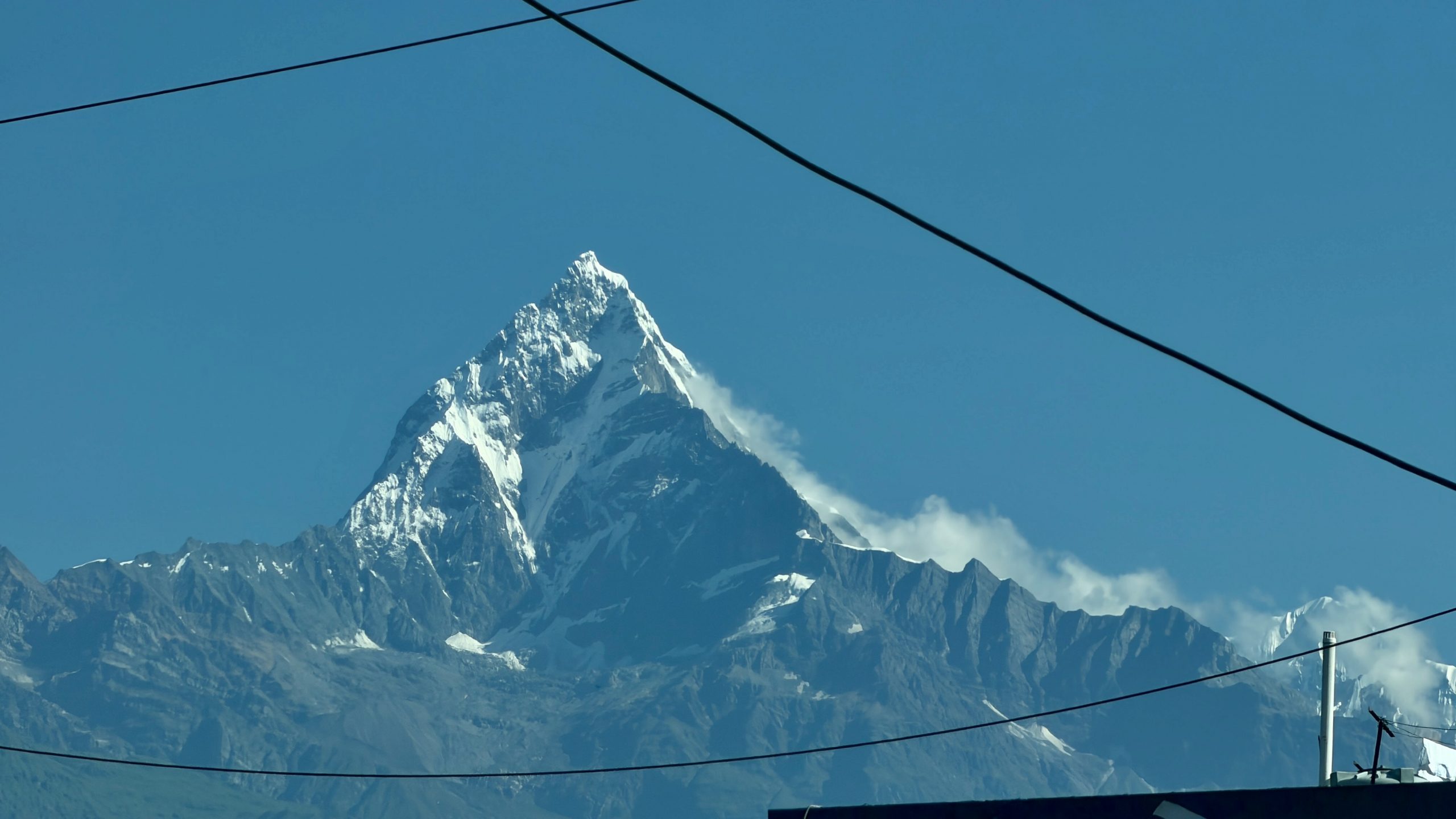
The ride was pretty uneventful. Beate struck up a conversation with a well-traveled Nepali man, and Ute played a few games with a girl sitting next to her. And whenever we stepped out during a stop, we hit a literal wall of heat—it was so unbelievably hot.
Back in Kathmandu, we checked into the same lovely accommodation as before. Beate and I headed out for a quick mini-shopping trip, Ute did the math and tallied up our shared expenses (which was a huge relief), I checked in for my flight online and filled out all the entry forms, and we even managed to grab some dinner.
The next day’s schedule went like this: I went to the optician and was annoyed to find two scratches on my glasses. How stupid! At least I had a spare pair with me. Then I went for a lovely little foot massage—there wasn’t enough time for anything more. And after that, I finally met Chhewang! He works as a Mustang guide for Diamir, and we had essentially designed the itinerary with its day hikes together. In other words, a trip very similar to the one we just took. Hiring him as our guide might have been an option, but I really wanted to give a woman that opportunity. Later on, I thought it would have been great to hire him for an extra day or two, but his father was in the hospital in Pokhara, and he was taking care of him and his mother. Just the day before, his dad had been transferred to Kathmandu—and kindly enough, he found a little time to meet me here! We chatted, had lunch, and chatted some more, and I was so glad to actually meet him in person, since he was certainly a big reason why I had set my sights on this destination in the first place. Plus, I felt we had worked really well together.
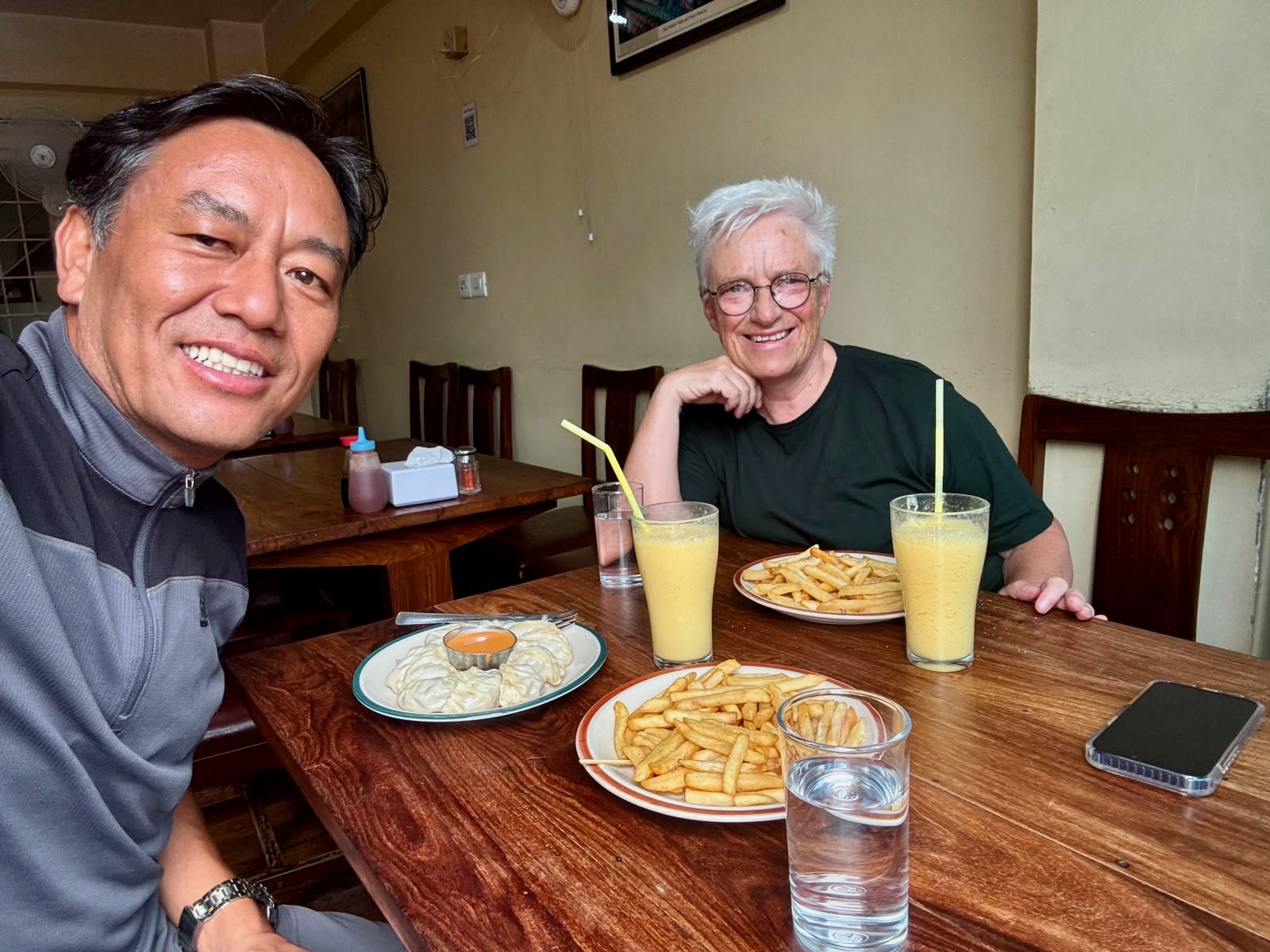
He lived in Hildesheim for 12 years, and I still find it strange to speak German with a Nepali. But his German is truly flawless. In that short time, we chatted about our lives, and I learned more about Mustang than I did on the whole trip. I think he is a genuinely fantastic guide who has so much to tell and share. He is originally from Lo Manthang and had the opportunity to get a good education, having lived abroad—only to decide to return home and use all his experience for the benefit of his community.
I had asked him why we saw so few people. Many are working elsewhere. And simply put, there are very few people to begin with. The numbers are a bit tricky. In an area slightly smaller than Saarland, around 2,700 people are officially registered. However, if you take the entire population (the Loba) and include historical places like Kagbeni, Chhusang, etc., as well as those staying elsewhere, the figure is closer to 8,000 people. That is roughly equivalent to the population of Ruhpolding. Or the inner Dresden Neustadt district. In any case, those are striking numbers! So few people! They have to take care not to marry too closely within the family.
Then I asked him again about the new village, Namashung. The whole situation is basically quite a legal makeshift: on a pragmatic level, everything works great locally, but on paper, the matter was never entirely thought through. When the King of Mustang gifted the land in Namashung to the 18 families, it was a wonderful gesture on a human level, but legally speaking, it was worthless. Ever since the monarchy was abolished, unused land in Nepal belongs to the state. So the King wasn’t actually allowed to give the land away, but up in the high mountains, his word mattered more to the people than the law books in Kathmandu. To allow the people to build there, the local municipality later recognized the land as an unofficial resettlement project. That means: in daily life, the residents are left in peace. They live in their new homes, farm their fields, and are connected to the infrastructure—no one is going to evict them. The catch, however, lies in the details: to this day, official bureaucratic land registry entries (Lalpurja) are missing. Because Nepal simply has no law for internal climate refugees, the land swap was never officially executed. On paper, the families still own their uninhabitable land in old Samzong, while their new houses in Namashung exist in a state of permanent legal tolerance. For daily life on the ground, that is completely fine—but selling a house with a proper title deed or using it as collateral for a bank loan? That becomes extremely difficult.
Then we briefly met up with Beate and Ute, and I realized once again that before visiting a new region, I actually prefer not to know too much about it—my interest really peaks during and after the trip. So now I’m learning a ton about Mustang!
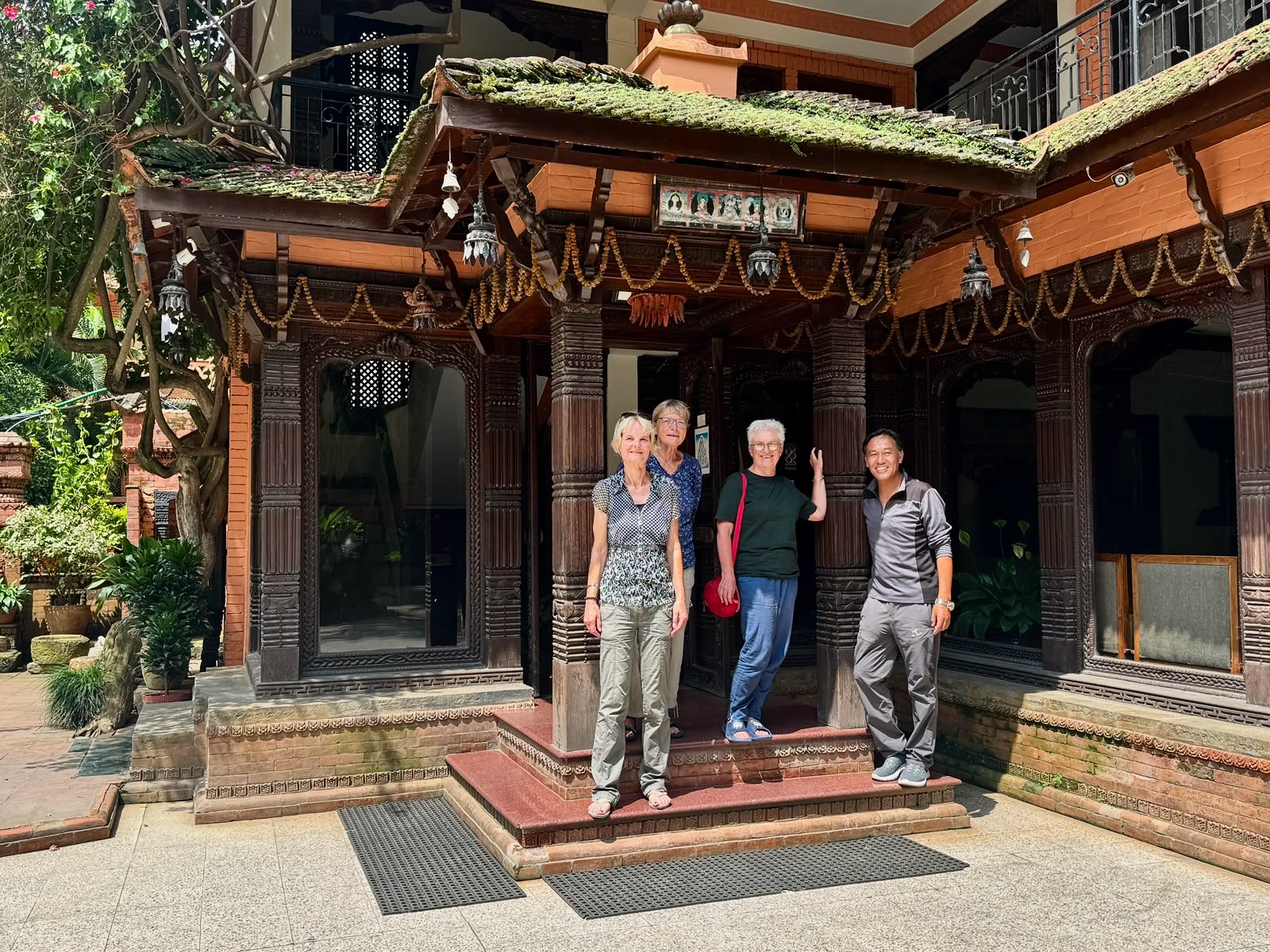
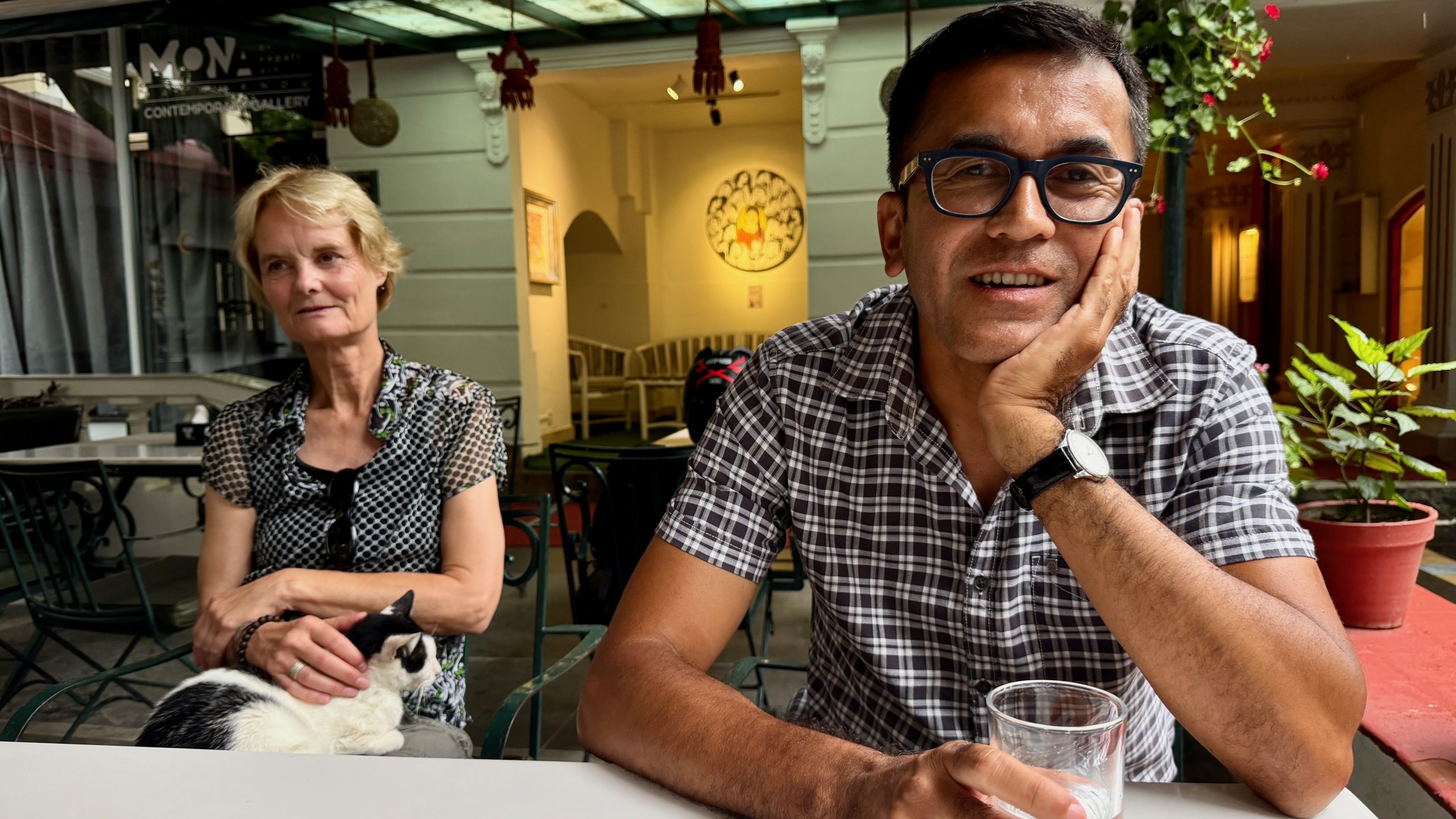
Then came the next meeting: the three of us went to a garden café to meet Binoy, my agent. First, we got all the positive things off our chests (our driver, the landscape, the accommodations, the overall experience), and then the guide situation was brought to the table in full detail. It wasn’t easy. Binoy had tasked a buddy with finding someone, was pleased when a female guide was secured, and tried in vain to get in proper contact with her (she was apparently traveling in an area with no cell service). He checked her Facebook profile and thought she seemed fine—after all, it said she had 12 years of experience, and his buddy had set it up. He had also paid almost the full daily rate to the buddy. So either the buddy or the guide was making far too much off this… Unfortunately, Binoy didn’t seem particularly inclined to get really angry with his buddy or to demand money back. I brought up the point that this had damaged both of our businesses and left me feeling very distrustful. Binoy countered by pointing out that all my clients so far had been extremely satisfied (which is true), and that if I stuck to his usual contacts, I could continue to trust him. And I do—but I also demand that my agency can handle more unusual requests with the utmost care, or simply tell me if what I’m hoping for is impossible. We didn’t really get any further on that. And I’ll just leave it at that for now—I’m still thinking it through.
It was raining. I wanted to write a bit more about the trash situation. Kathmandu has noticeably cleaned up as well. That’s all said to be the work of the new head of state, who originally started that initiative during his time as mayor of Kathmandu. And it seems to be spreading further now. One challenge: Indian travelers, who still drop litter everywhere. By the way, Nepal has—or is planning—a tourism campaign targeting Indians, aiming to bring them in even greater numbers! We certainly saw quite a few of them.
And since I’m in the mood to share random internet finds: there’s a statistic on the death toll in the broader Annapurna region. 25 people died of altitude sickness in 2025/26—specifically 12 Nepalis (4 of them guides/porters), 9 Indians, and 4 others. 15 of them died in Muktinath/Upper Mustang, 8 near Thorung La/Tilicho, and 2 elsewhere. The theory: thanks to the steadily improving roads, people aren’t paying enough attention to proper acclimatization.
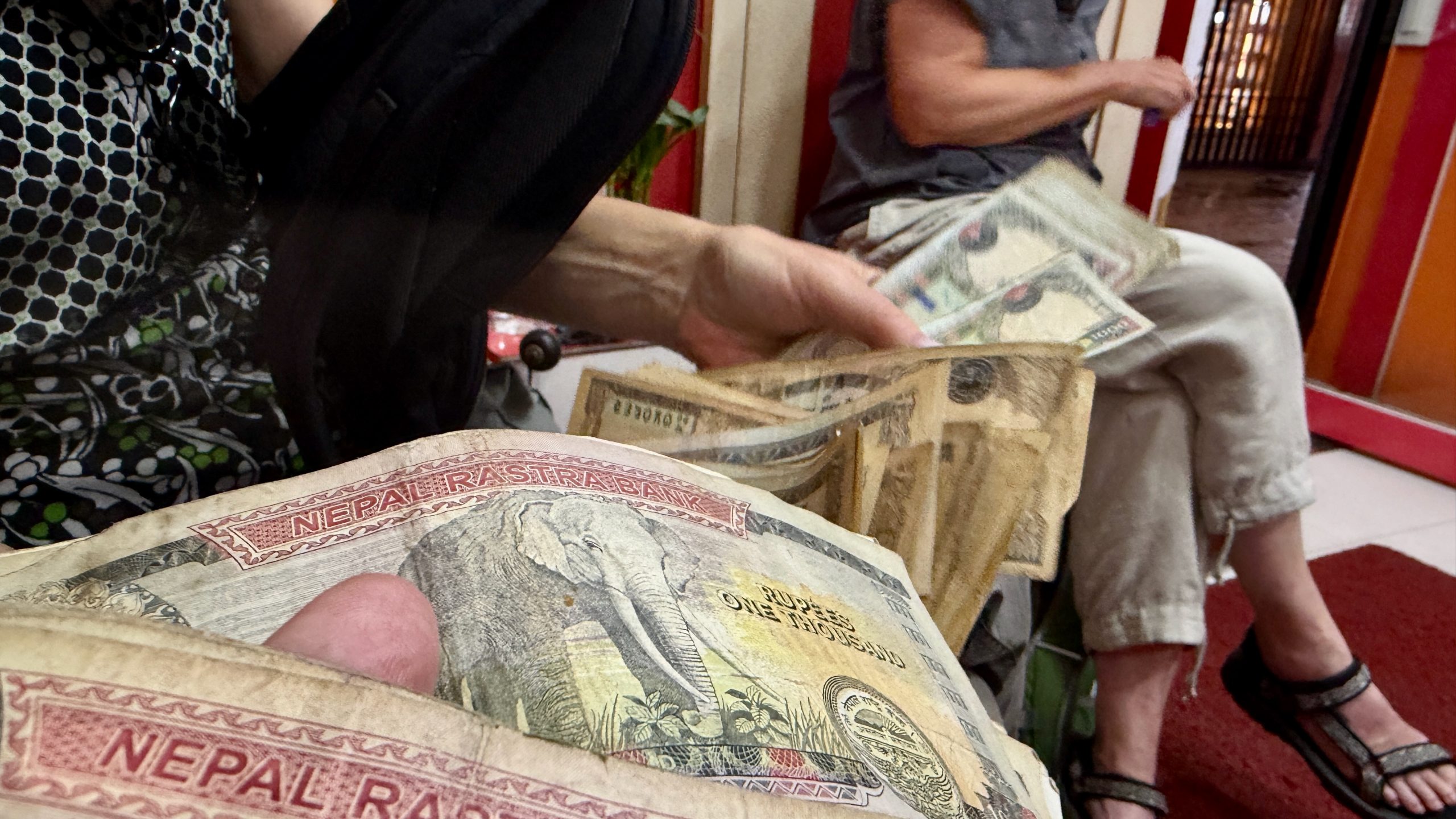
Then we went to the money changer, exchanged some notes, and redistributed the cash among ourselves. And with that, we were fine and content.
Dinner, sleep, early wake-up call, a quick taxi ride to the airport (hardly any traffic, though it was astonishing to see how many people were already up and about at 5:00 AM), checking in, and saying goodbye.
And then I was on my own again. It was cloudy, and I had managed to score a prime seat with a mountain view without paying extra. Unfortunately, the clouds were blocking the mountains, so I didn’t get to see a thing.
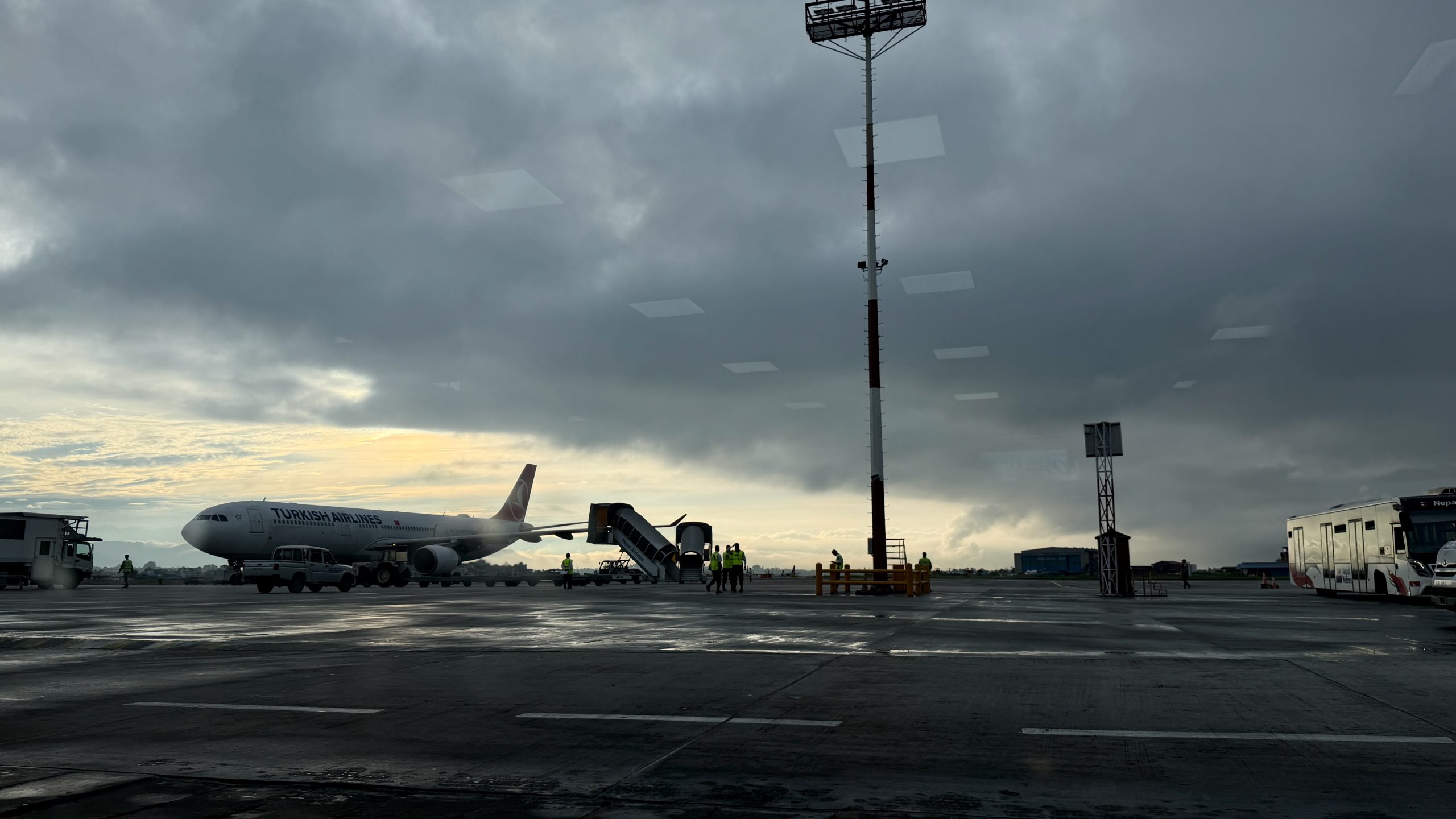
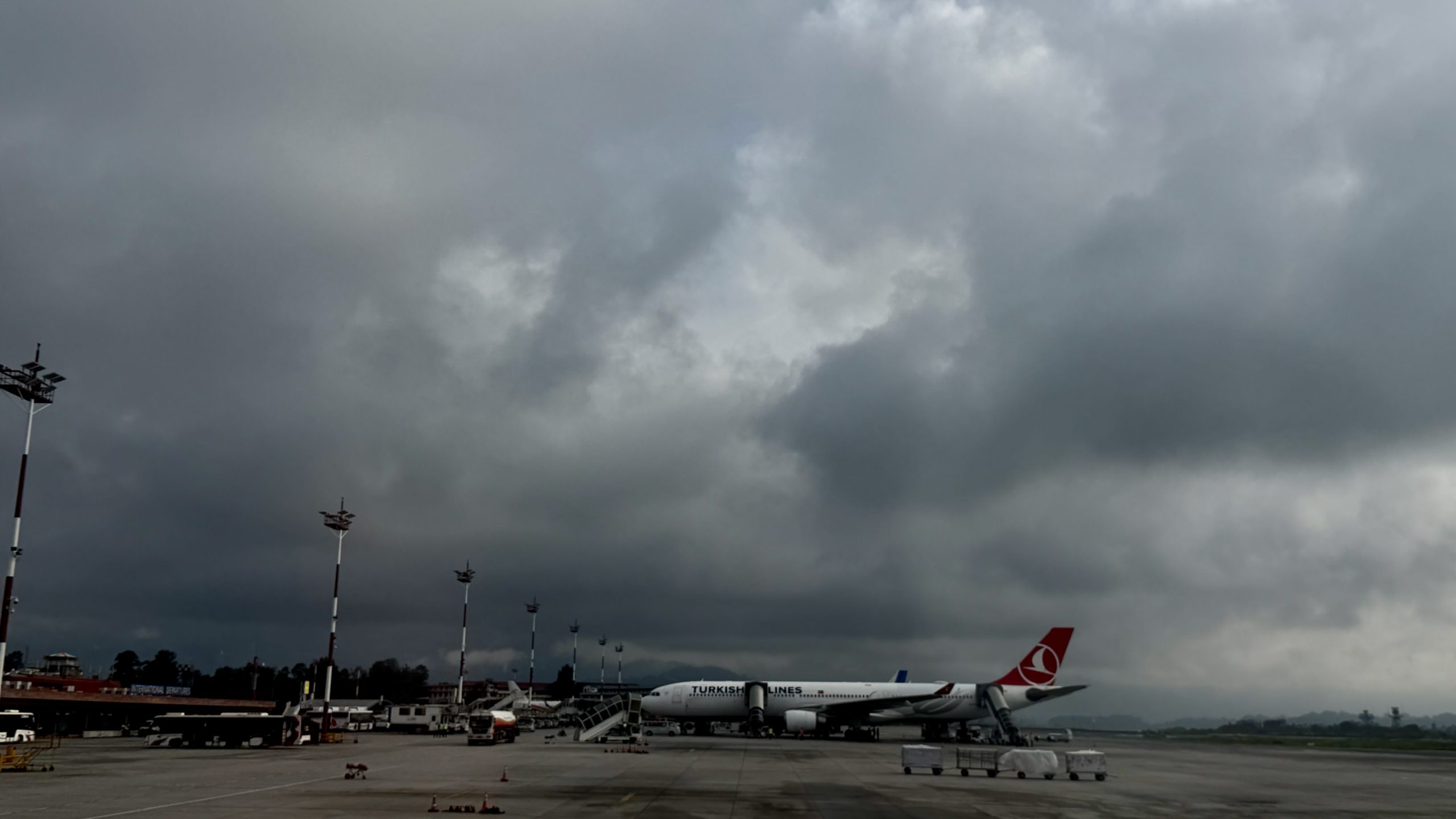
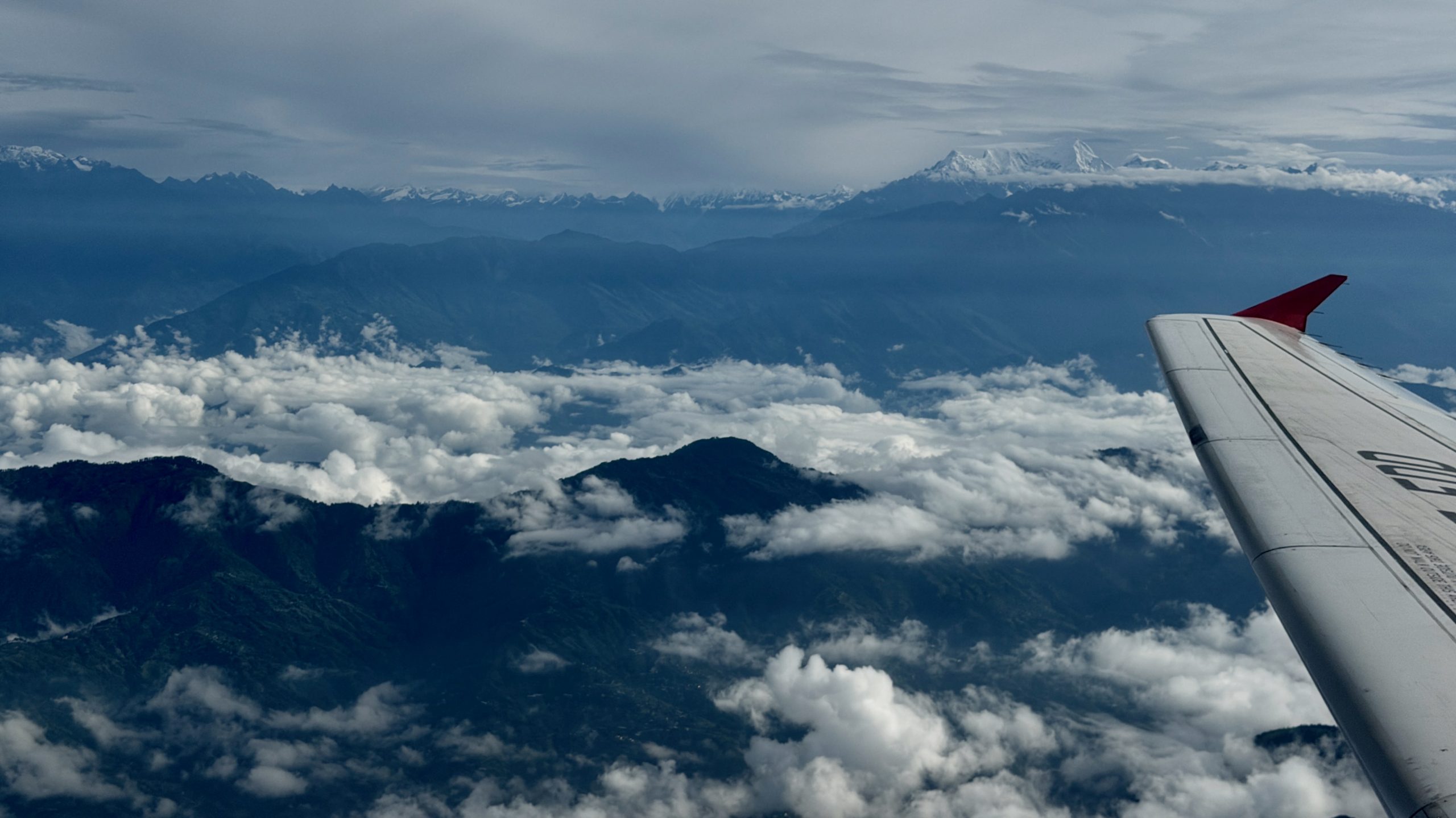
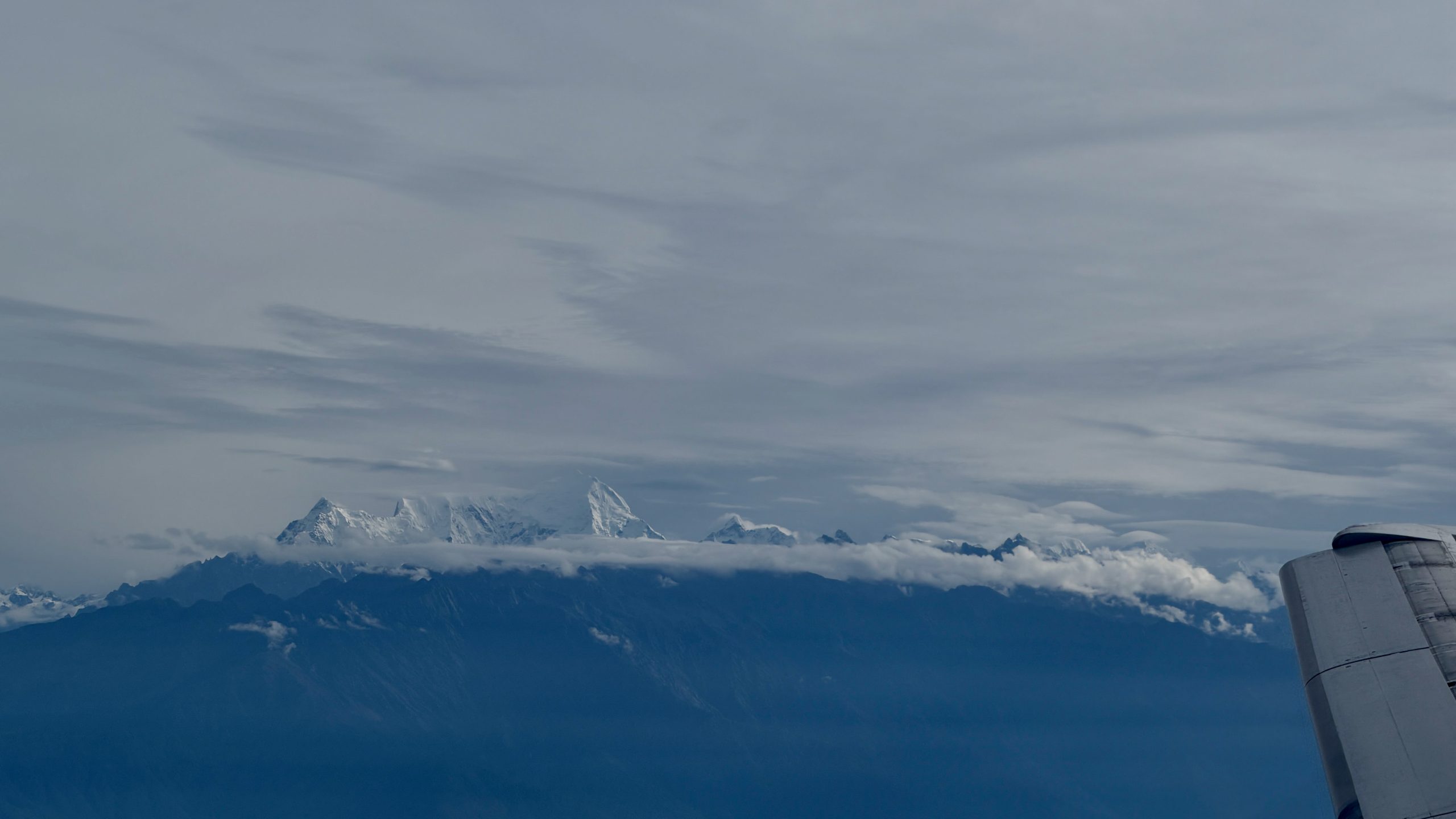
The flight was smooth—and as for how I got on back by myself in Delhi, that will be in a new blog post. But I still need to reflect on the trip as a whole, too—that’s coming soon!