


Yangthang – Hemis Shukpachen – Three are sometimes even better than Two
16. September 2026
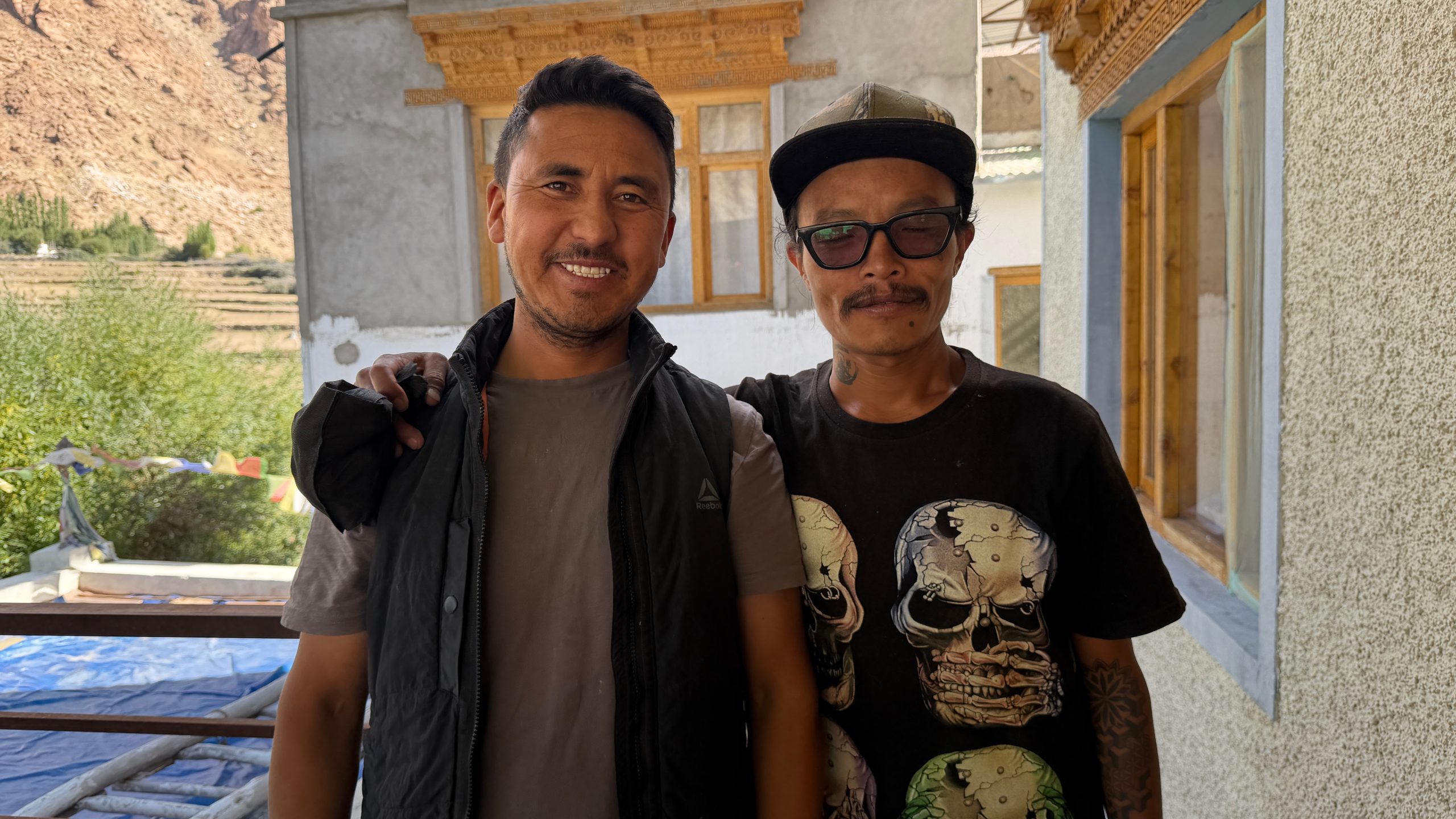
The morning was touching. Rinchen and Angchuk had taken such a genuine liking to each other that they found it hard to say goodbye. “A very emotional moment,” Angchuk said during their heartfelt embrace. But eventually they pulled themselves apart, and we set off with Elsa.
Elsa is from France—I completely forgot her age—and after going through a restless, turbulent period, she thought it wouldn’t be a bad idea to spend some time exploring the wider Asian world to see what else was out there and how she’d manage on her own. She was cautious at first, mentioning that she might split off and carry on alone after a short while. But it never came to that. She stayed.
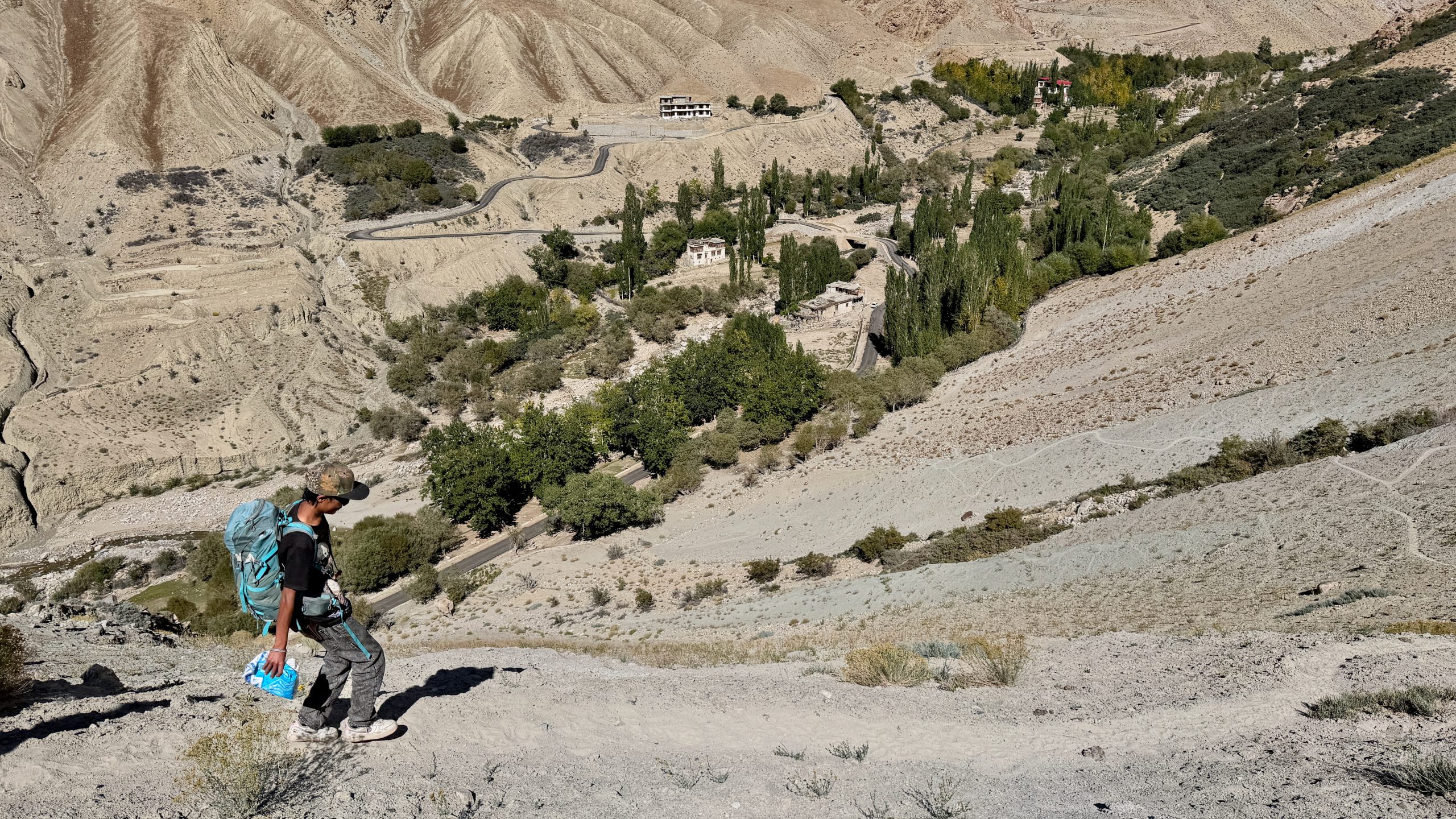
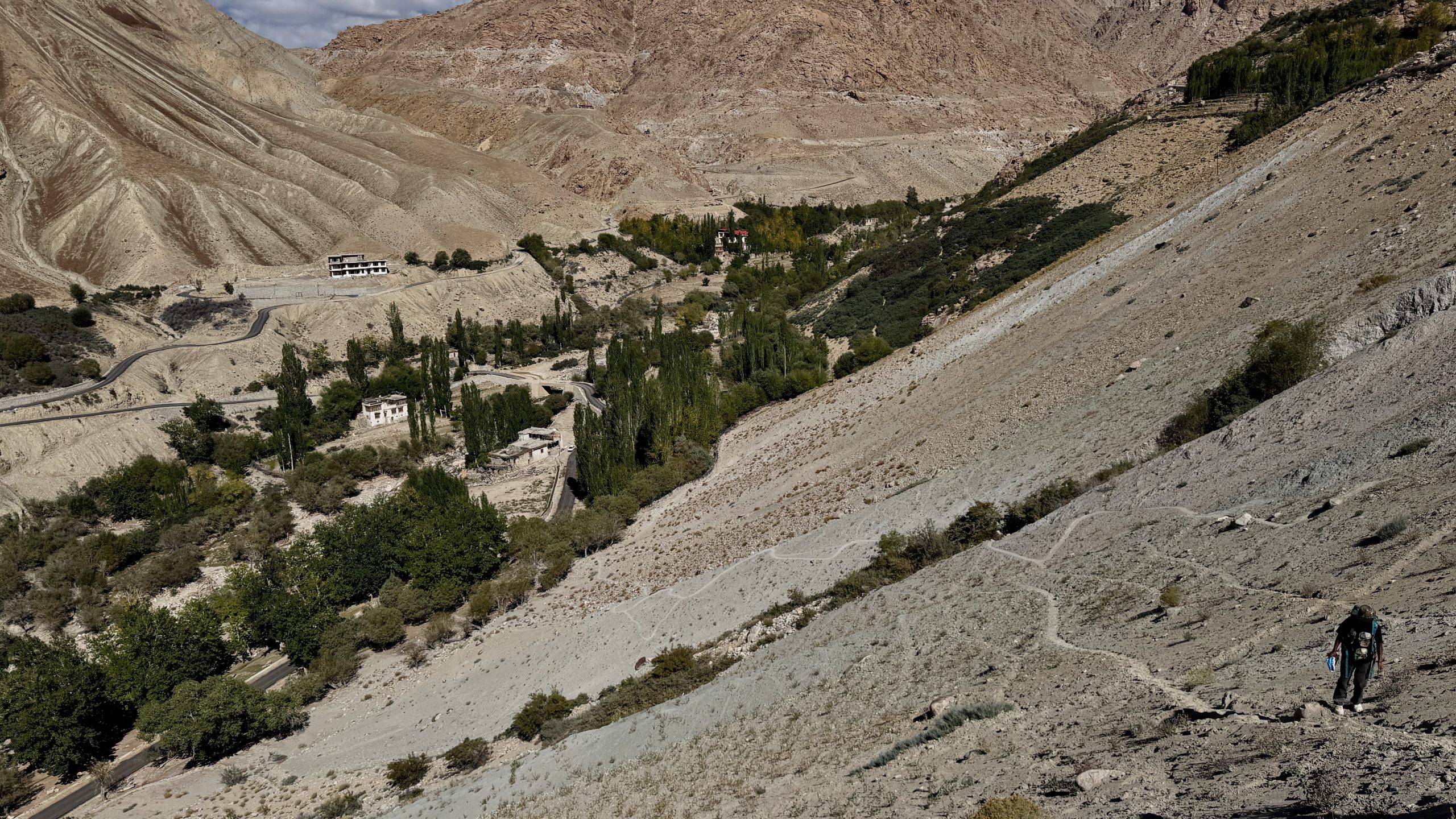
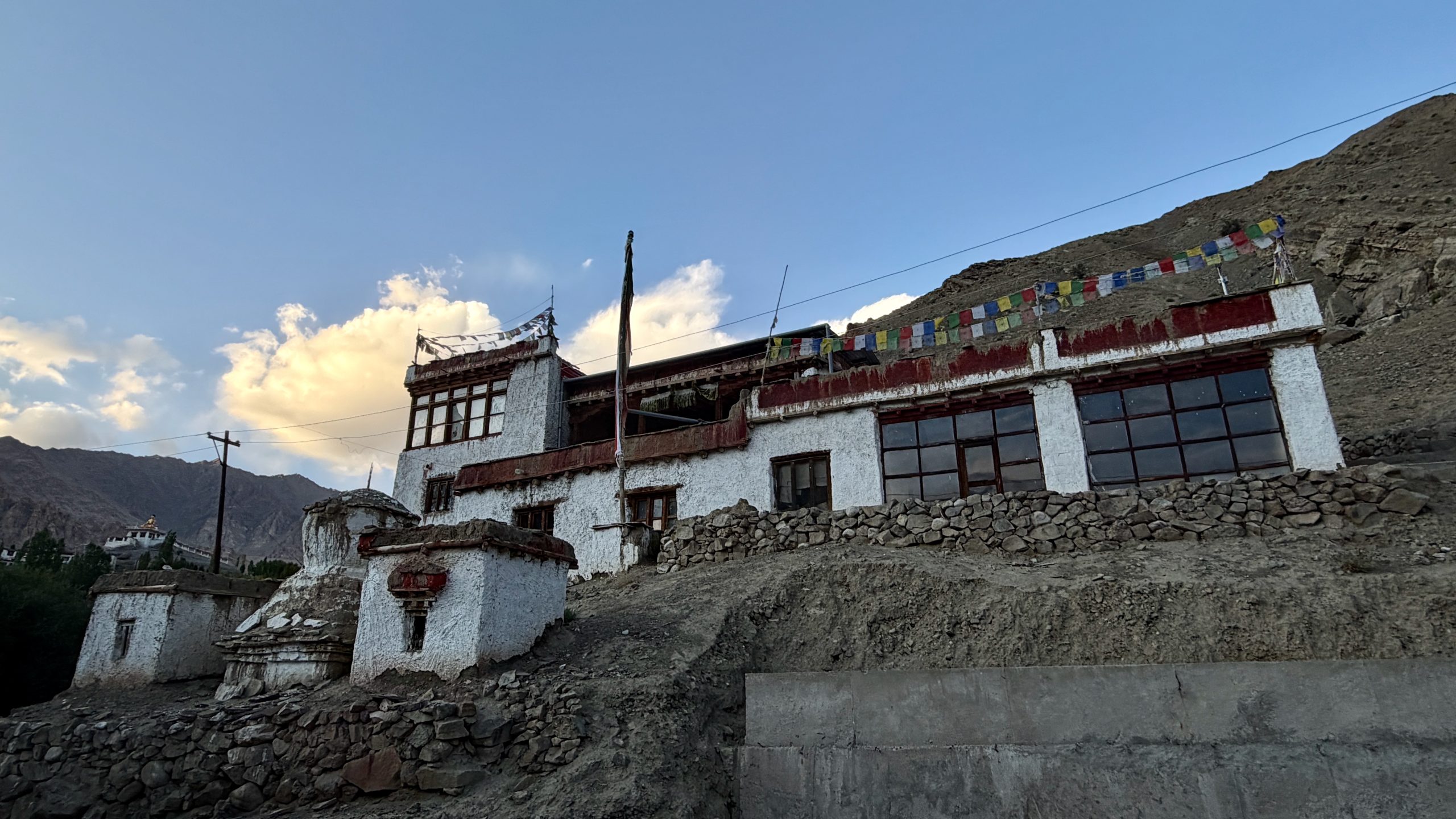
First, we headed downhill. I had always assumed this valley was part of Yangthang, but Angchuk mentioned that it actually belongs to Hemis Shukpachen. That surprised me, since it’s separated from there by a pass, whereas from Yangthang you just walk straight down.
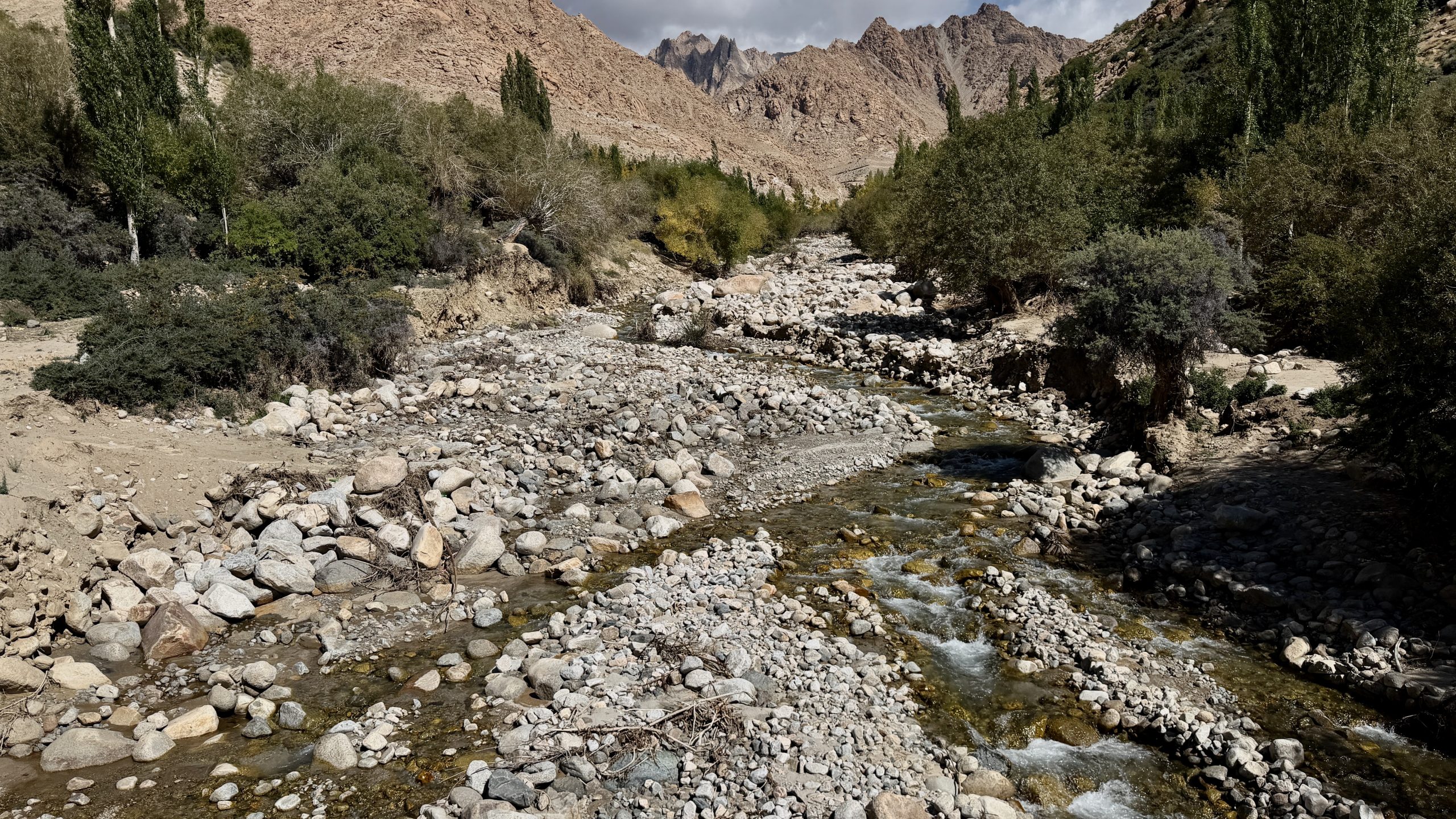
The river flowed prettily through the valley, and darker clouds were gathering back near the mountain peaks. But they were just putting on a threatening display and didn’t actually come any closer.

We walked along the road for a little bit, and then we were able to branch off onto a shortcut trail. Up at the pass, we sat around for a long time, happily taking in the view below and chatting away.
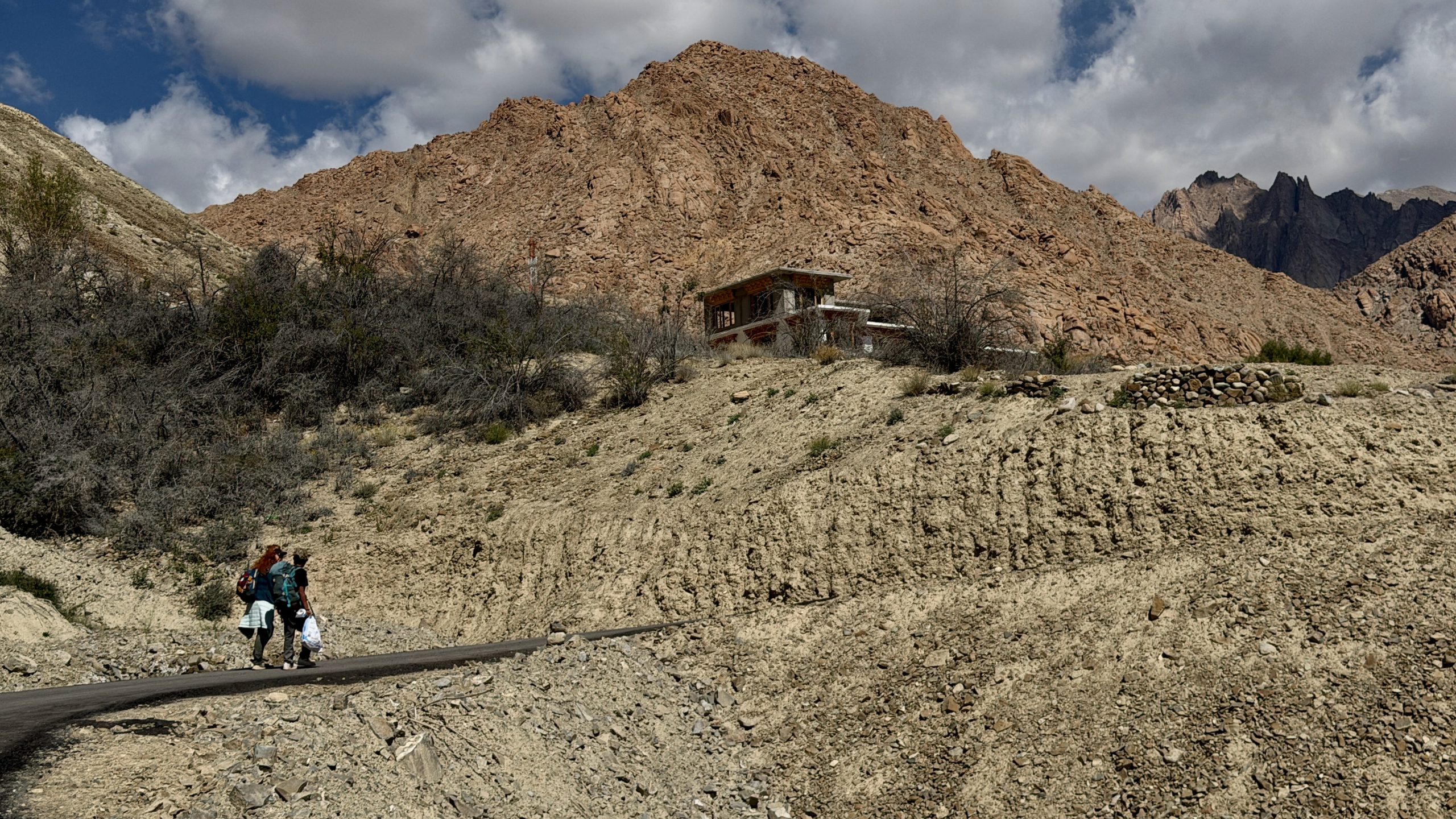
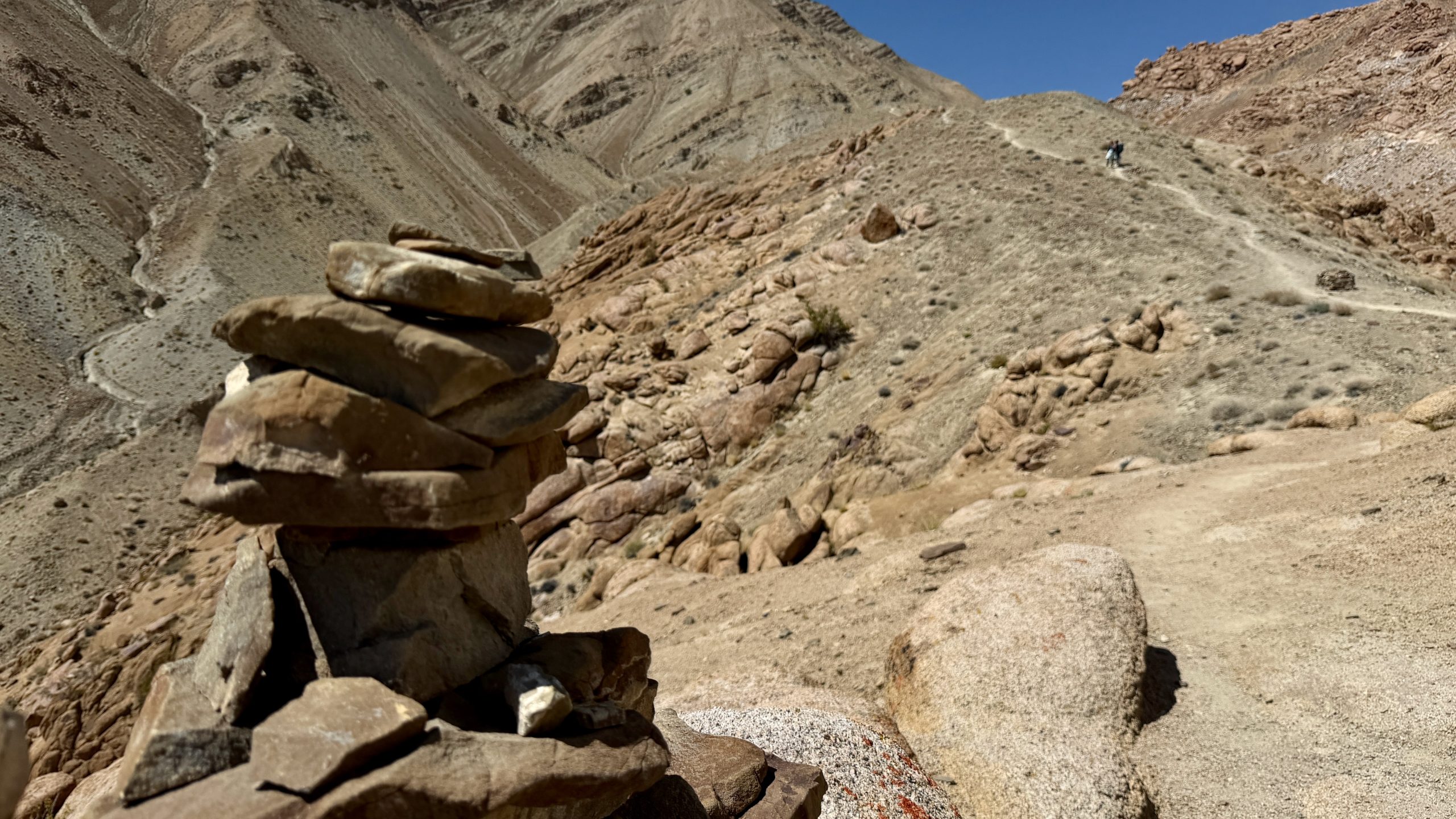
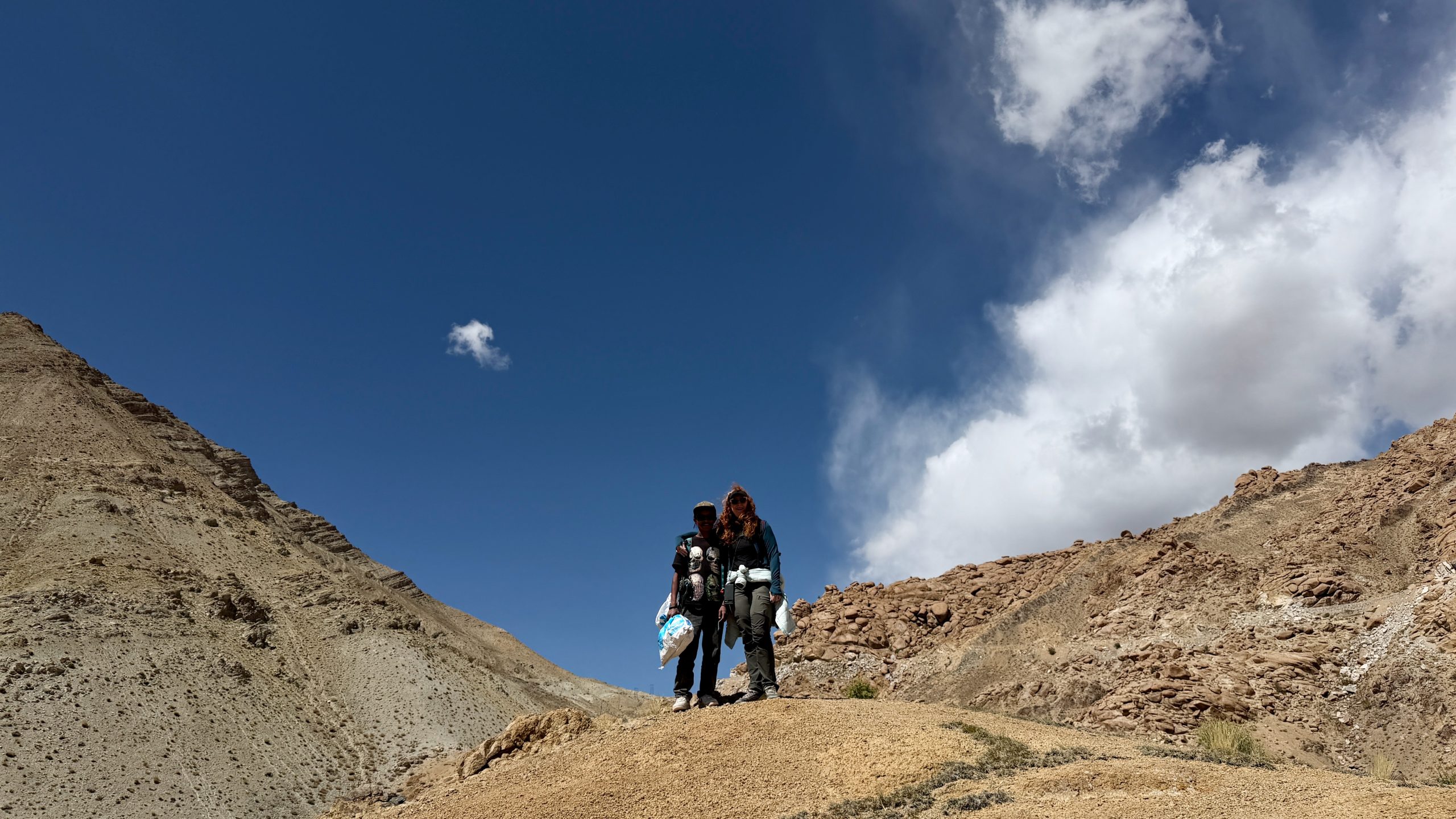
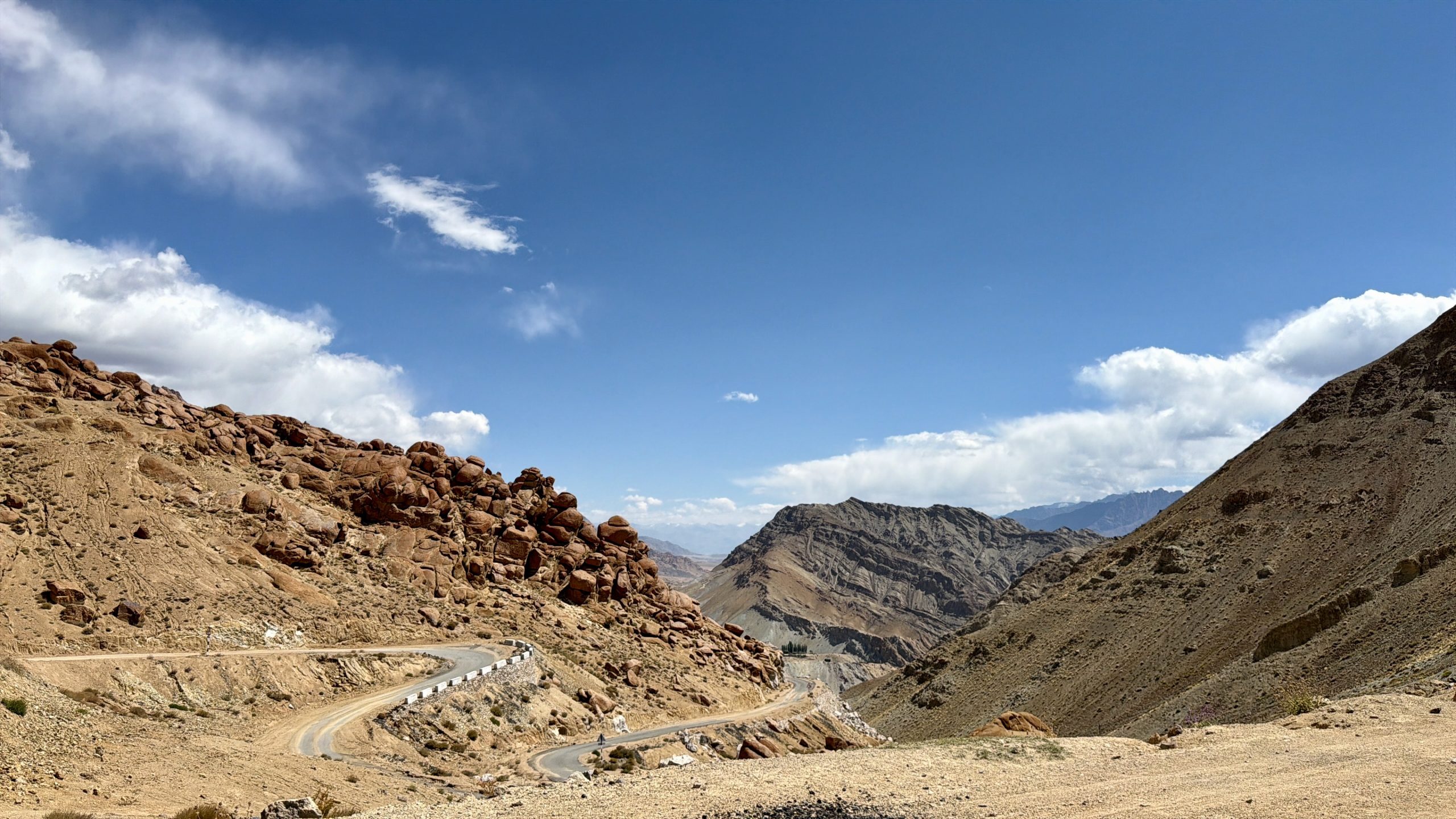
In fact, we were constantly taking chat breaks and realized we got along really well. So, for what was supposed to be a two-hour stretch, we ended up taking closer to four. Angchuk had kept the full German trash bag to dispose of, but handed Rinchen a fresh one. He managed to fill it back up in no time, and Elsa and I had our hands full of trash, too.
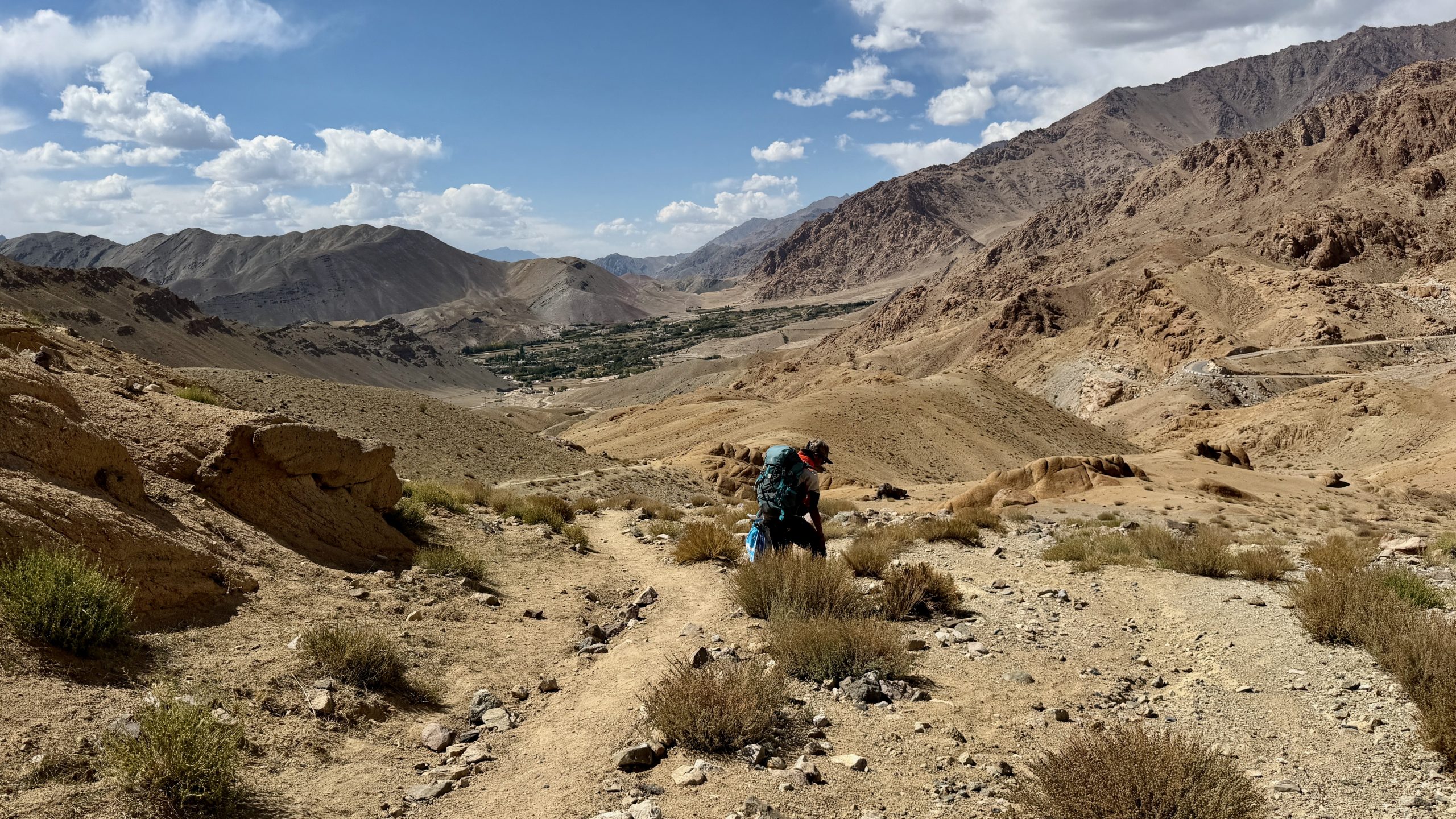
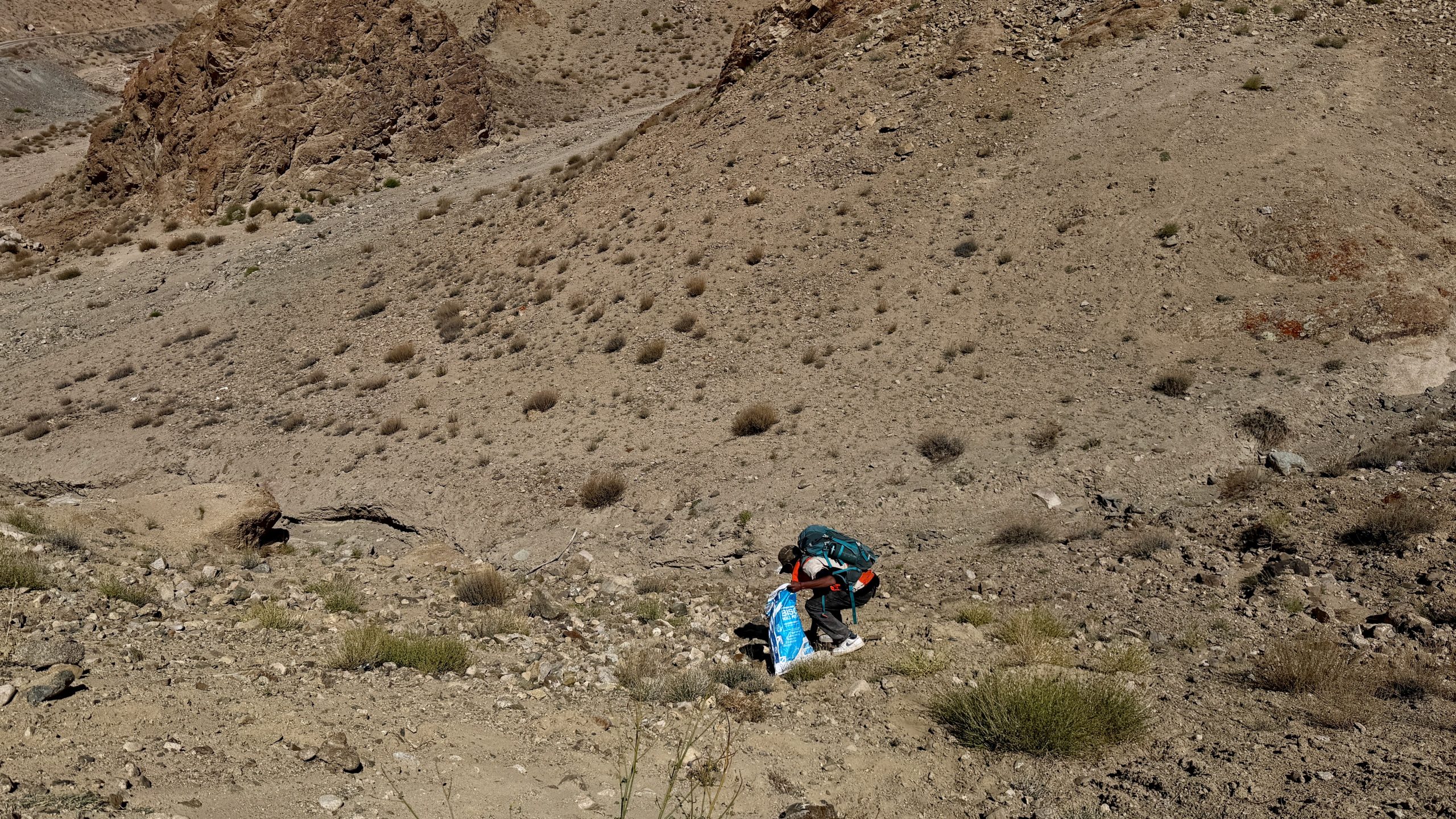
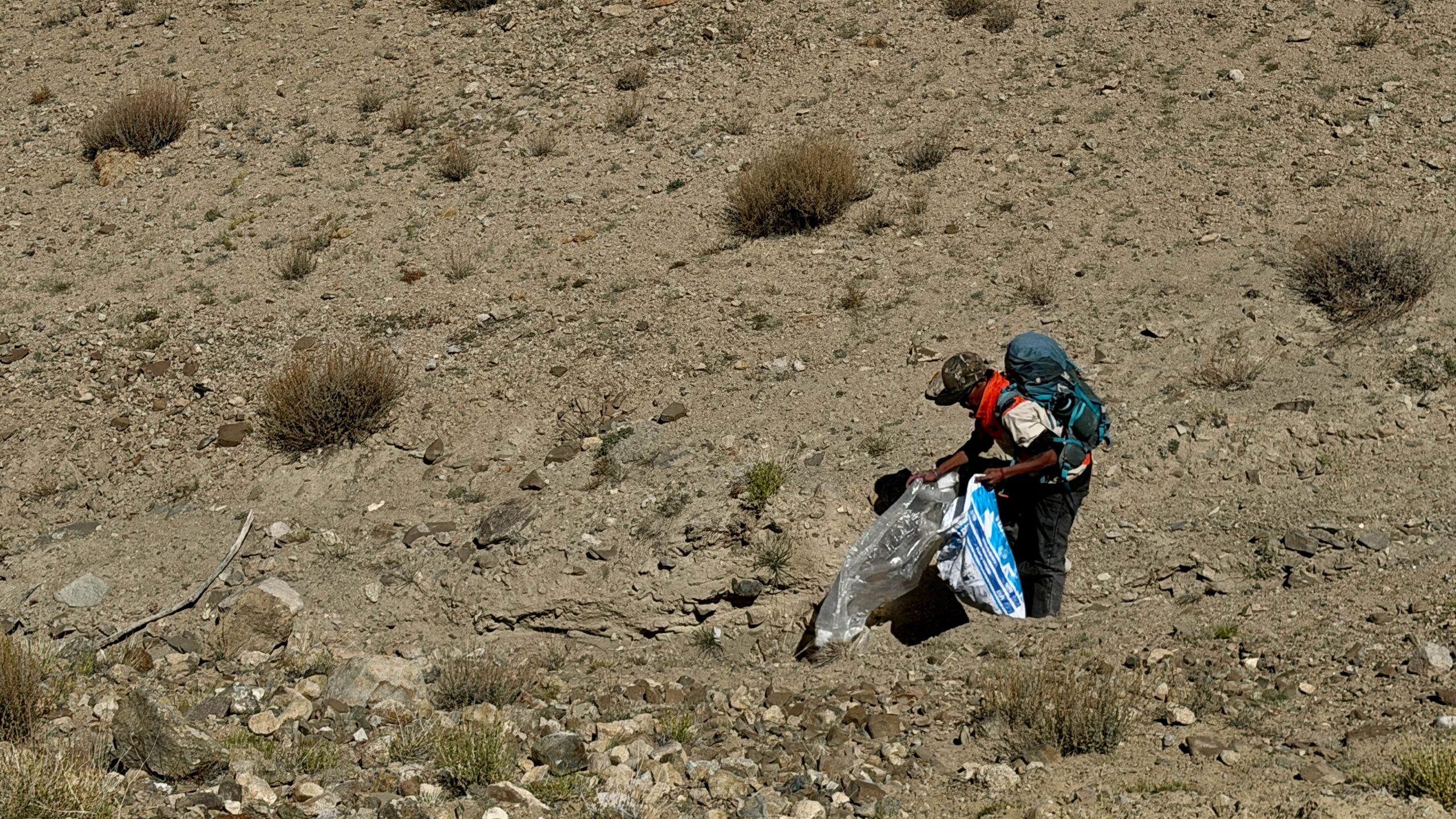
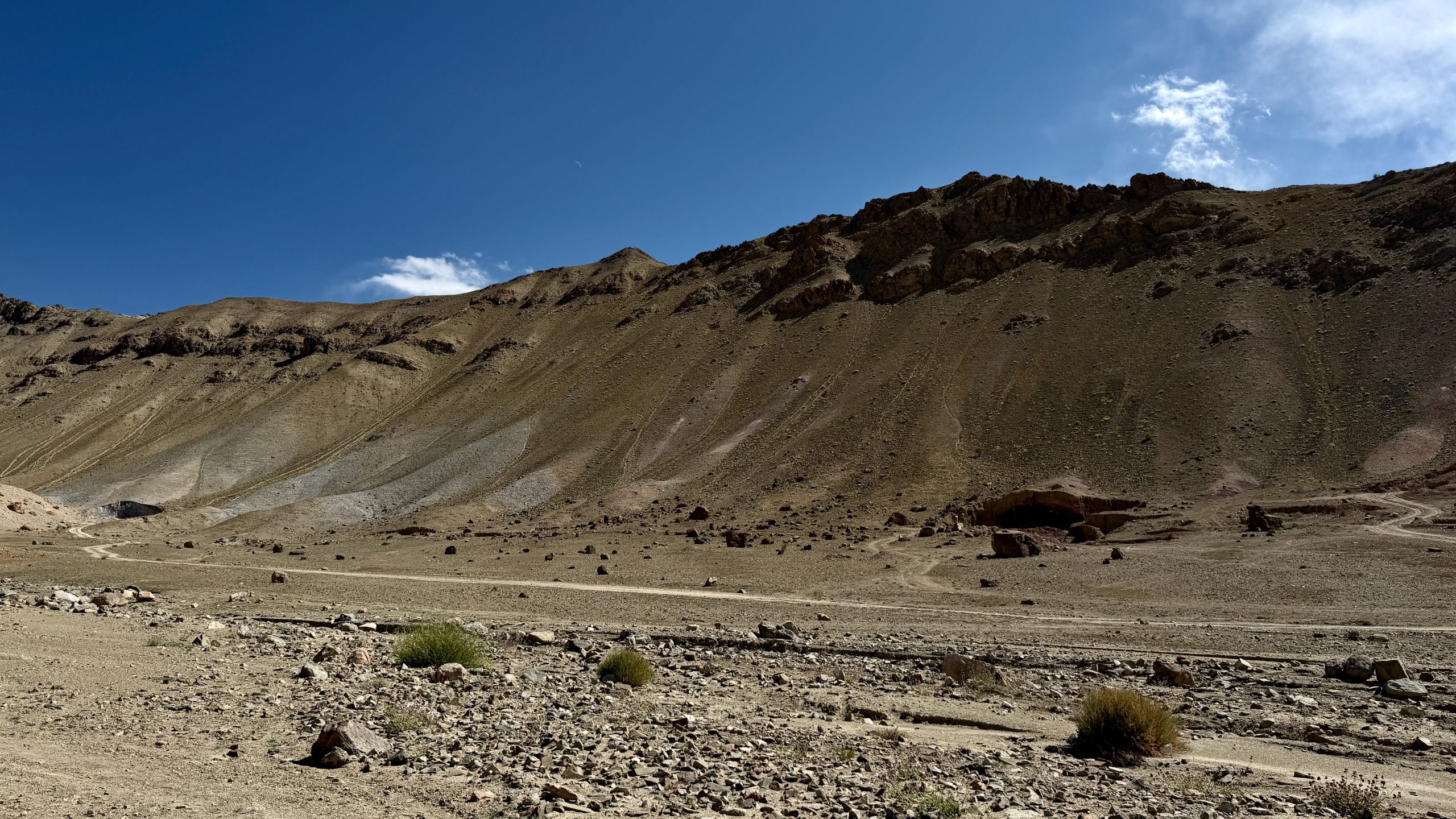
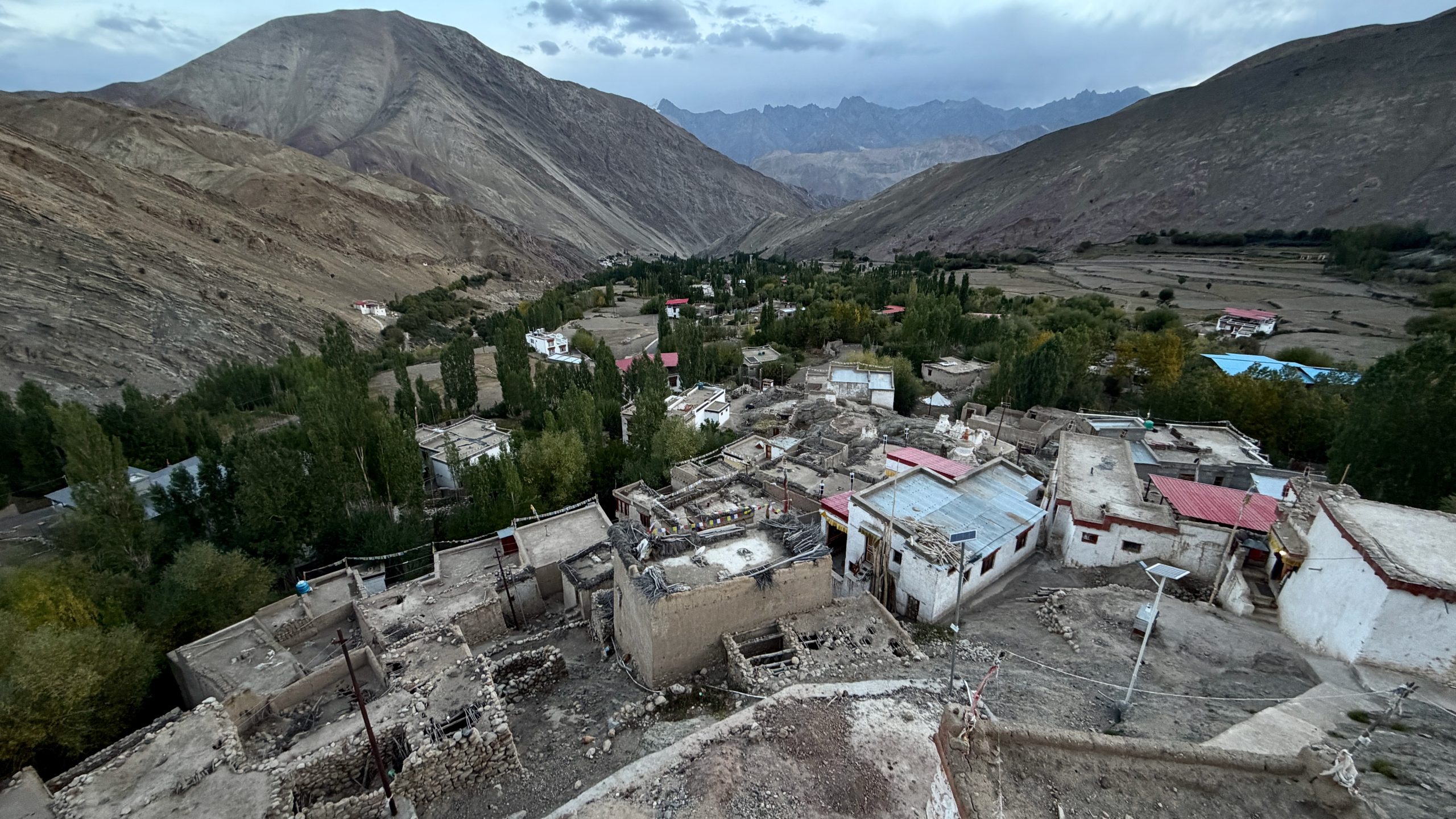
Hemis Shukpachen is a huge village that stretches very far down the valley. They seem to quarry stone here, but there were no workers to be seen.
Angchuk had recommended a guesthouse—which, unfortunately, turned out to be a complete disappointment. I used to stay there quite often with groups back in the day and always thought it was wonderful. In the meantime, it had changed its name and expanded the entrance, but it was completely lacking in warmth, love, and investment in upkeep. For instance, the trash can in my bathroom was overflowing, an opened bottle with a spoon in it was left sitting around, the bed linens hadn’t been changed, and it had only been cleaned very superficially. Still, it wasn’t so creepy that we felt the need to pack up and leave right away, so we stayed. But compared to the previous three homestays, it really didn’t stack up well.
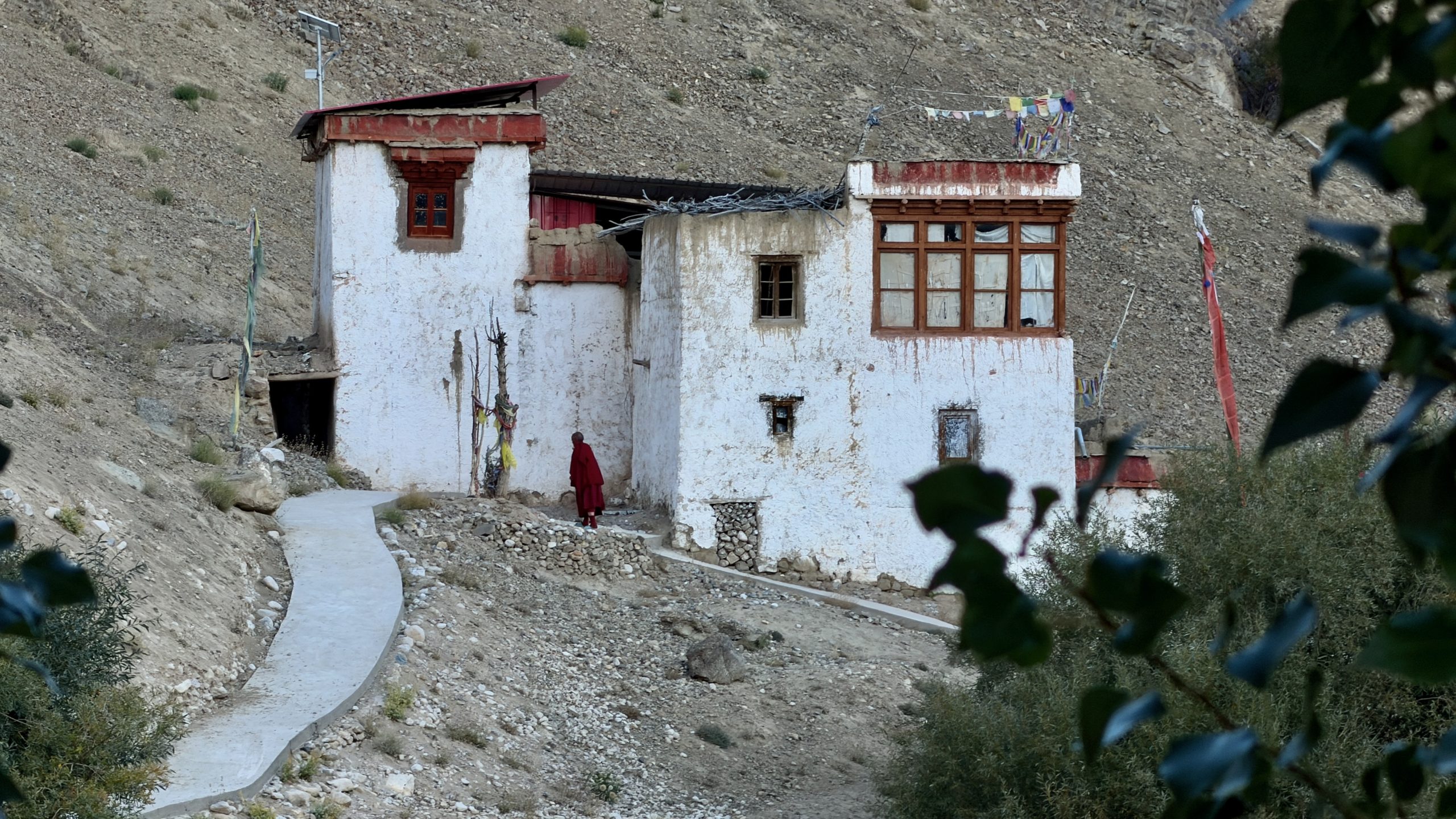
Then again, we still had plans for the afternoon and headed out. Supposedly, there was still a nun living here. First, we walked over to the monastery down in front. I used to run into a monk there from time to time. This time, nobody was around, but the key was left in the lock. So in we went.
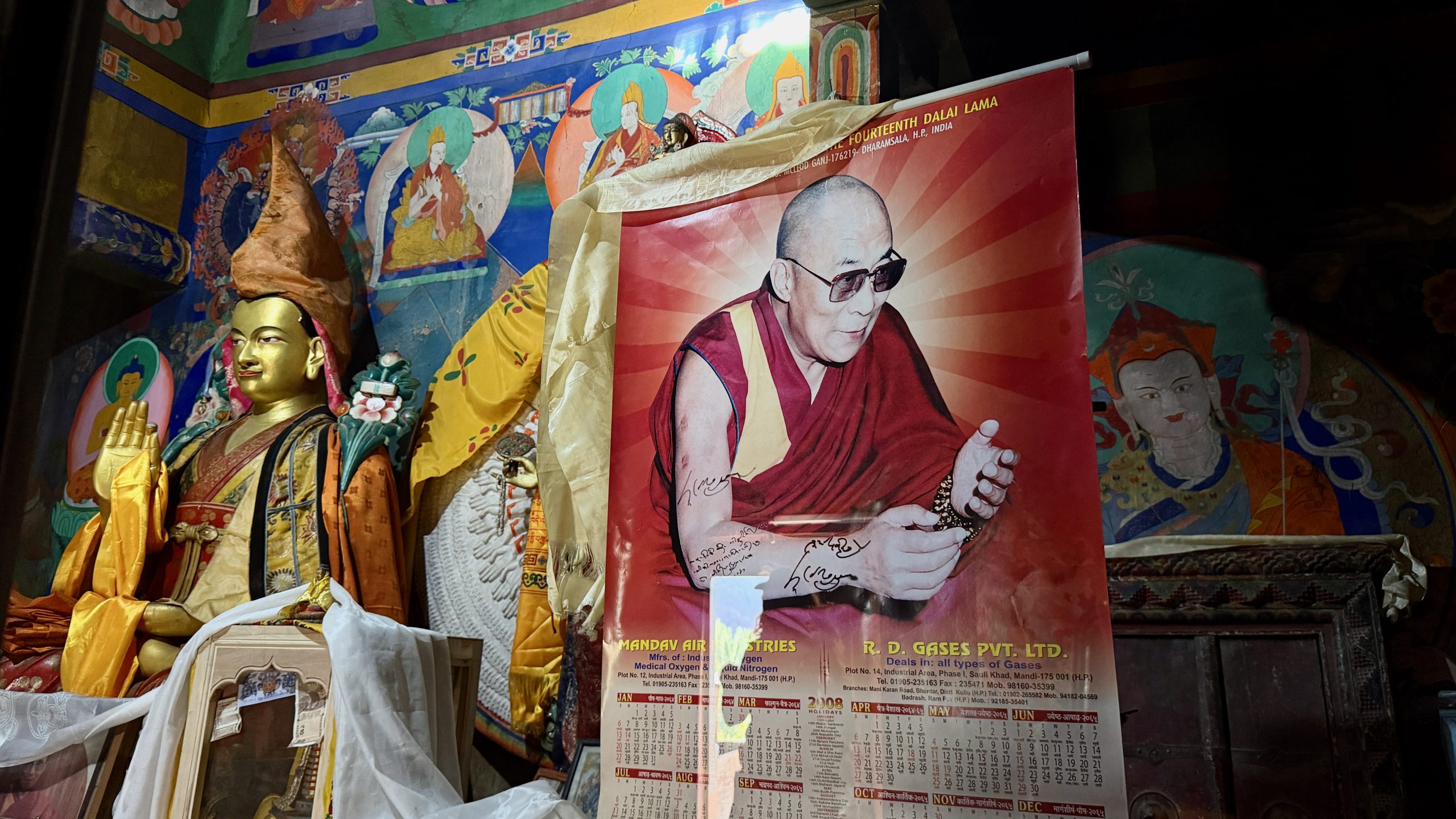
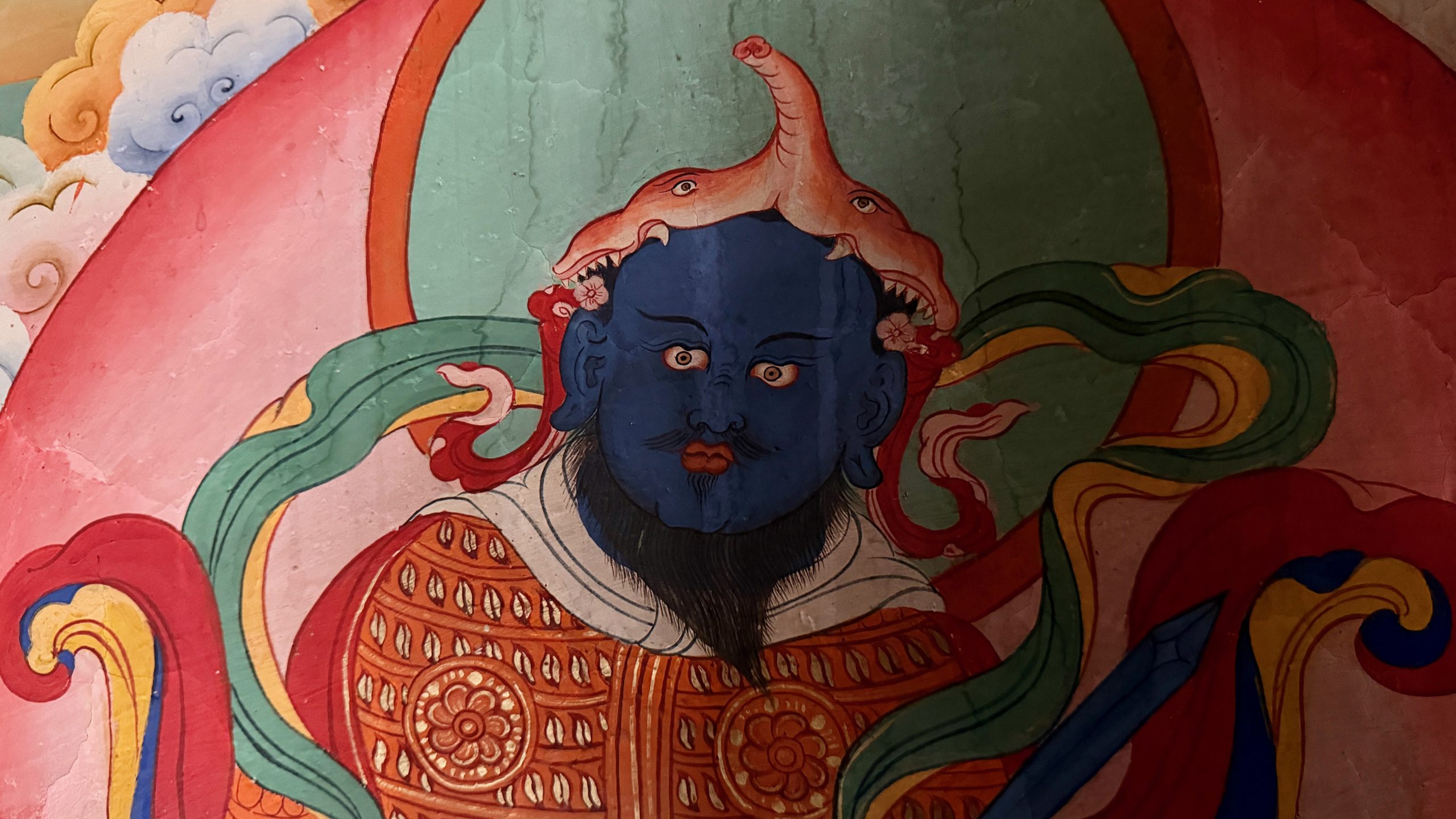
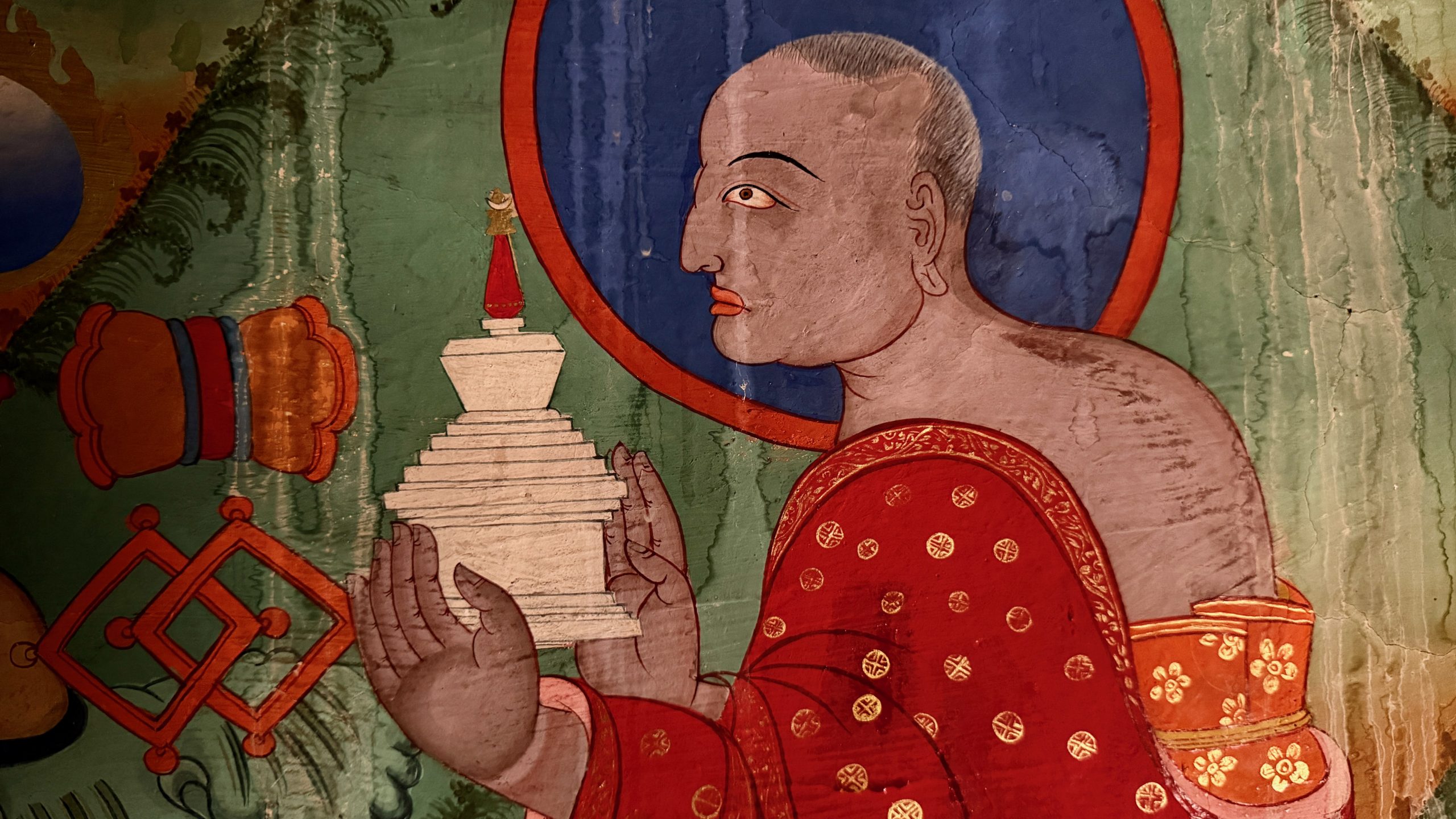
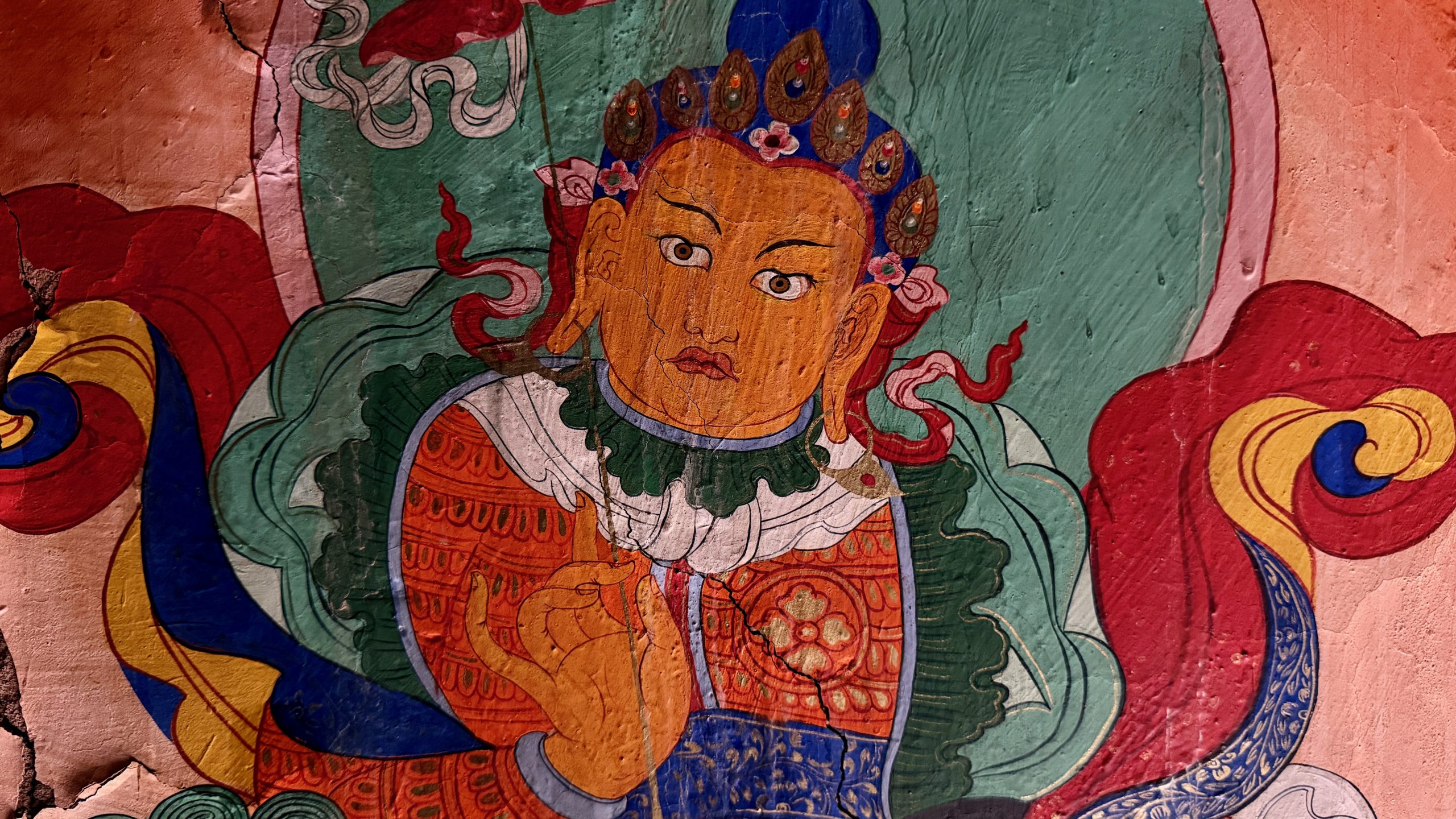
In general, I can’t get all that excited about visiting monasteries just for the sake of sightseeing. To make it a bit more interesting for myself, I scan the murals for oddities—and here, too, I hit pay dirt. What on earth does the guy with the blue face have on his head??? Since we had the place to ourselves and the other two didn’t actually know all that much about Buddhism, I tried to explain a few concepts using examples from everyday life. That was really nice.
Afterward, we went next door, where an elderly nun was sitting beside a small pile of apricots, prepping them. We crouched down with her, chatted for a bit, and were warmly invited inside for tea, which we gladly accepted. Ani Zangmo is around 83 years old and decided to pursue a nun’s life when she was 15. Back then, options in Hemis Shukpachen were pretty bleak—there were several women who took up the monastic path, but instead of studying, they essentially ended up slaving away in the fields. That changed in the late 1990s when Ani Palmo—as I mentioned in the previous blog post—championed the nuns’ cause. She attracted donors from around the globe, leading Ani Ditta, a Dutch Buddhist nun, to step in and build a home for the nuns of Hemis Shukpachen. Finally, they could live together and focus on their practice without having to toil in the fields. They gained respect within the village community and were eventually called upon to perform rituals.
However, they were already quite advanced in age, and the younger generation went elsewhere (like Chulichan, or straight to Dharamshala or South India) to study in proper monastic communities. One by one, the older nuns passed away, and now Ani Zangmo is the only one left.
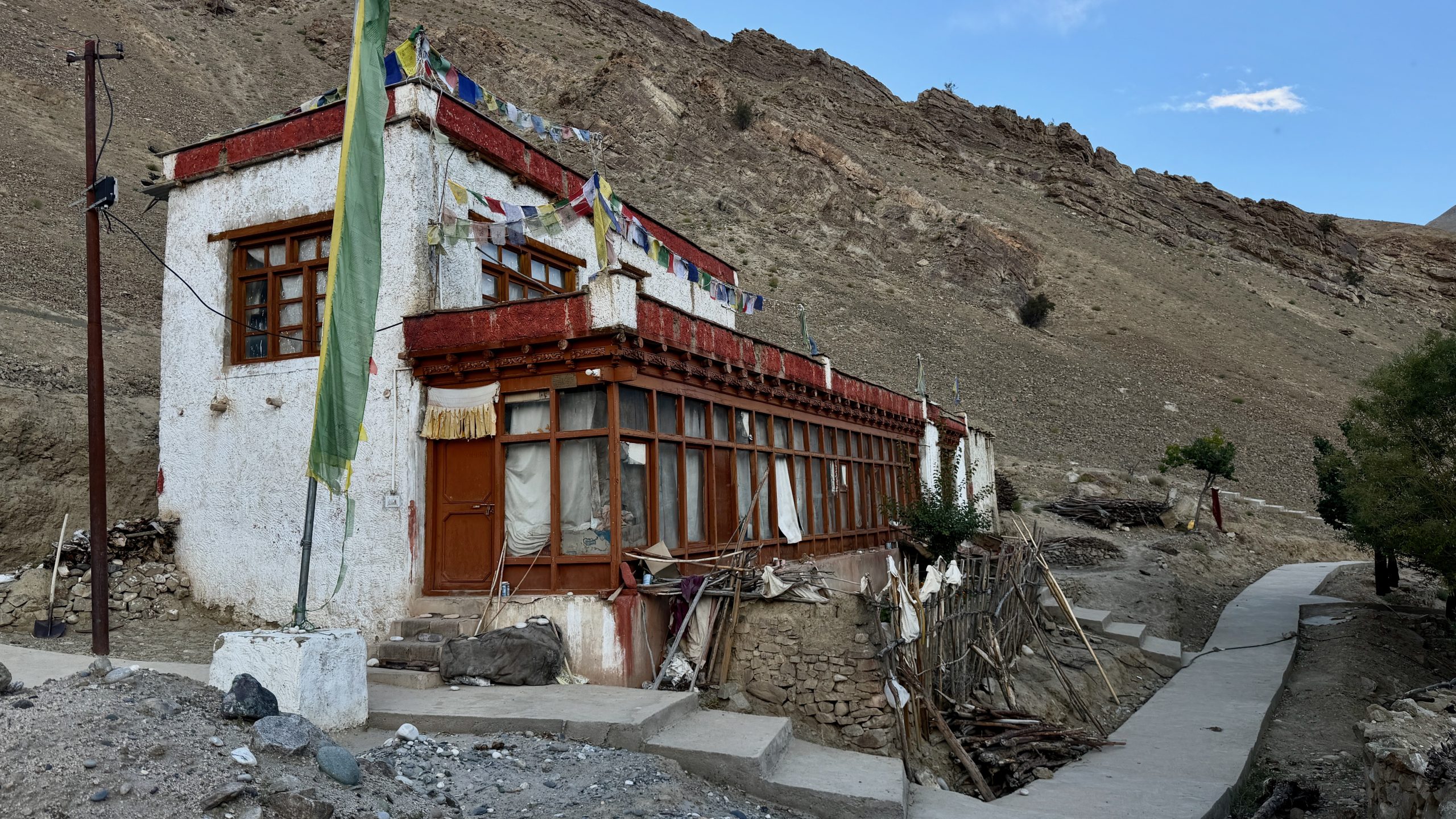
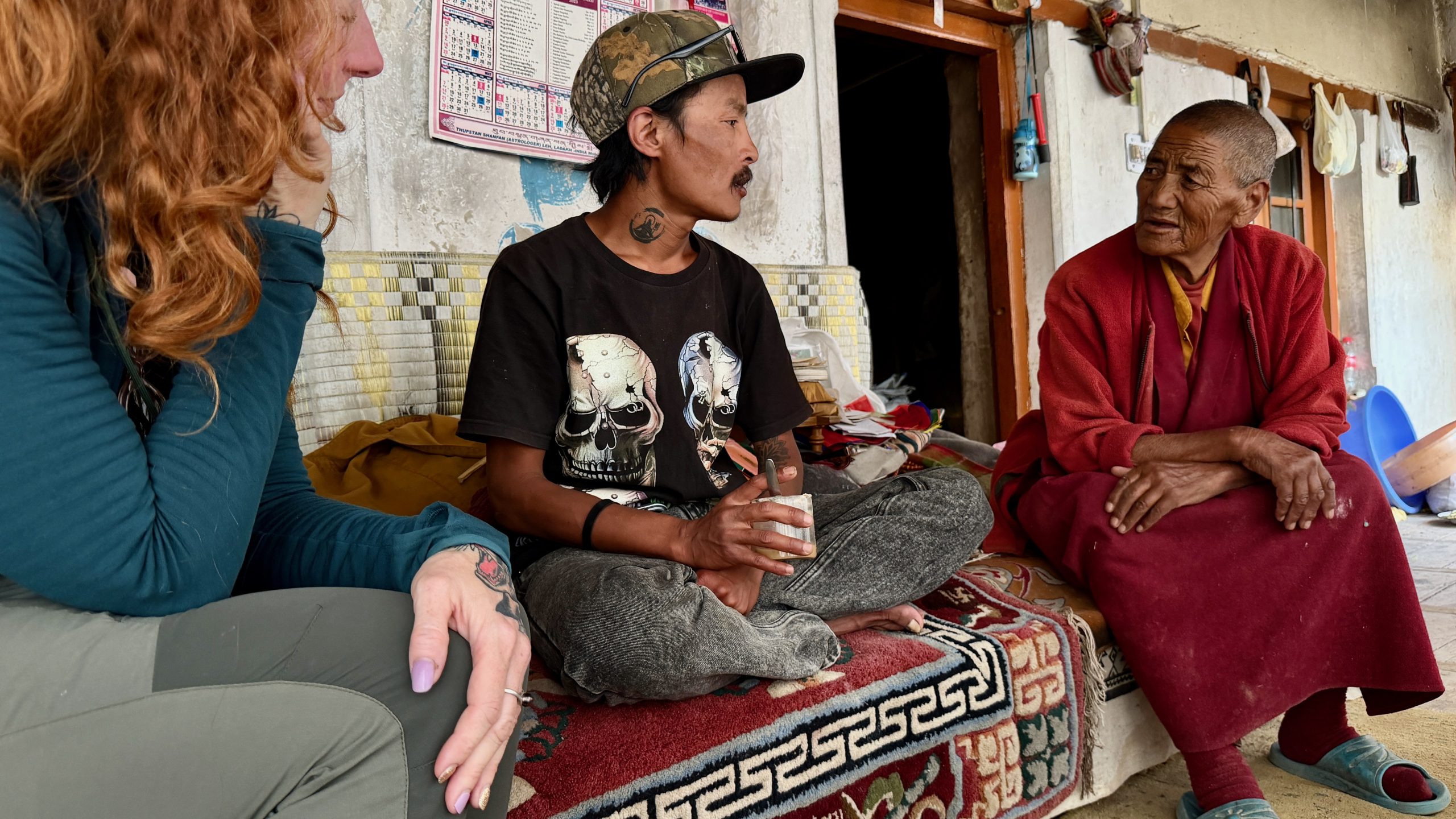
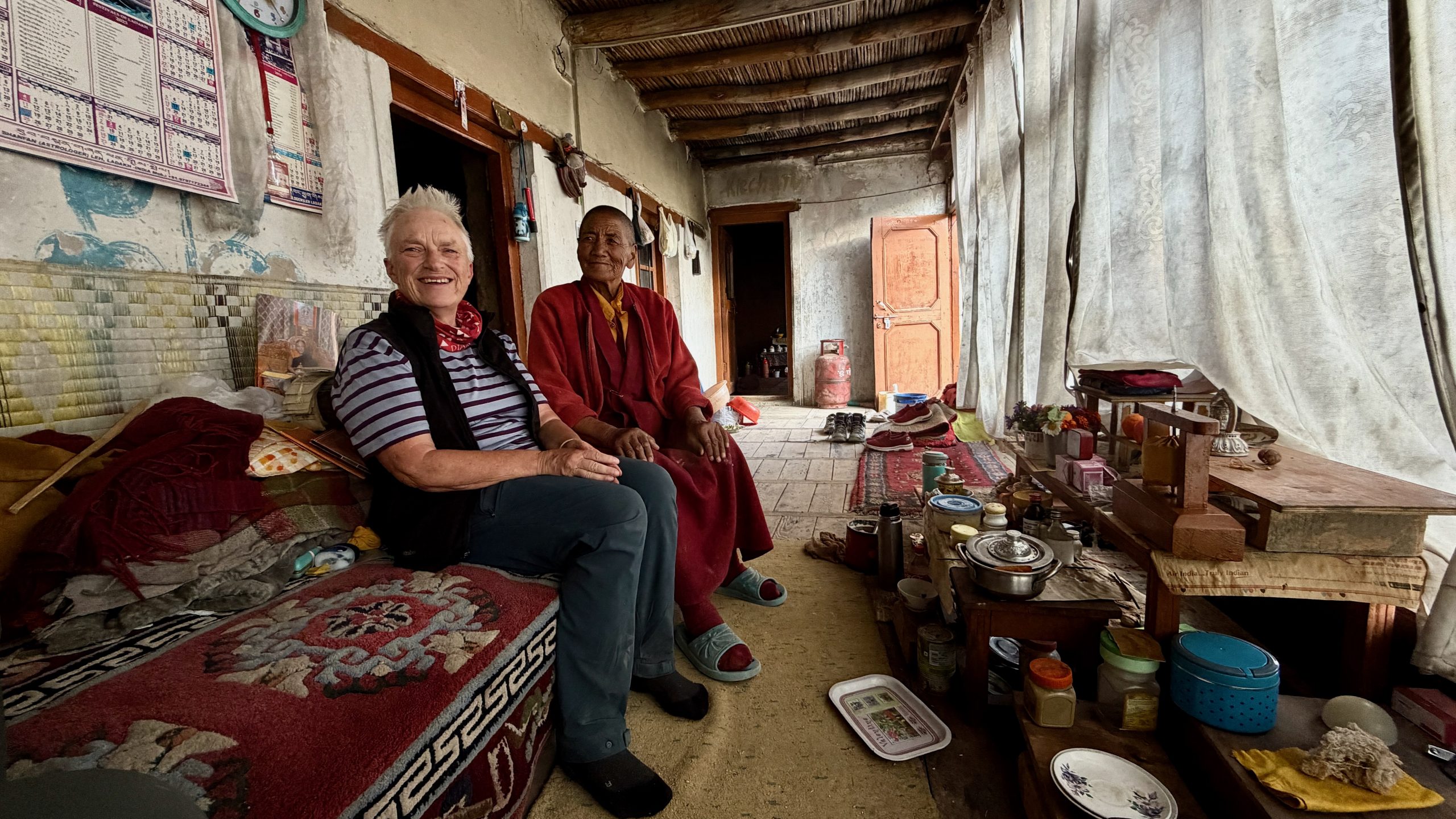
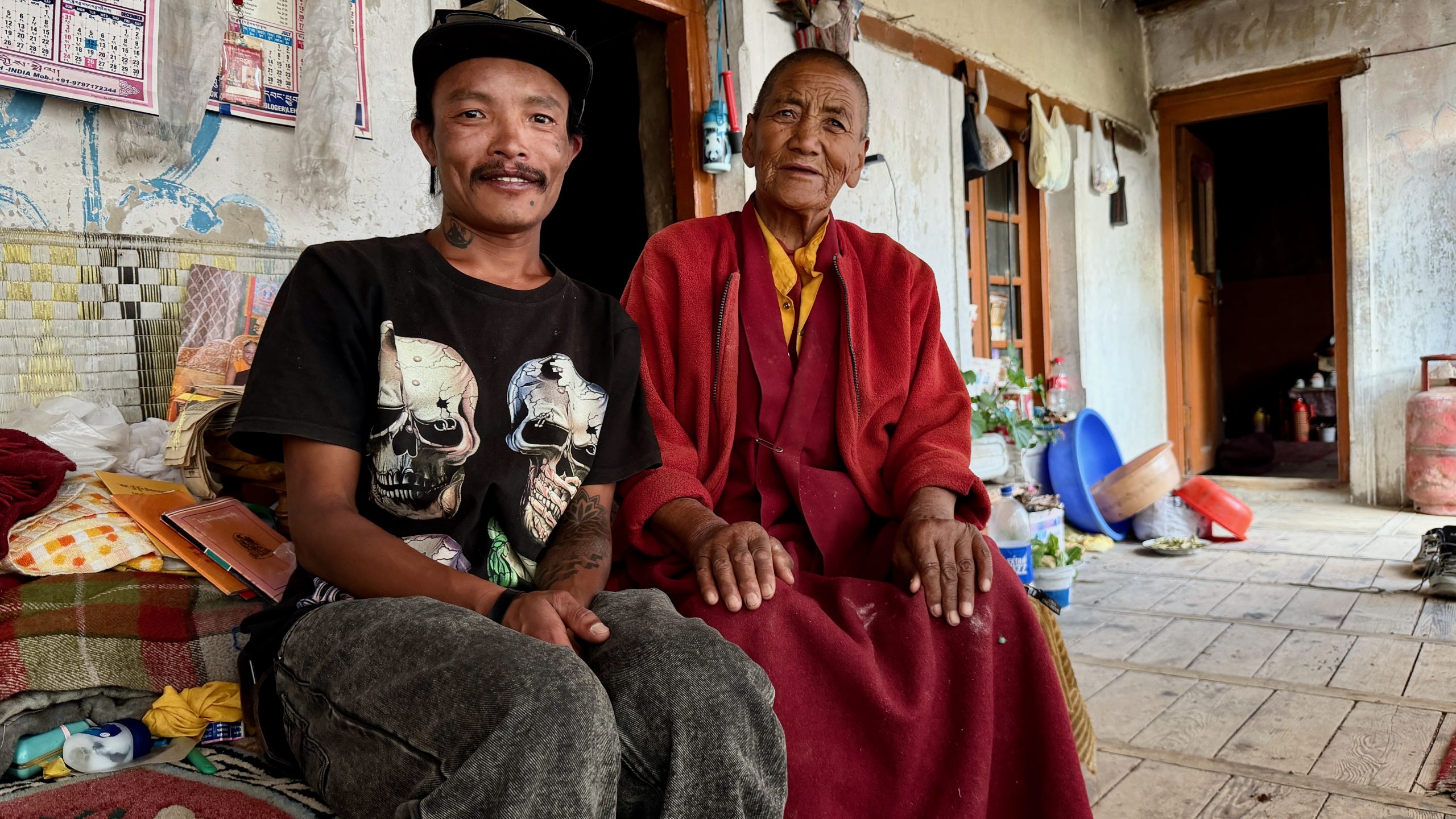
But she says she’s doing well. There’s plenty of food, she has a place to sleep, and the village women drop by regularly for company and support, sometimes even staying overnight. She needs nothing. Rinchen was grateful that she picked up on his limited Ladakhi and adjusted, explaining everything to him in simpler terms.
We genuinely enjoyed sitting together, and it was a deeply moving encounter. I was perhaps the only one feeling a touch of frustration, having known the house in much better shape, watching it decay now right alongside the old woman.
She didn’t ask for anything, but Elsa and I pressed a large bill into her hand anyway, telling her it was for the monastery rooms next door—and asking her to keep us in her thoughts. Or rather, I asked her to direct those good thoughts toward my dad instead. I felt content enough with where I was at that moment. Ani Zangmo accepted the money and, after we said our goodbyes, set off next door to take care of the rituals there.
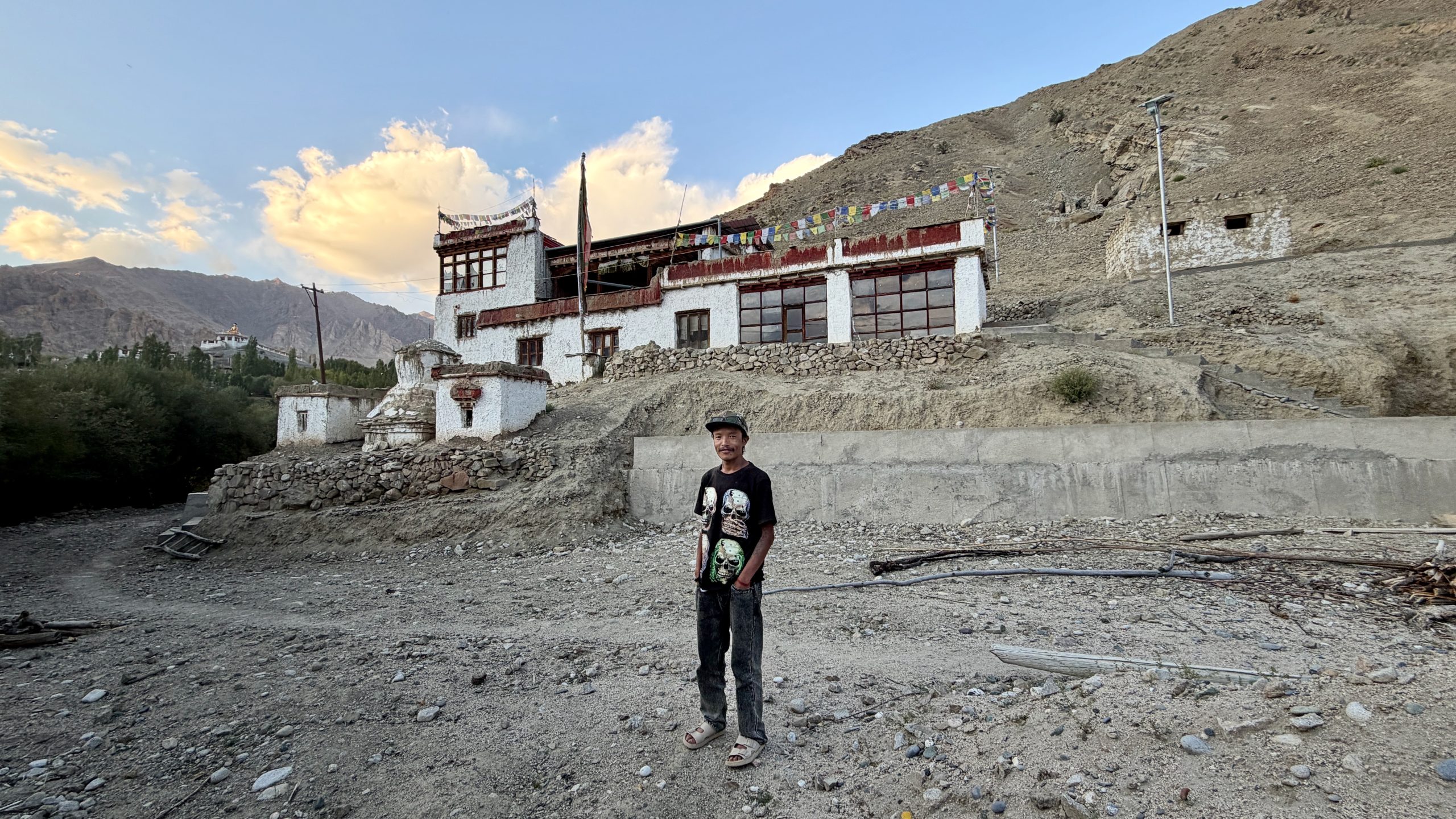
By the way, here you can see a Ladakhi phenomenon on Rinchen’s feet that I just can’t quite get on board with. Outside the entrance, there are usually various pairs of shoes sitting around, and when people step out, they don’t necessarily grab their own—they just slip into whichever pair happens to fit. Then, when you come out later wanting to put on your own shoes, you might find they’ve already walked off on someone else’s feet. So, for a stroll through the village, he decided not to wear his own.
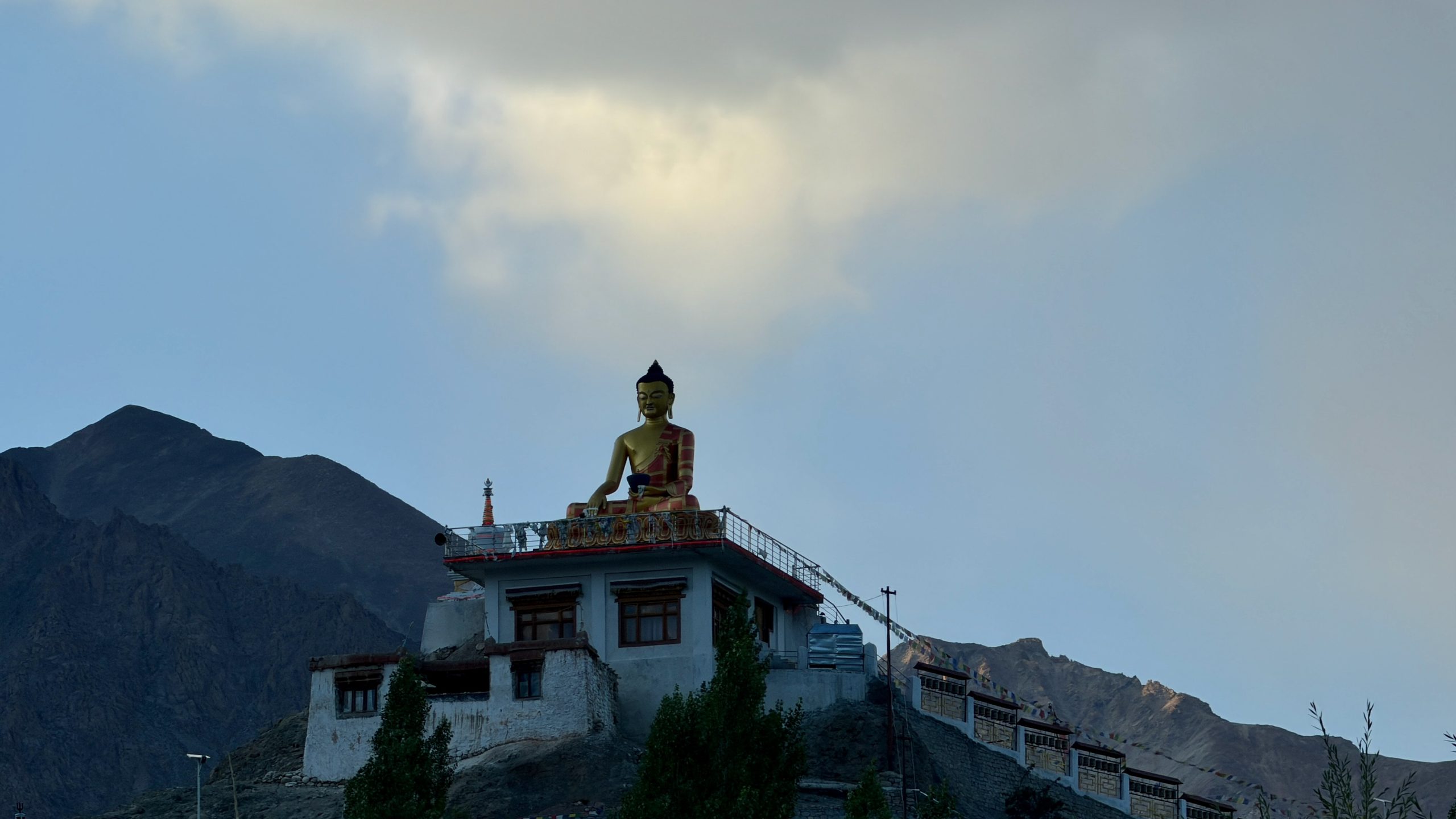
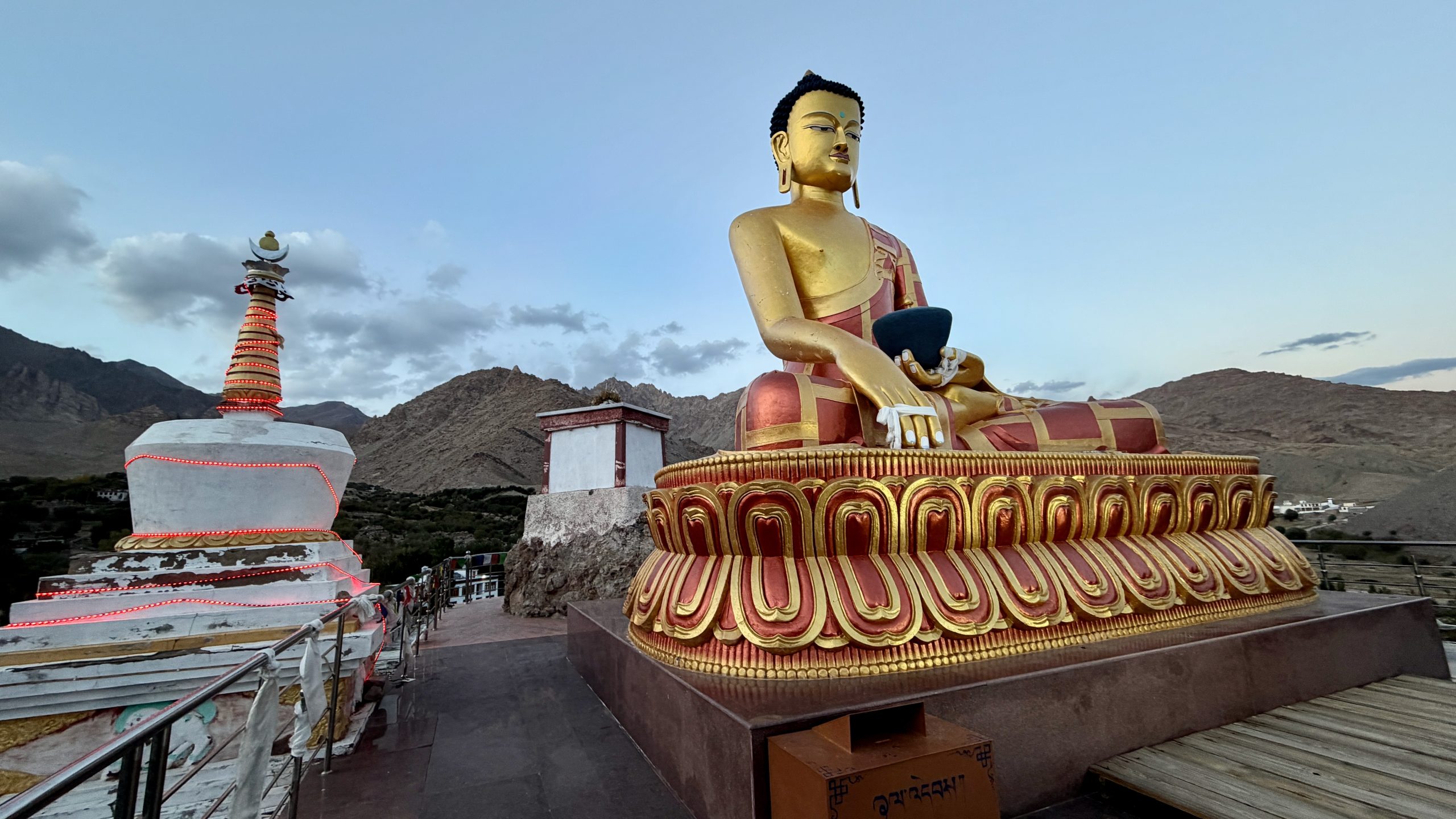
And then we walked up to the large Buddha statue, looked down, and were delighted by the “disco lighting”.
Dinner was good, but even though a monk and an elderly man were in the dining room with us, there was no shared conversation—so Elsa and I ended up talking a bit more about solo travel, being a woman, and life in general. She and Rinchen even made plans for a trip to Zanskar together.
I experienced a genuinely lovely dynamic among the three of us. There was an incredible sense of ease and connection for that brief stretch of time—the kind you don’t come across very often, but deeply cherish when you do. And perhaps what made it even sweeter was that, earlier that morning, we had no idea it would work out so wonderfully.