


Zangla -> Tsazar – a Hungarian, an Arhat and a Mountain Happiness
26. May 2026
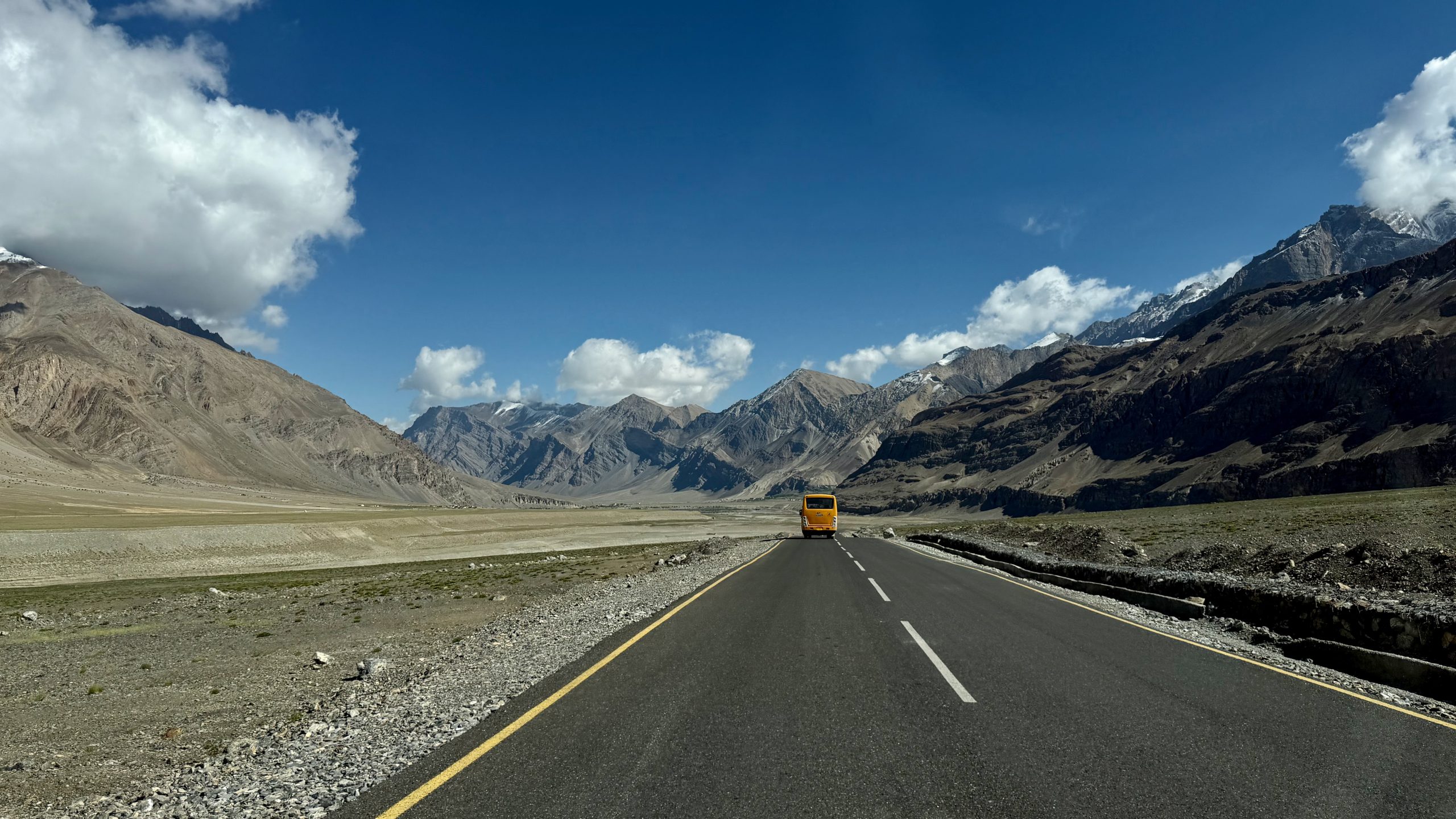
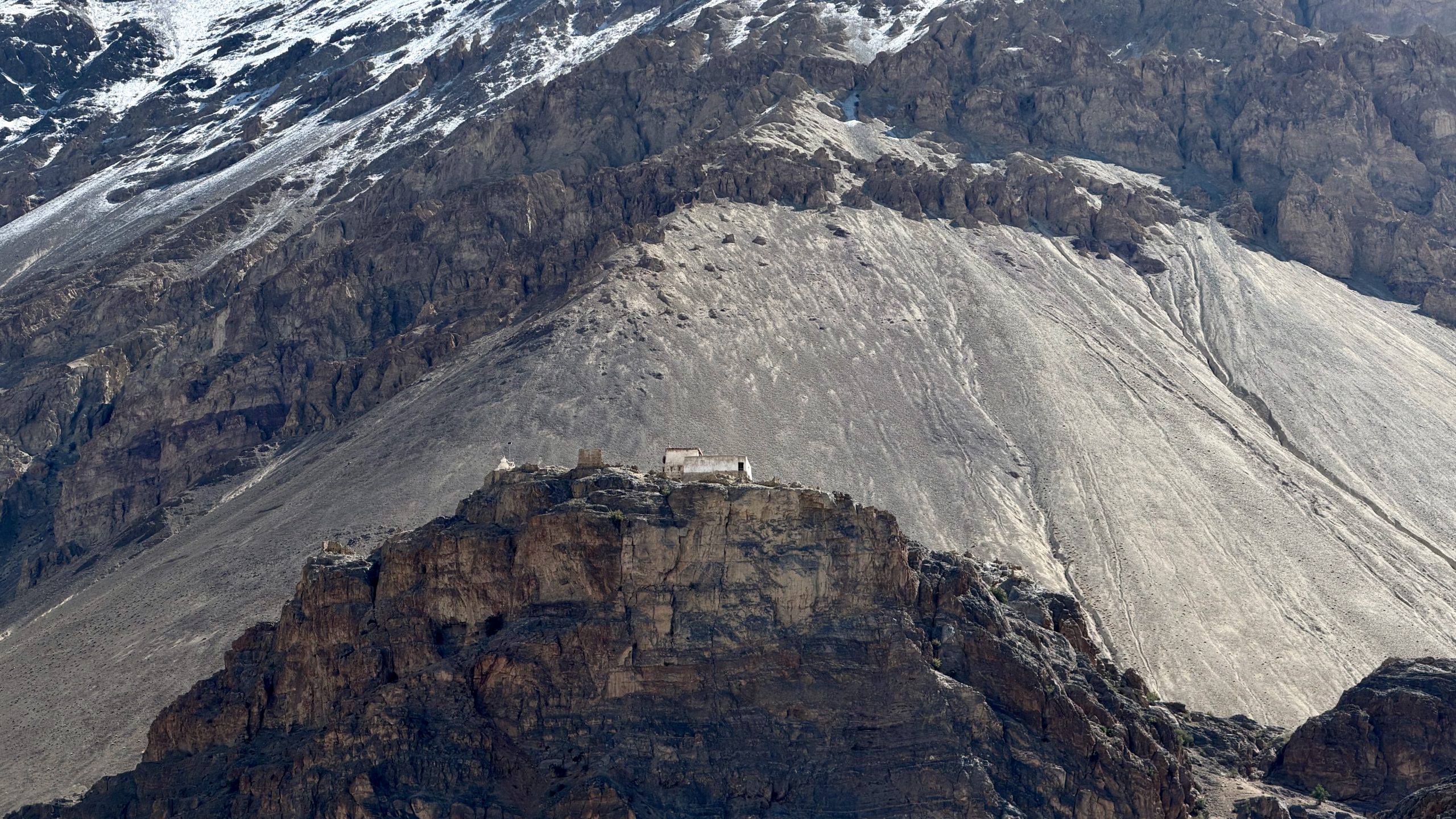
In fact, blue skies were smiling down on us when, after breakfast, we drove the short distance to Zangla. Zangla used to be a kingdom. I had actually known the old king — he had passed away a few years earlier. And there was an old palace, perched on its own hill, overlooking the valley.
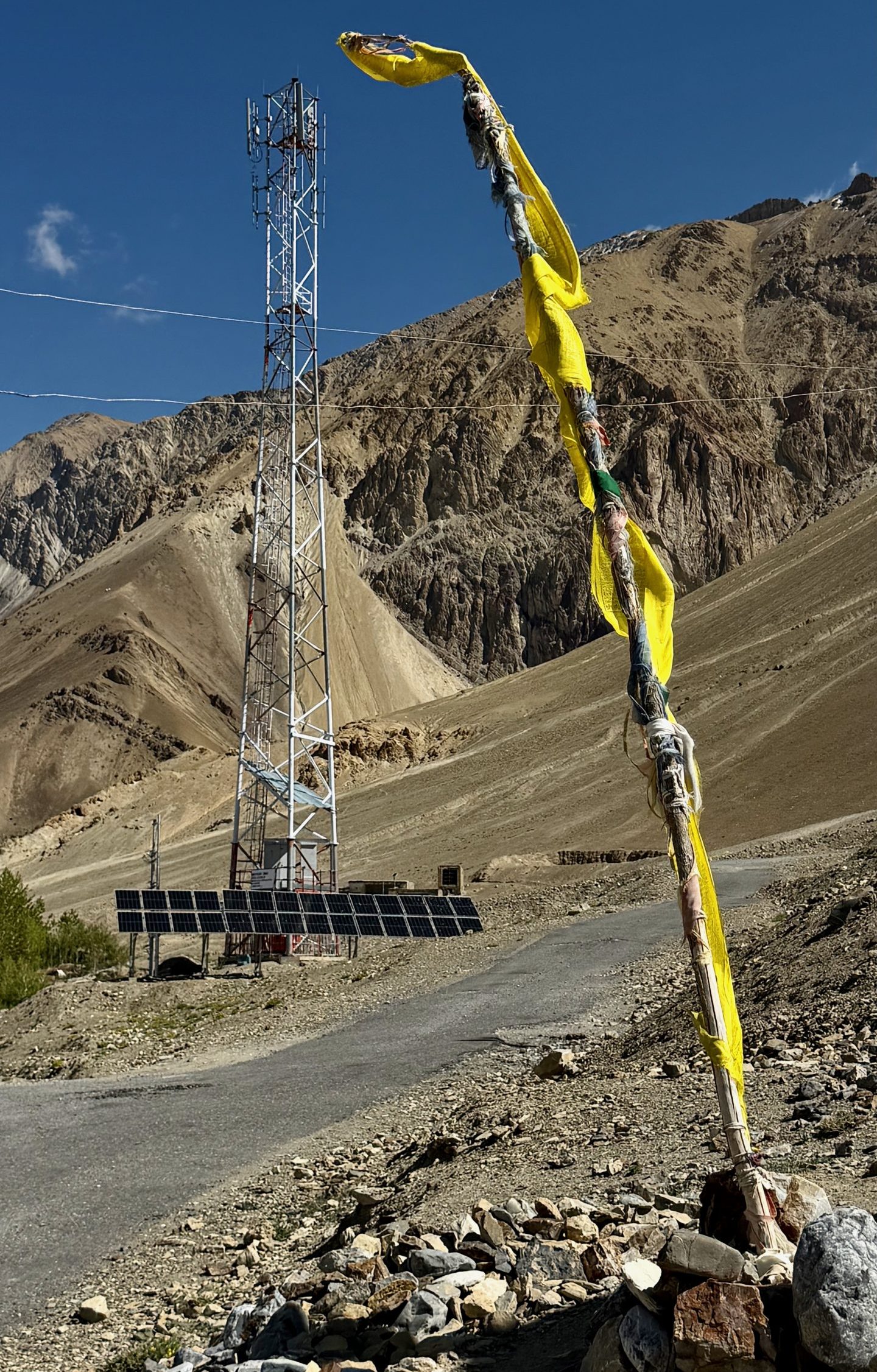
We parked the car down in the village and went higher. During this I could wonder about the modernities here.
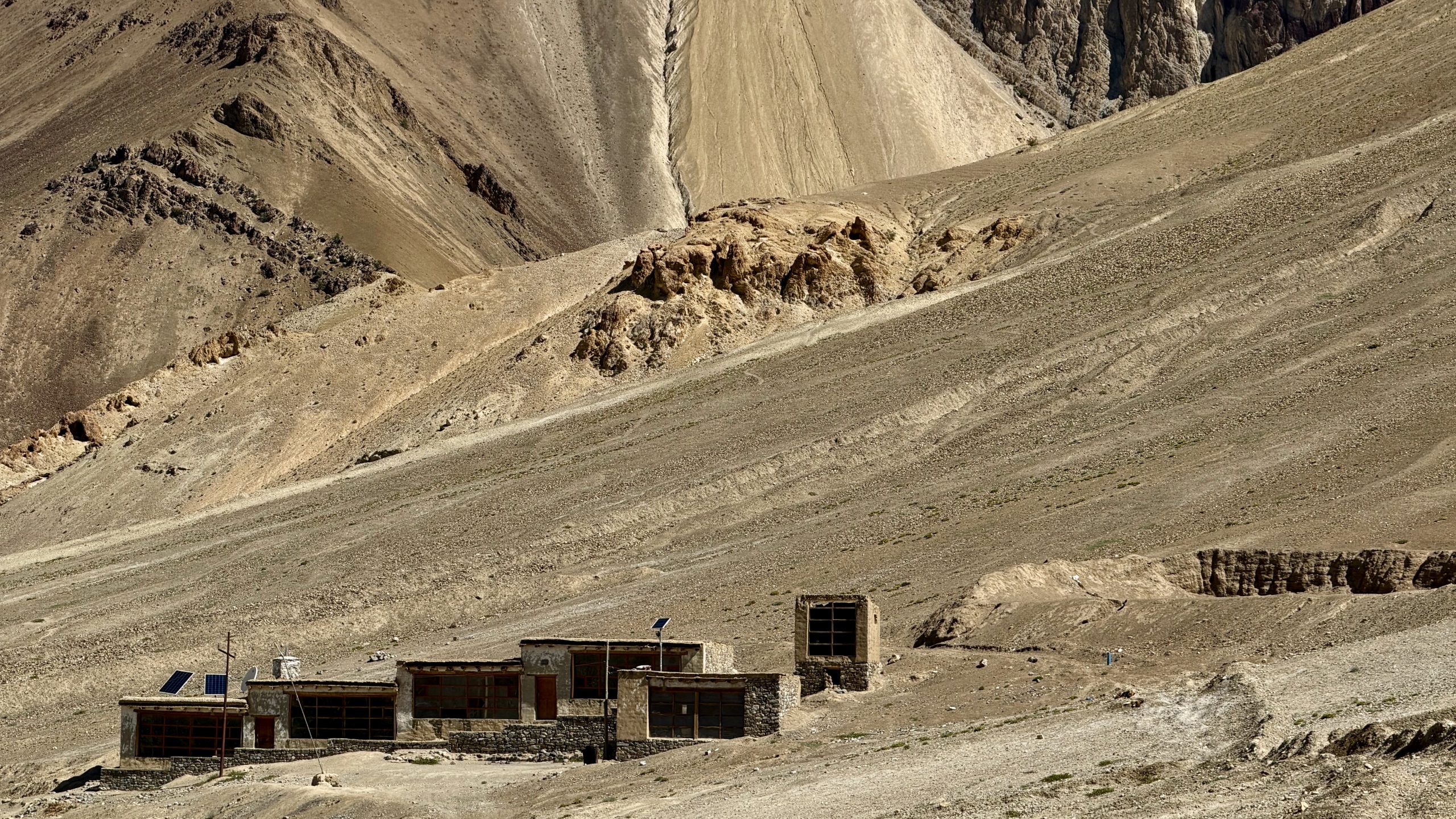
These buildings are used for winter tuition classes. In Zanskar, winter holidays are very long because schools do not have enough heating resources and temperatures become too low for regular classes. For many children, travelling through deep snow would also mean walking distances that are simply too long. Instead, so-called tuition classes are organised closer to where families live. Smaller groups of children are taught in compact, sunlit rooms, and these groups usually do not correspond to the normal school classes.
So, on to the palace. From far away, we could already hear a noisy group of Indian tourists. They were just coming back down again (from the parking area you still have to walk uphill for a while) — the palace was locked. This is where travelling with a local really helps. Another man was still around and had the key. He had not handed it over to the previous visitors, but he gave it to us — on the condition that we hide it well again afterwards. The surroundings of the palace, with its many chortens, were already wonderfully photogenic.
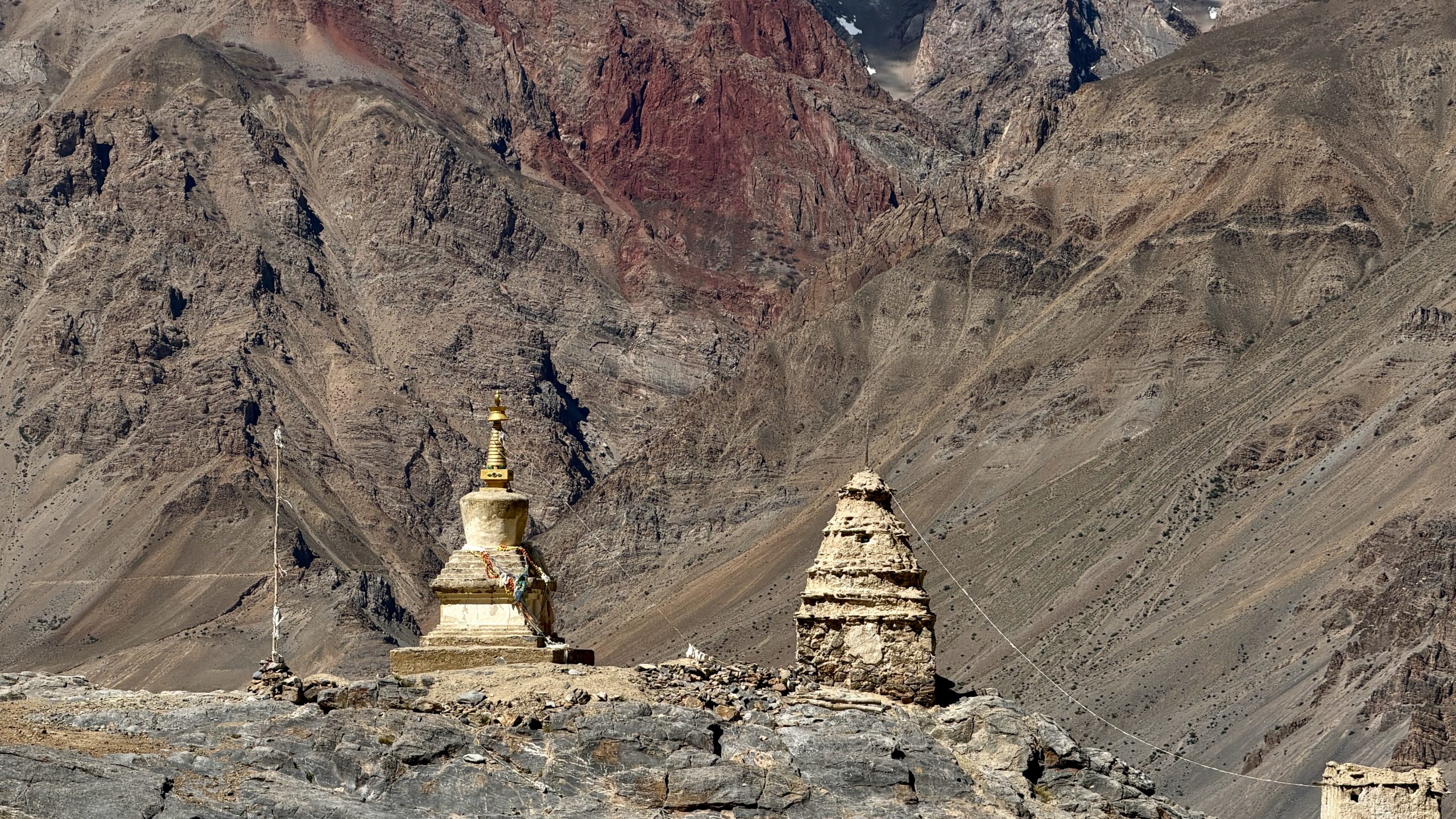
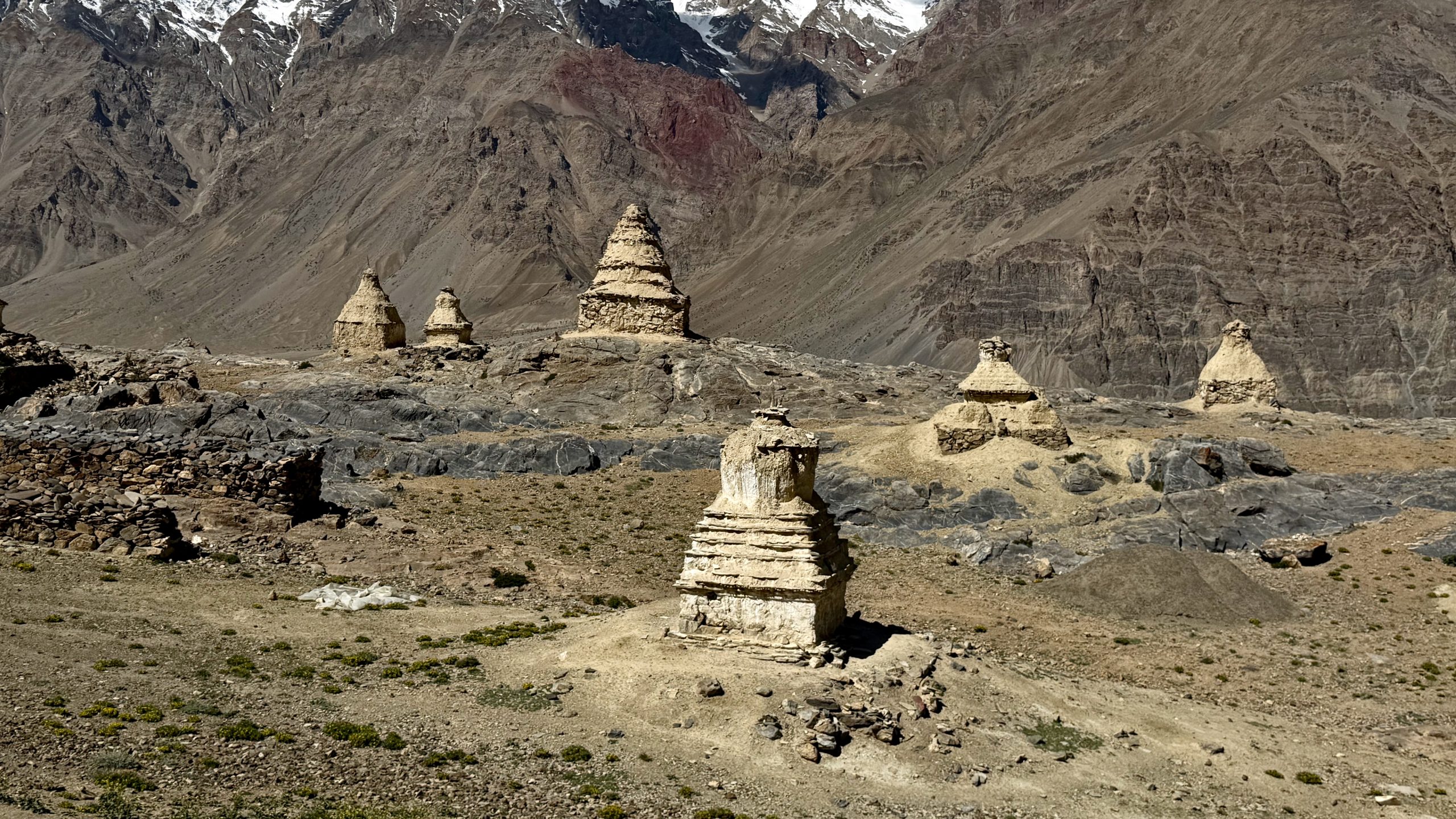
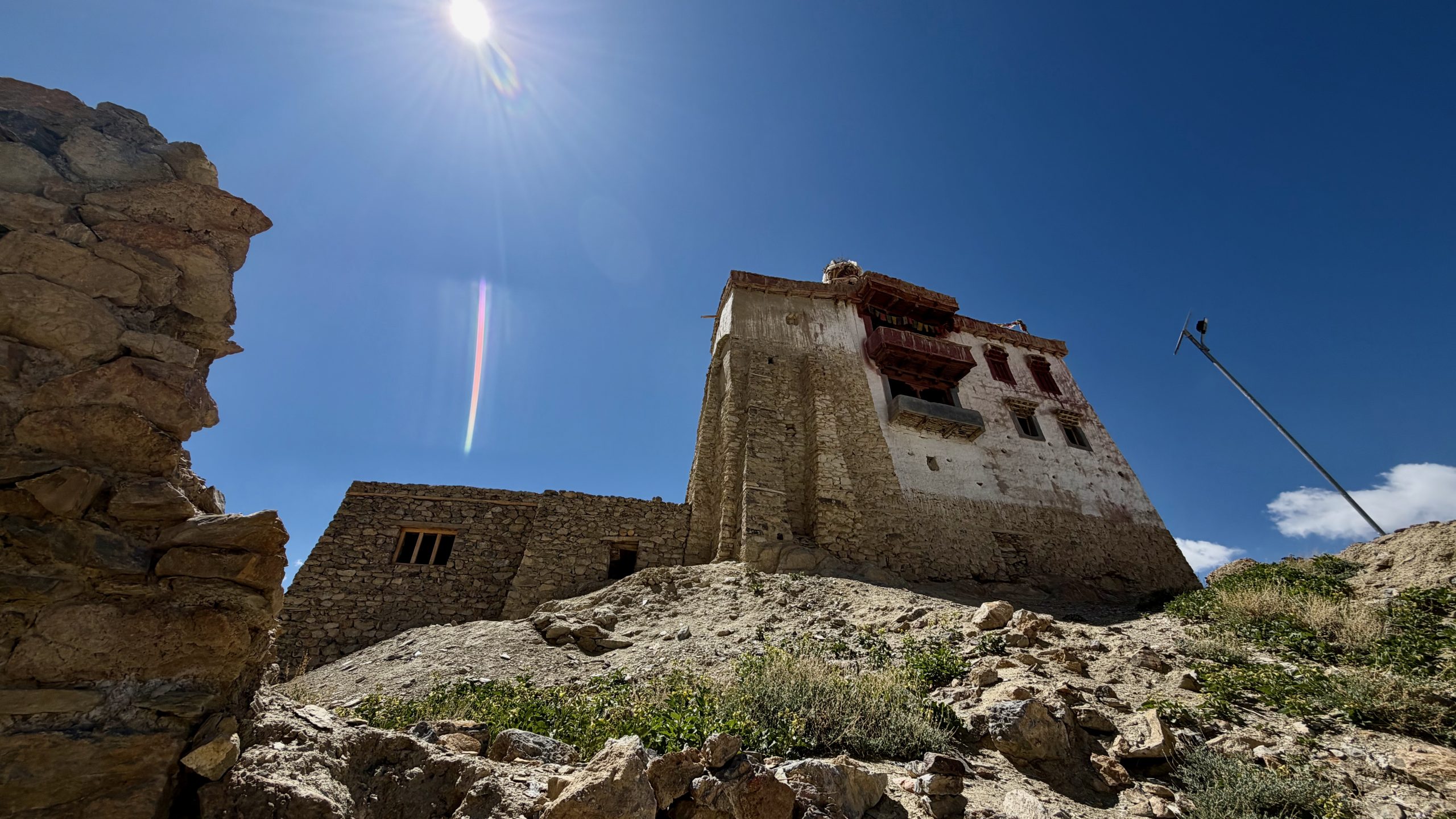
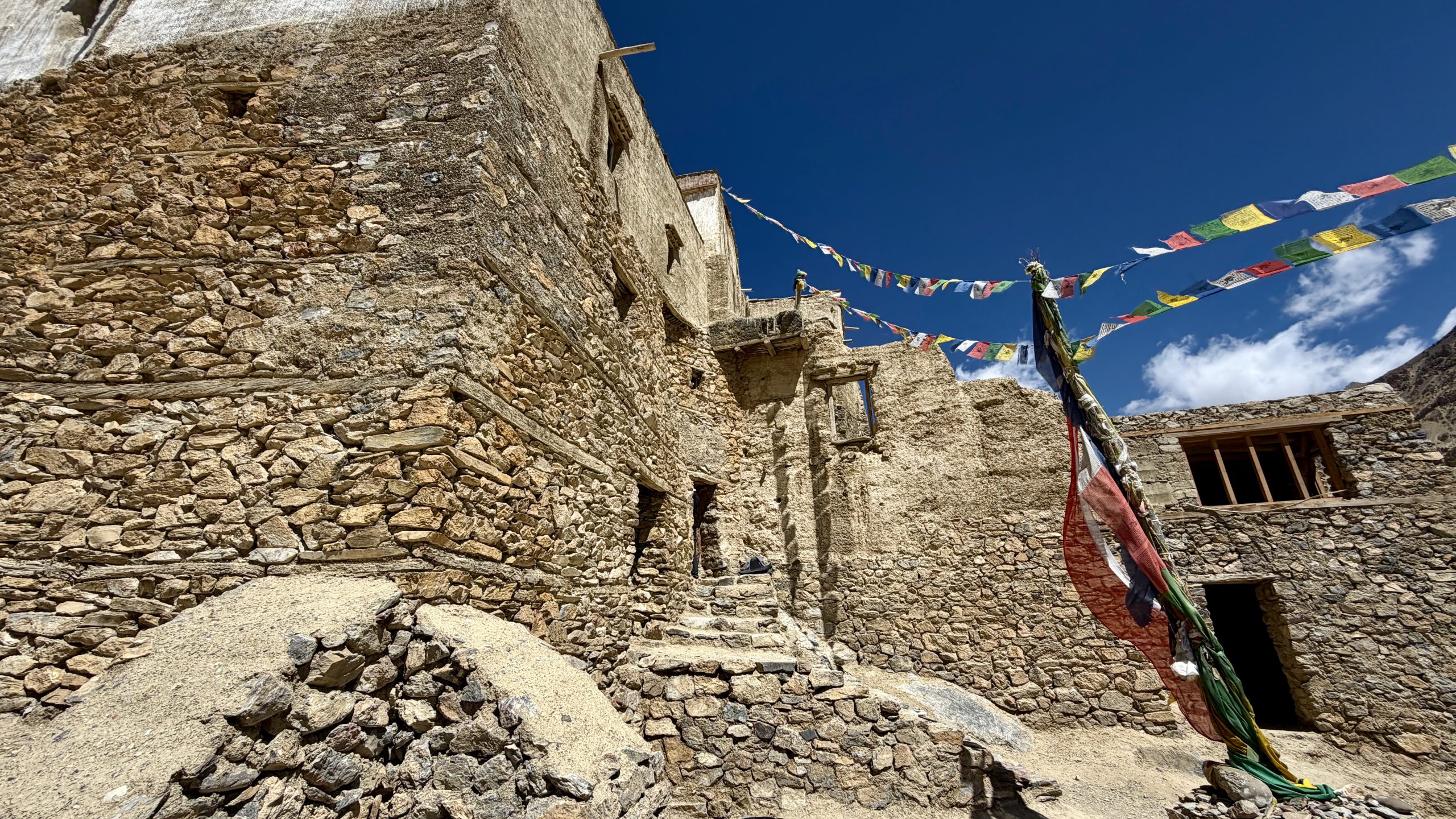
The palace might be in far worse condition today if Hungarians had not invested time, effort, and money into its preservation. One of their national heroes, Alexander Csoma de Kőrös, spent quite some time here and compiled the first Tibetan dictionary. You can also find more information about him here: Wikipedia. I had visited this palace several times before and was curious to see what condition it was in now. On the outside, substantial supporting walls had been added to stabilise the structure and stop further decay. Inside, there were memorial plaques and Alexander’s room had been arranged with a small bed. He was either a small man or always slept curled up. Like every palace in this region, it also has a prayer room filled with Buddhist statues. Still, it is not really a monastery in that sense.
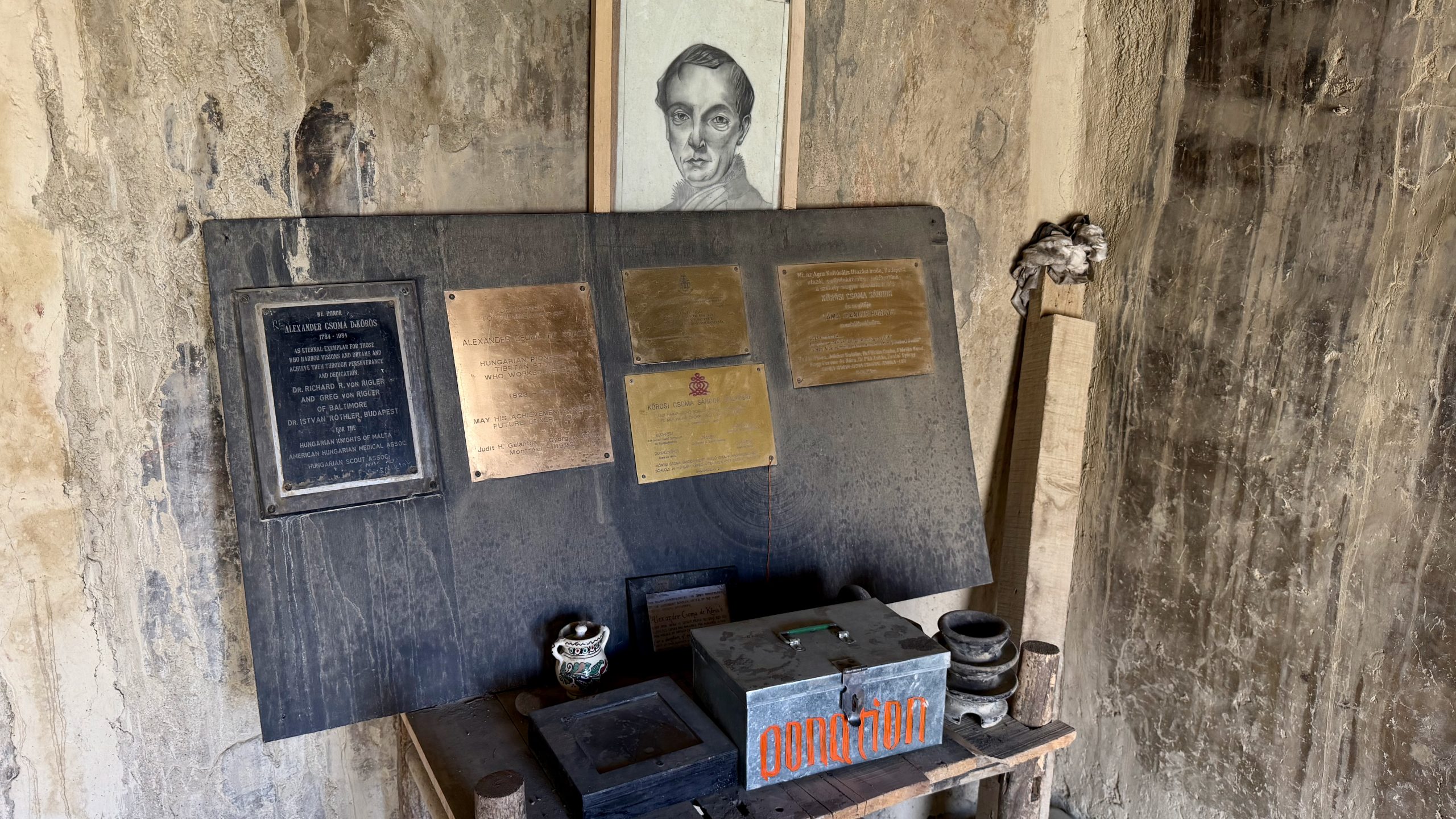
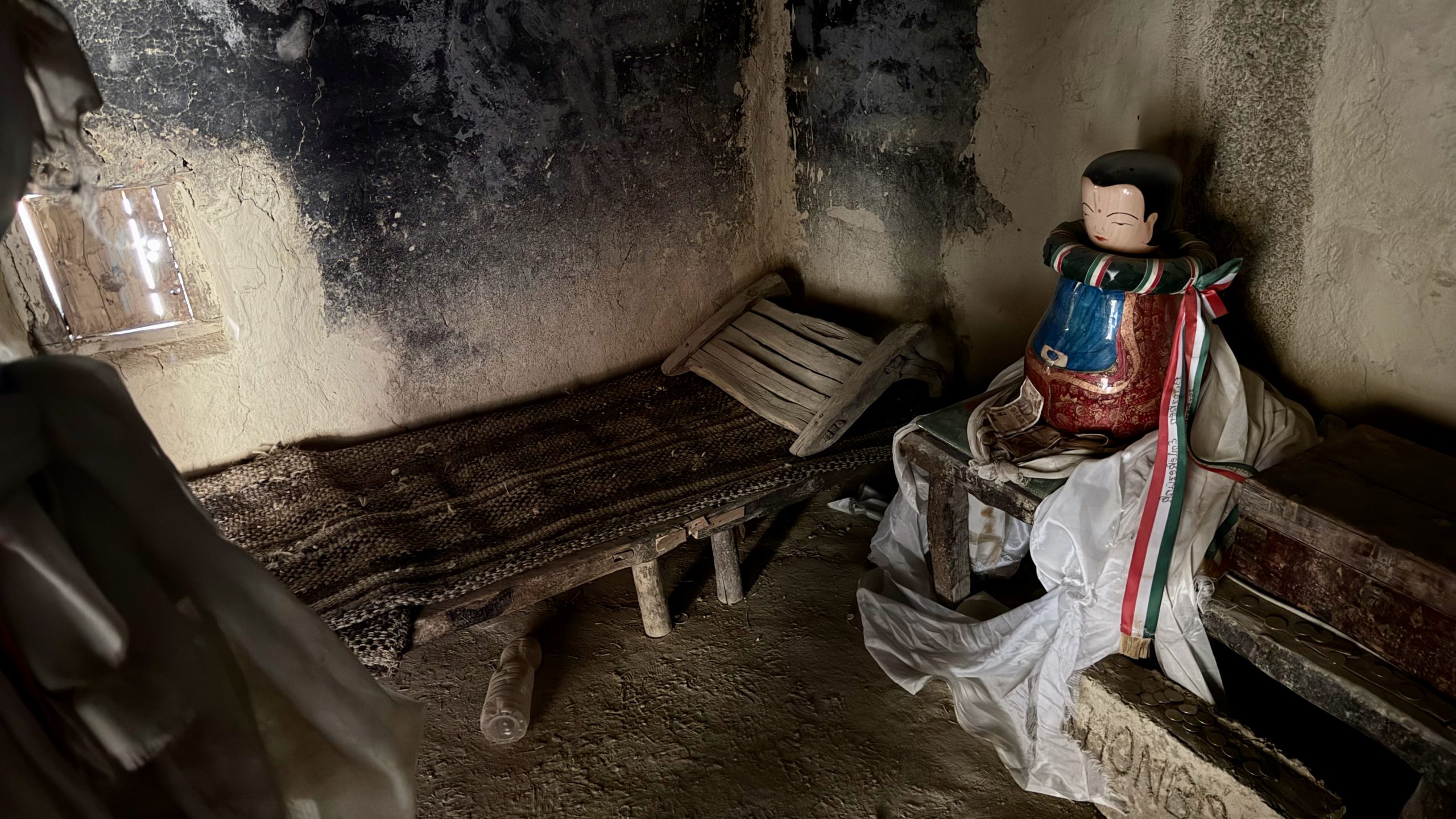
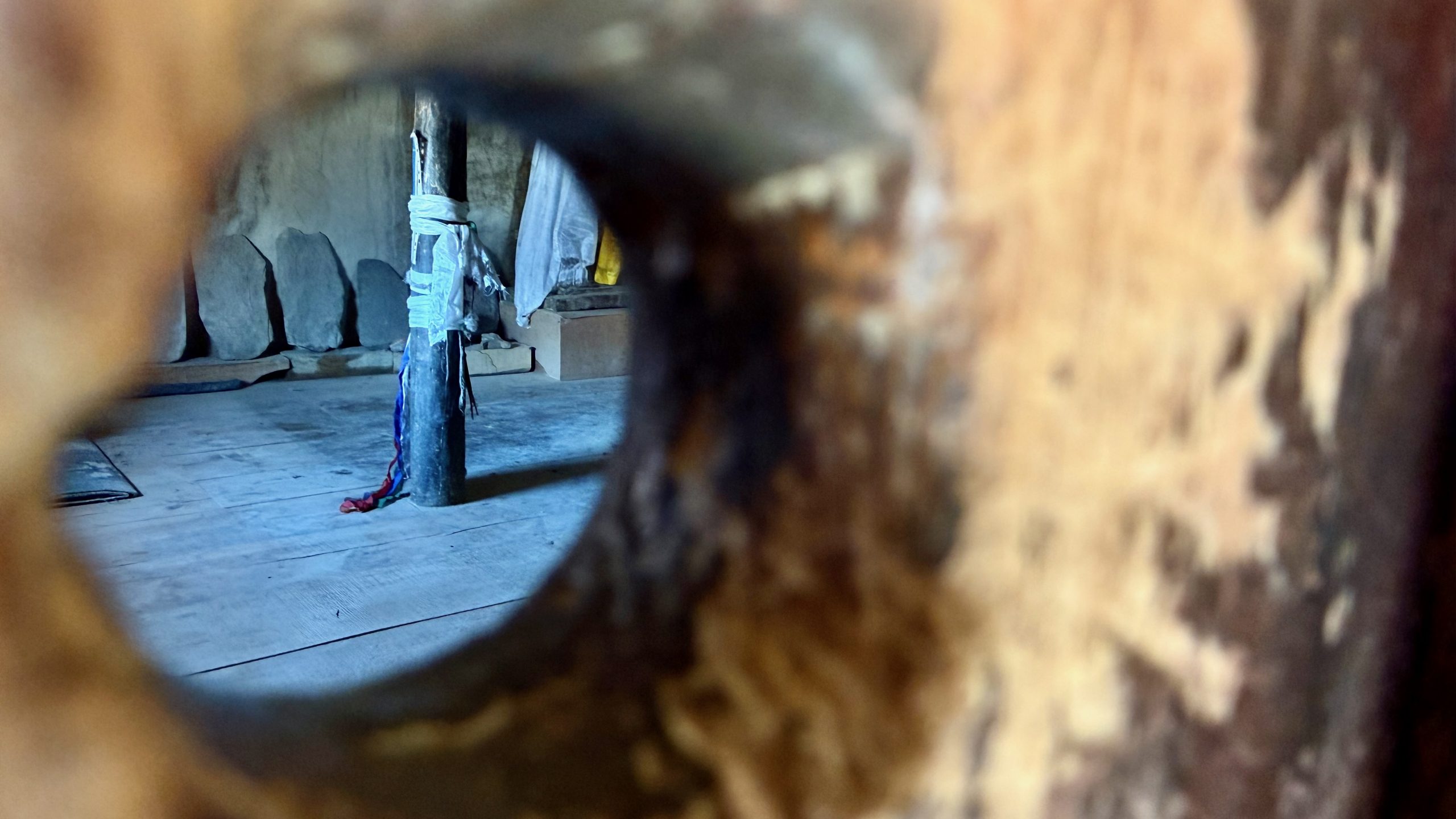
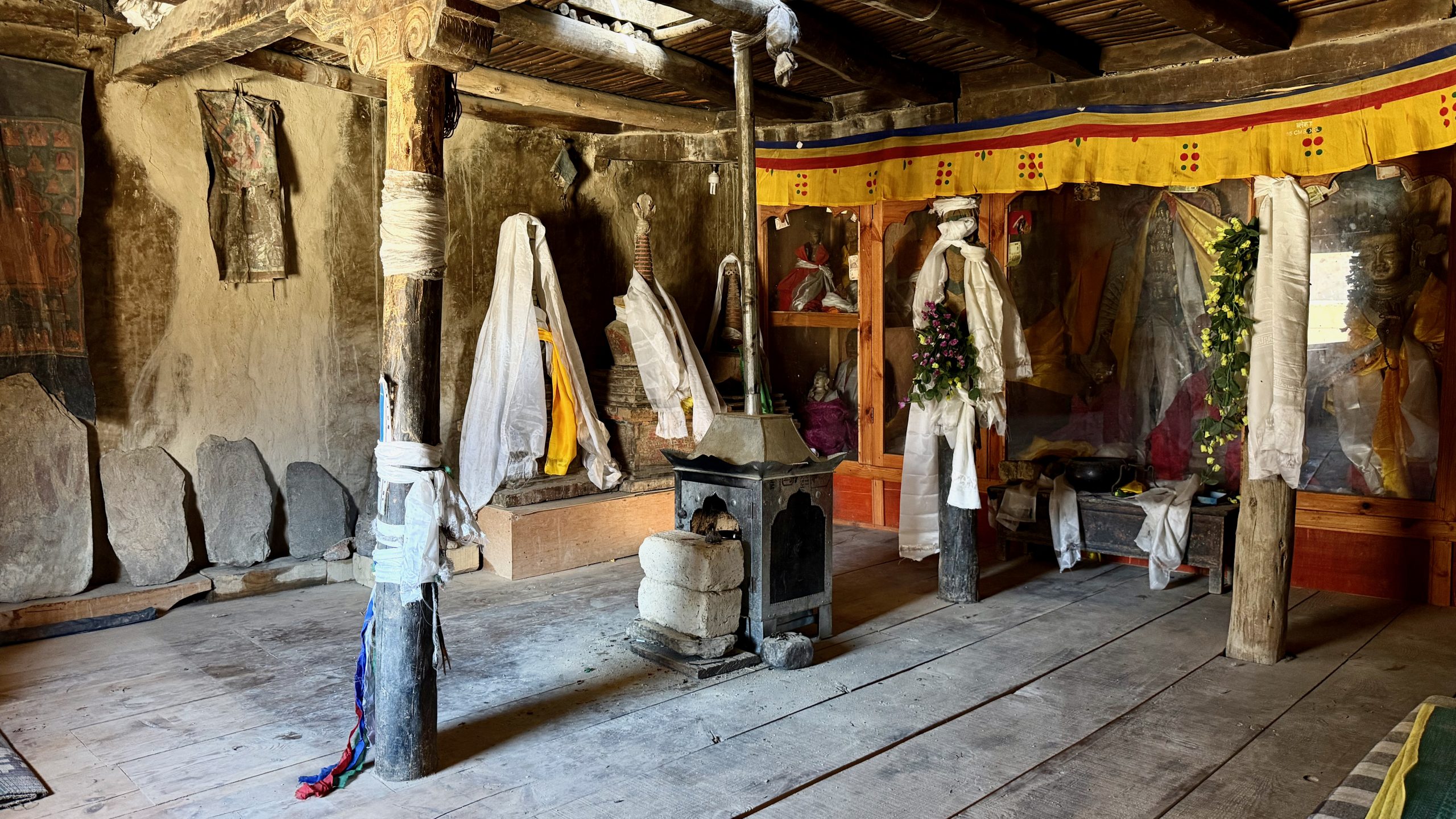
We had almost finished looking around when we heard Indian voices again. We hurried outside, quickly locked up, hid the key — and then lied to them, telling them that we had not been inside either. Which is worse: telling a lie here, or protecting the peace of the palace?
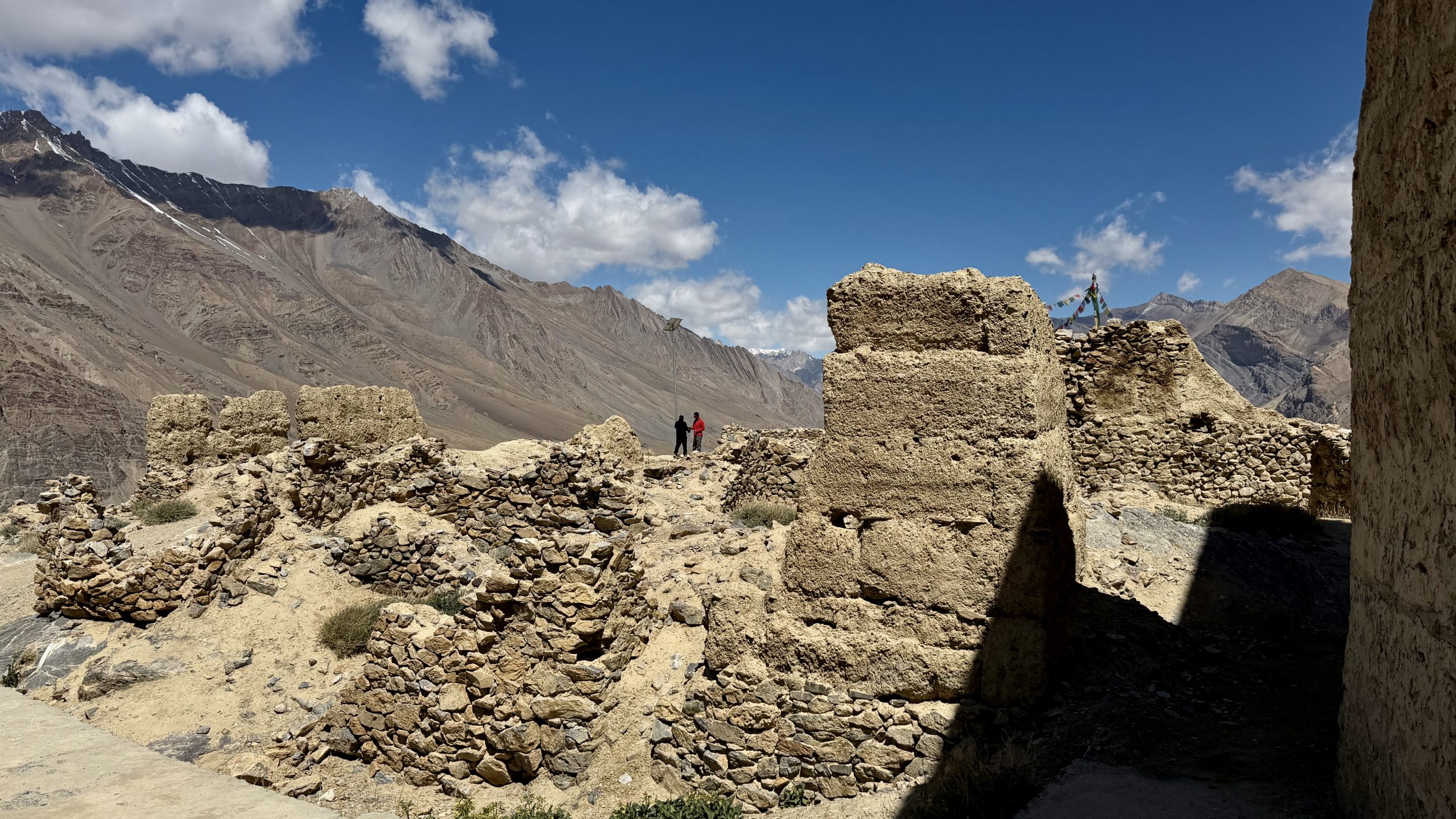
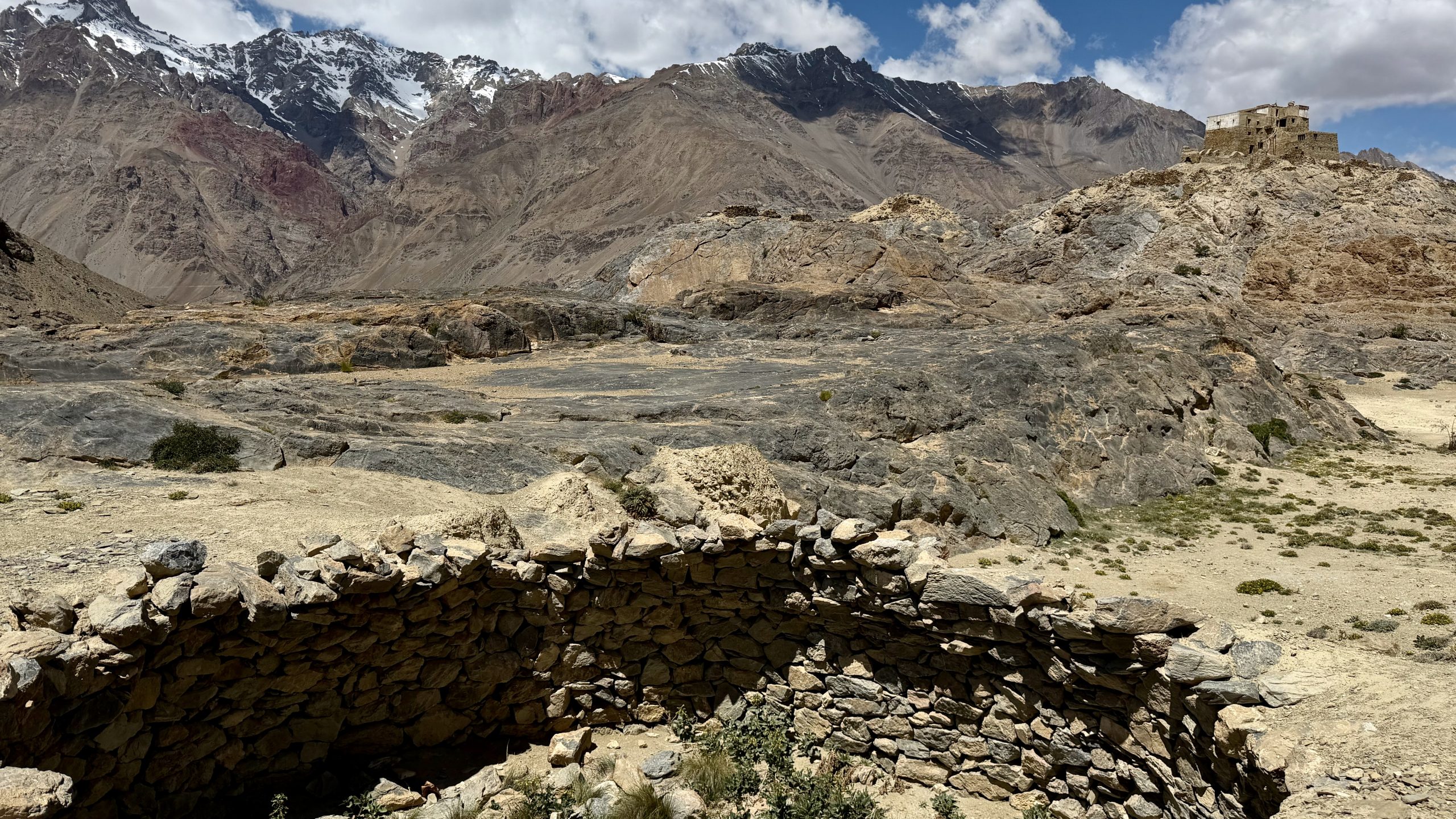
From the parking area, we started our hike and I recorded the route with Mapy. I was so focused on filming, though, that I hardly took any photos. A little further along the trail, there was a wolf trap to look at. There are still quite a lot of wolves in this area, and these traps were traditionally used to protect livestock and reduce losses for local communities.
The 18th Bakula Rinpoche (the 20th Bakula is the current incarnation) was born here as the son of the Queen of Zangla and is said to have meditated in a cave a little further away from the palace. Right here:
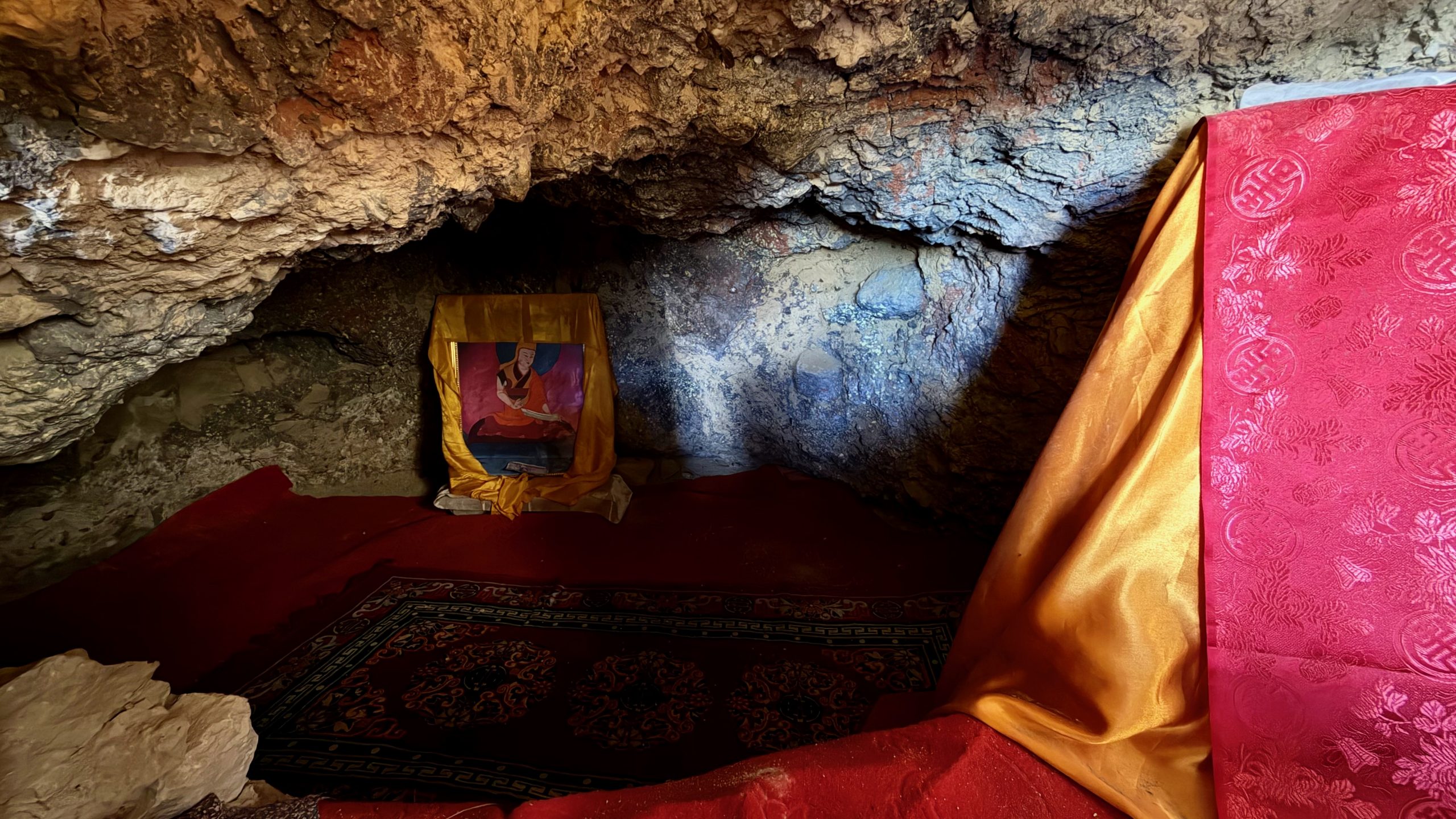
A Bakula is regarded as a recurring reincarnation or emanation of Buddha Amitabha. Bakula is also counted among the 16 Arhats, making the Bakula Rinpoche a highly important Buddhist figure. Since the 17th Bakula, these incarnations have repeatedly been born in Ladakh and Zanskar. The 19th Bakula was especially highly revered. He served in the Indian Parliament and later became ambassador to Mongolia, where he worked to strengthen Buddhism. Leh airport is named after him. The 20th Bakula was born in the Nubra Valley in 2005, and I have already met him three times.
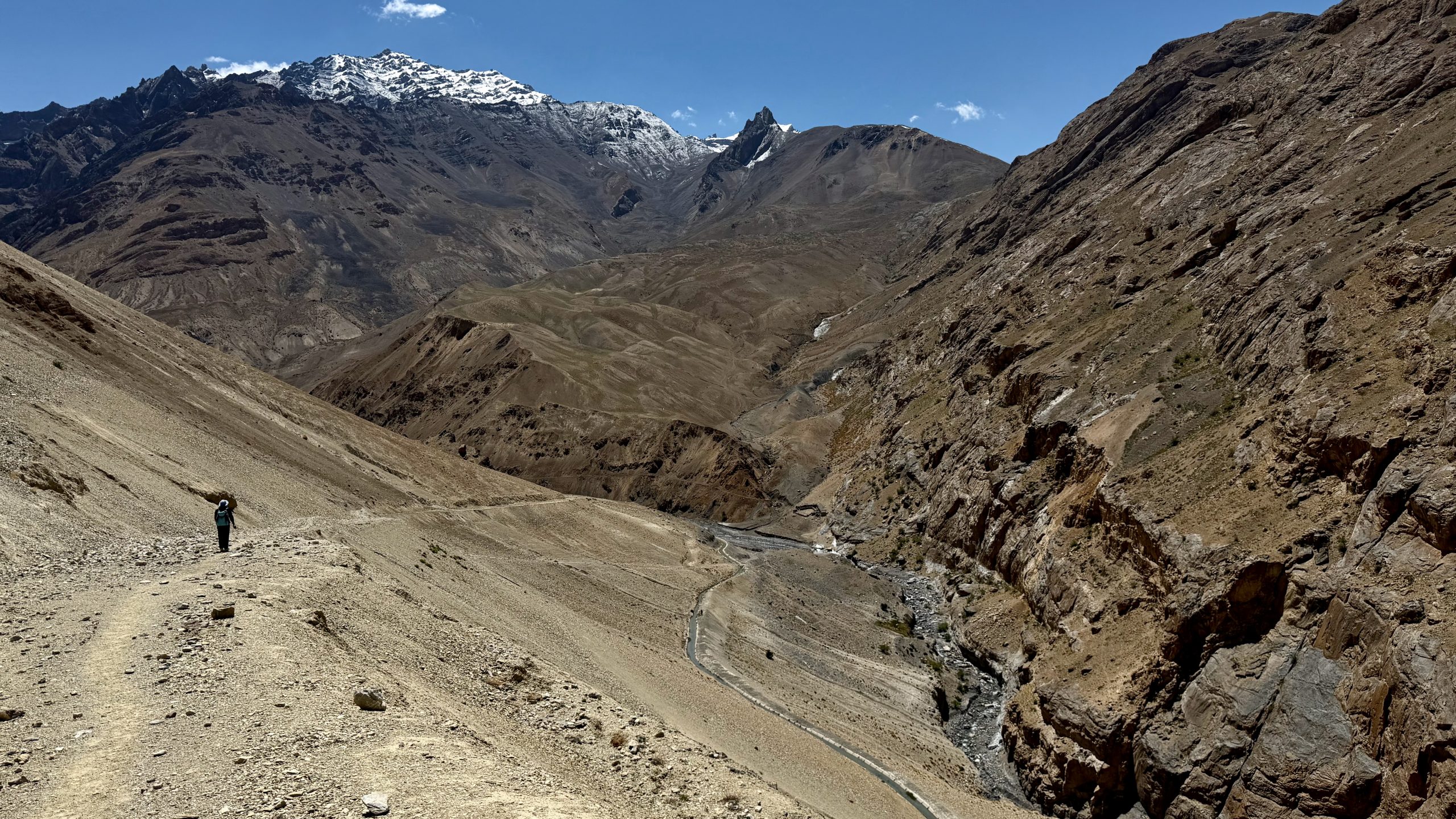
Leaving the Bakulas behind and returning to the hike: we entered a valley that is also the starting point for a trekking route towards Shade and Phuktal. But we turned off almost immediately and headed downhill to cross a river.
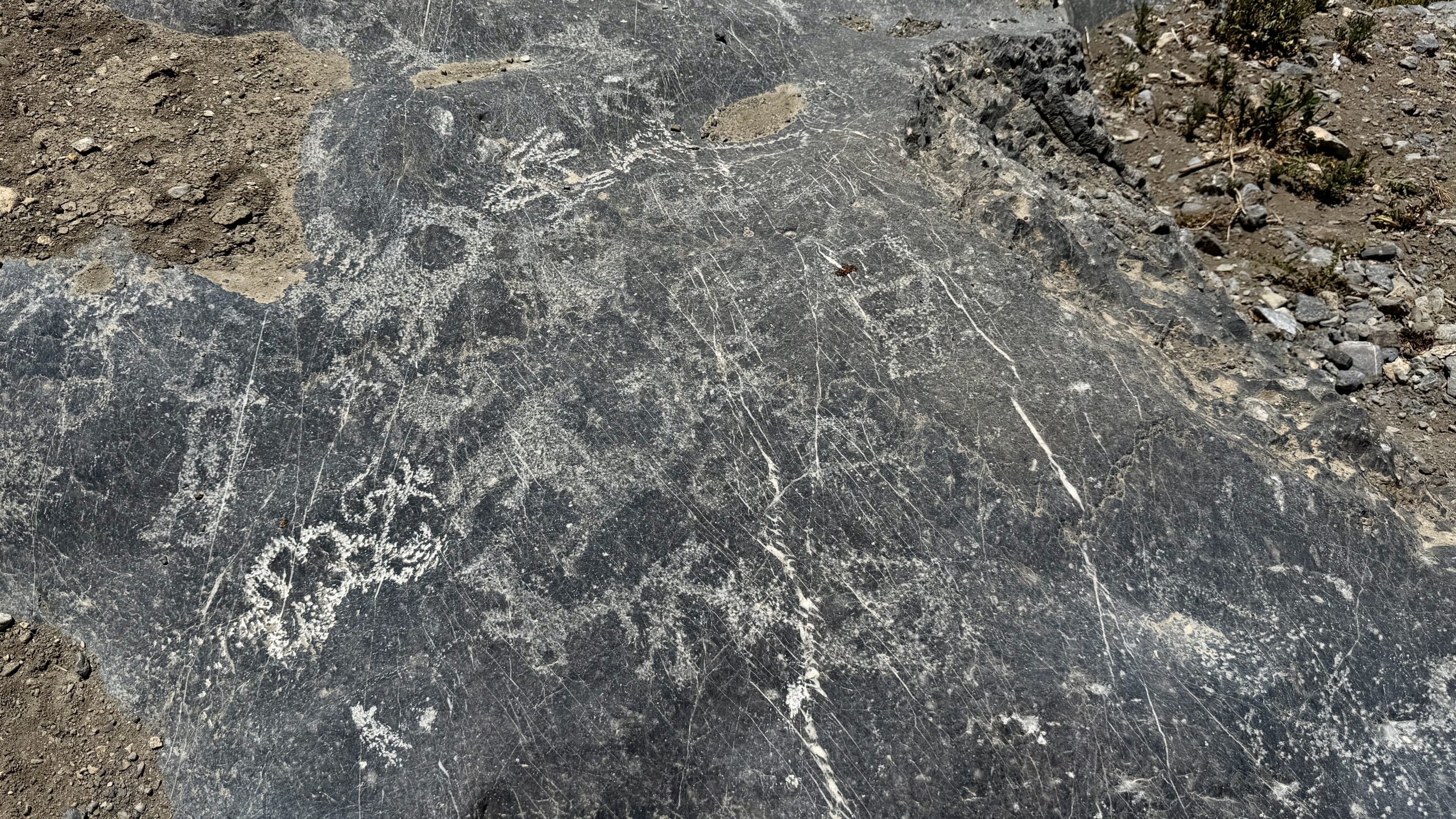
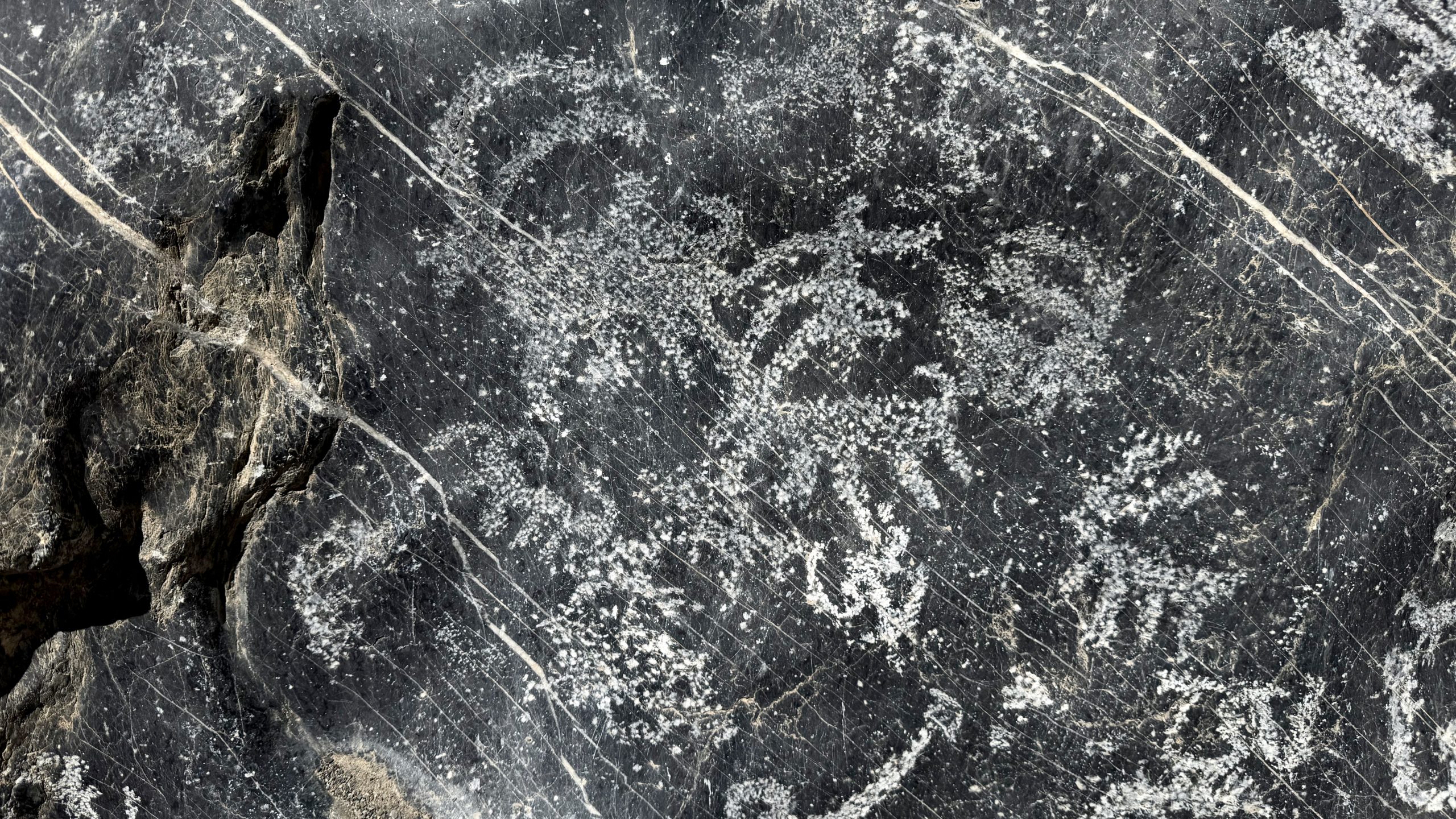
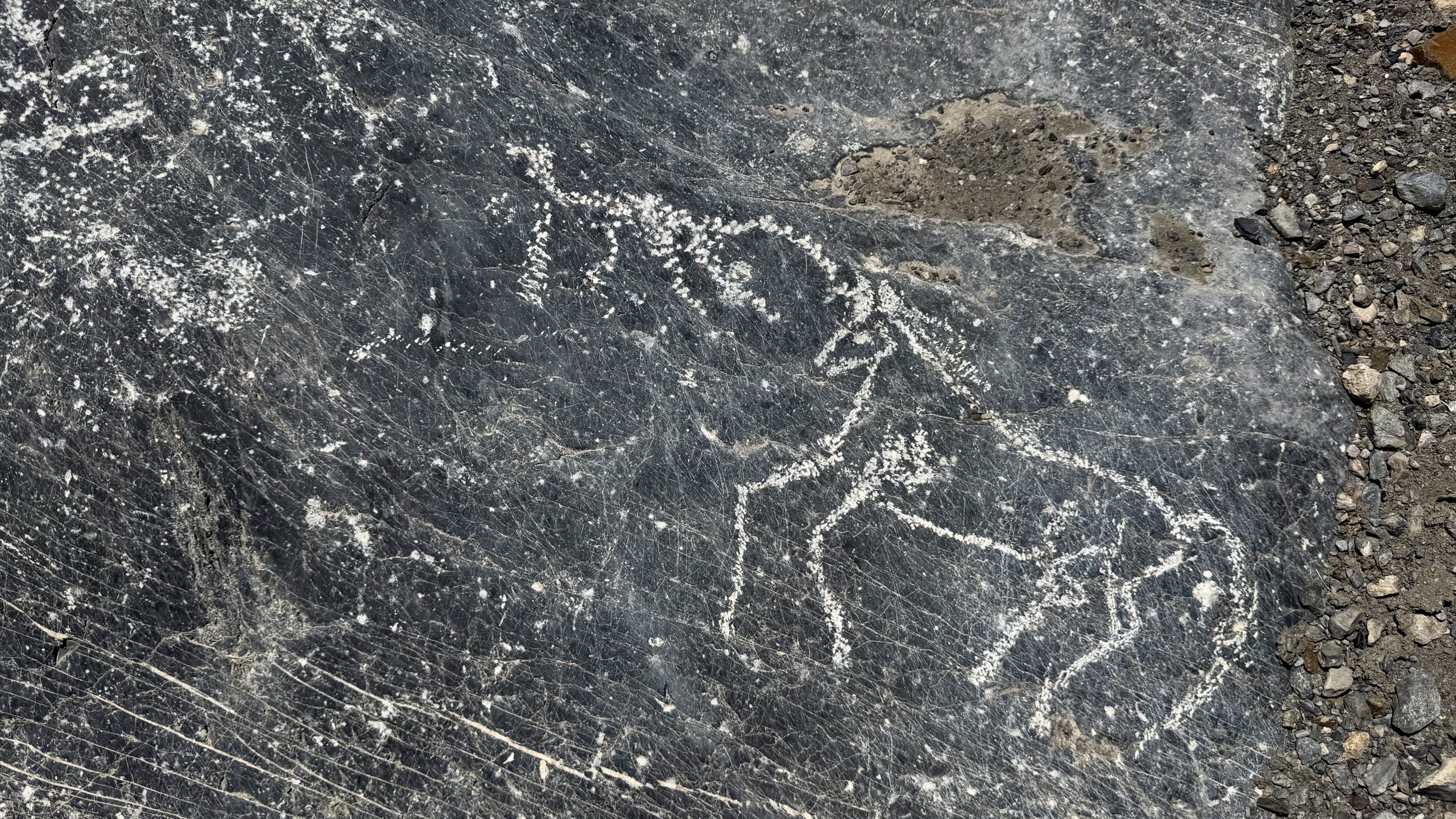
There was already another discovery waiting for us there: lots of ancient rock paintings! The whole Indus Valley is full of them, and I always love discovering them.
Directly opposite stood a large old shepherds’ camp, though nobody was there at the time. Here too, the livestock only moves up to the high pastures later in the season — same like in the Alps.
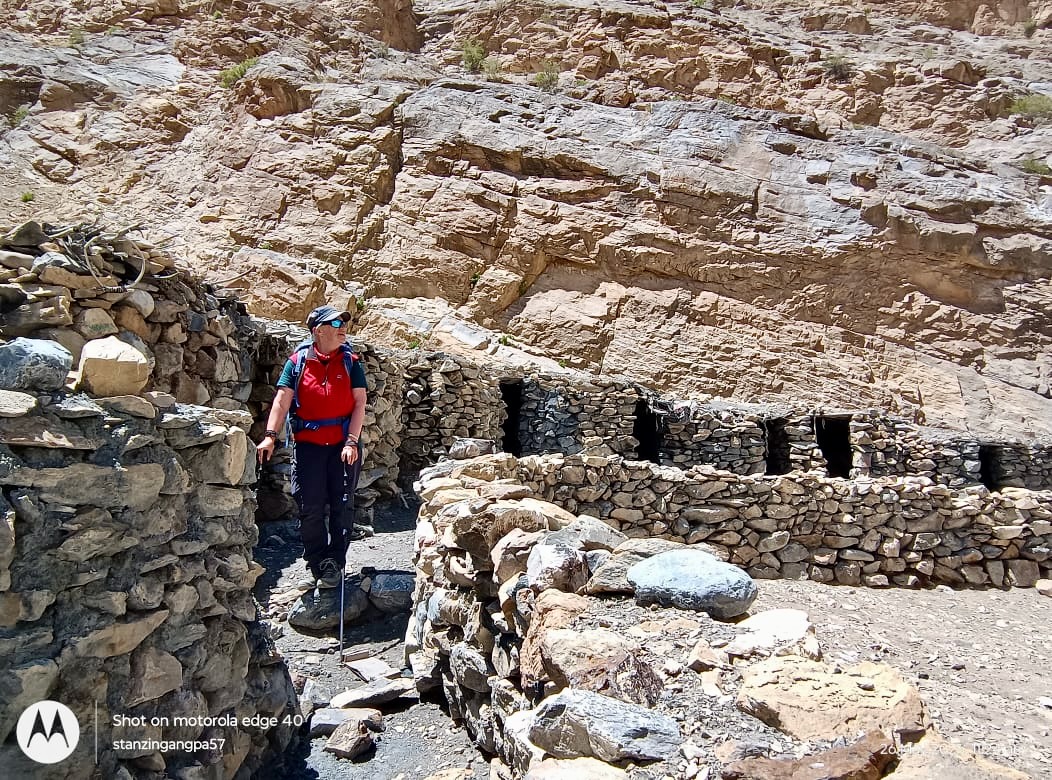
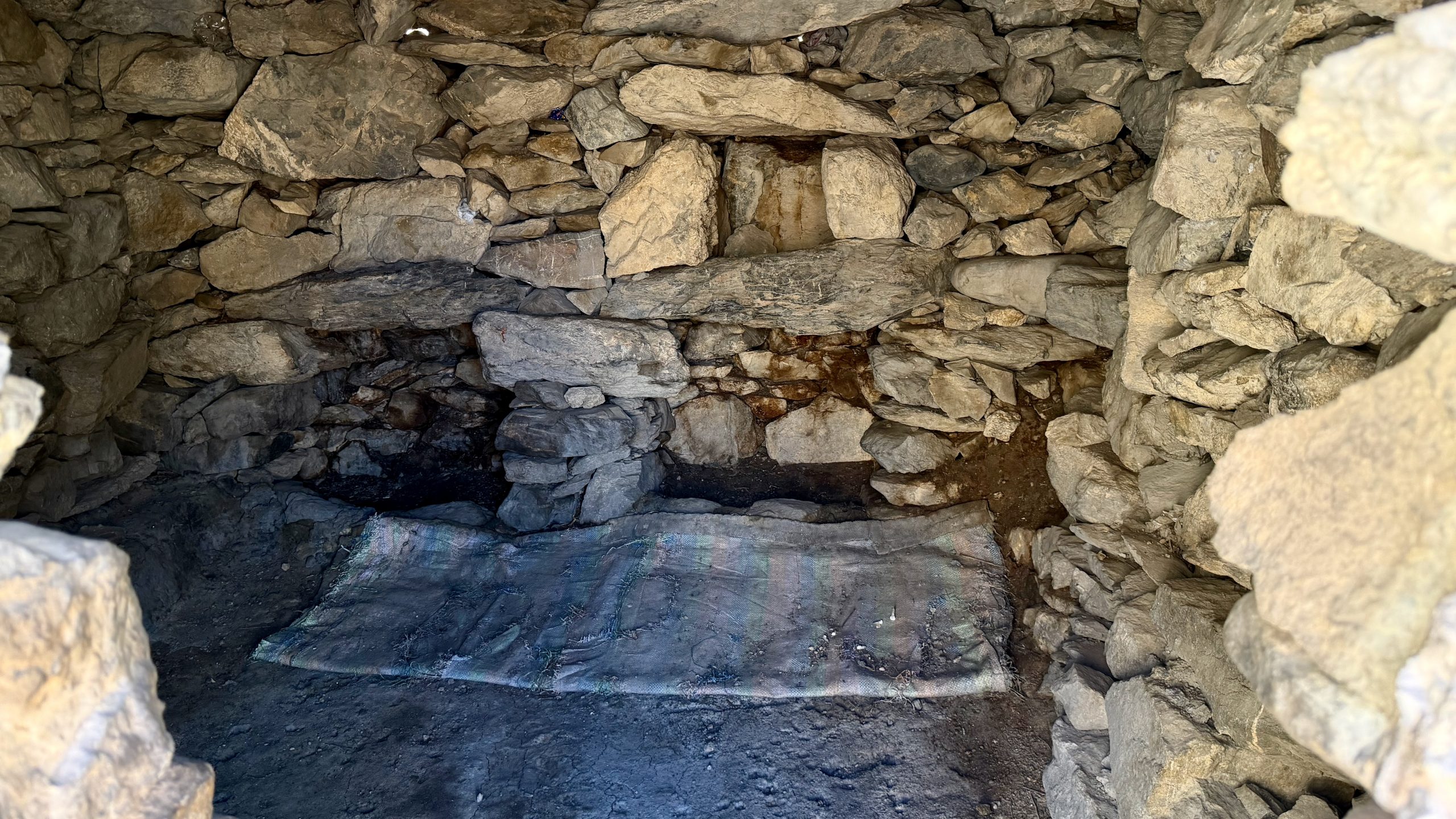
Then we climbed higher and higher up the mountainside, and I felt very happy about my decision to come here.
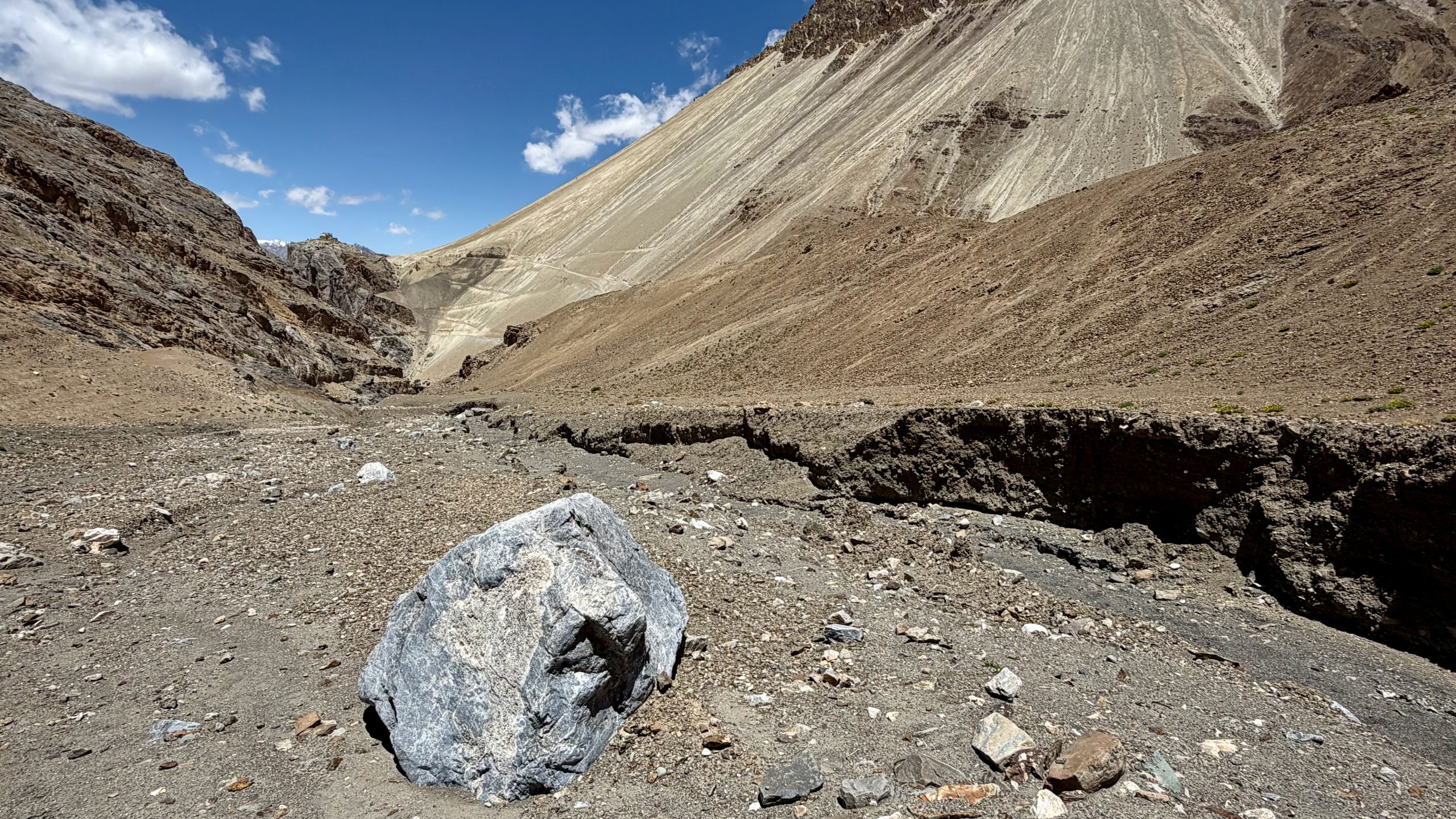
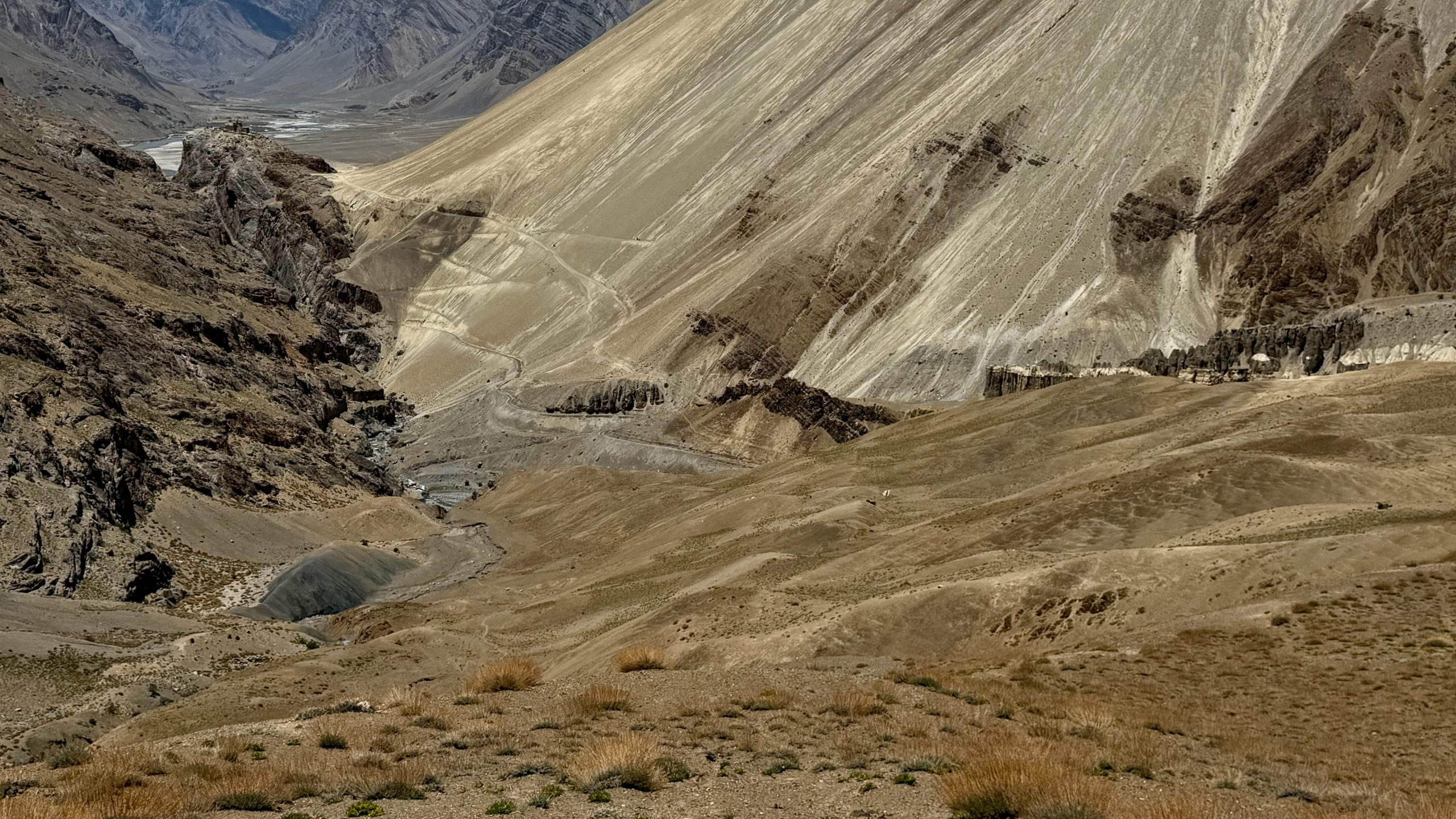
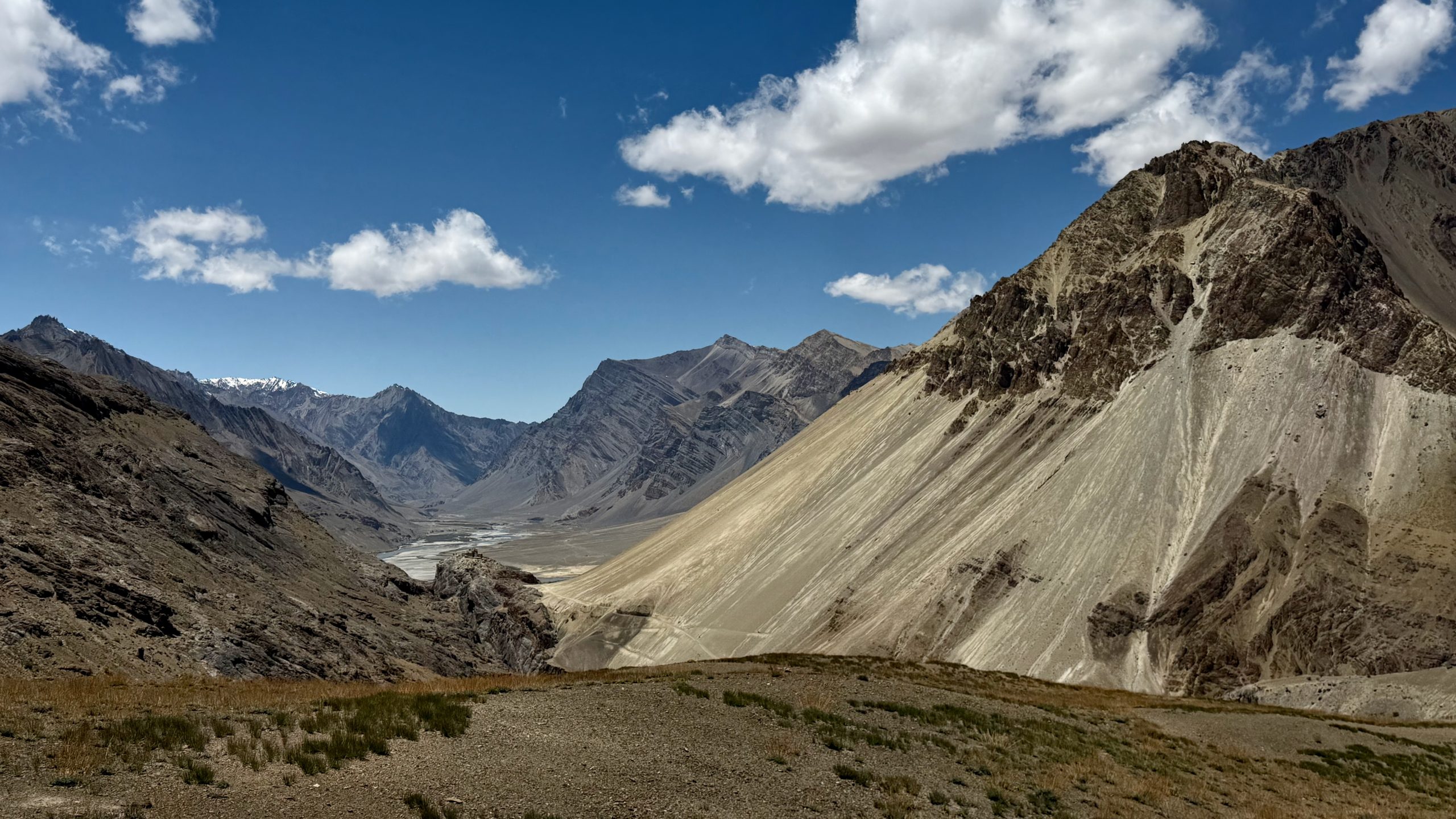
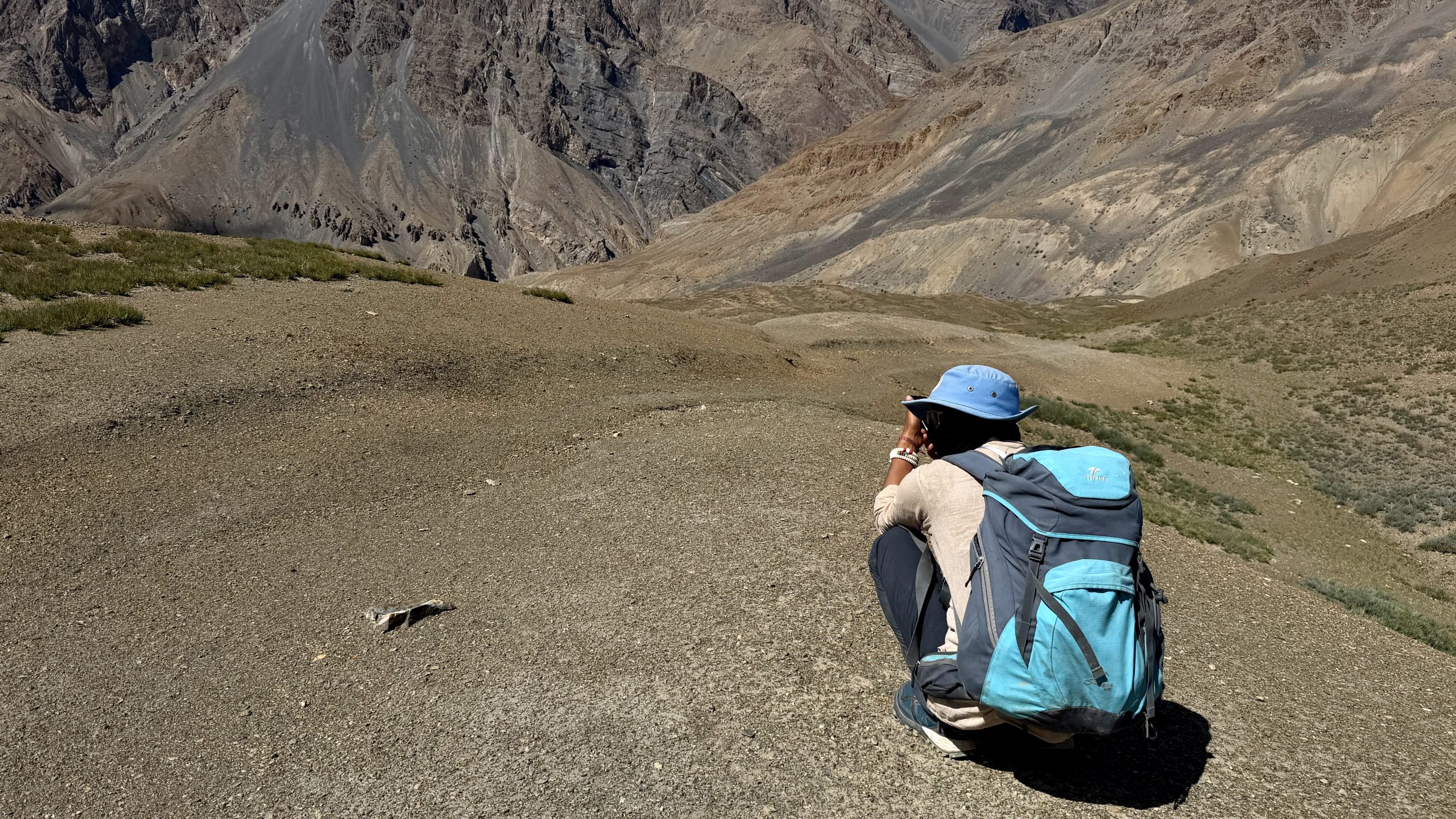
It really is a bit stupid that I did not take more photos! We had a picnic lunch (which is always my favourite part of hiking — is there anything better than eating delicious food outdoors after a long climb and simply staring out at the landscape?) and then continued up towards the pass. The views were overwhelming — and so was the strong wind.
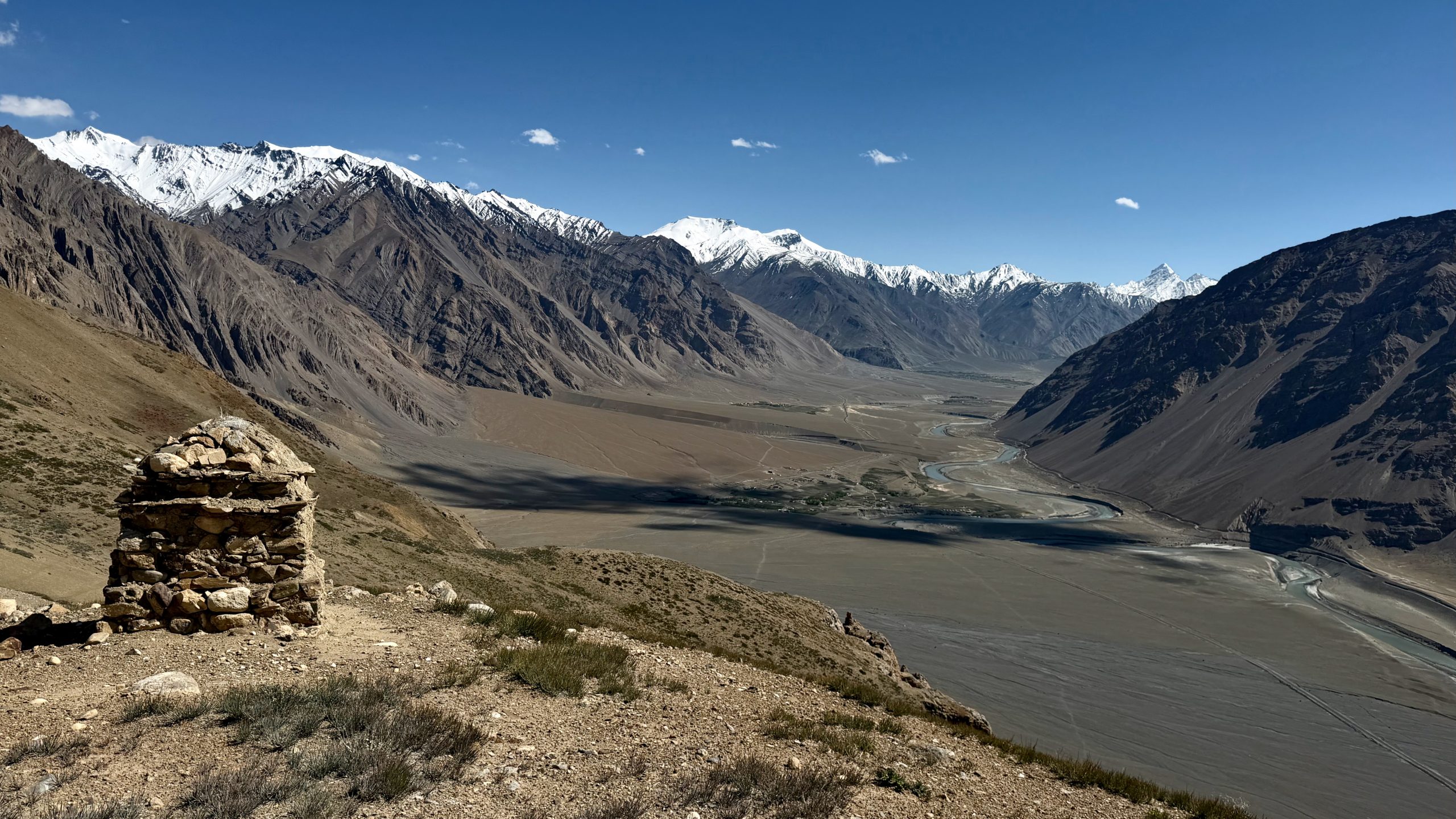
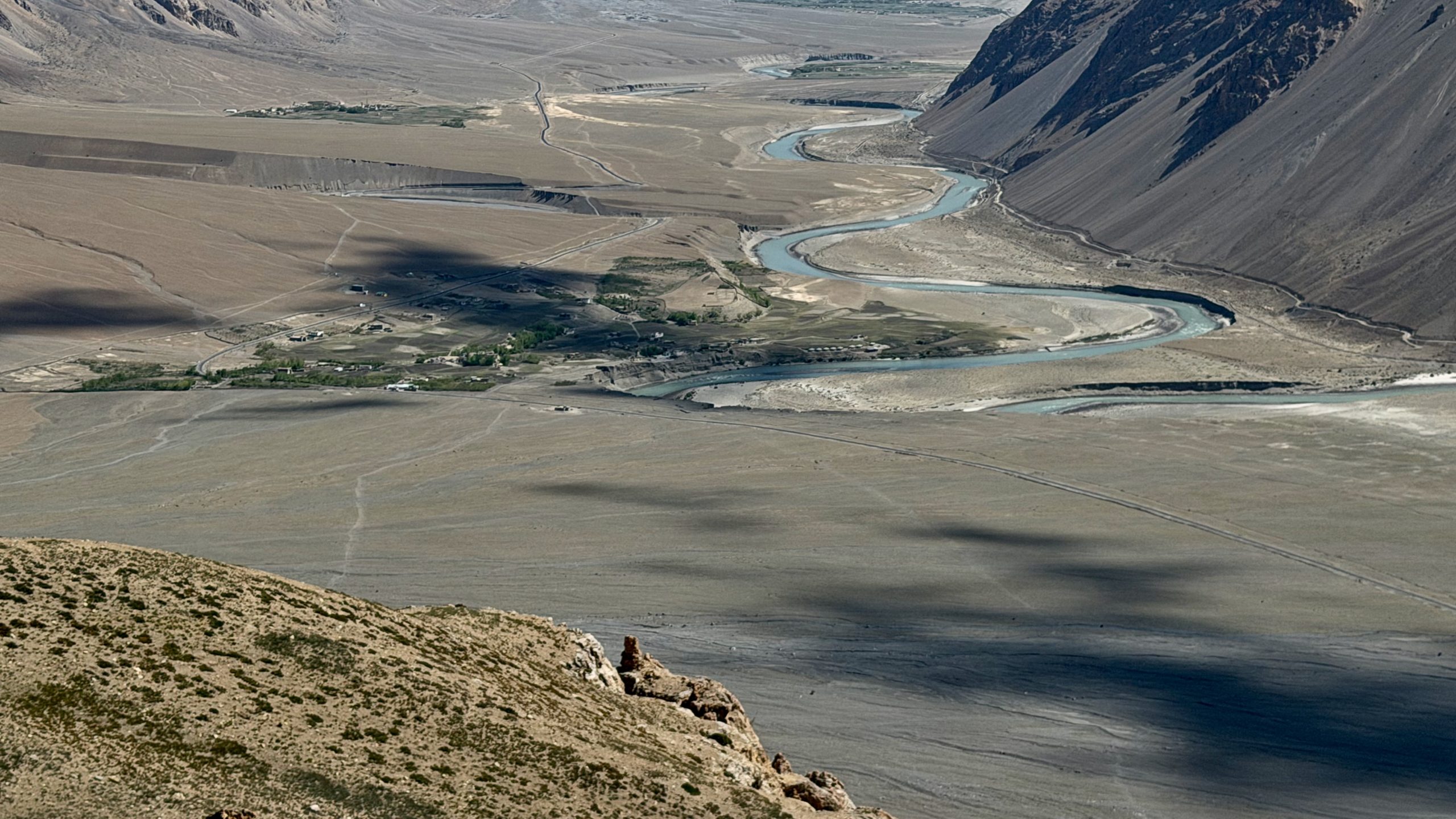
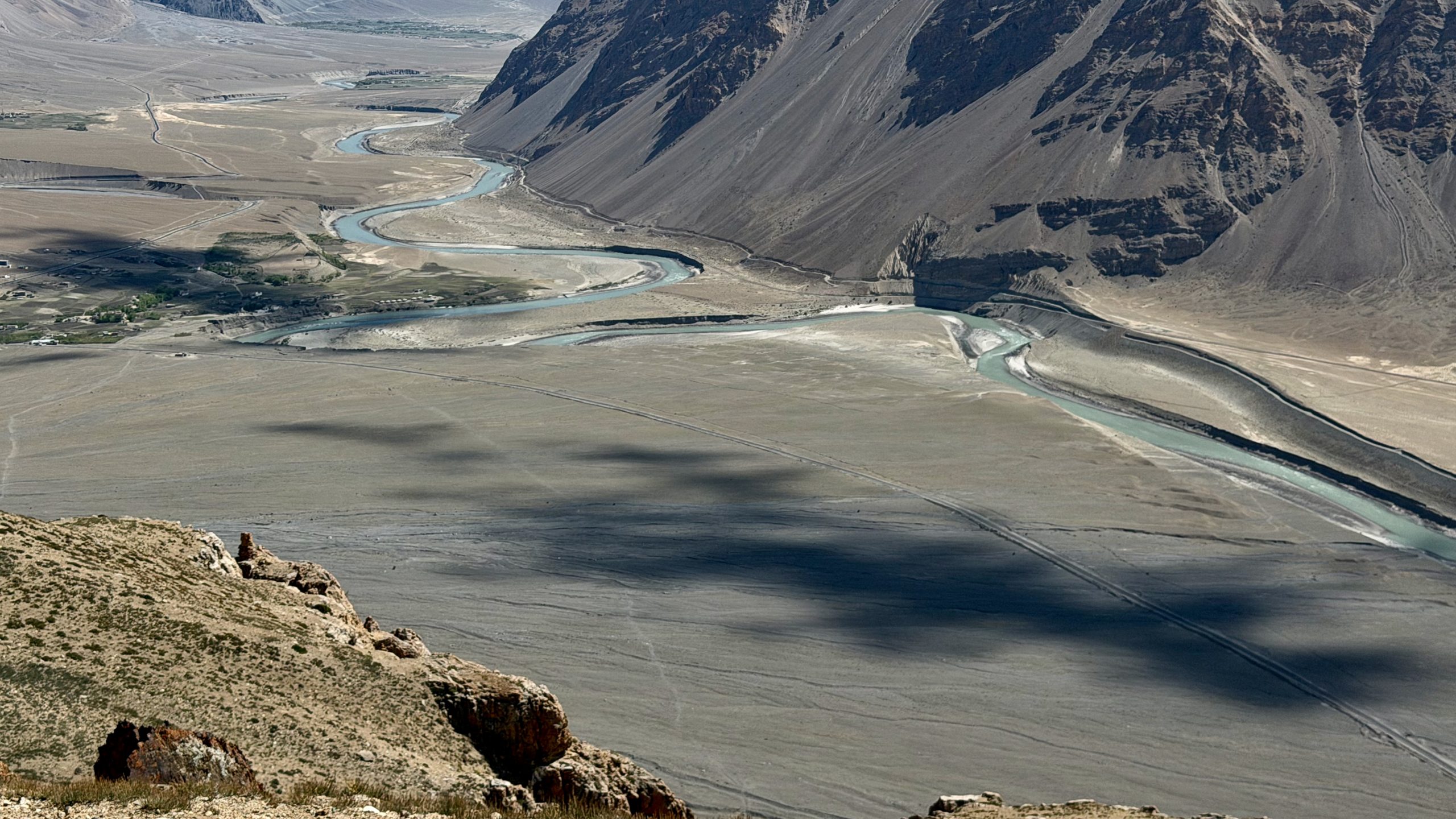
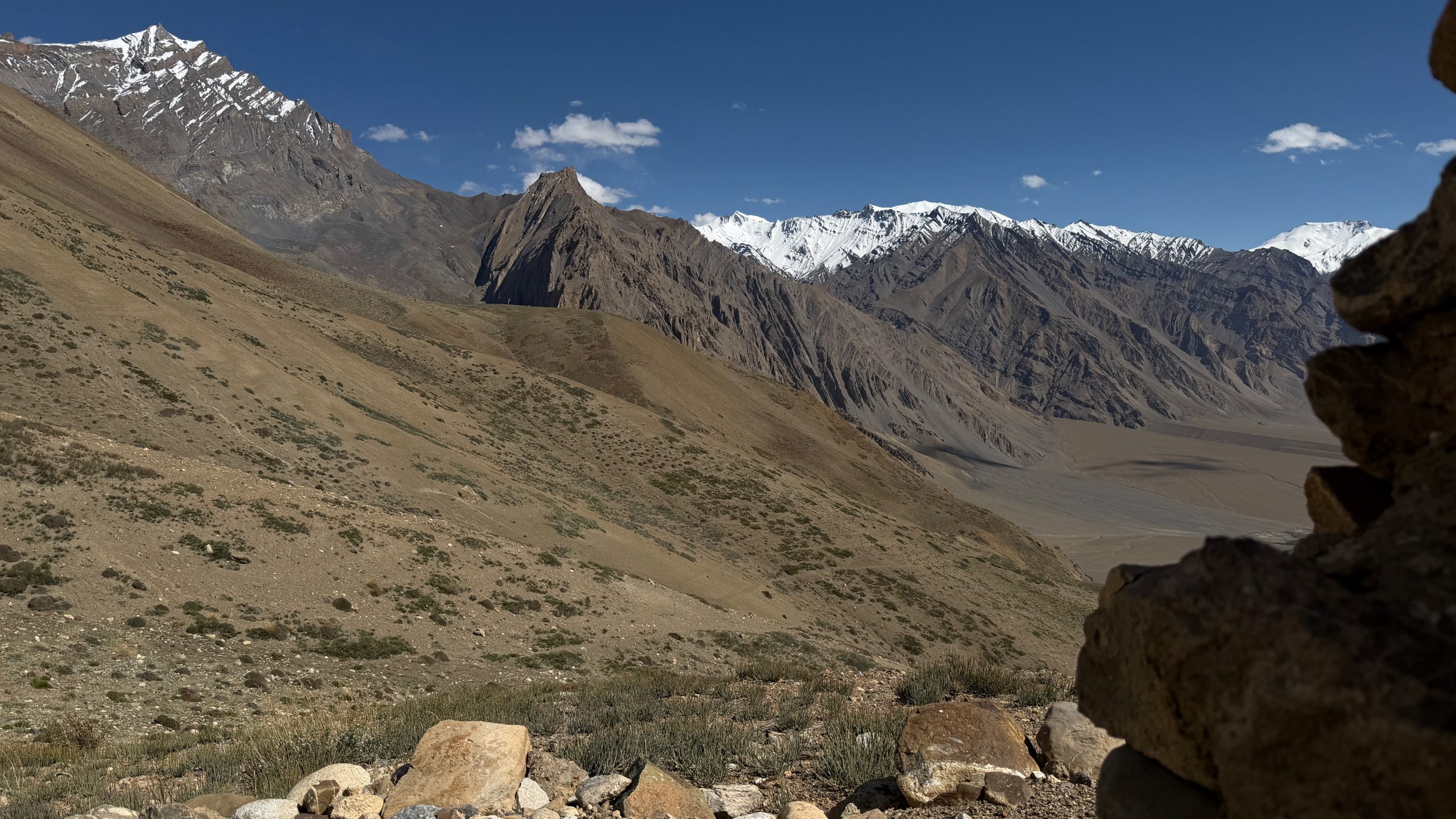
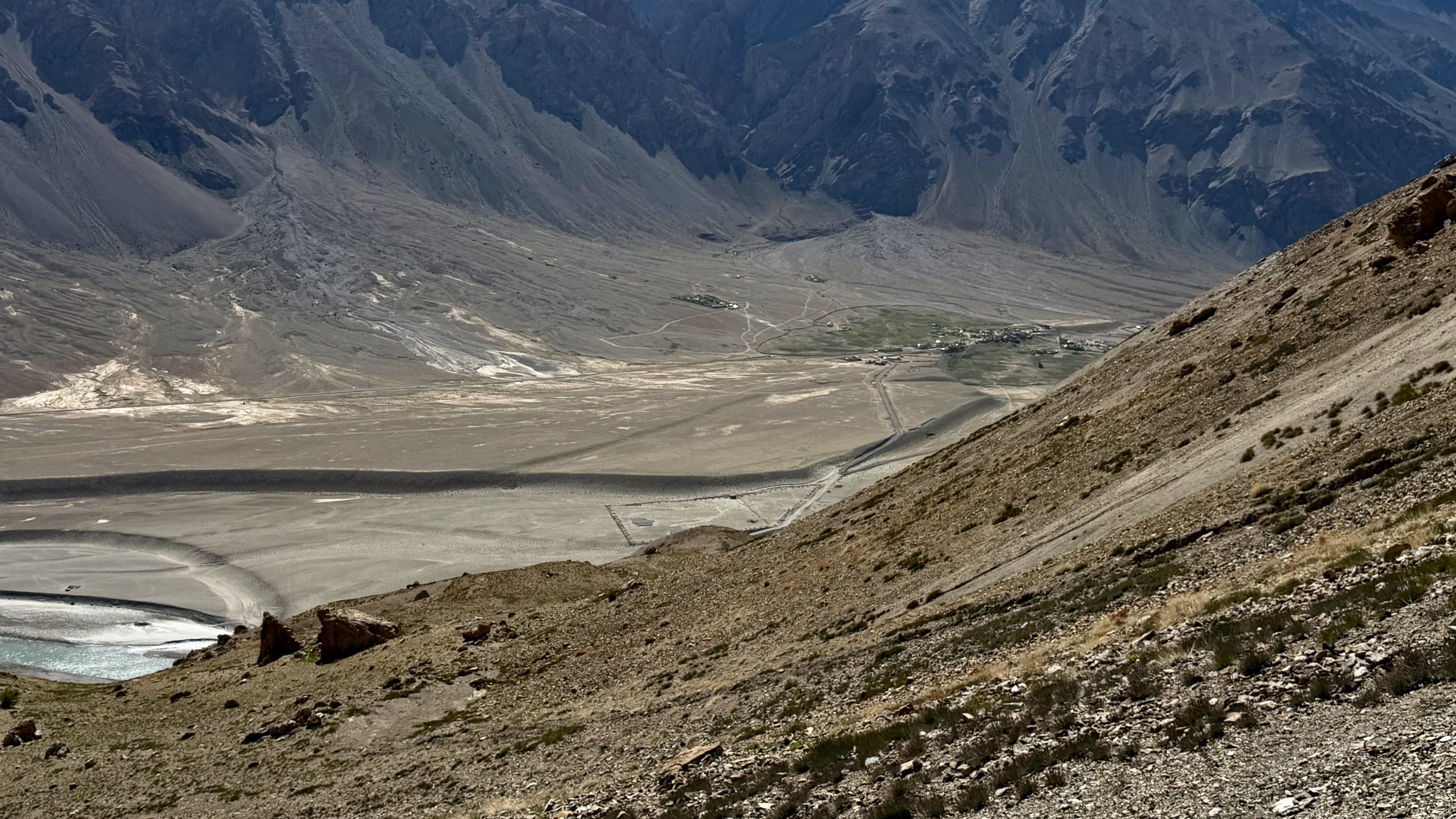
The descent was a bit steeper, but there was a fairly well-made trail, so I did not get scared despite my fear of heights. For some people, though, this section might feel a little tricky.
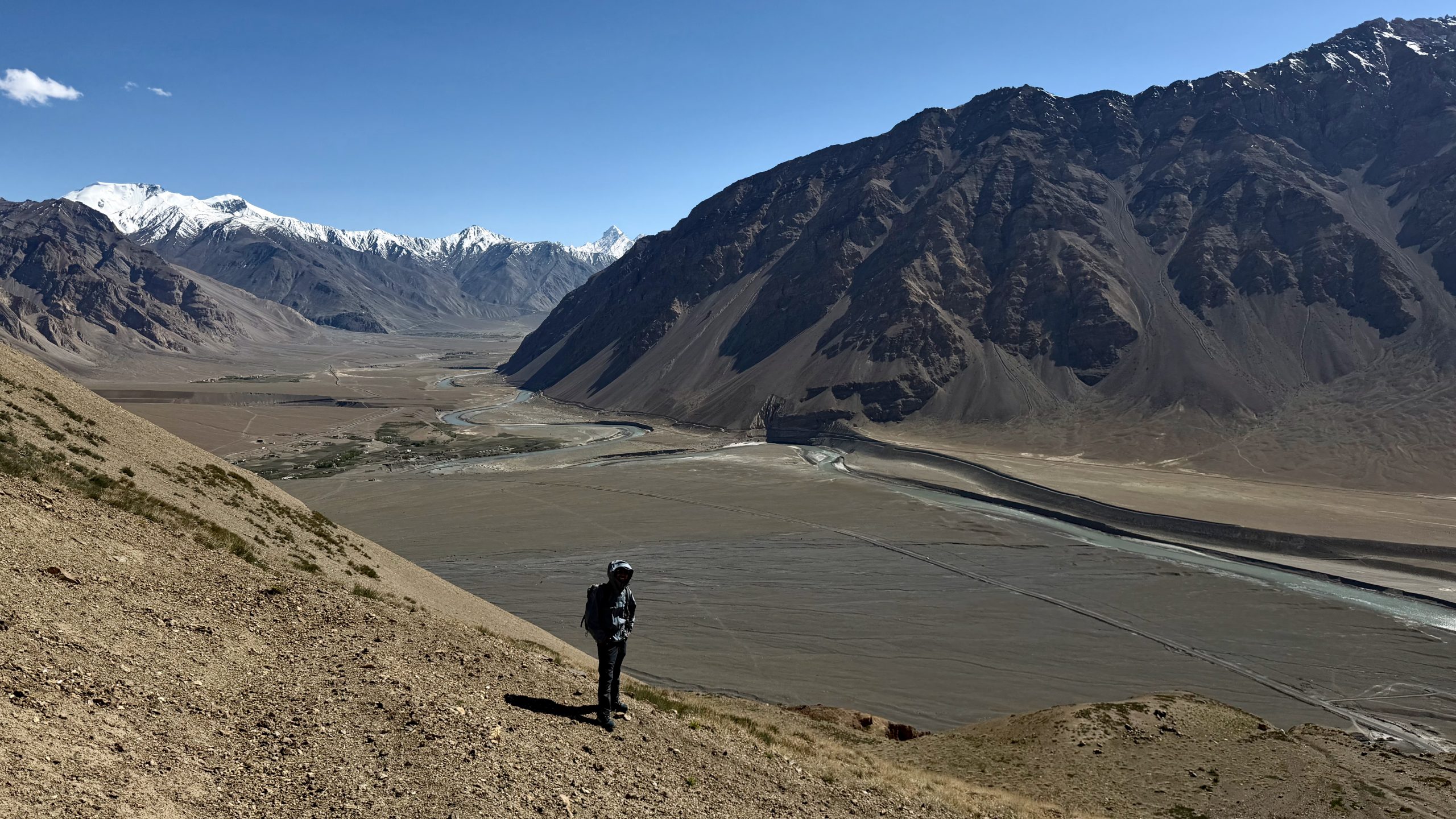
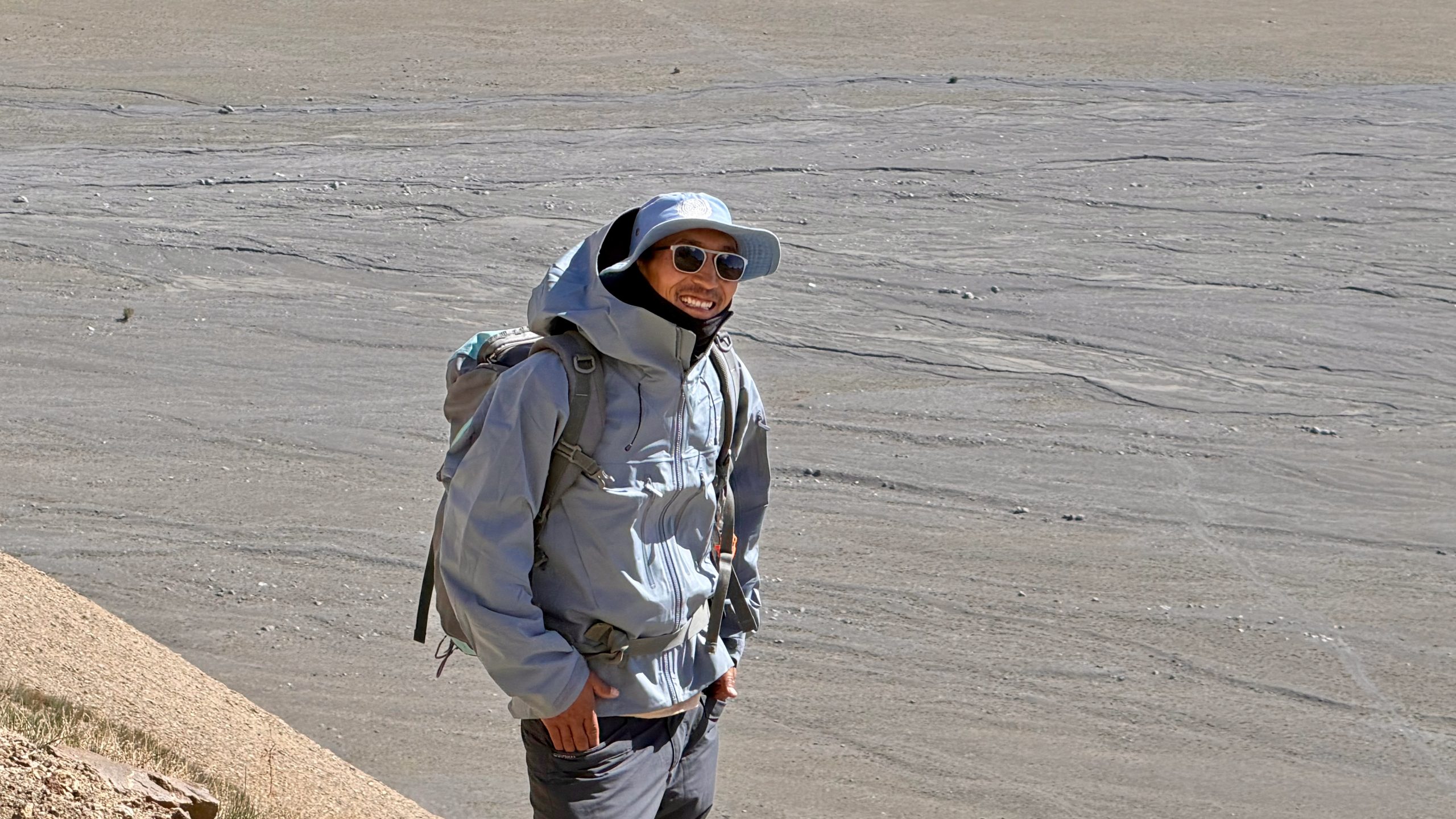
Here I can finally introduce Lameth a bit more properly. Born in Tsazar, he first attended a private school in Stongde. Later, he moved to Leh to study at Lamdon School, a boarding school and also a private institution. Like many Zanskaris who attend private schools, his education was funded through international sponsorship support. However, he did not have a direct sponsor himself but was supported through a shared funding pool. School was never really his thing. Being outdoors and wandering around in nature definitely was. So getting into trekking felt like a fairly natural step. He has already completed many routes and is now working on expanding a longer homestay trek through Zanskar. Especially for solo travellers, carrying camping equipment for several days — or paying for pack animals — can become expensive quite quickly. He also likes the idea that more local families can benefit from homestay income and that travellers get a closer look at everyday life here. This would be the first stage of such a route — and I think it makes for an excellent hike even without committing to a full homestay trek.
Lameth is in his early thirties and bachelor. His older brother — also a guide — is a bachelor as well. It strikes me that quite a few guides seem to stay bachelor into their thirties; at least I can immediately think of several examples. Traditionally, this would usually be the age when many people here start families.
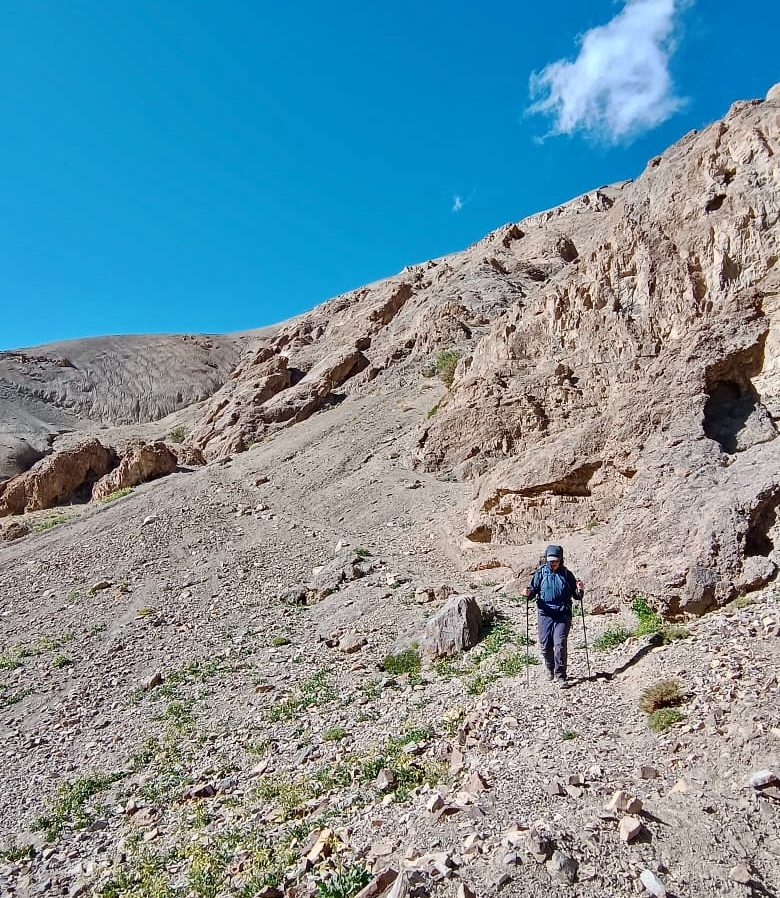
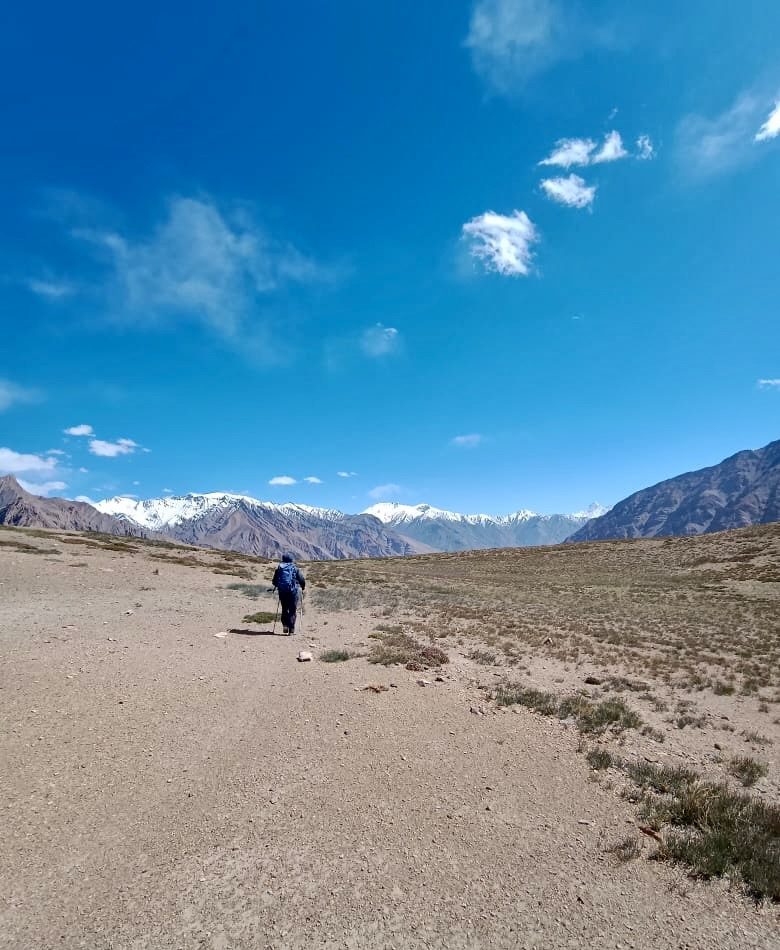
By the end of the day, I was struggling a bit with the strong wind and the intense sun that had been beating down all day, and I felt pretty exhausted because of it. Even though, as someone from northern Germany, I should probably be used to wind, I do not like it very much. Especially all that constant roaring in your ears. And Dawa seemed to have anticipated it: I found a bucket of hot water waiting for me, washed off the dust and sweat, and then sat inside feeling happy and content while the wind continued howling outside.
Here is the recording of my route:
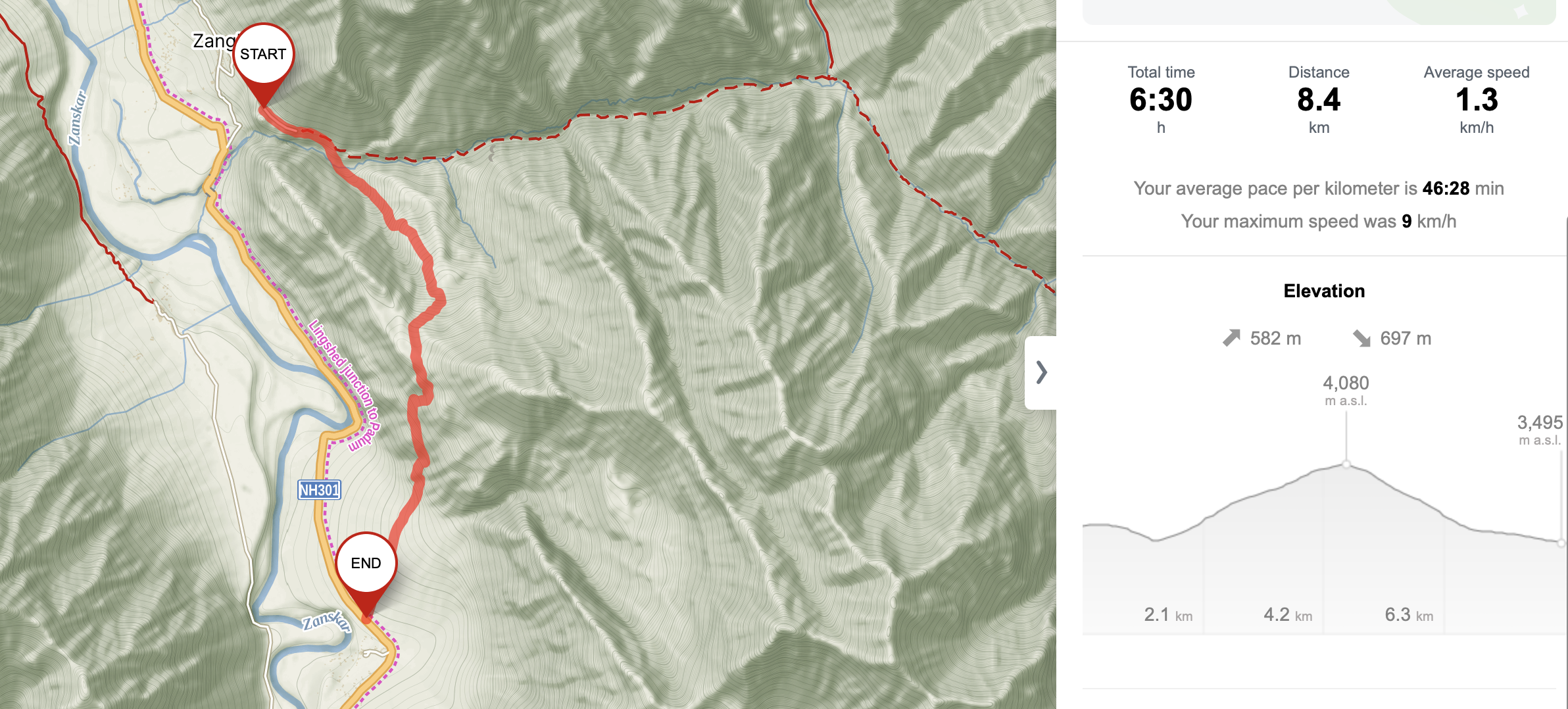
The very slow pace is mainly because the recording kept running during all the breaks. But apart from that, I am a mountain snail anyway.
In theory, the next day would have been the continuation of the homestay trek. However, the planned route had too much landslide damage and still too much snow higher up, and Lameth seemed to think it might be a bit too much for me. Instead, more interesting experiences were waiting.